Tag Archives: Game of Thrones

Ranking the Shows That I Watch – 2015 Edition: 22-19

19 May

All hour longs, three with their first seasons, and the fourth one of the most successful cable shows on television. Here we go.

Intro here and 58-55 here and 54-51 here and 50-47 here and 46-43 here and 42-39 here and 38-35 here and 34-31 here and 30-27 here and 26-23 here.

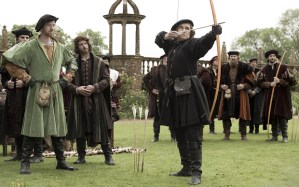
22. Wolf Hall – 2014: Not Eligible

Wolf Hall

Based on a couple of popular and excellent books by Hilary Mantel about Thomas Cromwell, Wolf Hall is the most British miniseries imaginable, a period piece following Cromwell up through his his rise to become the chief adviser to the tempestuous and mercurial Henry VIII. The series is like Game of Thrones shorn of the spectacle and composed of the scenes with people talking to one another. It’s filled with complicated conversations about weighty issues and convoluted royal law composed of witty rapport and deals with many of the same questions about power and class. Mark Rylance is absolutely brilliant as Cromwell and grounds the story in a stark humanity.

21. Making a Murderer – 2014: Not Eligible

Making a Murderer

The most harrowing and depressing show on television last year, it outstrips Game of Thrones and the many other serious and depressing shows currently on TV because everything on it is entirely real. I shouted at the screen early and often at the travesties of justice being committed left and right, and no show so brilliantly lays out the myriad problems with the American justice system in just a few hours. Through one incredible case rife with twists and turns, captured every step along the way by the documentarians, everything you didn’t realize about how the American police, lawyers, and judges work together to put someone in jail, rather than necessarily put the right person in jail is on display, and it’s eye opening. In some ways, the structure and limitations of what can be captured on a documentary can make a series like this hard to move up to the top of this list, but alternately, that makes this potentially the most must-watch show on here.

20. Jessica Jones – 2014: Not Eligible

Jessica Jones

Daredevil’s a pretty good show, but it only set the table for the superior Jessica Jones. Jones has superpowers, but her show is more a detective noir than a typical superhero show, even a street level superhero show like Daredevil. Although a foul-mouthed, hard-drinking, self-hating private eye may sound routine for the genre, Krysten Ritter’s Jones is much more than a trope; she’s an emotionally damaged fully-fledged morally divided hero crippled by her nemesis who controlled her for several months, traumatizing her, and  who looms over the entire season. David Tenant, as the absolutely terrifying Kilgrave, delivers one of the scariest antagonist performances in years. Jones must work with her best friend Trish to vanquish him, and their relationship is another high point of the show. Carrie-Anne Moss as power attorney Jeri Hogarth is a strong character as well until it feels like three quarters of the way through the show, everything that happens to her was happened solely to make a particularly plot contrivance believable, and a couple of the male characters aren’t quite so great (I’m looking at you, neighbor Malcolm (edit: friend reminded me to add the horrible Robyn). Still, Jessica Jones is the rare comic book show that everyone, comic media fan or not, should enjoy.

23. Game of Thrones – 2014: 6

Game of Thrones

As I said earlier this entry, the number of great TV shows that aired in 2015 is higher than ever before, particularly the number of excellent half hours which is forcing consistently excellent hour long shows to drop down the rankings unfairly, and has caused shows which have slipped just an inch to fall a foot. Game of Thrones is one of these shows. Long one of mine and many others’ favorite shows on TV, and one of the few event shows left that you feel like you can’t miss on Sunday lest it be ruined by Monday morning, Game of Thrones continues to be great. But last season felt more unfocused than any before, and particularly, had the Dorne plot, a major new location which contained a few new characters. This part deviated from the book for space reasons and never quite worked, trying to fix each mistake with a worse one. I try not to compare the books to the show, in terms of quality, as much as possible, because it’s a rigged game in terms of 10 hours a season vs. hundreds of pages, but it’s impossible not to. Last season had me firmly on the side of preferring the book, which is honestly much more of a compliment to the wonderful books than an insult to the wonderful show. It’s simply a can’t win. It’s a very good show that we have here with a huge budget and we shouldn’t lose site of being grateful to have it.

End of Season Report: Game of Thrones – Season 5, Part 2

17 Jun

Cersei Lannister

This is Part 2 of my thoughts following the ending of the fifth season of Game of Thrones. Part 1 can be found here.

We start today with Dorne. Dorne was an utter and total mess, the worst running storyline of this season both from a book reader’s perspective and I believe, from a viewer’s perspective. It introduced several new characters, but without the chance to get to really know them. Doran Martell, Dorne’s leader, the three Sand Snakes, bastard children of the Red Viper and Ellaria Sand, and Aero Hotah, Doran’s chief guard. In the books Doran is smart, calculating, even-tempered and patient. In the show, I believe they tried to somewhat portray that as well, but any positive character development is undone by the stupefying last scene where Ellaria is allowed to kiss Myrcella, delivering some sort of poison. Why would Ellaria, who tried to assassinate Myrcella earlier, be allowed to touch Myrcella? From that scene, Doran’s clearly a total moron, defeating any other work the show put in to that character. Even beyond this bizarre and logic-defying ending, nothing else in Dorne worked. Jaime being there never quite made sense, Ellaria and the Sand Snakes’ plan never quite made sense, and the Sand Snakes scene with Bronn felt like some of the pointless nudity that critics like to understandably occasionally call Game of Thrones out on. While I’m thrilled to find ways to keep Bronn around, this whole adventure did not work.

Cersei’s downfall was a long time coming and well-deserved, and the show, with a huge help from Lena Headey did an admirable job of depicting a depth to Cersei that could easily have been missing giving the underlying story. Cersei is an antagonist and a villain, and her negative qualities outnumber her positive. She’s paranoid, delusional, and while smart, is not as smart as she thinks she is, which makes all the difference. Her comeuppance was earned and sweet, but there’s also another side to Cersei, that while she’s certainly not qualified to rule the seven kingdoms, makes one feel for her. She’s utterly devoted to her kids, she really believes in her paranoia, and while it’s often wrong, there’s enough intrigue and lies in Westeros to believe that some of it is correct. She carries herself with dignity at all times, even during her walk of shame. Because of the ability to showcase the levels of Cersei’s character in ways that aren’t there for other antagonists like Ramsay Bolton, Cersei’s arc was one of the more complete and successful in the fifth season of the show from beginning to end, .

Sansa and Theon. Game of Thrones is definitely partly an exercise in suffering. When I read comments complaining about the constant suffering and misery faced by nearly every character, especially the beloved ones (and oppositely how evil characters like Ramsay continue to triumph), I have contrasting thoughts. On one hand, I think, well, who says characters are supposed to end up doing all right, or that there’s supposed to be a balance between how good and evil characters are treated. On the other hand, I understand that you watch television shows largely for some measure of enjoyment, and it’s just not enjoyable to see your favorite characters get raped, tortured and killed one by one, and over and over again. To try to decipher the space between those two lines, the question is always does it work in the show, does it make sense in this world, and even if it does theoretically work, does showing it add something. I don’t think the answers to these questions are always obvious.

Ramsay raping Sansa was a difficult and painful scene to watch, and was for many a bridge too far. This one, as awful as it was, worked for me in context; it would have been unfathomable in this world for Ramsay not to expect to have sex with Sansa after their wedding to consummate the marriage, Showing it may have been unnecessary, but I don’t think it was a mere unnecessary torture. Rather, it continued to hammer home the realities of this world and difficult choices for Sansa. A legitimate concern was whether that rape would then be used in terms of its effect on Theon, and not on Sansa, but I don’t think that’s what’s happened. Sansa and Theon are rather bonded by Ramsay’s cruelty, and share something that they didn’t when Sansa arrived. Like the world of Hobbes’ Leviation, Westeros can be a truly nasty place. I’m a big Sansa fan and I have a strange amount of likely misplaced confidence, considering Martin’s world, that she’ll use this adversity to her advantage and become stronger.

Meryn Trant’s pedophilia on the other hand, seemed completely unnecessary to me; we already know he’s a terrible dude, and Arya already has plenty of reason to hate him. When you look at every instance of terribleness through this lens, everyone will still come out on different sides, but it’s an instructive and helpful way to think about it.

Going forward, where does Game of Thrones stand? It moves into uncharted territory for book readers like myself, which is both exciting and scary, and I’m still not sure how much I trust showrunners David Benioff and D.B. Weiss without George R. R. Martin’s words to work from. My faith in them has gone up and down over the course of the series, and while they’ve earned enough trust to build on their ideas going forward, I’d be lying if I said I wasn’t somewhat wary. Their touch has been too heavy and on the nose on occasion, subtlety not their strong suit. Still, they’ve done a great job overall in the very challenging task of fitting thousands of pages and dozens of characters into 10 hour-long episodes each year and the show must go on. There are worse things than simply two separate versions of the story, one televised, one read; the books, as long as they take, will still exist, no matter what the show says.  On and at them, crossing my fingers that not all of my favorite characters die next season.

End of Season Report: Game of Thrones – Season 5, Part 1

15 Jun

Game of Thrones

There was a lot to chew on in this season of Game of Thrones, as bad things continued to happen to good people and bad people alike, and there was more and more divergence from the books, even as the show got ahead of the book in certain storylines leading to some new dynamics for book readers.

A few overall comments and then we’ll work through the primary plots one by one. I have a book reader’s perspective which is hard to completely shed, but I try my best to consider the non-book reader, even though I can never completely understand.

First, Game of Thrones tries to pack an extraordinary amount of material in a mere ten hour-long episodes and that leads the show to take some shortcuts, some of which work, and some of which don’t. Frequently relatively minor characters are replaced by more important characters who were off somewhere else in the books; this is probably the most successful recurring technique the show uses, as the show simply doesn’t have enough time to introduce all these minor characters and have them be meaningful or three dimensional in any way. For example, Arya kills someone based on personal reasons but not Meryn Trant, Loras’s sexuality isn’t what gets Margaery thrown in the Sparrows’ cell, but rather the doings of some other minor character, and a character marries Ramsay Bolton and escapes at the end, but not Sansa. A handful of characters travel with Tyrion towards Meereen, but not Varys. Sometimes these substitutions work better than other times, but it’s a logical policy due to the time constraints.

Second, the show, which gives us plenty of interesting material to chew one and manages to display many levels of depth, sometimes uses obvious and unsubtle shortcuts when it needs to display something quickly and clearly without the mind-of-the-character perspective that writing offers. The most obvious example this season may have been making Meryn Trant, the Kingsguard member who Arya kills, a pedophile. He was already despicable, and was already on Arya’s list; the reason for making him additionally extra terrible eludes me.

Third, sometimes the show just greatly condenses a plotline from the book, trying to shrink it to its essence. Sometimes it works; the Cersei downfall skipped a lot of extraneous detail, which was enjoyable in the context of a thousand page book, but still managed to mostly get across her hubris and paranoia and her final humiliation. This was helped of course by the fact that we’ve at least known Cersei for seasons. The worst example of this was this season’s Dorne plot which was a failure on all levels. They wanted to have their cake and eat it to, include enough to appease the fans and show a new part of the kingdom, but didn’t want to devote enough time to learn and develop a new cast of characters.

We’ll get to Dorne in more detail, but some of the good first. Well, good, for the show. Rarely good for the characters.

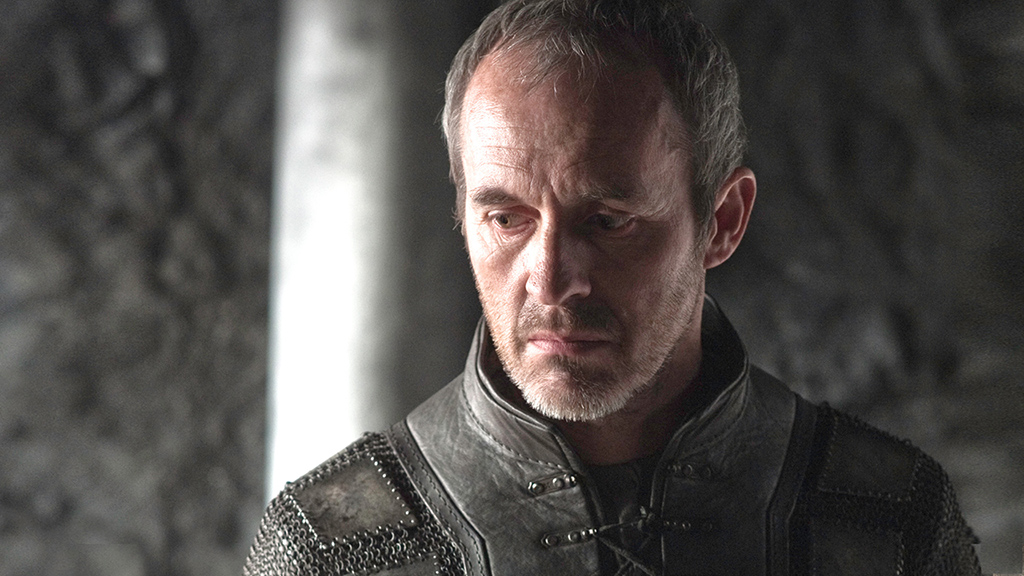
First, Stannis. I said most of what I felt about his season’s arc here, but what happened in the last episode contained elements which made me both more and less accepting of the events of the penultimate episode. First, his troops abandoned him after Shireen’s ritual burning, as I and many others predicted they would, and it was certainly vindicating to see that prediction be correct. On the other hand, Stannis is a smart guy, and the result makes it seem even more shocking that he couldn’t have anticipated that outcome beforehand.

Jon Snow’s death is heartbreaking, possibly the most yet in the series, which is really saying something. Will he be back in any form? Book readers have suspected he’ll either come back as a warg or be revived by Melisandre, but the show’s creators are for some reason really pushing the fact that he’s dead and that Kit Harrington’s never coming back, though I’m not sure why they’re trying to spoil the story. His death is absolutely brutal, but I don’t think an example of death for shock value like so many accuse Game of Thrones of (which Game of Thrones may do occasionally, but nowhere near as much as, say, AMC’s The Walking Dead, the current king of the manuver).  There are certainly questions that need to be addressed in a meaningful way regarding Jon, whether with him alive or not; mostly importantly, the question of his parentage, which even the show has taken on this season. To make such a deal out of Jon’s mysterious parentage without that mattering in some way would seem wasteful and feel pointless. That said, Jon accomplished a lot this season and while I felt the battle season at Hardhome was unnecessarily long, he was a legitimately inspiring character who saw the long view when very few others did, and his death sadly makes sense in that context. He was a visionary, but he was simply too radical, moved too fast for the rest of the Night’s Watch, who were unable to see the wildlings as allies against a greater threat, and their increasing disillusionment with Jon was a long time coming.

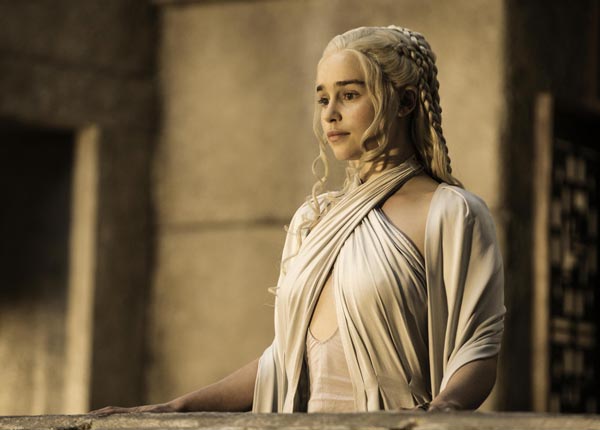
Dany’s plot had ups and downs. It certainly hurts her to be so far away from everyone else in Westeros, although at least by now we know she’s not getting there anytime soon, and thus can at least stop anticipating her immediately leaving and make peace with the fact we’ll be in Meereen for a while yet. The metaphor of occupier and occupied generally works, and while Dany makes some bad choices along the way, most of her decisions are legitimately difficult, and it’s easy to sympathize with her frustrations when she’s being asked to kowtow to some sinister slaveholders to provide any sort of peace. The Sons of the Harpy were legitimately terrifying in the show and their masks are my favorite prop of the season. The fighting pits scene really took off at their appearance. Tyrion’s arrival greatly raised the interest level and it was gratifying to see the two of them finally meet, even if they were only together for a couple of episodes before Dany dragoned on out of there. Dany clearly has some serious positive credentials for being an inspiring ruler, not the least of which are three awe-inducing dragons, but she also clearly has a lot to learn. It will be fun to see if Tyrion can show her how it’s done in Meereen. Competent rulers in the world of Game of Thrones are few and far between, and Tyrion and his dad may have been the two most competent we’ve seen, though with very different approaches.

Arya’s plot was, like Dany’s, but even moreso, difficult, because of its lack of connection to any other major characters. The choices to replace unfamiliar and far more minor book characters with Jaqen H’ghar and Meryn Trant made a lot of sense, and the show did as well as it could for the most part with one of the stranger and more out there plots, getting at a decent amount of the essence from bits and pieces of storyline, working through Arya’s issues of identity and personal vengeance.

Now, more notes to follow in part 2.

Game of Thrones’ Horrible, No Good, Very Bad Decision

8 Jun

Stannis Baratheon

I’ve read the A Song of Ice and Fire books, and as a book reader, I often find myself comparing and contrasting choices made in the show with those in the book, sometimes agreeing with the decisions of the show runners, sometimes disagreeing, and sometimes understanding their decisions in the context of the show even when I preferred the book’s decisions in the context on the book. There are many shades of grey while comparing the two entities, and though there can be a negative in constantly thinking through every decision the show makes because the books are always in the back of your head, I still prefer having the knowledge, and enjoy considering the different paths of the show vs. the book.

As I mentioned, I’ve disagreed with show choices before. However, I’ve never hated and absolutely despised a choice the show made. Well, until Sunday night. In “The Dance of Dragons,” Stannis decides his only option to press forward to take Winterfell is to sacrifice his one and only child, his only daughter Shireen, to the Lord of Light, by burning her alive. This could still happen in the books, and I’d hate it there as well, though the circumstances would have to at least be somewhat different as the relevant characters are not all the in same place. This turn of events so angered me that I had to pause the show and take 20 minutes to calm down before moving forward because I would have been unable to concentrate on the remaining scenes.

Before I rant further, I’ll explain the case on paper supporting the logic behind Stannis’s sacrifice. Stannis believes it’s his duty to become king, both because it’s his right, as next in line to Robert, because he’s been chosen by the Lord of Light, and because he’s the only man who can protect the seven kingdoms from the coming white walker menace. He’s at a crossroads. He has to go forward and take Winterfell, and hunker down there through winter. He can’t stay where he is, and since Ramsay and his henchmen burned down half their camp and all their food, they either have to go back to Castle Black, where they’d have to remain for winter, or move. They’re at some pretty dire straits, and Stannis believe he’s out of options. He turns to the only option he believes he has left. The Lord of Light’s magic is real; it works. He gets unintentional authorization from Shireen who is desperate to help in any way. Thus, kill his daughter.

So that’s the case. But I’m entirely unconvinced. Stannis has done a lot of terrible things. A lot. He’s burned people alive. A lot. He’s killed his own brother. Still, killing his daughter is much much much worse and crazier than any of those. He’s followed the red god, but he’s wary. He’s not his wife, a total zealot who believes anything Melisandre tells her. He believes it in as much as it works, and he has gotten benefit out of her practices, but he expresses occasional skepticism and doesn’t seem completely under her sway.

I want to concentrate on in-story reasons that this was a terrible move, so let’s even move past the point, while mentioning it, that this makes Stannis a character who is completely impossible to root for in any way. Now, not everyone liked Stannis, though I probably did more than most. But I can’t anymore. He’s now as low as any character, only above the likes of total psychos Ramsay and Joffrey. I’m not sure he’s any better than Roose Bolton.

But moving past that, I just don’t buy it from the character and the environment of the show. Now, I admit, as always, it’s hard for me to separate a character from the book and the show, and sometimes I take qualities that are established in the book and bring them into the show. Still, though. First, as far as Stannis is willing to go, I still don’t believe he would sacrifice his daughter. Stannis is many things, he’s severe, he’s cold, he’s dutiful, and he’s unafraid of making hard choices. But his daughter is his only child. Not only does he very obviously love his child, she is his only heir. Were he to actually become king, she would be the only natural successor, or the seven kingdoms would again descend into chaos. I just don’t believe Stannis would sacrifice his only child, both out of love and because of the value of an heir (Even if a victorious Stannis was unable to change the rules to put a woman on the throne, her value would still be immense as a kingmaker via marriage).

Also, simply, who is going to follow a man who sacrifices his own daughter?

Let’s go with the premise that killing Shireen does have power. I’m not sure how powerful the sacrifice is, but let’s say it’s very powerful and enables the crew to take Winterfell. That’s still not an endgame. Not close. It’s an important win, a very important win, and the biggest yet for Stannis. But there’s a long, long way to go. The book makes the point, which I believe is somewhat made in the show, though less clearly or thoroughly that, if Stannis is going to win the Iron Throne, he needs the support of the people; not all of the people, but enough people to fight for him and prevent him from being overthrown. Sure, some will do it out of duty and some out of fear. In the book, Stannis frees some other villages and forts from the Ironborn, showing the North that he’s there to repel their invaders and thus earning their trust and support. Again, who is going to fight for a man who sacrifices his own daughter? Kinslaying is as as serious a sin as any in Westeros, and Stannis has already done that by killing his brother. Still, that was complicated. This isn’t. Northerners and most Westerosi are already suspicious of the red god. They have their own ways and religions which have been established for a very long time. The show of force may well be enough for them to fear the red god, but enough to rally behind this man and fight for the throne? I’m just not buying it.

I’m not going to stop watching Game of Thrones because of any one decision; there’s too much good stuff, too many compelling characters and plotlines that any one thing can’t damage it. Still, it’s going to take some time to not have this bother me in the back of my mind during each upcoming episode, especially during any scene Stannis is a part of.

Ranking the Shows That I Watch – 2014 Edition: 7-4

6 Apr

Second to last entry. We’re getting close to the top. One cartoon, one miniseries, and two familiar fixtures in the top 10 of these lists. Let’s do it.

Intro here and 43-40 here and 39-36 here and 35-32 here and 31-28 here and 27-24 here and 23-20 here and 19-16 here and one-offs/shows ineligible for the list here and 15-12 here and 11-8 here.

7. The Honourable Woman – 2013: Not Eligible

The Honourable Woman

If it’s a little hard to explain how a slow, deliberately paced character sketch like Olive Kitteridge hooks viewers, it’s incredibly easy to explain how British miniseries The Honourable Woman gets viewers on board. It’s a taut, suspenseful British spy thriller in a classic John le Carre vein. The Honourable Woman follows the ex-Israeli Jewish British brother and sister executives running a company that used to make weapons but now is attempting to install infrastructure in the West Bank and the Gaza Strip. Buried within their personal histories, their company’s history, and espionage agencies in the UK, US, Israel, and Palestine, are mounds of secrets and lies. Each episode slowly pulls off another layer of the onion that is the story, getting closer and closer to the truth. Every major character holds the truth close to the vest and knows more than some people but less than others. Moreover, The Hounrable Women, perhaps because of its miniseries format, has that very rare attribute: the truly satisfying ending. That is so hard to pull off but so beneficial, leaving a wonderful taste in my mouth as I think about the show months after watching.

6. Game of Thrones – 2013: 2

Game of Thrones

Game of Thrones is the best epic on TV, spanning dozens of characters and several far-flung locations. The sheer scope of the show in an incredible achievement that no mega-budget series can match, and the show constantly manages to smartly marry very human ideas with blockbuster spectacle. The series impressively avoids getting out of hand despite its breadth, cross-cutting and presenting coherent narratives within episodes in interesting ways, and honing themes about leadership, government, and power, among many others. While some of the fight scenes seem a tad long for a show that needs to squeeze hundreds and hundreds of pages into a ten episode season, they are never anything less than brilliantly directed and choreographed, the biggest this season being the battle at the wall. Admittedly, I’m biased by having read the books, and while I try to be self-aware of that bias, it seeps into my opinions on the show, sometimes favorably, and sometimes less so. Every episode a couple of changes bother me, and most I can put aside due to time constraints or other tv limitations, but occasionally there’s a glaring mess up. This season, the biggest was the Jaime – Cersei rape scene, which came off very differently than in the book, and the biggest problem may have been that the creators didn’t realize that what they put on screen was clearly rape. Still, there’s no show that feels like week-to-week event viewing more than Game of Thrones, no show that makes you look forward to every Sunday as if anything could happen.

5. Rick and Morty – 2013: Not Eligible

Rick and Morty

Rick and Morty debuted in 2013, but aired only three episodes. The out-of-nowhere-jump-to-the-top-ten pick of this year (the honorary Eagleheart slot), Rick and Morty is the story of the travels through time and space of Rick, a slightly behind-the-eight-ball teen and Morty, his alcoholic mad scientist grandfather. The characters are bizarro riffs on Doc and Marty from Back to the Future and the plots can get both insanely complicated and hysterically funny. Rick and Morty is hilarious but also engrossing science-fiction, rolling through tropes and homages both generic and specific, and mind-fuckingly confusing plots which reward repeated viewing and stand up as entertaining outside of the laughs. Multiple episodes heavily involve recursion, and the penultimate Close Rick-Counters of the Rick Kind posits an infinite number of dimensions with an infinite number of Ricks and Mortys. Rixty Minutes, on the other hand, featuring a series of interdimensional television programs was only funny, rather than plotty, but worked incredibly well anyway. Rick and Morty, for a series this off the wall, had a surprisingly high hit rate, and I can’t wait for it to come back.

4. Mad Men – 2013: 7

Mad Men

Mad Men has never had a bad season, but season 6 may have been its weakest. No more though, as the first half of season 7 sees the show back in top form, full of classic moments and episodes, that continue to pad the numbers on an already established inner circle hall of fame case. Only the annals of all-time lists await Mad Men. The season is much more dynamic than the prior season, which felt limited by its dreary Don-Sylvia romance and the didn’t-quite-deliver-on-the-amount-of-attention-paid-to-him Bob Benson. Pete, Peggy, and Don, were all in different places this year, but bonded for the Burger Chef account, which drove much of the middle of the season, with Peggy stepping in as troubled Don’s superior who, because he was still a partner, had only limited power over him, making their already complex relationship increasingly awkward. Roger gets his mojo back (remember when we all thought he was on the brink of a possible suicide attempt?) by assembling a deal to sell SC&P to McCann, overriding Jim Cutler, who eventually joins the unanimous vote to take the deal, because, well, it’s a lot of money. Don’s marriage with Meghan disintegrated, which had seemed inevitable for some time, after both made one more effort to keep something together that clearly wasn’t working any longer. The season went out in style, with an inspired tribute to the great Bert Cooper, which I really wanted to say should have felt totally out of place, but I can’t.

Ranking the Shows That I Watch – 2013 Edition: 4-1

14 Feb

Here we are, the final four. Two returnees from last  year’s top four, and two new entrants. All four hour longs. Let’s do it. 4-1.

4. Treme

Let the trombones play

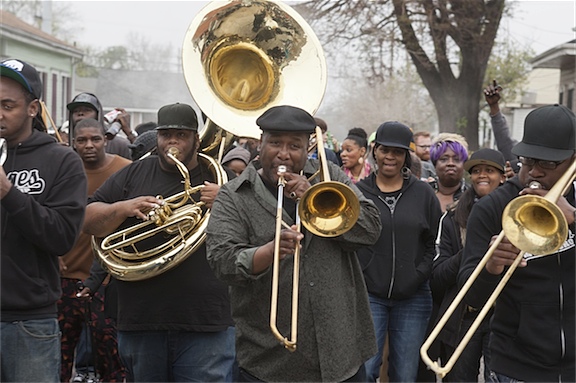
David Simon’s post-Wire paean to post-Katrina New Orleans and the people who live there isn’t The Wire, and I think that’s hurt it in the minds of a lot of people. Tons and tons and tons of people who loved The Wire, many of whom came to The Wire late, refuse to even give Treme a chance. I don’t get it. Someone makes a show that you consider great, and you’re unwilling to even make an effort to watch the first couple of episodes of his next show, especially when it’s critically acclaimed. Well, me telling you to watch it now probably won’t help, but I’ll do it anyway. Treme is sadly over before it’s time, but the final season continued doing everything Treme does so well. While The Wire feels like a story where characters take two steps forward, followed by three steps back, Treme is a little more optimistic; characters take two steps back and three steps forward. There’s plenty of being beaten down by the system, but it turns out David Simon can do hopeful as well as depressing. No one constructs shows that feel more like real life than David Simon, no one constructs more full and inhabited worlds, and no one makes characters that are easier to empathize with and emotions that feel entirely earned. Basically, even though the show is just about people living there lives, there’s really nothing else on TV like it and probably won’t be until the next David Simon show crops up.

3. Rectify

Rectify

The final new spring 2013 drama, three of which made it into the top 10 (what a freshmen class!). Unlike Hannibal or The Americans, Rectify had no problem with originality; I can’t think of any show that was particularly similar to Rectify, in terms of premise and plot. A death row inmate is exonerated after 20 years in prison thanks to DNA evidence, and he tries to fit back in to the real world in a small Georgia town that still believes strongly in his guilt. To say it’s deliberately paced would be an understatement; it makes the early True Detective episodes seem like 24 in comparison. It’s beautiful though, thoughtful, and heartrending. Instead of the deliberate pace being a drain, it’s actually a boon, and the show takes its time to linger and savor; the same way time moves slowly for Daniel, the former inmate, for whom each regular every day experience is new again after 20 years away. Nobody knows how to respond to Daniel; as difficult as it is for him to engage with his family, it’s equally difficult for them to reengage with him. The final scene of the season may have been the most emotional moment I saw watching TV in the entirety of last year.

2. Game of Thrones

In the game of thrones, you win or you die

It’s hard to write these capsules without being a little bit spoil-y but I’ve mostly tried to avoid delivering huge spoilers and I’ll continue to do so here. But I will say no show on TV delivers more shocking moments and huge twists which entirely change the direction of the plot more than Game of Thrones, sometimes turning the entire show on its head. If it was just about plot and aesthetics, Game of Thrones would already be entertaining and a must-watch but there’s so much more. Series author George R.R. Martin, and the writers who translate his work, DB Weiss and David Beinoff, have a talent for creating relatable motivation for almost every character, and making some of the most instantly hatable characters understandable if not likeable. In a world threatened by desperate winter conditions and external threats, Game of Thrones constantly reckons with the nature of power; what are the rules, what are the rights, and what are the responsibilities. The wealthy fight over a throne while the poor struggle merely to survive. Like most great shows, fans can have polarizing opinions about many of the characters and all have credible arguments.

1. Breaking Bad

Breaking Bad, bitch

Well, one last time. Breaking Bad delivered a final season and a finale surely to be considered one of the greatest of all time. Even if not every single moment worked, Breaking Bad simply did so much in eight episodes that the success percentage was still absurdly high, and even the very few decisions I disagreed with, I was able to understand the reasoning behind. Breaking Bad told us right from episode one of the final season that they were done playing it slow and safe, as Walt was on the move after confronting Hank. From there it was a non-stop episode to episode roller coaster ride, which led to one of the rare times where I really felt like I couldn’t wait another week for the next episode, although if each episode had come any faster I might have had a heart attack. The last season was so creative, so much happened, the drama was on such high alert; Breaking Bad went for it in a huge way and won. There are so many many riveting and memorable scenes that there are too many to name, but his phone call with Skyler was maybe the emotional high point of the season, while Ozymandias may go down as one of the best episodes of television of all time. One last salute, Breaking Bad, before I won’t be able to rank you anymore. This is how memorable final seasons are done.

TV’s Golden Age Not Necessarily Over Just Yet

8 Nov

The Four PIllars

Andy Greenwald wrote an article on Grantland which probably wasn’t intended to be trolling, but it came off that way to me, and I felt the need to refute it, particularly because people constantly make arguments like this, if not as specific as this in particular. His argument in short is that television’s “Golden Age” is over. I’m very skeptical of the concept of a “Golden Ages” in general; it reeks of nostalgia for times that weren’t necessarily any better or worse than any other, but seem that way in memory, but I’ll follow along. I willing to accept in principle that certain eras aren’t necessarily as good as others, and that all seasons of television are not equal. However, I think both that his argument in broad strokes is wrong and that the claims he makes to get there are wrong a swell. I’ll break it down in further depth below, but quickly, the biggest issue is that his judgment of the entire previous golden era is particularly rendered less valuable because he’s only judging by using the shows at the very top. He then goes out to knock the “medium-level” shows he calls them in this era, without naming the examples of medium level shows that made the Golden Age great.

He uses what I like to call, or will probably start calling after this, the Four Pillars of TV Greatness (TM). These four are in order of airing: The Sopranos, The Wire, Mad Men, Breaking Bad. They’re four undeniable great shows, and if you asked for the greatest dramas of all time, there’s a better than even chance they’d finish as the top four of any poll of enough critics or knowledgeable TV viewers. He talks about a Golden Age, but to be clear, he’s talking about these four shows.  He speaks as if he means to cover a greater swath, as if those four just provided cover and inspiration for a flourishing run of good-but-not-as-good shows beneath their wings, but not a single other show is named after the those four, and while there are others that could easily qualify (Deadwood and Six Feet Under, at the least), I think it’s important to mention that these are the ONLY FOUR he mentions to represent what he describes as the Golden Age.

Greenwald then goes off and reels off several current shows that don’t meet his standard for Golden Age inclusion, whether because they’re simply not as good (Boardwalk Empire, The Walking Dead, and Homeland, and outside of Homeland’s legitimately brilliant world-class first season, you’ll get no argument there from me) or much more strangely because they are great but they’re genre show, in the case of Game of Thrones (and to a lesser extent Orphan Black), which somehow don’t qualify as Golden Age-worthy because they contribute to other negative trends in television, regardless of their own quality.

The show he most associates with this gilded age of television is The Walking Dead, which he backhandedly notes that even though he’s not a fan, he acknowledges it’s the most important and influential show of the past five years. Without speaking on the quality of the show, on which I stand somewhere in the middle, I disagree strongly with his assertion. While that same statement may yet be true in five years, it really isn’t; Walking Dead’s influence is only beginning to be felt as we still wade our way out of the Age of the Antihero, which still, though waning, dominates television (three of the Four Pillars are antihero shows – The Sopranos, Mad Men, and Breaking Bad, along with Boardwalk Empire, Justified, House of Cards, Sons of Anarchy, and plenty of lesser fare). Honestly, whether true or not, this is really off-topic from the central argument so we’ll move back in that direction.

Greenwald goes on to talk about how networks aren’t taking chances anymore, and that’s surely true, but that was also very much true five or ten years ago. None of the Four Pillars were network shows. Four shows got through the cracks and struck gold. He claims it’s systematic failure that as many quality shows aren’t coming through the pipeline, but I’d claim it’s just odds and not enough time.

Let’s not forget as well that one of the Four Pillars is still on, with two seasons to go, and one ended a mere month and a half ago. Game of Thrones is an admittedly great show, and I’m not sure why it’s a knock that it’s a genre show or that it’s based on source material, especially just because in influences other less good shows (first, something every new and interesting show does, second – is it a knock on Pearl Jam that so many lousy bands were influenced by it?). Shows come in waves, and influence of the biggest and best play a large part, for better or worse. Mad Men was very much influenced by The Sopranos. Greenwald complains about a prestige mad libs, and he’s by no means incorrect, but that’s also exactly what Mad Men was. You can give Mad Men credit for inventing that formula, but as mentioned, it stole plenty from The Sopranos.

Logical complaints aside, I’d argue that he’s not looking closely enough to find the good stuff. Last Spring alone saw the debut of four new dramas, each with the potential to be great, and although the odds are against any of them becoming an all-time great, that’s true for any show, and promise is really all you can ask for.

Rectify, the best, airs on Sundance channel, and stands in particular contradiction to Greenwald’s claims as it doesn’t fit into any of the boxes Greenwald is complaining about. Rectify is about a man exonerated from death row after twenty years imprisoned back into the small Georgia town in which he grew up. It’s a small show in the way Game of Thrones and Walking Dead are big, and it’s exceptionally, moving, human, beautiful and heartbreaking in different degrees.

The Americans admittedly kind of fits Greenwald’s prestige formula, but it transcends it, and even Greenwald acknowledging The Americans as the best new series of last year.

Orphan Black, Greenwald already acknowledged as well as an excellent show, and, though it’s a genre show, it certainly doesn’t fit into either the prestige or the bigger is better formula.

Hannibal, admittedly, it less new and interesting than the other three, and probably will end up as good and not great, but it’s especially notable for its gorgeous cinematography and its compelling psychological battling between protagonists Will Graham and Hannibal Lecter which elevate a cop show above the norm.

Remember, if we’re to match his Golden Age, we only need four. My point is not that these four shows are great and replacements for the Four Pillars, but that if even one of them can become great, than really all we need is one new great show each year. I could name lots of good but flawed shows a la Boardwalk Empire from the Golden Age – Lost, Alias, The West Wing, True Blood, 24, and more but it doesn’t matter, because there were some great ones. Now, some people may like some of the good ones better than others, but that’s always the case. Additionally, people will and have always copied successful shows. Lost spawned a thousand attempts at supernatural mystery shows, not one of which has really become successful (Heroes was the closest) and The Sopranos has directly led to Mad Men, Boardwalk Empire, and less directly many others.

There’s no reason to believe that the Golden Age is over because there are a lot of new bad and new mediocre shows. There are always a lot of new bad and new mediocre shows. All there have to be is a couple great ones. There are, and there’s no systematic reason that a few more won’t appear in the coming years.

Game of Thrones – End of Season Report, Season 3

10 Jun

Arya Horseface

Game of Thrones Season 3 ended yesterday with more of a whimper than a bang, especially compared to the penultimate episode.  During the silent credit sequence that followed that ninth episode, you could hear a pin drop due to the gaping silence and wide open jaws of the viewers, at least where I was watching.  Still, things happened last night, and plenty of things happened over the course of the year.  The last episode was primarily little bits of wrapping up loose ends and starting new ones.  I’ll take a look at some pieces of the last episode, some continued fall out from the red wedding, and some general season-long trends.

First, it can’t be underestimated how much the greater Westeros landscape has shifted post Red Wedding.  The Lannisters, for most intents and purposes, have won the war.  They know the battles aren’t over forever; there are marauding Ironborn in the north, and Stannis remains alive and everyone knows he’s not one to give in.  Still, Stannis’s forces are decimated.  Stannis will have to regroup and any fight that could actually challenge Lannister superiority is some time away.  The Lannisters and their allies have recaptured the north and their single greatest current threat was wiped out in one single brilliant blow.  The Lannisters now merely need to consolidate their power and make sure their growing unruly king can be corralled.

The three primary parties behind the Red Wedding had different motivations which lead to their hand in the event.  Tywin was out to win a difficult war and saw a way to do so in one fell swoop with a minimum of bloodshed to his side.  He’s not punitive beyond what he thinks will serve a practical purpose, such as to intimidate others from ever taking up arms against the Lannisters again.  He’s not interested in parading the wolf ‘s head around or gloating.  Tywin is an unsentimental pragmatist through and through.  Roose Bolton is a cold and calculating opportunist.  He begins to see, as the viewer does, that Robb, thanks to a series of blunders as well as overall strategic difficulties, is losing the war.  He knew that having supported a losing side for so long is unlikely to earn him mercy with Tywin and the eventual victors.  He’d lose lands at the least, and maybe members of his family as hostages. Instead, he saw a chance to turn his fortunes around by aligning himself with the winning side, and helping them out to prove his value.  Bolton is ambitious but within reason.  He’s going to become Warden of the North, a huge promotion, but he’s not so greedy that he would have made his move if he didn’t see it as a no-lose opportunity.  For Walder Frey, it’s old fashioned revenge, plain and simple.  He wouldn’t have acted without assurances from Tywin, but he’s less interested in the greater conflict than in getting back at Robb and the Stark family, who showed him up.  He is a bitter old man who was lied to.  Robb broke a promise, insulted the Freys, and must pay.

Tywin intriguingly asks whether it matters how they died, when discussing the moral repercussions of his actions with Tyrion.  A war won is a war won, and Tywin rightly points out that fewer people died this way than would have in a prolonged conflict on open battlefields, and not just on the Lannister side.  Still, Tyrion’s point that memories are long is at least equally correct and I think that’s not to be underestimated.  This is a kingdom with a long collective memory, and the North is not likely to put aside its animus towards the events of the red wedding, even as years and decades pass.  Bran explicitly reminds of us of this with the story of the Rat Cook, who was turned into a rat not for murder, or for cannibalism, but for violating sacred guest right.  The odds are against Tywin being haunted by that decision in the near future, but for a man who puts so much stock in considering his family as greater than himself, he may have caused them seriously long term negative reputational value.

Daenerys conquered two slave cities in short order with dragons, guile, and a host of now freed slave soldiers.  She had her best television moment fairly early in the season when she loosed the dragons on the Astapor slave sellers and told the unsullied she purchased to turn on and kill their masters.  I was pretty disappointed with her final scene, which was also the last scene of the season.  The previous two seasons have ended with serious WTF moments, where shocking supernatural events takes place.  This season’s ending did not compare to either the dragons hatching in the first season or the white walkers in the second.  The slave soldiers calling out to Dany, their mother, verged on cheesiness, and did nothing for me.  I may be biased because Dany isn’t my favorite character, but I still thought this was not adding anything new to the Dany narrative; the news she had conquered Yunkai  would have been a better place to end her season’s storyline.  Admittedly, the Dany scenes are among the hardest to place within episodes because she’s so far away from all the other characters both spatially and plotwise.  It’s hard to root against her freeing the slaves, and the slavers are some of the most one-sided characters on the show.  Still, I think there’s a more interesting dynamic to focus on in terms of what happens to the slaves and the cities once she conquers them, and how to take care of her huge number of ex-slave followers. I hope some time is spent with these challenges in the next seasons.

A couple of characters actually converge  and meet up with one another in this final episode!  Sam meets up with Bran, and even though they go their separate ways, it’s still a heartwarming little meet and greet.  Bran has gotten the bulk of the show’s supernatural activity this season and he demonstrates his warg power and his future vision or greensight.  His spirit guide Jojen seems to believe Bran could play a major role in fighting the white walkers in the upcoming battle. Bran’s plot is consistently the hardest to predict because it’s so steeped in the supernatural. Jaime also finally reunited with Cersei, providing an oddly sentimental moment for incest, though the one moment is about all we get from from their meeting.

In a plot beginning, Stannis is soon to be off to the wall with both rivals Melisandre and Davos agreeing on a plan. It’s an intriguing move for a king without a kingdom.  How to convince the people of the kingdom to join his side?  If he can’t beat his enemies within, attempt to defeat the kingdom’s enemies without, the white walkers.  The Stannis plots this season have been limited, but with him off to the wall, where Jon Snow and Sam are hanging about, it seems like they may get a lot more interesting soon.

The petulant young king Joffrey is a problem, but less so than when there was merely Cersei to corral him, as Tywin is clearly in control of the kingdom now.  Having the crown hardly makes one king in more than name.  That said, there’s at least a minimum of connection to the crown that one needs to obtain ultimate power as well. Varys reminds Shea of this when mentioning that he, as a foreigner, will never be able to hold more than a certain amount of sway no matter how much he knows.  I didn’t particularly care for the Varys – Shea scene, largely because it seemed as if Varys was saying a lot for our benefit that he would never have said to Shea in context, but the point still stands.  You don’t need to be the king to have power but having the family connection and the high born status doesn’t hurt.

Tyrion, who basically owned season 2, didn’t have a whole to do this season, but that’s okay.  He did marry Sansa, against both of their wills, and the little bit of banter we’ve seen between the two of them has been surprisingly entertaining.

Arya and the hound have become the latest buddy pairing to tear up the Westeros countryside, hot on the heels of Jaime and Brienne and before them Tyrion and Bronn.  The Hound has some of the more mysterious motives of any character in the show, as he’s done some monstrous deeds, but also seems to have some redeeming characteristics.  He also really does not like fire. Him and Arya make short work of four Frey soldiers sitting beside a fire, and Arya, perhaps not surprisingly considering all she’s dealt with, has begun to harden considerably in her treatment of men minding their own business hanging around the countryside.  Just last week, she asked the hound to spare a man’s life.  No more.

Jon finally makes it back home, ending his middling attempt to pose as a wildling.  It’s heartbreaking to see Ygritte aim at Jon Snow, and it’s an open question if she’s actually trying to kill him or not, but I think it’s oddly reaffirming that both of them are standing up for what they believe in.  I’d love for them to be together, but it’s difficult when they have belief systems that are diametrically at odds.  Jon stands up for the Night’s Watch and makes a daring return home to warm of the upcoming wildlings attack, while Ygritte tries to fulfill her promise that if Jon betrayed her she would kill him herself.  I’m certain glad, however, that she was unable to come through on hers.

A reveal in the finale is that the character torturing Theon for the entirety of the season is Ramsay Snow, Roose Bolton’s bastard, who took over Winterfell from the Ironborn.  The number of Theon scenes this season has seemed gratuitous – two or three scenes of torture were good enough to get the point across, and beyond that seemed unnecessary.  Still, here we have a truly evil, truly sadistic character.  To me, this actually makes view Joffrey in a different light.  Ramsay is a face of evil.  Joffrey is a spoiled immature brat who received the keys to a kingdom as a teenager when he normally would have received groundings and time outs.  He’s bad, unquestionably, but I think he’s more out of control than evil.  Now Ramsay Bolton, who continues to torture Theon for days and weeks on end simply for the fun of it.  That’s evil.

Game of Thrones: Season 3, Episode 9 Notes

3 Jun

Please scroll down immediately past this post if you have not seen this episode yet.  I’ll wait.

Robb Stark of House Stark

Phew.  Okay.  So, Red Wedding.  That’s what it’s called if the internet hasn’t told you a million times already and you haven’t read the books.  Red cause of you know, all the blood.  I have some broader Game of Thrones thoughts I’d like to posit after the season’s done. First, though, some notes on the Red Wedding, and Robb’s ultimate road leading up to it, now that it can be viewed as a whole.  This post ended up being much longer than I had planned, so apologies, but who doesn’t get carried away by Game of Thrones sometimes.

The notion of honor has often been at the crux of Game of Thrones, particularly since the dead patriarch of our main family, the Starks, was known for it, and passed it down as a crucial value if not the most important value, to his sons and daughters.  More than honor, unbending honor, to the point where it was not only not practical or smart, as Ned learned the hard way, and sometimes even difficult to comprehend by our modern standards of what’s important.  Although it’s hard not to like Ned overall (especially in memory), it’s also hard to sympathize with his position that Jaime is despicable and beyond redeemable for being an oathbreaker when killing the Mad King, even though Jaime’s decision may have spared hundreds or thousands of lives (though Ned is hardly the only one who feels this way, as this is a world moral absolutism, and as I’ll discuss below, there’s a reason for that sometimes). Ned sees honor as black and white; Jaime’s oath and his duty toward the king was bound in stone, while his opportunity to save random King’s Landing residents was not. Ned’s children all struggle with how to live honorably, as their father taught them, in a world that can be extremely dishonorable.  They try to figure out where the line is between keeping their heads, hopefully, while, at the same time, doing their father proud.

I think the Red Wedding was handled spectacularly on the show and overall I’ve been thrilled with the show and many of the adaptation choices they’ve made.  I’d like to dwell briefly on one I think was ill-advised.  In both the book and the show, Robb, in order to pass through a precarious patch of country known as the Twins and gain a large component of men for his army, agrees to marry cantankerous and bitter Lord Walder Frey’s daughter.  He violates that oath by marrying someone else.

In the show, he falls in love, and believing love to be more important than keeping a promise (or at least this promise), he chooses to marry the woman he falls in love with and deal with his broken oath to Walder Frey later.  While it’s nice to think that in this world people can actually be in love with the people they marry (I’m not being sarcastic. It is nice), I thought it came off as somewhat selfish, especially when his mom and his other advisers so ardently recommend that he not get married, at the least during the war, when violating the oath would have practical consequences. He just doesn’t listen and does it anyway.  For someone who values honor above all else (something we see again with his decision to execute Rickard Karstark), it’s hard to understand how his decision to marry Talisa would be consistent with his policy of honor above any other value, even love. This would have been a lesson his father, himself in an arranged marriage with his deceased brother’s former fiance, taught him at least.

In the book, Robb’s recovering from an injury suffered from battle far away from his mother and top advisers.  He’s recovering in the house of some minor nobles, and stricken after finding out the news that Theon betrayed him, took Winterfell, and killed his brothers. After he learns this news, his nurse, a young minor noble herself, decides to, uh, comfort him, above and beyond what’s normally expected of a nurse.  Robb, feeling ashamed after taking her virginity (which is a big deal in this world (also in Downton Abbey!), decides the honorable thing to do, being a Stark, is to marry her.  He’s not making the decision out of love, but rather out of his perhaps misguided view that the honorable path in the moment of marrying the girl supersedes the honor of keeping the oath.  His mom is not there to advise him otherwise; she’s miles and miles away and is horrified when she finds out, but it’s too late.  I think the immaturity is accentuated by the fact that Robb’s younger in the book.  While making all the characters a few years older in the show makes sense because actors age, this is one spot where the actions seem more excusable if Robb is younger, and just the couple of years could make a significant difference.  Certainly to some extent, immaturity is also a factor in his not appreciating the value of an oath in the show, and he certainly could have been firmer in refusing to have sex in the book. Still, I think the book both painted a more sympathetic figure of Robb and also doubled down, properly, on how honor, the essential value of the Stark family, played into his decision. It’s possible he was wrong, or at least questionable in balancing the honor at stake in the book, but at least it makes sense from his perspective.

The Red Wedding of course, is about the exact opposite of honor.  Not sadism or brutality, but total disregard for the rules, the willful violation of social norms that everybody in a society believes in to function where there doesn’t exist a modern state with clearly defined rules and well-enforced law.  These norms can be held together by religious beliefs, or a cultural belief so strongly shared that violating it would prompt instant outrage from society at large (in GoT, it’s both religious and cultural).  Oaths, in this world, have that kind of power.  Like in the Ancient Greek world, an oath is a bond.  It’s more than an oath would mean today when there’s so many other ways to enforce promises – we have contracts and courts.  The oath Robb broke is serious business, which can’t be underestimated, and they do a good job on the show of making out what a big deal this is (as mentioned above everyone still refers to Jaime as Kingslayer for his oath violation years and years ago).  You don’t have much more than your word.  Ned Stark wouldn;t have smiled on Robb’s choice in the show.

That said, there’s an even greater breach here in the Red Wedding which isn’t articulated so much in the show but which at least comes across strongly in the visuals of the scene.  I’m not sure it was a focus, but they definitely made a point of mentioning, in the scene in which Robb and his entourage arrived at the Freys, that the visitors were to receive bread and salt.  This means, book readers know, that, as guests, they’re now under the protection of their hosts.  Guest right is a sacred and important tradition in Westeros, much like it was in Ancient Greece, where it shows up crucially in both the Odyssey and the Illiad.  Once visitors have been welcomed with bread, they can not be harmed until they leave the premises.  This is so sacred that it’s basically unheard of; one famous song in the Game of Thrones universe known as the Rat Cook tells of a violation and the horrible consequences that came to the violator, and serves as an admonishment to would be guest right-breakers.  Both the shock and the disturbance of the betrayal by his allies are heightened by this visceral break with hundreds of years old tradition.  The fact that it’s a not simply a normal stay, but a wedding, a sacred and joyful ceremony, only multiplies the deeply felt wrongness of the perpetrators’ actions. This breach puts those who violated outside of the normal social order of Westeros. This may win the war for now, and it may be difficult to overstate the value of that, but this will not be something soon forgotten by anyone in the realm, just as Robb’s oath violation wasn’t forgotten.

Robb’s issues of course extended beyond breaking his oath to Walder Frey.  His campaign, while winning battles left and right, suffered from numerous off-the-field problems, chief among them, besides his marriage, his mother’s decision to release Jaime Lannister and his questionable decision to execute Rickard Karstark.  Still, even these blunders simply cover up a more basic issue with the Robb Stark strategy: there isn’t one.

Robb’s tactics are excellent; his strategy is non-existent.  It’s brought up explicitly by his wife when they’re first getting to know each other.  What’s the goal of his war and how does he make it happen.  He tells his soon-to-be-wife that he wants to get to King’s Landing and kill Joffrey, and she rightfully asks, what then.  He says he merely wants to be King of the North, but that means he has to find a way for whoever rules at King’s Landing to both accept his secession, and find a way to preserve a more permanent peace (who’s to say the next King wouldn’t seek to reconquer the North?) The goal becomes muddled, and even before he gets mired in problems with his troops, he doesn’t really know the best way to reach this goal. When the North gets taken over by Ironborn, his path to victory gets even more questionable and confusing, considering he doesn’t even possess the only place he claims he wants to be in control of.   Maybe if Robb decided he wanted to put himself on the throne, or put someone else on the throne, it would be just as unsuccessful but at least it’d be a coherent goal.  His plan to capture Casterly Rock seems like a desperate gambit that may provide only a temporary lift, even if successful.  It reminds me of the Confederacy’s plan to capture Washington D.C. during the Civil War (note for longer entry: compare the Confederacy’s secession to the North’s in Game of Thrones).  They knew they were outgunned and outnumbered, and no matter how many battles they won, the North just had more of everything.  They imagined if they had taken the heart of the North (US, not Winterfell), they would destroy morale, and break the North’s will.  There’s a world in which this strategy could have worked work, but luckily for the US, Lincoln’s will, like Tywin Lannister’s was indomitable.  Maybe taking Casterly Rock would have caused a lesser or less stubborn leader to give in, but I have a hard time seeing Tywin conceding.  Robb needed manpower and allies, strength, and those he was hemorrhaging, and probably never had enough of to begin with.

Ranking the Shows That I Watch – 2012 edition: 3-1

25 Feb

We’re finally here at the end the ranking of shows I watched in 2012 – to see what qualifies, check out the intro here – 3, 2, and 1 are below.

3.  Game of Thrones

The seven houses

I kind of knew what Game of Thrones was before the show aired, but only the vaguest basics.  My friend had been touting it for years, but I kept putting it off and putting it off, and though I was excited for the show, I didn’t get around to reading the books before the show aired.  By the seventh episode, I was so obsessed with the show that I started the first book and finished them all that summer.  I would have read five more books pretty quickly if only they were available.  This is of course the TV show, and not the books, but with Game of Thrones, they’re somewhat intertwined; George R.R. Martin is involved with the show, writing an episode each year, and because the story is so complex, and is unfinished, there’s a limit to the amount the show can deviate from the books, as opposed to shows like The Walking Dead or Dexter.  While I haven’t agreed with all the changes from the books, some have been very smart, including the added screen time for Tywin Lannister, an important character in the book who does most of his work outside the main storylines, and particularly his pairing with Arya Stark.  The show, like the book, is a thought-provoking fantasy for people who don’t like fantasy. Instead of a stark (no pun intended) Lord of the Rings-like contrast of good versus evil, Game of Thrones is about shades of gray.  Who the heroes and antagonists are isn’t always clear, and with the exception of a couple of truly psychopathic characters, the antagonists also have believable motivations.  While at first I was disappointed by the fact that dragons actually existed in the world of Game of Thrones, I’ve now come to terms with it and have begun to appreciate George R.R. Martin’s very selective use of magic and traditional fantasy elements.  Rather than water down the book by having magic appear everywhere, its uses are uncommon and important.  Each episode is chock full of ruminations on the nature of power and justice and the right to rule, all tied up with well-crafted characters and psychological intrigue.  Characters are constantly playing each other, important characters die, and when big moments come they seem both surprising but not out of nowhere at the same time.  All of these factors make for extremely gripping television; I haven’t found someone yet who started Game of Thrones and didn’t really like it.

2.  Mad Men

Mad Men

For some reason, between the third and the fourth season of Mad Men, I had convinced myself that Mad Men was solid enough but that maybe it wasn’t so great.  Then, the fourth season came out, and I realized the show was fantastic and I was crazy to have ever thought that.  I did not make that mistake again in the long wait between the fourth and fifth seasons, and was rewarded with another excellent set of episodes.  I haven’t seen the other seasons again since finishing, but the fifth season might have been the best ever.  There was no one obvious best episode of the season like there was with the fourth season’s “The Suitcase” but that spoke to the strength of the season as there were several stand outs, including “Far Away Places,” “The Other Woman,” and “Commissions and Fees.”  Roger on LSD was a real treat and Roger has over the past couple of seasons become my favorite characters (I tend to love sharp tongued nihilists (see Jaime in Game of Thrones)).  I was extremely skeptical about Megan as a character from her relatively small role in the fourth season, but the dynamic between Megan and Don was one of the more interesting plotlines of the season.  Although new character Dawn was underused, other new character Michael  Ginsberg was a real winner, challenging Don in ways that Peggy never did.  We’ve seen Don challenged at his job by his own lack of interest, but we’ve never seen him challenged before now because he’s losing his touch generationally, a point driven home by the first ever use of a Beatles song, Tomorrow Never Knows, in a TV show, which famously cost a quarter million dollars but was fantastic. My minor qualm with this season was that I don’t see the point of including Betty plots that showcase how awful Betty is; to me Betty a couple of seasons ago became a cartoonish villain, and kind of let Don off the hook for all his cheating because she was so irritating.  I would have just cut Betty largely out of the show.  Still, every other character from Don to Megan to Roger to Peggy to Pete to Lane to Joan (Christina Hendricks work is masterful in “The Other Woman”) are firing on all cylinders.  I look forward to watching it again some day, and I can’t wait for the new season.

1.  Breaking Bad

Breaking Bad

I’ll be honest.  I didn’t like the first half of season five as much as I did season four, and I seriously considered moving Breaking Bad down. It was essentially a tie, and I let Breaking Bad keep its place, much like Supreme Court decisions are upheld with a tie.  However, while it’s absolutely worth saying that I didn’t like this half season as much as the last, it’s still phenomenal TV.  Even minor decisions I disagree with are imbued with serious thought and care, and I appreciate that.  The brilliant filming technique was on display in episodes like “Dead Freight”, a heist episode which was far more action movie than I’d like Breaking Bad to be, but was still enjoyable due to the skillful cinematography.  If season 4 turned recurring character Gus into a break out main character, season 5 did the same for Mike.  Jonathan Banks perfected Mike’s blend of an incredible level of competence, been-there-seen-that skepticism and eternal calm.  Walt was interesting too, figuring out how to proceed as the winner, rather than under the gun, and though he certainly became in some ways more evil, I actually didn’t entirely hate him, compared to many other viewers.  No show keeps as many possible scenarios going forward, all of which are plausible, leading to the best form of unpredictability. Breaking Bad does as good a job as any show on tv of leaving lots of different strands in the air, only a few of which actually need to be answered to avoid the feeling of pulling a Lost (leaving important questions unanswered) (ie. the ricin cigarette; not coming back to that again would be unacceptable).  Little scenes which may not be entirely central to the plot work as brilliant vignettes in and of themselves, such as the opening to “Madrical” in which a German executive kills himself with a defibrilator is a fantastically nifty bit of filmmaking.  Like any show, of course, I have minor qualms; I thought the resolution to the situation at the end of “Dead Freight” was a bit of a cop out, and new character Lydia has some issues.  Still, this is compelling TV at its best every week, with wonderful characters and beautiful scenes, and though I’m often scared to watch what will happen in each episode, once it finishes I often want to go back and watch again.