Tag Archives: AMC

End of Season Report: Breaking Bad, Season 5 – Part 2

9 Aug

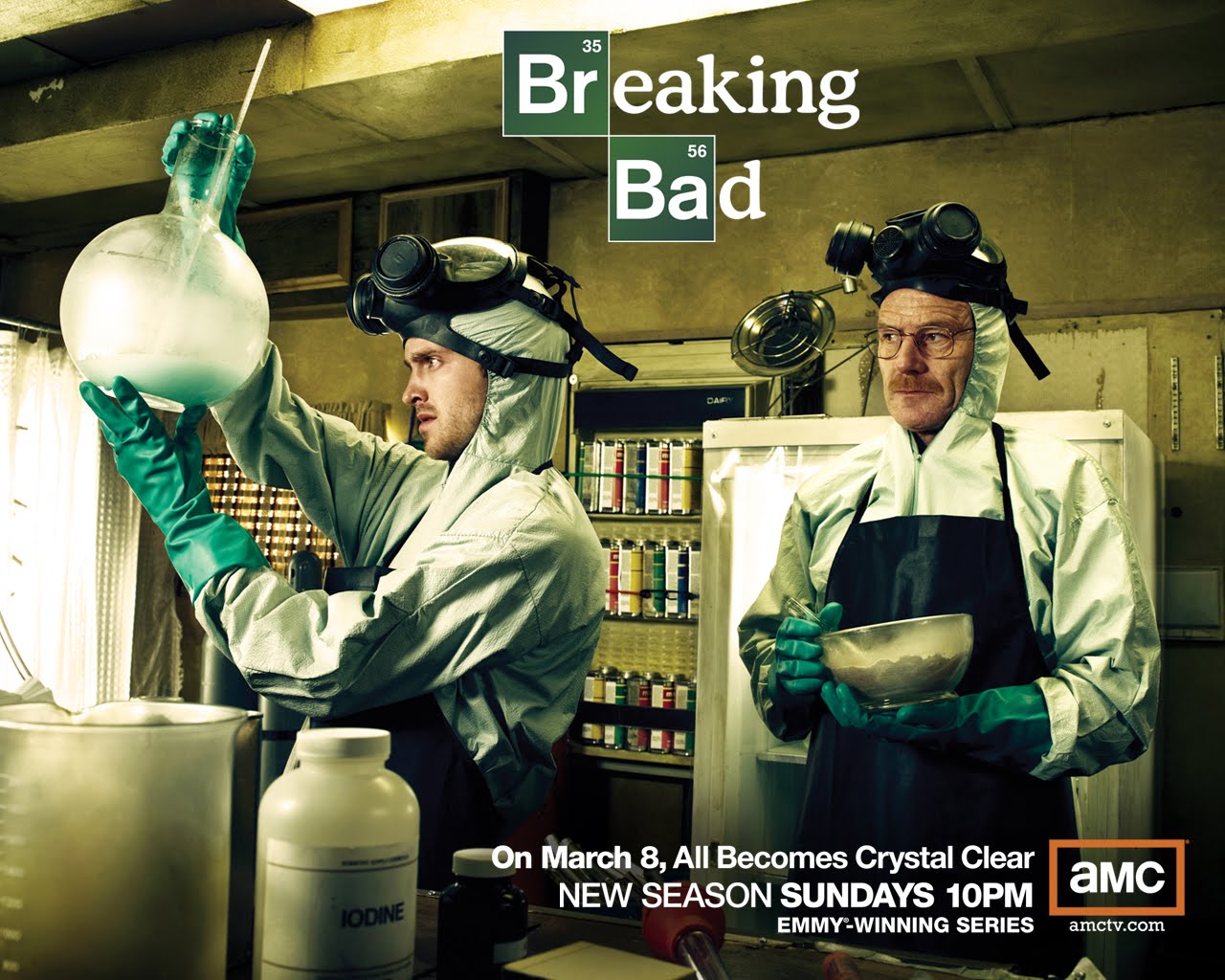
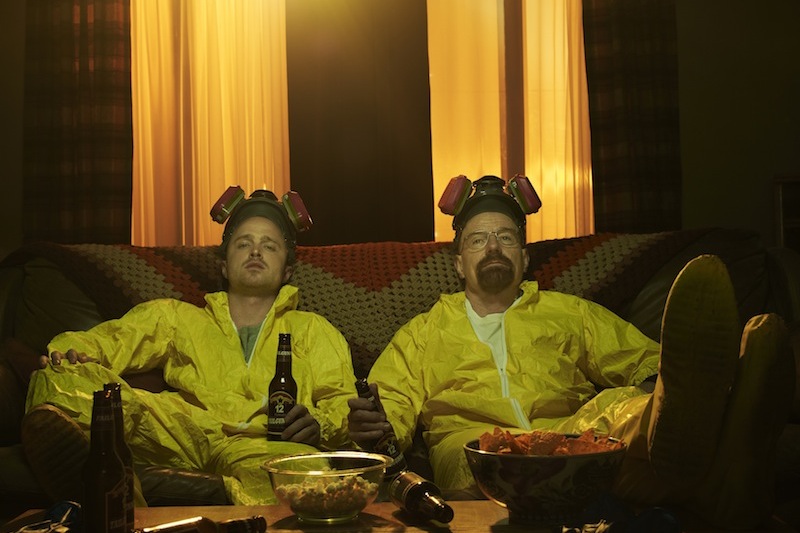
Jesse and Walt doing what they do

Part two of my notes on the first half of Season 5 of Breaking Bad.  Part one is here.  Moving forward.

After stating forcefully that he’s unwilling to sell his share of the methylamine even though the potential buyers have told them it’s all or nothing, Walt succeeds in doing nothing but pissing everybody off until he actually comes up with a solution that requires him to do the other thing he does best besides make math;.  His plan is dependent on him bringing his braggadocio to convince someone of something, in this case, convincing the drug dealers that he is the legendary Heisenberg.  What once was a lie, has now become the truth.  While Walter White is a helpless, cancer ridden science teacher, Heisenberg is a master chemist who killed drug dealer extraordinaire Gus Fring.  What started off as an idea, has become a reality.

Walt is incensed when Jesse won’t stay with him in his meth operation, and refuses to give him his share of the money, as he’s resentful of Jesse’s choice to abandon him.  Obviously, Walt is clearly in the wrong here, but it’s just another go around in the complicated father – son type of relationship Walt and Jesse have.  Walt, with Jesse, can be proud about himself in a way he can’t be with his own son, and Walt cares about what Jesse thinks; Jesse’s inability to rationalize the shooting of Drew Sharp is a shot directly across the bow of Walt’s ability to do so.  Even though it’s certainly in Jesse’s best interests to step away from more illegal activity, I think Walt really believes what he’s saying, that this is something Jesse does well, and that this will keep Jesse, who really didn’t have a lot going for him before Walt came around, from using.  The rush of being the best may not have the same appeal for everyone that it does for Walt, but for Walt, that’s what this is all about. In a perverse way, Jesse, like, Walt, was better at cooking meth than anything he had ever done before, and it’s unfortunate there’s no legal way for him to take advantage of that.

At the end of the second to last episode, Walt brings Mike’s go bag to him, and insists that Mike gives him the names of his guys in jail.  Mike, of course, won’t, and Walt, feeling helpness and out of control, clumsily shoots Mike.  It’s an obviously poor choice by Walt, reacting to his lack of control over the situation which Walt can’t deal with, and he realizes it afterwards, though that doesn’t do Mike much good.  Mike, without blaming the victim too much, could have gotten away with his life intact if he didn’t take it upon himself to ream out Walt for everything Walt did to screw up Gus’s operation.  We had a good thing going with Gus, Mike insisted, until you had to go and blow it up.  Of course Walt did not have a good thing going with Gus, at least towards the end when Gus wanted him dead, and it wasn’t actually Walt who screwed it up to begin with, which is hard to remember, but Jesse, when he decided to try to kill a couple of drug dealers who used kids.  Still, Mike just has to rub it in, and while that doesn’t make his death his own fault by any means, he should know Walt well enough by this point to know that he’s temping fate to say the least. Mike who’s so cool, calm, and collected for the vast majority of the series lets his emotions get the best of him here and it leads to his death.

I had forgotten just how much time passes in the final episode of the first half of the fifth season.  Walt enlists Todd’s uncle to kill all of Mike’s henchmen in prison at the same time.  Murder for hire is pretty vicious for certain, and it’s an incredibly brutal series of deaths, but any sympathy I feel for these henchman is nothing compared to what I feel for Drew Sharp, the boy killed by Todd in the desert.  After all, practically, Walt was right.  Without their hazard pay, several of these guys were going to talk, as we saw.  It was a cruel thing to do, but something Gus Fring or any other person in Walt’s boss of a drug operation situation would have agreed necessary to keep on.  Again, that doesn’t make it right or good, but it’s business rather than evil; these people didn’t deserve to die but they were hardly innocents.

Skyler shows Walt all the money that Walt’s acquired, which she’s placed in a storage locker, to point out that for all the money they have, they could never launder it all in a million years.  She’s right, but it’s unclear whether or not it matters to Walt.  Walt is only partly doing it for the money; he’s wants to do something he’s the best at and be the boss.  Still, maybe he sees a way back to his family here, an opening left by Skyler, and he decides, not unwisely, to take it.  Of course, if this was a different series that could be the end – Walt realizes he’s got more than he could ever need, decides to retire, and the family more or less goes back to normal.  In this show, though, at the same time they’re having dinner, as Walt’s retired, and Skyler seems for once to not despise Walt with ever fiber of her being, Hank comes upon a copy of Leaves of Grass in the bathroom, sees it inscribed to “W.W.,” similar to a copy of Leaves of Grass found at Gale’s apartment, and what the W.W. really stood for hits him.

I don’t particularly like the last scene for a couple of reasons.  First, I don’t think Walt would be so careless to leave a gift from Gale lying around in the bathroom.  Second, Hank’s a damn good cop – if he figures out Walt, I’d vastly prefer it to be from a positive act, rather than simply stumbling upon it.  Third, I hate the reminder after Hank sees the “W.W.” that reshows the scene where Hank is trying to figure out what W.W. means; we’re all obsessive Breaking Bad watchers, we either remember the earlier scene or can figure it out.

Every season, I talk about a couple of individual scenes that I adore outside of their context. This season it’s the first scene in Madrigal, where after watching a test of dressings (Franch clearly the best) a Madrigal executive locks himself into the bathroom and kills himself with a defibrillator.  Just beautiful; the clinical science lab, the sharp coloring, the bizarre suicide method. Additionally, I’ve also often said no show does montages better than Breaking Bad, and the final episode’s Crystal Blue Persuasion montage as Walt and Todd make meth is fantastic; it’s as if the show was waiting to use this song for five seasons just for this moment.

For every complaint I make, it’s worth stating that this is Breaking Bad we’re talking about.  Like Mad Men, it’s great, even when it’s not.  Even the weaker moments, are pretty brilliant, and even when I disagree with a choice, I know a ton of thinking and work went into every single decision.  No choice was made willy-nilly or just offhand, or just happened because no one thought about it.  I liked the fifth season more the second time I watched it. Although I’m not sure how the show’s going to end, nor how much impact the ending, for better or worse, will have on my opinion, Breaking Bad is currently one of my five favorite hour long shows of all time.

End of Season Report: Breaking Bad, Season 5 – Part 1

7 Aug

Hey! Bitch! Magnets!

Breaking Bad’s fourth season was a season long one-on-one battle between Walt and Gus, focusing on how Walt deals with utter desperation and ultimately prevails.  The first half of the fifth season is about what happens when Walt wins, and there’s no single enemy to pit himself against.

The season begins with a flash forward to Walt’s 52nd birthday, where he’s eating at a diner under a different name. He purchases a serious weapon from the weapons dealer (played by Jim Beaver) from whom he purchased his gun way back in the second episode of the fourth season.  I don’t often like flash forwards, because I think they usually give away more than they add, and I don’t particularly like this one, but I don’t hate it as much I do some others because it doesn’t either give away far too much or seem like a tease.  Too many flash forwards are gimmicks to make you think one thing is happening, only to show you that you were misled, and this at least doesn’t seem like it exists simply to generate cheap suspense.

Breaking Bad has done a good job of introducing and building a couple of new characters each season, and If season 4 was about expanding the character of Gus, season 5 expands the character of Mike.  Mike despises Walt, seeing all too clearly the traits that are likely to bring about Walt’s downfall; the ego, the arrogance, and the need to be noticed.  Jesse is blinded by his viewing of Walt as a father figure, but Mike isn’t.  Mike wants to kill Walt, threatening to do so in the first episode of the fifth season, and would certainly not want to work with Walt ever again, but the writers know a winning character when they see one, so they not unwisely figure out a way to keep Mike in the show.  The writers find two reasons for Walt to stick around. First, because it’s also in Mike’s interest to figure out a way to destroy Gus’s hard drive, and second, because, in a slight Deus a Mike-ina, he realizes he needs to money to keep Gus’s employees from talking as they’re slowly rounded up and arrested, as the money originally set aside for them is taken by the DEA.  Breaking Bad has excelled throughout its runs in finding ways for certain plot points to happen without making them feel forced, and although we knew nothing about the payoffs Mike was making before this season, the reasoning fits in with all the background information we know.

Mike’s level head continues to provide a contrast to Walt’s fiery ego throughout the season as Mike is reluctantly forced to work with Walt. Naturally, this leads to conflict between Mike and Walt; Walt, as greedy as ever, doesn’t anticipate the extent of the payments coming out of their operation to compensate Mike’s guys and isn’t happy about it.  Walt, the smartest guy in the room, just can’t get it through his thick head how this helps all of them, and as socially stupid as ever, can’t seem to understand the benefit of having a harmonious working relationship at the cost of even a single dollar that’s his.

This is the most caper-happy season, with capers like the magnet ploy of the first episode (obligatory shout out to possibly the best line in Breaking Bad’s history – “Yeah! Bitch! Magnets!”) along with the train robbery, the idea of cooking in the fumigated houses, and to some extent, Walt’s final episode plan to knock off every one of Mike’s guys in prison at the same time.  The train robbery is clearly the capery-ist of these, and while the episode is shot beautifully as always, it seemed a little out of place in Breaking Bad.  They accomplish some incredible feats, and the magnet play fits in line with those, but the train robbery seems one level too far.

Lydia is the new character of the season the way Gus was in the third season and Mike is in the fourth season, though she’s not nearly as interesting as either of those two characters yet, at least.  I wonder if the writers will invest Lydia with more development in the second half of the season, or not want to waste that limited time on her, and merely keep her presence to a minimum.  She seems to serve merely as someone to move the plot along, as she has the list of names of Mike’s guys, she helps Walt and company obtain methylamine, and she spots the barrel that leads the crew to find out the cops are onto them.

My biggest single problem with this season is that Skyler changes her behavior on a dime with no real precedent.  She’s now suicidal and terrified of Walt, and while some of this behavior is justified; I feel like it comes out of nowhere. This is the woman who was okay with lying to the IRS, threatening Ted, and had made her peace, even if unhappily, to launder Walt’s drug money.   It’s not as if it in inherently bothers me even that someone would react that way as much as it does not seem true to character from the Skyler we’ve seen in previous seasons. Utter resignation was never an emotion I got from Skyler, and I couldn’t understand what changed between the end of the fourth season and the beginning of the fifth season that caused her to shift that dramatically.

Train robbery episode Dead Freight presents one of the few instances in which I think Breaking Bad takes a cop out that feels a little bit cheap.  When the little kid sees Walt and Jesse during the train robbery, Todd shoots him before any other member of the crew can issue any instruction.  I think it would have been more difficult and more interesting if Jesse, Mike, and Walt had to figure it out or if one of them had decided to act, but we don’t really know Todd, so his decision has less impact emotionally than Walt, Mike, or Jesse shooting the boy.

With the DEA getting closer, Mike decides things are too hot to continue and Jesse agrees.  Both of them want out, especially when Mike finds someone who will buy the methylamine off them for 5 million each.  Walt, though, wants to continue.  Walt has nothing else in his life at this point.  His wife hates him, as Jesse sees when he stays over Walt’s house for the most awkward dinner of all time, and Skyler does her best to keep his children away from him. Making meth is something he does better than anyone else and he’s finally in the catbird seat after doing it for other scary people.  If he gives this up, he has nothing.  There’s no assurances he’ll ever get his family back at this point.

More notes on the first half of season five coming up on part 2!

End of Season Report: Breaking Bad, Season 4 – Part 2

31 Jul

Season 4

This is part two of a look at Breaking Bad, Season 4 – part 1 can be found here.

Gus completely owns episode 10, in which he takes Mike and Jesse down to Mexico.  Jesse shows how far he’s come when he impresses the arrogant Mexican cooks with his formula, and the big scene everybody remembers is Gus poisoning all the top brass of the cartel with tequila.  Gus bided his time and played the long game for his revenge for his partner’s death, but it certainly seemed to be sweet.  The chaotic scene in which everyone is dying from poison, outside of its plot relevance, is another brilliantly filmed set piece, of which there are so many on Breaking Bad.

I remember having more sympathy for Gus during my first viewing than I did in this rewatch.  Gus has his reasons, and there’s certainly moments when you feel good for him, such as when he has his long awaited revenge on the Don.  At the end of the day though, Gus is a villain.  He’s a great villain, and he’s hardly evil, but he’s far more bloodthirsty and calculating than Walter White.  This may explain why he’s successful, along with his lack of ego.  He doesn’t equivocate or think twice before deicing to kill; it’s not a major decision that needs to be hemmed and hawed over.  He doesn’t need a rationale.  He’s willing to and about to kill Hank, a DEA agent, before the events of the last couple of episodes.

Walt tries to convince Gus that he is steering away Hank from finding out about his meth empire however he can, and Gus has him place a tracker on his own car, to try to fool Hank.  When Walt can’t do any more to slow down the tenacious Hank, Gus, unfairly in my mind takes it out on Walt, and threatens to kill Hank (I’m not sure what Walt is actually supposed to do here to continue to prevent Hank from investigating).

Skyler is focused on both laundering money through the car wash and fixing up a situation that resulted from her cooking the books for Ted.  There are two particularly excellent scenes that come up from this plotline.  First, there’s Skyler appearing to be a ditzy mistress of Ted’s who knows nothing about accounting, convincing the IRS to drop criminal charges as long as Ted pays the IRS the money their due in time.  Second, there’s the scene in which Saul has his goons convince Ted to send Skyler’s check to the IRS, making sure that Ted keeps Huell happy, which offers some great tragicomedy.

This is all leads us to the huge big epic final episodes. In episode 11, Gus has Walt driven out to the desert, tells him he’s fired, and that he’s only not being killed because Jesse won’t allow it, but that Gus thinks he can change Jesse’s mind soon, and that Hank will die, and if Walt attempts to prevent it, Walt’s family will die.  Walt is back at full helplessness mode; end times seem near.  He tries to arrange with Saul to hire Saul’s witness-protection-on-crack-disappearing guy, but it turns out Skyler has used the money he needs to have Ted pay off the IRS, a case of poor timing if ever there was, and masterful plotting by the writers.  Walt’s hysterical laughter in the crawl space once he finds out that the money is gone is the most abject display of his desperation yet, and he starts off the next episode sitting outside his house by a pool, playing with his gun, and waiting for death to come.

Walt executes his master plan, poisoning Jesse’s girlfriend’s kid, convincing Jesse that it was Gus who is responsible, and getting Jesse to distract Gus.  Walt’s first plan to blow up Gus’s car doesn’t work when Gus senses something amiss (I’m still not sure how, and I’d love an explanation, this has always been something that didn’t quite work for me, but adds to a Gus-as-superhero mythos).  Next, Walt recruits Tio, and that plan is a success, leading to the memorable explosion, zombie Gus fixing his tie, and Walt’s declaration that, “I won.”

The fourth season of Breaking Bad is no longer about regular people the way the first couple of seasons are.  Everything is on a larger scale, and Walt is no longer a regular guy trying to sell meth to pay for his medical costs, and bumbling around doing so.  The season is a 13-episode long battle between Gus and Walt, both of whom are superheroes rather than regular people in the comic book world of Breaking Bad.  When Gus walks through a storm of bullets, and doesn’t get shot, Mike rationalizes that the gunmen don’t actually want to kill Gus, but the implication to me is that Gus is simply some kind of superhero.  Mike is as well – see the cold open where he pops out of the truck to take out several cartel men by himself.  Breaking Bad, if it ever did, no longer takes place in the real world, but in a type of comic book universe.

I say this not as an insult; the fourth season is a suburb season of television, but rather to simply describe the change in the show.  What makes it work so well is slightly different from the earlier seasons; there are fewer of the moments where we can directly relate to Walt and his family.  Still, the acting is top notch, the characters are all extremely well-built, and the tension and suspense packed into nearly every episode is second to no other television show.

The plotting of the fourth season is immaculate – setting up Skyler to have to pay off the IRS so that Walt wouldn’t have the money to make his family disappear is well-timed and properly set up so that it doesn’t feel forced or like a cheap cop out that disappearing is no longer an option.  Nearly every decision characters make on the show I believe, because it’s been set up either through specific events that have transpired, and by motivations we know the characters have.  When Gus succumbs to Walt’s plan, it’s preying on the weakness we know Gus possesses, his desire for revenge.  I’ve heard complaints that Gus would never keep Walt alive after the events of the third season, and while that’s a reasonable argument, I think the show does a very solid job of setting up why he wouldn’t kill Walt; he needs a chemist, and he can’t afford to not have the superlab running at just about all times, which was alluded to over the course of the third season.

Walt is trapped for much of the season, and he fights tooth and nail for a way out for him and his family, and finally he finds it, which leads to the natural fifth season question of, you win, then what next.  His entire fourth season was defined by Gus Fring, who is now out of the picture, and he’s on top, a position that seemed exceedingly unlikely until the moment it happened.

End of Season Report: Breaking Bad, Season 4 – Part 1

29 Jul

Season 4

A sense of helplessness and desperation pervades Breaking Bad’s fourth season.  Walter has temporarily staved off his, and Jesse’s, death, thanks to having Jesse shoot Gale, but he knows his days are numbered once Gus finds a new chemist, and he’s absolutely terrified.  Sure, he made some peace with living with seemingly terminal cancer before, but the ticking clock of cancer has nothing on the ticking clock of Gustavo Fring.  After making it through contemplative bottle episode The Fly and the end of the third season, Walt’s deep will to live and survive is renewed, and his terror is ongoing and present during the fourth season even when not at the fore.

Re-watching the season quickly was a significantly different experience than watching weekly; some parts really slowed down, and the end game, which I had remembered as lasting about four episodes only really lasted two.  It’s basically impossible to sustain the constantly abject hopelessness that the fourth season begins with for 13 episodes, fortunately for the viewer, so the tone comes out most continually in the first two and last two episodes of the season, but it’s felt throughout, and everything Walt says and does in the entire season is best viewed through this prism of outright desperation.

In case it wasn’t obvious that Gus was a man who means business and that Walt needed to be terrified of him, Gus slits his associate Victor’s throat in front of Walt in a first episode scene which occurs right where the third season left off.  It’s possible that this is punishment for Victor getting seen at the scene of the murder, but it has the added effect of showing Walt how serious he is; if he killed Victor only for this purpose then Gus is even more bloodthirsty and cutthroat than I realized.

Walt’s trying to figure out an approach to survival, and all he can think of at first are the obvious ones – killing Gus directly or getting Mike to help him out.  He buys a gun, and is foiled trying to go Gus’s house to simply walk in and shoot him.  After suggesting a plan to Mike to help get Walt in a room with Gus, Mike beats him up right in the bar where they’re meeting.  It’s a great scene, and Walt is foolish for making suggestions that he should know Mike is never going to accept.  However, I think Walt is hardly crazy.  Walt sees his own death as something that could be coming any day, any week, and he’s going to go down swinging.  While this approach shows off some Walt’s lesser qualities, it always displays one of his best; his tenacity.  One method fails; find another.  Get beat up in the process if that’s what it takes.

The immediate danger recedes after the second episode in what a way all immediate danger has to; one can only be on the absolute edge of anticipation for so long.  The feeling rather, then, settles into a dull numbness which lasts through the middle of the season, occasionally heightening after particularly frightening moments to let Walt and the audience know that he should be, and is, scared out of his mind.  The much-talked-about “I am the danger” scene is one of these moments.

A couple of incidents throughout the season show off Walt’s single biggest weakness, his ego.  What’s the point of being the best darn meth cook in the southwest if nobody knows it, and you can’t even show off your winnings.  Walt drunkenly muses that Gale’s probably not Heisenberg to Hank at a dinner party and he buys his son an expensive car, which he blows up, when his wife smartly makes him return it.  He can’t get the concept of behaving modestly in his head; someone needs to know what a great job he’s doing.  Jesse wants to be Walt’s ally, but Walt constantly mangles their relationship due to his ego and his poor social skills.  It’s extremely frustrating to watch him drive Jesse away over and over when if he would choose his words and expressions more carefully he could make his point without a fight.

Jesse begins his seasonal downward spiral in the first half of the season, the weight of shooting someone heavy on his conscience.  It’s a moral undertaking that Jesse is unequipped to bear; he doesn’t have Walt’s facility for easy rationalization.  Gus, using his talent, as we’re reminded he possesses, of reading people, sees a spark in Jesse.  Jesse’s far more malleable than Walt; with strong mentorship, Jesse has qualities that would make him a valuable asset, and might imbue with him a sense of loyalty towards whoever the mentor was.  Of course, none of this would have mattered a whit to Gus, who wanted Jesse dead, just a couple of weeks ago, if a relationship with Jesse didn’t also allow Gus to finally put the meddlesome Walt out of the picture.

Mike begins to mentor Jesse, without Jesse exactly realizing what’s going on, until Gus sets up a situation in which Jesse will either be killed, or come out triumphant with new confidence and purpose.  Walt confronts Jesse about the situation, suspecting far more presciently than he could have possibly known, that Gus staged the attack to pump up Jesse’s confidence and begin to drive Walt and Jesse apart.  However, Walt’s brilliant intuition is rendered useless due to the ham-handed way he discusses it, turning Jesse more against him than ever before.

Walt thinks of one more brilliant way to eliminate Gus.  He creates ricin, puts it in a cigarette, and convinces Jesse to look for an opportunity to put it in Gus’s food or drink whenever he has the chance.  Jesse’s reluctance and inability to do so quickly enough spurs Walt’s anger and frustration and drives the two apart.  Walt’s manner of complaining to Jesse is another example of Walt’s poor people skills.  It’s understandable why Walt is so frustrated; he thinks every opportunity Jesse misses increases the likelihood of Walt’s own impending death.  But he has trouble conveying this fear in a constructive way.

We enter what I call the Gus portion of the season, which lasts from approximately episodes 7 through 11.  For this brief span, Breaking Bad almost portrays Gus as the protagonist.  We learn some of Gus’s past, when his partner was killed by the Don and Hector “Tio” Salamanca, and his desire for revenge that has lasted decades; he returns to Tio’s nursing home to taunt Tio when his nephews die (side note: I think it’s ever so slightly cheap to allude to Gus’s mysterious past as the reason the Don doesn’t kill him and never come back to it – it’s not important enough to be a terrible omission but it’s worth mentioning).  We learn Gus’s weakness, which is his desire for revenge against Tio and the cartel.

Come back soon for part 2 of the Season 4 breakdown.

Who had the most affairs? Tony Soprano vs. Don Draper

10 Jul

Tony's hungry

In the light of The Sopranos’ star James Gandolfini’s unfortunate recent passing, and the end of Mad Men’s sixth and penultimate season, there’s no better time to answer the most pressing question concerning those two shows.  Who cheated on his wife with more women, Tony Soprano or Don Draper?  To find out we’ll dive through the respective sordid pasts of these two legendary television philanderers, going back and forth one-fo-one chronologically between the shows.  Because the Sopranos started first, we’ll start with Tony.  Apologies if I’ve missed any; I did my best to scour through the episodes of both shows for every affair, no matter how brief, but these two characters didn’t make it easy.

Tony:

Irina Peltsin – One of the two longest extramarital relationships Tony is involved in over the course of the series, Irina is Tony’s comare from the pilot until the second to last episode of the second season when he attempts to break up with her, thinking she deserves to have a real life.  She doesn’t take it well, breaking down and trying to kill herself, which will be the start of somewhat of a tradition for Tony’s mistresses.  Tony sends Silvio over to her place to give her a nice $75,000 severance package and urge her to move on.

Don:

Midge Daniels – Like Tony, Don Draper is cheating on his wife from the get go.  In the first episode we meet the bohemian artist Midge who seems fittingly more reminiscent of the late ‘50s than the ‘60s.  Seemingly opposites, they  nevertheless have a fairly good run, as one of Don’s longer extramarital affairs, lasting until the eight episode of the first season, when Don unsuccessfully tries to get her to go to Paris with him. Things don’t go well after that for Midge who shows up in a later season as a drug addict.

Tony:

Connie Desapio – Desapio is a receptionist at Barone Construction, a Soprano family operation which Tony spends some time at, based on legal advice to appear like he’s actually doing the job he claims to have.  They have sex to pass the time in season two, episode 11, “House Arrest” until Tony goes back to Satriale’s eventually out of boredom.

Department Store Heiress

Don:

Rachel Menken – Rachel, who initially hires the firm to create interest for her department store, was a very different kind of woman from Midge.  She meets done in the series’ first episode as a client, and initiaully rebuffs Don’s advances, upon finding out that he’s married.  They finally begin the affair in the tenth episode of the first season.  She puts the kibosh on the affair in the 12th episode of the first season, when, after Don proposes running away to LA together, she realizes that he just wants to run away, but not necessarily with her.

Globe Motors Saleswoman

Tony:

Gloria Trillo – Trillo is a car salesman who Tony meets in Dr. Melfi’s office in season three’s “He is Risen.”  The most mentally unstable of Tony’s affairs, which is a dubious honor, she tries to provoke Tony into violent reactions.  Tony breaks up with her because of this, and Patsy Parisi threatens her, telling her to never come near Tony or his family again.  Later she hangs herself.

Don:

Bobbie Barrett – Barrett, introduced in season two’s “The Benefactor,” is married to and manages insult comic Jimmy Barrett, who Sterling Cooper recruits to appear in ads for Utz potato chips.  Barrett is the only woman Don sleeps with that we know is married, and she affirmatively seduces Don, who makes a brief attempt to turn her down.  The affair hits an awkward moment when Don and Bobbie are caught in a car accident together, but ends finally when Don finds out Bobbie has been gossiping about him behind his back.

Valentina

Tony:

Valentina La Paz – La Paz is the other long-time Tony Soprano comare.  She’s dating Ralph Cifaretto at the time that Tony and her get together after having lunch at Hesh’s house in season four episode “Mergers and Acquisitions.”  Tony breaks up with Valentina towards the end of season five when he arranges to move back in with Carmela, after she suffers a serious burn injury.  She, continuing a pattern, threatens to kill herself when he leaves.

Don:

Joy – In season two, episode 11, “The Jet Set”, Don takes a trip out to Los Angeles, where he meets a young woman, Joy, near the pool at his hotel. They attend a surreal dinner party and afterwards have sex.  Later, she and her friends and her dad move to the Bahamas, while Don returns to reality in New York.

Tony:

Svetlana Kirilenko – Tony and Kirilenko, earlier comare Irina’s cousin and Junior’s nurse, have sex just once, as far as we know, in season four episode “The Strong, Silent Type.”  She is far and away the most put together woman Tony cheats with on the show and she breaks off their relationship, though Irina later spills the beans to Carmela, helping to lead to Tony and Carmela’s separation.

Don:

Shelly – In the first episode of season three, “Out of Town,” Don meets a stewardess named Shelly on a flight to Baltimore.  She invites him and Sal to dinner at the hotel at which they’re all staying and after their meal, one thing leads to another.

Tony:

Sonya Aragon – An exotic dancer Chris used to hang out with, Tony meets up with her in Las Vegas after Chris’s death in season six episode “Kennedy and Heidi.”  They have sex, smoke weed, and take peyote.

Suzanne

Don:

Suzanne Farrell – Suzanne and Don first meet during a parent teacher conference in the second episode of season three while she’s Sally’s teacher.  They meet several times before the relationship becomes romantic.  She’s a bit of a hippy, and has a troubled brother who she cares for deeply.  She falls for him and wants to go out together in public, something Don almost grants while Betty is out of town.  The affair ends when Betty returns early and inquires about Don’s past which causes Don to call Suzanne to let her know it’s over.

Sylvia Rosen

Don:

Sylvia Rosen  – It seemed like Don had finally become faithful with Megan, but his faith waned at the start of the most recent sixth season when it turns out he’s been having an affair with neighbor Sylvia.  This affair was doubly nefarious because Don seemed to actually like Sylvia’s husband Arnold, and there aren’t very many people in Mad Men that Don likes.  The affair came to a temporary end when Don was simply too cruel and Sylvia decides it’s over, but is rekindled when Don helps get Sylvia’s son out of serving in Vietnam.

Don:

Betty Francis – Yes, I almost forgot this but Don cheats on his second wife with his first wife.

Don

Don takes a tight 8-6 victory, but with all the other people Don and Tony must have slept with before the shows started, who can possibly say what the actual score might be.

A couple of quick notes on women who were excluded:

This is a comparison of women Don cheated with, so in season four, when he was divorced, all his affairs were on the up and up.  Still for completion’s sake, here’s a quick rundown of all the women he slept with in season four.  His most ongoing relationship was with the age appropriate Faye Miller, a ratings analyst who he breaks up with at the end of the season when he instead chooses to be with Megan, who he proposes to soon after.  In between, he sleeps with a call girl Candace, in the first episode of the fourth season, a secretary named Allison whose heart he breaks in the second episode, a waitress named Doris in the sixth episode as well another unnamed woman, and Roger’s wife’s Jane’s friend Bethany in the eighth episode.

Tony was separated from Carmela for most of the fifth season of The Sopranos, so I chose not to count any sleeping around during the separation.  In the 11th episode of the fifth season, “The Test Dream,” he hires an escort while he’s staying at the Plaza, and they presumably sleep together. In the first episode of season four, Tony and his gang party with a bunch of Icelandic stewardesses but there’s no clear evidence indicating Tony necessarily slept with any of them.  Tony almost has an affair with real estate agent Juliana Skiff, but they never consummate it as Tony decides to remain faithful to Carmela, and Skiff and Chris take up together instead.

End of Season Report – Breaking Bad, Season 3

8 Jul

It's a cookbook!

The pivotal moment in the third season comes about halfway through when Walt makes his most serious attempt, at least until the current season, to quit the meth business.  Rewatching the season, he came even closer to leaving than I remembered. Looking back from the fourth and fifth seasons, his time in the super lab seems so inevitable, but it really wasn’t.  By the later seasons Walt has made peace with being the bad guy to some extent.  But in season three that’s still problematic for him.  He’s still out largely to make money for his family, even if that motive has comingled with his enjoyment of doing something that he’s good at and his ego-fueled refusal to know when to leave enough enough.  He takes concentrated stock of his life.  He didn’t imagine losing his family and isn’t happy about it.  Maybe he’s gone too far, he thinks, and maybe it’s time to put his family first. His marriage is looking to be in pretty awful shape with the revelation that Skyler fucked Ted, but Walt isn’t ready to give it up.

Jesse, who, unlike Walt, sees himself as the bad guy now, in the wake of Jane’s death, unsuccessfully tried to talk Walt into making more meth, and when that failed announced that he was planning to go forward with a solo venture.  That succeeded in making Walt furious. What right did Jesse have to make his product, Walt thought, but it wasn’t enough to make him reconsider.  Rather, getting Walt back to cooking took the deft convincing of chicken restaurant owner and drug kingpin Gustavo Fring.  In his persuasive oratory, Gus gives one of the most famous speeches of the series, and rightfully so, when he explains to Walt that “A man provides.” Gus is a studied master in the art of dealing with people, and in this speech he plays upon all of the personality aspects likely to convince Walt.  He speaks to Walt’s ego, and his desire to be the provider.  He gives Walt an out for being the villain.  All that matters is that he’s making money for his family, because that’s what a man does.  Who cares what other people think of him?  Who even cares what his family thinks of him now – he got in the business to leave something behind when he’s gone, and he needs to do it, whether they appreciate it or not.  After the speech, Walt is in, and he’s now all in.

Season three, like several Breaking Bad seasons, takes a while to get going.  The cousins are mysterious but are more responsible for a couple of the great vignettes that Breaking Bad is so good at putting together than for any actual plot.  They’re hardly characters themselves; their primary value is in how they affect the other characters, which doesn’t come until later in the season.

I’d like to put an end to the idea that Walt doesn’t care about Jesse, which I’ve heard so many times in the past couple of years in the wake of Walt becoming more hard-headed and full of himself.  I’m hardly calling Walt an altruistic saint, but what he does in the second to last episode of season three, he does at least partly because he cares for Jesse.  It’s easy to forget that Gus and Mike wanted to kill Jesse, and Walt basically tells them that he won’t work for them if they do.  He puts his ass on the line for Jesse.  Walt kills those two drug dealers because otherwise Jesse would have, and he shelters Jesse when Gus wants him dead.  Walt may ask a lot from Jesse to kill Gale, but it’s hardly unearned.

Famous bottle episode Fly, the tenth episode, marks the second major transition in the season.  The episode itself slows everything down for forty minutes.  It’s a look back before the final three episodes move forward at breakneck speeds.  The episode itself builds; the first few minutes are paced in such a way that you feel like Jesse, thinking who the hell cares about this stupid fly, but then, like Jesse, as Walt goes forward, you get involved.  Walt, and the show, use this moment to take stock and reflect on how far we’ve come in three seasons and what mistakes were made and how the original plan didn’t turn out exactly like it was supposed to.  By the time that Walt admits it’s not really about the fly anyway, as was pretty obvious from the beginning, it no longer really matters.

The last two episodes are riveting and in and of themselves worth the slow build of the season.  I challenge someone who hasn’t seen them before to find a chance to take a breath during either Half Measure or Full Measure.  It’s remarkable how quick the suspense is ratcheted up after the comedown of Fly.  The clock is ticking for Walt and Jesse after the events of Half Measure, where Walt kills two drug dealers to spare Jesse from doing it himself. The last episode is basically a race to figure out how in the world Jesse and Walt are going to make it through the next forty minutes of TV with their lives, considering Gus Fring is a much more serious enemy than any they’ve ever faced before.

Season three marks a transition between seasons two and four.  The show becomes less about little personal moments and more about broad strokes that are intricately plotted.  The scale is much bigger.  Walt and Jesse are no longer working out of a trailer, but instead are supplying meth to the entire southwest.  Some of the small, everyday moments from the earlier seasons are lost.  Walt is no longer a regular person with a small hobby, and his family is no longer a regular family.  After my rewatching, I have more understanding of people who choose the second season as their favorite than I did the first time I watched through. However, with the loss of the small comes the gain of the big.  Subtlety goes out the window but Breaking Bad also plays well on a much more epic scale.    Breaking Bad continually breaks out twists and turns that are never obvious but don’t feel forced either.  Character motivations are extremely well-handled; the decisions made by all the major characters which lead to the various predicaments make sense within the context of the show.  Gus and Mike come into play and both are hugely welcome additions to the show.  This is the big time now.  Walt and Jesse are no longer dealing with chump change and highly unstable drug dealers like Tuco.  Walt may make mistakes, but they’re because of his greater personal flaws, rather than because of his bumbling I-can’t-believe-I’m-dealing-with-violence-I’m-just-a-chemistry-teacher attitude.

I wouldn’t leave off a Breaking Bad review without a shout out to the sheer cinematic qualities of the show.  The technique is brilliant; there are beautiful set pieces.  Even scenes that seem irrelevant to the plot are beautifully filmed vignettes in their own right that tell their own micro story with style.  No show films better montages than Breaking Bad, and I’ll leave with the montage of Jesse’s friendly hooker friend Wendy, set incongruously to The Association’s “Windy.”


End of Season Report – Mad Men, Season 6

28 Jun

Don looking animated

Two statements to start off this report on the just finished sixth season of Mad Men: First, this was probably the weakest season of Mad Men yet. Second, even at its weakest, Mad Men is more interesting and provides more food for thought than almost any other show on television.

There’s one major reason for this season’s overall weakness: Don Draper. I’ve further broken down the problems with Don into two related issues. First, it too often feels like we’re revisiting old ground with Don Draper. This is never more clear than through the flashbacks we see this season to his childhood. These flashbacks are both way too on the nose regarding how Don sees woman, especially in the context in which they’re shown, and they don’t really reveal insight that we don’t already know. Don seems to be repeating behavior and storylines from the past several times during the season, falling back into the same cheating patterns, being needlessly mean to Peggy, and just making everybody’s life difficult in ways similar to what he’s done before.

Secondly, Don’s the worst. Don was never a great guy, and from the first episode in which we’re introduced to him, he’s stepping out on his wife, a pattern he repeats through two marriages. Still, while Don was no hero, there was still an essential humanity deep down that we could relate to and understand, even if not feel sorry for or sympathize with. Even when he was wrong, which was often, he felt, and he tried, or at least tried to try, and at work he was often the good guy even when he wasn’t at home.

None of these are any longer the case. It’s as if Matt Weiner set out this season with the goal of destroying every shred of humanity within Don and turning him into a full fledged monster, which is what Peggy calls him late in the season when he attempts to both sabotage a meeting for Ted and take credit away from Peggy in one fell swoop. He not only cheats on his new wife, but he’s also incredibly degrading to the woman he cheats with. Oh, and it happens, to add insult to injury, that she’s his neighbor, and her husband is one of the only men Don seems to genuinely like in the entirety of Mad Men. He makes constant trouble for the firm after the merger, seemingly going out of his way to frustrate Ted and belittle Peggy. The coup de grace may have been when his daughter catches him in flagrante with the neighbor, destroying what respect she had left for her dad.

There’s even more emphasis on what a drunk Don has become this season than in previous years. While he’s always been a serious drinker evolving into a borderline alcoholic, he’s clearly a full-fledged alcoholic here and sober in very few scenes over the course of the season ( (maybe more than borderline, I’m no expert at the diagnosis, but there’s never been as much emphasis on the destructive power of drink to his life). In the final episode, he seems to at least care about trying to give up booze, throwing out his bottles and not drinking at work, and even though he’s suspended by his partners, this could be the first step in a powerful redemption story. I’m not sure it’s a redemption story I want to see though. Don’s come so far, and we’ve come so far with him that I’m not sure I want to see Don redeemed at this point. Maybe I’m not giving enough credit to the plight of alcoholism, a very serious disease, and I apologize if I’m not, but his actions have seemed deplorable whether or not he was drinking. It would be great if he cleaned himself up for his character within the show, but I’m not convinced he’ll ever be a person I want to root for again.

If anyone came out worse than Don this season, it was Pete. Pete, who may have gotten the second most screen time this year after Don, has always been the anti-Don in a way. Don breaks all the rules, but, until this season, it didn’t matter, because Don always gets the breaks. He screws up big time, but makes up for it somehow by pulling a big pitch out of his ass or seducing the next woman to come along with sweet talk after he fails the previous one. Don finally does get his comeuppance here, but while it’s hard to feel sympathy for him, it’s hard to not feel at least somewhat sympathetic for Pete. Pete was the primary antagonist in the show’s early seasons but now that everything goes wrong for him anyway, it’s hard to continue to root against him. He wants to get away merely with part of what Don does effortlessly, but it never works. While Don gets away with cheating for years, Pete’s caught out in his first foray in his new apartment in the city. He think he solves an awkward situation in which he catches his father-in-law in a whorehouse, but the joke’s on him when his father-and-law would rather spill the beans on Pete’s infidelity, even if he knows that the same damning evidence will be visited on him. There was no greater physical symbolism for Pete’s stumbles than his quite literal stumble down the stairs midway through the season. It’s not that Pete doesn’t deserve a lot of what he’s getting, but it’s hard to feel like even he deserves all this misfortune in such a short period of time.

Mad Men struggled to reckon with the almost mythic historical importance of 1968, a year with multiple assassinations, infamous riots, and the election of Nixon, which symbolically ended the decade in many ways. There were occasionally powerful historical scenes, including after Robert Kennedy’s assassination, but too often I thought the efforts to have the characters react to the specific events of the time fell flat. This, as has been noted in many blogs and media outlets, has been particularly true in regards to race. My biggest problem isn’t Mad Men’s failure to deal adequately with the race-related issues that pervaded the ‘60s, although the show certainly has been largely unsuccessful. My problem is that they make a half-assed effort. I’d rather the show largely ignore race than attempt to put a couple of toes in the water only to take them right back out when the water’s too cold. Mad Men introduced a black character Dawn, only to basically never use her.

Even for its faults, there’s plenty to enjoy in the new season. Peggy, Don’s one time protégé, may be well on her way to surpassing the master, and her rise is cataloged wonderfully, even with the surreal stabbing of her now ex-boyfriend Abe. Joan and Roger shine in every scene they get; one only wishes they could get more screen time. Joan’s turning what she thought was a date into a recruitment dinner with a potential client was a great step in her evolution as a businesswoman.

There were a handful of new characters this season. The shady Bob Benson, who generated more conspiracy theories than any other new Mad Men character, turned out so far to be a doppelganger of Don’s; a man without a past who has invented a future for himself. He’s helped out several people as part of his eager beaver please anyone he meets routine, but we’ve started to see a dark side when he sets up Pete for failure at Chevy.

Ted existed before this season but never as this meaty a character, and his contrast and competition with Don was one of the most enjoyable plots of the season. Ted has his weaknesses, which are on clear display in the last episode when he jerks Peggy around romantically. Still, the inclusion of Ted makes us realize just how unusual, and not in a good way, Don is. Being a creative isn’t an excuse for his treatment of his employees and his management strategy. Also, the scene of Ted flying Don in his tiny plane was a season-long highlight. Ted’s longtime partner Jim Cutler was a welcome minor character as well this season, adding notes of humor to a show that can easily be dragged down by Don’s (and Pete’s) unrelenting self-seriousness.

I look forward to a complete rewatch at some point where I can see if the material comes together better in a shorter period of time. As I said before, it’s still Mad Men. There’s so much to chew on, and the fact that there is, even if it doesn’t always work, makes Mad Men clear appointment viewing. Still, I hope the next and last season pulls together a little bit better.

Re-watch: Season 2 of Breaking Bad

12 Apr

Jesse and Walt taking a break

Warning:  This post is about Season 2 of Breaking Bad.  I will not be revealing specific spoilers from later seasons but I will allude to them generally, so watch out if you’re not up to date.

I re-watched Season 2 of Breaking Bad recently with a friend watching it for the first time, and I appreciated it a lot more than I remembered appreciating it the first time through.  There were a couple of plotlines I had forgotten about completely, and a couple that occupied less or more time than I had thought.

In particular, I forgot what a different show Breaking Bad is in Season 2 than it becomes in Season 3 and especially in seasons 4 and 5.  Breaking Bad Season 2 is the show as its most human; the characters are still regular people, and not superheros with special meth-peddling, empire-building, abilities.  Season 4 of Breaking Bad was one of my favorite seasons of TV in a long time, and I’m really looking forward to watching the next couple of seasons all the way through a second time, but only after watching Season 2 again did I realize the starkness of the differences.

Season 4 has suburb pace and direction, and it’s a brilliantly plotted and stylized suspense movie with deep characters and themes, but the characters pop out of the real world as super characters who have special abilities regular people don’t.  Season 2 has at least some of all these characteristics of course, because it’s the same show at heart, but it’s much less densely plotted, and it’s much more about dealing with our characters as regular people.  Notable super characters Mike and Gus are not yet really present, and this is before the full transition to Heisenberg; Walt is still a science teacher and only a part-time druglord.  Walt still lives a more or less ordinary suburban nuclear home life.  Walt is uncertain; he lies constantly but he rarely acts on the reserves of power and ego that he builds up in the later seasons.  Only once, when he comes onto Skyler from behind when she’s in the kitchen, and Walt Jr is about to come home, does it really feel like he’s acting out his power fantasies and attempting to rise above the rules that apply to regular humans.  Other than that, even though he loves the way his can dominate the meth market in a way he could never the law-abiding science world, he’s much more committed to evasion than exercising his power.  He absolutely hates the idea of laundering his money through his son’s charity site in a way that doesn’t let them know the money is coming from him, but he eventually accedes.  Saul, while helping him and Jessie, who, he correctly notes, are terrible at dealing drugs, also acts as a cheap therapist occasionally where Walt, unafraid of being caught, can vent his frustrations before going back and lying in the real world.  Walt’s biggest god moment in the season is actually a moment of inactivity, when he lets Jesse’s blackmailing and methhead girlfriend Jane, choke on her own vomit and die.  It’s a stepping stone in the timeline of Walt’s comfort level with violence and his own power, but it signifies where Walt is at at the moment; the extent of his power is doing nothing.

Walt is less confident here in these early seasons.  He lies but he doesn’t really know how to do it yet, and he still cares whether Skyler believes it.  I forgot how quickly into the show Skyler didn’t quite trust Walt; it was the first great lie, the fugue state that Walt fakes after being kidnapped by Tuco in the second episode, that sets off her radar.  She very soon doesn’t buy the fugue state explanation, and the second cell phone gnaws and gnaws at her until it finally returns in the last episode when Walt, doped up before surgery, alludes to his having multiple phones.

I’ve said for years that the second episode of the second season was what really hooked me on the show (not that the earlier episodes weren’t excellent, but this was the confirmation to me that this show was really on to something).  It’s still brilliant,though the non-Walt and Jesse parts aren’t quite as good as the Walt and Jesse parts alone with Tuco and Tio, and his bell, in the desert.  Excellent segments I forgot about included Jesse’s attempt to “take care” of the methhead couple who robbed Skinny Pete, which is just a fantastic piece of film-making.  Breaking Bad also, as always, has the best montage sequences in television, managing to convey quickly ideas and plots which take days and weeks in stylistically elegant and informative ways, such as showing Badger, Skinny Pete, and Combo selling the blue meth and expanding their territory.

I can’t talk about this brilliant season of television without mentioning the one ploy that doesn’t work at all, the plane crash.  I’ve never met anyone who disagrees, and I don’t really want to waste time talking about the single bad part in an otherwise great season.  Still, it’s a shame it happens at the very end.  My theory, and I forget whether I’ve read anything that confirms, or at least informs this view, is that by the time the writers got to the end of the season, they realized that the plane crash didn’t work the way they had intended, but since they had committed themselves by having those occasional flash forwards from the first scene of the season, they felt like they had no choice, and could only minimize it’s relevancy.

Jesse gets a lot more real meat this season than he did in the first season, and we see how human and vulnerable he is.  Also, an underrated aspect of Walt that I think is not properly appreciated is on display.  Walt, for all his bluster, actually does care for Jesse.  He may have a strange way of doing it, and it may be locked up into his own selfish reasons, but he puts himself on the line several times for Jesse, including making sure Tuco doesn’t kill him early on.  When he asks Jesse to go to rehab, sure, it’s better for business, but I think he’s not wrong that it’s better for Jesse too.  I’m not sure if I’m in the majority or minority here, but I think Jesse running away with Jane would have been a drug-addled disaster.  I’m not sure if in the long run staying with Walt will be better for his health, but I don’t think the Jane option at that point would have been brilliant either.

If there’s a grand narrative to just the meth sales aspect of Breaking Bad, it’s the constant back and forth between Jesse and Walt trying to sell it themselves, and then failing for some reason, and then distributing through someone else, and having that not work for some reason, and repeat, as their production operations get bigger and bigger. This season, after Tuco’s death, is them really trying to do it themselves on a decent -sized scale the first time.

I couldn’t end this write up without another salute to the entrance of lawyer Saul Goodman. I didn’t initially realize he would be a frequently recurring character, but he was a fantastic addition to the show, giving Walter a reality check quickly, and adding some much-needed humor to a show that could easily be dragged down by overbearing seriousness and tension.  Humor is a sometimes underrated element of Breaking Bad; the show can be laugh out loud frequently funny, often by way of Saul or Jesse, and that helps the writers keep their feet to the pedal of the dramatic aspect of the show without it being overwhelming.

Lastly, I’ve always adored the passion and concern Walt exudes when telling his son and wife that their house has rot in the tenth episode of the season, “Over”.  I might be the only one, but I quote those lines over and over.

End of Season Report: Season 3 of The Walking Dead

1 Apr

The Big Four

The end of Walking Dead season 3 was okay overall; the finale was frustrating in some ways but not terrible.   I’m going to spend most of this entry talking about two problematic points, so I want to get it out of the way early that I thought the season was pretty solid overall, and much better than the second season.

In fact, I’ll talk first about the aspects I liked in the finale.  Andrea dying; hooray.  We had gotten everything we were going to get out of this character and her internal struggles, and I liked how the show took a situation in which often in TV the character would make it out alive after a close call, and had her not make it instead.  It was a solid death scene all around.  Second, I like the situation Carl put his father in, shooting a man about to hand over his weapon. Our first instinct is to side with Rick, and I think with good reason, but it’s understandable why Carl doesn’t feel that way, and I like when situations like these put Rick, our protagonist, back on difficult footing.  Rick, not surprisingly, has generally been the strongest character in the show, and it’s constant challenges like these, that keep his character moving and evolving.

Now, the finale’s one major misstep: the extremely anticlimactic temporary ending to the Governor.  There’s no huge battle, nor is he finished; he lost for now, but they’re keeping him alive so he can do harm later.  This was a bad call, following bad calls tv shows have made time and again.  As often happens, TV writers believe they’ve stumbled onto a genius villain who is charismatic and whom the audience loves to hate.  While maybe at one time they planned to kill him or her, they decide this villain is too good to lose, and then have to keep finding unlikely and implausible ways in the story for the villain to not be killed or jailed by the protagonists. My two best examples for this are Sylar in Heroes and Ben in Lost (many would disagree with me there, but they’re wrong, why any character listened to Ben in the last two or three seasons is ridiculous), and there are many others.  Characters like this are not built to last; once you try to extend them, you ruin the great moment they added.  These villains are not complex enough to keep around for season after season.  Just kill ’em off and be done with it rather than ruin the characters and screw with the show.

I also want to talk a little bit about my disappointment in the promise of the Governor as a villain.  First, though, a diversionary explanation before we get back to Walking Dead.  For purposes of this entry, I’m gong to divide all villains in all forms of media into two major types.  There’s the more or less irredeemably evil villain; think Emperor Palpatine from Star Wars, or even more extreme, Sauron from Lord of the Rings, who is essentially the embodiment of evil and corporeal only as a giant eye.  The second type is a villain who has some level of plausible and understandable motivation.  Rarely is this enough to actually root for the villain, but there’s some definable reason why he or her is antagonizing our protagonists that make some level of sense beyond just that he or she is a bad guy or girl.  One of the best examples of this type is Stringer Bell and Avon Barksdale in The Wire; they’re drug dealers, but we understand to an extent that it’s just business in the world they’re in.

There’s absolutely nothing intrinsically wrong with the pure evil type of villain, and many of our most memorable villains lie in that category.  The Emperor was one. A more recent example is The Joker in Dark Knight.  He’s at heart just a crazy person; there’s no real rationale for his actions, but within the movie, that’s not called for, and he’s fantastic at being crazy.

That said, it’s harder to create the second type of villain.  It’s easy to say someone’s just evil as a reason, and often attempts at creating the second type descend into crazy/evil instead because the reason simple isn’t close to being plausible.    It’s not often easy to find real plausible reasons for someone the audience is largely supposed to be rooting against to be doing whatever bad thing he’s doing.

Getting to how this is related to The Walking Dead, the Governor was a villain who had potential to be in the second category, but eventually moved clearly to the first, and that’s kind of a shame.  There’s another potential telling of the battle between Rick’s gang and the Governor where the Governor is harsh, and maybe even a bit eccentric, but due to a history which has led him to believe that this is the only way he can keep his people alive.  Watching the show, I believed we were headed in that direction, possibly with a big explanatory episode, showing the Governor’s past in flashbacks, or having him issue a long monologue to Andrea or Milton or Rick explaining why he acts the way he does, at least to some extent.  There’s pretty much no way to make him the good guy, but there’s definitely room, in a world where undead savages threaten to overrun everyone without united action, and thirst and starvation and shelte, are serious concerns as well, to come up with reasons why strict top-down control and stern punishment would be one route towards survival.

Walking Dead doesn’t go this route, though.  In fact, it slowly moves in the opposite direction.  The Governor is most understandable very early on, but this breaks quickly when his men fire on some armed service personnel for no apparent reason.  I was waiting for some sort of explanation, either why these men posed a thread, or even just saying that in this cold hard landscape, the town needed the resources more.  But it was just a shitty thing to do, and that was that I suppose.  Moving forward from there, the governor got more and more deranged and unreasonable, making you wonder eventually how he was such a competent leader to begin with.  Soon, it was torture, and he basically ended his run for now with the totally batshit insane killing of all his own people, which, if he hadn’t already been well set into my first category above (which he had), those couple of minutes would have done it in and of itself in any circumstance.

Again, there’s nothing intrinsically wrong with evil/crazy villains, as long as we’re not supposed to have any pathos for them.  Still, when you have a chance to contract a plausible, rational villain and it fits perfectly into the story, you almost always should take it, and The Walking Dead missed a big opportunity here.

Mid-season Report: The Walking Dead

19 Dec

Welcome, Michone

I’ve been harsh on this show at times.  Many times.  In fact, throughout much of the second season, when I felt like this show constantly didn’t live up to its full potential.  That’s what made it so frustrating for me; while so many TV shows have no chance at greatness from arrival, The Walking Dead constantly seemed like a case study in potential only realized in spurts, like a naturally talented athlete who gets by on talent alone, but could be a star if he hit the gym more often.  There were a number of different issues, but there two stood out the most (at least that are occurring to me now).  First, the pacing was terrible; the show consisted of absolutely epic moments sandwiched between long periods of inactivity or activity that no one cared about.  Second, half the characters were either boring, incredibly irritating, or not fleshed out at all.  I posted this at last season’s midseason, and these problems remained throughout the season; there were always just enough glimpses of what the show could be to keep me watching, but also enough problems to make watching frustrating and occasionally exasperating.

This season, I’m happy to say, was a revelation.  By far the best season yet of The Walking Dead, the third season mostly dispensed with the least interesting aspects of the show, and moved at a far brisker pace than the second season; as much occurred in the first half of the third season as happened in the entire second season.

I haven’t read the comics, though I’m considering it, and thus, I don’t know how much is taken from the source material, and how much is original for TV, but either way a series of smart decisions were made along the way towards assembling this season.  An important part of a show like The Walking Dead is keeping fresh blood (brains?) coming in in terms of new characters; since there aren’t 20 major characters like in Lost, if characters die, they need to be replaced, or we’d be down to 3 characters in no time.  Thought of in a different way, the advent of new characters allows the creators freedom to kill off whichever characters they believe are the least interesting, have become irrelevant due to storylines, or would just provide the most punch, plot-wise.  This character refreshening was achieved smartly with the death of Laurie; Laurie had become of limited usefulness as she descended into depression over her inability to have Rick forgive her.  Her death packed a huge emotional punch, and also led to difficult reckonings for her son Carl, who, even I must admit, has become far less irritating than he was in season 2, growing up to become, dare I say, somewhat competent, as well as Rick, for whom Laurie’s death put him off his game more than any other time previously in the show.  In addition, I liked the new characters who were added, mainly Michonne, the Governor, and his cronies, including Merle and his scientist Milton, who have all helped keep the show interesting.

Having the two storylines (the prison and the governor’s town) side by side completely worked.  The multiple locations probably played a role in the much improved pacing, since the show could dance back and forth, and it paved the way for the eventual central conflict of the half season.  Although the governor was and is clearly evil, because, hey, it’s TV, and it would have been a shock if he wasn’t, he’s definitely seemed like a more of a real kind of complex person than I thought he might.  I think this could possibly be done even more deftly, with making him a slight bit less evil, but David Morrissey has certainly handled it well enough that it feels like the Governor is a regular guy turned hard ass, rather than a mere psychopath bent on the destruction of those who stand against him.

I thought for sure it would take us an entire season for Rick’s gang and the Governor’s to meet but was extremely pleasantly surprised to see that it happened within half a season, with major events and reveals seemingly occurring in every single episode.

I’ve already commented on its similarities to Lost, and many of the questions The Walking Dead deals with – how far is it right to go to protect certain remnants of society from surviving – what civility, and what rules are left in a crumbling society, are similar to those handled by Lost at its best.

Overall, I feel as energized about this show as I ever have, and I’m glad to report that I’m actually really excited for the second half of the season to begin, an outcome I hoped for at various points during the second season but began to stop expecting.