Ranking the Shows That I Watch – 2012 edition: 30-28

4 Feb

Moving along.  Check out the intro for the details of what qualifies for the list.  30, 29, and 28 below.

30.  The League

TheLeague

The show can be so one-note and stupid to sometimes be painful, but at its best, there are actual laugh out loud moments which make the ridiculous and often predictable plotting and poor character development worthwhile.  My friend has recently advised me to view The League through the Family Guy lens, which means don’t even worry about the characters or the plot, and realize that a bunch of the jokes won’t work, but focus on the few solid jokes that The League brings in almost every episode.  I haven’t tried watching yet with that new attitude, but hopefully that will address my issues, or at least put them to the side.  The League falls into a lot of plotting traps, trying to outsmart itself and be Seinfeld or Curb Your Enthusiasm in terms of plots that weave together, and sometimes it goes for way too far over the top ridiculousness in its attempt at humor.  Honestly, though, systematically, I’m not sure there’s a guaranteed way to filter what works and what doesn’t; I think often a lot of the ideas seem very similar on the page, and while I could pick out a few losers right away, some just click, and some don’t.  I think the show has definitely lost a little bit of freshness since the first season, but there’s no serious serial elements or narrowing of subject matter that would lead to the show naturally getting tired quickly.  I think this is just what The League is; you watch it, you get some funny here and there, and try to just not worry about the rest.

29. Dexter
Bloodwork

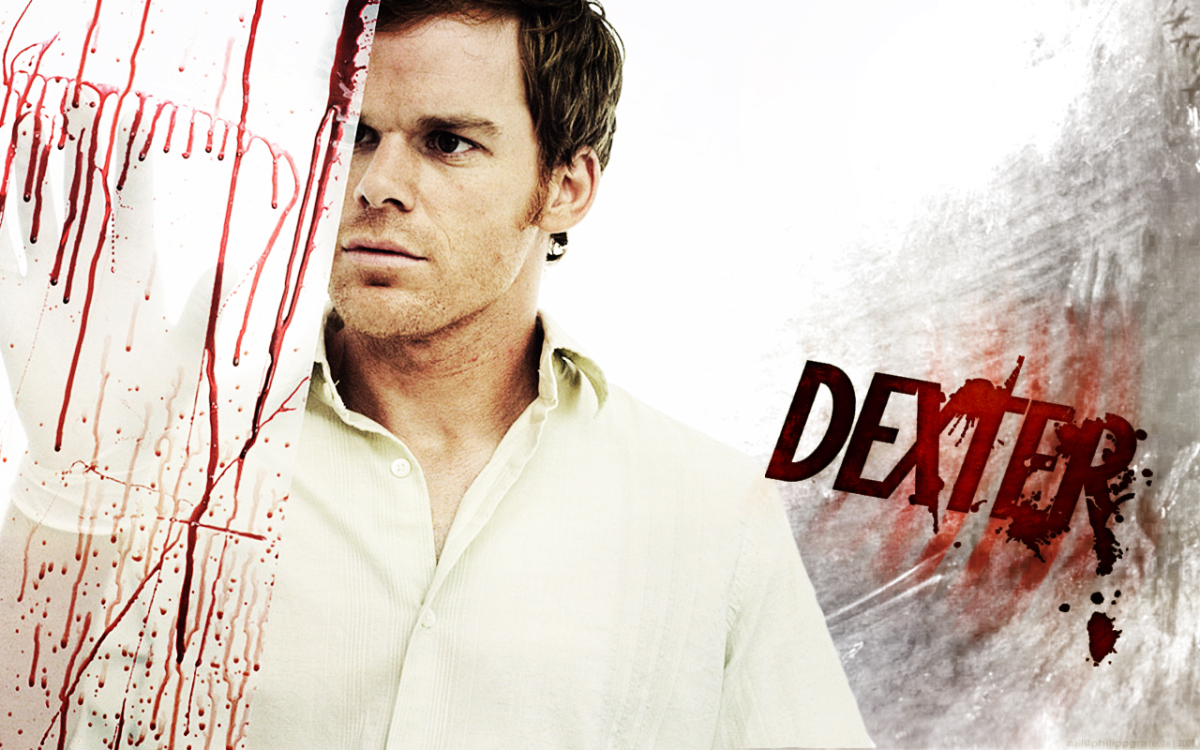
A few more shows left in my ambivalent tier.  Dexter was pretty great in its early seasons, and even when it was great I wasn’t quite as big a fan as many, though I certainly wholeheartedly recommended the show to others.  This period ended with its excellent fourth season.  The fifth season was a notable step down, and the sixth season was out and out bad; if I had assembled this ranking early in 2012, Dexter would be even lower.  The seventh season was a comeback, but a relative one; Dexter may not be out and out done yet but it will never be the show it once was.  Many people think the seventh season was better than the fifth, but I disagree.  The season actually started out fairly well, and credit to Dexter’s writers for finally changing the status quo with a major storyline change at the very end of the sixth season which leads to change the dynamic for some of the characters.  That said, the season had a tremendous focus issue, a problem Dexter usually doesn’t have, since he’s usually paired against a major antagonist for the length of each season.  The most intriguing outside character was  strangely eliminated from the season just over halfway through, and took away a lot of the momentum the season had been building.  The other major developments were interesting but somewhat ham-handed in the way they were handled, and I’m just not as emotionally invested in the show for the big moments to mean as much as they would have to me, seasons ago.  All in all, I’m going to finish it out, but it’s a show that’s not on its A game, and really hoping to just finish out with its B-game.

28.  Veep
TV's Joe Biden

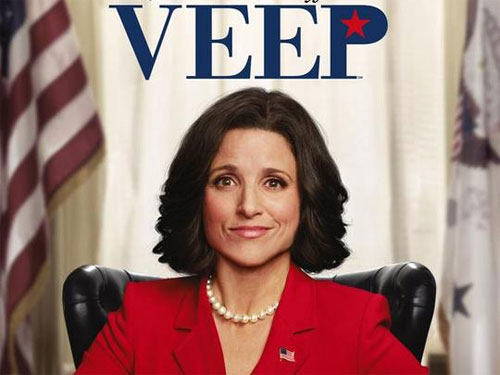
After I watched the first episode of Veep, I wasn’t sure I was going to continue.  After I watched the second episode, I wasn’t sure, nor after the third episode, either, until the fourth, when I pretty much decided it I was in for the season.  That wasn’t just because I had already gone almost halfway through the season, though that played a part, but it was also because the episodes did improve in quality as they went on and as the relationships between the characters and their banter seemed to build.  I”ve watched most of The Thick of It, Veep creator Armando Ianucci’s similar BBC show about the British government instead of the American one, and Veep is very similar in style.  The only downside is that Veep doesn’t have a proper equivalent to The Thick of It’s best character, the foul-mouthed spin doctor Malcolm Tucker.  While the schtick is more or less a version of similar incompetence and inappropriate language amongst our high-ranking political officials every episode, it was still frequently funny, though not as often and not as laugh out loud as I’d like a show of this tenor to be. It’s enjoyable enough to watch but I think there’s room for it to be a little bit better with all the same basic ideas in place with simply tighter writing and just knowing the cast’s strengths better after watching them for a year.

Ranking the Shows That I Watch – 2012 Edition: 33-31

1 Feb

So, finally, we’re ready to get into the rankings for real.  Check out my intro for the details on qualifying for the list. Shows 33, 32, and 31 follow.

33.  Suburgatory

The dangers of suburgatory

If I was to create a television version of WAR (Wins Above Replacement, an all-encompassing measure of a baseball player’s worth that counts how many wins he is worth in a season above a fictitious replacement player), Suburgatory would be a great stand it for the replacement player.  It was right at the border of whether I’ve seen enough episodes to put it on this list, and frankly this was the only show that was a difficult call in terms of making the list at all – generally, I either had seen almost every episode of a show, or just one or two.  I decided eventually to keep it on as a marker, if nothing else, of the exact current limit of my viewing.  I pretty much never go out of my way to watch Suburgatory but if I’m cruising the on-demand section of my TV and find nothing else new, there’s a fair chance I’ll throw one on.  It could easily be replaced by something better, but there it sits.  It’s not particularly laugh out loud funny, and it’s over the top cartoonish drawing of a posh suburb can be a little bit unsubtle and on the nose, but I really like the two leads, Jane Levy and Jeremy Sisto, who are by far the two most normal people in the town, and the best characters, as they both struggle to fit in.  Maybe there’s something to be learned that in this show, the super quirky characters who are pretty much designed purely for humor are significantly less interesting, and funny, than the two major more well developed characters.  Suburgatory could still get better, but will probably stay the same, which is okay.  This is where it belongs.

32.   The Office

Strange poster

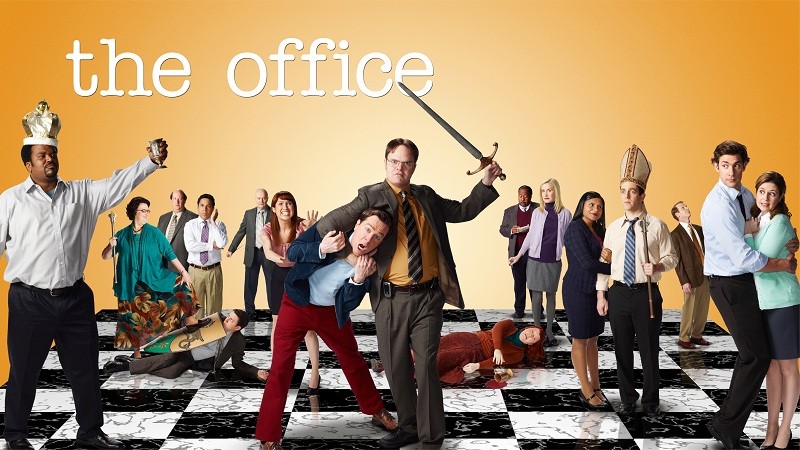
This season of The Office may actually be worse than Suburgatory, but I do watch The Office every week, so that alone will keep it ahead.  I’ve complained loudly and often about The Office’s recent struggles, and how they’ve gone from a hitter with a mere slump to a player on his way to retirement  and as we all know by now, retire The Office will, in just a few months, and thankfully so.  I still hope the last few episodes will be better because I don’t want a show of the caliber of The Office to go out on such a down note.  Many other shows I’d simply stop watching, but The Office has had such a strong run over several years, that I’ve given it far more benefit of the doubt than I would to many other shows.  This leeway The Office has pretty much showed it doesn’t deserve by just totally running out of new ideas, creating serial plots which viewers have no interest in, and reshuffling the characters in ways, after Steve Carrell’s exit, that just don’t make sense.  Even if they didn’t realize it before, they should have been able to figure it out by now, and shift things around, since it’s been two seasons of slightly lower than mediocrity, but they haven’t reacted as I’d hoped.  Dwight’s still funny; so there’s something nice about the show.  While the other characters change personalities, or grow, or are just boring, Dwight pleasantly remains the same.

31.  Top Chef

Seattle

Every season I’ve watched Top Chef, which is since the fourth, I’ve gotten into mini-bouts where I get kind of obsessed with the show, and heavily invested in who wins; like in sports, I take an emotional hit if my guy loses, and especially if my arch-enemy wins.  This peaked in Top Chef Season 8, All Stars, in which I rooted fiercely for Richard Blais to win, and was thrilled when he actually pulled it off.  That peak though was short lived, and as so often happens, my obsessiveness largely fell away quickly after, in the next season Top Chef 9, where a string of gimmicks helped to siphon my interest, along with a top group of contenders which only featured one person I actually wanted to win.  That contestant did win, thankfully, but it was more of a relief than euphoria, especially since the last couple episodes featured some out and out terrible challenges which were often based on elements other than the contestants’ ability to cook, such as chiseling ingredients out of ice and hitting targets with rifles to acquire ingredients; thus if you were bad at marksmanship, you’d have trouble cooking (I shit you not).  The season ended and left a bad taste in my mouth.  I started up this new season with less hope, and though I dutifully watched the first few episodes, I found myself often falling behind, only watching the previous episode once I was planning on talking to my friend who is also a viewer, to discuss the episode with him, rather than for my own edification.  Anyway, odds are about even as to whether I’ll finish the season, though I don’t think it’s been as disheartening a failure as The Office, which is why it’s higher, but not much.  You’ll notice a pattern, that this tier of shows on my list I all watch dutifully, but ambivalently, and Top Chef fits right in.

Ranking the Shows That I Watch – 2012 edition: The Outcasts, Part 4

30 Jan

This is my ranking of shows that I watched in 2012 – for the rules, see the intro;  so far we’re discussing shows that made my last list but not this one.

Here are the last shows that made last year’s list that didn’t make the cut this year.

Curb Your Enthusiasm

Larry David

2011 ranking:  16

One of few shows on TV that can disappear temporarily and return at any time at the whim of the creator and star (see: Louie), Curb declined to air episodes in 2012 and may be over or may not be.  It’s a very funny show, and I’d certainly welcome it back for more.  In fact, I’d vastly prefer it if there were more episodes.  Still, there’s been eight seasons and there’s no serial plotlines that need to be wrapped up anymore, and it’s pretty much Larry David’s decision on whether to go on or not, so it’s hard to say I would be devastated if the show was over for good.  It’s a great show to just throw on an episode or leave in the background, and although it’s really awkward and somewhat uncomfortable to watch, the situations are usually ridiculously enough to avoid truly painful British The Office levels of discomfort.  It’s just Larry David and co. talking a lot, and it’s not exactly the most unpredictable or nuanced show, but it’s frequently laugh out loud funny.

Bored to Death

Watching this did not make me bored to death

2011 ranking: 11

Bored to Death is probably the show whose cancellation most frustrated me in recent years.  This is due to some combination of factors.  First, I really liked the show, thought it was as good as ever, and that it had a lot more to give.  Second, because the show had made it to its third season, it already had had some legs, and because it wasn’t past its fifth season, it didn’t seem like it was logically time to come to an ending. Third, because the show was on HBO, ratings weren’t quite as important as they would be on a network, especially because the show continued to get positive critical notice.  That basically sums up to the points that I really liked it and thought it actually had a good chance of returning, so I didn’t just accept losing it right away as I have other ill-fated shows.  Not to mention, the show ended with main character, Jonathan Ames, sleeping with someone who unbeknownst to him is probably his sister.  That has to be the strangest way a show has ever had an unplanned ending.

Terriers

Where are the Terriers?

2011 ranking:  10

Terriers aired in fall of 2010, which was covered in my last rankings, though it seems like longer ago.  Because the show wasn’t a BIG show the way Game of Thrones is or the way one year failure Terra Nova was, I think it’s been easy to forget.  There hasn’t been a big bring-back-Terriers crowd, or constant references to Terriers as a show that died before its time.  However, that’s not to say it wasn’t acclaimed; nearly everyone who saw Terriers liked it.  Of course, the problem was largely than nobody watched it.  Part of the reason for that is the name – a terrible one, which not only revealed nothing about the show, but also doesn’t intrigue the type of audience who the show is geared towards.  Part was also the fact that well, it doesn’t sound that great, if you just describe the show in brief.   There was an ongoing plot but Terriers was basically the story of two characters played by Donal Logue and Michael Raymond-James who were PI partners constantly finding themselves in over their heads on cases.  Of course there’s a little more to it than that, but that’s the basic idea; there’s no huge hook or complicated premise.  Anyway, since I can’t imagine you’ll be reading more about Terriers anytime soon, let’s give the show one last fond goodbye.

The Venture Bros.

Hank and Dean

20111 ranking: 8

The Venture Bros. has come to resemble late season Sopranos, in which a season only airs every two years.  A special Halloween episode actually aired this year, but I declined to allow that special to qualify the show for entry in this year’s rankings.  It’ll finally be back in 2013 though, so it can look forward to a spot in next year’s rankings, and hopefully a high one if the quality is what I hope.   No show handles a complicated continuity better than Venture Bros, and the mixture of sophisticated comic storylines with pop culture references and wise-cracking punchlines keeps Venture great.  Not every episode is amazing, but they’re mostly solid and when they hit, they hit. Season 4 alone created some instant classics including film noir-style episode Everybody Comes to Hank’s, and Season 4 premiere, Blood of the Father, Heart of Steel, told out of chronological order, with the only marking of time being the value of a rare comic book which slowly gets destroyed over the course of the episode.  Frustratingly, wikipedia decided to remove the individual episode pages, which were incredible and useful resources about the show.

Ranking the Shows That I Watch – 2012 Edition: The Outcasts, Part 3

28 Jan

This is my ranking of shows that I watched in 2012 – for the rules, see the intro;  so far we’re discussing shows that made my last list but not this one.

Here are even more shows that made last year’s list that didn’t make the cut this year.

Entourage

Entourage and Ari

2011 Rank:  25

Never a great show, at times not really a good show, I still never really seriously considered stopping watching Entourage.  Maybe it’s because for the most part it was so light.  I don’t like when shows that should be heavier are needlessly light, but a show like Entourage never made any serious pretensions to reality or big issues and themes.  Of course, Entourage had two dark seasons which I still can’t decide if I liked or didn’t like, but either way, even when the show was kind of bad I never really minded spending half an hour with the gang.  I don’t think the show will be remembered particularly well, but I don’t think it will be remembered poorly either; I think it’s just likely to not be remembered much at all.  I don’t think that’s necessarily a huge shame, but I think then I’d like to get my two cents in and say, on the whole, I’m glad I watched the whole series of Entourage and I would do it again.

The Killing

Who killed this show?

2011 Rank:  23

Now here’s a show that makes me angry.  I was far too kind to it last year.  Unlike AMC failure Rubicon, which just slowly drifted apart after a promising start, The Killing spectacularly imploded at the end of its first season delivering an impressively terrible 1-2 punch of maybe having the worst final and penultimate episodes of a season of all time.  Yes, it was that bad, and the show jerked every viewer who watched around, leading to an end of season that hopefully will live on as a name of what not to do.  This on top of the fact that the main character had started violating police common sense, even by television standards, and basically after being fairly invested through most of the first season, I had basically no interest in watching the second season.  I watched the second season finale, just because, and it unsurprisingly didn’t make a ton of sense to me, but that’s fine.  I’m glad my chapter, and hopefully everyone’s, of The Killing is finished now.  I want to say it was a good run, but it wasn’t.  The best The Killing can do at this point is be responsible for launching Joel Kinnaman’s career.

White Collar

White Collar, Blue Tie

2011 Rank:  21

The last USA show!  Finally!  White Collar was a tad more serious than any of the other USA shows on this list.  It’s a nice show, and I think the two main actors do a fine job individually and together, but it’s held back, as everything is at USA, by the limitations of what dramas mean there; it’s going to follow a formula, and though there’s room in that formula for entertainment, there’s also a fairly low ceiling.  White Collar hits the ceiling sometimes but doesn’t break out of it.  I’ve also just kind of tailed off watching it as I have with my other USA shows; it’s not bad, it’s just not super compelling either.

Friday Night Lights

The early cast

2011 Ranking: 19

This is a show that I think has a chance to really grow in viewers’ appreciation after it’s already over.  A critical favorite from day 1, the show lagged in ratings, and shockingly was picked up in an unique arrangement by Direct TV for seasons four and five.  Even as the show was coming to a close it seemed like the internet was more and more excited about it.  I like the show; I think it’s a very good one, though I wasn’t nearly as upset as many that the show was leaving.  Stick this is the category of shows I like and admit are good but that I probably just don’t see eye to eye on as far as exactly how good.  The show dealt with interpersonal relationships very well, but it always felt forced and sometimes over the top; there was a lacking of subtlety of plot and dialogue it could have used.  Still, good show, always sad to see a good show go.

Ranking the Shows That I watch: 2012 edition: The Outcasts, Part 2

25 Jan

This is my ranking of shows that I watched in 2012 – for the rules, see the intro;  so far we’re discussing shows that made my last list but not this one.

Here are some more shows that made last year’s list that didn’t make the cut this year.

Royal Pains

What a royal pain

2011 Rank:  30

And so the USA exodus continues.  Royal Pains isn’t bad.  It just isn’t particularly good either.  It’s probably not a show one would expect me to watch, unless they knew about my aforementioned USA mini-obsession.  I really have so little new information about the show; I watched with my friend, and when we lost our momentum, we both kind of stopped, and neither of us were too bent out of shape about it.  Every episode, main character doctor Hank Lawson solves a patient’s case, while other gradual progress is made on serial plotlines.  Henry Winkler plays his and his brother’s dad which is kind of cool.  Royal Pains is right out of the USA playbook, better than Fairly Legal, and probably better than several more USA shows, but worse than a couple others.  I bear it no ill will, but don’t watch it.

True Blood

Delicious

2011 Rank:  29

Here’s my long view take on True Blood.  I enjoyed the first season more than I thought I would.  I really liked the second season, which I thought was really focused and well plotted; there were two major storylines, and they were both resolved in the last few episodes, one before the other, allowing the characters from the second storyline to join the first just in time for the climax.  The third season then went away from that, giving nearly every character their own plotline, some severely weaker than others and completely unnecessary, and strangely had its climax less than 2/3 through the season, after which the villain, the Vampire King of Mississippi, one of the season’s strong points, sort of collapsed.  I barely started the fourth season, before I was done with it. True Blood has several problems, but scope is the biggest; it expanded too far and basically there was no reining it back in.  I enjoy hearing people tell me the plots because they sound so ridiculous, but I’m done watching it.  There’s a careful line between stupid trashy fun, and stupid trashy, well, trash, and this gradually shifted from the former to the latter.

How I Met Your Mother

How I Met Your Mother

2011 Rank: 27

Here’s a show that a lot of people like better than me, because it pushes a lot of my particular buttons.  I hate the narration, I hate the incredibly on the nose messaging and oddly old school moralism that I think is wisely absent from most modern comedies.  I do think the actors work very well together as a group, and I think that the funny parts, particularly provided by Barney and Marshall have been very solid, and that kept me watching for years, even as there were parts of the show that seriously bothered me.  So, I kept on, after I finished all my other shows, watching How I Met Your Mother dutifully, though ambivalently, until Season 7 episode “Symphony of Illumination,” in which the gimmick is that instead of regular narrator Ted telling the story to his kids, this time it’s Robin telling the story to her kids.  Only, it turns out that she can’t have kids, and instead she’s telling it to her fictional kids in her mind.  How I Met Your Mother has done gimmicks well in the past, but I just hated, hated this episode and it gave me the impetus to put down the show altogether.

Psych

Shawn and Gus

2011:  26

Almost out of USA shows, I swear.  Psych is actually the one I currently like the best, and still have plans on watching more of it.  Unlike most of the other USA shows, which are light hearted dramadies, Psych is much more explicitly a comedy.  Because it’s focus is on being funny and lighter, it’s much less of a issue to have generic procedural murders every episode without almost any serial element.  However, the lack of serial element is also what causes me to keep putting it behind watching other shows with longer arcs.  Still, Psych is an easy show to watch; it’s refreshing and enjoyable which makes it a great show to watch when tired, and I mean that as a compliment.  It’s like bathroom magazine reading; it’s hardly essential viewing, but it’s a great way to fill in some time, and I would rank this the highest of the USA shows if I actually watched it regularly.  Still I don’t, which I suppose says something about the show as well.

Ranking the Shows That I Watch – 2012 edition: The Outcasts, Part 1

23 Jan

I’m currently out of the country, which is causing me to unfortunately to temporarily fall behind on current television.  What better time, then, to finally issue my slightly belated ranking of TV shows that I watched in 2012.  I last put together a ranking in the summer of 2011, and it will be interesting to see what went up, went down, and stayed the same.  Here are the rules:  to be ranked, the show has to have aired episodes in the 2012 calendar year.  Secondly, I’m not ranking any shows that debuted in Fall 2012 and haven’t finished full seasons, because those shows haven’t put in enough time yet to judge.  Third, I’m trimming the fat from my 2011 rankings; I’m only ranking shows that I’ve seen several of this past year; for most shows that I rank, I’ve seen all of, and for just a couple I’ve seen most of.  So for the most part, I at least like every show on the list, and it’s something of an accomplishment just to make it on.  Fourth, while I’m considering body of work as far as the whole year goes, if a show was much better in fall 2012 than the end of a previous season in the spring, I’ll tend to lean towards accounting for the uptick in performance.  Lastly, primetime shows only; which mainly means no Daily Show or Colbert Report.

With that in mind, we’re almost ready to start, but first we’ll spend a couple posts going over shows that made the last list but didn’t make this one, and why that was the case.  Also, quick apologies to British shows Peep Show and The Thick of It, both of which aired episodes in 2012, but which I’m one season behind on and thus won’t rank; I look forward to catching up with both of them.

Glee

Fuck Glee

2011 ranking:  34

I had already stopped watching this show by the fall of 2011; it’s simply, well, bad.  I know a number of people who watched it regularly at some point and most have at one point or another just decided to quit. It’s closer to Heroes than to even a show like Lost in the ratio of how long it was good before it turned bad. There was a half season in which the show had a coherent plot arc,while  the remainder of the show has been spent trying to reach that again. Flaws include characters which have extremely inconsistent personalities, an extreme reversion to status quo sometimes (like a comic book villain, Jane Lynch can’t win enough to stop the club, but also sticks around to keep almost doing it), plot arcs that just go way over the top, and plenty of the characters that are just well, bad.  Goodbye Glee, I’m glad to see the public has largely stopped caring about you as well.

Modern Family

Three Modern Families

2011 ranking:  33

I gave myself more leeway last rankings in terms of how much I needed to watch a show before ranking it, and though I’ve seen most of Modern Family’s first season, I haven’t watched much after it.  It isn’t so much because I don’t think it’s a good show (though I certainly don’t think it’s a great show) as much as it’s not a show for me; it just isn’t really up my alley.  It does feature an all-time personal pet peeve with little narrations at the end of each half hour summing up the episode and giving it some totally unnecessary and unsubtle overarching theme, but mostly I think it’s still just a small bit old-sitcom-y for me.  I will say I think, from my previous watching, that Ty Burrell, Julie Bowen and their family are far and away the funniest of the three families on the show and I do think there are some genuinely good laughs.  Anyway, I can’t really begrudge anyone for watching it, though I’ve heard it’s gotten worse of late, but I stopped because I realized I just didn’t care enough it to watch, and that’s still how I feel.

Fairly Legal

Fairly Legal

2011 ranking:  32

We’re really in the dregs here.  Honestly, there was absolutely no reason for me to be watching Fairly Legal at any time, except that I had a bit of a possibly ironic, and possibly not ironic obsession with USA programs.  That obsession has subsided and Fairly Legal, the worst of the USA programs that I watched, was pretty quickly dropped.  It’s not awful but it’s pretty generic; charismatic lawyer-turned-mediator uses her natural charm, ability, and determination to solve problems others can’t.  You’ve seen it before.  Just in case I hadn’t stopped watching it by now, USA’s stopped it for me; cancelling it after it’s second season finished airing last summer.  I doubt many will be crying over the loss.

Rubicon

Somebody's Watching You

2011 ranking: 31

Last year’s list reached back into 2010, so it hit upon AMC’s one true failure (we can debate The Killing, but at least it went two seasons),  Rubicon.  It’s a little bit of a shame because Rubicon, unlike say Fairly Legal, had a chance to be a really interesting, good, show.  And then, well, like so many other dramas that start off with promise, it wasn’t.  It tackled a 70s neo-noir feeling in a way I don’t think recent shows have, but while the mood was right, the plots slowly fell apart and the conspiracy may have unraveled a little too far even for a conspiracy show.  I probably would have watched if there was a second season, but part of me was certainly comforted by the fact that it was cancelled and I wouldn’t have to.  I wish it was better, because I think there was something there, but it wasn’t, and it’s rightfully gone.

Homeland: End of Season Report, Part 2

20 Jan

Carrie is bloody

Part 2 of my thoughts on the second season of Homeland; part 1 can be found here.

I’ve read some interviews with Homeland co-creators Alex Gansa and Howard Gordon and it seemed like they didn’t exactly know where they were going with the second season until the season wore on, and it shows. Sometimes that kind of television works; Vince Gilligan famously has made seasons of Breaking Bad that way, and he’s created brilliant television that way. However, in this season of Homeland, I felt it went from brilliant episode to clumsy one, from emotionally poignant moment to out of place action season, from true-to-the-story character interaction to forced actions happening only to move the plot forward.  Consistency and the sense of a plan were both sorely lacking, when we as viewers put ourselves in the show runners hands, there’s hopefully a sense of trust that they know where they’re going, which Homeland lost as this season went on.

Selling high is an issue television shows often have with characters, as sports teams have with players. It’s tempting to wring everything out of a character, but sometimes you need to eliminate a character, either because the character’s run dry of characterization, or because the character’s remaining in existence is simply implausible within the universe of the show and makes other plotlines more problematic. I’m still deciding whether I feel this way for sure, but I’m certainly leaning towards the position that killing Brody at some point during the second season would have been the smart move. That Homeland pulled off not killing Brody and having the bomb go off and not feeling like a total cop out in the first season is an amazing act, and it actually went off surprising well. Damien Lewis in fact has often provided the acting job that makes Brody’s internal struggles go and his role has been more difficult than the superbly talented Claire Daines’. I’m not sure where else Brody can go; he’s had his struggle, he’s no longer a terrorist (if he lied to Carrie and was somehow behind the bomb, that would be the worst decision ever, and the absolutely worst kind of twist that is just there because you couldn’t have possibly seen it coming), he’s made his peace with leaving his wife, and his love with Carrie. If this was a different type of show, there’d be more for Brody to do, because he’s a very well rendered character, but in this show I don’t think his remaining value is equal to the price of inconvenience and implausibility of keeping him around.

Another issue with the finale: It wasn’t really a finale. The second to last episode was the finale and the finale was the first episode of the third season. I’m not a big fan of that chronology. If a show doesn’t really want to play into seasons at all, then I’m absolutely fine with ending at a seemingly random point; this is kind of what Game of Thrones does. However, if a show pretty much plays by a seasonal format, I would prefer it adhere to its format; I hate cheap cliffhangers (not saying Homeland did that, but just another end of season pet peeve) and attempts to show the beginning of the next season into prior one. If you’re going to do seasons, then do a season. It’s better than a cheap True Blood-ish cliffhanger for sure, but it’s still not great.

In regards to that third season, it looks like they’re trying to push the reset button a bit. They’ve basically finished out the big arc, over the course of two seasons – the chase for Abu Nazir, and Brody and his relationship with the terrorists and his family. It’s hard to see how Brody can be relating to anyone else for a while next season without getting caught, and it would seem at least somewhat odd for Brody’s family to be hanging around without that connection outside of their initial shock and maybe a funeral scene. Dana’s definitely been built up for more and seems to have faith in Brody that the rest won’t, though I’m not sure what they could possibly do with that, and she’s a bit too young to become Carrie Jr. at the CIA. David Estes is gone, and it looks like Saul will be running the show. I think Saul’s been the most loved non-Brody or Carrie character in the show over the course of two seasons so this will give him an excuse to get an even bigger chunk of the show to himself, which we’ll see if he can handle (the James Harden of Homeland? Though I guess Durant (Daines), but not Westbrook (Lewis) could still be around? Too complicated an analogy already).

The best seasons of seasonally oriented shows get better and tighter and they go forward; while it maybe takes the first few episodes to sort things out and figure out a plan, by the last four or so episodes, things are happening and it feels like the show runners are on top of everything. Season 1 of Homeland very much felt like that; season 2 did not. It certainly wasn’t predictable, but the actions seemed haphazard and took left and right turns that were often less surprises and more strange decisions. I think partly this is because they boxed themselves into too many corners and forgot the key to positive unpredictability, which is to have many plausible outcomes possible at any time, so that there’s any number of ways the show can go and all of them feel natural. I think Homeland boxed itself in one or two too many times this season and left with unsatisfying outcomes, and I think that maybe they realize that which is why they’re trying to start the third season over by wiping the slate clean and reestablishing that anything can happen again.

Also, Homeland is falling into the difficulty that many shows have as they move on in seasons; how to keep the show relevant and interesting, and they turn to a device that many tv shows before them have turned to: raising the stakes. Whatever happened so far, whatever’s going to happen in the next season makes that look like nothing, sometimes devaluing in a way your early seasons to increase apprehension for the next. It’s a device that gets tired fast, but can work once or twice if handled well. Is Homeland up to reinventing itself? I’m not sure, but I hope so.

Homeland: End of Season Report, Part 1

25 Dec

Brody sits pensively Season 2 of Homeland has been an interesting and somewhat unsatisfying journey that has had plenty of both up and down moments and was hurt overall by comparison to the absolutely genius first season of the show.  Here’s some random notes on the season on the whole, including the finale, and where it goes from here.  I have a whole bunch of thoughts, so I’m going to split this into two entries.

At its best season 2 was just as gripping and emotionally riveting as the first season, and the tense moments were unequaled.  The second episode of the second season was action packed but with a type of action that felt Homeland-like; it was about tracking and surveillance and deception, and double crossing, and rested on Carrie’s fragile mental state holding up. The second half of the season often turned too close to the show Homeland show-runners Alex Gansa and Howard Gordon were most associated with before Homeland, 24.   There were huge action sequences with our heroine Carrie Mathison doing her best Jack Bauer, most notably when she leads a team of agents into the tunnels by herself, searching and finding major terrorist and series antagonist Abu Nazir in a maze of tunnels where all the special forces could not.  I have a lot of love for 24, but what was great about Homeland at its best is not what was great about 24.  Homeland was about Carrie and her colleagues conducting surveillance from afar, tracking down terrorists with pieces and clues, rather than making the actual apprehensions and engaging in hand to hand fighting with the terrorists.

A second 24-like similarity was Carrie’s tendency to be the best CIA agent ever of all time; like 24 hero Jack Bauer, she barely ever gets anything wrong, even when her calls are unorthodox, and when she does, she quickly corrects herself and gets it right.  If people call her out, it’s usually that they’re the wrong ones, and she just has the wrong information. Early in the season Homeland boxed themselves into a corner with Carrie and Brody; Brody either had to be arrested and locked away, killed, or had to turn and act as a double agent.  Locking him away right there would have been daring, but made less sense in the context of how much the showrunners seemed to want to get out of Brody’s character, so eventually the double agent plan went on; not necessary a terrible plot point, but a predictable one a mile away. Carrie’s coming back to work for the CIA felt like a bit of a cop out as well.  Although the fact she was ever out of the CIA was forgotten by the fourth or fifth episode of the second season when she was all the way back in, it was a pretty fucking big deal at the end of the first season that she was told she would never work for the CIA ever, ever again, and although I understand the idea that she was right the whole time was being used to justify it, I still think having her come right back relatively easily undermines the power of that scene in the first season.

The love story really got old pretty fast as well.  Brody and Carrie have an undeniable chemistry but after the intrigue and danger were lost, the relationship was not interesting to us at all, and the scene at the cabin in the last episode was painfully boring.

I hated Dana’s car crash in the middle of the season; it just felt out of nowhere and uncalled for and so far away from the central tenor of the show (what I was hoping for was the Dana spin-off where she is in a love triangle with Finn and Xander (remember Xander?)).  I do love that Everybody Talks by the Neon Trees was the song playing in the car crash scene; I can think of no song more perfect.

While we’re digging back to old decisions made earlier this season, I absolutely hated the Brody plot where he was strangely assigned to drive the tailor from Gettysburg, and ended up killing him.  I kind of understand what the writers wanted to get out of Brody from that scene, but the entire endeavor seemed ham fisted and out of character for the type of job Brody would be given on the show by his handlers.

I don’t like that it seems like the CIA is made up of four people; more characters doesn’t always equal better in a show, but to some extent it often does.  Fewer characters limits what you can do with every character, and even with fewer main characters, it’s possible to feel like a real world by at least having minor characters buzzing around, instead of just four people. I don’t expect the show to be real life believable.  It’s not The Wire; very few shows have that feeling of being absolutely real.  But I did feel the show expanded its bounds for realism in the second season beyond the barriers it had set up in the first.  Abu Nazir’s hands on treatment, of not only being in the states but kidnapping Carrie, believability aside, just felt more 24-like than Homeland-like.   It’s not that shows can never been implausible  it’s that once they set the boundaries for the relative level of implausibility in the show, they shouldn’t exceed that.

Ads Watch: Kia Optima Blake Time Travels

19 Dec

Blake Griffin, pitchman, is so uncharacteristic in these ads, that it kind of flips all the way around, making him seem charismatic.

There are two versions of this commercial so far, and the model plays out so well that it would make a lot of sense to make a couple more; unlike the Aaron Rodgers State Farm commercial which came together on a number of magically impossible to replicate details, the formula here seems pretty easy to assemble.

In short, both begin with Blake Griffin using the fancy voice activated system for the Kia, which apparently controls, among other things, a time machine, to go back in time to a year in the mid’90s, and then, again using the voice activated system, puts on an appropriate period pop song.  He visits himself as a kid and impresses his younger self with his car.  He gives the kid an idiosyncratic piece of advice, and returns.

Let’s start with the 1995 edition for further detail.  The song, on the way back in time, is “This is How We Do It” by Montell Jordan, a perfect choice to epitomize the period of time.  He comes back and visits six-year old Blake, who’s hanging on the rim of a basketball hoop attached to his garage.  How did he got to be hanging on the rim?  Who the fuck knows.  He asks 2012 Blake who he is, and Blake responds that he’s himself from the future, and the kids asks if big Blake’s car is a spaceship.  Why in the world would a six year old think a car, that looks like any other car, is a spaceship?  Because it came through some sort of time portal?  I suppose, but still.  2012 Blake tells him that the Kia is way better than a spaceship, and I like how blunt and unhesitating he is; there’s no way a spaceship could be better than this car.  Blake shows a solid self-aware sense of humor in telling the kid to practice his free throws, and proceeds to fling a free throw towards the hoop and miss it badly.  (Where did the basketball come from?  I’ve watched this ad a dozen times and I still have no idea).  He doesn’t consider the fact that six-year old him is dangerously hanging from the rim, or the even more disturbing fact that flinging a free throw could dislodge the six-year old and cause a dangerous fall.  He just turns around, leaves him hanging, and heads back to the future as “This is How We Do It” returns and the screen turns to white.

The 1997 version functions similarly and is every bit as good, if not better.  He tells the car to take him back to 1997, and play jukebox, which here plays OMC’s “How Bizarre”, an equally appropriate choice to summon up memories of that year.  He shows up to find eight year old Blake playing football in the park and immediately instructs him, “Wrong sport” and punts the football far away.  Young Blake looks up confused, asks who he is, and 2012 Blake informs his younger self that he’s him from the future (apologize for the confusing pronouns but this is what happens when you have a future version meeting a past version of the same person) and tells him a little bit about his futuristic car; this part is the most ad-like piece of the commercial, but I enjoy that the Kia features he brags about really don’t sound all that futuristic.  He pauses and shares a sublimely awkward three second pause staring at his younger self, and then issues him the advice to “Stop Wearing Jean Shorts.”  When the kid looks down confused, older Blake says, “Just Trust Me,” and the screen turns to white, and How Bizarre resumes playing in the background.

I’ve mentioned some of my favorite parts in the descriptions, but I’ll sum them up here.  First, as I started up top with, Blake makes this ad.  He’s not charismatic, and he doesn’t even try, but his matter of fact, lack of inflection tone is simply perfect.  In that tone is his utter lack of empathy; he doesn’t try to connect with his younger self at all, and is, really, kind of a dick.  In the 1995 ad, he leaves his younger self hanging on the rim, and in the 1997 version, he boots his younger self’s football away from him.  Even his bits of advice are given entirely without emotion.  The song choice is absolutely spot on for both ads, and I still love that the five year old thinks the car is his spaceship.  All in all, it makes for the rare tolerable car commercial.  More, please.

Mid-season Report: The Walking Dead

19 Dec

Welcome, Michone

I’ve been harsh on this show at times.  Many times.  In fact, throughout much of the second season, when I felt like this show constantly didn’t live up to its full potential.  That’s what made it so frustrating for me; while so many TV shows have no chance at greatness from arrival, The Walking Dead constantly seemed like a case study in potential only realized in spurts, like a naturally talented athlete who gets by on talent alone, but could be a star if he hit the gym more often.  There were a number of different issues, but there two stood out the most (at least that are occurring to me now).  First, the pacing was terrible; the show consisted of absolutely epic moments sandwiched between long periods of inactivity or activity that no one cared about.  Second, half the characters were either boring, incredibly irritating, or not fleshed out at all.  I posted this at last season’s midseason, and these problems remained throughout the season; there were always just enough glimpses of what the show could be to keep me watching, but also enough problems to make watching frustrating and occasionally exasperating.

This season, I’m happy to say, was a revelation.  By far the best season yet of The Walking Dead, the third season mostly dispensed with the least interesting aspects of the show, and moved at a far brisker pace than the second season; as much occurred in the first half of the third season as happened in the entire second season.

I haven’t read the comics, though I’m considering it, and thus, I don’t know how much is taken from the source material, and how much is original for TV, but either way a series of smart decisions were made along the way towards assembling this season.  An important part of a show like The Walking Dead is keeping fresh blood (brains?) coming in in terms of new characters; since there aren’t 20 major characters like in Lost, if characters die, they need to be replaced, or we’d be down to 3 characters in no time.  Thought of in a different way, the advent of new characters allows the creators freedom to kill off whichever characters they believe are the least interesting, have become irrelevant due to storylines, or would just provide the most punch, plot-wise.  This character refreshening was achieved smartly with the death of Laurie; Laurie had become of limited usefulness as she descended into depression over her inability to have Rick forgive her.  Her death packed a huge emotional punch, and also led to difficult reckonings for her son Carl, who, even I must admit, has become far less irritating than he was in season 2, growing up to become, dare I say, somewhat competent, as well as Rick, for whom Laurie’s death put him off his game more than any other time previously in the show.  In addition, I liked the new characters who were added, mainly Michonne, the Governor, and his cronies, including Merle and his scientist Milton, who have all helped keep the show interesting.

Having the two storylines (the prison and the governor’s town) side by side completely worked.  The multiple locations probably played a role in the much improved pacing, since the show could dance back and forth, and it paved the way for the eventual central conflict of the half season.  Although the governor was and is clearly evil, because, hey, it’s TV, and it would have been a shock if he wasn’t, he’s definitely seemed like a more of a real kind of complex person than I thought he might.  I think this could possibly be done even more deftly, with making him a slight bit less evil, but David Morrissey has certainly handled it well enough that it feels like the Governor is a regular guy turned hard ass, rather than a mere psychopath bent on the destruction of those who stand against him.

I thought for sure it would take us an entire season for Rick’s gang and the Governor’s to meet but was extremely pleasantly surprised to see that it happened within half a season, with major events and reveals seemingly occurring in every single episode.

I’ve already commented on its similarities to Lost, and many of the questions The Walking Dead deals with – how far is it right to go to protect certain remnants of society from surviving – what civility, and what rules are left in a crumbling society, are similar to those handled by Lost at its best.

Overall, I feel as energized about this show as I ever have, and I’m glad to report that I’m actually really excited for the second half of the season to begin, an outcome I hoped for at various points during the second season but began to stop expecting.