End of Season Report: Justified, Season 6

17 Apr

Justifieid

Justified is a story about the hold the past maintains on the present, and the ability or lack thereof of its characters to break away from a place and a people that are embedded so deep within them that they don’t know any another way. For the people who live in rural Kentucky counties like Harlan and Bennett, removed from the outside world even while part of it, the shadow of the past hangs heavily over every decision and every action. The question Justified asks is whether these people are unable to change because the past has predestined them not to do so, or because the self-perpetuated belief that they can’t change is buried so far within them that they truly believe they can’t, even when they can.

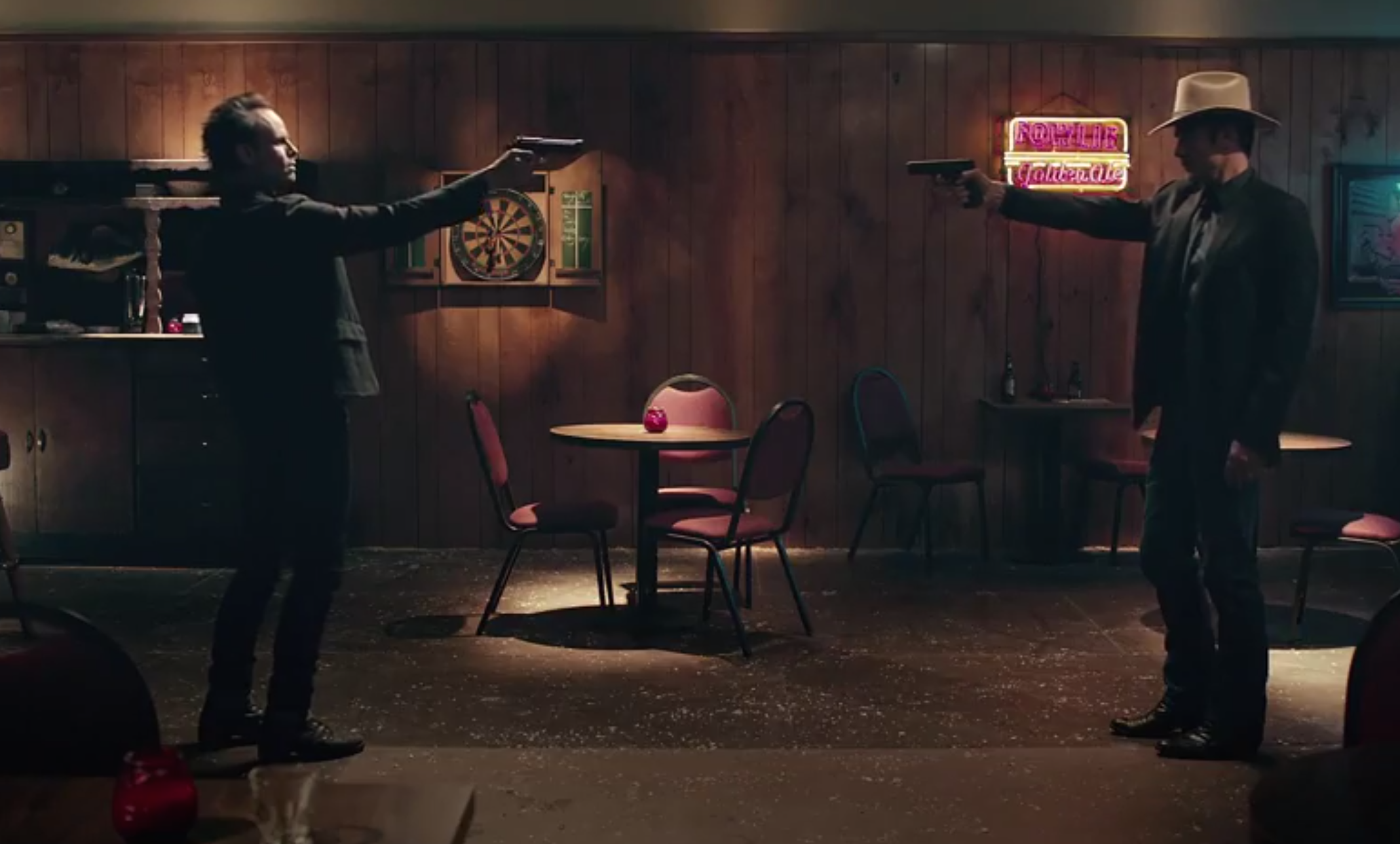
Change and free will are so antithetical to these characters that in the sixth season it almost feels as if they’re just wound up like toys and put on a track, bound to continue straight away even that means crashing into each other. By halfway through the season, there are no surprises, and everyone knows the score. Avery has a shitload of money in a safe, Boyd is going to attempt to take that money, one way or another, and Raylan is going to attempt to stop him. Boyd knows that Raylan and Avery know he plans on stealing the money, but this doesn’t deter him in the least. If anything, it motivates him more. Boyd knows he’s being teased and baited; Raylan at one point shows him the vault, and they both know what’s going on. Raylan is triggering Boyd’s animal instinct to desire that quality of cash and Boyd gets the requisite sniff of money. Boyd is self-aware. He knows he’s being set up. But it simply doesn’t matter. Stealing money is what he does.

The specter of Raylan’s potential death hung over the finale, both because of conventions of the western and crime genres which Justified inhabits and because we’ve been trained to expect that ending from many recent prestige dramas featuring antiheroes. But Raylan never was a traditional antihero in the same vein as some of TV’s other famous members of that category (Walter White, Tony Soprano); while he disobeyed his bosses and went around the law, he was generally good, honest, trustworthy, and never out for himself in the way the Sopranos and Whites of the world were. He didn’t deserve to die. For all his worry about his ability to change, he was never the same as his father. He just didn’t know it yet.

Raylan’s entire existence was defined by his desire to not become his father and he was able to finally get out from under this obsession before it cost him in the end. He won his battle and ended the hold his father, dead since the fourth season, had on him.  Raylan’s obsession with catching Boyd and putting him away, showing that he was the opposite of his weasely criminal father, was at fever pitch in the final season. The one-last-big-score theme was as resonant for him as it was for Boyd, only his score was Boyd. Art and others warned him multiple times that he if he ddin’t step back in time, it might be too late, and it did seem as if the ground work was all set up for him to tragically die just before he could get out to Miami and his daughter.

Raylan may never have gone so far as to have a death wish but he consistently put himself in more risk than necessary in his pursuit of the filth that stood in for his father. Raylan less needed to change his actions than change his perception of himself of someone who could live a stable life outside of constantly facing death, and his daughter gives him a pretty good motivation to do so.

Boyd gives Raylan a chance, in the finale, to face him, and to finish him off rather than send him to prison. Raylan declines. It may have been a tough decision, but for all of Raylan’s quick-draw reputation, it was always what Raylan was going to do. Though all his frustration, including his blood feud with Boyd, that’s never who Raylan was. When Raylan in that moment, lives up to who he knew he can be and stands down, he’s ready to move on.

Eva is over the course of the series Justified’s most tragic character. Unlike Boyd and Raylan, she was thrown into this whole criminal-lawman struggle not of her own volition, although she was eventually swept up by Boyd’s powerful charisma enough to become almost as enthusiastic about thieving as he was. Her time in prison actually taught her a lesson, not just in terms of the consequences of her criminality (unlike most of the male criminals who seem to have been in and out of prison over the course of their lives, the harshness of prison was a real eye-opener for Eva), but in the truth of who Boyd really was. Boyd really and truly did love her, but that was beside the point. He was always going after the money.  However much he loved Eva, he loved the money or what it represented, more.

Eva initially came by criminality second-hand, via her husband, Boyd’s abusive brother, who she killed. Soon, she met Boyd and was swept into the tide of crime through his sheer force of personality. Eva was taken by the magic, by the promise of freedom, by the Thelma and Louise/Bonnie and Clyde/Butch and Cassidy feeling of two against the world. Prison taught her reality. The second turning point came in the final season when Boyd received reward money through a sting Raylan set up to tempt Boyd to go after Avery’s larger stash. Eva tried to persuade Boyd that even with the reward money they had enough to get out, to leave Kentucky and set up shop wherever they wanted free and clear. If he really cared about her, if what he wanted was really what she wanted, to get out, to be free, this was the chance.

He thought about it, but in the end, as both he and Raylan knew, there was no way he was leaving that money. That moment was a blessing in disguise for Eva, even though it didn’t seem that way at the time. She was finally free of Boyd’s power; unlike Raylan and Boyd, she didn’t have the long familial history of crime in her bones. If she managed to survive the ordeal, which was certainly not a given, the hold of the past was broken for Eva, who, seemingly on the edge of dying or at the least going back to prison for most of the final season, was able to have an unlikely happy ending.

And as for Boyd, well he gets off easy as well. If he doesn’t, like Raylan and Eva, get to actually break the cycle of the past, he gets a reset, a rewind to another point in his personal timeline, where he’s back to a level of religiosity which we saw early in the series. Boyd will be taking over that prison in no time. Boyd, for all his oozing charisma and for all his high talk, Boyd is who he is. Boyd always was a criminal, and he probably always will be. His desires exist only as far as his next big score.

Ranking the Shows I Watch – 2014 Edition: Recap

15 Apr

The Americans

Here’s the final list. Take a good look, memorize it, and watch some more TV.

  1. The Americans
  2. Hannibal
  3. Transparent
  4. Mad Men
  5. Rick and Morty
  6. Game of thrones
  7. The Honourable Woman
  8. Broad City
  9. Olive Kitteridge
  10. Community
  11. New Girl
  12. Rectify
  13. Parks and Recreation
  14. Orange is the New Black
  15. Bob’s Burgers
  16. Veep
  17. Fargo
  18. Silicon Valley
  19. Brooklyn Nine-Nine
  20. Nathan for You
  21. True Detective
  22. Doctor Who
  23. Girls
  24. Sherlock
  25. Orphan Black
  26. Sons of Anarchy
  27. Louie
  28. The Bridge
  29. Justified
  30. The Mindy Project
  31. Jane the Virgin
  32. Marvel’s Agents of S.H.I.E.L.D.
  33. The Affair
  34. AMC’s The Walking Dead
  35. Masters of Sex
  36. Workaholics
  37. Boardwalk Empire
  38. 24: Live Another Day
  39. Archer
  40. Wilfred
  41. Downton Abbey
  42. House of Cards
  43. Helix

Also, just in case you want to read more about some or all of these shows, links:

Intro here and 43-40 here and 39-36 here and 35-32 here and 31-28 here and 27-24 here and 23-20 here and 19-16 here and one-offs/shows ineligible for the list here and 15-12 here and 11-8 here and 7-4 here and 3-1 here.

Spring 2015 Review: Daredevil

13 Apr

Daredevil

Marvel, which seeks to continue its world domination, and Netflix, which seeks to grow its library of hit TV shows, made a smart decision with Daredevil, a classic but underutilized Marvel character, by taking the property in a slightly different direction than the rest of the Marvel Cinematic Universe. While other superhero movies (and Marvel’s Agents of S.H.I.E.L.D.) seem to be getting bigger and bigger – unbelievably powerful superheroes, alien invasions, intergalactic terror, and impending world destruction, Daredevil scales down. Daredevil localizes itself not only within one city, New York, but within one neighborhood within that city, Hell’s Kitchen. Daredevil doesn’t deal with aliens or gods or robots, but with gangsters and corrupt politicians and businessmen. Daredevil battles thugs and henchmen via hand-to-hand combat.

The second way Daredevil differs from his superhero predecessors in film and television is that his day job is actually relevant to the show in a way most other superheroes’ occupations aren’t. Usually these jobs are just a convenient cover for the heroes’ nighttime pursuits. Here, however, Daredevil’s lawyering represents an integral part of his character is a way that’s simply not true for Spiderman as a photographer or Superman as a writer or Batman a wealthy playboy or C.E.O.

Daredevil is about the fight for justice and what’s right, which sounds similar to the motive of just about any other superhero, but Daredevil merges the legal and extralegal avenues toward that goal in a unique way through his work as a defense attorney. The justice he attempts to hand out during his nights is directly connected to his struggle to fight for justice as he truly believes it should be meted out, through the legal system during the day. The courts just need an occasional outside push to help them function correctly.

Daredevil fights are designed to highlight the smaller scale street level (comics term which refers to characters with no or few powers) nature of the characters – dark, martial art clashes in dark alleys under little light.

While Daredevil does take this interesting approach that stands apart in a couple of noteworthy ways from Marvel’s existing properties, it is still a relatively conventional superhero story. There’s not going to be anything groundbreaking here, and Marvel products, as I’ve said before, tend to have high floors but low ceilings. There’s something to be said for that; while I like to see programs shoot for the stars, there’s room for solid but not spectacular entertainment as well. Still, it’s worth pointing out. It’s difficult to be great with the restraints Marvel puts on its programming, but it’s also difficult to be awful. I don’t always like to reward that level of risk averseness, but to its credit, Marvel has done a good job putting enough of its properties closer to their ceiling, relatively low as that may be, that at least the calculation seems to make a lot of sense for them both commercially and creatively.

The acting is competent, the writing is adequate; the dialogue isn’t David Mamet but it doesn’t embarrass itself either. Daredevil is not for people who don’t like superheroes; there simply isn’t enough to differentiate it from what anyone who doesn’t like superheroes don’t like about them to begin with. Those who do, though, will probably find Daredevil enjoyable.

Will I watch it again? Yes. I like superhero shows well enough that I’m watching The Flash, Arrow, and Marvel’s Agents of S.H.I.E.LD, and Daredevil seems like it could be at least as good as any of those, and maybe better.

Ranking the Shows That I Watch – 2014 Edition: 3-1

10 Apr

Finally, we’re here. The top three. All entering these heights for the first time, all in their second seasons or earlier. One on broadcast, one on basic cable, and one on amazon. Let’s do this.

Intro here and 43-40 here and 39-36 here and 35-32 here and 31-28 here and 27-24 here and 23-20 here and 19-16 here and one-offs/shows ineligible for the list here and 15-12 here and 11-8 here and 7-4 here.

3. Transparent – 2013: Not Eligible

Transparent

I watch a lot of pilots. Most I dismiss out of hand. Some I consider, but eventually decide another episode isn’t worth my time. Some are borderline. Some I choose to watch another episode based on one or two aspects that strike my fancy. Some are solid. And very, very few inspire me, after simply one episode, to feel like I absolutely know I’m starting on a great show. Obviously you can only put so much material in one episode, so there’s at least a little bit of feeling and hunch that goes along with that distinction above and beyond what’s actually in the episode. Transparent had it though. Immediately, I know there was something there, and I hungrily devoured the remaining episodes in the course of a weekend. It’s a truly great show, and a great show in an area that hasn’t been covered much on TV lately. It’s about a family, and the hook is that the patriarch is coming out to his children as a self-identified female. That’s important, but it doesn’t tell the whole story. Transparent is simply a transcendent family dramedy that makes you immediately want to watch the next episode regardless of any big plot points. The actors are great, the story is great, the characters are great.

2. Hannibal – 2013: 8

HannibalSeason2-1

Hannibal has absolutely no right to be as good as it is. More or less, on paper, it’s a cop show, about an FBI agent who chases serial killers, often for an episode at a time, but sometimes over the course of several episodes. Hannibal is his mentor slash nemesis, manipulating him and befriending him at the same time. And yet Hannibal is so much more than that. The depth of Hannibal and Will’s relationship defies easy categorization. No show delves deeper into the depths of the human mind than Hannibal. Crimes, murder, in Hannibal, are about understanding, yearning for someone to figure out if anybody really knows anyone else. No show is more visually stunning than Hannibal; taking place as if in a dream world, which disturbingly blood and visceral displays of dead bodies that are troublingly startlingly beautiful. Hannibal’s cooking looks so delicious I want to eat it even knowing what went into it. The world of Hannibal is so much more than the sum of its parts, and there is no other experience like it on TV.

1. The Americans – 2013: 9

The Americans

When everything is working, everything is working, and The Americans was simply on fire in its second season. When The Americans started, I worried I’d tire quickly of its high concept premise, and get frustrated in particular having to root for monstrous characters who kill and maim and torture all in the service of an ultimately fickle and pointless cause. And on paper that still sounds right. But that’s not at all how it feels watching the show. The Americans is dynamic, and for all the killing and wigs and spy missions, the show is about family at least as much as it is about spies. The complicated cold war premise is a brilliant mechanism for discussing issues of secrets and lies, family and love, togetherness and loneliness. The layers of secrets and lies that run through The Americans is staggering. The season long plot unfolded brilliantly – and while the show can admittedly be somewhat on the nose, it’s so well done, and the characters are so fully formed that it entirely doesn’t matter. The Americans does something great shows do; it takes what start as side characters, and quickly makes them fully evolved; look at the FBI, or the Russian Rezidentura, which have become rich settings of their own right, not just merely in relationship to Elizabeth and Philip. A stunning finale capped off the season, with a twist that felt surprising but also well-earned and dealt with the season’s concerns while moving right into next season’s.

And there we are. Congrats, The Americans, congrats 2014. I’ll have a recap of the list up shortly.

Spring 2015 Review: Allegiance

8 Apr

Allegiance

In the wake of the brilliant The Americans, weak facsimiles seem to become pouring onto TV. First, there was unsuccessful ABC spy miniseries The Assets, and now there’s NBC’s Allegiance. Like The Assets, Allegiance piggybacks on a great idea without really understanding what makes The Americans work, and thus delivers an inferior product. Like The Assets, Allegiance tries to get after the big picture elements of The Americans; the espionage, the CIA or FBI vs. Russian spies dynamic, the constant terror of moles and leaks everywhere. But it doesn’t get any of the depth and layers that turn The Americans from an action spy show into something so much more.

Here’s Allegiance’s pitch. Alex is a ridiculously brilliant young analyst for the CIA who gets promoted ridiculously quickly to an incredibly important case because he’s so new that Russian spies aren’t familiar with him yet. He’s assigned as part of a team to figure out whether or not a wannabe Russian defector is telling the truth or is just setting them up to send them false info(a “dangle” they call it). He, along with senior CIA and FBI members, meet with her, and corroborate her story; she’s telling the truth, and he saves the day by just being way smarter than anyone else.

Meanwhile, it turns out his mom and dad are longtime Russian spies who have been out of the game for a few years, escaping from the Russian sky agency’s clutches in exchange for some unnamed favor. His older sister is in on the game as well, and may be currently active even while the parents are retired. Their old contact pulls them back in however; the deal is off and they’re back in, or else. The need to turn their son and have him provide this crazily important info; apparently the defector is on a trail which could lead to information uncovering every Russian agent in the states. Of course, they don’t want to, and they don’t think it would work; they’re convinced that not only would their son instantly turn them in, but they’d ruin his career in addition to sending themselves to jail forever and destroying his love for his family. So, after attempting to run, and then attempting to turn themselves in, they decide to start spying on their son without him knowing, which they’re convinced will work due to his utter and complete trust for his family.

Of course, that theory is put to the test immediately at the cliffhanger ending the episode, as Alex recognizes a dead body as an old family friend of his parents. Dun dun dun.

I really said all that needs to be said in the first paragraph, but I’ll reiterate. This show feels like someone read the elements of The Americans, thought it sounded pretty good, and decided to recreate a similar version of the show. And sure, on paper, it’s got secret hidden Russian spies, cool spy gear (there’s a Faraday cage, which is legitimately awesome). But there’s none of the interesting stuff behind that premise which makes The Americans a truly great show and not just a series of cool spy maneuvers. The level of care in The Americans and not in Allegiance is discernable even with just a pilot.

Will I watch it again? No. There’s nothing worth watching here. But if you haven’t watched The Americans yet, please do.

Ranking the Shows That I Watch – 2014 Edition: 7-4

6 Apr

Second to last entry. We’re getting close to the top. One cartoon, one miniseries, and two familiar fixtures in the top 10 of these lists. Let’s do it.

Intro here and 43-40 here and 39-36 here and 35-32 here and 31-28 here and 27-24 here and 23-20 here and 19-16 here and one-offs/shows ineligible for the list here and 15-12 here and 11-8 here.

7. The Honourable Woman – 2013: Not Eligible

The Honourable Woman

If it’s a little hard to explain how a slow, deliberately paced character sketch like Olive Kitteridge hooks viewers, it’s incredibly easy to explain how British miniseries The Honourable Woman gets viewers on board. It’s a taut, suspenseful British spy thriller in a classic John le Carre vein. The Honourable Woman follows the ex-Israeli Jewish British brother and sister executives running a company that used to make weapons but now is attempting to install infrastructure in the West Bank and the Gaza Strip. Buried within their personal histories, their company’s history, and espionage agencies in the UK, US, Israel, and Palestine, are mounds of secrets and lies. Each episode slowly pulls off another layer of the onion that is the story, getting closer and closer to the truth. Every major character holds the truth close to the vest and knows more than some people but less than others. Moreover, The Hounrable Women, perhaps because of its miniseries format, has that very rare attribute: the truly satisfying ending. That is so hard to pull off but so beneficial, leaving a wonderful taste in my mouth as I think about the show months after watching.

6. Game of Thrones – 2013: 2

Game of Thrones

Game of Thrones is the best epic on TV, spanning dozens of characters and several far-flung locations. The sheer scope of the show in an incredible achievement that no mega-budget series can match, and the show constantly manages to smartly marry very human ideas with blockbuster spectacle. The series impressively avoids getting out of hand despite its breadth, cross-cutting and presenting coherent narratives within episodes in interesting ways, and honing themes about leadership, government, and power, among many others. While some of the fight scenes seem a tad long for a show that needs to squeeze hundreds and hundreds of pages into a ten episode season, they are never anything less than brilliantly directed and choreographed, the biggest this season being the battle at the wall. Admittedly, I’m biased by having read the books, and while I try to be self-aware of that bias, it seeps into my opinions on the show, sometimes favorably, and sometimes less so. Every episode a couple of changes bother me, and most I can put aside due to time constraints or other tv limitations, but occasionally there’s a glaring mess up. This season, the biggest was the Jaime – Cersei rape scene, which came off very differently than in the book, and the biggest problem may have been that the creators didn’t realize that what they put on screen was clearly rape. Still, there’s no show that feels like week-to-week event viewing more than Game of Thrones, no show that makes you look forward to every Sunday as if anything could happen.

5. Rick and Morty – 2013: Not Eligible

Rick and Morty

Rick and Morty debuted in 2013, but aired only three episodes. The out-of-nowhere-jump-to-the-top-ten pick of this year (the honorary Eagleheart slot), Rick and Morty is the story of the travels through time and space of Rick, a slightly behind-the-eight-ball teen and Morty, his alcoholic mad scientist grandfather. The characters are bizarro riffs on Doc and Marty from Back to the Future and the plots can get both insanely complicated and hysterically funny. Rick and Morty is hilarious but also engrossing science-fiction, rolling through tropes and homages both generic and specific, and mind-fuckingly confusing plots which reward repeated viewing and stand up as entertaining outside of the laughs. Multiple episodes heavily involve recursion, and the penultimate Close Rick-Counters of the Rick Kind posits an infinite number of dimensions with an infinite number of Ricks and Mortys. Rixty Minutes, on the other hand, featuring a series of interdimensional television programs was only funny, rather than plotty, but worked incredibly well anyway. Rick and Morty, for a series this off the wall, had a surprisingly high hit rate, and I can’t wait for it to come back.

4. Mad Men – 2013: 7

Mad Men

Mad Men has never had a bad season, but season 6 may have been its weakest. No more though, as the first half of season 7 sees the show back in top form, full of classic moments and episodes, that continue to pad the numbers on an already established inner circle hall of fame case. Only the annals of all-time lists await Mad Men. The season is much more dynamic than the prior season, which felt limited by its dreary Don-Sylvia romance and the didn’t-quite-deliver-on-the-amount-of-attention-paid-to-him Bob Benson. Pete, Peggy, and Don, were all in different places this year, but bonded for the Burger Chef account, which drove much of the middle of the season, with Peggy stepping in as troubled Don’s superior who, because he was still a partner, had only limited power over him, making their already complex relationship increasingly awkward. Roger gets his mojo back (remember when we all thought he was on the brink of a possible suicide attempt?) by assembling a deal to sell SC&P to McCann, overriding Jim Cutler, who eventually joins the unanimous vote to take the deal, because, well, it’s a lot of money. Don’s marriage with Meghan disintegrated, which had seemed inevitable for some time, after both made one more effort to keep something together that clearly wasn’t working any longer. The season went out in style, with an inspired tribute to the great Bert Cooper, which I really wanted to say should have felt totally out of place, but I can’t.

Spring 2015 Review: Weird Loners

3 Apr

Weird Loners

The loose premise for this 30-somethings-hanging-out comedy is that four mid-30-somethings that haven’t settled down while their friends and colleagues all have, because there’s essentially something wrong with them, all meet, and start hanging out.

Here’s our crew. There’s Stosh, the jerk – he’s smooth, good at his job and handsome, but a total douchebag who gets fired in the pilot despite his stellar record because he slept with the boss’s fiancé. There’s Eric, who is the loser of the group. He’s cousins with Stosh, and he’s seems like the type of guy who has no friends He stays at home making puppet shows. There’s Zara, who’s just kind of a weirdo. She somehow becomes friends with Eric after he buys one of her painting at a street fair, and she’s just kinda strange. And then there’s Caryn, who is the straight woman of the crew, in a comedic, rather than a sexual identity sense. The episode is primarily told through her point of view, and she seems actively anxious about getting older and whether there’s something wrong with her because she doesn’t want who or what she thinks she should want, where there’s no evidence the others care one way or the other.

What are they doing together? It probably doesn’t really matter. Caryn has a nagging mom, and a wannabe upright-but-boring fiancé played by David Wain, whose appearance is just about the highlight of the show. The four don’t really make sense with one another, and don’t seem to have any logical chemistry or any reason to be spending time together. It is somewhat hard to imagine that they’d actively enjoy each other’s company for sustained periods of time.

I get the premise and the attempted style of comedy. This is totally a show designed for me, for someone who likes shows like Happy Endings and New Girl, shows of best friend late 20 and 30 somethings hanging out together and getting into wacky situations and doing generally sitcom-y stuff. These are modern comedies that share some classic values and sitcom devices.  Those successful shows are based on the deep friendship and love that groups the main characters together, which really is what makes both New Girl and Happy Endings work. Without that, there’s something wanting, and that’s what Weird Loners is.

Of course, if the show was simply funny enough, every other chemistry or friendship or enjoying-watching-characters consideration wouldn’t be a problem, but it’s not.

Will I watch it again? No. Weird Loners is one of those spring replacement shows that was never going to succeed and will be forgotten very quickly if it hasn’t been already.

Spring 2015 Review: Dig

1 Apr

Dig

I don’t know much about the Book of Revelations and Judeo-Christian end-of 0he-world theories, but I know enough to recognize when they’re being alluded to. I read the Michael Chabon book The Yiddish Policeman’s Union a few years ago and got incredibly confused when the primary murder case was tangled up with religious apocalyptic scenarios. There’s some preachers, and some Hasidic Jews, and a calf, and well, we’ll get to it in slightly more detail in a minute. But this is definitely some end-of-days stuff.

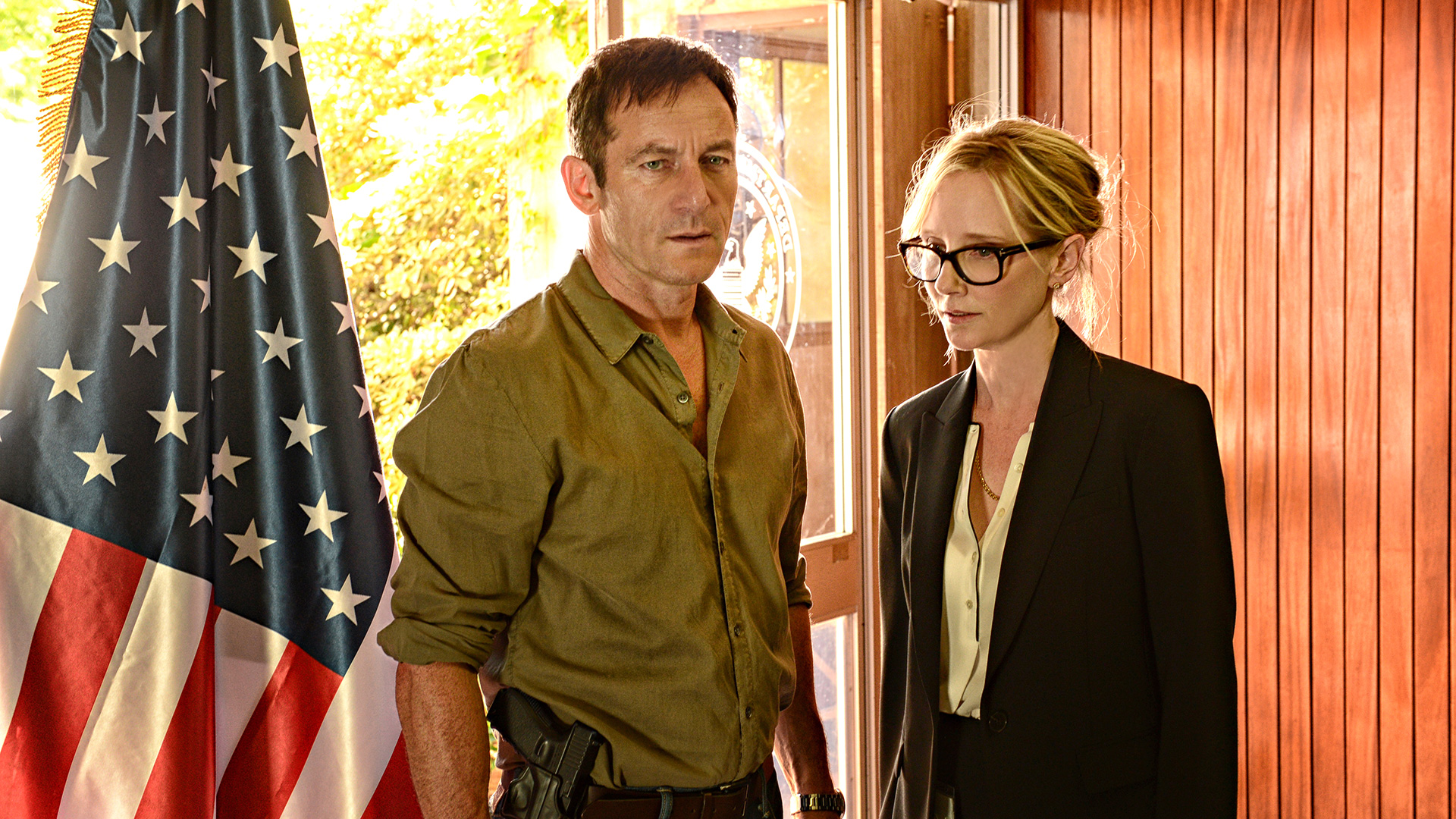
 Here’s what we know. Jason Isaacs plays an FBI agent whose daughter died recently, tearing apart his home life and motivating him move to Israel to get far away from the site of his personal tragedy. He gets into some territorial tiffs with a local Israeli agent, as the two of them compete to take down an American murderer who ran to Israel. They find that he stole bizarre ancient religious paraphernalia that they don’t know what it is, but well, it’s got to mean something to be worth killing over. Isaacs meets a young woman who is working on a major archeological dig near the Temple Mount, and the woman is mysteriously murdered the next day. Gale from Breaking Bad (David Constabile, one of the great TV character actors working) plays a crazy preacher who has been raising a 13-year old boy trapped in a complex for his entire life for some crazy religious prophecy purposes. When the boy escapes, he’s shot, because he’s now unclean, and he’s replaced with an identical boy. The preacher has contact with some Hasidic Jews who have been raising a cow, because, more end of the world stuff that I don’t really understand.

 The level of religious prophecy immediately has been wondering what level of reality Dig is playing in terms of religious and magic, or, myth, or fantasy, or however you want to describe it. Is religion real, and thus everyone right to be chasing all these far out goals, turning what could be deluded zealots into prescient prophets? Is this brand of religion a lie, in which these are a bunch of crazies whose religious fanaticism is driving them towards murder and other illicit activities? Or is it somewhere in the middle. Since this is from Tim Kring (and Gideon Raff, the creator of the original Israeli Homeland), the man behind the went-off-the-rails fate-centric Heroes and the cringingly-fate-centric Touch, there’s probably some magic going on.

Dig is clearly one of those big picture, big question series, and because Tim Kring is part of it, as mentioned above, there’s probably magic in the air.  Dig actually seems a little less bright than most USA programming, probably an attempt to change up the brand after USA has been slipping somewhat in the ratings, and more closer in hue to the series of supernatural mystery programming that churns through the broadcast networks every year.

Historically, I have been huge sucker for supernatural mystery shows, and time and again I’ve gotten pulled into watching more episodes than I should before realizing that almost every supernatural mystery series is terrible and goes nowhere. I watched several Revolutions and Terra Novas, for example, before giving in and admitting that both were not good. Dig’s first episode is about on pace with either of those. There’s nothing to suggest that any aspect of Dig is superior, and the appeal is simply based on the what-the-fuck-is-happening plot aspect. Great plot can absolutely make a show, and BattleStar Galactica, a flawed but fascinating sci-fi show, often made hay with excellent plot when other aspects of the show were lacking (the episodes, including the finale, where the plot didn’t work, were correspondingly awful but that’s another story).

The acting was competent but there would be no reason to come back except for my itching curiosity at the supernatural mysteries hinted at in the pilot. That just isn’t enough anymore. I’m starting to learn my lesson.

Will I watch it again? No. I’m trying to face down my supernatural mystery habit. These big mysteries always suck me in, and like someone who continues to date the wrong type of guy or girl even when he or she knows better, I’m slowly and with great difficulty leaning to spot my own weakness and try to identify it objectively. I’m not falling for just any mystery show and Dig doesn’t seem worthy.

Spring 2015 Review: CSI: Cyber

30 Mar

CSI: Cyber

Police must love cop shows. Nothing glamorizes the institution more than detectives and officers fighting the good fight, always cracking the case, and locking the bad guys up for good. While this applies to almost every cop show on TV (there are of course exceptions, like The Shield), no show makes cops look better than editions of CSI. There are none of the classic cop struggles here. No alcoholics or cops who struggle balancing the family and work lives or copious amounts of red tape or cops negatively affected by prior cases. There are just ultra, ultra-competent cops who can do everything, from computers, to hand-to-hand combat, to interrogations, and do it impressively, staying well within the law all the time (no questionable go-too-far tactics here) and always in time to save the day.

CSIs are also a little silly by cop show standards, played completely straight within the shows, but in a way that makes me think the creators don’t take them all too seriously. Partly because of this, as much as they’ve been the butts of jokes over the years, I have a hard time actually hating them. They’re just so ludicrous. CSI: Cyber stars the FBI’s Cyber division, responsible for investigating any cyber crimes (which seem to be anything which involves programming or electronics, or, well, it’s hard to tell). The team is made up of Avery (Patricia Arquette), the leader, a behavioral psychologist, Elijah (James Van Der Beek), her second in command, a military type, Daniel, a super elite hacker, Raven, a woman who doesn’t do anything in the first episode so I don’t really know what her deal is, and Brody, a new one-time criminal hacker on a Mod Squad type program to either help the FBI and become one of them, or rot in prison. 

The case in the pilot is a series of baby abductions, which leads to the discovery that an organized crime ring has been orchestrating these kidnappings and auctioning off babies. The Cyber connection is that the criminals chose and cased the babies through a software weakness in baby security cameras owned by the victims’ parents.

Arquette and Van Der Beek are everywhere during the episode, and doing everywhere. They take over from local cops, work the home, convince a reluctant kid to give evidence, find the first lead in a warehouse, arrest a couple of lackeys who were then assassinated, shoot their assassin who was getting away on a motorcycle, and raid the warehouse where the real bad guys were at. Van Der Beek even literally saves a drowning baby towards the end of the episode, and Arquette performs CPR to bring the baby back to life.

There’s lots of silly cyber stuff, though to be honest less than I’d hoped. The Cyber division office contains a ludicrous amount of screens, kind of like one of those CNN Electoral War rooms. The show presents us with a few two-color black-and-green cyber-reconstructions of very computer-related events and the hackers talk a little bit of code (uberhacker Daniel berates a baby cam company IT guy for problems with their programming), but there’s far less technobabble than I was hoping for.

Calling CSI: Cyber a bad show is not so much right or wrong as it is beyond the point. It’s a very silly show. It’s professionally done, as CSI’s are. You get a case, it gets cracked little by little, until it’s all wrapped up at the end of the episode, and everyone goes to get a beer except for our fearless leader, Arquette, who goes off to think. And yes, before I forget, it turns out that Arquette got into this business because her professional records as a psychologist were hacked, leading to a patient’s murder, and yes, she still hasn’t yet found the hacker, but rest assured, should the show continue she will. CSI’s full of crime procedural cliché catnip like that.

Anyone familiar with CSI, and that should be, at this point, just about anyone familiar with television, knows exactly what this is. There are no surprises. If you’re the type of person who likes CSIs, you might like it, and you might not, and if you’re not, then there’s really no point watching, and there’s really no way you’re considering watching it anyway. There’s nothing to see here.

Will I watch it again? No. There’s no need to. I don’t mind watching these pilots so much, and they’re over-the-top which in doses is entertaining rather than bothersome, exceptionally compared to some of the worst pilots which can really be a slog to get through. Still, there’s no reason I ever need to see another episode.

Ranking the Shows That I Watch – 2014 Edition: 11-8

27 Mar

We move into the top ten. Three comedies and an HBO miniseries. Moving on along…

Intro here and 43-40 here and 39-36 here and 35-32 here and 31-28 here and 27-24 here and 23-20 here and 19-16 here and one-offs/shows ineligible for the list here and 15-12 here.

11. New Girl

New Girl

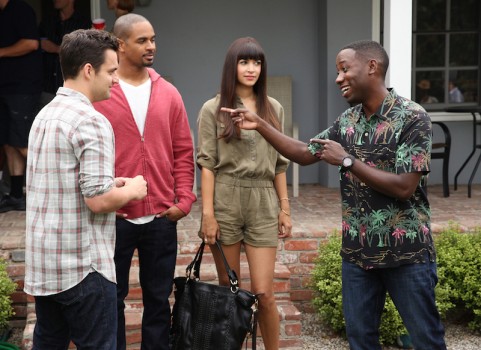
No show has had more ups and downs than New Girl. New Girl has for periods of times, in the 2nd season particularly, hovered among my favorites shows on TV, only to, after a stretch of great episodes, like a cartoon character, look down, realize there was nothing below it, and come back down to its frequent inconsistency. New Girl four seasons in still hasn’t quite figured out how to be at its best for any length of time and part of the reason is because the cast is so damn good that it keeps the quality of the show always one level above the writing, helping to downplay shoddily written episodes and not forcing the writers to dig deep and focus on what works. New Girl does get on these streaks of brilliance though, and one of these streaks was the first half of the fourth season, which made me temporarily forget about my frustration with the extremely up and down third season, as the show banged out classic episodes one after another, with two of the biggest winners being Landline and Background Check New Girl may never put together a whole season this great, but the fact that this streak has the show ranked this well tells you how high New Girl flies when all is well.

10. Community

Community

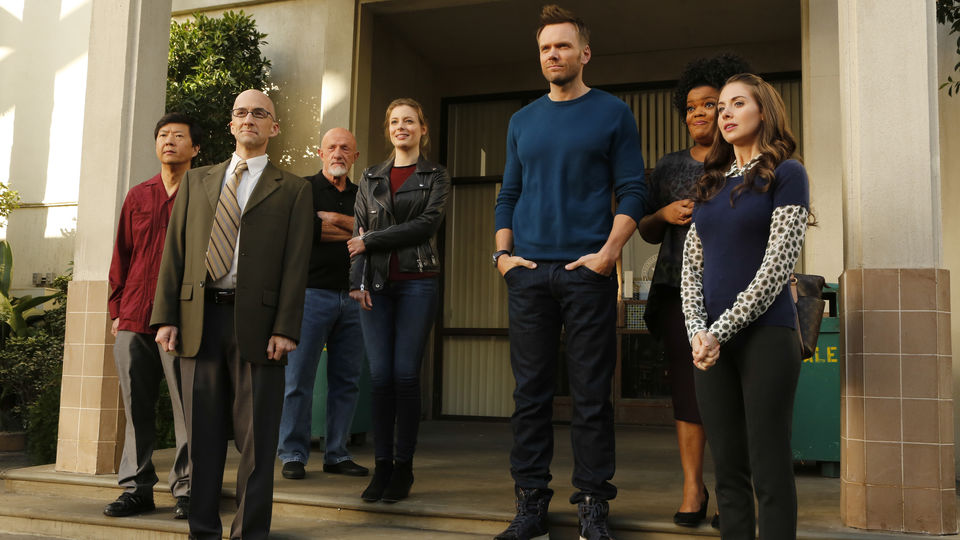
I’ll make a comparison I’ve made many times before but still continues to stand. Community will never and has never enjoyed the startling consistency of former NBC-mate Parks and Recreation, but the show has moments where every aspect comes together and makes an entire season worthwhile in one episode. The fifth season was not the show’s strongest, though upon looking back at the episode list, it was much better than I remembered offhand. More episodes were hits than misses, and some of the hits were very good. Best, unquestionably, was Cooperative Polygraphy, where the group receives their bequeathments from Pierce’s will, and was the kind of episode that explains why people are fanaticall about Community. The writing and acting are both on fire and in sync; the show deals with Pierce, the lack thereof, the characters, their relationship, and the world, all while being very funny. Community has its problems, but it also explores areas few comedies do, which buys it some purchase on its shortcomings. It will never be a perfect show and its best days are likely behind, but it is singular and that characteristic in and of itself can be underrated.

9. Olive Kitteridge

Olive Kitteridge

I put off HBO miniseries Olive Kitteridge for months, knowing little about its premise other than it was based on a book. Based on the name, I assumed the source material was from the late 1800s rather than 2008, and that it would be, even if eventually proven worthwhile, a slog to get through. And on paper, it seems like it should be. It’s depressing as hell and Kitteridge, played by the brilliant Frances McDormand, is frequently a miserable person, tearing down her less intelligent happy-go-lucky husband and son as she lashes out from her own serious depression. The miniseries follows her over a nearly 30-year period, as she and her family grow old. It accomplishes the impressively saddening double as you squirm in your seat at her behavior while feeling awful for her at the same time. Against all odds though, it’s actually incredibly riveting stuff. Watching is compelling, even without any obvious narrative hook (there’s no natural beginning, middle, or ending). Kitteridge is simply a deeply complex character, endlessly frustrating, and endlessly heartbreaking as well, from a place and a time where she didn’t have the proper outlets to help herself. Watch, and while during the first 20 minutes, you may feel like it’ll be hard to get through the whole thing, a short couple of hours later you’ll be wondering how you thought that before.

8. Broad City

Broad City

I knew Broad City existed, and I knew it was going to be good, but for some reason I can’t explain in hindsight it took me a few months to catch on with and one drunken evening to dive in and watch the first six in a row on demand. By year two, I was heavily anticipating each episode, watching it live, and sometimes watching it again soon after. Broad City for a time this year became the buzziest television half hour since Girls, and although the plaudits for best comedy on TV may have initially seemed to come too soon, they may just as well have been on the money. Broad City, more than any other show, takes place in my New York City, neighborhoods and places I know and recognize and speaks to my generation. Broad City doesn’t simply buck TV conventions by consciously doing the opposite. Rather it ignores those conventions completely, making the show as creators Abbi Jacobson and Ilana Glazer see fit, entirely peripheral to when and where it fits in with conventions or avoids them. The show succeeds both in more sitcom-y episodes and in wacky gimmick episodes, such as Destination: Wedding, when Abbi and Ilana are rushing to get to a wedding on time by whatever mode of transportation gets them there. The side characters (Lincoln, Jaimé, Tre, etc.) are great and not to be underestimated, but the core friendship of Abbi and Ilana is even through just a single season one of the strongest on TV, and the center of everything the show builds around.