Archive | April, 2015

Ranking the Shows That I Watch – 2014 Edition: 7-4

6 Apr

Second to last entry. We’re getting close to the top. One cartoon, one miniseries, and two familiar fixtures in the top 10 of these lists. Let’s do it.

Intro here and 43-40 here and 39-36 here and 35-32 here and 31-28 here and 27-24 here and 23-20 here and 19-16 here and one-offs/shows ineligible for the list here and 15-12 here and 11-8 here.

7. The Honourable Woman – 2013: Not Eligible

The Honourable Woman

If it’s a little hard to explain how a slow, deliberately paced character sketch like Olive Kitteridge hooks viewers, it’s incredibly easy to explain how British miniseries The Honourable Woman gets viewers on board. It’s a taut, suspenseful British spy thriller in a classic John le Carre vein. The Honourable Woman follows the ex-Israeli Jewish British brother and sister executives running a company that used to make weapons but now is attempting to install infrastructure in the West Bank and the Gaza Strip. Buried within their personal histories, their company’s history, and espionage agencies in the UK, US, Israel, and Palestine, are mounds of secrets and lies. Each episode slowly pulls off another layer of the onion that is the story, getting closer and closer to the truth. Every major character holds the truth close to the vest and knows more than some people but less than others. Moreover, The Hounrable Women, perhaps because of its miniseries format, has that very rare attribute: the truly satisfying ending. That is so hard to pull off but so beneficial, leaving a wonderful taste in my mouth as I think about the show months after watching.

6. Game of Thrones – 2013: 2

Game of Thrones

Game of Thrones is the best epic on TV, spanning dozens of characters and several far-flung locations. The sheer scope of the show in an incredible achievement that no mega-budget series can match, and the show constantly manages to smartly marry very human ideas with blockbuster spectacle. The series impressively avoids getting out of hand despite its breadth, cross-cutting and presenting coherent narratives within episodes in interesting ways, and honing themes about leadership, government, and power, among many others. While some of the fight scenes seem a tad long for a show that needs to squeeze hundreds and hundreds of pages into a ten episode season, they are never anything less than brilliantly directed and choreographed, the biggest this season being the battle at the wall. Admittedly, I’m biased by having read the books, and while I try to be self-aware of that bias, it seeps into my opinions on the show, sometimes favorably, and sometimes less so. Every episode a couple of changes bother me, and most I can put aside due to time constraints or other tv limitations, but occasionally there’s a glaring mess up. This season, the biggest was the Jaime – Cersei rape scene, which came off very differently than in the book, and the biggest problem may have been that the creators didn’t realize that what they put on screen was clearly rape. Still, there’s no show that feels like week-to-week event viewing more than Game of Thrones, no show that makes you look forward to every Sunday as if anything could happen.

5. Rick and Morty – 2013: Not Eligible

Rick and Morty

Rick and Morty debuted in 2013, but aired only three episodes. The out-of-nowhere-jump-to-the-top-ten pick of this year (the honorary Eagleheart slot), Rick and Morty is the story of the travels through time and space of Rick, a slightly behind-the-eight-ball teen and Morty, his alcoholic mad scientist grandfather. The characters are bizarro riffs on Doc and Marty from Back to the Future and the plots can get both insanely complicated and hysterically funny. Rick and Morty is hilarious but also engrossing science-fiction, rolling through tropes and homages both generic and specific, and mind-fuckingly confusing plots which reward repeated viewing and stand up as entertaining outside of the laughs. Multiple episodes heavily involve recursion, and the penultimate Close Rick-Counters of the Rick Kind posits an infinite number of dimensions with an infinite number of Ricks and Mortys. Rixty Minutes, on the other hand, featuring a series of interdimensional television programs was only funny, rather than plotty, but worked incredibly well anyway. Rick and Morty, for a series this off the wall, had a surprisingly high hit rate, and I can’t wait for it to come back.

4. Mad Men – 2013: 7

Mad Men

Mad Men has never had a bad season, but season 6 may have been its weakest. No more though, as the first half of season 7 sees the show back in top form, full of classic moments and episodes, that continue to pad the numbers on an already established inner circle hall of fame case. Only the annals of all-time lists await Mad Men. The season is much more dynamic than the prior season, which felt limited by its dreary Don-Sylvia romance and the didn’t-quite-deliver-on-the-amount-of-attention-paid-to-him Bob Benson. Pete, Peggy, and Don, were all in different places this year, but bonded for the Burger Chef account, which drove much of the middle of the season, with Peggy stepping in as troubled Don’s superior who, because he was still a partner, had only limited power over him, making their already complex relationship increasingly awkward. Roger gets his mojo back (remember when we all thought he was on the brink of a possible suicide attempt?) by assembling a deal to sell SC&P to McCann, overriding Jim Cutler, who eventually joins the unanimous vote to take the deal, because, well, it’s a lot of money. Don’s marriage with Meghan disintegrated, which had seemed inevitable for some time, after both made one more effort to keep something together that clearly wasn’t working any longer. The season went out in style, with an inspired tribute to the great Bert Cooper, which I really wanted to say should have felt totally out of place, but I can’t.

Spring 2015 Review: Weird Loners

3 Apr

Weird Loners

The loose premise for this 30-somethings-hanging-out comedy is that four mid-30-somethings that haven’t settled down while their friends and colleagues all have, because there’s essentially something wrong with them, all meet, and start hanging out.

Here’s our crew. There’s Stosh, the jerk – he’s smooth, good at his job and handsome, but a total douchebag who gets fired in the pilot despite his stellar record because he slept with the boss’s fiancé. There’s Eric, who is the loser of the group. He’s cousins with Stosh, and he’s seems like the type of guy who has no friends He stays at home making puppet shows. There’s Zara, who’s just kind of a weirdo. She somehow becomes friends with Eric after he buys one of her painting at a street fair, and she’s just kinda strange. And then there’s Caryn, who is the straight woman of the crew, in a comedic, rather than a sexual identity sense. The episode is primarily told through her point of view, and she seems actively anxious about getting older and whether there’s something wrong with her because she doesn’t want who or what she thinks she should want, where there’s no evidence the others care one way or the other.

What are they doing together? It probably doesn’t really matter. Caryn has a nagging mom, and a wannabe upright-but-boring fiancé played by David Wain, whose appearance is just about the highlight of the show. The four don’t really make sense with one another, and don’t seem to have any logical chemistry or any reason to be spending time together. It is somewhat hard to imagine that they’d actively enjoy each other’s company for sustained periods of time.

I get the premise and the attempted style of comedy. This is totally a show designed for me, for someone who likes shows like Happy Endings and New Girl, shows of best friend late 20 and 30 somethings hanging out together and getting into wacky situations and doing generally sitcom-y stuff. These are modern comedies that share some classic values and sitcom devices.  Those successful shows are based on the deep friendship and love that groups the main characters together, which really is what makes both New Girl and Happy Endings work. Without that, there’s something wanting, and that’s what Weird Loners is.

Of course, if the show was simply funny enough, every other chemistry or friendship or enjoying-watching-characters consideration wouldn’t be a problem, but it’s not.

Will I watch it again? No. Weird Loners is one of those spring replacement shows that was never going to succeed and will be forgotten very quickly if it hasn’t been already.

Spring 2015 Review: Dig

1 Apr

Dig

I don’t know much about the Book of Revelations and Judeo-Christian end-of 0he-world theories, but I know enough to recognize when they’re being alluded to. I read the Michael Chabon book The Yiddish Policeman’s Union a few years ago and got incredibly confused when the primary murder case was tangled up with religious apocalyptic scenarios. There’s some preachers, and some Hasidic Jews, and a calf, and well, we’ll get to it in slightly more detail in a minute. But this is definitely some end-of-days stuff.

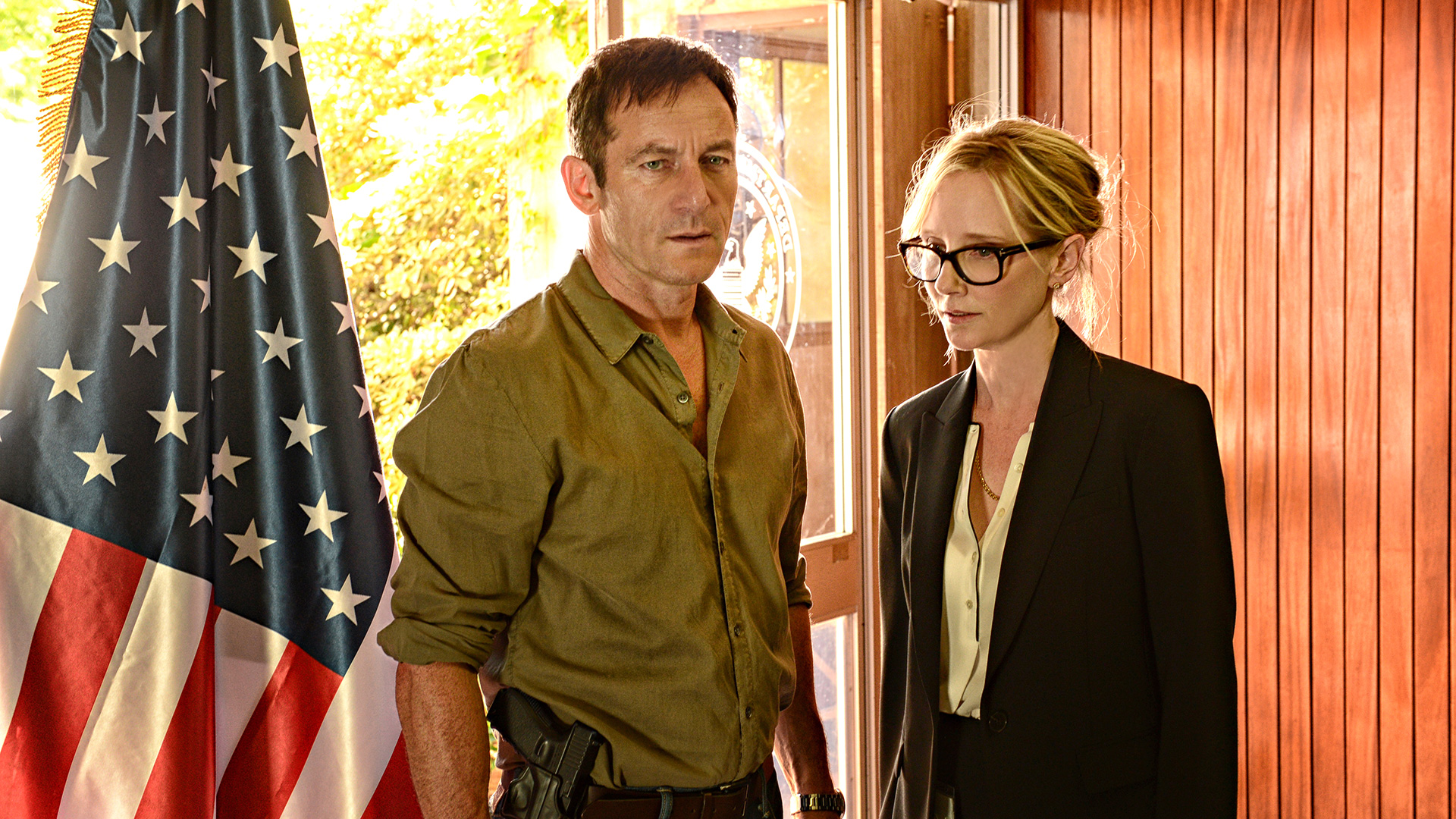
 Here’s what we know. Jason Isaacs plays an FBI agent whose daughter died recently, tearing apart his home life and motivating him move to Israel to get far away from the site of his personal tragedy. He gets into some territorial tiffs with a local Israeli agent, as the two of them compete to take down an American murderer who ran to Israel. They find that he stole bizarre ancient religious paraphernalia that they don’t know what it is, but well, it’s got to mean something to be worth killing over. Isaacs meets a young woman who is working on a major archeological dig near the Temple Mount, and the woman is mysteriously murdered the next day. Gale from Breaking Bad (David Constabile, one of the great TV character actors working) plays a crazy preacher who has been raising a 13-year old boy trapped in a complex for his entire life for some crazy religious prophecy purposes. When the boy escapes, he’s shot, because he’s now unclean, and he’s replaced with an identical boy. The preacher has contact with some Hasidic Jews who have been raising a cow, because, more end of the world stuff that I don’t really understand.

 The level of religious prophecy immediately has been wondering what level of reality Dig is playing in terms of religious and magic, or, myth, or fantasy, or however you want to describe it. Is religion real, and thus everyone right to be chasing all these far out goals, turning what could be deluded zealots into prescient prophets? Is this brand of religion a lie, in which these are a bunch of crazies whose religious fanaticism is driving them towards murder and other illicit activities? Or is it somewhere in the middle. Since this is from Tim Kring (and Gideon Raff, the creator of the original Israeli Homeland), the man behind the went-off-the-rails fate-centric Heroes and the cringingly-fate-centric Touch, there’s probably some magic going on.

Dig is clearly one of those big picture, big question series, and because Tim Kring is part of it, as mentioned above, there’s probably magic in the air.  Dig actually seems a little less bright than most USA programming, probably an attempt to change up the brand after USA has been slipping somewhat in the ratings, and more closer in hue to the series of supernatural mystery programming that churns through the broadcast networks every year.

Historically, I have been huge sucker for supernatural mystery shows, and time and again I’ve gotten pulled into watching more episodes than I should before realizing that almost every supernatural mystery series is terrible and goes nowhere. I watched several Revolutions and Terra Novas, for example, before giving in and admitting that both were not good. Dig’s first episode is about on pace with either of those. There’s nothing to suggest that any aspect of Dig is superior, and the appeal is simply based on the what-the-fuck-is-happening plot aspect. Great plot can absolutely make a show, and BattleStar Galactica, a flawed but fascinating sci-fi show, often made hay with excellent plot when other aspects of the show were lacking (the episodes, including the finale, where the plot didn’t work, were correspondingly awful but that’s another story).

The acting was competent but there would be no reason to come back except for my itching curiosity at the supernatural mysteries hinted at in the pilot. That just isn’t enough anymore. I’m starting to learn my lesson.

Will I watch it again? No. I’m trying to face down my supernatural mystery habit. These big mysteries always suck me in, and like someone who continues to date the wrong type of guy or girl even when he or she knows better, I’m slowly and with great difficulty leaning to spot my own weakness and try to identify it objectively. I’m not falling for just any mystery show and Dig doesn’t seem worthy.