Tag Archives: UK

End of Season Report: Luther, Season 3

9 Dec

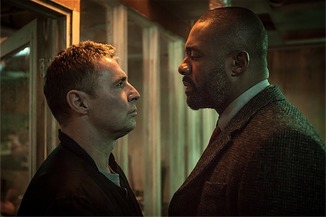
Luther and his nemesis

British cop drama Luther aired its third season this year, although it’s a very British season, made up of just four episodes. The first two seasons were solid but unspectacular fare that largely relied on television police tropes, particularly the cop-that-breaks-all-the-rules-but-is-always-right. Still, the seasons had their moments, starred the always wonderful Idris Elba, featured one really interesting character named Alice, and well, there weren’t that many episodes so the quality didn’t have to be as high to make the seasons worth watching (I’m aware that’s a very backhanded compliment). 

Normally I try to make some broader points in these end of season reports and hit on a number of key plotlines. Here, though, there was one element of the third season that basically ruined it for me and that’s pretty much what I’m going to focus on.

Here’s the problem with Luther season three, the most frustrating and worst season of the show to date. They took a good idea and executed it exactly the wrong way,which led to a season which was worse than if they good idea had simply been absent altogether.

Let me explain.

Here’s the good idea. Luther is an unethical police officer who violates both ethical and legal boundaries to solve cases and punish guilty offenders. This is something that would be extremely controversial in real life, is fairly controversial in the show, but it’s something viewers have occasionally been taught to root for in their television heroes. Heroes don’t play by the rules and they get things done anyway they have to; technicalities be damned. Thus, this season, the Luther writers smartly decided they were going to introduce someone who looks into Luther’s  misdoings and tries to find out if they’re true, and if so to take him down within the system.

That’s a good idea. Here’s how you do it right. The internal affairs-type people looking to get Luther are completely neutral and simply interested in finding the truth. They’re not interested in personal vendettas; they’re interested in people following procedures that exist for a reason. Internal affairs-type people always tend to come off as bad guys in TV shows for the same reason borderline unethical cops come off as they good guys; the cops are trying to get results, while the internal affairs people are worrying about bureaucratic bullshit while the real cops go after criminals. So, the key to have this plot thrust work is ensuring that the agents coming after Luther are trustworthy and passionate, so they’re on an even playing field with Luther, and it makes you think, well, maybe Luther, this character that I’ve been rooting for, maybe there are good reasons that he should go down and get investigated and possibly punished for his indiscretions.

Here’s what they did. The head internal affairs person investigating Luther, George Stark, is a drunk absolute nut job who cares much more about railroading Luther than he does about justice or law or really anything. It’s unclear why he cares so much since we’ve never seen him before and it’s unclear what kind of official permission he even has to be conducting his investigation. At least his helper and second in command has been at odds with Luther for some time and has a legitimate beef. Stark comes out of absolutely nowhere, despises Luther for reasons that are unclear, but is far from being above using the same exact underhanded tactics to get Luther that Luther might use against a criminal. Not only is it unbelievably hypocritical, but Stark has an insufferable superior attitude about the whole ordeal which makes him all the more despicable.

I’m open to rooting against Luther. I could be convinced. He rubs me the wrong way often and I’m tired of that cop-who-disobeys-the-rules being portrayed as the hero . Still, when this is the other option, I’ll root for the devil I know any day of the week. I know this show can do better. Luther is already a show with many limitations and a not particularly nuanced view of crime or policework, but it could craft a more convincing and compelling investigation into Luther’s misdeeds.

This investigation into Luther was all leading to the final episode. I was already kind of fed up with this plot by this point which was ruining most of the enjoyment I had from the other angels of the first three episodes. Stark’s investigation into Luther in the final episode became unbearable and almost made me stop watching then and there. Luther’s partner is killed, and the killer comes after Luther’s girlfriend. Somehow, however, Stark believes that Luther conspired with the criminal to come kill his girlfriend for some reason, well, I obviously can’t even fathom what reason. Come on. How are they taking this seriously? Say what you want about Luther, and there’s a lot to say, there’s a lot that he’s actually guilty of that he should be fired for and maybe more. But that he arranged a deal with the villain to kill his girlfriend? What? How does that even make sense for two seconds?

I’m aware plausibility only goes so far on TV often, but there has to be limits. Stark is also mindbogglingly incompetent and his utter confidence that Luther is behind every plot in the show ends up leading to his death and almost several others.

Also, everyone who watches Luther loves Alice. Alice is the best character. But her coming in out of absolutely nowhere to steal him away from his convey with grenades? Come on. A poisoning? Sure, I’d believe that. But this seems more than a bit much, as does Luther walking away with her at the end of the show, still barely a day, if that, after his partner died.

This is a much more minor note, but the dialogue between Luther and his new girlfriend Mary when they get together at the end of the second episode is just terrible.

Honestly, this is just a very disappointing season of television. I’ll have to consider whether I want to watch any more if a fourth season comes about.

Fall 2012 Review: Cuckoo

7 Nov

Cuckoo is a BBC comedy (BBC 3 to be precise, but please don’t ask me what the difference is) about a normal-ish family trying to get along with their weird new son-in-law.

While I was watching the first episode, various comparisons kept coming to mind, but my brother crystallized it best –  Cuckoo most closely resembles Meet the Parents in reverse.  Instead of a normal, if easily intimidated and sometimes awkward, workaday guy, being forced into bizarre uncomfortable situations with a super weird and intense parent of his fiance, it’s about a normal workaday family, the father, especially, being forced into bizarre uncomfortable situations with a super weird and intense son-in-law his daughter brings home after marrying him during her gap year abroad (could you get more UK than gap year?).

While the rest of the actors haves some British cred (Greg Davies, who plays the father, is the head of sixth form in other recent British comedy hit, The Inbetweeners), the only one known to Americans is Andy Samburg, who plays the new son-in-law, who calls himself Cuckoo (hence the title).  While I imagined Samburg would play his standard doofus-y type character which I thought would fit seamlessly into this plot, he plays just as ridiculous and over the top a character, just not what I was expecting in that vein from him.  He’s a super arrogant, super non-self aware, eastern-philosophy type, pretentious and with no basis in reality.  His work is writing his magnum philosophical opus, and he casually insults the father unwittingly within just a couple of days of knowing each other (how this is unwittingly is a mark of how extreme the lack of self-awareness is) by calling his beautiful English countryside shit, compared to all the beautiful places Cuckoo has been, and by calling the father a worker, while he, Samberg, is a thinker who works on a higher plane while the workers handle more menial tasks.

If you haven’t guessed yet from just the description so far, well  the show doesn’t really work.  It doesn’t really work on either of two primary levels, idea and execution.  It starts with kind of a simple, stale idea, and doesn’t bring anything particularly new or innovative to the idea nor even take advantage of what humor can still be mined out of that existing idea.

It’s really difficult to understand what the daughter, Rachel, sees in Cuckoo, but even taking that as a given and putting it aside, it’s just not very funny.  Rachel really wants her parents to like him, but she’s amazingly oblivious to his inappropriate and weird comments, and not even really trying to make excuses for his behavior, like you’d think someone would.  There’s lots of sitcom standard miscommunication, where two characters are talking on different frequencties, and we the viewer realize this at the time, while they realize this later on, and there in allegedly lies the humor.  Primarily at one point in the pilot, the father thinks he’s convinced Cuckoo to take some of the father’s hard earned money and leave for good, for Rachel’s sake, so she can have an ordinary university life, where Cuckoo naturally doesn’t get what the father’s saying at all and uses the money to buy a ridiuclous truck, and soon the father realizes he’s wasted his money but has to claim otherwise to save face with the rest of his family for are trying to be more considerate to Cuckoo.  Cuckoo’s so wacky and oblivious!  It’s awkward for everyone without being funny to compensate properly.

Will I watch again?  No.  It wasn’t awful; it mostly was stale instead of cringe-inducing, and there were one or two moments where I laughed.  It just wasn’t very good and was rather disappointing; I’m not sure I had any reason to expect more from this show, but for some reason (likely that I generally like Andy Samberg) I did.

Show of the Day: Downton Abbey

12 Jan

I’ll admit, I had no idea what Downton Abbey was about other than being an English period drama until earlier this week.  In fact, I kept reading it incorrectly as “Downtown Abbey” which conjures a very different idea in the mind.  After watching the seven episode first season though, I’m certainly glad I know more about it now.

Downton Abbey is about the residents of the titular location, an estate in Northern England, including both the aristocratic family who run the Abbey, and the serving men and women who make the Abbey run.  A third economic class is introduced in the second episode when an upper middle class lawyer and his mother move into the Abbey because the lawyer has become the new heir to the title and estate after the old heir died in the Titanic disaster.

Downton Abbey is about as British as British gets.  It’s like Gosford Park without the murder.  (Note: I had absolutely no idea it was from the same writer as Gosford Park until I had finished five episodes, but it makes perfect sense.)  One of the essentially European aristocratic core issues at hand is the secession of the estate and title, as well as the marrying off of the three daughters of the current Lord and Lady of the estate.  Downton Abbey takes place at a crucial junction in time at which both love and position count in constituting a match, and the battle between the two occurs throughout the show.

Downton Abbey is a soap opera at its heart, a less serious show than critically acclaimed series of the period such as Mad Men and Breaking Bad.  However, it also deals with the class structure in an interesting, albeit generally unrealistically sunny and positive way.  The lord and lady of Downton Abbey are generally benelovent, but can’t avoid their learned feelings of noblesse oblige.  Even between the Lord and Lady, there are issues, as the lady is an American who Lord Grantham originally married for her money, which was necessary to save the estate.  The men and women of the serving class deal with vastly different problems than the aristocracy, largely, but also some similar programs.  Downton Abbey takes place at a similar time as far more serious show Boardwalk Empire, when the times are changing rapidly, but the characters largely try to change as little as absolutely necessary to adapt.  The biggest rift, aside from class, is generational, as the three daughters, to various degrees, are far more ready to embrace the less stratified world than their parents and grandparents.

I knew I was on board for good when I started rooting for and against characters, even yelling at my TV, and not in the angry at the show way, but in an angry at the characters way.  As far as the rogues gallery goes, Maggie Smith is fantastic as the cantankerous matriarch of the house, mother to the current lord, the Dowager Countess Violet.  She’s quick with an insult and is a protector of all things traditional, proper and conservative in the wake of attempts at forced changes to the social order from outside the estate.  Her foil is lawyer and new heir Matthew Crawley’s mother, who is the one character who is extremely progressive for her generation, and is the only character stubborn enough to not give in to the Dowager Countess, much to Smith’s dismay.

The most villainous characters are probably footman Thomas and maid Mrs. O’Brien, who are constantly scheming to get their personal nemesis valet Mr. Bates fired.  Bates, a newly hired footman at the beginning of the show, harbors some sort of secret, but seems a much better sort than Thomas (just one season of the show has me describing people as a “sort”).  Thomas is cruel to the other footman, William, and constantly flirts with cook’s assistant Daisy who is just about the only character who doesn’t realize that his affections are reserved for men.

Eldest daughter Mary I wouldn’t quite call a villain, but it’s frustrating watching her constant immaturity on display through the first season, as well as the way she treats her youngest sister Edith, drawing every man’s attention even when she’s not interested, just because she can.  Edith reciprocates with immature behavior to get back at Mary.  There are characters to root for as well.  Middle daughter Sybil is by far my favorite of the three (though the  other two have grown on me over time; it’s a sign of a good show when it’s able to make you like the characters you hated at first).  Sybil gets less screen time than Mary in the first season, but she’s the most political and most willing to attempt to break free from the social restrictions of the time.  Lord Grantham is better 1910s version of Tim Allen’s character in Last Man Standing.  Inherently conservative, but well-meaning, he’s caught between all the women in his life, including his daughters, wife and mother.  He wants to do what’s best within the narrow parameters he’s grown up with, but often ends up mediating a dispute between the women and takes a compromise position.  Matthew Crawley, the new heir, is a middle class lawyer, who struggles to fit into an aristocratic lifestyle.  He doesn’t always succeed, but he manages to turn general resentment from the family when he first arrives to sincere affection.

One note before I finish up: The strangest aspect of Downton Abbey is how quick it skips through time between episodes.  In the vast majority of TV shows, a season takes place over a single season or year, with episodes reasonable close together in time to one another.  Downton Abbey defies that convention.  The first episode takes place in 1912, but the show is in 1914 by season’s end, and the second season jumps even more.  This is hard to compute, given my understanding of traditional TV scheduling, and left me slightly discombobulated.  Eventually I was able to just accept that the primary reason for this seems to be to move into certain historical events (World War I!), and that nothing really important happens on the estate during the months we’re not seeing.