Tag Archives: The Comeback

The Quest for Relevance for the One-Time Famous: BoJack Horseman and The Comeback

11 Sep

One Trick Pony

Having watched BoJack Horseman and The Comeback nearly back to back, I was stunned by the similarities. Both star has-been actors who were at the peak of their games in the early ‘90s starring on cheesy but commercially successful sitcoms that made them stars. Both live in the past constantly. They still see themselves as the stars they once were, even as the world has moved beyond and past them. They were so caught up in an unexpectedly easy and quick fame that their self-worth become to inexorably tied up in their popularity; their confidence was no longer their own, it was a meter which went up and down based on the vagaries of the American viewing population. And when they population moved on, they didn’t know what they were and they didn’t know who to be. Both were materially successful. They had money; they lived nice, comfortable, lives, despite their lack of employment. But that wasn’t enough. They needed what fame gave them. They were insecure, needy, jealous of other, younger stars who looked to have what they had 15 years ago. BoJack was openly so; Valerie less so, but it was clear that she still thought she was a star, and surrounded herself with people who thought likewise.

Both were given an opportunity to get back into the limelight after years on the sideline. Both of these opportunities were not new; they were a version of the old, an attempt to revisit has-beens and tell their stories. Both new opportunities seemed oddly invasive; for Val, a documentary following her everywhere, and for BoJack a tell-all memoir. Both opportunities veered deeply into their subject’s lives; leaving no stone unturned, revealing aspects that most people wouldn’t want released into the public

Both put their trust in a colleague who they believed to be their friend, their advocate, looking to tell their side of the story, even while they agreed, at the beginning of the venture that their story was to be told warts and all. BoJack asks for a tell-all memoir that’s good, not a load of crap. Valerie knows her story is being told on every camera – she does her part to make sure the cameras are everywhere. Both feel incredibly upset at the completion of their respective projects – their trust was betrayed. Diane turned on BoJack, writing a memoir that was a huge success for her but made him look like the huge asshole we know he is. He believed she had his best interests in mind. The Comeback debuts and immediately distorts Valerie’s words, takes them incredibly out of context, and shows of her worst moments without showing the villain that antagonist Paulie G had been. Val felt like Jane who she trusted had turned on her completely.

And yet, in the ultimate celebrity culture twist, both projects become bizarre unexpected successes, for exactly the reasons BoJack and Val had felt betrayed and vulnerable and humiliated. Everybody’s talking about the double vomit scene; it’s the talk of the town leading to the Comeback getting an immediate pick up, which is unheard of. BoJack’s book is a smash; everyone is fascinated by his story, and if not quite empathetic, at least interested, and some people relate; he’s real, and true, and if still an asshole, it moves books.

More than anything, both are relevant again. Both have traded their dignity and their self-worth for relevance and both, while still indignant about their treatment, are kind of happy with that trade. There’s a huge conflict; both are insecure and desperate to be as popular as they once were so badly that, though they never would have said that’s what they would have wanted at the beginning, in the end, were willing to trade their confidence and sense of selves to be hits.
End of Season Report: The Comeback, Season 1 – Part 2

19 Aug

The Comeback

Juna, the budding superstar of Room and Bored, and Paulie G, one of the co-creators of the wretched sitcom, represent opposite poles within the show’s universe. Juna, no matter how big and popular she continues to get is unceasingly nice and generous to Valerie. Valerie is generous in return, but half in an attempt to relate everything to herself, to how she was once the up and coming talent. To prove it, she brings in a sexy picture taken of her back in the day when she sees Juna’s sexy magazine shoot and wants to prove that she once had that too. She does have useful advice to offer Juna, and Juna is graceful, always flattering Val. Val is most interested in related to Juna how popular and loved she once was.

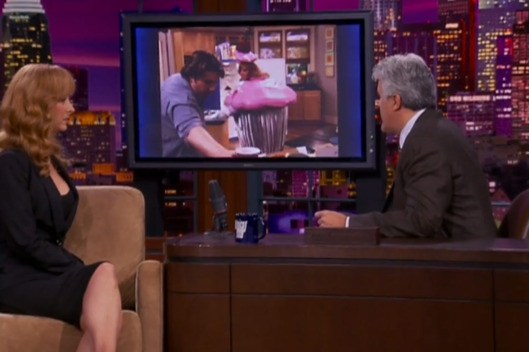
Paulie G is Juna’s opposite. He hates, hates, hates Val. There are good reasons to occasionally dislike Val; she has some dislikable qualities. She can be a diva, and it can be irritating for everyone to deal with cameras everywhere when they’re intereacting with her. Director James Burrows, for example, is frustrated with Valerie occasionally but also offers her solid advice. Paulie G’s hatred goes far beyond that. He’s simply a giant asshole to Val at all times. He pretends to have sex with her in the writers’ room, and is just a huge, huge dick, and Val puts up with it and takes it. It’s a strange victory when she eventually punches him in the stomach causing him to vomit. It’s the wrong thing to do; we know this, unquestionably, but he’s just such an utter asshole. He’s particularly cruel at that moment when she’s trying so hard for a laugh, and he makes her do a whole bunch of painful falls for absolutely no reason, that it’s hard not to smile when he gets his. And yet the ultimate twist of the knife is when he gives a lying, bullshit interview to her producers that makes it sound like he was a real nice guy, making her the bad guy on her own show.

And really the story is greater than Valerie. The Comeback is incredibly ahead of its time on reality TV, but it’s correct then, and correct now, regarding the plights of older actresses. I hate using the word older; Valerie is 40, when many male stars are just hitting their strides. But Hollywood does and has for decades marginalized actresses as they age; not only not writing good roles for them, but writing roles like Valerie’s Aunt Sassy. She has to wear an abominable running suit all the time, and the thought of her as a sexual being is disgusting, fodder for jokes, not just within the show, but to the young male writers that nearly exclusively populate the set. If there weren’t other reasons to feel for Valerie, and there are, there’s this, which she has to stand up against. When she tries to challenge the stupid decisions made by the writers on this terrible show (the joke about her eating dog wasn’t even a matter of merely poor taste – it was obviously not funny), she is the one hassled for not being able to take a joke.

I can’t leave this review without talking about the incredible prescience of The Comeback in terms of reality television. Reality when The Comeback aired was dominated by Survivor and early singing competitions, all game-show like reality with winners and losers. This was before Andy Cohen and The Real Housewives and The Kardashians ruled the roost. The Comeback foreshadowed all of that.

I’m going to save more talk about the ending for a piece comparing The Comeback and BoJack Horsement which I alluded to above, but a couple of words in brief. In the finale, everything in Val’s reality show is blatantly misconstrued and taken out of context. She’s furious and upset until it turns out that its outrageousness is exactly what ends up making it popular. And thus it’s a strange kind of mixed victory. In Val’s world, it’s better to be popular and embarrassing than a dud which tells an honest and more complex and accurate story.

End of Season Report: The Comeback, Season 1 – Part 1

17 Aug

The Comeback

I just finished the first season of the Comeback, as part of my effort to catch up on some HBO series I missed the first time around. The Comeback was never hilarious or particularly funny but it was enjoyable, phenomenally interesting, and surprisingly prescient. I’ve broken my lengthy comments into two sections, of which this is obviously the fist.

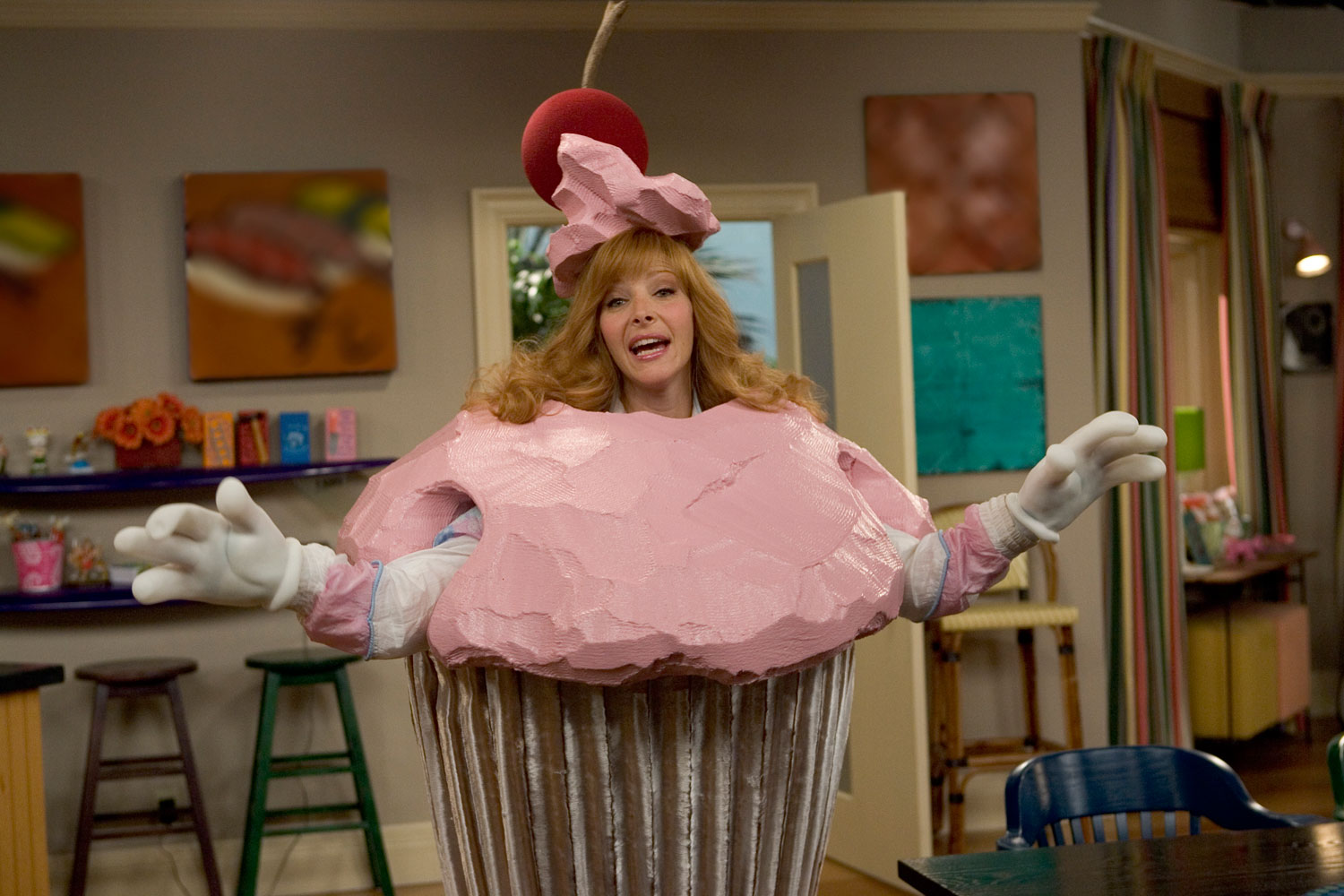
The Comeback is a show-within-a-show. Valerie Cherish (the excellent Lisa Kudrow) is a forty-something actress who, over a decade ago, was a hot young star of a successful but not life-altering sitcom “I’m It.” Since then, she hasn’t found a lot of work, and as she’s gotten older, she’s not longer seen as the hot young actress she once was, or that she still sees herself as. She gets another chance at the spotlight however, when she’s up for a supporting role in new sitcom Room & Bored, and as part of that process, is invited to star in a reality show called “The Comeback” about her return to TV. The entire series is framed as raw footage for this reality show.

The Comeback is a great parody of Hollywood culture, and specifically how Hollywood treats older actresses. The supporting cast is excellent, but everything rests on Cherish, who due to the format as a faux reality show focused on her big comeback, is featured in almost every scene. She has some classic cringeworthy qualities. She’s part Michael Scott, although since The Comeback debuted before the American The Office, you might say Michael Scott is actually part Valeria Cherish. Valerie has none of the stupidity of Scott or the utter insensitivity of Scott’s British equivalent David Brent but she has the awkwardness, the lack of awareness at how constantly uncomfortable she makes people, and the desperate insecurity and need to be liked.

Valerie peaked early, reached fame easy, and was treated to a world in which she was famous, loved, and respected. Everyone was a fan, and everyone wanted to be her friend. The Comeback has a striking amount of similarities with BoJack Horseman, which I coincidentally I watched immediately before. (I hope to write another post specifically comparing the two). Valerie is desperate to be liked. She’s not hip, but wishes she was; not enough to try to actually be, but enough to claim she is.

The show actually hits Valerie’s attitude and personality right on the nose in an episode in which Valerie goes to Palm Springs with her husband and hangs out with a couple they know casually. The wife, who has survived cancer, sees what we, and what ostensibly everyone in this world sees, and actually speaks to Valerie straight about it, which just about no one else does. This friend notes that ever since she recovered from cancer, she’s been unabashed and unafraid to be herself, and that Valerie ought to try to do the same. Valerie is incredibly uncomfortable in her own skin; she wants so desperately to be liked, to be loved, to be needed. She’s passive aggressive all the time. She’s constantly afraid to just speak her mind, which might make her more unlikable to someone else, but to others it might just sound human.  She’s not hip with the kids, but she tries desperately to be. She tries to insist so strenuously that she can take a joke, while sometimes she should rightfully be angry. She is constantly looking towards the camera, saying yeah when she means no, having her every move securitized but being okay with it because she wants so badly to be relevant again. She wants to prove that she’s cool, that she’s still got it. But she wants it so badly, that she can’t.

For all of her personal frustrations, her relationship with her husband is stable and happy and never dramatic which is both surprising and welcome. Her businessman husband is startlingly comfortable in his own skin. He knows he’s not cool. All he wants is to relax, have a steak, have a drink, play a quick nine, and listen to Cheap Trick. He doesn’t like the cameras, but he puts up with them, because he’s supportive of Valerie and wants what she wants. He’s not the most interesting guy in the world, but he genuinely loves and cares for Val, and knows who he is, and the contrast with Val is sharp.

Valeria is constantly frustrated but tries to mask this frustration with an overabundance of good cheer. She’s at various times both incredibly jealous and narcissistic, but tries not to be obvious about it, even though it’s clear. She doesn’t understand she’s not the star anymore – like an older athlete who can’t realize she’s a supporting player now. She acts extra nice, even though she’s primarily interested in supporting people in exchange for them supporting her, but then again, niceness is still niceness, regardless of the agenda behind it, and Valeria does do real favors and show genuine appreciation to others because it’s what she would want. In fact, she’s most empathetic when others are desperate, because it’s a language she can understand. When only female writer Gigi breaks down because she desperately wants to go to the Golden Globes, Val extremely generously offers to take her as her guest.

The Comeback hues very closely to a line where you are both constantly aggravated by Valerie but also feel really terrible for her. She has to deal with networks and writers and directors who  really don’t care about what she thinks. Room and Bored is a hilariously obviously terrible sitcom that everyone has to pretend is funny all the time because the alternative is admitting that they’re wasting away their year working on utter dreck.

More in part 2.