Tag Archives: Spring 2014 TV Season

Spring 2014 Review: Growing Up Fisher

3 Mar

Growing Up Fisher

I’ll start this review by talking about how much I love JK Simmons. The man can do no wrong in my eyes. He does comedy, he does drama, he does Aryan gang leader, and he’s great at all of them. The man is a true pro.

Now that I’ve got my one compliment out of the way, it’s time to be real. Growing Up Fisher is not a good show. It’s actually a pretty bad show. It’s not cringe-worthy, or impossible to watch like Dads or We Are Men, rather it just does a lot of different things poorly and that adds up to a pretty bad show.

Growing Up Fisher reminds me at first glance of ABC’s The Goldbergs, primarily because they’re both narrated by grown up guys telling the story of themselves, around age 11, growing up, in flashback. Henry Fisher, voiced by Jason Bateman in narration form, tells the story of his childhood. The dads, additionally, in both of these shows, are serious Character. Mel Fisher, Henry’s dad, played by JK Simmons, is blind, but tried to use all sorts of tricks to hide that information from the general public for years. Henry’s mom, Joyce, is less of a Character, but still a little bit of one; Jenna Elfman’s mom character is one of those moms who keeps trying to act young, because she never had a chance to be young herself, but she just winds up looking foolish.

I hate judging child actors, because it’s a hard job, and when I do it I kind of feel like I’m watching a little league game and booing the players. When the kid is the star though, it really is an important part of the show, and both kids (there’s a daughter who I haven’t mentioned yet – she doesn’t get a lot to do in the pilot), but particularly Henry just do not cut it in Growing Up Fisher. His timing is all off; the jokes are obvious, on the nose, and not clever to begin with, but his ham-fisted delivery just makes the bad writing stand out more, rather than putting a sheen on it, the way good actors can do sometimes. Maybe he’ll get better – he’s young, but it was hard not to notice.

I feel less guilty judging the truly terrible narration. Over-used, poorly used, and unnecessary narration has long been a personal bugaboo of mine and Growing Up Fisher is one of the worst offenders I have ever seen. Jason Bateman voices future Henry, and he adds absolutely pointless, obvious, and patronizing commentary that not only wastes valuable time but also takes away from whatever else the sitcom has to offer. There are so many examples, pretty much every line Batemen utters – everything he says is easily inferred from context, except for the parts that are explicitly stated by other characters before Bateman restates them for no apparent reason. The worst example I noted down came after his parents awkwardly try to tell him they’re getting divorced but can’t quite say it, only to have his sister explain what’s happening to him. The narrator followed with, “That was the super smooth way my parents told me they were getting divorced.” NO FUCKING SHIT. What, I ask, is possibly gained by that comment? Is “super smooth” such a funny or clever way to put that sentence that its inclusion was deemed necessary?

What goes unsaid until now, the elephant in the room, which really matters more than all of my little annoyances, but is related to them, is that Growing Up Fisher is simply not funny. The timing is off, the jokes aren’t good, and there’s nothing to laugh about. It’s relatively heartwarming, I’ll give it that, and the members of the family seem to genuinely like each other which is nice. Funny though, not so much.

I’ll end with one more quick compliment (making this a compliment sandwich with some very thin bread); I can’t think of another sitcom offhand which features divorced parents who get along as well as the parents seem to in Growing Up Fisher, and there’s always something refreshing about a new and different family set up.

Will I watch it again? No. The narration and the bad acting would drive me crazy even if there were laughs, and there weren’t.  It’s nice that the father is his son’s hero. It really is. But it’s not enough. Sorry, JK. I still love you.

Spring 2014 Review: About a Boy

26 Feb

About a Boy

So About a Boy was first a book by Nick Hornby. Next, it was a film adaptation starring Hugh Grant and Toni Collette. And then, several years later, we get a television adaptation starring David Walton (of Bent, New Girl, Perfect Couples) and Minne Driver.

It’s easy to see why someone might want to adopt this again. There’s a lot to like. Frankly, just in terms of basic sitcom set up, About a Boy has a different layout than most. The main character are a single guy, a kid, and a single woman, the kid’s mother. The central plot thread is a non-creepy heartwarming friendship that develops between the  kid and the single guy. And if you didn’t know better, and you read this,  you’d naturally assume the guy and the woman have a will-they, won’t-they, eventually-probably-get-together relationship. Except one of my favorite things about the About a Boy story (and I love Nick Hornby and the book, so there’s a bunch) is that there isn’t. They become friends, but they’re never any sexual tension between them and that’s thoroughly refreshing for its different-ness. I’ve written about sitcom incest before and one of my favorite things about this story and what looks to be true from the premise is that the single guy and single woman can get along and learn to be friends without any romantic interest. Amazing!

Anyway, so I suppose I need to actually review this show instead of just talking about the premise. Will, the lead (Walton), is a single guy, who is essentially financially set for life and just hangs out. In the original, Will’s dad wrote a Christmas song, from he collected royalties; in the show, he earned royalties from his former band’s Christmas-related one-hit wonder. The boy, Marcus, and his hippie-esque mother, Fiona, both having a tough time in their lives, move out to San Francisco, right next to Will.

The precocious Marcus, whose best friend is his mother, clearly doesn’t have the social skills to fare well at school. He ends up running in Will’s place to save him from some kids chasing him when his mom isn’t home. Will, on the other hand, initially irritated by the kid, finds the arrangement to his benefit when he can pretend Will is his to hit on hot single moms. They hang out and bond in montage fashion, getting to know each other.

The show tries to stuff the basic events of the movie into the episode, in what basically follows the rom com format, but rather than a romantic relationship, it’s a relationship between Will and Marcus, as Will and Marcus meet cute and start to become friends. At a dinner with the two and Fiona, Will and Marcus get into a fight when Will is unwilling to call himself the Marcus’s. Feeling guilty, Will comes to save the kid from an absolutely disastrous talent show performance of One Direction’s “What Makes You Beautiful” (rather than “Killing Me Softly”).

The episode suffers a little bit from having to stuff a bunch of necessary premise plot points into 20 minutes. This is particularly on display in the one scene that Daily Show correspondent Al Madrigal, as Will’s friend Andy gets.  Before Will saves the kid at the talent show, after he had his fight with Marcus, Andy lays out Will and the premise is an incredibly on-the-nose fashion, pointing out that Will hasn’t ever tried to commit to anything, and this kid actually liking him is an opportunity to have a meaningful relationship.

At the end, it seems like we can actually move on with the established fact that Will and the boy are buds without having to explain the actual character development of why this guy would possibly want to spend time with this kid.

None of this yet answer the question about whether the show is funny, and the answer is sort of. It’s not hilarious; I didn’t laugh too much, and there’s nothing that made me immediately want to come back for more. That said, I did smile, and it was heartwarming (About a Boy, after all, is from Jason Katims, of Friday Night Lights and Parenthood), so I came away with a somewhat positive feeling even if i didn’t laugh a lot. I think the personalities are likeable, and I think there’s potential for the show to be funnier, but it definitely has at least some ways to go. That said, in particularly I liked it enough that I’m curious to see whether an episode that doesn’t have to spend as much time establishing the premise, is funnier, and then I’ll have a better idea of how I feel about the show.

Will I watch it again? I think I probably will, but the show is about on par with other similarly decent comedy pilots that I didn’t watch again. If I do, it’s largely because it has the good fortune to come out at a time where there isn’t a lot of new show competition, because I like About a Boy, the book and movie, and because I’d like to see an episode that doesn’t suffer the weight of premise explanation.

Spring 2014 Review: Enlisted

17 Feb

Enlisted

Geoff Stultz, best known to me from his turn as Kate’s boyfriend in the short-lived but delightful Ben & Kate (how was that cancelled only last year? TV time flies), stars as Pete Hill, the eldest brother in a military family. Pete’s dad was in the military and steered his kids towards it, but only Pete was really suited. His younger brothers are Derrick, a cynical slacker who doesn’t care about his job (Chris Lowell, Piz from Veronica Mars), and Randy, an over enthusiastic youngest brother who cares but is a bit short from a mental fortitude standpoint (Parker Young, Ryan Shay from Suburgatory).

The three are reunited when Pete, a super competent soldier, who had been serving abroad in the heart of battle in Afghanistan with special forces, screws up and gets demoted. He’s forced to return to a base in Florida, in charge of soldiers whose job is to take care of the base while most of the other soldiers are serving overseas. Pete loves his brothers, but he can’t help feeling demoralized by having to work on the base doing what he sees as pointless support work, while he could be super soldiering in the middle east. He and his brothers naturally argue about this from the get go; while Randy, the dumb brother, is just glad to have him home, Derrick understandably takes a little bit of offense at Pete’s superior attitude. Pete, meanwhile, is somewhat understandably disdainful of Derrick’s lack of caring about well anything. Anyway, this is already getting more complicated than necessary for a comedy premise so I’ll speed it up.

Basically, after some talks with the head of the base, an old friend of the boys’ late father, Donald (played by Keith David) Pete is motivated again to try to make the best of a bad situation and to inspire the base’s outcasts, and most importantly, his brothers to be the best they can be.

Enlisted hangs out in that cute-but-not-so-funny-its-a-must-watch comedy tier along with Trophy Wife and Suburgtaory It’s cute, it’s positive, it has the right idea but it never quite takes off or made me laugh out loud. There are a bunch of silly, maybe a bit too ridiculous (but maybe not) outcast soldiers Pete has to get to work together, and they’re played mostly for laughs, which sometimes works. There’s also an obviously love interest for Pete, Jill, a rival high achiever who doesn’t have Pete’s superior attitude about being too good for the camp.  Still, at the heart, the show is about the three brothers. As the oldest of three brothers, I always have a soft spot for shows about brothers, and aside from the youngest brother being a certifiable idiot, the brother relationship rings true.

It’s not hilarious, but there’s something here. I’m not sure I’m convinced it’s a winner straight out; It’ll have to do more to convince me yet with the incredibly crowded TV schedule and tons of TV catch up I need to work on all the time. Still, it’s better than 85% of the comedies out there, and there’s a lot to be said for that. It’s oriented in the right direction even when the jokes don’t hit. The premise is sound, but the screws need to be tightened a bit.

Will I watch it again? Not regularly. If it survives it could be a candidate for a show I put on as I’m going to sleep, and that sounds like an insult but it’s really not – bad television when I’m going to sleep just makes me angry and gives me bad dreams, so. And from there, it’s just one more step to regular viewership. Get to work, Enlisted, You can do it.

Spring 2014 Review: Killer Women

12 Feb

Killer Woman

The show is called Killer Women, plural. It’s unclear the multiple women are, but the key woman is Molly Parker, played by Battlestar Galactica’s Tricia Helfer (of course Molly Parker is the name of another TV actress now seen in House of Cards). Helfer is one of the only two female Texas Rangers, and the other law officers are still clearly unaccustomed to having to respect women as officers. She’s a law officer fighting a lack of respect in a man’s world, reminiscent of the better but failed Prime Suspect with Maria Bello a few years back. She’ll do anything it seems to fight her way towards the truth, and she’s got good instincts which help her read situations and determine whether people are telling the truth or lying.

Parker has had recent personal troubles as well. She’s getting out of an abusive marriage where her husband, a local political power player, from whom she’s separated, refuses to sign the divorce papers (sidenote: in 2014, how is having to get your partner to sign a paper to get divorced still a thing? How is this not insane?). The other main cast members surround Karker – her brother, with whom she’s now living, is played by former fellow BSG alum Michael Trucco (Samuel Anders, who was a professional at whatever that stupid sport was from BSG, which I won’t dignify with a name) and her DEA agent love interest is played by Marc Blucas (Riley from Buffy –not a name I thought I’d necessarily ever hear again).

Who are the other Killer Women I wonder? In the pilot, a woman (My Name is Earl’s Nadine Velazquez) kills a man at the behest of a drug cartel, but she seems like a single episode character, but maybe not. The other possibility is that the killer is every episode is a woman but that could also get predictable.

Anyway, the rest of the story is pretty boring. She’s a no-nonsense doesn’t play by the rules Texas Ranger, and she breaks a bunch of rules, and in fact kills a few people (though it’s in Mexico, and they’re drug cartel employees, so it doesn’t really count) so that by the end of the episode she finds out the truth and on top of that gets a valuable witness to testify for the DEA. Win win, except for the rules broken, or maybe win win win because of the rules broken, because that’s how police TV works.

I literally just wrote in my last new show review of Intelligence about my desire for cops who at least more or less play within the rules, and well, that extends here. The show is oddly cavalier here in particular about just how fair the chances were of her or her DEA agent friend getting murdered when they went down to Mexico without authorization to rescue a couple of people kidnapped by a drug cartel. It’s great and all that they were able to do it, and since it was successful, in hindsight it looks great, but there’s pretty little discussion of risks not just to them but to their entire departments if they’re caught or killed in Mexico abusing police weaponry without authorization.

There really is an interesting show to be made revolving around border culture and the drug cartels and painting a really interesting, complicated and nuanced picture of the situation. This, to be fair, doesn’t particularly try to do that, so it wouldn’t be fair to call Killer Women out on it, but it just reminds me of the opportunity missed. (The Bridge could still be that show, but I’m not sold yet; we’ll see how its second season goes).

All in all, it’s an average-at-best police procedural. It was watchable enough but it certainly didn’t command any attention; I could have been reading a book and still followed along.

Will I watch it again? No. There’s just not much for me here. It wasn’t awful just uninspired. Good for broadcast TV for throwing in a female action hero; bad on them for not making it in a better show.

Spring 2014 Review: Intelligence

7 Feb

Intelligence?

It would be easy to make some wordplay based on the title Intelligence (and the show’s lack there of, etc.). I’ll abstain however, as the show was only relatively insipid, rather than incredibly so. That’s a mild back-handed compliment but I hope the show enjoys it because it’s just about the last it will get.

Here’s how I see the making of Intelligence. Someone had a genuinely gimmicky but not terrible idea for a show premise. Once that premise moved forward into the making of an actual show, well the rest was pretty much put together by the numbers, and probably could have been done by a machine when fed as inputs every other CBS procedural from the past decade.

Here is the premise. The hottest new piece of US technology to fight the war on, well, anything, is a man, a former super top notch military man, with a microchip implant. This microchip allows the power of computers to somehow fuse with his brain, which means he can instantly access and scroll through any piece of information available on the internet or other electronic system, and more than that, he can reconstruct entire scenes, Source Code-like, combining the facts he gets from his computer with the intelligent connections and leaps of reasoning from his brain. There’s not a half-bad idea here, if someone really worked on it; the battle between man and machine has been hit upon many times before (Fox’s Almost Human, and of course the recently remade RoboCop), but that’s partly because there’s a lot to mine. Besides being cool, it’s genuinely interesting in a world where more and more human roles are being usurped by technology to figure out where the lines are.

That’s about the last interesting part of the show, sadly. The soldier is Gabriel, played by Josh Holloway, best known to TV viewers as Lost’s Sawyer, and he’s a charming but rough-around-the-edges ex-Delta Force operative who doesn’t play by the rules. The show hangs the lampshade by asking why the government would implant this one single unique chip into a guy who may kind of not always follow their orders, but then they don’t really explain why they do it.

Our way into the story is through a secret service agent named Riley assigned to protect Gabriel. In 40 minutes, she goes from thinking this new assignment is not worth her time to agreeing to undertake Gabriel’s pet project, a search for his wife, who, reports say, turned on the US, and is dead, but which he doesn’t believe.

There’s a watchable but fairly unremarkable episodic storyline that involves its share of action scenes, Riley and Gabriel bonding, and a betrayal by a government agent which doesn’t mean a lot to us since we’ve known him for about five minutes.

The characters just aren’t that interesting, nor is the dialogue. I say it over again but I say it again here; there’s a limit to how much you can tell in the first episode of a show but you can, especially in a drama, tell a certain difference between dramas that, even if they don’t ultimately work, have a certain amount of care put into them, and ones that just seem like they were produced without any real passion. This is of the later variety. There’s nothing that elevates it above a standard procedural at absolute best.

A quick shout out before we go to Riley and Gabriel’s boss, played by CSI’s Marg Helgenberger, who’s clearly moved up the government ranks since her days in Las Vegas.

Will I watch it again? No. It’s not terrible as far as procedurals go, it’s just not even trying. It doesn’t seem like anybody put a lot of thought or caring or passion into this show and it shows.

Spring 2014 Review: Chicago PD

3 Feb

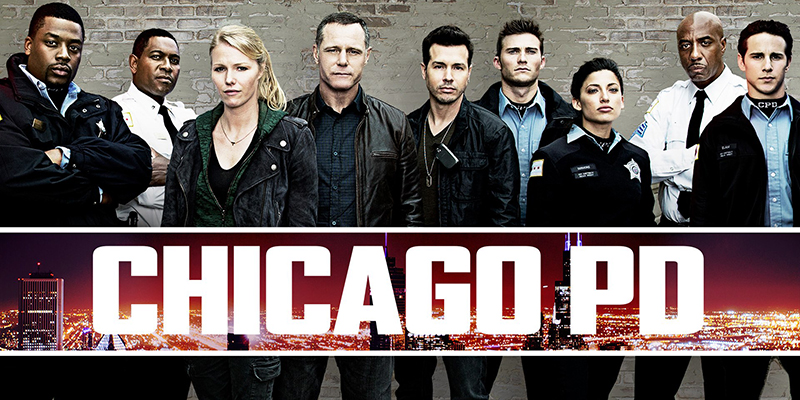
Members of the PD

I need to start by saying what an awful name for a show Chicago PD is. It’s a spin-off of Chicago Fire, a name that had two meanings – the Chicago Fire Department, which the show is about, and the Chicago Fire of 1871, which wiped out much of the central city. I’m fairly confident with absolutely no evidence that that’s why the show is set in Chicago. Chicago PD, well, is about the Chicago PD. That’s it. There’s no other meaning. I suppose it’s accurate, so there’s some small credit for that, but still; try harder.

Based on my knowledge of the show and the people involved, I was expecting a mediocre show in the vein of my experience with the pilot of Chicago Fire.  Instead I got a pretty awful show that was significantly worse than my single Chicago Fire viewing.

Like Chicago Fire, Chicago PD is not a procedural as such, in which there’s a single case an episode that the whole team works on. Rather, it’s a show that has single episode elements, but features multiple-episode arcs, A and B plots, and gets to know the personal lives of its characters.

It was the opening that set me in the direction of disliking the show right from the get go. A man is in the back of a car, forcing the car’s driver to pull over in a shady part of town out of view of anyone else. Now, I’m thinking, as the show’s writers must realize, that the guy in the back of the car is a criminal and he’s going to do something bad to the driver. Nope, that’s not the case at all. The backseat driver is our main character cop, Sergeant Voight, and he threatens the driver, a drug dealer, beats him up, and puts a gun to his head to get the name of another drug dealer. He then exhorts the dealer to stay out of Chicago, literally using the words, “Stay out of my city.” If I didn’t hate this character from the insane extralegal actions he took which were ridiculously unethical and uncalled for, and could endanger any convictions he later hopes to get from the information the driver reveals, I would have hated him just for the “Stay out of my city” line.

There are other aspects I didn’t like about the show but this is the biggest problem in a nutshell. I absolutely despised this primary protagonist, Voight, who is the sergeant for our primary team and is supposed to be some sort unorthodox, renegade hero; you know the kind, who doesn’t play by the rules but gets things done.  Please, television, enough with that character and more cops that, like real cops, largely play by the actual rules so they can get actual convictions that don’t get laughed out of court. Beyond just that though, he came off as an aggressive, violent asshole.

Chicago PD is emotionally maniupuliative, or it wants to be, but it’s not even good at it. There’s two major moments at the end of the first episode that are supposed to be heart-wrenching but didn’t work, and more so than just because it’s the first episode and it’s hard to feel anything for characters during a first episode.

Voight shows the soft interior under his gruff self when he helps an inner city black youth who is too deep in the drug trade and wants out when he realizes how dangerous it is. In exchange for Voight’s kindness, the boy gives up a crucial piece of info about another drug dealer after convincing himself out loud to Voight that what he’s doing isn’t snitching, so it’s okay. It’s certainly not for me to say what’s realistic and what isn’t, but it seems ham-handed and it definitely seems, if not racist (which I don’t think it is) than, well, an awkward simplistic scene where this kind white authority figure is simply helping out this poor black youth, and everything’s now okay.

People who write Chicago PD, please watch The Wire. Everything that’s wrong with your show can be found in the differences between the two. Now, obviously very little is going to match up to The Wire, and not every cop show has to follow everything The Wire does well to be good. Still, in every way that The Wire largely rings true, doesn’t feel like television, is complex, and interesting, and well-written, is everything Chicago PD is not. It’s simple TV that just feels crazily obsolete in a post-Wire universe. Even the bureaucratic battles between two units which features prominently in the first episode of Chicago PD feels trumped up, unnecessarily loud, and false. There are heroes and villains, and really nothing in between, and yes, it’s not entirely fair to base characterization generalizations on one episode, but everything I saw about the way Sergeant Voight’s bad behavior seemed to be treated by the show and by the other characters told me more than I needed to know.

Will I watch it again? No.  I think there are too many cop shows as it is, so cop shows have to be even better than my normal bar to draw me in. This one not only doesn’t come close, it’s insulting and vaguely offensive.

Spring 2014 Review: Rake

29 Jan

Greg "Rake" Kinnear

First things first. Rake is not named Rake. Well, there is no Rake. The main character, Greg Kinnear’s Keegan Deane is not even nicknamed Rake, nor is it his middle name. This, first and foremost doomed the show in my eyes, but I tried my best to give it a fair shake from then on.

Keegan Deane is a talented lawyer who doesn’t have his life together. He’s also a charismatic cad. The most critical of his faults, which appear to be many, is gambling. His gambling problems have put him in debt to a very serious man, an employee of whom threatens to hurt Rake (I’m calling him that from now on; it’ll be easier on everyone even if not technically true) if he doesn’t pay up and fast. Right after that conversation, Rake hooks up with an attractive woman and brings her back with him to some sort of outdoor club with drinks, and then leaves her to herself after he gets hooked in a card game. He then brings her back to his best buddy’s place, who has a family and kids. Rake is staying there because he’s broke and homeless at the moment. Although this buddy goes back a ways with Rake, he’s getting tired of having Rake live with him, passing out all over the house and bringing back women. The woman Rake brings back, mind you, still wants to continue seeing Rake, and tries to relay her phone number after she’s being kicked out and told to jump the fence, because Rake and friend need to get her out before friend’s wife sees her. Rake’s more of a one-night stand kind of guy though.

I’m not going to break down the whole episode in that level of detail, or I’d just be rewriting the script of Rake, but you probably get the idea. His talent and charisma endears him to others while his attitude and vices drive people away. Seen this on TV anywhere lately? (Everywhere is the answer, but particularly I’ve been calling Rake lawyer House for weeks before it appeared, and though there are certainly noteworthy differences in the details, it’s more or less spot on).

Rake, the character, and in some ways the show is like a middle school boy who thinks the way to get someone to like him is to be mean and make you not like him first before winning you over. Rake’s a jerk, yes, that’s pretty much the premise, but well, he really cares deep down and he’s a good lawyer, so we should care about him anyway and cut him a wide swath to do kind of lousy things to his friends and associates.

There are some shows that seem to authentically not care whether or not you like the main character or characters, and that’s something else entirely, but it’s not Rake. Rake desperately wants us to like him; to grow frustrated with him, but ultimately to come around to his side. There’s hope for Rake yet. Optimally, even more than like him, you’re supposed to want to go out on this adventure with him, and while there are certainly characters who make up for their negative qualities with wit and charm, the balance is off here.

The point of all this, which I haven’t said outright but which you might guess is just well, I don’t care. I find it hard to care about Rake, and hard to root for him. He’s kind of a jerk. I’ve always had a problem with jerk main characters, but sometimes they’re redeeming and sometimes it’s okay that they’re jerks; Don Draper is a huge asshole, but that’s okay; the show doesn’t try to pretend otherwise.

Other than that, well, there’s not a lot to say. And that’s really also the story. Rake isn’t bad as so much as it’s mediocre; it’s a story and characters you’ve seen before. I thought House got tired, but House was better. There’s no element of Rake that puts it above average or makes it worth cutting out time in your busy schedule to watch. Some shows you just can’t read after one episode; they could be disasters but there’s a small chance of brilliance. Here, well, for better or worse you know exactly what you’re getting just about right from the first scene.

Will I watch it again? I think I’ve had my fill of Rake; I knew it ever since he wasn’t named Rake. It’s not awful, but it’s more of a same that’s been a little rammed into the ground of late, and there’s nothing about it to make it stand above the fray.


Spring 2014 Review: True Detective

20 Jan

Two true detectives

I didn’t know what to expect coming in, but I’ve long been a fan of the season-long anthology format for television and was excited about any show that starred  the long underrated Woody Harrelson and Matthew McConaughey in the middle of his epic comeback. After actually watching the show, even those high expectations didn’t prepare me for how much I liked the debut episode.

True Detective is posed as a season long murder mystery, a format we’ve seen a few times in the last decade, but this isn’t your grandfather’s season long murder mystery. While it’s an obviously intriguing format (there’s a reason Agatha Christie sold so many books), I’ve been biased against it ever since the somehow still alive disaster known as The Killing broke me in the final two episodes of its first season (like thinking of the Lost finale, bringing up The Killing’s first season finale is the best way to instantly anger me). The Killing has made me come into any season-long murder mystery with a wary eye, perhaps unfairly, but there’s a part of me just waiting for a let down at every step. Broadchurch, a British season-long murder mystery being adapted for an American audience was a very pleasant surprise, surprising and satisfying without being ludicrous and over the top. It was, however, a fairly typical murder mystery, investigating all the players one by one, and everything that happened in the series pretty much revolved around the murder which took place in the first two minutes of the show.

True Detective is not that and it’s much the better for it. True Detective is a murder mystery, sure. There’s a murder at the beginning and presumably the show is going to take us through on the way to solving it. But it’s much more than that and only kind of about that.

The show is told through an interesting framing device. Two cops in 2012 are interviewing two ex-cops who thought they had solved a murder 17 years ago, in 1995, in rural Louisiana. As the two cops are interviewed separately, they each take us back, through their descriptions, into the past. Scenes of them taking to their interviewers in 2012 are interwoven with much longer scenes of their investigation in 1995, overlaid with narration, which is what they’re telling the interviewers. I’ve often complained about framing devices and narration that feels gimmicky, useless, cheap, and detrimental, but this is not that. This is a clever framing device that besides being plot relevant – it seems like events related to the murder will actually happen in 2012, rather than simply being a point from which to look back – presents interesting narrative opportunities. There are lots of unreliable narrator issues – the two cops, who we learn, haven’t spoken in ten years, remember the case and each other different, and have very different perspectives of the case and of each other. The ex-detectives, neither of whom work for the police anymore, have changed dramatically over the years.

The two primary detectives, as hinted at above, are played by Matthew McConaughey and Woody Harrelson, with McConaughey marvelously playing against type. Woody Harrelson is the good old boy partner, just trying to do his job and fit in, while McConaughey is the loner, intellectual who isn’t from Louisiana to begin with and doesn’t really belong. Unlike other shows, which would portray the McConaughey character as a reclusive genius who is brilliant at his craft but can’t fit into society (See House, Bones, and well a billion other shows), McConaughey is just another detective. He’s certainly a good one; Harrelson, who resents McConaughey for a number of reasons, certainly acknowledges that much. But he’s no genius; when he does figure out important case information it’s because he works all night because he can’t sleep. Harrelson is no dummy either and he puts up an aura of just working the job but he certainly takes his job seriously enough as a professional. The 2012 interviewers bring McConaughey and Harrelson through the details of the 1995 case but also into seemingly irrelevant details about the detectives’ relationship and personal lives, including a dinner at Harrelson’s house where McConaughey shows up drunk.

That’s the thing about True Detective. It’s about the murder mystery and it isn’t. The two detectives didn’t get incredibly far along their path to solving the crime in the first episode and I didn’t really care. Their chemistry, the charge and interaction between the two partners keeps the show moving while they slowly get around to the actual case. The show often feels more like a rumination than a murder mystery, and while the focal point is supposedly the case, it sometimes seems to fade into the background for stretches of the show, hiding behind the interplay between the two detectives.

Will I watch it again? Yes, for sure. This gets a gold star for most promising, and seems like an instant must-watch, which only comes along a couple times a year. It’s the early favorite for best new show of the spring season.

Spring 2014 Review: Helix

15 Jan

Helix

I’ll be honest. I like science fiction as much as the next person but I’m not a hardcore sci-fi guy, and SyFy as a network has more or less flown under my radar in terms of scripted shows for the past few years, largely since BattleStar Galactica. I have been making an effort since I started this blog two and a half years ago to watch the vast majority of new scripted shows, and until now I haven’t watched a SyFy show, which speaks both to its absence in my peripheral vision and the relative lack of general buzz built up behind any of their shows while networks like FX and AMC are churning out talked about programming. SyFy finally appeared again on my radar with the debut of a show called Helix created by who else but BSG creator and showrunner Ron Moore, and I decided there was no matter time to give a SyFy show a shot. I’m not the biggest BSG fan, and I probably like it less than most people who have watched it all the way through, but it has definite merit and I’m glad I’ve seen, so I was at least intrigued to give Helix a shot.

Helix is about a super secret private science lab complex in the arctic that, because of its location, is not controlled or governed by any nation. Because of its unique position, no one exactly know what the scientists up there are doing and what kind of crazy experiments they’re conducting. It’s run by a veteran PhD, Dr. Hiroshi Hitake. Unfortunately, there’s a problem; a couple of people die from an unidentified virus and the base is concerned. The army calls on CDC expert Dr. Alan Farragut (Billy Campbell, the most famous name in a largely lesser-known cast) who brings a small team (three doctors and an army member) up with him to check out the infection, figure out what’s causing it, stop the spread, and decide how to deal with the infected. This guy is just one of a few potentially qualified experts in running these disease control operations, but he’s called upon because his brother is one of the infected.

Ron Moore’s previous SyFy hit BSG featured plenty of action, but the action in Helix is of a very different stripe. It’s a thriller-horror, most closely in the mold of John Carptner’s classic The Thing. The most basic reason for the comparison is obvious; The Thing is set in an international base in the antarctic, while Helix is set in the arctic. Helix, like the Thing, features the terrifying premise that we may not at anytime know who is infected and who isn’t, and that a strange and never before seen virus (it’s an alien in The Thing, but still) turns some of those infected against other humans, removing their humanity. Helix actually has a bit of a zombie vibe in that way as well in the way humans with the virus are programmed to infect other humans, and gain super speed and strength; think 28 Days Later.

The show is tense and fairly terrifying. The characters don’t appear that interesting at first anyway, but honestly that’s not that important. The best shows do everything well, but shows that do even one thing well can still be well worth watching, and while Helix isn’t aces so far on characters or dialogue (don’t even talk to me about BSG characters or dialogue, but that’s for another day), the tension and pacing absolutely do the trick of making you terrified but wanting to know what happens next. Helix unfurls fairly quickly, and a bad situations continues to get worse. No one has ever seen any infection like this at all before, and for every step forward the scientists take, they seemingly end up two steps back.

There’s some science mumbo jumbo, and there’s a not particularly necessary possible romantic triangle between Farragut, his ex-wife, who is a scientist on his team (who cheated on with, of all people, his now infected brother), and his new younger protege seems to have a crush on him. This show might better be done with characters that had less previous relation to one another, without the soap angle, but while probably best removed, this doesn’t really take that much away from the show, simply because that’s not really what the show is about or why you’re watching the show to begin with.

The intrigue in Helix is real and present. I want to know what the virus is about, but less because I actually care about the meaning behind it, but because minute-to-minute I want to see if they have any chance at surviving one more episode. Additionally, unlike in the The Thing, there are villains, people actively preventing the scientists from doing the best job they can from stoping the virus. This makes their job far more difficult, makes contact with world outside the insane arctic ice complex nearly impossible, and places them in a land with no laws and men and women running around like crazed zombies. This could easily go off the rails, but it’s an intriguing premise, and good shows on this genre are hard to find on television. I love deep character studies as much as the next person (you won’t find a bigger Treme fan) but there’s a place for tense thrillers as well.

Will I watch it again? Yes. I’m very concerned the concept could get tired, or feel drawn out after a season or more, and without a set end date, it’s hard to see it ending well. But after I watched the first two (they aired back to back on the debut day), I was at least kind of hooked, which may not sound like a resounding endorsement but it’s already more than most shows.