Tag Archives: New Show Review

Summer 2013 Review: Camp

26 Jul

Camp time

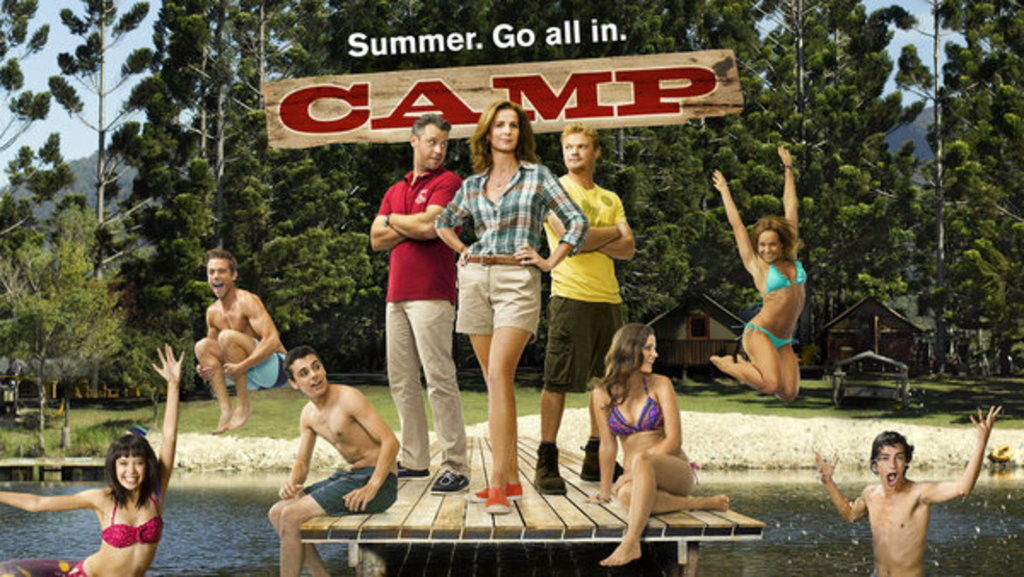
Camp is set in, well, a summer camp, of the sleep away variety, that is pretty much exactly what you think of when you think of a summer camp.  It’s remarkable; because camp exists as a two month vacation from technology and the pressures of today’s modern world, the camp in Camp, and anywhere else, looks almost identical to camps of twenty and thirty years ago, such as the one featured in Wet Hot American Summer.  The only significant differences are the fashion and the presence, in Camp’s camp, of “We Run the Night” by Havana Brown.

Talented actress Rachel Griffiths (best known for her portrayal of Brenda on Six Feet Under) plays camp director Mackenzie “Mac” Granger.   While the beginning of the camp summer starts in some respects like any other, it isn’t business as usual at the camp this year, because Mac’s husband (Jonathan LaPaglia, who is a younger ,poor man’s Anthony) cheated on her with a much younger Eastern European woman, and left her, and on top of that, because of him, the camp is on extremely shaky financial ground.  She may be forced to sell her beloved camp to smarmy Australian rival Roger, who runs the fancy camp for rich jerks down the road where they have lobsters and jet skis.

Of course, there’s a bevy of kids as well for us to care about.  There’s a couple of kids who are new to the camp this year. There’s Kip, a punk outcast city kid, whose leukemia is in remission and who wants no part of summer camp until he meets Marina, a girl who the cool camp veteran girls, who seem to be mean girl-ish, refuse to give the time of day.  The two of them unintentionally keep hanging out with Buzz, Mac’s half-idiot son who is constantly getting into trouble and desperately wants to sleep in a different cabin than his mom, and have sex by the end of the summer, though the former prospect seems a lot more likely than the latter.  Cole is an older guy, probably in his late ’20s, and seems to be in charge of something (maintenance, wikipedia tells me) and greatly respects Mac and her hopeful and optimistic spirit which keeps the camp afloat.  Robbie who is also a veteran in charge of something (activities, says wikipedia) has a yearly summer fling with Sarah; they don’t communicate all year outside of Camp, and tensions brew when he tells her he may be attending law school where she goes to college.

Camp is a  dramedy, for whatever that genre word is worth. It’s as not a comedy – it’s not funny, and there aren’t that many jokes.  It’s tone is light and airy and occasionally sentimental.  There’ll be some crying, but then some heart-warming moments to redeem said crying.  There’ll be some sex, but it’ll be fun sex, rather than dark sex or sleazy sex or really emotional sex.  There are soapy elements to attempt to keep viewers interested but what Camp would like to be is something that makes you smile as you pass the time.

There’s nothing particularly new or interesting, and for what it’s worth I doubt the creators are attempting to be particularly groundbreaking.  The characters are your regularly rag tag summer bunch, and they’re definitely trope-ish but not over the top, to their credit – the tropiest characters are the side characters that provoke, like some bullies from the rich camp that harass some of the characters.  Camp, to be a success, would rely on developing and strengthening the characters over time, and while it’s eminently possibly that these characters could become something one could care about, there’s not quite enough in the first episode to hook us in further to find out.

It’s fairly unmemorable summer programming.  Nobody knows this show exists, it will be cancelled before the month is out mostly likely, and no one will know that it’s gone.  If a program airs on a network that not that many people watch anyway, and no one watches it, was it every really on?

One note – the first episode is notable if nothing else, for a little public service announcement moment.  Teenager Buzz calls something “faggy” and his buddy/possible future love interest Grace, who has two dads, is naturally offended.  Buzz attempts to defend himself to two of the other characters by saying, as many teens do, that “faggy” and “retarded” just mean lame, that he has no problem with gay people, but they, rightfully, tell him otherwise, and he actually apologizes.  It’s kind of a nice teaching moment for an issue that hasn’t yet gone away.

Will I watch it again?  No, it’s not going to happen.  It was fine.  I have no particular qualms with the show, which is far as I’ll go, but shows have to give you some reason to keep watching besides not being bad, and there isn’t one.
Summer 2013 Review: Siberia

15 Jul

It's always cold in Siberia

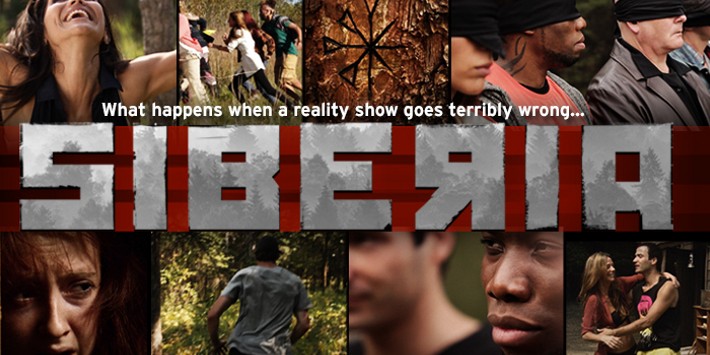
The basic idea behind Siberia is a fairly obvious one which makes me wonder why no one has ever done it before (or if they have and I just missed it).  Siberia is a scripted show, played as a straight reality show, in this case for horror.  Scripted takes on reality shows have existed before, but as far as I can recall, only for ludicrous not-even-close-to-even-the-level-of-reality-on-reality-shows comedy (for example Comedy Central’s Drawn Together and Halfway Home).  Considering just how much of a cultural institution reality television has become in the last decade and a half, it’s absolutely stunning that there’s never been a scripted reality show played straight.

While the idea seems obvious, it’s still a good one, and Siberia gets some credit as the first.  Siberia is displayed as a reality show, and someone not knowing better could watch large parts of the first episode without realizing that the show wasn’t real. The premise of the faux reality show“Siberia” is that sixteen strangers are flown out to a remote location in Siberia and told to survive a winter without any assistance aside from what they’re given to start and what they find and create from the wilderness around them.  Those that make it to spring share a pot of half a million dollars.  They’re given cabins, a handful of items, and occasionally instructions, hints, and supplies.  There are no rules; players can work together or apart, and whatever goes, goes, including theft or any other activities that would be considered anywhere from immoral to criminal in civilization.  There’s a red button located near their cabins that any contestant can push at anytime if he or she wants out for any reason; she or he will be escorted back to civilization, but gets nothing.  Presiding over the show is a slightly sleazy seeming Australian host who lays down the rules for the contestants.

The sixteen contestants are from multiple countries and from all stereotypical walks of life that reality shows seek so desperately to cater to; there’s the nerdy kid, the tough bald Brooklyn bouncer, the self-reliant antisocial southern farm boy, the crunchy environmental activist do-gooder among others.  The contestants, as they would in a reality show, constantly speak to the camera, giving their thoughts about other contestants, the setting, and the competition in general.

Two of the sixteen are eliminated quickly in a race to the initial cabins.  Having sixteen equally anonymous contestants allows Siberia to successfully have the easiest form of unpredictability (I call it anonymity unpredictability and hope to have a larger article on unpredictability out with more on this at some point).  Because you don’t know who anyone is, and their roles are all equal, anyone can go at anytime; there’s no story-line or meta reasons (such as one actor is more famous) to believe that certain characters stand better chances of making it to the end.

I knew that Siberia was going to veer towards supernatural horror going in, but if you didn’t, there’s no reason that you would know or even suspect that until the very end of the episode.  The group is gathered around, wondering where one of the contestants, who was off looking for mushrooms, was at, when the host informs them that in a tragic accident the contestant died.  It’s up to them, he says, to decide whether they want to end the competition and go home or keep on.  The last scene is a shaky cam shot of the character who died seeing something terrifying and running away, only to be killed.

It’s at this point that it deviates from what a believable actual reality show would do.  This is way too dangerous even for reality TV, and while the premise is hardly ludicrous by reality show standards, the events and rules definitively drag it over the line of believably, not to mention the probable existence of a supernatural creature. At first, I was a little disappoined it was a horror series, because I think a good drama could come out of a reality show told straight without supernatural or horror elements, but the more I thought about, the more I realized it’s a great venue for this kind of genre.  There’s an actual justifiable reason to have a whole bunch of people, all equal, in a remote location, with no technology.  Even more than that, it’s an absolutely perfect vehicle for anonymity unpredictability. There are no predetermined heroes and villains. Everyone’s a contestant, and in a reality show, any heroes or villains that emerge have equal chance of winning; there’s no one personality trope that always wins at reality shows.

Of course, horror has it own sets of tropes which could easily triumph and as someone who’s not a huge horror fan I’d rather Siberia at least partly stray from them rather than embrace them full on.  If Siberia can merely stick to the reality show tropes with a horror story, it could do okay.

The show reminds me of The River, ABC’s short-lived and mostly forgotten faux documentaryseries about a family looking for a missing nature host on the amazon.  Both employ shaky cam, horror elements, and the supernatural.

There are no overarching themes or deep characterization or pithy dialogue or musings about civilization or society or human nature.  But that’s okay.  TV has a lot of channels and a lot of shows.  There’s room for some action, and there’s room for some horror.   Sibera’s actually kind of fun.  It doesn’t ever claim to be more than it is, and by its format as a faux reality show it really can’t.  It’s fun to riff on the tropes of reality show characters, and it’s okay if they’re not the best actors, because what are reality show contestants other than bad actors.  It’s not going to win any awards or top any best show of the year lists, nor should it, but summer is the perfect time for a diversionary show that could be an enjoyable ride without having to be anything more.

Will I watch it again?  I ended the episode thinking I wouldn’t but the more I think about it, I might.  It’s definitely partly due to the slow pace of summer programming compared to the rest of the year, but as much as they’re often not my bag, cheap, fun thrills deserve a place on television somewhere next to their high-minded brethren and Siberia seems like a show that might do an adequate job of delivering them.