Tag Archives: NBC

Power Rankings: Law & Order, Law edition, Part 1

19 Dec

(Power Rankings sum up:  Each week, we’ll pick a television show and rank the actors/actresses/contestants/correspondents/etc. based on what they’ve done after the series ended (unless we’re ranking a current series, in which case we’ll have to bend the rules).  Preference will be given to more recent work, but if the work was a long time ago, but much more important/relevant, that will be factored in as well)

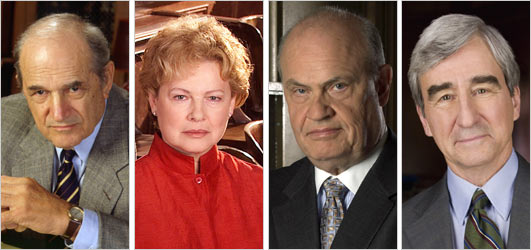
Last week, it was Order, this week it’s Law, and the actors and actresses who played the lawyers on the 20 year show get their chance to shine.  I think overall the cops have done more, but the lawyers have had their share of productive work as well.  Since people have been on the show drastically different lengths of time, I’ll give a slight credit to people who have had less post-L&O time to appear in TV and movies.  Let’s rank ’em.

13.  Steven Hill (as Adam Schiff, seasons 1-10) –  Hill’s 89 now, and was 78 when his time on Law & Order wrapped up.  Besides his age, his orthodox Judaism makes it difficult to work.  Suffice it to say, Law & Order was his last role.  Sometimes I like to make a comment about what a loser the last person on a rankings is, but Hill was old and had a long and distinguished acting career.

12.  Sam Waterston (as Jack McCoy, seasons 5-20) – He’s done nothing yet but he’s slated to be in an upcoming Aaron Sorkin series for HBO based around TV news and starring Jeff Daniels and Emily Mortimer.  I hate having to put the man  behind the legendary McCoy, with the second most episodes of Law & Order of any actor, this low, but I have no alternative until his new show airs.

11.  Carey Lowell (as Jaime Ross, seasons 7-8) – She was in a couple of episodes of short-lived Ed O’Neill series Big Apple.  She was in two episodes of the short-lived Law & Order spin-off Trial by Jury as her Law & Order character, now a judge.  She had a small role in the TV miniseries Empire Falls based on the novel of the same name.  She had a recurring role in one season J.J. Abrams series Six Degrees.

10.  Fred Thompson (as Arthur Branch, seasons 13-17) – Thompson played President Ulysses S. Grant in TV movie Bury My Heart at Wounded Knee and then attempted to play the real president with a relatively quickly aborted run at the 2008 Republican nomination.  Afterwards, he was in movie Secretariat and episodes of Life on Mars and The Good Wife.

9.  Linus Roache (as Michael Cutter, seasons 18-20) – The British Mr. Roache appeared in five episodes of British soap Coronation Street, which has starred Roache’s father for many years (Would a twitter “Occupy Coronation Street” trend be funny in the UK?).  He appeared in four episodes as his Law & Order character in Law & Order: Special Victims Unit, in which he’s been promoted to bureau chief.  He will soon be starring in British series Titanic.

8.  Alana De La Garza (as Connie Rubirosa, seasons 17-20) – She spun off from Law & Order into the one season Law & Order: LA, playing the same character.  De La Garza reprised her role in CSI:Miami from Season 4 appearing a apparition to Horatio (her character had died earlier in the series).

7.  Michael Moriarty (as Ben Stone, seasons 1-4) – Moriarty has become a certified kind of crazy person, with such wonderful statements as, “ The Supreme Court took a once individually free nation and corrupted it by the lie of Science that fetuses are, in their first two trimesters, no more than egg yolk.”  He’s done some acting too though.  In the ‘90s, he was in movies Courage Under Fire and Shiloh and TV movies Children of the Dust, Cagney and Lacey: True Convictions, Crime of the Century, The Arrow, Galileo: On the Shoulders of Giants, and Earthquake in New York.  Later he was in episodes of Touched by an Angel, The Outer Limits, Stephen King’s Dead Zone, The 4400 and Masters of Horror.  He was in Along Came a Spider and won an Emmy for his role in a James Dean TV movie in 2001, where he played Dean’s father.


Power Rankings: Law & Order, Order edition, Part 2

13 Dec

Law & Order Power Rankings, Order edition has been chopped into two parts for convenience – you can find the first part here.

4.  George Dzundza (as Max Greevey, season 1) – Dzundza has had the most time to work, participating in a mere 1/20th of the series. After he left, he appeared in Basic Instinct, Dangerous Minds, That Darn Cat, Species II and several episodes of the Batman animated series as Scarface and several of the Superman animated series as Perry White.  He was a regular in Christina Applegate’s one season Jesse and appeared on episodes of Matlock, Touched by an Angel, Third Watch and The Agency.  He was in films Instinct and City by the Sea in the early ‘00s and was a main cast member in one season Hack.  He was in seven episodes of Grey’s Anatomy and episodes of October Road and Stargate SG-1.

3.  Dann Florek (as Donald Cragen, season 1-3) – After his role on classic L&O ended, Florek bounced around, appearing in episodes of Wings, Ellen, The John Laroquette Show, Roseanne, Sabrina the Teenage Witch, NYPD Blue, The Pretender and The Practice.  He was in two episodes of astronaut miniseries From the Earth to the Moon.  In the short-lived The Secret Diary of Desmond Pfeiffer, Florek played Abraham Lincoln.  In TV movie Exiled, he reprised his role as Captain Kragen, and he was in six episodes of Smart Guy as a gym teacher and basketball coach.  In 1999, he got what he’s now best known for, a role as his old Law & Order character Captain Kragen, this time working with the Special Victims Unit.  He’s been doing it for 13 years so far.  He’s been a main character on a 13 season show but I’m deducting a little bit because he’s playing the same character as on regular Law & Order and it’s kind of cheating.

2.  Benjamin Bratt (as Rey Curtis, season 6-9) – He’s appeared in many movies since his term on Law & Order ended, such as Red Planet, Miss Congeniality, Traffic, Abandon, The Woodsman, Catwoman, Thumbsucker and as a voice in Cloudy with a Chance of Meatballs.  He starred in the one season E-Ring on NBC in 2005 about the Pentagon and in the two season A&E show The Cleaner about a recovering drug addict who helps other drug addicts recover (there are a thousand better shows that could be made based on the title “The Cleaner”).  He starred in a miniseries based on The Andromeda Strain and he has become a regular as of current season five of Private Practice as Dr. Jake Reilly.  He’s also appeared in two episodes of Modern Family as Manny’s dad and Gloria’s ex-husband.

1A.  Jerry Orbach (as Lenny Briscoe, season 3-14) – he deserved a spot on the list.  This is merely an honorary spot and conveys no true ranking except to specifically note that Jerry Orbach is awesome.

1.  Chris Noth (as Mike Logan, season 1-6) – His first couple of years post Law & Order were filled with TV movies, including Nothing Lasts Forever, Abducted: A Father’s Love, Born Free: A New Adventure, Rough Riders, Medusa’s Child, and Exiled, in which he starred as his Law & Order character.  In Castaway, he plays the man who marries Tom Hanks’ wife, while Hanks is, well, castaway.  In 1998, he got his biggest post-Law & Order role as Mr. Big in Sex and the City.  Mr. Big is Carrie’s most important love interest over the course of the series, and they get together several times before finally getting married at the end of the first movie and they remain married through the second movie through some difficulties.  He was in a couple of episodes of Crossing Jordan with former Law & Order co-star Jill Hennessy and TV movies The Judge, This is Your Country, and Bad Apple.  He returned to the Law & Order franchise in Criminal Intent for a couple of seasons as his old character Mike Logan.  Since 2009, he has been a recurring cast member, as the bad husband of the titular The Good Wife, now in its third season, appearing in the majority of the episodes of the series.

Fall 2011 Review: Grimm

19 Nov

Grimm starts with a college student running in a red hoodie being assaulted by some sort of creature who we can’t really see, but who tears her limb from limb.  Detective Nick and his partner Hank, investigate the crime and debate whether the killer is a human or animal until they eventually find a boot print.  Meanwhile, Nick is buying a ring to propose for his girlfriend, but starts seeing strange things – people’s faces turn into monsters’ faces for a couple of seconds at a time, almost like the way humans look like aliens when Roddy Piper wears the special sunglasses in “They Live.”  As Nick and Hank work on solving the case, a little girl goes missing, also wearing a red hoodie (Little Red Riding Hood!  I get it!) and as they investigate Nick suspects a man whose face does the weird monster transformation who lives by the edge of the park where the college student’s body was found.  Nick’s dying aunt, who apparently raised him, comes over to his house and lets Nick know some important information:  He is a GRIMM – an elite line of fairy tale monster-hunters who can see these monsters while they attempt to blend in with humanity.  As the aunt tells Nick, she hands him a key he must protect at all costs and she’s attacked by a monster, who after a prolonged fight, injures her badly, but is killed by Nick.

Nick goes to the house of the monster he saw earlier at the edge of the park, attacks him, and gets into a fight before discovering that this monster is instead a reformed monster who drinks beers, goes to church and pees to mark his territory like a normal person.  The reformed monster tells Nick a little about GRIMMs and assists Nick eventually in locating where the offending wolf-monster might be and takes him there.  Nick calls his partner, and though the partner is initially suspicious, they eventually are on the same page, and after some time kill the monster and find the girl.  Nick realizes he has a lot yet to learn about being a GRIMM, and at the end he saves his aunt, still unconscious, from an evil monster attacker, who seems like she will be part of the serial plot.

Grimm is the second fairy tale inspired show to air this year along with ABC’s Once Upon a Time, but Grimm shares more in common with Buffy the Vampire Slayer in style, if not in quantity.  I was only slightly surprised to see that Grimm, after I made that comparison in my mind, was co-created by David Greenwalt, a former Buffy writer.  There’s a number of reasons this comparison felt apt.  The main character, like Buffy, is learning to see monsters who hide in plain sight, something which only a  small and elite group of people can see (yes, Buffy already technically knows she’s a slayer at the beginning of the TV show, but more or less she’s learning).  These monsters threaten humanity every day and the protagonist now realizes he (or she) has a responsibility to the world to use his (or her) powers to protect humans, threatening to damage his (or her) personal life.  It has a procedural but serial feel similar to Buffy; there’s a monster of the week, but the potential for a slowly moving storyline; if it’s anything like Buffy, the serial plot will develop slowly at first and then become more prominent over the last few episodes of a season.  The idea of a reformed werewolf who assists the protagonist is a classic Buffy-esque touch; one of the great concepts of Buffy was that demons weren’t always evil, breaking general conventions.

Unfortunately for Grimm, it didn’t have many of the hallmarks which made Buffy so great such as  the using of demons and monsters as ways to interweave stories about the struggles of the main characters in their personal lives, the mixture of comedy and drama, and the witty and distinctive dialogue.  It’s unfair, though, to compare Grimm to seven seasons worth of Buffy; Buffy’s first couple of episodes had their problems as well.

Right now Grimm seems like, if not opened up a little bit, it could wear down to a simple spin on a police procedural where the killers are monsters.  That could still be passable, but the show could be stronger with some drawing on the mythology of the fairy tales and the Grimms and I think there’s a chance the show could go in that direction.  A tad more humor might serve the show well, as well.

As a note, it seemed odd that, at the beginning of the episode the runner who is murdered is listening to Sweet Dreams (Are Made of This) by The Eurythmics, and when the detectives find her iPod, it’s playing the same song.  Either they incredibility coincidentally came upon the iPod as the playlist was at the same place, or her running playlist consisted of that song repeating over and over again.

Will I watch it again?  I don’t think so, right away anyway, but I do think this show has a better chance of being good than Once Upon A Time.  From just the premises, Once Upon A Time sounded better to me.  It was more serial, had an open world with interesting questions, and Grimm sounded more like a fantasy procedural.  Those vague descriptions were accurate, but from one episode, Grimm has more potential.

Ranking the Shows That I Watch – 4: Community

17 Nov

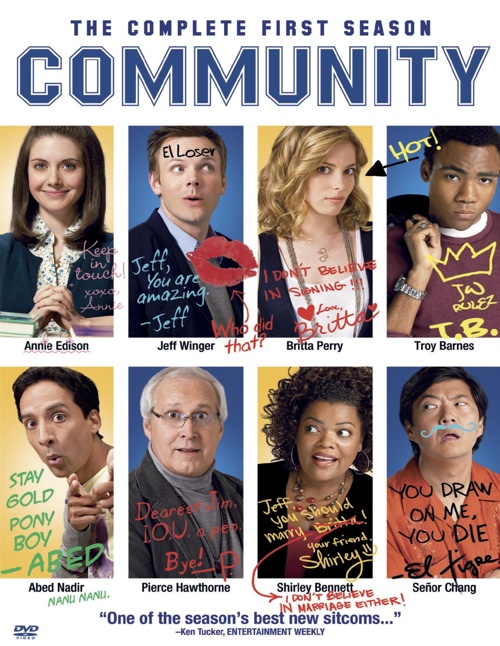
This show contrasts with Parks and Recreation in several ways, and they’re really neck and neck on this list, and could be swapped depending on the last episode I’ve seen of each.  Unlike Parks, which took a while for me to get into, I knew Community was a show I’d like even from the first Community I saw, even if it wasn’t yet it top form.  The show grew over its first season and the second season was even better than the first. Just the first season had already established it as the show I was most excited to watch each week when I watched NBC’s Thursday night line up, and that’s saying a lot, considering that probably consists of half of the comedies I watch on TV.

I think this was because every week there is a chance to get an absolute gem.  In contrast with Parks and Recreation, individual episodes stand out a lot more from the pack, which can be both good and bad.  It’s almost like comparing a great album band to a great singles band.  Community when it hits its absolute peak with particularly great episodes like the paintball episode “Modern Warfare”, this season’s parallel universe oriented “Remedial Chaos Theory,” or the episode I’ll choose below as my favorite, is simply as good as television gets.  Everything works and the episodes can be watched over and over.  The downside is when everything doesn’t completely come together there are episodes that end up slightly subpar.  Parks and Recreation has a hard time hitting the heights of the near-perfect Community episodes, but also has a significantly higher week to week consistency.  These are small concerns, as both are good enough that Parks and Recreations episodes have high ceilings and Community keeps the mini-clunkers to a minimum, but it does highlight the difference in the type of show (Venture Bros. is another show in the Community model in which certain episodes more clearly stand out).

About every fourth episode or so f Community is a massive style pastiche, like the western themed A Fistful of Painballs, or the zombie themed Epidemiology.  Not every one is perfect, but a large majority of the attempts hit their mark.   These  provide some of the best episodes of the series.  Still, the engine that really makes Community run, and that takes even the style homage episodes up a notch in their quality is the relationships between the study group characters.  Abed and Troy are particularly delightful in their camaraderie, but every combination of characters have their own unique relationship.  Over the course of the show, it’s gone from a set up where Jeff was the main character and Britta was maybe second to a full fledged ensemble where just about anyone (haven’t really been many Shirley led episodes) can take the lead.

Why It’s This High:  It’s vying for my favorite comedy on TV – the chemistry between the characters is great, and the homages are generally spot on, and the episodes that are as good

Why It’s Not Higher:  The only thing I can say against this show is, there’s not a perfect level of consistency, some are better than others – though what show non-Wire division doesn’t have that?  And sometimes there’s too much Ken Jeong – it often feels forced when he’s given more than a couple of lines and just doesn’t fit with the rest of the characters.

Best episode of the most recent season:  This is one of the few where I knew exactly which one I was picking before I even get to the category. “Conspiracy Theories and Interior Design” is my choice.  It’s a ’70s neo-noir homage involving a massive conspiracy theory which Jeff and Annie must unravel as Jeff makes up an independent study class taught by “Professor Professorson.”  The b-plot involves a massive blanket fort built by Troy and Abed, which is the site of a chase sequence for the A-plot.  I don’t want to say too much else, but I’ve seen the episode more than any other Community episode and it makes me smile every time.

I’d like to just put in a special ending note in reference to NBC’s decision to take Community off their schedule in the Spring.  Please watch Community!

Ranking the Shows That I Watch – 5: Parks and Recreation

15 Nov

While 30 Rock has been the critical darling for the past half decade of so, Parks and Recreation has moved up past 30 Rock on many a person’s rankings (including mine, obviously), and that’s quite understandable.   Parks and Recreation is still in its growing phase, or at leas near it. The show continued to get better and perfect itself over this past season, it’s third, and has been as strong as ever in the first few episodes of the fourth.

In reviewing some comedies in this new television season, I’ve talked about how difficult it is to be great from the beginning with a comedy.  The actors have to learn how to best portray the characters, and the writers have to learn what works in a way that can only be established in actual episodes.  Like in sports, unfortunately, not everything can be worked out during the preseason.  There are many, many examples of this phenomenon – comedies finding their footing and improving greatly over the first season or two – but Parks and Recreation may be the single most dramatic in recent history.

When the show first started, I had mixed emotions.  I was excited, because it was created by Michael Schur, who was largely responsible for firejoemorgan, the fantastic blog which made fun of dumb sports commentary, but I was wary because I’ve never liked Amy Poehler.  The premise of the show at the time was that Poehler’s parks and recreation department employee was determined to turn a hole in small Indiana town Pawnee into a playground after Rashida Jones’ character Ann Perkins’ boyfriend Andy Dwyer(Chris Pratt) fell in and broke his legs.  I watched the first couple of episodes, and it confirmed my biggest concerns.  It had plenty of good points but Poehler’s government do-gooder overachiever Leslie Knope was so over the top that it overshadowed everything else.  It was a poor Michael Scott impression at best, and although Scott’s never been my favorite character, Poehler certainly couldn’t pull it off like Carrell.  I stopped watching.

Mid-way through the second season, people and the internet kept trying to tell me to come back.  I was skeptical, after having seen part of the first season, but it was people and internet I trusted, and it was still a good creative team, so I relented.  I’m glad I did.  The show was well on its way in its transofrmation to one of the best comedies on television.  The biggest single difference may have been that the writers pulled the reins in on Leslie.  Instead of an overbearing Michael Scott like character, she was aggressively competent, and relentlessly well meaning, making her touch of crazy which still existed more endearing than obnoxious, generally.

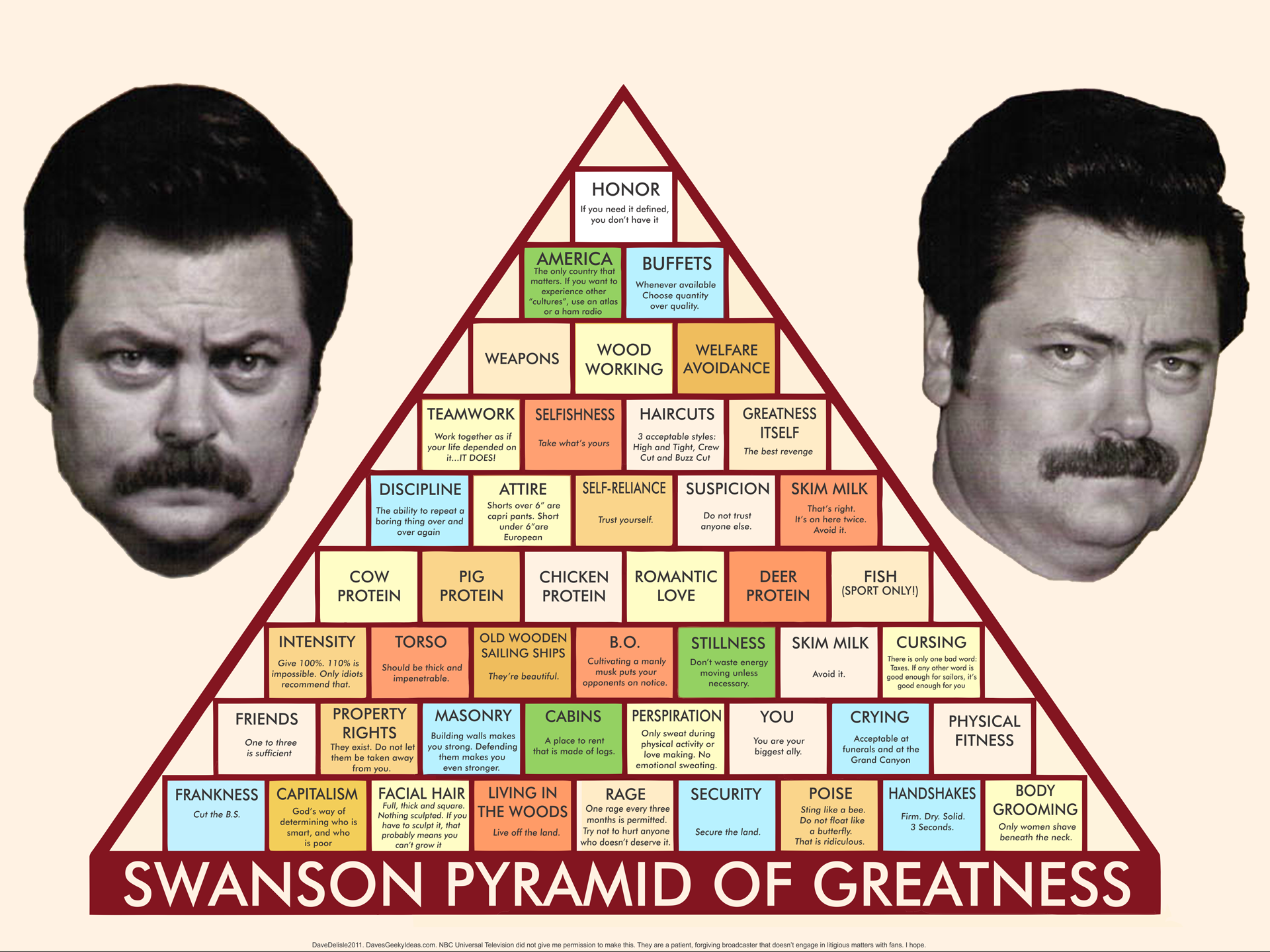
Even better, the supporting cast had come out of its shell.  Andy, the deadbeat boyfriend in the first episode originally planned to only appear in a couple of episodes, changed completely into a lovable happy go lucky but delightfully a little bit slow witted character who has become one of the breakout characters of the show.  The other biggest breakout character was mustachioed boss Ron Swanson, played by Nick Offerman, whose anti-government libertarian positions meant he left all the work for Leslie, and who offers lines, which even completely out of context sound wonderful like “You had me at meat tornado,” and produces the Ron Swanson Pyramid of Greatness, shown below.  The fact tha these characters have broken out so successfully, has obscured who I thought would be the obvious breakout character, Aziz Ansari’s Tom Haverford, whose fantastic renaming of food quote (I cut some of it, but it’s so good I didn’t want to leave out too much)”Fried chicken is fry fry chicky chick. Chicken Parm is chickey chickey parm parm. Chicken Cacciatore chickey catch. I call eggs pre-birds or future birds. Root beer is super water. Tortillas are bean blankies. And I call forks food rakes.”  inspired a fantastic website, Tom Haverfoods.

This reorganization of the show left one odd man out, Paul Schneider, who played Mark Brendanawicz, another government worker who was friends with Leslie.  Originally designed as loosely the Jim Halpert character, Brendanawicz’s role kept getting squeezed as the show continued until he chose to leave, which was the best thing for the show.  He was replaced by Adam Scott and Rob Lowe joined the cast as well at the end of the second season.  Even as the third season started, it was hard to remember that Schneider was ever on the show.  I have had a man-crush on Adam Scott ever since Party Down, and he does a fantastic job portraying awkwardness as Ben Wyatt.

Why It’s This High:  Making Amy Poehller make me laugh is something I never thought would happen, and this does, and still not nearly as much as Ron or Tom or Andy.

Why It’s Not Higher:  We’re at the point where there really aren’t great reasons why it isn’t higher, it’s very good, though I suppose I still don’t totally love Amy Poehler – old annoyances die hard.  Still, these are quibbles.

Best episode of the most recent season: I’ll pick from the third season, since it’s the last fully completed (arbitrary explanation, granted) and there’s really no obvious top episode or even couple of episodes as there are with some shows.  Without spending too much time to parse every individual episode’s A, B and C plots, I’ll go with “Eagleton” where there are some fantastic depictions of Pawnee’s rival town, the much richer Eagleton.  Although there’s a risk of occasional overuse, Parks and Recreation has gotten a lot of mileage from its depiction of residents of Pawnee as largely idiots, and its less frequent depictions of everything regarding Eagleton as snooty and ostentatious.

Fall 2011 Review: Prime Suspect

22 Oct

Girl power isn’t just found in sitcoms (girl power sounds patronizing – woman power?) this fall TV season.  It’s also in dramas.  Prime Suspect is a police procedural but with more of an attitude than the standard CBS version.  Maria Bello plays a cop looking to move up the ranks, who has just been transferred to homicide somewhere in New York (from somewhere else in New York).  She’s a damned good cop, but apparently due to something she did (an affair with a senior officer? It wasn’t mentioned specifically in the pilot) the squad’s old boys’ club view her as an outcast who cheated her way up the ranks.

The homicide detectives in her new squad keep skipping her name when homicide calls come up, which seems pretty disrespectful to say the least, and while the boss of the unit seems to genuinely respect Bello and feels sympathetic, he doesn’t want to rock the boat and tells her she’ll just get the next case.  Only thing is, this particularly case she was skipped on was a brutal murder getting lots of press, and she thinks she has a novel theory – that it’s connected to an existing series of rapes, – which no one else believes, including the current detectives on the case.  So she’s both isolated and unable to solve anything until one of the detectives on the team, a veteran to the force, keels over and dies unexpectedly.  She makes a poorly timed request to her boss to take the detective’s place on the case, and though the boss is displeased by her timing, he gives her the shot.  She is curt and bosses her way around the investigation, getting respect from some but resentment from others, particularly the dead cop’s best friend on the force, but through it all eventually solves the case proving her theory correct.

The show has more going for it towards making it a weekly watch than an average procedural.  Maria Bello is certainly the biggest factor going for it.  She’s rough around the edges and a little bit irritable but effective, and I think it’s well played that even in the first episode, while you’re mostly on her side, you can understand why she gets under some of the detectives’ skin, aside from the one who really hates her.  She acts only as barely respectful as she needs to be and isn’t willing to cut anyone any slack, especially right after the death of the other detective.  The best parts of Maria Bello on the show though are still when she’s making things happen solving the case though.

It seems a little bit much in terms of the way she’s treated so poorly, particularly just because she’s a woman, in this day and age.  It’s one thing to have some minor resentment, but the cops in this episode definitely go farther than that, particularly the one cop that really, at this point, just seems like a jackass.  It’s one thing to forgive him at the beginning of the episode after the loss of his friend is so fresh, it’s another towards the end when he gets on her case for no real reason.  That said, it would only require a little tweaking to solve that problem, and move the resentment to focus on her attitude and demeanor and less solely on her identity as a woman.

Will I watch it again?  Again, probably not.  But I’m also considering it.  I could make up a middle tier of shows this season, and this would be right there.  I can see it growing up better and I think the characters could be fleshed out well.  These are all good things and it makes me think about it but it’s hard for me to really get into a show like this with at least a little bit of a more serial element.  Maybe if it was on USA.

Fall 2011 Review: Free Agents

20 Oct

The inevitable fact of spacing these reviews out of the course of a few weeks means that some of the shows will be already cancelled by the time I write about them.  Free Agents, moreso, was just about dead on arrival.  It was one of the easiest shows to call as a quick cancellation, but unlike other easy calls like The Playboy Club and How To Be A Gentleman, it’s not simply because it was bad, though it was by no means great.  It’s because it was a bad fit, time and network wise, and didn’t receive much promotion.

I was mildly pleasantly surprised upon watching Free Agents, not because it was great, but because my expectations were relatively low.  That said it really wasn’t bad.  It wasn’t good either, but it wasn’t bad.  Here’s the premise.  A couple of relatively recently single middle-aged folks work at a public relations agency.  Hank Azaria plays a recently divorced dad, and Katherine Hahn, a recently widowed woman.  The two of them have gotten together on a one-night stand at the beginning of the first episode, and the show continues as they go back to work with sexual tension and a will-they-or-won’t-they dynamic.  They’re surrounded by some wacky co-workers, played Al Madrical and Mo Mandel, a wacky British boss, played by Buffy the Vampire Slayer librarian Giles, Anthony Stuart Head, and a wacky janitor played by Judd Apatow bit part player and former The State member Joe LoTruglio.

What works best about the show are the two leads.  They’re generally likable and they play their parts well,  A couple of their lines hit and all the best scenes of the show were with them and particularly when they were talking to one another. Even the parts where Azaria is crying about his divorce don’t seem nearly as cartoonish as they could.  The side characters are another story.  Irritating and over the top for the most part, they seem like a bunch of cardboard cut outs particularly put next to the genuinely engaging lead actors.  Head, though I love him as Giles, was occasionally excruciating to watch in his scenes as the incredibly inappropriate boss who makes his employees feel uncomfortable.  The other awkward side plot about how one of the friend characters wanted to go out on the town and the poor married friend wanted to come along but didn’t understand single life did not work either.

Will I watch it again?  Well, it’s cancelled, but I wouldn’t and didn’t.  It’s not dreck though, for what it’s worth, and it was a little rough to have only four episodes of it to air.  I’m not crying about it though.

Fall 2011 Review: The Playboy Club

18 Oct

Of the two set-in-the-early-‘60s shows (Pan Am is the other), Playboy is  making much more of an effort to be Mad Men.  I’m not going to say that’s exactly what it is, or that it’s ripping if off, or anything of the sort, but I’ll make the mild comment that of the two shows, Playboy Club is clearly leaning more in that direction.

The Playboy Club is about the title location in Chicago, about a few of the girls who work as bunnies there, and about the manager and one particular key-holder (I guess you need a key to enter) named Nick Dalton who is a mysterious figure running for state attorney general but with a past that ties him to the mob.  The first episode is centered around a new bunny, portrayed by Amber Heard. Nearly the first action of the show is a man attempting to rape Heard.  Heard, helped byDalton, accidentally kills him, resisting the rape, and then finds out he’s a powerful Chicago mobster. Dalton and Heard bury the body and invent a story that she went back to his place to sleep with him, ruining his relationship with another bunny in the process.  They have to keep up the cover, while Amber Heard learns more about the salacious and exciting world of being a bunny.  There’s a vague hint that she has some sort of mysterious background which could have come out if the show lasted longer.

Unsubtlety is a hallmark of the first episode of Playboy Club.  It’s the ‘60s, and times-they-are-a-changin’!  That point couldn’t have been made more blatantly.  Literally, there’s narration at the beginning and end of the episode by Hugh Hefner basically saying as much (apparently the narration is only in the pilot).  The civil rights movement is on!  The one African-American bunny gives an incredibly unsubtle monologue about the opportunity working in The Playboy Club provides for someone of her race.  Gays have no rights!  One of the other bunnies and her husband live together in a sham marriage because they can’t come out with their homosexuality at the time.  We get it Playboy Club, you’re trying to put yourself at the heart of the cultural and political changes of the ‘60s.  Next time remember that these things work better when there’s at least a modicum of subtlety.

I’m fairly confident the main draw of this show is the attractive women wearing little clothing.  Not that that’s not a real draw, but there isn’t really much else.  That said, I’ll damn the show with faint praise by saying it’s not quite as bad as I thought it would be.  It’s not a truly terrible show; what I’ve found at least this year so far is that the worst comedies are significantly worse than the worst dramas.  It’s kind of offensive, and it’s attempt to say that these women are really not being objectified, but that they’re rather on the edge of a new femininity doesn’t really work.  The problem with the show more than that was just that it was boring.  Nothing happened in the episode that made me want to tune in for another one.

I realized The Playboy Club is cancelled already as I post this, but at least it’s nice to know there was no big loss there.

Will I watch it again?  Well, it won’t be on again, but no, I wouldn’t have anyway.  It wasn’t truly awful but it wasn’t by any means good either.  The only friend I know who watched all three episodes admitted a large part of his choice was made because of the scantily clad women.

Ranking the Shows That I Watch – 14: The Office

13 Oct

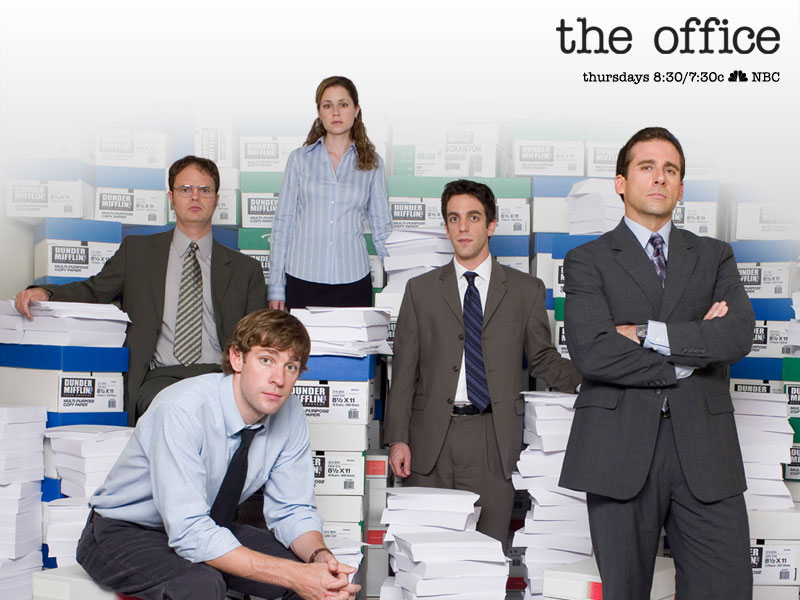
Let’s put this right out there.  I know quite a fair number of people who were long time Office fans for the first three, four, or five seasons who just don’t watch it anymore.  It’s over the hill they say, jumped the shark, however you want to put it.  To me, that’s a lot of shit.  Has that happened in shows before?  Certainly.  I’ve complained about it myself.  And I’m making no claim that The Office as of 2011 and seventh or eighth season is as good as it’s ever been in its entire run.  But that doesn’t mean it’s not quite good and funny and enjoyable.

Admittedly this season was particularly strange, paving the way for the departure of Michael Scott, with guest star Will Ferrell as a potential replacement boss appearing in the last few episodes of the season.

Some people have said, Steve Carell is leaving, maybe that’s a sign you should just end the show, whether to put it out of its misery, or whether it’s going out on top.  Normally, I’d think they have a good point. It can look desperate to replace a major character in a comedy, and worse than appearances, there’s a huge risk of it simply not working.  The show got so far because of the chemistry and laughs generated by the core current cast.  When you risk throwing that off, you could have a show that would never make it on air as a pilot, but automatically gets a season because of the show’s pedigree.  In this instance though, I’m not particularly worried, at least about Steve Carrell leaving, although, of course, who they bring in is another matter.  I’ve been advocating Steve Carell leave the show for another boss for a couple years now.  Not at all because I think he’s done a bad job. On the contrary, I think he’s been able to make a character awkward and funny in a way I think very few actors could pull off.  Still, the character has inherent limitations and it’s a credit to him and the writers that they were able to continue to generate laughs until the end, but fresh blood can be a good thing.

Just looking through the episodes of the most recent season I recall funny segments.  In the last episode with Will Ferrell the oddly hilarious dunk attempt that landed him in a coma –  I can’t explain exactly why, but my friend and I laughed for five minutes straight and had to pause the show.  Dwight at the garage sale, starting small and then trading up, until he is sold on Jim’s magic beans.  Dwight and Jim gags may be the most resilient part of the show.  By all rights, they should get old, but they never do.  Ryan’s grilling of Pam about her Christmas comic book gift was fantastic and emblematic of the newest and best iteration of Ryan’s character as a pretentious hipster.

A word is also worth saying about how the Office’s attempts to add new blood (new blood?  fresh blood?  same difference) with new receptionist Erin and corporate liaison/stooge Gabe have very much worked.  Gabe becoming wholly unhinged by Erin’s awkward and extremely public break up with him turned into what may have been one of the funniest running arcs of the season, highlighted in the last episode when he quizzed Andy, during his interview, about the sun, and when Andy knew the answers, ordered him to “Shut up about the sun!” Erin carefully walks the line between adorable empty-headedness and maybe-she-has-an-actually-problem with the defining moment possibly being her believing that disposable cameras were for disposing immediately after you took the pictures.

Why it’s this high:  It’s still The Office, more or less, Dwight and Jim antics are hilarious, they continue to do good work

Why it’s not higher:  Yes, you should still watch it, but no, it’s not as good as it was during maybe the third season

Best episode of the most recent season:  There’s no obvious choice but I’ll take “Andy’s Play” which had one of my favorite scenes of the season at the end – Michael’s word-for-word rendition of a Law & Order episode as an audition

Fall 2011 Review: Whitney

7 Oct

Whitney Cummings has two television shows on the air, both of them awful, and both of them naturally inviting comparison to one another.  It can often be difficult to compare two things that are both very bad, but I’ll make an attempt but describing them as thus; 2 Broke Girls is more offensive, but Whitney is worse.

What galls me more than anything else is that Whitney is given a spot on the NBC Thursday line up, the home of the most progressive and best comedies on network tv in the last decade.  Whitney, like Outsourced, shares absolutely nothing in common with what works about these other shows (The Office, Community, 30 Rock, Parks and Recreation) and I’m honestly not sure how the network could think for a second that it’s a fit.

Before I actually go into the substance of the show, which is terrible, the style itself immediately separates it from these other shows.  First of all, it has a laugh track.  I didn’t spend as much time on this with 2 Broke Girls because, well, as much as a laugh track is awful, every single show on CBS has a laugh track (CSI: Miami even I think) and that’s just the way things operate around there.  But Whitney is put in a context next to shows that have no laugh tracks; in fact I’m fairly certain no other comedy on NBC does.  Frankly, there’s absolutely no excuse for having a laugh track in this day and age.  It’s insulting to the viewer, who clearly can’t figure out when to laugh on his or her own, and it slows down the show, placing strange awkward gaps between lines.  It’s even more noticeable because of the contrast with the shows airing before Whitney.

Second, there’s the multi-camera format, while all the other NBC comedies are single camera.  Unlike with a laugh track, this isn’t bad by nature; there’s no reason a multi-camera comedy has to be bad, but it tends to be by practice – it just doesn’t feel modern, and on top of that it leads to, combined with the pauses due to the laugh track, posing, and staring right at the camera after a joke, which feels painful, especially when the joke is awful.  It feels like a canned comedy from the 1950s or ‘60s.

Wow, that was all on style.  Substance, well, Whitney just isn’t funny at all.  Whitney is supposed to be this woman who doesn’t fit in the box we put woman in or something; she’s crude and having fun and the leader in her relationship.  Honestly, I don’t really care one way or the other who her character is.  It fails the first rule of comedy – being funny (yes, there are exceptions for shows that are not really funny but technically comedies like Entourage, but let’s move past that for now) The laugh lines are corny, stale and predictable and the side characters seem like they were purchased from the bargain bin at the Sitcom Store (it’s like a Home Depot for Sitcom characters).  They include a man-hungry single woman who can’t stand men with emotions, and a sexist single guy.  Whitney herself has no charisma, whatever scraps of enjoyment can be taken from a sea(ocean?) of terrible are from her long-time boyfriend Alex.

Will I watch it again?  Nope.  I don’t know why anyone would ever watch this show ever again if they’ve seen three minutes of it.