Tag Archives: NBC

Summer 2013 Review: Siberia

15 Jul

It's always cold in Siberia

The basic idea behind Siberia is a fairly obvious one which makes me wonder why no one has ever done it before (or if they have and I just missed it).  Siberia is a scripted show, played as a straight reality show, in this case for horror.  Scripted takes on reality shows have existed before, but as far as I can recall, only for ludicrous not-even-close-to-even-the-level-of-reality-on-reality-shows comedy (for example Comedy Central’s Drawn Together and Halfway Home).  Considering just how much of a cultural institution reality television has become in the last decade and a half, it’s absolutely stunning that there’s never been a scripted reality show played straight.

While the idea seems obvious, it’s still a good one, and Siberia gets some credit as the first.  Siberia is displayed as a reality show, and someone not knowing better could watch large parts of the first episode without realizing that the show wasn’t real. The premise of the faux reality show“Siberia” is that sixteen strangers are flown out to a remote location in Siberia and told to survive a winter without any assistance aside from what they’re given to start and what they find and create from the wilderness around them.  Those that make it to spring share a pot of half a million dollars.  They’re given cabins, a handful of items, and occasionally instructions, hints, and supplies.  There are no rules; players can work together or apart, and whatever goes, goes, including theft or any other activities that would be considered anywhere from immoral to criminal in civilization.  There’s a red button located near their cabins that any contestant can push at anytime if he or she wants out for any reason; she or he will be escorted back to civilization, but gets nothing.  Presiding over the show is a slightly sleazy seeming Australian host who lays down the rules for the contestants.

The sixteen contestants are from multiple countries and from all stereotypical walks of life that reality shows seek so desperately to cater to; there’s the nerdy kid, the tough bald Brooklyn bouncer, the self-reliant antisocial southern farm boy, the crunchy environmental activist do-gooder among others.  The contestants, as they would in a reality show, constantly speak to the camera, giving their thoughts about other contestants, the setting, and the competition in general.

Two of the sixteen are eliminated quickly in a race to the initial cabins.  Having sixteen equally anonymous contestants allows Siberia to successfully have the easiest form of unpredictability (I call it anonymity unpredictability and hope to have a larger article on unpredictability out with more on this at some point).  Because you don’t know who anyone is, and their roles are all equal, anyone can go at anytime; there’s no story-line or meta reasons (such as one actor is more famous) to believe that certain characters stand better chances of making it to the end.

I knew that Siberia was going to veer towards supernatural horror going in, but if you didn’t, there’s no reason that you would know or even suspect that until the very end of the episode.  The group is gathered around, wondering where one of the contestants, who was off looking for mushrooms, was at, when the host informs them that in a tragic accident the contestant died.  It’s up to them, he says, to decide whether they want to end the competition and go home or keep on.  The last scene is a shaky cam shot of the character who died seeing something terrifying and running away, only to be killed.

It’s at this point that it deviates from what a believable actual reality show would do.  This is way too dangerous even for reality TV, and while the premise is hardly ludicrous by reality show standards, the events and rules definitively drag it over the line of believably, not to mention the probable existence of a supernatural creature. At first, I was a little disappoined it was a horror series, because I think a good drama could come out of a reality show told straight without supernatural or horror elements, but the more I thought about, the more I realized it’s a great venue for this kind of genre.  There’s an actual justifiable reason to have a whole bunch of people, all equal, in a remote location, with no technology.  Even more than that, it’s an absolutely perfect vehicle for anonymity unpredictability. There are no predetermined heroes and villains. Everyone’s a contestant, and in a reality show, any heroes or villains that emerge have equal chance of winning; there’s no one personality trope that always wins at reality shows.

Of course, horror has it own sets of tropes which could easily triumph and as someone who’s not a huge horror fan I’d rather Siberia at least partly stray from them rather than embrace them full on.  If Siberia can merely stick to the reality show tropes with a horror story, it could do okay.

The show reminds me of The River, ABC’s short-lived and mostly forgotten faux documentaryseries about a family looking for a missing nature host on the amazon.  Both employ shaky cam, horror elements, and the supernatural.

There are no overarching themes or deep characterization or pithy dialogue or musings about civilization or society or human nature.  But that’s okay.  TV has a lot of channels and a lot of shows.  There’s room for some action, and there’s room for some horror.   Sibera’s actually kind of fun.  It doesn’t ever claim to be more than it is, and by its format as a faux reality show it really can’t.  It’s fun to riff on the tropes of reality show characters, and it’s okay if they’re not the best actors, because what are reality show contestants other than bad actors.  It’s not going to win any awards or top any best show of the year lists, nor should it, but summer is the perfect time for a diversionary show that could be an enjoyable ride without having to be anything more.

Will I watch it again?  I ended the episode thinking I wouldn’t but the more I think about it, I might.  It’s definitely partly due to the slow pace of summer programming compared to the rest of the year, but as much as they’re often not my bag, cheap, fun thrills deserve a place on television somewhere next to their high-minded brethren and Siberia seems like a show that might do an adequate job of delivering them.
End of Season Report – Hannibal, Season 1

5 Jul

Listen to the music Marge! He's evil!

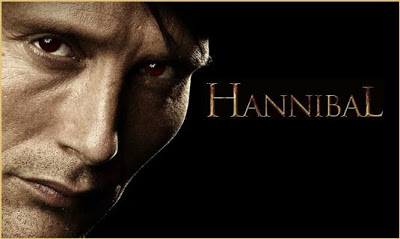
Right from the beginning, I described Hannibal as dark.  It’s dark in its plot and it’s sensibility but also simply in its look; lots of shadow and lots and lots of blood and guts.  This isn’t your grandmother’s show about serial killers.  There’s some gimmickry, but none of the flash and glamour that surround solving crimes on the big crime procedurals.  No, the crimes committed by the serial killers in Hannibal are disgusting and horrific and there’s no getting away from that.  So much so that main character Will Graham is constantly haunted by the crimes, as he gets way too close in his mental exercises to find the killers.    Sometimes it was even to dark for NBC.  There was an episode where a woman kidnapped kids and convinced them to kill their families, which was yanked from the schedule in the wake of, I’m not sure, just because, well, it’s shocking that this is even on NBC to begin with.

Point being, I knew the show was dark.  But the ending of the season even outdid my reasonably dark expectations.  How many first seasons end with their protagonist in an insane asylum?  One for the criminally insane, I might add; this is a special loony bin for the most depraved.  Yes, that’s what happens.  Cannibal and psychopath Hannibal Lecter, who at this point in our story is a revered psychoanalyst assisting the FBI, frames agent Will Graham, who also happens to have a very serious neurological condition called encephalitis which basically interferes with his very ability to deal with reality.  Just about every character thinks by the end of the season that Will Graham is responsible for a slew of murders including one of the girl who was the daughter of a serial killer and whom he has been mentoring for the entire season.

Of course, this is every so slightly lightened by the fact we know eventually Hannibal Lecter is going to wind up in that loony bin himself, with Graham on the outside, assuming creator Bryon Fuller doesn’t totally decide to throw the source material into the garbage can.  Plus, there’s only so much Graham can do from inside the mental asylum.  You’d have to think merely for plot purposes he’d get out sooner or later.  Still, this is a pretty rough stretch for Graham.  How he worms his way out of this, picks up on Lecter’s guilt, and convinces anyone else should be an interesting journey for the next season.

I complimented Bryon Fuller on this early on in the season but again I think plaudits are in order for his ability to take source material we know and make it fresh again. This is doubly so because it revolves around the tension of a free Hannibal, who we all know is a killer, screwing up the FBI and our protagonist even while we want to shout out, come on, he’s evil, have you guys never seen Silence of the Lambs?.

This is a serial show that would normally be a procedural.  I could imagine this show produced by Jerry Bruckheimer and it would be an extremely different show.  Watching the first few episodes, I kept expecting it to break out in a full procedural with a new killer every episode and little hints and bits of continued serial plot just to keep us interested in not missing an episode.  But that’s not what happened at all.  Instead it played by its own schedule, weaving seamlessly between new killers and the existing long term serial plots.  The one continued strain was the general unraveling of Will Graham’s mental state.  A slower episode would be followed with a faster episode, an high action episode with an more patient psychological pot boiler.

This show isn’t covering new territory.  We see the FBI and police catching murderers all over TV.  Will is a savant, a character, we see in different forms throughout TV and movies as well.  What we don’t see as often is the downside to savant-dom.  Usually the heroes of killer-catching movies and TV shows are one sided; they may have tragic pasts but they rarely have tragic presents.  With Will, there’s a cost of doing what he’s the best at.  Watching Will slip slowly deeper into the bounds of mental instability is both difficult to watch and captivating at the same time and is what makes Will a  much more interesting character than most versions of this stock model.

It’s gorgeous, it’s dark and it’s compelling.  If you don’t like excessive gore, it’s not for you, but otherwise it is.  It’s not a brilliant revelatory show like Mad Men or Breaking Bad, but there isn’t any other show on TV quite like it.

Snap Judgements: NBC Upfronts

13 May

I’ve made a mini-tradition of previewing and predicting the success of new fall shows towards the end of summer and beginning of fall, and I plan on continuing that, but I’m adding an even earlier take on new shows which have clips available, where I’ll look solely at the previews provided by the networks at the upfronts (fancy TV talk for place where they show off their upcoming schedule and shows) and provide some quick thoughts.  Because I’m a born pessimist, I’ll be ranking the shows to provide at least some relative positivism.  Hint:  If your show has a laugh track, it’s probably towards the bottom.

First, we’ll take a look at the mostly CBS-ification and occasional ABC-ification of NBC’s new programming.  Follow along.

6.  Sean Saves the World

Sean Hayes is a single gay dad who has to juggle work, parenting (he quite literally says “parenting” at least twice in the trailer), and his overbearing mother.  Life is rough!  He gets into zany situations trying to get home early from his hilariously brutal boss!  There’s a laugh track!  Only points are for use of Capital Cities’ Safe and Sound in the second half.

5. Ironside


Remake city! Ironside (presumably how the main character is referred to, I don’t think anyone calls him that in the trailer that I can recall) is Blair Underwood as a cop in a wheelchair who sees things differently (from his lower perspective, of course)!  Ironside is based on a late-60s and early-70s show starring Raymond Burr as a paralyzed cop.  My problem is not the fact that it’s a remake though.  I mean, boy, you know The Blacklist is nothing new, but this just hits every fucking cop show convention pitch perfectly.  He plays by his own rules, he has his own special unit to get the serious business done, and sometimes he doesn’t follow every regulation in the name of justice.  It’s in danger of being one Blair Underwood away from veering into parody.

4. The Michael J. Fox Show


Of course I like Michael J. Fox.  He seems impossible not to like.  That said, this show is far more on the traditional end of sitcoms than what normally interests me.  There’s no laugh track.  But there’s really nothing at all funny in the trailer.  It’s not insufferable like Sean Saves the World but the jokes just do not fly.  I watched it actually a second time and there must be 25 lines designed for potential laughs in the trailer and none of them work.  Points for featuring Wendell Pierce of The Wire, though, and just a note that his wife is Marie from Breaking Bad, Betsy Brandt.

3.  Dracula


Are we not done with vampires yet? True Blood and Twilight have pretty much helped eliminate all the good will for the mythical beasts in pop culture generated by Buffy by now. Anyway, I have no idea what this show is about still after watching the trailer, and me not knowing is pretty much by itself elevating it to the third spot, which may say something about the early look at NBC’s line up.  I think maybe one vampire decides to violate other vampire’s codes and somehow gets into a battle with them.  I don’t really have hope, but maybe I’m confused and everything about it is a lot more interesting.

2.  Welcome to the Family


Mike O’Malley, who is gearing up his resume for Zeljko Ivanek Hall of Fame consideration, plays a dad who is excited to have his daughter, who just graduated high school, off to college, so he can finally get some empty nest him-time with his wife.  Unfortunately, his plans, like the best of them, go awry, when it turns out his daughter his been knocked up by another high schooler, with a dad who shares a mutual enmity with O’Malley.  This is going to be awkward.  It’s a clear Modern Family clone, and looks, well, like Modern Family.

1.  The Blacklist


Hey, production value counts here.  It’s a CBS/TNT-esque darker version of White Collar starring James Spader as a dangerous criminal who works with the FBI to put other criminals away, but he’s a lot less likable, it seems than Neal from the USA show.  The banter remains though and Spader remains as deliciously slimy as ever.  As this appears procedural, I highly doubt I will ever watch more than one episode but I’m sure it’ll give me something for my dad to watch and me to ask him about for the next couple of years.

Spring 2013 Review: Hannibal

10 Apr

Hannibal

I initially thought Hannibal was on cable, instead of NBC, and although I’m not sure why I thought that, after watching the show, it makes a lot of sense that I would think it.  It feels like a cable show.  In fact, in a highly unusual arrangement (and perhaps an auger of the future), NBC has agreed to continue to air seasons of 13 episodes if the show is successful, which has become the default cable format.

The show was created by cult TV veteran Bryan Fuller, who has been behind Dead Like Me, Wonderfalls, Pushing Daisies, and Mockingbird Lane, none of which I have seen, and none of which has been particularly successful, but most of which have dedicated small followings.  Unlike what I know about those shows though, nothing about this show feels particularly cult-y, and I mean that in neither a bad or good way.  Rather than dissect that further though, let’s get into the meat of the show.

The title Hannibal in question is Hannibal Lecter, and thus this is a story that just about anyone who’s been around pop culture for the past 25 years knows pretty well.  Lecter, we know, is a famously cunning and psychopathic cannibal who, while in captivity, helps Jodie Foster’s Clarice Starling solve a major serial killer case in Silence of the Lambs.

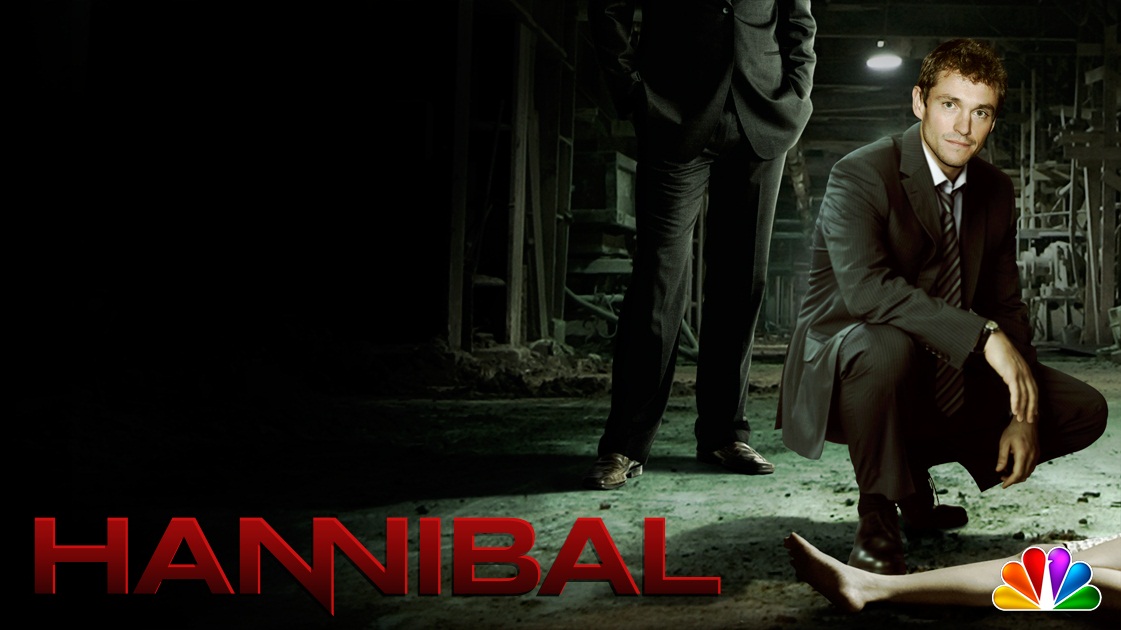
Hannibal takes place well before Lecter has been captured.  The show stars Hugh Dancy as Will Graham, a character we know from the mediocre Silence of the Lambs prequel Red Dragon, where he was played by Ed Norton.  Here, Will Graham is a veritable super analyst, who has remarkable observational abilities, and more importantly a type of perfect empathy which allows him to relate and take the vantage point of even the most psychotic killers.  His abilities have the negative side effect of making him particularly vulnerable to being mentally destabilized, and Dancy does a very good job of seeming on edge the entire episode. We learn he is not a full FBI agent because he couldn’t pass some sort of stability tests but he is lecturing and helping out with random assignments.

His boss is Jack Crawford, head of FBI Behavioral Sciences, played by Lawrence Fishbourne here, and by Scott Glenn in Silence of the Lambs.  Crawford convinces Graham to take some time to help him out with finding serial killers, even if it means subjecting his psyche to serious angst.  Crawford is the level-headed boss who may not have the intuitive smarts of Graham but knows how to manage and direct people, and he’ll probably have a lot on his hands this season overseeing Graham, and the third member of our key trifecta.

This third member is none other than Hannibal Lecter himself.  Lecter is a renowned psychiatrist, as well as a brilliant psyopath,and  is brought in by Crawford to help develop psychological profiles on cases, including one in the pilot involving a cannibal who is kidnapping college aged girls and killing them.

The show’s critical dynamic is the tete a tete between Graham and Lecter.  Graham knows how to see into the mind of criminals, but only at great vulnerability to his own psyche. Lecter, who, without emotions, can’t be emotionally manipulated himself, knows how to push Graham’s buttons, and how to unnerve him. In this first episode, soon after it is discovered that the killer they’re tracking is a cannibal, there’s another killing that seems to fit the profile.  Graham immediately recognizes the work as that of a copy cat, and describes the killer as an intelligent psychopath who will show no pattern, has no feeling, and will likely never be caught.  Only we, the viewers, know that Lecter in fact committed this crime, and that Graham, unbeknownst to himself, is profiling Lecter perfectly (well, except for the never being caught part).  Lecter toys with Graham, but it seems to possibly be at least partly out of respect.  In fact, whether it was Lecter’s intention or not, it was seeing the incredibly wrong copy cat crime scene that allowed Graham to figure out the correct profile for the killer.

We also have to suffer through knowing Hannibal is super evil while the characters keep bringing him on board to help them on investigations, placing him in an ideal position to sabotage their cases. In the first episode, he warns their killer, right before they get to him, giving him a chance to kill his wife and severely injure his daughter.

Hannibal has a lot of procedural aspects.  I would guess, without knowing for sure as I’ve only seen the first episode, that each episode at least initially will involve the investigation of a new serial killer.  I was drawn in more than I usually am by procedurals.  Part of this was perhaps due to the high stakes of psychopathic serial killers, and part may have been due to the cinematic qualities of the pilot. One episode felt more like a suspense film than, say, a CSI episode , and the thirteen episode format might help protect that per episode special-ness more than a longer traditional network format.  I think a successful Hannibal can share aspects of two of my favorite current shows, Sherlock and Justified.  Sherlock has the same case per episode format with a more cinematic feel (it helps that Sherlock episodes are double length) and the same genius investigator type in the lead.  Hannibal looks like what Sherlock might be like if Sherlock and Moriarty were working side by side before they were official arch enemies.   Justified began as a rough procedural but morphed in a more and more serial show. The extended arcs made it significantly better but even the individual procedural episodes were a notch above the average, due to the strong character profiles and style built into the show.

The show is a little gimmicky in the way it shows Graham thinking about crime scenes, as he imagines himself as the criminal, and has him covered and blood and guts as he figures out how the criminal acted.  I normally don’t care for this type of gimmickry, but for whatever reason, it really didn’t bother me here.  Also, Gillian Anderson appears as Graham’s therapist, who tries to warn Crawford off from putting Graham too close to the edge.

Will I watch it again?  Yes.  Again, I normally stray from procedurals, but, if this is in at least part a procedural, it’s certainly not a typical one.   The Lecter – Graham relationship is electric right off the bat, and from the extra-curricular notes I’ve read by Fuller, I think he’ll do well to move the plot along during the seasons, rather than than have Lecter and Graham’s relationship in a perpetual status quo, which is a good thing.  It’s often hard to move a show along when you have something good in the present, because you risk having something worse in the future, but staying in the same place can often be just as bad.  My visceral reaction to finishing the first episode was to want to immediately put on the second, and while that doesn’t always bode well for the long term, it’s always a good sign for a pilot.

Spring 2013 Review: Do No Harm

15 Mar

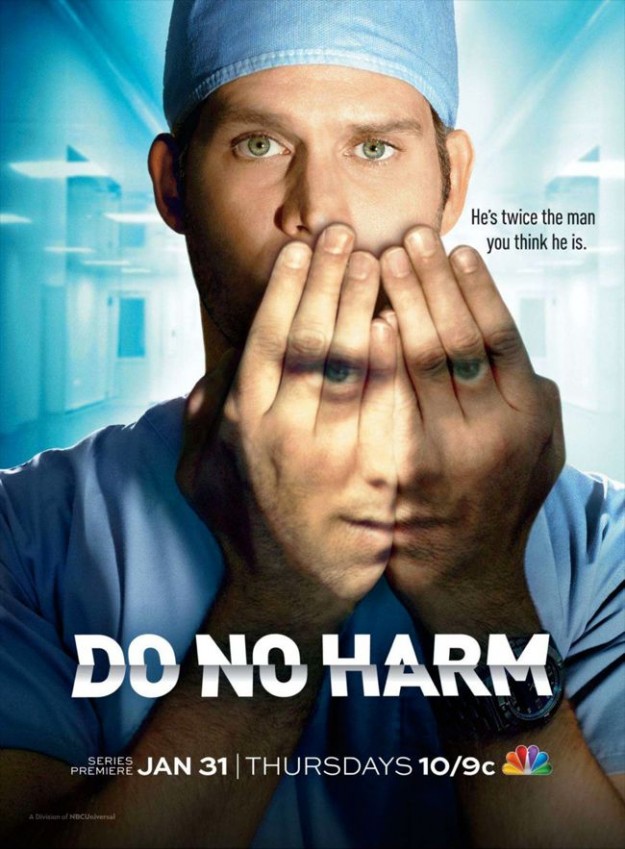
Do No Harm

Do No Harm has already been way cancelled after just two episodes, drawing the worst premiere rating ever for a network drama (some jokester got away with adding to the wikipedia page for Do No Harm, ” (yes, worse than The Mob Doctor!)” to demonstrate how low the ratings were).  Still, we review on, for posterity’s sake, if for nothing else.  Plus, a lot of people worked hard to get this show to air.  The least we can do is reward their effort by watching one episode.

Dual personalities, which are at the core of Do No Harm, have been a handy subject matter for recent failed dramas.  A few years ago, the Christian Slater vehicle My Own Worst Enemy, in which he played a spy who had a chip in his brain which turned him into an innocent who acted as the perfect cover, aired.  Kyle Killen’s well-liked Lone Star was also cancelled after just two episodes, and featured a man living a double life (though by his own choice).  This seems to be something of an obsession for Killen, whose other failed drama, which aired last year, Awake, featured a man who also lived between two different realities – he was always the same, but everything around him was different.

Do No Harm lead character Dr. Jason Cole is a top neurosurgeon who suffers from dissociative identity disorder, or multiple personality disorder.  From 8:25 AM to 8:25 PM every day he’s charming and responsible Dr. Cole, helping patients, taking risks that some members of the hospital brass would rather he not, and charming his colleague Lena Solids (former Law & Order ADA Alana de la Garza), who wants to take their friendly relationship to the next level.  By night however, he’s the sociopathic Ian Price, who lives to wreck Cole’s life, and to take advantage of his money for booze, drugs, women, and whatever else he can find to blow it on (maybe blow?).

For five years, Cole has successfully knocked himself out for 12 hours a day, with the help of an employee at the hospital acting against all policy, supplying him with a special drug.  From 8:25 at night until the morning Cole would simply be unconscious.  Somehow no one at the hospital has ever had occasion to notice that he was available at all during those hours.  However, the drug’s effects have worn off and now Cole is faced with the terrifying reality that his evil twin is back in his life.

Do No Harm is surprisingly uninteresting for a show about a man terrified by his other personality trying to ruin his life and destroy everything he loves.  I just don’t really care what happens.  Cole seems so blandly good, and his other half so viciously evil.  During the episode we basically get the idea that Cole is a pretty amazing dude whose only issue is, well, the big one, of his split personality, but he doesn’t really seem like an interesting guy.I get the whole dichotomy but perhaps some traces of subtlety would go a long way towards making the concept work; if both versions of him were a little more complicated.

In fact the only reason to root for the show is that it gives Samm Levine, who played Neil in Freaks and Geeks, a job.  Levine to this point has been just about the least successful of a phenomenally successful cast, so he could use the work.

Will I watch it again?  No.  Not that there’s all that much to watch even if I wanted to, but there’s not much here other than the hook.  It’s not a bad idea for a hook, but shows that are just about the hook and don’t have strong characters and writing are limited at best.  Again, it’s worth noting for a second that this is another show that is by no means truly wretched, but there’s no reason anyone should waste even half a tear on Do No Harm’s quick cancellation.

Spring 2013 Review: 1600 Penn

11 Mar

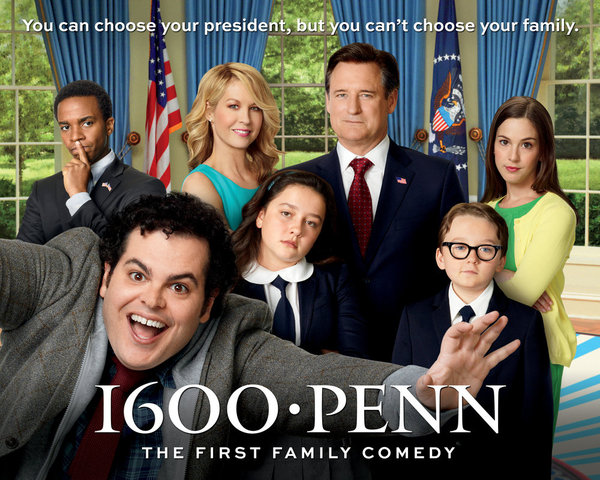
1600 Penn

1600 Penn looked awful in commercials, but it was merely not very good in practice.

1600 Penn is, as the name suggests, a comedic rendition of life in the White House.  The main family and cast members include the father, President Strandrich Gilchrist, played by Bill Pullman (no mention of this could be complete without of course noting that he also played the President in Independence Day), the first lady, Strandrich’s second wife and former campaign manager, Emily Nash-Gilchrist (Jenna Elfman), oldest son Skip (Josh Gadd, a co-creator of the show), daughter Becca Gilchrist (Martha MacIssac, best known as Becca from Superbad), and youngest children Xander and Marigold (Benjamin Stockham and Amara Miller, respectively).

The family’s personal problems are constantly getting in the way of the President’s political goals.  There’s plenty of infighting; Becca still hates her step mom, and Skip is a ridiculous screw up who constantly disappoints his parents by getting into trouble and having to have them, sometimes with the help of the Secret Service, bail him out.  The President likes to win too much that, after a little patriot cheering, he can’t even intentionally lose a tennis match to a Latin American whose support he needs on a crucial vote (played by Miguel Sandoval, who played cock-fighter Marcelino in Seinfeld, and tequila company head Carlos in Entourage).  The day is saved when Skip walks into the room where the Latin American leaders are planning to vote, and Skip drinks with them and unintentionally convinces them to gang up against Sandoval, who apparently has been bullying them for years.

If you can’t tell from the above few sentences, it’s an incredibly silly show.  It’s not particularly funny.  With most of the attempts at laughs, I can see what the show is going for but the jokes don’t really hit.  Josh Gadd is probably the best part of the show, being ridiculously incompetent but kind of likable, but even most of his attempts at being funny are not successful.

Compared to fellow political comedy Veep, 1600 Penn is far more over the top and ridiculous than Veep, which focuses on everyday humor and a bit of satire.  For a show about the President, there’s nothing at all satirical or political about 1600 Penn.  I wouldn’t expect to see any but the most basic jokes about Democrats or Republicans, if that.  While both Veep and 1600 Penn try to create humor out of the contrast of real people’s lives with the majesty of the White House (or the Vice President’s office, but for this point, the same difference), Veep aims for humor out of the mundane, while 1600 Penn attempts to mine the ludicrous not even attempting to resemble real life.  Josh Gadd’s Skip is certainly the most goofy aspect of the show, but he really drives the direction of the show, rather than being the exception.  To give another example, Skip at one point accidentally lights a fire in the White House, while recording a fire safety video, which causes the window to explode and hit a visiting dignitary.  It’s not that this kind of comedy can’t work, it just doesn’t really here.

It’s not a truly terrible show.  It doesn’t make me angry, and it’s surprisingly watchable, in the sense that it doesn’t make you want to immediately get up from your couch mid-episode and turn it off no matter what.   It’s bad enough though that I don’t think there’s any fixing it or making it into a second season surprise.  Even a moderately improved 1600 Penn probably leaves a fair amount to be desired.

Will I watch it again?  No.  I damn it with the faint praise that it’s far better than I originally thought it would be from the commercials, unfunny rather than cringeworthy.  Still, that falls fairly far short of the standard for getting me to watch multiple episodes.

Spring 2013 Review: Deception

8 Mar

Deception

Deception, in five words.  Primetime murder mystery soap opera (quick definition: primetime is not simply a time-the-show-airs issue, it’s an adjective describing the type of soap; priemtime implies a soap that’s a bit classier and less ridiculous (by soap standards, remember, so that’s only saying so much) than daytime soaps).

Now, in longer form.  The premise event of Deception is the mysterious death of socialite and scion of the uber-wealthy Bowers family, Vivian.  Her death appears on its face to be due to a drug overdose, but there are clear signs pointing the police in the direction of murder.  The Bowers family made their millions through the pharmaceutical company currently run by patriarch Robert Bowers (Victor Garber), and it’s a classic dysfunctional rich family fueled by jealousy and greed, which means that everyone’s a suspect.  While the family attempts to mend itself after hearing of Vivian’s tragic death, viewer surrogate Joanna Locasto (Meagan Good) must infiltrate the family to attempt to figure out who the murderer is.  She’s in a unique position to investigate the inter-family dynamics, given that she used to be Vivian’s best friend growing up, when Joanna’s mother worked for the Bowers family.  Vivian and Joanna were BFFs until a falling out about 15 years ago, which is slowly revealed through flashbacks, when Vivian attempted to run away and Joanna, believing she was drug-addled and liable to get herself hurt, tattled to her father, ending their relationship.

Since then, Joanna’s lived her own life as a member of the NYPD, which the Bowers family doesn’t know. With the convincing of her former partner/lover and now FBI agent Will, she agrees to make a return into the Bowers’ lives, ostensibly to grieve Vivian, but with the secret goal of figuring out the murderer.

Suspects include the father and CEO, Robert, son Julian, the bad boy now creating drugs for his father’s company, who Joanna once had an ongoing fling with, ill-tempered older son Edward, who was accused of strangling a woman years ago, but managed to fight off the charge, Robert’s second wife and former secretary Sophia, and youngest daughter Mia.

The investigation turns out to be even more complicated than originally thought when a tabloid journalist who was spying on the Bowers is murdered while waiting to feed Joanna some information, after he relates to her that there are allegations that Bowers’ company is about to put a drug on the market responsible for killing dozens of people in overseas test markets, a drug which was created by Julian.  The episode ends with the dual revelations that Vivian was pregnant when she died, and that she was pregnant once before, right when her and Joanna had their falling out, and that that baby was Mia, who has been posing as Robert and Sophia’s daughter.

Deception is another in the minor trend of thriller prime time soaps started by the minor success of ABC’s Revenge. The incredibly dysfunctional uber-rich family vibe being infiltrated by an outsider who is really an insider which features prominently in Revenge is at the heart of Deception as well.  The feature mystery here is of course the whodunit, and the family members are the primary suspects, though I’d guess there will be more peripherally shady characters entering at some part that could be involved somehow in the plot.

The show wasn’t great, but it wasn’t bad either.  The mystery is intriguing enough, and I”m generally a sucker for a classic whodunit, just not necessary enough to actually watch several hours of TV.  Similar to what feels like the last couple of shows I’ve written about (The Following, The Carrie Diaries), there’s not a ton that makes this show stand out in a crowd, but it’s perfectly respectable in its own right.  I could imagine getting stuck in a rabbit hole of Deception episodes on a Saturday morning on repeats on TNT someday, but it just doesn’t have quite enough to make me place it on my considerably crowded television schedule.  Like most serial dramas, the set up is easy, while the pay out is hard, and the set up here is certainly at least adequate, and honestly, if I heard the the later episodes were excellent and compelling and unpredictable, there’s enough for me in the first episode be interested in coming back to the show, but I don’t have implicit faith.

If Deception does succeed, it will be difficult to avoid the same issue that Revenge faced.  Pace it too slowly, people will get tired of waiting and it will seem needlessly drawn out.  Solve the feature mystery in good time and the writers need to think of something else equally compelling.  Shows like this are exactly why I support the expansion of season-long TV series, American Horror Story-style.

Will I watch it again?  No, I’m not going to.  Honestly though, it’s not a total loser.  It’s not required viewing by any means, but I still haven’t reviewed a truly terrible or even a pretty bad show yet from the Spring 2013 season.  I’m sure it’s coming and I’ve just watched them in the wrong order, but while I’m not going to watch Deception nor tell anyone else to watch it, I’d have no qualms if someone I knew told me they were watching it.  I might even read the wikipedia page later to find out who the killer is if the show makes it that far.

The Sad Decline of The Office

21 Nov

I’ve been reading some Onion AVClub episode recaps about Seinfeld, one of the best comedies of all time, and I’m getting to the last couple of seasons, and while Seinfeld’s last seasons had great moments and some very good episodes, they clearly weren’t as consistent as Seinfeld at its peak, and there’s some very interesting reasons for it, that tv writers would be wise to study.

There’s a lot more to say about the general ends and declines of shows, but that’s for another article.  Today, this had me thinking more specifically of the sad decline of The Office.  I’ve been a consistent defender of later seasons of The Office, but there’s no defending it anymore.   The show is mediocre at absolute best and I’m probably only watching this season because it’s the last, and because I’ve watched the whole show and I still have very fond feeling towards it, which makes its struggles all the more frustrating.  The Office is that baseball or football player who starts struggling as they age, and you convince yourself, that it’s just a matter of time til they start at least resembling a shadow of their former self, and then eventually come the conclusion that they’re probably done (think Jason Bay on the Mets).

What has particularly surprised and disappointed me was how rudderless the show has seemed since Steve Carell and his iconic Michael Scott character left at the end of Season 7.  I had thought of the idea of replacing Michael Scott a couple of seasons early as a way to keep the show fresh and forestall decline, because his character had a lot of inherent limitations (which just makes it more impressive that Carell kept him consistently tolerable enough) but the way the writers handled the post-Carell era make me glad they held on to Carell as long as they could have.  It’s just disheartening that given Carell’s growing film career and the fact that he could have left at any time, the writers couldn’t have cobbled together a better succession plan.

Last season was a total mess, as the writers threw a bunch of ideas at the wall with a frustratingly low percentage of success, like a lousy shoot-first guard in the NBA (Nick Young?).  James Spader’s Robert California was an amusing one-joke character that got less and less funny in every episode he appeared in.

New boss Andy has become an entirely different character that sometimes isn’t even a character, changing his personality to serve the needs of a particular episode, and has been portrayed too often a poor man’s Michael Scott, rather than as his own character.  New character Nellie was just terrible, and increasingly irritating as the season went on.  The subplot involving a random new female character (Jordan?) hitting on Jim completely missed the mark.  The plot involving Darryl trying to get with random warehouse worker Val?  Swing and a miss.  The show said goodbye to Gabe at the end of the season, one of the few highlights of the last couple of seasons.

I, for some reason, had hope for this last season, because knowing exactly how many episodes there are left can often be liberating for a show, even a largely non-serial comedy, just in the ability to put everything out there.  However, if anything, this season has been even worse.  The two replacements for Kelly have done nothing for me and the strange plot of the non-Clark Duke employee slowly establishing a rapport with Erin while Andy acts increasingly erratic I don’t really understand and don’t have any interest inn.  Andy has evolved further into Michael Scott territory, and as much as I’ve always liked Ed Helms, it both makes me appreciate Carell, and wonder why they can’t create a consistent character for Andy.  Jim and Pam just have nothing left; the major plot this year involves Jim wanting to leave work to start a new company with his friends in Philly, but it’s really hard to care.  The show has tried, for some reason, I don’t understand at all (non-refundable contract?) to redeem Nellie, deciding to simply forget completely how irritating and terrible a character she was for her first few episodes.

There’s not to say there aren’t occasional laughs to be found; it’s just that they’re fewer and farther between than ever before.  Erin is possibly the best part of watching the last few seasons of The Office, and Dwight’s ridiculousness holds up better over time than the antics of Jim, Pam, and Andy.  I laugh at these occasional moments when I watch now; but if this was the show I was watching new from the beginning, I have a hard time thinking I’d keep watching.  Anyway, I still hope against hope that the second half of the last season will leave us on a better note, but they haven’t provided much reason to keep watching.

Fall 2012 Review: Chicago Fire

24 Oct

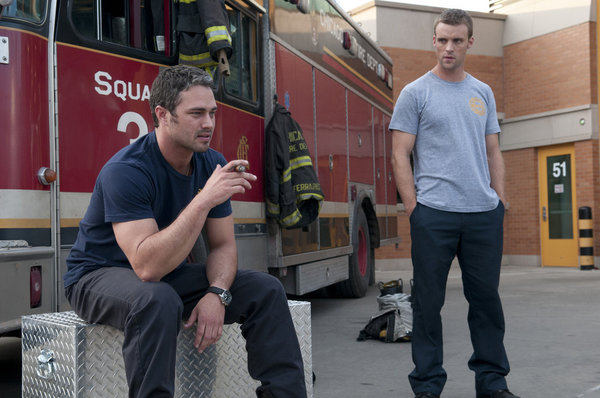
 Chicago Fire (I’d make an MLS joke here, but no one would get it, in fact I’ll spell out Major League Soccer, which has a Chicago Fire team because I think most people don’t even know what MLS stands for) is about a group of firefighters and paramedics in Chicago.  In the first five minutes, we see one of the team die in a fire, and two of primary figures at the firehouse are at loggerheads a month later over responsibility for the death, while trying to live on with their daily responsibilities at work and home.

The rest of the hour is a day in the life the crew.  They fight fires and rescue people, putting their lives on the line every job, while taking the risk that if they make the wrong decision in the heat of battle, it’s on them.  We learn about life at the firehouse and the mostly bonding but occasional infighting that goes on there, between the different cliques,including  the regular firefighters and the rescue squad.  The new guy comes in and the other firefighters show him the ropes, horse around, and have a couple of laughs at his expense.  The revered veteran chief  (played by Eamonn Walker, better known to me as Said from Oz) offers wisdom, and does his best to separate the fighting parties when conflicts arise and unite his men (and women, but mostly men).

Our main firefighter, Matthew Casey (played by House’s Jesse Spencer, who shed most of his hair and his native Australian accent for the role) has trouble at home, as he’s quasi-possibly-separated from his fiancé, (which he hasn’t told any of his friends/coworkers), due at least partly to the impact of his friend and fellow firefighter’s death.

Man, being a firefighter is some seriously heavy shit, but they have their moments of levity as well.  There’s the towering  highs of saving a little girl’s life from a dangerous car accident side by side with the painful lows of another firefighter getting injured and requiring serious surgery, along with the feel good tomfoolery of watching their chief fight in a fire-police boxing match.   Then, just in time, when a fire strikes, the two enemies from the beginning unite in the heat of battle.

We’ve seen this show before, it’s just usually with cops and sometimes doctors, rather than fireman (I haven’t seen Third Watch but I imagine this is similar).  It’s fine.  It is what it is (an irritating expression, but still apt here).  There’s families, there’s hurt, there’s that camaraderie that only comes from being members of the same tribe that puts their lives on the line every day.  We’re meant to feel like we’re getting an insider’s view on the special relationships that go on inside that firehouse and that our emotions are on the line every time they step into a blaze.  There’s nothing that lifts this show above the realm of the generic though, no outstanding dialogue, or artistry, or characterization.

Note:  I keep calling this show Chicago Code, a short-lived cop show from a couple of years ago, that probably nobody remembers, and I didn’t realize I did until I keep calling this show that.

Will I watch it again?  No.  As I said above, it’s fine.  I’m sure some people would like it, and that’s okay. I wouldn’t call it bad as much as I would rather say it just doesn’t stand out.  It’s one of those shows that is exactly what you think it is, and you don’t really need to watch it to know whether you’re going to like it.  It’s more unmemorable than it is good or bad, which is inherently not positive, but compared to many shows, relatively not negative.


April Ludgate is an Asshole

29 Sep

I love Parks and Recreation. It’s one of the best comedies on television, and even if dare I say it may have entered a period of slight decline (Tom and Ann dating reeks of running out of ideas) it’s still great.  So this comes from a place of love, but I have a qualm with the program (well, a couple of qualms, but others can wait for later).

April Ludgate is a complete and utter asshole.  You know, I tolerated it for some time.  I don’t mind her being lazy; I can understand that.  I don’t mind her being cynical and pessimistic and disliking people in general; all understandable.  But what just crosses over the line is she’s out and out mean, and for no reason.  Not like busting someone’s chops, or having a good laugh, but like a serious jerk who no one would want to hang around.  She’s actually nice to Andy, and I understand why Ron would like her, but that’s it.

She’s always been pretty mean to people, and particularly Ann, and I was willing to empathize with that, even though it was completely unnecessary and uncalled for, because of the Andy situation.  What crossed the line for me was when she, at a party, at her, Andy, and Ben’s place, threw Chris’s car keys in the garbage.  This is not fucking funny or okay.  This is they keys to his fucking car.  Taking someone’s car keys for any reason other than he or she drank too much is totally unacceptable, but if she took them, let him look for them for a minute, and then gave them to him, I’d grant her some leeway, as maybe a good laugh.  But, no she throws them out.  How the fuck is he going to get home?  So basically he’s stuck with no keys, can’t get into his car and home, thinks he lost them, which might be the worst part of all, and has to call a locksmith, which costs money, to get back in, all because April thought it was fucking funny.  I’m not saying she has to like Chris.  But that’s more than just a mean comment or a snide remark, that’s an asshole-ish action.

An even worse and more line-crossing action occurs in the most recent episode, the second of the fifth season (“Soda Tax”). Ben was nice enough to bring April along with him to work for him in Washington D.C.  No one made her go, she had a job in Pawnee, and she absolutely didn’t have to accompany him.  There was no pressure on her to go; it was completely her choice.  It was nothing but an extremely generous gesture from Ben who thought she might enjoy something in a busier city which could be more intellectually engaging, which again, I point out, she could have easily turned down at no cost.

Ben realizes that his college interns don’t respect him, and unfortunately, it’s largely out of his control because they’re well connected.  What prompts this realization is partly their shoddy work product, but also a caricature of Ben with a stick up his ass posted on the wall of the office.  Ben is naturally appalled by this totally uncool picture and tries to bond with the well-connected ringleader intern to curry his good favor.  Eventually he gives up trying to be liked after seeing a second caricature, even after he worked so hard to be cool.  Ben tells the intern to just do his work, and please stop making caricatures.  Unfortunately, it turns out that the intern didn’t draw the caricatures at all.  April did.  This reveal comes right after Ben explains that April is not, as is commonly believed in the office, his daughter, but rather his friend.  Some friend.

Yes, April, who Ben did a great favor to by taking along to Washington .  Now it’s bad enough that she gives absolutely no effort and is of no help at all to Ben in DC, even constantly giving him guff.  But oh no, doing nothing is not enough to fuck over Ben, who is desperate to succeed in his dream job and is working really hard.  No, she has to actively sabotage him, making his entire work environment poisonous and stabbing him directly in the back.  It’s bad enough to be unnecessarily and unprofessionally lampooned by employees, but by one you brought with you who is supposed to be your ally and who you consider your friend.  That’s pretty unforgivable.

And then at the end, she all of a sudden agrees to give 15% and is helpful, using her powers for good to try to intimidate the unruly intern and that’s supposed to fucking make up for it.  I’m sorry.  Too fucking late. Ben may forgive her just like that, but I don’t.

It’s just so crazily mean spirited.  Chris, at least, and I’m not defending the stealing of keys, but he can be annoying.  Ben has never been anything but kind and helpful.  You cross Adam Scott, you cross me.  That’s just the way it is.

Again, I tried to give her the benefit of the doubt – her laziness and bad attitude, and her general dislike of people, I’m plenty willing to tolerate.  She still has lots of funny moments.  But it’s gone too far and there’s basically only one inescapable conclusion, when you try to actively sabotage someone who has been nothing but generous towards you.  April Ludgate is an asshole.