Tag Archives: NBC

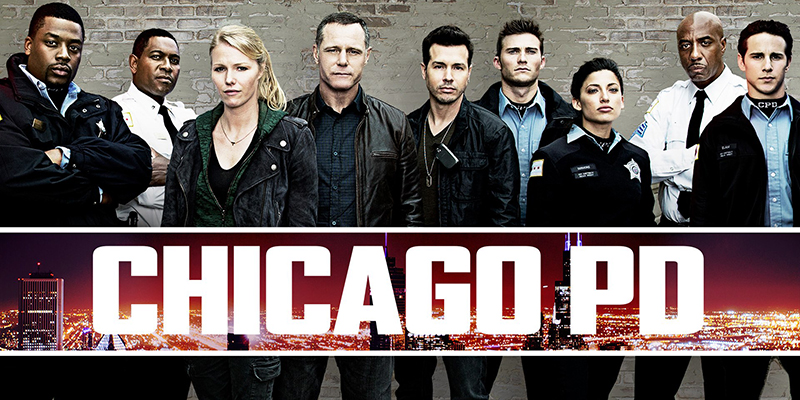
Spring 2014 Review: Chicago PD

3 Feb

Members of the PD

I need to start by saying what an awful name for a show Chicago PD is. It’s a spin-off of Chicago Fire, a name that had two meanings – the Chicago Fire Department, which the show is about, and the Chicago Fire of 1871, which wiped out much of the central city. I’m fairly confident with absolutely no evidence that that’s why the show is set in Chicago. Chicago PD, well, is about the Chicago PD. That’s it. There’s no other meaning. I suppose it’s accurate, so there’s some small credit for that, but still; try harder.

Based on my knowledge of the show and the people involved, I was expecting a mediocre show in the vein of my experience with the pilot of Chicago Fire.  Instead I got a pretty awful show that was significantly worse than my single Chicago Fire viewing.

Like Chicago Fire, Chicago PD is not a procedural as such, in which there’s a single case an episode that the whole team works on. Rather, it’s a show that has single episode elements, but features multiple-episode arcs, A and B plots, and gets to know the personal lives of its characters.

It was the opening that set me in the direction of disliking the show right from the get go. A man is in the back of a car, forcing the car’s driver to pull over in a shady part of town out of view of anyone else. Now, I’m thinking, as the show’s writers must realize, that the guy in the back of the car is a criminal and he’s going to do something bad to the driver. Nope, that’s not the case at all. The backseat driver is our main character cop, Sergeant Voight, and he threatens the driver, a drug dealer, beats him up, and puts a gun to his head to get the name of another drug dealer. He then exhorts the dealer to stay out of Chicago, literally using the words, “Stay out of my city.” If I didn’t hate this character from the insane extralegal actions he took which were ridiculously unethical and uncalled for, and could endanger any convictions he later hopes to get from the information the driver reveals, I would have hated him just for the “Stay out of my city” line.

There are other aspects I didn’t like about the show but this is the biggest problem in a nutshell. I absolutely despised this primary protagonist, Voight, who is the sergeant for our primary team and is supposed to be some sort unorthodox, renegade hero; you know the kind, who doesn’t play by the rules but gets things done.  Please, television, enough with that character and more cops that, like real cops, largely play by the actual rules so they can get actual convictions that don’t get laughed out of court. Beyond just that though, he came off as an aggressive, violent asshole.

Chicago PD is emotionally maniupuliative, or it wants to be, but it’s not even good at it. There’s two major moments at the end of the first episode that are supposed to be heart-wrenching but didn’t work, and more so than just because it’s the first episode and it’s hard to feel anything for characters during a first episode.

Voight shows the soft interior under his gruff self when he helps an inner city black youth who is too deep in the drug trade and wants out when he realizes how dangerous it is. In exchange for Voight’s kindness, the boy gives up a crucial piece of info about another drug dealer after convincing himself out loud to Voight that what he’s doing isn’t snitching, so it’s okay. It’s certainly not for me to say what’s realistic and what isn’t, but it seems ham-handed and it definitely seems, if not racist (which I don’t think it is) than, well, an awkward simplistic scene where this kind white authority figure is simply helping out this poor black youth, and everything’s now okay.

People who write Chicago PD, please watch The Wire. Everything that’s wrong with your show can be found in the differences between the two. Now, obviously very little is going to match up to The Wire, and not every cop show has to follow everything The Wire does well to be good. Still, in every way that The Wire largely rings true, doesn’t feel like television, is complex, and interesting, and well-written, is everything Chicago PD is not. It’s simple TV that just feels crazily obsolete in a post-Wire universe. Even the bureaucratic battles between two units which features prominently in the first episode of Chicago PD feels trumped up, unnecessarily loud, and false. There are heroes and villains, and really nothing in between, and yes, it’s not entirely fair to base characterization generalizations on one episode, but everything I saw about the way Sergeant Voight’s bad behavior seemed to be treated by the show and by the other characters told me more than I needed to know.

Will I watch it again? No.  I think there are too many cop shows as it is, so cop shows have to be even better than my normal bar to draw me in. This one not only doesn’t come close, it’s insulting and vaguely offensive.
Fall 2013 Review: Dracula

11 Nov

The D is for Dracula

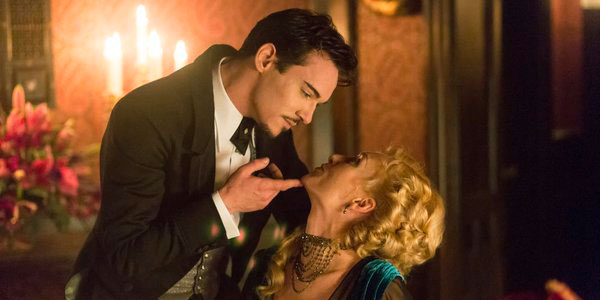
Irishman Jonathan Rhys Meyers, best known on television as Henry VIII in the Tutors, plays the namesake British vampire in this extremely loose television adaptation of Bram Stoker’s Dracula. After being woken from a years (or possible decades, it’s hard to tell) long sleep in the first moments of the pilot, Dracula decides to masquerade as an American industrialist, complete with a terrible yahoo-ish American accent. He’s got a trusty assistant named Renfield, who helps conduct his affairs; how he came to know Renfield and enlist him into his service is unclear. We know that he’s putting on the American industrialist act but we not why until the second half of the episode where the crazy conspiracy underpinnings of Dracula began to come to the fore.

Dracula’s primary goal is revenge on the secret Order of the Dragon. The Order of the Dragon is a powerful organization which has apparently been committing various clandestine acts for centuries, with the killing of vampires being at least one of their duties. We know they’re a big deal because a couple of their leaders let us know that they offhandedly concocted the story of Jack the Ripper to keep the vampiric truth behind some London prostitute murders under wraps.

Dracula holds a huge gala to introduce himself, as the American Alexander Grayson, to fashionable society with the hope of bringing out members of the order on which he wants revenge so badly. The order is composed of seemingly normal upper class Britons. In addition to killing vampires, the order retains its strength through controlling wealth by way also sorts of trading schemes, which Dracula wants to attack, while also attacking the members of the order physically and you know, doing the whole vampire biting of flesh sucking of blood routine.

Also attending his gala is an ambitious journalist, Jonathan Harker, who is accompanied by his lady friend Mina Murray. Both the names are recognizable as characters in the classic Dracula story though it doesn’t seem like this version feels particularly obliged to hew too closely to the original. As we let the crazy continue to seep out little by little over the course of the episode, it turns out that Mina is a reincarnation of Dracula’s long-dead wife who just so happened to be killed by members of that same sinister Order of the Dragon.

There’s no obvious rooting interest; Dracula is our protagonist but he kills at least a couple of people mercilessly in the first episode. While the Order of the Dragon does seem like they could be pretty evil, it’s not clear Dracula is any better except relatively. Journalist Harker may be the closest the viewer has to an analogue, though it’s unclear how quickly and how much he’ll learn about all the underlying conspiracies in the next few episodes.

In terms of new TV horror shows, everything Sleepy Hollow is, Dracula isn’t, and vice versa, but in a good way for both. Let’s call Dracula a British take on Sleepy Hollow; where Sleepy Hollow wears its insanity on its sleeve, Dracula keeps its crazy repressed below a prim and proper Victorian exterior. It’s not as straight forwardly outlandish as Sleepy Hollow, but it’s deeply embedded with centuries old conspiracies and all manner of supernatural. The combination of crazy conspiratorial and repressed and tense gothic kind of works. Dracula is largely devoid of humor but it feels like horror spooky and over the top rather than weighed down with seriousness the way more important dramas can (Boardwalk Empire and Homeland for example). The whole Order of the Dragon is a little goofy not quite enough to not laugh at. It’s, like Sleepy Hollow, as if the show knows is winking with its seriousness; even though what’s on screen is by all accounts completely earnest, viewers aren’t meant to take it too seriously.

Maybe Dracula in an odd way is the true successor to ABC vengeance soap Revenge. Like Emily Throne, Dracula appears to have come back in an unrecognizable form years later to seek revenge on a group that harmed someone that he loved. Of course, it’s not the attempted carbon copy of Revenge that several of the shows ABC paired with Revenge were (Betrayal, Deception), but the gothic horror setting is as good a home for some soapy behavior as the high class / low class setting of the modern day Hamptons. After all, what are both the Victorian era and Dracula about if not repressed sex?

Will I watch it again? I might. It’s not top tier, so I probably won’t get around to if I do until at least the initial torrent of fall television has slowed down, but I liked it a lot more than I thought I would and I was honestly intrigued. The plot may not have been the most original, but the new take on a gothic vampire story felt strangely fresh for a tale that’s been told in one way or another so many times.

Fall 2013 Review: Welcome to the Family

28 Oct

I want that panda

Yes, I know, this is my first review of an already cancelled show. There will be more. That’s just how it goes sometimes. Every show that makes it to air deserves the dignity of being thought about for one half hour.

Welcome to the Family is a very much in the wanna-be Modern Family vein, as NBC attempts to imitate ABC’s fairly successful brand of comedies . One way in which Welcome to the Family mimics Modern Family’s approach is by starring a big family which is not normal in the traditional nuclear family way, but by portraying abnormal as the new normal approach. In this case, it’s the merger of two families by an unlikely marriage. Mike O’Malley is Dan and In Plain Sight’s Mary McCormack is his wife, Caroline. They’re thrilled that their hard-to-control not-the-sharpest-tool-in-the-shed daughter Molly somehow made it to high school graduation and is about to go off to Arizona State, letting them have some valuable them time, getting in shape and having sex again, etc, etc. Meanwhile, Miguel and Lisette are thrilled that their son Junior is about to graduate high school as valedictorian and be off to a much deserved spot at Stanford. Everyone’s plan changes, however, when it turns out that Molly is pregnant by way of Junior, her boyfriend, and they decide to keep the kid and stay home to raise him rather than travelling to school, irritating both sets of parents who were look forward to their kids going away for different reasons.

This situation is exacerbated by the fact that Dan and Miguel had a run in earlier in that same day that did not end well. Dan brought a coupon for a free boxing lesson to Miguel’s gym, which Miguel refused to honor because he thought Dan was just going to waste his time and never come back (let’s note that Miguel is clearly in the wrong here – no one made him put out the coupon – that level of customer service is truly appalling and I hope Dan writes a terrible yelp review). So while the son and daughter love each other, the two dads hate each other, and the moms are just trying to make everybody play nice while being stunned by the entire situations. When Junior and Molly decide to get engaged, the families realize that like it or not, they’re going to have to get a long if they want to be part of their children’s lives.

Welcome to the Family is a thoroughly mediocre show.  A note about mediocre shows before I go on, though.

I don’t want to sit around defending a mediocre show, but when you watch every new network television show in the course of a month you get to really know the differences between the really bad shows and the simply mediocre.  In this context, mediocre shows don’t look that bad, not because they’re any better, but because you realize just how difficult even mediocrity is to achieve. It’s a surprisngly high bar. Especially for comedies. It’s much easier to make a mediocre drama than it is to make a mediocre comedy. Most dramas are at least vaguely tolerable, but many comedies are not.

Welcome to the Family is certainly of the mediocre rather than the truly terrible variety.  It’s surprisingly well meaning. The characters are mostly likable, and while the son and daughter are a little cartoonish – the daughter in particularly is disturbingly empty-headed – it’s largely amusingly so. I didn’t really laugh much, but I my face creased into a slight smile a few times in the episode. Mike O’Malley has grown on me over the years and was one of the best parts of Glee during the brief period I was still watching Glee for some reason. The acting is competent, the premise is fairly sound and the writing is certainly not cringe-inducing.

Is it funny? Well, no. It misses the mark. Just because it’s not so bad doesn’t make it good. Some comedies are good without being funny, because of the excellent characters, writing, filmwork, or plot but while there’s nothing wrong with it, none of those pieces are incredibly compelling in and of itself. If it was funny, it’d be good, but there’s not a whole lot going on that would make it worth watching without the humor. Oh well.

Will I watch it again? It’s a mediocre show, not a terrible one. There’s really no reason to return to the show but I’m glad I watched one so I can give it credit for the mediocrity it managed to reach.

Fall 2013 Review: Sean Saves the World

25 Oct

Sean saving the world

Sean Saves the World stars Sean Hayes as a gay single parent. A show starring a gay single parent is not nearly as groundbreaking as a gay main character was on Will & Grace, the show on which Hayes originally gained fame, and that’s a good thing.  It’s a great thing that a gay single parent doesn’t even move the controversy meter much anymore; there’s none of the uproar from conservative affiliates pulling the show from their stations en masse.  I’m sure the real fringe doesn’t like it, but the vast vast majority of America couldn’t care less. What’s more remarkable about Sean Saves the World is that its featuring a gay single parent is really the only modern aspect of the show.

Sean Hayes stars as well, Sean, a single dad, who now has full custody of his 14-year old daughter after her mother moves away to take a new job. He wants to be the best parent he can be, and his stressed about his lack of full-time parenting experience. Luckily, he has the help of his overbearing mother, played by Linda Lavin, who starred as Alice in Alice some years ago. All that’s getting in the way of his planned daddy-daughter post-work bonding time is his new cartoonishly terrible new boss played by former The State member and Reno 911 veteran Thomas Lennon who specializes in cartoonish over the top characters (sometimes for better, sometimes for worse). Sean is continually stressed in his attempt to lead his coworkers and succeed at work while making time for his daughter.

Sean Saves the World is a sitcom in the classic, old-fashioned vein. It’s a sitcom with a capital S. A Sitcom. . Sean Hayes would be an absolute star in the days in which Sitcom stars were king, an era that didn’t end that long ago. Sean Saves the World immediately feels like a Sitcom in format with its laugh track and multiple camera set up, but even aside from these basic background factors, Sean Saves the World buys into every part of the formula that went into making those old Sitcoms.  The humor here is based on the humor that inspired those Sitcom. There’s no fast talking or quick cuts or subtle jokes and looks that require multiple viewers to really appreciate.  There’s blatant, obvious laugh lines, followed by long pauses.

Compared to small s sitcom acting, Sitcom acting relies on loud unsubtle gestures and extreme looks which last an inordinate amount of time to make sure every last viewer has seen them. If sitcom acting is more similar to film acting, Sitcom acting is akin to theater acting. Every joke has to be accentuated to make sure the audience gets it, every facial expression has be to clear and overwrought so that even the viewers in the far back rows can get the idea.  Every bit of physical comedy is overplayed so you know exactly what’s coming next. At one point in the episode, Sean is trying to escape his work through the bathroom window so that the boss doesn’t see him leaving. He steps on some furniture to help him reach the window. The second he gets up on that furniture it’s clear that the furniture is going to break while he’s stepping on it, but the audience has to wait until Sean’s finally making progress for the furniture to break and Sean to fall and injure himself in a comical manner. There’s plenty of shoddy wordplay which is a staple of any old fashioned Sitcom, overwritten dialogue that might instantly seem clever, but really isn’t. It’s borscht belt humor, hamming it up left and right.

If I was reviewing Hayes’ ability as a Sitcom actor, well, he’s a pro. His mother is also. They’re both quite good at what the show is clearly going for, whether it was their decision or not. Unfortunately that style just leeches the humor out of every situation. We’re a long way away from the domination of that era, when there were three networks and those were the only comedies on television and I don’t ever want to go back.

Will I watch it again? No. It’s quite good at being something that I don’t care for at all and not good at anything I like.  So, in short, I don’t like it, it’s not funny, and I’m not going to watch it again.

Fall 2013 Review: Ironside

18 Oct

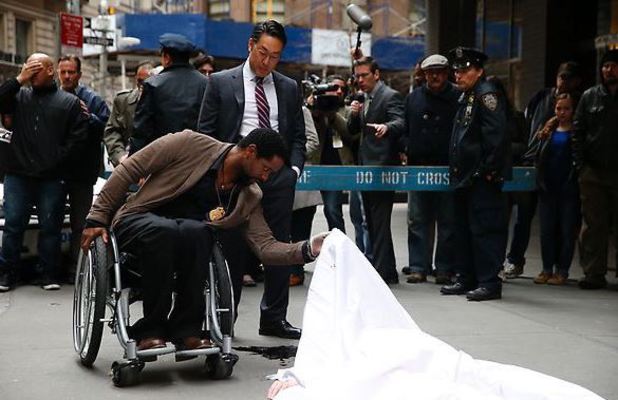
Bob Ironside Robert Ironside is a detective who life was dramatically altered after he was accidentally shot by his partner a couple of years before the show takes place.  He was paralyzed and now resides in a wheelchair. He also runs a special squad of hand-picked detectives who take on select cases.  Somehow through a lawsuit Ironside got the right to choose this detective squad, and this is mentioned but not really explained as well as which cases he gets, though it’s not particularly important.

Ironside is a remake of a ‘60s show starring Raymond Burr, with a similar premise, and I do want to at least mention how ridiculous it is that a guy in a wheelchair just happens to have the name ironside.  I thought it was a nickname at first, but it’s not. Whoever thought that up must have thought they were really clever. Ironside, as you might imagine, in an unconventional cop who plays by his own rules.  He doesn’t believe in the ordinary rules that govern most detectives. He’s learned a lot from having to deal with being stuck in his chair. I wish I had kept track of how many times he talks about how he sees life differently from his new vantage point, but it was several, both figuratively and literally. The most blatant example is when his superior asks him how he sees a gun hiding under a pillow, and Ironside answers, “I got a different view of the world from down here” in the most literal sense possible, and it felt like his boss only asked the question so Ironside could deliver that answer. (I vastly wish he had instead said something like, “My line of sight is significantly lower because I’m sitting in a wheelchair,.”).

Ironside frustrates his immediate superior by constantly refusing to follow rules, which seems like it should be a bigger deal than Ironside makes it out to be.  In the first scene, he blatantly disregards procedure to try to persuade a suspected perpetrator to reveal the location of a little girl he thinks the perpetrator kidnapped. When his by-the-book superior reams him out for basically destroying any legal case they’d have against the offender by not reading him his Miranda rights correctly, Ironside points to the fact that his methods worked, but that misses the point completely. It’s a seriously disturbing attitude to have that a positive result justifies a corrupt process. Ironside as a show or a policeman is not particularly concerned with the profits. In the eyes of the show, what he does is a cool, badass thing to do to a terrible a criminal who shouldn’t have any rights anyway, and if there was any question at all, they were answered when Ironside turned out to be right. Ethiical and moral questions are far outside of Ironside’s purview.

After all, he’s not the same cop he was before the injury,  As mentioned, he sees things different now physically and metaphorically and isn’t particularly worried about treading on either criminals or his superiors in his pursuit of doing things his way, which is the right way. There are many shots of Ironside thinking, either as he sifts through evidence or while he’s at home just sorting the entire case out in his head. He comes up with intuitions and forces his team to think differently, outside of the box. They’re his proteges, and while he frustrates them with his attitude on occasion, they all seem to realize they’re working with a special unorthodox mind from whom they can learn.

Part of the episode deals with the sad state that Ironside’s old partner has fallen into, full of grief due to his accidentally shooting of Ironside.  Ironside is handling it a lot better and is frustrated with his ex-partner’s inability to deal, even though Ironside was the one who got shot. I’m not really sure where this plotline fits in the show. It seems like an attempt to imbue Ironside with more emotion than is present in a typical police procedural. It just feels off and out of place though. Toward the end of the episode is a scene of his former partner attending an AA meeting, where Ironside watches from afar briefly, before rolling away. There’s supposed to be some sort of meaning here but I found it difficult to care.

There are also couple of strange allusions to how much of a ladies’ man Ironside is, which it felt incredibly out of place in the episode. At the end he gets together with a woman who may or may not have been the woman he was with earlier in the episode.

Overall, the show felt disjointed, cliched, poorly thought out, humorless, over the top, and, well bad.The more I thought about it the more I changed my opinion of the show from merely a below average police procedural to, well, a much below average police procedural. At least CSIs and NCISs have a sense of self-aware humor about their tropes which Ironside badly lacks.

Will I watch it again? No.  It’s a police procedural, so I wouldn’t watch it anyway, but it’s a bad one at that. I’d watch CSI or more likely Elementary or The Blacklist if I really want to watch one.

Fall 2013 Review: The Michael J. Fox Show

16 Oct

Michael J Fox

The Michael J. Fox Show tells the tale of Mike Henry, a legendary New York local television newsman who retired due to Parkinson’s disease with the added benefit of spending more time with his family. He misses work and his family is getting sick of him being around all the time, waking them up early and bothering them in other ways. Thus, his wife and his old producer conspire to convince him to come back to work.

His family consists of his loving wife, Annie (Breaking Bad’s Marie, Betsy Brandt), his Cornell drop out college aged son, Ian, his teenage daughter Eve, his youngest son Graham, and his sister Leigh.  Characters at work include his veteran producer Harris (The Wire’s Wendell Pierce, better known as Bunk), and his new young, nervous, segment producer Kay.  The characters are not cookie cutter outside of the extremely obnoxious Aunt Leigh, who is the feisty single middle-aged women constantly striving to act and look younger.  She could get real tired real fast; I wanted her to go away in just about every scene she was in.

In a lot of ways, the Michael J. Fox Show is admirable.  It starts with the classic family sitcom model which reigned supreme on television from the 1950s to the 1990s and largely updates it to get with the 21st century.  There’s no laugh track, the dialogue is quick without those awful long sitcom pauses, and the characters, the aunt aside, are not ridiculous cartoons.  In addition, it brings the actual warmth and love that were at the heart of traditional family sitcoms, that still resonate even when everything else feels horribly dated in those shows. The family actually seem to genuinely like one another. Michael J. Fox is already a larger than life television personality that many of us feel like we saw grow up over 30 years on television, and making him a local news anchor smartly captures that angle of Fox; regular New Yorkers feel like they know Fox’s character in the same way. The show does a good job with its handling of Michael J. Fox’s Parkinson’s disease; we know it’s going to be used for good-natured humor immediately, with a handful of jokes about Fox’s condition in the first episode. Also, I’ll award the show extra points for actually being filmed in New York, which does make a difference.

Unfortunately, though, for all these positive qualities, the problem with the Michael J. Fox is a deceptively simple one. If the jokes were funny, the show would be good. I know that sounds like the most obvious diagnosis for a bad comedy ever, but it’s really not.  Most bad shows have something wrong in their DNA that goes well beyond the jokes not being funny – the structure is broken.  The cast is bad, the laugh track, the look of the show, the tone – the whole idea behind the show is broken deep within its foundation.  That’s not the case here.  The idea is solid, the characters, outside of the wacky aunt, are well-built, the acting is good, the look and feel are fine.  The jokes are read correctly and given room to breathe.  They’re just not funny jokes. Someone needs to go down this script, even keep the same overall structure, and just tweak the dialogue all over the place.

I was expecting another lazy CBS-like effort with, if not a laugh track, tired characters and tropes. The Michael J. Fox Show isn’t that which is absolutely to be praised.  Now, if it could only take that last step and be funny, there’d be a really good show here.

Will I watch it again? It was better than I thought it would be.  Still no. The blueprint is there for this to funny, but it isn’t now. It’s close but not close enough.

Fall 2013 Review: The Blacklist

25 Sep

The Blacklist!

In The Blacklist, which sadly does not refer to the annual survey of hot unproduced scripts, James Spader stars as an infamous criminal. He’s known as the Concierge of Criminals because he plays a middleman between criminals, matching them up and helping them get what they need.  In the first scene of the pilot, he walks into the FBI, turns himself in for an unknown reason, and agrees to help the FBI catch certain super top secret criminals on his list (this is the titular black list). These are criminals the FBI has wanted, and some they don’t even know about, and he’ll do this in exchange for certain concessions and conditions.  The most important and strangest is that he insists that he only deals with Lizzie Keen, an absolutely nobody of an agent, who was supposed to be at her first day working for the bureau in DC after a stint in NY when Spader turns himself in.

In the first episode Spader helps lead the police to a dying terrorist who is planning on kidnapping a general’s daughter (which he does) and using her as a bomb to blow up part of the DC zoo (which he fails at).  Spader at one point escapes police custody with the help of an ally at the hospital. It seems like any person at any time might actually be working for Spader. The point here, which is made a couple more times in the episode, is that Spader is cagey and connected and always has a plan. Throughout the episode, it’s unclear exactly whose side Spader is on, as he helps certain criminals, communicates with others, and then thwarts the ones he earlier helped using knowledge from other criminals.

Somewhere along the line there a smart decision was made which is at the center of The Black List.  Someone decided to have James Spader do what James Spader does best.  I’m not sure whether the idea was to create this slimy character and realize James Spader was the perfect actor to play him, or to cast James Spader as an ambiguous villain/anti-hero and build a character around him, but either way it was the choice that is probably going to make The Blacklist a successful show. James Spader is a great actor, but like the large majority of good actors, he excels particularly in a narrow sphere. For him this role is smug, slippery, and sleazy but competent.  Spader’s character Raymond Reddington hits all of these attributes, though that’s the only time I’m going to call him by his character’s name because the character simply subsumes into Spader, the actor.

At its core, The Blacklist is a procedural. In every episode, Spader will probably pull a new criminal off of his black list and give extremely cryptic tips to help Lizzie and the rest of the FBI follow along and catch the perp. There’s likely to be more serial elements than most procedurals, largely because the premise is much more of a mystery than most procedurals (Law & Order and CSI didn’t start out with obvious questions that needed to be answered).  There are very basic questions that have to be answered at some point.  Why did James Spader turn himself in?  What’s in it for him?  What’s with his obsession with Lizzie Keen? What’s up with Lizzie Keen’s husband, who we learn has a whole box of passports and is almost certainly not who she thinks he is?

For some reason, there have to be other main characters besides James Spader.  Lizzie Keen, played by Meghan Boone, is fine; she’s the young up-and-comer who, even though less experienced, is a step ahead of the rest of the staid-thinking FBI agents.  Spader prods her on, and they have kind of a Hannibal Lecter – Clarice Starling relationship, as he tries to get under her skin through grilling her in-depth about her past which he somehow knows better than the FBI does.  Compared to Lecter though, he’s far less crazy and far more practical.  Everything he does seemingly has some sort of reason behind it which we might learn in time.

Diego Klatenhoff, who played Brody’s former best friend in Homeland, plays the FBI agent who was in charge of Spader’s case. Klattenhoff seems to have the talent of being the most forgettable part of any ensemble he’s part of.  His character seems so far to only play the role of veteran FBI agent who Lizzie Keen is already sharper than. The other main cast members are Keen’s husband, who obviously has something shady going on, as alluded to earlier, and the boss in charge of the FBI team, who we don’t see a lot of in the first episode. His only role is to be the official who gradually accedes to Spader’s demands.

The Blacklist shares a lot of general procedural tropes.  It’s not the most exciting or realistic or mind-blowing series.  I doubt it will ever be a must watch or be as complicated or thought-provoking as the best shows on television.  What it does have is James Spader and a fairly action packed and compelling set up.  It’s a new twist on a familiar format, and that’s not worth everything but it is worth something.  How NBC stole this show that would have fit right in at CBS I’ll never know. The mystery behind Spader gives the show more room to build in a serial fashion than most procedurals, and I actually found myself curious about these questions watching the show, which is generally a good sign.

Will I watch it again?  It’s not a priority, but I might.  It’s a procedural, a genre which is generally not my cup of tea, but there’s at least enough of a serial storyline, James Spader is great, and for its genre, it was impressive out of the gate.  Anyone who likes this type of show will like The Blacklist.

Fall 2013 Previews and Predictions: NBC

13 Sep

NBC

(In order to meld the spirit of futile sports predictions with the high stakes world of the who-will-be-cancelled-first fall television season, I’ve set up a very simple system of predictions for how long new shows will last.  Each day, I’ll (I’m aware I switched between we and I) lay out a network’s new shows scheduled to debut in the fall (reality shows not included – I’m already going to fail miserably on scripted shows, I don’t need to tackle a whole other animal) with my prediction of which of three categories it will fall into.

These categories are:

1.  Renewal – show gets renewed

2.  13+ – the show gets thirteen or more episodes, but not renewed

3.  12- – the show is cancelled before 13)

NBC, surprisingly enough has been making slight progress over the last couple of years while people forgot to check on them because they were so far in the basement.  Their biggest new hit is reality show The Voice, but they’ll hope one of these new shows will bolster their line up.  Will they?  Let’s take a guess.

The Blacklist – 9/23

Spader is on The Blacklist

No network, aside from maybe, maybe ABC with Agents of Shield is pumping any new show this year as much as NBC is pumping The Black List.  James Spader seems perfectly cast a slimy mega-criminal who turns himself in for some mysterious reason to the government, agreeing to help them catch other mega-criminals in exchange for some sort of deal which includes that he only talks to one young female agent.  If it works, it could be the best CBS procedural in ages. In theory, he’ll help catch a new criminal every week while many a long term plot develops about why he turned himself in to begin with.

Prediction: Renewal – NBC, a network in need of a hit, has put all of its promotional muscle behind The Black List, and they claim viewers in focus groups loved it beyond belief.  Even if it’s not a huge hit, they’ll take it.

The Michael J. Fox Show – 9/26

Fox is The Michael J. Fox Show

Michael J. Fox portrays a legendary local news anchor who retires, like Fox himself, because of Parkinson’s disease, but then after driving his family and himself crazy in retirement, decides to make a return. Fox’s wife is played by Breaking Bad’s Betsy Brandt and his boss is played by The Wire’s Wendell Pierce.  Fox is a certified TV legend but the show does not look good. It doesn’t look historically bad, or worst sitcom of the year bad, it just looks generically mediocre, like a sitcom that should have existed two decades ago and not today.  It’s unfortunate because it’s hard to not root for Fox.

Prediction:  Renewal – after the Blacklist, I was almost arbitrarily deciding to pick a second NBC show for renewal, and when in doubt I go with the star power of Fox, who everyone loves, even if his show isn’t very good.

Ironside – 10/2

Underwood is Ironside

Blair Underwood will probably not channel original Ironside actor Raymond Burr too much in this remake of a ‘60s show about a detective in a wheelchair.  Ironside doesn’t play by the rules; he makes his own, and so on and so forth.  You will probably be able to watch five minutes of this show or less to realize exactly how it goes.  The superiors will be annoyed by Ironside now and then, as he’s tired of their conventional thinking and bureaucracy, but dammit, he’ll get results. The police procedural Ironside is yet another sign of NBC imitating CBS.

Prediction: 13+ – It looks pretty generic, which in this case, means I’ll take the middle ground, and go full season but not second.

Welcome to the Family – 10/3

O'Malley is Welcome to the Family

Every network has a limited amount of time and money for promotion, and every year, some shows, like The Blacklist, get promoted endlessly, while some shows, like Welcome to the Family, get more or less entirely ignored.  Mike O’Malley, who has grown on me over the years, plays the father of a recent high school graduate who gets knocked up by her high school boyfriend (a Latino, no less!), whose father O’Malley does not get along with.  The kids decide to make a go of it, meaning the families have to try to make a go of it as well.  Wacky hijinks ensue, with the potential for the occasional culture clash as a backdrop.

Prediction: 12- Maybe you’ve heard of some of these shows, but unless you pay really close attention you probably haven’t heard of this one, hence the lack of faith.

Sean Saves the World – 10/3

Hayes is Sean Saves the World

Sean Hayes juggles a judgmental mother, a teenage daughter, and a horrible boss, already before his life gets even more difficult when he gets full custody of his kid. Wacky Reno 911 actor Thomas Lennon plays his boss, while Linda Lavin plays his mom.  Was TV really missing Sean Hayes that badly? I would vastly prefer a show where Sean literally saves the world every episode; as it is, I expect very little.

Prediction: 12- – Sean Hayes doesn’t have the Michael J. Fox star power.  This show will probably be worse, and it’s definitely first to the chopping block fi they both do about the same, ratings-wise.

Dracula – 10/25

Rhys Meyers is Dracula

Jonathan Rhys Meyers, who last starred on TV as an entirely different kind of historical figure in The Tudors, stars as Dracula, who comes to London to get his revenge for a multitude of betrayals from centuries earlier.  The creator of Carnivale will serve as showrunner which probably means the show will make no sense.  This is actually a British-American joint venture, and there will be only 10 episodes in the first season, so,I’m not going to predict it because it breaks the rules, and at least until enough network shows break the rules to come up with a better system, I’m going to leave this one out.  Still, it’s a show, so I feel at least compelled to provide a preview. This is definitely one of the very few network shows this year I don’t really have a read on.  I wouldn’t count on much from it, but it actually might be good, which is more than many network shows even have from the get go.

Summer 2013 Review: Camp

26 Jul

Camp time

Camp is set in, well, a summer camp, of the sleep away variety, that is pretty much exactly what you think of when you think of a summer camp.  It’s remarkable; because camp exists as a two month vacation from technology and the pressures of today’s modern world, the camp in Camp, and anywhere else, looks almost identical to camps of twenty and thirty years ago, such as the one featured in Wet Hot American Summer.  The only significant differences are the fashion and the presence, in Camp’s camp, of “We Run the Night” by Havana Brown.

Talented actress Rachel Griffiths (best known for her portrayal of Brenda on Six Feet Under) plays camp director Mackenzie “Mac” Granger.   While the beginning of the camp summer starts in some respects like any other, it isn’t business as usual at the camp this year, because Mac’s husband (Jonathan LaPaglia, who is a younger ,poor man’s Anthony) cheated on her with a much younger Eastern European woman, and left her, and on top of that, because of him, the camp is on extremely shaky financial ground.  She may be forced to sell her beloved camp to smarmy Australian rival Roger, who runs the fancy camp for rich jerks down the road where they have lobsters and jet skis.

Of course, there’s a bevy of kids as well for us to care about.  There’s a couple of kids who are new to the camp this year. There’s Kip, a punk outcast city kid, whose leukemia is in remission and who wants no part of summer camp until he meets Marina, a girl who the cool camp veteran girls, who seem to be mean girl-ish, refuse to give the time of day.  The two of them unintentionally keep hanging out with Buzz, Mac’s half-idiot son who is constantly getting into trouble and desperately wants to sleep in a different cabin than his mom, and have sex by the end of the summer, though the former prospect seems a lot more likely than the latter.  Cole is an older guy, probably in his late ’20s, and seems to be in charge of something (maintenance, wikipedia tells me) and greatly respects Mac and her hopeful and optimistic spirit which keeps the camp afloat.  Robbie who is also a veteran in charge of something (activities, says wikipedia) has a yearly summer fling with Sarah; they don’t communicate all year outside of Camp, and tensions brew when he tells her he may be attending law school where she goes to college.

Camp is a  dramedy, for whatever that genre word is worth. It’s as not a comedy – it’s not funny, and there aren’t that many jokes.  It’s tone is light and airy and occasionally sentimental.  There’ll be some crying, but then some heart-warming moments to redeem said crying.  There’ll be some sex, but it’ll be fun sex, rather than dark sex or sleazy sex or really emotional sex.  There are soapy elements to attempt to keep viewers interested but what Camp would like to be is something that makes you smile as you pass the time.

There’s nothing particularly new or interesting, and for what it’s worth I doubt the creators are attempting to be particularly groundbreaking.  The characters are your regularly rag tag summer bunch, and they’re definitely trope-ish but not over the top, to their credit – the tropiest characters are the side characters that provoke, like some bullies from the rich camp that harass some of the characters.  Camp, to be a success, would rely on developing and strengthening the characters over time, and while it’s eminently possibly that these characters could become something one could care about, there’s not quite enough in the first episode to hook us in further to find out.

It’s fairly unmemorable summer programming.  Nobody knows this show exists, it will be cancelled before the month is out mostly likely, and no one will know that it’s gone.  If a program airs on a network that not that many people watch anyway, and no one watches it, was it every really on?

One note – the first episode is notable if nothing else, for a little public service announcement moment.  Teenager Buzz calls something “faggy” and his buddy/possible future love interest Grace, who has two dads, is naturally offended.  Buzz attempts to defend himself to two of the other characters by saying, as many teens do, that “faggy” and “retarded” just mean lame, that he has no problem with gay people, but they, rightfully, tell him otherwise, and he actually apologizes.  It’s kind of a nice teaching moment for an issue that hasn’t yet gone away.

Will I watch it again?  No, it’s not going to happen.  It was fine.  I have no particular qualms with the show, which is far as I’ll go, but shows have to give you some reason to keep watching besides not being bad, and there isn’t one.

Reviewing My Fall 2012 Predictions

22 Jul

Who remembers this one?

Many months ago, last September, I predicted the success of every new broadcast network series.  Unfortunately for me, I feel that predictions are cop outs unless they’re reassessed later on.  Let’s take a look back, and see what went right, and mostly what went wrong, with some hindsight thoughts about why I picked the shows, or whether I regret the picks.  These picks were made before I saw the first episodes, so they were primarily based on some combination of network, trailers, descriptions, promotion, general buzz, and some good old fashioned gut feeling.

I originally predicted one of three outcomes for every new series – 13 or less episodes (13-), 14 or more, but not renewed (14+), or Renewal.  We’ll break it down by network.  Links to my original predictions will be attached to each network name.

ABC

ABC

666 Park Avenue

My pick: 13-

Reality: 13-

It’s nice to start with a correct pick!  This is probably why I chose to go through the networks in alphabetical order.  This was a guess; I would have said I was less than 50% confident in this outcome.

Last Resort

My pick: 14+

Reality: 13-

Last Resort had a good premise, a strong cast, a heralded creator in Shawn Ryan, and was one of the best, if not the best, fall network debut.  I hoped my guess was conservative, but it wasn’t.  I don’t think this was a terrible pick.

The Neighbors

My pick: 14+

Reality: Renewal

Honestly, I think I was generous and this should have been a 13- call.  In the biggest “Huh?” decision of this year, The Neighbors was renewed.  This is one of those times where I insist I was right and ABC was wrong.  Sometimes reality gets it wrong.

Nashville

My pick: Renewal

Reality: Renewal

I felt pretty good about this pick.  There are a couple of series every year the networks really push hard, and Nashville was one of them, plus it was actually pretty good, if not quite as good as it could have been.  I took the smart money and the smart money won.

Malibu

My pick: 13-

Reality: 14+

This one actually got a small additional episode pick up before being cancelled.  In a post-Last Man Standing world, you can’t doubt any ABC comedy no matter how lousy, but I’m not too annoyed with myself here.  Acceptable loss.

CBS

CBS

Made in Jersey

My pick: 13-

Reality: 13-

Probably the easiest single pick of the year.  It’s CBS, so you never know what will get some eyeballs, but that also means the standards for expected number of viewers was high.  No drama seems as obviously cancellable as Made in Jersey this year.

Partners

My pick: 14+

Reality: 13-

Was I delusional?  What planet was I living on that I didn’t immediately give this 13-?  To be fair, I hadn’t seen the awful pilot at that point, but come on.  I think I overrated the CBS effect, because I can’t think of another explanation.

Vegas

My pick: Renewal

Reality: 14+

This one was cancelled, but I’m still happy with my call.  Although it isn’t horseshoes or hand grenades, so coming close doesn’t really count, this show could have been renewed, and I feel perfectly fine with my prediction.

Elementary

My pick: Renewal

Reality: Renewal

If I had seen the pilot I would have been even more confident, and I’m not sure how obvious this was as a hit before the year started.  I think this was a smart pick, but not as crazily obvious as it seems now by any means.

CW

CW

Emily Owens, M.D.

My pick: Renewal

Reality: 13-

So I screwed up the CW bad, real bad, and two out of three picks I actually feel bad about.  I wouldn’t have picked renewal if this was on any other network but the CW, and thinking back I understand my logic that this fit their brand real well (the somewhat similar Hart of Dixie is going into a third season next fall) but I still should have erred away from renewal.

Arrow

My pick: 14+

Reality: Renewal

For what it’s worth, I didn’t think it was going to get quickly cancelled, but I blame myself for underrating the superhero appeal from a network that broadcast 10 seasons of Smallville.  If I judged this after the pilot, I’d like to think I would have changed my mind but I can’t be sure.

Beauty and the Beast

My pick: 14+

Reality: Renewal

The only pierce of my 0-for-3 CW record I’m not particularly ashamed of.  It wasn’t very good, and definitely seemed third in the pecking order to me after Emily Owens and Arrow and I figured the network wouldn’t renew three shows.  Not a crazy guess.

Fox

Fox

The Mindy Project

My pick: Renewal

Reality: Renewal

The comedy equivalent of Nashville.  Lots of buzz, general critical like, if not quite love, and push from the network.  A smart bet, and a correct one.

Ben and Kate

My pick: Renewal

Reality: 14+

I’m not angry about this pick, only the fact that Ben and Kate wasn’t given more of a chance.  It was probably better than Mindy, and though I’m glad at least one of them was picked up, this is the show I’m probably most bummed about not getting a second season this year.

The Mob Doctor

My pick: 13-

Reality: 13-

One of the easier guesses for 13-.  Not a ton of promotion, everything just reeked of not trying that hard and not caring very much about this wholly mediocre show.

NBC

NBC

Go On

My pick: 14+

Reality: 14+

Hey there, I nailed this one exactly.  I bet on Perry’s star and heavy promotion extending the series, but attention fading later on, and that’s exactly what happened.  It got okay but not great reviews, and it wasn’t enough even on NBC.

Animal Practice

My pick: 13-

Reality: 13-

Probably the easiest comedy call of the year.  Come on, did anyone actually think this was going to last?

Chicago Fire

My pick: Renewal

Reality: Renewal

My best arbitrarily guess of the year.  I had no idea what to make of this show and it was a little bit of an under-the-radar surprise for NBC.  If only Omar Epps could star in a show on CBS, all three initial House assistants could be starring in shows on Fox’s rivals (Jesse Spencer here, Jennifer Morrison on ABC’s Once Upon a Time).

Guys With Kids

My pick: 13-

Reality: 14+

Until I just looked this up, I didn’t realize this got a small additional episode order.  Why, I’m not sure, it’s produced by Jimmy Fallon and was advertised as such and that’s the only reason I could imagine this lousy show having a chance.

The New Normal

My pick: Renewal

Reality: 14+

I’m fine with getting this one wrong.  Ryan Murphy’s been hot of late with Glee and American Horror Story, and considering NBC renewed Smash, I thought the buzz and hot start might be enough to carry the show to another season even with a sharp decline in interest.  Oh well.

Revolution:

My pick: Renewal

Reality: Renewal

I screwed up Terra Nova last year, but NBC, like Fox for that show, put a lot of money, time and promotion into this show, and it actually got surprisingly good initial ratings even as the show got worse.  A pleasant surprise for NBC, that, like Smash, last year, I could easily see fading and being cancelled after its second season.