Tag Archives: NBC

Spring 2015 Previews and Predictions: NBC

21 Jan

NBC

(In order to meld the spirit of futile sports predictions with the high stakes world of the who-will-be-cancelled-first fall (edit: spring, now) television season, I’ve set up a very simple system of predictions for how long new shows will last.  Each day, I’ll (I’m aware I switched between we and I) lay out a network’s new shows scheduled to debut in the fall (spring, again)(reality shows not included – I’m already going to fail miserably on scripted shows, I don’t need to tackle a whole other animal) with my prediction of which of three categories it will fall into.

These categories are:

  1. Renewal – show gets renewed
  2. 13+ – the show gets thirteen or more episodes, but not renewed
  3. 12- – the show is cancelled before 13

Additional note: Since more and more series on network TV are following cable models with set orders for shorter seasons, and mid-season replacements tend to have shorter seasons in particular, I’ll note any planned limited runs in my prediction section for each show)

Allegiance – 2/5/2015
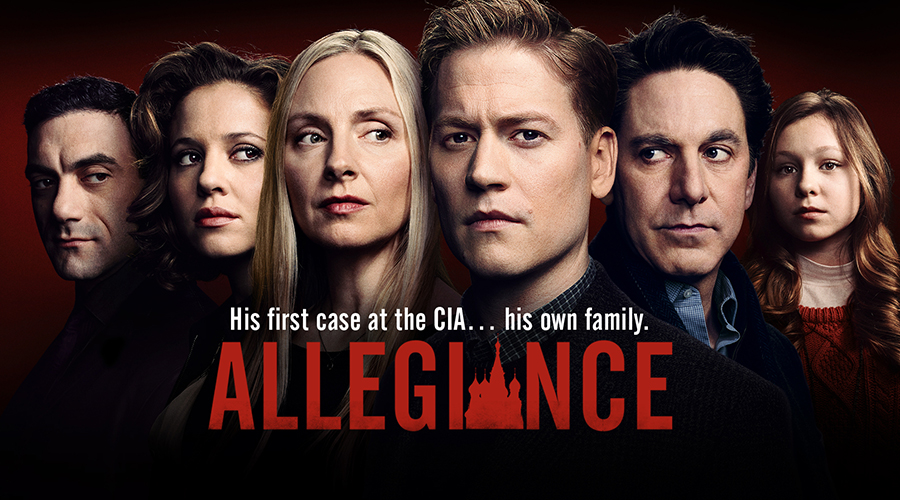
Allegiance

The first thing I wondered while watching this trailer was whether this show was made due to the success of The Americans, or whether it was made incidentally and someone watched The Americans later, only to realize that The Americans was vastly superior to their show. The protagonist is a super brilliant CIA agent who has some personal problems as a side effect of his brilliance, one of which is that it turns out, unbeknownst to him, that his parents are actually spies for Russia, the very nation who he’s working to dig up intel on day after day at his job. His parents’ superiors want them to turn their son into a Russian spy, while they’re afraid of what their son would do if he ever found out what they are. Uh oh! Family drama mixed with CIA espionage action. There’s no better quick way of describing Allegiance than that it looks like a shitty network version of The Americans that thinks it gets what makes The Americans works, but doesn’t quite. Could I be wrong about Allegiance? Maybe. Is it likely? No.

Prediction: 12- The Americans barely survives on cable television, and it’s great. If this was on CBS, I’d have a more favorable view, because almost any show can survive on CBS, but while this actually seems sensibly placed next to NBC hit The Blacklist, I’ll err on the default guess for all midseason shows, which is failure.

The Slap – 2/12/2015

The Slap

The titular event happens at a family and friends get together consisting primarily of a bunch of hip thirty-something parents. After one incredibly annoying child continues to instigate, an adult, who is not the child’s parent, slaps the child. The singular slap sparks a series of events that turns the previously friendly couples against one another, as everyone reacts differently. Some want to see the slapper punished severely for his actions, while others think his behavior was, if not justified, at least less egregious in the heat of the moment. High drama ensues. The Slap, which is a ridiculous title, and almost makes the show difficult to take seriously by itself, is based on an Australian series of the same name.

Prediction: It’s a limited eight-episode event, which wouldn’t obviously lead itself to a sequel, so it seems likely to be one and done.

One Big Happy – 3/17/2015
One Big Happy

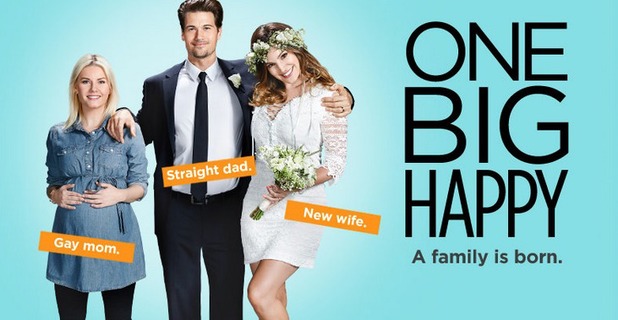
One Big Family, produced by Ellen DeGeneres, is a comedy in the Modern Family mode of unorthodox-yet-functional families. This time, here’s the high concept. Relationship-phobic straight man and lesbian best friend decide to raise a baby together. All of a sudden, he, out of nowhere, meets the perfect woman and gets married on a whim in Vegas. Now, his best friend is pregnant with his child, while he’s now married to someone else. Hijinks ensue, and yet the three, despite constant tricky situations, seem to mostly make the unorthodox arrangement work. I doubt it will be particularly good, and it’s from a writer for 2 Broke Girls, which is definitely not a good sign.

Prediction: 12- Midseason comedies that get picked up are a rare breed indeed. Ellen’s name behind it certainly will help, but it’s just tough to break in in March when no one knows that you’re on.

A.D. – 4/5/15
A.D. A.D.

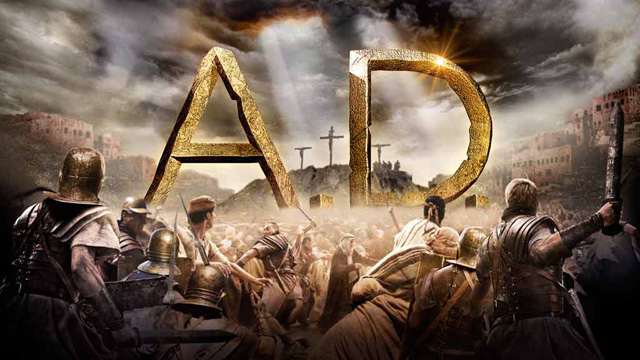
A.D. is subtitled “The Bible Continues.” That’s right. NBC is quite literally making a sequel to The Bible. To be fair, the bible in question is the History Channel miniseries produced by Roma Downey and Mark Burnett that produced mega-ratings for the network. A.D. starts with the crucifixion of Jesus, moves through his resurrection, and then on to early church leaders who fight for the survival and eventual triumph of Christianity against the pagan Romans. It’s a religious epic, and I have confidence it will be rapturously received by the Christian masses who watched every episode of the first Bible miniseries. At the same time, I sincerely question its value to just about anyone else. While religion offers plenty of interesting angles for storytelling, everything I know about the original Bible miniseries makes me imagine this will not offer any of those.

Prediction: Another mini-series, so there’s no renewal to be had, though since it has a huge built in audience, I’d imagine it will do well enough to earn another sequel if someone can put together an A.D. II.

Odyssey – 4/5/15

Odyssey

I cannot find a trailer for Odyssey. This may be a testament to my Google skills, or lack thereof, but searching the usual keywords on Google and on YouTube didn’t produce a trailer at the least. Here’s what I gather about the show. A troop of soldiers fighting Islamic extremists in northern Africa stumbles upon some super top secret info that an American company is actually funding the jihadists. Before they can return with this valuable information, all but one of the soldiers is killed by private contractors. There’s a massive conspiracy and it goes pretty far up. The story is, so says NBC.com, told Traffic-like, from many different perspectives, including that of a corporate litigator, a political activist, and a hacker. It sounds rather ambitious, like a cable show, maybe on Showtime, although it’s hard to get a great sense of its scale and production value without a trailer. Maybe less is more, because this sounds far and away like the most promising of the NBC midseason shows.

Prediction: Renewal – honestly, I wouldn’t place money on this, but these midseason shows are so impossible to pick anyway, much more so than fall shows, that I figured I’d have hope that the most interesting-seeming show might be good and succeed, which is probably too much to ask.
A.D.

Fall 2014 Review: State of Affairs

17 Nov

State of Affairs - Season Pilot

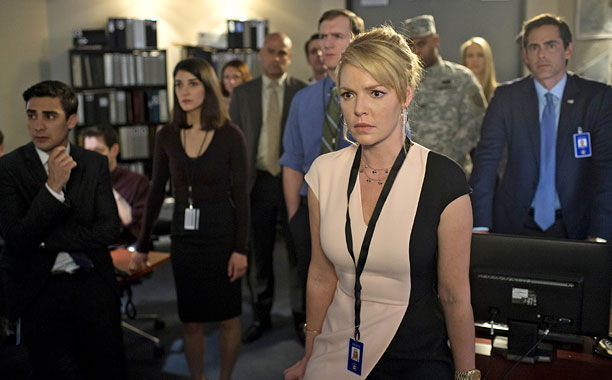
Is it reasonable to say that something is a cross between Homeland and Madam Secretary after having only seen one episode of Madam Secretary? Maybe it is, and maybe it isn’t, but I’m saying it. Perhaps more simply and clearly, it’s just a network TV version of Homeland – the Madam Secretary simply refers to the broadcast-appropriate national security cases-of-the-week that the main character discusses with the president. Otherwise, Katherine Heigl’s Charleston Tucker is the Carrie Mathison analogue. Let me count the ways.

Charleston starts the episode in her psychologist’s office. She’s dealing with a tragic personal traumatic event that happened deep within the middle east. Her fiancé (who turns out to also be the president’s son; that’s different, I suppose) died in Kabul at the hands of most-wanted terrorist Omar Abdul Fatah, the Abu Nazir of State of Affairs. There’s also more than meets to the eye to that integral event; Charleston wasn’t warned of a traitor, but she has gaps in her memory and has secret information about the events that only one other person knows that could implicate her personally and ruin her career. An unidentified person texts her throughout the episode, aluding to knowing details about the terrorist attack which she does not.

In order get over these tragic events, she works hard and she plays hard. She’s promiscuous (I’m not judging her by any means, but her psychologist does) and she drinks a lot. She’s a high ranking CIA official; unlike Carrie she has direct contact with the president. She’s very sensitive when people accuse of her letting her personal life of getting in the way of her professional decision making. She’s a rogue; she gets in trouble with her bosses, and bucks them, even if it means getting suspended, which happens in the first twenty minutes of the first episode. She has friends and colleagues who believe in her, respect her, and trust her with their careers – she uses these connections in the pilot to work her way out of her suspension, prove that she’s right, and embarrass the CIA director, her direct higher up.

So, yes. She’s pretty much Carrie in most of the ways that count. How is she different? She’s not actually crazy, it doesn’t seem like, though she may have some PTSD or survivor’s remorse. She was engaged to the president’s son and thus has the president’s implicit trust, which is probably more than Carrie had, leverage-wise. But that’s about it.

Of course, the show isn’t as hardboiled or hardcore as Homeland in any number of ways – it’s on NBC and not on Showtime. There’s probably going to be much more of a case per week to go along with the running plot to catch Fatah and figure out what happened the night her fiancé was killed (In this episode, Tucker makes some unpopular calls but ends up saving an American doctor taken hostage).

Being a Homeland rip off  isn’t exactly something you want to wear on your sleve these days, but Homeland did have a truly all-time rookie season (the Mark Fidrych of TV shows? I’m still working on it), which can be hard to remember I know. Still, Homeland’s pilot, Carrie’s character even aside, was a lot more intriguing and well-executed than State of Affairs. After that, State of Affairs feels like an extremely neutered, generizied version, that’s only one step away from a typical CBS police procedural. That’s not the worst thing in the world to be, but it’s not particularly close to engendering repeat viewing either. I’m not sure if NBC thinks it’s being at all daring with State of Affairs, but it isn’t. Madam Secretary, which, to be fair, I’m not watching either, screams broadcast show and knows what it is even if that has a lower ceiling than most better cable shows. State of Affairs seems to want to fly closer to what airs on premium cable these days, but never anywhere close enough to make you actually believe it could.

Will I watch it again? No. While not State of Affairs’ fault, anything which reminds me in any way of Homeland right now is pretty poisonous. Homeland, as mentioned above, had one of the all-time great first seasons, and then went downhill from there, and a Carrie analogue is the last new character I want to see. Charleston probably won’t be as unwatchable as Carrie gets,  (seriously, who can be?) which is absolutely worth noting, but the start of State of Affairs is also a lot less intriguing than the pilot of Homeland was all around.


Fall 2014 Review: A to Z

3 Oct

A, Z, and A's friend

A to Z is almost too cute for its own good. Desperately earnest in the day of where most sitcoms starting 20 and 30-somethings are snappy and ironic, A to Z may claim otherwise, but the show it most closely imitates is CBS’s recently departed How I Met Your Mother, and while, based on my overall impressions of How I Met Your Mother (with exceptions, fairly negative), that might sound like a bad thing, I actually don’t mean it that way. A to Z actually handles this earnestness, which could easily be too much, in a positive, optimistic manner that even made me, a pessimist born and bred, hopeful for a moment.. Because of this and the charisma of its two leads which leads to those positive feels, A to Z, while not being a show which demands viewing, and while, perhaps most importantly for a comedy, not being particularly funny off the bat, actually makes a halfway decent case for repeat viewership.

Of course, because it hews eerily close to How I Met Your Mother, there’s a clever storytelling gimmick that surrounds the show. A to Z is omnisciently narrated by TV superstar Katey Segal (in a slightly less violent role than her current job on Sons of Anarchy) who tells us that she’ll give us the whole story of the relationship between the two title characters, Andrew, and Zelda, over the entire course of their eight-month relationship, or again, from A to Z (groan at the pun, please). The already-knowing-how-long-the-relationship-is gimmick also reminded me of 500 Days of Summer.

Segal’s narrator tells us a little bit about the characters as well, giving us cute backgrounds of the two main stars. Andrew is the Ted – he’s the romantic, working for a rather cynical online dating company because he actually believes in helping people meet, which feels like something Ted would approve of heartily. Zelda is a career-oriented, lawyer, well-organized and conservative personality-wise, not particularly interested in going out on a limb. When they meet, he’s convinced he shared a destiny-type moment with her at a concert years ago (again, think Ted), creeping her out initially. Even though it may not actually have been her, eventually she’s persuaded to gve him a second chance, due to his sheer force of enthusiasm, which carries her more cynical self, along. They each have wacky side character best buds, straight out of rom com 101, who are goofier and louder than either of the two leads.

A to Z feels like a ten-years later update of its spiritual predecessor, How I Met Your Mother.  Slightly more twee and hip; the near decade difference in debuts shows in the types of young people at the heart of the show. The other difference, at least in the pilot, is that How I Met Your Mother, in its first couple of seasons, for all I rag on it, could be hilariously funny – Barney and Marshall, particularly – and that’s why I watched it even when I already hated other aspects of the show. A to Z isn’t particularly funny, though it also didn’t have the patronizing let-me-tell-you-how-life-is edge that so rubbed me, but few others, the wrong way on How I Met Your Mother.

To sum up, it’s sweet, and it’s earnest and it’s cute. It’s not very funny. That’s okay if it offers enough elsewhere; Girls and Enlightened are half hours both well-worth watching despite between being very often not very funny, and sometimes (moreso on Enlightened) out and out depressing. There’s something of value on A to Z, but I’m not sure if it’s enough for me, while it might be for someone who likes this stype of stuff more.

Will I watch it again? No. I seriously considered it, because the two leads did make me want to root for it and them, but the show didn’t quite win me over enough to keep watching, because it wasn’t either funny, or clever or engaging enough for another episode.

Fall 2014 Review: The Mysteries of Laura

19 Sep

The Mysteries of Laura

The Mysteries of Laura stars TV superstar Debra Messing as a crackerjack homicide detective who also has to take care of two unruly young children on her own. Her soon to be ex-husaband is a fellow cop, and the twist of the pliot is that he gets promoted to be her superior, leading to an awkward relationship at work with her ex, while she deals with the kids by herself at home. Of course, one would think the police department would want to avoid this situation, but we’ll put that aside for the moment.

What exactly are the tiular Mysteries of Laura? That’s a good question. Are the mysteries the individual murders cases she’ll be forced to solve each week? Is the mystery how she handles the stress of a high-pressure job catching deadly criminals, endangering herself in the process, while simultaneously raising two kids? Is the mystery whether The Mysteries of Laura is supposed to funny or serious? Is it who thought The Mysteries of Laura was a show that would have any sort of natural audience?

The Mysteries of Laura attempts to both be funny and dramatic over the course of an hour, and fails at both attempts. If I had to guess, the closest analogues to what The Mysteries of Laura is going for are the hour long comedic procedurals Monk and Psych, both on USA. The Mysteries of Laura would have probably have done better on that network, where,  that’s the type of programming they specialize in and they know how to take on that format successfully.

The Mysteries of Laura is just a mess all over. The first episode features the murder of a wealthy man, which Laura and her fellow detectives, but mostly Laura, must solve. The tone is goofy, and she rattles off jokes and shows off her skills in a jokey manner. She’s unprofessional by serious procedural standards, but that’s okay, because she’s silly and competent and everyone loves her except for the one uptight play-by-the-rules female detective who doesn’t. Again, think of her as the Monk or Shawn from Psych, the skeptic-who-is-always-right-in-the-end and overrules her boss every episode. Those shows though fit this format well because they’re often funny, and when not laugh-out-loud funny, enjoyable to watch – perfect for putting on while lying down before bed or just waking up when you don’t want to think too hard. Mysteries of Laura isn’t amusing or fun to watch.

The first episode, crazily enough, ends up with the revelation that her captain and mentor was the killer (played by Keith Mars himself, Enrico Colantoni). The tone changes oddly here at the episode’s end, implying that we’re supposed to feel some sort of serious, climactic, dramatic moment of pain and shock for Laura, but of course there’s none of this, not only because it belies the tone of the rest of the episode, but because it’s the first episode of the show and we barely know who any of the characters let alone care about them.

It’s just a strange show that aside from just generally not being very good, clearly doesn’t know what it wants to be. Waffling rarely works in TV. It’s possible to span multiple categories and genres (think Louie) but its a hell of a lot harder to do and a show of ambition as modest as The Mysteries of Laura should certainly not be shooting above its pay grade.

Will I watch it again? No. It succeeded at none of its aims. It wasn’t funny, it wasn’t particularly enjoyable, and it didn’t really work as a procedural, either, it wasn’t tense or exciting, or suspenseful.

End of Season Report: Hannibal, Season 2

26 May

Hannibal and friends

Holy fucking shit. I thought the ending of the first season was about as bleak as any season of any show on TV, let alone a network show. The second season may have topped, or bottomed, that. There are four characters credited in the show’s opening sequence. Three of them ended the second season lying on the ground, bleeding to death (It’s worth taking a second to note that the only other character to appear in Hannibal’s opening credits, Beverly, was killed by Hannibal halfway through the second season). While none of them were clearly dead, any or all could be; if this ended up being the series finale instead of merely a season finale, it would have all but locked up the title of darkest series finale of all time.

Through all this desolation, horror, and gore, Hannibal put together an extremely strong season, superior to its first season, and generally more purposeful, though with a couple of bumps along the way. Week to week, I couldn’t wait for Hannibal to see what happened next, and that anticipation is only reserved for my very favorite shows. When people ask me what shows they don’t watch that they should be, and I assume they’re watching standards like Mad Men, and Game of Thrones, Hannibal is one of my go to recommendations.

The season was largely broken up into two halves. The first involved Will’s incarceration in a mental asylum where he was assumed to be the Chesapeake Ripper, and ended with his exoneration and the framing of Frederick Chilton as the ripper. The second half involved the story of Margot and Mason Verger, and their various interactions with Will and Hannibal, as well as a plot by Jack Crawford and Will to lure Hannibal out and trap him.

Both halves worked very well individually but the show felt a little bit disjointed moving from the first to the second; it felt as if the halves were two individual seasons. This isn’t much of a problem, but the Margot and Mason introductions felt abrupt rather than smooth, and this just meant it probably took me a little bit longer to get on board with.

I’m glad I did though, by the second episode, because both Margot and Mason were played by extremely strong actors, expanding the cast of fantastic acting talent, which along with the gorgeous cinematography are the two most standout aspects of Hannibal. Hannibal continued to be as disturbing as ever if not more so, graphic violence-wise, than any show on TV, and this was highlighted in the season’s penultimate episode when Mason fed his own face to Will’s dogs and ate his own nose. The events are every bit as gruesome as that sentence sounds, and it’s remarkable that the other gore on the show rarely feels over the top. In fact, the beauty of the cinematography makes some of the most gruesome tableaus assembled by Hannibal  out of his victors look disturbingly mesmerizing, and in sharp contract to how base and simply disgusting Mason’s self-harming act looks.

Show runner Bryan Fuller does a great job picking and choosing how to deploy the tools of Hannibal’s literary and cinematic universe. There’s a lot of tough choices to make when working with an existing property, particularly one that everyone knows as well as Hannibal’s and he’s very smart in choosing when to add entirely new characters, when to use existing characters to be something other than how Thomas Harris or movie adaptations used them, and when to stick closer to the letter of the books.

Mads Mikelson plays Hannibal as a seductive sociopathic genius, semisatanic but just human enough to add empathy and add a layer of depth to a character that could merely be pure evil. He exposes his most (and maybe only) humanity when dealing with Will Graham, who he appears to actually treat as the potential compatriot, rare in Hannibal’s world of clinical ubermench-like serial killing. That small bit of humanity makes Hannibal that much more engaging a character; at some level this sadistic and brilliant mass murderer is just looking for a friend. Mikelson manages to fuse the appeal of a terrifying force beyond good and evil with a needy middle schooler who is unhappy when he doesn’t get what he wants (Will’s friendship and trust, namely)

Even more fascinating to me is Will’s back and forth mental state, not fully seduced by Hannibal, but not immune to his charms either. Will stands strong in the end, sticking to the plan. However, he’s not all in the good. He goes farther than he has to for the trap him and Jack had set, and frequently mimics Hannibal, particularly in respect to Mason Verger, when he could well possibly have pulled back and kept the plan in check. His decision to keep some of this from Jack shows that he knows it’s wrong, but the power of Hannibal, while not enough to win him over in the end, tugs at him.  This ambiguity filling the relationship between Will and is beautiful. It’s impossible to tell who is leading who, and who believes what. The knots Hannibal and Will talk themselves into are sometimes rhetorical nonsense but lyrically enchanting at the same time.

Then there’s that last episode again. We knew some of the events of the last episode from the very first episode of the season, which opened with the flash forward of Jack and Hannibal fighting. It’s probably going to take me some time, and maybe even until the first episode of the third season to decide what I felt about it overall. It’s brutal. I like the idea of Hannibal getting away, and I like the idea of it being with Dr. Du Maurier, a side character who has recurred just enough for us to keep her in mind and whose return was quite welcome. Abigail is back for just long enough to wonder exactly what Hannibal has done to her right before Hannibal kills her, seemingly an act of revenge for Will’s betrayal. I’m fairly confident Abigail is dead, and feel like at least one of Jack, Alana, and Will will be dead as well, and most likely not Will. The events almost seemed surreal (and the Baltimore police sure seemed to take their sweet time) and I momentarily thought the entire sequence might be a dream or a hallucination. For sheer shock value, it’s hard to beat, and the events certainly turn the entire series on its head again going forward. Hannibal is certainly not afraid to shake up the status quo and that’s commendable.

Regardless of whether I fully come around on the finale, or am just satisfied but confused and baffled at the same time, Hannibal’s second season is superior television. The show has been elevated into must-watch territory, and is likely, unless a barrage of great programming invades the second half of the year, to move up in next year’s yearly rankings.


Parks and Recreation’s Unfortunate Season Finale Cop Out

25 Apr

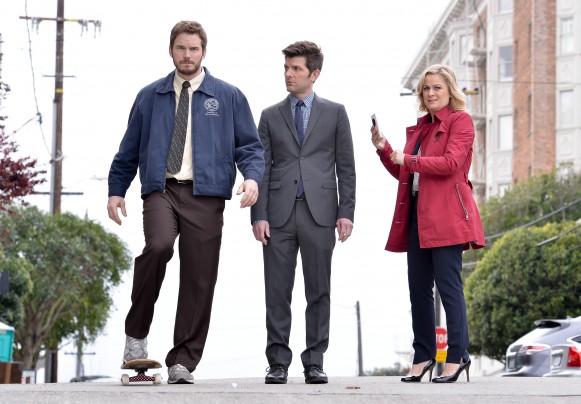
San Fran

I love Parks and Recreation, when it ends it’ll be a shoo in for the sitcom hall of fame (one day I will make this Hall of Fame a reality), and on the short list for  best comedies of the century. I enjoyed much of the sixth season finale as well, but unfortunately it ended with a huge cop out that greatly disappointed me.

Going into the episode, Leslie had a very difficult decision to make about her future. She’d been an offered a job as head of the midwest regional national parks office in Chicago (I might be screwing up the exact title, but it’s not that important). It was a huge step up career-wise. She’d be heading a much bigger office and staff and working preserving national parks in the Midwest, a much, much bigger region than small town Pawnee with, as Ben points out in the finale Mount Rushmore and the Black Hills among many other notable parks. Unquestionably, she’s interested in the job and would take it instantly if not for two factors, that are pulling her back towards Pawnee. First, the Eagleton-Pawnee merger that she engineered is still troubled; without her tireless leadership to make sure the merger is a success, the towns could come apart (why the head of the Parks Department would be working to save the merger doesn’t really make a ton of sense, but we’ll grant that Leslie is apparently allowed to control everything in Pawnee because why not). Secondly, she’d be leaving all her friends and her beloved hometown behind. She wanted to raise her kids in Pawnee, the town she loved.

This is tough. I was very much hoping that Leslie would take the job and move to Chicago, both for Leslie’s sake, and for the show’s, but either decision would be understandable. The job was an amazing opportunity, but her reasons to stay in Pawnee were compelling as well. Staying to finish a job you started is admirable, and living somewhere you like with people you love is a major factor in overall happiness as well.

That was the choice. It was a hard choice, but a necessary one. Leslie realizes this, which is why she keeps putting it off as long as possible, but eventually she’s given a deadline and she decides to make the move and take the job. She has regrets, especially when she hears the horror stories of other town mergers (the threat of becoming unincorporated!) but she realizes it’s the best thing for her at this point in her life. Ron and Leslie have a key heart to heart, where they reminiscence about what Lesile will miss about Pawnee.

And then, all of a sudden, Leslie has an idea! She can have it all! She’ll bring the midwest branch of the National Parks Service to Pawnee! Of course, watching, I thought, even within the world of Parks and Recreation, this is an insane idea. Um, Chicago is a huge city, the biggest in the region, and a logical hub, which would be convenient for employees and office visistors. Pawnee, is a, honestly, pretty terrible backwater town, but beyond that, a small city in the middle of Indiana. As great an addition as everyone agrees Leslie would be, you can’t move a long established department from Chicago for her. Or so I thought. And thus, when her new boss turned down her suggestion to move the department to Pawnee, because it was silly and made no actual sense, she’d finally be forced to make the difficult choice once again.

But, no, that’s not what happened at all! She can have it all! With Ben preparing a booklet on the cost savings of housing the department in Pawnee  (Um, of course, it’s cheaper to not be in Chicago – it’s not located in Chicago to save money), all of a sudden, just like that it’s agreed that it should be in Pawnee, and zap we’re three years in the future.

The three year jump is another topic entirely and I have no intrinsic issue with it (and actually really like the idea of skipping the pregnancy). What I do have a problem with is with the massive cop out Parks and Recreation took here. The second half of the season has been building up to an extremely difficult choice by Leslie – take her dream job but be forced to move from her beloved Pawnee, or pass up this amazing opportunity and remain in the town she loves. I don’t envy her that choice. It’s not an easy one, but it’s one she had to make.

Only she didn’t, and not only did that bail on a tough choice, but the way it bailed just made absolutely no sense. I love you Parks and Recreation, but this was a moment of weakness.


End of Season Report: Community, Season 5

23 Apr

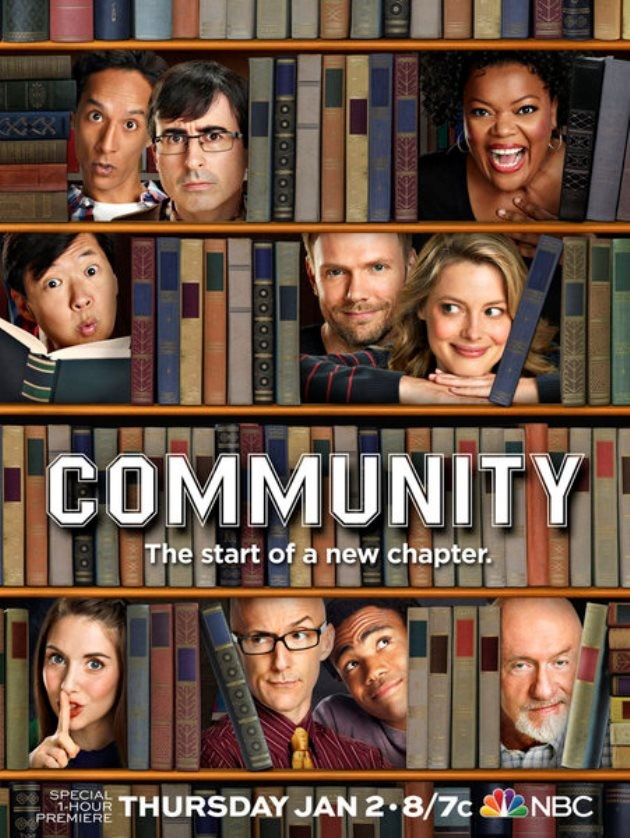
The Study Group, Season 5

While this season was Community was at times uneven, it was overall  a triumphant and welcome return to form.

There’s nothing that makes you appreciate something you like as much as, even more than its total absence, its replacement by a vastly inferior version. Rarely does television pull off that trick; usually a far inferior season of television is a symbol of a downward trend indicating that a show will never hit the heights it once did again. Community, fittingly, remains unique in this sense.

Everyone knows the story by now. Mercurial creator and show runner Dan Harmon was fired after the show’s third season. He was replaced by two well-meaning outsiders who attempted to capture what people loved about Community, but badly missed the mark. I’m not nearly as much o f a fourth season hater as some, but no matter what you think, it’s both not up to the quality we expect, and there’s something off about the show, like staring at a clone of someone you know well; externally it looks the same but it’s dead inside (that comes off as too harsh, maybe, but I don’t really want to use this space to defend the fourth season’s approach at mediocrity).

There were a couple of episodes that didn’t entirely put it together for me, but there have been some of those in almost every season. One of the consequences of Community’s sheer ambition to have everything at once means that when they miss they mark, they really miss it. Compare it to its Thursday night partner Parks and Recreation, another of the best comedies of the 21st century. While some episodes are better than others, Parks never has a complete swing as a miss, but it also rarely reaches the ethereal mind-blowing highs of the mega-ambitious Community episodes that manage to get everything right.

This season wasn’t the best in the show’s run, but it contained a couple of all-time episodes, several more solid wee-to-week classics, and easily more than enough to justify me being way more excited about wanting more Community in the future than I was coming into this season. Community fans went through a rough couple of years, and it was rewarding to see our favorite characters returned to their former glory, and to not end the show’s story with the ugly, metallic taste (the taste of the gas leak, if you will) of the fourth season stuck in our mouths.

Cooperative Polygraphy was this season’s moment of absolute brilliance. Community was graced with the presence of Walton Goggins, and the group were required to answer questions to a lie detector to determine who received gifts from Pierce’s estate. Part of the brilliance of the episode was that it felt as if Pierce was there, though he wasn’t. The episode just all came together; the high concept premise melded into truths about the characters and the group dynamics between them, and a course on the science of human relationships, which is what most great Community episodes are ultimately about.

First episode Repliot, Bondage and Beta Male Sexuality, and Basic Sandwich were the next tier of quality episodes, not merging every stray strand into genius like Polygrpahy, but delivering comprehensive and excellent episodes, both funny and pathos filled. The finale in particular, which might turn out to be the series finale, was excellent and felt right for the show, and a finale; it’s meta-finale could have taken it too far, but instead the looming emptiness of losing what all of the characters were holding onto was humorous and melancholy. The team came together and gave me lots of warm fuzzy feelings that a cynic like me isn’t supposed to be feeling very often.

App Development and Condiments didn’t work on as many levels but was one of the funniest episodes, and VCR Maintenance and Educational Publishing featured what may have been the funniest single scene of the season, Abed and Annie competing in the VCR board game featuring cowboy Vince Gilligan.

Basic Intergluteal Numismatics was a high-concept episode that didn’t much work for me; the ass-crack bandit felt like a second tier version of many other similar episodes including the Law & Order episode; I got what they were going for, and stylistically it was right on in the manner of David Fincher and similar directors, but I don’t think the jokes were as good or the writing was as smooth.

Overall, though, the batting average was close to that of the first three seasons, if not equal, and reminded me why I loved Community so much and what the difference was between Dan Harmon and his replacements. I knew the replacement episodes were worse, but I was concerned that I was constantly biasing myself against them. I’ll never be able to be sure that I wasn’t, and I’m honestly pretty sure I was, but I feel more confident than ever after watching the fifth season in understanding what made the Dan Harmon episodes better and what made the fourth season feel like it was TV in Dan Harmon skin. Community, now, and forever, and let’s all cross our fingers for six seasons and a movie.

Spring 2014 Review: Crisis

28 Mar

Crisis time

Here’s the titular crisis. A bus containing a group of kids who go to a fancy-schmancy private school for the sons and daughters of the masters of the universe is stopped by armed men and the kids are taken hostage. On the bus is not only the President’s son, but also the kids of very important people in all walks of life, such as ambassadors, titans of industry, and more, including Gillian Anderson’s Meg Fitch, head of a huge global IT company.

The brilliant reasoning of the people behind this act is that they’ll use the leverage they have from kidnapping the children to force their powerful parents to do stuff. Each parent’s individual mission will be a step towards the kidnappers’ overall plan, which still remains a mystery.

The midway-through-the-episode-twist, which I’m going to give away right now, is that Dermot Mulroney’s character, who just seems liked a pathetic has-been parent chaperoning on the trip to spend a little time with his estranged daughter, turns out to be the mastermind behind the entire operation. The plan seems to be some sort of revenge for, well, something or someone, or lots of people who screwed him over a few years ago when he was in the CIA. The details are left unclear but we’re shown a flashback where a man he thought was his best friend threatens his daughter’s life if Mulroney doesn’t go quietly from whatever mysterious CIA position he held.

Oh, also, Gillian Anderson’s estranged sister Susie is the head FBI agent working the case, and it turns out that Susie is actually the mother of Gillian’s daughter, but gave the baby up to Gillian because she was a teenager. In every show like this, it’s important to have a couple of personal crises that also just happen to bubble up at the same time the primary action crisis arises, to give the show more character-based oomph and the potential for the personal and the professional to collide.

The remaining primary character is a secret service agent who escapes with one of the kids and manages to take down one of the attackers. This secret service agent was shot by a rogue secret service agent, and the villains just let him lay around on the ground without making sure he was down for the count which seems like some pretty poor planning for the plotters behind such a complex overall plot.

Crisis is a long-form thriller action series. If almost every long-form supernatural/sci-fi based series of the last decade owes its existence to the success of Lost (which it does), almost every long-form serial thriller action show of the last decade owes its existence to 24.

24 is thus the template for success for this type of show. 24 is more focused on action, while this, and a show like CBS’s Hostages which Crisis immediately made me think of, are more thrillers, which basically means less hand to hand combat, but the blueprint is basically the same. Plots in these shows tend to be mind-bogglingly complicated conspiracies that go all the way to the top. Think about it: they have 22 episodes in which they have to continually be creating constant tension, cliffhangers, and reveals. It’s difficult to construct a truly coherent narrative that meets those standards of excitement.

So the ideal is to have the plot make enough sense in the moment that you are willing to get on board and be taken in by the twists and turns, even if they don’t make sense if anyone thinks too much about them. Because there’s not going to be a whole lot of deep themes or character development, it’s got to be fun; you’ve got to simply enjoy watching these shows in the moment. (24 may try to have you believe that debating the value of torture, etc, was a theme, but it was really just an excuse to realize how disturbingly enjoyable it was to watch Jack Bauer beat people up). Again, 24 is the model – 24’s plots were pretty stupid when you thought about them, and the characters acted in constantly stupid ways, but at its best, it didn’t matter because it was fun to watch Jack Bauer beat shit up, and yell “There’s not enough time!” to anyone willing to listen and for any given forty minutes it seemed like whatever task he was on was really important.

Does Crisis meet this standard? Not really. It’s serviceable. There was nothing offensive, and if somebody threw it on in the background I wouldn’t cringe. But there’s nothing that gripped me, or that made me feel like I absolutely had to see what came next. It’s constructed by the network machine, a competent product, but no more. It’s very much a paint by numbers for this genre; there’s a plan to make it long term – in this case Mulroney has some sort of secret revenge book (think, well, Revenge), that he’ll seemingly be moving through over the season, and there’s plenty of potential personal conflicts. Rather than being bad, Crisis commits perhaps the worst sin for an action thriller; it’s utterly forgettable.

Will I watch it again? No. There’s just no point. Honestly, I’d be shocked if anyone I talk to remembers Crisis’ existence in two years, which speaks more to its forgetability than its terribleness.

Spring 2014 Review: Growing Up Fisher

3 Mar

Growing Up Fisher

I’ll start this review by talking about how much I love JK Simmons. The man can do no wrong in my eyes. He does comedy, he does drama, he does Aryan gang leader, and he’s great at all of them. The man is a true pro.

Now that I’ve got my one compliment out of the way, it’s time to be real. Growing Up Fisher is not a good show. It’s actually a pretty bad show. It’s not cringe-worthy, or impossible to watch like Dads or We Are Men, rather it just does a lot of different things poorly and that adds up to a pretty bad show.

Growing Up Fisher reminds me at first glance of ABC’s The Goldbergs, primarily because they’re both narrated by grown up guys telling the story of themselves, around age 11, growing up, in flashback. Henry Fisher, voiced by Jason Bateman in narration form, tells the story of his childhood. The dads, additionally, in both of these shows, are serious Character. Mel Fisher, Henry’s dad, played by JK Simmons, is blind, but tried to use all sorts of tricks to hide that information from the general public for years. Henry’s mom, Joyce, is less of a Character, but still a little bit of one; Jenna Elfman’s mom character is one of those moms who keeps trying to act young, because she never had a chance to be young herself, but she just winds up looking foolish.

I hate judging child actors, because it’s a hard job, and when I do it I kind of feel like I’m watching a little league game and booing the players. When the kid is the star though, it really is an important part of the show, and both kids (there’s a daughter who I haven’t mentioned yet – she doesn’t get a lot to do in the pilot), but particularly Henry just do not cut it in Growing Up Fisher. His timing is all off; the jokes are obvious, on the nose, and not clever to begin with, but his ham-fisted delivery just makes the bad writing stand out more, rather than putting a sheen on it, the way good actors can do sometimes. Maybe he’ll get better – he’s young, but it was hard not to notice.

I feel less guilty judging the truly terrible narration. Over-used, poorly used, and unnecessary narration has long been a personal bugaboo of mine and Growing Up Fisher is one of the worst offenders I have ever seen. Jason Bateman voices future Henry, and he adds absolutely pointless, obvious, and patronizing commentary that not only wastes valuable time but also takes away from whatever else the sitcom has to offer. There are so many examples, pretty much every line Batemen utters – everything he says is easily inferred from context, except for the parts that are explicitly stated by other characters before Bateman restates them for no apparent reason. The worst example I noted down came after his parents awkwardly try to tell him they’re getting divorced but can’t quite say it, only to have his sister explain what’s happening to him. The narrator followed with, “That was the super smooth way my parents told me they were getting divorced.” NO FUCKING SHIT. What, I ask, is possibly gained by that comment? Is “super smooth” such a funny or clever way to put that sentence that its inclusion was deemed necessary?

What goes unsaid until now, the elephant in the room, which really matters more than all of my little annoyances, but is related to them, is that Growing Up Fisher is simply not funny. The timing is off, the jokes aren’t good, and there’s nothing to laugh about. It’s relatively heartwarming, I’ll give it that, and the members of the family seem to genuinely like each other which is nice. Funny though, not so much.

I’ll end with one more quick compliment (making this a compliment sandwich with some very thin bread); I can’t think of another sitcom offhand which features divorced parents who get along as well as the parents seem to in Growing Up Fisher, and there’s always something refreshing about a new and different family set up.

Will I watch it again? No. The narration and the bad acting would drive me crazy even if there were laughs, and there weren’t.  It’s nice that the father is his son’s hero. It really is. But it’s not enough. Sorry, JK. I still love you.

Spring 2014 Review: About a Boy

26 Feb

About a Boy

So About a Boy was first a book by Nick Hornby. Next, it was a film adaptation starring Hugh Grant and Toni Collette. And then, several years later, we get a television adaptation starring David Walton (of Bent, New Girl, Perfect Couples) and Minne Driver.

It’s easy to see why someone might want to adopt this again. There’s a lot to like. Frankly, just in terms of basic sitcom set up, About a Boy has a different layout than most. The main character are a single guy, a kid, and a single woman, the kid’s mother. The central plot thread is a non-creepy heartwarming friendship that develops between the  kid and the single guy. And if you didn’t know better, and you read this,  you’d naturally assume the guy and the woman have a will-they, won’t-they, eventually-probably-get-together relationship. Except one of my favorite things about the About a Boy story (and I love Nick Hornby and the book, so there’s a bunch) is that there isn’t. They become friends, but they’re never any sexual tension between them and that’s thoroughly refreshing for its different-ness. I’ve written about sitcom incest before and one of my favorite things about this story and what looks to be true from the premise is that the single guy and single woman can get along and learn to be friends without any romantic interest. Amazing!

Anyway, so I suppose I need to actually review this show instead of just talking about the premise. Will, the lead (Walton), is a single guy, who is essentially financially set for life and just hangs out. In the original, Will’s dad wrote a Christmas song, from he collected royalties; in the show, he earned royalties from his former band’s Christmas-related one-hit wonder. The boy, Marcus, and his hippie-esque mother, Fiona, both having a tough time in their lives, move out to San Francisco, right next to Will.

The precocious Marcus, whose best friend is his mother, clearly doesn’t have the social skills to fare well at school. He ends up running in Will’s place to save him from some kids chasing him when his mom isn’t home. Will, on the other hand, initially irritated by the kid, finds the arrangement to his benefit when he can pretend Will is his to hit on hot single moms. They hang out and bond in montage fashion, getting to know each other.

The show tries to stuff the basic events of the movie into the episode, in what basically follows the rom com format, but rather than a romantic relationship, it’s a relationship between Will and Marcus, as Will and Marcus meet cute and start to become friends. At a dinner with the two and Fiona, Will and Marcus get into a fight when Will is unwilling to call himself the Marcus’s. Feeling guilty, Will comes to save the kid from an absolutely disastrous talent show performance of One Direction’s “What Makes You Beautiful” (rather than “Killing Me Softly”).

The episode suffers a little bit from having to stuff a bunch of necessary premise plot points into 20 minutes. This is particularly on display in the one scene that Daily Show correspondent Al Madrigal, as Will’s friend Andy gets.  Before Will saves the kid at the talent show, after he had his fight with Marcus, Andy lays out Will and the premise is an incredibly on-the-nose fashion, pointing out that Will hasn’t ever tried to commit to anything, and this kid actually liking him is an opportunity to have a meaningful relationship.

At the end, it seems like we can actually move on with the established fact that Will and the boy are buds without having to explain the actual character development of why this guy would possibly want to spend time with this kid.

None of this yet answer the question about whether the show is funny, and the answer is sort of. It’s not hilarious; I didn’t laugh too much, and there’s nothing that made me immediately want to come back for more. That said, I did smile, and it was heartwarming (About a Boy, after all, is from Jason Katims, of Friday Night Lights and Parenthood), so I came away with a somewhat positive feeling even if i didn’t laugh a lot. I think the personalities are likeable, and I think there’s potential for the show to be funnier, but it definitely has at least some ways to go. That said, in particularly I liked it enough that I’m curious to see whether an episode that doesn’t have to spend as much time establishing the premise, is funnier, and then I’ll have a better idea of how I feel about the show.

Will I watch it again? I think I probably will, but the show is about on par with other similarly decent comedy pilots that I didn’t watch again. If I do, it’s largely because it has the good fortune to come out at a time where there isn’t a lot of new show competition, because I like About a Boy, the book and movie, and because I’d like to see an episode that doesn’t suffer the weight of premise explanation.