Tag Archives: HBO

Spring 2014 Review: Silicon Valley

7 Apr

The men of Silicon Valley

The humor in Silicon Valley is very different than that of the show it’s paired with after Game of Thrones on HBO, Veep, but the two share a different commonality which makes them an apt pairing: they’re both insider-y takes on very insular communities. Both shows welcome outsiders in to laugh and learn about their community’s peculiar quirks and allow insiders to nod their head at the all-too-familiar world they recognize on screen.

Where for Veep it’s the political arenas of Washington D.C., for Silicon Valley, it’s the tech world of well, Silicon Valley. I’m not anything close to an insider, but even just from having read occasionally about Silicon Valley and stories of the inanity that goes on there, I notice at least some of the shout outs to the absurd eccentricities of the area’s culture, such as the ridiculous company names, the claim that every product no matter how mundane and business-facing makes the world a better place, the reverence towards tech billionaires, and the ludicrously lavish parties.

Of course successfully parodying Silicon Valley is one thing and I’m sure to locals that’s more valuable in and of itself; I have no way to confirm this, but from what I’ve read Silicon Valley is pretty much spot on. But is it funny or enjoyable to outsiders? It is, and it’s warm, and honestly, it’s a story that it’s kind of shocking we haven’t seen yet, considering what a big part of American culture the tech startup world has become since the first dot com bubble of the late ’90s and the rise of Facebook. The only other quintessential bit of startup pop culture in the 21st century is The Social Network, a much more serious reality-based story. Silicon Valley is a lighter tale about the way up, rather than a look back at what went right and what went wrong from the top, but parallels can certainly be drawn between the two.

Silicon Valley stars five twenty-to-thirty somethings. a couple of whom work at a google-esque major tech company (Hooli) during the day and devote their nights towards working on their own startup enterprises at their house, owned by Erlich, an entrepreneur who had a semi-successful startup and sold out for a fair but not ridiculous amount of money. Erlich calls his house an incubator and owns ten percent of each tenant’s company rather than charge rent. Richard Hendrix, our protagonist, has been working a site called Pied Piper designed to help songwriters find out if their songs violate existing copyrights.

The stakes ramp up when a couple of very important people in the tech world – the CEO of Hooli, Gavin Belson, and venture capitalist billionaire Peter Gregory (whose right-on-point TED talk on the dangers of attending college the boys attended earlier) discover that within Hendrix’s worthless start up is a mega-valuable piece of technology, setting off a quick bidding war between the two for Hendrix’s company. Belson offers him $10 million for everything, but Gregory offers him $200,000 for 5% of the company, advice, and the chance to grow it himself. After having a panic attack, and with some persuasion from Gregory’s female employee Monica (I particularly note female because she is pretty much the only woman to appear so far in the show; perhaps that’s yet another accurate rendition of Silicon Valley culture – this show doesn’t even approach passing the Bechdel test).

Hendrix brings all his friends aboard and sets out to start a company.  The quest is then, as Richard expresses when he tries to give a short speech towards the end of the pilot, to build and grow a hugely successful enterprise, and feel good doing it, all while avoiding the dystopian hive mind of Silicon Valley that he and the others are sick of, and which can be as insidious as it is hilarious.

Silicon Alley is a spin on a classic losers/underdogs against the world theme, but there’s one big difference.  There’s not up against the big, hulking, charismatic jocks – instead, Silicon Valley is run by the nerds; the only difference between nerds and gurus are a couple of billion dollars.  The main characters may be classic nerds, but they’re not Big Bang Theory nerds; there’s a fine line between natural awkwardness and uncomfortable no-real-people-are-like-this behavior and certainly in the first episode Silicon Valley stays well to the former side of the line and I have no reason to think that it will deviate from this.

As the credits rolled, I was pretty excited to follow their journey with them. While it doesn’t have the hook of an edge-of-your-seat-gripping drama, it was exceedingly easy to watch, and if there was another episode available at the time I would have popped it on right away.

Will I watch it again? Yes. Networks have reputations that preceed them, and HBO is held to a pretty high standard. Thankfully, this looks like another strong effort. Next episode, please.

End of Season Report: Girls, Season 3

26 Mar

The Girls

Thankfully, the controversy that overwhelmed Girls has mostly (albeit certainly not entirely) died down by the third season, meaning viewers can concentrate on its merits as a show rather than as a stand in for any larger piece of our culture. For the most part, people who like it watch it and people who don’t stopped bothering to criticize it at every turn and moved on to something else. There’s still more talk about Girls than all but a handful of shows on TV, but compared to the first season, it’s nothing.

Underneath that mostly lack of controversy lays yet another promising but somewhat uneven season. Girls has a shot at being a great show, but it generally continues to come up a little short and merely be a good show. That may sound like an insult, but I don’t mean it to be.  Good shows are still relatively rare and Girls does indeed have a unique voice all its own. It doesn’t feel like every other or really any other show on TV in particular, which is one of the highest compliments I can give a show.

That said, the little things Girls struggles with are particularly frustrating, because with those problems eliminated, Girls could be be a truly great show. This is still absolutely possible; Girls’ flaws are not at all fundamental to its premise. It’s certainly worth highlighting both sides, which parts of this season went right and which went wrong, and I’ll navigate that character by character.

Overall, Hannah has and continues to receive the best, deepest, funniest, most complex, and most interesting arcs on the show. This is not particularly surprising as Dunham is the show’s creator and primary creative force, but it continues to be true to an overwhelming extent, which says in equal parts both how generally strong her stories are and how much they outrank everyone else’s. Hannah had lots of great, funny, and awkward moments. While the writers seem intent on making sure you don’t like the characters too much with moments like Hannah’s painfully awkward conversation with her editor’s wife at his funeral, there were also plenty of moments when Hannah was, by Girls standards, relatable. Her quitting GQ, or rather causing herself to get fired, irked me, especially since she seemed to have made her peace with her current position in an earlier episode, only to then come around again to how she was feeling just a couple of episodes before that (if that’s confusing, fine – I was confused watching it). However, most of her season long plot worked, particularly her relationship with Adam which I’ll get to next. I really enjoyed “Flo,” the episode in which Hannah went home to deal with her grandmother’s illness. “Flo” felt less exaggerated and more real and down to earth than most of Girls, which typically marks its ground as being one degree away from greater relatability.

Next, Adam. Adam and Hannah’s relationship was a very important part of season three, and Adam was the second most developed character of the season, moving past any of the other Girls. I liked Adam much more this season than I had in the previous two, both in terms of sheer likability, and as a character. I think that’s because we got to know him a lot better and he was significantly deepened and filled out. In previous seasons, we had either seen his dark sides or his overbearing obsessiveness, for good and for not so good, and here we finally got to see him just be. In addition, his career success made Adam feel like less of a weirdo – he found some people he actually seems to genuinely get along with and something he’s passionate about, both attractive qualities. Earlier, it had always bothered the hell out of me that not only could he not seem to stand Hannah’s friends to the point where he couldn’t even tolerate them in small doses, but he didn’t have any of his own. Adam and Hannah’s relationship overall was a highlight of the season, and it produced plenty of moments that showcase Girls, and TV relationships generally at their best, by putting characters in situations of conflict without either side being obviously right or wrong. Both Adam and Hannah consistently had valid points in their arguments, even when one or the other was self-serving. When Hannah’s mother confronted Hannah endearingly but overbearingly about Adam, both she and Hannah were right. He’s an exceptionally caring person with serious issues who offers a great deal of both positives and negatives.

Now, everyone else.  Marnie’s plot changed completely when the actor who played the on again off again sad sack boyfriend Charlie with whom she had finally reunited in season two’s finale, Christopher Abbott, announced he wouldn’t be returning. I was glad upon hearing the news, because Abbott’s Charlie was one of my least favorite characters on the show. Unfortunately, his departure led to Marnie’s continual decline. She was inconsolable for the first half of the season, and was just starting to have a couple of things go her way by the time the season ended. Marnie’s faults were also in full display all season; full of herself, controlling, haughty, and judgmental. Although we peeked through that occasionally to see someone struggling and hurt who was used to life going her way and unsure what to do when it wasn’t, we just didn’t get enough of Marnie on the whole to go any deeper than that. More time with Marnie would have highlighted this struggle, and while some of her constant judging of everyone else in her life is pretty indefensible, other of her more negative qualities would have come out as symptoms of her current situation in life making them more palatable and understandable.

Of all the characters short on screen time this season (everybody but Adam and Hannah), I probably enjoyed Jessa’s plots the most, which surprised me, because Jessa’s been my least favorite character through the first two seasons of the show. What made them work in this season is that, given the lack of screen time for Jessa, Girls didn’t even seem to attempt a coherent arc for Jessa. Instead there were little vignettes that were entertaining and instructive individually. In terms of the big picture, I’m not sure I really buy it; Jessa’s a drug fiend, and then she kind of just isn’t because well, it’s not really clear. But in terms of single episode stories, Jessa’s are compelling, particularly her discovery of an old party buddy who had faked her death to get away from Jessa’s negative influence. While Jessa’s very different negative qualities are as evident as Marnie’s, at least Girls has done a much better job digging in to the root causes and the pain behind Jessa’s fuck-the-world facade.

Shoshanna is the least well serviced character this season. She has been for the entire series, but this season even more than ever before. She doesn’t get a whole lot to do, and she seems dafter than ever. Even school, the one area in which it seemed Shosh was ahead of the curve, betrayed her. Her role in this season, rather to be a character, so often seemed to be to point out what the viewer was thinking about a situation, particularly in the first episode and “Beach House”. I’m not sure we’re ever going to get more from Shoshanna, and unlike Marnie and Jessa, instead of having a story that wasn’t really fleshed out, there just wasn’t much of a storyline for Shoshanna at all this season.

Ray is my favorite character and the favorite character of just about all my friends. He’s the only person on the show who seems to be able to figure out what issues everybody on the show is dealing with, himself included (outside of Shoshanna’s occasional savant-ish moments). He doesn’t always have the most to do but I enjoy just about every moment he’s on screen, even when he’s being kind of an asshole.

Two standout episodes this year were the aforementioned “Flo” and “Beach House.” It was great to see the four girls interacting after they really hadn’t all season in “Beach House”, and though it showcased all of their worst qualities, there was a lot to like about the episode. It helped take stock of where everyone was at that moment; everybody progressing in some ways and unchanging in others. The dance scene at the end was well done and a well-deserved warm moment after the constant fighting that came before, showing that their friendships are stronger than one fight, no matter how vicious. “Beach House” also reintroduced Elijah, who was quickly brought back into the fold for the rest of the season. I greatly enjoy the humor his character brings especially when the other characters are tense and stressed out. He’s welcome back into the world of Girls anytime.

Here’s where Girls stands after three seasons. It’s a good show, which is absolutely worth discussing and talking about in significantly more positive than negative ways. It’s a flawed show as well, but one that has a potentially perfect season in it. Girls, even not at its best, is noteworthy enough to remain canonical television, and while its flaws prevent it from being great to this point, it’s not so far away.

End of Season Report: True Detective

10 Mar

True Detective

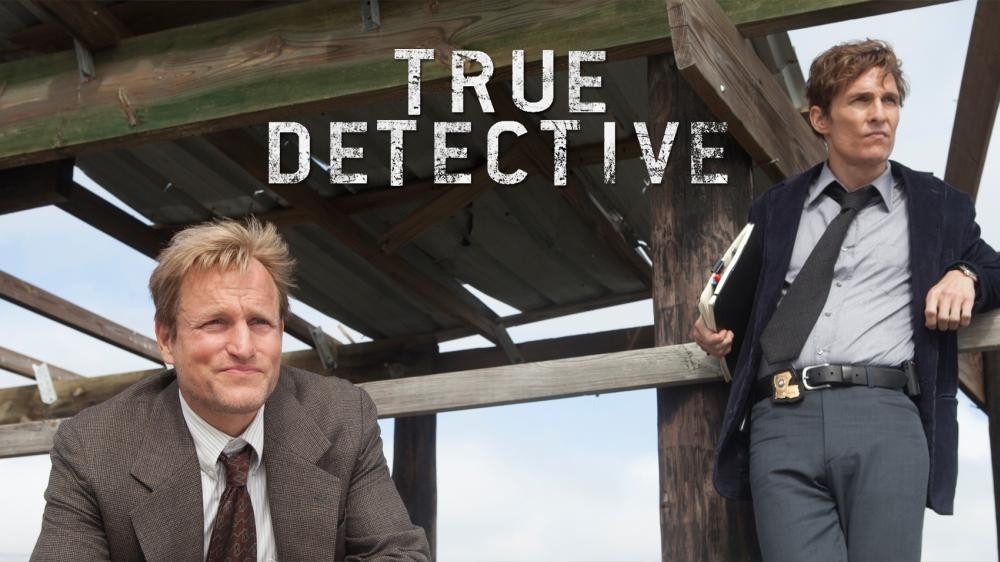
While it took some people until the already legendary six-minute one shot that ended episode four to get on the True Detective bandwagon, I was more or less on board from day one. I loved what the show focused on right in that first couple of episodes. Some found these episodes slow before things really picked up, but I found them deliberately paced, but enthralling. It’s because the show came back around in its finale to focusing on what I liked about it its first couple of episodes, before I knew to look up the conspiracies and the yellow king and so forth that I liked the ending. Perhaps the best way to start talking about True Detective is to say that I’ve never seen a murder mystery show where the murder mystery mattered less than in True Detective, and I mean that in a purely positive way.

If you’ve read interviews with True Detective creator and writer Nic Pizzolatto, you know that he’s assured viewers throughout that the show isn’t out to fool anyone; he has a healthy distaste for M. Night Shyamalan-style twists and reveals that seem to overshadow the majority of the work and make the viewer feel jerked around. In attempting to keep the show grounded and real, he may have, however, inadvertently jerked viewers around, due to the expectations modern TV viewers have. Pizzolatto’s outlook, which I found refreshing, is the exception rather than the norm, and 21st century TV and movie viewers we’re trained to be obsessive and expect dramatic twists and changes of pace. If you didn’t know better, you might have expected True Detective, with its layers of references to Carcosa and the Yellow King, and religious iconography, to veer if not full out into Lost-like supernatural, then at least to a full-blown cult or deep within a conspiracy that goes all-the-way-to-the-top. None of these were the case, though I don’t think the references and imagery was put in to fool anyway; it was merely part of a rich tapestry of themes and symbols that can exist without having the weight of a much bigger, more epic plot behind it; something that I don’t think would seem so shocking if we didn’t have the weight of expectation that other epic shows have trained us with (take the disastrous ending of The Killing – it wasn’t the potentially somewhat straight forward ending the first season could have led to – it was a much more complicated conspiracy we had to watch a season more and be jerked around with to get to).

So if the show fooled you with its obsessions, and if you had different expectations, maybe you felt jerked around by the relatively anticlimactic nature of the conclusion. While I’m sorry that you had that impression, it’s somewhat understandable that you did, and if you did, well disappointment with the ending was equally understandable.

Fortunately, though, as I mentioned above, that’s not how I viewed the show. Don’t get me wrong; I loved all the obsessive angles of the show – pondering about the meaning behind Carcosa and the Yellow King, but that’s just an aspect of the greater mood. Dark, eerie, ominous, rural Louisiana in Marty Hart and Rust Cohle’s world was a dark, run down, and dangerous place where the bad often outran the good.  What the show was at its heart, though was the story of two partners, of two men.

Yes, this show, as director Cary Fukunaga pointed out, doesn’t pass the Bechdel test. Its depiction of women was not particularly complex, and sure that’s a shame. But True Detective only had eight episodes to work with that’s simply not what True Detective was about. Not everything can be about everything. True Detective is about the relationship between Woody Harrelson’s Mary Hart and Matthew McConaughey’s Rust Cohle. They may not be Owen Wilson and Vince Vaughn, but don’t be fooled: This is a bromance.

Break through the clutter ,and it’s the story about two men from opposite sides of the tracks. Rust is an intellectual, nihilism-inpsired cop, who believes that the human race is going to hell in a handbasket. There’s no hope for anyone, he surmises. Marty, on the other hand, is a relativist; he plays by his own rules, or tries to, his own rules which dictate that him sleeping around is the best thing for his family, because he needs to takes care of his dark impulses before coming home to hang out in a wholesome fashion with his daughters and wife. These points of view should be diametrically opposed, and they are, but the two men meet cute, find common ground and drift apart, only to come back together again after ten years without speaking.

There’s lots more reasons to love the show. The cinematography are direction are top notch and among, if not the best of TV. The one-shot from the end of season four is rightfully renowned, and the beautiful vistas of coastal Louisiana give the show a distinctive sense of place. I can count off memorable shots with ease; the terrifying, jock-strap wearing and gas-masked Reggie LeDoux from far away that ended the third episode, for example, or the baroque and angelically lit shot of Rust Cohle holding up a devil net in the school to end the fifth episode (the show has a lot of memorable episode ending shots).  There’s the fantastic choice of palate which contrasts the sharp present day with the blurrier past.

But again, that’s not the heart of the show, without which True Detective wouldn’t be what it was. The show ends the way it has to – or at least with the people it has to  – Marty, and Rust, together again – and that pairing is why we’re watching. Because in eight hours, we can’t know everything but we do get to know these characters and we grow to love them. They desperately both try to be good men, even Cohle, who claims otherwise. They don’t always succeed, and we certainly don’t have to feel bad for them; that’s the not the point. They’re not asking our sympathy. But they both try to do one good thing for they legacy, something that at least partially compensates for their failures if nothing else and that’s worth celebrating. Marty realizes why he lost his family; he stopped begging, and he’s right that he didn’t deserve them – but he tries – he tries in the only way he knows how. There’s a nobility to their pursuit, and something notable in that it takes the combined efforts of both Cohle and Hart to actually catch their killer. Maybe there’s something cheesy about an ending in which Cohle, relentlessly negative Cohle, actually sees a small sliver of light at the end of the tunnel, but to me that pleasant sentiment is well-earned – even someone as utterly heartless as myself occasionally enjoys a happy ending.

True Detective celebrates the ethereal, the philosophical higher plane, but it also celebrates the ground floor, the people and their earth-based, contentious relationships. The cult, the ritual, are what generation forum discussions, and with good reason: they’re a meaningful part of what True Detective is about. But if you just want that, you’re missing the point – this isn’t Lost. There’s no higher level questions that absolutely need to be solved to avoid a let down aside from who did some of the killings we’ve seen; this is eight episodes, not five seasons.

Rust Colhle and Marty Hart, two brilliantly developed, written, and acted characters developed over the course of eight episodes, I wouldn’t ask for anything more.

Spring 2014 Review: True Detective

20 Jan

Two true detectives

I didn’t know what to expect coming in, but I’ve long been a fan of the season-long anthology format for television and was excited about any show that starred  the long underrated Woody Harrelson and Matthew McConaughey in the middle of his epic comeback. After actually watching the show, even those high expectations didn’t prepare me for how much I liked the debut episode.

True Detective is posed as a season long murder mystery, a format we’ve seen a few times in the last decade, but this isn’t your grandfather’s season long murder mystery. While it’s an obviously intriguing format (there’s a reason Agatha Christie sold so many books), I’ve been biased against it ever since the somehow still alive disaster known as The Killing broke me in the final two episodes of its first season (like thinking of the Lost finale, bringing up The Killing’s first season finale is the best way to instantly anger me). The Killing has made me come into any season-long murder mystery with a wary eye, perhaps unfairly, but there’s a part of me just waiting for a let down at every step. Broadchurch, a British season-long murder mystery being adapted for an American audience was a very pleasant surprise, surprising and satisfying without being ludicrous and over the top. It was, however, a fairly typical murder mystery, investigating all the players one by one, and everything that happened in the series pretty much revolved around the murder which took place in the first two minutes of the show.

True Detective is not that and it’s much the better for it. True Detective is a murder mystery, sure. There’s a murder at the beginning and presumably the show is going to take us through on the way to solving it. But it’s much more than that and only kind of about that.

The show is told through an interesting framing device. Two cops in 2012 are interviewing two ex-cops who thought they had solved a murder 17 years ago, in 1995, in rural Louisiana. As the two cops are interviewed separately, they each take us back, through their descriptions, into the past. Scenes of them taking to their interviewers in 2012 are interwoven with much longer scenes of their investigation in 1995, overlaid with narration, which is what they’re telling the interviewers. I’ve often complained about framing devices and narration that feels gimmicky, useless, cheap, and detrimental, but this is not that. This is a clever framing device that besides being plot relevant – it seems like events related to the murder will actually happen in 2012, rather than simply being a point from which to look back – presents interesting narrative opportunities. There are lots of unreliable narrator issues – the two cops, who we learn, haven’t spoken in ten years, remember the case and each other different, and have very different perspectives of the case and of each other. The ex-detectives, neither of whom work for the police anymore, have changed dramatically over the years.

The two primary detectives, as hinted at above, are played by Matthew McConaughey and Woody Harrelson, with McConaughey marvelously playing against type. Woody Harrelson is the good old boy partner, just trying to do his job and fit in, while McConaughey is the loner, intellectual who isn’t from Louisiana to begin with and doesn’t really belong. Unlike other shows, which would portray the McConaughey character as a reclusive genius who is brilliant at his craft but can’t fit into society (See House, Bones, and well a billion other shows), McConaughey is just another detective. He’s certainly a good one; Harrelson, who resents McConaughey for a number of reasons, certainly acknowledges that much. But he’s no genius; when he does figure out important case information it’s because he works all night because he can’t sleep. Harrelson is no dummy either and he puts up an aura of just working the job but he certainly takes his job seriously enough as a professional. The 2012 interviewers bring McConaughey and Harrelson through the details of the 1995 case but also into seemingly irrelevant details about the detectives’ relationship and personal lives, including a dinner at Harrelson’s house where McConaughey shows up drunk.

That’s the thing about True Detective. It’s about the murder mystery and it isn’t. The two detectives didn’t get incredibly far along their path to solving the crime in the first episode and I didn’t really care. Their chemistry, the charge and interaction between the two partners keeps the show moving while they slowly get around to the actual case. The show often feels more like a rumination than a murder mystery, and while the focal point is supposedly the case, it sometimes seems to fade into the background for stretches of the show, hiding behind the interplay between the two detectives.

Will I watch it again? Yes, for sure. This gets a gold star for most promising, and seems like an instant must-watch, which only comes along a couple times a year. It’s the early favorite for best new show of the spring season.

End of Series Report: Treme

8 Jan

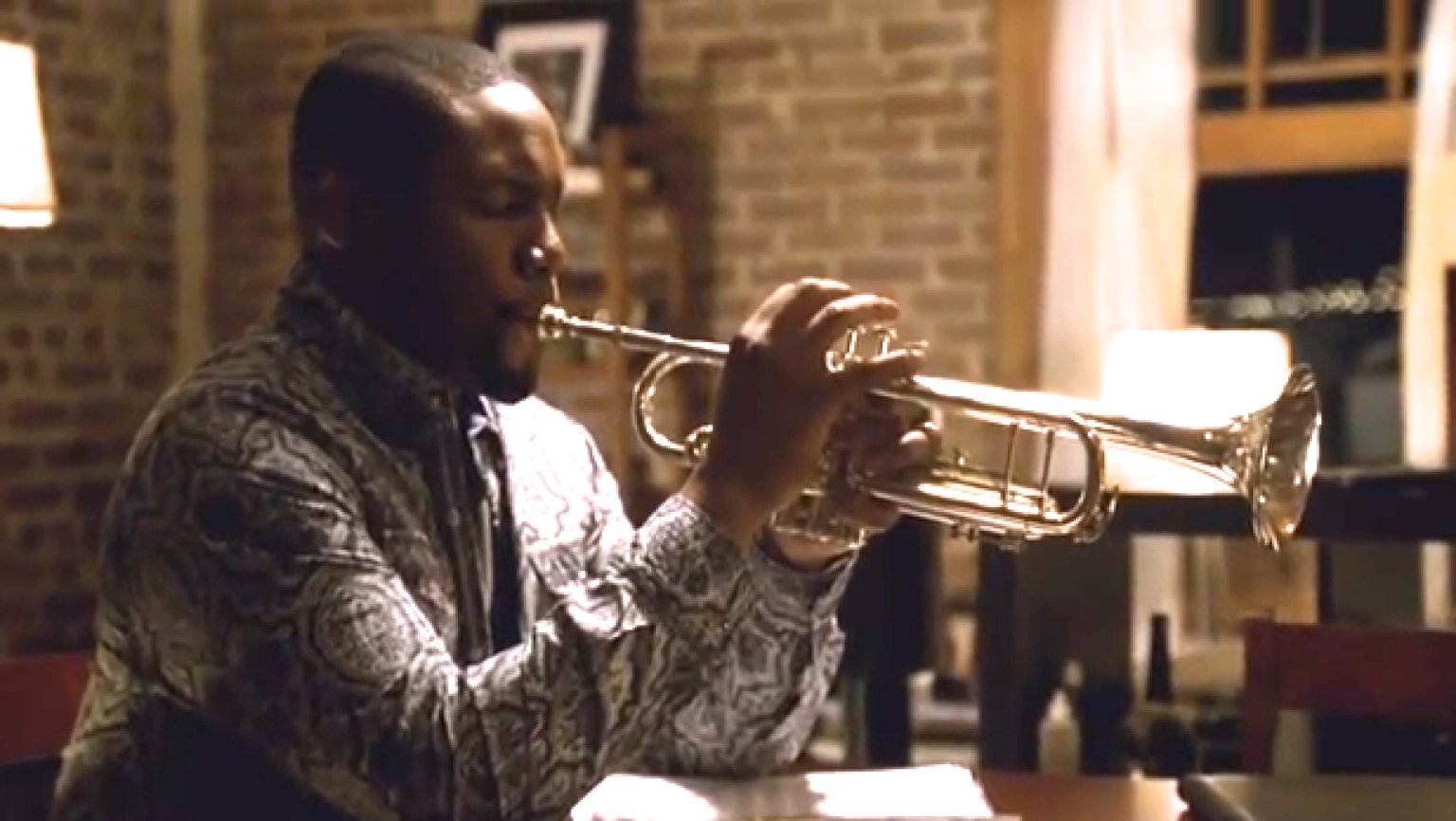
The sounds of Treme

You are about to read a nearly unabashed review for Treme, but before I get to the praise I’ll dismiss with the one caveat I believe it’s important to note.

David Simon’s first masterpiece, The Wire, was rich with occasionally heavy-handed political commentary, particularly in the fifth season, mostly along the lines of power corrupts, bureaucracy is broken, the system no longer works. Treme lays this on fairly thick as well; not quite fifth season thick, but at least as much as the rest of The Wire. It’s not a problem for me, but I can imagine some eye-rolling from those who found that aspect of The Wire irritating after a while. Now, moving on.

Nobody, and I mean Nobody, writes real, honest characters, better than David Simon, and proof is located throughout Treme.  All of our best recent television shows explore humanity in a deep and interesting way, but none of them since maybe Six Feet Under explores just regular everyday people in such an honest and authentic fashion.

Mad Men, Breaking Bad, and Game of Thrones are all true to themselves but none of them show real people; they’re exaggerated by their circumstances and place and time; truth through something other everyday life.

Treme deals with characters who are real people facing real problems; on the job, with their relationships, with occasional death and disease (and one pretty big hurricane) struggling to make a difference and just to make it at all. It’s not as grand as all that though. It’s not made out to be more than it is, but you get to know and love the characters that you invest yourself in their lives.

Simon is always putting his characters in difficult situations; when there’s an enemy it’s often some version of the system, which could have been seen as a cheap out but instead just feels true to the reality of the lives that New Orleans residents but even all city dwellers deal with on a daily basis.  Conflict in Treme is authentic rather than forced. Sure, things feel easy compared to The Wire, but not every show needs to have an equally bleak outlook. Like The Wire, Treme celebrates its characters, but unlike the Wire it seems like a couple of them end up in a better place than they started.

A few of the lesser characters don’t really get the screen time to be developed  and stand in more for their roles in other people’s and generla New Orleans stories (Chris Coy’s journalist may be the best example) but even they feel like people, and not stock characters, even with the lack of storyline that they get. A vast majority of the main characters have real in depth character arcs and personalities that resonate strongly whether you like them or hate them, or anywhere in between. There aren’t obvious favorite characters, and when characters get together or break up, the conflicts are complex and not simply one person’s fault or the other (usually). Characters grow, but it doesn’t feel forced. Antoine Baptiste’s ride from occasionally working trombonist to bona fide school band teacher and mentor is tirumpant and feels absolutely earned and true to the character, while Davis more or less ends up right where he started, and that isn’t seen as failure either.

Treme is a love letter to New Orleans in the best possible way. It feels authentic; it’s hard for me to say that with any authority, as a New Yorker who has been to New Orleans once in my life over a decade ago, but everything I’ve read seems to support it. Aside from the authenticity (which I do think matters somewhat in the way Simon is attempting to portray the show but is impossible for me to judge) the show makes me, who has only been to New Orleans once in his life with his family over a decade ago, absolutely fall in love with New Orleans. I don’t particularly care about jazz; it’s one of the music forms I’ve never been able to get into, and many of the forms of pop music featured in Treme aren’t strictly to my taste. Treme is filled with this; music is a huge theme in the show; and if you had described this to me ahead of time, I’d think I’d have no to little interest in the show or at least be bored by the music scenes. But I wasn’t. Instead of my lack of interest in that music turning me off of the show, the show’s sheer love and appreciation of the music won me over. It’s like contagious laughter; the appreciation and love for the music and the rest of New Orleans culture is contagious.

When it comes down to it, the only thing that ties every character in Treme together is their pull and their tie to New Orleans. These aren’t people who are living lives that could just be replicated in any other city. From the musicians, to the culinary world, to the super local Indian culture (that I’ve read about on the internet, watched four seasons of this show and still don’t really get), they spoke to the love-hate relationship of New Orleans residents to their city. They are constantly frustrated about the disappointments of their city, but for most of them (though not all) there’s no other place they’d rather live.

I’m a huge proponent of on-site filming. I admit it’s not always practical or necessary – it wouldn’t make sense or matter for Parks & Recreation to be filmed in Indiana – but it really does make a difference for shows like Treme. Of course, without David Simon and Eric Overmyer’s writing and characters, the setting doesn’t make a whit of difference. But as I’m sure they’d agree, the setting (while not a character – anyone who says the setting is a character should be shot on sight) really places the viewer there into these people’s lives in a way that sets just wouldn’t.

 I’ve made the claim before that people who love Friday Night Lights should love Treme, as they’re both shows that deal with real people helping real people, the good that lies deep inside most people no matter what screwed up things they do, and the strength of the bonds of families, friends, and other relationships to withstand difficulties. I’m unquestionably a big Friday Night Lights fan but sometimes plots felt forced, as if there had to be, say, a steroids arc, because it’s football. Treme does hit on all the obvious big New Orleans post-Katrina subjects, but it never feels forced. The world, one of my favorite parts of The Wire as well, feels so large, as characters fly around in the background; minor characters who would be ignored in other shows get lines that don’t matter for the plot but just make Treme’s world feel bigger. Treme doesn’t feel contained; it feels like the real world, which is one of the highest compliments I can give.

It’s too late, unfortunately for Treme. It’s never coming back, and we’ll never learn more about Antoine and Janette and Ladonna and Annie. Still, I’m thankful I got three and a half seasons of a show absolutely nobody watched.  Please, tell someone you love to watch this show and have the pleasure of enjoying it for the first time..


End of Season Report: Boardwalk Empire, Season 4 – Part 2

29 Nov

Nuckie in Florida My thoughts on the recently ended fourth season of Boardwalk Empire ended up reaching an unseemly length, so I decided to slice them in two. The first part is here.

Gillian’s plotline was one of the triumphs of the season. It was, unlike many of the other plots,largely self-contained within this season, and dealt with her trying to put her life back together and ultimately gain custody of Tommy, Jimmy’s orphaned son. My one reservation about her story was that it felt a little ludicrous to have this ridiculously long con run on her successful by a private detective solely for a confession to killing someone no one seems to really even care that much about. Still, if I’m willing to buy that, it was compelling, Gillian has always been one of my favorite side characters and Gretchen Mol manages to play her in a way that it’s hard not feel sympathetic for her by the end of the season even after all the terrible things she’s done.  She’s so tragically broken from the way she was abused as a girl that her warped sense of relative morality has made her at times successful, twisted, and oblivious. Ron Livington’s character had a limited role, nursing Gillian back to health only to break her later but he ultimately appreciated by the end of the season, as we did, the strength of Gillian’s character and her abilities, in spite of the endless immoral and criminal acts we know she committed.

Nuckie trod largely on familiar territory which makes it difficult for his plotlines to feel new or exciting. This is largely because the character is stuck in a status quo where he can’t get too big for his britches outside of Atlantic City, but can’t lose all his power either, unless the show is willing to make a much more radical change that I’m giving it credit for. Still, if one could put aside for a minute the negative I’ve already mentioned of going somewhere we’ve already gone before, the season handled it well.

Particularly, we’ve seen this Nuckie and Eli dance before, in season two, when Eli was part of a cabal, along with the Commodore and Jimmy, who worked to overthrow and ultimately kill Nuckie. Nuckie forgave Eli, but not Jimmy, and Eli had been a fairly loyal soldier until this year, aside from the constant sibling squabbles between the two. As I mentioned, unsurprisingly, I’m not usually a fan of repeated storylines, and I’m not here, but again, if we accept that Eli betraying Nuckie is going to be a repeated plotline, it’s done as well as could be expected.

I’ve always though Eli (like Gillian) was one of the stronger side characters and that his relationship with Nuckie was a fairly realistic portrayal of a sibling relationship, amped up in a violent way because of their positions as gangsters. With Nuckie as the protagonist, Eli can seem grating when he’s constantly rankled by Nuckie’s constant looking out for him and his family. It’s difficult, though, for Eli to constantly be under his brother’s thumb, not only at work, but often even within his own family at home, even if he ultimately loves his brother deep down, which i still think he does. Eli has a more convincing reason for betrayal his time, and I actually liked that in the end, at least this season, Eli wasn’t killed, which would have been the obvious move even though his actions clearly deserved it by the rules seen in this show.

The extra layer here was that the betrayal could have been avoided if the sibling rivalry didn’t run so deep. Agent Knox blackmailed Eli regarding his son’s murder charges, and if Eli had gone to Nuckie right away, the situation might have been resolved without endangering anyone in the family. Eli was too proud and ashamed to go to Nuckie, and Nuckie had to play big brother and patronize Eli by hiding his son’s actions from him in the first place, generating the understandable resentment from Eli. These are basic sibling conflicts that follow siblings everywhere, but they’re played out writ large due to the numerous murders and federal crimes which they’ve both been a part of. The family connection comes into play again in the decision of Nuckie not to kill Eli, as all of the rationales on both Eli’s and Nuckie’s sides are wrapped up in their complicated family web along with Eli’s son Willie, whose seemingly unnecessary and somewhat irritating (Willie is not my favorite character) actions early in the season set up the ground for Eli and Nuckie’s struggle.

I loved Patricia Arquette’s character,Sally Wheet, and she played a huge part in keeping Nuckie interesting for another season. I do think Nuckie is a good character overall, and has layers of depth and moral complexity that have shown over the course of the show, but it’s getting tough to keep him interesting, as mentioned earlier, without ever having him win or lose completely. He wants out of the gangster game, and the stress and the violence, but then he doesn’t because of his need for money and power, and around again we go. Arquette was a genuinely believable and compelling romantic interest that made me invested in Nuckie’s love life in way I didn’t feel was particularly likely before the season. Florida didn’t add a ton besides plot conveniences outside of Arquette, but she alone made it worthwhile. Florida was built up in the early seasons, only to largely fall away towards the end of the season, leading me to believe we’ll be back in the Sunshine State sometimes in season five.

Nuckie’s ex-wife Margaret largely sat this season out, for which I was grateful, as she’s my least favorite character. Her two scenes with Arthur Rothstein I enjoyed though; perhaps there’s much more potential for her now that she’s fully out of Nuckie’s life and in the show in limited doses.

Real life gangsters Rothstein, Charlie Luciano, and Meyer Lansky each had minor roles in the season, each befitting the size of characters throughout this series, but each added color, character, and fine acting, in the smaller roles they inhabited. They were like basketball three-point specialists, making the most out of their limited time on screen, injecting little bits of character into smaller parts without needing the ball to have an impact. Mickey Doyle, another character whose actor gets listed in the main credit sequence even though he has a relatively minor role, is the type of character who can be grating with all but the slimmest parts, but in short bursts adds a much needed bit of levity to a show that can easily get overserious. Rothstein and Lansky are about the only other two who ever seem to show any sense of humor, and both faced more serious situations this season that prevented them from being at their most lighthearted.

Antagonist FBI Agent Knox wasn’t my favorite part of the season. He was largely fair in his handling of Eli, but his unnecessary beating of Eddie left me cold and somewhat unsympathetic. He’s clearly on the right side ethically and legally, relative to the show’s protagonists, but because they’re protagonists our natural sympathies lie with them, so the relatively more moral FBI agent needs to be legitimately clean to win us over. Knox, to his credit, isn’t corrupt, and he is certainly on the side of right, but I think he could have been even more convincing and relatively more likeable, which would have shone a brighter light on the fact that the characters at the center of the show are no-good criminals.

This report wouldn’t be complete without nothing that Nuckie’s servant Eddie got some serious work to do and excelled in his final episodes mid-season as he’s cornered by the FBI and then takes his own life. His last scene was brilliantly acted and wonderfully filmed.

Overall, this season was a positive step for the show. Side characters were fleshed out. Plots came together somewhat, but not entirely, and wrapped up some season long plots while leaving a lot hanging for next season. The antagonists were more complicated and enticing than Season 3’s Gyp Rosetti, who was a fun sociopathic villain but not a particularly interesting or complicated one. I’m looking forward to what the writers and creators come up with next.

End of Season Report: Boardwalk Empire, Season 4 – Part 1

27 Nov

Nuckie and Narcisse

Boardwalk Empire may never quite rise to the status of truly great show in the annals with the Mad Mens and Sopranos and Breaking Bads of the world, but this fourth season was  a a movie in the right direction, very good season of television, in the tier just below great. The fourth season was a distinct rebound from the so-so third season, back to the heights of the second, which was previously (and still may be – I’d have to think on it more) the best season of Boardwalk Empire.

The third season of Boardwalk was sharply focused but was stifled by a concentration on a villain who, while gleefully diabolical, was uninteresting and one-dimensional. Bobby Cannvale did all he could with his psychotic gangster Gyp Rosetti, and it made from some breathtaking and brilliantly violent individual scenes that jumped from the screen. In terms of narrative arc, however, his irrational antagonism left the entire arc around with the season was built often lacking.

Season four on the other hand, managed impressively the very difficult task of knowing when to pull plots apart and when to push plots together, keeping the season focused enough to mostly not feel disparate while finding time to focus more on non-Nuckie characters than ever before. Additionally, season four found antagonists that if not entirely as rich in character as they could be, were more layered than Rosetti, who may have started out simply as a wronged businessman, but by the end was a nut hell-bent solely on Nuckie’s destruction.

Season four also is by far the least seasonally-oriented season of Boardwalk. While the finale had some huge, series-changing moments, major questions and plotlines remain in the air in ways that felt far less settled than after each of the show’s previous three seasons. The two biggest arcs of the year, Nuckie’s and Chalky’s were left somewhat unfulfilled, and Eli, whose death would have been a classic seasonal wrap up, lives and moves on to Chicago for now. There’s nothing wrong with leaving plot strands open ended for next season, and in fact, it can have many benefits, but it does make it harder to evaluate the season in a vacuum.

I’m now going to roll through each of the major arcs and make some comments.

Chalky’s arc was very strong. There was one major issue I had, which was his relationship to Daughter. I never found Daughter’s character compelling or charistmatic, and that meant I never was quote on board with Chalky’s infatuation with her. It could be explained simply as a mid-life crisis with a younger woman, and that’s fine, but the show made it out to be more than that. That said, Chalky’s battle with Narcisse was largely compelling. Chalky faced a problem which Nuckie has in the past, having his leadership challenged, and struggled to maintain supremacy in a world that was changing faster than he was ready for it. On top of this, he doesn’t know who his allies are in his community or outside it, and must go it alone until he can figure out how his real friends are. Chalky made many mistakes along the way, but came out of his battle with Narcisse easier to root for in some ways, and harder in others, a more complicated character. His daughter getting caught in accidental cross-fire aimed at Narcisse was brutal luck which should have a debilitating effect on Chalky going forward.

My one other complaint is that I think there was an interesting potential dichotomy set up for Narcisse; his support and fight for his race, while at the same time participating in organized crime, and particularly drugs which harm the community. There could have been a way to really explore Narcisse as a character with an internal battle between these sides, but instead Narcisse was pretty much just an antagonist who was kind of a blowhard rather than having any working principles.

The Chicago plot lacked the gravitas of the other arcs. Boardwalk Empire is always filmed with care, and the cinematography and film-making is beautiful as always, even when the writing and characters can’t match it. Watching Al Capone’s rise, through the eyes largely, of Nelson van Alden ne George Mueller ne Nelson van Alden was absolutely entertaining at times but felt more like a way to stage a version of an interesting episode in history rather than necessarily fit in with the other segments of the show. It was fun to watch the sociopath Capone move up the ladder in his local organized crime family, but it didn’t really have the same emotional or character weight of some of the other arcs. I think Michael Shannon is a great actor and any depth I get from Van Alden I credit to him, because Van Alden has always been one of my least favorite characters on the show. I’ve always felt Van Alden was just a little bit too odd, and particularly that his transition from uber anal prohibition agent to unhinged salesman to gangland enforcer never quite worked. Still, if I allow myself to try to disregard the history from before this season, Van Alden, in this season alone strangely often plays the role of the viewer seeing the abilities and the weaknesses of Capone, the most well-known and infamous real character on the show.

Richard Harrow’s death makes sense in a lot of ways. He’s a fan favorite so his death would carry an emotional impact that many of the characters’ potential deaths couldn’t hope to match. Harrow was also kind of out of plot. While everyone wanted more Harrow, it seemed clear a couple of episodes into this season that the writers didn’t exactly know what to do with him.  He appeared in extended segments in early episodes and then featured in less and less screen time as this season went on. His plot slowed down to a crawl to make sure it didn’t outpace what the writers could actually figure out to do with him. In the last episodes, a period of stasis arrived. Richard got control of Jimmy’s kid and was with the girl he loved, and Nuckie had given him a job, but it’s still not clear what it was or why. There seemed to be two obvious options for what to do with Richard: either let him go off an be happy and largely off the show at least temporarily (with the caveat he could show back up at anytime if the writers could think of a reason) or kill him off tragically. As (BREAKING BAD SPOILER) Breaking Bad fans know, letting your wife know everything is all wrapped up for the best and you’ll be home is all but a death warrant.(SPOILER OVER). The final scene was a poignant but fairly inevitable death for an excellent character. Richard Harrow couldn’t just get away and live a happy life, certainly not after leaving so many bodies in his wake, even if it was often done with the best of intentions. This isn’t that type of show. There are tradeoffs in life, and some good can’t necessarily outdo a lot of bad. Still, the final scene of the season was beautiful and no character deserved to go out in that memorable way more than Harrow.

End of Season Report: Enlightened, Season 2

17 Jul

Amy looks onAs I mentioned in my review of the first season of Enlightened, when I watched the first episode, I didn’t like it.  Even after watching both seasons and enjoying them greatly,, I still don’t think my initial impression was wrong.  The primary problem I had was that I didn’t like the main character, Laura Dern’s Amy Jellicoe.  After watching two seasons, I still don’t, in so much as she would drive me crazy if I ever had to hang out with her.  She has a number of qualities that drive me crazy, including a quasi new age outlook and never knowing when to stop talking. That said, over two seasons of really getting to know her and her life, it’s hard not to both empathize and sympathize with her.

Enlightened is about the sense of powerlessness felt by the average person into today’s modern corporate suburban world.  Amy Jellicoe struggles in a pointless office job working at mindless tasks at a computer. The only purpose of her department is to put other people out of work, and eventually to put herself and her colleagues out of work when they’ve done enough.  The series begins when after fifteen years climbing the corporate ladder, she has a breakdown, and comes back only to realize what a meaningless life she’s been living.  She’s surrounded by poor, sad individuals who have simply lost any desire or ability they once had to make something more out of their careers, led by Mike White’s Tyler, who simple gave up on trying years ago.

However, while the first season is about just how powerless the characters are, the second season instead decides to give them a fighting chance.  Every character, with the possible exception of Amy’s mother, is given a shot to actually come out of things a little bit better than they started out.  Additionally, the second season is more serial than the first, as there’s a running plotline focused around Amy trying to take down her evil corporate overlords Abaddon, headed up by CEO Chalres Szidon, played by the ultimate white collar man James Rebhorn.

Amy, high off of her ability to convince her drunk and drug-addled ex-husband to go to rehab at the conclusion of the first season, must go back to her mind-numbing day job at Abaddon.  What chances is that her one friend one the job, computer expert Tyler, knows how to crack into corporate e-mails, and with that information Amy believes she can finally do what she’s sought out to do since the beginning of the series.  Prove herself as a force for good.  Take down an evil company, lifting up the little people, and making planet Earth, on balance, a better place.  She hooks up with, both figuratively and literally, an LA Times investigative reporter, who seems initially put off by Amy but is exicted about her reputed ability to get top secret e-mails from what he’s long theorized was a criminal corporate enterprise.  As she uses her hacked computer access to contribute, he invites her to an event where she sees a woman who was able to start a website and influence the world from a position even worse than hers.  She sees world outside of herself.  One person can actually make a difference. She’s naive, but she’s not crazy.  It’s difficult not to sympathize with her wanting to actually make some positive change in her life, even if it can be occasionally cringe-inducing the way she goes about it.

While her quest to get a muckraking expose published certainly provides Amy with the feeling that she can actually do something, several times over the season it feels as if Amy is in over her head. Amy forms a romantic relationship with the reporter, which goes sour when the reporter dismisses her before the story is published because of the appearance of  impropriety it might create, noting that both he and Amy knew what their relationship was. Amy didn’t.  Amy actually gets an incredible opportunity she’s always wanted towards the end of the season when she gets to meet with the CEO of Abaddon and is offered a position designed around making company socially responsible.  While it seems like Amy’s acceptance of this position should be the dream ending, it’s a cruel tease.  By this point in the season, it’s too late for this half-measure of working within the corporate structure. The expose on Abaddon that specifically mentions Amy is about to come out and there’s no putting on the breaks on it just because she’s gotten an opportunity which offers her the potential to make change and be financially stable at the same time.  You can’t have everything though, and it would have felt like a little bit of both a cop out and a sell out for Amy to accept at this point, even if she could.  She made her bed with her choice to reach up and a grab a chance to make a deeper permanent mark at the price of sacrificing a potential comfortable position and for better or worse, though hopefully better, she now has to lie in it.

Vastly needed comic relief comes in the form of wonderful boss character Dougie Daniels played by Til Death’s Timm Sharp.  He’s hilarious throughout as the douchey, tech-savvy boss of Amy’s basement unit, who thinks a lot more of himself than just about anyone else does.  He’s all about following the corporate order until he finds out the corporate order is about to fire his ass, at which point he’s all about revenge.  While Amy persuades him to help her out with her espionage mission in pursuit high-minded ideals, Dougie is willing to go only as far as simply to screw the fuckers who are letting him go.

Luke Wilson’s Levi Callow doesn’t get a ton of time to shine in the second season, but he uses the time he gets well.  The third episode, which focuses on his plight attending rehab in Hawaii, is one of the better episodes of the season, if not the best, and features Christopher Abbott of Girls fame having a lot more fun than he ever does in Girls.  For people who can’t get into the show due to Amy’s character, I would highly recommend a viewing of this episode even without context, for the powerful storytelling and writing Enlightened brings to the table.

Mike White’s Tyler also gets an unexpected opportunity for happiness.  He interacts with executive secretary Eileen, played by Molly Shannon, as part of the conspirators’ attempts to gain access to some deeply hidden documents, but ends up falling in love.  Tyler’s quest to bond with another human is lonelier but just as moving if not moreso than Amy’s.  It seems like guaranteed tragedy once Eileen learns why Tyler ran into her in the first place. Surprisingly, however for this show, this potential disaster is turned around when Amy’s insistence that Tyler wasn’t in on the down and dirty details of the conspiracy brings the two of them back together.  No one on the deserves a happy ending more than Tyler.

And that brings me what was remarkable about the second season. Enlightened, one of the most depressing shows in the past few years to air on television, actually has a happy ending.    In some ways it’s certainly unexpected for a show that sometimes just feels like it’s beating you down, letting you get slightly back up, and then bating you down again, but it doesn’t feel cheap.  Amy doesn’t have a great time over the course of the series, but she earns the peace of mind she gets at the end.  I’m not sure how much of an idea series creator Mike White had that this would be the final season, but even though I’d prefer more episodes, it’s hard to believe if there were more, it wouldn’t end at a lower point.

In the last episode, Amy, when her identity as the source of scandalous leaked documents breaks out, is pulled out of her job and brought up to see the CEO and a bevy of executives and lawyers.  She’s fired of course, among other negative consequences, but they’ll sue her brains out if she doesn’t tell them exactly what documents were leaked.  I half-expected Amy to fold, realizing she had made a mess of what could have been a great situation for her.  She doesn’t though.  This is Amy’s moment of triumph.  It’s to her advantage here to be a little person.  Sue away, she says.  She doesn’t own anything and is deeply in debt.  For a moment, her terrible situation is turned into an asset.  Only someone who had been in her position of hopelessness could have had the desperation to topple this corrupt CEO.  And about that, she wasn’t wrong either.  The CEO really did do some terrible things, and she really is the one to be responsible for restoring a little balance to the world.  Seeing her photo on the cover, she earned that.

Amy is annoying.  Amy is irritating.  That never really changes over the course of the show; she never curbs all the activities that drive me crazy when watching her.  That said, her life is rough.  She had a marriage fall apart after a miscarriage, she has a depressed mom, and the person she thinks as her best friend kind of hates her, and well.  She deserves a win, and it’s gratifying to see her get one.

Who had the most affairs? Tony Soprano vs. Don Draper

10 Jul

Tony's hungry

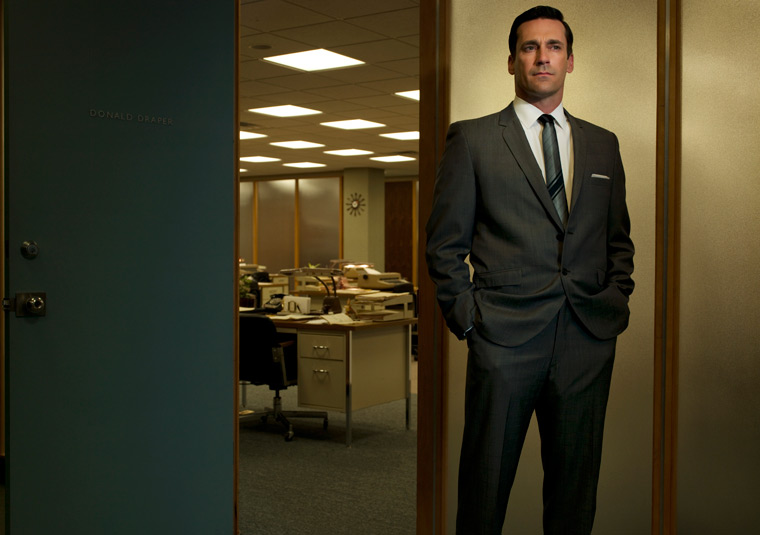
In the light of The Sopranos’ star James Gandolfini’s unfortunate recent passing, and the end of Mad Men’s sixth and penultimate season, there’s no better time to answer the most pressing question concerning those two shows.  Who cheated on his wife with more women, Tony Soprano or Don Draper?  To find out we’ll dive through the respective sordid pasts of these two legendary television philanderers, going back and forth one-fo-one chronologically between the shows.  Because the Sopranos started first, we’ll start with Tony.  Apologies if I’ve missed any; I did my best to scour through the episodes of both shows for every affair, no matter how brief, but these two characters didn’t make it easy.

Tony:

Irina Peltsin – One of the two longest extramarital relationships Tony is involved in over the course of the series, Irina is Tony’s comare from the pilot until the second to last episode of the second season when he attempts to break up with her, thinking she deserves to have a real life.  She doesn’t take it well, breaking down and trying to kill herself, which will be the start of somewhat of a tradition for Tony’s mistresses.  Tony sends Silvio over to her place to give her a nice $75,000 severance package and urge her to move on.

Don:

Midge Daniels – Like Tony, Don Draper is cheating on his wife from the get go.  In the first episode we meet the bohemian artist Midge who seems fittingly more reminiscent of the late ‘50s than the ‘60s.  Seemingly opposites, they  nevertheless have a fairly good run, as one of Don’s longer extramarital affairs, lasting until the eight episode of the first season, when Don unsuccessfully tries to get her to go to Paris with him. Things don’t go well after that for Midge who shows up in a later season as a drug addict.

Tony:

Connie Desapio – Desapio is a receptionist at Barone Construction, a Soprano family operation which Tony spends some time at, based on legal advice to appear like he’s actually doing the job he claims to have.  They have sex to pass the time in season two, episode 11, “House Arrest” until Tony goes back to Satriale’s eventually out of boredom.

Department Store Heiress

Don:

Rachel Menken – Rachel, who initially hires the firm to create interest for her department store, was a very different kind of woman from Midge.  She meets done in the series’ first episode as a client, and initiaully rebuffs Don’s advances, upon finding out that he’s married.  They finally begin the affair in the tenth episode of the first season.  She puts the kibosh on the affair in the 12th episode of the first season, when, after Don proposes running away to LA together, she realizes that he just wants to run away, but not necessarily with her.

Globe Motors Saleswoman

Tony:

Gloria Trillo – Trillo is a car salesman who Tony meets in Dr. Melfi’s office in season three’s “He is Risen.”  The most mentally unstable of Tony’s affairs, which is a dubious honor, she tries to provoke Tony into violent reactions.  Tony breaks up with her because of this, and Patsy Parisi threatens her, telling her to never come near Tony or his family again.  Later she hangs herself.

Don:

Bobbie Barrett – Barrett, introduced in season two’s “The Benefactor,” is married to and manages insult comic Jimmy Barrett, who Sterling Cooper recruits to appear in ads for Utz potato chips.  Barrett is the only woman Don sleeps with that we know is married, and she affirmatively seduces Don, who makes a brief attempt to turn her down.  The affair hits an awkward moment when Don and Bobbie are caught in a car accident together, but ends finally when Don finds out Bobbie has been gossiping about him behind his back.

Valentina

Tony:

Valentina La Paz – La Paz is the other long-time Tony Soprano comare.  She’s dating Ralph Cifaretto at the time that Tony and her get together after having lunch at Hesh’s house in season four episode “Mergers and Acquisitions.”  Tony breaks up with Valentina towards the end of season five when he arranges to move back in with Carmela, after she suffers a serious burn injury.  She, continuing a pattern, threatens to kill herself when he leaves.

Don:

Joy – In season two, episode 11, “The Jet Set”, Don takes a trip out to Los Angeles, where he meets a young woman, Joy, near the pool at his hotel. They attend a surreal dinner party and afterwards have sex.  Later, she and her friends and her dad move to the Bahamas, while Don returns to reality in New York.

Tony:

Svetlana Kirilenko – Tony and Kirilenko, earlier comare Irina’s cousin and Junior’s nurse, have sex just once, as far as we know, in season four episode “The Strong, Silent Type.”  She is far and away the most put together woman Tony cheats with on the show and she breaks off their relationship, though Irina later spills the beans to Carmela, helping to lead to Tony and Carmela’s separation.

Don:

Shelly – In the first episode of season three, “Out of Town,” Don meets a stewardess named Shelly on a flight to Baltimore.  She invites him and Sal to dinner at the hotel at which they’re all staying and after their meal, one thing leads to another.

Tony:

Sonya Aragon – An exotic dancer Chris used to hang out with, Tony meets up with her in Las Vegas after Chris’s death in season six episode “Kennedy and Heidi.”  They have sex, smoke weed, and take peyote.

Suzanne

Don:

Suzanne Farrell – Suzanne and Don first meet during a parent teacher conference in the second episode of season three while she’s Sally’s teacher.  They meet several times before the relationship becomes romantic.  She’s a bit of a hippy, and has a troubled brother who she cares for deeply.  She falls for him and wants to go out together in public, something Don almost grants while Betty is out of town.  The affair ends when Betty returns early and inquires about Don’s past which causes Don to call Suzanne to let her know it’s over.

Sylvia Rosen

Don:

Sylvia Rosen  – It seemed like Don had finally become faithful with Megan, but his faith waned at the start of the most recent sixth season when it turns out he’s been having an affair with neighbor Sylvia.  This affair was doubly nefarious because Don seemed to actually like Sylvia’s husband Arnold, and there aren’t very many people in Mad Men that Don likes.  The affair came to a temporary end when Don was simply too cruel and Sylvia decides it’s over, but is rekindled when Don helps get Sylvia’s son out of serving in Vietnam.

Don:

Betty Francis – Yes, I almost forgot this but Don cheats on his second wife with his first wife.

Don

Don takes a tight 8-6 victory, but with all the other people Don and Tony must have slept with before the shows started, who can possibly say what the actual score might be.

A couple of quick notes on women who were excluded:

This is a comparison of women Don cheated with, so in season four, when he was divorced, all his affairs were on the up and up.  Still for completion’s sake, here’s a quick rundown of all the women he slept with in season four.  His most ongoing relationship was with the age appropriate Faye Miller, a ratings analyst who he breaks up with at the end of the season when he instead chooses to be with Megan, who he proposes to soon after.  In between, he sleeps with a call girl Candace, in the first episode of the fourth season, a secretary named Allison whose heart he breaks in the second episode, a waitress named Doris in the sixth episode as well another unnamed woman, and Roger’s wife’s Jane’s friend Bethany in the eighth episode.

Tony was separated from Carmela for most of the fifth season of The Sopranos, so I chose not to count any sleeping around during the separation.  In the 11th episode of the fifth season, “The Test Dream,” he hires an escort while he’s staying at the Plaza, and they presumably sleep together. In the first episode of season four, Tony and his gang party with a bunch of Icelandic stewardesses but there’s no clear evidence indicating Tony necessarily slept with any of them.  Tony almost has an affair with real estate agent Juliana Skiff, but they never consummate it as Tony decides to remain faithful to Carmela, and Skiff and Chris take up together instead.

Game of Thrones – End of Season Report, Season 3

10 Jun

Arya Horseface

Game of Thrones Season 3 ended yesterday with more of a whimper than a bang, especially compared to the penultimate episode.  During the silent credit sequence that followed that ninth episode, you could hear a pin drop due to the gaping silence and wide open jaws of the viewers, at least where I was watching.  Still, things happened last night, and plenty of things happened over the course of the year.  The last episode was primarily little bits of wrapping up loose ends and starting new ones.  I’ll take a look at some pieces of the last episode, some continued fall out from the red wedding, and some general season-long trends.

First, it can’t be underestimated how much the greater Westeros landscape has shifted post Red Wedding.  The Lannisters, for most intents and purposes, have won the war.  They know the battles aren’t over forever; there are marauding Ironborn in the north, and Stannis remains alive and everyone knows he’s not one to give in.  Still, Stannis’s forces are decimated.  Stannis will have to regroup and any fight that could actually challenge Lannister superiority is some time away.  The Lannisters and their allies have recaptured the north and their single greatest current threat was wiped out in one single brilliant blow.  The Lannisters now merely need to consolidate their power and make sure their growing unruly king can be corralled.

The three primary parties behind the Red Wedding had different motivations which lead to their hand in the event.  Tywin was out to win a difficult war and saw a way to do so in one fell swoop with a minimum of bloodshed to his side.  He’s not punitive beyond what he thinks will serve a practical purpose, such as to intimidate others from ever taking up arms against the Lannisters again.  He’s not interested in parading the wolf ‘s head around or gloating.  Tywin is an unsentimental pragmatist through and through.  Roose Bolton is a cold and calculating opportunist.  He begins to see, as the viewer does, that Robb, thanks to a series of blunders as well as overall strategic difficulties, is losing the war.  He knew that having supported a losing side for so long is unlikely to earn him mercy with Tywin and the eventual victors.  He’d lose lands at the least, and maybe members of his family as hostages. Instead, he saw a chance to turn his fortunes around by aligning himself with the winning side, and helping them out to prove his value.  Bolton is ambitious but within reason.  He’s going to become Warden of the North, a huge promotion, but he’s not so greedy that he would have made his move if he didn’t see it as a no-lose opportunity.  For Walder Frey, it’s old fashioned revenge, plain and simple.  He wouldn’t have acted without assurances from Tywin, but he’s less interested in the greater conflict than in getting back at Robb and the Stark family, who showed him up.  He is a bitter old man who was lied to.  Robb broke a promise, insulted the Freys, and must pay.

Tywin intriguingly asks whether it matters how they died, when discussing the moral repercussions of his actions with Tyrion.  A war won is a war won, and Tywin rightly points out that fewer people died this way than would have in a prolonged conflict on open battlefields, and not just on the Lannister side.  Still, Tyrion’s point that memories are long is at least equally correct and I think that’s not to be underestimated.  This is a kingdom with a long collective memory, and the North is not likely to put aside its animus towards the events of the red wedding, even as years and decades pass.  Bran explicitly reminds of us of this with the story of the Rat Cook, who was turned into a rat not for murder, or for cannibalism, but for violating sacred guest right.  The odds are against Tywin being haunted by that decision in the near future, but for a man who puts so much stock in considering his family as greater than himself, he may have caused them seriously long term negative reputational value.

Daenerys conquered two slave cities in short order with dragons, guile, and a host of now freed slave soldiers.  She had her best television moment fairly early in the season when she loosed the dragons on the Astapor slave sellers and told the unsullied she purchased to turn on and kill their masters.  I was pretty disappointed with her final scene, which was also the last scene of the season.  The previous two seasons have ended with serious WTF moments, where shocking supernatural events takes place.  This season’s ending did not compare to either the dragons hatching in the first season or the white walkers in the second.  The slave soldiers calling out to Dany, their mother, verged on cheesiness, and did nothing for me.  I may be biased because Dany isn’t my favorite character, but I still thought this was not adding anything new to the Dany narrative; the news she had conquered Yunkai  would have been a better place to end her season’s storyline.  Admittedly, the Dany scenes are among the hardest to place within episodes because she’s so far away from all the other characters both spatially and plotwise.  It’s hard to root against her freeing the slaves, and the slavers are some of the most one-sided characters on the show.  Still, I think there’s a more interesting dynamic to focus on in terms of what happens to the slaves and the cities once she conquers them, and how to take care of her huge number of ex-slave followers. I hope some time is spent with these challenges in the next seasons.

A couple of characters actually converge  and meet up with one another in this final episode!  Sam meets up with Bran, and even though they go their separate ways, it’s still a heartwarming little meet and greet.  Bran has gotten the bulk of the show’s supernatural activity this season and he demonstrates his warg power and his future vision or greensight.  His spirit guide Jojen seems to believe Bran could play a major role in fighting the white walkers in the upcoming battle. Bran’s plot is consistently the hardest to predict because it’s so steeped in the supernatural. Jaime also finally reunited with Cersei, providing an oddly sentimental moment for incest, though the one moment is about all we get from from their meeting.

In a plot beginning, Stannis is soon to be off to the wall with both rivals Melisandre and Davos agreeing on a plan. It’s an intriguing move for a king without a kingdom.  How to convince the people of the kingdom to join his side?  If he can’t beat his enemies within, attempt to defeat the kingdom’s enemies without, the white walkers.  The Stannis plots this season have been limited, but with him off to the wall, where Jon Snow and Sam are hanging about, it seems like they may get a lot more interesting soon.

The petulant young king Joffrey is a problem, but less so than when there was merely Cersei to corral him, as Tywin is clearly in control of the kingdom now.  Having the crown hardly makes one king in more than name.  That said, there’s at least a minimum of connection to the crown that one needs to obtain ultimate power as well. Varys reminds Shea of this when mentioning that he, as a foreigner, will never be able to hold more than a certain amount of sway no matter how much he knows.  I didn’t particularly care for the Varys – Shea scene, largely because it seemed as if Varys was saying a lot for our benefit that he would never have said to Shea in context, but the point still stands.  You don’t need to be the king to have power but having the family connection and the high born status doesn’t hurt.

Tyrion, who basically owned season 2, didn’t have a whole to do this season, but that’s okay.  He did marry Sansa, against both of their wills, and the little bit of banter we’ve seen between the two of them has been surprisingly entertaining.

Arya and the hound have become the latest buddy pairing to tear up the Westeros countryside, hot on the heels of Jaime and Brienne and before them Tyrion and Bronn.  The Hound has some of the more mysterious motives of any character in the show, as he’s done some monstrous deeds, but also seems to have some redeeming characteristics.  He also really does not like fire. Him and Arya make short work of four Frey soldiers sitting beside a fire, and Arya, perhaps not surprisingly considering all she’s dealt with, has begun to harden considerably in her treatment of men minding their own business hanging around the countryside.  Just last week, she asked the hound to spare a man’s life.  No more.

Jon finally makes it back home, ending his middling attempt to pose as a wildling.  It’s heartbreaking to see Ygritte aim at Jon Snow, and it’s an open question if she’s actually trying to kill him or not, but I think it’s oddly reaffirming that both of them are standing up for what they believe in.  I’d love for them to be together, but it’s difficult when they have belief systems that are diametrically at odds.  Jon stands up for the Night’s Watch and makes a daring return home to warm of the upcoming wildlings attack, while Ygritte tries to fulfill her promise that if Jon betrayed her she would kill him herself.  I’m certain glad, however, that she was unable to come through on hers.

A reveal in the finale is that the character torturing Theon for the entirety of the season is Ramsay Snow, Roose Bolton’s bastard, who took over Winterfell from the Ironborn.  The number of Theon scenes this season has seemed gratuitous – two or three scenes of torture were good enough to get the point across, and beyond that seemed unnecessary.  Still, here we have a truly evil, truly sadistic character.  To me, this actually makes view Joffrey in a different light.  Ramsay is a face of evil.  Joffrey is a spoiled immature brat who received the keys to a kingdom as a teenager when he normally would have received groundings and time outs.  He’s bad, unquestionably, but I think he’s more out of control than evil.  Now Ramsay Bolton, who continues to torture Theon for days and weeks on end simply for the fun of it.  That’s evil.