Tag Archives: Hannibal

Ranking the Shows That I Watch – 2014 Edition: 3-1

10 Apr

Finally, we’re here. The top three. All entering these heights for the first time, all in their second seasons or earlier. One on broadcast, one on basic cable, and one on amazon. Let’s do this.

Intro here and 43-40 here and 39-36 here and 35-32 here and 31-28 here and 27-24 here and 23-20 here and 19-16 here and one-offs/shows ineligible for the list here and 15-12 here and 11-8 here and 7-4 here.

3. Transparent – 2013: Not Eligible

Transparent

I watch a lot of pilots. Most I dismiss out of hand. Some I consider, but eventually decide another episode isn’t worth my time. Some are borderline. Some I choose to watch another episode based on one or two aspects that strike my fancy. Some are solid. And very, very few inspire me, after simply one episode, to feel like I absolutely know I’m starting on a great show. Obviously you can only put so much material in one episode, so there’s at least a little bit of feeling and hunch that goes along with that distinction above and beyond what’s actually in the episode. Transparent had it though. Immediately, I know there was something there, and I hungrily devoured the remaining episodes in the course of a weekend. It’s a truly great show, and a great show in an area that hasn’t been covered much on TV lately. It’s about a family, and the hook is that the patriarch is coming out to his children as a self-identified female. That’s important, but it doesn’t tell the whole story. Transparent is simply a transcendent family dramedy that makes you immediately want to watch the next episode regardless of any big plot points. The actors are great, the story is great, the characters are great.

2. Hannibal – 2013: 8

HannibalSeason2-1

Hannibal has absolutely no right to be as good as it is. More or less, on paper, it’s a cop show, about an FBI agent who chases serial killers, often for an episode at a time, but sometimes over the course of several episodes. Hannibal is his mentor slash nemesis, manipulating him and befriending him at the same time. And yet Hannibal is so much more than that. The depth of Hannibal and Will’s relationship defies easy categorization. No show delves deeper into the depths of the human mind than Hannibal. Crimes, murder, in Hannibal, are about understanding, yearning for someone to figure out if anybody really knows anyone else. No show is more visually stunning than Hannibal; taking place as if in a dream world, which disturbingly blood and visceral displays of dead bodies that are troublingly startlingly beautiful. Hannibal’s cooking looks so delicious I want to eat it even knowing what went into it. The world of Hannibal is so much more than the sum of its parts, and there is no other experience like it on TV.

1. The Americans – 2013: 9

The Americans

When everything is working, everything is working, and The Americans was simply on fire in its second season. When The Americans started, I worried I’d tire quickly of its high concept premise, and get frustrated in particular having to root for monstrous characters who kill and maim and torture all in the service of an ultimately fickle and pointless cause. And on paper that still sounds right. But that’s not at all how it feels watching the show. The Americans is dynamic, and for all the killing and wigs and spy missions, the show is about family at least as much as it is about spies. The complicated cold war premise is a brilliant mechanism for discussing issues of secrets and lies, family and love, togetherness and loneliness. The layers of secrets and lies that run through The Americans is staggering. The season long plot unfolded brilliantly – and while the show can admittedly be somewhat on the nose, it’s so well done, and the characters are so fully formed that it entirely doesn’t matter. The Americans does something great shows do; it takes what start as side characters, and quickly makes them fully evolved; look at the FBI, or the Russian Rezidentura, which have become rich settings of their own right, not just merely in relationship to Elizabeth and Philip. A stunning finale capped off the season, with a twist that felt surprising but also well-earned and dealt with the season’s concerns while moving right into next season’s.

And there we are. Congrats, The Americans, congrats 2014. I’ll have a recap of the list up shortly.

End of Season Report: Hannibal, Season 2

26 May

Hannibal and friends

Holy fucking shit. I thought the ending of the first season was about as bleak as any season of any show on TV, let alone a network show. The second season may have topped, or bottomed, that. There are four characters credited in the show’s opening sequence. Three of them ended the second season lying on the ground, bleeding to death (It’s worth taking a second to note that the only other character to appear in Hannibal’s opening credits, Beverly, was killed by Hannibal halfway through the second season). While none of them were clearly dead, any or all could be; if this ended up being the series finale instead of merely a season finale, it would have all but locked up the title of darkest series finale of all time.

Through all this desolation, horror, and gore, Hannibal put together an extremely strong season, superior to its first season, and generally more purposeful, though with a couple of bumps along the way. Week to week, I couldn’t wait for Hannibal to see what happened next, and that anticipation is only reserved for my very favorite shows. When people ask me what shows they don’t watch that they should be, and I assume they’re watching standards like Mad Men, and Game of Thrones, Hannibal is one of my go to recommendations.

The season was largely broken up into two halves. The first involved Will’s incarceration in a mental asylum where he was assumed to be the Chesapeake Ripper, and ended with his exoneration and the framing of Frederick Chilton as the ripper. The second half involved the story of Margot and Mason Verger, and their various interactions with Will and Hannibal, as well as a plot by Jack Crawford and Will to lure Hannibal out and trap him.

Both halves worked very well individually but the show felt a little bit disjointed moving from the first to the second; it felt as if the halves were two individual seasons. This isn’t much of a problem, but the Margot and Mason introductions felt abrupt rather than smooth, and this just meant it probably took me a little bit longer to get on board with.

I’m glad I did though, by the second episode, because both Margot and Mason were played by extremely strong actors, expanding the cast of fantastic acting talent, which along with the gorgeous cinematography are the two most standout aspects of Hannibal. Hannibal continued to be as disturbing as ever if not more so, graphic violence-wise, than any show on TV, and this was highlighted in the season’s penultimate episode when Mason fed his own face to Will’s dogs and ate his own nose. The events are every bit as gruesome as that sentence sounds, and it’s remarkable that the other gore on the show rarely feels over the top. In fact, the beauty of the cinematography makes some of the most gruesome tableaus assembled by Hannibal  out of his victors look disturbingly mesmerizing, and in sharp contract to how base and simply disgusting Mason’s self-harming act looks.

Show runner Bryan Fuller does a great job picking and choosing how to deploy the tools of Hannibal’s literary and cinematic universe. There’s a lot of tough choices to make when working with an existing property, particularly one that everyone knows as well as Hannibal’s and he’s very smart in choosing when to add entirely new characters, when to use existing characters to be something other than how Thomas Harris or movie adaptations used them, and when to stick closer to the letter of the books.

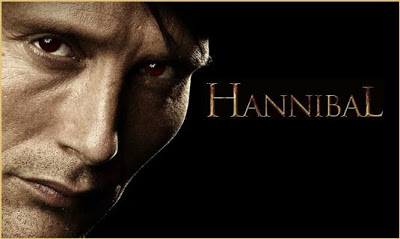
Mads Mikelson plays Hannibal as a seductive sociopathic genius, semisatanic but just human enough to add empathy and add a layer of depth to a character that could merely be pure evil. He exposes his most (and maybe only) humanity when dealing with Will Graham, who he appears to actually treat as the potential compatriot, rare in Hannibal’s world of clinical ubermench-like serial killing. That small bit of humanity makes Hannibal that much more engaging a character; at some level this sadistic and brilliant mass murderer is just looking for a friend. Mikelson manages to fuse the appeal of a terrifying force beyond good and evil with a needy middle schooler who is unhappy when he doesn’t get what he wants (Will’s friendship and trust, namely)

Even more fascinating to me is Will’s back and forth mental state, not fully seduced by Hannibal, but not immune to his charms either. Will stands strong in the end, sticking to the plan. However, he’s not all in the good. He goes farther than he has to for the trap him and Jack had set, and frequently mimics Hannibal, particularly in respect to Mason Verger, when he could well possibly have pulled back and kept the plan in check. His decision to keep some of this from Jack shows that he knows it’s wrong, but the power of Hannibal, while not enough to win him over in the end, tugs at him.  This ambiguity filling the relationship between Will and is beautiful. It’s impossible to tell who is leading who, and who believes what. The knots Hannibal and Will talk themselves into are sometimes rhetorical nonsense but lyrically enchanting at the same time.

Then there’s that last episode again. We knew some of the events of the last episode from the very first episode of the season, which opened with the flash forward of Jack and Hannibal fighting. It’s probably going to take me some time, and maybe even until the first episode of the third season to decide what I felt about it overall. It’s brutal. I like the idea of Hannibal getting away, and I like the idea of it being with Dr. Du Maurier, a side character who has recurred just enough for us to keep her in mind and whose return was quite welcome. Abigail is back for just long enough to wonder exactly what Hannibal has done to her right before Hannibal kills her, seemingly an act of revenge for Will’s betrayal. I’m fairly confident Abigail is dead, and feel like at least one of Jack, Alana, and Will will be dead as well, and most likely not Will. The events almost seemed surreal (and the Baltimore police sure seemed to take their sweet time) and I momentarily thought the entire sequence might be a dream or a hallucination. For sheer shock value, it’s hard to beat, and the events certainly turn the entire series on its head again going forward. Hannibal is certainly not afraid to shake up the status quo and that’s commendable.

Regardless of whether I fully come around on the finale, or am just satisfied but confused and baffled at the same time, Hannibal’s second season is superior television. The show has been elevated into must-watch territory, and is likely, unless a barrage of great programming invades the second half of the year, to move up in next year’s yearly rankings.


End of Season Report – Hannibal, Season 1

5 Jul

Listen to the music Marge! He's evil!

Right from the beginning, I described Hannibal as dark.  It’s dark in its plot and it’s sensibility but also simply in its look; lots of shadow and lots and lots of blood and guts.  This isn’t your grandmother’s show about serial killers.  There’s some gimmickry, but none of the flash and glamour that surround solving crimes on the big crime procedurals.  No, the crimes committed by the serial killers in Hannibal are disgusting and horrific and there’s no getting away from that.  So much so that main character Will Graham is constantly haunted by the crimes, as he gets way too close in his mental exercises to find the killers.    Sometimes it was even to dark for NBC.  There was an episode where a woman kidnapped kids and convinced them to kill their families, which was yanked from the schedule in the wake of, I’m not sure, just because, well, it’s shocking that this is even on NBC to begin with.

Point being, I knew the show was dark.  But the ending of the season even outdid my reasonably dark expectations.  How many first seasons end with their protagonist in an insane asylum?  One for the criminally insane, I might add; this is a special loony bin for the most depraved.  Yes, that’s what happens.  Cannibal and psychopath Hannibal Lecter, who at this point in our story is a revered psychoanalyst assisting the FBI, frames agent Will Graham, who also happens to have a very serious neurological condition called encephalitis which basically interferes with his very ability to deal with reality.  Just about every character thinks by the end of the season that Will Graham is responsible for a slew of murders including one of the girl who was the daughter of a serial killer and whom he has been mentoring for the entire season.

Of course, this is every so slightly lightened by the fact we know eventually Hannibal Lecter is going to wind up in that loony bin himself, with Graham on the outside, assuming creator Bryon Fuller doesn’t totally decide to throw the source material into the garbage can.  Plus, there’s only so much Graham can do from inside the mental asylum.  You’d have to think merely for plot purposes he’d get out sooner or later.  Still, this is a pretty rough stretch for Graham.  How he worms his way out of this, picks up on Lecter’s guilt, and convinces anyone else should be an interesting journey for the next season.

I complimented Bryon Fuller on this early on in the season but again I think plaudits are in order for his ability to take source material we know and make it fresh again. This is doubly so because it revolves around the tension of a free Hannibal, who we all know is a killer, screwing up the FBI and our protagonist even while we want to shout out, come on, he’s evil, have you guys never seen Silence of the Lambs?.

This is a serial show that would normally be a procedural.  I could imagine this show produced by Jerry Bruckheimer and it would be an extremely different show.  Watching the first few episodes, I kept expecting it to break out in a full procedural with a new killer every episode and little hints and bits of continued serial plot just to keep us interested in not missing an episode.  But that’s not what happened at all.  Instead it played by its own schedule, weaving seamlessly between new killers and the existing long term serial plots.  The one continued strain was the general unraveling of Will Graham’s mental state.  A slower episode would be followed with a faster episode, an high action episode with an more patient psychological pot boiler.

This show isn’t covering new territory.  We see the FBI and police catching murderers all over TV.  Will is a savant, a character, we see in different forms throughout TV and movies as well.  What we don’t see as often is the downside to savant-dom.  Usually the heroes of killer-catching movies and TV shows are one sided; they may have tragic pasts but they rarely have tragic presents.  With Will, there’s a cost of doing what he’s the best at.  Watching Will slip slowly deeper into the bounds of mental instability is both difficult to watch and captivating at the same time and is what makes Will a  much more interesting character than most versions of this stock model.

It’s gorgeous, it’s dark and it’s compelling.  If you don’t like excessive gore, it’s not for you, but otherwise it is.  It’s not a brilliant revelatory show like Mad Men or Breaking Bad, but there isn’t any other show on TV quite like it.

Spring 2013 Review: Hannibal

10 Apr

Hannibal

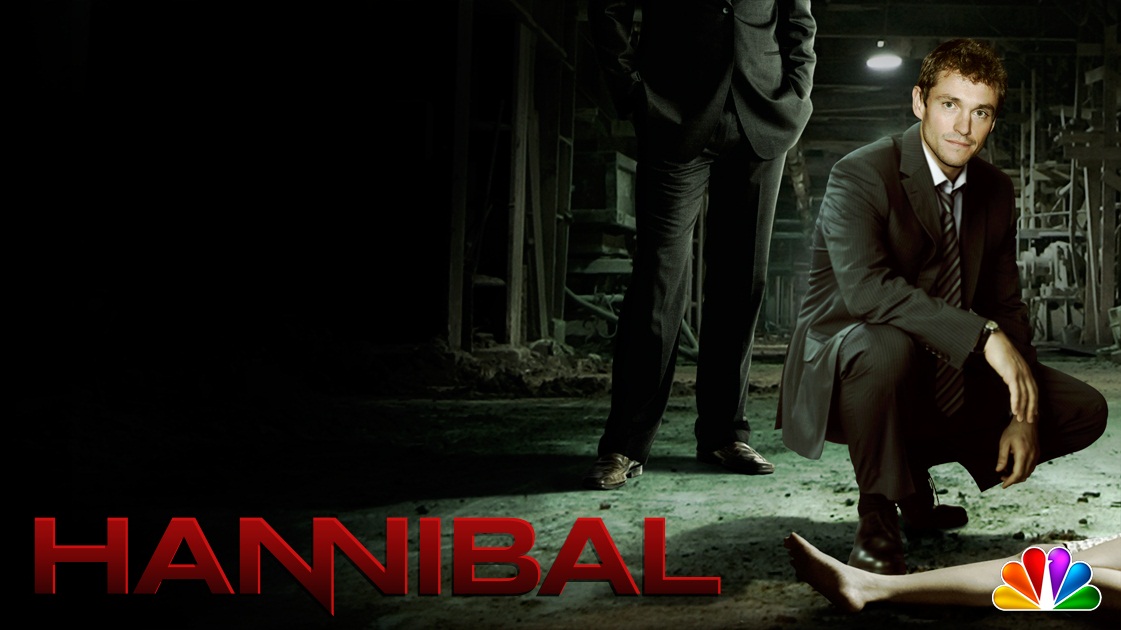
I initially thought Hannibal was on cable, instead of NBC, and although I’m not sure why I thought that, after watching the show, it makes a lot of sense that I would think it.  It feels like a cable show.  In fact, in a highly unusual arrangement (and perhaps an auger of the future), NBC has agreed to continue to air seasons of 13 episodes if the show is successful, which has become the default cable format.

The show was created by cult TV veteran Bryan Fuller, who has been behind Dead Like Me, Wonderfalls, Pushing Daisies, and Mockingbird Lane, none of which I have seen, and none of which has been particularly successful, but most of which have dedicated small followings.  Unlike what I know about those shows though, nothing about this show feels particularly cult-y, and I mean that in neither a bad or good way.  Rather than dissect that further though, let’s get into the meat of the show.

The title Hannibal in question is Hannibal Lecter, and thus this is a story that just about anyone who’s been around pop culture for the past 25 years knows pretty well.  Lecter, we know, is a famously cunning and psychopathic cannibal who, while in captivity, helps Jodie Foster’s Clarice Starling solve a major serial killer case in Silence of the Lambs.

Hannibal takes place well before Lecter has been captured.  The show stars Hugh Dancy as Will Graham, a character we know from the mediocre Silence of the Lambs prequel Red Dragon, where he was played by Ed Norton.  Here, Will Graham is a veritable super analyst, who has remarkable observational abilities, and more importantly a type of perfect empathy which allows him to relate and take the vantage point of even the most psychotic killers.  His abilities have the negative side effect of making him particularly vulnerable to being mentally destabilized, and Dancy does a very good job of seeming on edge the entire episode. We learn he is not a full FBI agent because he couldn’t pass some sort of stability tests but he is lecturing and helping out with random assignments.

His boss is Jack Crawford, head of FBI Behavioral Sciences, played by Lawrence Fishbourne here, and by Scott Glenn in Silence of the Lambs.  Crawford convinces Graham to take some time to help him out with finding serial killers, even if it means subjecting his psyche to serious angst.  Crawford is the level-headed boss who may not have the intuitive smarts of Graham but knows how to manage and direct people, and he’ll probably have a lot on his hands this season overseeing Graham, and the third member of our key trifecta.

This third member is none other than Hannibal Lecter himself.  Lecter is a renowned psychiatrist, as well as a brilliant psyopath,and  is brought in by Crawford to help develop psychological profiles on cases, including one in the pilot involving a cannibal who is kidnapping college aged girls and killing them.

The show’s critical dynamic is the tete a tete between Graham and Lecter.  Graham knows how to see into the mind of criminals, but only at great vulnerability to his own psyche. Lecter, who, without emotions, can’t be emotionally manipulated himself, knows how to push Graham’s buttons, and how to unnerve him. In this first episode, soon after it is discovered that the killer they’re tracking is a cannibal, there’s another killing that seems to fit the profile.  Graham immediately recognizes the work as that of a copy cat, and describes the killer as an intelligent psychopath who will show no pattern, has no feeling, and will likely never be caught.  Only we, the viewers, know that Lecter in fact committed this crime, and that Graham, unbeknownst to himself, is profiling Lecter perfectly (well, except for the never being caught part).  Lecter toys with Graham, but it seems to possibly be at least partly out of respect.  In fact, whether it was Lecter’s intention or not, it was seeing the incredibly wrong copy cat crime scene that allowed Graham to figure out the correct profile for the killer.

We also have to suffer through knowing Hannibal is super evil while the characters keep bringing him on board to help them on investigations, placing him in an ideal position to sabotage their cases. In the first episode, he warns their killer, right before they get to him, giving him a chance to kill his wife and severely injure his daughter.

Hannibal has a lot of procedural aspects.  I would guess, without knowing for sure as I’ve only seen the first episode, that each episode at least initially will involve the investigation of a new serial killer.  I was drawn in more than I usually am by procedurals.  Part of this was perhaps due to the high stakes of psychopathic serial killers, and part may have been due to the cinematic qualities of the pilot. One episode felt more like a suspense film than, say, a CSI episode , and the thirteen episode format might help protect that per episode special-ness more than a longer traditional network format.  I think a successful Hannibal can share aspects of two of my favorite current shows, Sherlock and Justified.  Sherlock has the same case per episode format with a more cinematic feel (it helps that Sherlock episodes are double length) and the same genius investigator type in the lead.  Hannibal looks like what Sherlock might be like if Sherlock and Moriarty were working side by side before they were official arch enemies.   Justified began as a rough procedural but morphed in a more and more serial show. The extended arcs made it significantly better but even the individual procedural episodes were a notch above the average, due to the strong character profiles and style built into the show.

The show is a little gimmicky in the way it shows Graham thinking about crime scenes, as he imagines himself as the criminal, and has him covered and blood and guts as he figures out how the criminal acted.  I normally don’t care for this type of gimmickry, but for whatever reason, it really didn’t bother me here.  Also, Gillian Anderson appears as Graham’s therapist, who tries to warn Crawford off from putting Graham too close to the edge.

Will I watch it again?  Yes.  Again, I normally stray from procedurals, but, if this is in at least part a procedural, it’s certainly not a typical one.   The Lecter – Graham relationship is electric right off the bat, and from the extra-curricular notes I’ve read by Fuller, I think he’ll do well to move the plot along during the seasons, rather than than have Lecter and Graham’s relationship in a perpetual status quo, which is a good thing.  It’s often hard to move a show along when you have something good in the present, because you risk having something worse in the future, but staying in the same place can often be just as bad.  My visceral reaction to finishing the first episode was to want to immediately put on the second, and while that doesn’t always bode well for the long term, it’s always a good sign for a pilot.