Tag Archives: FX

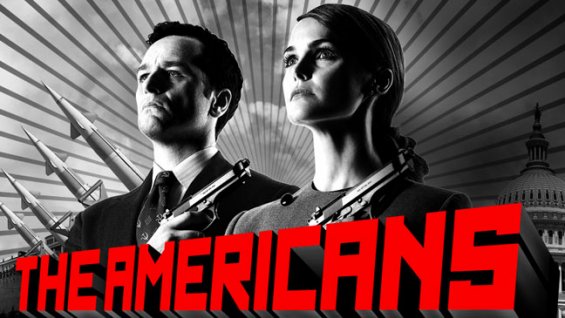
End of Season Report: The Americans

29 May

Two Americans, Two Soviets

The Americans has been one of the most rewarding new shows of the year, cementing the very solid FX brand name by putting a season together more than worthy of the promise shown in the first episode.

A quick caveat before I begin:  I understand this show could potentially pose a problem for people who prefer likeable protagonists, and even for some that can tolerate somewhat unlikable protagonists, but have a limit.  While main characters Elizabeth and Philip are not necessarily unlikable personality-wise or in their behavior towards their family, they are agents working for the Soviet government against the United States, and they not only spy but commit violent acts, sometimes against innocent victims.  Unless you’re a hardcore ol’ Commie, you’re not going to be rooting for them to succeed.  That said, if you can get used to having a complicated relationship with the protagonists, rooting for them in limited circumstances, while against them in others, you’ll do just fine, and I think that attitude is necessary to fully enjoy several excellent TV shows that have appeared over the last decade.

Elizabeth and Philip were sent to America as mere teenagers to build a fake life as a cover story so that they could spy for the USSR and commit all sorts of espionage without being discovered.  Of course, it’s hard to build a really convincing fake life without building somewhat of a real one in the process, a new problem created by the existence of longterm undercover agents.  Elizabeth and Philip love their kids, and their kids, a responsible teenage girl and a younger boy, love them back. They don’t at all, as far as we know, suspect anything about their parents true work (the parents claim to work together as travel agents), which if they ever found out, would probably drive them to decades of psychiatry or violence or, well, who can know just yet, and maybe we’ll find out.  Elizabeth and Philip’s marriage is tested over the course of the season, but their mutual devotion to their kids remains constant.  This devotion tests their loyalties to their country.  They, or at least, Philip, kind of like it in America, and as much as they feel a responsibility towards their jobs, there may be limits in how far they’re willing to go for work, in order to keep their kids safe and in the dark.

Next door neighbor Stan Beeman is an FBI agent with a background in counter intelligence, having gone undercover as an Aryan radical before relocating to DC to help fight Commies.  He’s undeniably skilled at his job, and his instincts often prove correct, including when he suspected Elizabeth and Phillip as possible agents right away, before cooling on them when they were able to diffuse his suspicions just in time.  However, his abilities are compromised by his emotional vulnerabilities and damaged family life.  His wife, tired of his late work hours and endless devotion to the job over his family, turns away from him, and at the same time, he begins an affair with his charge, a Russian agent he was able to turn.  The joke’s on him later in the season when the Russian agent turns back and becomes a double agent, using Stan for information, but he’s too emotionally compromised and invested to see it.  She may have turned against him due to finding out he killed an innocent, or as innocent a Soviet agent who works for their spy agency can be, Soviet in cold-hearted revenge and frustration from the death of his FBI partner.  The spy game is an endless cycle of people using one another and it’s very difficult to develop genuine emotional bonds when they’re formed out of manipulation and the mutual need for information.

The Americans pays close attention to the value of loyalty, to both family, and to country, and to what happens when they collide.  Loyalties more than directly conflict, they get tangled up in complicated webs.  When Elizabeth and Phillip were assigned to be a couple as teens in the USSR, they didn’t love each other, it was part of the job.  Years later, they have kids.  Is their loyalty to their kids more important than country?  It seems to go back and forth a couple of times during the season.  Historically, eunuchs were highly trusted by leaders because they could never have kids, their loyalty to whom would preempt their loyalty to the state.  The USSR had no such plan.  Early in the season, it seems as if Philip is ready to defect, and the only factor preventing him is his love of his wife, who is far more devoted to the cause.  Her devotion is tested throughout, most explicitly, when Soviet agents kidnap and torture Philip as a test, but also when she feels like she is frequently being used her handlers for missions which present an unreasonable level of risk, potentially endangering her children.

The Americans is packed with layer upon layer of deception. Philip and Elizabeth are constantly disguising themselves for their job, but correspondingly separating themselves from their identities as well, offering them a chance to play different roles.  When your primary identity is based on a lie, maybe it’s not necessarily truer than any other disguise.  Is Philip more real than Clark, the guise he takes in order to seduce and later even marry a lonely FBI employee who proves an important source? Neither is his actual name.  The source loves him, for real, and more or less unconditionally, compared to Elizabeth, with whom his relationship is far more complicated, but more honest as well. Halfway through the season, Phillip meets up with an old flame from the homeland in New York, and has a brief affair with her.  This is the last straw that drives him and Elizabeth apart for the remainder of the season, especially when he lies about it.  Between the deceptions and the lies, it’s not hard to see where both parties are coming from.  Philip has been far more devoted to the relationship for years and, after learning that Elizabeth may have been more in love with American left-wing convert Gregory for years, he feels like he’s tired of giving too much.  Elizabeth in her own time, is finally coming around to have genuine feelings for Philip, and just when these feelings are starting to coalesce, her belief is broken by not just his affair, but by his lying to her face about it.  It’s hard to have trust in a marriage between spies whose job is to lie for a living, not to mention have sex with other people, or even longer-term affairs, as Philip does as Clark.  They’re also constantly subject to manipulation by their superiors – it was their handler that let Elizabeth know that Phillip was cheating, and it becomes ever more difficult for everyone in the show to tell what’s true and what’s not.  Constantly at issue is who can be trusted, and why, and not just among the main characters.  There’s Gregory, a true believer, whom Elizabeth believes is trustworthy because of their relationship, but about which others disagree. The spies rely on men in gambling debts and other misfortune, with whom they have leverage to prevent them from going to the authorities.  Elizabeth’s devotion, as mentioned earlier is absolute at the beginning, but begins to waiver.

There’s plenty of action and suspense as well.  This is a spy show, after all.  There’s plenty of chases, lots of cool spy gadgetry and some exchanges and secret rendezvous.  Of course, the majority of these are on behalf of the red menace against the United States, but that doesn’t make them any less cool.  There’s more wigs and costume changes than a Nicki Minaj concert (Hey oh!).  Some borrow from some of the famous spy operations of the past (the poison umbrella tip borrows from a famous assassination of a Bulgarian journalist), and some are wholly invented by the writers, which can detract from the story in some instances, but in this instance I’m willing to grant some leeway from exact reality for the purposes of plot.  Also, I’d like to give a shout out to the solid period soundtrack, which doesn’t simply overuse the songs from the time which are most well known now, picking solid second tier hits like “Harden My Heart” by Quarterflash.

I think the first season of The Americans accomplished a lot.  I look forward to see what Joe Weisberg and crew can do with the second.  I think there’s plenty of places to go both plotwise, and exploring a lot of the issues and characters that have made the first season such a fun ride.

Who Are Those Guys: Justified, Season 3

3 Apr

The Man with the Hat

It’s time to try out a new feature here at The Drug of the Nation.  Episodes of TV shows are filled with tons of “that guys” – character actors, tv veterans, up and coming actors, main characters from other shows looking to branch out.  At “Who Are Those Guys” we’ll go through a season of a show and point out notable actors and actresses who appeared in that show over the course of the season, what role they played in the show, and where you may have seen them before.  There’s obviously going to have to be some discretion in the choices, as there’s more than enough noteworthy actors and actresses in any season of a show to write about, so please let me know if I miss a personal favorite in the comments.  Because there are so many, we’ll focus only on actors appearing for the first time in the season, and we’re not including main cast members.

Our first instance of “Who are Those Guys” will take on the recently finished season 4 of Justified.

Episode 1 – “Hole in the Wall”

Pattan Oswalt – On Justified, he’s Constable Bob Sweeney, a semi-competent, paranoid, old acquaintance of Raylan’s who didn’t get to be a cop, but is instead trying to make a name for himself as a constable, though no one takes him seriously.  Oswalt is best known as a stand up comedian but has started acting more recently, starred as an obsessive New York Giants fan in Big Fan and playing a well-regarded supporting role in Diablo Cody’s Young Adult.

Joseph Mazzello – True believer preacher and snake handler Billy St. Cry in Justified, Mazzello was one of the leads in World War II miniseries The Pacific (character was Eugene Sledge) and played Facebook co-founder Dustin Moskovitz in The Social Network.

Lindsey Pulsipher – Pulsipher played Cassie St. Cyr, preacher Billy’s more world weary sister.  She appeared in History Channel’s mini-series Hatfields & McCoys, but had her biggest role previously as Crystal Norris in True Blood.  Norris portrays a redneck werepanther who Jason Stackhouse falls in love with which causes Jason to get entangled in her wacky clan.

Tom Walker from Homeland

Chris Chalk – Chalk is Jody Adair, a criminal Raylan agrees to find and bring in in exchange for some of the bond money.  Chalk has been quite the hot TV actor of late, appearing in the last couple of years as Gary Cooper in The Newsroom and brainwashed marine Tom Walker in Homeland.

Ron Eldard -Former army buddy of Boyd Crowder in Iraq, Colton Rhodes.  Eldard previously was a main cast member in a couple of failed shows, Blind Justice, and Men Behaving Badly, but may best be known for his recurring role as a paramedic early in the run of ER.

Episode 2- “Where’s Waldo?”

Beth Grant – Grant played Waldo Truth’s widow, known simply as Mother Truth, who had another man pretending to be her ex-husband.  Grant had recurring roles on Coach and Jericho but can most notably be currently seen on The Mindy Project as cranky clerical assistant Beverly.

Episode 3 – “Truth and Consequences”

Julia Campbell – Campbell plays Eve Munro, the psychic ex-wife of the mysterious Drew Thompson.  A long-time TV veteran, she might be best known for playing John Lithgow’s serial killer Arthur Mitchell’s wife during the fourth season of Dexter.

Michael Graziadei – As Mason Goines, he’s a Detroit mob henchman who kidnaps Eve Munro.  He played Constance’s lover, Travis Wanderly in the first season of American Horror Story.

Episode 5 – “Kin”

Gerald McRaney – he plays crotchety old long-time criminal Josiah Carn, who gets harassed by Raylan.  McRaney is a TV legend who starred in Major Dad and Simon & Simon and more recently appeared in recurring roles in Deadwood, Jericho, Mike & Molly, and House of Cards.

Bonita Friedericy – She portrayed hill person Mary, cousin to Raylan’s mom.  The six viewers of Chuck will know her better as Brigadier General Diane Beckman, a high ranking official in the NSA.

Romy Rosemont – Boyd’s lawyer, Sonya Gable, she goes on to orchestrate a plot to kidnap Josiah Carn.  She got her biggest TV role in the past couple of years playing Carole Hudson, Finn’s mother on Glee.  She’s also married to Stephen Root.

Mike O’Malley – Nicky Augustine, high ranking member of the Detroit mob, who is out to find Drew Thompson.  Mike O’Malley has done in a lot in his career, early on hosting Nick game shows Get the Picture and Guts, and starring in the shockingly long running Yes, Dear, and appearing frequently as Kurt’s dad Burt in Glee.

Episode 6 – “Foot Chase”

Lew Temple – Temple is one of the two goons who kidnap McRaney’s Josiah Carn.  Walking Dead fans know him as former prison inmate Axel, who hits on Carol a few times.

Episode 7 – “Money Trap”

Sam Anderson – He plays unscrupulous and condescending businessman Lee Paxton who tries to get Boyd to do his bidding.  This is extremely unlike his best known character, soft-spoken dentist Bernard, from Lost.  He also played recurring cardiologist Jack Kayson on ER and villainous lawyer Holland Manners on Angel.

Michael Gladis – Murderer and fugitive Jody Adair’s buddy and aspiring filmmaker Kenneth.  Gladis portrayed the chief in the first season of Eagleheart but is much better known for playing pretentious copywriter Paul Kinsey in Mad Men.

Shelley Hennig – Hennig plays the fantastically named Jackie Nevada, a sorority sister of Jody Adair’s wife, and a potential target for Adair who Raylan must protect. A former Miss Teen USA, Hennig starred as responsible witch Diana in the one season of The Secret Circle on the CW.

Ned Bellamy – Gerald Johns, another one of the nefarious businessmen trying to get Boyd to do favors for him.  He’s had small roles in a number of shows, but myself and the three other Treme watchers will recognize him as Vincent Abreu, the father of the man killed during Katrina whose case Toni Bernette is investigating.

Episode 8 – “Outlaws”

Matthew John Armstrong – A hitman who dresses like a cop to easily take out his targets, Raylan defeats him in a match of quick draw.  This one’s a stretch, but people who made it to the end of the first season of Heroes may vaguely remember the character Ted Sprague, played by Armstrong, a person with the ability to create radiation, who poses dangers to society and accidentally radiation poisons his wife.

Episode 9 – “Get Drew”

Daniel Buran – He plays Nicky Cush, the former owner of whorehouse Audrey’s, who is now a paranoid conspiracy nut.  Buran played villainous werewolf pack leader Marcus Bozeman who gets into fights with both Alcide and Sam on True Blood.

Episode 10 – “Decoy”

Janitor from The Breakfast Club

John Kapelos – Kapelos is Nicky Augustine’s second in command, Picker, who issues him advice.  He’s been on TV for years, but I know him best as Jerry’s possibly drug-addled accountant in episode The Sniffling Accountant on Seinfeld, as well as janitor Carl Reed in The Breakfast Club.

Epsidoe 13 – “Ghosts”

Troy Ruptash – He plays Dominic, one of the goons sent to hold Winona hostage, in the last episode of the season.  His best known role to me is a tiny one, as the real Don Draper whose identity Dick Whitman stole, in flashbacks in first season Mad Men episode Nixon vs. Kennedy.

Spring 2013 Review: The Americans

1 Mar

Johnny and Linda American

The Americans is about a couple of Soviet sleeper agents living in America, posing as a typically American family during the late cold war period.  I’ll get to more about it, I promise, but follow me for a minute as I take a diversion onto a more general point about the Cold War in pop culture, and then back to The Americans particularly.

I grew up too late to really experience the cold war.  I don’t really remember the fall of the Berlin Wall, and even if I did know it at the time, I certainly didn’t understand what it meant.  The Cold War itself doesn’t seem like a great time in which to live, but for movies and television it seems like a constantly underused time period, especially in terms of the use of Soviet antagonists.  While World War II Nazis are crazy super evil and immediate, reflecting the fact that World War II was a concentrated war centered on armed conflict, Cold War Soviets, at least post-Stalin, are less here and now evil and more mysteriously and michievously villainous.  Everyone knew the Nazis wanted to basically take over the world and kill all the Jews and Russians and whatever other ethnic groups, but no one exactly knew what the Soviets wanted or what they were willing to do to get it.  The beauty of the Cold War from a broad literary perspective is that neither side knew exactly what the other was thinking, and at anytime, one misplaced step could set off a chain reaction to mutual destruction.  And while, unlike in the third easily literarily interpretable international relations event of the 20th century, the Vietnam War, it’s pretty clear we’re the good guys in the Cold War, it’s not exactly clear how bad the other guys are (No one seems to do World War I or Korean War movies in America, aside from M*A*S*H; World War I just doesn’t have the same place in the American psyche as it does in the European, and no one knows anything anymore about the Korean War).

Thus, while World War II works best as a setting for sweeping large-scale action like in Saving Private Ryan or clear cut good vs. evil revenge like Inglorious Bastards, the Cold War plays best to sneaky subterfuge and taut suspense.  There’s a number of already-on-the-way-to-destruction movies like  Dr. Strangelove or Fail-Safe, but in terms of pre-nuclear destruction, The Hunt for Red October is one of the best examples of movies that follows these themes.

So, back to The Americans.  As per that deviation, The Americans fits that Cold War narrative to a T.  The series stars Keri Russell and Matthew Rhys as the Soviet sleeper agents who have been in the US for a decade and a half at the start of the show, set in  1981.  Flashbacks tell us that they were chosen two decades ago to be married and infiltrate the US, and in the present day, they’ve got two kids who know nothing about their true professions.  They’ve started to become Americanized in their home lives while constantly executing missions for their Soviet overlords.  We learn in the first episode that Rhys’ Phillip is more loyal to his wife than to his country, while Russell’s Elizabeth would die before defecting.  It’s unclear whether that dynamic will reappear as a potential stress on the couple in later episodes, but it certainly seems possible.  In the pilot we also see their difficulties in maintaining a normal family life and carrying out these missions, as they get by a couple of very close scrapes in the first hour alone, and a Soviet superior tells Elizabeth it’s only going to get harder.

Across the street, new neighbor FBI Agent Stan Beeman (Noah Emmerich) moves in, completely coincidentally, but Beeman, who works in the counter intelligence department and recently relocated to Washington DC after spending three years undercover, immediately suspects something is off about Elizabeth and Phillip.  Initially, I thought the FBI was going to look pretty naive and incompetent in the show, and Beeman in particular seems bright eyed and bushy tailed, and when he introduces himself to Elizabeth and Phillip straight out as a FBI agent, it seems as if they can spy circles around this guy.  However, smartly, it seems like the FBI in general, and Beeman in particular, are more capable than we think and the episode ends with the FBI declaring war on these sleeper agents.  Shows and movies are almost always better with well-matched adversaries, rather than one  competent side and one incompetent.  Whether we end up rooting for the KGB agents or the FBI, the show has more long term potential if both are relatively capable.

The Americans looks like it will have all the hallmarks of Cold War fiction; simmering tension with punctuated burst of activity, and constant paranoia on either side; the KGB agents that they’re about to get caught at any time, and the FBI agents that KGB sleeper agents could be anyone and anywhere.  The show also reminds me of Breaking Bad in the sense that our primary protagonists are the ostensible villains (Walt, the KGB agents), while our secondary protagonists are the ostensible good guys (Hank, FBI agent Stan).  It’s unclear as of yet exactly how likeable or unlikeable the KGB agents will be as characters, and how they’ll manage to make the FBI-is-or-is-not-onto-them plot keep moving without stalling or engendering the concept of the show, but there are certainly enough possibilities out there to be worthy of seeing where the creators go with it.

It’s also worth noting that there is already some great period music, and hopefully will be more of it.  In particular, the show opened with Quarterflash’s Harden by Heart, which was already a great sign for my liking it.

Will I watch it again?  Yes. It wasn’t amazing or mind blowing (see: Homeland’s premiere) but it was definitely good enough to come back to.  Also, it’s worth noting that FX is creating itself quite a brand; recent solid-or-better dramas include this, Justified, and Sons of Anarchy.

Show of the Day: Sons of Anarchy, Plot Notes

27 Jul

Recently, I wrote a spoiler-free post about my experience watching Sons of Anarchy.  Now I move on to some notes on the show which are chock-full of plot spoilers.  Again, spoilers abound.

I hate to start with the end, but that’s what’s in my mind the freshest.  Season 4 is absolutely ridiculous, and far more ridiculous than any other season by a long, long shot.  Basically, season 2 was all about the growing rift between vice president Jax and president Clay.  Season 3 reunited the two of them in a common purpose, the reaquisition of Jax’s kid in Belfast.  For the most part, any discord between the two was quieted during that period, or at least put on hold.  Jax and Clay worked together against their mutual enemies, which were twofold, the treacherous leaders of the Sons of Anarchy, Belfast (SAMBEL, as they are known for short), one of whom was an original SAMCRO member, and Jimmy O’Phellan, their old contact for guns with the Real IRA who turned against the IRA when a chance to make more money was on the line.  O’Phellan also stole SAMCRO member Chibs’ wife and daughter many years ago, adding to the feud on a personal level.  The club stands tall, works together, and figures out a grand plan over the course of the season to get Jax’s son back, take out Jimmy, pleasing the IRA leaders, and at the same time take out the dreaded super-corrupt nefarious Agent Stahl.

Okay, quick note on this, the whole Agent Stahl situation.  Agent Stahl, one of the main villains over the course of Sons of Anarchy, is an ATF (Alcohol, Tobacco and Firearms, but really mostly with the firearms in SAMCRO’s case) agent determined to take down the Sons in order to further her career.  She starts out as a shady hard ass, and is shown to lie and manipulate at first in order to convince the Sons to turn on another, or bend to her will.  This seems villainous because the Sons are our protagonists, but from another angle, it could be seen as doing anything within the rules to take down violent criminals.  But then, it turns out she’s crazy corrupt and is willing to lie or make up stories to save her own ass and further her career, including framing Gemma Teller for a shooting that Stahl committed, questionably but not obviously wrongly, at the end of Season 2.   Stahl probably shouldn’t have killed the Irishman she killed, but it was probably kind of defensible even if she would face an inquest and some moderate trouble.

So she’s a corrupt cop, with her career as priority #1, but also trying to take down these clearly bad dudes.  But then in season 3, Stahl takes it farther by a power of well, at least 10, maybe 100.  She shoots and kills her own partner, who she is sleeping with, and then frames her for framing Gemma.  Yes, if you didn’t think she was just damn evil before, well, there is absolutely no way to defend Stahl now.  Sons of Anarchy is not big on restraint.

And that actually aptly leads back to what I wanted to talk about before, which was the great Jax vs. Clay battle of Season 4.  Soon after recovering from the events of Season 3, the tension between stepson and stepdad returns.  In season 2, the battle revolved around power and the direction of the club.  I, and most viewers, I would imagine sided with Jax, both because of the general bias towards siding with the protagonist, and because Jax wanted to move the club in a safer, less lawless and violent direction, while Clay wanted to make the most money.  Clay’s position, we thought was wrong, but within the context of SAMCRO, he had fair points.

In season 4, this dynamic has changed completely.  Instead, it turns out that Clay is completely and totally evil, in fact, as exponential a difference as was between Stahl pre-and-post murdering her partner, is between that Stahl and Clay now.  Clay does just about every imaginable awful thing someone in this show could do outside of blowing up an orphanage full of mentally challenged four-year olds, and after watching the season, there’s no doubt he would do that if they got in his way.  But he checks off every other box.  He hires an assassin to take out Jax’s fiancé, Tara.  He beats his wife, Gemma.  He murders in cold blood fellow member, and original member, Piney, who was Jax’s father’s best friend.  On top of this, it turns out he murdered Jax’s father.  He’s EVIL.  Basically, the season pretty much has to end with him going down, and it really should end with him dying (or Jax dying, but that would be the end of the series, and it had already been renewed).  However, because he’s Ron Pearlman, probably, and for whatever other reasons, creator Kurt Sutter did not want to kill him.  So instead they came up with a ridiculously contrived twist that forces Jax to keep Clay alive, albeit powerless.  It reeks of potentially keeping around a main villain too long, a la Sylar from Heroes or Ben from Lost, thinking you can squeeze a few more drops out of what was once such a fruitful source of captivating villainy.  The smart move is to kill them off when they’re on top, when they’re at a place where you say, wow, that was an amazing villain, but if they continued on any farther, they’d start to lose some of their edge, credibility, or begin to come close to repeating an existing storyline.  SEASON 1 DEXTER SPOILER – Dexter did the smart move for example with killing the ice truck killer at the end of season 1 – many other showrunners would have drooled over the dynamic Dexter and his brother had and envisioned a future where they match wits continually.  DEXTER SPOILER OVER

Justified risks facing this concern with Boyd, but so far, the writers have been just clever enough, combined with the fantastic acting of Walter Goggins to keep Boyd interesting without going far enough to put them in a position they have to kill him or look ridiculous for not doing so.

Anyway, this comes all the way back to Sons of Anarchy in that, nothing will irritate me more than a slow rise to power for Clay when he should have been killed.  Sure, he couldn’t have died in the plot, because of the crazy plot twist with the Feds representing the cartel, but that felt a bit contrived as a way to prevent Jax from leaving and to keep Clay around.  If Clay has to be around, I hope he just stays pathetic and on the outs, and if anything a lone wolf, rather than somehow convincing Gemma to get back with him, or the club to follow him again.

Show of the Day: Wilfred

17 Jul

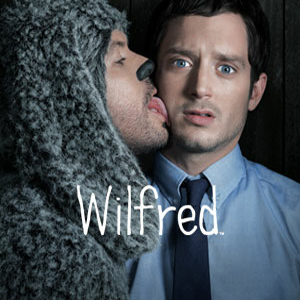
Wilfred is about a loner experiencing a third-of-life crisis, burned out from a job he never wanted as a lawyer, and on the brink of mental exhaustion, reenergizing himself through a friendship with his attractive female neighbor’s dog, who he sees as a man dressed in a dog costume, and converses, watches TV, and smokes pot with.

There you have it; the central partnership of the show is man and dog, with the dog, who no one else can hear, acting as a kind of id to the man, urging on his baser instincts and wants, sometimes for the best, sometimes less so.  The man is played by Frodo Baggins himself, Elijah Wood, while the dog is played by Jason Gann, the Australian actor who played the dog in the original Australian version (I haven’t seen the original, so I can’t compare the American version to it; I do hear that it’s notably adopted a different and sometimes less dark tone).

The man, Ryan, does have the hots for his neighbor, and the dog, Wilfred’s, owner, Jenna, but while I thought that would be a central plot, it’s more often in the periphery.  Ryan’s crush on Jenna comes up here and there, whenever the show decides to remind you that it’s still a thing, but the show is about Ryan and the dog  (Jenna’s current boyfriend Drew is played by former American Pie co-star Chris Klein AKA the one that gets with Mena Suvari).

The show is occasionally funny, occasionally difficult to watch, and more often than not relatively enjoyable.  It’s not a great show; it doesn’t work on enough levels, and there’s no one element it’s brilliant at, but it’s a good enough show, and I mean that generally as a compliment.  I’m absolutely glad I watched it considering the value, in terms of episode number and length.  The last show I watched was Sons of Anarchy, which I liked overall, and while the two shows could not possibly more different, I’m not sure that four seasons of 13 hour long episodes of Sons was worth my time more than one season of 13 half hours episodes of Wilfred.

One of the strangest sub-levels of the show which is odd is the question of whether Ryan’s special, crazy, or whether seeing the dog is just a sort of magical realism.  What I do like is that to start the show, rather than having Ryan wrestle for a while with the fact that he sees Wilfred as a human-in-dog-suit, he pretty much accepts it almost right off; yes, obviously it’s crazy that he sees a man in a dog suit, but get on with the show, already, that’s the premise, and so Wilfred did.  I also like that for the most part Ryan doesn’t constantly screw up and accidentally acknowledge the fact that he’s talking to the dog all the time, which would make him look crazy to outsiders.

The show veers dark, but rarely too dark; sometimes the quasi dark episodes are the best.  My favorite two episodes were probably the darkest and at the same time most absurd; the absurdity probably keeps the level of darkness from getting too high.  The genuinely strange moments are both the best and the funniest (and yes, in a show where a man sees a dog as a human in a dog suit, there are still relatively stranger parts).  The last couple of episodes move further into the actual matter of why exactly Ryan can see Wilfred, whether he’s crazy, etc, and while if you had told me the show would deal with this topic again I would have said, terrible idea, just let it be, these episodes were actually incredibly bizarre and oddly satisfying.  The second to last in particular involved a man Ryan saw, or thought he saw, who claimed to be a previous best friend of Wilfred’s, and claimed that Wilfred ruined his life.  We have no idea if this person actually exists, existed, or whether he also has the power to see Wilfred, or whether Ryan is totally crazy or hallucinating.  Which is actually true is less important than the surreal nature of the situation.  Another surreal aspect I enjoy is that Wilfred is continually humping a stuffed bear named Bear and it seems like he’s always talking to and recieving answers from Bear, and occasionally other stuffed animals, making me wonder whether, like Ryan sees Wilfred as a human in a dog suit, Wilfred sees the stuffed animals as living and talking.

It’s not a great show, but it’s an interesting show, and it’s a short show, and that’s enough to make it recommended viewing.

Show of the Day: Sons of Anarchy

12 Jul

I’ve watched Sons of Anarchy over the last couple of months, in drips and drabs and spurts, generally watching a few in a row, and then taking a break between seasons, and it’s probably the biggest TV series backlog project that I’ve taken on in quite a while.  (Downton Abbey, the other series I caught up on earlier this spring was only two seasons, and one of them was especially short).  I temporarily forget the different speed and intensity and blurring together that happens when watching many epsidoes of a show in a row, rather than week to week, year to year.  For that reason, I’ve found people who watch a show marathon-style versus as it airs sometimes come to different conclusions and opinions about series.

I’ve gone back and forth in my opinion of Sons of Anarchy overall.  I’m going to hopefully post another piece or two on the show; this one will be an overview without specific spoilers.  Right now, I feel like SoA is a good show, but not a great show, like the Sopranos, or The Wire, or the Breaking Bads, or Mad Mens of the world.  That’s not really all that much of an insult; those are the very top hour long TV shows of the past fifteen years, and not many shows will match them.  Still, it bears saying.  Sons of Anarchy resides somewhere in the tier of a Boardwalk Empire, or a Friday Night Lights; very good but also flawed enough to prevent them from reaching the pinnacle (I know many people would have my head for not putting Friday Night Lights above these, but that’s a discussion for another day).

Here’s the basic premise.  Main character Jackson Teller (“Jax” for short) is the Vice President and heir apparent of the Charming, California branch of the Sons of Anarchy motorcycle club.

Pause a second:  It’s interesting to note, that the way I felt about the motorcycle club culture in Sons of Anarchy mirrors the way I felt about Dixie mafia culture watching Justified; they were cultures I couldn’t relate to and had absolutely no idea existed.  This contrasts with, say, east cost Italian mafia culture of Sopranos, which The Godfather and Martin Scorsese basically made the go-to organized crime syndicates, and which often take place in New York or other Northeastern metropolitan areas.

So, Sons of Anarchy is a motorcycle club with branches all over the western United States, but the founding and head branch, nicknamed Samcro, for Sons of Anarchy Motorcycle Club Redwood Original stands in fictional “city” Charming which seems to be having a shit ton of issues for a town of 20,000 people, half the size of the suburban town I’m from.  Charming is in Northern California.  Samcro legitimately operate a mechanic shop, and illegitimately run guns, operate protection rackets, and participate in a number of other profit generating activities, though notably not drugs.  Most of their money comes from their gun trade.  They also run the town, having the sheriff and county police in their pocket, and basically commit crimes openly in the streets with their Sons of Anarchy jackets on with no repercussions.   What’s amazing is that they do all this with only about eight people total in their charter.  But this is how it goes.

Jackson Teller is the son of dead co-founder of the club John Teller, and in the first episode, Jackson finds a manuscript John left him about change he wanted for the club.  His mother, Gemma Teller is now married to the club’s co-founder and current president Clay Morrow.   The central conflict of the show is often between Jax and Clay, and just as often is not.

My quick take early on was to view Sons of Anarchy as an inverse of the Sopranos formula.  Instead of the patriarch, Tony in Sopranos, and Clay in Sons of Anarchy, being the primary character, it as if the heir, which would be, and I’m aware this is extremely loose analogizing, Christopher in Sopranos was the star.  Obviously a lot of things happen over the course of Sopranos that change Christopher and Tony’s relationship, and Jax is already VP when the show begins, higher up than Christopher, but I think as a very basic rubric that approach holds true.  Jax is constantly juggling what’s best for his club and what’s best for his family, as well as how to keep moving the club forward without endangering everything he believe in.

The three main characters are certainly Jax, Clay, and Gemma, but also main cast members are other members of the Sons, and Jax’s high school sweetheart who just moved back to Charming, Tara.  The other Sons include, Seargeant at Arms Tig, an enforcer who is kind of insane, Chibs, a chipper Scotsman who is generally loyal to Jax, Bobby “Elvis” Monson, the overweight long-suffering treasurer, Piney, John Teller’s best friend and Sons co-founder, Opie, Piney’s son and Jax’s best friend, and Juice, the younger Puerto Rican hacker.  The corrupt yet friendly older sheriff named Unser is a fairly important character as is his younger no-nonsense associate who can’t wait to take over and take on SAMCRO. The different members of SAMCRO get occasionally important stories depending on episode, while Clay, Jax, and Gemma have key stories in just about every episode.

There’s your cast of characters and some quick spoiler free information.  More in depth plot discussion will have to wait for future posts.

Summer 2012 Review: Anger Management

4 Jul

Sometimes the question is why, and then sometimes after thinking for a moment, the real question turned out to be why not.

With Work It, the question really was why – it was so obviously a bad idea, that it was amazing that the show made it through all the barriers to actually area.

With Anger Management, the question really was why not – it was simply so obvious.

Charlie Sheen-mania has faded quite a bit since Winning and Tiger Blood were guaranteed daily punch lines on late night television, but he’s still a controversial and yet well-liked by many actor who was fired after he headlined one of the most popular comedies of the last decade. In the position he’s in, with limited opportunities, he’s available for a relatively cheap cable sitcom, guaranteed to draw the amount of eyeballs it needs to be a success, which are much lower than the amount that would be needed for a network, merely out of people being curious enough to watch.  And if it fails, well, it wasn’t all that expensive of a gamble.

For all this programming logic, it’s, also unsurprisingly, a terrible program which really couldn’t be less interesting or edgy.  For all the brouhaha of Charlie and his women and his coke and his vague anti-semitism, there isn’t anything remotely edgy or controversial about his work, which couldn’t be more conventional down to the multiple camera set up and the laugh track.  Even the bad commercials for the show, which show Sheen doing crazy things, getting in the way of trains and the like, are 20 times more edgy than the actually show which is about as damn run of the mill a generic sitcom as one could put together.  Charlie Sheen plays an anger management therapist who himself as a dormant anger management problem, which seems to be rearing its ugly head again, requiring counseling (and may have been a former baseball player of some sort, though I was kind of iffy on that part).

What’s even worse, or at least stranger, is that the show seems to have no focus and wants to be five sitcoms at once.  Most simple sitcoms have a couple of dynamics, and core cast groups – friends and co-workers, or family and friends, but Anger Management doesn’t seem to know who the show is about.  We’ve got Charlie’s ex-wife and his daughter as one group.  We’ve got his current best friend, lover, and therapist Kate.  We’ve got his next door neighbor and friend.  We’ve got a random bartender played by Brett Butler (Grace Under Fire) who gives advice to Charlie…I don’t even remember what his name was in the show (can I assume it’s Charlie?  Probably).  We’ve got his therapy group consisting of an old anti-gay veteran, a gay dude, a creepy post-teen and an attractive young woman who just joins the group.  Rather than have any semblance of structure, the show bounces around to all of these groups without having any coherent plot other than Sheen realizing he needs to get therapy again.  That’s already more plot than solid jokes though.  My dad, who has a more retrograde sense of humor than myself, laughed maybe twice, so you can count that as something.

It’s not as flat out irritating as Whitney or 2 Broke Girls, but it’s not far removed.  It’s generally insulting to the viewer, but a slight step up than innaity of those shows, possibly because I expect more from shows that try for a younger audience, where this doesn’t even really try.

It’s hard going into a show knowing it’s going to be terrible, because it’s hard to unfairly bias yourself it against it.  It’s just unfortunate when it keeps being true and it just builds to your bias for future shows.

It’s sad that FX, which has generally made edgy, forward thinking comedy, and even its misses have at least had a shot, is jumping onto something that couldn’t be farther away from every other FX comedy.  Of course, if them putting on this comedy helps them spend money and grow other better comedies with the profit, then I’ll bow to their wisdom, but it’s just as sad that this is what people are more interested in watching.

Will I watch it again?  No, it felt like the show was 40 minutes when it was only 21.  Maybe I’ll catch the last 30 seconds before a future Wilfred or Louie.

Spring 2012 Review: Unsupervised

30 Apr

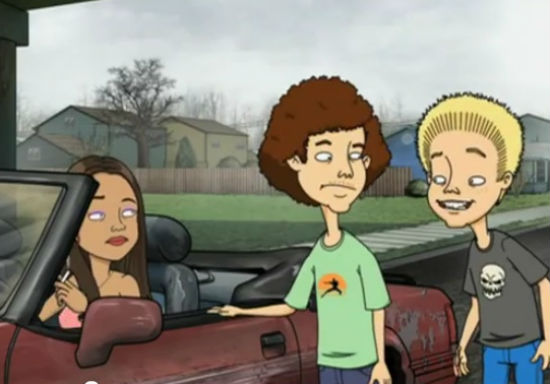
The two on the left are Unsupervised

It’s looking like a three strikes and you’re out situation for new animation in the 2011-12 primetime television season.  The fall started us off behind in the count with Allen Gregory and Napoleon Dynamite, and the spring brings us a swinging strike three with new FX cartoon Unsupervised.

Unsupervised’s protagonist are two high school freshman, Gary and Joel, voiced by Justin Long and David Hornsby. respectively.  Hornsby is best known as recurring character Rickety Cricket on It’s Always Sunny in Philadelphia and as the creator and co-star of terrible short-lived fall 2011 CBS sitcom How To Be a Gentleman.  Gary and Joel have just entered high school, and are eager to get the girls that are supposed to come with it.  While they want to be sophisticated and get girls, they enjoy the pleasures of the simpler things in life though, like riding their bikes, and creating a lightning rod, and jumping off one of their roofs onto bushes.  They’re Unsupervised because both of their parents are out of the picture and the two of them, though relatively poor, basically live in their houses on their own most of the time.  Because of their unusual living situations, they realize later they can have people over to drink, or throw giant parties without concern.

They need to grow up though, portly African-American friend character Darius (voiced by Weeds’ Romany Malco) tells them.  No more kid stuff – clean clothes, mature attitude, partying, alcohol, drugs; that’s the way to women.  Meanwhile, female friend character Megan (voiced by Kristen Bell) goes the other way – they don’t need to party to have fun, or have sex before they’re ready – good clean teenage living is the way to go.

Wacky side character alert:  It’s an animated series.  Of course there’s a couple of wacky side characters.  First, we’ve got latino neighbor Martin, who speaks with a thick accent, and tries to act as a mentor to the boys – telling them to avoid the partying ways of his own daughter.  Second, we’ve got Australian neighbor (Russ?  Maybe?  Not worth watching the show again to find out)  who lives up to every Aussie stereotype and participates in the weirdest flashback sequence where it turns out he was once in love with a kangaroo.

It’s not very funny.  Allen Gregory tried a lot of gags where I could easily see what they were attempting, and it just failed.  Unsupervised is a step away from that.  It just doesn’t work.  It’s not really an absurdist show; it’s vaguely juvenile and tyring to hit the perfect so-stupid-it’s-funny here and there.

It’s easy to box animated comedy together, but there’s so many different types.  While there’s unlikely in the near future to be a Two and a Half Men of animation, because cartoons skew younger, there can be as relatively conventional shows as King of the Hill as well as absurdist fare like Aqua Teen Hunger Force, and everything in between.  Many of the gimmicks which made animation unique have been taken live action in shows like Childrens Hospital and Eagleheart.

Unsupervised doesn’t try to be absurdist or super clever or super reference-y or super droll.  I don’t think it’s quite as base as Beavis and Butthead, but there’s probably an influence there, or at least an attempt at one.

Will I watch it again?  It’s not going to happen.  It’s a shame such admirable voice talent is wasted on seriously grade B material.  I think maybe it’s particularly hard to figure out if animated material works before seeing it in action, but this doesn’t, and it’s not just slightly off.

Spring 2012 Preview and Predictions: Cable (besides HBO)

6 Jan

(In order to meld the spirit of futile sports predictions with the high stakes world of the who-will-be-cancelled-first fall (now spring!) television season, I’ve set up a very simple system of predictions for how long new shows will last.  Each day, I’ll (I’m aware I switched between we and I) lay out a network’s new shows scheduled to debut in the fall (reality shows not included – I’m already going to fail miserably on scripted shows, I don’t need to tackle a whole other animal) with my prediction of which of three categories it will fall into.

These categories are:

1.  Renewal – show gets renewed

2.  13+ – the show gets thirteen or more episodes, but not renewed

3.  12- – the show is cancelled before 13

Spring note:  It’s a lot harder to analyze midseason shows as there’s no collective marketing campaigns going on at one time, as many of the shows start dates are spread (or are even unannounced for some)  Still, we’ll take partially educated guesses.  Also, they’re a lot less likely to get partial pick ups, so maybe that trade off will make it easier)

All other cable networks here.  USA and TNT are holding their new shows until the summer, so we’ve got entrants from BBC America, FX, Showtime, Starz and MTV.

BBC America

The Fades

The Fades has already aired in Britain but will be making its American debut this spring.  From a writer of Skins, The Fades is a supernatural show which revolves around the central concept that spirits of dead people who couldn’t get into heaven are all around us, known here as the titular Fades.  The main character Paul is a teenager who has apocalyptic dreams and the ability to see these Fades, an ability shared only by a select few, known as Angelics.  The Fades are bitter, and have slowly made progress in their attempt to have an impact in the real world, leading to a possible battle with the Angelics which Paul will be in the middle of.

Verdict:  Renewal – I shouldn’t really even have this category for imported shows – British shows generally air short runs anyway per season, six in this case, and it’s already aired months ago.  That said, there’s no official word, but as it’s been popular and well-reviewed across the pond this is just the smart money.

FX

Unsupervised – 1/19

Unsupervised is an animated series co-created by David Hornsby, best known as recurring character Rickety Cricket on FX hit It’s Always Sunny in Philadelphia.  He also created and starred in the quickly cancelled How To Be A Gentlemen last fall on CBS.  Hornsby and Justin Long voice the main two characters, 15-year old best friends.  Kristen Bell, Romany Malco, Fred Armison, and Kaitlin Olson also have roles.

Verdict:  12- David Hornsby did not impress me with How To Be A Gentlemen, though FX has had a lot more success with quality comedies than CBS.  FX has a pretty good record overall, and there’s a clearly illustrious voice cast.  I’m really not sure why I’m skeptical, and hopefully it will be good, but it looks bad to me from the poster and I’m semi-arbitrarily voting against.

Showtime

House of Lies – 1/8

House of Lies is a comedy about the hilarious world of management consulting, starring Don Cheadle, Kristen Bell, and Ben Schwartz, best known as Parks and Recreation’s Jean-Ralphio.  Honestly, the first time I heard about this show, about management consultants working for clients around the world and doing whatever needs to be done to get the project finished and make money, I thought for sure it was a high intensity drama, especially since it was starring Don Cheadle, who is not exactly known for his comedic roles.  The fact that it’s a comedy floored me initially.

Verdict:  Renewal – don’t really know what to think, but Showtime, like HBO, which it desperately wants to be, likes to give shows second seasons if they do anything at all.

Starz

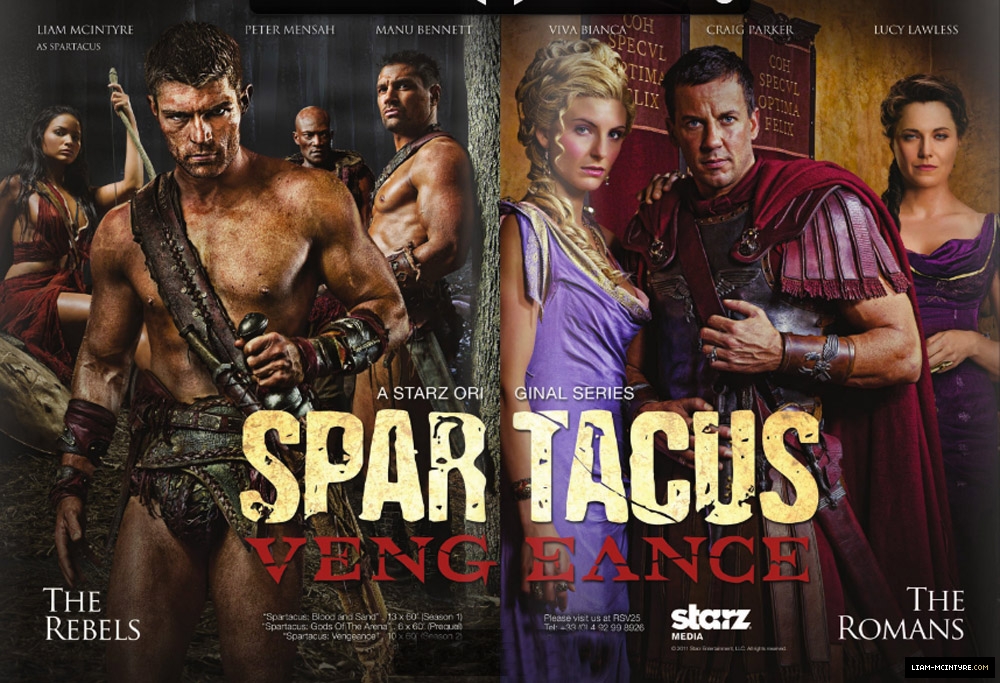
Spartacus: Vengeance – 1/27

This is kind of misleading.  I have no idea how to consider Starz’ continuing line up of Spartacus shows.  My normal inclination would just be to consider them different seasons of the same show, but Starz doesn’t exactly consider them that, and tragically the actor who played Spartacus died, so maybe that’s a factor.  Because Starz seems to, I’m going to treat it as a new show, though it’s clearly not.  A new actor takes on the Spartacus role and it’s filled with all the sex and violence that the Spartacus name has come to represent.

Verdict:  12- More cheating – so far each Spartacus has been treated as its own series, so it seems likely that if there’s another Spartacus, which there well may be, it will probably have a new name and thus be considered a new series.  I don’t really understand it, either.

MTV

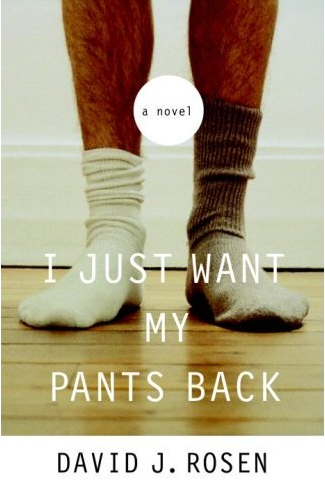
I Just Want My Pants Back – 2/2

It’s about a twenty-something trying to figure out life, love, sex and work.  Could it possibly sound more generic?  The minor gimmick which gives the show its title is that the main character’s pants are stolen after a one-night stand and the character looks all over the city to find the pants and the girl who took them.  I’m guessing it won’t be good based on the fact that I don’t give a ton of credence to MTV original programming (I’m already too old to be the target audience, really) and most shows that sound like this are probably bad (even though the set up is so generic it could be any level of quality).

Verdict:  12- I have no idea what it takes for MTV to continue original series.  I must admit I’m mostly unfamiliar with MTV original series and don’t really have a beat on who watches them or what it would take to continue them.  This is nothing more than a guess in the dark.

Fall 2011 New TV Show Predictions Reviewed, Part 1

23 Dec

A couple of months ago, I made predictions about how long new shows on cable networks, ABC, and Fox would last.  As all the shows have aired for a few weeks, it’s time for an evaluation of my predictions, although for some shows, the final word is not in yet.  Such an evaluation follows:

Cable

Hell on Wheels

Predicted: Renewal

What happened:  Renewed away – not as successful commercially as AMC stalwart The Walking Dead or critically as Mad Men or Breaking Bad, but good enough.  It’s no Rubicon.

Homeland

Predicted:  Renewal

What Happened:  Renewal – right on, everyone else agreed with me and I agreed with everyone else that this is the best new show of the year.  It’ll be back with a vengeance.

American Horror Story

Predicted:  Renewal

What Happened:  Renewed – I still don’t understand it, and I don’t mean that in either a good or a bad way, but it’s become a bit of a sleeper hit.

Boss

Predicted: Renewal

What happened:  Renewed – Cheating, it was renewed before it aired.  Still, it got good enough reviews, for whatever that’s worth.

Enlightened

Predicted: Renewal

What happened:  Renewed, but barely, as it survived the great HBO comedy extermination of 2011, which saw the ends of personal favorite Bored to Death, Hung and How To Make It In America.

ABC


Charlie’s Angels

Predicted:  12-

What happened:  Cancelled.  One of the five easiest predictions to make all year.  Had no chance from day one.

Last Man Standing

Predicted:  12-

What happened:  Picked up for full season so far.  Probably the prediction I got wrong which I would have staked the most on.  I still don’t think it will last past this year, but I would have said it’d be gone after three or four episodes, so who knows.

Man Up

Predicted:  12-

What happened:  Second of the top five easiest decisions.  Didn’t have a shot in hell, and shouldn’t have.

Once Upon A Time

Predicted:  13+

What happened:  Picked up a for a full season, likely renewal.  It’s become a family hit, and although it hasn’t been renewed yet, so I could technically still be right, it probably will be renewed and I’ll be wrong.  Oops.

Pan Am

Predicted: Renewal

What happened:  Not cancelled officially yet, but looking like all but a formality.  This was one of the more difficult shows to call.

Revenge

Precited:  Renewal

What happened;  Picked up for a full season, and looking likely for renewal.  Very pleased about both my call, which wasn’t obvious, and the popularity of one of the better new shows.

Suburgatory

Predicted:  13+

What happened:  Picked up, with a renewal likely.  It’s been kind of a surprise hit on what’s become a bit of a surprise hit Wednesday night comedy block on ABC, with Modern Family, The Middle, and Happy Endings next to Suburgatory.

Fox

New Girl

Predicted; Renewal

What happened:  Picked up for a full season, it would be a total shock if it was not renewed.  One of the biggest new show hits of the season so far.

Allen Gregory

Predicted:  12-

What happened:  Cancelled – not a shocker by any means.  Bad show, bad spot, no chance.  Third of my five easiest cancellations to call.

I Hate My Teenage Daughter

Predicted:  12-

Renewed:  Uncertain, as it didn’t start until the end of November.  That said, I still feel fairly confident in a cancellation.

Terra Nova

Predicted: Renewal

What happened:  This is the closest show on the list, and it could still go either way.  I wouldn’t take odds one way or the other.