Tag Archives: Fall 2013 TV Season

Fall 2013 Review: Dracula

11 Nov

The D is for Dracula

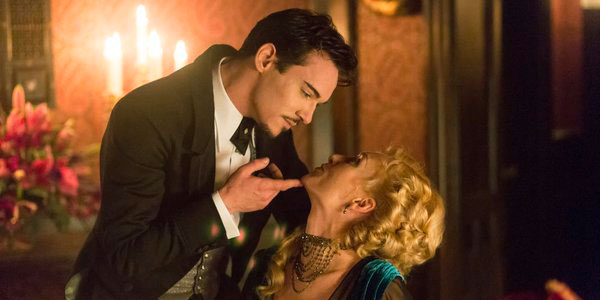
Irishman Jonathan Rhys Meyers, best known on television as Henry VIII in the Tutors, plays the namesake British vampire in this extremely loose television adaptation of Bram Stoker’s Dracula. After being woken from a years (or possible decades, it’s hard to tell) long sleep in the first moments of the pilot, Dracula decides to masquerade as an American industrialist, complete with a terrible yahoo-ish American accent. He’s got a trusty assistant named Renfield, who helps conduct his affairs; how he came to know Renfield and enlist him into his service is unclear. We know that he’s putting on the American industrialist act but we not why until the second half of the episode where the crazy conspiracy underpinnings of Dracula began to come to the fore.

Dracula’s primary goal is revenge on the secret Order of the Dragon. The Order of the Dragon is a powerful organization which has apparently been committing various clandestine acts for centuries, with the killing of vampires being at least one of their duties. We know they’re a big deal because a couple of their leaders let us know that they offhandedly concocted the story of Jack the Ripper to keep the vampiric truth behind some London prostitute murders under wraps.

Dracula holds a huge gala to introduce himself, as the American Alexander Grayson, to fashionable society with the hope of bringing out members of the order on which he wants revenge so badly. The order is composed of seemingly normal upper class Britons. In addition to killing vampires, the order retains its strength through controlling wealth by way also sorts of trading schemes, which Dracula wants to attack, while also attacking the members of the order physically and you know, doing the whole vampire biting of flesh sucking of blood routine.

Also attending his gala is an ambitious journalist, Jonathan Harker, who is accompanied by his lady friend Mina Murray. Both the names are recognizable as characters in the classic Dracula story though it doesn’t seem like this version feels particularly obliged to hew too closely to the original. As we let the crazy continue to seep out little by little over the course of the episode, it turns out that Mina is a reincarnation of Dracula’s long-dead wife who just so happened to be killed by members of that same sinister Order of the Dragon.

There’s no obvious rooting interest; Dracula is our protagonist but he kills at least a couple of people mercilessly in the first episode. While the Order of the Dragon does seem like they could be pretty evil, it’s not clear Dracula is any better except relatively. Journalist Harker may be the closest the viewer has to an analogue, though it’s unclear how quickly and how much he’ll learn about all the underlying conspiracies in the next few episodes.

In terms of new TV horror shows, everything Sleepy Hollow is, Dracula isn’t, and vice versa, but in a good way for both. Let’s call Dracula a British take on Sleepy Hollow; where Sleepy Hollow wears its insanity on its sleeve, Dracula keeps its crazy repressed below a prim and proper Victorian exterior. It’s not as straight forwardly outlandish as Sleepy Hollow, but it’s deeply embedded with centuries old conspiracies and all manner of supernatural. The combination of crazy conspiratorial and repressed and tense gothic kind of works. Dracula is largely devoid of humor but it feels like horror spooky and over the top rather than weighed down with seriousness the way more important dramas can (Boardwalk Empire and Homeland for example). The whole Order of the Dragon is a little goofy not quite enough to not laugh at. It’s, like Sleepy Hollow, as if the show knows is winking with its seriousness; even though what’s on screen is by all accounts completely earnest, viewers aren’t meant to take it too seriously.

Maybe Dracula in an odd way is the true successor to ABC vengeance soap Revenge. Like Emily Throne, Dracula appears to have come back in an unrecognizable form years later to seek revenge on a group that harmed someone that he loved. Of course, it’s not the attempted carbon copy of Revenge that several of the shows ABC paired with Revenge were (Betrayal, Deception), but the gothic horror setting is as good a home for some soapy behavior as the high class / low class setting of the modern day Hamptons. After all, what are both the Victorian era and Dracula about if not repressed sex?

Will I watch it again? I might. It’s not top tier, so I probably won’t get around to if I do until at least the initial torrent of fall television has slowed down, but I liked it a lot more than I thought I would and I was honestly intrigued. The plot may not have been the most original, but the new take on a gothic vampire story felt strangely fresh for a tale that’s been told in one way or another so many times.

Fall 2013 Review: Super Fun Night

1 Nov

Super Fun Night every night

Super Fun Night borrows from a set up that pops up over and over again in movies and television and has worked plenty of times before in movies like Old School and Animal House among many others. The main characters are self-aware and self-appointed losers. In this case, they’re three best friends who normally stay at home on Friday night, confident in their friendship but not so much in anything else. Like in any of these shows or movies, the losers are our heroes, and the story is about how they break out of their shells and show their worth to the rest of non-loser society.

Rebel Wilson plays the group’s nominal leader Kimmie, a lawyer who just got a promotion at her firm. The aggressive Marika and the diminutive Heather-Alice back her up. Kimmie has a crush on British lawyer Richard Royce who seems to genuinely like her in spite of her constantly embarrassing herself at work, as we see in several flashback cutaways.

Like in many of these types of shows and movies, there’s a clear antagonist, who is a conventional winner and was always a winner. Someone who’s great at everything, who is used to treating losers like dirt and getting away with it, but who is personally despicable by the viewer. More than winning, these characters are obsessed with making sure the losers know their place. The winners will always be winners and the losers will always be losers, and the loser best give up all hope of ever becoming a winner. These television shows and movies often take place in high school and if they don’t it’s like high school all over again with their sense of clear social strata. The British lawyer, Richard, just happens to also be in a position of power, as son of the head of the firm, thus making him an object of interest for Kendall. Kimmie likes him for him, Kendall likes him because his daddy is important.

The pilot is a first battle between our villain Kendall (by the way, even the names tell you who are the winners and who are the losers – given Kendall, Kimmie, Marika, and Heather-Alice, I’d bet you could pick out the villain) and Kimmie for Richard, and luckily for her, Richard seems much more on her page, personality-wise. Unfortunately, apparently just getting along better and having compatible personalities isn’t enough; Kimmie has to defeat, or at least equal, her rival in a karaoke sing-off to prove her worth.

I thought Super Fun Night would be like The Crazy Ones, a sitcom whose value depending almost entirely on your opinion of its polarizing and screen-hogging star, in this case Rebel Wilson. Your opinion about Wilson will have a large impact on how you feel about the show, indisputably, but it’s not dominated by her personality the way The Crazy Ones is by Robin Williams. She’s still the dominant force of the show, and if you don’t like her you probably won’t like the show, but it doesn’t scream Rebel Wilson just starring in a sketch show.

Super Fun Night’s sense of humor is well over the top and not in a good way. Most of the over-the-topness is through cringe-worthy moments where Kimmie embarrasses herself. It’s hard to watch at times. It aims for British awkward comedy combined with American physical comedy and neither work. Cringe comedy is difficult, Peep Show and the original British The Office are two of the most successful examples. In this show, unlike those, we’re unapologetically supposed to be rooting for the main character who is the cause of all the cringe-worthiness. Was I rooting for her? I was, relatively, but only because of a kind of cheat, as the villain was so obviously terrible that there’s really no other option. Given a real choice, I doubt I would root for her. Maybe this is malecentric but I feel bad for the guy who they’re competing over. Rebel Wilson’s clearly well-meaning but doing frustratingly stupid things time and again.

We get it. Kimmie makes a fool of herself a lot at work by accident with all manner of physical pratfall or her kind of disgusting habits. That point is hammered home again and again. Some of them are innocent accidents, some are poor social judgments that she really should know better than to make, and some fall in the middle. I generally keep these reviews link free, but Vulture penned an article that happened to hit the nail right on the head. In order for a show like this to work, you have to really have to buy in to the losers – you have to make them your own. Here, you don’t want to. I want to root for the underdog but they just turn me off here. People can be losers and behave like somewhat normal humans.

Will I watch it again? No.  The set up is a common one but Super Fun Night got it wrong, and Wilson’s brand of self-deflating physical humor is too much.

Fall 2013 Review: Betrayal

30 Oct

Betrayers and James Cromwell Sometimes you watch a show,and you ask simply, “Why?” Not because it’s so bad, though you wouldn’t ask it if it was good. Even with bad shows you can often see why they were made, or the path they took and where it went wrong, or who they were trying to appeal to. There was a plan, and whether it was intended to be good, or simply popular with one particular demographic of television viewers, you can guess what it was, even if it doesn’t get there in the end. No, what I mean are shows that make you ask “Why” because they seem pointless and forgettable and you wonder why they kept getting moved through all of the many stages required to get a show from idea to production to on air. A show so forgettable and just whatever that you’ll probably not remember anything about it within an hour of viewing it, and that absolutely no one will remember its existence even a couple of months after its debut.,

Betrayal is such a show. If I had to guess at the thought process, I would suppose that ABC was probably making another attempt to imitate vastly slowed down first season hit Revenge, but the only reason I’m suspecting that is the two shows share one world title that are pretty similar. Here’s your Betrayal primer, nevertheless, so you know all you ever need to know about the show and more. Sara Hanley (Hannah Ware, who played the daughter, the worst character on Boss) is a successful magazine photographer married to Drew, an ambitious and busy prosecutor. Jack McAllister is a talented lawyer stuck working for his father-in-law in a possibly shady business. He’s married to Elaine, a marriage he fell into young. Both Jack and Elaine have kids, and after meeting at a gallery displaying Sara’s art, they find they have a spark that they simply can’t ignore and begin an affair.

I’m sure they both have perfectly good reasons to be unhappy in their respective marriages but the spark is certainly hard to discern from a viewer perspective. Jack feels stuck being around his family all the time at work and at home, and feels totally controlled by his father-in-law. Sara, well, her husband is really busy I guess and doesn’t have time for coffee when she shows up in his office in the middle of the day without calling ahead. I’m not sure if we’re supposed to feel sympathetic towards them and empathize with their infidelity, or more than that, at least feel swept up in it even if we don’t think it’s moral, but I didn’t feel anything. Feeling that they were both wrong is not necessarily bad but feeling nothing at all certainly is. Both felt guilty after Sara received a phone call from her husband right before they were about to consummate their affair and they decide to break it off. Later in the episode, however, Jack made a surprise visit to Sara’s studio.  They decide, at this juncture, that even though they’ve spent just about a day with one another, that they can’t possibly live without one another and have sex right then and there in the studio. I don’t really get it and more than that as mentioned before I just don’t care.

The shin hits the fan when Jack’s brother-in-law, his boss’s son, is considered a prime murder suspect in the death of his boss’s brother-in-law, who his boss suspected of shady dealings against the family interest which Jack discovered. That’s a long complicated sentence which I could have spent more time parsing out but it’s really not worth it. The important upside is that coincidentally or maybe not, Sara’s husband is the prosecutor, who believes that a conviction of Jack’s brother-in-law could make his career, setting up a run for political office. The episode ends with Sara breaking down after finding this out, her infidelity reducing her to a pile of guilt.

Betrayal really is probably going for something in the Revenge sphere, but it’s so far off that I have a hard time believing it. Revenge was trashy, soapy, fun. Betrayal, well, it’s soapy if soapy just means being about people having affairs, but it’s not at all fun. It’s super duper serious, ponderous, and uninteresting.

I entirely forgot to mention that the show tries to grab you with my least favorite plot device, the flash forward (which Revenge used as well), which appears at the beginning of the episode, but which I forgot about by the end, when it reappears briefly.  In the flash forward, Sara is shot and well, I couldn’t tell what else happened, and I didn’t really care to watch the scene again to figure it out. This device is intended to let me know big, interesting things are going to happen, because you might not realize that after one episode, but it always misses the point. If you can’t interest people in some aspect of your show after one episode, you’re not doing a very good job. A cheap trick won’t help.

Oh, I should probably mention James Cromwell plays Jack’s father-in-law. That’s pretty cool.

Betrayal is not as bad as a bad comedy because bad dramas usually aren’t as bad as bad comedies. It was a frustrating, sub-mediocre watch, but it wasn’t out and out laughably awful. It was merely pretty bad. Again, I ask. Why?

Will I watch it again? No. Betrayal is so anonymous that you probably won’t remember it exists if I ask you about it tomorrow. That’s not a good thing.

Fall 2013 Review: Welcome to the Family

28 Oct

I want that panda

Yes, I know, this is my first review of an already cancelled show. There will be more. That’s just how it goes sometimes. Every show that makes it to air deserves the dignity of being thought about for one half hour.

Welcome to the Family is a very much in the wanna-be Modern Family vein, as NBC attempts to imitate ABC’s fairly successful brand of comedies . One way in which Welcome to the Family mimics Modern Family’s approach is by starring a big family which is not normal in the traditional nuclear family way, but by portraying abnormal as the new normal approach. In this case, it’s the merger of two families by an unlikely marriage. Mike O’Malley is Dan and In Plain Sight’s Mary McCormack is his wife, Caroline. They’re thrilled that their hard-to-control not-the-sharpest-tool-in-the-shed daughter Molly somehow made it to high school graduation and is about to go off to Arizona State, letting them have some valuable them time, getting in shape and having sex again, etc, etc. Meanwhile, Miguel and Lisette are thrilled that their son Junior is about to graduate high school as valedictorian and be off to a much deserved spot at Stanford. Everyone’s plan changes, however, when it turns out that Molly is pregnant by way of Junior, her boyfriend, and they decide to keep the kid and stay home to raise him rather than travelling to school, irritating both sets of parents who were look forward to their kids going away for different reasons.

This situation is exacerbated by the fact that Dan and Miguel had a run in earlier in that same day that did not end well. Dan brought a coupon for a free boxing lesson to Miguel’s gym, which Miguel refused to honor because he thought Dan was just going to waste his time and never come back (let’s note that Miguel is clearly in the wrong here – no one made him put out the coupon – that level of customer service is truly appalling and I hope Dan writes a terrible yelp review). So while the son and daughter love each other, the two dads hate each other, and the moms are just trying to make everybody play nice while being stunned by the entire situations. When Junior and Molly decide to get engaged, the families realize that like it or not, they’re going to have to get a long if they want to be part of their children’s lives.

Welcome to the Family is a thoroughly mediocre show.  A note about mediocre shows before I go on, though.

I don’t want to sit around defending a mediocre show, but when you watch every new network television show in the course of a month you get to really know the differences between the really bad shows and the simply mediocre.  In this context, mediocre shows don’t look that bad, not because they’re any better, but because you realize just how difficult even mediocrity is to achieve. It’s a surprisngly high bar. Especially for comedies. It’s much easier to make a mediocre drama than it is to make a mediocre comedy. Most dramas are at least vaguely tolerable, but many comedies are not.

Welcome to the Family is certainly of the mediocre rather than the truly terrible variety.  It’s surprisingly well meaning. The characters are mostly likable, and while the son and daughter are a little cartoonish – the daughter in particularly is disturbingly empty-headed – it’s largely amusingly so. I didn’t really laugh much, but I my face creased into a slight smile a few times in the episode. Mike O’Malley has grown on me over the years and was one of the best parts of Glee during the brief period I was still watching Glee for some reason. The acting is competent, the premise is fairly sound and the writing is certainly not cringe-inducing.

Is it funny? Well, no. It misses the mark. Just because it’s not so bad doesn’t make it good. Some comedies are good without being funny, because of the excellent characters, writing, filmwork, or plot but while there’s nothing wrong with it, none of those pieces are incredibly compelling in and of itself. If it was funny, it’d be good, but there’s not a whole lot going on that would make it worth watching without the humor. Oh well.

Will I watch it again? It’s a mediocre show, not a terrible one. There’s really no reason to return to the show but I’m glad I watched one so I can give it credit for the mediocrity it managed to reach.

Fall 2013 Review: Sean Saves the World

25 Oct

Sean saving the world

Sean Saves the World stars Sean Hayes as a gay single parent. A show starring a gay single parent is not nearly as groundbreaking as a gay main character was on Will & Grace, the show on which Hayes originally gained fame, and that’s a good thing.  It’s a great thing that a gay single parent doesn’t even move the controversy meter much anymore; there’s none of the uproar from conservative affiliates pulling the show from their stations en masse.  I’m sure the real fringe doesn’t like it, but the vast vast majority of America couldn’t care less. What’s more remarkable about Sean Saves the World is that its featuring a gay single parent is really the only modern aspect of the show.

Sean Hayes stars as well, Sean, a single dad, who now has full custody of his 14-year old daughter after her mother moves away to take a new job. He wants to be the best parent he can be, and his stressed about his lack of full-time parenting experience. Luckily, he has the help of his overbearing mother, played by Linda Lavin, who starred as Alice in Alice some years ago. All that’s getting in the way of his planned daddy-daughter post-work bonding time is his new cartoonishly terrible new boss played by former The State member and Reno 911 veteran Thomas Lennon who specializes in cartoonish over the top characters (sometimes for better, sometimes for worse). Sean is continually stressed in his attempt to lead his coworkers and succeed at work while making time for his daughter.

Sean Saves the World is a sitcom in the classic, old-fashioned vein. It’s a sitcom with a capital S. A Sitcom. . Sean Hayes would be an absolute star in the days in which Sitcom stars were king, an era that didn’t end that long ago. Sean Saves the World immediately feels like a Sitcom in format with its laugh track and multiple camera set up, but even aside from these basic background factors, Sean Saves the World buys into every part of the formula that went into making those old Sitcoms.  The humor here is based on the humor that inspired those Sitcom. There’s no fast talking or quick cuts or subtle jokes and looks that require multiple viewers to really appreciate.  There’s blatant, obvious laugh lines, followed by long pauses.

Compared to small s sitcom acting, Sitcom acting relies on loud unsubtle gestures and extreme looks which last an inordinate amount of time to make sure every last viewer has seen them. If sitcom acting is more similar to film acting, Sitcom acting is akin to theater acting. Every joke has to be accentuated to make sure the audience gets it, every facial expression has be to clear and overwrought so that even the viewers in the far back rows can get the idea.  Every bit of physical comedy is overplayed so you know exactly what’s coming next. At one point in the episode, Sean is trying to escape his work through the bathroom window so that the boss doesn’t see him leaving. He steps on some furniture to help him reach the window. The second he gets up on that furniture it’s clear that the furniture is going to break while he’s stepping on it, but the audience has to wait until Sean’s finally making progress for the furniture to break and Sean to fall and injure himself in a comical manner. There’s plenty of shoddy wordplay which is a staple of any old fashioned Sitcom, overwritten dialogue that might instantly seem clever, but really isn’t. It’s borscht belt humor, hamming it up left and right.

If I was reviewing Hayes’ ability as a Sitcom actor, well, he’s a pro. His mother is also. They’re both quite good at what the show is clearly going for, whether it was their decision or not. Unfortunately that style just leeches the humor out of every situation. We’re a long way away from the domination of that era, when there were three networks and those were the only comedies on television and I don’t ever want to go back.

Will I watch it again? No. It’s quite good at being something that I don’t care for at all and not good at anything I like.  So, in short, I don’t like it, it’s not funny, and I’m not going to watch it again.

Fall 2013 Review: The Crazy Ones

23 Oct

Robin and Sarah Michelle Crazy

Robin Williams stars as Robin Williams. That’s the first and most important thing you need to know about The Crazy Ones. This is one of those shows where whether you like it or hate it will be determined by how much you like the main actor, as the show is built mostly on him simply being himself. There’s a few of these star-based sitcoms every year, that are shows essentially built around a single actor or actress. They usually star comedians, who, unlike actors who are supposed to be able to slip into a role, generally are chosen for their particular comedic style and stage personality and more or less play an exaggerated version of themselves.

Robin Williams plays Simon Roberts, a once legendarily charismatic ad-man who has lost his edge over the years, a la Robin Williams the comedian (have you seen Man of the Year or RV?). Sarah Michelle Gellar plays his more serious daughter who both loves his father and is constantly frustrated by his flights of fancy and refusal to be professional.  She’s recently been added to the name of the firm; Roberts and Roberts.  The cast is rounded out by an artist named Andrew who does just about nothing in the first episode, an assistant named Lauren who does very little, and James Wolk, Man Men’s Bob Benson, as Zachary, who seems to be a fast-talking Robin Williams protégé and gets the most to do after the two stars. While poor Gellar is frequently stuck as a nag, Wolk gets to have fun with WIlliams, and attempt to exchange what they seem to think is hilarious banter.

Speaking of Mad Men, it doesn’t help that this Wolk is there to remind me of Mad Men, the biggest and best advertising agency-based show of this era. While The Crazy Ones, a sitcom, is going for a very different tenor and vibe than Mad Men in almost every possible way, it’s hard to listen to Robin Williams pitch the clients without thinking of how inferior everything about the pitch scene is to similar scenes in Mad Men. Admittedly, that’s pretty unfair; no show is going to be Mad Men. What’s not unfair is to mention that the scenes, and the show, are not the least bit funny or really amusing.

It’s also worth noting that the episode seems kind of like a giant commercial for primary Roberts and Roberts client McDonald’s, which gets mentioned a remarkable amount of times in The Crazy Ones’ twenty two minute running time.

Honestly that’s a fairly terrible example of blatant product placement but that’s just one episode. What really bothers me is that there’s just  so much Robin Williams shtick. He does impressions, he changes voices, he’s so fucking wacky and painfully so. He’s off the wall, and it’s implied that this is part of both the success and the failure of Williams’ abilities as an ad man, and that rings true for his career as a comedian as well. Can’t he turn it off? Do people really like this? Is he talented? Well, it’s definitely a talent. That doesn’t mean it’s not incredibly annoying. I spent the entire episode feeling really bad for Sarah Michelle Gellar’s character who has to be the constant irritant to Williams, slowing down his imperfect creative mind to attempt to make him be serious. Everyone else on the show cracks up at his antics, while Gellar, like myself, was constantly frustrated, wanting him to get it together. There’s an important client there, can he act like he cares at all?

Of course, that’s what Williams is going to do. That’s what you hire him to do generally, even though his best roles in the last two decades have been the creepy dramatic persona he unveiled in One Hour Photo (I still shudder) and Insomnia. If he kept up with his dramatic acting I’d be extremely interested, but he hasn’t, and I’m not.

Will I watch it again? No. It wasn’t funny. I haven’t found Robin Williams funny since around Aladdin, and nothing changed my opinion here. More than not funny, his bits get on my nerves after a while; twenty minutes can pack a surprising amount of Robin Williams.

Fall 2013 Review: Ironside

18 Oct

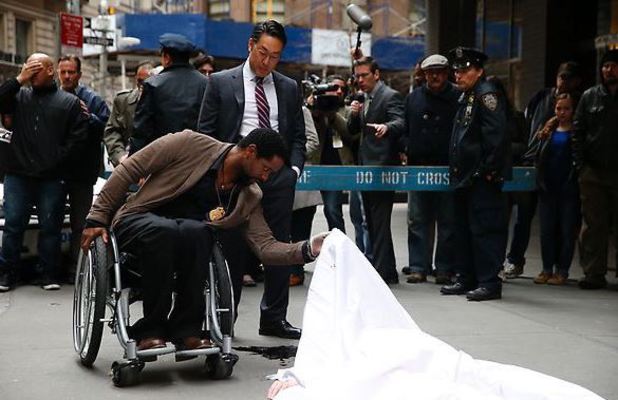
Bob Ironside Robert Ironside is a detective who life was dramatically altered after he was accidentally shot by his partner a couple of years before the show takes place.  He was paralyzed and now resides in a wheelchair. He also runs a special squad of hand-picked detectives who take on select cases.  Somehow through a lawsuit Ironside got the right to choose this detective squad, and this is mentioned but not really explained as well as which cases he gets, though it’s not particularly important.

Ironside is a remake of a ‘60s show starring Raymond Burr, with a similar premise, and I do want to at least mention how ridiculous it is that a guy in a wheelchair just happens to have the name ironside.  I thought it was a nickname at first, but it’s not. Whoever thought that up must have thought they were really clever. Ironside, as you might imagine, in an unconventional cop who plays by his own rules.  He doesn’t believe in the ordinary rules that govern most detectives. He’s learned a lot from having to deal with being stuck in his chair. I wish I had kept track of how many times he talks about how he sees life differently from his new vantage point, but it was several, both figuratively and literally. The most blatant example is when his superior asks him how he sees a gun hiding under a pillow, and Ironside answers, “I got a different view of the world from down here” in the most literal sense possible, and it felt like his boss only asked the question so Ironside could deliver that answer. (I vastly wish he had instead said something like, “My line of sight is significantly lower because I’m sitting in a wheelchair,.”).

Ironside frustrates his immediate superior by constantly refusing to follow rules, which seems like it should be a bigger deal than Ironside makes it out to be.  In the first scene, he blatantly disregards procedure to try to persuade a suspected perpetrator to reveal the location of a little girl he thinks the perpetrator kidnapped. When his by-the-book superior reams him out for basically destroying any legal case they’d have against the offender by not reading him his Miranda rights correctly, Ironside points to the fact that his methods worked, but that misses the point completely. It’s a seriously disturbing attitude to have that a positive result justifies a corrupt process. Ironside as a show or a policeman is not particularly concerned with the profits. In the eyes of the show, what he does is a cool, badass thing to do to a terrible a criminal who shouldn’t have any rights anyway, and if there was any question at all, they were answered when Ironside turned out to be right. Ethiical and moral questions are far outside of Ironside’s purview.

After all, he’s not the same cop he was before the injury,  As mentioned, he sees things different now physically and metaphorically and isn’t particularly worried about treading on either criminals or his superiors in his pursuit of doing things his way, which is the right way. There are many shots of Ironside thinking, either as he sifts through evidence or while he’s at home just sorting the entire case out in his head. He comes up with intuitions and forces his team to think differently, outside of the box. They’re his proteges, and while he frustrates them with his attitude on occasion, they all seem to realize they’re working with a special unorthodox mind from whom they can learn.

Part of the episode deals with the sad state that Ironside’s old partner has fallen into, full of grief due to his accidentally shooting of Ironside.  Ironside is handling it a lot better and is frustrated with his ex-partner’s inability to deal, even though Ironside was the one who got shot. I’m not really sure where this plotline fits in the show. It seems like an attempt to imbue Ironside with more emotion than is present in a typical police procedural. It just feels off and out of place though. Toward the end of the episode is a scene of his former partner attending an AA meeting, where Ironside watches from afar briefly, before rolling away. There’s supposed to be some sort of meaning here but I found it difficult to care.

There are also couple of strange allusions to how much of a ladies’ man Ironside is, which it felt incredibly out of place in the episode. At the end he gets together with a woman who may or may not have been the woman he was with earlier in the episode.

Overall, the show felt disjointed, cliched, poorly thought out, humorless, over the top, and, well bad.The more I thought about it the more I changed my opinion of the show from merely a below average police procedural to, well, a much below average police procedural. At least CSIs and NCISs have a sense of self-aware humor about their tropes which Ironside badly lacks.

Will I watch it again? No.  It’s a police procedural, so I wouldn’t watch it anyway, but it’s a bad one at that. I’d watch CSI or more likely Elementary or The Blacklist if I really want to watch one.

Fall 2013 Review: The Michael J. Fox Show

16 Oct

Michael J Fox

The Michael J. Fox Show tells the tale of Mike Henry, a legendary New York local television newsman who retired due to Parkinson’s disease with the added benefit of spending more time with his family. He misses work and his family is getting sick of him being around all the time, waking them up early and bothering them in other ways. Thus, his wife and his old producer conspire to convince him to come back to work.

His family consists of his loving wife, Annie (Breaking Bad’s Marie, Betsy Brandt), his Cornell drop out college aged son, Ian, his teenage daughter Eve, his youngest son Graham, and his sister Leigh.  Characters at work include his veteran producer Harris (The Wire’s Wendell Pierce, better known as Bunk), and his new young, nervous, segment producer Kay.  The characters are not cookie cutter outside of the extremely obnoxious Aunt Leigh, who is the feisty single middle-aged women constantly striving to act and look younger.  She could get real tired real fast; I wanted her to go away in just about every scene she was in.

In a lot of ways, the Michael J. Fox Show is admirable.  It starts with the classic family sitcom model which reigned supreme on television from the 1950s to the 1990s and largely updates it to get with the 21st century.  There’s no laugh track, the dialogue is quick without those awful long sitcom pauses, and the characters, the aunt aside, are not ridiculous cartoons.  In addition, it brings the actual warmth and love that were at the heart of traditional family sitcoms, that still resonate even when everything else feels horribly dated in those shows. The family actually seem to genuinely like one another. Michael J. Fox is already a larger than life television personality that many of us feel like we saw grow up over 30 years on television, and making him a local news anchor smartly captures that angle of Fox; regular New Yorkers feel like they know Fox’s character in the same way. The show does a good job with its handling of Michael J. Fox’s Parkinson’s disease; we know it’s going to be used for good-natured humor immediately, with a handful of jokes about Fox’s condition in the first episode. Also, I’ll award the show extra points for actually being filmed in New York, which does make a difference.

Unfortunately, though, for all these positive qualities, the problem with the Michael J. Fox is a deceptively simple one. If the jokes were funny, the show would be good. I know that sounds like the most obvious diagnosis for a bad comedy ever, but it’s really not.  Most bad shows have something wrong in their DNA that goes well beyond the jokes not being funny – the structure is broken.  The cast is bad, the laugh track, the look of the show, the tone – the whole idea behind the show is broken deep within its foundation.  That’s not the case here.  The idea is solid, the characters, outside of the wacky aunt, are well-built, the acting is good, the look and feel are fine.  The jokes are read correctly and given room to breathe.  They’re just not funny jokes. Someone needs to go down this script, even keep the same overall structure, and just tweak the dialogue all over the place.

I was expecting another lazy CBS-like effort with, if not a laugh track, tired characters and tropes. The Michael J. Fox Show isn’t that which is absolutely to be praised.  Now, if it could only take that last step and be funny, there’d be a really good show here.

Will I watch it again? It was better than I thought it would be.  Still no. The blueprint is there for this to funny, but it isn’t now. It’s close but not close enough.

Fall 2013 Review: The Millers

14 Oct

Three of The Millers

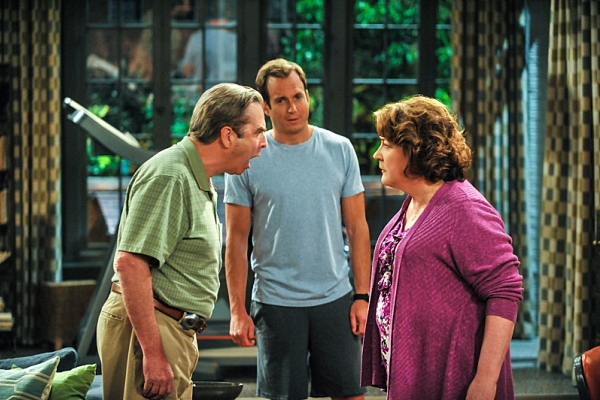
The Millers stars Will Arnett as Nathan Miller, a successful local newsman ( oddly, one of two new Thursday night comedies where the main character plays a local newsman, along with The Michael J. Fox Show) who was recently divorced but has been holding back that information from his overbearing parents.  He instead confides in his sister, Debbie, played by Glee’s Jayma Mays, and her husband, Adam, played by Nelson Franklin. His parents, Tom, played by Beau Bridges, and Carol, played by Margo Martindale, show up at his place after his father accidentally floods the basement of their home. Will is forced to finally spill the beans about his divorce, and in response his father all of a sudden decides he wants a divorce also, ending his parents four decade long marriage. Tom goes to stay with Debbie while Carol stays with Nathan. Curb Your Enthusiasm’s JB Smoove plays Nathan’s coworkers and friend Ray. Thus, the setup for The Millers.

Broad comedy, which was once more descriptive, has become such a pejorative term, trotted out in a negative fashion to describe Farrelly Brothers shtick and the like. In both the descripve and possibly unfair pejoriative usage, The Millers is more or less a broad comedy.  The jokes are often physical and almost always stupid. Respect for their viewers’ intelligence was not something the creators of The Millers had in mind. The jokes are incredibly obvious and there’s a laugh track which lets you know when to chuckle if you somehow weren’t able to figure out from the blatant big laugh lines.

Maybe the’s is a better term for The Millers; the onion AVClub called it fart-com. There were not one but two fart jokes in the episode, and the worse part about those is that they may have actually been the best part of the episode.  Hey, farts can be funny, which is already more than you can say about anything else in the episode.

On top of the stifling laugh track, the show is chock-full of incredibly stale stereotypes and character tropes.  The dad, Tom, can’t figure out how to use technology; he continues to put metal in the microwave and he can’t understand how to use the television remotes.  Television remotes can be complicated, it’s certainly true, but if the writers really thought they had the first inkling to make an old-guy-can’t-figure-out-television-remotes joke, I’m afraid they’re sorely mistaken.  Carol, the mom, is an overbearing nag who pushes advice nobody wants and constantly overshares inappropriate information. Inappropriate parents are hilarious! Ray and Nathan have an unoriginal time-to-hit-up-the-dating –scene. There’s absolutely no care put into writing these jokes. When Tom can’t figure out how to use the remotes, for example, that’s the joke. There’s no even attempt at clever wordplay or something different to keep an old joke even slightly fresh or new.

Eventually, the episode finally gets to its dramatic conclusion. Nathan’s holding a party at which he thinks he’s found a woman willing to sleep with him while his mother is doing everything in her power to prevent that, unintentionally. Nathan, seeing how broken up his mother is, decides to abandon all hope of getting laid to cheer up his sullen mother with a creepy dance rendition of Dirty Dancing. What a sweet kid. It’s supposed to be heartwarming except all of these people both feel like not only classic types but terrible versions of those types. I’m not cheering for anyone and the scene is awkward without being funny. The characters have all gotten on my nerves in just twenty two minutes.

Everything in this show feels like it’s been done a thousand times before. It’s crass, it’s unfunny; I’m not sure who watching this thought this was good. I know I’m constantly surprised but I’d like to find someone who walked out of a test screening of The Millers and thought this was funny. Honestly, I’d like to know if the executives who put this show on the air actually think it’s funny or just are cynically judging the sense of humor of the American people, which to be fair, they may not be wrong about. Good shows I laugh at, mediocre sitcoms I stare at unmovingly, and really bad shows I cringe at. The Millers has certainly earned itself a place in that lowest category. The jokes are not only not funny, they’re dumb and insulting. This show wastes a number of talented actors, and I hope it gets cancelled quickly so that those actors can put their abilities to something of higher quality.

Will I watch it again? No. It’s an instant contender for worst new show of the year, up there in the Dads category. The only think it has going over Dads is the lack of insulting racial stereotyping. It’s so unfortunately that so many talented actors are wasted on this monstrosity.

Fall 2013 Review: Hostages

9 Oct

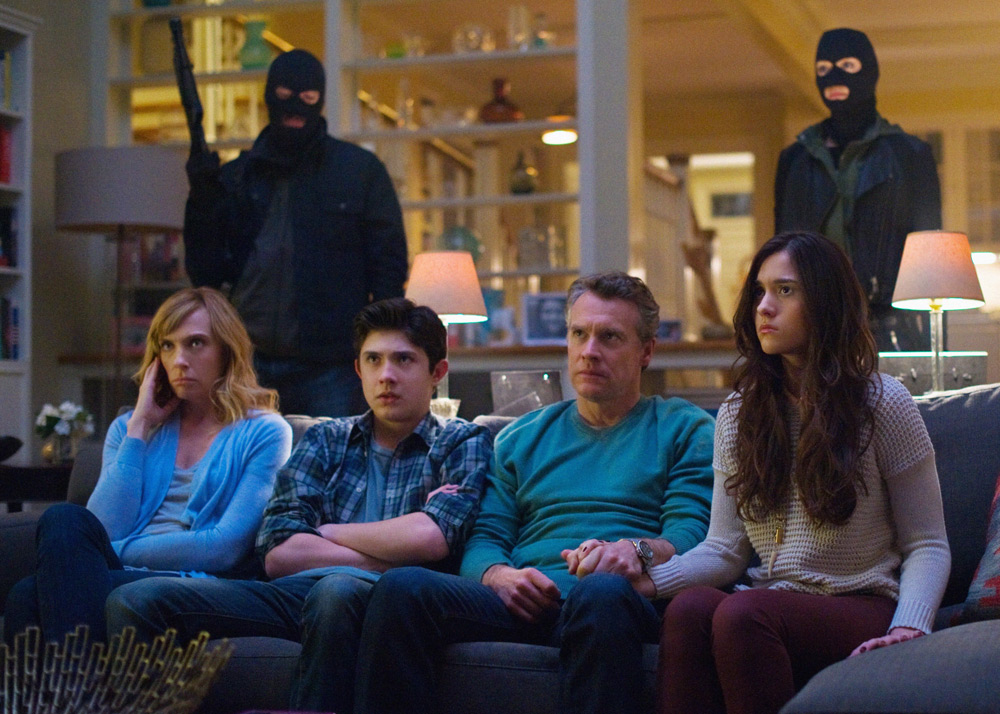
The four Hostages

Hostages, a rare CBS serial drama, is an action suspense series built on the raison d’etre of ratcheting everything up to 11. The show opens with FBI agent Dylan McDermott taking over a contentious bank hostage situation from the local police.  While the police are tentative and willing to negotiation, McDermott barks orders, demands the kidnapper release most of the hostages, and has the balls to shoot first and ask questions later when he suspects the kidnapper has switched his dress with one of the hostages.  Basically, he’s aggressive, risk-taking, and a badass.

From there, It takes 15 minutes to get to the basic premise that anyone who has seen the trailer already knows. The president of the United States needs surgery. He’s chosen a highly trained female surgeon played by Toni Collette to perform the operation, which is invasive but routine. The night before the surgery is planned for, three men and a woman come into her house and take her and her family hostage with an ultimatum. She will kill the president while performing the surgery in a seamless, impossible-to-detect method they’ve already devised, or they will kill her family.

Boom.  There you go.  The president may be assassinated by a prestigious surgeon, whose family is held hostage by a shadowy group of highly-trained operatives, all in about two commercial breaks.

High enough stakes for you?

Nope?

How about this? The conspiracy goes all the way to the top. Dylan McDermott, the heroic, daring FBI agent, who certainly seemed like a good guy, is the leader of the kidnappers. Better yet, his reason for heading up the kidnapping may be because someone has threatened his daughter.  He receives a call from his father, who is sitting at his home watching McDermott’s daughter, sitting next to someone who wants to know about McDermott’s progress in the kindapping.  That person? The president’s chief of staff, who we saw earlier in the episode questioning the president’s decision to use Toni Collette as his surgeon. Whoa.

Not to mention every member of Toni Collette’s family, being held at their home by the surprisingly gentle and gentlemanly (and gentlewomanly) terrorists, has a secret. Her husband, played by Tate Donovan, is having an affair. Her son is dealing pot. Her daughter is pregnant with a shady boyfriend who her parents have never met.

The terrorists consistently anticipate every move that the family makes, as to consistently demonstrate that they’re very good at this.  The ultimate show of this is when Toni Collette sets off the silent alarm.  McDermott and crew not only recognize the alarm going off immediately and threaten Collette’s husband so that she’ll tell the security company that nothing’s wrong, but the security company man who comes to their house just to check is actually working with the kidnappers and presents Toni Collette with a threatening photograph that reveals just how much the kidnappers know about the family.  Damn, they’re good. They’ve got everything covered – how is she possibly going to keep her family alive without killing the president?

That’s the big question and it is a big question.  The problem is that by the time the episode ends, my desire to know that get to the answer of that question should be a lot more urgent than it actually was.  The stakes, strictly in a political sense, were as high as almost any first episode of a television show.  Still, I didn’t feel compelled to see the next episode or all that interested.  Aside from the the high-stakes premise, none of the backing factors such as well-defined characters or well-written dialogue were present to invest me in the dire situation.

Hostages seems like a very poor man’s 24, albeit with more tension and less actual action. There’s suspense with no substance. The show hits the ground running, hoping to draw viewers in from the get go for the super tense action, but the show forgets that in order to get people involved in a television show, you need them to care somewhat about the characters and the situation. Unlike an action movie, where you can watch 88 minutes of people kicking each other’s asses for no reason and just enjoy it for that, to follow 20 40 minute episodes a season of television you need to come up with a little something more. 24, which was the master at action television, at least in its early years before it ran out of ideas, got viewers involved early with its gimmick and high stakes, but supplemented that with characters we cared about (President Palmer!), and taut suspense scenarios in which it never mattered how much they defied logic. More than that, 24 was fun. It wasn’t funny, but it was fun to watch. Hostages really isn’t. Hostages is a drag.

Will I watch it again? No.  It wasn’t absolutely awful. There will be a lot of worse shows, and the worse dramas are rarely as bad as the worse comedies. Still, not worth your time. Watch the first season of 24 again for action and watch the first season of Homeland for suspense if you want better examples of what this show is trying to be.