Tag Archives: End of Season Report

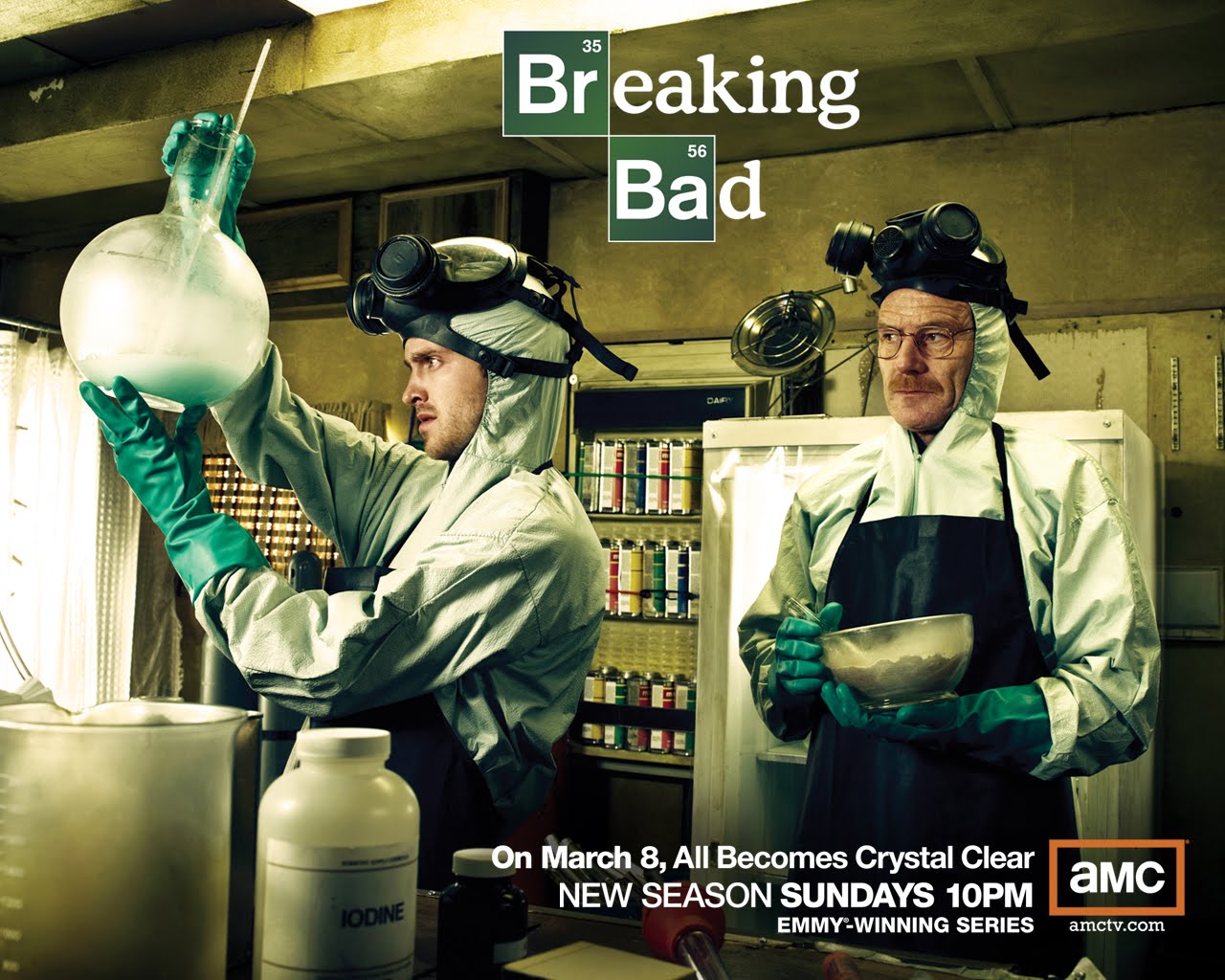
End of Season Report – Breaking Bad, Season 3

8 Jul

It's a cookbook!

The pivotal moment in the third season comes about halfway through when Walt makes his most serious attempt, at least until the current season, to quit the meth business.  Rewatching the season, he came even closer to leaving than I remembered. Looking back from the fourth and fifth seasons, his time in the super lab seems so inevitable, but it really wasn’t.  By the later seasons Walt has made peace with being the bad guy to some extent.  But in season three that’s still problematic for him.  He’s still out largely to make money for his family, even if that motive has comingled with his enjoyment of doing something that he’s good at and his ego-fueled refusal to know when to leave enough enough.  He takes concentrated stock of his life.  He didn’t imagine losing his family and isn’t happy about it.  Maybe he’s gone too far, he thinks, and maybe it’s time to put his family first. His marriage is looking to be in pretty awful shape with the revelation that Skyler fucked Ted, but Walt isn’t ready to give it up.

Jesse, who, unlike Walt, sees himself as the bad guy now, in the wake of Jane’s death, unsuccessfully tried to talk Walt into making more meth, and when that failed announced that he was planning to go forward with a solo venture.  That succeeded in making Walt furious. What right did Jesse have to make his product, Walt thought, but it wasn’t enough to make him reconsider.  Rather, getting Walt back to cooking took the deft convincing of chicken restaurant owner and drug kingpin Gustavo Fring.  In his persuasive oratory, Gus gives one of the most famous speeches of the series, and rightfully so, when he explains to Walt that “A man provides.” Gus is a studied master in the art of dealing with people, and in this speech he plays upon all of the personality aspects likely to convince Walt.  He speaks to Walt’s ego, and his desire to be the provider.  He gives Walt an out for being the villain.  All that matters is that he’s making money for his family, because that’s what a man does.  Who cares what other people think of him?  Who even cares what his family thinks of him now – he got in the business to leave something behind when he’s gone, and he needs to do it, whether they appreciate it or not.  After the speech, Walt is in, and he’s now all in.

Season three, like several Breaking Bad seasons, takes a while to get going.  The cousins are mysterious but are more responsible for a couple of the great vignettes that Breaking Bad is so good at putting together than for any actual plot.  They’re hardly characters themselves; their primary value is in how they affect the other characters, which doesn’t come until later in the season.

I’d like to put an end to the idea that Walt doesn’t care about Jesse, which I’ve heard so many times in the past couple of years in the wake of Walt becoming more hard-headed and full of himself.  I’m hardly calling Walt an altruistic saint, but what he does in the second to last episode of season three, he does at least partly because he cares for Jesse.  It’s easy to forget that Gus and Mike wanted to kill Jesse, and Walt basically tells them that he won’t work for them if they do.  He puts his ass on the line for Jesse.  Walt kills those two drug dealers because otherwise Jesse would have, and he shelters Jesse when Gus wants him dead.  Walt may ask a lot from Jesse to kill Gale, but it’s hardly unearned.

Famous bottle episode Fly, the tenth episode, marks the second major transition in the season.  The episode itself slows everything down for forty minutes.  It’s a look back before the final three episodes move forward at breakneck speeds.  The episode itself builds; the first few minutes are paced in such a way that you feel like Jesse, thinking who the hell cares about this stupid fly, but then, like Jesse, as Walt goes forward, you get involved.  Walt, and the show, use this moment to take stock and reflect on how far we’ve come in three seasons and what mistakes were made and how the original plan didn’t turn out exactly like it was supposed to.  By the time that Walt admits it’s not really about the fly anyway, as was pretty obvious from the beginning, it no longer really matters.

The last two episodes are riveting and in and of themselves worth the slow build of the season.  I challenge someone who hasn’t seen them before to find a chance to take a breath during either Half Measure or Full Measure.  It’s remarkable how quick the suspense is ratcheted up after the comedown of Fly.  The clock is ticking for Walt and Jesse after the events of Half Measure, where Walt kills two drug dealers to spare Jesse from doing it himself. The last episode is basically a race to figure out how in the world Jesse and Walt are going to make it through the next forty minutes of TV with their lives, considering Gus Fring is a much more serious enemy than any they’ve ever faced before.

Season three marks a transition between seasons two and four.  The show becomes less about little personal moments and more about broad strokes that are intricately plotted.  The scale is much bigger.  Walt and Jesse are no longer working out of a trailer, but instead are supplying meth to the entire southwest.  Some of the small, everyday moments from the earlier seasons are lost.  Walt is no longer a regular person with a small hobby, and his family is no longer a regular family.  After my rewatching, I have more understanding of people who choose the second season as their favorite than I did the first time I watched through. However, with the loss of the small comes the gain of the big.  Subtlety goes out the window but Breaking Bad also plays well on a much more epic scale.    Breaking Bad continually breaks out twists and turns that are never obvious but don’t feel forced either.  Character motivations are extremely well-handled; the decisions made by all the major characters which lead to the various predicaments make sense within the context of the show.  Gus and Mike come into play and both are hugely welcome additions to the show.  This is the big time now.  Walt and Jesse are no longer dealing with chump change and highly unstable drug dealers like Tuco.  Walt may make mistakes, but they’re because of his greater personal flaws, rather than because of his bumbling I-can’t-believe-I’m-dealing-with-violence-I’m-just-a-chemistry-teacher attitude.

I wouldn’t leave off a Breaking Bad review without a shout out to the sheer cinematic qualities of the show.  The technique is brilliant; there are beautiful set pieces.  Even scenes that seem irrelevant to the plot are beautifully filmed vignettes in their own right that tell their own micro story with style.  No show films better montages than Breaking Bad, and I’ll leave with the montage of Jesse’s friendly hooker friend Wendy, set incongruously to The Association’s “Windy.”
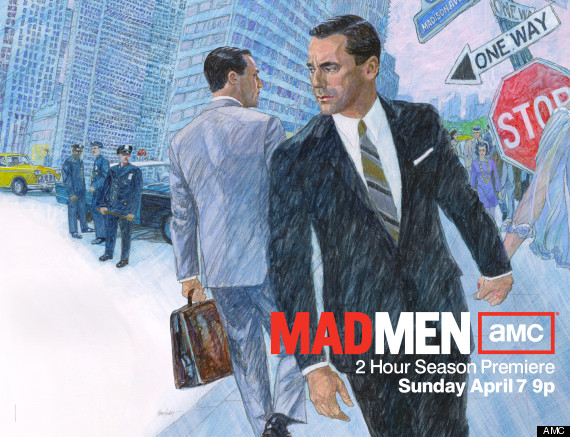
 

End of Season Report – Mad Men, Season 6

28 Jun

Don looking animated

Two statements to start off this report on the just finished sixth season of Mad Men: First, this was probably the weakest season of Mad Men yet. Second, even at its weakest, Mad Men is more interesting and provides more food for thought than almost any other show on television.

There’s one major reason for this season’s overall weakness: Don Draper. I’ve further broken down the problems with Don into two related issues. First, it too often feels like we’re revisiting old ground with Don Draper. This is never more clear than through the flashbacks we see this season to his childhood. These flashbacks are both way too on the nose regarding how Don sees woman, especially in the context in which they’re shown, and they don’t really reveal insight that we don’t already know. Don seems to be repeating behavior and storylines from the past several times during the season, falling back into the same cheating patterns, being needlessly mean to Peggy, and just making everybody’s life difficult in ways similar to what he’s done before.

Secondly, Don’s the worst. Don was never a great guy, and from the first episode in which we’re introduced to him, he’s stepping out on his wife, a pattern he repeats through two marriages. Still, while Don was no hero, there was still an essential humanity deep down that we could relate to and understand, even if not feel sorry for or sympathize with. Even when he was wrong, which was often, he felt, and he tried, or at least tried to try, and at work he was often the good guy even when he wasn’t at home.

None of these are any longer the case. It’s as if Matt Weiner set out this season with the goal of destroying every shred of humanity within Don and turning him into a full fledged monster, which is what Peggy calls him late in the season when he attempts to both sabotage a meeting for Ted and take credit away from Peggy in one fell swoop. He not only cheats on his new wife, but he’s also incredibly degrading to the woman he cheats with. Oh, and it happens, to add insult to injury, that she’s his neighbor, and her husband is one of the only men Don seems to genuinely like in the entirety of Mad Men. He makes constant trouble for the firm after the merger, seemingly going out of his way to frustrate Ted and belittle Peggy. The coup de grace may have been when his daughter catches him in flagrante with the neighbor, destroying what respect she had left for her dad.

There’s even more emphasis on what a drunk Don has become this season than in previous years. While he’s always been a serious drinker evolving into a borderline alcoholic, he’s clearly a full-fledged alcoholic here and sober in very few scenes over the course of the season ( (maybe more than borderline, I’m no expert at the diagnosis, but there’s never been as much emphasis on the destructive power of drink to his life). In the final episode, he seems to at least care about trying to give up booze, throwing out his bottles and not drinking at work, and even though he’s suspended by his partners, this could be the first step in a powerful redemption story. I’m not sure it’s a redemption story I want to see though. Don’s come so far, and we’ve come so far with him that I’m not sure I want to see Don redeemed at this point. Maybe I’m not giving enough credit to the plight of alcoholism, a very serious disease, and I apologize if I’m not, but his actions have seemed deplorable whether or not he was drinking. It would be great if he cleaned himself up for his character within the show, but I’m not convinced he’ll ever be a person I want to root for again.

If anyone came out worse than Don this season, it was Pete. Pete, who may have gotten the second most screen time this year after Don, has always been the anti-Don in a way. Don breaks all the rules, but, until this season, it didn’t matter, because Don always gets the breaks. He screws up big time, but makes up for it somehow by pulling a big pitch out of his ass or seducing the next woman to come along with sweet talk after he fails the previous one. Don finally does get his comeuppance here, but while it’s hard to feel sympathy for him, it’s hard to not feel at least somewhat sympathetic for Pete. Pete was the primary antagonist in the show’s early seasons but now that everything goes wrong for him anyway, it’s hard to continue to root against him. He wants to get away merely with part of what Don does effortlessly, but it never works. While Don gets away with cheating for years, Pete’s caught out in his first foray in his new apartment in the city. He think he solves an awkward situation in which he catches his father-in-law in a whorehouse, but the joke’s on him when his father-and-law would rather spill the beans on Pete’s infidelity, even if he knows that the same damning evidence will be visited on him. There was no greater physical symbolism for Pete’s stumbles than his quite literal stumble down the stairs midway through the season. It’s not that Pete doesn’t deserve a lot of what he’s getting, but it’s hard to feel like even he deserves all this misfortune in such a short period of time.

Mad Men struggled to reckon with the almost mythic historical importance of 1968, a year with multiple assassinations, infamous riots, and the election of Nixon, which symbolically ended the decade in many ways. There were occasionally powerful historical scenes, including after Robert Kennedy’s assassination, but too often I thought the efforts to have the characters react to the specific events of the time fell flat. This, as has been noted in many blogs and media outlets, has been particularly true in regards to race. My biggest problem isn’t Mad Men’s failure to deal adequately with the race-related issues that pervaded the ‘60s, although the show certainly has been largely unsuccessful. My problem is that they make a half-assed effort. I’d rather the show largely ignore race than attempt to put a couple of toes in the water only to take them right back out when the water’s too cold. Mad Men introduced a black character Dawn, only to basically never use her.

Even for its faults, there’s plenty to enjoy in the new season. Peggy, Don’s one time protégé, may be well on her way to surpassing the master, and her rise is cataloged wonderfully, even with the surreal stabbing of her now ex-boyfriend Abe. Joan and Roger shine in every scene they get; one only wishes they could get more screen time. Joan’s turning what she thought was a date into a recruitment dinner with a potential client was a great step in her evolution as a businesswoman.

There were a handful of new characters this season. The shady Bob Benson, who generated more conspiracy theories than any other new Mad Men character, turned out so far to be a doppelganger of Don’s; a man without a past who has invented a future for himself. He’s helped out several people as part of his eager beaver please anyone he meets routine, but we’ve started to see a dark side when he sets up Pete for failure at Chevy.

Ted existed before this season but never as this meaty a character, and his contrast and competition with Don was one of the most enjoyable plots of the season. Ted has his weaknesses, which are on clear display in the last episode when he jerks Peggy around romantically. Still, the inclusion of Ted makes us realize just how unusual, and not in a good way, Don is. Being a creative isn’t an excuse for his treatment of his employees and his management strategy. Also, the scene of Ted flying Don in his tiny plane was a season-long highlight. Ted’s longtime partner Jim Cutler was a welcome minor character as well this season, adding notes of humor to a show that can easily be dragged down by Don’s (and Pete’s) unrelenting self-seriousness.

I look forward to a complete rewatch at some point where I can see if the material comes together better in a shorter period of time. As I said before, it’s still Mad Men. There’s so much to chew on, and the fact that there is, even if it doesn’t always work, makes Mad Men clear appointment viewing. Still, I hope the next and last season pulls together a little bit better.

End of Season Report – Rectify, Season 1

17 Jun

Everyone gets ready to eat dinner

Rectify had an excellent first season overall and may have been the best new series from the past year.  In discussing the season, I’d like to start with the end, the powerful and vicious scene that closed Rectify’s debut season.

Few recent television scenes have incensed me with the furor that the last five minutes of the final episode of this season of Rectify did.  A pack of masked small-town middle-aged men descended on main character and freed death row convict Daniel as he visits the grave of the woman he was convicted of murdering and simply beat the living tar out of him.  Daniel, helpless, lies on the grass as blows are rained down on him by the masked men.  One of the men, the older brother of the woman whose gravesite Daniel is lying by, finishes the job by peeing on him.  Rectify had previously shown threats to Daniel by angry townspeople, including a damaged mailbox, but nothing even close to this extent. As I watched Daniel lie doubled over in pain before an ambulance arrived, I wanted to for someone to come and make these guys pay for what they did, legally or extralegally, but they just got back in their cars and went back from whence they came.

This scene triggered such strong emotions largely because so few shows aspire towards the level of realness of Rectify.  Moments in shows like Game of Thrones certainly supply anger and a visceral gut punch, but there’s always a detached perspective of a fantasy world.  Even shows like Breaking Bad take place in our world, but in a heavily stylized version of the world.  Not so with Rectify.  Few shows this side of David Simon truly feel like reality.  Everything in Rectify feels like it could actually happen in our world, a view enhanced by the gentle pacing and the emphasis on seemingly mundane events, like eating pieces of cake and taking trips to the store. Rectify led me to believe that I could drive down I-95 for a day and reach the town from the show, and it’s because of that sense of reality that each blow Daniel took raised my blood pressure and made me want to sock each and every man in masks.

The minimalism of the show also helped increase the power of that scene.  Unlike shows in which episodes routinely feature action and fighting, a punch means something in this world.  Violence isn’t something handed out in every episode.  This beating was an extraordinary event, that stood out starkly from the every day.

This reality is one of the factors that separates Rectify from everything else on television.  The whole season takes only a couple of days, and few shows make so much out of so little plot.  Little emotional moments are at the heart of Rectify, and they consistently hit.  The last scene was so powerful because you come to empathize with the characters.  We don’t yet know what really happened to the girl Daniel allegedly killed, but we do know that Daniel is a man who suffered deeply for two decades and who is honestly trying to face up and reckon with the opportunity for freedom he’s been given.  He still hasn’t quite figured out how to do make that peace, but his attempt at finding it stands in sharp contract to the simple-minded physical violence eye-for-an-eye strategy employed by the punks who beat him.

Flashbacks are difficult to use well, and in the past I’ve called out many shows for unnecessary flashbacks, which I think can be a crutch for exposition or character development best handled in the present.  I absolutely love the flashbacks in Rectify though, which show Daniel’s time in prison.  Daniel interacts primarily with another prisoner in the cell next to his, and their contact seems more free and natural than Daniel’s contact with anyone in the outside world once he gets out. Over time, this one fellow prisoner becomes his link to the remainder of humanity. The last episode features a moving scene in which Daniel’s friend is finally taken to die, and in his last moments finally sees Daniel, after years communicating only by sound, and confidently pronounces that he is sure that Daniel is innocent of murder.  It’s difficult to even imagine the very real plight of being released from prison after twenty years. At least in regular prison there’s at least a yard and some connection with the outside world, unlike death row.  Daniel has been in a box for twenty years, which has to have a huge effect on his ability to communicate with people who haven’t been.

People don’t know how to react around Daniel, and that difficult to bear awkwardness comes right through the screen.  People expect him to have trouble adjusting, but to have less trouble than he actually does, and to get over it real fast.  They project what they imagine twenty years in prison must be like onto him, even though it’s absolutely impossible for them to really understand. When he doesn’t sound unabashedly enthusiastic to be out of prison, people think he must be guilty.  He’s so haunted by the idea that he might be guilty that he’s convinced himself, over the years, that he’s not even sure what happened.  The difficulty that even simple person to person interaction poses Daniel is beautifully rendered and can be difficult to watch and enthralling at the same time.

As mentioned above, it’s often the little moments that really make Rectify stand out.  My favorite of the season was Daniel playing Sonic on Sega Genesis and rocking out to Cracker in the attic, dancing around in the way people only do if there’s no one else around.  It’s one of the few moments in the season where Daniel seems to be actually enjoying himself, appreciating the moment without the heavy emotional burden that every personal contact seems to take on him.  For a couple of minutes at least, Daniel can relax and really appreciate being free.

End of Season Report – Arrested Development, Season 4

12 Jun

There's Always Money in the Banana Stand

This is a general overview/review of the new season; I’ll probably do at least one or two more AD posts, but we’ll see. I would recommend against reading this unless you’ve completed Season 4.  If you haven’t, get to it, and come back when you have.

I made a decision not to make any serious judgments about the fourth season of Arrested Development before I had watched most, if not all, of it, and I implore you to do the same.  I made this decision because this is an unprecedented television event in several ways.  First, I can’t think of another example of a live action show brought back over a half a decade after it was originally cancelled. Animated programs like Futurama and Family Guy have returned from the dead, but voice work is a lot less arduous and animated programs are cheaper to make.  To reassemble the actors, a particularly large cast for a comedy, along with the writing staff, and the money and distribution outlet to get it done is a truly remarkable achievement. Secondly, it’s being distributed not by a traditional television network, but by Netflix,and  instead of once a week, all at once.  The season is uniquely designed to benefit from such a release, being more one giant 8 or 9 hour episode of Arrested Development than an unrelated series of shorter episodes.  The episodes do make sense by themselves, but not nearly as much sense as they make as part of a whole.  No comedy is as serial or plot-heavy as Arrested Development (Venture Bros. is the only other contender I can think of).  This is more than serial though.  Since each episode focuses on a single character, and the episodes all tread over the same time period through the point of view of different characters, events we saw in the earlier episodes are entirely turned on their heads by what we learn in later episodes.  Even in serial dramas which benefit from multiple viewings, rarely are events in earlier episodes as transformed by knowledge gained several episodes later. The earlier seasons were intricately plotted, but they have nothing on this fourth season, in which each of the nine main characters gets his or her own plots, but run into different members of the family at various points throughout the seven year period over which the season takes place, culminating in a series of events on fictional new Arrested Development holiday Cinco de Cuatro.

The season builds. The first Michael episode is so heavy with exposition that weighs it down at times, as it struggles to reconstruct seven years of plot.  However, it turns out this is going over territory that’s going to be touched on in just about every episode, so it’s worth going through this much narration once.  The episode sometimes feels off and rusty, especially burdened with all the expectations of seven years of anticipation wrapped up in it,  but I think (I haven’t done this yet) I’ll enjoy it a bit more on a second viewing with the knowledge of what’s to come.  Even this initially sub-par episode has moments.  I greatly enjoyed the constant machinations by Michael to construe a four-person vote that would eliminate P-hound, and the frequent references to the votes throughout the episode, including by the guys from Workaholics at the airport.

The reveals that come throughout the season alter our perspective of earlier events in ways that would have been hard to do without this level of freedom and fan dedication; this is Arrested Development writ large.  Most shows rely on the early episodes to keep viewers coming for later episodes.  Arrested Development could count on almost anyone who watched the first episode of the season watching them all.  Because of the Netflix model as well, the barometer of success is not necessarily how many people watch every episode, anyway. The best of these reveals is probably the discovery that George Michael’s much hyped internet company Fake Block is not based on privacy software at all, but is rather a simulated wood block.  For well over half the season it seems as if George Michael is the one successful Bluth whooing girls and capital with his software company, but it turns out this entire image is based on a series of lies.  George Sr.’s sweat lodge in the second episode turns out to be where G.O.B. planned his disappearing act from his wedding.  Herman Cain lookalike Herbert Love believed Lindsay was a prostitute because, unbeknownst to her, Maeby was acting as her pimp.

Repeated moments offered some great laughs as well.  My personal favorite was the constant hearkening back to Michael and his father making a deal outside of Michael’s office.  As the series progresses, we keep returning to flashbacks of them asking one another continually to do something else for each other.  Also great was the repeated viewings of the scene in Lucille’s apartment, where Michael, in the first episode, tells his family that he’s done with them.  In each character’s storyline we get a new look at that scene, slowly panning out to reveal more and more people there. What initially looks like a huge dramatic moment for Michael begins to feel more like yet another moment when utterly self obsessed Michael, thinking only of himself, ignores everyone else.  It’s fantastic when it turns out it’s George Michael’s graduation and Michael makes him tear up the check.  Another noteworthy repeated joke was when Michael telling his son that he can’t meet because he’s stuck in traffic turns into a two-way lie fest where both George Michael and Michael each stay on the phone for fifteen minutes doing their best to convince the other that the traffic is real.

It’s ultimately wonderful that the characters stay true to themselves.  It’s hard to watch Michael, the family’s one really successful member in the earlier seasons, just break down in the first episode, but it makes total sense, as what brings him down are all the traits that he displays earlier, his self-absorption and inability to listen to others.  George Michael , although it appears to the viewers initially that he has, can’t escape his awkwardness.  His solve for x scene was hilarious, and his episode was one of the best.  The others’ flaws are more obvious, but each of them break out with positive moments in their lives earlier in their episodes only to fall back into the mire as their plots move forward.

Arrested Development made a conscious effort to be relevant to the time over which the years took place.  There are repeated mentions of the housing crisis, particularly relevant, as the family works in real estate.  Tobias and Lindsay both read Eat, Pray, Love.  George W. Bush is dragged back up with what George Sr. thinks is a monument to the ex-President, but instead turns out to be a wall to keep immigrants out.  Herbert Love is a veritable Herman Cain ripoff.  These real life allusions actually work surprisingly well in shepherding a show which has the unenviable task of taking place over a seven year period through history.  George’s mistaken reading of the wall plans are vintage Arrested, as is the scene in which real estate agent Ed Helms, a callback to a one episode character in an earlier season, sells Tobias and Lindsay a house for no money with an endless variety of unnecessary features, just so, as they repeat so many times, they’ll have it.

This season was extra-heavy on the guest stars.  An incredibly high proportion of recurring or memorable one-time characters from earlier shows reappeared somewhere or other in the fourth season, which admittedly sometimes felt like fan service, but generally in a non-prolematic way.  They were joined by a generous proportion of new characters, who got more screen time in the new season because many of the single character episodes were light on Blush family interaction.  More Bluth family interaction would certainly be preferred, but the new characters largely held up their end for the limited roles asked of them.

I was hesitant to declare the fourth season of Arrested Development a huge success right after watching, but the more I’ve thought about it, the more I’ve enjoyed it.  It wasn’t perfect by any means.  The narration can be a littly hammy, and while to some extent the abject unsubtlety of the narration is much more artfully done than the awful narration on say How I Met Your Mother, a little more subtlely is called for sometimes.  As mentioned above, I’d love even more interaction between the Bluths, who sometimes get entirely lost in their own episodes and only run into their family members once or twice.  There are sparse moments and jokes that don’t quite work.  All told, the ambition level was so high that Arrested Development doesn’t always reach it.  Still, overall I’d vastly prefer setting ambitions this high and largely meeting them to meeting a moderate goal one hundred percent.  So many shows on television on happy to have very reasonable ambitions and pat themselves on the back for reaching them.  We’d do well for more shows that shoot for the sun and offer a lot to be enjoyed even when they don’t quite reach it.

Game of Thrones – End of Season Report, Season 3

10 Jun

Arya Horseface

Game of Thrones Season 3 ended yesterday with more of a whimper than a bang, especially compared to the penultimate episode.  During the silent credit sequence that followed that ninth episode, you could hear a pin drop due to the gaping silence and wide open jaws of the viewers, at least where I was watching.  Still, things happened last night, and plenty of things happened over the course of the year.  The last episode was primarily little bits of wrapping up loose ends and starting new ones.  I’ll take a look at some pieces of the last episode, some continued fall out from the red wedding, and some general season-long trends.

First, it can’t be underestimated how much the greater Westeros landscape has shifted post Red Wedding.  The Lannisters, for most intents and purposes, have won the war.  They know the battles aren’t over forever; there are marauding Ironborn in the north, and Stannis remains alive and everyone knows he’s not one to give in.  Still, Stannis’s forces are decimated.  Stannis will have to regroup and any fight that could actually challenge Lannister superiority is some time away.  The Lannisters and their allies have recaptured the north and their single greatest current threat was wiped out in one single brilliant blow.  The Lannisters now merely need to consolidate their power and make sure their growing unruly king can be corralled.

The three primary parties behind the Red Wedding had different motivations which lead to their hand in the event.  Tywin was out to win a difficult war and saw a way to do so in one fell swoop with a minimum of bloodshed to his side.  He’s not punitive beyond what he thinks will serve a practical purpose, such as to intimidate others from ever taking up arms against the Lannisters again.  He’s not interested in parading the wolf ‘s head around or gloating.  Tywin is an unsentimental pragmatist through and through.  Roose Bolton is a cold and calculating opportunist.  He begins to see, as the viewer does, that Robb, thanks to a series of blunders as well as overall strategic difficulties, is losing the war.  He knew that having supported a losing side for so long is unlikely to earn him mercy with Tywin and the eventual victors.  He’d lose lands at the least, and maybe members of his family as hostages. Instead, he saw a chance to turn his fortunes around by aligning himself with the winning side, and helping them out to prove his value.  Bolton is ambitious but within reason.  He’s going to become Warden of the North, a huge promotion, but he’s not so greedy that he would have made his move if he didn’t see it as a no-lose opportunity.  For Walder Frey, it’s old fashioned revenge, plain and simple.  He wouldn’t have acted without assurances from Tywin, but he’s less interested in the greater conflict than in getting back at Robb and the Stark family, who showed him up.  He is a bitter old man who was lied to.  Robb broke a promise, insulted the Freys, and must pay.

Tywin intriguingly asks whether it matters how they died, when discussing the moral repercussions of his actions with Tyrion.  A war won is a war won, and Tywin rightly points out that fewer people died this way than would have in a prolonged conflict on open battlefields, and not just on the Lannister side.  Still, Tyrion’s point that memories are long is at least equally correct and I think that’s not to be underestimated.  This is a kingdom with a long collective memory, and the North is not likely to put aside its animus towards the events of the red wedding, even as years and decades pass.  Bran explicitly reminds of us of this with the story of the Rat Cook, who was turned into a rat not for murder, or for cannibalism, but for violating sacred guest right.  The odds are against Tywin being haunted by that decision in the near future, but for a man who puts so much stock in considering his family as greater than himself, he may have caused them seriously long term negative reputational value.

Daenerys conquered two slave cities in short order with dragons, guile, and a host of now freed slave soldiers.  She had her best television moment fairly early in the season when she loosed the dragons on the Astapor slave sellers and told the unsullied she purchased to turn on and kill their masters.  I was pretty disappointed with her final scene, which was also the last scene of the season.  The previous two seasons have ended with serious WTF moments, where shocking supernatural events takes place.  This season’s ending did not compare to either the dragons hatching in the first season or the white walkers in the second.  The slave soldiers calling out to Dany, their mother, verged on cheesiness, and did nothing for me.  I may be biased because Dany isn’t my favorite character, but I still thought this was not adding anything new to the Dany narrative; the news she had conquered Yunkai  would have been a better place to end her season’s storyline.  Admittedly, the Dany scenes are among the hardest to place within episodes because she’s so far away from all the other characters both spatially and plotwise.  It’s hard to root against her freeing the slaves, and the slavers are some of the most one-sided characters on the show.  Still, I think there’s a more interesting dynamic to focus on in terms of what happens to the slaves and the cities once she conquers them, and how to take care of her huge number of ex-slave followers. I hope some time is spent with these challenges in the next seasons.

A couple of characters actually converge  and meet up with one another in this final episode!  Sam meets up with Bran, and even though they go their separate ways, it’s still a heartwarming little meet and greet.  Bran has gotten the bulk of the show’s supernatural activity this season and he demonstrates his warg power and his future vision or greensight.  His spirit guide Jojen seems to believe Bran could play a major role in fighting the white walkers in the upcoming battle. Bran’s plot is consistently the hardest to predict because it’s so steeped in the supernatural. Jaime also finally reunited with Cersei, providing an oddly sentimental moment for incest, though the one moment is about all we get from from their meeting.

In a plot beginning, Stannis is soon to be off to the wall with both rivals Melisandre and Davos agreeing on a plan. It’s an intriguing move for a king without a kingdom.  How to convince the people of the kingdom to join his side?  If he can’t beat his enemies within, attempt to defeat the kingdom’s enemies without, the white walkers.  The Stannis plots this season have been limited, but with him off to the wall, where Jon Snow and Sam are hanging about, it seems like they may get a lot more interesting soon.

The petulant young king Joffrey is a problem, but less so than when there was merely Cersei to corral him, as Tywin is clearly in control of the kingdom now.  Having the crown hardly makes one king in more than name.  That said, there’s at least a minimum of connection to the crown that one needs to obtain ultimate power as well. Varys reminds Shea of this when mentioning that he, as a foreigner, will never be able to hold more than a certain amount of sway no matter how much he knows.  I didn’t particularly care for the Varys – Shea scene, largely because it seemed as if Varys was saying a lot for our benefit that he would never have said to Shea in context, but the point still stands.  You don’t need to be the king to have power but having the family connection and the high born status doesn’t hurt.

Tyrion, who basically owned season 2, didn’t have a whole to do this season, but that’s okay.  He did marry Sansa, against both of their wills, and the little bit of banter we’ve seen between the two of them has been surprisingly entertaining.

Arya and the hound have become the latest buddy pairing to tear up the Westeros countryside, hot on the heels of Jaime and Brienne and before them Tyrion and Bronn.  The Hound has some of the more mysterious motives of any character in the show, as he’s done some monstrous deeds, but also seems to have some redeeming characteristics.  He also really does not like fire. Him and Arya make short work of four Frey soldiers sitting beside a fire, and Arya, perhaps not surprisingly considering all she’s dealt with, has begun to harden considerably in her treatment of men minding their own business hanging around the countryside.  Just last week, she asked the hound to spare a man’s life.  No more.

Jon finally makes it back home, ending his middling attempt to pose as a wildling.  It’s heartbreaking to see Ygritte aim at Jon Snow, and it’s an open question if she’s actually trying to kill him or not, but I think it’s oddly reaffirming that both of them are standing up for what they believe in.  I’d love for them to be together, but it’s difficult when they have belief systems that are diametrically at odds.  Jon stands up for the Night’s Watch and makes a daring return home to warm of the upcoming wildlings attack, while Ygritte tries to fulfill her promise that if Jon betrayed her she would kill him herself.  I’m certain glad, however, that she was unable to come through on hers.

A reveal in the finale is that the character torturing Theon for the entirety of the season is Ramsay Snow, Roose Bolton’s bastard, who took over Winterfell from the Ironborn.  The number of Theon scenes this season has seemed gratuitous – two or three scenes of torture were good enough to get the point across, and beyond that seemed unnecessary.  Still, here we have a truly evil, truly sadistic character.  To me, this actually makes view Joffrey in a different light.  Ramsay is a face of evil.  Joffrey is a spoiled immature brat who received the keys to a kingdom as a teenager when he normally would have received groundings and time outs.  He’s bad, unquestionably, but I think he’s more out of control than evil.  Now Ramsay Bolton, who continues to torture Theon for days and weeks on end simply for the fun of it.  That’s evil.