Tag Archives: End of Season Report

End of Season Report: Luther, Season 3

9 Dec

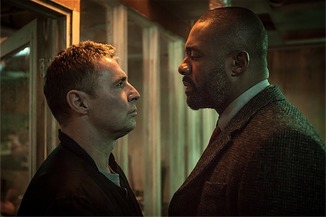
Luther and his nemesis

British cop drama Luther aired its third season this year, although it’s a very British season, made up of just four episodes. The first two seasons were solid but unspectacular fare that largely relied on television police tropes, particularly the cop-that-breaks-all-the-rules-but-is-always-right. Still, the seasons had their moments, starred the always wonderful Idris Elba, featured one really interesting character named Alice, and well, there weren’t that many episodes so the quality didn’t have to be as high to make the seasons worth watching (I’m aware that’s a very backhanded compliment). 

Normally I try to make some broader points in these end of season reports and hit on a number of key plotlines. Here, though, there was one element of the third season that basically ruined it for me and that’s pretty much what I’m going to focus on.

Here’s the problem with Luther season three, the most frustrating and worst season of the show to date. They took a good idea and executed it exactly the wrong way,which led to a season which was worse than if they good idea had simply been absent altogether.

Let me explain.

Here’s the good idea. Luther is an unethical police officer who violates both ethical and legal boundaries to solve cases and punish guilty offenders. This is something that would be extremely controversial in real life, is fairly controversial in the show, but it’s something viewers have occasionally been taught to root for in their television heroes. Heroes don’t play by the rules and they get things done anyway they have to; technicalities be damned. Thus, this season, the Luther writers smartly decided they were going to introduce someone who looks into Luther’s  misdoings and tries to find out if they’re true, and if so to take him down within the system.

That’s a good idea. Here’s how you do it right. The internal affairs-type people looking to get Luther are completely neutral and simply interested in finding the truth. They’re not interested in personal vendettas; they’re interested in people following procedures that exist for a reason. Internal affairs-type people always tend to come off as bad guys in TV shows for the same reason borderline unethical cops come off as they good guys; the cops are trying to get results, while the internal affairs people are worrying about bureaucratic bullshit while the real cops go after criminals. So, the key to have this plot thrust work is ensuring that the agents coming after Luther are trustworthy and passionate, so they’re on an even playing field with Luther, and it makes you think, well, maybe Luther, this character that I’ve been rooting for, maybe there are good reasons that he should go down and get investigated and possibly punished for his indiscretions.

Here’s what they did. The head internal affairs person investigating Luther, George Stark, is a drunk absolute nut job who cares much more about railroading Luther than he does about justice or law or really anything. It’s unclear why he cares so much since we’ve never seen him before and it’s unclear what kind of official permission he even has to be conducting his investigation. At least his helper and second in command has been at odds with Luther for some time and has a legitimate beef. Stark comes out of absolutely nowhere, despises Luther for reasons that are unclear, but is far from being above using the same exact underhanded tactics to get Luther that Luther might use against a criminal. Not only is it unbelievably hypocritical, but Stark has an insufferable superior attitude about the whole ordeal which makes him all the more despicable.

I’m open to rooting against Luther. I could be convinced. He rubs me the wrong way often and I’m tired of that cop-who-disobeys-the-rules being portrayed as the hero . Still, when this is the other option, I’ll root for the devil I know any day of the week. I know this show can do better. Luther is already a show with many limitations and a not particularly nuanced view of crime or policework, but it could craft a more convincing and compelling investigation into Luther’s misdeeds.

This investigation into Luther was all leading to the final episode. I was already kind of fed up with this plot by this point which was ruining most of the enjoyment I had from the other angels of the first three episodes. Stark’s investigation into Luther in the final episode became unbearable and almost made me stop watching then and there. Luther’s partner is killed, and the killer comes after Luther’s girlfriend. Somehow, however, Stark believes that Luther conspired with the criminal to come kill his girlfriend for some reason, well, I obviously can’t even fathom what reason. Come on. How are they taking this seriously? Say what you want about Luther, and there’s a lot to say, there’s a lot that he’s actually guilty of that he should be fired for and maybe more. But that he arranged a deal with the villain to kill his girlfriend? What? How does that even make sense for two seconds?

I’m aware plausibility only goes so far on TV often, but there has to be limits. Stark is also mindbogglingly incompetent and his utter confidence that Luther is behind every plot in the show ends up leading to his death and almost several others.

Also, everyone who watches Luther loves Alice. Alice is the best character. But her coming in out of absolutely nowhere to steal him away from his convey with grenades? Come on. A poisoning? Sure, I’d believe that. But this seems more than a bit much, as does Luther walking away with her at the end of the show, still barely a day, if that, after his partner died.

This is a much more minor note, but the dialogue between Luther and his new girlfriend Mary when they get together at the end of the second episode is just terrible.

Honestly, this is just a very disappointing season of television. I’ll have to consider whether I want to watch any more if a fourth season comes about.

End of Season Report: Boardwalk Empire, Season 4 – Part 2

29 Nov

Nuckie in Florida My thoughts on the recently ended fourth season of Boardwalk Empire ended up reaching an unseemly length, so I decided to slice them in two. The first part is here.

Gillian’s plotline was one of the triumphs of the season. It was, unlike many of the other plots,largely self-contained within this season, and dealt with her trying to put her life back together and ultimately gain custody of Tommy, Jimmy’s orphaned son. My one reservation about her story was that it felt a little ludicrous to have this ridiculously long con run on her successful by a private detective solely for a confession to killing someone no one seems to really even care that much about. Still, if I’m willing to buy that, it was compelling, Gillian has always been one of my favorite side characters and Gretchen Mol manages to play her in a way that it’s hard not feel sympathetic for her by the end of the season even after all the terrible things she’s done.  She’s so tragically broken from the way she was abused as a girl that her warped sense of relative morality has made her at times successful, twisted, and oblivious. Ron Livington’s character had a limited role, nursing Gillian back to health only to break her later but he ultimately appreciated by the end of the season, as we did, the strength of Gillian’s character and her abilities, in spite of the endless immoral and criminal acts we know she committed.

Nuckie trod largely on familiar territory which makes it difficult for his plotlines to feel new or exciting. This is largely because the character is stuck in a status quo where he can’t get too big for his britches outside of Atlantic City, but can’t lose all his power either, unless the show is willing to make a much more radical change that I’m giving it credit for. Still, if one could put aside for a minute the negative I’ve already mentioned of going somewhere we’ve already gone before, the season handled it well.

Particularly, we’ve seen this Nuckie and Eli dance before, in season two, when Eli was part of a cabal, along with the Commodore and Jimmy, who worked to overthrow and ultimately kill Nuckie. Nuckie forgave Eli, but not Jimmy, and Eli had been a fairly loyal soldier until this year, aside from the constant sibling squabbles between the two. As I mentioned, unsurprisingly, I’m not usually a fan of repeated storylines, and I’m not here, but again, if we accept that Eli betraying Nuckie is going to be a repeated plotline, it’s done as well as could be expected.

I’ve always though Eli (like Gillian) was one of the stronger side characters and that his relationship with Nuckie was a fairly realistic portrayal of a sibling relationship, amped up in a violent way because of their positions as gangsters. With Nuckie as the protagonist, Eli can seem grating when he’s constantly rankled by Nuckie’s constant looking out for him and his family. It’s difficult, though, for Eli to constantly be under his brother’s thumb, not only at work, but often even within his own family at home, even if he ultimately loves his brother deep down, which i still think he does. Eli has a more convincing reason for betrayal his time, and I actually liked that in the end, at least this season, Eli wasn’t killed, which would have been the obvious move even though his actions clearly deserved it by the rules seen in this show.

The extra layer here was that the betrayal could have been avoided if the sibling rivalry didn’t run so deep. Agent Knox blackmailed Eli regarding his son’s murder charges, and if Eli had gone to Nuckie right away, the situation might have been resolved without endangering anyone in the family. Eli was too proud and ashamed to go to Nuckie, and Nuckie had to play big brother and patronize Eli by hiding his son’s actions from him in the first place, generating the understandable resentment from Eli. These are basic sibling conflicts that follow siblings everywhere, but they’re played out writ large due to the numerous murders and federal crimes which they’ve both been a part of. The family connection comes into play again in the decision of Nuckie not to kill Eli, as all of the rationales on both Eli’s and Nuckie’s sides are wrapped up in their complicated family web along with Eli’s son Willie, whose seemingly unnecessary and somewhat irritating (Willie is not my favorite character) actions early in the season set up the ground for Eli and Nuckie’s struggle.

I loved Patricia Arquette’s character,Sally Wheet, and she played a huge part in keeping Nuckie interesting for another season. I do think Nuckie is a good character overall, and has layers of depth and moral complexity that have shown over the course of the show, but it’s getting tough to keep him interesting, as mentioned earlier, without ever having him win or lose completely. He wants out of the gangster game, and the stress and the violence, but then he doesn’t because of his need for money and power, and around again we go. Arquette was a genuinely believable and compelling romantic interest that made me invested in Nuckie’s love life in way I didn’t feel was particularly likely before the season. Florida didn’t add a ton besides plot conveniences outside of Arquette, but she alone made it worthwhile. Florida was built up in the early seasons, only to largely fall away towards the end of the season, leading me to believe we’ll be back in the Sunshine State sometimes in season five.

Nuckie’s ex-wife Margaret largely sat this season out, for which I was grateful, as she’s my least favorite character. Her two scenes with Arthur Rothstein I enjoyed though; perhaps there’s much more potential for her now that she’s fully out of Nuckie’s life and in the show in limited doses.

Real life gangsters Rothstein, Charlie Luciano, and Meyer Lansky each had minor roles in the season, each befitting the size of characters throughout this series, but each added color, character, and fine acting, in the smaller roles they inhabited. They were like basketball three-point specialists, making the most out of their limited time on screen, injecting little bits of character into smaller parts without needing the ball to have an impact. Mickey Doyle, another character whose actor gets listed in the main credit sequence even though he has a relatively minor role, is the type of character who can be grating with all but the slimmest parts, but in short bursts adds a much needed bit of levity to a show that can easily get overserious. Rothstein and Lansky are about the only other two who ever seem to show any sense of humor, and both faced more serious situations this season that prevented them from being at their most lighthearted.

Antagonist FBI Agent Knox wasn’t my favorite part of the season. He was largely fair in his handling of Eli, but his unnecessary beating of Eddie left me cold and somewhat unsympathetic. He’s clearly on the right side ethically and legally, relative to the show’s protagonists, but because they’re protagonists our natural sympathies lie with them, so the relatively more moral FBI agent needs to be legitimately clean to win us over. Knox, to his credit, isn’t corrupt, and he is certainly on the side of right, but I think he could have been even more convincing and relatively more likeable, which would have shone a brighter light on the fact that the characters at the center of the show are no-good criminals.

This report wouldn’t be complete without nothing that Nuckie’s servant Eddie got some serious work to do and excelled in his final episodes mid-season as he’s cornered by the FBI and then takes his own life. His last scene was brilliantly acted and wonderfully filmed.

Overall, this season was a positive step for the show. Side characters were fleshed out. Plots came together somewhat, but not entirely, and wrapped up some season long plots while leaving a lot hanging for next season. The antagonists were more complicated and enticing than Season 3’s Gyp Rosetti, who was a fun sociopathic villain but not a particularly interesting or complicated one. I’m looking forward to what the writers and creators come up with next.

End of Season Report: Boardwalk Empire, Season 4 – Part 1

27 Nov

Nuckie and Narcisse

Boardwalk Empire may never quite rise to the status of truly great show in the annals with the Mad Mens and Sopranos and Breaking Bads of the world, but this fourth season was  a a movie in the right direction, very good season of television, in the tier just below great. The fourth season was a distinct rebound from the so-so third season, back to the heights of the second, which was previously (and still may be – I’d have to think on it more) the best season of Boardwalk Empire.

The third season of Boardwalk was sharply focused but was stifled by a concentration on a villain who, while gleefully diabolical, was uninteresting and one-dimensional. Bobby Cannvale did all he could with his psychotic gangster Gyp Rosetti, and it made from some breathtaking and brilliantly violent individual scenes that jumped from the screen. In terms of narrative arc, however, his irrational antagonism left the entire arc around with the season was built often lacking.

Season four on the other hand, managed impressively the very difficult task of knowing when to pull plots apart and when to push plots together, keeping the season focused enough to mostly not feel disparate while finding time to focus more on non-Nuckie characters than ever before. Additionally, season four found antagonists that if not entirely as rich in character as they could be, were more layered than Rosetti, who may have started out simply as a wronged businessman, but by the end was a nut hell-bent solely on Nuckie’s destruction.

Season four also is by far the least seasonally-oriented season of Boardwalk. While the finale had some huge, series-changing moments, major questions and plotlines remain in the air in ways that felt far less settled than after each of the show’s previous three seasons. The two biggest arcs of the year, Nuckie’s and Chalky’s were left somewhat unfulfilled, and Eli, whose death would have been a classic seasonal wrap up, lives and moves on to Chicago for now. There’s nothing wrong with leaving plot strands open ended for next season, and in fact, it can have many benefits, but it does make it harder to evaluate the season in a vacuum.

I’m now going to roll through each of the major arcs and make some comments.

Chalky’s arc was very strong. There was one major issue I had, which was his relationship to Daughter. I never found Daughter’s character compelling or charistmatic, and that meant I never was quote on board with Chalky’s infatuation with her. It could be explained simply as a mid-life crisis with a younger woman, and that’s fine, but the show made it out to be more than that. That said, Chalky’s battle with Narcisse was largely compelling. Chalky faced a problem which Nuckie has in the past, having his leadership challenged, and struggled to maintain supremacy in a world that was changing faster than he was ready for it. On top of this, he doesn’t know who his allies are in his community or outside it, and must go it alone until he can figure out how his real friends are. Chalky made many mistakes along the way, but came out of his battle with Narcisse easier to root for in some ways, and harder in others, a more complicated character. His daughter getting caught in accidental cross-fire aimed at Narcisse was brutal luck which should have a debilitating effect on Chalky going forward.

My one other complaint is that I think there was an interesting potential dichotomy set up for Narcisse; his support and fight for his race, while at the same time participating in organized crime, and particularly drugs which harm the community. There could have been a way to really explore Narcisse as a character with an internal battle between these sides, but instead Narcisse was pretty much just an antagonist who was kind of a blowhard rather than having any working principles.

The Chicago plot lacked the gravitas of the other arcs. Boardwalk Empire is always filmed with care, and the cinematography and film-making is beautiful as always, even when the writing and characters can’t match it. Watching Al Capone’s rise, through the eyes largely, of Nelson van Alden ne George Mueller ne Nelson van Alden was absolutely entertaining at times but felt more like a way to stage a version of an interesting episode in history rather than necessarily fit in with the other segments of the show. It was fun to watch the sociopath Capone move up the ladder in his local organized crime family, but it didn’t really have the same emotional or character weight of some of the other arcs. I think Michael Shannon is a great actor and any depth I get from Van Alden I credit to him, because Van Alden has always been one of my least favorite characters on the show. I’ve always felt Van Alden was just a little bit too odd, and particularly that his transition from uber anal prohibition agent to unhinged salesman to gangland enforcer never quite worked. Still, if I allow myself to try to disregard the history from before this season, Van Alden, in this season alone strangely often plays the role of the viewer seeing the abilities and the weaknesses of Capone, the most well-known and infamous real character on the show.

Richard Harrow’s death makes sense in a lot of ways. He’s a fan favorite so his death would carry an emotional impact that many of the characters’ potential deaths couldn’t hope to match. Harrow was also kind of out of plot. While everyone wanted more Harrow, it seemed clear a couple of episodes into this season that the writers didn’t exactly know what to do with him.  He appeared in extended segments in early episodes and then featured in less and less screen time as this season went on. His plot slowed down to a crawl to make sure it didn’t outpace what the writers could actually figure out to do with him. In the last episodes, a period of stasis arrived. Richard got control of Jimmy’s kid and was with the girl he loved, and Nuckie had given him a job, but it’s still not clear what it was or why. There seemed to be two obvious options for what to do with Richard: either let him go off an be happy and largely off the show at least temporarily (with the caveat he could show back up at anytime if the writers could think of a reason) or kill him off tragically. As (BREAKING BAD SPOILER) Breaking Bad fans know, letting your wife know everything is all wrapped up for the best and you’ll be home is all but a death warrant.(SPOILER OVER). The final scene was a poignant but fairly inevitable death for an excellent character. Richard Harrow couldn’t just get away and live a happy life, certainly not after leaving so many bodies in his wake, even if it was often done with the best of intentions. This isn’t that type of show. There are tradeoffs in life, and some good can’t necessarily outdo a lot of bad. Still, the final scene of the season was beautiful and no character deserved to go out in that memorable way more than Harrow.

End of Season Report: Orphan Black, Season 1

2 Sep

Many Orphans, All White

I like deep and meaningful television shows.  I do.  My favorite shows on TV are wrapped twice over in complicated themes that resonate powerfully and lovingly drawn characters with strong emotional cores, shows like Game of Thrones, Mad Men, and Breaking Bad.  Orphan Black is not that.  That’s not to say it’s dumb by any means or unworthy of a modicum of thought; it’s not, and it is.  But you don’t watch Orphan Black and ponder on it in the same way that those shows (and those are the very best on TV, so it’s hardly insulting to be compared unfavorably to them anyway) stick in your head for hours after you finish an episode (Rectify is a new show that fits this profile).  Orphan Black, you watch because, well, it’s a damn fun ride.  You may not want to ruminate too long on the plot or the characters, but when you finish an episode you find yourself immediately throwing on the next one.

I’m required to start my qualitative take on this season, as any article about Orphan Black does and should, by piling accolades upon Tatiana Maslany, who plays main character Sarah Manning along with a bajillion different clones of all shapes and sizes (I think she plays six of them for at least a moment, but I could be missing someone, and yes, technically I suppose they’re all the same size, but I’m trying to make a point).  She does a phenomenal job of portraying not just different accents but plays different looks and expressions and demeanor so well that even though it’s obviously the same actress playing these roles, sometimes I forget and temporarily think they are just two actresses who look really similar.  More than in nearly any other show, or nearly any other main character, Maslany is the foundation of the show and makes the show go, there aren’t many shows where the star quite literally plays multiple characters.

Jordan Gavaris is the other standout cast member, as Sarah’s foster brother and best mate Felix.  He provides the most constant source of comic relief during the series, and his wit is on point, often deflating otherwise serious situations.  His chemistry with Tatiana is outstanding, both during her performances as primary clone Sarah as well as with her other characters (Alison, primarily).  Orphan Black succeeds because it’s fun; a dreary and over serious Orphan Black wouldn’t work, and Gavaris does the heavy lifting in preventing it from getting there.

This is particularly so when the other main cast members, all of whom are fairly peripheral characters, don’t really add a lot.  Dylan Bruce plays charisma-less hunk Paul, who was in a relationship with clone Beth and now takes up with Sarah, while formerly but no longer working for the evil clone corporation.  Kevin Hanchard is dead clone Beth’s police partner, and he’s, well, he’s fine, and he has more charisma than Bruce, but don’t take that as more than it is because it’s an incredibly low bar.  Michael Mando is slightly more amusing as the mentally unstable drug addled former beau of Sarah (what the fuck she was doing with this guy is never satisfactorily resolved – he shows not one redeeming quality in his sporadic appearances in Orphan Black where his only role is as antagonist gumming up the plot).  Maria Doyle Kennedy plays Mrs. S, Sarah and Felix’s foster mom, who has been caring for Sarah’s daughter Kira, and who is stern but caring, and one of the only secondary characters who gets a chance to show a little bit of pathos in the course of the season. And don’t worry if you don’t recognize these actors’ names; they’re largely Canadian; amazingly just about nobody in the cast is even remotely famous from anything else that an American might know.

So, the side characters by and large aren’t the best.  But that’s okay.  Orphan Black is a roller coaster ride, complete with twists and turns as Sarah and soon her clone buddies Alison and Cosima investigate and learn about a shady underground cloning project they were part of.  It gets seriously conspiratorial but never takes on the super-heavy all encompassing tone that BIG sci-fi shows (Lost, of course the most prominent example, but Heroes, Revolution, Under the Dome) tend to take on.  The plot is important, sure, and there are questions – where did they come from – but there’s no BIG deep premise question which could cause the show to implode upon itself.  The show is more action sci-fi than drama, and it keeps the suspense up and the high-brow stuffiness out.

I’ll admit that if you think too much about the plot it comes apart in lots of little ways, and it relies on a whole series of exceptionally unlikely circumstances happening.  These are points that would likely annoy me if I wasn’t having such a good time watching the show.  If the plot of Lost didn’t work (and it didn’t), I would be (and was) devastated because I spent so much time trying to piece everything together and it didn’t work out.  I didn’t think for a second after watching an Orphan Black episode about where everything fits into place.  Every little plot element might not exactly work together, and sure, it should, but I enjoyed it in the moment in a way I couldn’t enjoy Lost because Lost was buried so deep under its own expectations.

My biggest concern is that Orphan Black is not built for too many seasons. I’m not sure how much plot the writers thought out ahead of time, and while, as mentioned above, it doesn’t have to be sewn together tightly to work, it does have to make a minimum of sense and keep the excitement levels up.  Extending the plot line runs the risk of either artificially stretching it out or making it overly complicated.  I want more Orphan Black; I don’t want a show that’s like Revolution or Under the Dome.  I want a bunch of clones acting in ridiculous ways, and conspiring with one another to infiltrate some vaguely evil corporation.  I don’t want to greater lessons about mankind.

End of Season Report: Breaking Bad, Season 5 – Part 2

9 Aug

Jesse and Walt doing what they do

Part two of my notes on the first half of Season 5 of Breaking Bad.  Part one is here.  Moving forward.

After stating forcefully that he’s unwilling to sell his share of the methylamine even though the potential buyers have told them it’s all or nothing, Walt succeeds in doing nothing but pissing everybody off until he actually comes up with a solution that requires him to do the other thing he does best besides make math;.  His plan is dependent on him bringing his braggadocio to convince someone of something, in this case, convincing the drug dealers that he is the legendary Heisenberg.  What once was a lie, has now become the truth.  While Walter White is a helpless, cancer ridden science teacher, Heisenberg is a master chemist who killed drug dealer extraordinaire Gus Fring.  What started off as an idea, has become a reality.

Walt is incensed when Jesse won’t stay with him in his meth operation, and refuses to give him his share of the money, as he’s resentful of Jesse’s choice to abandon him.  Obviously, Walt is clearly in the wrong here, but it’s just another go around in the complicated father – son type of relationship Walt and Jesse have.  Walt, with Jesse, can be proud about himself in a way he can’t be with his own son, and Walt cares about what Jesse thinks; Jesse’s inability to rationalize the shooting of Drew Sharp is a shot directly across the bow of Walt’s ability to do so.  Even though it’s certainly in Jesse’s best interests to step away from more illegal activity, I think Walt really believes what he’s saying, that this is something Jesse does well, and that this will keep Jesse, who really didn’t have a lot going for him before Walt came around, from using.  The rush of being the best may not have the same appeal for everyone that it does for Walt, but for Walt, that’s what this is all about. In a perverse way, Jesse, like, Walt, was better at cooking meth than anything he had ever done before, and it’s unfortunate there’s no legal way for him to take advantage of that.

At the end of the second to last episode, Walt brings Mike’s go bag to him, and insists that Mike gives him the names of his guys in jail.  Mike, of course, won’t, and Walt, feeling helpness and out of control, clumsily shoots Mike.  It’s an obviously poor choice by Walt, reacting to his lack of control over the situation which Walt can’t deal with, and he realizes it afterwards, though that doesn’t do Mike much good.  Mike, without blaming the victim too much, could have gotten away with his life intact if he didn’t take it upon himself to ream out Walt for everything Walt did to screw up Gus’s operation.  We had a good thing going with Gus, Mike insisted, until you had to go and blow it up.  Of course Walt did not have a good thing going with Gus, at least towards the end when Gus wanted him dead, and it wasn’t actually Walt who screwed it up to begin with, which is hard to remember, but Jesse, when he decided to try to kill a couple of drug dealers who used kids.  Still, Mike just has to rub it in, and while that doesn’t make his death his own fault by any means, he should know Walt well enough by this point to know that he’s temping fate to say the least. Mike who’s so cool, calm, and collected for the vast majority of the series lets his emotions get the best of him here and it leads to his death.

I had forgotten just how much time passes in the final episode of the first half of the fifth season.  Walt enlists Todd’s uncle to kill all of Mike’s henchmen in prison at the same time.  Murder for hire is pretty vicious for certain, and it’s an incredibly brutal series of deaths, but any sympathy I feel for these henchman is nothing compared to what I feel for Drew Sharp, the boy killed by Todd in the desert.  After all, practically, Walt was right.  Without their hazard pay, several of these guys were going to talk, as we saw.  It was a cruel thing to do, but something Gus Fring or any other person in Walt’s boss of a drug operation situation would have agreed necessary to keep on.  Again, that doesn’t make it right or good, but it’s business rather than evil; these people didn’t deserve to die but they were hardly innocents.

Skyler shows Walt all the money that Walt’s acquired, which she’s placed in a storage locker, to point out that for all the money they have, they could never launder it all in a million years.  She’s right, but it’s unclear whether or not it matters to Walt.  Walt is only partly doing it for the money; he’s wants to do something he’s the best at and be the boss.  Still, maybe he sees a way back to his family here, an opening left by Skyler, and he decides, not unwisely, to take it.  Of course, if this was a different series that could be the end – Walt realizes he’s got more than he could ever need, decides to retire, and the family more or less goes back to normal.  In this show, though, at the same time they’re having dinner, as Walt’s retired, and Skyler seems for once to not despise Walt with ever fiber of her being, Hank comes upon a copy of Leaves of Grass in the bathroom, sees it inscribed to “W.W.,” similar to a copy of Leaves of Grass found at Gale’s apartment, and what the W.W. really stood for hits him.

I don’t particularly like the last scene for a couple of reasons.  First, I don’t think Walt would be so careless to leave a gift from Gale lying around in the bathroom.  Second, Hank’s a damn good cop – if he figures out Walt, I’d vastly prefer it to be from a positive act, rather than simply stumbling upon it.  Third, I hate the reminder after Hank sees the “W.W.” that reshows the scene where Hank is trying to figure out what W.W. means; we’re all obsessive Breaking Bad watchers, we either remember the earlier scene or can figure it out.

Every season, I talk about a couple of individual scenes that I adore outside of their context. This season it’s the first scene in Madrigal, where after watching a test of dressings (Franch clearly the best) a Madrigal executive locks himself into the bathroom and kills himself with a defibrillator.  Just beautiful; the clinical science lab, the sharp coloring, the bizarre suicide method. Additionally, I’ve also often said no show does montages better than Breaking Bad, and the final episode’s Crystal Blue Persuasion montage as Walt and Todd make meth is fantastic; it’s as if the show was waiting to use this song for five seasons just for this moment.

For every complaint I make, it’s worth stating that this is Breaking Bad we’re talking about.  Like Mad Men, it’s great, even when it’s not.  Even the weaker moments, are pretty brilliant, and even when I disagree with a choice, I know a ton of thinking and work went into every single decision.  No choice was made willy-nilly or just offhand, or just happened because no one thought about it.  I liked the fifth season more the second time I watched it. Although I’m not sure how the show’s going to end, nor how much impact the ending, for better or worse, will have on my opinion, Breaking Bad is currently one of my five favorite hour long shows of all time.

End of Season Report: Breaking Bad, Season 5 – Part 1

7 Aug

Hey! Bitch! Magnets!

Breaking Bad’s fourth season was a season long one-on-one battle between Walt and Gus, focusing on how Walt deals with utter desperation and ultimately prevails.  The first half of the fifth season is about what happens when Walt wins, and there’s no single enemy to pit himself against.

The season begins with a flash forward to Walt’s 52nd birthday, where he’s eating at a diner under a different name. He purchases a serious weapon from the weapons dealer (played by Jim Beaver) from whom he purchased his gun way back in the second episode of the fourth season.  I don’t often like flash forwards, because I think they usually give away more than they add, and I don’t particularly like this one, but I don’t hate it as much I do some others because it doesn’t either give away far too much or seem like a tease.  Too many flash forwards are gimmicks to make you think one thing is happening, only to show you that you were misled, and this at least doesn’t seem like it exists simply to generate cheap suspense.

Breaking Bad has done a good job of introducing and building a couple of new characters each season, and If season 4 was about expanding the character of Gus, season 5 expands the character of Mike.  Mike despises Walt, seeing all too clearly the traits that are likely to bring about Walt’s downfall; the ego, the arrogance, and the need to be noticed.  Jesse is blinded by his viewing of Walt as a father figure, but Mike isn’t.  Mike wants to kill Walt, threatening to do so in the first episode of the fifth season, and would certainly not want to work with Walt ever again, but the writers know a winning character when they see one, so they not unwisely figure out a way to keep Mike in the show.  The writers find two reasons for Walt to stick around. First, because it’s also in Mike’s interest to figure out a way to destroy Gus’s hard drive, and second, because, in a slight Deus a Mike-ina, he realizes he needs to money to keep Gus’s employees from talking as they’re slowly rounded up and arrested, as the money originally set aside for them is taken by the DEA.  Breaking Bad has excelled throughout its runs in finding ways for certain plot points to happen without making them feel forced, and although we knew nothing about the payoffs Mike was making before this season, the reasoning fits in with all the background information we know.

Mike’s level head continues to provide a contrast to Walt’s fiery ego throughout the season as Mike is reluctantly forced to work with Walt. Naturally, this leads to conflict between Mike and Walt; Walt, as greedy as ever, doesn’t anticipate the extent of the payments coming out of their operation to compensate Mike’s guys and isn’t happy about it.  Walt, the smartest guy in the room, just can’t get it through his thick head how this helps all of them, and as socially stupid as ever, can’t seem to understand the benefit of having a harmonious working relationship at the cost of even a single dollar that’s his.

This is the most caper-happy season, with capers like the magnet ploy of the first episode (obligatory shout out to possibly the best line in Breaking Bad’s history – “Yeah! Bitch! Magnets!”) along with the train robbery, the idea of cooking in the fumigated houses, and to some extent, Walt’s final episode plan to knock off every one of Mike’s guys in prison at the same time.  The train robbery is clearly the capery-ist of these, and while the episode is shot beautifully as always, it seemed a little out of place in Breaking Bad.  They accomplish some incredible feats, and the magnet play fits in line with those, but the train robbery seems one level too far.

Lydia is the new character of the season the way Gus was in the third season and Mike is in the fourth season, though she’s not nearly as interesting as either of those two characters yet, at least.  I wonder if the writers will invest Lydia with more development in the second half of the season, or not want to waste that limited time on her, and merely keep her presence to a minimum.  She seems to serve merely as someone to move the plot along, as she has the list of names of Mike’s guys, she helps Walt and company obtain methylamine, and she spots the barrel that leads the crew to find out the cops are onto them.

My biggest single problem with this season is that Skyler changes her behavior on a dime with no real precedent.  She’s now suicidal and terrified of Walt, and while some of this behavior is justified; I feel like it comes out of nowhere. This is the woman who was okay with lying to the IRS, threatening Ted, and had made her peace, even if unhappily, to launder Walt’s drug money.   It’s not as if it in inherently bothers me even that someone would react that way as much as it does not seem true to character from the Skyler we’ve seen in previous seasons. Utter resignation was never an emotion I got from Skyler, and I couldn’t understand what changed between the end of the fourth season and the beginning of the fifth season that caused her to shift that dramatically.

Train robbery episode Dead Freight presents one of the few instances in which I think Breaking Bad takes a cop out that feels a little bit cheap.  When the little kid sees Walt and Jesse during the train robbery, Todd shoots him before any other member of the crew can issue any instruction.  I think it would have been more difficult and more interesting if Jesse, Mike, and Walt had to figure it out or if one of them had decided to act, but we don’t really know Todd, so his decision has less impact emotionally than Walt, Mike, or Jesse shooting the boy.

With the DEA getting closer, Mike decides things are too hot to continue and Jesse agrees.  Both of them want out, especially when Mike finds someone who will buy the methylamine off them for 5 million each.  Walt, though, wants to continue.  Walt has nothing else in his life at this point.  His wife hates him, as Jesse sees when he stays over Walt’s house for the most awkward dinner of all time, and Skyler does her best to keep his children away from him. Making meth is something he does better than anyone else and he’s finally in the catbird seat after doing it for other scary people.  If he gives this up, he has nothing.  There’s no assurances he’ll ever get his family back at this point.

More notes on the first half of season five coming up on part 2!

End of Season Report: Orange is the New Black

5 Aug

Orange Is Indeed the New Black

Orange is the New Black largely lived up to the hype.  I’m not quite ready to declare it a great show, but it’s certainly a quite good one, and one that better than any show that I can think of in recent times carefully weaves its web in the narrow spaces between comedy and drama.

In fact, what makes Orange is the New Black successful is its placement at the crossroads of comedy and drama. If it were further down on the drama end of TV’s tone spectrum, the show wouldn’t really work.  The light moments would seem inappropriate, improbable, and feel forced.  The occasionally cartoonish behavior of some of the characters would be hard to fathom, and the sense of humor which pervades Orange is the New Black isn’t the type that would transfer well to a serious show, like The Sopranos or The Wire, shows which are both funny but not silly.

If this show would farther on the comedy end of the TV’s tone spectrum, it wouldn’t really work either.  While it’s funny, in the sense that you watch it and say to yourself occasionally, “that was funny,” it’s not laugh out loud funny like Parks and Recreation or New Girl, and the dramatic subject matter and deep bonds generated between the woman in prison along with the actual gravity of their situation – prison is real, and not a joke – would be under-served by the excess humor.  Too much humor would obscure the legitimate terror Piper and the other women occasionally feel in the prison at the mercy of male guards who can be almost as vindictive as they like.

Prison is both real and absurd in the world of Orange is the New Black; it’s both a terrible, restrictive, and scary place to be and a place in which women have to manage to get by day to day, and the mix between drama and comedy suits that contrast so well.  The girls fight constantly but also stick by each other in difficult situations.  People form deeply meaningful individual relationships and get into petty squabbles.  These women aren’t just criminals who don’t have any natural home in civilian society; they’re people like you and me who made bad decisions when put in difficult situations.  While, as in real prison, the inmates are disproportionately poor and minorities, Piper is the representative for the middle class college-educated white twenty-to-forty something which is one of the prime demographics for Orange is the New Black.  People from any walk of life can make one boneheaded mistake and end up in prison.

A couple of quick notes on qualms with the show. I love the lightness and the girls working together; but occasionally the show pushes too far into whimsy for my taste.  The pageant in the final episode offered some great moments, but the notion that of course the one prisoner who had been silent up to that point saves the day with her surprisingly great voice was a little bit too Glee for me; because it’s part-comedy I’m willing to cut a lot of slack, but come on.  I like Pornstache a lot as a villain (and the great name Pornstache) , and he offers some of the best lines, but there are two problems here.  First, I get he’s an asshole, but does he really have to be so ridiculously stupid that he thinks he’s in love with Daya?.  It offers some funny moments, sure, but I think something’s lost in having a show fully of generally intelligent characters have someone just cartoonishly stupid rather than at least simply regular stupid.  Second, it’s a little bit disappointing overall that while the prisoners are portrayed with such complexities, the guard characters get a surprising lack of depth.  I understand it’s a show about the prisoners first and foremost, but a little more development wouldn’t hurt.  The prisoners, who are criminals, are largely decent people who made mistakes – are the guards all one-sided villains?

Secondly, I think the show pushes a bit too hard to make sure we know almost everyone in jail is objectively a good person, no matter how long they’ve been in prison.  The show chooses to do this with the aid of extremely sympathetic flashbacks which show the main prisoner characters and how they get to where they are now, which is prison.  These flashbacks inevitably portray this behavior in a favorable light; even if they did something wrong, they did it for an understandable reason which we can empathize with.  I think the writers were possibly afraid they couldn’t convince us that prison is loaded with pretty good people if the acts that led them there weren’t relatable, otherwise I’m not sure why they felt this was necessary.  In today’s world of complicated television (and, you know, real life), we have the mental machinery to compute that people who did bad things and made mistakes could be good people at heart. After all that’s where Piper stands and if the show thinks we can’t at least figure out that if Piper’s a pretty decent person, even though she made some mistakes, there’s a good chance some of these other women in prison are also, then the show needs to have a little more faith in itself or the viewers.

Overall, though, I don’t need to spend any more time working on what’s wrong with a show that’s such an enjoyable watch.  I plowed through the episodes, often wanting to start a new one just as a finished the previous, no matter what time it was.

I think the show does a very good job overall in displaying the difficulties in maintaining Piper and Larry’s relationship throughout her prison sentence, and blame for its struggles is apportioned all around.  She is the one with the far more difficult situation, obviously, but he didn’t sign up for this when he entered into a relationship with her.  It’s hard to really gin up sympathy for Larry until Piper decides to take up again with Alex, her ex, but that’s such a big deal that it takes a lot of the weight off Larry’s primary transgression (in terms of the relationship anyway; he can be irritating in some scenes outside of prison, like when he’s complaining to a bartender that he’s kind of but not quite hitting on), which is writing about Piper’s prison experiences without her permission.  That’s pretty bad, but her getting together with Alex is a pretty big stab in the heart as well.  In this writer’s subjective opinion, it’s one thing for Piper to cheat on Larry only in terms of sex while in prison, it’s another entirely when it’s with a woman she was in a long-term relationship with previously.  Either way, it’s clearly a topic they should have seriously discussed earlier. These escalating tensions lead to Larry calling off the engagement by the end of the first season, but at least for me, it was a slightly less emotional moment than it probably was intended to be because it seems inevitable that the two of them will reconcile, though maybe the show will surprise me.

After the first few potential villains for Piper become if not friends, people who seem to be able to at least occasionally see eye-to-eye with her, she does get a nemesis eventually in Tiffany “Pennsatucky” Doggett, and she is well, an idiot, and a character who is hard to sympathize with and who is well, wrong, in just about everything she does., The last scene is of the first season is particularly shocking, but I still felt little sympathy for Pennsatucky; all I felt was “Shit, Piper’s going to get in trouble big time for this one.”  Piper’s impulse control is extremely limited and it’s a problem.  Several times during the show she makes impulsive decisions which get her in to trouble, in situations where she may not wrong, but in which her response is not the best one at the time.  To paraphrase the Dude, sometimes you’re not wrong Piper, you’re just as asshole.  Her sense of entitlement is both a frequent source of humor and of irritation.  While I likely sympathize with it more than many, because I’m afraid I’d act the same way, sometimes I just want to shake her and tell her shut the fuck up.

What makes Orange is the New Black succeed most of all is the love and complexity it imbues its characters with and its impressive ability to display the seemingly obviously truism that  people aren’t usually all right or all wrong, but are usually a little of both. I’m not sure what the natural next phase is for the show’s second season but I’m looking forward to it.

Lastly, the theme song began to grate after watching several episodes in a short period of time; I’m on the first half of this argument, especially since I have a personal policy of never skipping a theme song, no matter how many episodes are watched in a row.

End of Season Report: Breaking Bad, Season 4 – Part 2

31 Jul

Season 4

This is part two of a look at Breaking Bad, Season 4 – part 1 can be found here.

Gus completely owns episode 10, in which he takes Mike and Jesse down to Mexico.  Jesse shows how far he’s come when he impresses the arrogant Mexican cooks with his formula, and the big scene everybody remembers is Gus poisoning all the top brass of the cartel with tequila.  Gus bided his time and played the long game for his revenge for his partner’s death, but it certainly seemed to be sweet.  The chaotic scene in which everyone is dying from poison, outside of its plot relevance, is another brilliantly filmed set piece, of which there are so many on Breaking Bad.

I remember having more sympathy for Gus during my first viewing than I did in this rewatch.  Gus has his reasons, and there’s certainly moments when you feel good for him, such as when he has his long awaited revenge on the Don.  At the end of the day though, Gus is a villain.  He’s a great villain, and he’s hardly evil, but he’s far more bloodthirsty and calculating than Walter White.  This may explain why he’s successful, along with his lack of ego.  He doesn’t equivocate or think twice before deicing to kill; it’s not a major decision that needs to be hemmed and hawed over.  He doesn’t need a rationale.  He’s willing to and about to kill Hank, a DEA agent, before the events of the last couple of episodes.

Walt tries to convince Gus that he is steering away Hank from finding out about his meth empire however he can, and Gus has him place a tracker on his own car, to try to fool Hank.  When Walt can’t do any more to slow down the tenacious Hank, Gus, unfairly in my mind takes it out on Walt, and threatens to kill Hank (I’m not sure what Walt is actually supposed to do here to continue to prevent Hank from investigating).

Skyler is focused on both laundering money through the car wash and fixing up a situation that resulted from her cooking the books for Ted.  There are two particularly excellent scenes that come up from this plotline.  First, there’s Skyler appearing to be a ditzy mistress of Ted’s who knows nothing about accounting, convincing the IRS to drop criminal charges as long as Ted pays the IRS the money their due in time.  Second, there’s the scene in which Saul has his goons convince Ted to send Skyler’s check to the IRS, making sure that Ted keeps Huell happy, which offers some great tragicomedy.

This is all leads us to the huge big epic final episodes. In episode 11, Gus has Walt driven out to the desert, tells him he’s fired, and that he’s only not being killed because Jesse won’t allow it, but that Gus thinks he can change Jesse’s mind soon, and that Hank will die, and if Walt attempts to prevent it, Walt’s family will die.  Walt is back at full helplessness mode; end times seem near.  He tries to arrange with Saul to hire Saul’s witness-protection-on-crack-disappearing guy, but it turns out Skyler has used the money he needs to have Ted pay off the IRS, a case of poor timing if ever there was, and masterful plotting by the writers.  Walt’s hysterical laughter in the crawl space once he finds out that the money is gone is the most abject display of his desperation yet, and he starts off the next episode sitting outside his house by a pool, playing with his gun, and waiting for death to come.

Walt executes his master plan, poisoning Jesse’s girlfriend’s kid, convincing Jesse that it was Gus who is responsible, and getting Jesse to distract Gus.  Walt’s first plan to blow up Gus’s car doesn’t work when Gus senses something amiss (I’m still not sure how, and I’d love an explanation, this has always been something that didn’t quite work for me, but adds to a Gus-as-superhero mythos).  Next, Walt recruits Tio, and that plan is a success, leading to the memorable explosion, zombie Gus fixing his tie, and Walt’s declaration that, “I won.”

The fourth season of Breaking Bad is no longer about regular people the way the first couple of seasons are.  Everything is on a larger scale, and Walt is no longer a regular guy trying to sell meth to pay for his medical costs, and bumbling around doing so.  The season is a 13-episode long battle between Gus and Walt, both of whom are superheroes rather than regular people in the comic book world of Breaking Bad.  When Gus walks through a storm of bullets, and doesn’t get shot, Mike rationalizes that the gunmen don’t actually want to kill Gus, but the implication to me is that Gus is simply some kind of superhero.  Mike is as well – see the cold open where he pops out of the truck to take out several cartel men by himself.  Breaking Bad, if it ever did, no longer takes place in the real world, but in a type of comic book universe.

I say this not as an insult; the fourth season is a suburb season of television, but rather to simply describe the change in the show.  What makes it work so well is slightly different from the earlier seasons; there are fewer of the moments where we can directly relate to Walt and his family.  Still, the acting is top notch, the characters are all extremely well-built, and the tension and suspense packed into nearly every episode is second to no other television show.

The plotting of the fourth season is immaculate – setting up Skyler to have to pay off the IRS so that Walt wouldn’t have the money to make his family disappear is well-timed and properly set up so that it doesn’t feel forced or like a cheap cop out that disappearing is no longer an option.  Nearly every decision characters make on the show I believe, because it’s been set up either through specific events that have transpired, and by motivations we know the characters have.  When Gus succumbs to Walt’s plan, it’s preying on the weakness we know Gus possesses, his desire for revenge.  I’ve heard complaints that Gus would never keep Walt alive after the events of the third season, and while that’s a reasonable argument, I think the show does a very solid job of setting up why he wouldn’t kill Walt; he needs a chemist, and he can’t afford to not have the superlab running at just about all times, which was alluded to over the course of the third season.

Walt is trapped for much of the season, and he fights tooth and nail for a way out for him and his family, and finally he finds it, which leads to the natural fifth season question of, you win, then what next.  His entire fourth season was defined by Gus Fring, who is now out of the picture, and he’s on top, a position that seemed exceedingly unlikely until the moment it happened.

End of Season Report: Breaking Bad, Season 4 – Part 1

29 Jul

Season 4

A sense of helplessness and desperation pervades Breaking Bad’s fourth season.  Walter has temporarily staved off his, and Jesse’s, death, thanks to having Jesse shoot Gale, but he knows his days are numbered once Gus finds a new chemist, and he’s absolutely terrified.  Sure, he made some peace with living with seemingly terminal cancer before, but the ticking clock of cancer has nothing on the ticking clock of Gustavo Fring.  After making it through contemplative bottle episode The Fly and the end of the third season, Walt’s deep will to live and survive is renewed, and his terror is ongoing and present during the fourth season even when not at the fore.

Re-watching the season quickly was a significantly different experience than watching weekly; some parts really slowed down, and the end game, which I had remembered as lasting about four episodes only really lasted two.  It’s basically impossible to sustain the constantly abject hopelessness that the fourth season begins with for 13 episodes, fortunately for the viewer, so the tone comes out most continually in the first two and last two episodes of the season, but it’s felt throughout, and everything Walt says and does in the entire season is best viewed through this prism of outright desperation.

In case it wasn’t obvious that Gus was a man who means business and that Walt needed to be terrified of him, Gus slits his associate Victor’s throat in front of Walt in a first episode scene which occurs right where the third season left off.  It’s possible that this is punishment for Victor getting seen at the scene of the murder, but it has the added effect of showing Walt how serious he is; if he killed Victor only for this purpose then Gus is even more bloodthirsty and cutthroat than I realized.

Walt’s trying to figure out an approach to survival, and all he can think of at first are the obvious ones – killing Gus directly or getting Mike to help him out.  He buys a gun, and is foiled trying to go Gus’s house to simply walk in and shoot him.  After suggesting a plan to Mike to help get Walt in a room with Gus, Mike beats him up right in the bar where they’re meeting.  It’s a great scene, and Walt is foolish for making suggestions that he should know Mike is never going to accept.  However, I think Walt is hardly crazy.  Walt sees his own death as something that could be coming any day, any week, and he’s going to go down swinging.  While this approach shows off some Walt’s lesser qualities, it always displays one of his best; his tenacity.  One method fails; find another.  Get beat up in the process if that’s what it takes.

The immediate danger recedes after the second episode in what a way all immediate danger has to; one can only be on the absolute edge of anticipation for so long.  The feeling rather, then, settles into a dull numbness which lasts through the middle of the season, occasionally heightening after particularly frightening moments to let Walt and the audience know that he should be, and is, scared out of his mind.  The much-talked-about “I am the danger” scene is one of these moments.

A couple of incidents throughout the season show off Walt’s single biggest weakness, his ego.  What’s the point of being the best darn meth cook in the southwest if nobody knows it, and you can’t even show off your winnings.  Walt drunkenly muses that Gale’s probably not Heisenberg to Hank at a dinner party and he buys his son an expensive car, which he blows up, when his wife smartly makes him return it.  He can’t get the concept of behaving modestly in his head; someone needs to know what a great job he’s doing.  Jesse wants to be Walt’s ally, but Walt constantly mangles their relationship due to his ego and his poor social skills.  It’s extremely frustrating to watch him drive Jesse away over and over when if he would choose his words and expressions more carefully he could make his point without a fight.

Jesse begins his seasonal downward spiral in the first half of the season, the weight of shooting someone heavy on his conscience.  It’s a moral undertaking that Jesse is unequipped to bear; he doesn’t have Walt’s facility for easy rationalization.  Gus, using his talent, as we’re reminded he possesses, of reading people, sees a spark in Jesse.  Jesse’s far more malleable than Walt; with strong mentorship, Jesse has qualities that would make him a valuable asset, and might imbue with him a sense of loyalty towards whoever the mentor was.  Of course, none of this would have mattered a whit to Gus, who wanted Jesse dead, just a couple of weeks ago, if a relationship with Jesse didn’t also allow Gus to finally put the meddlesome Walt out of the picture.

Mike begins to mentor Jesse, without Jesse exactly realizing what’s going on, until Gus sets up a situation in which Jesse will either be killed, or come out triumphant with new confidence and purpose.  Walt confronts Jesse about the situation, suspecting far more presciently than he could have possibly known, that Gus staged the attack to pump up Jesse’s confidence and begin to drive Walt and Jesse apart.  However, Walt’s brilliant intuition is rendered useless due to the ham-handed way he discusses it, turning Jesse more against him than ever before.

Walt thinks of one more brilliant way to eliminate Gus.  He creates ricin, puts it in a cigarette, and convinces Jesse to look for an opportunity to put it in Gus’s food or drink whenever he has the chance.  Jesse’s reluctance and inability to do so quickly enough spurs Walt’s anger and frustration and drives the two apart.  Walt’s manner of complaining to Jesse is another example of Walt’s poor people skills.  It’s understandable why Walt is so frustrated; he thinks every opportunity Jesse misses increases the likelihood of Walt’s own impending death.  But he has trouble conveying this fear in a constructive way.

We enter what I call the Gus portion of the season, which lasts from approximately episodes 7 through 11.  For this brief span, Breaking Bad almost portrays Gus as the protagonist.  We learn some of Gus’s past, when his partner was killed by the Don and Hector “Tio” Salamanca, and his desire for revenge that has lasted decades; he returns to Tio’s nursing home to taunt Tio when his nephews die (side note: I think it’s ever so slightly cheap to allude to Gus’s mysterious past as the reason the Don doesn’t kill him and never come back to it – it’s not important enough to be a terrible omission but it’s worth mentioning).  We learn Gus’s weakness, which is his desire for revenge against Tio and the cartel.

Come back soon for part 2 of the Season 4 breakdown.

End of Season Report: Enlightened, Season 2

17 Jul

Amy looks onAs I mentioned in my review of the first season of Enlightened, when I watched the first episode, I didn’t like it.  Even after watching both seasons and enjoying them greatly,, I still don’t think my initial impression was wrong.  The primary problem I had was that I didn’t like the main character, Laura Dern’s Amy Jellicoe.  After watching two seasons, I still don’t, in so much as she would drive me crazy if I ever had to hang out with her.  She has a number of qualities that drive me crazy, including a quasi new age outlook and never knowing when to stop talking. That said, over two seasons of really getting to know her and her life, it’s hard not to both empathize and sympathize with her.

Enlightened is about the sense of powerlessness felt by the average person into today’s modern corporate suburban world.  Amy Jellicoe struggles in a pointless office job working at mindless tasks at a computer. The only purpose of her department is to put other people out of work, and eventually to put herself and her colleagues out of work when they’ve done enough.  The series begins when after fifteen years climbing the corporate ladder, she has a breakdown, and comes back only to realize what a meaningless life she’s been living.  She’s surrounded by poor, sad individuals who have simply lost any desire or ability they once had to make something more out of their careers, led by Mike White’s Tyler, who simple gave up on trying years ago.

However, while the first season is about just how powerless the characters are, the second season instead decides to give them a fighting chance.  Every character, with the possible exception of Amy’s mother, is given a shot to actually come out of things a little bit better than they started out.  Additionally, the second season is more serial than the first, as there’s a running plotline focused around Amy trying to take down her evil corporate overlords Abaddon, headed up by CEO Chalres Szidon, played by the ultimate white collar man James Rebhorn.

Amy, high off of her ability to convince her drunk and drug-addled ex-husband to go to rehab at the conclusion of the first season, must go back to her mind-numbing day job at Abaddon.  What chances is that her one friend one the job, computer expert Tyler, knows how to crack into corporate e-mails, and with that information Amy believes she can finally do what she’s sought out to do since the beginning of the series.  Prove herself as a force for good.  Take down an evil company, lifting up the little people, and making planet Earth, on balance, a better place.  She hooks up with, both figuratively and literally, an LA Times investigative reporter, who seems initially put off by Amy but is exicted about her reputed ability to get top secret e-mails from what he’s long theorized was a criminal corporate enterprise.  As she uses her hacked computer access to contribute, he invites her to an event where she sees a woman who was able to start a website and influence the world from a position even worse than hers.  She sees world outside of herself.  One person can actually make a difference. She’s naive, but she’s not crazy.  It’s difficult not to sympathize with her wanting to actually make some positive change in her life, even if it can be occasionally cringe-inducing the way she goes about it.

While her quest to get a muckraking expose published certainly provides Amy with the feeling that she can actually do something, several times over the season it feels as if Amy is in over her head. Amy forms a romantic relationship with the reporter, which goes sour when the reporter dismisses her before the story is published because of the appearance of  impropriety it might create, noting that both he and Amy knew what their relationship was. Amy didn’t.  Amy actually gets an incredible opportunity she’s always wanted towards the end of the season when she gets to meet with the CEO of Abaddon and is offered a position designed around making company socially responsible.  While it seems like Amy’s acceptance of this position should be the dream ending, it’s a cruel tease.  By this point in the season, it’s too late for this half-measure of working within the corporate structure. The expose on Abaddon that specifically mentions Amy is about to come out and there’s no putting on the breaks on it just because she’s gotten an opportunity which offers her the potential to make change and be financially stable at the same time.  You can’t have everything though, and it would have felt like a little bit of both a cop out and a sell out for Amy to accept at this point, even if she could.  She made her bed with her choice to reach up and a grab a chance to make a deeper permanent mark at the price of sacrificing a potential comfortable position and for better or worse, though hopefully better, she now has to lie in it.

Vastly needed comic relief comes in the form of wonderful boss character Dougie Daniels played by Til Death’s Timm Sharp.  He’s hilarious throughout as the douchey, tech-savvy boss of Amy’s basement unit, who thinks a lot more of himself than just about anyone else does.  He’s all about following the corporate order until he finds out the corporate order is about to fire his ass, at which point he’s all about revenge.  While Amy persuades him to help her out with her espionage mission in pursuit high-minded ideals, Dougie is willing to go only as far as simply to screw the fuckers who are letting him go.

Luke Wilson’s Levi Callow doesn’t get a ton of time to shine in the second season, but he uses the time he gets well.  The third episode, which focuses on his plight attending rehab in Hawaii, is one of the better episodes of the season, if not the best, and features Christopher Abbott of Girls fame having a lot more fun than he ever does in Girls.  For people who can’t get into the show due to Amy’s character, I would highly recommend a viewing of this episode even without context, for the powerful storytelling and writing Enlightened brings to the table.

Mike White’s Tyler also gets an unexpected opportunity for happiness.  He interacts with executive secretary Eileen, played by Molly Shannon, as part of the conspirators’ attempts to gain access to some deeply hidden documents, but ends up falling in love.  Tyler’s quest to bond with another human is lonelier but just as moving if not moreso than Amy’s.  It seems like guaranteed tragedy once Eileen learns why Tyler ran into her in the first place. Surprisingly, however for this show, this potential disaster is turned around when Amy’s insistence that Tyler wasn’t in on the down and dirty details of the conspiracy brings the two of them back together.  No one on the deserves a happy ending more than Tyler.

And that brings me what was remarkable about the second season. Enlightened, one of the most depressing shows in the past few years to air on television, actually has a happy ending.    In some ways it’s certainly unexpected for a show that sometimes just feels like it’s beating you down, letting you get slightly back up, and then bating you down again, but it doesn’t feel cheap.  Amy doesn’t have a great time over the course of the series, but she earns the peace of mind she gets at the end.  I’m not sure how much of an idea series creator Mike White had that this would be the final season, but even though I’d prefer more episodes, it’s hard to believe if there were more, it wouldn’t end at a lower point.

In the last episode, Amy, when her identity as the source of scandalous leaked documents breaks out, is pulled out of her job and brought up to see the CEO and a bevy of executives and lawyers.  She’s fired of course, among other negative consequences, but they’ll sue her brains out if she doesn’t tell them exactly what documents were leaked.  I half-expected Amy to fold, realizing she had made a mess of what could have been a great situation for her.  She doesn’t though.  This is Amy’s moment of triumph.  It’s to her advantage here to be a little person.  Sue away, she says.  She doesn’t own anything and is deeply in debt.  For a moment, her terrible situation is turned into an asset.  Only someone who had been in her position of hopelessness could have had the desperation to topple this corrupt CEO.  And about that, she wasn’t wrong either.  The CEO really did do some terrible things, and she really is the one to be responsible for restoring a little balance to the world.  Seeing her photo on the cover, she earned that.

Amy is annoying.  Amy is irritating.  That never really changes over the course of the show; she never curbs all the activities that drive me crazy when watching her.  That said, her life is rough.  She had a marriage fall apart after a miscarriage, she has a depressed mom, and the person she thinks as her best friend kind of hates her, and well.  She deserves a win, and it’s gratifying to see her get one.