Tag Archives: End of Season Report

End of Season Report: Community, Season 5

23 Apr

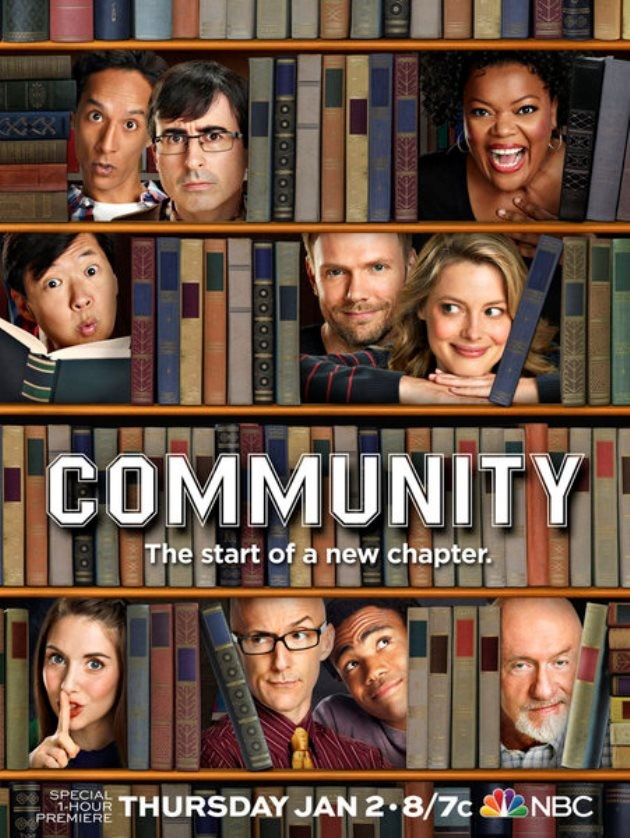
The Study Group, Season 5

While this season was Community was at times uneven, it was overall  a triumphant and welcome return to form.

There’s nothing that makes you appreciate something you like as much as, even more than its total absence, its replacement by a vastly inferior version. Rarely does television pull off that trick; usually a far inferior season of television is a symbol of a downward trend indicating that a show will never hit the heights it once did again. Community, fittingly, remains unique in this sense.

Everyone knows the story by now. Mercurial creator and show runner Dan Harmon was fired after the show’s third season. He was replaced by two well-meaning outsiders who attempted to capture what people loved about Community, but badly missed the mark. I’m not nearly as much o f a fourth season hater as some, but no matter what you think, it’s both not up to the quality we expect, and there’s something off about the show, like staring at a clone of someone you know well; externally it looks the same but it’s dead inside (that comes off as too harsh, maybe, but I don’t really want to use this space to defend the fourth season’s approach at mediocrity).

There were a couple of episodes that didn’t entirely put it together for me, but there have been some of those in almost every season. One of the consequences of Community’s sheer ambition to have everything at once means that when they miss they mark, they really miss it. Compare it to its Thursday night partner Parks and Recreation, another of the best comedies of the 21st century. While some episodes are better than others, Parks never has a complete swing as a miss, but it also rarely reaches the ethereal mind-blowing highs of the mega-ambitious Community episodes that manage to get everything right.

This season wasn’t the best in the show’s run, but it contained a couple of all-time episodes, several more solid wee-to-week classics, and easily more than enough to justify me being way more excited about wanting more Community in the future than I was coming into this season. Community fans went through a rough couple of years, and it was rewarding to see our favorite characters returned to their former glory, and to not end the show’s story with the ugly, metallic taste (the taste of the gas leak, if you will) of the fourth season stuck in our mouths.

Cooperative Polygraphy was this season’s moment of absolute brilliance. Community was graced with the presence of Walton Goggins, and the group were required to answer questions to a lie detector to determine who received gifts from Pierce’s estate. Part of the brilliance of the episode was that it felt as if Pierce was there, though he wasn’t. The episode just all came together; the high concept premise melded into truths about the characters and the group dynamics between them, and a course on the science of human relationships, which is what most great Community episodes are ultimately about.

First episode Repliot, Bondage and Beta Male Sexuality, and Basic Sandwich were the next tier of quality episodes, not merging every stray strand into genius like Polygrpahy, but delivering comprehensive and excellent episodes, both funny and pathos filled. The finale in particular, which might turn out to be the series finale, was excellent and felt right for the show, and a finale; it’s meta-finale could have taken it too far, but instead the looming emptiness of losing what all of the characters were holding onto was humorous and melancholy. The team came together and gave me lots of warm fuzzy feelings that a cynic like me isn’t supposed to be feeling very often.

App Development and Condiments didn’t work on as many levels but was one of the funniest episodes, and VCR Maintenance and Educational Publishing featured what may have been the funniest single scene of the season, Abed and Annie competing in the VCR board game featuring cowboy Vince Gilligan.

Basic Intergluteal Numismatics was a high-concept episode that didn’t much work for me; the ass-crack bandit felt like a second tier version of many other similar episodes including the Law & Order episode; I got what they were going for, and stylistically it was right on in the manner of David Fincher and similar directors, but I don’t think the jokes were as good or the writing was as smooth.

Overall, though, the batting average was close to that of the first three seasons, if not equal, and reminded me why I loved Community so much and what the difference was between Dan Harmon and his replacements. I knew the replacement episodes were worse, but I was concerned that I was constantly biasing myself against them. I’ll never be able to be sure that I wasn’t, and I’m honestly pretty sure I was, but I feel more confident than ever after watching the fifth season in understanding what made the Dan Harmon episodes better and what made the fourth season feel like it was TV in Dan Harmon skin. Community, now, and forever, and let’s all cross our fingers for six seasons and a movie.

End of Season Report: Justified, Season 5

9 Apr

JustifiedSeason5-1

I’m a huge fan of Justified. I ranked it #5 in my rankings of every show that I watched in 2013, which covered Justified’s wonderful fourth season. Unfortunately, while still a highly enjoyable show, Justified delivered a fifth season that was not up to the caliber of its past four seasons, and I can’t see it appearing nearly as highly ranked next year.

There’s plenty to say about the season but here are the central problems, which I’ll break down in further detail below. First, the antagonists were not as compelling as in previous seasons. Second, the season meandered and never seemed to have a strong sense of direction propelling it forwards. Third, the finale was somewhat anticlimactic and seemed more like a set up for next year’s final season big bad epic showdown between Raylan and Boyd than any sort of satisfying conclusion to this season.

There were good pieces, which I will touch upon, and as with most very high level television, it’s enjoyable episode to episode even when not as satisfying as its peak. That said, it suffers the curse fairly or not of being held to higher expectations, and it’s against those very high expectations, and not the expectations for an average series that Justified is judged.

Justified’s first season was a largely a compilation of one-off stories, slowly building the world which Justified inhabits, before ending with a multi-episode arc. Since then, each season has had a strong serial storyline which guided the season along. Seasons two and three had primary antagonists – Margo Martindale’s Mags Bennett in season two and Neal McDonough’s Robert Quarles in season three. Bennett’s superiority to Quarles as an antagonist was the largest part of what made season two superior to season three.  Season four broke that formula and worked around the search for a man who had been missing since the ‘70s but was living right under the nose of both the police and the criminal element in Kentucky, unrecognizable in the present to anyone still living. Season five revolved around the trials and tribulations of the Crowe family and in particular primary antagonist Daryl Crowe.

Daryl Crowe just wasn’t up to those previous antagonists’ standards for two primary reasons. First, he simply didn’t carry the weight and intimidation that the previous antagonists (or of course series long antagonist Boyd) did. While a certified genius compared to his Crowe brethren, he is still fairly incompetent; it was never believable he’d pose much of a threat to Raylan or Boyd or to anyone else. The show tried to take care of this somewhat by having him become an employee/minority partner of Boyd’s halfway through the season, but it was somewhat hard to believe that Boyd would even place a small amount of trust in Daryl. He wasn’t a particularly good criminal, he wasn’t a particularly scary criminal, and he just never really found a place in Kentucky or in Justified.

Second, forget Daryl’s plot role. He just wasn’t very compelling. His brother Dewey is a complete idiot, but he’s hilarious, and always lights up the screen whenever he appears. Daryl didn’t. Wynn Duffy, who I was glad to greet as a regular this past season, always spoke his piece quickly and dryly, and had a way of being as wittily direct as Boyd is loquacious. Daryl simply didn’t have the same on-screen charisma as any of these other baddies. When he was on the screen, you never felt like you didn’t want to turn away. There was nothing about him that stood out.

It’s likely related to this first issue that the season meandered and felt directionless at times. Seasons two through four ratcheted up as they went forward, building tension until reaching a satisfying climax and resolution. I could generally tell approximately where Justified was in the season by the tension of the events on screen.

It’s not to say that Justified is tied to these rules of how a season must go, but past seasons were stronger and this is one reason why. There may well be more interesting paths for a season to take, and other shows may thrive on a meandering climax-less journey, but Justified season five certainly did not.

Characters came in and out of nowhere, and for most of the first half of the season I just took it on faith because Justified had yet to not deliver, but by the finale, or really by the last few episodes, I did wonder what the plan was for the season as a whole, if it changed, and if it was developed somewhat as the season went along. It felt like the writers hit a couple of snafus and weren’t sure exactly where to go.

I love Boyd as a character but it’s beginning to feel like he gets away from slippery situations one time too often. He’s smart and he’s good, but he isn’t that smart and that good to evade both the law and rival criminal elements for this long, especially if he keeps taking on far more of a burden than he can handle, like he did this season with heroin, not to mention a cartel which was a lot harder to battle than his Dixie mafia rivals.

This is all leading to the third complaint. Ultimately by the time we got to the end of the season it felt like less of a satisfying season long conclusion than just a get-ready-for-the-final-season hurrah where the two primary characters through five seasons of the show, Raylan and Boyd, finally go head-to-head, with the implication that since it’s the final season, one of them will actually go down for good. Eva’s time in jail had some interesting character building moments, and I’m certainly not claiming it was worthless by any means, but the way it ended made it feel at least partly like it was simply a way to separate Eva and Boyd and ultimately get Eva to turn on Boyd and cooperate with Raylan.

The season ended with a chase for Daryl which was less than inspiring; no one thought Daryl would get away, and Wendy shooting Daryl was fairly predictable by the time it happened and relatively uninteresting. Boyd outwitting the cartel employees was equally anticlimactic. Although they were legitimately scary dudes, the tension was cut somewhat by the fact that Boyd had zero chance of not coming out of the situation on top. Overall, the ending of the season seemed largely like an afterthought to steer us towards season six.

The best Crowe this season other than the always delightful Dewey was actually young Kendal. Justified did pull one trick from up its sleeve – hiring a surprisingly good child actor (Jacob Lofland, who was also excellent in Mud). Some of the best moments of the season involved Raylan with Kendal, and though Raylan’s obvious connection to Kendal, being raised by some serious criminals, is hardly subtle, the scenes pack power.

Like a Faulkner novel, Justified is about the power of history, and the inability to free one’s self from it. Harlan county and its environs are composed of families who have been doing what they do, often criminal activity in Justified’s case, for generations. Boyd’s daddy was a criminal, and he became a criminal. Raylan’s daddy was a criminal, and Raylan became a lawman, but the reasons were as much because of his father’s criminal behavior as Boyd’s becoming a criminal was. Family is essential in Justified’s world as an inescapable force from which people can’t free themselves no matter how much they might want to – the Bennett’s, the Crowders, the Givens’ and others. Even third season antagonist Robert Quarles’ aggression stemmed in part from his lack of family; he was adopted by the Tonin’s but no matter what he did, could never be seen as their real son. These themes are powerful and generally handled very strongly on Justified. The Crowes, another criminal family bringing down Wendy and Kendal, couldn’t compete with those other families, but I earnestly felt for Kendal, ruthlessly manipulated by his uncle and unprotected by his mother who was unable to, until the season’s end, find the strength to separate herself from Daryl’s orbit.

Raylan’s deteriorating relationship with Art was also a highlight of the season. Art’s punching Raylan in the bar was the most satisfying cheap shot on an arrogant bastard since Mike clocked Walter White. It’s hard not to root for Raylan in the big picture but it’s also only right that his general approach to simply doing whatever he wants on the job without much concern for what’s best for the team actually starts only to rub his boss the wrong way and have consequences for Raylan. It’s good to see Art start to stand up to Raylan and stop letting him get with anything.

What it comes down to is that I hope Justified has a blast in its last season (and I don’t mean this as a pun on Boyd’s love of explosives). This is a show I want to look forward to going out at the absolute top of its game. Hopefully, this past fifth season is merely remembered as a little bit of a weak spot leading up to a powerful finale, rather than a sign that peak Justified was in the past.


End of Season Report: Brooklyn Nine-Nine, Season 1

2 Apr

The team at the nine-nine


The bounds of genres are constantly blurring these days and not everything which broadly fits in the box labeled “comedy” has the same exact aims, which make these shows harder to compare against one another than ever before. If a comedy is laugh-out-loud funny, then it’s succeeded regardless of anything else. Some comedies, however, may be less funny, but have captivating characters or plots, and those are also worth watching regardless of anything else. It’s Always Sunny in Philadelphia is at its best hilarious; it doesn’t attempt character development or serial plots and that’s okay. Girls isn’t as funny but it focuses on character and fascinating themes and that’s good too. Shows like Parks and Recreation meet somewhere in the middle. Parks and Recreation has probably been my favorite comedy of the past few years, but that’s not to say that a funnier show that’s lighter on characterization or vice versa couldn’t ascend to the top spot if it’s simply that good at what it does well. In fact, my favorite two comedies this past year were Eagleheart which is hyper-absurd and hilarious but takes place in a world without any sort of consistent characterization, and Enlightened, whose status as a comedy mostly boils down to the fact that it’s a half hour; it’s more depressing than most of the serious drama series currently airing.

That’s not specifically relevant to Brooklyn Nine-Nine more than any other new comedy, but these thoughts were consuming my headspace as I considered Brooklyn Nine-Nine’s first season, its progression, and expectations for future seasons.

Brooklyn Nine-Nine is the best new comedy of the season. It’s funny right off the bat. Brooklyn Nine-Nine’s closest analogue is Parks and Recreation, which is no coincidence as it’s created by Parks and Recreation veterans Dan Goor and Michael Schur. The episodes have been relatively consistent from the start, certainly by new comedy standards, and some of the characters that I didn’t love early on I’ve warmed to over the course of the season (Rosa and Gina in particular).

Goor and Schur have managed to tap Andy Samberg’s manic energy and apply a solid dose of restraint which smartly keeps his character from being over the top. One of the lessons learned from the creators’ experience was to follow the Leslie Knope rather than the Michael Scott model – Samberg’s Jake Peralta may be an immature doofus but he’s relentlessly competent at his job.  This core competency allows his other silly qualities to serve as distractions and potential detriments, while the viewer is able to understand why those around him put up with him.

Certainly the characters aren’t fully formed but that’s okay. Everybody started out with a type – Jake is immature, Rosa stoic and scary, Amy a by-the-book go-getter, Charles, a klutz, Captain Holt, dry and indecipherable, Terry, strong but gentle, and Gina just a total weirdo. The show worked its way from there, feeling around, mixing and matching characters, which is what most good comedies do, allowing actors and characters to find their strengths. There’s still some work to be done on the character development front, but the progress is there – the characters feel much more like people than they did at the start of the season. Charles, for example, soon became the resident foodie; while this hobby was mined for laughs, the point was also made that Charles actually did have great taste, and it gave him a positive quality to stand on rather than simply always serving as a lackey to Jake. Likewise, Gina, while definitely still the cast weirdo (we haven’t mentioned Hitchcock and Scully, Brooklyn Nine-Nine’s two headed answer to Parks and Recreation’s Jerry, but they’re not really fully-fledged characters in this sense) got her chance to shine when she showed she knew how to pick the best computer expert for the district to hire.

Two major plot points over the course of the season are worth discussing. First, the writers chose to go in the direction of potential romance between Jake and Amy. That’s fine, but all things being even I’d have preferred they didn’t. As I’ve trumpeted many times before, one of my favorite aspects of 30 Rock was the fact that its primary two characters were iron-clad platonic friends, and there aren’t enough comedies that follow that model. It won’t seriously affect my enjoyment of the show, and who knows, I’ll probably be rooting for the two of them to get together eventually. Still, I’d like to at least once for the record put down my small objection to this choice.

The second is, and I think and hope they’ve gone away from this for good, Charles’ unrequited crush on Rosa. This is putting it mildly; if it was just an unrequited crush, it’d be fine at least for a while, but it felt dangerously creepy and it made me uncomfortable watching a show that otherwise is not in for particularly awkward comedy. Fortunately, Charles found a love interest halfway through the season, and although she’s no longer part of the show, I hope that the creators learned a lesson. I wonder if the writers were thinking this exactly when they placed a fake out in the season finale – Charles wakes up next to someone after a drunken night getting over his breakup, and while I was terrified it was Rosa, it was rather Gina, which should lead to funnier and less relatively uncomfortable circumstances.

Within a few episodes, my friends and I were quoting memorable lines from the show, and in my circle, quotation is an important currency for a comedy. While it’s not a one-to-one relationship, if a show gets quoted a lot, it’s probably high up in the collective comedy rankings. Sample recurring Brooklyn Nine-Nine quotes include everything about Charles’ pizza blog and Terry’s forgetting how to breathe.

I’m very happy with the show’s first season, but it is a first season, and f it continues to grow, Brooklyn Nine-Nine could be the new Parks & Recreation by the time that Parks & Recreation (I hate to admit it, but it can’t last forever) is off the air. Those are big shoes to fill, but a season’s worth of Brooklyn Nine-Nine has me hopeful that this show has that in it.

End of Season Report: Girls, Season 3

26 Mar

The Girls

Thankfully, the controversy that overwhelmed Girls has mostly (albeit certainly not entirely) died down by the third season, meaning viewers can concentrate on its merits as a show rather than as a stand in for any larger piece of our culture. For the most part, people who like it watch it and people who don’t stopped bothering to criticize it at every turn and moved on to something else. There’s still more talk about Girls than all but a handful of shows on TV, but compared to the first season, it’s nothing.

Underneath that mostly lack of controversy lays yet another promising but somewhat uneven season. Girls has a shot at being a great show, but it generally continues to come up a little short and merely be a good show. That may sound like an insult, but I don’t mean it to be.  Good shows are still relatively rare and Girls does indeed have a unique voice all its own. It doesn’t feel like every other or really any other show on TV in particular, which is one of the highest compliments I can give a show.

That said, the little things Girls struggles with are particularly frustrating, because with those problems eliminated, Girls could be be a truly great show. This is still absolutely possible; Girls’ flaws are not at all fundamental to its premise. It’s certainly worth highlighting both sides, which parts of this season went right and which went wrong, and I’ll navigate that character by character.

Overall, Hannah has and continues to receive the best, deepest, funniest, most complex, and most interesting arcs on the show. This is not particularly surprising as Dunham is the show’s creator and primary creative force, but it continues to be true to an overwhelming extent, which says in equal parts both how generally strong her stories are and how much they outrank everyone else’s. Hannah had lots of great, funny, and awkward moments. While the writers seem intent on making sure you don’t like the characters too much with moments like Hannah’s painfully awkward conversation with her editor’s wife at his funeral, there were also plenty of moments when Hannah was, by Girls standards, relatable. Her quitting GQ, or rather causing herself to get fired, irked me, especially since she seemed to have made her peace with her current position in an earlier episode, only to then come around again to how she was feeling just a couple of episodes before that (if that’s confusing, fine – I was confused watching it). However, most of her season long plot worked, particularly her relationship with Adam which I’ll get to next. I really enjoyed “Flo,” the episode in which Hannah went home to deal with her grandmother’s illness. “Flo” felt less exaggerated and more real and down to earth than most of Girls, which typically marks its ground as being one degree away from greater relatability.

Next, Adam. Adam and Hannah’s relationship was a very important part of season three, and Adam was the second most developed character of the season, moving past any of the other Girls. I liked Adam much more this season than I had in the previous two, both in terms of sheer likability, and as a character. I think that’s because we got to know him a lot better and he was significantly deepened and filled out. In previous seasons, we had either seen his dark sides or his overbearing obsessiveness, for good and for not so good, and here we finally got to see him just be. In addition, his career success made Adam feel like less of a weirdo – he found some people he actually seems to genuinely get along with and something he’s passionate about, both attractive qualities. Earlier, it had always bothered the hell out of me that not only could he not seem to stand Hannah’s friends to the point where he couldn’t even tolerate them in small doses, but he didn’t have any of his own. Adam and Hannah’s relationship overall was a highlight of the season, and it produced plenty of moments that showcase Girls, and TV relationships generally at their best, by putting characters in situations of conflict without either side being obviously right or wrong. Both Adam and Hannah consistently had valid points in their arguments, even when one or the other was self-serving. When Hannah’s mother confronted Hannah endearingly but overbearingly about Adam, both she and Hannah were right. He’s an exceptionally caring person with serious issues who offers a great deal of both positives and negatives.

Now, everyone else.  Marnie’s plot changed completely when the actor who played the on again off again sad sack boyfriend Charlie with whom she had finally reunited in season two’s finale, Christopher Abbott, announced he wouldn’t be returning. I was glad upon hearing the news, because Abbott’s Charlie was one of my least favorite characters on the show. Unfortunately, his departure led to Marnie’s continual decline. She was inconsolable for the first half of the season, and was just starting to have a couple of things go her way by the time the season ended. Marnie’s faults were also in full display all season; full of herself, controlling, haughty, and judgmental. Although we peeked through that occasionally to see someone struggling and hurt who was used to life going her way and unsure what to do when it wasn’t, we just didn’t get enough of Marnie on the whole to go any deeper than that. More time with Marnie would have highlighted this struggle, and while some of her constant judging of everyone else in her life is pretty indefensible, other of her more negative qualities would have come out as symptoms of her current situation in life making them more palatable and understandable.

Of all the characters short on screen time this season (everybody but Adam and Hannah), I probably enjoyed Jessa’s plots the most, which surprised me, because Jessa’s been my least favorite character through the first two seasons of the show. What made them work in this season is that, given the lack of screen time for Jessa, Girls didn’t even seem to attempt a coherent arc for Jessa. Instead there were little vignettes that were entertaining and instructive individually. In terms of the big picture, I’m not sure I really buy it; Jessa’s a drug fiend, and then she kind of just isn’t because well, it’s not really clear. But in terms of single episode stories, Jessa’s are compelling, particularly her discovery of an old party buddy who had faked her death to get away from Jessa’s negative influence. While Jessa’s very different negative qualities are as evident as Marnie’s, at least Girls has done a much better job digging in to the root causes and the pain behind Jessa’s fuck-the-world facade.

Shoshanna is the least well serviced character this season. She has been for the entire series, but this season even more than ever before. She doesn’t get a whole lot to do, and she seems dafter than ever. Even school, the one area in which it seemed Shosh was ahead of the curve, betrayed her. Her role in this season, rather to be a character, so often seemed to be to point out what the viewer was thinking about a situation, particularly in the first episode and “Beach House”. I’m not sure we’re ever going to get more from Shoshanna, and unlike Marnie and Jessa, instead of having a story that wasn’t really fleshed out, there just wasn’t much of a storyline for Shoshanna at all this season.

Ray is my favorite character and the favorite character of just about all my friends. He’s the only person on the show who seems to be able to figure out what issues everybody on the show is dealing with, himself included (outside of Shoshanna’s occasional savant-ish moments). He doesn’t always have the most to do but I enjoy just about every moment he’s on screen, even when he’s being kind of an asshole.

Two standout episodes this year were the aforementioned “Flo” and “Beach House.” It was great to see the four girls interacting after they really hadn’t all season in “Beach House”, and though it showcased all of their worst qualities, there was a lot to like about the episode. It helped take stock of where everyone was at that moment; everybody progressing in some ways and unchanging in others. The dance scene at the end was well done and a well-deserved warm moment after the constant fighting that came before, showing that their friendships are stronger than one fight, no matter how vicious. “Beach House” also reintroduced Elijah, who was quickly brought back into the fold for the rest of the season. I greatly enjoy the humor his character brings especially when the other characters are tense and stressed out. He’s welcome back into the world of Girls anytime.

Here’s where Girls stands after three seasons. It’s a good show, which is absolutely worth discussing and talking about in significantly more positive than negative ways. It’s a flawed show as well, but one that has a potentially perfect season in it. Girls, even not at its best, is noteworthy enough to remain canonical television, and while its flaws prevent it from being great to this point, it’s not so far away.

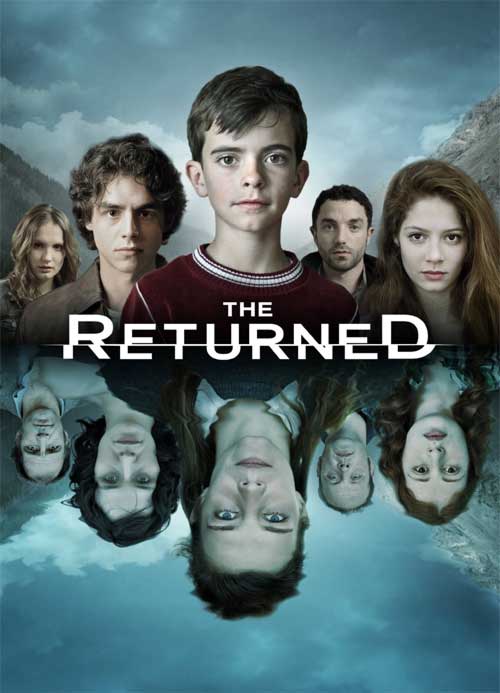
End of Season Report: The Returned

28 Feb

The Returned

I’m about to say something I don’t say particularly often about a season of television.  I don’t think I’ve ever seen anything remotely like the first season of The Returned. Different aspects of the show do resemble other pieces of culture, but all put together, I can’t put a finger on anything that similar. It took me several episodes before I could even attempt at all to pin down the show’s mood and genre – it was a horror show, then it wasn’t, then it was, then it wasn’t, until, well, very clearly at the end it was.

That being said, I’m not sure how much of a boon its level of uniqueness was, and how much of it was a show that couldn’t decide what it wanted to be, and maybe lost something because of it. I do like the show, and I do think there’s a lot worth watching for, and especially in the first few episodes, I started to really want to dig further and further into the world.

However, as the show went further on, I wasn’t sure whether I liked the direction it was going in – I liked some decisions, not as much others. The final episode that put me back as unsure of how much I like the show as I was after the first episode, as the events of that episode totally reset the calculus for what to expect going forward. The first season finale could be a completely mysterious stand alone ending, but as there seems to be a second season, I have absolutely no idea where exactly this show is going.

Let’s take a step back. The Returned is about a small French town in which dead locals start coming back to life. The primary “returned’ we see are Camille, a teenager who died in a bus crash, Simon, a depressed man who killed himself on his wedding day, Victor, a little boy, and Serge, a serial killer, who was buried alive by his brother after the brother found out what Serge did.

The four come back, and reengage with their former families with varied results. A lot has changed since each of them has gone, and there’s a lot of old wounds reopened. It’s equally difficult for both the returned and those who remained alive the entire time;. It’s certainly not the fault of the the returned that they’re coming back, and that they’re made to feel like they’re now screwing up everybody’s lives which have finally moved past their tragic deaths seems overly cruel. At the same time, the return is difficult to grapple with for the living. On top of simply making peace with the supernatural angle and lack of science behind the dead returning, the living are afraid to get too close, because they don’t know what’s going on or how long it will last. In the case of Simon, his ex-fiance only learns for the first time that he killed himself, changing the entire way she views his death, which she had thought of merely as an awful tragedy rather than him leaving her in the lurch. In Serge’s case, his brother Toni feels horrible for killing him, even knowing what he’d done, and views his return as some sort of payback/chance to make amends.

On top of this emotional reconnection and family drama, there’s plenty psychological trauma, which is tense and thriller-esque but not necessarily straight out horror. Camille tells parents whose children died as part of the same crash that their children are well and looking forward to seeing them in the afterlife, which leads two of the parents to hang themselves, hoping to reunite with their child. A recent addition to the town, Lucy Clarkson, who came out of nowhere and worked at the local bar (the delightfully named Lake Pub – two of the only English words spoken in the series), communications with men’s dead relatives while having sex with them (that that premise doesn’t come off as as goofy as it sounds is a tribute to the sedate and ominous mood of the show – humor is not an element even in the slightest in The Returned). Hundreds of dead animals have turned up, drowned, after running away from something unidentified, but scarier than the possibility of drowning.

And then, well, there’s the straight out horror. Victor, the little boy, has some sort of ability to make people see visions and inflict pain upon themselves – he’s a version of the horror trope of the creepy kid with powers. Most importantly, the final episode ends with the returned, led by Lucy Clarkson, possibly now a returned herself, after being attacked early in the series by the Returned Serge. The power’s gone out in the town, and the townsfolk, along with Camille and Victor, are gathered in the local shelter for those in need. The returned demand that the townspeople hand over  Camille and Victor. The townspeople, disappointingly comply, without a fight, led by police officer Thomas, my least favorite character in the show who I was constantly rooting against. After they’ve handed them over, the townspeople buckle down inside the shelter, while policemen guard on the outside. When they open the door after a tumultuous night, they find the policemen all gone and the town entirely flooded. Season over.

I repeat, I have absolutely no fucking idea what to make of this series. I am pretty sure I prefer the first two dynamics I mentioned to the out and out horror – the ending is creepy as all fuck, but less satisfying to me, though admittedly I’m not a horror junkie. I like the show best when it’s playing on the deeper emotional themes stirred by the returned. I did enjoy the first leap towards darkness – the parents’ hanging themselves gave me exactly the sort of chills which I was looking for here, which was a horrific image rooted in a somewhat understandable reaction. The supernatural mingles with the real, and there’s an affecting punch that really resonates. The horde of dead come to claim their brethren from the living? It’s terrifying but it doesn’t really work with those themes I enjoyed from the early episodes about the powers of time and loss..

I’ll be watching the second season, if only to know where this is going and what’s coming next. Less so directly next, in a cliffhanger fashion, and more in, just what direction is all of this headed in. The Returned was interesting, very original, and very ominous; I just wish it had held back one degree from going full horror, which I would think would have made for more nuanced and ambiguous place for the show to live.

End of Season Report: House of Cards, Season 2

24 Feb

What are the two?

I enjoyed season 1 of House of Cards but it had some serious problems which kept it ranked fairly low on the list of shows that I watch. In season 2, those problems are exacerbated rather than fixed. I’ll probably still watch season 3 and I can’t quite say I didn’t somewhat enjoy my marathoning through the 13 season 2 episodes. It was still on the side of more pleasant and less of a chore (which is always one of the signs before I drop a show). Still, it was a somewhat disappointing season fraught not just with problems that are somewhat inherent to the formula of House of Cards, but with problems that could have been fixed through better planning.

Since unfortunately this review is more about House of Cards’ problems, than its successes, I’ll break down those problems in the two categories I briefly mentioned above. First, the issues inherent to the formula established by House of Cards. Frank Underwood, and to some extent his wife Claire seem virtually omnipotent. Simply put, they always win and get what they want. Sure, it’s not actually that easy, and they face crisis after crisis, but they’re just smarter and more visionary than everybody else, and even more than that have an uncanny ability to manipulate everybody to do exactly what they want, wittingly or unwittingly. The president was putty in Frank’s hands, and even when he suddenly woke up and saw what Frank was doing, Frank won him right back over after a brief respite. You can’t beat Frank and Claire, and at some point that takes a toll on the tension of the show. Sure, there’s something to watching our protagonists come up with a plan and execute it successfully, but this is more than that – it requires so many things to go right that it strains credibility even within the universe of the show where I’m willing to give it some decent leeway.  This was more tolerable in the first season when Frank seemed to play the scrappy underdog (relatively) that many powerful people didn’t give enough credit to, and it was relatively easier to believe that their understimation of Frank put them in a position of weakness. Now, though, it seems hard to imagine people are constantly underestimating him as Vice President.

The lack of both serious crises and more than that credible antagonists make Frank’s victory’s seem more certain and less earned. More than that, considering how many obviously stupid mistakes he makes, one would think he’d be losing more often, or everyone around him is just not particularly competent or even close to his level. Maybe if all his plans didn’t contain so many obvious holes, his winning all the time would be convincing. Again, I’m not even saying he shouldn’t be winning more of the time than not; but the way it feels, is that there is almost never really any chance of him losing.

The breaking the fourth wall in which Frank constantly turns toward the camera could be witty, sharp, and funny – a meta-take on narration (or something) – and sometimes is, but it’s more often unnecessarily on the nose; telling us exactly what he’s doing even when it’s incredibly obvious to anyone paying the slightest bit of attention. It plays right into my much­-ballyhooed (by me) dangers of narration. We get it, Kevin Spacey, I mean Frank Underwood, we see almost every step of your plans, your explanations and wry remarks aren’t adding a whole lot.

Thirdly, the show suffers from a somewhat serious flaw which I think makes it ideal for binge watching and whatever the opposite of ideal is for ruminating about for any period of time. Quickly put, the show doesn’t make a whole lot of sense. The machinations, the Frank Underwood-actually-killing-someone, the idea that these mind-bogglingly complicated plans that involve eighteen different moving parts working as smoothly as no real life game of mousetrap has actually worked (seriously, if you got Mousetrap to work, kudos) actually work step by step, is a bit much to take. Again, this isn’t The Wire, or even Homeland, I don’t expect real life or even a close facsimile. But it’s not fantasy world Game of Thrones either. I’m perfectly willing to follow Underwood pretty far down the rabbit hole but the second season continues to want to extend the leash, to a point at which it just it’s too far within the universe of the show. Just be reasonable ridiculous, which I don’t think is too big an ask.

Those issues are not going away and were more or less prevalent in the first season. Here’s some issues that were more particular to this season.

Forget the internal logic of the show, for a minute. There were straight out significant parts of this season that made me think, why is this here, or more coarsely, to simply say out loud, “what the fuck?”. Chief among these are the hacker scenes with Gavin (Jimmi Simpson, Liam McPoyle from It’s Always Sunny in Philadelphia) and his guinea pig. What? Why? I get that he will at least hopefully come up in the third season, and the writers are trying to get a head start on setting up that plot but the point of these short fairly meaningless bursts with this character were confounding. Even more confounding, the scene with Xander Feng having sex with the bag over his head. Whaa? Why? In generally, there were just wasted threads that seemed to go nowhere and have unsatisfying conclusions. Lucas was a pretty lousy character who did an awful job of investigating and after his disappearance, any journalism angle largely goes by the wayside. By no means is the show obligated to keep up the journalism plotline, but the parts the made it in and the point at which it was cut out just seemed arbitrary and odd. The same goes for the killing of Zoe Barnes; it was a total shock, which absolutely had some value as a viewer, but beyond that it didn’t seem particularly well thought out. These are some examples, and I could break it down episode by episode, but in sum, there are a lot of these moments, and it feels like the writers just didn’t edit their work very well.

Season 2 could have used more compelling antagonists. It’s hard to get worked up against Gerald McRaney’s Raymond Tusk, and less so even about him than about the bureaucratic pissing match that him and Frank have over the course of the season; it basically feels like the same episode six or seven times in a row as Underwood and Tusk go back and forth. The plots are repetitive and not particularly compelling. If someone who is actually kind of a nerd about politics finds this boring and pointless, I can only imagine what someone with no interest in politics thinks. This all is not even counting what a mind-boggling pushover the president is, compared to Frank.

All this being said, House of Cards probably isn’t going to rank particularly high when I get down to ranking my 2014 shows next year, but I’ll most likely still come back to watch the third season when it comes around because I still think the show has something to offer. So here’s some general advice based on everything I’ve said above. Tighten the damn screws.  You have a while to put together this next season. Stop wasting time; make sure the scenes that are shown, are shown for a reason. Thread the season together smarter and more compellingly; don’t have a back and forth between two characters that sort of just vacillates over points that nobody really cares about. It can be done. I’ll wait for Orange is the New Black in the meantime.

End of Series Report: Treme

8 Jan

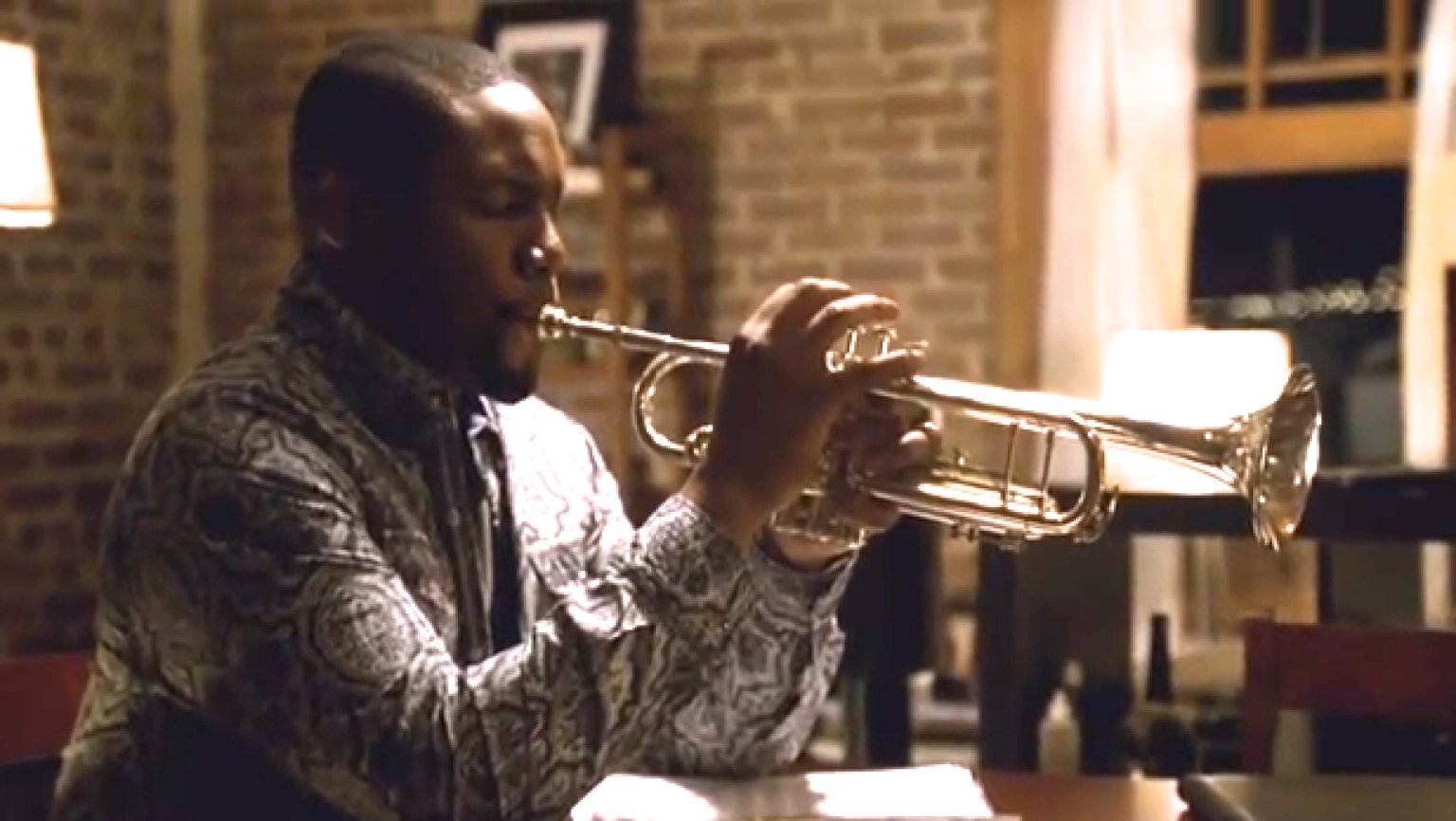
The sounds of Treme

You are about to read a nearly unabashed review for Treme, but before I get to the praise I’ll dismiss with the one caveat I believe it’s important to note.

David Simon’s first masterpiece, The Wire, was rich with occasionally heavy-handed political commentary, particularly in the fifth season, mostly along the lines of power corrupts, bureaucracy is broken, the system no longer works. Treme lays this on fairly thick as well; not quite fifth season thick, but at least as much as the rest of The Wire. It’s not a problem for me, but I can imagine some eye-rolling from those who found that aspect of The Wire irritating after a while. Now, moving on.

Nobody, and I mean Nobody, writes real, honest characters, better than David Simon, and proof is located throughout Treme.  All of our best recent television shows explore humanity in a deep and interesting way, but none of them since maybe Six Feet Under explores just regular everyday people in such an honest and authentic fashion.

Mad Men, Breaking Bad, and Game of Thrones are all true to themselves but none of them show real people; they’re exaggerated by their circumstances and place and time; truth through something other everyday life.

Treme deals with characters who are real people facing real problems; on the job, with their relationships, with occasional death and disease (and one pretty big hurricane) struggling to make a difference and just to make it at all. It’s not as grand as all that though. It’s not made out to be more than it is, but you get to know and love the characters that you invest yourself in their lives.

Simon is always putting his characters in difficult situations; when there’s an enemy it’s often some version of the system, which could have been seen as a cheap out but instead just feels true to the reality of the lives that New Orleans residents but even all city dwellers deal with on a daily basis.  Conflict in Treme is authentic rather than forced. Sure, things feel easy compared to The Wire, but not every show needs to have an equally bleak outlook. Like The Wire, Treme celebrates its characters, but unlike the Wire it seems like a couple of them end up in a better place than they started.

A few of the lesser characters don’t really get the screen time to be developed  and stand in more for their roles in other people’s and generla New Orleans stories (Chris Coy’s journalist may be the best example) but even they feel like people, and not stock characters, even with the lack of storyline that they get. A vast majority of the main characters have real in depth character arcs and personalities that resonate strongly whether you like them or hate them, or anywhere in between. There aren’t obvious favorite characters, and when characters get together or break up, the conflicts are complex and not simply one person’s fault or the other (usually). Characters grow, but it doesn’t feel forced. Antoine Baptiste’s ride from occasionally working trombonist to bona fide school band teacher and mentor is tirumpant and feels absolutely earned and true to the character, while Davis more or less ends up right where he started, and that isn’t seen as failure either.

Treme is a love letter to New Orleans in the best possible way. It feels authentic; it’s hard for me to say that with any authority, as a New Yorker who has been to New Orleans once in my life over a decade ago, but everything I’ve read seems to support it. Aside from the authenticity (which I do think matters somewhat in the way Simon is attempting to portray the show but is impossible for me to judge) the show makes me, who has only been to New Orleans once in his life with his family over a decade ago, absolutely fall in love with New Orleans. I don’t particularly care about jazz; it’s one of the music forms I’ve never been able to get into, and many of the forms of pop music featured in Treme aren’t strictly to my taste. Treme is filled with this; music is a huge theme in the show; and if you had described this to me ahead of time, I’d think I’d have no to little interest in the show or at least be bored by the music scenes. But I wasn’t. Instead of my lack of interest in that music turning me off of the show, the show’s sheer love and appreciation of the music won me over. It’s like contagious laughter; the appreciation and love for the music and the rest of New Orleans culture is contagious.

When it comes down to it, the only thing that ties every character in Treme together is their pull and their tie to New Orleans. These aren’t people who are living lives that could just be replicated in any other city. From the musicians, to the culinary world, to the super local Indian culture (that I’ve read about on the internet, watched four seasons of this show and still don’t really get), they spoke to the love-hate relationship of New Orleans residents to their city. They are constantly frustrated about the disappointments of their city, but for most of them (though not all) there’s no other place they’d rather live.

I’m a huge proponent of on-site filming. I admit it’s not always practical or necessary – it wouldn’t make sense or matter for Parks & Recreation to be filmed in Indiana – but it really does make a difference for shows like Treme. Of course, without David Simon and Eric Overmyer’s writing and characters, the setting doesn’t make a whit of difference. But as I’m sure they’d agree, the setting (while not a character – anyone who says the setting is a character should be shot on sight) really places the viewer there into these people’s lives in a way that sets just wouldn’t.

 I’ve made the claim before that people who love Friday Night Lights should love Treme, as they’re both shows that deal with real people helping real people, the good that lies deep inside most people no matter what screwed up things they do, and the strength of the bonds of families, friends, and other relationships to withstand difficulties. I’m unquestionably a big Friday Night Lights fan but sometimes plots felt forced, as if there had to be, say, a steroids arc, because it’s football. Treme does hit on all the obvious big New Orleans post-Katrina subjects, but it never feels forced. The world, one of my favorite parts of The Wire as well, feels so large, as characters fly around in the background; minor characters who would be ignored in other shows get lines that don’t matter for the plot but just make Treme’s world feel bigger. Treme doesn’t feel contained; it feels like the real world, which is one of the highest compliments I can give.

It’s too late, unfortunately for Treme. It’s never coming back, and we’ll never learn more about Antoine and Janette and Ladonna and Annie. Still, I’m thankful I got three and a half seasons of a show absolutely nobody watched.  Please, tell someone you love to watch this show and have the pleasure of enjoying it for the first time..


End of Season Report: Masters of Sex, Season 1

23 Dec

Masters and JohnsonMasters of Sex offered an ultimately strong first season that was overly ambitious and marred with inconsistencies and overreach but was on the whole better for the leaps. The first season got stronger, if somewhat in fits and starts, as it went forward and I hold out great hope for the series as a whole as it continues. Masters of Sex is new and interesting, which already puts it in relatively slim company by modern television standards. It’s a doctor show, but it’s not really a doctor show; the focus is on the sex research and relationships rather than any doctoring the way Doctor shows are (you know, House, ER, Grey’s Anatomy, etc.). It’s also a show that takes place in the past, which has been a recent trend all over cable (Boardwalk Empire, The Americans, Mob City, etc.), but it doesn’t feel like it fits in the bucket with those retro-shows. Masters of Sex is certainly influenced by the generation of auteur anti-hero shows that dominated the last decade – Mad Men, particularly, but it’s not an antihero show itself. William Masters is the closest the show has to an antihero, but he’s not that; he is flawed but not nearly comprised morally enough to be lumped in  with the antihero characters of recent years, and that’s a good thing..

Relationships,sex, and the intersection or lack thereof between the two are naturally at the forefront of a show about revolutionary sex researchers, and occasional attempts at opening up other themes feel half-assed and not nearly as successful. Still, there’s more than enough juicy themes there to fill up hours and hours of television. Relationships explored were not just the sexual variety. and an exploration into gender roles was natural in a show featuring a female sex researcher in the 1950s, America’s answer to the Victorian era.

Masters of Sex, although a character-driven hour-long show, faces some issues comedies usually face in their early episodes. The writers, over the course of Masters of Sex’s first half, had to learn what worked, figure out who the characters were, what the actors’ strengths were, and what the emotional resonance was between different characters as the show went on. The show clearly fell more in place as the season went on, and that continues to give me hope that the show will continue to grow.

For example, Masters of Sex hit the point somewhere around halfway through the season when a solid portion of the conflict between characters became if not relatable than at least understandable through the context of what we know about the characters and their backgrounds and personalities, which is a mark of a good show. Masters seemed like an impudent jerk early in the season who didn’t practice what he preached, but learning about his background and his relationship with his father in particular deepended our understand of particular patterns of behavior without seeming too hackneyed. Later in the season, Masters was just as obstinate but the reasons why were easier to tease out from what we’ve been given.

There are only five actors listed in the credits, a relatively low number for a showcase premium cable show, but several recurring characters play out some of the season’s best arcs. Beau Bridges and Alison Janney, as closeted provost Barton Scully and his wife Margaret are both season long highlights, offering a challenging alternate portrait from the primary relationships of Masters and Johnson, and both enriched the show greatly, and hopefully will be back even with potentially other sitcom commitments. Pioneering female doctor Lillian DePaul (portrayed by Julianne Nicholson, who also plays a female professional in a world dominated by men in Boardwalk Empire) was also an excellent recurring addition, offering one of several alternative attempted routes towards female empowerment in a male dominated world..

Viewing everything through the prism of a time decades earlier when attitudes about sex were more repressed and gender roles that we consider crazily outmoded were the norm is an interesting and sometimes strange way to look at sexual mores and relationships. We viewers are watching old revolutionaries, a partly oxymoronic exercise that requires thinking through different relative layers; even people so on the cutting edge that they were chased out of the mainstream with pitchforks would be considered backwards-thinking in our own time. Shows set in the past always make me ponder how to consider relative versus absolute positions; how much should we consider their positions relative to the norms of their own time, and how much relative to the norms in ours.

There was definitely some scrambling from the early episodes to the later ones, and some gaps in characterization that seemed a little bit abrupt but the show was better off for by the end. Ethan, in particular, hits Virginia early in the season because she’s not in him the way he’s into her, a vile action which marks his chivalrous veneer as nothing but a fraud. This action paints him as a bad guy (sophisticated term, I know), but then by the end of the season he seems to come around as the most forward looking male character on the show. It feels a little bit jarring and incongruous, but I think for the best in the end. The decision to focus on making their characters better and more complex over the course of the season even if this ended up not quite feeling right with the first episodes will leave a superior palette to work with moving forwards.

As mentioned above, sometimes the show’s vast ambition has it jolting in directions and the show doesn’t really know what it’s doing or where to go from there. This is particularly noteworthy on the area of race. Perhaps seeing how Mad Men, another show set in the same general time period, choose largely to avoid the subject and struggled when it did, Masters of Sex seems to want to jump in and say something on the subject a couple of times in the first season, but doesn’t really know what to say or how to say it.

It’s okay, though. It’s a first season, and there is time to get better. Overall, the show hits the right notes when trying to explore love and sex and everything in the middle. There aren’t any easy answers and there aren’t any right answers. What one person wants isn’t necessarily what another wants, and it’s not because one is right and one is wrong. People take harsh actions but with reasons. These seem like basic parameters to most serious discussions, but they’re still shockingly hard to find on television.

When I reviewed the first Masters of Sex episode a couple of months back, I noted, with my enthusiasm from the pilot, and my disillusionment with Homeland, that I thought there was a distinct possibility Maters of Sex could be the better show by season’s end. And although it’s due to at least as much as how much I didn’t like this season of Homeland, that measured prediction entirely came true. Masters of Sex is now the banner show on Showtime, and I look forward to meeting back up with Masters, Johnson, and crew next fall.

End of Season Report: Homeland, Season 3 – Part 2

18 Dec

HomelandSeason3-2Phew. I just disposed of my central infuriating point from season three. Let’s now get down to some odds and ends.

Homeland’s showrunners  clearly think Carrie and Brody’s romance is the center of the show. If they didn’t, I’m not sure what Javadi’s monologue in the finale, which seemed directed to viewers at least as much as to Carrie was about, where he convinced her that it was, as it fairly obviously was to viewers as well, always about him that she did everything she did. I think this was a central misreading of what made the first season work that explains some of the missteps of the past two seasons. Carrie and Brody’s relationship is important undoubtedly, and their chemistry in the first season was one major asset. Getting chemistry confused for romance is a dangerous thing though; there was something there, but once Gansa and Gordon put their finger on what it was, love, the relationship lost what made it so intriguing. This sounds like more of the type of complaint you see in a comedy – the sexual tension is more interesting than the relationship itself, and it’s related but that’s not exactly it. The issue is that the fucked up chemistry worked for those two characters, where the idea of love never really did. The breakfast in bed scene at the end of the second season was one of the most excruciating in the series because it didn’t really make sense for either of the characters, and placing that love at the center of Carrie’s motivations was misguided at best.

More on Brody – I’ve said this before, but Gordon and Gansa killed Brody at least a year too late. Brody was a great character, but a character with a necessary expiration date. The longer they kept him around, the less it really worked, and the more they had to concoct hard-to-fathom explanations for why he’s still out there. He ran out of reasons to be interesting. Damian Lewis does his best with Brody throughout but the character was out of life and paralyzed the show, keeping the show in stasis when it needed to be moving beyond Brody. There’s a natural desire to keep around interesting characters for as long as possible, but usually in hindsight it’s better to kill them or remove them while they were at their most charismatic rather than after they lost the luster they had and felt used up.

The second season ended with a bang, and the third with a whimper, and as confused as I was with where Homeland was going to start the third season, I have even less idea for the fourth season. The showrunners have a clean slate more or less to work with, but I have less confidence than ever that they will do something interesting. If I was in their shoes, I would consider the ballsier moves of either moving on at the CIA without Carrie and Saul, or moving on with Carrie and Saul in their different respective roles, but I can’t imagine there’s any chance of that happening. The only part I feel confident in, and massive respect if I’m wrong, is that something will happen that forces the gang to get back together in Washington.

Senator Lockhart, I believe, is supposed to be the villain, and while I started out viewing him as the antagonist because Saul is the best, the longer the season went the more I thought that he’s totally right, and this CIA is totally dysfunctional. It’s not so much that I felt like his approach was better as much as I felt his critique of the competence of the old school CIA people doing it the way they wanted to wasn’t working. I think this conflict could have been much better served by portrayed it more deeply as a battle between two valid points of view rather than with Saul as our hero and Lockhart as our villain. Shows are usually better when there are merely two different plausible ways of seeing things, rather than a clear right and wrong.

Plausibility was a major issue for me throughout the season, largely on Carrie’s end (as mentioned exhaustively in my previous Homeland post) but really greater than that. The insanity and audaciousness of Saul’s plans boggled the mind and just seemed way too far-fetched, and though Homeland did do a lot of lampshade hanging throughout this season, I still wanted more reality, and frankly, at least one of their plans to fail, to appreciate just how risky they were. The plan was too big, the CIA carrying it out consistently seems too small. It has always bugged me that the CIA on Homeland feels like it employs six people at any one time. There was no greater example of the plausibility problem than the cheap trick fake out that basically turned the first few episodes of the season inside out. Beside the within show unlikeliness of the plan’s success, many scenes of Carrie by herself didn’t really make sense if she knew she was on part of a plan rather than actually trapped in a mental hospital.

I was actually intrigued by the direction of the first few episodes of the third season. Homeland seemed to be dealing with the notion of consequences, something I think very few television shows do, and something I thought provided an intriguing direction. The potential of a near-permanent falling out between Saul and Carrie, well, it was sad, but damn if it wasn’t interesting, and it was a powerful way of saying the show may be good and it may not be, but it’s moving forward and away from the status quo. The CIA made a whole lot of dumb 24-ish mistakes the first two seasons, and it’s time to pay the piper. Instead, with the twist, the show went disappointingly in the exact opposite direction.

I almost forgot to write anything about Brody’s family, largely because they basically disappeared from existence halfway through the season. I don’t think that was a bad thing, and the fact I entirely forgot about them probably says a lot, but I didn’t hate them by nature as much as most people I knew. I did think the way they were used was poor, but I also thought there was something there in exploring the relationships of a family broken so completely between getting their husband/father back and then discovering he’s not who he once was, going from loss to ecstasy to tragedy so quickly. The family’s done, and since I don’t trust Homeland’s writers, I think that’s the right decision, but I think this was an opportunity lost.

This has been a largely negative write up, and as happens after I type for a while, I feel even stronger than before about what a disappointing season of Homeland this was after the show had a real chance to get away from the problems of the second season. However,  to leave on a positive note, I’ll briefly talk about the one aspect of this season I liked most.

Javadi is the best new character the show has introduced in ages and was exactly the type of character the show could use more of, and I hope the show doesn’t fuck him up. He’s a cagey character who gives with one hand and takes with the other, a perverse parallel of Saul who made different choices and who is willing to do what it takes to get away, but not without an occasionally magnanimous side when it suits him. He’s in many ways a villain but he’s a pragmatic nontraditional villain who serves the heroes when it suits him.

End of Season Report: Homeland, Season 3 – Part 1

16 Dec

Carrie swears in

There’s plenty to talk about, and my various complaints about Homeland have changed over the course of the season. There’s really one that’s been slowly building and peaked in the last couple of episodes and has just been driving me so crazy that I’m going to devote a full post of this report to it, and then come back with a second post about everything else. Homeland has a major plausibility problem all around, but there’s one aspect of that issue that gets even deeper to Homeland’s core.

Carrie Matheson is a brilliant, brave, and daring operative. She’s undertaken dangerous missions on behalf of the CIA, made intelligence breakthroughs, and had correct instincts on a deep cover American traitor when no one else did.

She’s also an absolutely terrible, unreliable and untrustworthy employee, who was fired supposedly irrevocably at the end of the first season after it was discovered she had an unreported serious mental condition she’s only part of the time willing to seek treatment for. She should really never be working for the CIA again.

In the third season, Saul, and thus the entire CIA (for some reason, the CIA in Homeland seems to employ six people, but that’s something else entirely) have placed their most important mission in the hands of someone who is far too completely compromised to be an agent they can place any reasonable trust in, someone so in love with the agent she’s monitoring that she can’t possibly react like an agent needs to.

At the end of the first season of Homeland, Carrie was fired because it was determined she had hidden her only occasionally treated bipolar disorder. Bipolar disorder is a serious condition, and it’s easy to feel for Carrie, but it’s also easy to understand why the CIA wouldn’t want a loose cannon walking around with access to extremely classified information. I wondered what her firing would mean for the show because I believed it would feel cheap to have her rehired after a huge deal was made about her never working for the CIA again after her breach. There were no loopholes left in that scene, no two ways about it, she was out, for good.

Sadly, my concerns were well-founded. The writers didn’t have an ingenious plan to either find another line of work for Carrie or focus on new characters. Somehow, of course, the CIA found a way to her come back, first, through a cheap loophole as not a member, but as an outside consultant to help with Brody because of their bond. The bother to even hang the lampshade felt half-assed. Soon, however, Carrie was just back for good and the fact she was fired just a season was sort of forgotten about and relegated to the past.

After being rehired, Carrie went on to constantly disobey orders over the course of the second season. Her superiors would constantly tell her not to do something, she’d do it, they’d reprimand her, and then eventually they’d simply let her back out there for some reason, even in situations when there wasn’t even some stretch of an imperative that she was the only person who could do the job.

In the beginning of the third season, events were repeated with Carrie being apparently fired for sleeping with Brody after Saul rats her out to the Senate. I applauded this direction. I didn’t know what they’d do with Carrie, and sure, it was a personally mean thing to do for Saul, but Carrie really had this coming through her repeated patterns of behavior. Saul never lied or framed her; he made her take the hit, sure, but all of his accusations were entirely correct. This extremely satisfying discovery that actions have consequences was undone by the revelation that everything that transpired in the first couple of episodes was part of an extremely elaborate long con between Saul and Carrie, one that really made less sense the more you thought about it. I didn’t think Carrie deserved to be an asylum, certainly, but there was some middle ground between being locked in an asylum with the key thrown away or being part of a million to one insanely intricate plot.

Back in the fold, yet again, throughout season three, Carrie continued to disobey orders. This would be problematic in almost any field, but as an intelligence agent for the CIA, she’s putting lives and missions at risk. Just because she thinks her orders are wrong is not an excuse to disobey. Honestly, if it really felt like she was getting unjust orders all the time, then I’d still feel for her even if she was technically doing a bad job by disobeying them, but that was not the case at all. The orders Saul gave may not always have worked out, but they’re always well thought out and carefully considered, and made it extremely hard to feel sympathetic for her. She disobeyed an order halfway through the season that required her own organization to shoot her to prevent her from moving further, and she nearly ruined a vital CIA operation in the last couple of seconds only to be bailed out by an extremely, extremely unlikely outcome when Brody kills his target rather than giving up Javadi. Even if Carrie made the right call, it wasn’t her call to make, and Saul’s call was as equally well thought out and valid as hers.

And then, when this is all over when it all works out against absolutely any odds, instead of getting reprimanded for almost blowing up the mission several times out of making judgments based on her love of Brody rather than her best operational judgment, or obeying extremely reasonable orders from her superiors, instead of getting fired or demoted, she gets PROMOTED. Carrie gets a huge PROMOTION for doing an absolutely terrible job. What am I missing?

Carrie is akin to the coach who makes the wrong decision at the last minute which works out and gets rewarded for the result rather than the process, leading everyone to ignore both the fact that she made the wrong decision and the fact she made so many wrong decisions before the last minute that her team should have won easily. And maybe the argument is that, well, those coaches get rewarded, for being lucky, rather than for being good, but I don’t think that’s the argument we’re getting her. I could be wrong certainly, but I really think we’re supposed to getting the notion that she deserves this promotion, it just drives me up a wall. Again, Carrie is very smart, ambitious, daring and talented, and I can imagine there are lines of work in which her skill set would be rewarded handsomely but she’s clearly a hugely irresponsible wildcard in the intelligence field

I’m basically tiring of living in this backwards world which refuses to deal with characters and consequences and plausibility. Carrie pegged Brody as a traitor, and absolute points for that, but then she went out and slept with him, multiple times, and let him escape. She may have been right about his role in the Langley bombing, sure, but she violated so many protocols it’s mindboggling.

If this was 24, where Homeland showrunners Howard Gordon and Alex Gansa used to work, the correct response would be, who gives a shit? Jack Bauer did that, and yeah, Jack Bauer was pretty awesome, but he would never get away with any of it in the real world.

The difference is that Homeland still wants us to treat it as a serious show; a show about issues in the modern surveillance state facing difficulties balancing privacy vs. danger. Homeland set itself up as a show that was going to be real about the CIA and the intelligence community more broadly, and one that was going to hew if not to the letter of reality, at least much closer than most sensationalist spy shows and movies. But it’s impossible to take it seriously when they don’t take it seriously. I’ll have more related points and other notes in part two.