Tag Archives: Breaking Bad

Re-watch: Season 2 of Breaking Bad

12 Apr

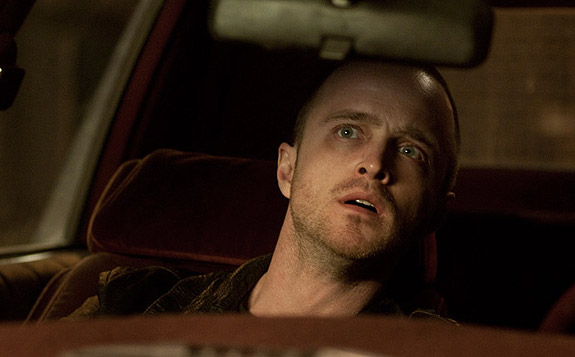
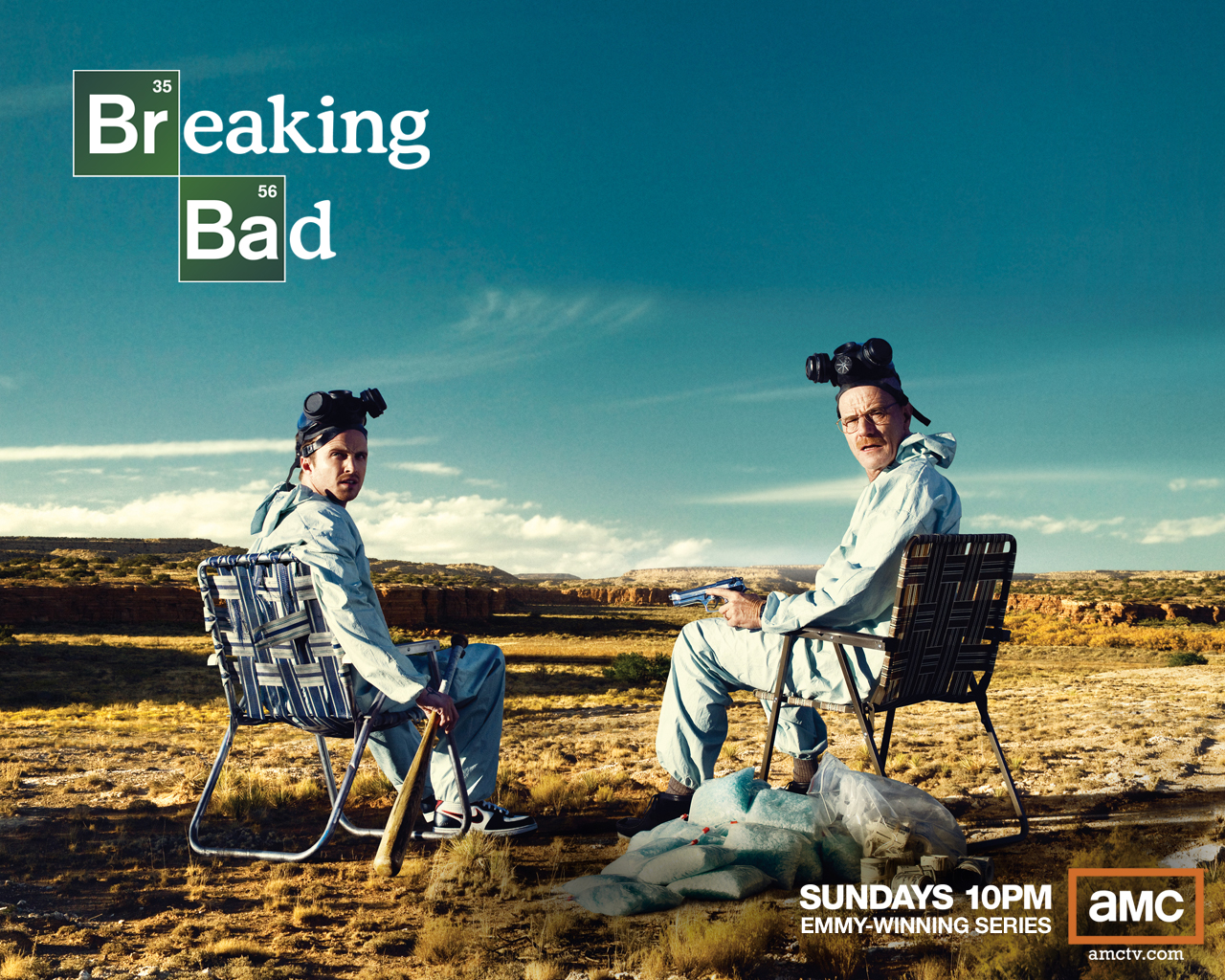
Jesse and Walt taking a break

Warning:  This post is about Season 2 of Breaking Bad.  I will not be revealing specific spoilers from later seasons but I will allude to them generally, so watch out if you’re not up to date.

I re-watched Season 2 of Breaking Bad recently with a friend watching it for the first time, and I appreciated it a lot more than I remembered appreciating it the first time through.  There were a couple of plotlines I had forgotten about completely, and a couple that occupied less or more time than I had thought.

In particular, I forgot what a different show Breaking Bad is in Season 2 than it becomes in Season 3 and especially in seasons 4 and 5.  Breaking Bad Season 2 is the show as its most human; the characters are still regular people, and not superheros with special meth-peddling, empire-building, abilities.  Season 4 of Breaking Bad was one of my favorite seasons of TV in a long time, and I’m really looking forward to watching the next couple of seasons all the way through a second time, but only after watching Season 2 again did I realize the starkness of the differences.

Season 4 has suburb pace and direction, and it’s a brilliantly plotted and stylized suspense movie with deep characters and themes, but the characters pop out of the real world as super characters who have special abilities regular people don’t.  Season 2 has at least some of all these characteristics of course, because it’s the same show at heart, but it’s much less densely plotted, and it’s much more about dealing with our characters as regular people.  Notable super characters Mike and Gus are not yet really present, and this is before the full transition to Heisenberg; Walt is still a science teacher and only a part-time druglord.  Walt still lives a more or less ordinary suburban nuclear home life.  Walt is uncertain; he lies constantly but he rarely acts on the reserves of power and ego that he builds up in the later seasons.  Only once, when he comes onto Skyler from behind when she’s in the kitchen, and Walt Jr is about to come home, does it really feel like he’s acting out his power fantasies and attempting to rise above the rules that apply to regular humans.  Other than that, even though he loves the way his can dominate the meth market in a way he could never the law-abiding science world, he’s much more committed to evasion than exercising his power.  He absolutely hates the idea of laundering his money through his son’s charity site in a way that doesn’t let them know the money is coming from him, but he eventually accedes.  Saul, while helping him and Jessie, who, he correctly notes, are terrible at dealing drugs, also acts as a cheap therapist occasionally where Walt, unafraid of being caught, can vent his frustrations before going back and lying in the real world.  Walt’s biggest god moment in the season is actually a moment of inactivity, when he lets Jesse’s blackmailing and methhead girlfriend Jane, choke on her own vomit and die.  It’s a stepping stone in the timeline of Walt’s comfort level with violence and his own power, but it signifies where Walt is at at the moment; the extent of his power is doing nothing.

Walt is less confident here in these early seasons.  He lies but he doesn’t really know how to do it yet, and he still cares whether Skyler believes it.  I forgot how quickly into the show Skyler didn’t quite trust Walt; it was the first great lie, the fugue state that Walt fakes after being kidnapped by Tuco in the second episode, that sets off her radar.  She very soon doesn’t buy the fugue state explanation, and the second cell phone gnaws and gnaws at her until it finally returns in the last episode when Walt, doped up before surgery, alludes to his having multiple phones.

I’ve said for years that the second episode of the second season was what really hooked me on the show (not that the earlier episodes weren’t excellent, but this was the confirmation to me that this show was really on to something).  It’s still brilliant,though the non-Walt and Jesse parts aren’t quite as good as the Walt and Jesse parts alone with Tuco and Tio, and his bell, in the desert.  Excellent segments I forgot about included Jesse’s attempt to “take care” of the methhead couple who robbed Skinny Pete, which is just a fantastic piece of film-making.  Breaking Bad also, as always, has the best montage sequences in television, managing to convey quickly ideas and plots which take days and weeks in stylistically elegant and informative ways, such as showing Badger, Skinny Pete, and Combo selling the blue meth and expanding their territory.

I can’t talk about this brilliant season of television without mentioning the one ploy that doesn’t work at all, the plane crash.  I’ve never met anyone who disagrees, and I don’t really want to waste time talking about the single bad part in an otherwise great season.  Still, it’s a shame it happens at the very end.  My theory, and I forget whether I’ve read anything that confirms, or at least informs this view, is that by the time the writers got to the end of the season, they realized that the plane crash didn’t work the way they had intended, but since they had committed themselves by having those occasional flash forwards from the first scene of the season, they felt like they had no choice, and could only minimize it’s relevancy.

Jesse gets a lot more real meat this season than he did in the first season, and we see how human and vulnerable he is.  Also, an underrated aspect of Walt that I think is not properly appreciated is on display.  Walt, for all his bluster, actually does care for Jesse.  He may have a strange way of doing it, and it may be locked up into his own selfish reasons, but he puts himself on the line several times for Jesse, including making sure Tuco doesn’t kill him early on.  When he asks Jesse to go to rehab, sure, it’s better for business, but I think he’s not wrong that it’s better for Jesse too.  I’m not sure if I’m in the majority or minority here, but I think Jesse running away with Jane would have been a drug-addled disaster.  I’m not sure if in the long run staying with Walt will be better for his health, but I don’t think the Jane option at that point would have been brilliant either.

If there’s a grand narrative to just the meth sales aspect of Breaking Bad, it’s the constant back and forth between Jesse and Walt trying to sell it themselves, and then failing for some reason, and then distributing through someone else, and having that not work for some reason, and repeat, as their production operations get bigger and bigger. This season, after Tuco’s death, is them really trying to do it themselves on a decent -sized scale the first time.

I couldn’t end this write up without another salute to the entrance of lawyer Saul Goodman. I didn’t initially realize he would be a frequently recurring character, but he was a fantastic addition to the show, giving Walter a reality check quickly, and adding some much-needed humor to a show that could easily be dragged down by overbearing seriousness and tension.  Humor is a sometimes underrated element of Breaking Bad; the show can be laugh out loud frequently funny, often by way of Saul or Jesse, and that helps the writers keep their feet to the pedal of the dramatic aspect of the show without it being overwhelming.

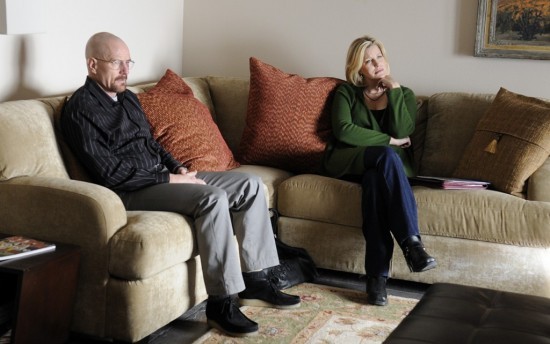
Lastly, I’ve always adored the passion and concern Walt exudes when telling his son and wife that their house has rot in the tenth episode of the season, “Over”.  I might be the only one, but I quote those lines over and over.

The Zeljko Ivanek Hall of Fame: Jim Beaver

13 Mar

Jim Beaver

(The Zeljko Ivanek Hall of Fame is where we turn the spotlight on a television actor or actress, and it is named after their patron saint, Zeljko Ivanek)

Today we’re celebrating the television work of Jim Beaver, a character actor who has only become more prolific with age, first acting in the late ’70s, working more frequently in the late ’80s, and whose biggest roles have come largely in the last 10 years.

Beaver’s first work came in the late ’70s, appearing in tiny roles in TV movies Desperado and something called Dallas Cowboys Cheerleaders starring Jane Seymour, as well as an uncredited appearance as “diner” in an episode of Dallas.  After another uncredited appearance in a TV movie called Girls of the White Orchard as “pedestrian,” he next appeared in a Jake and the Fatman episode in 1987.  He spent the end of the ’80s and 1990 making individual appearances in Matlock, Guns of Paradise, CBS Summer Playhouse, The Young Riders, Father Dowling Mysteries, and Midnight Caller, and TV movies Perry Mason: The Case of the Lady in the Lake, Mothers, Daughters, and Lovers (that’s one title), Follow Your Heart, El Diablo, The Court Martial of Jackie Robinson (featuring a young Andre Braugher as Jackie Robinson), and Gunsmoke: To The Last Man.

He got his first multi-episode role on soap Santa Barbara as the wonderfully named character, “Andy the Rapist.”  He got his biggest role yet in two season odd couple cop drama Reasonable Doubts, which starred Marlee Matlin as a civil liberties-friendly District Attorney and Mark Harmon as an old-school cop.  Beaver appeared as Harmon’s friend and partner Detective Earl Gaddis in 14 episodes.  He showed up in another Gunsmoke movie, an episode of Lois & Clark: The New Adventures of Superman, and TV movie Children of the Dark before appearing again as a regular in two season ABC sitcom Thunder Alley.  Thunder Alley starred Ed Asner as a retired race car driver, and included in the cast a young Haley Joel Osment.  Beaver played Asner’s mentally challenged mechanic, Leland DuParte.

Beaver danced around TV for the rest of the ’90s, appearing in single episodes of Home Improvement, High Incident, Bone Chillers, NYPD Blue, Moloney, Murder One, Spy Game, Total Security, The Adventures of A.R.K. (I have no idea what some of these are), Melrose Place, Pensacola: Wings of Gold, The X-Files, and TV movies Divided by Hate and Mr. Murder (starring the great Stephen Baldwin).  He also appears as bar owner Happy Doug in seven episodes of 3rd Rock from the Sun and in four episodes of long-running soap The Young and the Restless.

He recurred in one season David Krumholtz and Jon Cryer starrer The Trouble with Normal in 2000.  From 1996-2004, he appeared in 26 episodes of soap Days of Our Lives as Father Tim Jansen, the local pastor.  Next, there was more journeying around the world of TV appearing in single episodes of That ’70s Show, The Division, Star Trek: Enterprise, The West Wing, Philly, Andy Richter Controls the Universe, Six Feet Under, Tremors, The Lyon’s Den (Rob Lowe’s ill-fated post The West Wing show), Monk, and Crossing Jordan.

Whitney Ellsworth

Beaver landed the biggest role of his career in 2004, as he was cast in David Milch’s Western masterpiece Deadwood as grizzled prospector Whitney Ellsworth.  Ellsworth was the rare truly honest man in Deadwood, and unlike a couple of the other honest characters, was liked by just about everyone in town.  He’s initially trusted to manage Alma Garrett’s gold claim, and works hard to manage her successful gold operation, fighting off various concerns who want to buy it.

Episodes of The Unit and CSI: Crime Scene Investigation were next, followed by the start of his second biggest role, appearing as a heavily recurring character in Supernatural.  At 54 appearances over the course of Supernatural’s nine seasons, Beaver has shown up in more episodes of the show than anyone except the two leads, Jared Padalecki and Jensen Ackles.  He plays Bobby Singer, a blue collar demon hunter and old family friend of main characters Sam and Dean’s family.  Over the course of the show, Singer shows the boys countless tricks of the trade for dealing with the supernatural, and becomes a father figure to Sam and Dean.

Beaver was busy elsewhere while appearing on Supernatural.  He was in five episodes of the one season Taye Diggs led Daybreak, and in eight of one season David Milch far out HBO drama John From Cincinnati as Vietnam Joe, a pot grower who helps Mexican illegals cross the US border.  He was in three episodes of Big Love and one of Criminal Minds.  He was a main cast member in 2008-09 CBS 13 episode horror/thriller murder mystery miniseries Harper’s Island, playing the sheriff of the titular island, Charlie Mills.  The gimmick of the series, which sounds kind of zany and possibly worth further investigation, is that at least one character, and as many as five, are killed every episode.

Shelby Parlow

Next were single episodes of Psych, Law & Order: LA, The Mentalist, Lie to Me, and Love Bites.  Then, he appeared in two episodes of Breaking Bad, as gun dealer Lawson, selling Walter White guns in episodes Thirty-Eight Snub and fifth season premiere Live Free or Die.  He was in an episode of Dexter’s most recent seventh season, playing Dexter love interest Hannah McKay’s lousy dad, Clint.  He’s also played an important recurring role in Justified as now Harlan County Sheriff Shelby Parlow, appearing in almost every episode this season.  Keep up the good work, Jim Beaver.

Ranking the Shows That I Watch – 2012 edition: 3-1

25 Feb

We’re finally here at the end the ranking of shows I watched in 2012 – to see what qualifies, check out the intro here – 3, 2, and 1 are below.

3.  Game of Thrones

The seven houses

I kind of knew what Game of Thrones was before the show aired, but only the vaguest basics.  My friend had been touting it for years, but I kept putting it off and putting it off, and though I was excited for the show, I didn’t get around to reading the books before the show aired.  By the seventh episode, I was so obsessed with the show that I started the first book and finished them all that summer.  I would have read five more books pretty quickly if only they were available.  This is of course the TV show, and not the books, but with Game of Thrones, they’re somewhat intertwined; George R.R. Martin is involved with the show, writing an episode each year, and because the story is so complex, and is unfinished, there’s a limit to the amount the show can deviate from the books, as opposed to shows like The Walking Dead or Dexter.  While I haven’t agreed with all the changes from the books, some have been very smart, including the added screen time for Tywin Lannister, an important character in the book who does most of his work outside the main storylines, and particularly his pairing with Arya Stark.  The show, like the book, is a thought-provoking fantasy for people who don’t like fantasy. Instead of a stark (no pun intended) Lord of the Rings-like contrast of good versus evil, Game of Thrones is about shades of gray.  Who the heroes and antagonists are isn’t always clear, and with the exception of a couple of truly psychopathic characters, the antagonists also have believable motivations.  While at first I was disappointed by the fact that dragons actually existed in the world of Game of Thrones, I’ve now come to terms with it and have begun to appreciate George R.R. Martin’s very selective use of magic and traditional fantasy elements.  Rather than water down the book by having magic appear everywhere, its uses are uncommon and important.  Each episode is chock full of ruminations on the nature of power and justice and the right to rule, all tied up with well-crafted characters and psychological intrigue.  Characters are constantly playing each other, important characters die, and when big moments come they seem both surprising but not out of nowhere at the same time.  All of these factors make for extremely gripping television; I haven’t found someone yet who started Game of Thrones and didn’t really like it.

2.  Mad Men

Mad Men

For some reason, between the third and the fourth season of Mad Men, I had convinced myself that Mad Men was solid enough but that maybe it wasn’t so great.  Then, the fourth season came out, and I realized the show was fantastic and I was crazy to have ever thought that.  I did not make that mistake again in the long wait between the fourth and fifth seasons, and was rewarded with another excellent set of episodes.  I haven’t seen the other seasons again since finishing, but the fifth season might have been the best ever.  There was no one obvious best episode of the season like there was with the fourth season’s “The Suitcase” but that spoke to the strength of the season as there were several stand outs, including “Far Away Places,” “The Other Woman,” and “Commissions and Fees.”  Roger on LSD was a real treat and Roger has over the past couple of seasons become my favorite characters (I tend to love sharp tongued nihilists (see Jaime in Game of Thrones)).  I was extremely skeptical about Megan as a character from her relatively small role in the fourth season, but the dynamic between Megan and Don was one of the more interesting plotlines of the season.  Although new character Dawn was underused, other new character Michael  Ginsberg was a real winner, challenging Don in ways that Peggy never did.  We’ve seen Don challenged at his job by his own lack of interest, but we’ve never seen him challenged before now because he’s losing his touch generationally, a point driven home by the first ever use of a Beatles song, Tomorrow Never Knows, in a TV show, which famously cost a quarter million dollars but was fantastic. My minor qualm with this season was that I don’t see the point of including Betty plots that showcase how awful Betty is; to me Betty a couple of seasons ago became a cartoonish villain, and kind of let Don off the hook for all his cheating because she was so irritating.  I would have just cut Betty largely out of the show.  Still, every other character from Don to Megan to Roger to Peggy to Pete to Lane to Joan (Christina Hendricks work is masterful in “The Other Woman”) are firing on all cylinders.  I look forward to watching it again some day, and I can’t wait for the new season.

1.  Breaking Bad

Breaking Bad

I’ll be honest.  I didn’t like the first half of season five as much as I did season four, and I seriously considered moving Breaking Bad down. It was essentially a tie, and I let Breaking Bad keep its place, much like Supreme Court decisions are upheld with a tie.  However, while it’s absolutely worth saying that I didn’t like this half season as much as the last, it’s still phenomenal TV.  Even minor decisions I disagree with are imbued with serious thought and care, and I appreciate that.  The brilliant filming technique was on display in episodes like “Dead Freight”, a heist episode which was far more action movie than I’d like Breaking Bad to be, but was still enjoyable due to the skillful cinematography.  If season 4 turned recurring character Gus into a break out main character, season 5 did the same for Mike.  Jonathan Banks perfected Mike’s blend of an incredible level of competence, been-there-seen-that skepticism and eternal calm.  Walt was interesting too, figuring out how to proceed as the winner, rather than under the gun, and though he certainly became in some ways more evil, I actually didn’t entirely hate him, compared to many other viewers.  No show keeps as many possible scenarios going forward, all of which are plausible, leading to the best form of unpredictability. Breaking Bad does as good a job as any show on tv of leaving lots of different strands in the air, only a few of which actually need to be answered to avoid the feeling of pulling a Lost (leaving important questions unanswered) (ie. the ricin cigarette; not coming back to that again would be unacceptable).  Little scenes which may not be entirely central to the plot work as brilliant vignettes in and of themselves, such as the opening to “Madrical” in which a German executive kills himself with a defibrilator is a fantastically nifty bit of filmmaking.  Like any show, of course, I have minor qualms; I thought the resolution to the situation at the end of “Dead Freight” was a bit of a cop out, and new character Lydia has some issues.  Still, this is compelling TV at its best every week, with wonderful characters and beautiful scenes, and though I’m often scared to watch what will happen in each episode, once it finishes I often want to go back and watch again.

Ranking the Shows I Watch – 1: Breaking Bad

29 Nov

Note:  I know I haven’t put explicit spoiler alerts on these entries for the most part, but I’ll make the extra point that everyone should go out and watch Breaking Bad.  I’ve inserted a SPOILER ALERT for the biggest spoiler, but if you don’t want to know anything about the show, watch before reading any further.  And do watch.

Oh, where to start.  There are so many things I love about this show that I’ll have to limit myself to only talking about some of them.  First, I’d like to note that this show has improved every single season it’s been on the air.  I’ve talked with people who have only seen the first season and who aren’t that into it, but I encourage them to keep watching.  It isn’t that the first season isn’t good; on the contrary, it’s merely that the show keeps breaking its existing ceiling every single season.  Almost everyone I’ve pushed through into at least the middle of the second season has thanked me later.  There’s no better way to have someone remember a show in its offseason  fondly than to end with a bang and Breaking Bad always does that – each season builds to an epic last couple of episodes, leading up to a point which could be anticlimactic and easily disappoint, a la True Blood, but instead Breaking Bad rises to the occasion, giving us all time great television episodes.  In the most recent fourth season, however, that tag is hardly limited to the season finale.  Several of the episodes are instant classics, and the last five or so each left me thinking they were the best episodes yet.

Anyone reading this probably knows this already but Breaking Bad is the story of Walter White, a high school chemistry teacher who finds out he has terminal cancer and turns to making and selling crystal meth to provide for his family after he’s gone.  He partners up with an old student now selling meth on a low level, Jesse Pinkman.  The show becomes far more than this, but that’s where we start.

So much happens in a season of Breaking Bad that it sometimes seems as if the first episode and the last are from two entirely different seasons.  The fourth season was ultimately an epic battle between Walt and Gus, and what a war it was.  What was particularly brilliant is that for a few episodes in the middle of the season it seemed like Gus, rather than Walt was the main character and instead of being angry or confused I wanted more.  The show manages to invent back story which was clearly not intended when the show began and yet still doesn’t feel forced and some of the best Gus scenes of the fourth season revolve around this back story.

There are some conceits you have to buy to get on board with Breaking Bad.  It’s a show about broad strokes rather than details, and a show which is one step away from reality; it’s main characters are superheroes who are not exactly like regular people.  It’s not The Wire.  Some things happen in the show which aren’t “real” and that’s okay.  That’s not what’s most important.  What’s most important is that the level of reality and characters are consistent within the confines of the show, and they are.

Tension is the engine that drives Breaking Bad.  No show provides more tension over different periods of time; often there are three or four proverbial shoes waiting to drop at any given moment.  The single best example of that last year may be the ricin cigarette that sat in Jesse’s cigarette pack waiting to be used at any time, which hovers over the last few episodes of season 4.  My favorite small example of Breaking Bad tension is when Walt lights up the gas tank of a car in order to destroy it.  In most shows or movies, Walt would be running away immediately after he lit the fire, and the car would explode as he dived forward, barely missing the explosion.  In Breaking Bad however, the seconds tick by with Walt well out of the way until the car explodes.  Even just waiting for a car to explode, the tension is palpable.

The tension created by Breaking Bad doesn’t disappoint.  When Breaking Bad lays out a major plot element, it uses it.  What’s even more brilliant is that the vast majority of little plot strands the show has left dangling are in a wonderful place where Breaking Bad has built up a network of potential plots (Walt’s mother? Marie’s shoplifting? Ted’s death?) to call back on, but these strands wouldn’t feel unresolved if the show chose never to go back to them.

So many scenes in Breaking Bad are so perfectly executed that they could be wonderful vignettes even outside of the larger story.  For example, the scene in which Mike hides out in the truck and kills the cartel henchmen or the scene in which Mike and Walt talk at the bar and Mike knocks Walt out.  Both of these scenes are brilliant pieces of television even outside of their context.

I could write thousands of words about this show, and I just might at another time. but hopefully this has expressed my feelings about Breaking Bad sufficiently.

Why it’s this high:  It’s the best show currently on TV and it’s only gotten better.

Why it’s not higher: It is in fact, highest

SPOILER ALERT

Best episode of the most recent season:  It’s so hard to choose, but it’s hard not to say the finale – there were a couple of major moments which I debated whether I liked or not – namely, zombie Gus straightening his tie and the decision to straight out show the plant in Walt’s backyard.  Even while I still can’t decide whether I think those moments were good decisions, the episode still stands as an absolutely brilliant piece of television.  I watched it late at night, and I couldn’t sleep for hours after I watched it, and I mean that in the best way possible.  One of the most brilliant aspects of this episode is the way it allows you reevaluate scenes from previous episodes.  This episode takes the scene earlier in the season with Walt spinning his gun around on the table in his backyard, which at the time looked like a scene of pathetic desperation where Walt perhaps contemplated suicide, into a triumphant scene where the plan was hatched that would lead ultimately to Walt’s success against Gus.

Breaking Bad – Season 4, Episode 7: Problem Dog

25 Sep

(A few weeks ago, I started these Breaking Bad recaps, and then fell a bit behind.  Not one to give up without a fight, they’re still coming, just a tiny bit late.  I’m going to dump a few of them today, so read them if you wish, and if you don’t watch Breaking Bad, turn off your computer and start it today)

My brother, when talking about this episode, made the great point that, if you hadn’t watched a single episode before, you might well think that the show was about Gus rather than about Walt and Jesse.  Gus seems to be in the position of the most peril.  He’s got the cartel breathing down his neck, threatening his drug operation.  He’s got the cops, though he doesn’t know it yet, possibly figuring out who he is.  He also has a troublesome chemist who keeps making problems for him who also has a newly-clean partner only a couple of weeks away from a serious meth addiction.

I’ve said before that if you could describe Breaking Bad in one word, it would be tension.  Tension is manifest in this episode on at least three separate major occasions in ways short and long.  First, there’s a smaller moment as Walt, realizing he can’t return the car which he breaks, lights it on fire and waits for it to blow up.  If this was another show, the car would blow up almost immediately as Walt jumps out of the way at just the last moment.  But here, we’re put in the tense and uncomfortable position of waiting for the car to blow, knowing it has to eventually, but not how long it could take.  Second, Walt provides Jesse with poison to slip into Gus’s drink when he has a chance.  Now, every time we see Gus and Jesse together we’ll have to be on the edge of our seats to see where the poison is.  Will Jesse do it?  Can he pull it off?  Will Gus or Mike catch him?  In this episode the scene comes when Jesse is asked to make coffee for Gus when Gus is meeting with the cartel.  Jesse ultimately does not use the poison.  Third, Jesse himself is being battled over between Walt and Gus and Mike.  Each time Jesse meets with either Walt or Gus or Mike, every word they say might swing Jesse in their direction.  Having Jesse by itself might seem unimportant, but it also might give either party the upper hand in their  passive aggressive battle.  Without Jesse, Walt is isolated with no one else he can trust.  Without Jesse, Walt loses his chance to kill Gus.

When Walt brings his earnings to Skyler, Skyler is simply floored by how much money it is and instantly tells Walt that there’s no way they can launder this much.  Walt makes the fair point that the laundering is supposed to be Skyler’s business to figure out (though how the amount they’d be laundering never came up I’m not sure). Like Walt was when he started, and still is, in the drug business, Skyler out of her league here as a criminal.  Though she seemed so confident and on-point with her plan, this amount of money has flabbergasted her.  She has no conception of what Walt does and how much he makes.

Jesse takes a new approach to his emo-self-pity-depression spiral post-murder of Gale.  He goes to his old Meth addiction group and confesses his killing of Gale, only replacing Gale with a dog, and then strikes out at the group, telling him he had only starting going to sell them meth.  I’ve got a feeling this murder is going to haunt Jesse for a long time, maybe even two more seasons.

Breaking Bad – Season 4, Episode 6 – Cornered

25 Sep

(A few weeks ago, I started these Breaking Bad recaps, and then fell a bit behind.  Not one to give up without a fight, they’re still coming, just a tiny bit late.  I’m going to dump a few of them today, so read them if you wish, and if you don’t watch Breaking Bad, turn off your computer and start it today)

Walt’s both too smart and too stupid for his own good in this episode.  Walt is too smart for his own good when, tired of Jesse running errands with Mike, and wondering where this plan could leave him, he questions Jesse’s record of events the night he saved Mike.  Perhaps, Walt theorizes, the whole night was a set up.  Even Walt couldn’t imagine just how right he was.  No matter, with no way to prove it, he just ends up alienating Jesse by pointing out how useless he is and attacking his already fragile self-confidence.

Walt proves to be too stupid for his own good when, after Jesse is unavailable to help clean up, he hires three Hispanic laundry workers to come into the methlab and clean.  This is obviously a terrible idea, but Walt is pissed and to some degree, probably actually right about cleaning up being a two man job.  That said, when an employee of Gus’s comes to take the women back to their home countries in South America, Walt is somehow shocked, as if he couldn’t predict something bad would come from allowing people to see a top secret meth lab.  Walt feels awful about it, and tells Gus’s henchman to not blame the woman, but to blame him.  The henchman assures Walt that Gus does.

Jesse, finally feeling good about himself, is helping Mike out.  This is help Mike doesn’t really seem to want or need, but he understands why it has to be done.  Out on the road with Mike, Jesse tries to use his familiarity with methheads  figure out a shortcut to getting into the house of two methehads with Gus’s product.  It partly works; he gets into the house, knocks one of the methheads out, but also ends up at gunpoint.  Maybe Jesse is not entirely useless after all, and patience isn’t the only way.

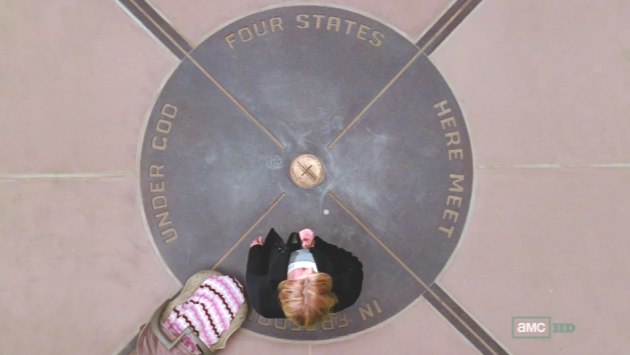
Skyler gets her own Carmela Soprano type moment, albeit not nearly as bad.  She knows what’s up, and she takes an active step towards leaving her family and state, driving out to the four corners, and tossing up a coin to see where she would head.  Even though the coin came up with her leaving, she decided to stay.  Sometimes you don’t realize what you want until you flip a coin and realize that you want the side you didn’t land on.  Either way, Skyler’s now in.  She’s certainly no Walt, but she’s not blind and she’s partially culpable.  If Walt goes down, she’ll go down too.  I’m not sure whether the criminal activity has turned a switch in her on that she didn’t know was there, or whether it’s due to love of her family, but there’s no way to now claim she was innocent.

Breaking Bad – Season 4, Episode 5: Shotgun

4 Sep

(A few weeks ago, I started these Breaking Bad recaps, and then fell a bit behind.  Not one to give up without a fight, they’re still coming, just a tiny bit late.  I’m going to dump a few of them today, so read them if you wish, and if you don’t watch Breaking Bad, turn off your computer and start it today)

The episode begins with Walt, realizing Jesse’s not in the lab, becoming immediately concerned that Jesse has been harmed, or is about to be.  Honestly, I can’t blame Walt for that reaction. In his position, I would think the exact same thing.  However, he goes about it in a naïve, impulsive and foolishly headstrong Walt fashion, driving right to Los Pollos Hermanos to confront Gus, with the thoroughly unrealistic expectation he would just walk in unharmed and kill Gus.  Before he can do anything even dumber, Mike calls and lets him know that Jesse’s all right.

Jesse’s a passenger as Mike picks up cash at a bunch of different drop spots throughout the state.  He can’t figure out why he’s here, and even though Mike knows what the plan is, he really doesn’t understand it either.  Eventually, at the last drop, while Jesse’s in the car, a couple of armed gunmen come down towards Mike’s car, and Jesse is moved from his malaise to back the car into one of them and make a clean get away, realizing that maybe he’s not quite ready to die after all.  When Mike meets Gus later in the episode, we learn what I had suspected right away, that the attack was part of a plan to make Jesse feel like a hero and stop fucking up, and even better, that it seems to have worked so far.

Walt and Skyler are getting along again, and after a heated bout of love-making, Skyler suggests Walt move in again.  Walter Jr. seems pretty excited about that prospect, but Walt, not as much.  While right after he was kicked out all he wanted to do was come back home, Walt has changed in the past couple of months.  After a family dinner, Walt finds himself drinking a glass of wine by himself before rejoining the party.  I at first thought Walt is now bored by this sedentary suburban life that he was apart of for so many years before his cancer, but I think it’s more at least that he’s so terrified of Gus and Mike harming him or his family but doesn’t want to let his family know about it.

Hank notes at the dinner table that it looks like Gale was Heisenberg after all, and notes what a true and real genius Gale must have been.  Walt’s ego is shattered, and Walt feels like he must pipe up, no matter the fact that it would have been awfully convenient for his criminal enterprise for Heisenberg to have been thought dead.  Walt suggests Gale’s work shows he was a mere student, and that the teacher, the true genius must still be out there.  Walt’s desire to speak up is obviously partly a product of ego, but it might be of boredom as well.  Too much stress may be frustrating, but Walt may need a little bit to get excited anymore.

Breaking Bad – Season 4, Episode 4: Bullet Points

4 Sep

(A few weeks ago, I started these Breaking Bad recaps, and then fell a bit behind.  Not one to give up without a fight, they’re still coming, just a tiny bit late.  I’m going to dump a few of them today, so read them if you wish, and if you don’t watch Breaking Bad, turn off your computer and start it today)

First, a couple of notes about the cold open, in which Mike holes up in a truck and then kills a couple of guys who have machine guns.   I said in an earlier recap that Breaking Bad so often has great scenes, even aside from the context of the show.  I can’t see the actual reason this scene adds to the plot, as we had the scene we needed to show how insanely superhumanly badass Mike is when he took down that asian warehouse last season.  The only thing I can think of is if the ear injury gets referred to again.  Either way, though, bravo, great scene.

The scenes of Walt and Skyler working on the story they’re going to tell Marie and Hank about Walt’s gambling addiction highlight both the differences and the strengths and flaws in their two personalities (something we dealt with in last episode as well).  Skyler is detail-oriented (her resume would read) and well-prepared – she wants to be practiced down to the word, and down to the exact emotion.  That said, lying doesn’t come easy to her.  Walt is impatient and impulsive, but he also has a point in realizing that to some extent the story is just going to have to flow naturally.  They can plan a general guide for the story, but there’s something stiff about trying to actually write a script to the letter.  The story seems to go over pretty well when the Walt and Skyler go over to Marie and Hank’s for dinner.  Walt actually made money at cards, so his son doesn’t exactly understand why this addiction is a bad thing.

Hank brings Walt and Walter Jr. to check out the absolutely amazing video of Gale singing Major Tom karaoke, and Hank asks Walt to examine the notebook.  When Hank points out the initials WW, for the first time I felt as if Hank didn’t believe Walt 100%, but I may just have been reading in deeper to the situation because of what I know as the viewer.

Walt, frustrated with everyone, and stressed out about being captured or killed, fumes at Saul Goodman, using his lawyer session for therapy, but is still unwilling to commit to going into hiding.  He still thinks he can find a way out.

Jesse continues his vicious cycle of nihilism that he began in the first episode of the season, but it seems like something has to give.  Walt is furious at Jesse that he didn’t take proper care at the crime scene, and even more so that that doesn’t even seem to bother Jesse, oblivious to the difficulty Jesse is having when reliving the murder.  After some junkies burglarize Jesse’s funds, Mike gets it back for Jesse, who doesn’t seem to care.  Mike and Gus are clearly concerned about Jesse too, and we’re left wondering exactly how concerned when the episode ends with Mike taking Jesse on a ride.  Maybe it’s to his death, or maybe for ice cream.

Breaking Bad – Season 4, Episode 3: Open House

4 Sep

(A few weeks ago, I started these Breaking Bad recaps, and then fell a bit behind.  Not one to give up without a fight, they’re still coming, just a tiny bit late.  I’m going to dump a few of them today, so read them if you wish, and if you don’t watch Breaking Bad, turn off your computer and start it today)

Plenty to unpack here as usual.  First, the car wash.  This whole situation highlights Walt’s flaws, and that Skyler is everything that Walt’s not.  Where Walt is bold and impetuous, Skyler is patient, shrewd and detail oriented.  It’s almost comical watching Walt decide Skyler’s plan is a failure after waiting five hours without a call, hopping up and down next to the phone like an anxious middle school girl, and then decide even faster that Skyler’s negotiating tactics have failed after she intentionally lowballs the car wash owner.  Walt is unconcerned that his grand gesture of buying a ludicrously expensive bottle of champagne might look out of place for an unemployed school teacher because after all, he paid cash.  Walt has had his fair share of victories in the show due to his willingness to be bold and act quickly and aggressively, but that’s also a path to getting himself arrested or killed.  He would never have come up with as intricate a plan as reporting a false EPA violation.  It’s great to see Saul again as well, mocking Skyler’s stated intentions to buy the car wash, and send a message, but just without hurting anyway, openly, and yet she figures out a way.

Marie gets a big chunk of plot this episode as well – she begins to lose a little bit of the sympathy she was gaining, as she turns back to her own shoplifting ways. She goes to open houses, inventing new lives for herself, and takes personal items each time.  Luckily, she has a DEA husband with connections in law enforcement to get her off.  She’s immature, certainly, and enjoying her flights of fantasy and escape from Hank being, well, simply mean to her.  Getting on her case because she confused Fritos and Cheetos?  Harsh.  Pretty immature of Hank as well.  Maybe she’s back to her shoplifting because she wants to get arrested for attention like a teenager and wants Hank to notice or take care of her.

Jesse wants to go og-carting with Walt after work, but Walt takes a raincheck.  Walt at least does him the courtesy of pretending to consider it, but go-carting is below him.  Jesse is at heart still interested in the simple pleasures of Go-carting; he’s just a kid.  He’s not getting what he wants to out of the go-carting, though. He can’t seem to enjoy it.  Either it’s because he’s still devastated over killing Gale, or was so thrown for a loop by being nearly killed and watching Gus kill Victor, or probably both, but just the like in the last episode, he’s dealing, but with a new strategy.  He tried to hang with friends in a non-stop party last episode but it only worked for so long.  Now he’s at a drug den, giving money away.  Blood money, perhaps?  While Walt has become a master of rationalizing away anything he does,  Jesse can’t even justify the things he did that were actually necessary.  He’s punishing himself. While Walt thinks he’s always the good guy even as he breaks increasingly bad, Jesse always sees himself as the bad guy, even when he’s not.

We get the return of Gale’s notebook in this episode.  Clearly foreshadowed in the first episode, we knew it was only a matter of time until it came into play, continuing the set up of Walt being squeezed by both Gus and the police.  That’s about it for the notebook for now though, as a fellow detective puts it into Hank’s hands, but its importance is unquestioned.

Breaking Bad – Season 4, Episode 2: Thirty-Eight Snub

4 Aug

My brother’s one major complaint about Breaking Bad (he still loves the show) is its occasional slow pacing and inconsequential scenes.  While I prefer to describe the pace as deliberate rather than slow, he’s not entirely wrong.  What I always tell him,though, is that the genius of Breaking Bad is that some scenes transcend the plot and the episodes in which they’re found.  Even by themselves, as scenes, or vignettes, or whatever you’d like to call them, they stand out as brilliant and compelling. The scene with Mike and Walter at the bar was one of these scenes.  The plot implications of the scene were certainly important, but even without, the scene was wonderful.

Stepping back, we have two main plotlines in this episode, and two minor ones.  Walt and Jesse are both reacting to their new lease on life differently.  Walt is paranoid that if he doesn’t take out Gus, somehow, Gus will be taking him out soon enough.  He shows off some of Walt’s classic characteristics such as naiveté, impulsiveness, and thinking that he’s cleverer than he is, when he buys a gun illegally in a great cold open, and then tries first to go right up to Gus’s house with a piece.  After that fails miserably, letting Gus know what Walter had in mind if Gus didn’t already,  Walt, in the above-noted best scene of the week, tries to talk Mike into letting Walt kill Gus.  Walt is smart, and he is bold, and both of these are two attributes are to his credit, but he’s so far out of his league at this point that it makes you wonder how he’s going to avoid getting killed.  At the same time, even though Mike responds to Walt’s request with a well-earned beatdown, Mike must be wondering how long he ought to deal with Gus – even battle-tested Mike appeared shocked when Gus killed Victor violently in the first episode.

Jesse is still dealing with killing Gail, watching Gus kill Victor and with coming close to being killed himself .  His way of dealing is to do a bunch of drugs and try to constantly surround himself with people.  It’s hard not to feel for him when everyone, even Badger and Skinny Pete, go home after a couple of days of partying – even they need to rest.

I also like the short Marie and Hank scenes with the physical therapist and then with the rocks.  The physical therapist scene is the first strong indication of the current problems with the marriage – previously it seemed as if Hank was miserable all the time, with his condition, but he’s totally inspired when the therapist is there, and then comes down again when he leaves.  Marie is only half joking when she asks the physical therapist to move in.  It’s one of the first times we really feel for Marie, who has been one of the less likable characters in the show up to this point – here, she’s doing everything she absolutely can for Hank, and he’s still unappreciative.