Tag Archives: Boardwalk Empire

Ranking the Shows That I Watch – 2014 Edition: 39-36

2 Feb

Two well-loved comedies coming off down years after running a little low on ideas a few seasons into their run, one prestige drama which ended, and one decidedly non-prestige drama which just came back. Let’s go.

Intro here and 43-40 here.

39: Archer – 2013: 18

Archer: Vice

We’re now firmly onto shows that I generally enjoy, but which suffered through flawed seasons. Archer sadly seems to be slipping firmly into the decline phase that nearly all shows that last as long as it has slip into. There are all the telltale signs – the writers are out of ideas, situations repeat, the characters tell the same jokes, and the same tropes reappear again and agian. What’s makes Archer’s repetitiveness this season particularly noteworthy is that the season, known as Archer: Vice, started out with the idea of switching up the show’s entire premise. After the big shakeup however, where the gang became drug dealers instead of an intelligence agency, while the show was cosmetically different, the inner workings were the same.  Archer is a fairly breezy half hour, to its credit, by this point, I can’t think of what it would have to take for me to stop watching before the show is over, and I’ll always think of Archer overall in a positive light. Still, Archer has gone from a show I really looked forward to every week to one I knock down as part of my routine.

38: 24: Live Another Day – 2013: Not Eligible
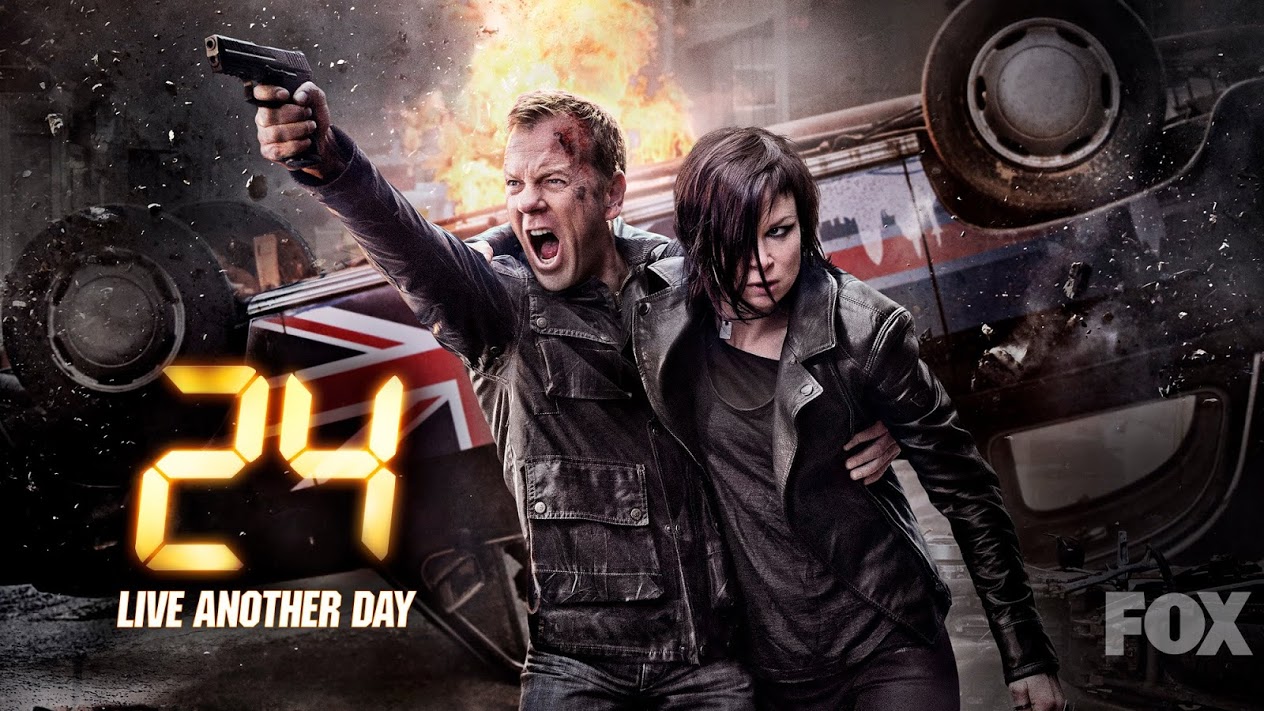
24: Live Another Day

24 has a distinct formula which it’s continued to stick to in its rebirth, a formula which provides reliably fairly enjoyable programming and at the same time limits any chance of greatness. 24 provides a superior version of the House of Cards principle I explained in that entry; it’s enjoyable when watching, especially one after another, but tends to be far less enjoyable when ruminated on afterwards. 24’s magic is particularly strong this way. I never look forward to an episode, only to be pleasantly surprised while I’m watching, only to again forget everything about the episode soon after. It’s superior to House of Cards because it self-consciously knows what it is; it doesn’t have pretentions of being anything other than a non-stop action drama full of twists and turns which may or may not make sense. There’s no weird subplots that go nowhere, no strange episodes that feel entirely out of place. It’s all action, all of the time. Some seasons are better or worse, but that mostly has to do with the relative repetition of the plot, the likeability of the seasonal characters, and the coolness of the action scenes. Live Another Day was about average 24, and while I can’t get as excited about it as I wish I could, it definitely has a place on television that nothing else has truly occupied in its absence.

37: Boardwalk Empire – 2013: 28

Boardwalk Empire

Boardwalk Empire wanted to be The Sopranos from the start, and never quite got there, though it had fits and starts where it seemed like it might come close. The final season, unfortunately, was not one of those times. Shoehorned into eight episodes, the season lacked focus, bouncing around in an effort to end the many plots Boardwalk had started over the years. This was admirable but really missed an opportunity to simply spend more time with the characters and plots we really cared about the most, which were few. The Al Capone sideshow was subpar, and it felt as if the fact it was real history was that main reason it featured, rather than because it actually made for good TV. Capone was more a caricature than character, whether or not it was an accurate portrayal and while he was enjoyable in doses, he was overtaxed in the final season. The flashbacks while occasionally illuminating took time that could have been used to work out the many threads which Boardwalk had to deal with. As it was, many plots felt rushed, as if valuable transition scenes which would have sewn the episodes together ended up on the cutting room floor. I do think with a full 12 episodes, this season could have been a lot better, but as it was, it left a lot to be desired. Beautiful, with brilliant acting and genius cinematography, but missing humor, passion, and enough solid side characters, the final season was emblematic of the what-could-have-been nature of Boardwalk Empire on the whole.

36: Workaholics – 2013: 32

Workaholcis

Most contemporary television comedies create characters we become invested in and storylines that take us through their lives over the course of several seasons. Still, shows like It’s Always Sunny in Philadelphia and Workaholics, push on under a different model, centered around incredibly stupid characters who never grow and change. The only goal of these shows is to make you laugh. These shows can be great but they pose a challenge. Parks and Recreation generates appeal in two ways; you can like an episode because it was funny, because it made you feel, or both. Workaholics has got to be funny. Shows like Workaholics often feature a problematic running-out-of-ideas over the course of a few seasons, and Workaholics is no exception. Five seasons and going is a run to be proud of, but with so many episodes, it’s hard to keep pumping out new classics. Because of the difficulty of coming up with new ideas every episode, these shows tend to be consistently inconsistent; a hilarious episode is followed by a relative dud. All of this is true for the solid but not spectacular fourth season of Workaholics, which had its share of winners and was definitely worth watching for fans of the show, but which stopped short of classic status.
Ranking the Shows That I Watch – 2013 Edition: 28-25

17 Jan

Here we go – first, a drama, that like Sons of Anarchy, has been consistently good but not great and had a comeback season this year. Next a couple of comedies that aired back to back but don’t have too much else in common, and finally a show that was impossible to figure out where to place because it debuted with three episodes. Here we go.

28. Boardwalk Empire

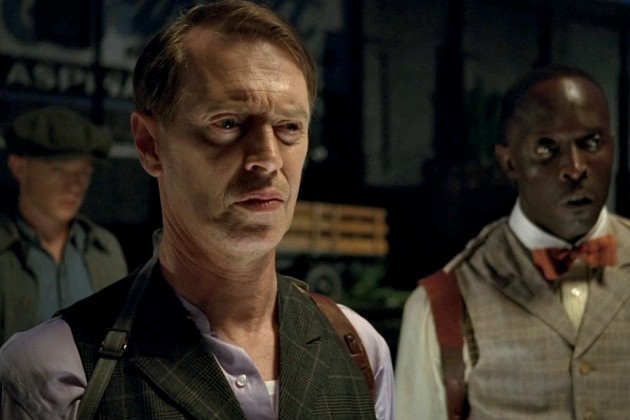
Nuckie and Omar

I spoke about this most recent season of Boardwalk Empire at length, which you can read here and then here if so interested. Basically, I think the fourth season was a big step up from the rather one-dimensional third season. Boardwalk still sometimes struggles with figuring out what makes it stand out from the other major dramatic anti-hero shows that have dominated the TV landscape in the past decade and in bringing more of its side characters into more fully realized form, and sometimes it spreads its wings too wide in terms of including more characters and locations rather than focusing more time on fewer great ones. Still, this paragraph should be more about praise than condemnation; this was the second best season of the series, and very close to the second season, the other contender. I didn’t love the Chicago plots, but other non-Nuckie characters stepped in a big way, as the writers created situations more interesting than everyone-against-Nuckie. As always, the filming technique and direction in Boardwalk is gorgeous. Scenes are lovingly rendered and fantastic angles and shots and drama and pathos no matter the characters, plot, or dialogue.

27. Veep

Selena and Staff

Veep’s second season was a noticeable if not revolutionary improvement over the first. It went from a show I watched but was hesitant to recommend after the first season to one I proudly throw out as ideal for relatively quick viewing after the second. Everything is tighter, the characters are surer in who they are, and because of that, the actors know how to better play each of their roles. The first season was defined by one large scale joke – that life for the Vice President, the second highest office in America, was as boring, mundane, and pointless as the lives of so many other cubicle-inhabiting Americans. The second season let the show breathe and allowed that one joke to merge more fully for the show’s love of Curb Your Enthusiasm-like situational awkwardness and miscommunication. Every one of the characters gets a couple of chances to shine, along with recurring guests Gary Cole, Kevin Dunn, and Dan Bakkedahl.

26.Girls

Four Girls

Girls second season was by and large a huge improvement over its first. Toned down was the fervor, both the extremely positive and negative levels that accompanied the first season, which may have been in the show’s best interest. In its place emerged a more fully formed show, that dealt with the characters in more mature and interesting ways. All four primary characters are caricatures to some extent; but they’re not that far from real people and their battles and conflicts often feel authentic (which I complimented in my article about Treme as a place that’s surprisingly hard to reach). I didn’t like the last episode which featured a couple of sappy, forced happy endings which felt like a flash-forward from what the show dissected so powerfully in the second season’s middle episodes, but I still remain quite hopeful for the third season.

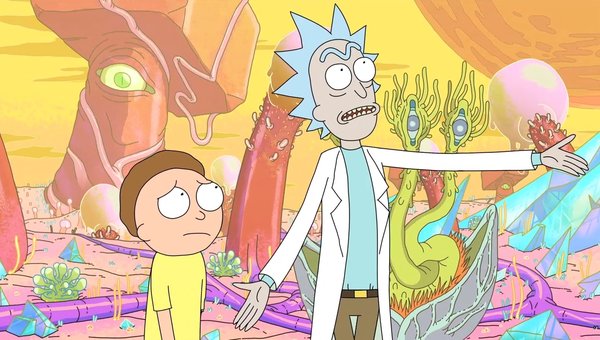
25. Rick and Morty

Morty and Rick

Many times during this list I had no idea where I wanted to place shows; this basically refers to numbers maybe 6 through 39. Still, this may have been the trickiest, primarily because it’s hard to figure out how high to rate a show that has aired only three episodes not only in the year, but ever, and not three hour and a half Sherlock episodes, but three 20 minute episodes. So here it is; I probably have liked what I’ve seen enough to have it higher, but I was hesitant on how high to put a show with three episodes. Now on to why you should watch this show if you’ve never heard of it before. Rick and Morty is an animated Adult Swim show about the science fiction adventures of grandfather Rick and grandson Morty, who have a perverse Doc Brown and Marty McFly-esque relationship. Rick is an alcoholic mad genius, and Morty is a loving kid who is a awkward and not the smartest chip on the block. Rick drags Morty throughout space time on all sorts of wacky adventures, while their family, Morty’s parents and sister, occupy often equally hilarious b stories.  It’s funny and it’s short and you don’t have to watch the episodes in order, but you might as well because there aren’t that many of them and they’re good. If you start with just one of the first three though, make it Anatomy Park which combines Jurassic Park, Fantastic Voyage, and John Oliver. Oh, on top of that it’s co-created by Community once-and-future head honcho Dan Harmon.

End of Season Report: Boardwalk Empire, Season 4 – Part 2

29 Nov

Nuckie in Florida My thoughts on the recently ended fourth season of Boardwalk Empire ended up reaching an unseemly length, so I decided to slice them in two. The first part is here.

Gillian’s plotline was one of the triumphs of the season. It was, unlike many of the other plots,largely self-contained within this season, and dealt with her trying to put her life back together and ultimately gain custody of Tommy, Jimmy’s orphaned son. My one reservation about her story was that it felt a little ludicrous to have this ridiculously long con run on her successful by a private detective solely for a confession to killing someone no one seems to really even care that much about. Still, if I’m willing to buy that, it was compelling, Gillian has always been one of my favorite side characters and Gretchen Mol manages to play her in a way that it’s hard not feel sympathetic for her by the end of the season even after all the terrible things she’s done.  She’s so tragically broken from the way she was abused as a girl that her warped sense of relative morality has made her at times successful, twisted, and oblivious. Ron Livington’s character had a limited role, nursing Gillian back to health only to break her later but he ultimately appreciated by the end of the season, as we did, the strength of Gillian’s character and her abilities, in spite of the endless immoral and criminal acts we know she committed.

Nuckie trod largely on familiar territory which makes it difficult for his plotlines to feel new or exciting. This is largely because the character is stuck in a status quo where he can’t get too big for his britches outside of Atlantic City, but can’t lose all his power either, unless the show is willing to make a much more radical change that I’m giving it credit for. Still, if one could put aside for a minute the negative I’ve already mentioned of going somewhere we’ve already gone before, the season handled it well.

Particularly, we’ve seen this Nuckie and Eli dance before, in season two, when Eli was part of a cabal, along with the Commodore and Jimmy, who worked to overthrow and ultimately kill Nuckie. Nuckie forgave Eli, but not Jimmy, and Eli had been a fairly loyal soldier until this year, aside from the constant sibling squabbles between the two. As I mentioned, unsurprisingly, I’m not usually a fan of repeated storylines, and I’m not here, but again, if we accept that Eli betraying Nuckie is going to be a repeated plotline, it’s done as well as could be expected.

I’ve always though Eli (like Gillian) was one of the stronger side characters and that his relationship with Nuckie was a fairly realistic portrayal of a sibling relationship, amped up in a violent way because of their positions as gangsters. With Nuckie as the protagonist, Eli can seem grating when he’s constantly rankled by Nuckie’s constant looking out for him and his family. It’s difficult, though, for Eli to constantly be under his brother’s thumb, not only at work, but often even within his own family at home, even if he ultimately loves his brother deep down, which i still think he does. Eli has a more convincing reason for betrayal his time, and I actually liked that in the end, at least this season, Eli wasn’t killed, which would have been the obvious move even though his actions clearly deserved it by the rules seen in this show.

The extra layer here was that the betrayal could have been avoided if the sibling rivalry didn’t run so deep. Agent Knox blackmailed Eli regarding his son’s murder charges, and if Eli had gone to Nuckie right away, the situation might have been resolved without endangering anyone in the family. Eli was too proud and ashamed to go to Nuckie, and Nuckie had to play big brother and patronize Eli by hiding his son’s actions from him in the first place, generating the understandable resentment from Eli. These are basic sibling conflicts that follow siblings everywhere, but they’re played out writ large due to the numerous murders and federal crimes which they’ve both been a part of. The family connection comes into play again in the decision of Nuckie not to kill Eli, as all of the rationales on both Eli’s and Nuckie’s sides are wrapped up in their complicated family web along with Eli’s son Willie, whose seemingly unnecessary and somewhat irritating (Willie is not my favorite character) actions early in the season set up the ground for Eli and Nuckie’s struggle.

I loved Patricia Arquette’s character,Sally Wheet, and she played a huge part in keeping Nuckie interesting for another season. I do think Nuckie is a good character overall, and has layers of depth and moral complexity that have shown over the course of the show, but it’s getting tough to keep him interesting, as mentioned earlier, without ever having him win or lose completely. He wants out of the gangster game, and the stress and the violence, but then he doesn’t because of his need for money and power, and around again we go. Arquette was a genuinely believable and compelling romantic interest that made me invested in Nuckie’s love life in way I didn’t feel was particularly likely before the season. Florida didn’t add a ton besides plot conveniences outside of Arquette, but she alone made it worthwhile. Florida was built up in the early seasons, only to largely fall away towards the end of the season, leading me to believe we’ll be back in the Sunshine State sometimes in season five.

Nuckie’s ex-wife Margaret largely sat this season out, for which I was grateful, as she’s my least favorite character. Her two scenes with Arthur Rothstein I enjoyed though; perhaps there’s much more potential for her now that she’s fully out of Nuckie’s life and in the show in limited doses.

Real life gangsters Rothstein, Charlie Luciano, and Meyer Lansky each had minor roles in the season, each befitting the size of characters throughout this series, but each added color, character, and fine acting, in the smaller roles they inhabited. They were like basketball three-point specialists, making the most out of their limited time on screen, injecting little bits of character into smaller parts without needing the ball to have an impact. Mickey Doyle, another character whose actor gets listed in the main credit sequence even though he has a relatively minor role, is the type of character who can be grating with all but the slimmest parts, but in short bursts adds a much needed bit of levity to a show that can easily get overserious. Rothstein and Lansky are about the only other two who ever seem to show any sense of humor, and both faced more serious situations this season that prevented them from being at their most lighthearted.

Antagonist FBI Agent Knox wasn’t my favorite part of the season. He was largely fair in his handling of Eli, but his unnecessary beating of Eddie left me cold and somewhat unsympathetic. He’s clearly on the right side ethically and legally, relative to the show’s protagonists, but because they’re protagonists our natural sympathies lie with them, so the relatively more moral FBI agent needs to be legitimately clean to win us over. Knox, to his credit, isn’t corrupt, and he is certainly on the side of right, but I think he could have been even more convincing and relatively more likeable, which would have shone a brighter light on the fact that the characters at the center of the show are no-good criminals.

This report wouldn’t be complete without nothing that Nuckie’s servant Eddie got some serious work to do and excelled in his final episodes mid-season as he’s cornered by the FBI and then takes his own life. His last scene was brilliantly acted and wonderfully filmed.

Overall, this season was a positive step for the show. Side characters were fleshed out. Plots came together somewhat, but not entirely, and wrapped up some season long plots while leaving a lot hanging for next season. The antagonists were more complicated and enticing than Season 3’s Gyp Rosetti, who was a fun sociopathic villain but not a particularly interesting or complicated one. I’m looking forward to what the writers and creators come up with next.

End of Season Report: Boardwalk Empire, Season 4 – Part 1

27 Nov

Nuckie and Narcisse

Boardwalk Empire may never quite rise to the status of truly great show in the annals with the Mad Mens and Sopranos and Breaking Bads of the world, but this fourth season was  a a movie in the right direction, very good season of television, in the tier just below great. The fourth season was a distinct rebound from the so-so third season, back to the heights of the second, which was previously (and still may be – I’d have to think on it more) the best season of Boardwalk Empire.

The third season of Boardwalk was sharply focused but was stifled by a concentration on a villain who, while gleefully diabolical, was uninteresting and one-dimensional. Bobby Cannvale did all he could with his psychotic gangster Gyp Rosetti, and it made from some breathtaking and brilliantly violent individual scenes that jumped from the screen. In terms of narrative arc, however, his irrational antagonism left the entire arc around with the season was built often lacking.

Season four on the other hand, managed impressively the very difficult task of knowing when to pull plots apart and when to push plots together, keeping the season focused enough to mostly not feel disparate while finding time to focus more on non-Nuckie characters than ever before. Additionally, season four found antagonists that if not entirely as rich in character as they could be, were more layered than Rosetti, who may have started out simply as a wronged businessman, but by the end was a nut hell-bent solely on Nuckie’s destruction.

Season four also is by far the least seasonally-oriented season of Boardwalk. While the finale had some huge, series-changing moments, major questions and plotlines remain in the air in ways that felt far less settled than after each of the show’s previous three seasons. The two biggest arcs of the year, Nuckie’s and Chalky’s were left somewhat unfulfilled, and Eli, whose death would have been a classic seasonal wrap up, lives and moves on to Chicago for now. There’s nothing wrong with leaving plot strands open ended for next season, and in fact, it can have many benefits, but it does make it harder to evaluate the season in a vacuum.

I’m now going to roll through each of the major arcs and make some comments.

Chalky’s arc was very strong. There was one major issue I had, which was his relationship to Daughter. I never found Daughter’s character compelling or charistmatic, and that meant I never was quote on board with Chalky’s infatuation with her. It could be explained simply as a mid-life crisis with a younger woman, and that’s fine, but the show made it out to be more than that. That said, Chalky’s battle with Narcisse was largely compelling. Chalky faced a problem which Nuckie has in the past, having his leadership challenged, and struggled to maintain supremacy in a world that was changing faster than he was ready for it. On top of this, he doesn’t know who his allies are in his community or outside it, and must go it alone until he can figure out how his real friends are. Chalky made many mistakes along the way, but came out of his battle with Narcisse easier to root for in some ways, and harder in others, a more complicated character. His daughter getting caught in accidental cross-fire aimed at Narcisse was brutal luck which should have a debilitating effect on Chalky going forward.

My one other complaint is that I think there was an interesting potential dichotomy set up for Narcisse; his support and fight for his race, while at the same time participating in organized crime, and particularly drugs which harm the community. There could have been a way to really explore Narcisse as a character with an internal battle between these sides, but instead Narcisse was pretty much just an antagonist who was kind of a blowhard rather than having any working principles.

The Chicago plot lacked the gravitas of the other arcs. Boardwalk Empire is always filmed with care, and the cinematography and film-making is beautiful as always, even when the writing and characters can’t match it. Watching Al Capone’s rise, through the eyes largely, of Nelson van Alden ne George Mueller ne Nelson van Alden was absolutely entertaining at times but felt more like a way to stage a version of an interesting episode in history rather than necessarily fit in with the other segments of the show. It was fun to watch the sociopath Capone move up the ladder in his local organized crime family, but it didn’t really have the same emotional or character weight of some of the other arcs. I think Michael Shannon is a great actor and any depth I get from Van Alden I credit to him, because Van Alden has always been one of my least favorite characters on the show. I’ve always felt Van Alden was just a little bit too odd, and particularly that his transition from uber anal prohibition agent to unhinged salesman to gangland enforcer never quite worked. Still, if I allow myself to try to disregard the history from before this season, Van Alden, in this season alone strangely often plays the role of the viewer seeing the abilities and the weaknesses of Capone, the most well-known and infamous real character on the show.

Richard Harrow’s death makes sense in a lot of ways. He’s a fan favorite so his death would carry an emotional impact that many of the characters’ potential deaths couldn’t hope to match. Harrow was also kind of out of plot. While everyone wanted more Harrow, it seemed clear a couple of episodes into this season that the writers didn’t exactly know what to do with him.  He appeared in extended segments in early episodes and then featured in less and less screen time as this season went on. His plot slowed down to a crawl to make sure it didn’t outpace what the writers could actually figure out to do with him. In the last episodes, a period of stasis arrived. Richard got control of Jimmy’s kid and was with the girl he loved, and Nuckie had given him a job, but it’s still not clear what it was or why. There seemed to be two obvious options for what to do with Richard: either let him go off an be happy and largely off the show at least temporarily (with the caveat he could show back up at anytime if the writers could think of a reason) or kill him off tragically. As (BREAKING BAD SPOILER) Breaking Bad fans know, letting your wife know everything is all wrapped up for the best and you’ll be home is all but a death warrant.(SPOILER OVER). The final scene was a poignant but fairly inevitable death for an excellent character. Richard Harrow couldn’t just get away and live a happy life, certainly not after leaving so many bodies in his wake, even if it was often done with the best of intentions. This isn’t that type of show. There are tradeoffs in life, and some good can’t necessarily outdo a lot of bad. Still, the final scene of the season was beautiful and no character deserved to go out in that memorable way more than Harrow.

Ranking the Shows I Watch – 2012 edition: 24-22

8 Feb

Ranking the shows I watch, from 2012 – for the rules, see the intro here; 24, 23, and 22 below.

24.  Downton Abbey

Downtown Abbey

I thought the show was titled Downtown Abbey for a good year, like many.  The first season captivated me a lot more than I thought it would, and I’d like to make a shout out here to the wonderful theme music.  The second season, with more episodes, struggled a little bit (we’re using American air dates, so second season aired in 2012, rather than British air dates, where the third season was shown last fall).  While some people were stunned to realize they were watching an overblown primetime soap, albeit with interesting social issues at play, that much was obvious to me.  The problem rather was that some of the twists in the second season were pure daytime, most notably the absolutely ridiculous plot in which an injured soldier cons Edith into believing he’s a family member the Granthams thought dead on the Titanic in the first episode of the series (by the way, starting your show with a succession issue caused by the Titanic’s sinking? that’s high drama).  Matthew miraculously gaining the use of his penis (yes, penis) and legs back after having them paralyzed was a little much, though mostly inevitable; they could at least have had him suffer some kind of permanent damage to make the whole injury meaningful.  The show was also constrained by having to figure out how to get Matthew and Mary together and then apart and then together and then apart within the rules of high English society. By the end of the season, while I was certainly rooting for them, I just wanted something to be done and final.  The Bates murder trial never worked for me either.  Anyway, the moral is that the second season paled in comparison to the first, but still had some wonderful moments and the always excellent sniping of Maggie Smith’s dowager countess.  These problems are also easily correctable, so I’m looking forward to the third season.  Also, Downton is unusual in just how much time is spread out over a single season.  Years happen between episodes sometimes.  That’s neither here nor there, but I thought it bore mentioning.

23.  Boardwalk Empire

Boredwalk Empire

Boardwalk Empire, like Sons of Anarchy earlier on this list, aspires to be a BIG series full of deep and meaningful themes, like The Sopranos, in particular, in this case, a show on which Boardwalk series creator Terrence Winter worked. It almost feels like the show was put together with The Sopranos as the ideal model, trying mathematically to adhere to the recipe that made the Sopranos so great, and hoping that after putting it all in the oven for 15 minutes, it would lead to a brilliant show.  The care put into the show is clear; the sheer filming technique is impressive and definitely significantly adds to the enjoyment.  That said, the formula doesn’t always click.  Main character Nucky Thompson is generally a strong one, packed with charisma and complexity, but few of the secondary characters can equal him, and those who could often don’t get the amount of screen time they need.  This problem was clearer in the third season than in the first two.  While there were several serious issues that made the season all right instead of very good, the biggest might have been that the creators chose the wrong secondary characters to get the bulk of screen time after Nucky gets his.  Whatever greatness is, I think it’s unlikely Boardwalk Empire is going to get there in more than glimpses and moments, but there is definitely plenty to enjoy in the craft if less so in some of the characters, and that alone makes it worth watching.

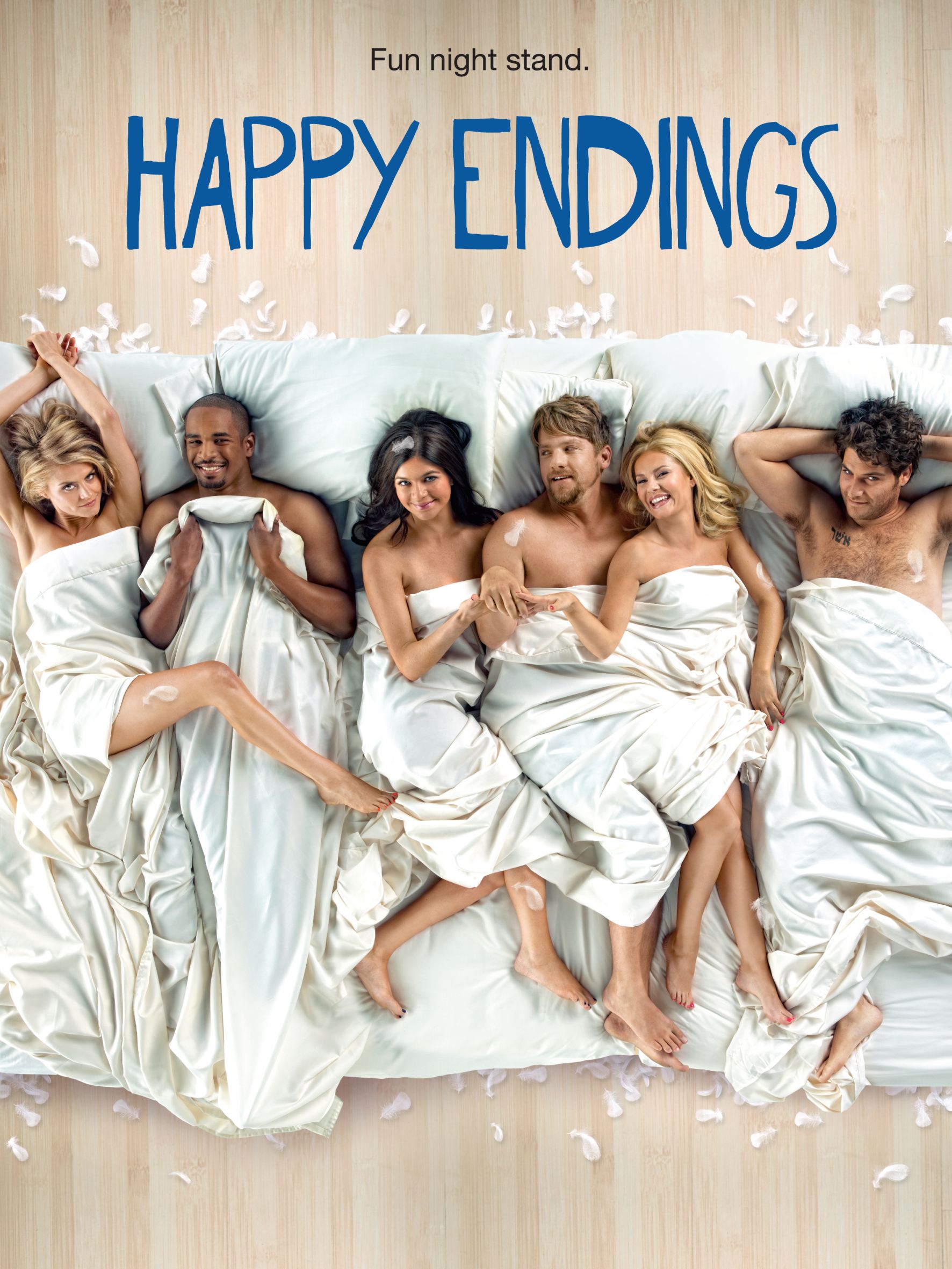
22.  Happy Endings

Happy Endings

The volume shooter of TV sitcoms, Happy Endings fires away jokes at breakneck speed, not even worrying about whether they hit or miss, because by the time they’ve thought about it, ten more jokes have been recited.  Like NBA volume shooters J.R. Smith and Jamal Crawford, this leads to serious consistency problems, but also periods of time where it seems like every joke (or shot) goes in.  There are six friends, they’re all grouped together differently for A, B, and sometimes C plots in various episodes, and they’ve got lots of inside jokes and pop culture references are often flying. Sometimes after time goes by without watching an episode, I’ll remember the show as mediocre, and then watch a good episode and recall what I liked about it.  Because of the way the show works, it’s never going to be an absolutely transcendent show the way, say, Community or personal favorite Party Down can be.  Sometimes an episode will work a lot better than others, and even in an episode where a lot works, some won’t.  The flip side is that the show has a high floor; even when everything’s not clicking on all cylinders, there’s an excellent chance of at least a couple of solid chuckles coming through.  I have a hard time being extremely passionate about this show; it’s not great and it took me a while to get into enjoying it at all.  That said, the more I’ve watched over the years, the more I’ve become to appreciate its quirks, and like the best shows of its type, the excellent chemistry enjoyed by the cast, which turns some percentage of those jokes from misfires to winners.  I originally had the show lower and moved it up because for the first time, this season, I realized I’d very much miss it if it was cancelled, and sometimes that emotional connection tells you something that your brain doesn’t; while this will never be a favorite, I genuinely like the show.

End of Season Report: Boardwalk Empire

5 Dec

Nuckie and Friends

This was certainly the weakest season of Boardwalk Empire’s three year run (the second was definitely the high point, the first is just a little better than this one), and it ended with a not entirely unsatisfying conclusion, but a not entirely satisfying one either.  I hashed out a much longer article breaking down this season of Boardwalk character by character a couple of episodes ago, and I still may post that, but I’d like to post some general thoughts on the Boardwalk finale and third season in general while it’s still fresh.

One of the primary reasons for the inferiority of the season on a whole is the lack of focus.  Nuckie, the star, continues to be the strongest character; he’s generally treated with the complexity and depth he deserves, and Buscemi carries it off well.  Beyond him, however, the show is a bit of a mess.

His wife, Margaret Thompson, is clearly the second most important character, and in her vast amount of screen time, she provided the worst and least interesting major multi-episode plot this year; her struggle to fight within her limited means as a woman at a Catholic hospital towards medical progress in women’s medical care.   It’s the stuff of a an hour and a half Julia Roberts movie, “The story of one woman’s fight against the government and the church to make pregnancy safer for women” and while it certainly could be inspirational, it was boring, repetitive, didn’t belong in the greater scope of the show, and felt like it was just there to show us that Margaret wasn’t useless, and that she was a powerful women who could fight the man.  Again, I’m not saying this general story couldn’t have ever worked in some form, but it didn’t work in context, and it was clumsily handled.  Her other major plotline was her affair with Owen.  This only interested so far as the effect it could have had on Nuckie, and frankly kind of took away from the other Owen storylines.

The lack of focus was especially clear in the finale when side characters who were largely absent most of the season all of a sudden came back to play large roles, while other characters to whom much more time was devoted during the course of the season were entirely absent.  I by no means believe every character needs to be in every episode or have an equal amount of screen time, but if certain characters are going to be more important at the season’s climax, they should get some more screen time, and I think the time was parceled out very poorly this season.  Additionally, I don’t think the creators necessarily understand which of their characters deserve more screen time in general.

For example, Chalky White, who was basically a non-entity through the vast majority of the season, comes around to play a crucial role in the last two episodes.  I would go so far even to say Chalky has been a non-entity for the vast majority of the entire run of the show; in my longer piece, one of my pieces of advice was that since the writers have decided he’s not important enough to devote more time to, that they should just trim the fat and cut him out entirely.  I do think Chalky can be an interesting and worthwhile character, but I think the writers should have shown more dedication to him over the course of the show if they want us to care about him and treat him as an important character, like they try to in his maybe one showcase episode a season.

Richard Harrow has become a fan favorite, and for good reason; he’s one of the few characters that seems to get just enough screen time and have just enough going on to keep him both interesting and relevant.  While his relationship to the main storyline was often tenuous, it was still significantly closer than say Nelson, and it was easier to take because his arc was compelling enough to live on its own.

Arnold Rothstein, Al Capone, Lucky Luciano, Meyer Lansky; these are all sideline characters; they’re great to have in a show, but they’re characters who are important mostly in how they alter the behavior and decisions of our more major characters.  Capone, for example, gets a small little moment where we see him interacting with his son, but for the rest it feels largely like the show is just telling us to keep watching as Capone moves up to conquer Chicago, like we all know we will.

Primary season 3 antagonist Gyp Rosetti was that was as well; he was a force to be reckoned with, but there wasn’t much going on with his character other than he was a violent psychopath determined to take down Nuckie.  There were some beautifully rendered hyper violent scenes showing just how crazy he was (it seemed like one an episode) and Bobby Cannavale handled the part very well.  Still there wasn’t much going on in terms of motivations or subtitles with him; he mostly existed to put Nuckie in a jam.  Again, it’s fine to have characters like this, who are pretty cool but relatively one-dimensional, but Boardwalk could do a better job investing either more time in the characters on the map that have a little more emotional depth going for them, or add some more subtle layers of depth to these characters.

Nelson Van Alden, who may have gotten the third most screen time during this season after Nuckie and Margaret, didn’t even appear in the finale.  I would have eliminated Nelson’s plot if I was planning out the third season.  Not because I don’t think his character could have any value, but because it just didn’t seem to fit and I don’t find his character in and of itself compelling enough to support his own entirely unrelated subplot, especially when I think focus is such a pervasive problem on the show.

Overall, I think the finale represented a smarter blend of characters than the majority of the season.  Margaret and Nelson’s being largely absent was notable more because they’ve occupied such huge roles over the course of the season than because they were missed in the plot or the flow of the episode.

Okay, these couple of thoughts have gone on far longer than I intended, but I’ll wrap up here.  The second season really came together in the last few episodes over the rise and fall of Jimmy Darmody and Nuckie’s ability to stand up against a series of ultimate betrayals by people he trusted.  The third season felt far more haphazard, zigging and zagging in odd ways to make sure that it reached a resolution after exactly 12 episodes.  Going forward, I’d advise Boardwalk Empire to plan better from the start of the season, to trim the fat, and to take more time to consider who the show is spending what amount of screen time with.

Ranking the Shows I Watch – 20: Boardwalk Empire

22 Sep

I have mixed feelings about Boardwalk Empire.  First of all, this is certainly not the  most important facet to me of a television show, but it bears saying that Boardwalk Empire looks fantastic.  HBO should be commended for paying for such great production values for their dramas and Boardwalk is no exception.

Both superficially and not so superficially, Boardwalk has a lot in common with creator Terrence Winter’s old employer, The Sopranos.  The main character, Steve Buscemi’s Nucky Thompson, is a man-who-runs-town figure who is also the head of his town’s (Atlantic City) organized crime family in 1920 as prohibition is about to begin.  As in Sopranos, he is thoroughly trained in the old school, but he on the brink of a new order, as prohibition means great opportunity for organized crime, but also allows for the quicker rise for a younger generation of mobsters who play by a different set of rules.  Micheal Pitt’s Jimmy Darmody, who was close to Nucky for years, plays what seems to be the Chris Multisanti role (thoroughly less insane, at least so far, and more serious, but bear with me).  Nucky, like Tony Soprano, struggles to bend and not break while melding some of the old school with some of the new, with plenty of even more conservative associates on one side threatening to end him if he moves too much in one direction, and younger change-oriented associates, like Jimmy, threatening over overtake him if he doesn’t, all while rival organized crime organizations smell blood.

One of the stranger aspects of the show is that a handful of major characters are real people, while the rest aren’t.  This gives Boardwalk a weird amalgam between real and invented, and we know a few things that have to happen – Al Capone is going to rise up in power, and should the show continue to run through prohibition, Arnold Rothstein will be murdered in 1928.  A mafia history devotee could have called ahead of time that Big Jim Colosimo would die, at the hands of Johnny Torrio.

The show is solid but it just isn’t seriously top tier.  It’s main problem might be that it’s not a lot of fun.  It’s a little bit stilted, and even though formula is all there, I just don’t get the unbridled joy and rush of excitement I do from watching a Breaking Bad or a Game of Thrones.  This could change of course, but, and I know I keep comparing it to Sopranos, but it really is a fairly apt analogue, as deadly serious as Sopranos could be, it was also often fun, and that aspect seems sapped from Boardwalk.  Maybe the lack of a Chris, or a Paulie Walnuts, or a Roger Sterling from Mad Men, hurts that, and maybe it’s just the feel of the show and that’s how the creators wanted it to be the whole time.  I wouldn’t mind it loosening up a little bit though.

Why it’s this high:  It’s high time Steve Buscemi got to star in his own show, and the production is beauitful

Why it’s not this high:  Try as it might, it’s not quite Sopranos, and it’s a little bit wooden – it feels almost like someone tried to create a color-by-numbers show in the mold of Sopranos

Best episode of most recent season:  I don’t remember a clear standout but “Hold Me In Paradise” because I’m a sucker for history and this is probably the strangest and most thorough crossover into historical fiction – parts of it take place at the Republican National Convention, particularly talking about the redoubtable Warren G. Harding, and Arnold Rothstein deals with fallout of the Black Sox scandal.