Tag Archives: AMC

Fall 2011 Review: Hell on Wheels

9 Dec

The first episode of Hell on Wheels left me intrigued but not excited.  The pilot gave me just enough to make me want more but not enough to draw me in immediately like Homeland did, for example.

The story takes place soon after the Civil War as the great project of building the transcontinental railroad commences.  Our protagonist is former southern soldier Cullen Bohannon who heads out to work on the railroad, getting hired as a foreman because as a former slave owner he may have a rapport with the black workers, who while free, are treated as barely better than slaves.  Before he heads out, he kills a priest who we find out had something to do with Meridian, a place in Mississippi, in which events resulted in the death of Cullen’s wife.  Cullen’s goal is to find everyone else responsible and kill them as well.  The northerners and southerners get along pretty much right after the war, while the former slaves bear the brunt, the scenes seem to show us.  By the fringes of the railroad, civilized law doesn’t apply.  Rather, the territory is controlled by our antagonist, railroad baron Doc Durant, played by Irish television veteran Colm Meaney.  The episode ends with a long Richard III like speech by Durant, self-identifying himself as the villain but noting that that’s what it takes to get things done, in this case to get the railroad built and of course make him as much money as possible in the process.

Before this, Cullen learns in discussion that his immediate boss had a hand in Meridian, leading the boss to pull a gun on Cullen but inform him that he knows the name of his wife’s murderer.  Unfortunately, a black member of Cullen’s crew, played by Common, slits the boss’s throat before the name of the murderer can be revealed.  Other potential main characters appear to be the wife of a surveyer who is killed by Indians, a reverend, an Indian recently converted to Christianity and a couple of Irish brothers who were on the same train to work as Bohannon, but none of these characters had a whole lot to do in the first episode.

It’s hard not to think of Deadwood when watching even the pilot, as the shows are both set in roughly the same time period and both evoke the spirit and lawlessness of the old west, where there were no legal or moral rules governing society.  The main character seemed at first view like a poor man’s Timothy Olyphant and Durant’s ending speech was needlessly over the top.  We get that you’re a villain, and I can understand a small amount of cartoonish theatrical rationalizing, but it was a bit much.  Many of who appear to be other main cast members didn’t do much in the first episode so it’s hard to evaluate them.  The show is a little bit over serious and could get buried under its own weight if it’s not careful.

That said, there’s enough going on to interest me.  I love the setting and the idea of the moving railroad town and I think there’s a lot of potential there.  I think the revenge plot has possibilities.  Honestly, it’s not so much that the show has done a lot in the first episode to keep me coming back for more as much as raised the possibilities of good things coming in the future.  I’m taken in enough by this though that I’m willing to give it a few episodes to start delivering.

Will I watch it again?  Yes, I’m going to give it another try to see if it builds intrigue and finds its footing.  I’m the first to admit I’m a sucker for historical dramas.  That said, I hope the parts get moving relatively soon and the characters become a bit more compelling.

Mid-season Report: The Walking Dead

8 Dec

(This should go without saying but this midseason report contains spoilers you’re not going to want to read if you’re not up to date on the show and plan on watching it)

This first half of the second season of The Walking Dead ends with a great TV moment which shows everything The Walking Dead can be when it’s at its best.  The barn full of zombies, which has been revealed to us a couple of episodes ago, and to the whole crew more recently, is opened up by Shane.  Dramatically, the zombies are shot one by one by everyone except Rick, until, last out, comes zombie Sophia, wearing the same clothes she was wearing when she got lost.  Everyone is stunned, too stunned to react, and finally Rick steps up and shoots her, taking on his leadership role and showing he’s willing to play rough at the same time.  Even though I hadn’t cared so much about Sophia before, the way she came out out of the barn as a zombie had an immediate visceral emotional impact, and the misdirection of the barn plot had me forgetting about the search for Sophia temporarily.  The scene was extremely powerful and exhibited surprise, plot development and characterization all at once.

The Walking Dead is a show which with a short season and a half behind it is still trying to find its footing.  It’s a good show, and it shows flashes of being a great show, but there are several areas that need improvement.  There are two top-notch moments in the first half of the current season.  The second is the barn scene that ends the half-season, leaving a very good impression going into the second half.  The first is when Shane is shown in flashback shooting poor helpful redneck Otis to get out of the school with the hospital supplies alive.  Both of these moments were character defining, hold your breath, call your friends and talk about them immediately after they happen moments.  Not all of The Walking Dead can be like this – no show can have moments like this constantly and be sustainable.  Still, the payoff of these scenes remind me how good the show can be.

Characterization and pacing are probably the two biggest areas of The Walking Dead that need work.  The Walking Dead has a lot of work to do buidings its characters up.  The best developed character so far in the show is Shane, who began as the best friend who looked after Rick’s family before Rick met up with them, and who has slowly emerged as the primary antagonist in the show.  His journey to antagonist has seemed fairly natural as he’s struggled with losing Laurie and dealing with Rick’s less practical, more soft leadership style.  The rest of the cast either hasn’t gotten a chance to grow or have had their moments in stops and starts.  Daryl, the redneck with the heart of gold, had one half an episode in which he has some battle with a hallucinated version with his brother, and other than that it’s not exactly clear what his deal is, or why he’s so friendly when he seemed more hostile in the first season (think Sawyer from Lost, but skipping past a few seasons).

The Walking Dead needs to decide what its relationship with its own status quo is.  Some shows constantly change while others like Battlestar Galactica feel uncomfortable once they venture too far from their original set up and work on getting back to it.  I’m not sure whether I can expect constant change in The Walking Dead universe or whether even when they move from place to place as seems inevitable, they’ll just settle back into their routines.  One way is not necessarily better than the other, but it affects the pacing of the show.  In the first season, the characters moved around a lot and the plot almost felt rushed.  Another episode at the camp might have let us learn about the characters more and laid down the groundwork for future conflicts.  The second season, on the other hand, has remained at the farm and it feels like an episode or two could have been cut.  All that time could have been used for productive characterization, but it wasn’t.  Often, instead of organically feeling like a character got to a particular state, it felt like he got there because the story needed him there.  An example of this is Dale’s admonishments of Shane in the last two episodes.  For Shane, the journey to antagonist actually seems natural as I mentioned before.  For Dale to hate Shane though, seems to come out of nowhere along with his certainty that Shane killed Otis.  There were no scenes showing us why Dale would feel this way or why he would suspect Shane, connecting the dots.

There’s three main story reasons to kill characters in this show that I can think of offhand.  First, to provide a powerful emotional moment for the viewer.  For this, there needs to be a lot invested in the dying character.  Second, to show a big moment for another character.  For example, Shane killing Otis.  We don’t care that much about Otis, but it’s a powerful moment for Shane.  Third, to show how dangerous an enemy is, such as the zombies.  This is the main motivation between killing many of the early first season characters.  This is a horrible world and the zombies are deadly.  I have no way of knowing, but this seems like the type of show that’s going to want to kill off characters as it goes forward and right now I feel like for a majority of the characters I wouldn’t feel that much if they died (think Boon from Lost).  There’s plenty of time to change this, but it’s something the show should be working on so they can give us more moments like the final scene in the last episode.

I’m by no means souring on The Walking Dead. It’s just frustrating to watch a show that has so much potential not yet fill it.  Unlike shows like Heroes and Lost that had me extremely excited only to lose me for good after I was quickly disenchanted, The Walking Dead has me right now thinking it has the same chance of being great as it did when it started.  There hasn’t been any creative decision which is such a mistake that they can’t turn back from it and I have no reason to think there will be.  The pieces remain in place, they’re just shifting back and forth waiting for someone to get the configuration right.

Ranking the Shows I Watch – 1: Breaking Bad

29 Nov

Note:  I know I haven’t put explicit spoiler alerts on these entries for the most part, but I’ll make the extra point that everyone should go out and watch Breaking Bad.  I’ve inserted a SPOILER ALERT for the biggest spoiler, but if you don’t want to know anything about the show, watch before reading any further.  And do watch.

Oh, where to start.  There are so many things I love about this show that I’ll have to limit myself to only talking about some of them.  First, I’d like to note that this show has improved every single season it’s been on the air.  I’ve talked with people who have only seen the first season and who aren’t that into it, but I encourage them to keep watching.  It isn’t that the first season isn’t good; on the contrary, it’s merely that the show keeps breaking its existing ceiling every single season.  Almost everyone I’ve pushed through into at least the middle of the second season has thanked me later.  There’s no better way to have someone remember a show in its offseason  fondly than to end with a bang and Breaking Bad always does that – each season builds to an epic last couple of episodes, leading up to a point which could be anticlimactic and easily disappoint, a la True Blood, but instead Breaking Bad rises to the occasion, giving us all time great television episodes.  In the most recent fourth season, however, that tag is hardly limited to the season finale.  Several of the episodes are instant classics, and the last five or so each left me thinking they were the best episodes yet.

Anyone reading this probably knows this already but Breaking Bad is the story of Walter White, a high school chemistry teacher who finds out he has terminal cancer and turns to making and selling crystal meth to provide for his family after he’s gone.  He partners up with an old student now selling meth on a low level, Jesse Pinkman.  The show becomes far more than this, but that’s where we start.

So much happens in a season of Breaking Bad that it sometimes seems as if the first episode and the last are from two entirely different seasons.  The fourth season was ultimately an epic battle between Walt and Gus, and what a war it was.  What was particularly brilliant is that for a few episodes in the middle of the season it seemed like Gus, rather than Walt was the main character and instead of being angry or confused I wanted more.  The show manages to invent back story which was clearly not intended when the show began and yet still doesn’t feel forced and some of the best Gus scenes of the fourth season revolve around this back story.

There are some conceits you have to buy to get on board with Breaking Bad.  It’s a show about broad strokes rather than details, and a show which is one step away from reality; it’s main characters are superheroes who are not exactly like regular people.  It’s not The Wire.  Some things happen in the show which aren’t “real” and that’s okay.  That’s not what’s most important.  What’s most important is that the level of reality and characters are consistent within the confines of the show, and they are.

Tension is the engine that drives Breaking Bad.  No show provides more tension over different periods of time; often there are three or four proverbial shoes waiting to drop at any given moment.  The single best example of that last year may be the ricin cigarette that sat in Jesse’s cigarette pack waiting to be used at any time, which hovers over the last few episodes of season 4.  My favorite small example of Breaking Bad tension is when Walt lights up the gas tank of a car in order to destroy it.  In most shows or movies, Walt would be running away immediately after he lit the fire, and the car would explode as he dived forward, barely missing the explosion.  In Breaking Bad however, the seconds tick by with Walt well out of the way until the car explodes.  Even just waiting for a car to explode, the tension is palpable.

The tension created by Breaking Bad doesn’t disappoint.  When Breaking Bad lays out a major plot element, it uses it.  What’s even more brilliant is that the vast majority of little plot strands the show has left dangling are in a wonderful place where Breaking Bad has built up a network of potential plots (Walt’s mother? Marie’s shoplifting? Ted’s death?) to call back on, but these strands wouldn’t feel unresolved if the show chose never to go back to them.

So many scenes in Breaking Bad are so perfectly executed that they could be wonderful vignettes even outside of the larger story.  For example, the scene in which Mike hides out in the truck and kills the cartel henchmen or the scene in which Mike and Walt talk at the bar and Mike knocks Walt out.  Both of these scenes are brilliant pieces of television even outside of their context.

I could write thousands of words about this show, and I just might at another time. but hopefully this has expressed my feelings about Breaking Bad sufficiently.

Why it’s this high:  It’s the best show currently on TV and it’s only gotten better.

Why it’s not higher: It is in fact, highest

SPOILER ALERT

Best episode of the most recent season:  It’s so hard to choose, but it’s hard not to say the finale – there were a couple of major moments which I debated whether I liked or not – namely, zombie Gus straightening his tie and the decision to straight out show the plant in Walt’s backyard.  Even while I still can’t decide whether I think those moments were good decisions, the episode still stands as an absolutely brilliant piece of television.  I watched it late at night, and I couldn’t sleep for hours after I watched it, and I mean that in the best way possible.  One of the most brilliant aspects of this episode is the way it allows you reevaluate scenes from previous episodes.  This episode takes the scene earlier in the season with Walt spinning his gun around on the table in his backyard, which at the time looked like a scene of pathetic desperation where Walt perhaps contemplated suicide, into a triumphant scene where the plan was hatched that would lead ultimately to Walt’s success against Gus.

Ranking the Shows I Watch – 3: Mad Men

22 Nov

Mad Men was victim to a phenomenon that happens sometimes when shows are in between seasons, especially when the off season is long.  After the third season, I somehow got the notion in my head that maybe Mad Men wasn’t as good as I remembered it being.  I talked with some people who were down on the show, and though I was still eager to catch the fourth season as it began, I had convinced myself that it was a fine show, but nothing to be inducted into the television hall of fame.  The fourth season began, though, and I was immediately pulled back in and wondered why I had ever doubted the show.  Impressively, the show, which was excellent right out of the box, made the fourth season its best yet.

Boardwalk Empire bears a lot of similarities to The Sopranos, but if The Sopranos was to have a successor, Mad Men would be the most logical choice.  (Of course, it’s unfair to compare everything to The Sopranos – but with Mad Men and Boardwalk Empire creators Matthew Weiner and Terrence Winter having worked on The Sopranos previously it’s hard not to.)  Don Draper deals with the same battles at home and at work as Soprano did (well, different businesses but some similar battles), serially cheating on his wife.

SPOILER

Unlike in The Sopranos, the Drapers actually do get divorced and Don’s choice of women becomes a major plot point in the fourth season, as he engages in romantic entanglements with both the career oriented market research consultant Faye and secretary Megan.  While it seemed temporarily like Don was ready for a relationship with an equal, he goes off to California with his young secretary, and after she gets along well with his kids, proposes to her, in the final episode of the season.

SPOILER OVER

The fourth season has a number of outstanding individual episodes, including “Waldorf Stories” in which we deal with  multiple compelling storylines.  Don is forced to hire Roger’s wife’s cousin Danny after inadvertantly stealing a tagline from him (Danny is portrayed by Danny Strong, best known as Jonathan from Buffy), and then embarks upon a lost weekend celebrating his Clio award win, while Roger remembers meeting Don Draper for the first time.  Peggy works with the new art director and tries to fight her image as uptight.  The episode showcases the strengths of Mad Men.  The acting is as good and the characters are as well developed as any on TV.

My only serious issue with Mad Men is that the portrayal of Betty Draper which by the end of the fourth season is just absolutely over the top.  While most of the other more ridiculous characters have become more reasonable over the years (see: Pete Campbell), Betty has become an insane monster.  She moves from a character with whom I had much sympathy, being cheated on all those years, to one who acts like an overgrown child.  I understand Betty may have never been the most mature character, but the last couple of seasons take it too far.

Why it’s this high:  When it’s on, it’s TV at its best, and it’s on more often than not.  The writing and characters are about as good as it gets.

Why it’s not higher:  It’s hardly an insult to put it third – if push comes to shove, I find the two shows above here slightly more compelling at the current time.

Best episode of the most recent season:  Another show with a clear winner – “The Suitcase,” which almost exclusively involves Don Draper and Peggy Olson, and was the type of episode that had people declaring it an all-time classic television episode right after it aired.  Maybe it’s the obvious choice, but it’s the obvious choice for a reason; it really was that good.  After Peggy and Don had been so close earlier, they’d drifted apart and this episode gives them a chance to really spend some quality time together.  Jon Hamm and Elizabeth Moss are both outstanding.

Ranking the Shows I Watch – 12: The Walking Dead

20 Oct

This is the second of two shows I admit I may have overrated slightly because I wrote these entries right after seeing them.  AMC can just about do no wrong in its post-Mad Men original programming days (just about because of the “noble failure” Rubicon and the Prisoner remake miniseries which everyone seems to have tried to forget and mostly succeeded).  From Mad Men to Breaking Bad to now Walking Dead and The Killing (well the start of The Killing), AMC has hit after hit on their hands.  After the incredible success of the six episode season of the Walking Dead (six episode season, I know – what is this, the United Kingdom or something?), I read an interesting article concerned whether it was so successful that it would change AMC’s entire strategy.  The first episode of the second season has been no exception rating-wise, as the show shattered all sorts of AMC rating records, especially in terms of younger, advertiser-attractive demographics.

Based on a graphic novel, with which I was not too familiar before the series started, it comes on top of a decade long zombie fascination, second only to the more broadly popular vampire trend – made up of the resurrection of the Night of the Living Dead franchise, Zombieland, Shaun of the Dead, Planet Terror, 28 Days and Weeks Later, Zombie Survival Guide, World War Z and probably a couple of others.  Like most zombie works, even though the zombies are the enemy, they have no personalities, they’re simply unthinking, unrelenting enemies who the humans have to strive against.  The remaining humans, overtaken by the zombies have to figure out a plan to survive.  The real personal conflict is between the different factions of humans who are a bunch of unlikely folk brought together due to the strange circumstances of zombie attack and must work together in tough scenarios or face inevitable doom.

The tension is palpable, and both the action scenes and the personal drama are handled extremely well.  Finding the correct balance between out and out zombie action and relationship tension between the characters will continue to be an issue, but initial results are positive.

The season ended in a bit of a strange place, but due to the general strength of the season and the fact that the graphic novel is widely acclaimed, I’m more than willing to give the creators the benefit of the doubt.  The show faced an unusual level of behind-the-scenes drama this summer, as show runner Frank Darabont left, and going forward, the fact that I’m not sure who exactly the writers and show runners are going to be gives me a great deal of pause, but there’s a really good start here that I sincerely hope doesn’t get messed up.  They’ve started so well and have so much to work with, if they can just avoid a The Killing, it should be pretty promising.

What It’s This High:  Dark zombie drama which is constantly on the move and changing the status quo, so far anyway

Why It’s not higher:  The last episode was a little bit weak; I’m not sold on how it will continue to evolve just yet

Best episode of the most recent season: “Days Gone By” – the series remained pretty solid over the first six episodes but it was the pilot that won me over.  The episode felt cinematic and was so gripping that I was in for the whole six episodes whether or not the next five were terrible.

Fall 2011 Preview: Cable

5 Oct

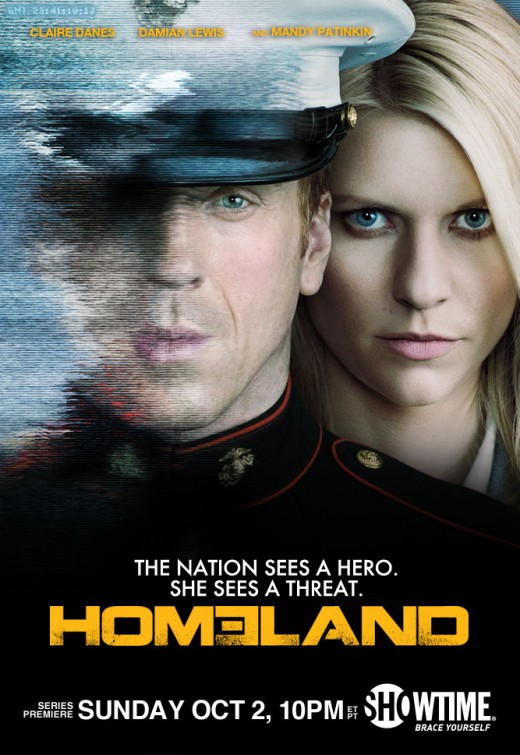
Homeland – Showtime – 10/2/11


Homeland stars Claire Daines as a CIA analyst who obtains a piece of intelligence about terrorist activity that no one else knows, which is that an American prisoner of war has been turned by Al Queda.  She makes nothing of that information until a POW marine who has been away eight years is discovered alive in Iraq.  Hailed as an American hero, the POW, played by Damian Lewis, may be a terrorist, or Daines may be crazy.  Nothing but great buzz here, and it sounds more intriguing than any other new show as a layered psychological thriller.

Prediction:  Renewal – best buzz of the year, and that’s worth even more on a premium network, and even more on Showtime, which still wants to be HBO

American Horror Story – FX – 10/5/11


The preview looks insane, and about the only fact I know, other than that Dylan McDermott and Connie Britton and their kid move into a haunted house is that Britton has sex with a ghost in a latex suit in the first episode, and frankly that leaves me even more confused.  Ryan Murphy has an extremely hit and miss record (Nip/Tuck, Glee) and horror is a genre that you generally don’t see on television, because it doesn’t play well for the long run.  From what buzz I have read, a ton takes place in the first episode, enough to make the episode exciting in and of itself but to wonder where the show goes from there, and why the fuck the couple doesn’t just move out.  This’ll probably take a couple episodes of watching to figure out whether it’s worthwhile.

Prediction:  Renewal – I honestly don’t know what to think, but here’s a stab

Hell on Wheels – 11/6/11

Set during the building of the transcontinental railroad, the series features a confederate soldier determined to take revenge on union soldiers who murdered his wife.  Deadwood is the first comparison that springs to mind, due to the time period.  It looks at least interesting, and as a history major, I tend to be a sucker for historically-based shows.  Apparently reconstruction plays a part, and Native American attacks, and who knows what else.

Prediction: Renewal – I have just as little idea as with the show above, but since Rubicon’s been the only non-Renewed show on AMC so far, I’ll take the odds

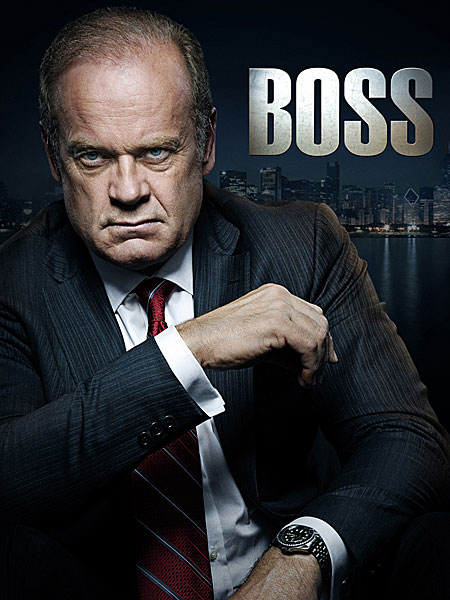
Boss – Starz – 10/21/11


Kelsey Grammer stars as the mayor of Chicago who has been recently diagnosed with a degenerative neurological disease.  He keeps this from everyone, his family, friends and staff, who are generally too busy with their own priorities to notice him slipping.  Political intrigue and family drama are in play, with administration members shooting for higher office, and a relationship between Grammar and his wife that may be falling apart.  I’m not sure it will be good, but it certainly could be.

Verdict: Renewal – this is downright cheating – it’s already been renewed, which is admittedly kind of incredible.  I wish Party Down got this kind of support from Starz.

Enlightened – HBO – 9/10/11

Laura Dern portrays an executive with a public breakdown in this HBO comedy.  Buzz seems to be at least slightly positive.  Luke Wilson plays her ex-husband, and Diane Ladd playes her mother.  Creator Mike White wrote for Freaks and Geeks and wrote School of Rock, but also wrote Nacho Libre.  This preview is admittedly weak but after the varying and distinct dramatic premises of the shows above, it’s hard to find a lot to say about Enlightened, especially before watching it.  I don’t mean that in a bad way, just in a premise-is-a-lot-less-important-in-comedy-so-let’s-wait-and-see way.

Prediction:  Renewal – it’s absolutely ridiculous I’ve predicted renewal for all of these, though I feel anecdotally shows are more likely to get picked up on premium cable networks.

Breaking Bad – Season 4, Episode 7: Problem Dog

25 Sep

(A few weeks ago, I started these Breaking Bad recaps, and then fell a bit behind.  Not one to give up without a fight, they’re still coming, just a tiny bit late.  I’m going to dump a few of them today, so read them if you wish, and if you don’t watch Breaking Bad, turn off your computer and start it today)

My brother, when talking about this episode, made the great point that, if you hadn’t watched a single episode before, you might well think that the show was about Gus rather than about Walt and Jesse.  Gus seems to be in the position of the most peril.  He’s got the cartel breathing down his neck, threatening his drug operation.  He’s got the cops, though he doesn’t know it yet, possibly figuring out who he is.  He also has a troublesome chemist who keeps making problems for him who also has a newly-clean partner only a couple of weeks away from a serious meth addiction.

I’ve said before that if you could describe Breaking Bad in one word, it would be tension.  Tension is manifest in this episode on at least three separate major occasions in ways short and long.  First, there’s a smaller moment as Walt, realizing he can’t return the car which he breaks, lights it on fire and waits for it to blow up.  If this was another show, the car would blow up almost immediately as Walt jumps out of the way at just the last moment.  But here, we’re put in the tense and uncomfortable position of waiting for the car to blow, knowing it has to eventually, but not how long it could take.  Second, Walt provides Jesse with poison to slip into Gus’s drink when he has a chance.  Now, every time we see Gus and Jesse together we’ll have to be on the edge of our seats to see where the poison is.  Will Jesse do it?  Can he pull it off?  Will Gus or Mike catch him?  In this episode the scene comes when Jesse is asked to make coffee for Gus when Gus is meeting with the cartel.  Jesse ultimately does not use the poison.  Third, Jesse himself is being battled over between Walt and Gus and Mike.  Each time Jesse meets with either Walt or Gus or Mike, every word they say might swing Jesse in their direction.  Having Jesse by itself might seem unimportant, but it also might give either party the upper hand in their  passive aggressive battle.  Without Jesse, Walt is isolated with no one else he can trust.  Without Jesse, Walt loses his chance to kill Gus.

When Walt brings his earnings to Skyler, Skyler is simply floored by how much money it is and instantly tells Walt that there’s no way they can launder this much.  Walt makes the fair point that the laundering is supposed to be Skyler’s business to figure out (though how the amount they’d be laundering never came up I’m not sure). Like Walt was when he started, and still is, in the drug business, Skyler out of her league here as a criminal.  Though she seemed so confident and on-point with her plan, this amount of money has flabbergasted her.  She has no conception of what Walt does and how much he makes.

Jesse takes a new approach to his emo-self-pity-depression spiral post-murder of Gale.  He goes to his old Meth addiction group and confesses his killing of Gale, only replacing Gale with a dog, and then strikes out at the group, telling him he had only starting going to sell them meth.  I’ve got a feeling this murder is going to haunt Jesse for a long time, maybe even two more seasons.

Breaking Bad – Season 4, Episode 6 – Cornered

25 Sep

(A few weeks ago, I started these Breaking Bad recaps, and then fell a bit behind.  Not one to give up without a fight, they’re still coming, just a tiny bit late.  I’m going to dump a few of them today, so read them if you wish, and if you don’t watch Breaking Bad, turn off your computer and start it today)

Walt’s both too smart and too stupid for his own good in this episode.  Walt is too smart for his own good when, tired of Jesse running errands with Mike, and wondering where this plan could leave him, he questions Jesse’s record of events the night he saved Mike.  Perhaps, Walt theorizes, the whole night was a set up.  Even Walt couldn’t imagine just how right he was.  No matter, with no way to prove it, he just ends up alienating Jesse by pointing out how useless he is and attacking his already fragile self-confidence.

Walt proves to be too stupid for his own good when, after Jesse is unavailable to help clean up, he hires three Hispanic laundry workers to come into the methlab and clean.  This is obviously a terrible idea, but Walt is pissed and to some degree, probably actually right about cleaning up being a two man job.  That said, when an employee of Gus’s comes to take the women back to their home countries in South America, Walt is somehow shocked, as if he couldn’t predict something bad would come from allowing people to see a top secret meth lab.  Walt feels awful about it, and tells Gus’s henchman to not blame the woman, but to blame him.  The henchman assures Walt that Gus does.

Jesse, finally feeling good about himself, is helping Mike out.  This is help Mike doesn’t really seem to want or need, but he understands why it has to be done.  Out on the road with Mike, Jesse tries to use his familiarity with methheads  figure out a shortcut to getting into the house of two methehads with Gus’s product.  It partly works; he gets into the house, knocks one of the methheads out, but also ends up at gunpoint.  Maybe Jesse is not entirely useless after all, and patience isn’t the only way.

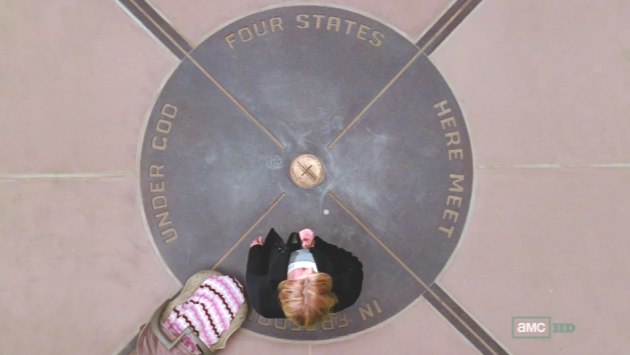
Skyler gets her own Carmela Soprano type moment, albeit not nearly as bad.  She knows what’s up, and she takes an active step towards leaving her family and state, driving out to the four corners, and tossing up a coin to see where she would head.  Even though the coin came up with her leaving, she decided to stay.  Sometimes you don’t realize what you want until you flip a coin and realize that you want the side you didn’t land on.  Either way, Skyler’s now in.  She’s certainly no Walt, but she’s not blind and she’s partially culpable.  If Walt goes down, she’ll go down too.  I’m not sure whether the criminal activity has turned a switch in her on that she didn’t know was there, or whether it’s due to love of her family, but there’s no way to now claim she was innocent.

Ranking the Shows That I Watch – 23: The Killing

13 Sep

The Killing and Game of Thrones started around the same time, and Sundays became a day of excitement.  I started off liking them both the same, but that changed dramatically over time as Game of Thrones went up and up and The Killing went a little bit downward each episode.

The Killing is about a detective trying to solve the murder of a teenage girl in Washington.  For this short description, it drew instant comparisons to Twin Peaks, and though embarrassingly, I haven’t seen all that much of Twin Peaks, I think the differences don’t stop there, but they certainly slow.  There’s no absurdity or essential weirdness that is at the heart of most David Lynch works.  It’s played fairly real, and coupled with a plot about a mayoral candidate that may or may not be somehow involved in the murder, and a plot about the mourning parents and family that can be deeply difficult to watch at times, which is both a tribute to the writers and actors, and something that sometimes I don’t actually want to see.  The show’s city of Seattle provides a suitably dreary, ominous, and rainy mood, which fits the show like a glove (and not one of those ill-fitting one-size fits all gloves).

I must say I’m in a particularly sore mood, because, as I write this, I have most recently seen the third to last episode (though I’ll done with the first season by the time you read this) and it was truly one of the worst this-close-to-end-of-season episodes of a serial show I have ever seen.   Basically, the whole episode was devoted to the random disappearance of her son, who had never been an important part of the plot, and the other two, albeit less interesting over the course of the series, character sets – the grieving family of dead teen Rosie Larson and the mayoral campaign of high-minded candidate Darren Richmond weren’t even shown.  Instead of actually doing their jobs working on the murder case, the two main detectives search around town for her son. Um, there’s a teenage girl’s murder to be solved?  One in which the victim, maybe, didn’t do anything to cause it?  Oh, and POINTLESS SPOILER ALERT (I’m going to make an effort to use this again – spoilers that are so irrelevant that ruining them is not only pointless but makes your realize how stupid the spoilers were) – her son was with his dad the whole time (the first time I typed dad, I accidentally typed ‘dead” – coincidence?  Ominous)!  Oh, the same dad who has maybe been mentioned once offhand in passing in the entire fucking show.  Wow, that was ridiculous.

But yeah, that’s harsh.  The show has probably done more good things than bad, and I enjoy Billy Campbell as the candidate as well as the Swedish guy as the cop with an undecipherable American accent that comes from no real locale.

MEGASPOILER ALERT

I wrote most of this before the last episode of the show – but boy, after watching that finale, what the FUCK?  Holder’s evil?  So it’s the councilman, but it’s not, it’s a framejob by some mysterious person who we may or may not have ever met?  This show just changed entirely what type of show it is, and not for the better I think.  It was a slow, plodding, dark, dreary police investigation slowly leading to a hopefully tense and climactic solution.  What it is now is hard to say, but at the least, it’s no longer a police investigation – it’s a massive conspiracy that no longer allows us to even believe this could be something real.  It’s more into Rubicon territory. I’m not saying that this type of show has to be bad by any means, but I feel lied to and betrayed a bit.

MEGASPOILER OVER

Why it’s this high:  The show has a great feel, and when it’s at its best, the same deliberate pace, which I will decry in the next part, feels natural instead of slow

Why it’s not higher:  Sense of pacing is awful, the plot sort of got out of hand, and yeah, the last episode kind of changed entirely the type of show it is

Best episode of the most recent season:  “Pilot” – it might tell you something about a show when one picks the pilot as the best episode, and if it does say something, it says it here – everything was set up beautifully – a great beginning just to unravel slowly over the course of the season

Ranking the Shows That I Watch – 31: Rubicon

16 Aug

By the skin of its teeth, Rubicon makes it onto the list, as it aired last summer, and well, won’t ever be airing again, but I did watch each and every episode, and I imagine I was one of the few.

I was actually extremely into the show when it started.  The main character, Will, is portrayed by the guy who played CTU agent and Elisha Cuthbert lover Chase Edmonds in the third season of 24 (James Badge Dale), though I would never have recognized him as he looks ten years older.  Will was a  socially awkward but brilliant intelligence agent for a mysterious top secret US intelligence agency in New York.  His family had died in 9/11, an unnecessary detail put in because every serious book, movie or television series set in New York has to show its connections to 9/11 to add drama and depth.  He worked under his father-and-law who dies in an insane train crash in the first episode, and we’re led to believe that this was indeed no accident.  The show set itself up as a long serial mystery show, like Lost, in that there would be a little bit of material given to the viewers in every episode, and if it was done well, its audience would be on the internet checking out what everybody else thought, and coming up with their own conspiracy theories about the conspiracy theories on the show.

The feel was of a classic, Three Days of the Condor-style ‘70s conspiracy thriller.  It got this part exactly right.  The mood was ominous, there were code names aplenty, and paranoia was everywhere.  Within a couple of episodes main character Will became paranoid, and then realized he wasn’t nearly being paranoid enough – his room was bugged, he didn’t know which high level employees were out for him (but at least a couple were), and eventually he had an assassin after him.

There are a lot of reasons why it ended up not working.  One might be that it played too far into clichés.  The plot really was that the events of the world being more or less controlled by a group of old white men (a very white show for a very white genre, I suppose).  Another reason was that the second most important plotline , which involved Miranda Richardson, as the young second wife of an old white man who died mysteriously/was murdered because he violated the terms of his cabal (we didn’t know this exactly at the time), was a lot less interesting than Will’s.

Throughout the show, away from the cabal, we saw the project Will and his team were working on at the top-secret-more-powerful-than-CIA intelligence agency, and the show ended up spending much more time on this plot, which seemed kind of irrelevant, until it was revealed that it was connected to the kind of cabal in a sort of ridiculous and pointless way.  The show had off-the-screen trouble with its showrunner and stuff turnover as it was being filmed, and it was easy to see watching the show.  The show just didn’t seem plotted or paced well, and the payoff at the end was a little bit disappointing and didn’t feel right.  Even though the last episode ended with a cliffhanger and I would have liked to see how it turned out, I didn’t feel all that disappointed that it was cancelled; I couldn’t say it didn’t earn it.

Why it’s this high:  It did a great job of setting mood, and brought back a great underused genre.

What it’s not higher:  It didn’t come together – the plot had no real direction and the pacing was poor and strange to say the least.

Best Episode of the most recent season:  I had to dig back in the archives here, but I think I’m going to say the first episode, because this is the type of show where that was really the high point– experiencing the potential before the execution kind of bungled it.