Tag Archives: ABC

Spring 2014 Review: Mixology

21 Apr

Mixology

When you review dozens upon dozens of new  shows a year, many of which you’ve only seen one episode of, a fair amount get largely forgotten about. What stands out are of course the best, both because they’re the best, and because you start watching them regularly, and the worst because they’re just so bad that even their badness stands above (or below?) the clutter.

Obviously, my first choice would be for more great, or even just good pilots. But I’d take an absolutely terrible pilot over a just kind of bad one any day of the week. I’m already never going to watch the show again, and the show probably won’t be on for very long. More than that, I actually get to lash out and be mean. Normally, I try to make sure to take shows seriously on their own terms, and not let snark or cleverness overshadow talking about what a show is, why it’s good, why it’s bad, and so forth. With these truly terrible shows though, I can really rip into them, because there is just so little redeemable about them, and they’re so on their face awful, that they barely deserve to be taken seriously any more than absolutely necessary. Dads is a great recent example (Made in Jersey also comes to mind).

I went in to Mixology expecting it to be bad, and kind of hoping it would be truly terrible. All I knew is that is was about ten people at the same hip cocktail lounge over the course of one night, and while in a sense I have a lot of admiration for attempts at incredibly high concepts, high concepts also have high probabilities of completely flopping.

It is with almost sadness that I say, then, that Mixology merely a pretty not good show rather than a legendarily terrible one.

Oh, there were a couple of moments when I thought it would be worse. There were  a couple of troublingly misogynistic conversation snippets towards the beginning, from a couple of bros out to help their recently dumped bro find a quick hook up, and I was excited, but it only went, well, slightly up from there.

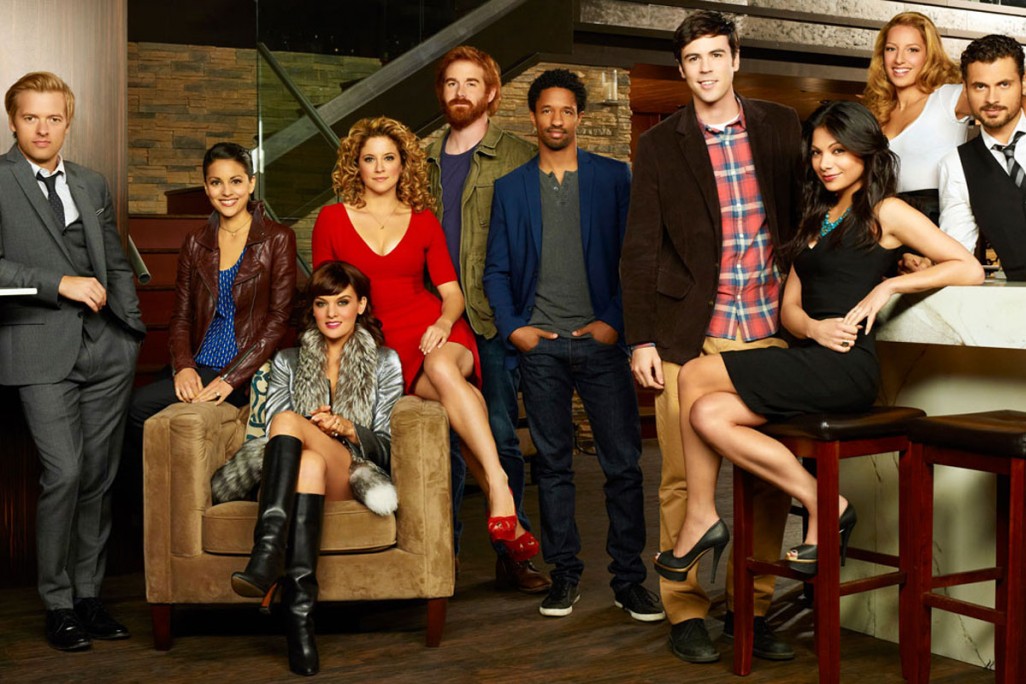
So, the ten primary characters are divided up into a couple of groups. There’s the aforementioned three bros. One is a sensitive guy recently dumped by his perfect fiance, struggling to get back out there, along with his two wingman buddies. There’s two female lawyers, one a hard, tough, modern-Cameron Diaz character type, who wants a man’s man, and her flakier colleague. There are two other females who barely figure in to the first episode and a British guy who pukes into one of the two women’s handbag, and apparently lost a fortune earlier that day. Finally, there’s a male bartender and a female server, the latter of which seems a little behind the 8 ball mentally.

It’s not good. It gets borderline offensive a couple of times, though nothing in intensity or frequently on a Dads level, and most of the characters seem like lazy tropes and the jokes are flat. There were maybe three decent jokes though, which is already three more than I thought there’d be.

24 attempted to make a show in which each show minute was a real minute. Mixology, to keep up on its premise of taking place in one night would have to each minute of screen time actually account for less than a minute of real time (unless it’s a lot earlier in the day on the show than I’m guessing). Some of this time is probably taken up by flashbacks, as there’s a couple in the pilot, and some may be taken up by revealing different parts of the same time from different characters points of view. Still, it’s almost insanely ambitious to say the least.

Basically, what it comes down to is that Mixology is just a regular kind of bad show. It’s not even quite terrible. It’s just not very good.

Will I watch it again? No. It’s bad. It’s just not as completely godawful as I dreaded/hoped which makes me sad/relieved.
Spring 2014 Review: Resurrection

24 Mar


Resurrection


I just finished watched the first season of a French show called The Returned (actually the French words for “The Returned” (Les Revenants) but you get the idea) about a small town in which people start coming back from the dead at the same age at which they died and with no memory of what happened between their death and their resurrection. Resurrection, which Wikipedia assures me has no connection with The Returned, has an almost eerily similar premise (In fact, Resurrection’s pilot is named “The Returned,” named after a book titled “The Returned” which makes it even harder to believe the appearance of these two shows within a few months of each other is just coincidental).

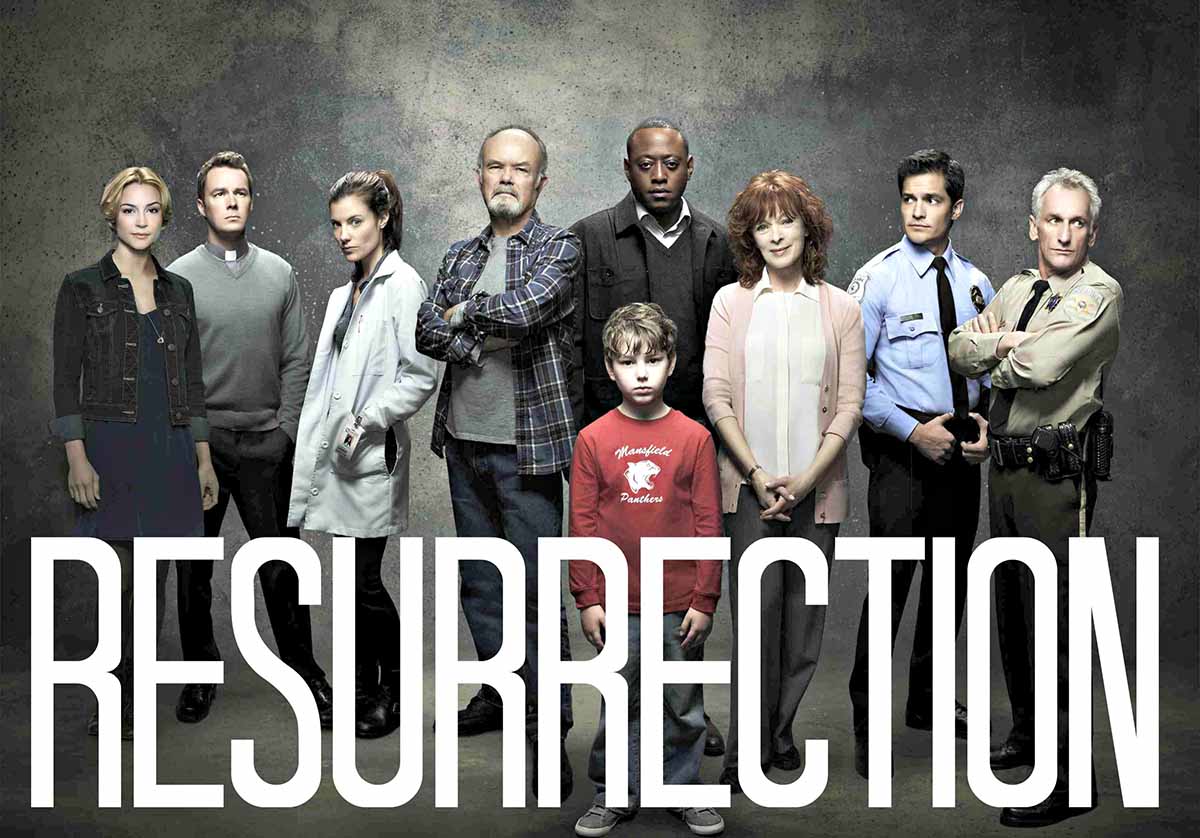
Resurrection starts with the appearance of an eight-year old American boy appearing out of nowhere in China. It turns out he’s Jacob Langston, who drowned 30 years ago in his hometown of Arcadia, Missouri, a relatively small town out in the boonies. Everyone struggles to accept that he might by the real thing and not just an impostor, coached up with Jacob’s memories for some undisclosed reason, particularly his parents, for whom his death understandably remains a sore subject even so many years after the fact. His mother is quickly willing to believe while his father finds his unexpected return from a watery grave far more difficult to come to terms with. When the DNA test matches up, the residents of Arcadia and Customs Agent Marty Bellamy (Omar Epps) who was pegged with the responsibility for the boy when he came in from China, face the fact that they have no explanation for the reality of the situation. Besides Jacob’s parents, there is Jacob’s uncle, whose wife also perished with Jacob, and Jacob’s one-time younger cousin, Maggie, now a doctor. Additionally, Jacob claims that the details of his and his aunt’s death differ from what everyone believed at the time, and may have been more sinister and less accidental.

The episode ends with the return of another Arcadia resident, the father of Maggie’s best friend, indicating that this resurrection is not a one-time phenomenon. People are coming back, and no one knows why.

That’s pretty much all that happens. Kid comes back. Relatives struggle with the revelation that this could actually be the kid they had written off as dead thirty years ago. Confirmation that he’s for real their kid. Friend’s dead father shows up.

It wasn’t revelatory or great by any means, but it was actually better than I thought it would be, which is still a relatively rare phenomenon, especially in network television. Mentioning that this was because my expectations were so low is an overly harsh backhand additional to that compliment. Perhaps unfairly, I had conflated Resurrection in my head with Believe, and after a largely negative experience with Believe, I was relatively pleasantly surprised after watching Resurrection.

Exactly as I felt after the first episode of The Returned, I have no idea where this is going, but it feels more like a typical post-Lost serial mystery show rather than the unique unlike-anything-else feel that The Returned gave off. Particularly, Resurrection doesn’t have the underlying haunting feeling that pervades The Returned. Fortunately, it also doesn’t have the air of crusaders-on-a-mission that permeates Believe.

The mystery is medium level on the intrigue scale. Less happens than in most first episodes of serial mystery shows, making it harder to take a stab at what direction the show is going with. Much more epic shows, in comparison, like Terra Nova, Revolution, and The Event, all went through much more premise information in the initial episode. The set up isn’t quite interesting enough to hook me in, and nothing about the setting, style, or writing, was noteworthy enough to demand following up, but the sum total was pretty decent, and I could imagine the show painting a fairly interesting mystery.

Will I watch it again? Probably not. While its plot was very similar to The Returned, it lacked the style and mood which made the first episode of The Returned more compelling in comparison and there are only so many TV hours in the day. That said, I could imagine a world in which Resurrection is actually pretty good, and even having that possibility exist is an underrated state of affairs.

Spring 2014 Review: Believe

21 Mar

I Want to Believe

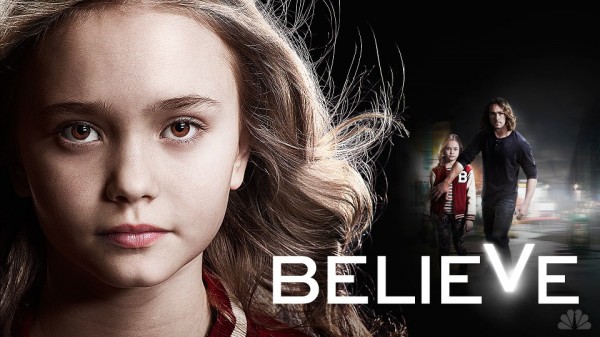
I’ll be honest. I try and hope I did my best to evaluate this show fairly after viewing it, but it rubbed me the wrong way right from the title and poster. Call me a cynic, a pessimist, a Rust Cohle, but I’m kind of sick of being asked to Believe. It’s not entirely that I don’t want to believe, though that’s probably part of it. Shows earn belief, they don’t ask for it. Believe checks off a bunch of boxes that happen to be personal pet peeves – it ties in big time with fate, it simplifies life to essentially good and evil, and it uses some magic to make us believe big things are happening. No lesser than Oscar winner Alfonso Cuaron directed and co-wrote the pilot, and I hate to disappoint Cuaron, whose work I admire, but this was not for me.

Let’s step back a bit. Believe stars a little girl (eight years old maybe? I’m terrible with ages), Bo, with powers. Why, how, and the extent of the powers are unclear, but they’re super powerful and she is only just beginning to learn how to harness them. She can definitely at the very least read people’s minds, see the future, and scream loud enough to make a flock of birds go all The Birds on someone.

The girl is naturally the target of interest for forces good and evil, among the select few who even know about her existence. On the side of good is Milton (Delroy Lindo) and Channing (Jamie Chung). We know nothing about them except that the two have been tracking and interacting with the Bo for a long time and seek to protect her and use her power for good, whatever that means, somehow or other when she’s older.

On the side of bad is Skouras (Kyle McLaughlin), who wants the girl for, well, I don’t know, evil.  It’s not really clear other than he’s just a bad guy. He has an assassin who is attempting to steal the girl throughout the pilot, killing anyone in her path.

The good guys break out convicted death row inmate William Tate (Jack McLaughlin, unrelated to Kyle, but doing the best young Nick Cage impression I’ve seen in years, and I can’t decide whether I mean that as a compliment) minutes from being put to death and recruit him to find and protect Bo. He’s not really interested in spending his time protecting a young girl, but it sure beats the death penalty, and they keep him on the job with the threat of turning him into the authorities. Apparently they have the power to somehow ensure he doesn’t get caught if they don’t want him to, because, well, just because. He’s still pretty grouchy about having to babysit a girl, even if she has powers, and Channing wonders why Milton went through the trouble of breaking him out of prison (which was surprisingly easy). It turns out that he’s her birth father, so he’ll go on presumably learning to love her while still being a bit of a whiner.

Believe was oddly reminiscent of Fox’s touch, another show about a kid with powers and fate gone overboard, and I don’t mean the comparison as a complimentary one.

Maybe there’s someone who finds this heartwarming, but it’s not me. I have nothing against the girl but it the show seems vaguely full of itself and simplistic. At one point, Milton tells Tate that they don’t use guns, because they’re the good guys. What? What does that even mean? You won’t find a stronger gun control advocate than me, but I don’t understand at all why good guys use other weapons by not guns. What are the rules? That line just ticked me off in a way that’s emblematic of what bothers me about this show and shows like it. I’m supposed to feel inspired but I just feel bored and confused.

Will I watch it again? No. I don’t want to believe. Well, that’s not really true. There are plenty of things I believe in. But Believe is not one of them.

Spring 2014 Review: Mind Games

17 Mar

Mind Games

Over the years, as more and more networks have started showing scripted programming, and this fragmentation has led networks to aim their programming certain niches, house styles have developed which have become strongly associated with said networks. For example, CBS and police procedurals; it’s not as if no other network has them, nor is it as if these preconceived notions can be changed, but since CSI’s emergence, CBS and police procedurals go hand in hand.  Sometimes it’s the subject matter that’s significant, sometimes it’s the character focus, sometimes the mood, sometimes the style. With the emergence of these house styles, it’s easy to watch a show and say it feels like an NBC show or an FX show or a TNT show and have that actually mean something.

Sometimes, then, it feels like a show is simply on the wrong network; they’re not a match. Either the show doesn’t really fit with the network’s other programming, or just as important, it would fit far more snugly somewhere else. I’ve been considering a post on shows like this, and though I don’t know whether or when that will happen, it’s been on my mind. Hannibal set me off on this recently; it’s on NBC, but clearly belongs on Showtime. Mind Games is another example of this phenomenon It airs on ABC, but it clearly belongs on USA.

Mind Games hews to nearly every basic tenet of USA programming, sharing some traits with many of the shows currently or recently airing on the network. The two main characters are two brothers with very opposite demeanors and personalities. (think Neal and Peter in White Color, Gus and Sean in Psych, Evan and Hank in Royal Pains). In this case, it’s brothers Clark (Steve Zaun) and Ross (Christian Slater). Ross is a hard, to the point, businessman, not particularly concerned with acting ethically to get what he wants, while Clark is a goofy bipolar academic who is loud, passionate, and with a firmer moral center.

One brother, Clark is savantish – he’s kind of a genius, but there’s something holding him back (Neal in White Collar, Michael in Burn Notice (the whole being burned), Suits). Clark is bipolar, which makes the business environment particularly difficult for him, He goes through highs and lows, and is on and off his meds, complaining that while he’s more even on his meds, he can’t think as clearly. Clark’s specialty is behavioral studies, and he wants to use this expertise to figure out how to change people’s minds but using visual and other behavior cues he learned from his research.

The two have to make a fresh start after experiencing some personal failure. Slater just got out of jail, and Clark was just fired from the school where he was teaching for sleeping with a student (Hank and Even again in Royal Pains, Michael in Burn Notice). They’re starting over with a joint venture, a firm that uses Clark’s specialty to change people’s minds. Ross handles the business, Clark handles the science, and they’re off and running.

There’s a clear procedural element with an ongoing plot (literally every USA show). Every episode is likely to feature a situation the gang will have to solve with their revolutionary mind-bending psychological techniques, while they’ll slowly move forward in the continuing story line. Aside from the general growth of the firm from being bankrupt upwards, he learn that Ross paid the student who slept with Clark to sleep with her, and that even though it started as work, she fell for Clark. Obviously, that reveal is a Chekov’s gun bound to go off a some time, many episodes away, were the show to last that long.

The two brothers have a motley crew of side characters surrounding them. Clark has an acolyte, Slater has his own business development acolyte, and they employ an actress named Megan. They also soon employ Slater’s ex-wife, Claire, because she’s expert in keeping Clark calm. Every week presumably, the gang will take on a new case, help some people, make some money, face some obstacles, but prevail over them by the end of the episode.

Interestingly, Mind Games is from Kyle Killen who struck out in his first two times as a broadcast network showrunner with two far more ambitious shows, Lone Star, and Awake. It’s almost as if he’s choosing to continue dumbing himself down until he finds a hit. Admittedly, dumbing down is harsh. Less ambition on television certainly isn’t a good thing, but it doesn’t have to be an outright bad thing. Still, like most USA shows, Mind Games occupies a world of decently high floors but also fairly low ceilings. By ensuring it meets a minimum set of criteria, Mind Games becomes an absolutely competent show but also a show unlikely to progress above competence. Because of this, as well as the procedural nature, there’s nothing compelling about it. It’s just a show that’s on TV, no more, no less.

Will I watch it again? No I don’t see anything that elevates this above any other USA-type show, and as I am two seasons behind on White Collar, I’m probably not going to start watching this version which doesn’t really seem better in any way.

Spring 2014 Review: Killer Women

12 Feb

Killer Woman

The show is called Killer Women, plural. It’s unclear the multiple women are, but the key woman is Molly Parker, played by Battlestar Galactica’s Tricia Helfer (of course Molly Parker is the name of another TV actress now seen in House of Cards). Helfer is one of the only two female Texas Rangers, and the other law officers are still clearly unaccustomed to having to respect women as officers. She’s a law officer fighting a lack of respect in a man’s world, reminiscent of the better but failed Prime Suspect with Maria Bello a few years back. She’ll do anything it seems to fight her way towards the truth, and she’s got good instincts which help her read situations and determine whether people are telling the truth or lying.

Parker has had recent personal troubles as well. She’s getting out of an abusive marriage where her husband, a local political power player, from whom she’s separated, refuses to sign the divorce papers (sidenote: in 2014, how is having to get your partner to sign a paper to get divorced still a thing? How is this not insane?). The other main cast members surround Karker – her brother, with whom she’s now living, is played by former fellow BSG alum Michael Trucco (Samuel Anders, who was a professional at whatever that stupid sport was from BSG, which I won’t dignify with a name) and her DEA agent love interest is played by Marc Blucas (Riley from Buffy –not a name I thought I’d necessarily ever hear again).

Who are the other Killer Women I wonder? In the pilot, a woman (My Name is Earl’s Nadine Velazquez) kills a man at the behest of a drug cartel, but she seems like a single episode character, but maybe not. The other possibility is that the killer is every episode is a woman but that could also get predictable.

Anyway, the rest of the story is pretty boring. She’s a no-nonsense doesn’t play by the rules Texas Ranger, and she breaks a bunch of rules, and in fact kills a few people (though it’s in Mexico, and they’re drug cartel employees, so it doesn’t really count) so that by the end of the episode she finds out the truth and on top of that gets a valuable witness to testify for the DEA. Win win, except for the rules broken, or maybe win win win because of the rules broken, because that’s how police TV works.

I literally just wrote in my last new show review of Intelligence about my desire for cops who at least more or less play within the rules, and well, that extends here. The show is oddly cavalier here in particular about just how fair the chances were of her or her DEA agent friend getting murdered when they went down to Mexico without authorization to rescue a couple of people kidnapped by a drug cartel. It’s great and all that they were able to do it, and since it was successful, in hindsight it looks great, but there’s pretty little discussion of risks not just to them but to their entire departments if they’re caught or killed in Mexico abusing police weaponry without authorization.

There really is an interesting show to be made revolving around border culture and the drug cartels and painting a really interesting, complicated and nuanced picture of the situation. This, to be fair, doesn’t particularly try to do that, so it wouldn’t be fair to call Killer Women out on it, but it just reminds me of the opportunity missed. (The Bridge could still be that show, but I’m not sold yet; we’ll see how its second season goes).

All in all, it’s an average-at-best police procedural. It was watchable enough but it certainly didn’t command any attention; I could have been reading a book and still followed along.

Will I watch it again? No. There’s just not much for me here. It wasn’t awful just uninspired. Good for broadcast TV for throwing in a female action hero; bad on them for not making it in a better show.

Fall 2013 Review: Lucky 7

13 Nov

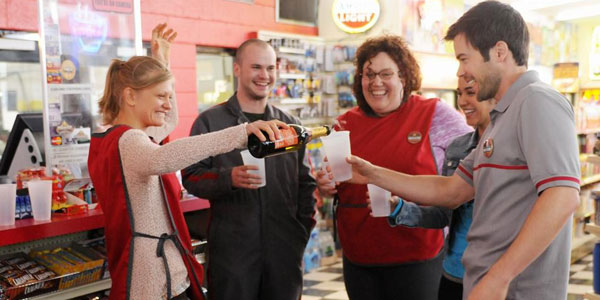
Four of the Lucky 7

Here’s the only thing you really need to know about Lucky 7: ABC has outdone most TNT and USA titles by conceiving of a title achieves the rare triple pun (for another example, see the album cover for Rush’s “Moving Pictures“). First, Lucky 7 applies to the titular group of seven employees who win the lottery (actually six do, and one doesn’t technically, but they’re still the seven described in the title). Second, it’s a reference to the 7 train which goes through Queens, where the show takes place. Third, seven is the final digit of the six numbers that the group plays in their weekly lottery pool, which wins them the jackpot. So, there. If you want to stop reading now, you now know the best thing about the show, the triple pun title.

Moving on. Because the show takes place in an outer borough rather than Manhattan, the seven are real New Yorkers, and not urban hipsters or bankers. You can tell because they have extremely noticeable accents.  The seven main characters work together at a gas station, in different roles. They are:

Bob – the boss, played by the only particularly well-known member of the cast, Isiah Whitlock, who played The Wire’s Clay Davis. He and his wife are looking forward to his retirement but doesn’t have the funds.

Antonio – a hard-working Hispanic mechanic had been saving away his lottery money instead of putting it into the pool as the most responsible member of the cast. When his responsible decision making is not rewarded, he seems to take it relatively well considering he’s still poor while his friends are all instant millionaires.

Denise – she works in the store and is worried that her husband is cheating on her after finding out that he’s sent hudnreds of text messages to a number she doesn’t recognize. She’d rather not find out the truth and she feels guilty because she’s gained a lot of weight since their marriage. On a subjective note, I found her accent extremely irritating.

Mary – a young mother who is struggling to provide for her daughter. She works in the store.

Nicky – an ex-con having somewhat of a hard time staying straight. He has a thing for Samira (who we’ll get to in a moment).

Matt – Nicky’s law-abiding brother. He’s living with his pregnant wife in his mom’s house, which is driving his wife crazy.

Samira – she’s a Julliard student with an incredibly stereotypical Indian dad who claims Julliard is useless compared to math or medicine and tries to set her up with Indian guys.

So basically,  they win the lotto towards the end of the episode, which we all know is going to happen because it’s the premise of the show (how great would it have been though if they didn’t win, and everything in the trailers about the premise was just a lie). The major plotline apart from simply winning the lotto involves the brothers. Nicky, who needs money to pay off some old criminal associates, convinces Matt, who desperately needs money to move out, to stage a fake robbery of the gas station store. Nicky will wear a ski mask and rob Matt, working at the register, and the insurance will take care of the loss. As you might guess, this does not go as planned.

This sequence contains of my least favorite narrative devices. Nicky suggest pulling off the robbery to Matt, who immediately turns him down, which is exactly how he should and would react as a non-criminal who has never considered robbery as an acceptable option at any point in his life, no matter how easy or potentially foolproof. However, right after Matt turns his brother down initially, his wife, who just gave birth, warns him that she’s going to move out to her sister’s place until he can get them a place of their own, because his mother is awful to her. All of a sudden, with that one new piece of information, Matt’s in for the fake robbery. I get it, the writers have done their due diligence, and checked off the “motivation” checkbox by letting us know how desperate a situation Matt is in, vis-a-vis his wife moving out temporarily. And credit for at least checking it off, but it still feels lazy, easy, and not convincing that this law abiding citizen would agree to commit a pretty serious crime a minute after learning this extremely disheartening, but not life-threatening news.

Anyway, they attempt the crime, but it all goes awry when Bob walks in, and Nicky hits him over the head as a quick reaction move, putting Bob in the hospital with serious injuries. We don’t know for sure from the events in this episode, but we’re certainly led to believe that the police are going to be pretty suspicious about this potential fishy inside job pretty quickly.

The only other major plot element of this episode was that, since Matt borrowed money to joint the lottery pool the week they won, the other lottery winners have to vote on whether or not he gets a share. This seems beyond shady to be. It basically means that, according to this rule, if they lose, he still owes the money, but if he wins, he might not get it. That makes no sense and I’m curious if it’s actual lottery policy, but not quite curious enough to look it up. A just awake Bob casts the tie-breaking vote to give Matt his share after the other four are deadlocked.

I forgot to mention there’s a flashforward at the very beginning of the episode in which the brothers are being chased by the cops and one of them ends up throwing a whole bunch of money out of the car, and says something to the effect of that it was the money that caused all their problems.  Did I also mention how ridiculously tired I am of flashforwards?

It’s not a good show. There’s a good premise lurking there underneath everything, and definite points for ethnic diversity, but demerits for the ethnic stereotyping, like Samira’s Indian father. The characters feel hackneyed. Instead of showing complicated, deep, working class characters, Lucky 7’s characters mostly feel right out of the book of what well off people think of good-hearted down-on-their-luck working class Americans. The writing isn’t sharp, and some of the characters, particular Nicky, the ex and current criminal, are particularly grating. Any chance generated by the potentially fascinating premise is wasted by settling for the obvious and uninteresting.

It’s not truly terrible; I’d rather keep terrible to use for worse shows, like Ironside. It’s just regular bad. Still, there’s no reason to feel much sympathy for its quick cancellation.

Will I watch it again? I won’t and I could only watch one more even if I wanted to. I still think this premise could have some juice to it if done well, but this certainly isn’t that.

Fall 2013 Review: Super Fun Night

1 Nov

Super Fun Night every night

Super Fun Night borrows from a set up that pops up over and over again in movies and television and has worked plenty of times before in movies like Old School and Animal House among many others. The main characters are self-aware and self-appointed losers. In this case, they’re three best friends who normally stay at home on Friday night, confident in their friendship but not so much in anything else. Like in any of these shows or movies, the losers are our heroes, and the story is about how they break out of their shells and show their worth to the rest of non-loser society.

Rebel Wilson plays the group’s nominal leader Kimmie, a lawyer who just got a promotion at her firm. The aggressive Marika and the diminutive Heather-Alice back her up. Kimmie has a crush on British lawyer Richard Royce who seems to genuinely like her in spite of her constantly embarrassing herself at work, as we see in several flashback cutaways.

Like in many of these types of shows and movies, there’s a clear antagonist, who is a conventional winner and was always a winner. Someone who’s great at everything, who is used to treating losers like dirt and getting away with it, but who is personally despicable by the viewer. More than winning, these characters are obsessed with making sure the losers know their place. The winners will always be winners and the losers will always be losers, and the loser best give up all hope of ever becoming a winner. These television shows and movies often take place in high school and if they don’t it’s like high school all over again with their sense of clear social strata. The British lawyer, Richard, just happens to also be in a position of power, as son of the head of the firm, thus making him an object of interest for Kendall. Kimmie likes him for him, Kendall likes him because his daddy is important.

The pilot is a first battle between our villain Kendall (by the way, even the names tell you who are the winners and who are the losers – given Kendall, Kimmie, Marika, and Heather-Alice, I’d bet you could pick out the villain) and Kimmie for Richard, and luckily for her, Richard seems much more on her page, personality-wise. Unfortunately, apparently just getting along better and having compatible personalities isn’t enough; Kimmie has to defeat, or at least equal, her rival in a karaoke sing-off to prove her worth.

I thought Super Fun Night would be like The Crazy Ones, a sitcom whose value depending almost entirely on your opinion of its polarizing and screen-hogging star, in this case Rebel Wilson. Your opinion about Wilson will have a large impact on how you feel about the show, indisputably, but it’s not dominated by her personality the way The Crazy Ones is by Robin Williams. She’s still the dominant force of the show, and if you don’t like her you probably won’t like the show, but it doesn’t scream Rebel Wilson just starring in a sketch show.

Super Fun Night’s sense of humor is well over the top and not in a good way. Most of the over-the-topness is through cringe-worthy moments where Kimmie embarrasses herself. It’s hard to watch at times. It aims for British awkward comedy combined with American physical comedy and neither work. Cringe comedy is difficult, Peep Show and the original British The Office are two of the most successful examples. In this show, unlike those, we’re unapologetically supposed to be rooting for the main character who is the cause of all the cringe-worthiness. Was I rooting for her? I was, relatively, but only because of a kind of cheat, as the villain was so obviously terrible that there’s really no other option. Given a real choice, I doubt I would root for her. Maybe this is malecentric but I feel bad for the guy who they’re competing over. Rebel Wilson’s clearly well-meaning but doing frustratingly stupid things time and again.

We get it. Kimmie makes a fool of herself a lot at work by accident with all manner of physical pratfall or her kind of disgusting habits. That point is hammered home again and again. Some of them are innocent accidents, some are poor social judgments that she really should know better than to make, and some fall in the middle. I generally keep these reviews link free, but Vulture penned an article that happened to hit the nail right on the head. In order for a show like this to work, you have to really have to buy in to the losers – you have to make them your own. Here, you don’t want to. I want to root for the underdog but they just turn me off here. People can be losers and behave like somewhat normal humans.

Will I watch it again? No.  The set up is a common one but Super Fun Night got it wrong, and Wilson’s brand of self-deflating physical humor is too much.

Fall 2013 Review: Betrayal

30 Oct

Betrayers and James Cromwell Sometimes you watch a show,and you ask simply, “Why?” Not because it’s so bad, though you wouldn’t ask it if it was good. Even with bad shows you can often see why they were made, or the path they took and where it went wrong, or who they were trying to appeal to. There was a plan, and whether it was intended to be good, or simply popular with one particular demographic of television viewers, you can guess what it was, even if it doesn’t get there in the end. No, what I mean are shows that make you ask “Why” because they seem pointless and forgettable and you wonder why they kept getting moved through all of the many stages required to get a show from idea to production to on air. A show so forgettable and just whatever that you’ll probably not remember anything about it within an hour of viewing it, and that absolutely no one will remember its existence even a couple of months after its debut.,

Betrayal is such a show. If I had to guess at the thought process, I would suppose that ABC was probably making another attempt to imitate vastly slowed down first season hit Revenge, but the only reason I’m suspecting that is the two shows share one world title that are pretty similar. Here’s your Betrayal primer, nevertheless, so you know all you ever need to know about the show and more. Sara Hanley (Hannah Ware, who played the daughter, the worst character on Boss) is a successful magazine photographer married to Drew, an ambitious and busy prosecutor. Jack McAllister is a talented lawyer stuck working for his father-in-law in a possibly shady business. He’s married to Elaine, a marriage he fell into young. Both Jack and Elaine have kids, and after meeting at a gallery displaying Sara’s art, they find they have a spark that they simply can’t ignore and begin an affair.

I’m sure they both have perfectly good reasons to be unhappy in their respective marriages but the spark is certainly hard to discern from a viewer perspective. Jack feels stuck being around his family all the time at work and at home, and feels totally controlled by his father-in-law. Sara, well, her husband is really busy I guess and doesn’t have time for coffee when she shows up in his office in the middle of the day without calling ahead. I’m not sure if we’re supposed to feel sympathetic towards them and empathize with their infidelity, or more than that, at least feel swept up in it even if we don’t think it’s moral, but I didn’t feel anything. Feeling that they were both wrong is not necessarily bad but feeling nothing at all certainly is. Both felt guilty after Sara received a phone call from her husband right before they were about to consummate their affair and they decide to break it off. Later in the episode, however, Jack made a surprise visit to Sara’s studio.  They decide, at this juncture, that even though they’ve spent just about a day with one another, that they can’t possibly live without one another and have sex right then and there in the studio. I don’t really get it and more than that as mentioned before I just don’t care.

The shin hits the fan when Jack’s brother-in-law, his boss’s son, is considered a prime murder suspect in the death of his boss’s brother-in-law, who his boss suspected of shady dealings against the family interest which Jack discovered. That’s a long complicated sentence which I could have spent more time parsing out but it’s really not worth it. The important upside is that coincidentally or maybe not, Sara’s husband is the prosecutor, who believes that a conviction of Jack’s brother-in-law could make his career, setting up a run for political office. The episode ends with Sara breaking down after finding this out, her infidelity reducing her to a pile of guilt.

Betrayal really is probably going for something in the Revenge sphere, but it’s so far off that I have a hard time believing it. Revenge was trashy, soapy, fun. Betrayal, well, it’s soapy if soapy just means being about people having affairs, but it’s not at all fun. It’s super duper serious, ponderous, and uninteresting.

I entirely forgot to mention that the show tries to grab you with my least favorite plot device, the flash forward (which Revenge used as well), which appears at the beginning of the episode, but which I forgot about by the end, when it reappears briefly.  In the flash forward, Sara is shot and well, I couldn’t tell what else happened, and I didn’t really care to watch the scene again to figure it out. This device is intended to let me know big, interesting things are going to happen, because you might not realize that after one episode, but it always misses the point. If you can’t interest people in some aspect of your show after one episode, you’re not doing a very good job. A cheap trick won’t help.

Oh, I should probably mention James Cromwell plays Jack’s father-in-law. That’s pretty cool.

Betrayal is not as bad as a bad comedy because bad dramas usually aren’t as bad as bad comedies. It was a frustrating, sub-mediocre watch, but it wasn’t out and out laughably awful. It was merely pretty bad. Again, I ask. Why?

Will I watch it again? No. Betrayal is so anonymous that you probably won’t remember it exists if I ask you about it tomorrow. That’s not a good thing.

Fall 2013 Review: The Goldbergs

7 Oct

Three of the titular Goldbergs

There are many problems with The Goldbergs, but many of the biggest of these stem from one central misunderstanding about comedy. Every moving part in The Goldbergs screams this one great big lesson of comedy entirely unlearned: the value of subtlety.  Nothing, and I mean nothing in this show is subtle, at all.  None of the over the top jokes, which largely don’t work because they’re so obvious and over the top, have any room to breathe, which would starve them even if they were actually funny.

This direction starts with the choice of time period.  The 80s, at least the stereotypical 80s that we imagine now when we think of the decade, with Rubik’s cubes, and A Flock of Seagulls, and Starter Jackets, are loud, Outrageous.  You choose the ‘80s if you want to be absurd and up front.  Shoulder pads, the list goes on – in fact, just in case you don’t think of these images offhand, The Goldbergs actually starts with a montage of major ‘80s pop culture references to jog your memory, along with the narrator mentioning that it’s the 1980s, just in case you’re having trouble following along.

That’s the second point of mind-blowing un-subtlety. The narration.  Patton Oswalt narrates as the adult voice of youngest Goldberg, Adam (based on real life creator Adam Goldberg). Narration in television, and comedies in particular, is 90% of the time a bad idea.  Watching poor narration so far this TV season has inspired me to eventually write a post on all its faults, and here the problem is one of the most common for narration.  The narration serves no purpose.  It explains everything that happens in the show, events which need absolutely no explanation. It patronizes its audience without adding anything either funny or poignant. This happens again and again and again over the course of the first episode. Jeff Garlin’s dad character, Murray Goldberg is one of the top five types of television dad characters (now there would be a good article), the angry father who yells a lot and doesn’t know how to express his love for his children, but actually feels it deep down.  We’ve seen this character dozens of times and can identify it right away without Patton Oswalt’s commentary explaining it to us.

The worst gimmick of the episode follows the same thought process as the narration, and is yet another paean to the gods of un-subtlety. In order to understand Murray, Oswalt narrates, you have to speak Murray. Murray then yells something crude with network-approved faux curse words, after which subtitles appear on the bottom of the screen translating what Murray really means in pixelated 80s-style font (It reminds me of one of my least favorite How I Met Your Mother bits, where a character would say something, only for narrator Bob Saget to tell us “what he really said was this” and we find out the character said pretty much the opposite.  Half the time Murray will yell something indecipherable and it translates to something mean but in English, and half the time he’ll yell something mean, but he actually means something decent or nice. The show seems to think it’s funny because you’d never figure out what Murray’s saying without the hilariously helpful translations. Yes; that’s basic ironic humor.  Someone says one thing but means the opposite.  But we’ve seen Murray many times before. We know exactly what he’s saying. That character has been a television staple for decades and the translation bit just emphasizes what a cliched type Murray is in addition to not being funny.

Oswalt keeps trying to tell us how different his family is from ours. Even though they all love each other, they’re all crazy and yell at each other and fight all the time.  For many of us that’s not that hard to fathom as is. But even if it was not our personal experience, it’s been our television experience over and over. That joke is just not sufficient. There’s a lot of references to ‘80s things, a lot of generational gap humor where the kids will be speaking a different language than their parents or grandfather. It’s pretty boiler plate all around.  It’s not an embarrassment, but it’s generic and forgettable.

Will I watch it again? No.  It’s hardly insultingly bad, like Dads, but it’s just not very good and shows a very basic misunderstanding of what makes jokes and characters funny.

Fall 2013 Review: Trophy Wife

30 Sep

Trophy Wife and Husband

Trophy Wife is yet another child of ABC’s make-everything-like-Modern-Family approach to comedies (which from their perspective makes a lot of sense). The show, like Modern Family, is about an unorthodox wacky and occasionally out-of-control but ultimately functional family with a lot of moving parts.  Malin Akerman’s character Kate is the titular trophy wife. She starts the show with narration, which is almost always a poor choice in comedies, but an absolute staple of the Modern Family school of shows (Modern Family has it at the end, Suburgatory and The Middle have it throughout). She tells the story in very brief about how she went from single girl out on the town to wife and step-mom. It all started with a chance encounter at a karaoke bar with an older man, a suit-wearing lawyer, Pete, played by Bradley Whitford. Kate accidentally fell and broke Pete’s nose, which led to whirlwind romance followed by marriage.  There’s a catch though, to this dream pairing. Pete’s got major baggage in the form of two very different ex-wives, along with three children.

The first wife is the absolutely terrifying, stern and humorless doctor Diane played by Oscar-winner Marcia Gay Harden.  The second is the trippy, new age-y Jackie, played by Michaela Watkins, who has appeared in New Girl, as well as on Saturday Night Live.  Two of the kids are Diane’s –  a teen girl just entering the stage where she really cares about being cool and Warren, a dorky son who clearly doesn’t care at all about being cool. The third child is Jackie’s and is a precocious maybe 9 year old (I’m awful at estimating kids’ ages, so cut me some slack) adopted from China.  Kate’s best friend Meg is also part of the main cast, and helps Kate out with the kids.

Everyone is well-meaning, generally, as people are on Modern Family-esque shows and that’s not a bad thing., The main source of familial conflict laid out in the first episode seems to be that the ex-wives resent the younger Kate who they think is a party girl hardly responsible enough to be with their children.  The oldest child, Hillary, a rebellious teenager, also doesn’t respect Kate’s attempt to play mom.  The pilot features a series of wacky hijinks like Pete and Jackie running around trying to find an identical hamster to replace Bert’s so they can avoid telling him his hamster died.  It also features a quick twenty minute character arc in which Kate desperately craves the respect of Pete’s-kids and ex-wives, almost disastrously loses what little respect they had for her, and then manages to gain a small piece of that respect in in the end.  The episode ends, as again Modern Familly-esque shows often do, with the whole wacky family in the same room, solving all their episode-long problems together.

The words that spring to mind to best describe Trophy Wife are cute, harmless, and inoffensive.   These are classic backhanded compliment words and they are here as well, and very much in both the backhanded and the compliment sense.  It’s a well-produced program with talented actors, a warm tone, and a couple of laughs, but there’s not enough for me to make it weekly appointment viewing.  In my estimation from just one episode, it’s a little bit south of what I call the Suburgatory line, which represents the perfect show to throw on the TV in the background when I’m lying down late at night, because I don’t care if I fall asleep before the episode ends, and I don’t ever plan on watching all the episodes in order.

Not to beat a dead analogy, but Trophy Wife fits in well with this entire block of ABC comedies, all of which sit somewhere around this middle line of being not bad but not great and yet go no further (note: not The Middle line, another of these ABC comedies).  Like most of the shows on ABC, Trophy Wife is watchable, well-intentioned, and heart-warming, but in the competitive television landscape with so many quality shows competing for my viewing time, that’s just not enough.

Will I watch it again?  Probably not.  It was fine.  The first episode had a couple of laughs and I like the actors and actresses so I wouldn’t object if it was on in a room I was in.   There’s an outside chance it’ll get much better, as comedies do often take a while to find their feet, and I’m perfectly willing to give it another try if I hear and read good things. Until then, it’s just not quite funny or promising enough to secure a guaranteed second viewing.