Summer 2015 Review: Sense8

3 Jul

Sense8

Sense8 spans the globe, telling a story based on a telepathic connection that exists between certain people around the world. In particular, the focus is on eight people who don’t know each other and have never met in person but have some sort of telepathic link and are bound to figure into each other’s lives in important ways from now on. The scope is vast, as would be expected in a TV show from the Wachowski siblings, who were behind good movies like The Matrix, and bad movies like The Matrix sequels (I’m not even going to mention Speed Racer. Oops, I guess I did).

Daryl Hannah plays a woman, struggling in agony, in the ruins of an abandoned church. Naveen Andrews appears next to her, tells her he loves her, and that she can do it, it being, well, who knows, but something difficult, because she insists she can’t, though he eggs her on. We’re led to believe that Andrews is a projection, talking to her through some sort of telepathy. He, any viewer who has watched television or movies would quickly ascertain, is some sort of force for good. He’s countered by an older gentleman, also an apparition, apparently the force for evil, who attempts to persuade Hannah to join his side instead, and he remains convinced that she will, while Andrews insists that she will not. The bad dude comes in in the flesh, causing Hannah to kill herself rather than be apprehended by him.

Somehow, I think, and I could be getting this wrong, we’re led to believe that she somehow activated the powers of the eight people shown throughout the rest of the episode. These eight, four male, and four female, and I’ll run through them quickly in a moment, have all just started seeing visions, both of Hannah herself, and of each other.

Here we go. First, a Chicago cop who works in gangland south Chicago with his partner. Second, a British DJ, whose boyfriend seems intent on robbing some other dude. Third, a Russian guy who with his brother or cousin robs safes. Fourth, a Mexican soap opera-type actor. Fifth, a South Korean businesswoman being overshadowed by her brother. Sixth, an Indian woman who is about to get married to a very successful man she does not love. Seventh, a San Francisco woman who seems to be some sort of intellectual. Eight, a Kenyan van driver.

Some get more screen time in the first episode than others. The cop, the DJ, the San Franciscan, and the Russian thief, get a lot, while the South Korean woman and then Kenyan driver get almost none.

Most serial supernatural shows go out of their way to lay out a premise and several distinct questions in a plot-heavy pilot, trying to pack as much in to get viewers hooked on the story from just 40 minutes. Sense8, possibly because it’s a Netflix original not shown weekly or subject to the traditional pilot process; it had a full season order straight out of the gate – doesn’t feel obliged to do this. There’s a relatively small amount of plot in the pilot.

And so, well, that’s all I have to go on. The set up feels like one a director or writer would love to put issues of fate all over it, but thankfully Sense8, at least initially, refrains from any fate talk; it doesn’t sound like Tim Kring fake-heavy Touch or Heroes. Still, though, and maybe I’m just used to the packing of plot, but it was kind of boring. It looks pretty; and spanning the world, there’s certainly an epic quality which is welcome in a television series. But, there wasn’t enough for me to bite into. Eight people are now telepathic and supposed to do something good, presumably. The series look good. But what it is stuffed with is characters, and while they seem fine enough I don’t really find any of them so interesting I want to know more from the get go.

It’s tough with these types of shows. You make an investment based on guesswork, and hope that it’s rewarded by watching the rest of the season and the series. Is the hook catchy? Are the dialogue, cinematography and character work sophisticated enough to lift the show to being more than merely its plot?

Could Sense8 turn into something really interesting? Maybe. Does it pull me in from the first episode and make me want to immediately watch a second? Not really.  Sense8 certainly aspires to be more than its mere story, and it well could be, but despite the fact that it sometimes seems like it I can’t watch every episode of every halfway decent looking show and Sense8 doesn’t quite make it over the hump.

Will I watch it again? No, not right now, anyway. The production was impressive, but there just wasn’t enough there for me. Maybe if I hear good things from others who have seen it all, I’ll revisit. I’d be very happy to admit I’m wrong.

Summer 2015 Review: Another Period

1 Jul

Another Period

Another Period is a ludicrous, silly show whose primary goal is to simply make you laugh, and fortunately, it does. Another Period is a spoof of Downton Abbey-esque upstairs/downstairs period shows, following a ludicrously wealthy family in New England around the turn of the 20th century.  The characters and dramatic storylines are overly absurd and the humor ranges from a combination of low-brow and clever wordplay to physical slapstick; the vast majority of the characters range from dumb to extremely dumb.

Creators Natasha Leggero and Riki Lindhome play daughters Lillian and Beatrice respectively, of the family Bellacourt. Both are demanding, immature and petulant. All that separates them is that Lillian has some semblance of intelligence, while Beatrice is a complete moron. Beatrice is married to Albert, played by David Wain, but in love with her brother, Frederick, played by Jason Ritter. Lillian is married to Victor, played by Brian Huskey. Michael Ian Black plays Mr. Peepers, the head butler, and Christina Hendricks is the new servant, originally named Celine, but named Chair by the less-than-sensitive Bellacourts. In total, it’s a very strong stable of comedic personalities, with some welcome faces newer to the world of comedy (Hendricks and Ritter).

The style is well over the top, and some people will merely Another Period is very stupid. And they’re right, it is very stupid. It’s very hard to articulate why some stupid humor is laugh-out-loud hilarious and some stupid humor is mind-numbing and cringe-worthy, and certainly everyone’s line between the two is very different. Another Period though lies squarely on the former side.

Another Period was probably conceived in response to Downton Abbey, and while the show makes hay out of the rich family vs. poor servants dynamic, there’s no attempt to be poignant or clever or meaningful with the period nature. It’s just there to serve as a vein for jokes and comedy. The period nature is ridiculous and flexible truth-wise. There’s no attempt to any reasonable semblance of fidelity; rather there’s an attempt to be as distinctly inaccurate as possible. One character makes a reference to Helen Keller, treating her as we would today rather than then. Guests are served cocaine wine; when Helen Keller and Annie Sullivan object as members of the Temperance Union, they’re told, helpfully, that it’s really mostly cocaine, anyway.  New servant Chair tells the others she has big dreams; the other servants scoff at her dreams of one day working in a factory.

The jokes are scattershot, fired left and right over the place, and they don’t all work by any means. Luckily it’s the type of show where the overall picture isn’t all that important – the show would rather drop a bunch of bad jokes and leave a whole bunch of good jokes in than go for something more refined but possibly less funny. That’s not always a successful formula, but it works here – the gags that don’t work are washed away as soon as something funny happens.

Will I watch it again? Yes. It’s funny, it’s easy to watch, and it’s got lots of people I like. Comedy Central continues its roll.

Summer 2015 Review: Catastrophe

29 Jun

Catastrophe

Catastrophe is that frequent film, but rare TV beast, the romantic comedy. It’s common on film but rare on TV, because by the nature of their respective lengths, film and tv rom coms are very different creatures. Film rom coms have an obvious arc, and a sense of finality. The couple generally has an unlikely meet cute, goes through a couple of trials, including a big one towards the end, and then gets together to finish the movie after some grand gesture, or occasionally in artier rom coms falls apart. TV rom coms more usually consist of unlikely couples getting together, and largely staying together, with plenty of trials and tribulations along the way but without the big dramatic sweeps of a movie.

Catastrophe is also a British series. Surprisingly, for a series and a theme that is replete with people embarrassing themselves constantly, it’s not that awkward to watch, relatively  (a British show featuring a Brit dating American Andy Samberg a couple of years ago called Cuckoo was awkward to the extreme). What really makes Catastrophe work, more than the jokes or the laughs or the story, is the tone. Catastrophe finds the perfect spot between earnest and cynical, awkward and mawkish, sentimental and restrained. This tone makes the show enjoyable and excessively watchable.

Here’s the pitch for Catastrophe: Rob is an American visiting London for a week for business. He meets Sharon at a bar, they hit it off, and have sex in his room. They both seem to actually like one another, and hang out and have lots of sex for the rest of the week until Rob has to go home. A couple months later, they’ve more or less moved on with their lives, having great memories of their time together and no hard feelings, until Sharon calls Rob and lets him know that she’s pregnant. It’s pretty much the premise of Knocked Up (and I’m sure many properties before that) but with a more mature, both emotionally and age-wise couple. Rob, unsure what to do, doubles down, and proposes to her, believing staying the together for the kid and making a real go of it as a couple is the right move. Countless hilarious mishaps happen between point A and B, as both parties examine their decision to try to make it together even though they barely know one another and try to figure out if this is the right move, while they seem to actually like, and maybe one day love, each other.

The chemistry between leads Rob Delaney and Sharon Horgan is casual and natural, and an essential part of what makes Catastrophe go. Everything is centered on the two of them and their relationship; if we don’t both believe deeply that they could be together and want to keep watching them interact, there’s no way the show can be salvaged. Luckily for Catastrophe, it works.

Catastrophe isn’t the funniest show, it isn’t a particularly unique show, and there’s nothing that makes it obviously stand out plot wise, or dialogue wise, or aesthetically. However, it successfully navigates the spaces within its genre to create an enjoyable viewing experience where you’re generally rooting for both of them; hardly a necessity for a show, but sometimes a welcome respite from more serious fare. I love big drama as much as anyone, but there’s nothing greater after watching an episode of Hannibal or Rectify, or whatever else, than watching a light half hour that can leave you smiling.

Will I watch it again? Yes. It’s British. There are six half hour episodes; it’s shorter than a Hobbit installment. I’ll probably be done by the time you’re reading this.

Summer 2015 Review: Mr. Robot

26 Jun

Mr. Robot

Mr. Robot is on USA and is a USA show in just about every way. USA over the past couple of years has attempted to get a little more serious and dark than their early Blue Sky days of White Collar and Royal Pains, perfect due to their decline in ratings and prestige. Mr. Robot fits perfectly into this evolution of USA. As for most USA shows, the floor for Mr. Robot is high while the ceiling is low. Mr. Robot is commendably competent and entertaining and snappy enough to make me consider watching another episode, but not quite interesting or different or superior enough to make me actually do it.

Protagonist Elliott is a master hacker. He works for a cyber-security firm by day, which he’s great at, but hates, helping protect evil one-percenter corporations and conglomerates, the biggest of which is his firm’s chief client, the eponymous E. Corp, known informally by the employees as Evil Corp. At night, he hacks to uphold his own personal sense of justice. In the first scene he confronts a coffee shop owner who is unbeknownst to anyone else running a kiddie porn ring, which Elliott discovered while hacking and then informed the police about.

Elliott is a Character, like all USA protagonists. He’s got paranoid delusions and serious social anxiety issues, and has trouble making friends or interacting in normal human fashion. He has one friend, Angela, who he seems interested in romantically, a shrink, who he likes, but who can’t seem to reach him, and a drug dealer who he occasionally sleeps with. Angela has a stereotypical white fratty boyfriend; the boyfriend’s love of Josh Groban is used as a point against him by Elliott.

Elliott sees signs of big evil wherever he goes; men in suits, watching him, waiting for him, but he’s also self-aware that he is delusional. This makes it all the stranger when he’s approached by Christian Slater, who he’s seen twice before ambling around the city, in a subway station, telling Elliott to follow him. Elliott finds that Slater has assembled a crack team of hackers, whose goal is to take down Evil Corp, which in one way or another, holds the digital information on loans and debt for millions and millions of ordinary folks. Taking down Evil Corp, thus, will result in cyber justice, a great wealth redistribution, taking money out of the hands of the rich and powerful and putting it in the hands of the people. Think of them as a hacker Occupy movement willing to break the law to achieve their means.

It’s not the entirely of the show by any means, but the politics of these hackers are vastly problematic; vague and poorly thought through at best. There’s a cheapness and a laziness to dealing with such an over generic political philosophy that sound great as a sound bite, but doesn’t bother to deal with any real life complexities. Have regular people been screwed by big companies on the whole, causing a frustrating feeling of general powerless? Sure.  There are real issues and even occasional crimes propagated by big companies; in the great 2008 financial collapse, corporate behavior along with other factors helped lead to the collapse. But these issues need to be reckoned with in a manner befitted the complexities of the problem; to simply say, destroy this company, free the world is lazy and naïve.

Murky politics aside, the show has its positive qualities. USA is skilled at putting on air shows that know how to pull viewers into their storylines, and Mr. Robot does this nicely. Production values are solid; the show looks good and is legitimately filmed in New York, which is always a plus to me. But there’s just something missing. Mr. Robot feels like it follows one too many tropes. The main character is a little too much of a Character. Maybe these will work themselves out, the show will get more complex and interesting as it goes along. But based on the show and USA’s reputation I’m not sure there’s enough to go on for me to keep going on faith alone.

Will I watch it again? No. I considered watching it again. It was in no way bad. But, USA-style, it wasn’t quite good enough either.

Summer 2015 Review: The Brink

24 Jun

The Brink

The thing about the Brink is, well, it’s not very funny. Now, that in and of itself isn’t necessarily a problem. Ballers, for all of its issues, clearly isn’t particularly interested in being funny, so its lack of laughs isn’t really one of its faults. The Brink, though, desperately wants to be funny. Going for something like Dr. Strangelove meets Homeland, The Brink really wants to be a trenchant modern satirical take on Middle Eastern finger-on-the-button terrorism politics. The probably is, well, it’s not funny. The characters are oversized and a bit much, and despite the strong cast of actors throughout, the lines just don’t land. If the writing doesn’t work, it’s hard to build on.

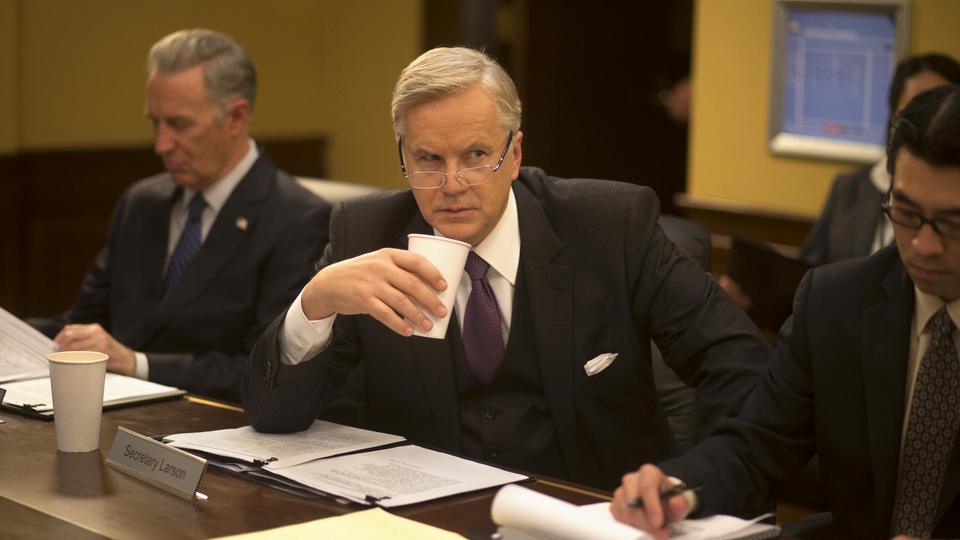
Pakistan is the setting. An unprepared for and out-of-nowhere regime change takes place, placing a crazy fanatic in charge of the Pakistani government. The American government and the president must decide what course of action to take – a preemptive violent strike, or cautious diplomacy. The stakes are as high as they get, dealing with a nuclear power. This is satire though, so the premise is very serious, but the execution is very silly. Primary characters include Tim Robbins as Secretary of State Walter Larson. Larson is a boozer and a philanderer who doesn’t seem to know his stuff, but when thrown in the heat of the war room with the president and the rest of the cabinet, seems to possess some innate competence, attempting to counsel the president against war, while getting into petty spats with his more militaristic colleague the Secretary of Defense.

Jack Black plays a womanizing low-level bureaucrat who could not and would not be more irrelevant to any meaningful lever of government if not for that fact that he ended up trapped behind enemy lines when the Pakistan power play went down. He’s in the company of Aasif Mandvi,, playing Pakistani cabdriver Rafiq Massoud. Paulo Schreiber portrays an enterprising pilot on an air force carrier, selling much needed drugs which help cadets, himself included, stay awake. He’s sent on a dangerous mission at the end of the episode.

Basically, The Brink doesn’t have the bite or the laughs to make it work on its own terms. I know what it’s going for, and the events it mirrors do feel very real – but relevance doesn’t make it good.

And, I have to say, for a show that’s not Ballers, it’s also surprisingly male forward. There aren’t troubling female characters as much as there just aren’t that many. This is part of what seems to be kind of the men block on HBO with True Detective, Ballers, and The Brink airing back to back to back.

Will I watch it again? No. At least not immediately. I’d like to like it. It’s on HBO and it’s got a bunch of actors I like, and there might be something here. But the first episode was a disappointment.

Summer 2015 Review: Ballers

22 Jun

Ballers

Ballers is created by Steve Levinson, one of the executive producers of Entourage, and it’s executively produced by Mark Wahlberg. It’s already becoming somewhat trite to simply call Ballers Entourage for sports, but it’s also not really wrong. If you’ve seen one trailer, if you’ve heard one thing about this show, or if you’ve seen any of Entourage, well, you probably don’t need to hear any further; you know exactly what this show is, and either feel like watching it or don’t need to waste your time. However, if you haven’t, here we go.

Entourage, a show that ended a mere four years ago (but to be fair, had been losing steam for a couple seasons before that), has come in for some piñata treatment from critics everywhere this year due to its spin-off feature film, highlighting the fact that the show seems crazily dated considering it existed so recently. The levels of misogyny and general male-fantasy fulfillment were among the top reasons for its negative critical reexamination, but Entourage had other issues as well. This being considered, it seems strange that HBO, either unaware of this, or having not watched a whole lot of Entourage since its conclusion, would come back to the team behind it for more. Entourage, which is worth remembering, certainly had its positive qualities as well, and if Ballers could harness what made Entourage a fun, breezy half hour that was a welcome break during an era of uber-serious hour long anti-hero driven dramas, while attending to Entourage’s flaws, it could be on to something. Unfortunately, it simply repeats Entourage, warts and all, without learning anything from its predecessor.

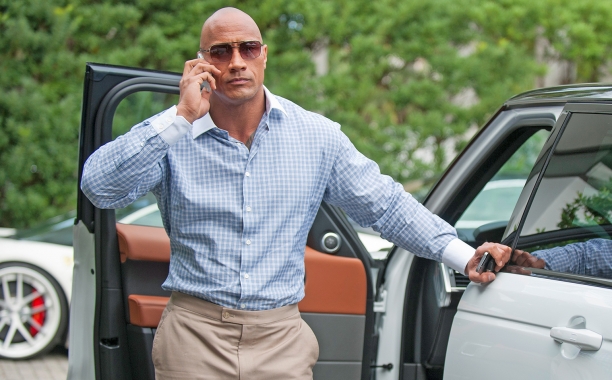
Duane Johnson stars as a former football player whose career was suddenly ended before he could realize it, and he’s trying to recover and find direction in retirement as a money manager of athletes who don’t have any idea how to handle their money. If there’s any chance of this show rising above the sports Entourage cliché, it’s on the back of the always charismatic Johnson, who you’d be hard pressed to find a bad word said about anywhere. The rest of the cast consists of another retired player with no plans, who gets a job as a car salesman, a quick-to-temper wide receiver Johnson is trying to help out, Johnson’s old agent and current friend, and Rob Corrdry as Johnson’s kind of asshole-ish co-worker.

Oh, and about the women problem. This was so expected, and while everything else is easy to mock from Entourage, this was probably the single most problematic aspect of the show, and Ballers doesn’t look like they’ve given this any thought. Ballers has one potentially strong women character, the retired football player-turned-car-dealer’s wife, who seems to have a pretty solid head on her shoulders and the actual respect of her husband. The woman who the Rock is sleeping with might be a PR person, or something, I’m unclear on that, but we saw her as much naked as non-naked in this episode. Otherwise, women of course are sex objects. It’s deeply disappointing that Ballers didn’t have a feel of the zeitgeist and try to remedy this problem. It’s a football show – no one is expecting there to be an equal amount of male and female characters, realistically. But, you know, they could try, a little.

Will I watch it again? No. I did watch all of Entourage, and for all I generally agree with the criticisms of the show, I’m not sorry I did. This does make me wonder if I would though if I started the show today.

Summer 2015 Review: Humans

19 Jun

Humans

Humans feels in essence like a series-long extension of an episode Black Mirror (not a particular episode, just a could-be episode). This is certainly largely because it’s broadly both British and science fiction but also on a finer level. Like most episodes of Black Mirror, it’s set in the near-future where the world, sans a couple of technological changes, is largely recognizable and because it clearly wants to wrestle with ideas about traditional big science fiction themes, in this case, what it means to be human, and what it means to have a consciousness.

Humans is, ironically enough, about robots. Synths, as their called in this universe, are humanoid looking robots, designed to be hyper-intelligent helpers to humans, doing the laundry, driving their cars, going out for groceries, and nannying their children, picking their fruit. They do them all without feeling, so they don’t mind doing whatever you tell them to do at all times. That is, except for a rogue strain of synths that somehow, unbeknownst to all but a few, somehow gained consciousness and have feelings and self-awareness.

There are a few primary plot strains in the first episode. There’s a typical suburban nuclear family. The father is exhausted from having to take care of the kids while the mother is constantly traveling for her job, so he purchases a synth, which happens to be one of the few with consciousness. An older man refuses to upgrade his synth; his old model, which he painstakingly tries to fix, has some important memories he is trying to maintain. A man runs with a rogue band of conscious synths who are being chased; they’re caught, and the synths are hauled off and strewn about. The man who chased down those synths wants them examined, and is concerned that consciousness in machines could lead to a singularity – a time when machines have no need for humans.

The acting is fine, and the writing is not particularly noteworthy or deficient. The humans don’t seem particularly compelling right off. The weight of the episode is in the portrayal of the synths and the high concept of the big science fiction ideas generally. If you like Humans, you’re going to like it because you find the premise fascinating, not because of the first episode’s characters or story. Because of this, the pilot really has to sell the premise, and by the end it’s intriguing enough to make a credible case to convince viewers to comeback for another episode, but not so much show to give viewers any confidence they’ll be sticking around all season.

The beauty of Black Mirror is the anthology style which gets in and gets out over the course of an hour, a short enough time to keep high concepts from wearing out. I skeptically wonder how the concept at the center of Humans will play over a longer period of time. There are obviously ample issues to grapple with, but there are also easy ways to drag out the same issues over a far longer number of episodes than is necessary.  Whether Humans can deepen its themes to survive the long haul will likely determine its ultimate success.

Will I watch it again? I think I will, because it’s been a pretty slow summer, and I’m kind of chomping at the bit for a new summer show to really get into, but I might not had this aired in the much busier spring. It was a somewhat entertaining plot, but it wasn’t amazing and I’m definitely concerned where it will go and how long it can last.

End of Season Report: Game of Thrones – Season 5, Part 2

17 Jun

Cersei Lannister

This is Part 2 of my thoughts following the ending of the fifth season of Game of Thrones. Part 1 can be found here.

We start today with Dorne. Dorne was an utter and total mess, the worst running storyline of this season both from a book reader’s perspective and I believe, from a viewer’s perspective. It introduced several new characters, but without the chance to get to really know them. Doran Martell, Dorne’s leader, the three Sand Snakes, bastard children of the Red Viper and Ellaria Sand, and Aero Hotah, Doran’s chief guard. In the books Doran is smart, calculating, even-tempered and patient. In the show, I believe they tried to somewhat portray that as well, but any positive character development is undone by the stupefying last scene where Ellaria is allowed to kiss Myrcella, delivering some sort of poison. Why would Ellaria, who tried to assassinate Myrcella earlier, be allowed to touch Myrcella? From that scene, Doran’s clearly a total moron, defeating any other work the show put in to that character. Even beyond this bizarre and logic-defying ending, nothing else in Dorne worked. Jaime being there never quite made sense, Ellaria and the Sand Snakes’ plan never quite made sense, and the Sand Snakes scene with Bronn felt like some of the pointless nudity that critics like to understandably occasionally call Game of Thrones out on. While I’m thrilled to find ways to keep Bronn around, this whole adventure did not work.

Cersei’s downfall was a long time coming and well-deserved, and the show, with a huge help from Lena Headey did an admirable job of depicting a depth to Cersei that could easily have been missing giving the underlying story. Cersei is an antagonist and a villain, and her negative qualities outnumber her positive. She’s paranoid, delusional, and while smart, is not as smart as she thinks she is, which makes all the difference. Her comeuppance was earned and sweet, but there’s also another side to Cersei, that while she’s certainly not qualified to rule the seven kingdoms, makes one feel for her. She’s utterly devoted to her kids, she really believes in her paranoia, and while it’s often wrong, there’s enough intrigue and lies in Westeros to believe that some of it is correct. She carries herself with dignity at all times, even during her walk of shame. Because of the ability to showcase the levels of Cersei’s character in ways that aren’t there for other antagonists like Ramsay Bolton, Cersei’s arc was one of the more complete and successful in the fifth season of the show from beginning to end, .

Sansa and Theon. Game of Thrones is definitely partly an exercise in suffering. When I read comments complaining about the constant suffering and misery faced by nearly every character, especially the beloved ones (and oppositely how evil characters like Ramsay continue to triumph), I have contrasting thoughts. On one hand, I think, well, who says characters are supposed to end up doing all right, or that there’s supposed to be a balance between how good and evil characters are treated. On the other hand, I understand that you watch television shows largely for some measure of enjoyment, and it’s just not enjoyable to see your favorite characters get raped, tortured and killed one by one, and over and over again. To try to decipher the space between those two lines, the question is always does it work in the show, does it make sense in this world, and even if it does theoretically work, does showing it add something. I don’t think the answers to these questions are always obvious.

Ramsay raping Sansa was a difficult and painful scene to watch, and was for many a bridge too far. This one, as awful as it was, worked for me in context; it would have been unfathomable in this world for Ramsay not to expect to have sex with Sansa after their wedding to consummate the marriage, Showing it may have been unnecessary, but I don’t think it was a mere unnecessary torture. Rather, it continued to hammer home the realities of this world and difficult choices for Sansa. A legitimate concern was whether that rape would then be used in terms of its effect on Theon, and not on Sansa, but I don’t think that’s what’s happened. Sansa and Theon are rather bonded by Ramsay’s cruelty, and share something that they didn’t when Sansa arrived. Like the world of Hobbes’ Leviation, Westeros can be a truly nasty place. I’m a big Sansa fan and I have a strange amount of likely misplaced confidence, considering Martin’s world, that she’ll use this adversity to her advantage and become stronger.

Meryn Trant’s pedophilia on the other hand, seemed completely unnecessary to me; we already know he’s a terrible dude, and Arya already has plenty of reason to hate him. When you look at every instance of terribleness through this lens, everyone will still come out on different sides, but it’s an instructive and helpful way to think about it.

Going forward, where does Game of Thrones stand? It moves into uncharted territory for book readers like myself, which is both exciting and scary, and I’m still not sure how much I trust showrunners David Benioff and D.B. Weiss without George R. R. Martin’s words to work from. My faith in them has gone up and down over the course of the series, and while they’ve earned enough trust to build on their ideas going forward, I’d be lying if I said I wasn’t somewhat wary. Their touch has been too heavy and on the nose on occasion, subtlety not their strong suit. Still, they’ve done a great job overall in the very challenging task of fitting thousands of pages and dozens of characters into 10 hour-long episodes each year and the show must go on. There are worse things than simply two separate versions of the story, one televised, one read; the books, as long as they take, will still exist, no matter what the show says.  On and at them, crossing my fingers that not all of my favorite characters die next season.

End of Season Report: Game of Thrones – Season 5, Part 1

15 Jun

Game of Thrones

There was a lot to chew on in this season of Game of Thrones, as bad things continued to happen to good people and bad people alike, and there was more and more divergence from the books, even as the show got ahead of the book in certain storylines leading to some new dynamics for book readers.

A few overall comments and then we’ll work through the primary plots one by one. I have a book reader’s perspective which is hard to completely shed, but I try my best to consider the non-book reader, even though I can never completely understand.

First, Game of Thrones tries to pack an extraordinary amount of material in a mere ten hour-long episodes and that leads the show to take some shortcuts, some of which work, and some of which don’t. Frequently relatively minor characters are replaced by more important characters who were off somewhere else in the books; this is probably the most successful recurring technique the show uses, as the show simply doesn’t have enough time to introduce all these minor characters and have them be meaningful or three dimensional in any way. For example, Arya kills someone based on personal reasons but not Meryn Trant, Loras’s sexuality isn’t what gets Margaery thrown in the Sparrows’ cell, but rather the doings of some other minor character, and a character marries Ramsay Bolton and escapes at the end, but not Sansa. A handful of characters travel with Tyrion towards Meereen, but not Varys. Sometimes these substitutions work better than other times, but it’s a logical policy due to the time constraints.

Second, the show, which gives us plenty of interesting material to chew one and manages to display many levels of depth, sometimes uses obvious and unsubtle shortcuts when it needs to display something quickly and clearly without the mind-of-the-character perspective that writing offers. The most obvious example this season may have been making Meryn Trant, the Kingsguard member who Arya kills, a pedophile. He was already despicable, and was already on Arya’s list; the reason for making him additionally extra terrible eludes me.

Third, sometimes the show just greatly condenses a plotline from the book, trying to shrink it to its essence. Sometimes it works; the Cersei downfall skipped a lot of extraneous detail, which was enjoyable in the context of a thousand page book, but still managed to mostly get across her hubris and paranoia and her final humiliation. This was helped of course by the fact that we’ve at least known Cersei for seasons. The worst example of this was this season’s Dorne plot which was a failure on all levels. They wanted to have their cake and eat it to, include enough to appease the fans and show a new part of the kingdom, but didn’t want to devote enough time to learn and develop a new cast of characters.

We’ll get to Dorne in more detail, but some of the good first. Well, good, for the show. Rarely good for the characters.

First, Stannis. I said most of what I felt about his season’s arc here, but what happened in the last episode contained elements which made me both more and less accepting of the events of the penultimate episode. First, his troops abandoned him after Shireen’s ritual burning, as I and many others predicted they would, and it was certainly vindicating to see that prediction be correct. On the other hand, Stannis is a smart guy, and the result makes it seem even more shocking that he couldn’t have anticipated that outcome beforehand.

Jon Snow’s death is heartbreaking, possibly the most yet in the series, which is really saying something. Will he be back in any form? Book readers have suspected he’ll either come back as a warg or be revived by Melisandre, but the show’s creators are for some reason really pushing the fact that he’s dead and that Kit Harrington’s never coming back, though I’m not sure why they’re trying to spoil the story. His death is absolutely brutal, but I don’t think an example of death for shock value like so many accuse Game of Thrones of (which Game of Thrones may do occasionally, but nowhere near as much as, say, AMC’s The Walking Dead, the current king of the manuver).  There are certainly questions that need to be addressed in a meaningful way regarding Jon, whether with him alive or not; mostly importantly, the question of his parentage, which even the show has taken on this season. To make such a deal out of Jon’s mysterious parentage without that mattering in some way would seem wasteful and feel pointless. That said, Jon accomplished a lot this season and while I felt the battle season at Hardhome was unnecessarily long, he was a legitimately inspiring character who saw the long view when very few others did, and his death sadly makes sense in that context. He was a visionary, but he was simply too radical, moved too fast for the rest of the Night’s Watch, who were unable to see the wildlings as allies against a greater threat, and their increasing disillusionment with Jon was a long time coming.

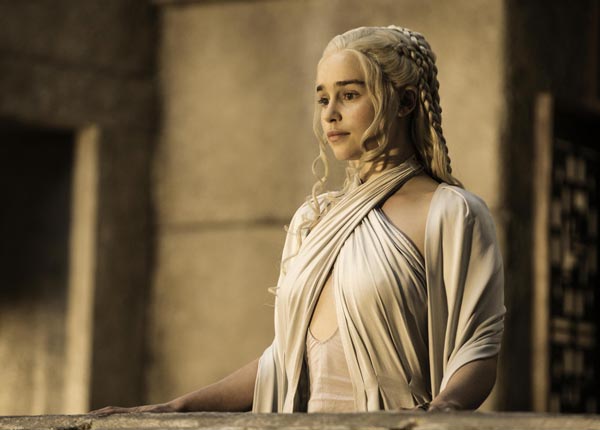
Dany’s plot had ups and downs. It certainly hurts her to be so far away from everyone else in Westeros, although at least by now we know she’s not getting there anytime soon, and thus can at least stop anticipating her immediately leaving and make peace with the fact we’ll be in Meereen for a while yet. The metaphor of occupier and occupied generally works, and while Dany makes some bad choices along the way, most of her decisions are legitimately difficult, and it’s easy to sympathize with her frustrations when she’s being asked to kowtow to some sinister slaveholders to provide any sort of peace. The Sons of the Harpy were legitimately terrifying in the show and their masks are my favorite prop of the season. The fighting pits scene really took off at their appearance. Tyrion’s arrival greatly raised the interest level and it was gratifying to see the two of them finally meet, even if they were only together for a couple of episodes before Dany dragoned on out of there. Dany clearly has some serious positive credentials for being an inspiring ruler, not the least of which are three awe-inducing dragons, but she also clearly has a lot to learn. It will be fun to see if Tyrion can show her how it’s done in Meereen. Competent rulers in the world of Game of Thrones are few and far between, and Tyrion and his dad may have been the two most competent we’ve seen, though with very different approaches.

Arya’s plot was, like Dany’s, but even moreso, difficult, because of its lack of connection to any other major characters. The choices to replace unfamiliar and far more minor book characters with Jaqen H’ghar and Meryn Trant made a lot of sense, and the show did as well as it could for the most part with one of the stranger and more out there plots, getting at a decent amount of the essence from bits and pieces of storyline, working through Arya’s issues of identity and personal vengeance.

Now, more notes to follow in part 2.

End of Season Report: iZombie, Season 1

12 Jun

iZombie

iZombie has an almost laughably gimmicky high concept premise. Protagonist Liv has her life together; great fiancé, about to start on a promising medical career. Then, all of a sudden, she becomes a zombie, which in this universe is a cross between zombie and vampire. She breaks it off with the fiancé for fear of infecting him (sex as well as blood infects), and gets herself moved over the medical examiner’s office for convenient access to free brains. She needs to eat brains to keep herself alive and mentally together, but these brains also have side effects. They give her both the personality traits, positive and negative, of the people whose brains they were, and visions into those people’s lives. She then uses these visions to help solve their murders.

Rob Thomas is an experienced professional showrunner and it shows. Unlike many shows that take some time to find their feet, iZombie seems to know what it is and what it’s doing from the get go. . This is no epic conspiracy supernatural show that intrigues but threatens to go quickly out of control and has no idea where it’s going. The pacing is smart – there aren’t alternating episodes where tons happen followed by boring episodes as the creators need to slow down to avoid getting too far ahead of itself. The season starts with case-of-the-week murders, with the serial plot sneaking in and taking up more and more screen time as the season progressed, just as the two shows which iZombie is most like did, Buffy the Vampire Slayer and Veronica Mars. I don’t normally watch most shows that are largely procedural but those two are amongst my favorite shows of all, because although they start with a procedural base they elevate it over time through depth of character and top notch dialogue.

iZombie is tone consistent as well, which is something CW’s other very good freshman hit Jane the Virgin could learn from. Jane the Virgin is loaded with lots of good stuff, but suffers from tone issues, as one episode is serious, and one is light, and the contract often feels confusing and unnatural. iZombie knows exactly what it is from day one, and keeps that tone level balanced, right between brooding and irreverent, light and dark, sarcastic and earnest. Rob Thomas is, with Joss Whedon (and of course I don’t want to short Diane Ruggiero-wright who is the co-creator along with Thomas of iZombie and longtime Thomas consigliere) of mixing comedy and drama and finding strength in the contrast, rather than incongruity. Rather than seem out of place, the mixture uses the humor to build the drama, and vice versa.

iZombie’s gimmick; not the visions, but the personality transfer is a brilliant way to have Liv face off against her personal issues under a different guise every week; a dose of pep from some cheerleader’s brains have her girlily reconnecting with her roommate and best friend. A young mother’s brains have her overprotective, reengaging with her mother and younger brother. It’s a smart technique and keeps every episode slightly different, and Rose McIver, who is the key to the whole kit and caboodle sells it and embodies these different personalities effectively.

The supporting cast, while limited is strong. Ravi is Liv’s boss at the M.E.’s office. He’s the only person who knows that she’s a zombie, which makes him an invaluable ally in her cause, and he attempts to use his knowledge and lab to find a cure. Major, her ex-fiance, feels like he’s being forced into the show at the beginning, as there’s no logical place for him. However, in the second half of the season, his investigation into the existence of zombies, and his involvement throws a wrench in the plans of the primary antagonist, Blaine. David Anders is fantastic as Blaine, who serves as kind of a black market (not that there’s any other kind) brains dealer to zombies, creating the zombies himself to serve both as minions and as customers. His wisecracks and sarcastic one-liners are frequent episode highlights.

The single most serial episode, the finale, delivered in a big way. There was a massive action scene featuring Major escaping from captivity and mowing through his kidnappers and torturers to the tune of After the Fire’s Der Kommissar; much of the time in this show such a scene might feel out of place, but here it worked perfectly and the song choice was a perfect example of the balance between the dramatic and the comedic. (How Major so expertly fired weapons he had just purchased is a reasonable question, but one I’m willing to move past.) At several points in the episode, scenes were unpredictable because at any given point, you could take a reasonable stab at what was going to happen, but you could also guess a couple of equally plausible alternatives, which essentially meant you didn’t know which was going to happen. The events both entertained and satisfied some major first season arcs, while leaving a lot out on the table for next season.

iZombie’s first season wasn’t revolutionary or breakthrough or entirely original television, like recent breakthroughs Transparent, Hannibal, and Rectify, but the show delivered consistently week to week an excellently written product that always left me wanting more, and I’m more glad that I realized I’d be even a few weeks into the season that the show is coming back for a second season.