The Quest for Relevance for the One-Time Famous: BoJack Horseman and The Comeback

11 Sep

One Trick Pony

Having watched BoJack Horseman and The Comeback nearly back to back, I was stunned by the similarities. Both star has-been actors who were at the peak of their games in the early ‘90s starring on cheesy but commercially successful sitcoms that made them stars. Both live in the past constantly. They still see themselves as the stars they once were, even as the world has moved beyond and past them. They were so caught up in an unexpectedly easy and quick fame that their self-worth become to inexorably tied up in their popularity; their confidence was no longer their own, it was a meter which went up and down based on the vagaries of the American viewing population. And when they population moved on, they didn’t know what they were and they didn’t know who to be. Both were materially successful. They had money; they lived nice, comfortable, lives, despite their lack of employment. But that wasn’t enough. They needed what fame gave them. They were insecure, needy, jealous of other, younger stars who looked to have what they had 15 years ago. BoJack was openly so; Valerie less so, but it was clear that she still thought she was a star, and surrounded herself with people who thought likewise.

Both were given an opportunity to get back into the limelight after years on the sideline. Both of these opportunities were not new; they were a version of the old, an attempt to revisit has-beens and tell their stories. Both new opportunities seemed oddly invasive; for Val, a documentary following her everywhere, and for BoJack a tell-all memoir. Both opportunities veered deeply into their subject’s lives; leaving no stone unturned, revealing aspects that most people wouldn’t want released into the public

Both put their trust in a colleague who they believed to be their friend, their advocate, looking to tell their side of the story, even while they agreed, at the beginning of the venture that their story was to be told warts and all. BoJack asks for a tell-all memoir that’s good, not a load of crap. Valerie knows her story is being told on every camera – she does her part to make sure the cameras are everywhere. Both feel incredibly upset at the completion of their respective projects – their trust was betrayed. Diane turned on BoJack, writing a memoir that was a huge success for her but made him look like the huge asshole we know he is. He believed she had his best interests in mind. The Comeback debuts and immediately distorts Valerie’s words, takes them incredibly out of context, and shows of her worst moments without showing the villain that antagonist Paulie G had been. Val felt like Jane who she trusted had turned on her completely.

And yet, in the ultimate celebrity culture twist, both projects become bizarre unexpected successes, for exactly the reasons BoJack and Val had felt betrayed and vulnerable and humiliated. Everybody’s talking about the double vomit scene; it’s the talk of the town leading to the Comeback getting an immediate pick up, which is unheard of. BoJack’s book is a smash; everyone is fascinated by his story, and if not quite empathetic, at least interested, and some people relate; he’s real, and true, and if still an asshole, it moves books.

More than anything, both are relevant again. Both have traded their dignity and their self-worth for relevance and both, while still indignant about their treatment, are kind of happy with that trade. There’s a huge conflict; both are insecure and desperate to be as popular as they once were so badly that, though they never would have said that’s what they would have wanted at the beginning, in the end, were willing to trade their confidence and sense of selves to be hits.

Fall 2015 Previews and Predictions: ABC

9 Sep

ABC

(In order to meld the spirit of futile sports predictions with the high stakes world of the who-will-be-cancelled-first fall (edit: spring, now) television season, I’ve set up a very simple system of predictions for how long new shows will last.  Each day, I’ll (I’m aware I switched between we and I) lay out a network’s new shows scheduled to debut in the fall (spring, again)(reality shows not included – I’m already going to fail miserably on scripted shows, I don’t need to tackle a whole other animal) with my prediction of which of three categories it will fall into.

These categories are:

  1. Renewal – show gets renewed
  2. 13+ – the show gets thirteen or more episodes, but not renewed
  3. 12- – the show is cancelled before 13

Additional note: Since more and more series on network TV are following cable models with set orders for shorter seasons, and mid-season replacements tend to have shorter seasons in particular, I’ll note any planned limited runs in my prediction section for each show)

ABC previews up now!

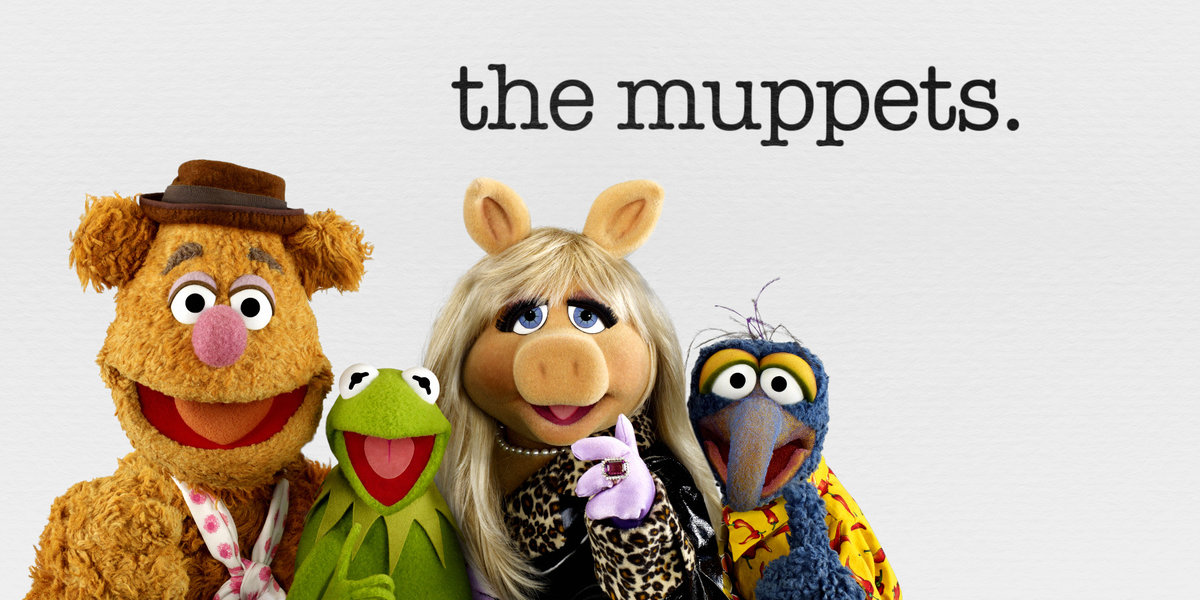
The Muppets – 9/22

The Muppets

The Muppets! They’re back! You should be familiar with them. After some time away, Jason Segel made a genuinely good Muppet movie, soon came a sequel, and now a full on return to television. I’m a fan of The Muppets. I don’t know if this will be great, but I hope and think it will at least be decent.

Prediction: Renewal – it’s a comedy which is a strike against, but people like The Muppets

Blood and Oil – 9/27

Blood & Oil

Remember Dallas? Blood & Oil is a prime-time soap that revolves around the oil industry; taking place in an old-west like North Dakota town where one oil baron, Don Johnson’s Briggs, rules all. That is until he’s challenged by a young upstart.

Predictiopn: 13+As I too often to, I’m halfway between having this cancelled quickly and having it renewed, so I’ll split the difference. It’s nice to see Don Johnson back on TV.

Quantico – 9/27

Quantico

The first two minutes of the trailer don’t really give a lot of information. Basically, Alex is a brand new FBI recruit, going to the super tough FBI academy with a bunch of others, and the recruits are slowly weeded out by the brutal FBI practices. Then boom, there’s a major terrorist strike, and a conspiracy – the attack is being pinned on Alex. We know she didn’t do it – but how will she figure out who did?

Prediction; Renewal – it looks like a Shonda Rhimes show meets Homeland – which on ABC, makes a hell of a lot of sense

Dr. Ken – 10/2

Dr. Ken

Dr. Ken is a grouchy middle aged doctor who has to manage two kids and a thriving practice. This classic family sitcom looks absolutely brutal, a surefire contender for worst new network show of the season.

Prediction: 12- This screams early cancellation all over

Wicked City – 10/27

Wicked City

It’s LA in the 80s. Hair metal is a rocking and serial killers are a knocking. A male serial killer roams the sunset strip, and finds his female partner while cops are out to track them.

Prediction: 12- I can’t think of a show exactly like it, to its credit, but this seems like the type of show that’s probably a watered down version of what it would have been on a cable channel

Fall 2015 Previews and Predictions: CBS

7 Sep

CBS

(In order to meld the spirit of futile sports predictions with the high stakes world of the who-will-be-cancelled-first fall (edit: spring, now) television season, I’ve set up a very simple system of predictions for how long new shows will last.  Each day, I’ll (I’m aware I switched between we and I) lay out a network’s new shows scheduled to debut in the fall (spring, again)(reality shows not included – I’m already going to fail miserably on scripted shows, I don’t need to tackle a whole other animal) with my prediction of which of three categories it will fall into.

These categories are:

  1. Renewal – show gets renewed
  2. 13+ – the show gets thirteen or more episodes, but not renewed
  3. 12- – the show is cancelled before 13

Additional note: Since more and more series on network TV are following cable models with set orders for shorter seasons, and mid-season replacements tend to have shorter seasons in particular, I’ll note any planned limited runs in my prediction section for each show)

Life in Pieces – 9/21

Life in Pieces

CBS takes a shot at the ABC-style comedy in Life in Pieces. It’s a s single camera comedy about a huge family who gets into wacky spats but mostly loves each other, the whole Modern Family playbook. A surprising amount of well-known actors participate including James Brolin, Dianne Wiest, Colin Hanks, and Betsy Brandt.

Prediction: 13+ – I just don’t see it. If this was on ABC, it would be a fit; I’m not sure it is on CBS, and as I have noted and will continue to as I write these, network comedies are, at least currently, an endangered breed.

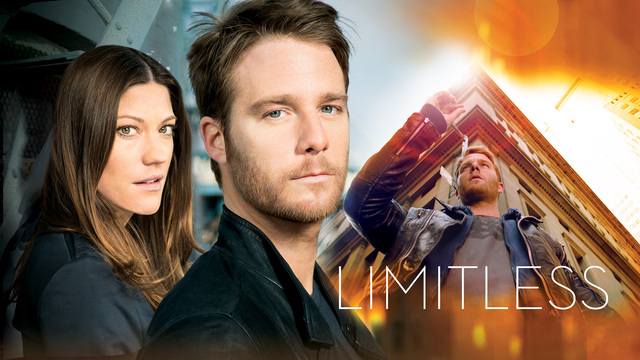
Limitless – 9/22

Limitless

Based on the movie, the Limitless TV show lives in the same world, where the protagonist, a frustrated layabout gets access to pills that make him a super genius. Bradley Cooper is game enough to guest star as his character from the movie who sees potential in the protagonist and helps support him.

Prediction: Renewal – the movie was sneakily successful and having Bradley Cooper even just occasionally can’t hurt – I don’t feel confident in this pick but some things have to get renewed

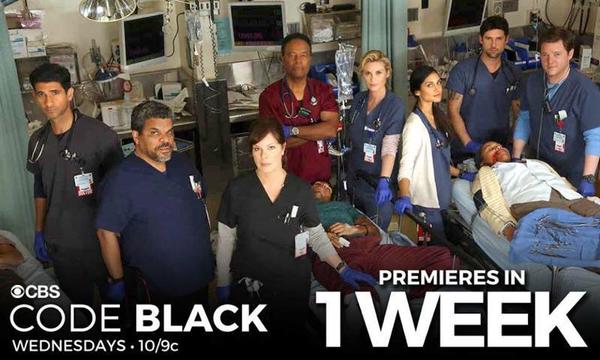
Code Black – 9/30

Code Black

Code Black is yet another medical show. I’m not sure what the hook is other than it’s an ER and you know, there are so many patients and not enough doctors to go around, and shit gets real. Marcia Gay Harden stars as the primary ER doctor who presumably plays by her own rules.

Prediction: 12- This has instant failure written all over it. As generic as it gets.

Supergirl – 11/2

Supergirl

A female is sent from Superman’s planet to help the humans out. Supergirl learns to get along in the world, how to save people and be herself. This feels a lot like Arrow and Flash on CW and seems like it would have been a more natural fit there than CBS.

Prediction: Renewal – Comics are still gold these days, and while we will reach an oversaturation point, until we get there I’m not going to make any bold guesses

Angel from Hell – 11/5

Angel from Hell

Maggie Lawson is going through some sort of third-life crisis, still reeling from the death of her mom. Jane Lynch claims to be her guardian angel and endeavors to help Lawson navigate life and love.

Prediction: 12- Who is the audience for this? I don’t see it.


End of Season Report: Mr. Robot – Season 1

4 Sep

Mr. Robot

There’s a lot to say about the first season of Mr. Robot. It has become a blogosphere sensation that became required viewing by the end of the summer, and though it’s an interesting show with plenty of redeeming qualities, I’m not fully on board; Mr. Robot is not quite as good as most of the internet would have you believe. First, though, I want to spend the majority of the piece grappling with a particular question as it relates to the show.

How much does plot matter in a television show? It depends, and sometimes more than other times, is the obvious but unhelpful answer. Sometimes plot is essential, sometimes it’s a distraction. Lost diehards would say focusing too much on the plot and its lack of resolution missed the point, but I would argue against that, saying that the plot was clearly important to the show initially, and that the show had set certain expectations for resolution. Furthermore, there are different instances of plot: within a moment, a scene, an episode, over the course of a season, or over the course of a series.

I have some general issues with Mr. Robot’s plot, but to not ignore the forest for the trees, everything starts with two major plot twists in the second half of the season. First, it turns out that Mr. Robot (Christian Slater, and he may have another name, but I’m still going to choose to call him Mr. Robot) is actually not merely a hallucination of protagonist Elliot’s dad, but also a manifestation of Elliot’s alternate personality. Second, fellow hacker Darlene is Elliot’s sister, but Elliot continues to forget and or not realize this, and occasionally comes on to her.

The hallucination twist I didn’t care for at all. At first, I was angry at myself (in my defense, I watched most of the show in two days and didn’t reflect much between episodes) for not picking up on the fact that Mr. Robot was a figment of Elliot’s imagination, but as I thought more about it there were several scenes where he was present and Elliot wasn’t, meaning that sometimes he was a hallucination while sometimes he was a manifestation. The former, which I still don’t particularly care for, I’d be kinder towards; the second is a lot too much for me. It reeks of Fight Club, and speaking to my points about plot earlier, while I enjoy Fight Club in many ways, the plot is unfathomably stupid and prevents me from quite liking it as much as many do. The twist was nearly a pure plot move, and it obscured and overwhelmed some of the more interesting aspects I’ll drive into shortly.

The Darlene twist works better but the implications are questionable if thought about for a couple of minutes more, which is often a sign of a potentially poorly thought out twist. It’s a little less obvious and Darlene is a much more interesting character than Eliot’s dad. It’s unquestionable a twist, but it doesn’t feel as M. Night Shyamalan-esque. The trouble though is, and if you think I’m looking too deeply into this, maybe you’re right, but– why is a sister who seems to care intensely about her brother’s well being letting him participate in activities that first, he’s obviously not up to mentally, and second, that obviously have the likelihood of aggravating his already very serious fragile mental state. This is all aside from the insane idea of following and trusting someone with a very serious mental illness to lead a group of hackers in a series of crimes that will inevitably have the participants sent to jail for a long, long time, if they’re ever caught. Are there motivations set up by the show to defend this behavior? Sure. Darlene cares a lot more about the project than Eliot does; it’s her baby, and maybe she really, deluded-ly believes that this is good for him, or maybe she needs him, and secretly knows that this is bad for him but doesn’t care, though she convinces herself otherwise. Either way, it’s a bit of a stretch.

I don’t quite understand the Tyrell Wellick plot. He kind of cuts a Patrick Bateman visage, and he’s a very strange character and I don’t really get how he fits in with the rest of the show, plot-wise, tone-wise, or thematically. I kept waiting for the big moment when Elliott and his world would dovetail, and it never quite happened.

I do really like Darlene’s character, and although I’m not sure how it would work in practice, abstractly I might prefer a version of Mr. Robot that focuses on Darlene, rather than Elliot. Elliot would be stronger a peripheral character, and Darlene’s struggle to ferment revolution while keeping her troubled brother healthy and productive and maintain this ragtag team of hackers seemed loaded with potential.

The focus on what revolution means; true freedom and the notion of good and evil, selling your soul vs. fighting the good fight, and what that really means, or what change any of this makes. These are all complex ideas with plenty to work through. The show vacillates between exploring these in a provocative way and laying the evil 1% on too thick. The good: A dive into what changed and what’s the same after f society erases all debt, and the hollowness of the victory Darlene wants so desperately. The bad: the soiree of rich people at the end of the show, the rampant, obvious evilness of some of the Evil Corp executives, who appear to be cackling in a room about how to screw the peons a little too often. I’m as inherently skeptical of giant corporations as any good liberal, but even I winced at some of the less nuanced depictions of corporate America. Better was in the last episode when Angela understandably was enraged by the treatment she received at the shoe store after she witnessed a suicide personally, and the portrayal of Gideon, a man who is at the whims of corporate forces outside of his control, who isn’t always fighting the good fight, but just wanted to be a small business entrepreneur looking out for his employees.

I don’t think Mr. Robot is without merit. But the over-the-top twists and ridiculousness of the plot overwhelm some of the more interesting aspects of the show. I was initially furious with the twists, and felt like the show had been overwhelmed with gimmickry, and I still feel that to be true to some extent. With more time though, while I’m still frustrated with what was an uneven first season that was never as brilliant as many of its internet backers believe, there’s a real opportunity for the second season. Mr. Robot made a mark this first season and the second season will be a chance to start fresh and decide what kind of show it wants to be. Twists are out of the way; it’s time to dive in to pure substance and explore beyond the initial parameters of the catch-all plot.

Summer 2015 Review: Narcos

2 Sep

Narcos

I’ve been thinking a lot recently about the importance of plot in television. Sometimes plot is nothing more than a smokescreen to dig into other aspects of a television show; sometimes plot just gets the viewer on board so the creator can explore characters, relationships, visuals, emotions, and who knows what other themes. Think Hannibal, which had a monster-of-the-week first season only to bring viewers to a crazy and wildly experimental third season where plot was near last on the list of concerns. Rectify has a plot undeniably, but it moves at a snail’s pace so that viewers can take in the reality the characters face.

There’s nothing wrong with plot mattering though, and mattering a lot. The absolute best shows combine a number of elements and plot, or narrative, is a major tool in the TV writer’s toolbox. The Wire focus was wide and deep, but the rise and fall of Avon and Stringer Bell and then Marlo Stanfield was a major hook around which much of the show followed.

They call it storytelling for a reason after all; we like a great story, sometimes everything else be damned. Many mysteries and pulp fiction books are written with nothing but plot in mind. And that finally brings me to the subject of this review, Narcos. Narcos is lacking in many of the elements that denote great television. And it’s not a great show. But damn if it doesn’t have a plot that is immediately intriguing and flows along at smart pace.

Narcos tells a story everyone who has ever watched Entourage has at least a passing knowledge of. It’s about the rise and fall of Columbian drug overlord Pablo Escobar, whose power grew as cocaine took America by storm in the ‘80s. While I still don’t really know the deep details, it’s a story that has obvious movie and TV potential, and there have been several attempts to tell it. Besides the fictional Entourage version, there was a recent film starring Benecio del Toro.

And there’s a reason for all the Hollywood interest. It’s a fascinating story. The sheer size of his empire is staggering, and it’s easy to be attracted to a rise and fall story, even when, or perhaps especially when, the protagonist is a charismatic monster who could be charming, brilliant, and brutal all at once. The story comes from the point of view of a DEA agent who tracked down cocaine in Miami and moved down to Colombia to take the battle to Escobar himself.

That’s pretty much it. There’s a lot of Scorsese-esque narration moving the story along, and adding little historical tidbits and overview. I’m normally not the biggest fan of television narration, but the narration mostly fits into one of the categories I don’t mind as much, merely moving the narrative forward and adding exposition rather than insight. This type of narration can sometimes be superfluous but the story moves along fast enough that skipping forward and setting up scenes with narration isn’t really a problem. There is occasionally some narration which attempts to add big picture personal realizations which I don’t care for, but so far at least that seems to be kept to a minimum.

The protagonists doesn’t seem particularly interesting. The main narrator seems more like a vehicle to describe Escobar’s rise, and Escobar’s story is a lot more interesting than his character. He is a brute egomaniac who murders many, many people, after all. But it’s a well-paced and interesting story, and sometimes that’s enough for a fun view.

Will I watch it again? Yeah, I think I will. It’s nothing so special, but it’s a good story, and there’s some worth to that still.

Pop Chart Championship Belt: Part 3

31 Aug

Mariah Carey

The final installment, part 3 will hand out the championship belt from 1995 through the current day. Check out part 1 for the rules and part 2 is here.

1995-96:

Mariah Carey

After a brief respite, Mariah is back. Half of her damage is done with Boyz II Men, on the mega-super-hit “One Sweet Day,” but she also has the sublime “Fantasy,” which is enough to regain a title that was almost hers for six consecutive years. “One Sweet Day” held on well into ’96, and though Carey didn’t have a monster year she produced another number one, “Always Be My Baby” and her two biggest competing acts were just getting started.

Contenders: Boyz II Men, who are already on the way down, still had the aforementioned “One Sweet Day” and “Water Runs Dry.” TLC, who had announced themselves a year earlier with the release of debut album CrazySexCool hit new heights with #1s “Creep” and “Waterfalls” and a couple of other hits. In 1996, Toni Braxton and Celine Dion had huge years; Braxton with her only two #1s and Dion with “Because You Loved Me” and “It’s All Coming Back to Me Now” but I didn’t think either were so overwhelming as push the default Carey off her perch.


1997:

Puff Daddy

Carey was absolutely no slouch in 1997, hitting the apex with “Honey,” but this year someone grabbed the title from her and really ran with it. Puff Daddy destroyed with his debut album “No Way Out.” He had two solo chart toppers, featured on one of Notorious B.I.G.’s two, both of which he produced. That’s how you get to the top.

Contenders: Carey, as always. The Spice Girls had their big moment in the sun here, with “Wannabe,” “2 Become 1,” and “Say You’ll Be There,” their three biggest American hits all peaking. They were a genuine sensation, and could have pulled it off in another year. Hanson had their brief moment this year as well, and created a sensation, but smaller and narrower than The Spice Girls. Notorious B.I.G. topped the chart twice, but it is difficult (though maybe not impossible) to hold the belt while deceased.


1998:

Celine Dion

This is hardly obvious and we’re at the point where I’m starting to let my personal experience into the equation. “My Heart Will Go On” somehow only actually topped the charts for two weeks, but combined with the sheer pop cultural force that was Titanic it was beyond omnipresent that entire year. Dion boosted her case with a duet #1 with R. Kelly to end the year.

Contenders: The other biggest song of the year was “The Boy is Mine” by Brandy and Monica. Both had huge years, but I don’t think either had the heft to be the biggest pop star; some could disagree. Puff Daddy, Mariah Carey, and Janet Jackson all had notable years, and Usher, who we’ll hear from again, started his assault on the charts.


1999:

The Backstreet Boys

A new era beckons in full. The new superstars, some for one minute, some for the next decade, emerge. The Latin explosion, boy bands, Christina and Britney. It’s an entirely new landscape. And yet, this year, I’m going farther off-book than I ever have before, leaning heavily on personal remembrances. The Backstreet Boys, in what anyone who was 10 or older during this time period will find beyond stunning, never hit the top of the charts, and only hit #2 once with “Quit Playing Games with My Heart.” This year, their best remembered song “I Want It That Way” somehow only moved up to #6. Their third album though was the album of the year, Millenium, selling a million copies in the first week.

Contenders: There are many contenders. TLC came back in a huge way with Fanmail. Britney and Christina debuted, both as instant superstars, and either would be a worthy choice. Monica and Brandy, although they were already losing steam, were still huge before all the new artists took over halfway through the year. Destiny’s Child and Jennifer Lopez debuted, and Ricky Martin had a moment where he was the face of the Latin explosion.


2000:

*NSYNC

We were still, but not for much longer, in the land of the boy bands, although the focus had shifted from The Backstreet Boys, who had already spun out their biggest singles, to *NSYNC, who still had them in the bank. No Strings Attached was their Millenium and “Bye Bye Bye,” “It’s Gonna Be Me,” and “This I Promise You” were all big chart entries off the album.

Contenders: Destiny’s Child had a huge year with “Say My Name,” “Jumpin’ Jumpin’” and “Independent Woman Part I.” Christina Aguilera had another big year.


2001:

Destiny’s Child

I was neck and neck between giving this to Destiny’s Child and Jennifer Lopez, and I’m still not sure I made the right call. Destiny’s Child were at the peak of their powers. “Independent Woman Part I” started the year on top, “Bootylicious” would come later, and “Survivor” would hit #2. Lopez, on the other hand, had “I’m Real” and “Love Don’t Cost a Thing.”

Contenders: Lopez, and then Usher, who hit #1 twice. We’ll hear from him again.


2002:

Eminem

It’s crazy that I haven’t mentioned Eminem yet, and I haven’t found an artist yet during the years since I personally began experiencing pop music whose obvious if-you-were-there and album popularity matched up with the charts as little as Eminem. He only had one Billboard Hot 100 top 10 hit to this point despite churning out songs that everyone listening to Top 40 radio knew all the words to – “My Name Is,” “The Real Slim Shady,” “Stan.” In 2002, the walls came crumbling down. In the very same year Mr. Mathers released The Eminem Show and starred in 8 Mile, which would give him his first charter-topper and signature song, “Lose Yourself.” “Without Me,” his perhaps funniest song, and “Cleaning Out My Closet” completed the monster year.

Contenders: Lopez. Usher. This was also Nelly’s biggest year, and he sits in the number two position, dominating the summer with the 1-2 punch of the much-remembered “Hot in Herre” and the fairly rightfully largely forgotten “Dilemma.”


2003:

50 Cent

2003 is the story of three artists, all of which have a nearly equal claim to the throne, and who, between themselves, recorded the three most memorable songs of the year. 50 Cent debuted in force, rolling out his signature song “In Da Club”, which remains an anthem today. He hit #1 with the more melancholy “21 Questions,” and #3 with “P.I.M.P.” Beyoncé debuted as a solo artist and owned the summer with the still-beloved “Crazy In Love” – she also topped the charts with the excellent “Baby Boy,” introducing the world to Sean Paul. Outkast, who had been around for years at this point, released what would be hailed as the album of the year, Speakerboxx/The Love Below, and the third song of the year, Andre 3000’s “Hey Ya.” Big Boi’s “The Way You Move” also climbed the charts, though it wouldn’t actually reach the summit until 2004.

Contenders: Beyoncé, Outkast. If I came back at this again, I’d probably keep switching back and forth between the three.


2004:

Usher

After years of challenging for the title, Usher takes the belt with a vengeance. The easiest call since Puff Daddy’s 1997, Usher dominated the top of the charts like no one since The Beatles in 1964. The stats are mind-blowing. Usher spent more than half the year, 28 weeks, atop the charts with four different songs, and followed himself in the top slot twice. One of these songs was the millennial anthem, “Yeah,” which would be, without any real competition, the biggest song of the year. The others were “Burn,” “My Boo,” and “Confessions Part II.”

Contenders: There really weren’t any. Alicia Keys, Beyoncé, and Nelly had nice little years, but this was a Barry Bonds-2001-style season. Usher was a man apart.


2005:

Kanye West

Unlike 2004, this is one of those years I’m really torn on, and, despite remembering this year fairly well, I’m concerned I’m rewriting history with my choice. Mariah Carey unquestionably had the bigger chart year. She had the single biggest song of the year, “We Belong Together,” and largely forgotten additional follow-ups #1, “Don’t Forget About Us” and #2 “Shake It Off.” Hers was a massive comeback album after the flop of Glitter, and she shone bright. Kanye, on the other hand only really had one certified hit, but it was the second biggest song of the year, and the song of the summer, “Gold Digger.” Kanye produced a couple more minor hits, but he brought what he would always bring, a sense of aura that has always made him a bigger pop star than pop stars whose chart records are equal or better.

Contenders: Mariah Carey, as mentioned before. 50 Cent also had a strong year, but he suffered what would befall many an artist; although his numbers were strong, there was a biting feeling he was already on the way down from his early triumphs.


2006:

Justin Timberlake

Here’s where the calendar year problem gets tricky. Justin Timberlake didn’t appear on the scene with singles until halfway through. Still, however, his FutureSex/LoveSounds was the pop album of the year, and “SexyBack” the song. “My Love” also hit the heights.

Contenders: Another near-miss by Beyoncé, who has to think there’s some conspiracy keeping her from the belt, and maybe she’s right. “Irreplaceable” was the other definitive canonical single in a year full of one-offs to be never heard from again (D4L’s “Laffy Taffy,” James Blunt, Daniel Powter). She has a strong argument. With less strong but still decent cases are Fergie, who started her dynamite solo career with the “Hollaback Girl” rip off “London Bridge,” Sean Paul, with “Temperature” and Rihanna who had her first monster year with “S.O.S” and “Unfaithful.”


2007:

Rihanna

This was another year when I went back to my memory banks and picked based on reputation rather than sheer chart success picking Rihanna over the top contender Fergie. Rihanna still had plenty of chart success and what puts her over the top for me is that she had by far the biggest song of the year, “Umbrella.” (The other dominant song of the year was the bizarre novelty of “Crank That (Soulja Boy).” She then showed off her range, rocking out with “Shut Up and Drive,” going slow with “Hate That I Love You,” and dancing it up with “Don’t Stop the Music.”

Contenders: Fergie fans should rightfully be angry; she absolutely killed it, hitting #1 with the wonderful “Glamorous” and the less wonderful ballad “Big Girls Don’t Cry” and the top five with “Fergielicious” and “Clumsy.” I weighed the power of “Umbrella” versus the number of Fergie hits. Chris Brown had the monster “Kiss Kiss” and “With You.”


2008:

Lil Wayne

Now, here is an interesting year. In another case of forced strange calendar timing, 2008 pits the beginning of the year versus the end. One day, I’ll spend another 5000 words breaking this out by month, but until then there are these hard choices to make. There are three chief contenders. Lil Wayne was at his peak, releasing the monster critical and commercial success Tha Carter III. It sold a million copies and produced four hits, three top 10, and “Lollipop,” which is his sole solo #1. Rihanna continued her success with two chart-toppers, “Take a Bow” and “Disturbia.” Beyoncé’s “I Am…Sasha Fierce” began its two-year run of hits during the second half of the year, with “If I Were a Boy” and the monster “Single Ladies (Put a Ring On It),” whose video made it a sensation.

Contenders: Beyoncé, Riahnna. Katy Perry owned the summer with “I Kissed a Girl” but she was too new to be the queen. T.I. had back-to-back smash #1s, but not enough of a presence for anyone to rank him above his contemporary Lil Wayne.


2009:

The Black Eyed Peas

Another very difficult year, and another three act race. Beyoncé came into the year with “Single Ladies (Put a Ring on It)” and followed up with huge hits “Halo” and “Sweet Dreams.” This was Lady Gaga’s big year, and the fact that I didn’t pick her makes me slightly queasy, as I’ve been going back and forth, between her and The Black Eyed Peas, changing my mind every couple of minutes. She had five top five hits; “Just Dance,” “Love Game,” “Poker Face,” “Paparazzi,” and “Bad Romance;” smash after smash. The Black Eyes Peas didn’t have nearly as many hits. What they did have though, were the two biggest songs of the year; they were back-to-back #1s and their combined reigns lasted an insane 26 weeks. You could not go into a store or restaurant in 2009 without hearing “Boom Boom Pow,” “I Gotta Feeling,” or more likely both.

Contenders: Lady Gaga, Beyoncé


2010:

Katy Perry

Another close year, with two contenders, but I feel more confident about the final answer from my memory and experience. Rihanna actually had more hits and more #1s – three of her own, and featured on Eminem’s “Love the Way You Lie.” Rihanna came in as well as the bigger pop star, which should have given her an edge. Katy Perry just absolutely owned this year though. Coming into the year, no one knew whether she had another hit in her; 2008 was a long two years ago. But it didn’t take long from the video debut of “California Gurls” for everything to change, and three number ones later, she really was the biggest pop star; it already felt like every song she released from then on would it hit #1, and not a ton has changed since.

Contenders: Rihanna. This was Ke$ha’s big year, but while “Tik Tok” was still the better song, and she had a lot of hits, Perry overshadowed her as the more prominent Dr. Luke protégé. Eminem had an enormous comeback.


2011:

Adele

Katy Perry was just as big in 2011, though she was now on her second tier #1 singles. Rihanna was as busy as ever, cranking out a couple more #1s. 2011, though, introduced a new entrant, who, though barely heard of in America before the year, really did completely take over the country. Adele had only a #21 hit coming into the year, 2008’s “Chasing Pavements,” but she took the US by storm, and while, if I didn’t know better, it doesn’t seem like she’d be the biggest pop star in the country just from this year, having been there there’s no question that she was, with chart-toppers “Rolling in the Deep” and “Someone Like You.”

Contenders: Katy Perry, Rihanna


2012:

Taylor Swift

2012 was a stranger year; unlike the past two, no one had their timing exactly right and put out the kind of monster year that several acts had in 2010 and 2011. 2012 was filled with an unusual number of one-offs as biggest songs of the year – Gotye, Carly Rae Jepsen, and fun. No one really took the crown. Adele and Katy Perry were slowing down, both contenders but neither at their peaks. Rihanna was a force as usual. A new champion, who had been gaining and gaining in the prior years, earned the belt. The major problem with Taylor Swift’s case was that she was entirely absent from the year until October. That said, in such a year, where no one else dominated, that’s enough – and she killed from that point on, with her album Red, which sold a million in its first week, and her first #1 single, “We Are Never Ever Getting Back Together.”

Contenders: Adele, Katy Perry, Rihanna


2013:

Miley Cyrus

More 2012 than 2010 or 2011 again, 2013 was a random, strange year, with a lot of artists coming out of nowhere to dominate the pop chart. Macklemore and Ryan Lewis had the biggest year, but no one would realistically consider them contenders. Bauer had an instrumental viral video-propelled #1 with Harlem Shake (remember that?) and Robin Thicke, Daft Punk , and Lorde had the year’s biggest songs. Like Katy Perry a couple of years ago, Miley was a familiar face, but it wasn’t clear whether we would ever hear from her again after being absent from the scene for a couple of years. All of a sudden, she was everywhere; recording hit songs, controversial videos, frank interviews, and generating controversy like crazy. And she had two monster, year-defining hits, “We Can’t Stop” and “Wrecking Ball.”

Contenders: Taylor Swift, Katy Perry, and Bruno Mars


2014:

Taylor Swift

She arguably should have held the title three years in a row, and this year was another story of two halves, thanks to Swift’s penchant for not releasing albums until October. Again, once Swift’s new music emerged, she dominated, even moreso than her previous title year; “Shake It Off” hit #1 quickly, “Black Space” did later, and for longer, and her album outsold the next two biggest debuts combined.

Contenders: Beyoncé culturally owned the early part of the year; she was the closest to Swift, with the reverberations of her surprise album lasting well into mid-year, and hits like “Drunk in Love,” and “XO.” Iggy Azelea and Ariana Grande had huge years but as relative rookies didn’t have the clout of the instant appeal to qualify for the belt.

And there we are. Halfway through the year, Swift is the easy favorite to continue her reign, but we’ll wait before rendering final judgment.

The Pop Chart Championship Belt: Part 2

28 Aug

Elton John

Here’s part 1 which explains the rules and takes us from the mid 1950s to 1973. Part 2 today starts with 1974.

1974-76:

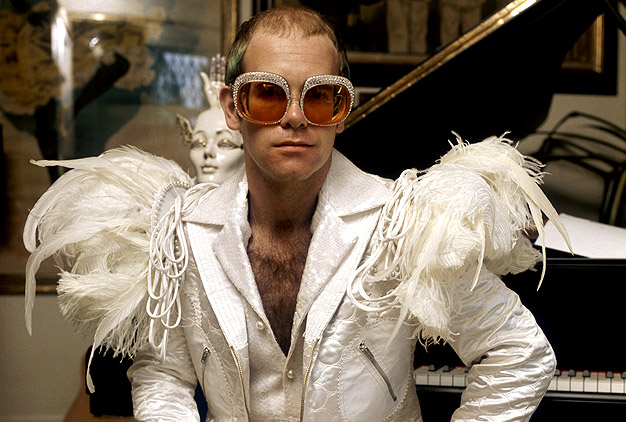
Elton John

We’re full on into the ‘70s now and the belt is Elton John’s for the taking. Elton John, more than any other artist, owned the pre-disco ‘70s. With four chart-toppers and seven top 10s between the 1974 and 1975, John was on fire with stone cold classics. John was already fading by 1976, but the lack of any strong contender and a couple more hits including duet “Don’t Go Breaking My Heart” kept him on top another year. His career lasted forever, and he would have his least likely biggest hit with a putrid remake of “Candle in the Wind” in the late ‘90s, but John would never again be on top of the world.

Contenders: Paul McCarntey and Wings did not go away, hitting the top of the charts in each of these three years. The Eagles were as close as can be from grabbing the belt, and John Denver could almost see the pinnacle. Stevie Wonder had a couple of #1s.


1977:

Stevie Wonder

As 1970s light, easy rock has started to fade away and disco is on its way in, an artist who has lurked around the edges finally gets the crown. Wonder put up two huge #1s in 1977 with “Sir Duke” and “I Wish,” and while he didn’t have a ton of other hits, no one else did either, and he’d been knocking on the door throughout the decade.

Contenders: Paul McCartney, and Elton John, both unsurprisingly.


1978-79:

The Bee Gees

1978 presents the most obvious choice since The Beatles. We’re now full on into the short but overwhelming disco era, the year Saturday Night Fever came out. The Gibb family was so in charge that little brother Andy is the first challenger in line this year. The Gibbs wrote, between the Bee Gees, Andy, Yvonne Ellman’s brilliant “If I Can’t Have You,” and Frankie Valli’s “Grease,” 7 chart-toppers. With 1979, I had a wrenching decision to make. Donna Summer out-charts the Bee Gees to become the biggest disco act that year, and for the last time, in 1979, the biggest disco act was the biggest pop act in American. Summer had three #1s, a couple other top 5s,and was coming off a monster 1978 of her own. Still, the Bee Gees, with a couple more #1s of their own, were still the biggest act in the genre, and I decided to give them the edge due to reputation.

Contenders: Andy Gibb, although it would be hard to ever put him ahead of his brothers, and then disco stalwarts Donna Summer and Chic.


1980:

Donna Summer

Disco’s over, and we have another difficult year, like 1970, where the pop landscape is completely shifting and there is no dominant force.

Genre-bending rock acts Blondie and Queen had their commercial peaks, Paul McCartney and John Lennon both topped the charts a decade after The Beatles’ destruction, and the #1s ranged from country with Kenny Rogers to the dying whimpers of disco with Diana Ross and Lipps Inc.’s “Funkytown.“ This is another year in which I would ideally leave an unclaimed belt. Due to none of these new entrants being particularly convincing, I went with Donna Summer, who was coming off two monster years, and managed to hold on to her momentum slightly longer than the collapsing Bee Gees with top five hits “On the Radio,” and “The Wanderer.”

Contenders: Any of the artists mentioned above – Queens, Blondie, Lennon, McCartney, but really anyone who recorded an album.


1981-2:

Hall & Oates

Hall & Oates hit the big time in the mid-70s, smartly sat out the disco era, and then came roaring back when disco faded as the ‘80s began, untarnished by disco stink, as if it had been part of their plan all along. In 1981, they hit the pinnacle twice with “Kiss on My List” and “Private Eyes,” hit #5 with the much loved “You Make My Dreams” and released “I Can’t Go for That (No Can Do)” which would be the first new #1 of 1982. This was a still a period that lacked a true superstar – the really big superstar era of the ‘80s was right around the corner. Hall & Oates weren’t quite as strong in 1982, but they held on by, as Homer Simpson once said, the two greatest words in the English language, “De” “fault.” Well, that and two more number ones – the aforementioned “I Can’t Go For That” and this author’s personal birthday #1, “Maneater.”

Contenders: Olivia Newton-John. A rare survivor of the disco era, Newton-John changed her sound to adjust for the times and had her biggest hits, first in 1980 with “Magic”, and then in 1981 with the monster hit “Physical.” She didn’t have a ton of hits in ’81, which hurts, but she had a track record and “Physical” was beyond unavoidable. Michael Jackson’s “Thriller,” while the biggest record of the year, didn’t come out until November, and we’ll hear more from Jackson momentarily.


1983:

Michael Jackson

What a delightful surprise. It’s time for our first easy year in a while. Thriller, as mentioned before, arrived in 1982, but not until November, and it was 1983 when the brunt of that album’s megasuccesss really took hold on the pop chart. Somehow, the album only produced two #1s, “Billie Jean,” and “Beat it,” but they were of the never-to-be-forgotten variety, unlike some of Jacksons’ later work. Six of the seven top 10s the album would produce crested this year; “The Girl is Mine” had topped out at #2 the year before.

Contenders: Really, no one, but poor Lionel Richie has his biggest year only to get buried by an all-time season. Richie never gets his moment in the sun in these rankings, despite five #1s and 13 consecutive top 10s to begin his career. The Police’s swan song was also a major event and produced all-time monster #1 “Every Breath You Take.”


1984:

Prince

There’s definitely an argument for continuing Michael Jackson’s reign; despite the fading of Thriller’s numerous hits by this point, the album was such a monster that Jackson’s sheer reputation may have kept the king the king. I chose to go another way, however, to credit Prince for the massive critical and commercial achievement of Purple Rain. While it didn’t match Thriller because nothing could, it sold millions upon millions of copies itself and propelled “When Doves Cry” and “Let’s Go Crazy” to the top of the charts and the title track and “I Would Die 4 U” into the top 10.

Contenders: 1984 is a massive year for contenders. Jackson, as mentioned above. Madonna has an excellent argument for this perch herself, hurt only by her relatively newness – “Like A Virgin,” “Material Girl,” “Borderline,” and “Lucky Star” all crested this year. Critical favorite Bruce Springsteen had his commercial breakthrough; while he never saw the summit, Born in the USA spawned a record-tying seven top 10 singles.


1985:

Phil Collins

I’m torn here. Would anyone actually have called Phil Collins the biggest pop star for a moment in 1985? His record is unparalleled – “Sussudio,” “One More Night,” and “Separate Lives” topped the charts and he had three additional top 10s. No Jacket Required was released in January, helped Collins simultaneously top the singles and album charts, and eventually went Diamond.

Contenders: Madonna had an excellent case; if she’d had her previous year or next year in 1985, she’d have the belt; timing is everything. Whitney Houston had her first #1 but was just starting to establish herself as a major force. Wham! had two #1s including the sax-centric “Careless Whisper;” we’ll hear from member George Michael again.


1986:

Madonna

After waiting on the precipice for two years, Madonna final gets her title, and it’s well deserved. “Live to Tell” and “Papa Don’t Preach” went to #1 while “Open Your Heart” began its ascent to what would be a #1 the next year, and the title track off of True Blue hit #3.

Contenders: Whitney Houston is now officially in the challenger’s seat Madonna last occupied, with two more number ones. Janet Jackson, Michael’s little sis, had her first monster year in the 1986 with four top 10s.


1987:

Whitney Houston

Houston breaks through with the release of her second album, “Whitney.” While some critics complained that the material was a step back from her debut, the public didn’t agree, sending its first four tracks to the top of the charts, the first time ever for a female artist, two of which peaked in 1987.

Contenders: Madonna, as she would for the remainder of the decade, continued churning out hits. Michael Jackson’s Bad arrived in the second half of the year, and led to two chart-toppers; Jackson was quite arguably still the biggest global superstar, but he suffered relative to the monster success of Thriller.


1988:

Michael Jackson

With all due respect to Whitney Houston, who keeps the hits coming, this is a two- man race, and I gave the tiebreaker to the man nicknamed the King of Pop. George Michael reached the height of his hall of fame career with Faith, which would produce four #1s in 1988 alone. Jackson, meanwhile, was cresting off Bad – while largely considered inferior to Thriller then and now, Bad produced a record five #1s, three of which peaked in 1988, and Smooth Criminal, which wasn’t one of them, but may be the best single off the album.


1989:

Madonna

All of a sudden, the era begins to shift. The King of Pop has some more #1s and ridiculously expensive music videos left in him, and a couple of the players who emerged are here to stay, but Michael is starting to fade. Madonna, Janet, and Whitney are still around, but some new contenders arrive. The very biggest years in 1989 are from a handful of acts who would become huge sensations, only to disappear from the scene in less than two years, namely Milli Vanilli, New Kids on Block, and Paula Abdul. I struggled to figure if either Milli Vanilli or New Kids were enough of a sensation to take the belt in a year where none of the established stars had monster years, and erred on the side of Madonna, who topped the charts with “Like a Prayer,” and hit #2 with “Cherish” and “Express Yourself.”

Contenders: New Kids on the Block, Milli Vanilli, Paula Abdul.


1990:

Janet Jackson

What a family, right. It’s finally Janet Jackson’s turn to shine. Her landmark album Rhythm Nation 1814 came out in 1989, but the world didn’t get the full brunt of its success until 1990. Two number ones, two number twos, and she was off and running.

Contenders: The same suspects from ’89. Milli Vanilli, New Kids on the Block, Paula Abdul, and Whitney Houston, Phil Collins, and George Michael.


1991-3:

Mariah Carey

And a new superstar enters the ring. Carey actually debuted in 1990, going straight to number one twice. In 1991, she hit the peak three times, with an additional number two. Carey’s shelf life is longer than most people on this list; she had a number one hit in every year of the ‘90s except one, and she came out swinging right out of the gate. She followed with a less but still strong 1992 and holds the crown due to no other credible challenger stepping up.

Contenders: The ‘80s fully turn into the ‘90s during Carey’s reign. Abdul’s still around for the first year of the decade. Whitney and Janet Jackson are as well, and Boyz II Men begin their climb to the top.


1994:

Boyz II Men

Boyz II Men were the last huge act on the Motown label and the individual members were nearly anonymous. (Anyone over 30, name a single Boyz II Man. Go) They only pushed two singles this year, but they were both chart-toppers, and one was the big one – “I’ll Make Love To You” which ran the table for 14 straight weeks. Additionally, they amazingly became the first act to chart back-to-back #1s since The Beatles. Not too shabby.

Contenders: Carey is still a serious player, and a contender on reputation alone, but she had her slowest year of the decade. Janet Jackson was running out the tail end of a string of hits from her janet. album. Madonna, who would pump out hits impressively for another fifteen years, had her last year as a true contender, with three top three hits.

Summer 2015 Review: AMC’s Fear the Walking Dead

26 Aug

AMC's Fear the Walking Dead

I have been fearing AMC’s Fear the Walking Dead. Not being afraid of the gruesome zombies, but rather dreading watching it. I have a complicated relationship with the original. I don’t think it’s nearly as bad, on the whole, as its detractors do, but I’m not a huge follower either. I sit somewhere in the middle, watching week after week, but never quite really looking forward to it either. Just when I start to consider walking away, the show delivers a standout episode or a brutal and incredible moment, just enough to keep me going through a number of poorly-paced and on the nose episodes.

For whatever its faults, AMC’s The Walking Dead’s pilot was excellent television, still the best episode of the series to this day. That pilot made a structural choice which worked out brilliantly. The protagonist, Rick Grimes, was in a coma while the zombie revolution started to take place, so when he came out it zombies were already a reality of life, not something for the general populace to slowly grow used to and reckon with. This helped us skip a lot of what would have ended up being completely unnecessary exposition charting the zombies’ general rise and people having to figure out that zombies are real and such. It was already happening.

AMC’s Fear of the Walking Dead, inarguably trying very hard to be unique and necessary to fight the accusation that many people (myself included) make, calling it an unnecessary sequel, takes a different tack. This one starts at the beginning, at the very first appearance of zombies, back when nobody has a clue what the world would turn into shortly. Rather than initially focusing on one man, this focuses on a family. Underrated TV rock star Kim Dickens plays Madison, a high school guidance counselor and mother of two kids. Her new beau, played by underrated member of the can-play-any-ethnicity John Turturro Hall of Fame Cliff Curtis, is a teacher at her school, and has just moved into the house. Her kids are high school junior and super bright overachiever Alicia and 19-year old drug addict Nick.

So, at first, it’s a family drama with only a very limited impact of zombies. We know that Nick saw a zombie attack at the church where he does drugs, causing him to run out in the street and get hit by a car. Everyone else, largely including himself, however, thinks he’s hallucinating due to the effects of the drugs, or that, probably due to a life of drug consumption, he’s simply lost his mind. The kids already resent Madison’s new beau, and the family is struggling to try to help and believe Nick, but he’s an addict, tried and true, and he always wants to go back to that life. Alicia can’t wait for high school to be over so she can get the hell out of dodge.

Secondary characters mention the notion of zombies (without using that word – of course – for some reason no one in the AMC’s The Walking Dead universe calls them zombies, which obviously everyone would in real life) but they’re dismissed out of hand, which is exactly how normal people would react. A videotaped zombie incident causes a huge traffic snarl on a freeway (classic L.A.) and eventually the family runs into their first zombie when Nick accidentally kills his dealer in self-defense, only to find the body is gone, and that he’s somehow still alive after continually taking a beating and being run over by a car.

AMC’S The Walking Dead did us that service of skipping the awkward phase that almost any show with magic, science fiction, or supernatural events has to go through, where reasonable people disbelieve, disbelieve, disbelieve, to show us they’re doing what normal people would do, and then eventually come around to believing the unbelievable, because the show would either be boring, or simply not make sense, in the case that they didn’t. This journey from skepticism to belief is rarely interesting and usually only serves a narrative purpose of showing us that the characters are rational like us. It’s not any more interesting here.

Now, there’s absolutely a potentially interesting element in starting off earlier in the zombie epidemic. Seeing the early stages of the response by the military and private individuals and groups, and how they conflict and interact, and how quickly morals fray as people begin to realize that there’s no going home again, certainly not any time soon. And hopefully we’ll get there eventually in AMC’s Fear the Walking Dead, and I’m sure we’ll more towards that over the course of the season. Unfortunately, in the tedious hour-and-a-half (with commercials) first episode, we don’t get anywhere close as a shockingly little amount happens.

AMC’s The Walking Dead went all out with its pilot; no one having known it would be a huge hit, and that pilot got people talking and inevitably got people watching. AMC’s Fear the Walking Dead probably feels more secure in its place and felt okay about slowing it down and pacing its plot leisurely over the course of the season. Unfortunately, pacing has never been AMC’s The Walking Dead’s strong suit, and almost destroyed the show in the second season. Slow, slow, slow, until a huge event or two has often been the order of the day and has made the show difficult to keep up with at times. Sure, characters are important and in theory slow burn of character development can be telling (see: Rectify), but this wasn’t the case here and we really could have used to get more from a pilot.

AMC’s The Walking Dead often thinks it’s being important and interesting when it’s not, and while it’s just important and interesting enough to keep me watching at the best of times, it feels like it’s trying really hard without getting results throughout the pilot here. The creators know deep down that zombies are their hook, their modus operandi, what makes their show go, but they want to show off the personal family drama that they believe is the core, and it really doesn’t impress. Without the zombies and the imminent destruction of the known world, there wouldn’t be any reason you’d want to continue watching this show after one hour.

Will I watch it again? You know what, I have agency. I say here I’m not going to watch the second episode, at least for a while. Someone has to take a stand against the ballooning of this show. Since this inevitably will become super popular and I do love Kim Dickens, I’m not pledging to never watch more. Just at least a couple of weeks of silent protest before I give in.

The Pop Chart Championship Belt: Part 1

24 Aug

Elvis Presley

Grantland has made an art out of handing out a proverbial wrestling-style “Championship Belt” over time in several fields – they’ve done it for quarterbacks, NFL defenses, and even American rock bands. The idea is that at any given point in time only one QB or defense or band can hold the championship belt, and the belt is up for grabs anew every year.

Where no one has yet to take this concept, at least as far as the cursory Google searches I’ve made have shown, is to the world of pop music. So here we go.

The goal here is to crown the objectively biggest pop star in the US at any given point in time. In theory, if you were to ask a large number of pop music-attuned people in a given year, this should be the person who would receive the most votes.

Here are a few ground rules:

  1. Solo artist, duo, group, it doesn’t matter; they’re all equally eligible.
  1. Charts matter – this is, after all, ultimately a popularity contest, and the charts are the single biggest way to establish popularity, especially when I’m picking between artists in years before I have personal experience. While the artist doesn’t need to have topped the charts in the calendar year, it helps, and it’s virtually impossible to hold the belt without at least a couple of top five hits.
  1. History and reputation matters – we’re trying to answer the question of who would be identified as the biggest pop star in the country at any given time, so even artists who have mammoth rookie years are unlikely (though certainly not unable) to be considered the biggest without some semblance of longevity. For example, even though Iggy Azalea may have had the biggest year in pop music in 2014, no one would consider her the biggest pop star in the country, and the fact she has just a year of success is a significant part of that.
  1. Critics don’t matter – This is a commercial list; critics only matter in as much as they contribute to the aura and reputation that might translate indirectly into popularity.
  1. The belt changes hands every calendar year. This is an entirely arbitrary decision, as music doesn’t work seasonally like sports, but we need to make an arbitrary cut off somewhere, because a month-by-month review would at least double this already ridiculously long piece. This does unfortunately screw over some artists who might have ruled over some summer-to-summer periods, and I’ll try to note a few, but them’s the breaks.
  1. We start at 1956. 1955 is traditionally considered the dawn of the rock era, but to be frank, I had no idea what to do with that year so I just started with the much more obvious belt year of 1956.

Some years were blindingly obvious, some years were incredibly tough and resulted in me virtually tossing a coin in my head. Especially in the earlier years it’s possible I’ve erred particularly with hindsight bias, being more likely to give the belt to the artist that seems bigger in retrospect, relative to what it may have been like at the time, but I do my best. I’ll include a shortlist of contenders for each year, to provide a ready-made platform for anyone who wants to argue with my choices.

Let’s begin.

1956-61:

Elvis Presley

As I mentioned above, 1956, the first year Elvis appeared, was one of the easiest years in this entire exercise. Elvis, in these early pre-British Invasion years, was a dominant chart presence, with 12#1s and 27 top tens through 1961. He was so big that the army couldn’t even stop him; during his stint from 1958-60, he had ten top 40 hits. Presley had faded significantly from the sheer mania of his first years by the end of this run, but in this era there weren’t a lot of dominant players, and fewer who lasted more than a year or two before burning out. No one stepped up and took the belt from him while he got weaker.

Contenders: Frankie Avalon for a brief spell in 1959 was on top of the world; he had the looks and hit singles “Why” and “Venus.” Chubby Checker – the Twist really was that big of a deal, so big that its sequel was massive; imagine the Macarena spawning a sequel which then also hit the top 10.


1962-63:

The Four Seasons

After years of struggling towards success, The Four Seasons broke out in a big way in 1962, and over the course of a year, sent three consecutive singles skyrocketing to the top of their charts, “Sherry,” “Big Girls Don’t Cry,” and “Walk Like a Man,” (omitting their holiday cover of “Santa Claus is Coming to Town”) along with #3 hit “Candy Girl” for good measure.

Contenders: Elvis Presley was still charting hits, and though he had fallen from the stratosphere, his reputation could easily have been strong enough to carry him here; it’s hard to evaluate from this distance. The Beach Boys had a huge 1962.


1964-65:

The Beatles

The Beatles absolutely owned 1964, with four #1s, which would be enough in and of itself, but they threw in a couple of number twos, a number three, and a bunch of lesser hits, as they just spewed hits at a rate not seen before or since. They outdid themselves in 1965. Five #1s. The cool, critical, and still mega-popular albums were still to come, but this is as big as they ever were chart-wise.

Contenders: The Supremes were the only other act within shouting distance, with a crazy seven #1s of their own, representing Motown, the other strand of popular music to rise alongside the British Invasion. Herman’s Hermits were well too in the Beatles’ shadow to be serious contenders, but they had a strikingly big year with a couple of #1s and five additional top 10 hits. The Rolling Stones were probably the second biggest band in America, churning out many hits, and were also defined partially by their reputation as the anti-Beatles.


1966-67:

The Monkees

At first, I had The Beatles maintaining their hold on the belt during these two years, but after some reading and thinking, I gave The Monkees their due. It’s hard to imagine, as someone who wasn’t there, The Monkees being bigger than the Beatles, but in 1967 The Monkees outsold The Beatles, who had stopped touring, and The Rolling Stones combined. They had an astonishing four albums reach the top of the charts in a little over a year, and topped the singles charts with “Last Train to Clarksville,” “I’m a Believer,” and “Daydream Believer.”

Contenders: The Beatles. They were still, well, The Beatles, and they still pumped out a bunch of hits.


1968-70:

The Beatles

The Monkees were proven a fad, collapsing in 1968, and The Beatles merely took their title back by default, in a span where “Hello Goodbye,” “Hey Jude,” “Get Back,” “Come Together,” “Let It Be,” and “The Long and Winding Road” were chart-toppers. The Beatles put out a #1 album each year with the White Album, Abbey Road, and Let It Be.

Contenders: The Jackson Five killed it in 1970 with four #1s. If not for the Beatles coming apart, they would have stolen the day.


1971:

The Jackson 5

The Beatles are gone, throwing the belt to the ground as they walk off into the sunset. The pop-sphere is plunged into darkness and we’re in one of our most difficult eras to crown champions. This is already a bit of a legacy pick. As mentioned above, The Jackson 5 actually killed it in 1970, with four #1s, which would have put them at the top just about any other year. The Jackson 5 didn’t have nearly as good a year in 1971, with a couple of #2s and a couple of lesser hits, but 1971 was a barren year dominated by absolutely no one, giving the Jacksons, who had replaced the Supremes as the biggest Motown act, a chance to shine.

Contenders: The Carpenters. Only in the ‘70s could a group as utterly mild as The Carpenters rise to the top, but the Carpenters had three top three hits following up a strong 1970. Three Dog Night had four top 10 hits including the biggest song of the year, “Joy to the World” but it’s hard to imagine them being considered that highly. Marvin Gaye had three top 10 hits off the monumental What’s Going On.


1972:

The Carpenters

The single most barren year in this entire exercise, 1972 almost makes 1971 look like a cakewalk. The Jacksons have faded, replaced by Michael’s solo career still in its very early phases. I wish I could hand no one the belt for a year, but that’s not how the game works. I can barely defend this pick except by saying none of the possibilities were convincing. The Carpenters had a monster 1971, and they actually still existed and put out music the next year with top 10 hits “Hurting Each Other” and “Goodbye to Love.”

Contenders: Elton John appeared on the scene with four hits, “Crocodile Rock,” “Tiny Dance,” “Rocket Man,” and “Honky Cat.” I’m unsure exactly when superstardom hit. Roberta Flack had her first huge hit “The First Time I Ever Saw Your Face” and the #5 “Where is the Love.”


1973:

Paul McCartney and Wings

Obviously it’s a huge advantage, popularity-wise, to have been part of the biggest rock band of all time, but McCartney did not rest on his laurels. He and his band mates in Wings hit the top of the charts with “My Love”, hit #2 with James Bond theme “Live and Let Die,” and had two more top tens.

Contenders: Elton John, again, who we’ll see more of momentarily, released his landmark Goodbye Yellow Brick Road album with hits “Daniel,” “Saturday Night’s Alright for Fighting,” and the title track.

Part 2 an be found here and part 3 can be found here.

Summer 2015 Review: Documentary Now!

21 Aug

Documentary Now!

Documentary Now! is a series of entirely stand alone documentary parodies that seem to roughly mirror specific documentaries and documentary styles. Helen Mirren opens each episode, posing the series as celebrating the 50th anniversary of hallowed documentary anthology Documentary Now! by showing noteworthy documentaries from the program’s history.

The first episode is quite obviously a Grey Gardens parody. Unfortunately, I’ve never seen Grey Gardens, the celebrated ‘70s documentary about an eccentric mother and daughter in Eastern Long Island, so my review is somewhat limited. Since it’s a positive review, however, I’m confident regardless that I’ll only like future episodes whose subjects I’m more familiar with more. Fred Armisen and Bill Hader play a reclusive mother and daughter, respectively, like Big and Little Edie from the original, who are pretty batty and live in a somewhat isolated house that is in shambles. Like the original Grey Gardens, the documentary is being filmed by a pair of brothers.

There are surely distinctive little Grey Gardens touches I’m not getting, and I wish I was, but I really don’t need to get them to appreciate this show for what it is; a couple of people just having a ton of fun, spoofing specifics but also getting a chance to be extremely silly. The amount of fun they’re having comes right through the TV. Oh, and Documentary Now is pretty funny as well.

The Grey Gardens parody takes a turn in another direction, and while it’s not particularly surprising if you’re watching, it is natural, and it was funny. The two characters are delightful weirdos and their interaction is fantastic before the plot twists at the end. It’s a very unserious half hour that takes a great concept and has a really good time doing it. There’s really nothing not to like here. Fred Armison and Bill Hader are having a ball. The show is short, silly, and to the point, and with the format, there’s no need for consequences.

I know this is a short review, but there’s no complicated characters or themes. It’s funny, and it’s short. Just watch it.

Will I watch it again? Yes. It’s funny. It’s short. It’s fun. It has people I like. Why the hell not?