Power Rankings: Firefly, Part 2

24 Jan

Part 2 of our Firefly Power Rankings.  Part 1 can be found over here.

4.  Alan Tudyk (as Hoban “Wash” Washbourne) – The year after Firefly ended, Tudyk appeared as Steve the Pirate in Dodgeball: An Underdog Story.  Next he was in I, Robot, Death at a Funeral, 3:10 toYuma, and Knocked Up as Katherine Heigl’s boss.  He was in episodes of Arrested Development, as Pastor Veal, and CSI: Crime Scene Investigation.  He was in three episodes of V and four of Dollhouse. He’s been a voice actor, voicing characters in Ice Age; The Meltdown, Astro Boy, and Alvin and the Chipmunks: Chipwrecked, as well as in cartoons Batman: The Brave and the Bold, Young Justice, American Dad, and Family Guy and video game Halo 3.  He appeared in Transformers: Dark of the Moon and now appears in the main cast of successful first year ABC sitcom Suburgatory.

3.  Morena Baccarin (as Inara Serra) – She had a vocal role in three episodes of Justice League as Black Canary and appeared in three episodes of The O.C.  She was in single episodes of Kitchen Confidential, How I Met Your Mother, Justice and Las Vegas.  She appeared in six episodes of Stargate SG-1 season 10 as primary antagonist Adria.  She co-starred in TNT Treat Williams-led one season hospital drama Heartland.  She appeared in individual episodes of Dirt, Numb3rs, Medium, The Deep End, and The Mentalist.  She starred in two season ‘80s remake V on ABC as villainous alien and primarily antagonist Anna.  Her most recent role is starring in Showtime smash new series Homeland as Jessica Brody, the wife of longtime prisoner of war inIraq, Nicolas Brody.  I almost put Baccarin second because of Homeland, but changed my mind.  Still, it gets her third over Tudyk.

2.  Gina Torres (as Zoe Washburne) – She was in two episodes of The Guardian and in Matrix Revolutions (she was in the other two as well, but they came out before Firefly was done).  She appeared in seven episodes of 24 as Julie Milliken, wife of an important donor to President Palmer’s campaign, who had an affair with Palmer’s brother Wayne.  She appeared in a vocal capacity in six episodes of Justice League as Vixen.  She was in two episodes of The Shield, one of Without a Trace, and three of Alias, reprising a character she had played before Firefly.  She was the titular wife in I Think I Love My Wife.  She co-starred in one season Standoff on Fox aside Ron Livingston and Rosemarie DeWitt.  She was, over the next few years, in single episodes of Boston Legal, Bones, Pushing Daisies, The Unit, Drop Dead Diva, The Vampire Diaries, and The Boondocks.  She was in two episodes of Dirty Sexy Money, Eli Stone, Flash Forward and Gossip Girl.  She was in ten episodes of ABC Family’s Huge as a director of a camp for overweight kids and voiced Airachnid in the current Transformers: Prime animated series.  She’s currently co-starring in USA’s Suits as a lawyer and boss of main character Harvey Specter.
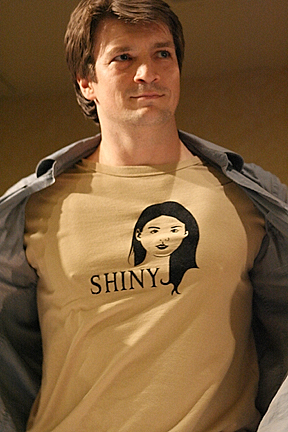
1.  Nathan Fillion – Immediately after Firefly’s end, Fillion was a recurring character on Alicia Silverstone one season sitcom Miss Match.  He was in two Justice League episodes as the voice of Vigilante.  He was in a flashback episode of Lost as a fiancé of Kate’s.  He got a second attempt at starring in a series in Fox’s Drive, but the show lasted a mere 6 episodes.  Fillion appeared in Waitress and in two episodes of One Life to Live.  He showed up in 11 episodes of Desperate Housewives as Dana Delany’s character’s ex-husband.  In 2008, he co-starred in internet production Dr. Horrible’s Sing-Along Blog by Joss Whedon.  He lent his voice to three episodes of Robot Chicken.  He got his now biggest role in 2009, with the debut of ABC’s Castle, now in its third season, and already renewed for a fourth.  Fillion has also voiced characters in several video games, including Halo 3: ODST, Halo: Reach, and Jade Empire.  Playing the titular character in a successful show that has run longer than anyone else from Fifefly’s (well, except Adam Baldwin’s Chuck) gets him the top position.

Power Rankings: Firefly, Part 1

23 Jan

(Power Rankings sum up:  Each week, we’ll pick a television show and rank the actors/actresses/contestants/correspondents/etc. based on what they’ve done after the series ended (unless we’re ranking a current series, in which case we’ll have to bend the rules).  Preference will be given to more recent work, but if the work was a long time ago, but much more important/relevant, that will be factored in as well.)

Firefly’s a pretty great show which ended far too soon and I’ll certainly look for an opportunity to talk about it in the future.  For now though, let’s take a look at how the cast are doing these days with a Power Rankings.   To avoid redundancy, we’ve avoided mentioning Firefly feature film Serenity in everyone’s entry; they’re all in it.  Other minor trends to watch include providing voices in the Justice League cartoon and in Halo 3.

9.  Sean Maher (as Simon Tam) – Maher was in episodes of CSI: Miami, Ghost Whisperer, The Mentalist, Human Target, Warehouse 13, and the pilot of Lifetime’s Drop Dead Diva.  He was in TV movies Halley’s Comet, The Dive from Clausen’s Pier, and Wedding Wars.  He was in five episodes of ABC Family teen gymnast series Make It Or Break It and was a cast regular on the short-lived NBC show The Playboy Club.

8.  Ron Glass (as Shepherd Book) – By far the oldest member of the cast, Glass did a lot more work before Firefly than just about any cast member, but not as much after it.  Still, he was still acting, which is a lot more than you can say about a lot of former cast members from other shows in their 60s.  He was in episodes of The Division and CSI: NY, two episodes of Dirty Sexy Money, and three of Shark.  He lent his voice to a recurring role in Nick’s Rugrats sequel All Grown Up!  He was also in films Lakeview Terrace and Death at a Funeral.  He gets the edge over Glass for seniority.

7. Jewel Staite (as Kaylee Frye)  – Staite appeared in episodes of Dead Like Me, Huff, and Canadian show Cold Squad.  She was in four episodes of Wonderfalls.  She was a recurring character in seasons 3 and 4 of Stargate: Atlantis, and joined the main cast for the fifth and final season.  She appeared in episodes of Warehouse 13 and Supernatural and in TV movies Mothman, Call Me Mrs. Miracle, and Doomsday Prophecy.  She’s currently appearing in the first season of Canadian drama The L.A. Complex.

6. Summer Glau (as River Tam) – Here’s the first big deliniation in tiers.  While there are no total losers, or really anything close, on Firefly, the final six actors have all had main cast roles in TV shows, and most of them have had multiple.  After the demise of Firefly, Glau was in episodes of Cold Case, CSI: Crime Scene Investigation, and TV movies Mammoth and The Initiation of Sarah.  She was in seven episodes of The Unit and nine of The 4400 as a paranoid schizophrenic.  She started her biggest post-Firefly role in 2008 in Fox’s Terminator: The Sarah Connor Chronicles.  For two seasons, she played Cameron, a future terminator sent back by John Connor from the future to protect himself.  She portrayed herself in an episode of The Big Bang Theory and appeared in four episodes of Joss Whedon show Dollhouse.  She was in episodes of Chuck and Alphas and starred in one season NBC show The Cape.

5.  Adam Baldwin (as Jayne Cobb) –Ranking the last five (even the last six, really) was extremely difficult.  I was splitting at hairs to pick the next two spots.  Baldwin was in episodes of JAG and NCIS, two of Stargate SG-1, and five in the last season of Angel as Marcus Hamilton, a non-human who is a child of one of the senior partners of the best evil law firm ever Wolfram and Hart.  He voiced characters in three episodes of Justice League, and co-starred in one season Fox show The Inside.  He was in a TV movie of The Poseidon Adventure and in episodes of Bones, Invader ZIM, CSI: NY and Love Bites.  He was a regular in one season Taye Diggs show Daybreak.  He is a frequent video game voice actor, appearing in Halo 3, Half-Life 2: Episode Two, Mass Effect 2, DC Universe Online, Mass Effect 3, and Transformers Universe.  For the last five seasons, he’s been a main cast member on NBC’s Chuck as Major John Casey.

Spring 2012 Review: Are You There Chelsea?

20 Jan

I run out of things to say about these generically terrible comedies.  Distinguishing between them is difficult and sometimes feels like splitting absolutely pointless hairs.  Grouping them is also an alternatively interesting and useless experience.  Are You There Chelsea? belongs firmly to one of this year’s hot categories, series about bawdy women that show that women can get right down in the gutter with guys along with  Whitney went there, as did 2 Broke Girls (Unsurprisingly Whitney Cummings, behind Whitney and 2 Broke Girls, made several appearances on Chelsea lately).

Are You There Chelsea? stars That 70’s Show’s Laura Prepon as Chelsea, a veiled Chelsea Handler-based character. Chelsea is an unrepentant sinner, getting drunk and having sex as she pleases.  When at the beginning of the first episode, she gets a DUI, she has a moment when she decides she needs to reevaluate her life.  The hook is that, if this was an traditional, classic show she’d realize she needs to get her life together, but here what it means is that she needs to get an apartment that’s walking distance from the bar where she works.  That’s good, in theory, in that it’s modern thinking.  I’d certainly rather that outcome than her life suddenly changing drastically.  The problem is that the show acts as if that unrepentant party girl attitude is just enough in and of itself to sustain a good show.  I’m not sure whether it’s supposed to shock the conscience or just be genuinely funny, but it’s not either.  Comedy has moved past the point where the  non-traditional sitcom arc of Chelsea’s life is novel.

The show is multi-camera and has a laugh track.  If there was any sense of comic timing present in the show at all, the laugh track murders it.  It’s also complete with the usually unhelpful crutch of narration.  Entries and books could be written about the use of narration, and at its best, it’s pointed and helps us get in touch with the mental state of a character or keeps us up to date with the story so events can happen without being shown.  At its worst it points out things we can figure out on our own or adds unnecessary sentiment.  Sentiment should be earned by events that happen in the show rather than said.  At the end of the first episode, Chelsea is right beside her sister who has just given birth.  This is supposed to be a touching moment, but in case you couldn’t figure that out,Chelsea reinforces the fact with some unnecessary narration.  Are You There Chelsea? tries to be unconventional in its subject matter (the whole drunk, bawdy woman thing) but traditional in its approach with the filming method and the healthy doses of sentiment and none of it works.

The show was originally called Are You There Vodka? It’s Me Chelsea, but that title was changed due to some regulations about using the word vodka in a network show title.  Still in the script though is the use of that original title as a line within the first three minutes of the show, as Chelsea asks that question when she is in jail for her DUI.  The new title Are You There Chelsea? makes absolutely no sense but it doesn’t use the name of an alcohol product, for whatever that’s worth.  It’s also slightly confusing that Chelsea Handler plays character Chelsea’s older sister.

It’s a shame all these shows are so bad because there’s absolutely no reason there shouldn’t be a funny show led by a late 20-something dirty girl.  There just isn’t.

Will I watch it again?  No.  I feel bad when I judge shows before watching them.  I feel slightly less bad when I judge them within one minute of their starting.  It’s definitely not completely fair, but 90% of the time you can tell whether there’s a chance of a show not being terrible.  Of course, I still stuck around for the whole episode, but I suppose my mind could have been made up by then.  That said, I’m no less confident that the show was terrible.

Spring 2012 Review: Luck

19 Jan

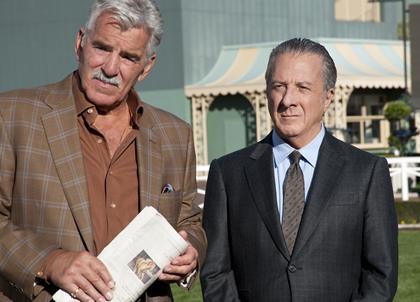
To watch Luck is to be whisked away into the less than glamorous world of horse racing.  The show opens with the release of Chester “Ace” Bernstein, portrayed by Dustin Hoffman, from a California prison. He’s picked up by his driver, played by Dennis Farina.  Berstein is eager to get back in the game, , the game being something shady but ostensibly money making involving horse racing, and because as a convicted felon he apparently can’t own horses anymore, he has his driver get a license.  Hoffman meets with an old acquaintance and has a discussion about getting back into the game,  though it seems later in the episode that the meeting may have served a different purpose entirely.

Degenerate gamblers are a plenty.  Luck focuses on four of them, one of whom seems to be a expert handicapper, which we can tell because a security guard at the track is willing to pay him fifty bucks just for his picks.  The four gamblers pool their money towards the lucrative pick six, the big jackpot reserved for picking the winners of six consecutive races.  This day luck runs their way and the four of them win a couple million between them.  Other characters include a couple of trainers working to get their horses ready for their races, a green jockey who doesn’t understand his role, and the jockey’s agent who tries to straighten him out.

I don’t know anything about horse racing.  I can count the number of times I’ve been to the track on one hand, and all of those times were with my great uncle; when he came to visit from Florida, we’d all go to the track.  The track to me, in spite of years of the “Go, baby, Go” campaign, has already represented sleaziness and Luck seems to reinforce that image, though making the sleazy behavior far more interesting than anything I’d previously imagined.  I’ve always found the idea of handicapping fascinating, that someone can go through reams of data and beat the odds, but I have no idea how it works.

Luck is created by David Milch of Deadwood fame, and like Deadwood, the language spoken on the show is English but a strange dialect of English which will inevitably take me a few episodes to understand.  I spent some time on the internet looking up a couple of terms that were used in the show.  I was quite confused after the first episode of Deadwood and it took me at least three episodes before I began to figure out what was going on.  I don’t mean this as a criticism; in fact, more the opposite, and distinct language can be a rare commodity on TV.  That said, if I hadn’t made the decision ahead of time to watch more of Deadwood, and hadn’t heard other good reviews I may not have stuck around long enough to understand the language.  I know better this time around.

It’s a world though that I’m interested in learning more about.  There were two primary angles for season long plotlines that came out of the debut.  First, Bernstein, it seemed like, was concocting some sort of plan, possibly to get back at the people who put him in jail (I actually had to watch the least scene again to try to figure out exactly his plan, and I still don’t).  Second, figuring out what the next step is for the four gamblers and newly minted millionaires (well, half a millionaires).  Beyond these two, there’s certainly ample ground for plotlines involving the agents, jockeys and trainers that not as much time was spent on in the first episode.

Will I watch it again?  Yes, I will.  I’m not sure it will be great, but it certainly looks as though it has a shot at it, which is more than most shows can say.  There are some strong actors and an interesting subculture.  David Milch knows how to put together a show, and I’m willing to give at least half a season to him to see him get started.

The Top Ten Strangest Saturday Night Live Musical Guests, Part 2

18 Jan

Time for part 2 of our countdown of the ten, but really eleven, strangest Saturday Night Live musical guests.  You can find part 1 here which contains the first five and the criteria for appearing on the list.

6.  Ray LaMontagne – Super hot critically acclaimed but not singles charting indie rock bands have become a bit of a minor mainstay on SNL.  TV on the Radio and the Fleet Foxes have appeared, and Bon Iver is slated to shortly. Even though Ray LaMontagne actually charted, albeit barely with a #90 hit on the Hot 100 and a #34 Rock hit, his appearance seems much stranger to me due to the type of music he plays.  At least TV on the Radio and Fleet Foxes are probably big hits with the type of audience which Saturday Night Live is most likely to draw.  LaMontagne is certainly more popular than a couple of the artists on this list overall in the US, but just seems like an odd fit for the program.  This is especially true considering that I would wager that LaMontagne’s music is  best known for his song “Trouble” being used in a Traveler’s Insurance commercial with a cute dog.

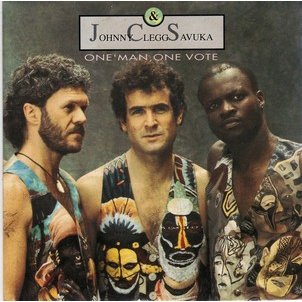
5. Johnny Clegg and Savuka – Clegg and his backing band Savuka are apparently important pop music artists in South African music history.  In 1988, when Clegg and Savuka performed, I suppose America was only two years removed from Graceland making all things South African music hip and with apartheid still in place, political music with songs on such topics as advocating the release of Nelson Mandela was very relevant.  The most prominent song by Clegg may have been “Scatterlings of Africa” which appeared on the Rain Man soundtrack.  Still, this is a stretch, even in a year when SNL was clearly into world music; the Gipsy Kings appeared later in the season.

4.Lana del Rey – in a year or two, or even a month or two, this choice of musical guest might seem rote and hip, but this is Saturday Night Live taking its role as cultural curator more seriously than it ever has.  Usually an artist appearing on Saturday Night Live has some semblance of mainstream popularity (exactly what mainstream is of course needs to be defined) but also more than two songs.  The bands mentioned in the Ray LaMontagne section were certainly independent but had all released super critically acclaimed albums, and all of them sold enough albums to chart fairly high on the Billboard 200 (all relative of course since no one buys albums anymore).  Lana del Rey’s album doesn’t even come out until after her SNL appearance, and her appearance is basically coming on the heels of the success of her song “Video Games,” which has made critical waves (she was one of the most polarizing figures in the indie community in 2011) but not broken through to the mainstream.

3.  The Tragically Hip – if this was Canadian Saturday Night Live, I’d expect them to have appeared a dozen times.  I started counting how many top forty hits they had in Canada and then lost count and stopped.  It’s not Canadian though, and the closest to chart success The Tragically Hip have had in the US is three appearance on the mainstream rock chart, the highest of which was #16.  The highest album chart appearance was #134 for 1996’s Trouble At The Henhouse.  Haven’t heard of it?  Not surprising.  I can’t imagine that most people south of Buffalo, New York had heard a Tragically Hip song in 1995 when they were the musical guest.  Allegedly fellow Canuck Dan Aykroyd played in influential role in getting them onto the show.

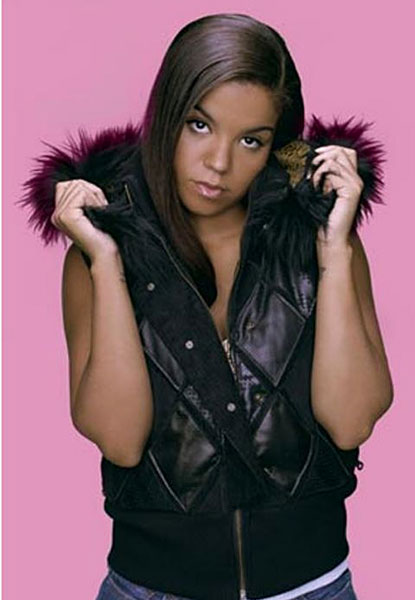
2.  Ms. Dynamite – maybe there’s a parallel universe in which this appearance looks prescient instead of strange, and heralds the coming of a new star female British rapper, like, well, there haven’t really been any in the US, but Lady Sovereign at least kind of had a hit.  It’s true that Dynamite was having a huge rookie year in the UK, with two top 10 singles and a third in the top 20 from her debut album A Little Deeper, but she hadn’t even scratched or sniffed or anything else the slightest bit in the Western Hemisphere.  Sure, the album hit the Billboard 200, at the ripe spot of 179.  Basically nobody in America knows who she is now, and nobody ever knew who she was.

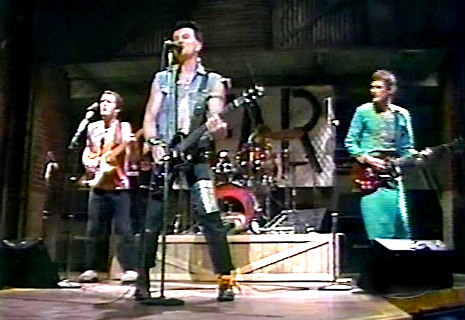
1.Fear – The early years of Saturday Night Live are strange, as the institution has changed over the years, and the rules about what kind of musical acts came on probably hadn’t hardened completely even by the 7th season in 1981, the year Fear appeared on Halloween.  Still even by the more lax early season standards, Fear was unique.  A strong statement is to be made when the most famous thing about a band is their appearance on Saturday Night Live, which is pretty much the case for Fear.  They appeared as a personal favor for fan and former cast member John Belushi, who got them the gig in exchange for breaking his arrangement to have them soundtrack his movie Neighbors, after the producers of the movie did not agree to use Fear.  They brought moshers, and caused 20 thousand dollars in damage to the studio.  They didn’t even release an album until half a year after their appearance on the show, though they had been together for five years.  I almost put them lower on the list, but the more I looked, the more I felt I’m not even sure there is a close second to Fear.  There’s no other band like them that’s ever played on SNL.  SNL was extremely eclectic in those early years, and had many acts which were not pop or rock, but nothing else even resembling the hardcore punk of Fear.

The Top Ten Strangest Saturday Night Live Musical Guests, Part 1

17 Jan

Inspired by the awkward performance of Lana del Rey, and the strange decision to put her on the show in the first place, I’ve decided to try my hand at a list of the strangest Saturday Night Live musical guests.

Note on what I mean by strangest:  First, this has absolutely nothing to do with their actual performance on the show.  This is based entirely on the strangeness of the choice of guest.  Second, this has nothing to do with the particular sound of the artists.  This is based on how odd it feels for the particular guest to have been chosen to appear, in terms of general popularity in the US, popularity with SNL’s audience, popularity in terms of the type of music, and a couple of general oddities.  There’s a lot of arbitrariness as there has to be in any list like this.

One more caveat:  This started out as a top ten, but I can’t count.  When I realized I had an eleventh artist I wanted to include, I didn’t feel like eliminating any of the artists I had already written about.  Consider it a bonus artist..  Enjoy.

First a couple that didn’t quite crack the list, a few of which didn’t because they were from the early seasons of SNL and everything was kind of wacky back then so their lack of inclusion says more about the show at the time than how odd the artists were.  Maybe I’ll do an add on for these artists at a later date.

Honorable mentions:  Leon Redbone, Preservation Hill Jazz Band, Leon and Mary Russell, The Notting Hillbillies, Queen Ida & the Bon Temps Zydeco Band, Mink DeVille

Now to the actual list:

11.  Pervis Hawkins – Lily Tomlin hosted a season 8 episode in 1983.  She also appeared as the musical guest in the guise of her character Pervis Hawkins, an African American male R&B singer.  Yes, this sounds as ridiculous to me as it should to you, unless you’re already familiar.  I found out more by digging up a New York Times article from 1982 in which Tomlin spoke of the character.  “Purvis is expansive, elevated, easy, real smooth in a wholesome way. I don’t feel as if I portray characters, though. They have a life of their own. It’s more like I imitate an essence.,” Tomlin commented.  I suppose die-hard Tomlin fans are familiar with the character, but I doubt most SNL viewers were then or now.

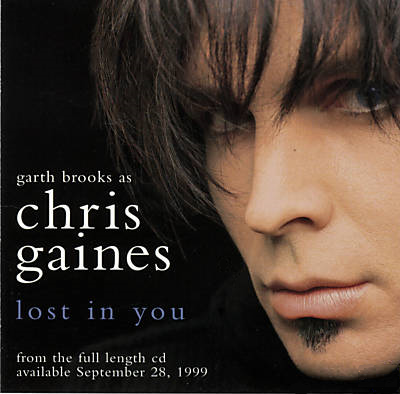
10.  Chris Gaines – This isn’t here for how unlikely it was to have the person on SNL; it was after all an alter ego of Garth Brooks, one of the most popular artists of the decade.  It’s here rather for what a bizarre circumstance it was for said popular artist to be portraying an entirely different persona as the musical guest, while hosting the show as himself.  If Garth Brooks was the Michael Jordan of country in the 1990s, Chris Gaines was his retirement to play baseball.   It’s kind of mind blowing and it never really took off the way he wanted it to, but he did come out with one legitimate hit single, Lost In You, which was his only Hot 100 top 40 single of his career.  Other popular artists have halfheartedly taken on personas, but none as fully as Brooks with Gaines since.

9.The Roches – Who are the Roches?  I’m glad you asked, because I had no clue.  Three Irish-American sisters  who record folk music and appeared on SNL in 1979.  Their most well-reviewed album was 1979’s The Roches, which was #11 on the Village Voice’s annual Pazz & Jop poll.  How do these people get on Saturday Night Live?  Well apparently Paul Simon had a lot of say on Saturday Night Live around that time, and he asked for them to be on and got his way.  Two of the sisters had backed him on his There Goes Rhymin’ Simon album.  Apparently being on Paul Simon’s good side has historically been a good way to get on SNL.  Edie Brickell has been on three times essentially off of one song, on the basis of her marriage to Simon.  I’ve kept this as the only entrant from the first five years of SNL, as there’s enough in those seasons to make a whole other list, and they were probably still figuring out what exactly the criteria was to be a musical guest on SNL.

8. The Busboys – A bar band that was known (and I am using known in the most liberal sense, in that if you did know them, this is why) for two things when they were put on Saturday Night Live in Season 8, in 1982.  First, for having two songs on the soundtrack of Eddie Murphy-Nick Nolte film 48 hrs., including their most “famous” song, “The Boys Are Back in Town,” which I falsely thought was a Thin Lizzy cover.  Second, for opening for Eddie Murphy on his comedy tour and appearing and being referenced to by Murphy in the subsequent HBO special made of the tour, Delirious.  Afterwards, they had their only Billboard Hot 100 hit with “Cleanin Up The Town” off the Ghostbusters soundtrack, which hit #68.  More likely though, you’ve never head of them, and you wouldn’t have in 1982 either.

7.  Ellie Goulding – If the US were the UK, Goulding’s appearance would more than make sense, it would be expected.  Goulding is very popular there and has released several successful singles from her debut album.  Here, she’s had one charting song, which didn’t pick up steam until after her SNL appearance, and although anyone with an ear to the UK music scene would have heard of it, it’s not as if she’s buzzing on top of pitchfork or other music media lists. Honestly, though it could be a coincidence, after some quick investigation my guess is that what her got this plum spot was her appearance in the much-watched wedding of Prince William and Kate Middleton.  Hopefully though, SNL is just importing female singers from Britain.  Maybe Kate Nash or Katy B are next.

Quick Golden Globes Report

15 Jan

I don’t put a whole lot of stock in the Golden Globes as arbiters of quality.  If I had had any respect for the Globes before (which I probably didn’t), I didn’t after the Golden Globes were guilty, just like the Emmys, of failing to even NOMINATE The Wire, probably the greatest hour long show of all time, and in the top five at the absolute least.  This was a complete and utter lapse that would be a travesty if it wasn’t so obviously absurd as to render the award shows as jokes.  The Golden Globes even did the Emmys one worse, as the Emmys acknowledged the show existed in passing with two writing nominations.

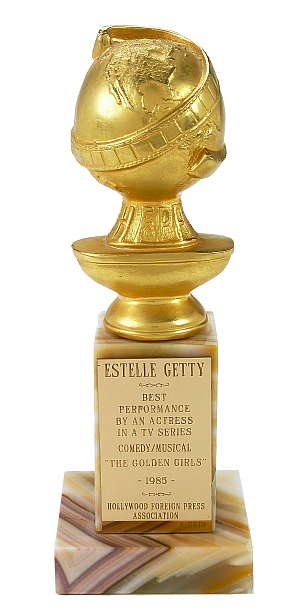
I’m glad I got that scathing rant out of the way, but it seems some people still care about the Globes, and their shady Hollywood Foreign Press Association benefactors, so I’ll share a couple of thoughts I had on the awards.  Notice how Golden Globe award titles are needlessly cumbersome (Best Performance by an Actor instead of simply Best Actor, for example).

Pleasant surprises (and non-surprises):

Homeland, Best Television Series – Drama – Well, let’s get it out of the way first.  An award ceremony that does not nominate Breaking Bad in this category does not deserve to be able to give out awards, or certainly to be able to give out awards and have people care about them.  With that caveat, I’m very happy with the choice of Homeland, as it’s in that top tier with Breaking Bad, Mad Men, and Game of Thrones and does richly deserve the award, as does Claire Danes.  I was strangely touched by Danes’ chance to thank her parents after she forgot when she won over a decade ago for My So-Called Life (only strange in that I’m not usually touched by anything).

Idris Elba, Best Performance in a Mini-series or Motion Picture Made for Television, Actor – I’ve never seen Luther, the British detective show for which Elba won.  Still, it was both disturbing and great at the same time to hear The Wire’s Stringer Bell talk with a British accent, and to see McNulty hug him as he went up the aisle to accept the award.

Downton Abbey, Best Mini-series or Motion Picture Made for Television – Let’s get this out of the way.  It’s not a miniseries, it’s a series.  There were 12 episodes of Homeland, and that’s a series.  There were 7 of Downton Abbey.  Where is the line?  (Is there an official line?)  That said, it’s good; I got on the bandwagon relatively late, and I’m encouraging others to jump aboard.  To 1910s Northern England!

Peter Dinklage, Best Performance in a Supporting Role in a Series, Mini-series or Motion Picture Made for Television, Actor – Not a surprise, as he won the Emmy.  Still, I’m always glad when Game of Thrones gets some recognition.  Tyrion is probably my favorite character in the books, and it doesn’t hurt that my first impression of him was as played by Dinklage.

Unpleasant surprises (or at least not quite pleasant enough to make it to pleasant surprises)

Michelle Williams, Best Performance in a Motion Picture – Musical or Comedy, Actress – This has nothing to do with her performance.  Williams is nominated in the Best Actress, Musical or Comedy.  In what world is My Week With Marilyn a musical or comedy?

Modern Family, Best Series – Musical or Comedy – just kidding.  What’s the opposite of a surprise, doubled, and then cubed?  This is it.

Matt LeBlanc, Best Performance in a Television Series – Musical or Comedy, Actor – I don’t feel strongly about this category, but I thought this was a little surprising.  That said, the more I look over the nominees the more I realize there’s no obvious choice.  If it was three years ago, Alec Baldwin probably would have been.  If only Ty Burrell from Modern Family submitted into this category instead of Supporting Actor. Most of the best comedies on TV either don’t have definitive male leads (Parks and Recreation) or simply aren’t recognized by award shows.

Kelsey Grammer, Best Performance in a Television Series – Drama, Actor – I care less about Grammer than the fact that this should clearly go to Bryan Cranston.  Considering Breaking Bad couldn’t even get a show nomination though, it’s not particularly surprising.

Laura Dern, Best Performance in a Television Series – Comedy, Actress – I’m going to try to watch a midseason episode of Enlightened, and I hope I will personally be enlightened about the quality of the show.  From just the pilot though, I’m not getting the hype.

Ads Watch: Discount Double Check

13 Jan

I’ve been meaning to start writing about commercials here and there for a while and watching State Farm attempt to take a second crack at its moment of commercial genius with the Discount Double Check offered me an opportunity.

Among the major commercial food groups (fast food, cars, beer, banks, phones), insurance companies actually tend to have fairly decent commercials.  The Allstate mayhem commercials had their moment and before Geiko overdid them one thousand times over, the cavemen were actually inspired, which is admittedly hard to believe now.  No commercial was as on point in this past year as State Farm’s Discount Double Check.

Here’s the short and quick of it (actually long and not so quick) – an insurance agent shakes hands with Green Bay Packers quarterback Aaron Rodgers, presumably after having agreed on a policy.  A man and woman walk in, presumably husband and wife (they use the pronoun “us”) and thank the insurance agent for doing the “discount double check,” a motion that resembles Aaron Rodgers’ touchdown celebration, miming wearing a championship wrestling belt (the discount double check motion is performed a total of eight times in the commercial).  Rodgers asks what the “discount double check” motion is.  The agent claims it signifies when State Farm combs through their policies to make sure the client is getting every available discount, and Rodgers notes that the motion is his touchdown dance.

The female client asks if Rodgers is a “dancer” and shakes her hands in the air in a kind of jazz hands motion, to which Aaron Rodgers responds, with mild disgust, that’s he’s a quarterback.  The male client, believing the notion of Rodgers as a quarterback to be ridiculous, remarks sarcastically, “I’m a robot,” and moves his arms up and down stiffly in a robotic motion and while making robotic sounds, and walks past Rodgers.  The woman walks behind him, makes robotic sounds herself and gives Rodgers a little patronizing tap on the shoulder and she walks by.  After the screen flashes red with some words from State Farm, we’re back at the office, where an obese Green Bay Packers fan with a cheesehead hat bangs on the glass and shouts “Rodgers” (but it sounds more like “Rodjaaahs”) and screams “discount double check” and then does the motion.

Honestly, there’s no reason the commercial should work.  There’s absolutely nothing brilliant or innovative in its conception.  What makes it work are tiny little things that only come alive in the filming.  The way the woman shakes her hands when she calls Rodgers a dancer, and the way she pats him on the shoulder.  The robot sounds both the man and the woman make as they walk past Rodgers.  The slightly bad but not completely terrible acting of Rodgers when he says “I’m a quarterback.”  The way the fat guy at the end says “Rodgers.”

Unfortunately, State Farm made a terrible decision.  They decided to go back to the lab, to try and scientifically figure out what make the original Discount Double Check ad work so well, and reassemble all the elements, thinking that if they had the formula right, the new commercial would work just as well.  Wrong.  I can not emphasize this enough.  Wrong wrong wrong and I’m sure anybody who watches the ad would agree.

The new commercial features the same actors and the addition of Green Bay Packers nose tackle BJ Raji.  I don’t even want to describe it, because then I have to watch it at least half a dozen times and just watching it twice now to talk about it this much makes me sad.  Watch it and recoil in pain as it misses the mark entirely.  It just doesn’t work at all.  It’s so blatantly repetitive, and not in a good way, taking all the elements without any of the little subtle touches that make the first ad work so well.  Rodgers again remarking on the stolen touchdown dance.  The woman attempting to refer back to Rodgers being a dancer.  They even bring back the fat cheesehead just to scream, “discount double check!”  I just hope it doesn’t ruin the original for me.

It seems as if State Farm realized their commercial was an unexpected hit and then tried to quickly follow up.  The problem was that there was no magic formula at work here.  It’s impossible to explain exactly what makes this commercial tick.  Okay, that’s not exactly true, and I hope I’ve done a fairly decent job of explaining it above.  But it’s impossible to recreate it because honestly I don’t think they could have possibly known when filming it that it would work so well.  This happens in commercials more than in any other form of media.  It’s a thirty seconds shot of the absurd and your done.  It can be one actor’s smile, the way a car drives off in the background, tiny little details that upon repeated viewing make a commercial enjoyable.  Everything needs to go right for a moment of commercial genius.  It’s rarely possible to recapture that.  State Farm would have been better off to at least try a new setting and different actors.  To go back with the exact same people and scenario is hubris.

Generally, it’s better to leave people wanting more than to dip into the well one too many times (there are certainly exceptions, yes, and I don’t want to really break down this adage in detail right now).  It’s hard to remember as mentioned before that Geiko’s cavemen were actually genius when they first came out because they’ve been so beaten to death.  Get in, and then when you’re lucky enough to hit your mark, get the fuck out and try something new.

Show of the Day: Downton Abbey

12 Jan

I’ll admit, I had no idea what Downton Abbey was about other than being an English period drama until earlier this week.  In fact, I kept reading it incorrectly as “Downtown Abbey” which conjures a very different idea in the mind.  After watching the seven episode first season though, I’m certainly glad I know more about it now.

Downton Abbey is about the residents of the titular location, an estate in Northern England, including both the aristocratic family who run the Abbey, and the serving men and women who make the Abbey run.  A third economic class is introduced in the second episode when an upper middle class lawyer and his mother move into the Abbey because the lawyer has become the new heir to the title and estate after the old heir died in the Titanic disaster.

Downton Abbey is about as British as British gets.  It’s like Gosford Park without the murder.  (Note: I had absolutely no idea it was from the same writer as Gosford Park until I had finished five episodes, but it makes perfect sense.)  One of the essentially European aristocratic core issues at hand is the secession of the estate and title, as well as the marrying off of the three daughters of the current Lord and Lady of the estate.  Downton Abbey takes place at a crucial junction in time at which both love and position count in constituting a match, and the battle between the two occurs throughout the show.

Downton Abbey is a soap opera at its heart, a less serious show than critically acclaimed series of the period such as Mad Men and Breaking Bad.  However, it also deals with the class structure in an interesting, albeit generally unrealistically sunny and positive way.  The lord and lady of Downton Abbey are generally benelovent, but can’t avoid their learned feelings of noblesse oblige.  Even between the Lord and Lady, there are issues, as the lady is an American who Lord Grantham originally married for her money, which was necessary to save the estate.  The men and women of the serving class deal with vastly different problems than the aristocracy, largely, but also some similar programs.  Downton Abbey takes place at a similar time as far more serious show Boardwalk Empire, when the times are changing rapidly, but the characters largely try to change as little as absolutely necessary to adapt.  The biggest rift, aside from class, is generational, as the three daughters, to various degrees, are far more ready to embrace the less stratified world than their parents and grandparents.

I knew I was on board for good when I started rooting for and against characters, even yelling at my TV, and not in the angry at the show way, but in an angry at the characters way.  As far as the rogues gallery goes, Maggie Smith is fantastic as the cantankerous matriarch of the house, mother to the current lord, the Dowager Countess Violet.  She’s quick with an insult and is a protector of all things traditional, proper and conservative in the wake of attempts at forced changes to the social order from outside the estate.  Her foil is lawyer and new heir Matthew Crawley’s mother, who is the one character who is extremely progressive for her generation, and is the only character stubborn enough to not give in to the Dowager Countess, much to Smith’s dismay.

The most villainous characters are probably footman Thomas and maid Mrs. O’Brien, who are constantly scheming to get their personal nemesis valet Mr. Bates fired.  Bates, a newly hired footman at the beginning of the show, harbors some sort of secret, but seems a much better sort than Thomas (just one season of the show has me describing people as a “sort”).  Thomas is cruel to the other footman, William, and constantly flirts with cook’s assistant Daisy who is just about the only character who doesn’t realize that his affections are reserved for men.

Eldest daughter Mary I wouldn’t quite call a villain, but it’s frustrating watching her constant immaturity on display through the first season, as well as the way she treats her youngest sister Edith, drawing every man’s attention even when she’s not interested, just because she can.  Edith reciprocates with immature behavior to get back at Mary.  There are characters to root for as well.  Middle daughter Sybil is by far my favorite of the three (though the  other two have grown on me over time; it’s a sign of a good show when it’s able to make you like the characters you hated at first).  Sybil gets less screen time than Mary in the first season, but she’s the most political and most willing to attempt to break free from the social restrictions of the time.  Lord Grantham is better 1910s version of Tim Allen’s character in Last Man Standing.  Inherently conservative, but well-meaning, he’s caught between all the women in his life, including his daughters, wife and mother.  He wants to do what’s best within the narrow parameters he’s grown up with, but often ends up mediating a dispute between the women and takes a compromise position.  Matthew Crawley, the new heir, is a middle class lawyer, who struggles to fit into an aristocratic lifestyle.  He doesn’t always succeed, but he manages to turn general resentment from the family when he first arrives to sincere affection.

One note before I finish up: The strangest aspect of Downton Abbey is how quick it skips through time between episodes.  In the vast majority of TV shows, a season takes place over a single season or year, with episodes reasonable close together in time to one another.  Downton Abbey defies that convention.  The first episode takes place in 1912, but the show is in 1914 by season’s end, and the second season jumps even more.  This is hard to compute, given my understanding of traditional TV scheduling, and left me slightly discombobulated.  Eventually I was able to just accept that the primary reason for this seems to be to move into certain historical events (World War I!), and that nothing really important happens on the estate during the months we’re not seeing.

The Zeljko Ivanek Hall of Fame: Michael Gaston

11 Jan

(The Zeljko Ivanek Hall of Fame is where we turn the spotlight on a television actor or actress, and it is named after their patron saint, Zeljko Ivanek)

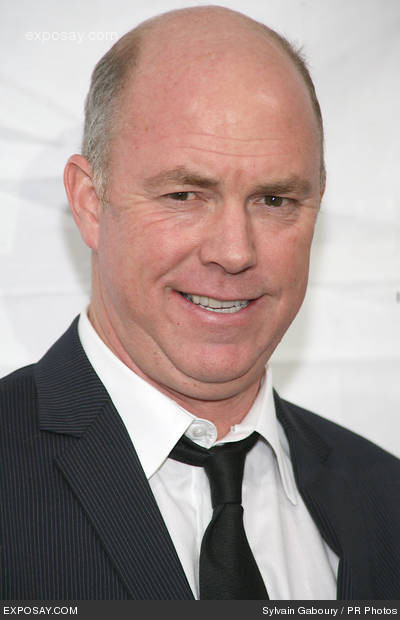
We love character actors who play rich white guys here at the Zejlko Ivanek Hall of Fame and this week we’ll be celebrating on of the less well known entrants, Michael Gaston, who has experience playing rich white men and police officers, and who has gotten more and more work as the years have gone on.

He began his career in the mid-90s, with his first role in an episode of The Adventures of Pete and Pete.  In the 90s, he appeared in single episodes of New York News, New York Undercover, One Live To Live, Homicide: Life on the Street, andSpin City.  He was in three episodes of The Profiler and played the title character in TV movie Nathan Dixon.  He appeared in the pilot episode of The Sopranos as CPA Alex Mahaffey.  He works for Blue Cross/Blue Shield and participates in a scheme to defraud Medicare with Tony and Hesh to get himself out of debt he acquired through gambling.  To convince him to participate in the scheme, Hesh and Big Pussy threaten to throw him over a waterfall, after Tony hits him with his car and Christopher and Tony beat him.

In the early 2000s, he was in episodes of Third Watch, The $treet,100 Centre Street and two of Now and Again.  He was in TV movie Cora Unashamed and appeared in Oz as death row prisoner Shirley Bellinger’s (played by Kathryn Erbe) ex-husband.  He was a recurring character on one season Oliver Platt drama Deadlien and appeared in two episodes each of Ally McBeal, Ed, and Law & Order: Special Victims Unit.  He appeared in five Law & Order episodes over the course of the series run as five different characters, with the first appearance in 1994 and the last in 2009.  In 2009’s Bailout, he played a Wall Street CEO for a sinking investment bank who is at first accused of murdering his girlfriend.  In 2001’s White Lie, he played the military husband of a woman accused of helping smuggle cocaine into the US.

He was in individual episodes of The Practice, John Doe, Hack, The Guardian, NCIS, Malcolm in the Middle, The West Wing, Without a Trace, CSI: Crime Scene Investigation and two of JAG.  In The West Wing, he played a friend of Josh who has been waiting a year to be confirmed in his appointment to a federal appeals court judgeship by the Republican congress.  In 2005, he was a main cast member as a cop in one season literally titled Steven Bochco show Blind Justice.  In two episodes of Prison Break, he played Quinn, and agent from “The Company” who ends up at the bottom of a well.  He was in four episodes of three season Brotherhood.

In two seasons of post-apocalyptic cult classic CBS show Jericho, Gaston portrayed Gray Anderson. Anderson is a businessman who controls the Jericho Salt Mines.  He defeats mayor Johnston Green to become mayor himself and helps lead the construction of a new power source, a wind turbine.  He participates in an Allied States of America conference (I have no clue what this is but the show sounds vaguely intriguing) but disagrees with their ideas and eventually turns the town back over to former mayor Green.

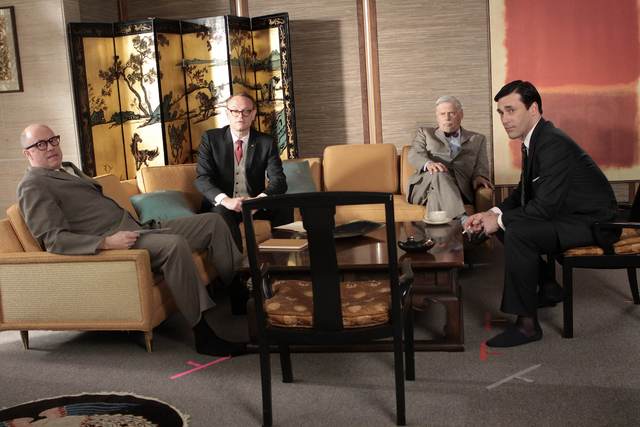
He was in episodes of ER, Numb3rs, and Saving Grace.  He was in an episode of Mad Men as Head of Accounts Burt Peterson who is fired by Lane Price so that Pete Campbell and Ken Cosgrove can take over.  He makes a scene while leaving, knocking items off desks and yelling.  He was in two episodes of Raising the Bar and in TV movie U.S. Attorney.  He had a quick appearance in the pilot episode of White Collar as a director for the US Marshals working at the prison Neal Caffrey escapes from.  He plays recurring character Roger Kastle in six episodes of Damages.  In two episodes of season eight of 24, he was General David Brucker.  Brucker disagrees with President Allison Taylor and believes she should turn over Omar Hassan to potentially save Ameircan lives.  Brucker concocts a plan to abduct Hassan without the President’s knowledge, but his plan is foiled by Jack Bauer and he is later arrested.

Gaston appeared in four episodes of short-lived AMC show Rubicon as Donald Bloom.  Bloom is an independent contractor who formerly worked for the CIA.  He is hired by Truxton Spangler to kill main character Will Travers, and to make it look like an accident.  However, the plan is botched and Will manages to shoot and kill Bloom before Bloom can inject him with an overdose of heroin.  Later in the same year, Gaston was rich white guy Ben Zeitlin in four episodes of one season Terriers.  Zeitlin is a corrupt attorney who is part of a conspiracy at the heart of the season, and is attempting to purchase some land through shady means.

In 2011, Gaston began a recurring role on The Mentalist as California Bureau of Investigation head Gale Bertram.  Mostly concerned with the political and media aspects of being director, Bertram has noticed the impressive record of Agent Teresa Lisbon and Patrick Jane, and has been hinted to possibly have connections to serial killer Redjohn.  Gaston is currently a regular cast member of CBS detective show Unforgettable.  Unforgettable focuses on Carrie Wells, a police officer with a rare condition that gives her amazing memory.  Gaston plays Detective Mike Costello, a detective in Wells’ unit.