Power Rankings: Night Court, part 1

6 Feb

Okay, it’s been a lot of reviews and some commercials recently, but it’s time to get back into the ranking business.  Since we’ve been doing so much new, let’s do some old in the form of a return to the ‘80s with Night Court.  I never really watched the show, but was reminded of it by that weird 30 Rock episode where Kenneth’s dream is a recreation of Night Court.  It lasted a crazy nine seasons, and although I fully admitted the cast, who I knew almost nothing about, to be largely unsuccessful, I was surprised.  There aren’t a lot of stars, but almost everybody’s had at least a fair amount of work.

6.  Marsha Warfield (as Roz Russell) – Warfield is the obvious sixth, and then the rankings get muddled, but her career really isn’t bad at all.  She followed up Night Court with appearances in episodes of Hangin’ with Mr. Cooper, The Addams Family, The John Larroquette Show, and her biggest role outside of Night Court as Dr. Maxine Nightengale in two seasons of Empty Next.  She was in episodes of Dave’s World, Smart Guy, Mad About You, Moesha (if you couldn’t figure out Warfield’s race, you probably have a good guess by now), two of Living Single, and singles of Clueless, the series, Love Boat: The Next Wave, and Veronica’s Closet.  She hasn’t acted in this millennium.

5.  Richard Moll (as Bull Shannon) – Shannon proves that you can do a lot of work acting and still have nobody notice.  Between voice acting, cameos in TV episodes, and low budget films, Moll has kept shockingly busy.  Voice acting:  As Two Face in stone cold classic Batman: The Animated Series, Norman in Mighty Max, episodes of Superman, Freakazoid, Aaaahh!!! Real Monsters (had to check three times to get the “Aaahh!!!” spelling correct), The Incredible Hulk, Spider-man, as Scorpion, The New Batman Adventures, Justice League, and Batman: The Brave and the Bold.  TV:  He was in episodes of Martin and Highlander, five episodes of two-season forgotten TGIF show Getting By, episodes of Hercules: The Legendary Journeys, Dr. Quinn, Medicine Woman, Babylon 5, Baywatch, Weird Science, Married with Children, 7th Heaven, Sabrina the Teenage Witch, Smallville, and Cold Case.  He appeared in 17 episodes of Nick show 100 Deeds for Eddie Dowd.  Movies, real, and seemingly made up:  He was in Beanstalk, The Elevator, Galaxis, The Lawyer, The Secret Agent Club, Jingle All The Way, Snide and Prejudice, But I’m A Cheerleader, Monkey Business, Route 66, The Biggest Fan, Angel Blade, Dumb Luck, Lake Effects, and then, well you get the idea.  The man must really need some paychecks.  His ranking here by the way is not obvious at all.  The reason he got stuck in fifth is the simple lack of being a main cast member in an at least three season sitcom, which everyone else coming up has.

4.  Harry Anderson (as Harry Stone) –  He was in episodes of Hearts Afire, Night Stand, his Night Court co-worker’s The John Larroquette Show, and Lois & Clark: The New Adventures of Superman.  His most notable post-Night Court work was starring in four season sitcom Dave’s World based on the life of columnist Dave Barry (Anderson was Dave).  After that, he’s only been in episodes of Noddy and Son of the Beach, which was in 2002.  I thought I’d put him higher for starring in a four season sitcom, but everyone left was a main cast member in something and showed up in more shows.


Spring 2012 Review: The River

3 Feb

The River is brought to us by Oren Peli, best known to the world for Paranoraml Activity, a horror-type movie which was supposed to be a cut above the average film in the genre.  It’s a genre that’s never been my particular cup of tea, and I have yet to see the film, but from what I know, it’s notable for its distinctive “found footage” style, similar to the Blair Witch Project, with scenes viewed as it from cameras set up by the primary couple in the film, who are being haunted.

This gave me a couple of impressions going into The River and two primary concerns.  First, I understand the appeal of the “found footage” style but I worried that the hurky jerky camera work could prove too gimmicky if overused during the course of a series.  Second, and this is a more personal bias, I wondered if this would venture too far into the Paranormal Activity-type genre for my liking.  However, I found the premise interesting, and I was willing to trust the general consensus that this Peli guy had some idea of what he was doing and wasn’t just a horror movie hack.

The River is about a nature explorer, Emmett Cole, a lot like say a Steve Irwin, who travels throughout the world, showing off nature with , occasionally with his family, on a nationally televised TV show.  He’s done this for over twenty years until he gets lost on an expedition into the amazon.  After rescue teams try to find him for six months and fail, he’s declared dead, and his family mourns his loss, but when his rescue beacon goes off, his wife, Tess, tries persuade his son, Lincoln, to go down and attempt to find him. Lincoln only agrees when he learns that the television network will only pay for the expedition if both he and his mother are on board.

The team, including some cameramen, a security person, Cole’s wife and son, an engineer who worked with Cole, and his daughter, starts down the river, where they run into their last member, Lena Landry, the daughter of another man who worked with Cole and was on the missing expedition.  They find the beacon quickly, and are about to turn around, when Landry tells them she’s been able to figure out where to go next, and they follow her instructions and find the ship.

This is where it starts getting all Paranormal Activity.  Apparently the panic room is welded shut, and inside is a shell which it turns out contains some sort of evil spirt which had been trapped, but is now out and wants blood.  There’s a bunch of crazy camera angles as we look from the crew’s camera perspective, and we switch back and forth in vantage points quickly, wondering where the evil spirt’s at.  Eventually, one guy gets killed, the spirit gets trapped again, and the wife leaves more certain than ever that her husband’s still alive.  Many of the crew are pretty quick to accept the supernatural, and the show does not spend almost any time on any serious disbelief of the idea of spirits.

I thought for a minute that the show might not actually be about the supernatural, and might just involve animals, and wild tribes, and drug runners, and what not, but that was obviously misguided.  There’s going to be tons of supernatural, and I can live with that in and of itself, but it’s always a tricky direction to go in because you need rules.  The camera work was a little much for me, but not so much that I wasn’t intrigued.  I have major doubts about the sustainability of a show like this, and since the crew number is probably more or less set, it limits the ability to keep killing them off.   It’s interesting; I’ll give it that, and that’s worth a lot with a pilot, but I have serious doubts about its lasting power.

Will I watch it again?  Yes, I will. Alcatraz seems a safer bet, but The River seems to have more potential. Alcatraz is the college draft pick pitcher who likely has a ceiling as a #3 starter but is likely to reach it, while The River is a high school lefty who can’t help but intrigue you even if you wonder if his unusual motion will lead to an inevitable injury.  Okay, long analogy over.  I’m going to go watch it again, for at least a couple of episodes.

Ads Watch: AT&T Summoner or “Romantic Dinner”

2 Feb

I haven’t talked that much about commercials yet, but when I did I made points about how commercials, more than any other form (maybe sketch comedy is the closest), because they’re so short, are so dependent on tiny little quirks of acting and writing that aren’t always obvious until the whole thing is put together, but help raise the commercial up above the norm.   A perfect example of this is AT&T’s thirty second commercial called “Romantic Dinner.”  This isn’t conceptually brilliant by any means.  It’s pretty basic actually, and like a lot of these ads, it’s three of four different words or motions or looks away from not necessarily being awful (though it could be) but at least being unmemorable.  Instead, it’s good.  The two actors both play their parts sublimely in the ad, but the male especially makes the words “summon” and “summoner” minorly hystrerical.  But, we’ll get to that.  Let’s start at the beginning.

An African-American couple (maybe low 30s – I’m terrible with ages) is eating dinner at a classy restaurant.  The woman remarks how nice it is to spend sometime with just the two of them, and the man agrees.  The woman begins another sentence, seemingly focusing further on how they should spend more time together, when she notices the man glance quickly downwards.  She gives him an accusatory look and asks if he checked the game on his phone.  Here’s where it gets good.  The man gives the best line of the ad, responding  “What, no, what am I, like some kind of summoner who can summon footage to his phone like that?”  The best part is when his eyes grow large as he says “summoner” with a disbelieving look, as to show how crazy she is for even thinking he has this capability.  He then says, as he’s finishing, “come on,” in a perfect gimme-a-break manner.

Obviously the explanation was sufficient and clear enough to make the woman doubt her initial conclusions, and feel bad about them.  She says, “I guess I’m just a little oversensitive.”  Between “little” and “oversensitive,” the man makes a quick indecipherable shouting noise.  The women ignores and moves forward, “it’s just that you and I.”  At this point, the man exclaims a clearly decipherable, “Yes!” but then just acts as if nothing happens, continuing to look at his date as before.  There they stare at each other, with the implication that the jig is up, but the man makes absolutely no acknowledgement of it, until after a slightly awkward second, the commercial fades into a shot of the game streaming on the man’s phone, and then a white screen with some information about AT&T.

I admit this is a perfect example of where a written description ruins the magic, but let me try to emphasize the individual pieces that make it wonderful.  The accent from the man on the words “summon” and “summoner.”  The look throughout that whole line, particularly the large eyes, and the “come on,” at the end.  The way the woman is genuinely concerned she’s been overly sensitive, even though she’s completely right, and the way the commercial ends at exactly the right time, not going on any longer than it needs to to make it’s point.  Ending at the right the time can never be underestimated, and many a sketch can learn from it.

Spring 2012 Review: Smash

1 Feb

So NBC, you win.  I watched Smash.  Are you happy now?  My favorite game during the Super Bowl was counting the Smash commercials.  NBC has been bombarding the three viewers of the network with Smash ads for a full half year, and I was concerned that the network might literally implode from within if the show was a failure.  Anyway, it did well enough, and though putting one’s faith in Smash as a network savior may or may not be a sound strategy depending on the type of demographic you hope to gain, I’m glad to say that it was a pretty solid episode of TV.

Smash is the story all the steps and pieces that go into putting on a Broadway musical.  It begins with the conception of an idea by a man and woman songwriting team, and over the course of the first episode they record a quick demo of a song they come up with which leaks onto the internet, leading to interest from producers.  The musical is about Marilyn Monroe (which you’d know if you’ve seen one of the thousands of commercials) and the episode gets through two rounds of auditions at which point it looks like the casting of Marilyn is between two actresses, a veteran chorus girl and an up and coming youngster from Iowa.  The show appears to be a true ensemble piece, focusing on the songwriting team, the two women auditioning for the part, the producer, and the director.

Overall, I really enjoyed the show.  The cast was excellent, and I enjoyed the show for a number of reasons, but I do want to point out the fact that I appreciate the covering of a subject matter that hasn’t been done a hundred times.  I love The Wire and Law & Order but it’s nice when every show on TV is not about cops, or lawyers, or doctors.  More that that, it makes it easier on the show as well, because there are many fewer clichés already out there for the show to just walk into.  Sure, maybe there are archetypes associated with musicals in general, but not nearly as many in terms of characters as there are for cops, who, for example, care too much about every case or doctors who, for example, are jerks but really care on the inside.  The characters in general seem well-built.  There were no caricatures and no one I couldn’t believe, and aside from the director propositioning the young starlet, just about no clichés.  The potential conflicts on the show so far, between the male half of the songwriting team and the director, and between the two candidates for the role of Marilyn have potential and more that, don’t have an obvious villain or hero, which I appreciate.

I remember having heard Smash billed as an adult Glee, but that’s really inaccurate.  There’s absolutely nothing alike between the two shows except that they both feature musical sequences.  They’re different in that regard as well, as Glee’s numbers are much more elaborate and outside of the direct story, while Smash features fewer songs per episode and more original songs.  Where the Glee songs often seem to be totally unnecessary and sometimes disjointed from the rest of the show (I mean, they’re necessary in so much as that’s what Glee is, but my friend watches the show without the songs and can follow along just as well), the Smash songs make a lot more sense so far in the context of the show, as about a production of a musical.  I think there will be fewer originals per episode in the future, and more covers, and the very small amount of musical sequence which felt outside of the plot was probably my least favorite part of the show, but I’ll willing to give some leeway for now.

I have mixed feelings regarding musicals.  Growing up, my parents would take my brothers and I to musicals fairly frequently, and I enjoyed them, but I have kind of stopped going in the past few years.  This is less a complete indictment of musicals, than a realization of the fact that musicals generally fall below other things I’m interested in doing.  Still, I appreciate the art form.  I guess what I’m trying to say is that if you hate musicals, you probably won’t like this, but you don’t need to love musicals to enjoy it.  I do wonder what kind of appeal this will have in the fly-over states, but maybe NBC should just give up on CBS demographics and try and aim for the educated, high-income viewers that are already the only ones who watch its programs.

Will I watch it again?  Yes.  Smash didn’t excite me in the way Homeland did or have the distinctive voice of Luck or even the trashy fun of Revenge but it appears at least so far to be just a solid, well-executed show.  It’s nothing flashy and there’s nothing instantly compelling enough to vault it into my top shows but the people connected to it seem to really know what they’re doing, behind and in front of the cameras.  Right now it looks like a Matt Holliday – a player who got a big contract which generated a lot of hype, but doesn’t do anything flashy other than produce day in and day out and live up to the contract’s terms.  Of course, this could all go sour in a half season like Glee did, but it’s earned more of a chance from its first episode than a vast majority of shows do.

Spring 2012 Review: Touch

31 Jan

I admit I came into Touch with a bias, but I don’t think it was an unfair bias.  Unlike Alcatraz and The River’s premises, which sound interesting to me, Touch’s didn’t really.  I also may have less fairly brought bias against Tim Kring, the creator of Touch and of Heroes, who I still feel bitter towards while watching for Heroes, but I did my best to avoid taking that into my review of the show.

Touch is the story of an autistic boy and his father.  The father, Martin Bohn, played by Kiefer Sutherland, is a former journalist whose primary occupation nowadays is taking care of his son, and he has cycled through dozens of menial jobs to provide.  He’s facing crisis after crisis with his son, Jake, who hasn’t uttered a word in his life, and does things like climb up cell phone towers, but who also writes down lots of MEANINGFUL NUMBERS.  Martin’s wife and Jake’s father died in the September 11 attacks, giving the show completely UNNCESSARY 9/11 OVERTONES, one of my biggest pet peeves in stories and shows about New York.  Yes, 9/11 was a seminal event in New York history and yes, it can be used in a very powerful way to tell stories, and many times it has been.  However, at least as many times, it’s kind of been shoved in peripherally in stories that take place in New York to add extra free gravitas.  The story is suddenly a lot more dramatic because it somehow relates to 9/11!

Anyway, moving on.  So, Martin struggles to control his kid, and in the first episode, a social worker comes to temporarily take him away and openly questions whether Martin is up to the task of taking care of such a difficult child.  Martin, who realizes that Jake is gifted in certain areas, is starting to see meaning or patterns in the numbers Jake writes down.  He struggles to figure out their purpose, and eventually visits Danny Glover, an outside-the-system specialist on children with gift’s like Jake’s, who gives Martin some advice.  Basically, he tells Martin, in this episode and every commercial for the show, that Jake is able to see patterns that run throughout the world that the rest of us can’t, and it’s Martin’s job to interpret the patterns which Jake spits out like a robot.  Martin follows the numbers, and eventually realizes that through a series of planned or unplanned coincidences the trail his son set him upon eventually leads to the saving of a bus full of schoolchildren.  The social worker eventually comes to believe this too after Jake performs his magic on her, writing out her mom’s phone number which he could have no way of knowing.

The other plot involves three people across the globe, a call center employee in England who dreams about being a singer, an English restaurant supply salesman with a dead daughter on the road in Japan, and a teenager in Iraq who wants to be a comedian.  These three through a series of cell phone calls from the salesman’s lost phone, which contained the only copies of some pictures of his daughter, connect and somehow make each of their lives better.  The only relation this plot has to the Martin plot is that Martin, in his job as a baggage handler, picks up the phone at the beginning before forgetting about it as it goes on a plane to the UK.

Oh, yeah, and mute Jake narrates the show, and gives us big meaningful lessons about how everyone is connected but how we non-autistic people can’t see it.

I didn’t really care for the show at all, but I don’t tend to like just about any show where the main messages are about fate and all being connected and which seem to attribute GREATER MEANING to all sorts of random connections.  The show played on some fairly cheap emotion that didn’t feel earned at all.  I don’t think an autistic kid spitting out brilliant numerical patterns which can save the world is compelling.  I loved Kiefer Sutherland in 24, so it’s unfortunate but it’s back to the drawing board for the next great supernatural show.

Also, interesting fact of the day:  Kiefer’s full name is Kiefer William Frederick Dempsey George Rufus Sutherland.  Fantastic.

Will I watch it again?  No, I don’t think so.  I didn’t find the concept particularly interesting and the show itself certainly didn’t win me over.  I think a couple of fundamental tweaks with the concept could actually make the show significantly more interesting, but from the first episode at least it seemed like the show make a number of poor choices.

Ads Watch: Toyota Camry – Kelly Clarkson

30 Jan

As Kelly Clarkson’s Stronger races to the top of the charts, the song is prominently featured in a Toyota commercial in which Clarkson and three other luminaries in different fields enter a Toyota Camry located in a warehouse of some sort.  Clarkson, in the driver’s seat, hits a button on the dashboard screen and Stronger (What Doesn’t Kill You) starts playing, and the passengers and Clarkson all begin dancing to the song.

This commercial is remarkable for one reason and one reason only.  There is absolutely no common thread I can find between the four people who sit in the car, singing along, in this ad.*  I have no idea whether there’s one demographic which all four are supposed to cater to, or whether the makers of the car have figured that through these four people the can get at, by one way or another, every potential demographic.

*Well, I’ve solved at least part of the explanation by actually watching the full minute long commercial.  What airs most often is an abbreviated version of the commercial in which the four people simply get into the car and start dancing..  In the full commercial, each member of “The Crew,” as the commercial is titled gets a full screen featuring him or her and what he or she represents.  Still, I think these particular choices are interesting/strange enough to warrant discussion.

Let’s break down the four passengers of the car.

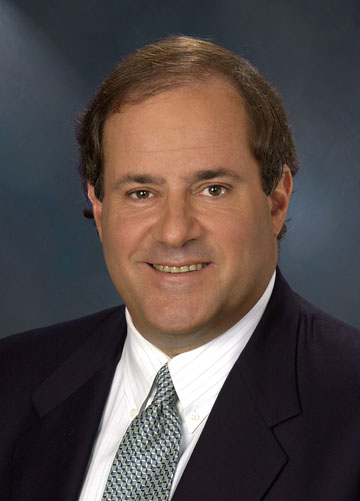
Chris Berman – ESPN personality, SportsCenter host, known for his inane nicknames and his constant bossing around of Tom Jackson

Seat location:  Front passenger seat

Commercial description:  “Get Sports Scores”

Identifiabily rating:  High – if ESPN, as a network, over the course of its over 30 years has a face, it’s Chris Berman.  While others have come and go, Chris Berman still has his face all over the network, and all over Monday Night Football, one of the most popular sports programs there is.

Dancing enthusiasm rank:  3 – Moves his hands up and down a couple of times, turns his head side to side, at one point appears to look behind him to see how much the guys in the back are dancing

James Lipton – Host of Inside the Actor’s Studio on Bravo, where he interviews celebrities

Seat location: Rear driver’s side

Commercial description: “Buy Movie Tickets”

Identifiabily rating:  Medium – Lipton was at his most famous 10 years ago when Will Ferrell was doing a recurring bit on Saturday Night Live as Lipton.  Now, many people still probably recognize him, but his moment has passed

Dancing enthusiasm rank:  4 – He slowly moves his head back and forth about every five seconds, approximately two and a half times in the initial dancing scene, though I can’t blame him because as I just learned (which blew my mind), that Lipton is 85.  I still don’t believe that.

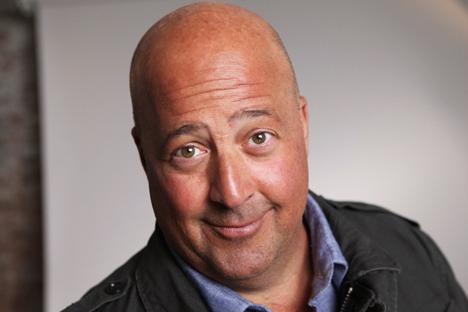
Andrew Zimmern – Host of Travel Channel’s Bizarre Foods

Seat location: Rear passenger’s side

Commercial description: “Make Restaurant Reservations”

Identifiabily rating: Low – he hosts Bizarre Foods on Travel Channel.  It’s certainly a reasonably popular Travel Channel program, but that’s all it is, a reasonably popular Travel Channel program.  Anyone serious about watching a lot of food TV probably recognizes him, but otherwise, unlikely.  On Travel Channel Q ratings even, he probably ranks somewhere after Anthony Bourdain and the guy who unhealthily stuffs himself from Man vs. Food (Adam Richman).

Dancing enthusiasm rank: 2 – Even though unlike Berman, he displays no hand movements whatsoever, he’s all in with his head, bopping around and appearing far more generally enthusiastic than the other guys.

Kelly Clarkson – Singer, first American Idol winner who has charted ten top 10 hits

Seat location: Driver

Commercial description: “Stream Music”

Identifiabily rating: High – Clarkson and Berman vie with each other for the spot of most famous person on this list, depending on gender and age demographics.  Clarkson has managed to avoid fading away, coming up with a hit or two off every album, and currently has the #2 song in the country with the song from this commercial.

Dancing enthusiasm rank: 1 – unsurprising, as she is the musician in the group and it is her song they’re all lip-syncing to.  She moves her whole body back and forth, moves her arms around, and even manages to use her hands while driving.

Top Songs and Albums of 2011

28 Jan

Yes, this is a TV blog.  But it’s a Saturday so readers get bonus music coverage with a quick look at my top songs and albums of 2011.

You can listen to my top 40 songs at 8tracks.

Top 40 songs of 2011

1.  The Weeknd – The Morning

2.  The Smith Westerns – Weekend

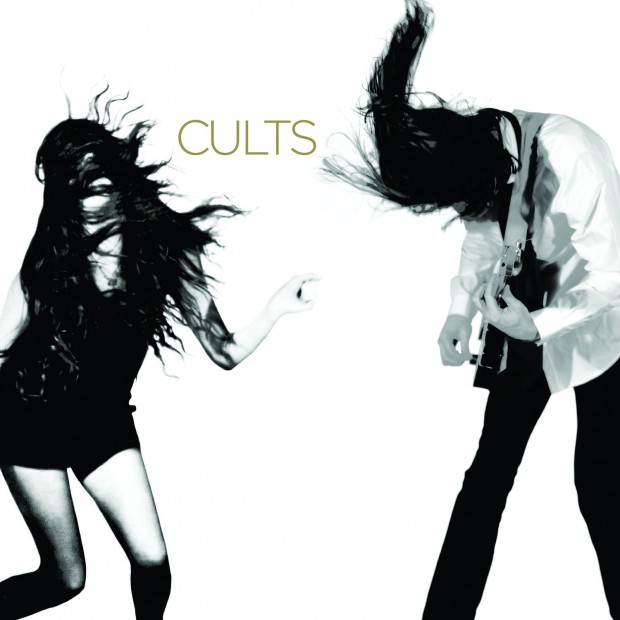
3.  Cults – Abducted                                                                               .

4.  The Drums – Money

5.  EMA – California

6. Tune-yards – Bizness

7. Girls – Honey Bunny

8. Martin Solveig feat. Dragonette – Hello

9.  Metronomy – The Look

10.  Lykke Li – Love Out of Lust

11.  Kanye West – All of the Lights

12. Drake – Headlines

13.  Avril Lavigne – What the Hell

14.  Katy B – Katy On A Mission

15.  Yuck – Shook Down

16. The Wombats – Tokyo (Vampires and Werewolves)

17.  WU LYF – Spitting Blood

18.  Fountains of Wayne – The Summer Place

19.  Telekinesis – I Cannot Love You

20.  Avicii – Levels

21.  Dawes – If I Wanted Someone

22.  John Maus – Head for the Country

23.  Wiz Khalifa – Black and Yellow

24.  Dum Dum Girls – Bedroom Eyes

25.  Childish Gambino – Fire Fly

26.  Foster the People – Pumped Up Kicks

27.  The Joy Formidable – I Don’t Want To See You Like This

28.  Dev – In the Dark

29.  Karen O with Trent Reznor and Atticus Ross – Immigrant Song

30.  Kelly Rowland feat. Lil Wayne – Motivation

31.  LMFAO feat. Lauren Bennett and Goonrock – Party Rock Anthem

32.  The Black Keys – Lonely Boy

33.  Selena Gomez and the Scene – Bang Bang Bang

34.  Rihanna – S&M

35.  The Antlers – I Don’t Want Love

36.  Cut Copy – Need You Now

37.  Nicki Minaj – Super Bass

38.  Elbow – Lippy Kids

39.  Chris Brown – She Ain’t You

40.  Gil Scott-Heron and Jamie xx – I’ll Take Care Of You

Top 30 Albums

1. Cults – Cults

2. Lykke Li – Wounded Rhymes

3. Tune-yards – W H O K I L L

4. The Weeknd – House of Balloons/Thursday

5. Telekinesis – 12 Desperate Straight Lines

6. Katy B – On a Mission

7. Drake – Take Care

8. The Pains of Being Pure At Heart – Belong

9. Dum Dum Girls – Only in Dreams

10. Yuck – Yuck

11. Dale Earnhardt Jr. Jr. – It’s a Corporate World

12. Girls – Father, Son, Holy Ghost

13. M83 – Hurry Up, We’re Dreaming

14. Fountains of Wayne – Sky Full of Holes

15. The Smith Westerns – Dye It Blonde

16. EMA – Past Life Martyred Saints

17. Washed Out – Within and Without

18. Friendly Fires – Pala

19. Childish Gambino – Camp

20. The Joy Formidable – The Big Roar

21.  Cut Copy – Zonoscope

22. WU LYF – Go Tell Fire to the Mountain

23. Metronomy – The English Riviera

24. Frank Ocean – Nostalgia, Ultra

25. Beirut – The Rip Tide

26. PJ Harvey – Let England Shake

27.  Selena Gomez and the Scene – When the Sun Goes Down

28.  Real Estate – Days

29.  The War on Drugs – Slave Ambient

30.  Destroyer – Kaputt

Spring 2012 Review: The Finder

27 Jan

The Finder, a spin off from the Fox’s Bones from the same creator, should really be (like Bones as well, from what I know of it) on USA.  (disclaimer: I have embarrassingly never seen a full episode of Bones, so what I know about it is mostly taken from what I’ve read on wikipedia and what I’ve seen from snippets from accidentally leaving TNT on after Law & Order is over.  I hope to remedy this, but it hasn’t happened yet)  It has every aspect of a USA show down pat.

First, a short description of The Finder.  The titular finder is Walter Sherman, a former major in the military who was discharged after serious brain surgery.  He seems mostly all right, surprisingly, after this brain injury, but it has left him ( or kept the same, it’s unclear what changed after the inury) with a preternatural gift for finding things, or people, and any things or people, but it has also left him with some mental problems, including, friends worry, a possible breakdown if he can’t find something he’s looking for, which is his single-minded obsession.

He resides at a bar in the Florida Keys with best friend and lawyer Leo Knox (portrayed by Michael Clarke Duncan) where he waits for clients to show up asking for something to be found.  In the beginning of the first episode, he finds a guitar for John Fogerty (good get, he sings Fortunate Son, and the theme song) and the body and story behind a deceased air force member’s disappearance for his son who comes in looking for him.  Rounding out the character list are Willa Monday, a gypsy and small time teenage criminal who is out on probation working at the bar (it shows how terrible I am at determining age, as I thought the actress who plays Monday, Maddie Hasson, had to be in her early 20s, but she just turned 17) and Deputy U.S. Marshall Isabel Zambada, with whom Walter seems to have a friendly and romantic relationship.  Walter and Zambada also appear to help each other on occasion professionally.

Now, The Finder as it relates to the USA prototype.  A two-fer main team sets it up right next to Psych, White Collar, and Royal Pains (and actually Sherlock, not on USA, as well).  Like all three of these shows, The Finder has a main character who has extraordinary skills, not quite supernatural, but far above the abilities of a regular person.  The second main character is responsible for harnessing these abilities, making sure they are used in the best way possible.  The Finder, likes these other shows, contains traces of slight darkness, just so we don’t get too happy, that we could have to deal with over the course of the show, such as Walter’s potential mental imbalance (actually Psych doesn’t have that at all, it’s mostly just comedy, but for White Collar it would be the constant concern Neil will turn back to his criminal lifestyle).  These shows also feel like they’re on mood medication – there’s no unrestrained highs or lows, and because of the lack of lows in particular, the highs aren’t necessarily as high.  The same factor that makes these shows so easy to watch a random episode of is what makes them not draw you in and captivate you enough to watch every single episode in order (even though I do for a couple of them, so hypocritical of me, but the point stands).  It makes them good, but makes it difficult for them to be great.

Will I watch it again?  Honestly, probably I won’t in any sort of regular fashion, but I don’t have any real objection to it.  The premise is not a bad twist on every other show exactly like this and I like Michael Clarke Duncan.  I didn’t not enjoy watching the episode, I just don’t necessarily feel compelled to come back.  Could be ideal watching when I don’t really want to pay attention to something, or when it hits its fifth season and starts having Sunday TNT marathons.

Spring 2012 Review: Alcatraz

26 Jan

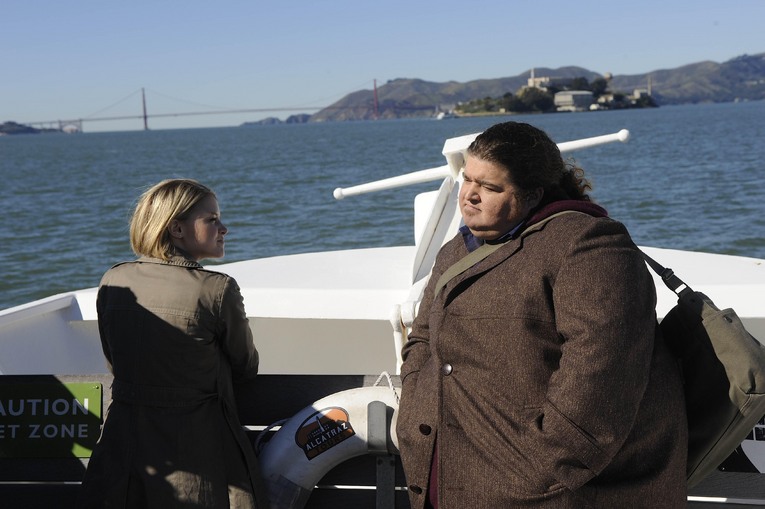
Alcatraz is based on the supernatural premise that right about the time super prison in San Francisco bay Alcatraz was supposed to close, every prisoner disappeared instead of being transferred to other prisons.  These prisoners have started reappearing in San Francisco in the current day at the same age they would have been in 1963.  Main character and homicide detective Rebecca Madsen (Sarah Jones) is solving a homicide which leads her to Alcatraz, and to a nerdy PhD who specializes in all things Alcatraz named Dr. Diego Soto (Jorge Garcia, or Lost’s Hurley).  The two of them briefly meet up with her “uncle” who was a guard at Alcatraz (played by Robert Forster), and eventually run into the paths of FBI agents Emerson Hauser (played by Sam Neill)  and Lucy Banerjee (Parminder Nagra), who seem to already know about the return of the prisoner from Alcatraz.  Eventually they round up the inmate, and the FBI invites Madson and Soto to help out with the upcoming appearances of other former Alcatraz inmates in modern day San Francisco.  However, they’ll be on a need to know basis – it seems as if the FBI has a lot of secrets they’re not telling about why and how these inmates are coming back and who is behind it all.

We learn a couple of titbits in the two hour pilot which go toward these mysteries (the first two episodes were aired back to back).  First, Madsen believes originally that her grandfather was a guard at Alcatraz, and learns both that her grandfather was actually a prisoner, and moreso that her grandfather, also back at the same age he was in 1963, was responsible for the death of her partner, which happens in the first minute of the pilot (her partner falls off a roof as she tries to help in what has to be a homage to all-time great San Francisco film Vertigo).  We also learn that Hauser’s partner Banerjee hasn’t aged since the 1963s, like the escaped criminals.

Alcatraz is produced by J.J. Abrams, and comes with the imprimatur of some of the people who brought us Lost.  Like Lost, Alcatraz deals with the supernatural, and time travel in particular, along with big questions which leave the viewer waiting for answers which hopefully come sometime down the line.  Lost, however, started with a much larger story, was initially much more ambitious (I don’t mean that as a good or bad thing), and had a much larger cast.  Lost additionally had virtually no procedural aspect.

Although I haven’t watched Fringe, Alcatraz has a lot more in common initially with X-Files and with what I imagine Fringe to be about than Lost.  There’s a largely procedural element, a monster of the week, so to speak (inmate of the week in this case).  There’s also an ongoing long-term story which involves some shady super secret government organization which knows a lot more than anybody else about the mysterious circumstances, in this case, the disappearance and reappearance of Alcatraz inmates.

I appreciate that I know I’m in for the supernatural up front, and I don’t feel like the scope will continue to grow exponentially from season to season, compared to Lost, which is the upside of a more limited ambition.  Unfortunately, I also don’t find it nearly as intriguing as Lost from the first episode, though maybe, considering how I felt about Lost by the end, that’s a good thing also.  The show already has fallen into the cop cliche pile several times and while these cliches are so ubiquitous that I have learned to tolerate them well enough, it’s hard for a police-based show to be great without at least starting to break away from the most basic, such as the cop who cares too much, the cop who works best as a loner, and others.

The X-Files was an excellent show that became spotty and inconsistent, and a show in which the monster of the week or freak episodes were better than the long-term plot or myth episodes.  I’ve heard with Fringe the opposite is true, that the running plot episodes are better.  If this show can live up to the better-than-average if not great standards of these two shows, it will probably be at least a relatively enjoyable show if not a great one.

Will I watch it again?  I might.  I wasn’t blown away, but it was intriguing enough and I’m hungering for new shows to follow, particularly large mystery shows even though I know I’m likely to get hurt in the end.  After Luck, this is so far the second best new show, but I think there’s a fair distance between the two at the moment.

Spring 2012 Review: Napoleon Dynamite

25 Jan

Most humor isn’t novel, and that’s not necessarily a bad thing.  It’s writing and acting that pulls it off.  Exact jokes word for word aren’t the same, but there are types of jokes, that are classics for a reason and can even transcend different types of movies and television series.  What pick and rolls are to basketball, these jokes are to comedy; everyone writing a comedy should know how to run these and they can go back to these tried and true jokes even when other attempts aren’t working.  Other animated series like The Simpsons, Family Guy and American Dad all work on these.

I noted a couple of classic joke types that were used in Napoleon Dynamite as I was watching the show that absolutely can work, but don’t.  For example, at one point, Napoleon is using an acne cream to eliminate a case of particularly disfiguring acne.  The acne cream has a list of potential side effects, parodying the type of side effects that appear on all sorts of drugs, and they are ridiculous.  This is supposed to be funny because of how ridiculous the particular side effects are, both in and of themselves, and compared to the fact that the medication is only an acne cream.  This is a tried and true type of joke and no one pulls it off better than Stephen Colbert.  In a regular Colbert Report feature, Cheating Death With Dr. Stephen T. Colbert, DFA, Colbert frequent introduces products by his fake sponsor Prescott Pharmaceuticals, with all manner of ridiculous side effects, including autonomous nipple, wandering genital syndrome, and brain tooth.  I almost never fail to laugh at these side effects.  But when Napoleon Dynamite reads the side effects, it’s not funny.  The particular side effects aren’t that amusing, nor is the way he reads it.

There’s a couple of other examples of this.  One is a fake initial joke; use a series of initials as a shorthand in a conversation and then when another character asks what the initials stand for, the person who uses the shorthand reveals it, which is hopefully funny, because the initials stand for something ridiculous or particularly unlikely.  Napoleon Dynamite attempts this, but it’s done poorly.  Another example is the shows attempt at a Chuck E. Cheese style band of animitronic animals singing.  This should be funny.  The Simpsons did a classic version with the animals of Wall E. Weasel singing “You’re the birthday, you’re the birthday, you’re the birthday boy or girl.”  It’s hilarious.  Napoleon Dynamite’s “Taking Care of Pizza” misses the mark.

If I had to order the problems with this show, and there are several, the top might just be Napoleon’s voice and inflection.  The way he says things is irritating and not funny.  The writing certainly doesn’t help, but he basically challenges any humor on the show to get through the handicap of his annoying voice.

The other question is to ask here is – Why?  Why make this into a show, a few years after the movie was such a break-out hit?  There’s just no reason for this show’s existence.  It almost feels like side characters are forced into the first episode, as if to say, all of your favorite characters from the movie are back!  Rex is back (who can believe they were able to get Diedrich Bader on board?) for some reason in a scene!

I remember why I thought the movie was very overrated, but even that was better than this.  Maybe some of the jokes worked once, but not again.  Maybe the movie was slightly better planned out than any individual episode.  Maybe some of Napaleon’s idiotic mannerisms played better in person than they do as a cartoon.  Still, going down from the movie isn’t a good sign.

Will I watch it again?  No.  It’s bad.  Napoleon Dynamite, like Allen Gregory, is the type of show which should be appealing to me as an audience but misses its mark completely.  In fact, I’d actually say, from the first episode at least, Allen Gregory was slightly less worse, though the margin is close enough that watching more episodes could change it.  Still, Napoleon’s incredibly irritating voice is probably what sends Napoleon Dynamite below Allen Gregory.