End of Season Report: Treme

10 Dec

Father and Son Lambreaux

The Wire, my favorite hour long program of all time, is what David Simon’s legacy will always be tied up with, and on balance, The Wire, though it has its share of happy stories, is more soul-crushing than optimistic, especially in the last couple of seasons, with a ballpark ratio of maybe 65% soul crushing to 35% optimistic (note to self:  make a ledger of major season ending events in The Wire and come up with an actual ratio).   The point here is that it’s a great show, but it’s also a depressing show, and David Simon made his mark because of many of the great aspects of The Wire, one of which is that he took on a city, Baltimore, warts, and all, and wasn’t afraid to paint a pretty bleak picture.

Treme isn’t that.  Treme is probably the flip of Wire, optimism-wise, with the results being 65% positive.  There’s plenty of negative, particularly with David Simon’s two favorite areas to hammer on, the police department and politics and government, but there’s far more stories about regular people overcoming adversity, facing down difficult obstacles, and more often than not coming together and triumphing at least slightly more than they fail in the end.

When searching for something or other regarding the show, I came across an Atlantic Wire article bashing Treme.  There were a number of complaints in article, but they ultimately boiled down to the central complaint that Treme is boring and the reason for is this is because it is too much of a love letter to the city of New Orleans; that Simon should have given the The Wire treatment to the city, the way he did to Baltimore.  I think his argument is both wrong and misses the point.  You know what?  Treme isn’t the Wire, and it shouldn’t have to be.

What Treme is is just about everything that’s right with this type of long term serial show, a serial show not based on action or tension or adventure, but built around the everyday lives of an ensemble of largely unrelated characters in a number of professions.  In fact, Treme could easily be boring; and the writer tries to make that point here by using the HBO online plot synopses, which sound like, “Antoine Batiste is doing right by the young people” and “Janette Desautel has found her groove at Lucky Peach” or “Sonny is moving forward on all fronts.”  He’s right as far as these descriptions absolutely do sound boring.  But that’s as far as it goes; it really is the genius of the show, that these boring sound events add up to a full hour episode every week that’s absolutely not boring at all.  About half the plots revolve around New Orleans music, a scene I could not care less about, and yet, it’s still not boring at all.

It’s because the characters are so rich.  There’s lots of emotion and feel-good moments, but it’s earned over the course of getting to know the characters for three seasons; it never feels manipulative.  It’s okay to be happy for characters.  I love The Wire and it’s soul-crushingness, and I like when some things don’t all end well and everything doesn’t work out perfectly but that doesn’t mean that I don’t like for things to work out for characters sometimes.  What I don’t like is when it’s cheap, and when it’s easy or when it happens to characters that I don’t care about at all.

David Simon knows how to make characters that are deep, compelling, and interesting.  It’s a true ensemble show in the sense that there’s really no main character, and most of the major characters get approximately equal screen time.  All of them are treated with care, as are many of the slightly more minor characters and seem like real living people.

Does David Simon have his peccadilloes?  Sure.  Treme too preachy and sanctimonious sometimes, but honestly, far less than The Newsroom in my opinion (obviously, that’s not saying a whole lot).  His characters do tend towards being too good and redeemable maybe sometimes, but that’s a minor sin at best.  He obviously loves New Orleans a lot more than I ever could or ever will but even though I don’t, the infectiousness and enthusiasm rubs off.  I don’t think it means he loves the city too much or that the people within are faultless, and if he romanticizes a little bit, that’s okay by me.  It’s a love letter, but one that’s built on fantastic writing and strong characterization.  If real life New Orleans isn’t really this great, that’s fine; I’m willing to watch a show through the filter of someone who genuinely loves it and I don’t think that takes away from the show’s quality at all.

There’s plenty of great shows on television now, but nobody else right now is making long form TV that invests in regular people real-life type characters in a not overly stylized way as well as Simon (and his partner on this endeavor, Eric Overmeyer) does on Treme (for example, some of the other current best hour longs:  Breaking Bad, science teacher-turned-meth-overlord, Homeland, CIA, Mad Men, crazily stylized ’60s advertising office, Game of Thrones, fantasy kingdom).  I loved Friday Night Lights along with everyone else, but in my mind, distilled to its essence, Treme is a similar show done even better.  Plenty of people loved Friday Night Lights who couldn’t care a whit about football, because it was really about the characters and their relationships and personalities, and the same is true for Treme, but with New Orleans instead of football.  Treme has the touching moments that anchored Friday Night Lights but feels like a full world instead of one with 12 people in it.  Anyway, I don’t really want to get into a full blown comparison, though that’s an idea for another entry.  What I wanted to get at is that fans of Friday Night Lights should give Treme a try.  Treme is the story of a city, sure, but it’s also the story of families and relationships that feel realer than anything else out there and if more than 10 people would ever watch it they’d find that out.
Ranking Fall 2012’s New Network Shows

6 Dec

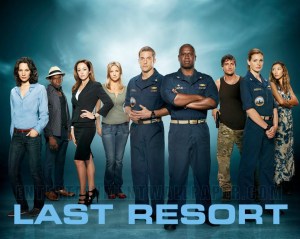
RIP Last Resort

I’m finally finished watching at least the first episode of every new network show this fall.  Now that I’m done, it’s time to rank ’em, all 21 of them, with some quick notes.  Let’s begin.

1.  Last Resort – the series I was most interested in through a few episodes and was subsequently most bummed when it was cancelled, it’s too bad it will never get a proper chance to plan an ending, which even a full season could have given it – it had a genuinely fascinating premise and managed to sustain it well in the episodes afterwards

2.  Ben and Kate  – the best comedy of the fall, which hopefully will last more than a year, Ben was always funny even from the get go but the other characters have gotten funnier as the show has gone along

3.  The Mindy Project – I was hesitant at first, but it’s funny.  The most recent episode may have been the best yet and they’re slowly figuring out how to use their pieces, which I think is a great sign, increasing and decreasing different cast members’ screen time, based on how well they work

4.  Nashville – this started higher but has been going down, as every episode seems kind of like the previous one – still, this is where things get choppy, and a solid premise with solid acting already gets you a pretty good ranking

5.  Elementary – it was surprisingly good, and I just don’t watch non-original Law & Order proecurals, but if I did, I would watch this one; I’ve thought about watching another episode, which is pretty impressive in and of itself

6.  Arrow – I’ve only see one but I plan to watch at least a couple more which means this show could move up or move down, but just based on the one it’s really here – it was fun and made me want more

7.  Revolution – I watched a few, and really wanted it to be better; the characters, particularly Charlie started to grate on my nerves, and compared to Last Resort, the other big serial sci-fi type show, it really paled in comparison, but even that fact that I wanted to watch more keeps it above most shows

8.  Vegas – This show was actually not bad in the one episode I saw; hardly great, but more enjoyable than I had anticipated

9. The New Normal – was it bad?  No, it wasn’t bad.  It wasn’t really good either though and the grandmother character was particularly irritating

10.  666 Park Avenue – it wasn’t a terrible idea at going after the magic that worked for the first season of revenge, but it wasn’t handled as deftly as it could have been either, John Locke does not himself make a show

11. Emily Owens M.D – It had one or two parts that made me half smile but it was a pretty boring and pointless show – its rank at 11 is more a tribute to the badness behind it rather than a credit to Owens

12.  Go On – there were a couple of parts that were funny, but that’s negatively balanced out by a couple that kind of irritated me

13. Chicago Fire – do you remember one thing about this show?  I don’t and I watched it.

14. Beauty and the Beast – this show had no imagination and wasn’t written particularly well

15.  The Mob Doctor – this happened?  it featured Zeljko Ivanek and that’s probably why I’m giving it this slot

16. Malibu Country – southern country people move to southern california and hijinks ensue!  there’s your show, and it’s really not any more complex than that

17. Animal Practice – there was a cool monkey, and that’s pretty much what gets it to 17

18.  Guys with Kids – Jimmy Fallon has a pretty hip reputation these days, but this show isn’t helping it – it’s too bad Anthony Anderson and Zach Cregger were wasted on this drek

19.  The Neighbors – it was fun to watch an episode of because it was so bizarre, but it was also very bad

20.  Made in Jersey – I got a much bigger kick out of watching this than a couple of the shows above it because it was so over the top about her jersey-ness, but I don’t think in this case it necessary makes it better

21.   Partners – a terrible, terrible show, is it a sign of progress that we can now have a show featuring a gay main character and only focus on its terribleness

End of Season Report: Boardwalk Empire

5 Dec

Nuckie and Friends

This was certainly the weakest season of Boardwalk Empire’s three year run (the second was definitely the high point, the first is just a little better than this one), and it ended with a not entirely unsatisfying conclusion, but a not entirely satisfying one either.  I hashed out a much longer article breaking down this season of Boardwalk character by character a couple of episodes ago, and I still may post that, but I’d like to post some general thoughts on the Boardwalk finale and third season in general while it’s still fresh.

One of the primary reasons for the inferiority of the season on a whole is the lack of focus.  Nuckie, the star, continues to be the strongest character; he’s generally treated with the complexity and depth he deserves, and Buscemi carries it off well.  Beyond him, however, the show is a bit of a mess.

His wife, Margaret Thompson, is clearly the second most important character, and in her vast amount of screen time, she provided the worst and least interesting major multi-episode plot this year; her struggle to fight within her limited means as a woman at a Catholic hospital towards medical progress in women’s medical care.   It’s the stuff of a an hour and a half Julia Roberts movie, “The story of one woman’s fight against the government and the church to make pregnancy safer for women” and while it certainly could be inspirational, it was boring, repetitive, didn’t belong in the greater scope of the show, and felt like it was just there to show us that Margaret wasn’t useless, and that she was a powerful women who could fight the man.  Again, I’m not saying this general story couldn’t have ever worked in some form, but it didn’t work in context, and it was clumsily handled.  Her other major plotline was her affair with Owen.  This only interested so far as the effect it could have had on Nuckie, and frankly kind of took away from the other Owen storylines.

The lack of focus was especially clear in the finale when side characters who were largely absent most of the season all of a sudden came back to play large roles, while other characters to whom much more time was devoted during the course of the season were entirely absent.  I by no means believe every character needs to be in every episode or have an equal amount of screen time, but if certain characters are going to be more important at the season’s climax, they should get some more screen time, and I think the time was parceled out very poorly this season.  Additionally, I don’t think the creators necessarily understand which of their characters deserve more screen time in general.

For example, Chalky White, who was basically a non-entity through the vast majority of the season, comes around to play a crucial role in the last two episodes.  I would go so far even to say Chalky has been a non-entity for the vast majority of the entire run of the show; in my longer piece, one of my pieces of advice was that since the writers have decided he’s not important enough to devote more time to, that they should just trim the fat and cut him out entirely.  I do think Chalky can be an interesting and worthwhile character, but I think the writers should have shown more dedication to him over the course of the show if they want us to care about him and treat him as an important character, like they try to in his maybe one showcase episode a season.

Richard Harrow has become a fan favorite, and for good reason; he’s one of the few characters that seems to get just enough screen time and have just enough going on to keep him both interesting and relevant.  While his relationship to the main storyline was often tenuous, it was still significantly closer than say Nelson, and it was easier to take because his arc was compelling enough to live on its own.

Arnold Rothstein, Al Capone, Lucky Luciano, Meyer Lansky; these are all sideline characters; they’re great to have in a show, but they’re characters who are important mostly in how they alter the behavior and decisions of our more major characters.  Capone, for example, gets a small little moment where we see him interacting with his son, but for the rest it feels largely like the show is just telling us to keep watching as Capone moves up to conquer Chicago, like we all know we will.

Primary season 3 antagonist Gyp Rosetti was that was as well; he was a force to be reckoned with, but there wasn’t much going on with his character other than he was a violent psychopath determined to take down Nuckie.  There were some beautifully rendered hyper violent scenes showing just how crazy he was (it seemed like one an episode) and Bobby Cannavale handled the part very well.  Still there wasn’t much going on in terms of motivations or subtitles with him; he mostly existed to put Nuckie in a jam.  Again, it’s fine to have characters like this, who are pretty cool but relatively one-dimensional, but Boardwalk could do a better job investing either more time in the characters on the map that have a little more emotional depth going for them, or add some more subtle layers of depth to these characters.

Nelson Van Alden, who may have gotten the third most screen time during this season after Nuckie and Margaret, didn’t even appear in the finale.  I would have eliminated Nelson’s plot if I was planning out the third season.  Not because I don’t think his character could have any value, but because it just didn’t seem to fit and I don’t find his character in and of itself compelling enough to support his own entirely unrelated subplot, especially when I think focus is such a pervasive problem on the show.

Overall, I think the finale represented a smarter blend of characters than the majority of the season.  Margaret and Nelson’s being largely absent was notable more because they’ve occupied such huge roles over the course of the season than because they were missed in the plot or the flow of the episode.

Okay, these couple of thoughts have gone on far longer than I intended, but I’ll wrap up here.  The second season really came together in the last few episodes over the rise and fall of Jimmy Darmody and Nuckie’s ability to stand up against a series of ultimate betrayals by people he trusted.  The third season felt far more haphazard, zigging and zagging in odd ways to make sure that it reached a resolution after exactly 12 episodes.  Going forward, I’d advise Boardwalk Empire to plan better from the start of the season, to trim the fat, and to take more time to consider who the show is spending what amount of screen time with.

Fall 2012 Review: Malibu Country

29 Nov


Oh boy, this show fits into my favorite category ever, traditional sitcoms with multi-camera set ups and laugh tracks.  It’s not so much that a show can’t be good with both of those features (though with a laugh track it’s increasingly difficult)  as much as that better shows tend not to make those choices (admittedly without thinking too hard I doubt any of the ten best half hour comedies since Seinfeld have laugh tracks or are multi camera).

Malibu Country, while not nearly as archaic as ABC Friday night partner Last Man Standing (admittedly, that’s a difficult feat to achieve), is still a solid fit with the show as another traditional sitcom trying to wear it’s modernity, getting all up with 2012, on its sleeve, while at the same time missing out on all the sitcom innovations that make even many generic shows in 2012 better than shows 20 or 30 years ago.

Malibu Country starts by trying to assert its “modern” direction when Reba (I don’t remember what her non-McEntire last name is, we’ll suffice to call her Reba) leaves her cheating country music star husband after calling him out at a press conference where she was supposed to stand by him.  Thus, now she’s on her own, a single parent with two southern kids and her wise and wisecracking mom (played by Lily Tomlin – man Lily Tomlin is old, to be playing Reba’s mom) and they’re all off to SoCal from Tennessee (Malibu because her husband apparently had a love shack there that she’s getting in the separation).

While you can take the family out of Tennessee, you can’t take the Tennessee out of the family it seems, and Reba feels like a fish out of water is the fast-moving plastic-surgery-filled world of Southern California.  Reba’s vapid neighbor, played by TV-shows-no-one- watches-veteran Sarah Rue (Popular, Less Than Perfect), represents everything that makes Reba uncomfortable, chilling with a glass of white wine while telling Reba not to freak out that she just walked in on her teenage daughter making out with Rue’s stepson.  This is new school, Hollywood-style parenting where Rue’s step-son even calls her by her first name!

Her mom, Tomlin’s character, of course, is allowed to be rude and lewd, a privilege accorded senior citizens, and Tomlin takes it further by purchasing some pot lollipops, which Reba reminds her, ain’t legal back in Tennessee.

Reba hopes to finally resume her country career which she put aside a couple decades ago to raise her family.  When trying to milk a contact using her husband’s connections, she’s told by Jai Rodriguez’s sassy gay assistant that unless she writes songs, she’s not making it in today’s music world, as she’s no longer young and sexy.  I’d like to note here that Jai Rodriguez’s character has an extremely irritating accent, irritating accents are always obvious bad show warning signs for me (see: half the characters on 2 Broke Girls).

The heartwarming moment occurs at the end of the episode, when Reba, about to despair, gets some wisdom from her mom.  Lily Tomlin’s husband cheated on her too, and Tomlin regrets that she never left him.  Reba works twice as hard on her music, comes to Jai Rodriguez’s office with a new demo, and refuses to leave until it’s listened to.  Boom, she has a record deal and a song on the radio by the end of just one episode, and it looks like life in sunny SoCal ain’t so bad after all.

This sitcom isn’t written for me, I know that, but it still rubs me the wrong way.  Besides being simplistic and retrograde, it just wasn’t funny.  I couldn’t believe how many lines there were which got large laugh track receptions and I couldn’t even understand what the genesis of the joke was.  At one point during the episode, Reba’s son, Cash, an idiot who coasts by on his looks and knows it, says “Finally you’re back” to his mom when she returns.  In response, she says, “Good to see you too,” and THE LAUGH TRACK GOES WILD.  Seriously, if we can’t get rid of it, can we set minimum standards for laugh lines?

It’s time to move on from this, comedy-wise.  A bunch of Southerners moving to California who don’t understand their newfound California lifestyle just doesn’t cut it anymore as a premise.    You have to work a little harder to get laughs nowadays, and that’s a good thing.  Of course, I watched the whole episode, but it’s easy to tell within two minutes that this is a show that I won’t like and that no one I know will like.  It’s so uninspired; I have a hard time thinking a writer pens this material and reads it back to himself and thinks it’s funny.

Also, while Reba, her son, and her mom all have southern accents, the daughter does not.  Odd.

Will I watch it again?  Nope.  Besides, if I want to watch episodes of a single parent family bringing their kids from Tennessee to California, I can always watch old Hannah Montana episodes.

Fall 2012 Review: Beauty and the Beast

28 Nov

Beauty and the Beast is the CW’s loose revival of the 1987 series of the same name starring Linda Hamilton and Ron Perlman.  I know little beyond the basic premise of the original series, so we’ll ignore it from now on except to note how unlikely of a revival it is, and that Hamilton and Perlman actually went on to have really solid careers, so kudos to them.

Kristin Kreuk known for her performances as Lana Lang in CW’s Smallville (CW takes care of its own) and as Street Fighter icon Chun-Li (in, well, Street Fighter: The Legend of Chun-Li) plays Catherine Chandler.  In the opening scene, set in 2003, Chandler, outside the bar where she works, witnesses her mom’s murder at the hands of a couple of mysterious men who try to kill her too until she’s saved by a man-beast. Everyone else (police, relative, friends) thinks she’s made up the man-beast when she describes him after the fact.

In the current day, as the sounds of M83’s Midnight City blare, Chandler is a New York City homicide detective with a partner with a super thick Noo Yawk accent.  Being a detective is clearly her life.  We know this because, possibly due to her workaholic tendencies, her douchebag dude leaves her for another woman in the first scene (we know he’s a douche because he broke up with her by text, and because the Noo Yawk partner calls him a douche at least twice).  Chandler and her partner are investigating the death of a hip NYC fashion editor on the rise, and discover DNA on her body which comes from a dead former member of the military.  Their investigation into him takes them to a seemingly abandoned warehouse where a biochem professor who was an old roommate of the dead military man Vincent Keller resides.  They are suspicious but find nothing.

Later, Chandler finds further reason to check back at the warehouse, and runs into the dead man, realizing that he’s the very same beast-person who saved her when her mom was killed (I actually don’t remember when she realizes this – she has three or four heart to hearts with him.  Sometime before the end of the episode though).  She also finds out that he’s some sort of man-beast hybrid who was a product of some super duper secret government military experiments.  He pleads with her to keep his not being dead a secret, and she complies, convinced that he tried to save the girl rather than kill her.

She tries to investigate her mother’s death further and ends up meeting an FBI agent who worked on the case in a subway station to pick his brain for more info.  In an insane scene, he ends up attacking her and she defends herself against him and two other agents, because there’s apparently NO OTHER PEOPLE ON THE SUBWAY PLATFORM.  Also, meeting on the subway platform would be the worst place ever to meet because you’d have no cell service if you couldn’t find each other.  Anyway, she knocks down the one guy but another throws her on the tracks, where she’s saved by Keller, who does a bunch of shadowy manimal killing.

Nobody seems to take any more time to talk about how she was mysteriously attacked by an FBI agent and two others on the NYC Subway track  and almost run over by a train, even though this seems like it would be a huge deal, but her partner does remark that she didn’t know Chandler took the F train, even though the station was clearly the 1-2-3 Canal Street station – Continuity, people!

Anyway, blah, blah, blah, they solve the procedural murder, and while Keller originally tries to get her to stop looking into stuff because of secret conspiracy danger, eventually they realize they just may need each other’s help after all.

Going forward, presumably, it’s part cop procedural, with Chandler being assisted by her partner, fellow cops, and Keller to solve a murder of the week while also steadily investigating the shadowy government conspiracies that resulted in Keller’s transformation and the murder of Chandler’s mother.

I didn’t really enjoy the show.  For the concept to be successful, the show should have been a lot more fun to watch.  I have no problem with any particular actor, but the show just seemed relatively lifeless.  Arrow, the other new CW show, could have easily been similar in character to Beauty and the Beast; both shows heavily feature conspiracies, and both have types of masked superheros in Green Arrow and the Beast.  However, I enjoyed Arrow much more; Beauty and the Beast was overly serious and heavy and not very rewarding.  The characters didn’t seem particularly interesting and the Beast was a little bit too brooding initially for my taste.  I was much more interested in finding out what Green Arrow’s mom was up to after finishing that pilot than the conspiracy theory in Beauty and the Beast, and the murder of the week could have been taken out of any procedural on TV.

I could watch it again; it was far more mundane and generic than unbearable, but I have no particularly reason to.  The only aspect that seems potentially interesting (the characters and writing didn’t stand out) is a nice juicy complex conspiracy plot, but there’s probably a fairly low possibility of that anyway.

Will I watch it again?  Nope.  It wasn’t awful, but I think that’s enough for me to say.  It met the watchable standard, but not really anything else above that threshold.

The Walking Dead’s Passing Resemblance to Lost

27 Nov


Warning:  Walking Dead and Lost spoilers ahead.

It dawned on me while watching the last couple of episodes of The Walking Dead, that the current situation in the show bears a striking resemblance to certain periods of Lost.  These similarities are not necessarily one for one, but rather in overall feel as well as certainly matching elements of both shows.  Granted, I’m stretching a little bit here and there, but just follow along with me.

First, the Governor and his people are the Others.  The Governor is Ben.  The post-Apocalyptic southern landscape resembles the Island in the fact that danger lurks everywhere outside of protected areas, and that resources are scarce and technology is limited.  Like the Others, the Governor’s people live some semblance of a normal life, unencumbered by the constant dangers and shortages faced by those outside (Jack’s group in Lost, Rick’s group in The Walking Dead).  The Governor, like Ben Linus, is clearly an archvillain, from the viewer’s perspective, but we don’t know his exact history (at least in the first couple of seasons of Lost), and clearly he didn’t necessarily start out with the intention of being evil (well, neither thinks  of themselves as evil, but let’s say, their intents were not purely negative like a true evil villain).  Also, it seems that many in Governor’s group don’t know exactly the full story about the Governor’s motives and villain-ness; it also seemed that way for Ben as well in Lost, though that may just be an impression I got, especially in the episode (the first episode of the third season, A Tale of Two Cities) that showed some of the Others at a book club when Oceanic Flight 815 crashed (more of the Others obviously knew something was going on, but I’m not sure how obviously villainous it was to all of them, at least at first, there were innocents, like Juliet).  Like Lost, our good guys are composed of a rag team group of strangers who didn’t know each other until a tragic set of circumstances, nad have to band together to stay alive.

The interrogation scenes with Glen and Maggie have no exact parallels, but remind me of not one but two major interrogations in Lost.  These are when Jack’s crew had Ben locked up, without knowing his identity, for the last few episodes in the second season, when Ben claimed his name was Henry Gale, and when the Others captured Jack, Sawyer and Kate early in the third season, and particularly when Juliet interrogated Jack (by the way, if we’re really stretching this out, Rick is obviously Jack and Daryl clearly a much nicer Sawyer).  As in Lost, in The Walking Dead, we know these two groups are going to clash at some point, as the much weaker good guy crew dares to take on the much stronger bad guys.  There’s something not quite right about the Governor and his crew, which is exactly the feeling that viewers developed with the Others, even besides their simply being antagonists – the idea that they’re up to something fishy and underhanded aside from just wanting to defeat our protagonists.

Of course, Lost spent a lot more time developing these groups (the Others are around by the end of the first season, while the Governor doesn’t enter until the beginning of the third of Walking Dead, though the latter is on cable, and the episode count per season is significantly less) and then went way off the rail afterwards (time travel, um, purgatory, nuclear explosions).  Lost involved elements of the supernatural that aren’t present in Walking Dead.  Walking Dead involves the science fiction of zombies, and that’s about it.  Many of Lost’s best episodes were when the Others were still mysterious and when Ben’s creepy stare and constant lies-that-might-be-part-truths were captivating instead of tiring and repetitive (why did anyone ever believe Ben by the end of the show?).  The combination of the human dynamics amongst people who don’t know each other yet must work together set against the tension between opposing groups and the continuing plot mysteries that kept audiences guessing, anticipating, and theorizing were what made Lost so tantalizing, and what The Walking Dead does on its best days.

To its credit, I think The Walking Dead has soundly avoided the problem of biting off more than it can chew, plot mystery wise , and having source material, even if it’s not entirely faithful to it, probably helps a lot (I think the lack of limitless supernatural elements helps as well).  In addition, it smartly stayed away from the flashbacks, which I, and I realize this is a divisive opinion, always hated.  We can learn all we need about the characters from their actions at the present time.

I admit, the comparison is a stretch at times, but I do think Lost viewers will recognize at least a feeling in The Walking Dead right now which resembles some of the magic of the earlier (and best) seasons of Lost.  The show, which has had its share of issues over the first couple of seasons, has had its strongest half season so far.  Hopefully Walking Dead will continue its positive run of episodes;  for the first time in a while, I’m really looking forward to the next episode, the midseason finale.  So, kudos, The Walking Dead (and visiting the Lost wikipedia page just reminds me again of how Lost made me crazy (like visiting an ex’s facebook page) but that’s for another day).

The Sad Decline of The Office

21 Nov

I’ve been reading some Onion AVClub episode recaps about Seinfeld, one of the best comedies of all time, and I’m getting to the last couple of seasons, and while Seinfeld’s last seasons had great moments and some very good episodes, they clearly weren’t as consistent as Seinfeld at its peak, and there’s some very interesting reasons for it, that tv writers would be wise to study.

There’s a lot more to say about the general ends and declines of shows, but that’s for another article.  Today, this had me thinking more specifically of the sad decline of The Office.  I’ve been a consistent defender of later seasons of The Office, but there’s no defending it anymore.   The show is mediocre at absolute best and I’m probably only watching this season because it’s the last, and because I’ve watched the whole show and I still have very fond feeling towards it, which makes its struggles all the more frustrating.  The Office is that baseball or football player who starts struggling as they age, and you convince yourself, that it’s just a matter of time til they start at least resembling a shadow of their former self, and then eventually come the conclusion that they’re probably done (think Jason Bay on the Mets).

What has particularly surprised and disappointed me was how rudderless the show has seemed since Steve Carell and his iconic Michael Scott character left at the end of Season 7.  I had thought of the idea of replacing Michael Scott a couple of seasons early as a way to keep the show fresh and forestall decline, because his character had a lot of inherent limitations (which just makes it more impressive that Carell kept him consistently tolerable enough) but the way the writers handled the post-Carell era make me glad they held on to Carell as long as they could have.  It’s just disheartening that given Carell’s growing film career and the fact that he could have left at any time, the writers couldn’t have cobbled together a better succession plan.

Last season was a total mess, as the writers threw a bunch of ideas at the wall with a frustratingly low percentage of success, like a lousy shoot-first guard in the NBA (Nick Young?).  James Spader’s Robert California was an amusing one-joke character that got less and less funny in every episode he appeared in.

New boss Andy has become an entirely different character that sometimes isn’t even a character, changing his personality to serve the needs of a particular episode, and has been portrayed too often a poor man’s Michael Scott, rather than as his own character.  New character Nellie was just terrible, and increasingly irritating as the season went on.  The subplot involving a random new female character (Jordan?) hitting on Jim completely missed the mark.  The plot involving Darryl trying to get with random warehouse worker Val?  Swing and a miss.  The show said goodbye to Gabe at the end of the season, one of the few highlights of the last couple of seasons.

I, for some reason, had hope for this last season, because knowing exactly how many episodes there are left can often be liberating for a show, even a largely non-serial comedy, just in the ability to put everything out there.  However, if anything, this season has been even worse.  The two replacements for Kelly have done nothing for me and the strange plot of the non-Clark Duke employee slowly establishing a rapport with Erin while Andy acts increasingly erratic I don’t really understand and don’t have any interest inn.  Andy has evolved further into Michael Scott territory, and as much as I’ve always liked Ed Helms, it both makes me appreciate Carell, and wonder why they can’t create a consistent character for Andy.  Jim and Pam just have nothing left; the major plot this year involves Jim wanting to leave work to start a new company with his friends in Philly, but it’s really hard to care.  The show has tried, for some reason, I don’t understand at all (non-refundable contract?) to redeem Nellie, deciding to simply forget completely how irritating and terrible a character she was for her first few episodes.

There’s not to say there aren’t occasional laughs to be found; it’s just that they’re fewer and farther between than ever before.  Erin is possibly the best part of watching the last few seasons of The Office, and Dwight’s ridiculousness holds up better over time than the antics of Jim, Pam, and Andy.  I laugh at these occasional moments when I watch now; but if this was the show I was watching new from the beginning, I have a hard time thinking I’d keep watching.  Anyway, I still hope against hope that the second half of the last season will leave us on a better note, but they haven’t provided much reason to keep watching.

Fall 2012 Review: Emily Owens, M.D.

19 Nov

Most shows, at least what you get from the pilot episode (Last Resort aside), can be summed up pretty quickly.  Emily Owens, M.D. can be summed up even quicker than that.

Being a young doctor right out of med school is just like being in high school.

I’ll say more, but there you have it.  You could read that line and have a pretty good idea what the show is about.

Here’s another way that I think is fairly good to sum it up.  It’s like Scrubs without the jokes.  It actually has a pretty similar sensibility to the with the camaraderie between doctors and the high school drama matched up with the seriousness of illness and death the doctors deal with every day.  There’s even a speech given to Emily by another character about which doctors represent which high school cliques, and I really felt like I was watching Scrubs.

The main character is unsurprisingly Emily Owens (played by Mamie Gummer, daughter of Meryl Streep, and yes, you can totally see it), a high school nerd/loser/choose your adjective here who thought that her life would turn around and she’d become who she always thought she would be and bloom post-high school, only to find out, yes, that doctoring is just like high school.  This isn’t just me saying it by the way; multiple characters express this to her within the first few minutes of the show.

She’s spending her first year with a motley crew of colleagues including her med school crush, her old high school nemesis whose appearance unnerves her, and a friendly lesbian who turns out to be the big boss’s daughter.  Owens spazzes constantly (spellcheck does not pick up spazz, but screw that) making lots of little, and one or two big, mistakes along the way, pissing off the doctor she came to this hospital to work under, but also making a couple of friends and partly redeeming herself along the way.  All in her first day too, which the entire episode takes place during; I doubt that every day as a doctor can be quite this meaningful and frantic, but what do I know.

The boldest move, for both her and the show, in my opinion, which I appreciated the most, and will probably be the only thing I really remember from the show, is that she basically comes out and confesses her love for her crush (yes, we’re using crush; this is high school) right in the first episode, and gets rejected in the absolutely nicest way possible making it incredibly awkward for both her and the guy, which makes you feel terrible for both parties (worse for her, but still).  As an awkward person, I did appreciate her completely believable amount of awkwardness, which seemed true to life rather than person-who-clearly-doesn’t-live-in-society level.

Other than that, well, there was nothing memorable about it.  Nothing made my irritated or angry or offended or any of that bad stuff.  There just wasn’t really much good stuff.  It was a show, and well, if you liked Scrubs without the jokes, maybe you’ll like it (actually it was still less self-righteous and lesson teaching than those Scrubs monologues – boy did I hate those).  You’ll probably forget about it within a couple of days of watching it though, like I’m predicting I will.

Will I watch it again?  No, it wasn’t execrable by any measure, but it was forgettable, and for getting lost in a crowded fall schedule, that’s almost as bad.

Fall 2012 Review: Arrow

15 Nov

The titular Arrow is DC superhero Green Arrow, on whom the show is based, although I don’t know exactly how close.  My knowledge of Green Arrow is more or less limited to his name, Oliver Queen, his city, Star City, his sidekick, Speedy, and the fact that he and Green Lantern had a well-known comic in the ‘70s where he was liberal and Lantern was conservative.  I probably know a little more if I rack my brain, but I decided to leave it at that for this viewing and review, and save any further Green Arrow research for after.  So I’m not sure how accurate this show is, and can’t be angered/buoyed by changes made/not made for better or worse.

Oliver Queen has just been rescued, when we come in, from an island where he spent five years after a shipwreck in which he was the only survivor.  A super rich twenty-something playboy beforehand, Oliver changed profoundly on the island (seems plausible enough that five years on an island alone could do that), but he’s trying to convince many people he hasn’t, especially not telling them about his city-rescuing alter ego, a dude in a green hood with mad archery and not-getting-killed-by-guys-with-guns skills (which he gained on the island somehow?  I’m willing to suspend disbelief for a comic show).  He was apparently inspired by his dad (played by evil Homeland vice president Jamey Sheridan), who was on the boat too, and did everything he could to ensure that Oliver lived, pushing him to make up for all the bad that the family company had done after he was rescued, and somehow transmitting a very Revenge-like list of villains that have something come to them.

He reconnects with the people in his life, introducing them to us as they get reintroduced to him.  There’s his mom, who is now married to a former partner of his dad’s (if this was Castaway, she’d be Helen Hunt, and the new husband Benjamin Bratt).  There’s his sister, nicknamed Speedy (hint, hint?), who may have developed a drug problem in Oliver’s absence.  There’s his best friend, Tommy, who wants to rush Oliver right back to his playboying ways, throwing a big party to celebrate his return.  And finally, there’s his ex-griflriend, Laurel, now a do-gooder lawyer fighting for legal aid, whose sister died in the shipwreck, where Oliver was cheating with her, on Laurel.  Oh, and she’s now kind of seeing best friend Tommy.  Awkward.

We know he’s out to get all the people on his list, but no one else knows yet, and he shows his island-gained bow and arrow abilities in a couple of nice action scenes, taking out a shady corrupt businessman from the list and his legion of guards.  Oh, and his mom apparently was behind a kidnapping of him, which he escaped from towards the beginning of the episode.  So that’s about something.

I know more about comics that most people, but less than anyone who has ever seriously read comics, so as I said, I’m not judging this with the comic in mind.  I thought there was a chance that I would like it based on the little I knew and assumptions I made in my head, and I did enjoy it, which I think that’s more of an achievement than it seems.  I didn’t think it was great or a cinematic achievement or was blown away by it or plan on immediately telling everyone I know to watch.   I am going to watch the second episode though, and that’s pretty good; only a few series get that far every year  (the TV show equivalent of getting my Top Chef jacket and making the main competition – sorry, just watched first episode of new Top Chef season).

I enjoyed the set up and I think there’s promise in exploring the mysteries behind the shipwreck, his history, and what his mom is out to get, and I liked the characters and actions scenes enough to feel like I wanted to watch another episode after this first one finished.  There’s not much to the characters right yet, other than the broad strokes the episode generated – reformed playboy, debaucherous best friend, legal aid maturing ex, troublesome sister, but I think what kept me interested most was that it seemed to hit the right feel between serious and light and feeling comic book-y, where broad strokes, at least to begin with, are part of the natural order.

Random note:  The three things we see Tommy refreshing Oliver on which happened during his five years on the island –  Super Bowl winners, Black president, Lost ending (which, rightly, he doesn’t understand).

Will I watch it again?  Yeah, I think I will.  It’s not an instant must-watch by any means but it’s certainly at least on the level of Revolution which I gave a few more episodes, and I’ll at least give it two or three more and see if I stay intrigued or fall away.

Fall 2012 Review: Cuckoo

7 Nov

Cuckoo is a BBC comedy (BBC 3 to be precise, but please don’t ask me what the difference is) about a normal-ish family trying to get along with their weird new son-in-law.

While I was watching the first episode, various comparisons kept coming to mind, but my brother crystallized it best –  Cuckoo most closely resembles Meet the Parents in reverse.  Instead of a normal, if easily intimidated and sometimes awkward, workaday guy, being forced into bizarre uncomfortable situations with a super weird and intense parent of his fiance, it’s about a normal workaday family, the father, especially, being forced into bizarre uncomfortable situations with a super weird and intense son-in-law his daughter brings home after marrying him during her gap year abroad (could you get more UK than gap year?).

While the rest of the actors haves some British cred (Greg Davies, who plays the father, is the head of sixth form in other recent British comedy hit, The Inbetweeners), the only one known to Americans is Andy Samburg, who plays the new son-in-law, who calls himself Cuckoo (hence the title).  While I imagined Samburg would play his standard doofus-y type character which I thought would fit seamlessly into this plot, he plays just as ridiculous and over the top a character, just not what I was expecting in that vein from him.  He’s a super arrogant, super non-self aware, eastern-philosophy type, pretentious and with no basis in reality.  His work is writing his magnum philosophical opus, and he casually insults the father unwittingly within just a couple of days of knowing each other (how this is unwittingly is a mark of how extreme the lack of self-awareness is) by calling his beautiful English countryside shit, compared to all the beautiful places Cuckoo has been, and by calling the father a worker, while he, Samberg, is a thinker who works on a higher plane while the workers handle more menial tasks.

If you haven’t guessed yet from just the description so far, well  the show doesn’t really work.  It doesn’t really work on either of two primary levels, idea and execution.  It starts with kind of a simple, stale idea, and doesn’t bring anything particularly new or innovative to the idea nor even take advantage of what humor can still be mined out of that existing idea.

It’s really difficult to understand what the daughter, Rachel, sees in Cuckoo, but even taking that as a given and putting it aside, it’s just not very funny.  Rachel really wants her parents to like him, but she’s amazingly oblivious to his inappropriate and weird comments, and not even really trying to make excuses for his behavior, like you’d think someone would.  There’s lots of sitcom standard miscommunication, where two characters are talking on different frequencties, and we the viewer realize this at the time, while they realize this later on, and there in allegedly lies the humor.  Primarily at one point in the pilot, the father thinks he’s convinced Cuckoo to take some of the father’s hard earned money and leave for good, for Rachel’s sake, so she can have an ordinary university life, where Cuckoo naturally doesn’t get what the father’s saying at all and uses the money to buy a ridiuclous truck, and soon the father realizes he’s wasted his money but has to claim otherwise to save face with the rest of his family for are trying to be more considerate to Cuckoo.  Cuckoo’s so wacky and oblivious!  It’s awkward for everyone without being funny to compensate properly.

Will I watch again?  No.  It wasn’t awful; it mostly was stale instead of cringe-inducing, and there were one or two moments where I laughed.  It just wasn’t very good and was rather disappointing; I’m not sure I had any reason to expect more from this show, but for some reason (likely that I generally like Andy Samberg) I did.