Spring 2013 Review: Red Widow

15 Apr

Guess which one is the Red Widow


Red Widow begins with a super double episode to really attempt to hook us in.  Red Widow herself, Marta Walraven, lives in a swanky Bay Area house with her husband Evan and three children, a older high school boy, a younger high school girl, and a 10 year old or so boy.  Her father, and her family in general have some sort of Eastern European mob ties, and her husband Evan, who wears his long hair like a cool European soccer star, joined the family business, mobstering, when they were married, working with her brother, Irwin, and a third friend named Mike.  They mostly participated in light mobstering, namely importing and exporting pot (ie the good drug).  Marta knew, but she was busy housewiving it up and raising three kids, and in the near term, helping her sister on her wedding.

This is all going swimmingly until Irwin decides their middle-brow marijuana business just isn’t making the grade anymore.  He recklessly rips off 85 kilograms (“keys” in drug lingo) of cocaine from reputed super druglord Schiller, killing a couple of Schiller’s guys on the boat where the coke was stored, in the process.  We know this is bad news right away because, before Irwin kills one of the dudes on board the ship, the dude warns Irwin that if he goes forward, him and his family and his family’s family and so forth will die in revenge for the theft. Evan is not at all happy to hear that Irwin risked everyone’s lives by stealing from Schiller and is now terrified.

After her youngest son finds Evan’s gun, and threatens someone at school with it, getting expelled in the process, Marta demands that Evan leave the business now, but he warns her the only we he can is to leave everyone and everything they know behind completely, like completely completely.  Fine, she says.  She’s got three kids to protect, dammit. That night is her sister’s wedding, and everyone’s there.  Irwin goes to unload the coke and gets arrested by the FBI.  Mike and Evan have a fight.  Evan is murdered the next morning, which was only a matter of when, because otherwise the Red Widow show name would be incredibly misleading.  We suspect Schiller was involved because of his threats. Before the body is cold in the ground we find out that Evan had made a deal with the FBI.  When he promised to keep them safe if they left everything behind, it’s because he got them witness protection in return for dropping a dime on everyone.  Marta’s son is not impressed; those are family criminals he was turning on, and even if a deadly mobster was out to kill them, Mom would have found another way.

Marta’s bro lets her know that now she has to take on the debt (thus turning her into the RED WIDOW), and return the cocaine to Schilller to try to save her family.  This once lowly housewife must now take on the duty of navigating the mob while still protecting her children.  Schiller (Goran Visnjic of ER) is an enigmatic mega-gangster who lets her know with constant bits of cryptic wisdom that she will have to help him get some shipments through the port, and perhaps by helping him, he will deign to let her and her children live. She has ol’ Mike teach her the biz, and starts to slip into the world of illegal activity, trying to convince the right people to take bribes to get the shipment through.  She’s concerned she could get caught and have her kids go to jail, but she sees no other way. She tensely awaits the call from Schiller with the details of her job, at the end, she gets it.  Here’s the time and place.  The game is afoot.

Honestly, it’s a pretty mediocre action show.  Red Widow is not that interesting and not that captivating.  The plot in general could be interesting, but there’s no reason to think it will be.  It’s not awful.  It goes.  If it was a movie, you’d watch it on a plane and feel like you hadn’t wasted your time, since you were going to be on the plane anyway, but you certainly wouldn’t see it in theaters.  There’s less a lot to say bad about it, than nothing to say good about it.  It’s got some sub par or at most par action and suspense scenes; you could do a lot worse, but you can also do a lot better.

Also –  why is she a Red Widow?  The widow part is obvious.  I assume the Red is in reference to Russia.  She’s clearly supposed to be eastern European, though it wasn’t clearly whether Russian or not.  Red, I had thought, referred to communism, so I don’t know that post-Commie Russia would be red.  Is the red a reference to something else?

Will I watch it again?  No.  I try to really think about why I like or don’t like a show, but I also try to give some credence to my immediate visceral reaction, sometimes compared against other shows I’ve watched.  I watched Hannibal recently and wanted to watch a second episode immediately after I finished the first.  I finished Red Widow, and I didn’t feel like I wasted my time, but I was closer to being glad it was over (being a double episode doesn’t help) than wanting to put on the next.
Re-watch: Season 2 of Breaking Bad

12 Apr

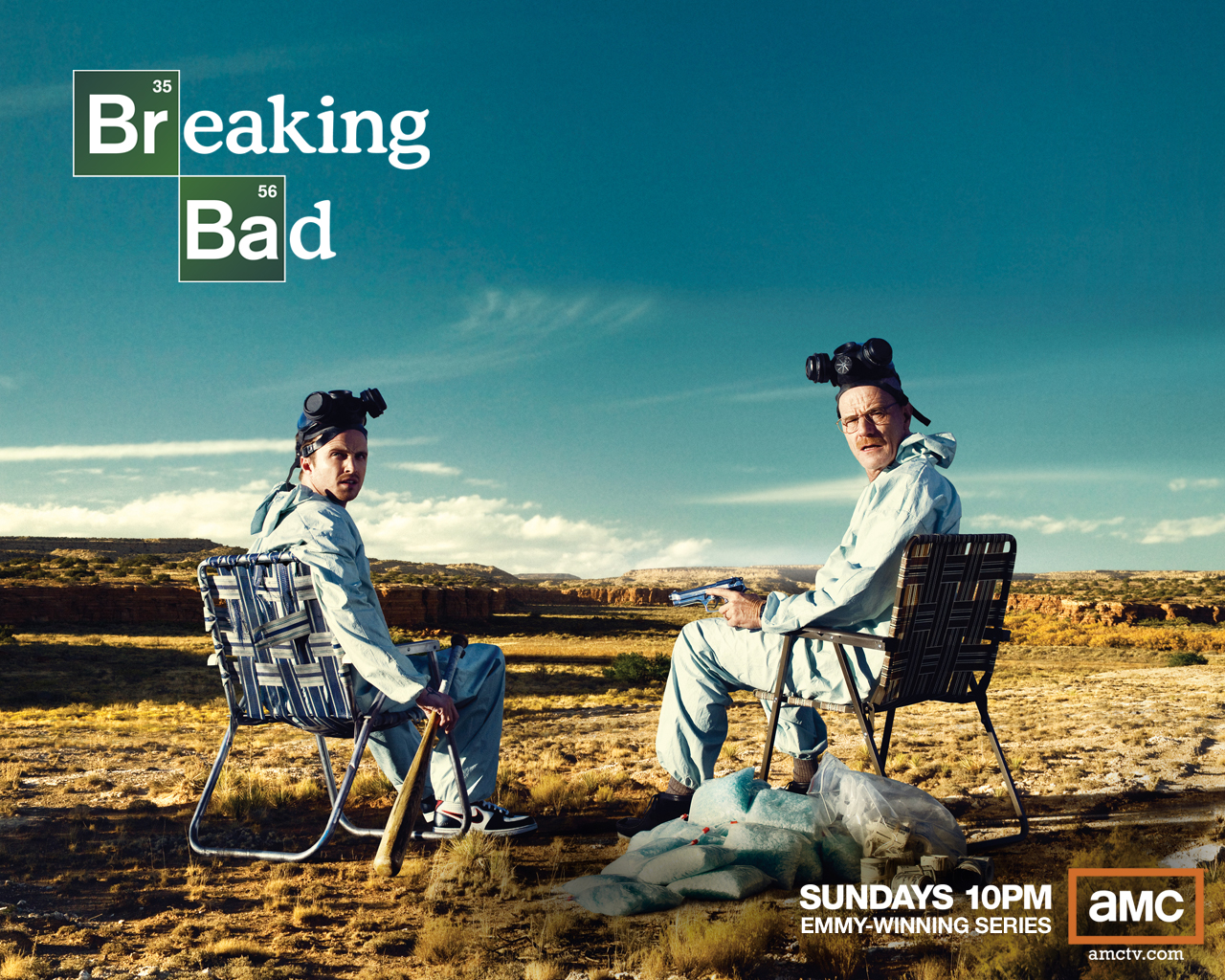
Jesse and Walt taking a break

Warning:  This post is about Season 2 of Breaking Bad.  I will not be revealing specific spoilers from later seasons but I will allude to them generally, so watch out if you’re not up to date.

I re-watched Season 2 of Breaking Bad recently with a friend watching it for the first time, and I appreciated it a lot more than I remembered appreciating it the first time through.  There were a couple of plotlines I had forgotten about completely, and a couple that occupied less or more time than I had thought.

In particular, I forgot what a different show Breaking Bad is in Season 2 than it becomes in Season 3 and especially in seasons 4 and 5.  Breaking Bad Season 2 is the show as its most human; the characters are still regular people, and not superheros with special meth-peddling, empire-building, abilities.  Season 4 of Breaking Bad was one of my favorite seasons of TV in a long time, and I’m really looking forward to watching the next couple of seasons all the way through a second time, but only after watching Season 2 again did I realize the starkness of the differences.

Season 4 has suburb pace and direction, and it’s a brilliantly plotted and stylized suspense movie with deep characters and themes, but the characters pop out of the real world as super characters who have special abilities regular people don’t.  Season 2 has at least some of all these characteristics of course, because it’s the same show at heart, but it’s much less densely plotted, and it’s much more about dealing with our characters as regular people.  Notable super characters Mike and Gus are not yet really present, and this is before the full transition to Heisenberg; Walt is still a science teacher and only a part-time druglord.  Walt still lives a more or less ordinary suburban nuclear home life.  Walt is uncertain; he lies constantly but he rarely acts on the reserves of power and ego that he builds up in the later seasons.  Only once, when he comes onto Skyler from behind when she’s in the kitchen, and Walt Jr is about to come home, does it really feel like he’s acting out his power fantasies and attempting to rise above the rules that apply to regular humans.  Other than that, even though he loves the way his can dominate the meth market in a way he could never the law-abiding science world, he’s much more committed to evasion than exercising his power.  He absolutely hates the idea of laundering his money through his son’s charity site in a way that doesn’t let them know the money is coming from him, but he eventually accedes.  Saul, while helping him and Jessie, who, he correctly notes, are terrible at dealing drugs, also acts as a cheap therapist occasionally where Walt, unafraid of being caught, can vent his frustrations before going back and lying in the real world.  Walt’s biggest god moment in the season is actually a moment of inactivity, when he lets Jesse’s blackmailing and methhead girlfriend Jane, choke on her own vomit and die.  It’s a stepping stone in the timeline of Walt’s comfort level with violence and his own power, but it signifies where Walt is at at the moment; the extent of his power is doing nothing.

Walt is less confident here in these early seasons.  He lies but he doesn’t really know how to do it yet, and he still cares whether Skyler believes it.  I forgot how quickly into the show Skyler didn’t quite trust Walt; it was the first great lie, the fugue state that Walt fakes after being kidnapped by Tuco in the second episode, that sets off her radar.  She very soon doesn’t buy the fugue state explanation, and the second cell phone gnaws and gnaws at her until it finally returns in the last episode when Walt, doped up before surgery, alludes to his having multiple phones.

I’ve said for years that the second episode of the second season was what really hooked me on the show (not that the earlier episodes weren’t excellent, but this was the confirmation to me that this show was really on to something).  It’s still brilliant,though the non-Walt and Jesse parts aren’t quite as good as the Walt and Jesse parts alone with Tuco and Tio, and his bell, in the desert.  Excellent segments I forgot about included Jesse’s attempt to “take care” of the methhead couple who robbed Skinny Pete, which is just a fantastic piece of film-making.  Breaking Bad also, as always, has the best montage sequences in television, managing to convey quickly ideas and plots which take days and weeks in stylistically elegant and informative ways, such as showing Badger, Skinny Pete, and Combo selling the blue meth and expanding their territory.

I can’t talk about this brilliant season of television without mentioning the one ploy that doesn’t work at all, the plane crash.  I’ve never met anyone who disagrees, and I don’t really want to waste time talking about the single bad part in an otherwise great season.  Still, it’s a shame it happens at the very end.  My theory, and I forget whether I’ve read anything that confirms, or at least informs this view, is that by the time the writers got to the end of the season, they realized that the plane crash didn’t work the way they had intended, but since they had committed themselves by having those occasional flash forwards from the first scene of the season, they felt like they had no choice, and could only minimize it’s relevancy.

Jesse gets a lot more real meat this season than he did in the first season, and we see how human and vulnerable he is.  Also, an underrated aspect of Walt that I think is not properly appreciated is on display.  Walt, for all his bluster, actually does care for Jesse.  He may have a strange way of doing it, and it may be locked up into his own selfish reasons, but he puts himself on the line several times for Jesse, including making sure Tuco doesn’t kill him early on.  When he asks Jesse to go to rehab, sure, it’s better for business, but I think he’s not wrong that it’s better for Jesse too.  I’m not sure if I’m in the majority or minority here, but I think Jesse running away with Jane would have been a drug-addled disaster.  I’m not sure if in the long run staying with Walt will be better for his health, but I don’t think the Jane option at that point would have been brilliant either.

If there’s a grand narrative to just the meth sales aspect of Breaking Bad, it’s the constant back and forth between Jesse and Walt trying to sell it themselves, and then failing for some reason, and then distributing through someone else, and having that not work for some reason, and repeat, as their production operations get bigger and bigger. This season, after Tuco’s death, is them really trying to do it themselves on a decent -sized scale the first time.

I couldn’t end this write up without another salute to the entrance of lawyer Saul Goodman. I didn’t initially realize he would be a frequently recurring character, but he was a fantastic addition to the show, giving Walter a reality check quickly, and adding some much-needed humor to a show that could easily be dragged down by overbearing seriousness and tension.  Humor is a sometimes underrated element of Breaking Bad; the show can be laugh out loud frequently funny, often by way of Saul or Jesse, and that helps the writers keep their feet to the pedal of the dramatic aspect of the show without it being overwhelming.

Lastly, I’ve always adored the passion and concern Walt exudes when telling his son and wife that their house has rot in the tenth episode of the season, “Over”.  I might be the only one, but I quote those lines over and over.

Spring 2013 Review: Hannibal

10 Apr

Hannibal

I initially thought Hannibal was on cable, instead of NBC, and although I’m not sure why I thought that, after watching the show, it makes a lot of sense that I would think it.  It feels like a cable show.  In fact, in a highly unusual arrangement (and perhaps an auger of the future), NBC has agreed to continue to air seasons of 13 episodes if the show is successful, which has become the default cable format.

The show was created by cult TV veteran Bryan Fuller, who has been behind Dead Like Me, Wonderfalls, Pushing Daisies, and Mockingbird Lane, none of which I have seen, and none of which has been particularly successful, but most of which have dedicated small followings.  Unlike what I know about those shows though, nothing about this show feels particularly cult-y, and I mean that in neither a bad or good way.  Rather than dissect that further though, let’s get into the meat of the show.

The title Hannibal in question is Hannibal Lecter, and thus this is a story that just about anyone who’s been around pop culture for the past 25 years knows pretty well.  Lecter, we know, is a famously cunning and psychopathic cannibal who, while in captivity, helps Jodie Foster’s Clarice Starling solve a major serial killer case in Silence of the Lambs.

Hannibal takes place well before Lecter has been captured.  The show stars Hugh Dancy as Will Graham, a character we know from the mediocre Silence of the Lambs prequel Red Dragon, where he was played by Ed Norton.  Here, Will Graham is a veritable super analyst, who has remarkable observational abilities, and more importantly a type of perfect empathy which allows him to relate and take the vantage point of even the most psychotic killers.  His abilities have the negative side effect of making him particularly vulnerable to being mentally destabilized, and Dancy does a very good job of seeming on edge the entire episode. We learn he is not a full FBI agent because he couldn’t pass some sort of stability tests but he is lecturing and helping out with random assignments.

His boss is Jack Crawford, head of FBI Behavioral Sciences, played by Lawrence Fishbourne here, and by Scott Glenn in Silence of the Lambs.  Crawford convinces Graham to take some time to help him out with finding serial killers, even if it means subjecting his psyche to serious angst.  Crawford is the level-headed boss who may not have the intuitive smarts of Graham but knows how to manage and direct people, and he’ll probably have a lot on his hands this season overseeing Graham, and the third member of our key trifecta.

This third member is none other than Hannibal Lecter himself.  Lecter is a renowned psychiatrist, as well as a brilliant psyopath,and  is brought in by Crawford to help develop psychological profiles on cases, including one in the pilot involving a cannibal who is kidnapping college aged girls and killing them.

The show’s critical dynamic is the tete a tete between Graham and Lecter.  Graham knows how to see into the mind of criminals, but only at great vulnerability to his own psyche. Lecter, who, without emotions, can’t be emotionally manipulated himself, knows how to push Graham’s buttons, and how to unnerve him. In this first episode, soon after it is discovered that the killer they’re tracking is a cannibal, there’s another killing that seems to fit the profile.  Graham immediately recognizes the work as that of a copy cat, and describes the killer as an intelligent psychopath who will show no pattern, has no feeling, and will likely never be caught.  Only we, the viewers, know that Lecter in fact committed this crime, and that Graham, unbeknownst to himself, is profiling Lecter perfectly (well, except for the never being caught part).  Lecter toys with Graham, but it seems to possibly be at least partly out of respect.  In fact, whether it was Lecter’s intention or not, it was seeing the incredibly wrong copy cat crime scene that allowed Graham to figure out the correct profile for the killer.

We also have to suffer through knowing Hannibal is super evil while the characters keep bringing him on board to help them on investigations, placing him in an ideal position to sabotage their cases. In the first episode, he warns their killer, right before they get to him, giving him a chance to kill his wife and severely injure his daughter.

Hannibal has a lot of procedural aspects.  I would guess, without knowing for sure as I’ve only seen the first episode, that each episode at least initially will involve the investigation of a new serial killer.  I was drawn in more than I usually am by procedurals.  Part of this was perhaps due to the high stakes of psychopathic serial killers, and part may have been due to the cinematic qualities of the pilot. One episode felt more like a suspense film than, say, a CSI episode , and the thirteen episode format might help protect that per episode special-ness more than a longer traditional network format.  I think a successful Hannibal can share aspects of two of my favorite current shows, Sherlock and Justified.  Sherlock has the same case per episode format with a more cinematic feel (it helps that Sherlock episodes are double length) and the same genius investigator type in the lead.  Hannibal looks like what Sherlock might be like if Sherlock and Moriarty were working side by side before they were official arch enemies.   Justified began as a rough procedural but morphed in a more and more serial show. The extended arcs made it significantly better but even the individual procedural episodes were a notch above the average, due to the strong character profiles and style built into the show.

The show is a little gimmicky in the way it shows Graham thinking about crime scenes, as he imagines himself as the criminal, and has him covered and blood and guts as he figures out how the criminal acted.  I normally don’t care for this type of gimmickry, but for whatever reason, it really didn’t bother me here.  Also, Gillian Anderson appears as Graham’s therapist, who tries to warn Crawford off from putting Graham too close to the edge.

Will I watch it again?  Yes.  Again, I normally stray from procedurals, but, if this is in at least part a procedural, it’s certainly not a typical one.   The Lecter – Graham relationship is electric right off the bat, and from the extra-curricular notes I’ve read by Fuller, I think he’ll do well to move the plot along during the seasons, rather than than have Lecter and Graham’s relationship in a perpetual status quo, which is a good thing.  It’s often hard to move a show along when you have something good in the present, because you risk having something worse in the future, but staying in the same place can often be just as bad.  My visceral reaction to finishing the first episode was to want to immediately put on the second, and while that doesn’t always bode well for the long term, it’s always a good sign for a pilot.

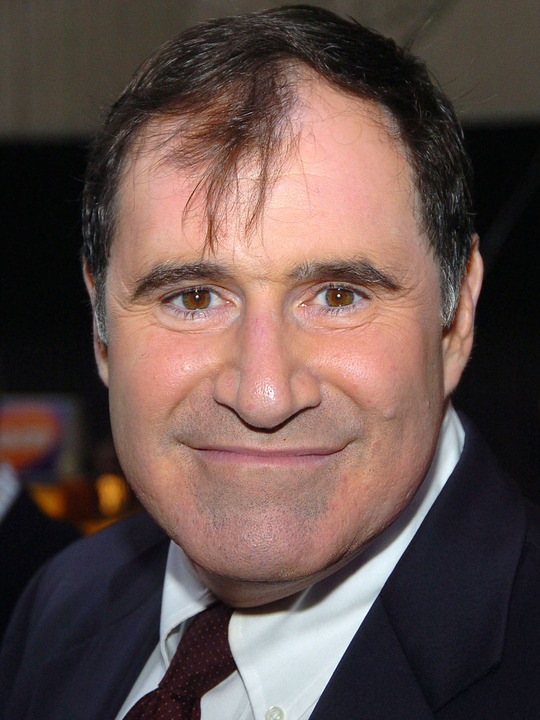
The Zeljko Ivanek Hall of Fame: Richard Kind

8 Apr

One of a Kind

(The Zeljko Ivanek Hall of Fame is where we turn the spotlight on a television actor or actress, and it is named after their patron saint, Zeljko Ivanek)

Playing largely portly, often anxious and neurotic characters might seem to limit the roles an actor can get, but in Richard Kind’s case, as the go-to for the type, it means he gets a lot of them.  He’s done plenty of movie work as well, including a spot in 2012 Best Picture winner Argo, but we’ll be focusing on his TV work, the medium in which he’s had his biggest successes.

Kind, born in 1956, had his first role in TV movie Two Fathers’ Justice in 1985 as District Attorney.  He appeared in a failed sitcom pilot called the Bennett Brothers as one of said brothers, an odd couple, whose other member was no less than George Clooney.  He was in single episodes of Hooperman, My Sister Sam, Mr. Belevedere, Empty Nest, 21 Jump Street, and Anything But Love.   He was a regular on eight episode 1989 NBC series Unsub, a sort of proto-Criminal Minds about an FBI team which tracks serial killers, where he appeared alongside  David Soul and M. Emmet Walsh.

He began the 1990s as a regular role player in Carol Burnett one season sketch show Carol & Company, in which he acted aside future luminaries Peter Krause and Jeremy Piven. He then traveled along with Carol when a new version of The Carol Burnett show was produced for CBS in 1991, which also didn’t last long.  He was in episodes of Princesses, Stand by Your Man, Great Scott, and The Building, and in 1992 finally got his breakthrough as a recurring character in smash success Mad About You.  He appeared in 37 episodes of the series as Dr. Mark Devanow, who left his wife, and Jamie’s best friend, Fran Devanow to see the world.  He later reconciled with his wife, converted to Buddhism  and worked at a grocery store.

Richard Kind started to get regular appearances in main casts of failed sitcoms around this time.  He starred with Julia Campbell and Stephen Tobolowsky in Blue Skies in 1994 about two guys who operate a mail-order business in Boston.  Soon after Blue Skies’ cancellation the same creators imported some of the same actors (Kind, Campbell, and Tobolowsky, now with Corbin Bernsen and John O’Hurley) to work on A Whole New Ballgame in the same time slot, about an ex-ball player who becomes a sportscaster for a local Milwaukee TV station.  The show failed equally quickly.  Kind also appeared on six episodes of the Michael Chiklis-led The Commish.  In the mid-90s, he lent his talents to individual episodes of Nowhere Man, Space: Above and Beyond, Something So Right, The Lionhearts, and Strangers with Candy.

Delivering the Spin

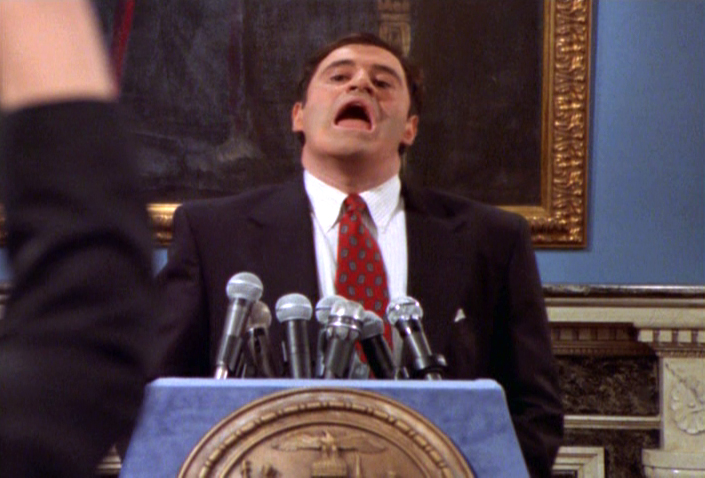
In 1996, he got his next big break, and the part he is most famous for, as Paul Lassiter in Spin City.  Kind is in all 145 episodes of the show, including the two Charlie Sheen seasons, after Michael J. Fox left to cope with his Parkinson’s disease. Kind’s Lassiter is the Press Secretary for the New York City Mayor’s office, and is known for being gullible, subject to practical jokes, and a bit of a cheapskate.

He lent his voice to episodes of The Wild Thornberrys and Oswald, and appeared in Disney Channel’s Even Stevens.  He began the ’00s by showing up in two episodes of Still Standing (did you know every Still Standing episode title began with the word “Still”?  I sure didn’t) and individual episodes of Just Shoot Me!, Miss Match, Girlfriends, Oliver Beene, The Division (one of his first drama appearances) and Less Than Perfect.  He narrated a series of Disney interstitial programming known as Go, Baby! which featured two babies playing with one another.

He appeared in four Scrubs episodes as hypochondriac patient Harvey Corman.  He went back to kids TV to show up in episodes of Sesame Street and a voice role in five episodes of Kim Possible.  He also lent his voice to two episodes of famously failed adult animated series Father of the Pride.  In 2002, he made his first of four memorable appearances on Larry David’s Curb Your Enthusiasm as Larry’s irritating Cousin Andy.  He famously asked Larry for money to fund his wife’s cosmetology school after Larry offered to pay his child’s college tuition.

Larry and Cousin Andy

He was in TV movies Genetically Challenged and The Angriest Man in Suburbia and single episodes of series Head Cases, Reba, Psych, Three Moons Over Milford, and Law & Order: Criminal Intent, as well as two each of E-Ring, Stargate: Atlantis, and All of Us.  He was in a Two and a Half Men, Trauma, ‘Til Death, and Harry’s Law, and multiples of Burn Notice, Leverage, and Mr. Sunshine as well as voice roles in American Dad! and The Penguins of Madagascar.

He co-starred in ill-fated but underrated David Milch HBO series Luck as Joey Rathburn, an agent for jockeys.  Within the last year since Luck was cancelled, he’s appeared in NYC-22, Law & Order: Special Victims Unit, Kroll Show, and Golden Boy, where he plays an interviewing journalist in the pilot.

We salute you for your work, Richard Kind.  The next supporting role for a slightly rotund man proud to live up to the occasional Jewish stereotype is just a call away.  Before we go, I’d like to additionally give credit to his work in the hugely underrated Coen Brothers film, A Serious Man, and note the interesting trivia fact that his best man at his 1999 wedding was his fellow Bennett brother George Clooney.

Spring 2013 Review: How To Live With Your Parents (For the Rest of Your Life)

5 Apr

Instructional program on living with one's parents for the foreseeable future

How To Live With Your Parents (For the Rest of Your Life) (yes, that title is a ridiculously too long mouthful, like this comment) is clearly trying its best to be a Modern Family clone.  This actually makes perfect sense, as Modern Family is one of the most successful comedies on TV, and probably the single most if one combines critical and commercial appeal. I’m only surprised I haven’t seen more Modern Family take offs, to be honest.  How To Live With Your Parents (the relatively short name I’ll use from now on) oozes wanna be Modern Family, and it is not at all a coincidence that ABC has been airing it immediately before that show.

The basic backbones of Modern Family (besides the specific actors and writers and all that) are a quirky family with a sense of comedy that tries to strike a middle ground between more traditional family sitcoms (think Everybody Loves Raymond as the most recent of this model) and new-fangled comedy that young people like (e.g.The Office).  It’s all based around a family which is wacky and somewhat non-traditional but extremely functional, and the message is often more or less that the characters’ families drive them completely crazy but they love them dearly and, at the end of the day, they couldn’t imagine being with anyone else.  Structurally, it’s fairly light and cute, but attempts to be moving and heartwarming, with occasional narration (on Modern Family, mostly at the end of the episodes, but there’s talking to the camera which can be similar to narration).  Again, mixing the young and old, the family is not a classic American nuclear family, a la, say, Everybody Loves Raymond, or the trillions of family sitcoms before, but shares the sense of love and togetherness from those programs, with the wackiness but not absurdity or sense of despair from classic dysfunctional family sitcoms like Married with Children and Roseanne.

Basically, How To Live With Your Parents checks off every one of these boxes.  The main character and narrator is Polly, played by sitcom veteran Sarah Chalke (Scrubs, but also Roseanne, How I Met Your Mother, and Mad Love).  Polly divorced her husband recently and, not having any money or a job, moved back home with her mother and stepfather.  She brought along her young daughter Natalie.  Her mom (Elizabeth Perkins from Weeds) is a Character, a mother with absolutely no filter or sense of appropriateness who is way more comfortable talking about sex than her daughter is (a more and more common TV trope, a reverse of the traditional mother who is incredibly uncomfortable talking about sex (again, see Doris Roberts, Everybody Loves Raymond), often combined with a daughter who is relatively repressed and/or anal).  Her stepdad (Brad Garrett) is also a Character, albeit less so than her mother, and constantly bemoans the loss of one of his testicles from testicular cancer.  Added to this pool is her ex-husband who is a well-meaning dreamer/idiot, very much in the Andy from Parks and Recreation mode, who loves Polly’s family and tries to stay in her life however possible, no matter how much of a bad idea it might be.

She now works at a local coffee establishment and I can’t tell yet whether her co-workers there are characters or not.  Polly helpfully gives us the what’s what within this debut episode by using cutesy white text on screen to point out certain facets of her life she’s explaining, along with frequent flashbacks showing off the crazy in her family.

In the first episode she goes on her first date in ages, and, although terrified, asks her parents to babysit her kid for the night (she’s a classic super nervous mother, with a strict routine and specific rules, while her parents threaten to go all willy nilly Parental Control on her daughter).  Basically, both her date and her parents babysitting end up being semi-disasters, but lessons are learned, things work out in an incredibly heartwarming fashion, and it turns out she’s really grateful to have this zany but loving family even though they’re super insane and drive her completely bonkers.

Will I watch it again?  No.  Did I mention it’s actually not funny at all?  I should probably do that.  It wasn’t offensive; it was more modern than just about any CBS comedy but it was hardly breaking new ground either.  That said, it wasn’t actually funny at all.  The laugh lines and jokes just did not work.  I mean, I could see what the humor was supposed to be, and which lines where supposed to make me laugh but yeah, did not take.  I don’t watch Modern Family, so even if it worked, it’s not incredibly likely I would watch it, but it wasn’t a very difficult decision.  It’s much more heartwarming than it is funny.

Who Are Those Guys: Justified, Season 3

3 Apr

The Man with the Hat

It’s time to try out a new feature here at The Drug of the Nation.  Episodes of TV shows are filled with tons of “that guys” – character actors, tv veterans, up and coming actors, main characters from other shows looking to branch out.  At “Who Are Those Guys” we’ll go through a season of a show and point out notable actors and actresses who appeared in that show over the course of the season, what role they played in the show, and where you may have seen them before.  There’s obviously going to have to be some discretion in the choices, as there’s more than enough noteworthy actors and actresses in any season of a show to write about, so please let me know if I miss a personal favorite in the comments.  Because there are so many, we’ll focus only on actors appearing for the first time in the season, and we’re not including main cast members.

Our first instance of “Who are Those Guys” will take on the recently finished season 4 of Justified.

Episode 1 – “Hole in the Wall”

Pattan Oswalt – On Justified, he’s Constable Bob Sweeney, a semi-competent, paranoid, old acquaintance of Raylan’s who didn’t get to be a cop, but is instead trying to make a name for himself as a constable, though no one takes him seriously.  Oswalt is best known as a stand up comedian but has started acting more recently, starred as an obsessive New York Giants fan in Big Fan and playing a well-regarded supporting role in Diablo Cody’s Young Adult.

Joseph Mazzello – True believer preacher and snake handler Billy St. Cry in Justified, Mazzello was one of the leads in World War II miniseries The Pacific (character was Eugene Sledge) and played Facebook co-founder Dustin Moskovitz in The Social Network.

Lindsey Pulsipher – Pulsipher played Cassie St. Cyr, preacher Billy’s more world weary sister.  She appeared in History Channel’s mini-series Hatfields & McCoys, but had her biggest role previously as Crystal Norris in True Blood.  Norris portrays a redneck werepanther who Jason Stackhouse falls in love with which causes Jason to get entangled in her wacky clan.

Tom Walker from Homeland

Chris Chalk – Chalk is Jody Adair, a criminal Raylan agrees to find and bring in in exchange for some of the bond money.  Chalk has been quite the hot TV actor of late, appearing in the last couple of years as Gary Cooper in The Newsroom and brainwashed marine Tom Walker in Homeland.

Ron Eldard -Former army buddy of Boyd Crowder in Iraq, Colton Rhodes.  Eldard previously was a main cast member in a couple of failed shows, Blind Justice, and Men Behaving Badly, but may best be known for his recurring role as a paramedic early in the run of ER.

Episode 2- “Where’s Waldo?”

Beth Grant – Grant played Waldo Truth’s widow, known simply as Mother Truth, who had another man pretending to be her ex-husband.  Grant had recurring roles on Coach and Jericho but can most notably be currently seen on The Mindy Project as cranky clerical assistant Beverly.

Episode 3 – “Truth and Consequences”

Julia Campbell – Campbell plays Eve Munro, the psychic ex-wife of the mysterious Drew Thompson.  A long-time TV veteran, she might be best known for playing John Lithgow’s serial killer Arthur Mitchell’s wife during the fourth season of Dexter.

Michael Graziadei – As Mason Goines, he’s a Detroit mob henchman who kidnaps Eve Munro.  He played Constance’s lover, Travis Wanderly in the first season of American Horror Story.

Episode 5 – “Kin”

Gerald McRaney – he plays crotchety old long-time criminal Josiah Carn, who gets harassed by Raylan.  McRaney is a TV legend who starred in Major Dad and Simon & Simon and more recently appeared in recurring roles in Deadwood, Jericho, Mike & Molly, and House of Cards.

Bonita Friedericy – She portrayed hill person Mary, cousin to Raylan’s mom.  The six viewers of Chuck will know her better as Brigadier General Diane Beckman, a high ranking official in the NSA.

Romy Rosemont – Boyd’s lawyer, Sonya Gable, she goes on to orchestrate a plot to kidnap Josiah Carn.  She got her biggest TV role in the past couple of years playing Carole Hudson, Finn’s mother on Glee.  She’s also married to Stephen Root.

Mike O’Malley – Nicky Augustine, high ranking member of the Detroit mob, who is out to find Drew Thompson.  Mike O’Malley has done in a lot in his career, early on hosting Nick game shows Get the Picture and Guts, and starring in the shockingly long running Yes, Dear, and appearing frequently as Kurt’s dad Burt in Glee.

Episode 6 – “Foot Chase”

Lew Temple – Temple is one of the two goons who kidnap McRaney’s Josiah Carn.  Walking Dead fans know him as former prison inmate Axel, who hits on Carol a few times.

Episode 7 – “Money Trap”

Sam Anderson – He plays unscrupulous and condescending businessman Lee Paxton who tries to get Boyd to do his bidding.  This is extremely unlike his best known character, soft-spoken dentist Bernard, from Lost.  He also played recurring cardiologist Jack Kayson on ER and villainous lawyer Holland Manners on Angel.

Michael Gladis – Murderer and fugitive Jody Adair’s buddy and aspiring filmmaker Kenneth.  Gladis portrayed the chief in the first season of Eagleheart but is much better known for playing pretentious copywriter Paul Kinsey in Mad Men.

Shelley Hennig – Hennig plays the fantastically named Jackie Nevada, a sorority sister of Jody Adair’s wife, and a potential target for Adair who Raylan must protect. A former Miss Teen USA, Hennig starred as responsible witch Diana in the one season of The Secret Circle on the CW.

Ned Bellamy – Gerald Johns, another one of the nefarious businessmen trying to get Boyd to do favors for him.  He’s had small roles in a number of shows, but myself and the three other Treme watchers will recognize him as Vincent Abreu, the father of the man killed during Katrina whose case Toni Bernette is investigating.

Episode 8 – “Outlaws”

Matthew John Armstrong – A hitman who dresses like a cop to easily take out his targets, Raylan defeats him in a match of quick draw.  This one’s a stretch, but people who made it to the end of the first season of Heroes may vaguely remember the character Ted Sprague, played by Armstrong, a person with the ability to create radiation, who poses dangers to society and accidentally radiation poisons his wife.

Episode 9 – “Get Drew”

Daniel Buran – He plays Nicky Cush, the former owner of whorehouse Audrey’s, who is now a paranoid conspiracy nut.  Buran played villainous werewolf pack leader Marcus Bozeman who gets into fights with both Alcide and Sam on True Blood.

Episode 10 – “Decoy”

Janitor from The Breakfast Club

John Kapelos – Kapelos is Nicky Augustine’s second in command, Picker, who issues him advice.  He’s been on TV for years, but I know him best as Jerry’s possibly drug-addled accountant in episode The Sniffling Accountant on Seinfeld, as well as janitor Carl Reed in The Breakfast Club.

Epsidoe 13 – “Ghosts”

Troy Ruptash – He plays Dominic, one of the goons sent to hold Winona hostage, in the last episode of the season.  His best known role to me is a tiny one, as the real Don Draper whose identity Dick Whitman stole, in flashbacks in first season Mad Men episode Nixon vs. Kennedy.

End of Season Report: Season 3 of The Walking Dead

1 Apr

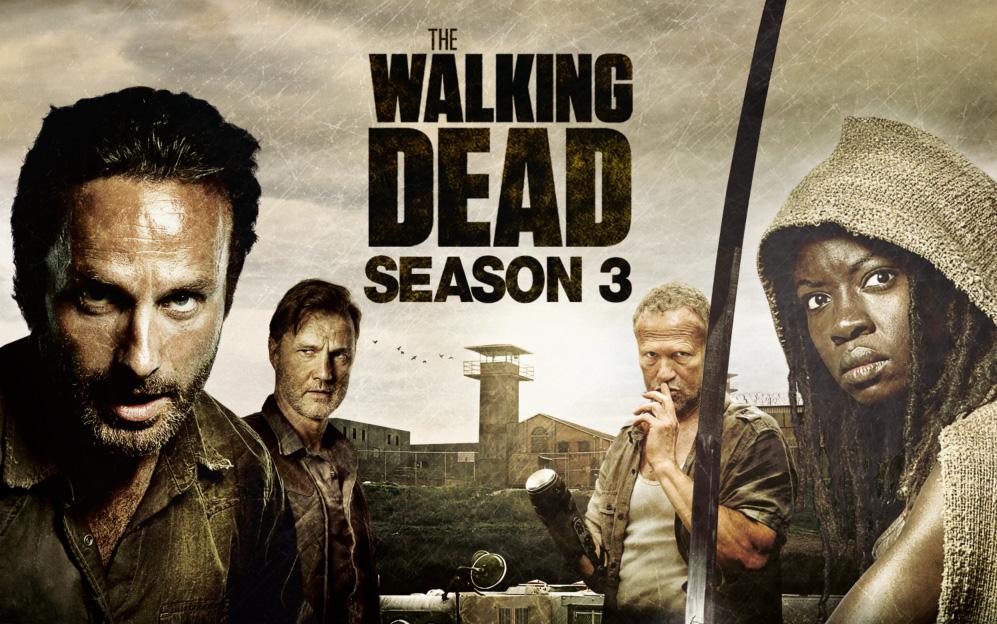
The Big Four

The end of Walking Dead season 3 was okay overall; the finale was frustrating in some ways but not terrible.   I’m going to spend most of this entry talking about two problematic points, so I want to get it out of the way early that I thought the season was pretty solid overall, and much better than the second season.

In fact, I’ll talk first about the aspects I liked in the finale.  Andrea dying; hooray.  We had gotten everything we were going to get out of this character and her internal struggles, and I liked how the show took a situation in which often in TV the character would make it out alive after a close call, and had her not make it instead.  It was a solid death scene all around.  Second, I like the situation Carl put his father in, shooting a man about to hand over his weapon. Our first instinct is to side with Rick, and I think with good reason, but it’s understandable why Carl doesn’t feel that way, and I like when situations like these put Rick, our protagonist, back on difficult footing.  Rick, not surprisingly, has generally been the strongest character in the show, and it’s constant challenges like these, that keep his character moving and evolving.

Now, the finale’s one major misstep: the extremely anticlimactic temporary ending to the Governor.  There’s no huge battle, nor is he finished; he lost for now, but they’re keeping him alive so he can do harm later.  This was a bad call, following bad calls tv shows have made time and again.  As often happens, TV writers believe they’ve stumbled onto a genius villain who is charismatic and whom the audience loves to hate.  While maybe at one time they planned to kill him or her, they decide this villain is too good to lose, and then have to keep finding unlikely and implausible ways in the story for the villain to not be killed or jailed by the protagonists. My two best examples for this are Sylar in Heroes and Ben in Lost (many would disagree with me there, but they’re wrong, why any character listened to Ben in the last two or three seasons is ridiculous), and there are many others.  Characters like this are not built to last; once you try to extend them, you ruin the great moment they added.  These villains are not complex enough to keep around for season after season.  Just kill ’em off and be done with it rather than ruin the characters and screw with the show.

I also want to talk a little bit about my disappointment in the promise of the Governor as a villain.  First, though, a diversionary explanation before we get back to Walking Dead.  For purposes of this entry, I’m gong to divide all villains in all forms of media into two major types.  There’s the more or less irredeemably evil villain; think Emperor Palpatine from Star Wars, or even more extreme, Sauron from Lord of the Rings, who is essentially the embodiment of evil and corporeal only as a giant eye.  The second type is a villain who has some level of plausible and understandable motivation.  Rarely is this enough to actually root for the villain, but there’s some definable reason why he or her is antagonizing our protagonists that make some level of sense beyond just that he or she is a bad guy or girl.  One of the best examples of this type is Stringer Bell and Avon Barksdale in The Wire; they’re drug dealers, but we understand to an extent that it’s just business in the world they’re in.

There’s absolutely nothing intrinsically wrong with the pure evil type of villain, and many of our most memorable villains lie in that category.  The Emperor was one. A more recent example is The Joker in Dark Knight.  He’s at heart just a crazy person; there’s no real rationale for his actions, but within the movie, that’s not called for, and he’s fantastic at being crazy.

That said, it’s harder to create the second type of villain.  It’s easy to say someone’s just evil as a reason, and often attempts at creating the second type descend into crazy/evil instead because the reason simple isn’t close to being plausible.    It’s not often easy to find real plausible reasons for someone the audience is largely supposed to be rooting against to be doing whatever bad thing he’s doing.

Getting to how this is related to The Walking Dead, the Governor was a villain who had potential to be in the second category, but eventually moved clearly to the first, and that’s kind of a shame.  There’s another potential telling of the battle between Rick’s gang and the Governor where the Governor is harsh, and maybe even a bit eccentric, but due to a history which has led him to believe that this is the only way he can keep his people alive.  Watching the show, I believed we were headed in that direction, possibly with a big explanatory episode, showing the Governor’s past in flashbacks, or having him issue a long monologue to Andrea or Milton or Rick explaining why he acts the way he does, at least to some extent.  There’s pretty much no way to make him the good guy, but there’s definitely room, in a world where undead savages threaten to overrun everyone without united action, and thirst and starvation and shelte, are serious concerns as well, to come up with reasons why strict top-down control and stern punishment would be one route towards survival.

Walking Dead doesn’t go this route, though.  In fact, it slowly moves in the opposite direction.  The Governor is most understandable very early on, but this breaks quickly when his men fire on some armed service personnel for no apparent reason.  I was waiting for some sort of explanation, either why these men posed a thread, or even just saying that in this cold hard landscape, the town needed the resources more.  But it was just a shitty thing to do, and that was that I suppose.  Moving forward from there, the governor got more and more deranged and unreasonable, making you wonder eventually how he was such a competent leader to begin with.  Soon, it was torture, and he basically ended his run for now with the totally batshit insane killing of all his own people, which, if he hadn’t already been well set into my first category above (which he had), those couple of minutes would have done it in and of itself in any circumstance.

Again, there’s nothing intrinsically wrong with evil/crazy villains, as long as we’re not supposed to have any pathos for them.  Still, when you have a chance to contract a plausible, rational villain and it fits perfectly into the story, you almost always should take it, and The Walking Dead missed a big opportunity here.

Spring 2013 Review: Zero Hour

29 Mar

Zero Hour

Zero Hour may be extremely cancelled, but that doesn’t mean we won’t be honoring its memory with a review.

A show whose first scenes lets us know that it involves a church conspiracy and Nazi mysticism, Zero Hour would probably have been better off coming out a couple years ago in the heyday of Da Vinci Code fever.

The show begins in Nazi Germany where two ostensibly non-Nazis are concerned about the Nazis’ supernatural progress on some experiments.  Namely, the Nazis have developed a way to create a child without conception, and we see this child, which has super evil zombie eyes.  The two men gasp in horror after seeing the baby, giving themselves away, and causing Nazis to chase after them, eventually leading back to their church.  At this church a group of gathered parishioners decide that they all must sacrifice whatever needs sacrificing to protect some secret object buried beneath the church.  The Nazis raid the church, killing many, but not in time to get the object, which is, to our knowledge, now secure and hidden away.

In our present time, Anthony Edwards, playing magazine publisher (of the illustrious Modern Skeptic magazine) Hank Galliston, browses a flea market with his wife Laila, in Brooklyn, before heading to work.  Within a couple of minutes of arriving, he gets a call from his wife, who runs a clock store in Brooklyn (Time to Go, it’s called – Five other suggested time phrase store names:  Time Flies, A Time to Remember, Time Enough at Last, Time to Get a Watch, Time of Your Life).  There’s someone in the store, and within seconds, she’s attacked and kidnapped.  We soon learn from an FBI officer that Laila was in fact taken by a super villainous major criminal named White Vincent (Michael Nyqvist, veteran Swedish actor who played the villain in Mission Impossible: Ghost Protocol, and has the look to be playing US villains for at least a decade). Hank soon realizes that this came after his wife his purchased a clock, and after inspecting the clock, finds a diamond with secret writing all over it.

Upon finding that the diamond contains all this information, Hank and his two quirky and energetic young helpers (reporters at the magazine who clearly love Hank) are off to the races.  They don’t recognize the language, so they ask Hank’s old friend, a priest played by the always wonderful Charles S. Dutton, who tells them the language is an old one (I’m pretty sure he describes it as demonic, but that seems ridiculous to me) which hadn’t been used in centuries as far as the world knows.  Hank and co. are spiriting around to figure out its meaning, when Hanks gets a call from the kidnapper; bring him the clock, Vincent says, or the woman gets it.

Hank’s now set up a complicated swap with Mr. Vincent, alerting the FBI to obtain their help, but not telling them the whole story with the clock and the diamond and whatnot.  In particular, he works with agent Beck Riley who keeps hounding him and whom, being a shady Fed, he doesn’t completely trust.  Hank entrusts the diamond to the priest in case the meet goes awry.  Unfortunately, it turns out the whole operation was a set up, and that Vincent knew the priest had the diamond the whole time, and obtains it while seriously injuring Dutton in the process.

Hank and his helpers are distraught, but not ready to give up, especially after his helpers give him a big pep talk.  They still have pictures of the map from the diamond and the clock.  Hank and agent Riley travel north to where they  believe the map was marked, and the helpers head out to meet the maker of the clock in Switzerland (Modern Skeptic has quite the travel budget).  Hank and Riley find they’re on Vincent’s trail (A V.I.L.E. henchmen has been seen, is what would have been said when they arrived, if they were in the Carmen San Diego universe) and find the spot, which is filled with Nazi paraphernalia and a number of dead bodies.

The helpers find out even more important information; the clock maker tells them that the spot on the map was a person, not a place, and that the clocks are given to 12 people deemed new apostles by the crazy church conspiracy in Nazi times to protect the world from the Nazis.  Now that the Nazi villains are back at it, somehow, if they find whatever this object is THE WHOLE WORLD IS IN DANGER.  The apocalyptic speech from the clockmaker going for a couple of minutes, but essentially, bum bum bum, end of episode.  Hank’s wife hardly seems relevant when the whole world is at stake, no?

As a lover of Indiana Jones, and a liker of Hellboy, I’m a sucker for Nazi mystical conspiracies, but Zero Hour seems pretty half-hearted.  It seems like someone spent an airplane ride coming up with the conspiracy storyline without really diving into it in detail or putting in a lot of thought.  It seems a little bit like a generic conspiracy hodgepodge (Nazis?  Check.  Church?  Check.  End of the world?  Check.); from one episode it doesn’t seem like the kind of care was put into it that immediately attracts a viewer in these days of so many captivating and well-crafted tv shows.

That said, I’m still a sucker for conspiracies, and they can be entertaining and stupid at the same time sometimes, as long as they’re internally consistent and don’t get too serious on the serious vs. fun scale (e.g. Lost).  Still, even if this was not already cancelled, I’d bet against it.  I wasn’t hooked from the first episode.  To compare to recent conspiracy-style shows, last fall’s Last Resort was more captivating after it’s first episode, and Rubicon, whose conspiracy ended up being somewhat equally mish-moshy and generic but had a really cool stylistic sense right off the bat.  Lost, which still makes me angry every time I think of it to this day, had a fantastic pilot episode.  Zero Hour didn’t deliver that punch that makes you want to watch the second episode immediately after finishing the first.  And considering the show was pretty much all about plot; the characters didn’t seem like much to think of, the style was not noteworthy, and the dialogue wasn’t first right, getting the viewer interested in the plot fast, is pretty important.

Will I watch it again?  No.  It’s way cancelled; the first episode got nearly Do No Harm-level ratings.  Not that I would have anyway.  There is a possibility of an interesting conspiracy show here, but I’d render that possibility as pretty unlikely.

End of Season Report: Season 2 of Girls

27 Mar

Girls, one by one

Season 2 of Girls was largely more confident and sure of itself, compared to the first, especially in the early episodes, where it picked up a lot faster and didn’t have to waste time setting up the characters into place. The weakest episode of the season, unfortunately, was the final episode in which a show which prides itself on being a little bit different (this is HBO, after all), solved a couple of major issues with simple solutions that didn’t really hold up after thinking them through.  Still, there was more good than bad on the whole.  Let’s break it down Girl by Girl.

Jessa is my least favorite character in the show by a long shot, but I do think Girls went some way to make her more sympathetic with a showcase episode about her visiting her dad; we get to see part of what made Jessa Jessa and it was handled well.  I do think both her disintegrating marriage and her time spent with her family humanized he and fleshed out her character much more than in the first season.  I’m just not sure it’s not too little at this point for me.  Jessa just happens to be the type of character I’m most likely to find irritating; she’s extremely flaky, impetuous  and makes critical life decisions on a whim without thinking about it.  While I think the marriage to Chris O’Dowd led to some interesting episodes, the decision to get married just like that is exactly the kind of bad decision Jessa continues to make over and over again.  Forget bad decisions though; everyone makes those.  She’s not there for her friends when they need her and floats in and out of their lives with no notice.  She did the least of the four girls this season, partly due to Jemima Kirke’s pregnancy. I did like her featured parts a lot more than her segments in the first season, but she has a long way to go.

In contrast to the much heavier personalities of the other characters, Shoshanna is largely bubbly and inoffensive, even when she’s struggling. I enjoyed both the Ray and Shosh romance through the season and the fact that they broke up in the season finale.  I don’t think they ultimately make a ton of sense together and I think it’s probably best for both of them to break up, but I think the relationship spurred some serious movement in both characters for the better.  Both kind of fell into the romance and were doubling down merely because the relationship spurred its own momentum.  Ray needed an impetus to break out of his life rut, and he got it with his promotion, even if the relationship ended anyway.  The relationship also gave Shoshanna a clearer view at what she really wanted, or at least what she didn’t want.  Ray might be my favorite character on the show, and I think these plots were handled really well throughout the season.  My favorite Ray plotline may have been when him and Adam teamed up to return a dog Adam stole to its owner on Staten Island, and while they frequently fought, while Ray was wrong, possibly as often as Adam, I generally sided with Ray.

Marnie next.  In some respects I have sympathy for Marnie’s second season troubles; her dreams for her life in the art world is falling apart, one she’s sought out for years.  Still, she’s so arrogant, condescending, and cruel to Charlie that it makes it difficult to feel bad for her as I would towards most people in her position.  She goes through a lot of shitty situations, but she never quite changes her attitude through them. I was hoping that as a result of all her struggles, she’s realize some of these negative qualities at stop them, or at least work on stopping them.  She loses her job, and that’s understandably frustrating, but she constantly teases her old boyfriend Charlie, wanting him back when she’s down, and then when anything else comes along, putting him aside, only to get easily jealous and cruelly tease him when he seems to be doing better than her.  Her past behavior towards Charlie renders the should-be heartwarming re-getting together of Charlie and Marnie at the end frustrating; he deserves better, or at least for Marnie to have changed one iota from when they first broke up.  He was a super irritating emo whiner sad sack at the beginning of the series but he’s seemingly matured, while she hasn’t at all.  I’m not sure whether we’re actually supposed to be annoyed, or whether we’re supposed to think that Marnie has grown, due solely to the events in the last episode, but it didn’t quite work for me.  It was only in the second to last episode when she belts out her super inappropriate Stronger rendition at Charlie’s company party.

Lena is my favorite character by a longshot, and I think her plots throughout most of the season are by far the best.  I really enjoyed the bottle-y episode that was basically her and Patrick Wilson having a two night affair, and I’ve always enjoyed her relationship with her parents, where I often feel sympathy for both parties.  I love the minor character of her editor, and I sympathize with her inability to write on the spot. She’s absolutely more ridiculous than a normal person. As a neurotic myself, I have sympathy with the general way she acts, even if the show magnifies it to an over the top level.  In fact, probably more because she’s so over the top, I don’t treat her as a normal person, which makes some of her insanity easier to swallow.  She’s wrong a lot; she’s unnecessarily mean to Eli and Marnie and several other characters and she does a lot of stupid things for stupid reasons, but I still like her best.  I just hate that simple ending in the last episode, in which Adam picks her up and shows the ultimate romance that prevails in that final moment, even after all the shit that had happened between the two of them over the course of the season.

I’m not sure where Girls will take us next season.  I’m looking forward to it; I think overall, it’s a better show, and I appreciated the opportunity to watch Girls without the massive lovefest and hatefest that accompanied the first season.  Girls is neither as good as its biggest fans say not as bad as its detractors say, but it’s interesting television, and definitively worth watching, which I think is a fairly good place to be for a tv show.  I just wished the last episode had been a little bit different; I know I was supposed to feel super heartwarmed by the reunions of Marnie and Charlie and Adam and Hannah but neither really worked for me.

End of Season Report: Season 1 of Enlightened

25 Mar

Amy Jellicoe

I reviewed Enlightened when it first aired, and I wasn’t that impressed.  There may have been a number of reasons I decided not to come back for a second episode, but far and away the main one was that I couldn’t stand the main character, Amy Jellicoe, portrayed by Laura Dern.  Not merely that I hated her; I’ve loved several shows where I’ve disliked the main character with various degrees of intensity.  Rather, I found her incredibly annoying.  Some of this was due to the British comedy type of awkwardness, but it was more than that, because, even though I’m as uncomfortable with the awkwardness as anyone else, I’ve become pretty good at getting through it.  More than that, I didn’t like watching her, and I didn’t feel like I gained enough from putting up with her irritating personality.

However, I’ve been wrong before and I’ll be wrong again, and when the internet and friends both combined to tell me that Enlightened was worth watching, I decided to head on over to HBO on demand to give the show another shot.  With so much praise from all quarters, I decided to go in whole hog, marathoning the entire (admittedly short) first  season over a weekend, and I’m glad I did.  The problem with watching it in a compressed period of time is not the length, the episodes are only a half hour long and there aren’t that many of them; it’s that it’s extremely depressing.

Main character Amy Jellicoe is a former corporate executive for a huge faceless company who suffered a nervous breakdown, attended an island rehab center which focused on the power of positive thinking, and then came back to work, determined to change both herself and her work life.  She’s now focus on things that really matter like the environment rather than the corporate bullshit she strove towards for the past fifteen years when she was only driven to climb the career ladder.  However, when she comes back to work, she’s only given a job because of legal reasons, and is demoted to a particularly meaningless job in the basement on a secret program designed to measure worker productivity and figure out who to lay off.

On one hand, Amy is extremely irritating, naive, has no sense of decorum, and kind of had this coming.  She was the one who broke down, while everyone else seems to manage to just shut up and do their work, and even when she has opportunities, she just doesn’t know when to talk and when to listen, and when to bide her time for even just a short while.  That said, as we peer deeper into her life through later episodes, it’s hard also not to feel for her at least somewhat.  She has no good friends, and her only close relations are her depressed and repressed mother and her depressed and drug-addled ex-husband.  And we can also understand or empathize with what it’s like to be crushed in corporate America, doing work that is not merely useless busy work, but actually hurting other regular people while lining the pockets of the one percenters at the top.  This is all magnified by her boss, a tech savant who wrote the program her group is working on, who acts like a cool boss, but is an immature douche at heart who is given free reign by his superiors to pretty much treat the workers however he wants because it’s his program.

One of the best episodes of the season explored the point of view of Amy’s mother, Helen (played by Laura Dern’s real life mom, Diane Ladd), who is even more depressing than Amy.  While Amy at least shoots for the stars, only to get knocked down time and again, Helen has given in to life and has largely stopped trying.  We see some of the background behind how Helen became negative and anti-social, and one particularly sad scene showed her running into a perky high-energy grandmother she was acquainted with in a grocery store, and having to listen to stories about kids and grand kids, while seeming desperately uncomfortable having to explain that her only daughter is back living at home.

I don’t think I’d want to spend more than a couple minutes with Amy, and I didn’t think I wanted to watch her either, but there was a lot more to Enlightened than met the eye, and I improbably still found myself rooting for her by the end of the season to at least move up and regain some minimal amount of control of her life.  We can also understand her feeling of resignation when, after pursuing a job that will fulfill her personally at a homeless shelter, she realizes she’ll never be able to pay down her debt with the salary they offer.  Everyone deserves better than this.  Even irritating Amy Jellicoe doesn’t deserve be trampled on by the world over and over.