Spring 2013 Review: Family Tools

8 May

Family Tools!Well, when season finales for all your favorite network shows are airing, you know it’s time to burn off the shows that at some point were meant to air as midseason replacements but were later chosen to simply die off quickly and quietly in the months of April and May (shows like Bent and Best Friends Forever were featured in this role last year).  Family Tools, which will not be on the air long, fits the bill, and stars the official new king of the quickly cancelled comedy, Kyle Bornheimer.  Bornheimer, who stars in Family Tools as Jack, a wanna-be do-gooder screw up who can’t find a career and takes over his ailing father’s handyman business, is being featured in what is remarkably his fourth new show since 2008.  The other three are Worst Week, Perfect Couples, and Romantically Challenged, though I remember him best as asshole Ken Marino rival Mark Delfino in the high school reunion episode of Party Down.

There’s a surprising amount of star power in this mediocre sitcom which has no chance of being successful.  Bornheimer’s dad is played by the legendary JK Simmons, who you will have to torture me before I say a bad word about, and his aunt, Simmons’ sister, is played by Leah Remini of The King of Queens fame.  When Simmons has a heart attack, Remini makes him cede his business to his clueless son, who means well but has absolutely no idea what he’s doing.  The son has to contend with a co-worker who half asses it, his slightly off 15-year old cousin who he must share a basement with, and his co-worker’s attractive sister who works at the hardware store and flirts with him constantly (I guess not so much contend with that last one).

Even if I hadn’t known Family Tools was an ABC show, I would have guessed as much, as it totally vibes with the ABC house style.  It stars a wacky family, it’s got some narration, and at least the first episode ends with a heartwarming moment that let’s you know that theirs is a crazy family, but it’s their crazy family and they love each other through the craziness.  It has that ABC mix between being a CBS-style traditional sitcom on one-hand and an NBC-style (well, not for much longer after the CBS-ification of NBC, but you know) edgy new sitcom on the other.  It’s single camera and with no laugh track, but even within the first scene there’s lots of classic old-school humor. JK Simmons’ dad is a familiar father figure who displays his feelings through actions rather than words; he shows his son at the end of the pilot that he’s glad he’s home by fixing up his bedroom rather than by telling him.  It’s suitably wacky as these ABC shows are; the characters are Characters.  The humor is generic, but Bornheimer does a pretty good job with what he gets and I may have even smiled once or twice.  Let’s not mistake that for me saying it’s good, or above average, but it’s somewhere in the vicinity of solidly mediocre. The actors are trying their best to execute fairly by the numbers material that mostly isn’t crazily dumbed down but isn’t the height of wit either. It’s just, well, not noteworthy in any way.  It exists to be forgotten.  I can totally imagine this and other recent throwaway ABC comedy How to Live with Your Parents for the Rest of Your Life coming out of the same ABC sitcom factory, off the conveyor belts produced by the assembly line they house there.

Will I watch again?  No.  It’s not like it’s going to be on for long anyway.  But it’s thoroughly mediocre.  I think I mean that as almost a compliment, considering what I was expecting, but it cuts both ways.  It didn’t make me cringe (with the one exception of JK Simmons calling being emotional “fruit loops”), but I’ll have forgotten it within an hour after writing this.  Maybe poor Bornheimer will finally get a better vehicle one day.
Saying Goodbye to Happy Endings

6 May

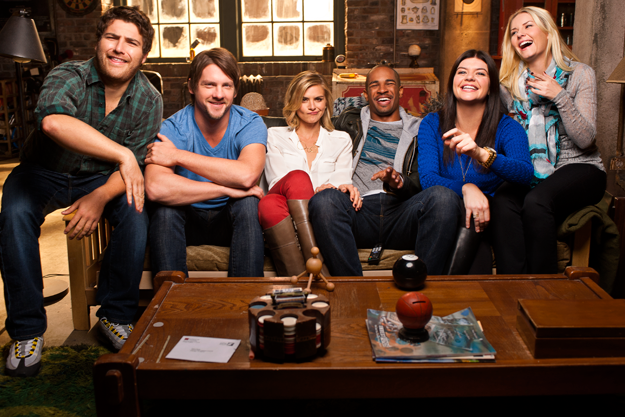
The Happy Enders My views on Happy Endings have changed over time.  I was introduced to the show by a friend who recommended it early in the second season and made me watch an episode while he was there. It had some funny moments, though I was hardly enamored with it.  Still, based on what humor there was and his recommendation, I plunged in further, and it was still fairly funny, but I didn’t love it.  More than that, even though I watched it, I found myself focusing on what it wasn’t rather than what it was. I complained that it was kind of funny, but kind of hit or miss, and I wasn’t wrong.  I complained that it didn’t have the ambition of shows like  Community or Louie, or the strong but not overly sentimental character development and consistency of Parks and Recreation or New Girl, and I wasn’t wrong.  The characters weren’t deep, it wasn’t always laugh out loud funny (it wasn’t funny enough like Curb Your Enthusiasm or It’s Always Sunny in Philadelphia that I didn’t give a shit about character development), and it didn’t seem to have any real thematic depth.  I noted that it was the volume shooter, the JR Smith, of sitcoms, firing away jokes at a rapid pace, sometimes hitting at high percentages, and often missing several in a row, and viewed that as a negative.

Sometime between the end of last season and the beginning of this, the third season, though, I realized that it was time to stop focusing on what Happy Endings wasn’t, and start focusing on what it was.  What Happy Endings is, is an often funny, and always fun show.  I’ve pronounced before that Bob’s Burgers has become my preferred choice for a show to watch before bed that will simply make me smile and lead me to good dreams before I go to sleep.  It has humor, and just general air of positivity and happy things that sometimes one needs after a tough day watching the Mad Mens and Breaking Bads of the world.  Happy Endings might be the next show on that list.  Even when you’re not laughing, watching the show, you’re usually smiling.  The cast, whose chemistry makes jokes work that wouldn’t, and makes jokes that don’t work, not seem like outright duds, is just having a great time and it absolutely shines right through the screen.  The volume shooter aspect was no longer a negative; I felt confident I’d get a few good laughs, and instead of frowning at the misses, I’d just be smiling through the camaraderie.  There are very occasional character building moments or relationship changes, but there’s none of the heavy and sometimes burdensome oversentimentality of How I Met Your Mother that drives me crazy.  Instead of having to choose between being a show where the characters really develop like Parks and Recreation, or a show that’s just one thousand percent about the laughs like Sunny or Curb, Happy Endings took a slightly middle path and instead of beng a comprimise, it works for them.  Almost every episode begins with the six characters together in one place having a good time, cracking jokes at somebody’s expense, and most episodes end the same way.

If Modern Family is a newer take on the traditional family sitcom (Home Improvement, Everybody Loves Raymond, and so forth), Happy Endings is a modern update of Friends, with the classic six friends, three guys, three girls set up.  However, while I never really liked Friends (and don’t love Modern Family much), Happy Endings takes the fun of six characters you like with a sense of humor updated for the second decade of the 21st century. In addition, Happy Endings was a meta-traditional sitcom, and it did that, embracing the 21st century’s obessession with meta-humor, as well as anyone, ir not better.  Instead of being limited by its traditional sitcom – these are six characters who only spend time with each other – format, it’s liberated by that.  When it wants to play with any classic sitcom-y storyline, it just adds in the characters and plot it needs, and cleverly hangs the lampshade by having the characters comment on the sitcom conventions they’re falling into.  It’s the most knowing, winking, sitcom on the air, in this way. In the season (and what turns out to be, unless another network (hear me USA!) picks it up, series) finale, sisters Jane and Alex’s older sister, Brooke, gets married.  Of course, fans of the show have never seen or heard of their other sister, and while old shows would glaze over this point, Happy Endings takes the opportunity to have the characters point out how unusual it is that they’ve never mentioned her, as Adam Pally’s Max says, “We never see her, we never talk about her, she never shows up in any of your flashbacks.”  When others are confused, Dave notes that “Flashbacks” are what Jane and Alex call their photo albums, which he produces to show to the room.  Simple, knowing, well-executed, funny.  Good show.  This is a trope employed over and over again by the show, and it was done deflty and funnily, and with the proper amount of winking, which made these jokes some of the best in the show.

There’s at least a possibility that this isn’t the end, and that a cable network will pick up the show.  I think it would be a good fit for basic cable.  That said, if it doesn’t get picked up, so long Happy Endings.  I’m sorry to see you go.

Spring 2013 Review: Banshee

3 May

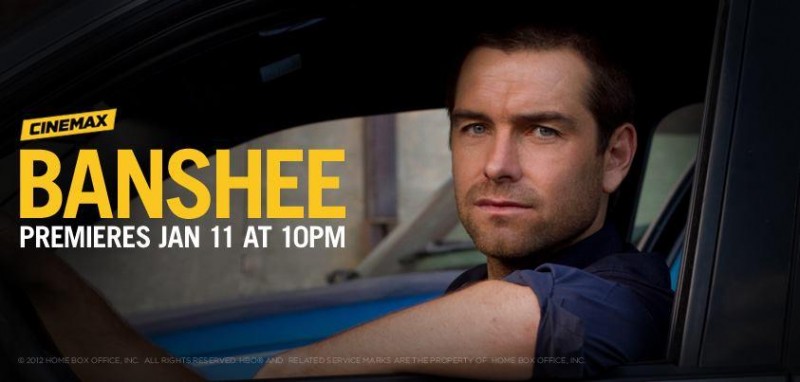
Banshee

I’ve been saying for a while now that soon all good shows will be on cable, and after watching Rectify and now Banshee on channels not known for their original programming, I think we may be getting closer and closer to this time.   I tend to come into cable shows with a little bit less knowledge than I have coming into broadcast shows, and that can be a treat sometimes.  I did see that Banshee is co-created by Jonathan Tropper, a novelist who I enjoy, so I was at least looking forward to the show based on that information.

After a super stylish chase sequence through New York City, it takes a little bit of time to figure out exactly what Banshee is about, but here’s the basics.  A con gets out of prison after fifteen years for participating in a diamond heist of a very prominent and dangerous criminal.  He seeks out the woman with whom he stole the diamonds, who did not get caught, and it turns out she’s living under a different name with two kids, married to a local small town central Pennsylvania district attorney.  She also doesn’t have the diamonds, she claims, because she was robbed when she tried to fence them.  Through a strange series of circumstances best learned through viewing, the protagonist has an opportunity to impersonate the new sheriff, who is coming to town all the way from Oregon because the mayor is worried about a more local sheriff being corrupted by the local man-who-runs-town figure.  This figure basically has his finger in every sinister soup going on throughout the county, and the young mayor is determined to actually stop him.  That’s more or less where we stand after one episode, with our primary outlaw now acting as law enforcement, while the overlord he originally stole from is still after him, while he has to concern himself with the local overlord, and hopefully figure out what ever happened to his girl and his diamonds.

The first show Banshee recalled to mind was Sons of Anarchy, as both are shows where sex and violence are on prominent display in a stylized manner, and outlaw protagonists in small towns where they’re a big deal battle up against other organized crime figures.  The towns are small enough that they live in their own bubbles where local power brokers can have an undue amount of influence.  While Sons of Anarchy feels country rock, Banshee feels industrial, and while this most obviously applies to the music, it also applies to the general feel.  Sons of  Anarchy is grindhouse rough and dirty, while Banshee is flashy and stylish.  Like Sons, Banshee seems like it may also be about at an attempt by a career criminal to walk some sort of moral middle ground (the main character was a theif, which is always the most redeemable of all serious criminals), but we don’t know how that will go just yet. It’s got some very unnecessary skinemax soft-core which maybe was demanded by the network, but at it’s heart its a very interesting concept which looks good, had some very fine action scenes, and definitely kept me on the edge of my seat.  It looks pretty, and it seems cool, and I mean that not just in the generic sense of “good” but in the sense of cool, edgy, hip, smooth, and I’m honestly not sure whether it’s trying to be a really interesting series or just a really aesthetically appealing and suspenseful one, but either way, there’s room on TV for it if it keeps up.  As a drama, there’s plenty of room for it to sink fast, but for some reason, maybe misguided, I’m at least optimistic that it should be a fun ride.

Will I watch it again?  Yes, I will.  It’s not quite in the Rectify or The Americans territory from the pilot, but sometimes the flash gets you.  It passed the test of once I finished one episode, I immediately wanted to see the second, which is definitely a large part of what a good pilot should do.  As alluded to above, it’s definitely yet another example of acable drama seeming a cut above the network variety.  This isn’t necessarily groundbreaking television, but it’s not exactly like every other show on TV, and it s seems to already have a sense of its own style, and I like it.

Six Shows I Stopped Watching, Part 3

1 May

Part 3 of a brief list of six shows I actively decided to stop watching.   Part 1 and a full intro can be found here, while part 2 can be found here.

Glee

Rocky Horror Glee Show


24 is the only show on this list that I even have to think about why I stopped watching.  Heroes and Glee are the two shows that I think had the least amount of actual quality content before they went off the rails.  For half a season, I actually went around defending the show, even outright supporting it, saying that, yes it looks silly, and I am often ambivalent about the singing (it had its moments (4 minutes by Madonna, for example), but sometimes was just too much), but Glee was high school parody done right for a short time.  There were central plots holding the show together, in particular, Will’s wife’s fake baby, and cheerleader Quinn’s real one, that anchored the show.  The show kept a consistent roster of character personalities and plot strands besides merely how the Glee Club fares through the Christmas break, where characters maybe showed gradual change, but were who they were.  And then it all fell apart.  It was clear there was no more meticulous planning, or honestly planning at all.  Instead, everything, including characters’ personalities and storylines, was at the mercy of what the writers decided they wanted for a particular episode, whether it was a message they wanted to send, or a particular musical theme.  Quinn’s cheerleader character was perhaps the biggest casualty of this let’s-not-think-beyond-the-next-episode policy.  She was friendly and helpful one episode, she was a total bitch in another, she was emotional and depressed in a third. Sure, people are complicated and change, but there was absolutely no coherence.  Consistent plotting and characters was simply no longer something those running the show were interested in.  I complained and complained throughout the end of the first season and the start of the second but the official end came when Glee took on Rocky Horror in the fifth episode of the second season to celebrate Halloween.  I didn’t initially intend to just stop watching, but the episode just sat on my DV-r for weeks and then months passed before I realized the inevitable.  I didn’t really like Glee at that point, and I had never much cared for Rocky Horror, and realizing I didn’t care about the show later passed on towards active dislike the more detached I was.

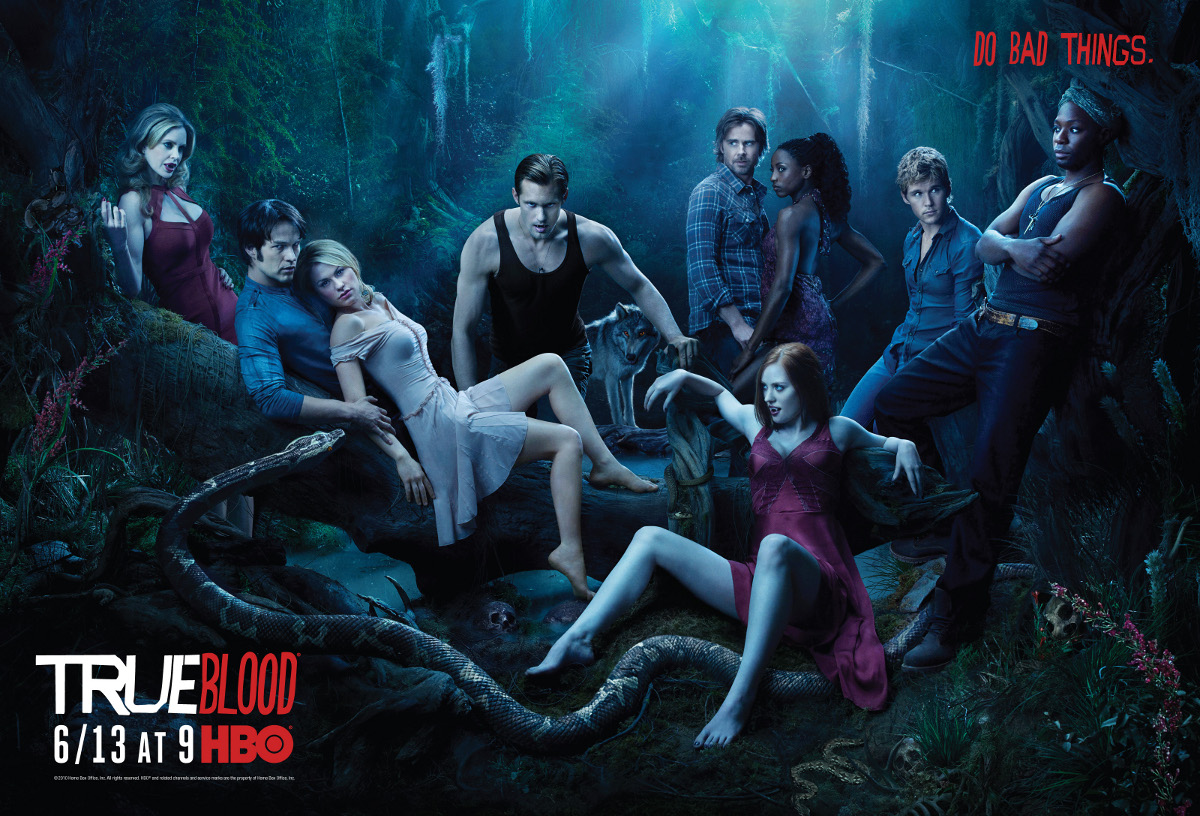
True Blood

True Blood

I searched my google chat logs to figure out when exactly I caught up on True Blood, which I did not start watching right from the pilot.  In fact, what’s ironic is that when I caught up, was just about when I thought the last good episodes were.  This was in September of 2009, when the second season was finishing up, and I watched both seasons at a furious pace, desperately trying to catch up in time to watch the Season 2 finale live.  I say just about because I think the beginning of Season 3 was pretty good as well.  The last few episodes of Season 3, however, were both anticlimactic and terrible, and I found my first official gchat complaint about the show just after the fourth season started, in June of 2011, when I tell my friend I haven’t watched the first episode yet because I didn’t think the last season was so good.  I’m not sure I ever turned on a show as quickly as True Blood.  I was very into when I was marathoning.  I thought the second half of the first season and the entire second season were riveting, addictive TV, and the third season built up in such a way that it seemed to have a solid chance of matching the first two.  But then the show just cratered, and I didn’t even finish season4.  I watched a couple episodes, and then just gradual faded out, noticing that I really didn’t want to watch anymore.  Most shows I’d give at least a full season to let them back on their path, or see if it was just a bad run of episodes that the writers realized as well and had time to correct, but I didn’t give that to True Blood, and history proved me right, as whenever I caught pieces of other episodes, they were terrible, and friends who were still watching told me as much.  The biggest culprits were that first, the universe just became too big too fast, and there were absolutely no natural limits.  Time travel, fairies, witches, it was impossible to keep up with, and more than that, I didn’t really want to.  It lost its fun trashiness quotient into just bad trashiness.  Second, the careful plotting of the early seasons disappeared; where there were smaller individual plots that coalesced into a couple of big plots in time for the end of the season, now every character had his or her own plot, and some of the characters had absolutely no business with one.  Jason’s werepanther plot was terrible (which was a shame because Jason was one of the best characters) as was the plot with Sam’s brother.  More of the plots were bad than good, and I found it harder and harder to pick out main characters that I really liked.  Recently, I’ve had friends describe for me the plots of the end of the last two seasons, and laughed and laughed at how ridiculous they sounded.  It’s possible in context they don’t seem as ridiculous but I enjoyed the short narrative recitation of the plot much more than I would have watching the show and that says a lot.

Spring 2013 Review: Rectify

29 Apr

Rectify ItHoly shit, a show about something different.  And it’s good!  Rectify is the story of a man exonerated from death row twenty years after being convicted of murdering a woman, when he was in high school.  Daniel was convicted, sentenced to die, and thanks to some new DNA evidence and the dogged work of his family and attorney, he’s being set free.  Twenty years in prison, in solitary confinement without even a window is a long time, and the adjustment is obviously difficult both for Daniel, and for his family, who have lived the past two decades without him and aren’t sure how to reintegrate him back into the family even though they want to, or at least some of the family does.  The family includes his mother, who is happy but doesn’t know how to behave, his sister, who is most enthusiastic and did most of the leg work, and his brother, now a teenager who is trying his best to get to know the brother he’s never met.  It always includes the step-dad his mom is married to now, his step brother, who isn’t a big fan of Daniel, and more relevantly, is concerned  his notoriety will sink the family business, an independent tire store started by Daniel’s real dad, and his step brother’s wife, who is religious, innocent, and more enamored with Daniel than her husband.  These difficulties  are compounded by the fact that this is the small town south (Georgia) and everyone knows everyone and a large number of those people, fancy schmancy legal terms or not, still think he did it and that he’s guilty as sin.  They’ll go through any trouble to make his life hell on Earth if he can’t be put into hell underground.

Now, just in case you worry it’s too focused on simply human emotions and the difficulty of people relating with one another, there’s a nice little intrigue plot to keep those who need a little suspense in their TV humming right along. Some prominent politicians are convinced of his guilt and also don’t like even the possibility of admitting they were wrong and put the wrong man behind bars and on death row for 20 years.  They want him back in jail with a retrial.  Additionally, although we don’t know for sure whether Daniel did or didn’t do it, people who may have actually been responsible for something then, are not thrilled that he’s out on the street again, throwing the events of the night in question, into, well, question.

The small town south is having its moment in the media, led by Winter’s Bone and Justified, but with others, like the recent movie Mud, coming up as well.  As I’ve written about Justified before, this culture is simply an interesting vantage point for me, as a big city/suburban northeasterner, as something that I’ve never been exposed to.  While Rectify doesn’t feature the organized crime angle of the first two southern comparisons, it does place a large forcus on the way things change but stay the same in the small town, and that way that people are harassed for things that their family did now, or decades ago.  As god of all small town southern writers William Faulkner once said, “The past is never dead.  It’s not even past.”  The small town community leaders are determined to sew up their legacies by making sure Daniel doesn’t spent a second longer than he has to after prison.

Daniel’s difficulty in coping with life outside initially is both confounding and understandable from the point of view of the people closest to him.  He’s harassed for not seeming excited enough about his innocence, and his family treat him hesitantly.  He’s unfailingly polite but mysterious and terse.  Every experience is so new and vivid to him, no matter how simple, sitting down on the grass, or staring into the sky.  It can sometimes be slightly difficult to watch, but never cringeworthy.

This is almost certainly the best pilot I’ve seen so far in 2013, and since I’m updating this part of the review after I just watched two more episodes, probably has a slight lead on The Americans to be my favorite new show of the spring season.

Will I watch it again?  Yes, I will.  In fact, I already have by the time this is posted, so this is even surer than most.  If you can figure out where the hell the Sundance channel is on your TV, you should absolutely watch it; there are only six episodes this season, and it’s new, seriously interesting and different TV, which is something I, for one, can never get enough of.

Six Shows I Stopped Watching, Part 2

26 Apr

Part 2 of a brief list of six shows I actively decided to stop watching.   Part 1 and a full intro can be found here.

24

Beep beep

The only show on this list that I truly harbor no ill will towards.  24 was just doing its thing, year to year, and yeah, that thing got kind of, well, extremely repetitive (there’s always a mole) but it didn’t materially deviate from the promise that it made it great in the first place.  It just kind of got a bit worse doing the same, and at least part of that worse is that the writers were just out of ideas; if the last season was first, it might have seemed better, because repetitiveness was a problem that was harder to avoid in 24 than even in most other long-running shows.  Eight seasons is a lot.  I watched the vast majority of the seventh season and then missed the last few episodes due to circumstance, and just noticed as I went through that summer meaning to click on remaining episodes which were safely stored on my dv-r that I never really had the desire to.  Every time i sat down to, I instead decided to watch something else.  I then didn’t see most of the eighth season, but like with Lost, I also watched the finale, this time with a much greater sense of closure and merely saying so long to Jack Bauer (and Chloe, let’s not forget Chloe) without the vitriol that powered by viewing of the Lost finale.  I only vaguely understood what was going on, but that was fine.

As I’ve said, I don’t really hold any real animus towards this show; unlike with Lost, the inferior later seasons didn’t retroactively bring down the quality of the earlier seasons for me.  I still harbor great love for the first few seasons and the first season in particular, and the joys it brought me to see every 24 trope for the first time, and then to root for the tropes as they happened the new few times after that (Jack:  It’s not the right play!, Kim is kidnapped again).  The one later plot point that did particularly rub me the wrong way was the resuscitation of Tony Almeida who for all intents and purposes had been dead for seasons and now was a super evil bad guy for some reason.  I get how they could be very 24-y but it just did not work for me; very few characters in the pantheon outside of Jack actually mean something, and Tony was one of them.  If they had to decided to make him come back and go all revenge-y soon after, it would have been one thing, but to have him lay dormant for years and then bring him back was too much.

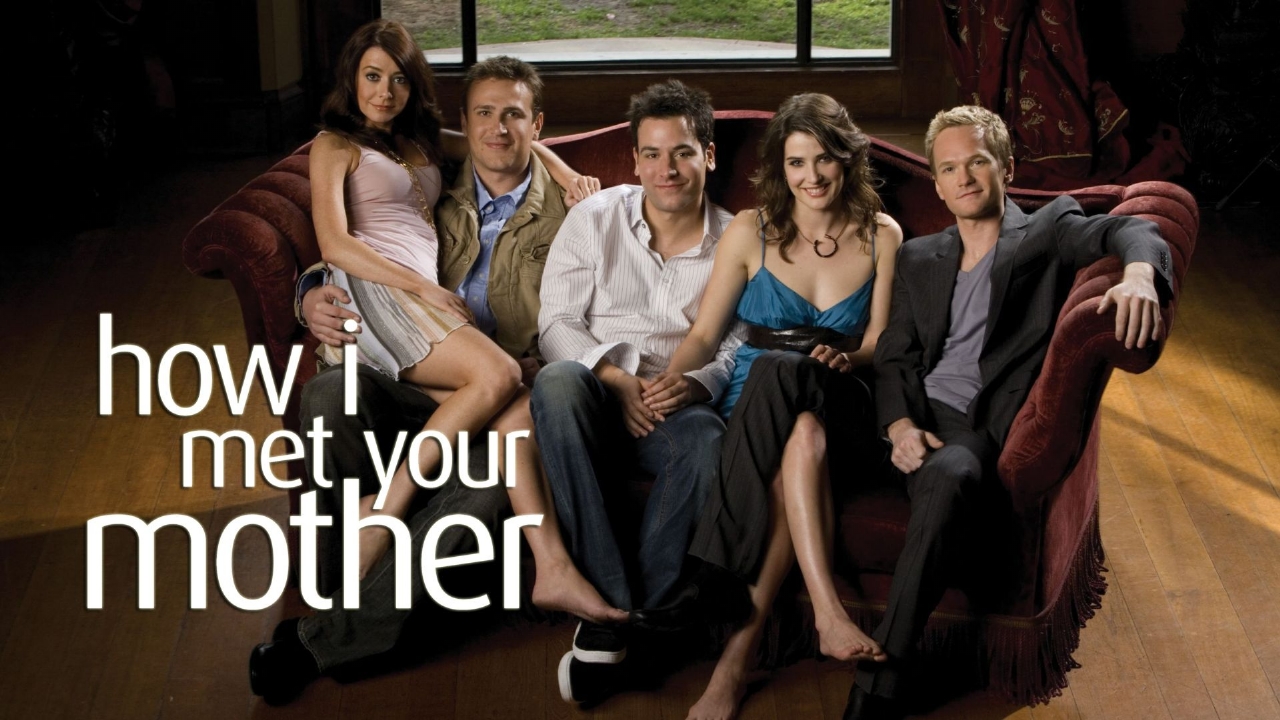
How I Met Your Mother

How I Met Your Mother

It’s almost a tribute to how much I like certain aspects of this show (namely, Neil Patrick Harris and Jason Segel) that I stuck with it for as long as I did considering how much this show seems like it was designed to bother me and me alone.  I know plenty of people who like the show, and plenty of people who don’t, but almost no one who is as irritated by the same aspects of the show that irritate me.  Just about everyone I know would agree the quality has slipped from the show’s second or third season peak, but how much is an open question.  What the show has going for it at its best is the cast, and, well, the jokes; it can actually be quite funny, and you’d think for a comedy that should be enough, and sometimes it is.  The show had an awful narrative device, and I just hated its tone, which I found moralizing and patronizing, trying to tell lessons that seemed uncalled for (see “Nothing Good Happens After 2 A.M.).  The show constantly told, rather than showed – it wasn’t enough to display some lessons through the events of an episode, but rather, narrator Bob Saget had to hammer the message home just in case you couldn’t follow along with the complicated narratives that How I Met Your Mother provides.  I stuck around for a fair time because it was funny, but when the later seasons became to seriously lack the funny, I was out.

I had threatened to leave for a long time before I did, coming back to the show, figuring it was only 20 minutes of my time, even if I didn’t really enjoy it.  This is, until I watched Season 7’s Symphony of Illumination, which had Robin narrating the show, presumably to her children, from the future, instead of Ted, and ended with the twist that she was just narrating the story to her fictional kids in her head, because she can’t have children (and I guess couldn’t have possibly adopted kids).  I just hated, hated, hated everything about it, and if I had been going back and forth about leaving the show for a season or two (in hindsight, I can’t believe I waited that long), that make it a quick and easy decision, and I haven’t seen an episode of the show since.  I always hated the idea of Barney and Robin getting together (not that it violates any key precept of the show, I just personally didn’t like it) from day 1, when it seemed inevitable (I still don’t understand how this isn’t weirder between Ted and Barney), so I didn’t particularly mind missing their engagement, though I suppose I’ll follow close enough to at least find out who plays the mother if they ever do get to that.

Spring 2013 Review: Cult

24 Apr

Cult members

Warning:  I am going to use the word Cult in this review more than I ever have before, and hopefully more than I ever will again.  Let’s go.  Cult.

Everyone knows TV shows, like movies, come in twos, and Cult shares a lot of territory with Fox show The Following.  While The Following is created by Kevin Williamson, Cult shares some of the meta aspects that were the hallmarks of Williamson’s first big hit Scream.  The Cult’s meta-ness lies in that it’s a show about a cult based on a scripted tv show about a cult called Cult.  I thought originally Cult was going to have some of the cheeky meta sense of humor that Scream has, but it really doesn’t. For a show that’s so meta, there’s really almost no sense of winking irony at all.

The Following is about a crazy serial killer/cult leader who organizes a shadowy US-wide network of disciples posing as ordinary people in every walk of life who would do anything no matter how gruesome or despicable at a whim for their leader.  Cult is about a cult which features a wide network of disciples posing as ordinary people in every walk of life who would do anything no matter how gruesome or despicable at a whim for their leader.  In Cult, however, the added hook is, as previously mentioned, there’s a popular cult (yes, I know) television show named Cult, about a cult, and which many fans are completely obsessed with, looking for hidden clues and messages throughout repeated viewings of each episode of the show.  The real life cult is super secret and is based on and through the show, somehow involving its creators, presumably, and by way of these messages being submitted through the show.

The added level here that The Following lacks is that of a conspiracy drama (which is shares more with fellow cancelled show Zero Hour).  While the cult in the Following is out in the open, this one is deep underground; no one believes in it, and anyone who claims they do appears crazy, even as bodies apparently turn up regularly and people are abducted.  Our main character is a sensible ex-prominent journalist (apparently he Jayson Blair-ed it, but for noble reasons) whose off-the-rails brother goes missing after trying to convince the main character of his crazy conspiracy theory involving a cult around Cult.  The key conversation comes at a diner where sinister music and camera shots make it appear everyone around them is an shady cult member, watching and listening (a la Homer on The Simpsons, “But listen to the music! He’s evil!”) The main character, with the help of a production assistant (or something, I don’t know what her job is on the show but it’s apparently not that important because she can leave for long stretches of time) on the show investigate the brother’s disappearance and find a disturbing amount of clues leading to the show Cult, and when he finally runs into the person his brother told him to ever contact if he got into trouble, she, dressed as a Cult character, kills herself, saying the magic words from Cult that people says on the show when they kill themselves.

He eventually finds a disc which, when he puts it in his computer, will put him on Cult’s radar, letting them steal his information and become a target, but may also be the only way to ever see his brother again, so he takes the leap.  The detective who searches both his brother’s apartment and shows up after the woman commits suicide is ridiculously accusing of him and just a general mean person, but this may be all explained by the fact that we see a Cult tattoo on her at the end of the episode.  She’s in on it!

Basically, if you’re watching this show, it’s for the conspiracy.  The writing isn’t anything to, er, write home about, and as mentioned before, there’s a surprising lack of humor or irony considering how meta the concept is.  The film-work isn’t particularly expert and I doubt it’s going to be a ton of sense if you think too hard about it.  It’s a pure thrill ride, and it’s not exactly thrilling enough to reach the levels it needs to, but it could be a lot worse too.  I’m at least mildly intrigued, though not a whole lot more.  It’s the kind of absurd idea a couple of people on controlled substances could arrive at late at night (“what about this! a cult based on a cult show about cults!”) that doesn’t sound as good in the morning but doesn’t sound half bad either.

Will I watch it again?  No.  It’s not really that bad, all the issues listed before considered.  It’s already cancelled for one, so the story is probably not going to resolve.  The premise is not wholly uninspired.  It wasn’t incredibly gripping, but if someone told me I had to watch all of Cult, I wouldn’t hate them for it.  Honestly, I probably wouldn’t have watched another one, but I might have at least thought about it for more than a second if the show wasn’t cancelled.  The possibility of a good edge-of-your-seat plot, while rarely realized, can make up for a lot of sins.

Six Shows I Stopped Watching, Part 1

22 Apr

For years, I had a serious sense of commitment about my TV.  If I started watching a show, I finished it down to the bitter end (and it was sometimes quite bitter).  Cast changed?  Head writer  left?  Show just started being all out terrible?  Too damn bad.  I was there until the finale.  I can’t make a commitment to anything else in life, but I made a commitment to a television program, and I was going to follow through on that at least.  I scorned friends who didn’t feel the same way.  Quitters, I’d say.  You owe it to the show, it might get better.  And then came the first show on my list, which got so bad, so quickly, that it simply broke my system in one fell swoop.  It made continuing watching it so painful and pointless that not only did I stop watching that show, but my sense of television commitment was shattered forever.  I still didn’t do it with ease, but now I was free to discard a show that cried out for discarding, a show that hadn’t plateaued or become simply mediocre but which had become bad or actively irritating and was counting only on my lifetime of viewing to keep me watching.  That show I could now simply neglect without feelings of regret, because screw it.  Sometimes it was a conscious instant decision to stop watching from one point, but more often it just came about because I noticed myself simply not catching up to a show even though the episodes were on my DV-r or on Hulu and every time I thought to myself, I really should catch up, and then thought, I don’t really want to and put it off for later. At some point later officially becomes never.

Without futher ado, here are the first of six shows I quit.

Heroes

We can be Heroes

The show that taught me how to say no.  Find a person who started watching Heroes in the fall of 2006, and you’ll find a person who stopped watching Heroes before its fourth season (!) ended; just ask them when and they’ll respond in a disgusted manner with when it was, and how it still took them too long to quit.  After utter obsession with the first half of the first season, which seemed like fascinating can’t-wait-for-the-next-episode new tv as characters with powers gathered together and found each other to take on villains Sylar and the mysterious Linderman, the foundation started to crack as quickly as the second half of the first season.  I remember reading that Heroes allegedly had a plan in place for five or six seasons, but if they did, boy, it was an awful one.  The ending of the first season was terrible, and it didn’t get any better from there.  I watched the first half of the second season, which was kind of structured into two halves, and I was officially out.  For the first couple of years afterwards I talked about the lost promise of Heroes, how a show that started out so strongly fell so fast, due to mismanagement of a brilliant premise.  Later on, I decided there was nothing brilliant about it at all; it was a good premise sure, but brilliance doesn’t become quite that bad, quite that fast, and my only regret was that I had gotten that involved to begin with.  My brother stuck around a lot longer than I did and would tell me tales of future seasons which only made me laugh and be thankful that I was no longer spending my time with them.

Lost

Lost

There’s probably no show I’ve spent more words of frustration on, orally or written, than Lost.  No show built me up and then knocked me down more fiercely.  I’ve always said about Lost that I despise Lost only in a way that you can only hate something that you once loved.  Lost is one of few shows I was truly obsessed with, if only for a short time.  I marathoned most of the first season and was obsessed in the second half of the second and early in the third, reading internet forums and trying to figure out what the hydra and the arrow and other stations might mean.  It’s hard to remember in hindsight exactly when things began to go wrong, but by the fourth season, our honeymoon was very clearly over.  The more Lost spiraled out of control, the more I felt I had lost what we had, and the magic was gone.  Ironically, this was at least partly because the magic was full on – time travel in particular may have been the switch that sent me over the edge.  Because I had been so in love with the show, I stayed on well after I seriously thought we had no chance of a future together.  Still, in the gap between seasons 5 and 6, even though I knew it would be the last season, I made the extraordinary decision to stop watching.  I had to.  I had no other choice.  I still read the wikipedia episode summaries, because yes, I had to know what was going on in Lost’s life, but I couldn’t be there with it. The more I read, the happier I was to be apart.  The flash-sideways were the single worst thing to happen to Lost, and that’s saying a lot.  Just for purposes of closure, I sat down with my friends, who hadn’t stopped watching like I had, and watched the finale, live.  I”m glad I did, because I got to know what everyone who hated it was talking about and was able to more knowingly complain about how stupid everything about the show had gotten.  To this day, I can rant about Lost for hours and days, and want to punch everyone who tells me it’s about the journey or the characters and not the plot or the questions being answered.

Spring 2013 Review: Bates Motel

19 Apr

Norman and Norma

Bates Motel reminds me of fellow new show Hannibal in some ways.  It’s an earlier time in a story we all know well; in Hannibal, we know Hannibal Lecter will get caught as a cannibalistic serial killer, while Bates Motel tells the story of the teenage life of Norman Bates, who we know will go on to become a psychotic serial killer later in his life, and interact with and dress up as his deceased mother.  Knowing where the story leads is both limiting and empowering; it means that to some extent, the audience knows how the story ends, and there’s really nothing the creators can do about that, but there’s a lot of leeway in how they get there.  The writers can always place winking clues to where we know the story leads.  Like in Hannibal, Bates Motel takes place in modern times rather than around when the story originally took place.

Unlike Hannibal, in which the villain, Lecter, is already well into his serial killing ways when the show begins, Bates Motel features a normal-ish Normal who while facing some very serious issues and badly in need of a psychologist, doesn’t appear to have seriously contemplated killing anybody quite yet.  Like the Star Wars prequels, Bates Motel attempts to take an incredibly famous villain and explain how he got from being a regular person to an evil, or crazy, killer.

In the opening scene, Bates’ father dies.  We then flash forwards to six months later, where Bates’ mom, Norma (Vera Farmiga), is driving him to their new home, a motel, which they will now run, and is destined to be the fabled Bates Motel.  Norman is already a little bit of a weirdo, and it seems like that’s due mostly do his super controlling, passive aggressive and seriously fucked up mother.  His mom keeps moving him around and is pretty much the only person he communicates with on a regular basis, and she seems to do her best to ensure that he doesn’t develop any other relationships.  Some girls who live nearby want to hang out with Norman, but his mom keeps trying to prevent it, and she tries to caution Norman against joining the track team, which his adviser recommends.  It’s a field day for looking out for potential signs of what could drive him bonkers, from the behavior of his mother, to his behavior with the girls at school, but since this is a TV show without a set number of episodes it’s going to take a while to get to crazy Norman presumably.

The show also has sort of an American Horror Story feel.  In the first episode, a creepy and irate W. Earl Brown (Dan Dority from Deadwood) comes up to the motel and reams them out, explaining that the motel was built by his family and is, and will always be, his.  He pops up again later on, invading the motel at night, tying up and raping Norma, until Norman, arriving late because he had snuck out and was at a party, hits him over the head.  When he comes to, Norma stabs him to death out of rage, and insisting that no one would ever stay at the motel if this went public, convinces her son to help her wrap up the body and dispose of it.  Mother of the year, right?  Later the police, led by a sheriff played by Drug of Nation favorite Nestor Carbonell wonder by the motel randomly, and almost walk into the body, hidden in a bathtub, before it’s disposed of.  Norman finds some creepy and strange notebook under some carpeting him and his mother are pulling up.  Also, in the last couple of seconds, there’s a mysterious flash to some person being held capture and injected with something without any way to put that scene into any context.

As mentioned before, there’s a limiting factor to knowing the kid is going to grow up to become a serial killer, but there’s certainly room for an interesting journey getting there.  I enjoyed the episode more than I thought I would.  It was sometimes a little bit difficult to watch the way poor Norman is treated by his mother, who seems like the real villain of the series so far.  It definitely combines a potential high school show with a horror show, which is an interesting combination, and I’m honestly just curious in what direction the show leads, because I don’t think it’s obvious, in terms of what aspects the show focuses on, or how gory versus psychological it gets.

Will I watch it again?  I’ll say yes, because I think it’s worth a second episode, but it’s far enough down on my queue that I can’t be sure I actually will.  It’s jumped above The Following on shows I had said I would watch again but don’t feel like immediately watching (admittedly influenced by the fact that everyone I’ve talked to says The Following gets way worse).  I liked it overall, but I didn’t feel, like when I watched Americans, that it had the potential to be great, or like with Hannibal, that I immediately wanted to watch the next episode.

Power Rankings – Will and Grace

17 Apr

Will, Grace, Karen, and Jack

Sometimes, we pick a show from the 70s, with a giant 15 person cast, and run a three day long power ranking.  Sometimes, we take a show that ended seven years ago with four main cast members and it’s a little shorter.  It’s the latter today, where we work with the cast of Will & Grace, but they’ve made it easier for us but all staying pretty damn busy in the seven years since their show ended in 2006.  I never cared for Will & Grace as a show, but I suppose it played an important role in handing the first leading role on broadcast TV to a gay character, so absolute kudos for that.  Either way, it’s certainly earned its own Power Rankings.

4.  Sean Hayes (as Jack McFarland) – Hayes played Kenneth’s cousin in an episode of 30 Rock, and was in two episodes of Oxygen sitcom Campus Ladies (which apparently featured Jonah Hill).  He was in The Bucket List and Soul Men.  He was in an episode of Hot in Cleveland, and episode of Portlandia, and played a Indiana journalist who despises Pawnee in an episode Parks and Recreation.  He played Larry in the Farrelly brothers version of the Three Stooges.  Hayes was nominated for a Tony Award for his role in Broadway musical Promises, Promises, and voiced Mr. Tinkles in Cats & Dogs: The Revenge of Kitty Galore (I wish I had made up that title).  He was in four episodes of Up All Night and three of Smash.  He’ll be voicing a character in the upcoming Monsters Inc. sequel,  Monsters University.  He’s done quite a bit to get saddled with last, but he’s the clear choice for last here, which says more about the competition than it does about him.

3.  Eric McCormack (as Will Truman) – McCormack did some theater immediately after the end of Will and Grace, appearing in off-Broadway Neil LaBute play Some Girl(s), and producing (though his production company Big Cattle Productions) a sitcom for Lifetime called Lovespring International, about employees at a California dating agency, which failed quickly (and starred Jane Lynch).  He starred in A&E’s Michael Crichton miniseries adaptation of The Andromeda Strain.  He appeared in the 100th episode of Monk and one of Law & Order: Special Victims Unit.  He co-starred with Tom Cavanagh in TNT’s Trust Me, as a Creative Director of an advertising firm, and the show was cancelled after one season.  He was in sci-fi film Alien Trespass and six episodes of the fifth season of The New Adventures of Old Christine (it is absolutely mind boggling that there are five seasons of that show).  He has been lending his voice since 2010 to kids’ cartoon Pound Puppies and starred in a lifetime TV movie based on infamous impostor and kidnapper Clark Rockefeller, the creatively titled Who is Clark Rockefeller?  As of last summer, McCormack is starring in TNT’s Perception, as a brilliant but vaguely crazy scientist who helps the FBI solve difficult cases (sounds more like a USA show, but I guess the networks aren’t that different).  Perception’s second season will air this summer.  The three non-Sean Hayes actors are so close that there could essentially be a three-way tie for first.  McCormack gets third because while he is the main character in Perception, no one cares about or watches Perception.

2.  Debra Messing (as Grace Adler) – Messing’s been very busy since Will & Grace.  (not relevant for these purposes, but immediately before landing Will & Grace, she was in a  failed sci-fi series called Prey; I think I am one of maybe half a dozen people to have seen it).  In the year after Will & Grace ended, she was in Ed Burns indie Purple Violets and Curtis Hanson-directed Lucky You.  The next year she was in the film The Women, and in highly successful USA network miniseries The Starter Wife, where she played a woman whose high-powered Hollywood husband recently left her for a younger woman.  Popular enough to be turned into a regular series, The Starter Wife then lasted for one season before being cancelled.  She appeared in a failed tv pilot Wright vs. Wrong (she was Wright) and got another main cast role in NBC’s much ballyhooed and made fun of Smash as lyricist Julia Houston.  Her role in Smash is not as important as McCormack’s in Perception, but Smash, unlike Perception, had a public moment, mostly a bad moment, but still, a moment.

Megan at a convention 1.  Megan Mullally (as Karen Walker) – She was in episodes of How I Met Your Mother, Boston Legal, The New Adventures of Old Christine, and voiced Honex Tour Guide in Bee Movie.  She appeared in the main cast of short-lived ABC Chelsea Handler sitcom In the Motherhood, and in the remake of Fame.  In 2010, she replaced Jane Lynch in the second season of Party Down, playing Lydia Dunfree, a mom with an aspiring actress/singer pre-teen daughter.  She was in indie film Smashed in 2012 and co-starred in the ill-advised second season of Christian Slater high tech security firm sitcom Breaking In, which was cancelled soon afterwards.  She’s been in all four seasons of Adult Swim show Childrens Hospital, as Chief, the crippled leader of the hospital.  She was in three episodes of 30 Rock as a representative of an adoption agency, and has been in six episodes of Parks and Recreation as Ron’s second ex-wife, the crazy librarian Tammy (Mullally is Offerman’s wife in real life).  She’s voiced Linda’s crazy sister Gayle in six episodes of Bob’s Burgers and Rose Stevens in one season of IFC cartoon Out There.  She’s also played Penny’s song-and-dance hyper mom Dana in Happy Endings.  The tie-breaker here is really that Mullally has been in more projects that I like, including Party Down, and Childrens Hospital, both of which are more acclaimed than anything Messing or McCormack have been in recently, as well as playing Tammy 2 in Parks & Recreation, which would win the tiebreaker all by itself.