Fall 2013 Review: Ironside

18 Oct

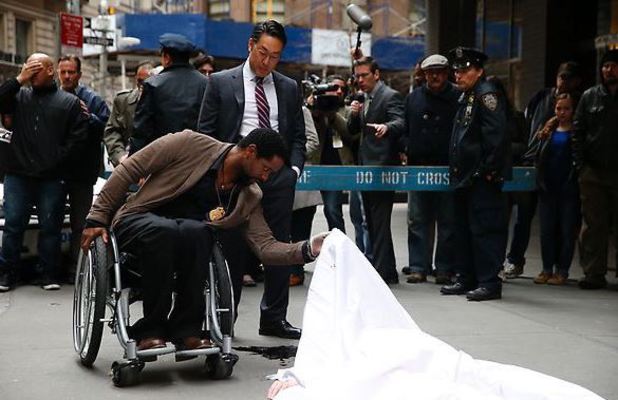
Bob Ironside Robert Ironside is a detective who life was dramatically altered after he was accidentally shot by his partner a couple of years before the show takes place.  He was paralyzed and now resides in a wheelchair. He also runs a special squad of hand-picked detectives who take on select cases.  Somehow through a lawsuit Ironside got the right to choose this detective squad, and this is mentioned but not really explained as well as which cases he gets, though it’s not particularly important.

Ironside is a remake of a ‘60s show starring Raymond Burr, with a similar premise, and I do want to at least mention how ridiculous it is that a guy in a wheelchair just happens to have the name ironside.  I thought it was a nickname at first, but it’s not. Whoever thought that up must have thought they were really clever. Ironside, as you might imagine, in an unconventional cop who plays by his own rules.  He doesn’t believe in the ordinary rules that govern most detectives. He’s learned a lot from having to deal with being stuck in his chair. I wish I had kept track of how many times he talks about how he sees life differently from his new vantage point, but it was several, both figuratively and literally. The most blatant example is when his superior asks him how he sees a gun hiding under a pillow, and Ironside answers, “I got a different view of the world from down here” in the most literal sense possible, and it felt like his boss only asked the question so Ironside could deliver that answer. (I vastly wish he had instead said something like, “My line of sight is significantly lower because I’m sitting in a wheelchair,.”).

Ironside frustrates his immediate superior by constantly refusing to follow rules, which seems like it should be a bigger deal than Ironside makes it out to be.  In the first scene, he blatantly disregards procedure to try to persuade a suspected perpetrator to reveal the location of a little girl he thinks the perpetrator kidnapped. When his by-the-book superior reams him out for basically destroying any legal case they’d have against the offender by not reading him his Miranda rights correctly, Ironside points to the fact that his methods worked, but that misses the point completely. It’s a seriously disturbing attitude to have that a positive result justifies a corrupt process. Ironside as a show or a policeman is not particularly concerned with the profits. In the eyes of the show, what he does is a cool, badass thing to do to a terrible a criminal who shouldn’t have any rights anyway, and if there was any question at all, they were answered when Ironside turned out to be right. Ethiical and moral questions are far outside of Ironside’s purview.

After all, he’s not the same cop he was before the injury,  As mentioned, he sees things different now physically and metaphorically and isn’t particularly worried about treading on either criminals or his superiors in his pursuit of doing things his way, which is the right way. There are many shots of Ironside thinking, either as he sifts through evidence or while he’s at home just sorting the entire case out in his head. He comes up with intuitions and forces his team to think differently, outside of the box. They’re his proteges, and while he frustrates them with his attitude on occasion, they all seem to realize they’re working with a special unorthodox mind from whom they can learn.

Part of the episode deals with the sad state that Ironside’s old partner has fallen into, full of grief due to his accidentally shooting of Ironside.  Ironside is handling it a lot better and is frustrated with his ex-partner’s inability to deal, even though Ironside was the one who got shot. I’m not really sure where this plotline fits in the show. It seems like an attempt to imbue Ironside with more emotion than is present in a typical police procedural. It just feels off and out of place though. Toward the end of the episode is a scene of his former partner attending an AA meeting, where Ironside watches from afar briefly, before rolling away. There’s supposed to be some sort of meaning here but I found it difficult to care.

There are also couple of strange allusions to how much of a ladies’ man Ironside is, which it felt incredibly out of place in the episode. At the end he gets together with a woman who may or may not have been the woman he was with earlier in the episode.

Overall, the show felt disjointed, cliched, poorly thought out, humorless, over the top, and, well bad.The more I thought about it the more I changed my opinion of the show from merely a below average police procedural to, well, a much below average police procedural. At least CSIs and NCISs have a sense of self-aware humor about their tropes which Ironside badly lacks.

Will I watch it again? No.  It’s a police procedural, so I wouldn’t watch it anyway, but it’s a bad one at that. I’d watch CSI or more likely Elementary or The Blacklist if I really want to watch one.

Fall 2013 Review: The Michael J. Fox Show

16 Oct

Michael J Fox

The Michael J. Fox Show tells the tale of Mike Henry, a legendary New York local television newsman who retired due to Parkinson’s disease with the added benefit of spending more time with his family. He misses work and his family is getting sick of him being around all the time, waking them up early and bothering them in other ways. Thus, his wife and his old producer conspire to convince him to come back to work.

His family consists of his loving wife, Annie (Breaking Bad’s Marie, Betsy Brandt), his Cornell drop out college aged son, Ian, his teenage daughter Eve, his youngest son Graham, and his sister Leigh.  Characters at work include his veteran producer Harris (The Wire’s Wendell Pierce, better known as Bunk), and his new young, nervous, segment producer Kay.  The characters are not cookie cutter outside of the extremely obnoxious Aunt Leigh, who is the feisty single middle-aged women constantly striving to act and look younger.  She could get real tired real fast; I wanted her to go away in just about every scene she was in.

In a lot of ways, the Michael J. Fox Show is admirable.  It starts with the classic family sitcom model which reigned supreme on television from the 1950s to the 1990s and largely updates it to get with the 21st century.  There’s no laugh track, the dialogue is quick without those awful long sitcom pauses, and the characters, the aunt aside, are not ridiculous cartoons.  In addition, it brings the actual warmth and love that were at the heart of traditional family sitcoms, that still resonate even when everything else feels horribly dated in those shows. The family actually seem to genuinely like one another. Michael J. Fox is already a larger than life television personality that many of us feel like we saw grow up over 30 years on television, and making him a local news anchor smartly captures that angle of Fox; regular New Yorkers feel like they know Fox’s character in the same way. The show does a good job with its handling of Michael J. Fox’s Parkinson’s disease; we know it’s going to be used for good-natured humor immediately, with a handful of jokes about Fox’s condition in the first episode. Also, I’ll award the show extra points for actually being filmed in New York, which does make a difference.

Unfortunately, though, for all these positive qualities, the problem with the Michael J. Fox is a deceptively simple one. If the jokes were funny, the show would be good. I know that sounds like the most obvious diagnosis for a bad comedy ever, but it’s really not.  Most bad shows have something wrong in their DNA that goes well beyond the jokes not being funny – the structure is broken.  The cast is bad, the laugh track, the look of the show, the tone – the whole idea behind the show is broken deep within its foundation.  That’s not the case here.  The idea is solid, the characters, outside of the wacky aunt, are well-built, the acting is good, the look and feel are fine.  The jokes are read correctly and given room to breathe.  They’re just not funny jokes. Someone needs to go down this script, even keep the same overall structure, and just tweak the dialogue all over the place.

I was expecting another lazy CBS-like effort with, if not a laugh track, tired characters and tropes. The Michael J. Fox Show isn’t that which is absolutely to be praised.  Now, if it could only take that last step and be funny, there’d be a really good show here.

Will I watch it again? It was better than I thought it would be.  Still no. The blueprint is there for this to funny, but it isn’t now. It’s close but not close enough.

Fall 2013 Review: The Millers

14 Oct

Three of The Millers

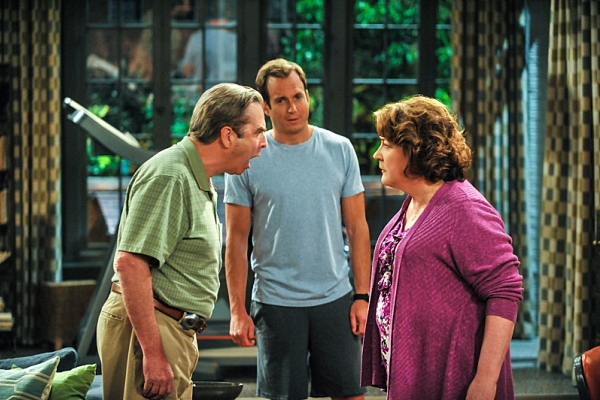
The Millers stars Will Arnett as Nathan Miller, a successful local newsman ( oddly, one of two new Thursday night comedies where the main character plays a local newsman, along with The Michael J. Fox Show) who was recently divorced but has been holding back that information from his overbearing parents.  He instead confides in his sister, Debbie, played by Glee’s Jayma Mays, and her husband, Adam, played by Nelson Franklin. His parents, Tom, played by Beau Bridges, and Carol, played by Margo Martindale, show up at his place after his father accidentally floods the basement of their home. Will is forced to finally spill the beans about his divorce, and in response his father all of a sudden decides he wants a divorce also, ending his parents four decade long marriage. Tom goes to stay with Debbie while Carol stays with Nathan. Curb Your Enthusiasm’s JB Smoove plays Nathan’s coworkers and friend Ray. Thus, the setup for The Millers.

Broad comedy, which was once more descriptive, has become such a pejorative term, trotted out in a negative fashion to describe Farrelly Brothers shtick and the like. In both the descripve and possibly unfair pejoriative usage, The Millers is more or less a broad comedy.  The jokes are often physical and almost always stupid. Respect for their viewers’ intelligence was not something the creators of The Millers had in mind. The jokes are incredibly obvious and there’s a laugh track which lets you know when to chuckle if you somehow weren’t able to figure out from the blatant big laugh lines.

Maybe the’s is a better term for The Millers; the onion AVClub called it fart-com. There were not one but two fart jokes in the episode, and the worse part about those is that they may have actually been the best part of the episode.  Hey, farts can be funny, which is already more than you can say about anything else in the episode.

On top of the stifling laugh track, the show is chock-full of incredibly stale stereotypes and character tropes.  The dad, Tom, can’t figure out how to use technology; he continues to put metal in the microwave and he can’t understand how to use the television remotes.  Television remotes can be complicated, it’s certainly true, but if the writers really thought they had the first inkling to make an old-guy-can’t-figure-out-television-remotes joke, I’m afraid they’re sorely mistaken.  Carol, the mom, is an overbearing nag who pushes advice nobody wants and constantly overshares inappropriate information. Inappropriate parents are hilarious! Ray and Nathan have an unoriginal time-to-hit-up-the-dating –scene. There’s absolutely no care put into writing these jokes. When Tom can’t figure out how to use the remotes, for example, that’s the joke. There’s no even attempt at clever wordplay or something different to keep an old joke even slightly fresh or new.

Eventually, the episode finally gets to its dramatic conclusion. Nathan’s holding a party at which he thinks he’s found a woman willing to sleep with him while his mother is doing everything in her power to prevent that, unintentionally. Nathan, seeing how broken up his mother is, decides to abandon all hope of getting laid to cheer up his sullen mother with a creepy dance rendition of Dirty Dancing. What a sweet kid. It’s supposed to be heartwarming except all of these people both feel like not only classic types but terrible versions of those types. I’m not cheering for anyone and the scene is awkward without being funny. The characters have all gotten on my nerves in just twenty two minutes.

Everything in this show feels like it’s been done a thousand times before. It’s crass, it’s unfunny; I’m not sure who watching this thought this was good. I know I’m constantly surprised but I’d like to find someone who walked out of a test screening of The Millers and thought this was funny. Honestly, I’d like to know if the executives who put this show on the air actually think it’s funny or just are cynically judging the sense of humor of the American people, which to be fair, they may not be wrong about. Good shows I laugh at, mediocre sitcoms I stare at unmovingly, and really bad shows I cringe at. The Millers has certainly earned itself a place in that lowest category. The jokes are not only not funny, they’re dumb and insulting. This show wastes a number of talented actors, and I hope it gets cancelled quickly so that those actors can put their abilities to something of higher quality.

Will I watch it again? No. It’s an instant contender for worst new show of the year, up there in the Dads category. The only think it has going over Dads is the lack of insulting racial stereotyping. It’s so unfortunately that so many talented actors are wasted on this monstrosity.

Fall 2013 Review: Hostages

9 Oct

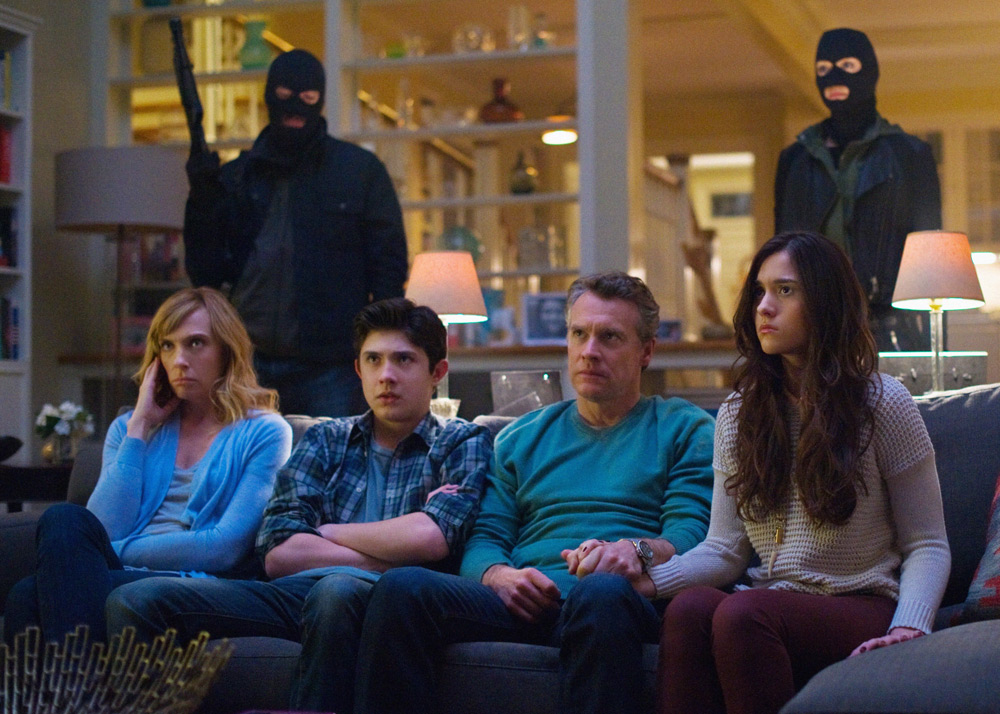
The four Hostages

Hostages, a rare CBS serial drama, is an action suspense series built on the raison d’etre of ratcheting everything up to 11. The show opens with FBI agent Dylan McDermott taking over a contentious bank hostage situation from the local police.  While the police are tentative and willing to negotiation, McDermott barks orders, demands the kidnapper release most of the hostages, and has the balls to shoot first and ask questions later when he suspects the kidnapper has switched his dress with one of the hostages.  Basically, he’s aggressive, risk-taking, and a badass.

From there, It takes 15 minutes to get to the basic premise that anyone who has seen the trailer already knows. The president of the United States needs surgery. He’s chosen a highly trained female surgeon played by Toni Collette to perform the operation, which is invasive but routine. The night before the surgery is planned for, three men and a woman come into her house and take her and her family hostage with an ultimatum. She will kill the president while performing the surgery in a seamless, impossible-to-detect method they’ve already devised, or they will kill her family.

Boom.  There you go.  The president may be assassinated by a prestigious surgeon, whose family is held hostage by a shadowy group of highly-trained operatives, all in about two commercial breaks.

High enough stakes for you?

Nope?

How about this? The conspiracy goes all the way to the top. Dylan McDermott, the heroic, daring FBI agent, who certainly seemed like a good guy, is the leader of the kidnappers. Better yet, his reason for heading up the kidnapping may be because someone has threatened his daughter.  He receives a call from his father, who is sitting at his home watching McDermott’s daughter, sitting next to someone who wants to know about McDermott’s progress in the kindapping.  That person? The president’s chief of staff, who we saw earlier in the episode questioning the president’s decision to use Toni Collette as his surgeon. Whoa.

Not to mention every member of Toni Collette’s family, being held at their home by the surprisingly gentle and gentlemanly (and gentlewomanly) terrorists, has a secret. Her husband, played by Tate Donovan, is having an affair. Her son is dealing pot. Her daughter is pregnant with a shady boyfriend who her parents have never met.

The terrorists consistently anticipate every move that the family makes, as to consistently demonstrate that they’re very good at this.  The ultimate show of this is when Toni Collette sets off the silent alarm.  McDermott and crew not only recognize the alarm going off immediately and threaten Collette’s husband so that she’ll tell the security company that nothing’s wrong, but the security company man who comes to their house just to check is actually working with the kidnappers and presents Toni Collette with a threatening photograph that reveals just how much the kidnappers know about the family.  Damn, they’re good. They’ve got everything covered – how is she possibly going to keep her family alive without killing the president?

That’s the big question and it is a big question.  The problem is that by the time the episode ends, my desire to know that get to the answer of that question should be a lot more urgent than it actually was.  The stakes, strictly in a political sense, were as high as almost any first episode of a television show.  Still, I didn’t feel compelled to see the next episode or all that interested.  Aside from the the high-stakes premise, none of the backing factors such as well-defined characters or well-written dialogue were present to invest me in the dire situation.

Hostages seems like a very poor man’s 24, albeit with more tension and less actual action. There’s suspense with no substance. The show hits the ground running, hoping to draw viewers in from the get go for the super tense action, but the show forgets that in order to get people involved in a television show, you need them to care somewhat about the characters and the situation. Unlike an action movie, where you can watch 88 minutes of people kicking each other’s asses for no reason and just enjoy it for that, to follow 20 40 minute episodes a season of television you need to come up with a little something more. 24, which was the master at action television, at least in its early years before it ran out of ideas, got viewers involved early with its gimmick and high stakes, but supplemented that with characters we cared about (President Palmer!), and taut suspense scenarios in which it never mattered how much they defied logic. More than that, 24 was fun. It wasn’t funny, but it was fun to watch. Hostages really isn’t. Hostages is a drag.

Will I watch it again? No.  It wasn’t absolutely awful. There will be a lot of worse shows, and the worse dramas are rarely as bad as the worse comedies. Still, not worth your time. Watch the first season of 24 again for action and watch the first season of Homeland for suspense if you want better examples of what this show is trying to be.

Fall 2013 Review: The Goldbergs

7 Oct

Three of the titular Goldbergs

There are many problems with The Goldbergs, but many of the biggest of these stem from one central misunderstanding about comedy. Every moving part in The Goldbergs screams this one great big lesson of comedy entirely unlearned: the value of subtlety.  Nothing, and I mean nothing in this show is subtle, at all.  None of the over the top jokes, which largely don’t work because they’re so obvious and over the top, have any room to breathe, which would starve them even if they were actually funny.

This direction starts with the choice of time period.  The 80s, at least the stereotypical 80s that we imagine now when we think of the decade, with Rubik’s cubes, and A Flock of Seagulls, and Starter Jackets, are loud, Outrageous.  You choose the ‘80s if you want to be absurd and up front.  Shoulder pads, the list goes on – in fact, just in case you don’t think of these images offhand, The Goldbergs actually starts with a montage of major ‘80s pop culture references to jog your memory, along with the narrator mentioning that it’s the 1980s, just in case you’re having trouble following along.

That’s the second point of mind-blowing un-subtlety. The narration.  Patton Oswalt narrates as the adult voice of youngest Goldberg, Adam (based on real life creator Adam Goldberg). Narration in television, and comedies in particular, is 90% of the time a bad idea.  Watching poor narration so far this TV season has inspired me to eventually write a post on all its faults, and here the problem is one of the most common for narration.  The narration serves no purpose.  It explains everything that happens in the show, events which need absolutely no explanation. It patronizes its audience without adding anything either funny or poignant. This happens again and again and again over the course of the first episode. Jeff Garlin’s dad character, Murray Goldberg is one of the top five types of television dad characters (now there would be a good article), the angry father who yells a lot and doesn’t know how to express his love for his children, but actually feels it deep down.  We’ve seen this character dozens of times and can identify it right away without Patton Oswalt’s commentary explaining it to us.

The worst gimmick of the episode follows the same thought process as the narration, and is yet another paean to the gods of un-subtlety. In order to understand Murray, Oswalt narrates, you have to speak Murray. Murray then yells something crude with network-approved faux curse words, after which subtitles appear on the bottom of the screen translating what Murray really means in pixelated 80s-style font (It reminds me of one of my least favorite How I Met Your Mother bits, where a character would say something, only for narrator Bob Saget to tell us “what he really said was this” and we find out the character said pretty much the opposite.  Half the time Murray will yell something indecipherable and it translates to something mean but in English, and half the time he’ll yell something mean, but he actually means something decent or nice. The show seems to think it’s funny because you’d never figure out what Murray’s saying without the hilariously helpful translations. Yes; that’s basic ironic humor.  Someone says one thing but means the opposite.  But we’ve seen Murray many times before. We know exactly what he’s saying. That character has been a television staple for decades and the translation bit just emphasizes what a cliched type Murray is in addition to not being funny.

Oswalt keeps trying to tell us how different his family is from ours. Even though they all love each other, they’re all crazy and yell at each other and fight all the time.  For many of us that’s not that hard to fathom as is. But even if it was not our personal experience, it’s been our television experience over and over. That joke is just not sufficient. There’s a lot of references to ‘80s things, a lot of generational gap humor where the kids will be speaking a different language than their parents or grandfather. It’s pretty boiler plate all around.  It’s not an embarrassment, but it’s generic and forgettable.

Will I watch it again? No.  It’s hardly insultingly bad, like Dads, but it’s just not very good and shows a very basic misunderstanding of what makes jokes and characters funny.

In Defense of Walter White (Kind Of)

4 Oct

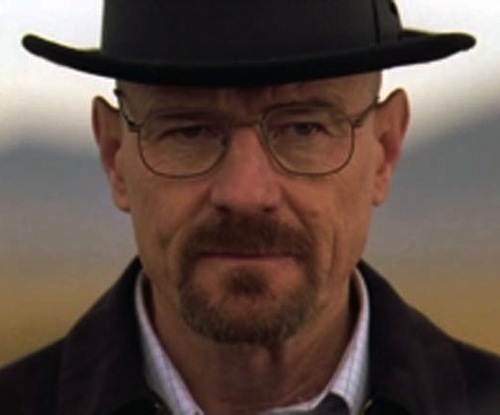
Walter White / Heisenberg

I’ll have my belated post about the finale and the final season soon enough but here I’m going to combine a couple of other Breaking Bad-related topics I’ve been thinking about into one entry.  Bear with me.  I want to address two separate issues here. First, I want to touch on the is-Walt-evil debate, and second, after hopefully I’ve least convinced you I’m not one of those terrible Walt apologists everyone keeps complaining about, I want to explain the aspects of Walt that I respect, in spite of the more obvious aspects that I don’t.

Walter White is definitely a bad guy, not in the sense of villain or antagonist, but in the sense of the moral antecedent to good.  He does things throughout the show that are bad things by just about all but the most relativist standard.  If I had to choose, the worst was poisoning a child, but of course it’s silly to choose.  He’s done bad shit, There’s no doubting that, and there’s no getting around.  Is he evil though?

The definition of evil is obviously largely a matter of semantics (don’t worry, I’m not going to bust out a whole Websters-defines-evil-as here).  Still to me, evil is such a damning word that to use it when it’s not warranted is to lessen Its power. Some people throw about the word evil while talking about Walter White in ways that I I think undermine what evil truly is.

Many people, people I know, and people who seriously care about television consider Walter White evil.  Walter White, the Onion AV Club’s Todd VanDerWerff describes Walter White, in an article about good and evil in Breaking Bad as a “very evil man.”

I don’t see it.  Part of this is semantics. In my admittedly stiff definition evil consists of causing harm for absolutely no reason. Walt commits several horrific acts during the course of Breaking Bad, but he never commits the act because he enjoys it or because it’s fun or because people should just die. Every horrific act has internal logic behind it. Even the poisoning of Brock was done for a reason, as it started the events in motion which led to the death of Gus Fring. Fring’s eventual demise likely would never have happened without Brock’s poisoning. It doesn’t make Walt’s act any less vile or wrong, but it does make him not necessarily evil for doing it.

I am currently reading the excellent “The Storm of War” by Andrew Roberts about World War II.  I read chapters about the holocaust and the no less despicable Japanese brutality that occurred in the Eastern war.  I’ve read these stories time and again, but the enormity of the acts never fails to strike me emotionally every time I do.  The deliberate killing of people because you don’t like them.  That’s fucking evil.  Killing people because they pose a threat to your criminal empire?  It’s terrible, it’s morally wrong, and it’s criminal. But it isn’t evil to me.  I admit I’m cheating here by using Nazism as a counter-example, which is just about as evil as evil gets; but the point stands.

Still, let’s move on from the extremes and the semantics, VanDerWerff compares Walter White unfavorably evil-wise to Tony Soprano.  I’d list out the terrible acts both have committed and try to compare and contrast but that’s really beyond the point, and his argument is admittedly less about the acts each of the characters commit than how they are viewed in the context of the show. It’s an intelligently written and worthwhile piece but it’s far too extreme in its reading of Breaking Bad. More than that, it shortchanges Breaking Bad.  There’s an internal logic to almost everything that Walt does that we can follow along with even when we don’t agree with him.  We know why he’s doing it, or at least why he thinks he’s doing it.  The beauty of the show is that each act takes him a little farther from home, moving him away from a moral compass a little more, but because it’s step-by-step, it seems to make a little bit of sense each time.

The genius of Breaking Bad is more than this though. Mr. Chips to Scarface, is the line Vince Gilligan has used to describe his goal for Breaking Bad from day one, and the show was almost there by the start of the final season. Walt was finally going to turn on the only couple of beliefs he had ever claimed to really care about.  Except he doesn’t and that’s part of what makes all the internally consistent but externally terrible choices he made over the past few seasons really hold up in hindsight.

Walt’s actions led to Hank’s death but after events in the final season there’s no question he actually cares about Hank. Walt may not have acted like he cared but he made several decisions in the final season which showed he did.  He actually cared about Jesse as well.  Their relationship may have gone to shit eventually and Walt often didn’t act in Jesse’s best interest, but if you really don’t think Jesse meant anything to Walt you weren’t watching the same show.  Walt has some tiny, little semblance of a moral compass.  It’s broken and perverse but Walt did have something he believed in, something he cared about, even when he didn’t actually act in the way that bettered that belief, and that adds a dimension to the show that VanDerWerff shortchanges.

I’m not a Walt apologist.  He’s a bad dude.  He makes many, many bad decisions, and he absolutely deserved everything that came to him.  He’s committed many crimes and some unforgivable acts. Still, I declaring him out and out evil lacks the nuance with which Vince Gilligan and his writers due such a brilliant job of imbuing Breaking Bad.

Okay, second half where I talk about what I admire about Walter White.  This is a vastly more polarizing viewpoint, I think, and I hope I’ve convinced you that I’m not a total Walt is number one awesome badass supporter to follow along.

Here’s what I actually admire about Walter White.  I’ll again repeat how terrible a person he’s been to Jesse and his family, and how many morally repulsive and criminal acts he’s committed along the way as I disclaimer to my not thinking Walt is the coolest drug lord eva.  Moving forward.

Over the course of the series, Walter White makes something out of himself.  What he achieves is certainly a sordid twist on the American Dream, but it’s not that hard to see the dream in there.  As a man, at a time of desperation, beaten down at age 50, having learned he has a deadly disease, it would be easy to pack it in.  Instead, largely through his own ingenuity, ambition, and genius, he finds a market with an opening, creates a product that’s vastly superior to whatever’s available currently and slowly begins to take over levels of distribution through vertical integration.  Is it an illegal product, a highly addictive substance.  But essentially it’s still a American definition of economic success, capitalism 101.

Walter White doesn’t have a gift.  He wasn’t born with this.  He’s smart, but he could never figure out how to use his particular abilities, and the one time he did, ended up not working out.  He settled into a groove, and that was fine.  He lived a satisfying life.  But he, in a way that I think is very relatable, craved something more.  He felt like he had never really done all he could with his skills, achieved his potential. While most people might have that feeling, he actually went out and did something about it.

I understand this is maybe an extreme way to feel. Walt clearly hurt a lot of people in his path, and it hasn’t been smooth, easy, or legitimate.  But Walter White, at the same time he was doing all these awful things, started showing off an array of skills that I wish I had, albeit it not to use the same way.  The confidence, the braggadocio that causes many of Walt’s problems are an integral part of the reason he’s able to be so successful in the first place.  That confidence when, it wasn’t a hindrance, was a huge asset. Walter White, at a more advanced age than most, changed in his life. While these changes eventually led to his downfall, even his most ardent critics couldn’t say what he did wasn’t impressive or that anybody could do it.

Walt is not an admirable person on the whole, and it’s obviously important to note that.  But biographies are written about controversial and infamous figures because studying people isn’t that easy.  Under all unabashed ego and reprehensible acts are some admirable qualities and I think it’s worth taking a second to point them out.

Fall 2013 Review: Masters of Sex

2 Oct

Johnson and Masters, of Sex

Showtime is absolutely delivering on a frequent complaint of mine towards so many new television shows and I want them to know it’s appreciated.  How about a show, I ask so often, about something new?  There are so many lawyer and doctor and police shows and numerous variations on those core three.  There aren’t a lot of new shows about a bajilllion other areas that could be fascinating.  Well, Showtime decided to order one.  Sure, like any new show, it has elements and influences from many other shows, but its subject matter is fresh.  Well, in terms of fiction anyways, as it’s actually based on real events, but they’re real events that haven’t been covered over and over on movies and television.

In particular, the events consist of the pioneering sex research of Masters and Johnson, the second most famous sex researchers of all time behind Alfred Kinsey. Michael Sheen, who I have a hard time not thinking of as British (he played super-Brit Wesley Snipes in 30 Rock, come on), plays incredibly well-respected gynecologist Williams Masters.  He likes his job well enough, is proud of his work, and is the pride of and biggest money maker at his hospital in St. Louis.  Still, he’s unsatisfied. He wants to move into sex research, which he sees as a more innovative area that he thinks has never been property studied before because of the taboos surrounding it. Masters is initially unable to get formal backing for his research because serious scientists and hospital funders’ opinion about sex research ranges from  inappropriate to ick. Thus, he starts investigating on his own, paying a prostitute to have sex with dudes and let him watch so that he can record facts and take notes. The prostitute, while unable to truly gather the greater purposes of his research, makes an intuitive suggestion: in order for his work to be a true success, he’s going to need the help of a female.

After continuing to expand his studies by himself, he sets out to find this secretary who won’t be squeamish about the subject matter (his current secretary (a tiny guest spot by the always great Margo Martindale) most certainly is).. He discovers his partner-in-crime in Virginia Masters (Lizzie Kaplan), who finds Masters’ work fascinating and wants in.  She lies about her resume to get the job, He hires her at first as a secretary/assistant, but soon she becomes much more important than that.

The first episode speeds through a little bit of the time of her getting acquainted with him and the research, allowing her to grow to nearly partner status within the hour. They’re a particularly good match because she has all the personality traits and abilities that he lacks. Masters is a stern humorless doctor who knows his science down cold but is sorely lacking in people skills, which are particularly valuable when you need to convince subjects to be comfortable with masturbating in your office for science.  Masters has these skills in spades, persuading young women to participate and be vulnerable in very sterile and uncomfortable spaces.

Eventually, Masters needs to secure funding for his project and bring it out into the open, and to do so he asks for money from the hospital.  He attempts to pull a power play, threatening to quit if he doesn’t get the money, and gets his way at the last minute. Research proceeds, with Masters and Johnson watching women masturbate and studying their physiological reactions until they both realize they need to convince a man and women to have sex and let them study to move on to the next stage.  They blackmail a male doctor, which wasn’t that hard once he saw what the female subject he’d be having intercourse with looked like. After this research is a success, Masters ends the episode with a proposal.  While they engage with people having sex, watching and monitoring them, Masters is concerned, or at least says he is, that him or Johnson will experience transference, wanting to have sex with the subjects.  For science, then, to avoid these feelings, he decides, in his hyper-clinical fashion, that he and Johnson should have sex. Realizing, even with his lack of appreciation for social signals and norms, that this is a big ask, he allows her the weekend to think about it.

The distinctive St. Louis mid-western, mid-50s look is quite distinct, and the direction is beautiful.  We’re not that far removed from a time when talking about sex was considered taboo, and it still is in a lot of places and a lot of ways.  The look of the show and choice of palate emphasize the staid location and time where Masters and Johnson are attempting their groundbreaking work, far more revolutionary there than it would have been ten years later even in New York or San Francisco. .Lizzie Kaplan is a gem (I have a soft spot for anyone who starred in Party Down) and Michael Sheen is more than up to the task of playing her counterpart.

I’m not sure exactly where the writers are going to go other than simply a whole lot more sex research. The relationship between Masters and Johnson is the crucial one at the heart of the series as their contrasts best suit their research. They’re much more productive together than either would be apart. The show has an extremely interesting vantage point from which to explore love, sex, and relationships, and the intersecting lines that connect all three. This all plays out in the environment of blatant sexism and male-female double standards of the time period.  All the doctors we’ve seen are men, which is particularly notable in a field like gynecology where all the patients are women. All of these issues come to the fore in the first episode in the relationship between Johnson and Masters’ assistant, Ethan.  In a reverse of the typical male-female stereotypes of the time, Johnson is only interested in casual sex, while Ethan thinks he’s in love and demands more, eventually breaking down and turning drunkenly violent towards Johnson at a party.

The writing is sharp, and while hardly comedic, has just enough of a light touch to avoid seeming over serious, which would hurt a show whose first episode includes something as visually hilarious as a glass dildo with a light at the end. Often the pilot emphasizes the miscommunications exchanged by the characters who, with their moral, psychological, and personal biases are occasionally unable to comprehend the other side’s point of view.  Masters has trouble communicating with his own wife. He loves her but their inability to procreate is damaging their relationship and he appears less at ease with his wife than Johnson does in five minutes of meeting her. For someone as passionate about groundbreaking sex research, he’s mentally stuck in some very of-the-time gender role points of view that are preventing his research from going forward.

Will I watch it again?  Yes. It’s new, it’s interesting, it hasn’t been done before, it’s artful, and I want to see more. It’s way too early to make as a bold a statement as I’m about to make, but depending on how they go, Masters of Sex could eclipse Homeland as the premiere Showtime drama before too long.

Fall 2013 Review: Trophy Wife

30 Sep

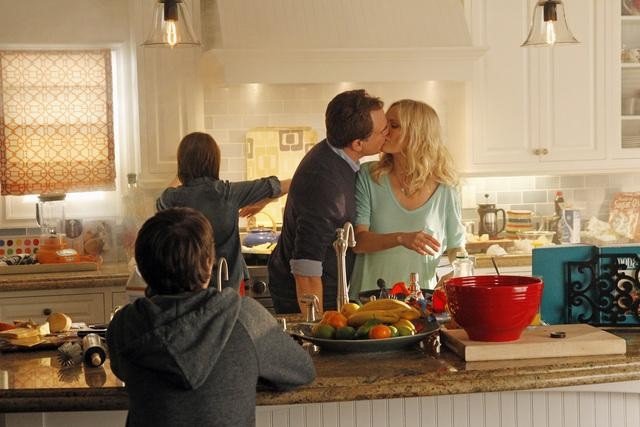
Trophy Wife and Husband

Trophy Wife is yet another child of ABC’s make-everything-like-Modern-Family approach to comedies (which from their perspective makes a lot of sense). The show, like Modern Family, is about an unorthodox wacky and occasionally out-of-control but ultimately functional family with a lot of moving parts.  Malin Akerman’s character Kate is the titular trophy wife. She starts the show with narration, which is almost always a poor choice in comedies, but an absolute staple of the Modern Family school of shows (Modern Family has it at the end, Suburgatory and The Middle have it throughout). She tells the story in very brief about how she went from single girl out on the town to wife and step-mom. It all started with a chance encounter at a karaoke bar with an older man, a suit-wearing lawyer, Pete, played by Bradley Whitford. Kate accidentally fell and broke Pete’s nose, which led to whirlwind romance followed by marriage.  There’s a catch though, to this dream pairing. Pete’s got major baggage in the form of two very different ex-wives, along with three children.

The first wife is the absolutely terrifying, stern and humorless doctor Diane played by Oscar-winner Marcia Gay Harden.  The second is the trippy, new age-y Jackie, played by Michaela Watkins, who has appeared in New Girl, as well as on Saturday Night Live.  Two of the kids are Diane’s –  a teen girl just entering the stage where she really cares about being cool and Warren, a dorky son who clearly doesn’t care at all about being cool. The third child is Jackie’s and is a precocious maybe 9 year old (I’m awful at estimating kids’ ages, so cut me some slack) adopted from China.  Kate’s best friend Meg is also part of the main cast, and helps Kate out with the kids.

Everyone is well-meaning, generally, as people are on Modern Family-esque shows and that’s not a bad thing., The main source of familial conflict laid out in the first episode seems to be that the ex-wives resent the younger Kate who they think is a party girl hardly responsible enough to be with their children.  The oldest child, Hillary, a rebellious teenager, also doesn’t respect Kate’s attempt to play mom.  The pilot features a series of wacky hijinks like Pete and Jackie running around trying to find an identical hamster to replace Bert’s so they can avoid telling him his hamster died.  It also features a quick twenty minute character arc in which Kate desperately craves the respect of Pete’s-kids and ex-wives, almost disastrously loses what little respect they had for her, and then manages to gain a small piece of that respect in in the end.  The episode ends, as again Modern Familly-esque shows often do, with the whole wacky family in the same room, solving all their episode-long problems together.

The words that spring to mind to best describe Trophy Wife are cute, harmless, and inoffensive.   These are classic backhanded compliment words and they are here as well, and very much in both the backhanded and the compliment sense.  It’s a well-produced program with talented actors, a warm tone, and a couple of laughs, but there’s not enough for me to make it weekly appointment viewing.  In my estimation from just one episode, it’s a little bit south of what I call the Suburgatory line, which represents the perfect show to throw on the TV in the background when I’m lying down late at night, because I don’t care if I fall asleep before the episode ends, and I don’t ever plan on watching all the episodes in order.

Not to beat a dead analogy, but Trophy Wife fits in well with this entire block of ABC comedies, all of which sit somewhere around this middle line of being not bad but not great and yet go no further (note: not The Middle line, another of these ABC comedies).  Like most of the shows on ABC, Trophy Wife is watchable, well-intentioned, and heart-warming, but in the competitive television landscape with so many quality shows competing for my viewing time, that’s just not enough.

Will I watch it again?  Probably not.  It was fine.  The first episode had a couple of laughs and I like the actors and actresses so I wouldn’t object if it was on in a room I was in.   There’s an outside chance it’ll get much better, as comedies do often take a while to find their feet, and I’m perfectly willing to give it another try if I hear and read good things. Until then, it’s just not quite funny or promising enough to secure a guaranteed second viewing.

Fall 2013 Review: Agents of S.H.I.E.L.D.

27 Sep

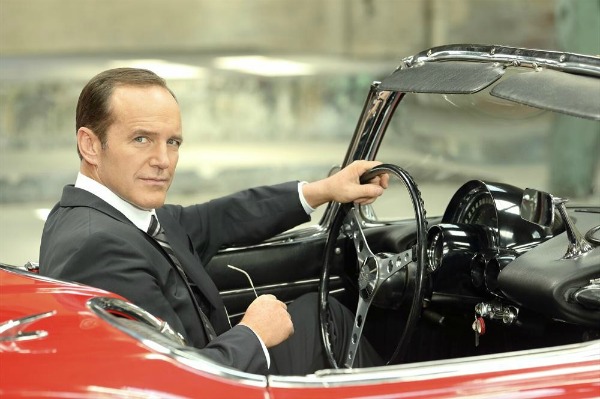
Coulson is an Agent of Shield

Agents of S.H.I.E.L.D. (pause to mention how absolutely obnoxious it is to have to type out S.H.I.E.L.D. every time) is Marvel’s first foray into television since the success of the Marvel Cinematic Universe which started with Ironman and culminated in 2012’s supermegamonster smash The Avengers. The Avengers was written and directed by Joss Whedon, who has been up to then known best as the cult television writer behind Buffy the Vampire Slayer and Firefly. The show is set after the events of The Avengers, where basically (The Avengers SPOILERS to come) huge swaths of New York were destroyed by giant aliens.  The upshot from that event, known as The Battle of New York, is that everyone in the public now knows about the weird and creepy and supernatural that the government had been able to keep from them before.  People are confused and scared.  S.H.I.E.L.D. is an agency which, as a character notes within the first ten minutes of the show, acts as a layer between the superheroes and super-villains and aliens and the general population, trying to keep the scary out of sight when they can and at least keep people out of harm’s way when they can’t.

Agent Phil Coulson, who appeared in Iron Man 2, The Avengers, and Thor, is back from being seriously injured in The Avengers and he’s putting together a special hand-picked team of S.H.I.E.L.D. agents who will get to run pretty much whatever missions he deems advisable without facing the usual bureaucracy. We don’t know how he got this authority but it’s not all that important. He starts the episode by recruiting an antisocial combat expert named Grant Ward and then convincing pilot Melinda May, who is implied to be some sort of legend, to be part of the team with the promise that she’ll avoid active duty.  They join the already recruited science duo of Leo Fitz, an engineer, and Jemma Simmons, a chemist, both British, who seem to love to squabble with one another about scientific gibberish.

In the first episode, our squad tracks the case of a man who was caught on camera saving a woman from a burning building and showed signs of super strength.  The show follows him and we find out he’s a factory worker who was laid off due to injury and that he’s struggling to survive and feed his kid.  In his time of hardship, he agreed to join an experimental program, called Centipede, in which he gets a device that hooks into his arm and gives him this super strength.  Unfortunately, it also makes him crazy, as he uses his strength to push around his old boss who won’t give him another shot.  It will also, we learn, eventually make him explode.  The Agents of S.H.I.E.L.D. are tasked with stopping him without killing him and they have the help of a rebel hacker named Skye who initially sees the agents as bad guys until Coulson convinces her that they really are trying to help people after all.

The show is largely procedural, and though I’’m sure there will be some serial elements, it looks like it’s largely going to start on a one case-per-week basis. At its heart, Agents of S.H.I.E.L.D. is about the team. Group dynamics are at the heart of what Joss Whedon does best, which is why he was the perfect director to helm The Avengers (and why he wouldn’t have made nearly as much sense for any of the individual hero films).  Whedon manages the intricacies and interplay of a group better than anyone and it is what drives his shows and what drives Agents of S.H.I.E.L.D. The major villains on Buffy were often the weakest part of the show, as it was how the group worked together to deal with them that was so compelling.   We don’t get enough of the group working together and verbally sparring in this episode, partly due to all the necessary set up, but I can see the pieces coming together.

Agents of S.H.I.E.L.D. is not as daring or new or revelatory as I would hope from a new premium cable show, but that’s not what this is. Joss Whedon doesn’t generally traffic in the completely novel.  What Whedon shines at is making standard genre shows that are a cut above. He turns obvious types into complicated characters that grow and change over time.  He takes the level of dialogue writing most procedurals employ and puts so much more care into each sentence and phrase, imbuing it with a signature witty style. This playful Whedon-esque tone (yes, I’m using the creator’s name as an adjective; he’s earned it) keeps what could easily be seen as occasionally corny or cheesy dialogue from sounding clunky and overwrought (it is vaguely cheesy; at one critical point, Coulson dramatically tells the scientists ” Don’t ever tell me there’s no way ” when they say they can’t stop the factory worker from exploding). Another specialty of Whedon’s is his brilliant balance of the dramatic and the comedic. He marries the serious and the silly better than anyone which keeps the episode fun and unstuffy.

Simply put, Whedon’s style makes what could easily be a color-by-numbers procedural vastly more interesting.  There’s the powers and superhero angle, and that’s great and provides a lot of material to work with, but it’s the quirky dialogue and character building that separate Whedon stories from their peers.

Will I watch it again?  Yes.  I’m a devotee to Whedon and all things Whedon-esque (though I shamefully still have not seen Dollhouse) so this kind of had me at hello.  It was pretty much exactly what I was expecting, and while that doesn’t make the most interesting or captivating show on television, it’s still a good thing.

Fall 2013 Review: The Blacklist

25 Sep

The Blacklist!

In The Blacklist, which sadly does not refer to the annual survey of hot unproduced scripts, James Spader stars as an infamous criminal. He’s known as the Concierge of Criminals because he plays a middleman between criminals, matching them up and helping them get what they need.  In the first scene of the pilot, he walks into the FBI, turns himself in for an unknown reason, and agrees to help the FBI catch certain super top secret criminals on his list (this is the titular black list). These are criminals the FBI has wanted, and some they don’t even know about, and he’ll do this in exchange for certain concessions and conditions.  The most important and strangest is that he insists that he only deals with Lizzie Keen, an absolutely nobody of an agent, who was supposed to be at her first day working for the bureau in DC after a stint in NY when Spader turns himself in.

In the first episode Spader helps lead the police to a dying terrorist who is planning on kidnapping a general’s daughter (which he does) and using her as a bomb to blow up part of the DC zoo (which he fails at).  Spader at one point escapes police custody with the help of an ally at the hospital. It seems like any person at any time might actually be working for Spader. The point here, which is made a couple more times in the episode, is that Spader is cagey and connected and always has a plan. Throughout the episode, it’s unclear exactly whose side Spader is on, as he helps certain criminals, communicates with others, and then thwarts the ones he earlier helped using knowledge from other criminals.

Somewhere along the line there a smart decision was made which is at the center of The Black List.  Someone decided to have James Spader do what James Spader does best.  I’m not sure whether the idea was to create this slimy character and realize James Spader was the perfect actor to play him, or to cast James Spader as an ambiguous villain/anti-hero and build a character around him, but either way it was the choice that is probably going to make The Blacklist a successful show. James Spader is a great actor, but like the large majority of good actors, he excels particularly in a narrow sphere. For him this role is smug, slippery, and sleazy but competent.  Spader’s character Raymond Reddington hits all of these attributes, though that’s the only time I’m going to call him by his character’s name because the character simply subsumes into Spader, the actor.

At its core, The Blacklist is a procedural. In every episode, Spader will probably pull a new criminal off of his black list and give extremely cryptic tips to help Lizzie and the rest of the FBI follow along and catch the perp. There’s likely to be more serial elements than most procedurals, largely because the premise is much more of a mystery than most procedurals (Law & Order and CSI didn’t start out with obvious questions that needed to be answered).  There are very basic questions that have to be answered at some point.  Why did James Spader turn himself in?  What’s in it for him?  What’s with his obsession with Lizzie Keen? What’s up with Lizzie Keen’s husband, who we learn has a whole box of passports and is almost certainly not who she thinks he is?

For some reason, there have to be other main characters besides James Spader.  Lizzie Keen, played by Meghan Boone, is fine; she’s the young up-and-comer who, even though less experienced, is a step ahead of the rest of the staid-thinking FBI agents.  Spader prods her on, and they have kind of a Hannibal Lecter – Clarice Starling relationship, as he tries to get under her skin through grilling her in-depth about her past which he somehow knows better than the FBI does.  Compared to Lecter though, he’s far less crazy and far more practical.  Everything he does seemingly has some sort of reason behind it which we might learn in time.

Diego Klatenhoff, who played Brody’s former best friend in Homeland, plays the FBI agent who was in charge of Spader’s case. Klattenhoff seems to have the talent of being the most forgettable part of any ensemble he’s part of.  His character seems so far to only play the role of veteran FBI agent who Lizzie Keen is already sharper than. The other main cast members are Keen’s husband, who obviously has something shady going on, as alluded to earlier, and the boss in charge of the FBI team, who we don’t see a lot of in the first episode. His only role is to be the official who gradually accedes to Spader’s demands.

The Blacklist shares a lot of general procedural tropes.  It’s not the most exciting or realistic or mind-blowing series.  I doubt it will ever be a must watch or be as complicated or thought-provoking as the best shows on television.  What it does have is James Spader and a fairly action packed and compelling set up.  It’s a new twist on a familiar format, and that’s not worth everything but it is worth something.  How NBC stole this show that would have fit right in at CBS I’ll never know. The mystery behind Spader gives the show more room to build in a serial fashion than most procedurals, and I actually found myself curious about these questions watching the show, which is generally a good sign.

Will I watch it again?  It’s not a priority, but I might.  It’s a procedural, a genre which is generally not my cup of tea, but there’s at least enough of a serial storyline, James Spader is great, and for its genre, it was impressive out of the gate.  Anyone who likes this type of show will like The Blacklist.