End of Season Report: Broadchurch

4 Dec

The two primary detectives in Broadchurch

This is a simple conclusion, but I really enjoyed Broadchurch, and I’m both pleased and mildly surprised by that. While I liked it well enough after the first episode, I found myself polishing off most of the series a few weeks later in a two day binge and really got hooked in more than I thought I would.

Before I talk about what I liked about the show, I’m going to put my initial misgivings right up front and then afterwards I’ll get to how Broadchurch was able to overcome them.

First, I’m generally tired of these murder mystery shows. A lot of the blame goes to The Killing, which still leaves a bad taste in my mouth a few years later, but these murder mysteries are just generally hard to pull off.  They don’t lend themselves to multiple seasons or even long single seasons. Drawing out the murder mystery too long is problematic because it’s hard to make the payoff seem worthwhile – there’s more pressure on the payoff with every extra episode the mystery takes to unwind. In addition, with multiple seasons, it feels like the murder investigation has to be more complicated than it might well be in order to justify the length it’s taking to play out.

Second, I’m tired of characters who fit the type which David Tenant’s cop seemed to be initially. The mysterious anti-hero, House-esque go-it-alone cop, who doesn’t get along with people and has serious personal problems, but is the best damn cop there is so people put up with him (or her).

Third, I’m tired of every family member’s personal demons making them all seem like potential killers. In the first episode, it seemed like every member of the family had something to hide, and that they might all be suspects, and it just felt like a TV show getting greedy; absolutely everybody in the town has to be a suspect. The town is big enough; there can be plenty of suspects with room for a couple of people who obviously didn’t do it.

Here’s how Broadchurch addressed each of these concerns. First, and this is really at the core of what allows Broadchurch to do a long-form murder investigation show right – eight episodes is the perfect length. There were red herrings, but they were addressed quickly and efficiently and didn’t feel too burdensome to the overall plot. The investigation hummed along without feeling overwrought, and everything was wrapped up at the end without stirrings of some greater conspiracy or convoluted scheme. The case was solved, and the killer has a motive that didn’t involve half the town being in on it rendering the whole situation implausible.

Second, while I thought Tennant’s character was a classic antihero cop that breaks the rules, hates every one else, but is smarter than everyone else, he ended up ,well, mostly not being that. He had his moments of playing that character, mostly when he insisted on avoiding dealing with his medical condition and breaking out of the hospital, but mostly he was just an ordinarily good cop who pretty much did follow the rules. He sniped and was a bit rude, but it seemed less like purposeful House-like jerkiness as we got to know him and more like admittedly poor social skills.

Third, the family’s issues were resolved sensibly and quickly. There were issues in the husband’s case, but once his affair came out into the light, suspicion of him was quickly dropped, and the show didn’t let the melodrama about the affair drag on. It was relevant, and impacted the grieving family, but it wasn’t the topic of continuing intrigue or concern in the investigation.

As mentioned before, but I want to stress its importance, pacing and length was an essential part of what made Broadchurch work. Eight episode was the perfect length to add depth to the mystery without dragging it out. The ending was surprising but didn’t feel out of nowhere implausible, and what made it so powerful was less what actually happened, than its effect on Ellie, who was absolutely devastated. Her personal devastation was difficult to watch but contributed to the strength of the reveal. In hindsight, the foreshadowing was clear when she told Susan Wright that she would have known if her husband was up to something criminal, and it’s absolutely brutal for Ellie to deal with the fact that her husband is the killer, and just be totally and entirely unable to explain how she couldn’t have seen it coming.

I got hooked on Broadchurch around episode four, and part of why I got hooked was because I knew I was so close to the end. The small town felt small, and the energy of everyone knowing everyone infused the show. Bonds of trust built up over many years broke down quickly while old rumors and gossip rose to the fore. Alec Hardy, as the foreigner, was often the only person abse to step outside of himself and see what was going on in an objective light.

I expected to recommend the show only with serious reservations after the first couple of episodes, and I was scared that the further it went, the less I’d want in. Instead, knowing the ending, I feel more confident in recommending the show. More shows need to be this length. Take a weekend, watch it all, and enjoy (I realize you shouldn’t have read this unless you’ve already seen it. Still, recommend it to your friends then).

Mid-season Report: The Walking Dead, Season 4

2 Dec

Rick is Back

After writing it, I noticed that this review has become a bit of a compliment sandwich. First, as befits said sandwich, we’ll start off with some compliments which the first half of the fourth season of The Walking Dead richly deserves. It has been the best and perhaps most importantly, most consistent half-season in a show that has been riddled throughout its run with inconsistency, offering jaw dropping moments before and after slow, plodding episodes. Pacing problems which swamped the show, particularly the second system, were not nearly as present, and new showrunner Scott Gimple found a way to mix character building, overarching themes about survival and humanity and relative and absolute morality with action, plot movement, and, as always, super disgusting zombies. Compliments to the chef.

My biggest problem with this half season was my biggest problem with last season’s finale: the governor, and his continuing, at least up to the mid-season finale, survival. The writers decided to give the Governor two episodes starring no other main character towards the end of the season rather than cross-cutting the Governor’s plot with the crew in the prison. I ‘m not sure that was the right decision, but I can see the advantages once they had decided what their story was and were just deciding how to tell it, The real problem, though, was bringing the Governor back at all.

The Governor’s arc was finished at the end of season three. If the character had been written differently, and I”ll get back to that, I don’t think the character had to be done, but because of how he was written, there wasn’t much left to do with him. Rather than prove me wrong, the writers unintentionally endorsed my view by basically repeating the Governor’s third season plot in two and a half episodes.

This re-telling may have been a superior version of the Governor’s story, and it almost felt like the writers thought the Governor was a good enough character that deserved a better end and they wanted to honor him. If this season had been the only experience we had with the governor, there might have been a chance to forge a new character and the episodes would have been a lot more captivating. But it’s not and it wasn’t.

Aside from the repetition, it felt like the first Governor episode was a fake out to make us believe that the Governor had changed. It could have worked, had the events of the third season gone differently, but because of how they did go I never believed in the new, non-murderous governor for a second. The character was simply too far gone, too morally compromised, to, forget root for, but even believe in and take seriously at all.

The writers proved that theory correct when the Governor went back to his playbook in his second episode, murdering the leaders of his new group to take control himself, ostensibly in the name of survival, but really for personal gain and revenge.

And therein lies my problem with the execution of the govnernor (not his dying at the hands of Michonne; that was great, rather how his character was written). There’s a version of this character that’s really interesting in this world. A character who has seen so many dark things that he takes a cold and utilitarian view of group survival. He decides he needs leaders who are willing to cut bait to save the most number of people, and that his group’s survival may mean others’ deaths, but he needs to be in it for his group first and foremost. That’s a valid worldview in these end times, and while it may not be one that the viewers support, it’s one that’s coherent and can make sense in a world where death is always around the corner.

The problem is the Governor is a perversion of that worldview who is impossible to sympathize with. Sure, he believes those things, and acts in those ways, but he has personal motives and a huge ego which don’t allow the viewers to really spend time on the fascinating themes that character can present.

I love that in The Walking Dead any character can die at any time. But for the reasons I described above, if the Governor killed Rick, I’m not sure I’d be able to continue to watch the show. I certainly didn’t think it was going to happen, but, while I normally reward the unpredictable, if the Governor didn’t die in that very episode, there would have been a critical problem in a show that has had its share of problems.

I had to spend so much time on my least favorite part of a season that was overall quite enjoyable, but it’s on my mind in particular because it occurred in the most recent episodes. Let’s talk about the good though, the bottom half of this compliment sandwich.

It’s always a challenge on The Walking Dead to build up new characters, so that they mean something if and when they get killed off, as there’s always a churn of characters working their way through. The Walking Dead did enough to add some real depth to characters Tyrese, Sasha, and Bob with a limited amount of time to devote to each which really helped bring up the overall cast. This stands in stark contrast to the trouble the show had making major characters feel like, well, characters, in the early seasons.

The Walking Dead thrives when it positions different views for how to deal with the apocalypse against one another, with Rick as the heart, trying to figure out what’s right. Carol and Hershel did an excellent job really building into two potential worldviews, each of which has value and reason behind it, and while I understood how this show works, it was awfully sad to see Hershel go as he has become the moral soul of The Walking Dead.

The disease that ravaged the prison in the first segment of the season was much more interesting than the Governor conflict in the second segment. It was a human conflict that forced the prisoners to make difficult choices, and while sometimes the choices were smoothed over, it led to some really interesting consequences like Carol’s burning of the bodies. We tend to side with Rick, but even while we may not agree with Carol, it’s easy to understand where she’s coming from and also understand that she’s taking action for the survival of the prisoners. Unlike with the Governor, Carol’s motivation is legitimately to help her group overall

All told, I’m encouraged by the direction of this season, especially now that the Governor’s gone and the crew is on the move again, I’m excited to see where show runner Scott Gimle can take the show, which has struggled to find its way on a consistent basis over four seasons, despite its massive popularity.

End of Season Report: Boardwalk Empire, Season 4 – Part 2

29 Nov

Nuckie in Florida My thoughts on the recently ended fourth season of Boardwalk Empire ended up reaching an unseemly length, so I decided to slice them in two. The first part is here.

Gillian’s plotline was one of the triumphs of the season. It was, unlike many of the other plots,largely self-contained within this season, and dealt with her trying to put her life back together and ultimately gain custody of Tommy, Jimmy’s orphaned son. My one reservation about her story was that it felt a little ludicrous to have this ridiculously long con run on her successful by a private detective solely for a confession to killing someone no one seems to really even care that much about. Still, if I’m willing to buy that, it was compelling, Gillian has always been one of my favorite side characters and Gretchen Mol manages to play her in a way that it’s hard not feel sympathetic for her by the end of the season even after all the terrible things she’s done.  She’s so tragically broken from the way she was abused as a girl that her warped sense of relative morality has made her at times successful, twisted, and oblivious. Ron Livington’s character had a limited role, nursing Gillian back to health only to break her later but he ultimately appreciated by the end of the season, as we did, the strength of Gillian’s character and her abilities, in spite of the endless immoral and criminal acts we know she committed.

Nuckie trod largely on familiar territory which makes it difficult for his plotlines to feel new or exciting. This is largely because the character is stuck in a status quo where he can’t get too big for his britches outside of Atlantic City, but can’t lose all his power either, unless the show is willing to make a much more radical change that I’m giving it credit for. Still, if one could put aside for a minute the negative I’ve already mentioned of going somewhere we’ve already gone before, the season handled it well.

Particularly, we’ve seen this Nuckie and Eli dance before, in season two, when Eli was part of a cabal, along with the Commodore and Jimmy, who worked to overthrow and ultimately kill Nuckie. Nuckie forgave Eli, but not Jimmy, and Eli had been a fairly loyal soldier until this year, aside from the constant sibling squabbles between the two. As I mentioned, unsurprisingly, I’m not usually a fan of repeated storylines, and I’m not here, but again, if we accept that Eli betraying Nuckie is going to be a repeated plotline, it’s done as well as could be expected.

I’ve always though Eli (like Gillian) was one of the stronger side characters and that his relationship with Nuckie was a fairly realistic portrayal of a sibling relationship, amped up in a violent way because of their positions as gangsters. With Nuckie as the protagonist, Eli can seem grating when he’s constantly rankled by Nuckie’s constant looking out for him and his family. It’s difficult, though, for Eli to constantly be under his brother’s thumb, not only at work, but often even within his own family at home, even if he ultimately loves his brother deep down, which i still think he does. Eli has a more convincing reason for betrayal his time, and I actually liked that in the end, at least this season, Eli wasn’t killed, which would have been the obvious move even though his actions clearly deserved it by the rules seen in this show.

The extra layer here was that the betrayal could have been avoided if the sibling rivalry didn’t run so deep. Agent Knox blackmailed Eli regarding his son’s murder charges, and if Eli had gone to Nuckie right away, the situation might have been resolved without endangering anyone in the family. Eli was too proud and ashamed to go to Nuckie, and Nuckie had to play big brother and patronize Eli by hiding his son’s actions from him in the first place, generating the understandable resentment from Eli. These are basic sibling conflicts that follow siblings everywhere, but they’re played out writ large due to the numerous murders and federal crimes which they’ve both been a part of. The family connection comes into play again in the decision of Nuckie not to kill Eli, as all of the rationales on both Eli’s and Nuckie’s sides are wrapped up in their complicated family web along with Eli’s son Willie, whose seemingly unnecessary and somewhat irritating (Willie is not my favorite character) actions early in the season set up the ground for Eli and Nuckie’s struggle.

I loved Patricia Arquette’s character,Sally Wheet, and she played a huge part in keeping Nuckie interesting for another season. I do think Nuckie is a good character overall, and has layers of depth and moral complexity that have shown over the course of the show, but it’s getting tough to keep him interesting, as mentioned earlier, without ever having him win or lose completely. He wants out of the gangster game, and the stress and the violence, but then he doesn’t because of his need for money and power, and around again we go. Arquette was a genuinely believable and compelling romantic interest that made me invested in Nuckie’s love life in way I didn’t feel was particularly likely before the season. Florida didn’t add a ton besides plot conveniences outside of Arquette, but she alone made it worthwhile. Florida was built up in the early seasons, only to largely fall away towards the end of the season, leading me to believe we’ll be back in the Sunshine State sometimes in season five.

Nuckie’s ex-wife Margaret largely sat this season out, for which I was grateful, as she’s my least favorite character. Her two scenes with Arthur Rothstein I enjoyed though; perhaps there’s much more potential for her now that she’s fully out of Nuckie’s life and in the show in limited doses.

Real life gangsters Rothstein, Charlie Luciano, and Meyer Lansky each had minor roles in the season, each befitting the size of characters throughout this series, but each added color, character, and fine acting, in the smaller roles they inhabited. They were like basketball three-point specialists, making the most out of their limited time on screen, injecting little bits of character into smaller parts without needing the ball to have an impact. Mickey Doyle, another character whose actor gets listed in the main credit sequence even though he has a relatively minor role, is the type of character who can be grating with all but the slimmest parts, but in short bursts adds a much needed bit of levity to a show that can easily get overserious. Rothstein and Lansky are about the only other two who ever seem to show any sense of humor, and both faced more serious situations this season that prevented them from being at their most lighthearted.

Antagonist FBI Agent Knox wasn’t my favorite part of the season. He was largely fair in his handling of Eli, but his unnecessary beating of Eddie left me cold and somewhat unsympathetic. He’s clearly on the right side ethically and legally, relative to the show’s protagonists, but because they’re protagonists our natural sympathies lie with them, so the relatively more moral FBI agent needs to be legitimately clean to win us over. Knox, to his credit, isn’t corrupt, and he is certainly on the side of right, but I think he could have been even more convincing and relatively more likeable, which would have shone a brighter light on the fact that the characters at the center of the show are no-good criminals.

This report wouldn’t be complete without nothing that Nuckie’s servant Eddie got some serious work to do and excelled in his final episodes mid-season as he’s cornered by the FBI and then takes his own life. His last scene was brilliantly acted and wonderfully filmed.

Overall, this season was a positive step for the show. Side characters were fleshed out. Plots came together somewhat, but not entirely, and wrapped up some season long plots while leaving a lot hanging for next season. The antagonists were more complicated and enticing than Season 3’s Gyp Rosetti, who was a fun sociopathic villain but not a particularly interesting or complicated one. I’m looking forward to what the writers and creators come up with next.

End of Season Report: Boardwalk Empire, Season 4 – Part 1

27 Nov

Nuckie and Narcisse

Boardwalk Empire may never quite rise to the status of truly great show in the annals with the Mad Mens and Sopranos and Breaking Bads of the world, but this fourth season was  a a movie in the right direction, very good season of television, in the tier just below great. The fourth season was a distinct rebound from the so-so third season, back to the heights of the second, which was previously (and still may be – I’d have to think on it more) the best season of Boardwalk Empire.

The third season of Boardwalk was sharply focused but was stifled by a concentration on a villain who, while gleefully diabolical, was uninteresting and one-dimensional. Bobby Cannvale did all he could with his psychotic gangster Gyp Rosetti, and it made from some breathtaking and brilliantly violent individual scenes that jumped from the screen. In terms of narrative arc, however, his irrational antagonism left the entire arc around with the season was built often lacking.

Season four on the other hand, managed impressively the very difficult task of knowing when to pull plots apart and when to push plots together, keeping the season focused enough to mostly not feel disparate while finding time to focus more on non-Nuckie characters than ever before. Additionally, season four found antagonists that if not entirely as rich in character as they could be, were more layered than Rosetti, who may have started out simply as a wronged businessman, but by the end was a nut hell-bent solely on Nuckie’s destruction.

Season four also is by far the least seasonally-oriented season of Boardwalk. While the finale had some huge, series-changing moments, major questions and plotlines remain in the air in ways that felt far less settled than after each of the show’s previous three seasons. The two biggest arcs of the year, Nuckie’s and Chalky’s were left somewhat unfulfilled, and Eli, whose death would have been a classic seasonal wrap up, lives and moves on to Chicago for now. There’s nothing wrong with leaving plot strands open ended for next season, and in fact, it can have many benefits, but it does make it harder to evaluate the season in a vacuum.

I’m now going to roll through each of the major arcs and make some comments.

Chalky’s arc was very strong. There was one major issue I had, which was his relationship to Daughter. I never found Daughter’s character compelling or charistmatic, and that meant I never was quote on board with Chalky’s infatuation with her. It could be explained simply as a mid-life crisis with a younger woman, and that’s fine, but the show made it out to be more than that. That said, Chalky’s battle with Narcisse was largely compelling. Chalky faced a problem which Nuckie has in the past, having his leadership challenged, and struggled to maintain supremacy in a world that was changing faster than he was ready for it. On top of this, he doesn’t know who his allies are in his community or outside it, and must go it alone until he can figure out how his real friends are. Chalky made many mistakes along the way, but came out of his battle with Narcisse easier to root for in some ways, and harder in others, a more complicated character. His daughter getting caught in accidental cross-fire aimed at Narcisse was brutal luck which should have a debilitating effect on Chalky going forward.

My one other complaint is that I think there was an interesting potential dichotomy set up for Narcisse; his support and fight for his race, while at the same time participating in organized crime, and particularly drugs which harm the community. There could have been a way to really explore Narcisse as a character with an internal battle between these sides, but instead Narcisse was pretty much just an antagonist who was kind of a blowhard rather than having any working principles.

The Chicago plot lacked the gravitas of the other arcs. Boardwalk Empire is always filmed with care, and the cinematography and film-making is beautiful as always, even when the writing and characters can’t match it. Watching Al Capone’s rise, through the eyes largely, of Nelson van Alden ne George Mueller ne Nelson van Alden was absolutely entertaining at times but felt more like a way to stage a version of an interesting episode in history rather than necessarily fit in with the other segments of the show. It was fun to watch the sociopath Capone move up the ladder in his local organized crime family, but it didn’t really have the same emotional or character weight of some of the other arcs. I think Michael Shannon is a great actor and any depth I get from Van Alden I credit to him, because Van Alden has always been one of my least favorite characters on the show. I’ve always felt Van Alden was just a little bit too odd, and particularly that his transition from uber anal prohibition agent to unhinged salesman to gangland enforcer never quite worked. Still, if I allow myself to try to disregard the history from before this season, Van Alden, in this season alone strangely often plays the role of the viewer seeing the abilities and the weaknesses of Capone, the most well-known and infamous real character on the show.

Richard Harrow’s death makes sense in a lot of ways. He’s a fan favorite so his death would carry an emotional impact that many of the characters’ potential deaths couldn’t hope to match. Harrow was also kind of out of plot. While everyone wanted more Harrow, it seemed clear a couple of episodes into this season that the writers didn’t exactly know what to do with him.  He appeared in extended segments in early episodes and then featured in less and less screen time as this season went on. His plot slowed down to a crawl to make sure it didn’t outpace what the writers could actually figure out to do with him. In the last episodes, a period of stasis arrived. Richard got control of Jimmy’s kid and was with the girl he loved, and Nuckie had given him a job, but it’s still not clear what it was or why. There seemed to be two obvious options for what to do with Richard: either let him go off an be happy and largely off the show at least temporarily (with the caveat he could show back up at anytime if the writers could think of a reason) or kill him off tragically. As (BREAKING BAD SPOILER) Breaking Bad fans know, letting your wife know everything is all wrapped up for the best and you’ll be home is all but a death warrant.(SPOILER OVER). The final scene was a poignant but fairly inevitable death for an excellent character. Richard Harrow couldn’t just get away and live a happy life, certainly not after leaving so many bodies in his wake, even if it was often done with the best of intentions. This isn’t that type of show. There are tradeoffs in life, and some good can’t necessarily outdo a lot of bad. Still, the final scene of the season was beautiful and no character deserved to go out in that memorable way more than Harrow.

Fall 2013 Review: Almost Human

25 Nov

Almost Human after all

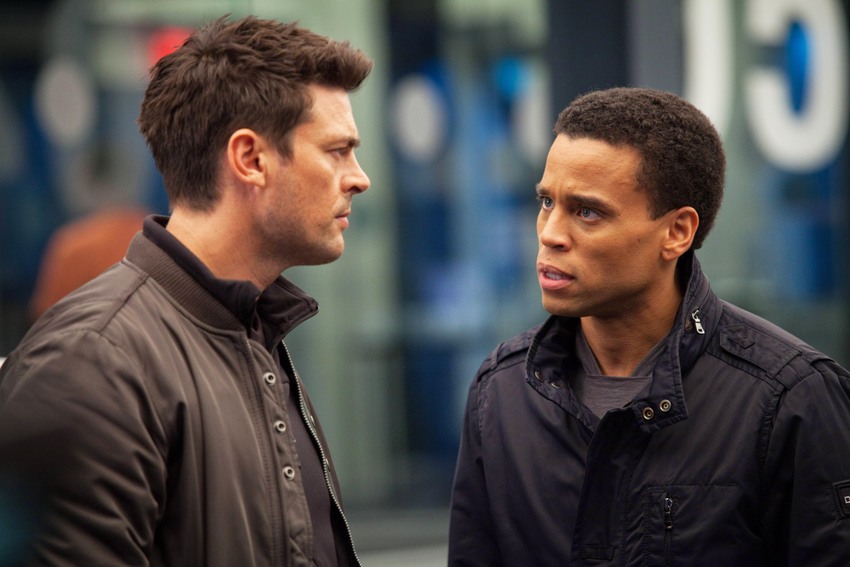
So, it’s the future. The future in Almost Human looks exactly like a science-fiction future is supposed to look, a conception which hasn’t changed much since Bladerunner, which sort of redefined the genre in a way that still holds sway today. There’s huge funny-looking skyscrapers and people flying around in vehicles while our main characters are still driving on the ground. In great sci-fi tradition as well, a short burst of text sets up our premise at the very start of the episode. The future is crazily crime-ridden as gangs outpace police, technology-wise, and in a desperate effort to combat skyrocketing crime, police offers are paired off with androids to combine the best capabilities of both humans and a computers.

Within this future resides our hero, John Kennex, a cop who was injured when an evil crime syndicate (just called the syndicate) somehow learned of a planned police operation and infiltrated it, killing his partner in the process. Kennex was in a coma for nearly two years after the injury,and has had trouble readjusting to life after waking up. He struggles with the events that led to his coma, constantly consulting a black market memory doctor (I don’t know the technical term) who uses technology to help John replay the events of the night he got injured over and over, hoping to learn something about the syndicate and how they found out about the operation deep in his memory.

Eventually, his chief pulls him, partly against his will, back to the job, and he finds things are both different and the same. While everyone else plays ball with the current police protocol, John, as television cops are wont to do, plays by his own rules. He gets quickly tired of the new android model he’s paired with and purposefully destroys the one he’s given when the android threatens to report on his activities., Instead, ’John is paired with an older model that feels and has emotions like humans, when compared to the cold and calculating new androids. While the emotional and sensitive android drives John crazy initially, it turns out he may just be exactly what John needs in a partner, as this android’s ability to go off book lets it operate outside the box, like John, and not necessarily follow protocol.

There are other characters but they’re not really important in the first episode, as the core of the show is the relationship between John and Dorian, the android partner. John is a classic television old school cop, just this time he’s old school in the future.  John doesn’t follow protocol, he disobeys orders, and he’s simultaneously the most broken cop on the force and the best damn police officer the city has. I know why this character exists – it’s more exciting, and he gets things done. Still, it’s a relatively tired type – why can’t television celebrate a detective who plays by the rules?

There’s some appeal to the show. The future may be dangerous but it’s also fun and the action is well-paced. I always find it a treat to examine different renditions of the future, and I enjoy seeing what types of technology people dream up. At its heart, though, Almost Human has relatively conventional premise stuffed within a science fiction universe that doesn’t really alter the essential story behind the show. The primary characters don’t offer enough in one episode to make me want to watch again, and the plot isn’t exciting enough to watch on that alone. The characters, writing, or filmcraft have to be strong to pull me in when the premise no longer does, and none of them are. I’d guess that every episode will have a stand alone crime, while progress is slowly made towards solving the greater mystery about the evil “syndicate” as the season moves along, but Almost Human could potentially be more serial. Still, while the chase to figure out what happened to the syndicate could be interesting in the details, the simple mystery itself doesn’t grab a viewer from the get go.

Will I watch it again? No, I don’t think so. It wasn’t bad, but I’d like something a little bit deeper and more original to go with my science fiction. Forget even more interesting overarching themes,  all the commercials tout the show as being about the relationship between the two characters, and John in the first episode is a relatively uninteresting cop character that has been seen dozens of times before on television. I don’t get a spark between the two major characters that makes me want to keep going.

Fall 2013 Review: The Tomorrow People

22 Nov

Four Tomorrow People

In my review of Reign, I talked about the way the CW really hones it on its target demographic and has been developing a consistent brand. The Tomorrow People is another perfect example of this CW philosophy.

The main character is Stephen, a high school student who really looks like he’s 25 (which he is, and I know in most shows, high school students are played by older people, but at least often they look somewhat younger than they are). Stephen has some serious teen problems. Although he used to have friends, he’s become an outcast. This is mostly due to his deteriorating mental condition highlighted by what appear to be sleepwalking problems in which he’s fallen asleep and woke up in his neighbors’ house. He’s alienated all of his friends but one due to his issues, all of which has him feeling particularly insecure.

It turns out of course that he hasn’t been going crazy. Instead of problems, he actually has a gift, super powers that come from a genetic mutation. He is discovered by a couple of other super powered individuals, who have formed a group of their kind.  They track him down and bring him into their secret lair. He’s special, they explain, because like them, he can use the powers of telepathy, telekinesis, and teleportation. There’s only one problem: big government doesn’t like the idea of people with powers on the loose, so an evil ultra-secret government program called Ultra is out to get every single one of them and neutralize them, which is why they’re hiding in this dank underground lair in the first place.

This is a CW show, so combined with the powers, we naturally have some more real-teen-dealing-with-real-problems aspects that grounds the show.  We had been led to believe that Stephen’s father had abandoned his family after going crazy when Stephen was younger, leaving his wife and sons to find for themselves. Stephen’s always understandably resented his father for this and has some serious teen angst related to the man. It turns out, however, that the father also had powers and went off on a mission to find a safe place for all the super powered people and also because him sticking around with his family would endanger the entire family with Ultra out to get him.

Now, the super powered group try to convince Stephen that his father wasn’t so bad after all, and that he should join them to help try to find the great safe haven their father was after. On top of all this it turns out that the evil head of Ultra is Stephen’s uncle, his dad’s brother. While the underground group tries to convince Stephen to join them and leave his entire life behind for his own safety, Stephen, sensing a better path, eventually accepts a job offer from his evil uncle, with the goal of getting some info about his dad from the inside, helping the good underground folks while posing as an Ultra agent.

This is a CW show again, so let’s not forget a romance angle. There’s presumably going to be some sort of love triangle. The male and female head of the hidden super humans are an item as the show starts, but the female has a weird mind meld connection with Stephen, and her boyfriend seems jealous of her and Stephen’s connection from the get go.

Tomorrow People didn’t hook me. I like shows about superpowers well enough, but the characters and set up was pretty underwhelming. It didn’t help that the sides appeared so blatantly black and white; the clear good vs. evil set up was less intriguing than one in which the battle was even a little more ambiguous and gray. I’m not saying show can’t have villains but the head of ultra just seems so really unnecessarily evil for a character that could at least have some nuance.  The main character wasn’t particularly charismatic and I wasn’t particularly invested in his quest to find his dad by the end even though I tried to be. This is a show that should be funnier than it is. There’s room for a sense of humor that isn’t really present. At times the show seems like it wants to be funnier, but doesn’t quite put in the requisite amount of effort.

I’m a little tired of the set up that normal, regular, people can’t accept people with powers and thus they have to be hidden underground. This happens in Heroes, in Harry Potter, in X-Men. Us normal people without powers will simply be unable to ever handle the possibility of people different than them and thus the only options are either having these special people segmented off or annihilated. What made True Blood’s premise so interesting, is that for the first time, the set up was the opposite; people with powers were finally coming out into the light and mingling with regular people, rather than hiding. The idea that these special people who are so much better than us normals (this theme is actually hammered home in Tomorrow People; the people with powers are simply more advanced and superior to regular huamns) can’t let anybody know for our and their own good because people can’t handle it is a little bit grating.

There’s a lot to deal with being an outcast, and no one deserves to feel like their in it, whatever it is, all alone. Going from outcast to finding out that you’re the most powerful super human seems like a bit of a cheat though, even if it comes with its own set of difficulties.

Will I watch it again? No. It wasn’t that bad but Reign was the slightly better CW show. Still neither of them have intrigued me enough to go in for seconds. If I continue watching a CW show, it’ll probably be trying to start up Arrow.

The Zeljko Ivanek Hall of Fame: Mark Pellegrino

20 Nov

Mark Pellegrino

(The Zeljko Ivanek Hall of Fame is where we turn the spotlight on a television actor or actress, and it is named after their patron saint, Zeljko Ivanek)

Some of the people we induct into the Zeljko Ivanek Hall of Fame are actors who most people would instantly recognize because of their long, prolific television careers, or character actors remembered in particular for one stand-out main cast role in a much-loved television show. Some however, are less well-known, and can only be pinned down by most people as “the guy who played” one character from a couple of episodes of a couple of shows. Well, Marl Pellegrino is one of the latter, but I think if you’ve watched a lot of television in the ‘00s, you’ll likely recognize at least a role or two he’s played. In particular, he has appeared in one all-time recurring role of a character much better remembered by name than for the amount of screen time he gets in the seven episodes in which he appears. But we’ll get there. First we start at the beginning.

Pellegrino’s first IMDB credited role is as “punk” in an episode of L.A. Law. Next was an appearance in TV movie What Price Victory, followed by one-shots as “Dude” in Doogie Howser, M.D., an episode of Hunter, and as “Punk” again in a Tales From the Crypt. He ran through the entire decade of the ‘90s appearing in single episodes of many television shows, some of them popular, including, Northern Exposure, something called The Hat Squad, The Commish, Viper, Renegade, Deadly Games, ER, Nash Bridges, The Sentinal, Brimstone, and The X-Files. In X-Files episode “Hungry” he played a murder suspect, Derwood Spinks, who gets eaten by the true murderer and self-hating monster Rob Roberts. He also appeared in TV movies Class of ’61, Knight Rider 2010, The Cherokee Kid, and Born Into Exile. His best known role of the decade, however, may have come as an unnamed blond Jackie Treehorn thug in The Big Lebowski. He dunks The Dude’s head into the toilet and drops the bowling on the tile, breaking it, towards the beginning of the film (“Where’s the money Lebowski?,” he asks).

In the ‘00s, Pellegrino’s career began to pick up with some recurring roles. He was in three episodes of The Beast and four of NYPD Blue. He was in single episodes of The Practice, The Unit, Burn Notice, and Grey’s Anatomy, and two of Without a Trace, along with TV movie NYPD 2069.

Paul from Dexter

In 2006, he got the first television role for which he’s frequently recognized. He played Rita’s sketchy ex-con ex-husband Paul Bennett in eight episodes of the first two seasons of Dexter. Bennett is extremely possessive, and after he gets out of jail he comes looking for Rita and her new boyfriend, who is, of course, Dexter. Bennett was an abusive husband who beat and raped Rita, which got him to jail in the first place. Rather than simply kill him, per Dexter’s m.o. Dexter sets him up with some heroin and gets him shipped back to prison, where Bennett gets killed in a prison fight.

After getting killed off on Dexter, Pellegrino spent some more time as a TV nomad. He appeared on episodes of Women’s Murder Club, K-Ville, Knight Rider (remember that reboot?), Criminal Minds, Fear Itself, Ghost Whisperer, The Philanthropist, and The Mentalist, and two each of Prison Break and CSI.

Jacob from Lost

Soon, though he was to land his next extremely recognizable recurring character as the infamous Jacob from Lost. I don’t even begin to actually understand much of Jacob’s story, but he was a legendary figure talked about and heard but not seen long before his backstory was revealed. Jacob was the long-time protector of the island. He had a centuries-long feud with his brother, the nefarious Man in Black who also took the form of the Smoke Monster, and also killed their mother (Yes, Lost makes absolutely no sense; as someone who watched most of it, I can’t even imagine how ridiculous this sounds to someone who has seen none of it). Jacob was worshiped by Ben Linus, he was the one who made Richard immortal and he eventually anointed a successor to his place from among the survivors of the Oceanic crash.

Pellegrino was in TV movie Locke & Key (as Locke), a CSI: Miami, and a Breakout Kings, before guest-starring in six episodes of TNT hit The Closer as Gavin Q. Baker, a lawyer who represents Brenda in whatever the Turrell Baylor lawsuit is. He’s described by Wikipedia as flamboyant, astute, clever, and brutally honest.

He appeared in two Chucks and a Castle. He got a pretty choice recurring role as Archangel Lucifer on Supernatural. He has appeared in that role for 10 episodes over the course of seasons 5 through 7 and is the primary antagonist of season five, when, after breaking out of his prison in hell, he attempts to get Sam to be his vessel who he can inhabit (I don’t really know what that means either. Maybe I’ll watch you one day, Supernatural).

He appeared in the TV movie Hemingway & Gellhorn and in episodes of Grimm and Person of Interest.  He was a main cast member in the first season of the American Syfy remake of British supernatural show Being Human, in which a ghost, a werewolf, and a vampire live together and try to make it in modern day society. He played James Bishop, a vampire, turned in the 15th century, who now works in the Boston Police Department.

Pellegrino played Jeremy Baker, a member of the Monroe Militia in four episodes of Revolution. Currently, he’s starring as the antagonist in the CW’s The Tomorrow People, about a near-future where some people have genetic super powers. He plays the head of the villainous government organization Ultra, charged with rounding up and disabling all the people with genetic mutations.

Before, he may have just seemed to be “the guy who played Jacob in Lost,” but he’s so much more. Welcome to the Zeljko Ivanek Hall of Fame, Mark Pellegrino.

Fall 2013 Review: Reign

18 Nov

Queen and Duaphin

In a recent review of the ABC show Betrayal, I wondered how that show every made it through all the steps that go from conception to airing, considering not simply just how uninteresting and pointless it was, but how it didn’t seem to hold any possible appeal or have any obvious hook that would make network people keep moving it up that ladder.

CW shows, and Reign, in particular, are the exact opposite. CW has a much tighter, clearer, and more cohesive brand than any of the other broadcast networks, which makes sense because the CW airs fewer shows and draws a lot fewer overall viewers. Additionally, the CW has a niche; they hew to a base demographic of around 18-34 year-old females. CW shows focus on young people, often teens, but sometimes twenty-somethings and feature these wide-eyed youths exposed to new situations, with complicated love lives. These shows are generally slightly more earnest than soaps, but more fun than dark. They’re not particularly humorous, but they try to refrain from being too stiff as well.

Every single scripted show the CW airs is smartly targeted towards this demographic, and even those that don’t work don’t fail because they didn’t make sense theoretically but simply because of the execution or they don’t catch on. Emily Owens, MD was cancelled, for example, but it fit the CW’s core focus to a T. There’s certainly plenty of arguments to make on the value of a brand this consistent and similar versus a brand with little bit more variety, but I certainly appreciate the CW’s approach, as a network in a unique position of being compared to the much larger networks but only airing a few new shows every year.

Reign fits perfectly within this pattern. The main characters is a teenage Mary Queen of Scots, just escorted from the nunnery she was being kept at for her own safety to the King’s court in France. She’s betrothed to the future king of France, Francis, son of current king Henry II. It’s a perfect CW spin on historical drama. It’s about a teenage girl who faces lots of problems every teenage girl deals with – figuring out who your true friends are, finding love, and finding acceptance while feeling like out of place, simply with the added twist that she’s Queen of Scotland, in constant danger from potential English assassins, and one day to be married to the king of France.

There’s already a potential love triangle from episode one. Mary’s betrothed, Francis, is charming, standoffish, romantic and coldly practical in equal parts towards Mary in the pilot. He tells her that he doesn’t think they should marry for strategic reasons, but intimates that just maybe he kind of wants to marry her, which warms Mary’s heart. Us viewers also know that he has another woman in his life. On the other side of the triangle is Francis’s bastard half-brother, Sebastian, who is mysterious and charming, a bad boy who gets to ride around doing what he wants because he’s a bastard who no one cares about while Francis, with the future of a country on his shoulders, must stay in the castle under guard at all times. Mary, of course, knows that marriage in her case is about alliances, but she wants true love at the same time.

Mary has a difficult relationship with her friends, her ladies’ maids, because she wants to frolic and play with them, but she’ll always be above them in statute and that’s not always easy for her or them to deal with. She’s a target, while they’re not, and she’s treated with a level of respect that they aren’t by others. Many CW shows have a queen bee, but this one just has a queen (There’s a tagline for you, CW. You’re welcome). Most CW shows have figurative backstabbing, but in Reign, it’s a literal possibility. A man attempts to rape Mary in the first episode, forced by a mysterious plotter to despoil her so she would be unfit to marry the future king.

King Henry may be the king, but the show implies that the real power lies with Queen Catherine de’ Medici. While Henry seems to sleep with every woman with a pulse in the court (we know at least two, but it seems likely there are more), it’s Catherine’s money that keeps France running. Catherine consults occasionally with the seer Notradamus who ominously warns her that marrying Mary will lead to her son’s death. In the last minutes we find out it was indeed her behind the plot to rape the Queen.

Reign is very good at what it does, being a mash up between a historical drama and a typical CW show about teens growing up, which doesn’t mean it’s good. I’m not the intended audience and I can appreciate what it has qualities that the primary CW demographic might enjoy. Still, it’s a little gooey and flowery for my tastes when it talks about love and a little stilted when it talks about intrigue and politics.  There’s nothing here that pulls me in, and the two boys seem more like 16th century takes on two boys that occupy any CW love triangle rather than full-blown characters. It’s not bad; it’s merely mediocre.

Queen Mary is so wide-eyed and bushy-tailed, confused and confounded at every new experience and there’s plenty of places the show can go with both romantic subplots and political angle. Reign feels like a teen soap hidden behind the intrigue of a historical drama. It feels that way because it’s supposed to, but the too styles don’t really mesh exactly right. The romantic teen angle takes a little too much edge off for a show in which the main character faces potential death in the first episode, and the darker political subplots feel out of place with the ladies’ maids dancing that feels like a montage from any high school movie.  I’m not sure if there’s a way to match these two styles correctly and convincingly. The writing isn’t convincing enough to make me buy in to most of the characters’ motivations or to seamlessly transition from teen soap to high stakes historical politics.There are two separate shows taking place over the same hour, and neither is really bad, but neither is quite good enough on their own and the combination doesn’t really work for me.

Will I watch it again? No. It was fine, I certainly wouldn’t advise specifically against it, and there are people out there who will like this. Those people aren’t me, though.

Fall 2013 Review: We Are Men

15 Nov

WeAreMenPilot1

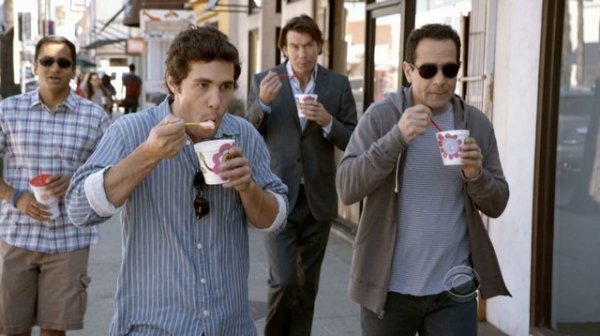
Here’s the premise of We Are Men. Carter, a young man with his life seemingly all together sees it all fall apart when his fiancé (Wilfred’s Fiona Gubelmann) leaves him at the altar. His heart is broken, and he’s also newly unemployed as he worked for his fiance’s father. He freaks out, naturally, and eventually moves into short-term housing where he befriends three single dudes of varying ages, who show him the zen of being single and worrying about yourself for once. The three men are: (I’ll just use their actor’s names because you’re not going to remember their characters anyway) First, Tony Shalhoub, a four-time divorcee who is a bit sleazy but seemingly manages to consistently bed women far younger than himself thanks to his charisma and confidence. Second, Jerry O’Connell, a doctor and two-time divorcee, who is engaged in a long-term settlement battle with his second ex-wife. Third, Kal Penn, the only one of the three who still pines for his ex, who left him when she caught him sleeping around.

Anyway, basically the pilot is a battle for Carter’s soul between bromance and romance. Carter is beginning to really like the guys but also desperately misses his ex. He enjoys hanging out but quickly tires of their free and easy goal-less lifestyle. Kal Penn convinces Carter to make a grand romantic gesture to get his woman back. He does, and it works, and the marriage is back on. However, the guys realize that being with his fiance is actually killing Carter’s dreams, and they come in and interrupt the second wedding, convincing Carter to abandon his fiance at the altar this time to bromance it up and focus on making himself happy.

We Are Men is a bad show for a lot of the usual reasons (bad characters, bad writing) but what struck me in particular was the portrayal of women. Carter’s fiancé really is bad for him, in the show’s world, and for certain, anybody can get stuck in a bad relationship and some people just suck. Still, no woman in this show comes off as anything more than a male trope. His fiancé is holding him back from having fun and hanging out with his friends and wants him to work for her dad rather than pursue his dream job, which O’Connell helped arrange an interview for. The strangest complaint of Carter’s is that his fiance always makes them eat at the farmers market, which absolutely mystified me.

We Are Men tries to celebrate guydom and bromance and all those wonderful men-hanging-out-together qualities that so many shows have tried to celebrate over the last few years (probably due to the success of some combination of Entourage and The Hangover, but that’s another article). While there’s nothing wrong with celebrating male friendship, and I think it’s a great theme that was overlooked before a couple of years ago, sixth degree poor man’s iterations of that theme like “We Are Men” make me feel kind of disgusted for my gender. Certainly guys have been known to bash women as a gender occasionally, and there’s nothing wrong with idly complaining to some extent to make a guy feel better after a bad date or breakup, etc. It’s also silly to harp on one episode of a twenty minute show to bemoan the show’s point of view; it’s hard to fit a world view in less than a half hour. Still, it’s not an arbitrarily chosen half hour, it’s one you know your show will be judged and chosen by. Dads writes and creators balked at accusations of sexism and racism by claiming that later episodes would make the characters more complex, and to some extent it’s fair to note that most characters feel like tropes after an episode.   But maybe don’t put that much racism in it either. I would have absolutely no problem if the first episode featured just men; there’s nothing wrong with shows for men, by men, and they could introduce women in later episodes when these characters were more fleshed out. What I do have a problem is how the limited number of women are portrayed. His fiance is portrayed as a naggy impediment to his dreams. The other female character who gets a minute is Shalhoub’s daughter, who seemed like kind of a male fantasy, as the cool, sexy chick, who gave him tips on how to hook up with women. It’s not that other shows don’t feature women mostly as merely objects for men to ogle and hope to have sex with, but for whatever reason this show felt more boorish than most.

If Entourage is the male fantasy show you dream after a booze-filled party, We Are Men is the reality when you wake up groggy in the morning, hungover. Everything that seemed so great the night before now appears kind of ugly. While hanging out with cool successful guys and sleeping with a lot of hot chicks was fun in Entourage, it was less so when you realize that those guys were kind of sketchy and leering at women feels much more uncomfortable.

Of course guys look at attractive women, and there’s nothing inherently wrong with portraying that reality but I felt really creepy watching the four guys in We Are Men ogle women from their poolside. Probably the single worst shot without which it might not have stuck out as much is when the camera follows a bikini-glad young women, and Carter, narrating, tells us, well, we’re showing you that, just because. They do this in Entourage all the time, but somehow that show seemed separated from reality in so many ways, and it was strangely easy to enjoy the fun fantastical times Entourage provided while laughing away its approach towards women.

Anyway, bad show. Also worth noting were the cameos by Alan Ruck, who has also appeared in a couple of episodes of Masters of Sex this year, who shows up as the priest officiating Carter’s wedding, and Dave Foley, who is in the show for approximate ten seconds as Carter’s dad.

Will I watch it again? I again could only watch one more even if I wanted to, but I don’t. America got one right and decided they collectively ddin’t want to see any more of this claptrap. Smart call.

Fall 2013 Review: Lucky 7

13 Nov

Four of the Lucky 7

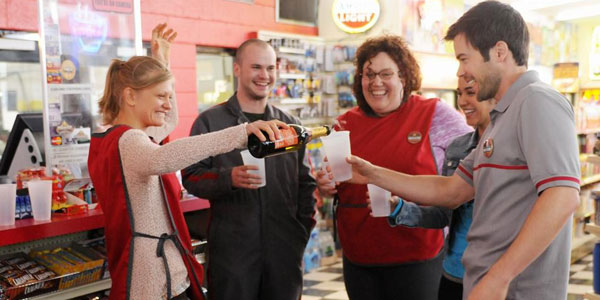
Here’s the only thing you really need to know about Lucky 7: ABC has outdone most TNT and USA titles by conceiving of a title achieves the rare triple pun (for another example, see the album cover for Rush’s “Moving Pictures“). First, Lucky 7 applies to the titular group of seven employees who win the lottery (actually six do, and one doesn’t technically, but they’re still the seven described in the title). Second, it’s a reference to the 7 train which goes through Queens, where the show takes place. Third, seven is the final digit of the six numbers that the group plays in their weekly lottery pool, which wins them the jackpot. So, there. If you want to stop reading now, you now know the best thing about the show, the triple pun title.

Moving on. Because the show takes place in an outer borough rather than Manhattan, the seven are real New Yorkers, and not urban hipsters or bankers. You can tell because they have extremely noticeable accents.  The seven main characters work together at a gas station, in different roles. They are:

Bob – the boss, played by the only particularly well-known member of the cast, Isiah Whitlock, who played The Wire’s Clay Davis. He and his wife are looking forward to his retirement but doesn’t have the funds.

Antonio – a hard-working Hispanic mechanic had been saving away his lottery money instead of putting it into the pool as the most responsible member of the cast. When his responsible decision making is not rewarded, he seems to take it relatively well considering he’s still poor while his friends are all instant millionaires.

Denise – she works in the store and is worried that her husband is cheating on her after finding out that he’s sent hudnreds of text messages to a number she doesn’t recognize. She’d rather not find out the truth and she feels guilty because she’s gained a lot of weight since their marriage. On a subjective note, I found her accent extremely irritating.

Mary – a young mother who is struggling to provide for her daughter. She works in the store.

Nicky – an ex-con having somewhat of a hard time staying straight. He has a thing for Samira (who we’ll get to in a moment).

Matt – Nicky’s law-abiding brother. He’s living with his pregnant wife in his mom’s house, which is driving his wife crazy.

Samira – she’s a Julliard student with an incredibly stereotypical Indian dad who claims Julliard is useless compared to math or medicine and tries to set her up with Indian guys.

So basically,  they win the lotto towards the end of the episode, which we all know is going to happen because it’s the premise of the show (how great would it have been though if they didn’t win, and everything in the trailers about the premise was just a lie). The major plotline apart from simply winning the lotto involves the brothers. Nicky, who needs money to pay off some old criminal associates, convinces Matt, who desperately needs money to move out, to stage a fake robbery of the gas station store. Nicky will wear a ski mask and rob Matt, working at the register, and the insurance will take care of the loss. As you might guess, this does not go as planned.

This sequence contains of my least favorite narrative devices. Nicky suggest pulling off the robbery to Matt, who immediately turns him down, which is exactly how he should and would react as a non-criminal who has never considered robbery as an acceptable option at any point in his life, no matter how easy or potentially foolproof. However, right after Matt turns his brother down initially, his wife, who just gave birth, warns him that she’s going to move out to her sister’s place until he can get them a place of their own, because his mother is awful to her. All of a sudden, with that one new piece of information, Matt’s in for the fake robbery. I get it, the writers have done their due diligence, and checked off the “motivation” checkbox by letting us know how desperate a situation Matt is in, vis-a-vis his wife moving out temporarily. And credit for at least checking it off, but it still feels lazy, easy, and not convincing that this law abiding citizen would agree to commit a pretty serious crime a minute after learning this extremely disheartening, but not life-threatening news.

Anyway, they attempt the crime, but it all goes awry when Bob walks in, and Nicky hits him over the head as a quick reaction move, putting Bob in the hospital with serious injuries. We don’t know for sure from the events in this episode, but we’re certainly led to believe that the police are going to be pretty suspicious about this potential fishy inside job pretty quickly.

The only other major plot element of this episode was that, since Matt borrowed money to joint the lottery pool the week they won, the other lottery winners have to vote on whether or not he gets a share. This seems beyond shady to be. It basically means that, according to this rule, if they lose, he still owes the money, but if he wins, he might not get it. That makes no sense and I’m curious if it’s actual lottery policy, but not quite curious enough to look it up. A just awake Bob casts the tie-breaking vote to give Matt his share after the other four are deadlocked.

I forgot to mention there’s a flashforward at the very beginning of the episode in which the brothers are being chased by the cops and one of them ends up throwing a whole bunch of money out of the car, and says something to the effect of that it was the money that caused all their problems.  Did I also mention how ridiculously tired I am of flashforwards?

It’s not a good show. There’s a good premise lurking there underneath everything, and definite points for ethnic diversity, but demerits for the ethnic stereotyping, like Samira’s Indian father. The characters feel hackneyed. Instead of showing complicated, deep, working class characters, Lucky 7’s characters mostly feel right out of the book of what well off people think of good-hearted down-on-their-luck working class Americans. The writing isn’t sharp, and some of the characters, particular Nicky, the ex and current criminal, are particularly grating. Any chance generated by the potentially fascinating premise is wasted by settling for the obvious and uninteresting.

It’s not truly terrible; I’d rather keep terrible to use for worse shows, like Ironside. It’s just regular bad. Still, there’s no reason to feel much sympathy for its quick cancellation.

Will I watch it again? I won’t and I could only watch one more even if I wanted to. I still think this premise could have some juice to it if done well, but this certainly isn’t that.