Summer 2014 Review: The Leftovers

7 Jul

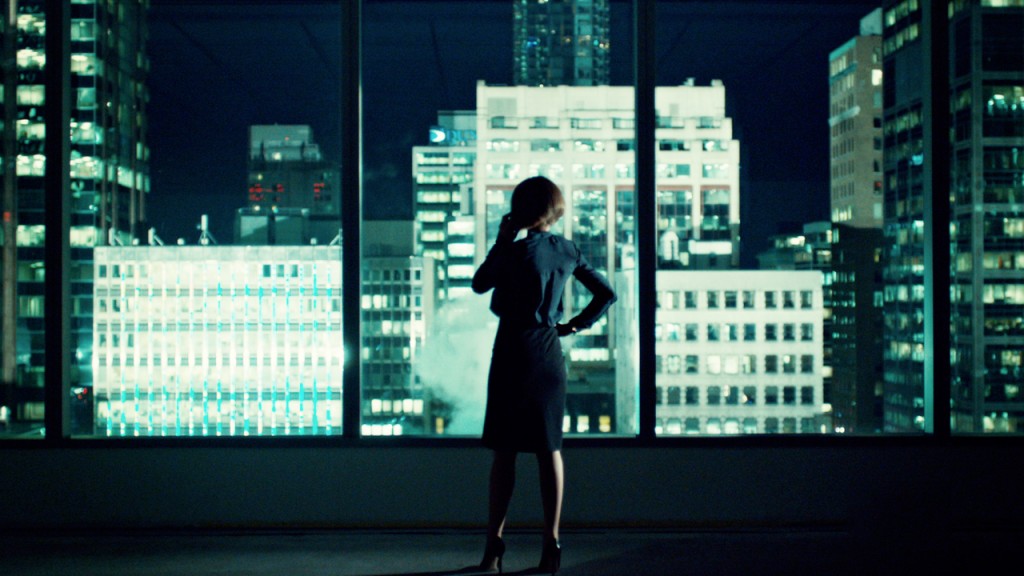
The Leftovers

For years, I knew I wanted to watch Six Feet Under, a canonical series that I had heard nothing but praise for, but I kept putting it off because I was worried that marathoning it in a relatively short period of time would simply be too depressing. Finally, I stopped putting it off, and was extremely glad I did. It was often a depressing show, as I had suspected, with characters that were despicable at least as often as they were likable, but what surprised me was how that didn’t at all encumber my viewing. I moved through it fairly quickly, no matter the death and depression, enjoying all of the many great things about the show, which is a topic for another post. The main point here is that although the show was depressing, it was startlingly fun and easy to get through regardless.

The Leftovers, well, Is just as depressing but without the sense of enjoyment that powered Six Feet Under forward. It’s an awfully dour hour of television, attempting to be very, very serious. There are no laughs, but it’s more than its mere humorlessness which characterizes its dreary tone. Boardwalk Empire and The Walking Dead both have no laughs, and both do drag at times, but at their best, they move, they’re enjoyable, and there make you want to keep watching, even within the episode. The Leftovers plods along and makes you wonder, “how long is this episode?”

Here’s the premise. All of a sudden, two percent of the world’s population, with no discernible rhyme or reason up and disappears, poof, with no trace. No one can figure why the people who disappeared were the ones who disappeared; there were as many ostensibly terrible and immoral people as good people. Three years later, people are still struggling to deal, both to figure out what happened, and to cope with the loss of their loved ones. In the suburban burg of Mapleton, police chief Kevin Garvey (Justin Theroux) is having a hard time. His wife, we find out later on, has left society to join a weirdo cult of people who wear white all the time, don’t speak, and protest anywhere people are memorializing those that disappeared. What’s the appeal of this cult? It’s pretty unclear; but people are stupid and desperate, I suppose. Theroux is struggling along with his teenage daughter, who goes to super intense teenage parties (one of the options in the teens’ smart phone Spin the Bottle game is “Burn” where the player has to burn him or herself). She and her father are not taking the loss of their mother too well, and it’s breaking down the relationship between the two. There’s also some other cult, where some charismatic leader delivers messages he receives. Yeah, exactly.

Watching The Leftovers was just about the opposite of fun. Does anyone enjoy watching this? Did anyone enjoy making this? The show feels surgically drained of any joy. As mentioned before, even depressing shows have joy. The first season of Enlightened was mindbogglingly depressing. Marathoning it over a weekend, like I did, should be a considered a prescription level depressant. But there was warmth, love, and pathos that made the season extremely rewarding despite the major bummer that it was. The Leftovers doesn’t feel like it has any of that.

Additionally, and this is admittedly a a bias I have going in, any show that’s co-run by Damon Lindelof of Lost fame makes me automatically weary of getting hooked on its long-term plot. I know I’m supposed to keep an entirely open mind, but Lost left such a long and profound television scar on my psyche that it’s hard for me to see Damon Lindelof’s name and keep it out of mind entirely. Particularly, a show that hinges on The Leftovers’ premise that 2 percent of the world’s population instantly disappears sounds like a show whose plot is bound to lead to inevitable disappointment.

For all my naysaying, The Leftovers wasn’t awful. There were interesting ideas in theory, and exploring how people react when the world around them spins into chaos in ways they don’t understand has been productively mined for television and media many times before, with good reason (see the terrible summer show Under the Dome).

But, boy, getting through this an utter slog. There would have to be a lot of redeeming value to want to put myself through that again, and I’m not sure I want to. There’s some sprinkles of gold, maybe, but it’s buried so many layers of self-seriousness and very important programming that it doesn’t seem worth mining for.

Will I watch it again? No. It wasn’t bad in the usual sense reserved for television – this wasn’t Ironside or Men at Work. But I didn’t enjoy watching the episode. TV’s about more than that, but at it’s heart, that’s really the most important thing.


A Defense of Spoiler-phobia, or More Accurately, a Defense of the Right to Be a Spoiler-phobe

2 Jul

Spoiler Alert!

The other day, AVClub critic Todd VanDerWerff penned an epic call to the world of TV viewers, fans, and other critics alike, claiming, in to uncertain terms, that our collective culture is overrun by an unbending anti-spoiler attitude, and it’s time to put an end to it. That’s the overall hypothesis, and some of his anti-spoiler feelings are defensible, if controversial. However, as we wade into the nitty gritty of his argument, VanDerWerff makes a number of troubling statements and assertions which I’ll break down in detail.

There’s one major problem overall problem though with his argument, which I’ll start with because it’s the key and most important flaw, before I actually break down some of the problematic pieces of his argument individually. VanDerWerff believes spoilers are overrated, and it’s absolutely his right to do so. What isn’t his right however – is to tell everyone else that because he thinks spoilers are overrated, it doesn’t matter what anyone else thinks – he’s going to damn well go ahead and spoil things anyway, because he knows better than his readers.

It may sound like I’m making VanDerWerff into an exceptional arrogant potential strawman with that claim, but it’s his choice to absolutely throw down the gauntlet at the start of his post with the first sentence, mentioning a critical detail at the end of Breaking Bad. Sure, the vast majority of people who read that post, or read the AVClub in general had seen the show, or at the least knew how it ended, but that’s beyond the point. He decided to start off before even making his argument by spoiling an important point of an extremely popular and acclaimed show.

So if you haven’t seen that show, well too bad, VanDerWerff is saying. He defends himself quickly, backtracking, by pointing out well, it was only really a partial spoiler; but that’s beyond the point. He knew it was a spoiling something and choose to do it without warning before even setting out his argument to readers.

Now let’s dig in point by point through VanDerWerff’s argument before making some more general statements.

1. VanDerWerff makes the unbelievably audacious claim that people are only bothered by spoilers if plot means everything to them. He writes that his spoiler which I mentioned above, would only ruin the show for someone “if you value plot above everything else.” He continues to explain that anyone who would rather not have a central plot point ruined for them ONLY CARES ABOUT PLOT. This is mind-bogglingy overbroad and incredibly offensive. I strongly believe that anything not worth watching twice is not worth watching once, and I think movies that simply rely on plot twists are generally pretty lousy (The Sixth Sense, which VanDerWerff namechecks is a fine example.). I’m not close to the most spoilerphobic of my friends and a spoiler wouldn’t prevent me from watching a show or movie I want to see. That said, I would prefer not to have details about the final episode of a show I haven’t seen ruined for me for absolutely no reason whatsoever except to shove it in my face, which is what VanDerWerff does to start his post. Again, the assumption that anyone who cares about spoilers ONLY CARES ABOUT PLOT is flat-out ridiculous.

2. VanDerWerff actually refutes his own argument in his second paragraph so I don’t even need to do it for him. He notes that someone told him, and he more or less agreed that spoilerphobes would mean the end of criticism, but as the internet age continues to progress, there appear to be both more spoilerphobes and more criticism and discussion than ever. Well refuted.

3. Well, this is where he talks about the general deleterious effects of anti-spoiler culture on criticism and I want to get back to this at the end, because I think this is the least semantic and more important point.

4. VanDerWerff points out multiple times that spoilerphobia is a relatively recent phenomenon. The first mention he doesn’t back up at all; at the second he points out examples that veer from Don Quixote at the oldest to Death of a Salesman at the most recent; the “recent” being a sixty-year old play. As a counter-example, to promote Psycho, a fifty-plus year old film, director Alfred Hitchcock carefully orchestrated the media and press to prevent plot details from leaking. I’m not sure exactly what Todd means by recent; he doesn’t make it clear. Nor does he exactly explain why the fact that it’s changed over time should have an impact one way or the other on an argument. Forgetting everything else, his argument could be sound or unsound; it shouldn’t matter how it was done before.

5. VerDerWerff argues that spoilers privilege plot over all other elements of craft. This point is a misdirection at best. It assumes that spoilers can only be plot spoilers; which isn’t true at all. For proof, Todd points to one article about Godzilla on Vulture on which no commenter complains about having certain non-plot elements spoiled for them, thus illustrating that spoilerphobes aren’t bothered by non-plot spoilers. The question of what is a spoiler is a fair and valid one – but the premise that spoilerphobes are by nature okay with other aspects of films and TV shows being spoiled for them besides the plot is ridiculous. While I will admit most spoilers are plot spoilers, I know several spoilerphobes who would simply prefer to know nothing or as little as possible about shows and movies they have yet to see, and that includes all elements, not just plot.

6. This piggy-backs right off the last point, and involves the second-most offensive claim of the piece, after the notion that anyone who cares about spoilers ONLY CARES ABOUT PLOT. VanDerWerff writes that “Anti-spoiler zealots largely ignore craft.” This is beyond absurd. I know plenty of anti-spoiler zealots and they are as thoughtful television viewers as anyone else I know, including those who welcome spoilers. The notion that people who care enough about plot to avoid spoilers thus somehow don’t care about any other aspect of a show is a ridiculous and offensive claim based on absolutely nothing.

7. VanDerWerff refers to how Charles Dickens would reveal characters and plots as an argument towards how spoilers were less of an issue when he was writing, and to point out that that was because Dickens and his fans realized the plot was not the most important part of his works. What VanDerWerff ignores here is that Dickens was the author of the works and not a critic; the words were his, and thus, he had a prerogative to reveal details that a critic may not. Again, some people for certain would prefer to receive details in no case, and Dickens as example would be fairly relevant towards that point. But for me, if Matt Weiner, for example, is choosing to give away as little information about an upcoming Mad Men episode as possible, well that means something; the decision whether or not to give away information is vastly different to me than that of a critic who has not created the work.

Here’s what it comes down to. It’s VanDerWerff’s or anyone’s right to think that spoilers are overrated. It’s not their right to then, because they think so, thus spoil shows on purpose for other people. VanDerWerff rightfully points out that it’s hard to figure out what’s a spoiler. Everyone gets that! It’s not always obvious by any means. True spoilerphobes should be very careful on their own, and writers make innocent mistakes accidentally spoiling things all the time; it’s impossible to know what people know. That’s okay! It’s going to happen when you write thousands and thousands of words about TV; it’s simply inevitable. People might be mad, but even most spoilerphobes while angry in the moment would see it as a forgivable offense. What’s not okay is spoiling something on purpose just because you can, and thinking that it doesn’t matter if you do because you think people shouldn’t care about spoilers, so thus too bad.

VanDerWerff claims that spoilerphobia impinges on critical discussion, because critics can’t risk discussing what they want to because of concern about spoilers. There’s a couple major problems with this argument. First, there are plenty of places – episode recaps, most prominently, where it’s implicit that spoilers are coming up. People reading those know there are going to be spoilers. Secondly, there’s an easy, painless solutions, that doesn’t involve not writing about what you want to – simply use the two word phrase SPOILER ALERT. It’s recognized everywhere, and people can choose for themselves whether to continue reading, and you can write about whatever you feel like free from worry. If that means fewer people read your piece, well, too bad.

While figuring out what is a spoiler can be difficult, it’s ultimately a simple solution when you know you’re dealing with one, and VanDerWerff certainly knew, for example, that his first sentence was a spoiler. Just write “SPOILER ALERT.” If you can’t be bothered to write two words before you talk about intense plot details to your heart’s content, I can’t imagine how you can think you’re not the selfish one instead of the readers.

End of Season Report: Orphan Black – Season 2

30 Jun

Several of the Orphans Black

Orphan Black may never be a canonically great show, whatever that means, but it’s a very good show an perhaps more importantly, a very enjoyable show. Orphan Black succeeds so well at this because it smartly decides consciously or not, to be a five tool player, being pretty good at a number of different aspects, rather than throwing all of its proverbial TV eggs in one basket and trying to be great at just one thing. Let me explain.

Orphan Black is serious, but it’s also funny. There’s plenty of action, and there’s also science fiction. The plot is important, but so is the characterization and the relationships. Now, partly this may sound somewhat prosaic – any very good show should be pretty solid at several of these characteristics. First, that’s not really case, and second, Orphan Black spreads the wealth better than most.

Just the sense of humor alone is incredibly important. Orphan Black is funny, and more than funny it’s silly, which helps deflate what could be a sense of self-importance from the clone plot which doesn’t always make the most amount of sense. Many solid but not transcendent shows have no sense of humor whatsoever – Homeland, Boardwalk Empire, and The Walking Dead among them. While it’s not impossible to pull off, it’s difficult to be great with that level of drudgery. In fact, the very best shows, which probably could have skated by without any humor, like Mad Men, The Wire, The Sopranos, and Breaking Bad, instead, can be very funny at times.

A show like House of Cards has no sense of humor and rests on its plot, which doesn’t make any sense, hurting the show’s value. Orphan Black’s plot, like House of Cards’ connects the show episode to episode and drives it forward. Yet, because the show is funny, because it seems to buy in on its own sense of camp, the shows replay value is much higher.

The most responsibility for humor in Orphan Black sits on Alison’s shoulders. He plots are hilarious, from her play, to her rehab, to her relationship with poor Donnie, who goes from sinister schmuck to merely pathetic schmuck to empowered schmuck in a heartbeat.

Ophan Black does has a somewhat stupid plot that doesn’t necessarily and can’t really make sense if one thinks too much about it. It also has the very dangerous season to season expanding the scope problem that sci fi and supernatural shows tend to face. Basically, if Dyad is responsible for the clones, now there has to be someone above Dyad, or what else is the show going to be about for the next season. There need to keep being new, bigger, reveals, or it’ll feel like the show has already peaked. Scenes like those involving Krya’s dad typing into the darknet, whatever that is, well, I have no idea what he’s talking about, but luckily I really don’t care. None of this matters so much because the show is enjoyable on its face, regardless of actually untangling the details behind the creation of the clones.

This isn’t just due to humor. The relationships are powerful, between the clones, particularly. Like Buffy the Vampire Slayer, Orphan Black uses sci-fi/fantasy as ways to get at powerful human bonds.

Some of the side characters are stupid, and most of them are bland. It’s pretty much Tatiana Maslany’s show, with a nod to the consistently excellent Jordan Gavaris as Felix, by far the best and most important supporting player.

I don’t have much more to say about Maslany other than the consistent heaping of praise I try to hand out on any occasion I can, and she takes on even more characters this year. She’s wonderful and one of the main engines that makes the show go – if the opening credit sequence was honest, her name would appear five times. If the show does have have an X factor, it’s her, and that would be enough to make the show worth watching even if it were less enjoyable overall.

Orphan Black has it all; it’s got action, it’s got laughs, it’s got strong characters (albeit most of those characters are played by the same actress, but still). It will never be the best at any one of these; it will never have the taut plotting of Breaking Bad or the first season of Homeland, the character bonds of Six Feet Under, the action of 24. But by smartly throwing it all together, with more than a touch of Maslany’s magic, it gets the benefit of having a little bit of everything, and that makes it, while never the best show on TV, a consistently compelling view; you may not get it all in any given episode, but you’re bound to get something good.

End of Season Report: Hannibal, Season 2

26 May

Hannibal and friends

Holy fucking shit. I thought the ending of the first season was about as bleak as any season of any show on TV, let alone a network show. The second season may have topped, or bottomed, that. There are four characters credited in the show’s opening sequence. Three of them ended the second season lying on the ground, bleeding to death (It’s worth taking a second to note that the only other character to appear in Hannibal’s opening credits, Beverly, was killed by Hannibal halfway through the second season). While none of them were clearly dead, any or all could be; if this ended up being the series finale instead of merely a season finale, it would have all but locked up the title of darkest series finale of all time.

Through all this desolation, horror, and gore, Hannibal put together an extremely strong season, superior to its first season, and generally more purposeful, though with a couple of bumps along the way. Week to week, I couldn’t wait for Hannibal to see what happened next, and that anticipation is only reserved for my very favorite shows. When people ask me what shows they don’t watch that they should be, and I assume they’re watching standards like Mad Men, and Game of Thrones, Hannibal is one of my go to recommendations.

The season was largely broken up into two halves. The first involved Will’s incarceration in a mental asylum where he was assumed to be the Chesapeake Ripper, and ended with his exoneration and the framing of Frederick Chilton as the ripper. The second half involved the story of Margot and Mason Verger, and their various interactions with Will and Hannibal, as well as a plot by Jack Crawford and Will to lure Hannibal out and trap him.

Both halves worked very well individually but the show felt a little bit disjointed moving from the first to the second; it felt as if the halves were two individual seasons. This isn’t much of a problem, but the Margot and Mason introductions felt abrupt rather than smooth, and this just meant it probably took me a little bit longer to get on board with.

I’m glad I did though, by the second episode, because both Margot and Mason were played by extremely strong actors, expanding the cast of fantastic acting talent, which along with the gorgeous cinematography are the two most standout aspects of Hannibal. Hannibal continued to be as disturbing as ever if not more so, graphic violence-wise, than any show on TV, and this was highlighted in the season’s penultimate episode when Mason fed his own face to Will’s dogs and ate his own nose. The events are every bit as gruesome as that sentence sounds, and it’s remarkable that the other gore on the show rarely feels over the top. In fact, the beauty of the cinematography makes some of the most gruesome tableaus assembled by Hannibal  out of his victors look disturbingly mesmerizing, and in sharp contract to how base and simply disgusting Mason’s self-harming act looks.

Show runner Bryan Fuller does a great job picking and choosing how to deploy the tools of Hannibal’s literary and cinematic universe. There’s a lot of tough choices to make when working with an existing property, particularly one that everyone knows as well as Hannibal’s and he’s very smart in choosing when to add entirely new characters, when to use existing characters to be something other than how Thomas Harris or movie adaptations used them, and when to stick closer to the letter of the books.

Mads Mikelson plays Hannibal as a seductive sociopathic genius, semisatanic but just human enough to add empathy and add a layer of depth to a character that could merely be pure evil. He exposes his most (and maybe only) humanity when dealing with Will Graham, who he appears to actually treat as the potential compatriot, rare in Hannibal’s world of clinical ubermench-like serial killing. That small bit of humanity makes Hannibal that much more engaging a character; at some level this sadistic and brilliant mass murderer is just looking for a friend. Mikelson manages to fuse the appeal of a terrifying force beyond good and evil with a needy middle schooler who is unhappy when he doesn’t get what he wants (Will’s friendship and trust, namely)

Even more fascinating to me is Will’s back and forth mental state, not fully seduced by Hannibal, but not immune to his charms either. Will stands strong in the end, sticking to the plan. However, he’s not all in the good. He goes farther than he has to for the trap him and Jack had set, and frequently mimics Hannibal, particularly in respect to Mason Verger, when he could well possibly have pulled back and kept the plan in check. His decision to keep some of this from Jack shows that he knows it’s wrong, but the power of Hannibal, while not enough to win him over in the end, tugs at him.  This ambiguity filling the relationship between Will and is beautiful. It’s impossible to tell who is leading who, and who believes what. The knots Hannibal and Will talk themselves into are sometimes rhetorical nonsense but lyrically enchanting at the same time.

Then there’s that last episode again. We knew some of the events of the last episode from the very first episode of the season, which opened with the flash forward of Jack and Hannibal fighting. It’s probably going to take me some time, and maybe even until the first episode of the third season to decide what I felt about it overall. It’s brutal. I like the idea of Hannibal getting away, and I like the idea of it being with Dr. Du Maurier, a side character who has recurred just enough for us to keep her in mind and whose return was quite welcome. Abigail is back for just long enough to wonder exactly what Hannibal has done to her right before Hannibal kills her, seemingly an act of revenge for Will’s betrayal. I’m fairly confident Abigail is dead, and feel like at least one of Jack, Alana, and Will will be dead as well, and most likely not Will. The events almost seemed surreal (and the Baltimore police sure seemed to take their sweet time) and I momentarily thought the entire sequence might be a dream or a hallucination. For sheer shock value, it’s hard to beat, and the events certainly turn the entire series on its head again going forward. Hannibal is certainly not afraid to shake up the status quo and that’s commendable.

Regardless of whether I fully come around on the finale, or am just satisfied but confused and baffled at the same time, Hannibal’s second season is superior television. The show has been elevated into must-watch territory, and is likely, unless a barrage of great programming invades the second half of the year, to move up in next year’s yearly rankings.


The Curious Lack of Location in Orphan Black

16 May

Toronto or nowhere

Orphan Black is a very enjoyable show featuring an actress giving a unique and all-world performance. I’ve talked about it before and I look forward to discussing the ins and outs of the current season in an End of Season Report in a few weeks. Now, though, a random point about Orphan Black that is apparent to me in almost every minute of the show, but maybe not to anyone else.

Over my many years of watching TV, but particularly the last five or so when I’ve turned a dangerous level of watching TV into a dangerously obsessive lack-of-Vitamin D level of watching TV, I’ve started to really hone in on watching for where a show takes place and where a show is filmed. This came about mostly due to my personal distaste for shows set in NYC filming in LA, and I’ve become excellent at spotting shows that actually film in NYC and those that don’t.

Some shows prominently feature their location, whether they’re set there or not. 30 Rock was all about the NYC, but so was How I Met Your Mother which was clearly shot in LA. In some shows, the setting is largely in the background, but usually you can figure out what it is, either because they actively say it at least a couple of times, or just due to background factors, names of locations and streets, either that are actually in the background, or that characters say are in the background to make it feel like the show is set there.

Orphan Black, though, features absolutely none of that. From day one, I tried to figure out where it was supposed to be set; and the harder it became to figure out, the more intensely I tried. Early on, I suspected, correctly it was filmed in Toronto, which was quickly confirmed, and not having found any information to the contrary, I started looking for signs that the city was supposed to actually be Toronto (not that I know Toronto so well, as much as I knew it was a BBC America production co-produced by Canadian television, and odds were it was either Vancouver and Toronto from that point).

In fact, the lack of obvious location early on made me think the show took place in the near future rather than the present, from just how it seemed to be set in “the city” rather than any one real place, giving it even more of an air of science fiction.

Toronto, it must be, I figured. I looked everywhere for blatant evidence it had to be. It was never mentioned in the script but I looked deeper. The police uniforms or the department building? Nothing. In fact, it started to be strange that people weren’t mentioning it; as if they were altering their speech in odd ways to avoid ever saying the city they were in.

I thought I might be crazy at one point, but it turns out this was a conscious decision, even if no one probably cared quite as much as I did about it. This interview, which I finally found, after I thought that the secret was still there but that I would never find it, illuminated the fact that it was a decision to avoid alienating Canadian or American audiences, which is noble, but still a little bit strange to me. It feels pretty sci-fi at least.

Still, I’m glad the mystery is solved. You can’t elude me, TV, at least about locations. Try again.

Law & Order: Criminal Intent or Shut Your Mouth and Call a Lawyer

14 May

Goren and Eames

Over my long career of watching cop shows with my dad, I’ve developed a number of pet peeves about repeated cop show tropes. The biggest general peeve is probably with cops who don’t play by the rules, who seem to be the heroes of most cop shows. Why aren’t we supported cops who actually adhere to proper procedures, who won’t see their investigations wasted when the evidence they find is thrown out of court because they obtained it illegally? I have lots more to say about that, but that’s for another day and another post. My cop show trope pet peeve of the day is about the legions of police procedurals in which EVERY SINGLE EPISODE ends in a confession by the guilty party.

This happens in many, many shows, but what has it on my mind currently is its appearance in Law & Order: Criminal Intent, which I’ve had the good fortune to catch a number of times with my dad in the past few months. There are a number of detectives who feature on the program, but the most common  detective and face of the program  is Robert Goren played by Vincent D’Onofrio (who works side by side with his partner Alexandra Eames played by Kathryn Erbe). Goren is a genius detective. He knows multiple languages, tons of sciences, and simply a little or a lot about everything, so whatever the case is about, be it art fraud, tax evasion, or just your garden variety domestic dispute, Goren knows every single relevant fact without the aid of a computer that could come up during the investigation.

Let’s even forget that know-it-all quality, another modern cop trope I can’t stand (William Peterson’s Gil Grissom on CSI also had these qualities, among other modern detective characters). In every episode, Goren craftily boxes in the guilty party over the course of an interview, usually halfway through the show, before any formal interrogation and before the party has any idea Goren is on to him or her. He asks piercing questions that force the perpetrator to evade, dodge, or reveal more than he or she intended to. This all builds to the last few minutes of an episode when Goren, armed with more evidence, and knowing for sure who the perpetrator is, uses his sheer interrogation talent to play off the emotions of the perp and elicit a dramatic confession,  yelled loudly, or spoken softly through tears, as over the top music plays in the background.

The show then ends, with the criminal having confessed, it’s assumed that an easy conviction or a guilty plea will naturally follow.  Without a confession, either we wouldn’t know for sure who did it, or many times we might but we wouldn’t know for sure that the law got him or her. Without that confidence I suppose the episode would seem unfinished and open ended even if the police arrested the person with a fair amount of evidence but no confession. We’d never know if justice was served, and who could go to sleep without knowing that.

Here’s the thing: Why is everyone confessing? Sure, I get that some of these people are poor and/or uneducated, and some are particularly emotional and might come apart in the moment . But some of them are well off, some of them are smart, some of them are taciturn and should know when to keep their mouths shut. You have a right to an attorney! Every American has watched enough cop shows to know that one. Call a fucking lawyer!

Forget the lawyer for the moment. Just shut your mouth! How difficult is that! How does no one do that? Don’t admit you did it! Even if all the evidence is against you, you have so much more leverage for a plea if you make it actually difficult for them to go through the work of prosecuting you, rather than feeding the state a conviction on a silver platter.

I know, why do I expect reality from a television show. And I admit, this is a very personal pet peeve that shouldn’t prevent many people from enjoying these shows, and I’m sure it doesn’t. But the more of these I watch, the more it drives me crazy.

It’s the most simple, most practical aspect of what characters would do. I don’t expect it every time. But a couple of times in the entire run of Law & Order: Criminal Intent, someone really has to call a lawyer and shut their mouth.

Summer 2014 Review: Penny Dreadful

12 May

Penny DreadfulHey! It’s May! I’m starting to classify us as…drum roll please…officially in the SUMMER 2014 TV SEASON. And there’s no better way to kick it off than with a grim gothic horror series set in Victorian England! Let’s do this thing.

More so than most pilots, Penny Dreadful is dreadfully hard to get a sense of in one episode, leaving a lot of its premise to be yet assembled in future episodes. The show seems promising, but will probably require another episode or two viewed to know for sure because of how little we actually get in this episode.  I’m interested in watching more, but more hesitant to anoint it as a must-see pilot, or to be too excited about the upcoming season, because I need a few more bites to really get a better sense of it.

Here’s what we do get though. Penny Dreadful has what seems like a League of Extraordinary Gentleman-like set up. If you’re unfamiliar with that excellent comic book and fairly putrid movie adaptation, it’s basically a cobbling together of a bunch of Victorian england-era literary all-star characters all together into a gritty real life world.

Josh Hartnett, long absent from film and television, plays the American showman and gunsmith Ethan Chandler, new to England, and one of the only major characters not in some way lifted from literature. He’s doing Buffalo Bill-style wild west shooting shows, half showmanship and half marksmanship displays. He’s an inveterate drinker and womanizer, enjoying the show business lifestyle when he’s recruited by Eva Green’s Vanessa Ives to assist her with a dangerous task that will require his quick trigger finger.

Ives seems to have some connection to the supernatural, and she does a bunch of time creepily quasi-praying a weird creepy church with an upside down satanic church. So too does Timothy Dalton’s Max Murray; his daughter was taken away by vampires, and the two of them bring Chandler along to infiltrate a nest. The vampires are not the sexy vampires of True Blood and The Vampire Diaries; instead, they’re disgusting, and creepy, more reminiscent of Walking Dead zombies and some points. They’re scary; a reminder that original vampires were supposed to be terrifying and not cool. When they kill one and bring back its corpse, they recruit occult doctor Victor Frankenstein to take a look. Later, we see him bringing his eponymous monster to life.

Penny Dreadful is intriguing but feels incomplete. The gothic horror sensibility which reminds me of what made the League comic work as well; a sense of the supernatural, but rooted in its place and time in a meaningful way. Combining a period piece and the supernatural seems like an obvious gambit, considering what’s popular on television at the moment, but it could easily go very wrong, and has in the past (see, unfortunately, the League of Extraordinary Gentlemen film), and it’s to Penny Dreadful’s credit that both of those two key genre elements feel fully formed and not out of place.

The mood is right; it’s weird and eerie rather than romantic. As mentioned above the vampires don’t look sexy, they look creepy as all hell. Frankenstein seems largely off his rocker, and Vanessa Ives is engaging in creep-tastic behavior with spiders and potential satanic worship for much of her screen time.. Josh Hartnett’s American is the viewer’s stand in, not coincidentally as the only American on an American-made show set in England. He’s us, with no accent, with our sense of exaggerating nation-making myth, and bluster and braggadocio above actually experience. He talks a big game but he lives in the world of  show business and illusion, and has never been exposed to the unreal. And like all good Americans, he’s repulsed, creeped out, kind of terrified, but also curious, and insistent upon knowing more just to prove that he can.

What the hell is going on? Where is this going? I have absolutely no idea. Unlike The Returned, the landmark recent show for me in terms of I-have-no-idea-where-this-is-going after the pilot, I feel like I know the genre and the mood, both of which were very up for grabs throughout almost The Returned’s entire first season. Rather, it’s the basic plot arc in question, as well as the characters and they’re relationship to the stories on which they’re based.

Do the characters work? I’m not sure. Does the plot make sense, and does it matter? I don’t know. But, it passes the pilot test of having at least one quality that makes it stand out and calls for another episode. The mood works.


Will I watch it again? Yes, I wll. I’m not sure it’s going to be good, and I feel like I know less from one episode than I do from most shows, but there’s at least a halfway decent chance it wil

l be good, and that’s more than enough reason to watch a second episode.

End of Season Report: The Mindy Project, Season 2

9 May

Mindy and friends

Overall, the second season of The Mindy Project was a success. The Mindy Project continues to get better season to season, and it has a fresh and new sense of humor that’s influenced by shows like The Office (where series star Mindy Kaling of course previously worked) and 30 Rock while having a voice all its own.

The major problems that tThe Mindy Project has and has had since the beginning are pretty much universally agreed upon both in everything I’ve ever read about the show and with every viewer I’ve talked to in person. Mindy’s character is fleshed out, three dimensional, and great. Chris Messina’s Danny is also a well-built full-fledged character and fantastic. Ike Barinholtz’s Morgan is a not nearly as complex, but is a perfect humorous side character to lead funny but less character-building  B plots. Outside of that trio, though, every other character just doesn’t click, and while this may sound like I’m simply repeating the problems the show had after the first season, it’s no less true now.

Actually, that’s not entire true. It’s slightly less true now. While Adam Pally’s character Peter Prentice seemed like an out-of-nowhere poorly fitting character when he was shoehorned in because TV unions promised to get the very talented cast of Happy Endings new jobs as soon as possible, he’s slowly emerged over the course of the season as a character who could actually be welcome in this universe. His frat-boy edges have been softened enough to actually feel for him somewhat, and his repartee with Mindy has sharpened. With her moving into full romance mode with Danny, Pally has emerged as a solid replacement as Mindy’s sounding board. He’s still not all the way there, but while I thought the show should not keep him around long term when he first appeared, I now think there could be a place for him.

As for everyone else, not so much. Characters have come and gone, welcomed into the fold and the discarded, more so than any program I can remember. Stephen Tobolowsky was the first, credited in the pilot, but gone thereafter (fair enough; many shows have pilot only character, but it was the start of a trend). Anna Camp as Mindy’s best friend Gwen Grandy fit the workplace vibe and was dropped. Shaunaa, the jersey girl administrative assistant was dropped soon afterwards. Jeremy, the other doctor in their practice, has made it through both seasons so far but hasn’t really found a place for himself and I would forget he ever existed if the show dropped him tomorrow (Mark Brandanowitz from Parks & Recreation style). Likewise, Betsy, who is actually slated to leave the show, old Beverly, and Tamra. A couple of these characters would be fine for background humor, given one or two lines an episode, something The Office mastered, carefully parceling out the use of one dimensional characters like Creed and Kevin. As anything more though, these characters are stretched beyond usefulness.  Mark DuPlass’s dastardly midwife (along with his more reserved brother) is better as a recurring character than any of these secondary characters.

That’s part of a trend as well. The recurring boyfriends Mindy has have been consistently excellent, and her and Danny getting together have made me despair for their absence. The show has been unafraid to have guys appear in solid multiple episode arcs, and the show is richer for that, as the boyfriends are often among the better characters in the show. Four or five episodes can be a perfect amount of time to build a character so that we care about him or her and wring all the comedy out without feeling stretched.  It’s to The Mindy Project’s credit that they’ve hit home runs with some of the choices.

The core is strong; Mindy does a great job of playing with rom com tropes, and particularly making stereotypically sexy scenes seem as silly and ridiculous as they should; her attempt to have airplane sex with Danny was a classic example of Mindy humor. The humor is a brand all her own and the show is very funny frequently. Mindy is a strong female character, but she’s a very different strong female character than her closest antecedent Liz Lemon. TV needs more strong female characters who are not necessarily just like any other existing strong female character and Mindy is a welcome addition to that growing group. The Mindy Project can do pathos as well, and its easy for viewers to connect with Mindy even through all of her (and Danny’s) ridiculous positions.

The core makes me return to Mindy, and it’s the most important part of what makes a show a success. It’s a lot better to have a strong core and struggle around the edges than the reverse. That is The Mindy Project’s problem though. It needs to fix those edges.  Comedies should get time to get the details right, and I can’t think of a great comedy that had the entire product together by day one – while dramas frequently peak with their debut seasons, comedies almost never do. Still, it’s two seasons in, and Mindy appears only marginally closer to figuring that out. Because the core is strong, I’ll follow it as long as it goes, even if it never solves the problems around the periphery. If it does though, it has a chance to go from a very funny show, to a truly canonical comedy, and with the strong writing, that’s a leap that I would greatly enjoy seeing it make.

The Surprisingly Welcome Return of 24

7 May

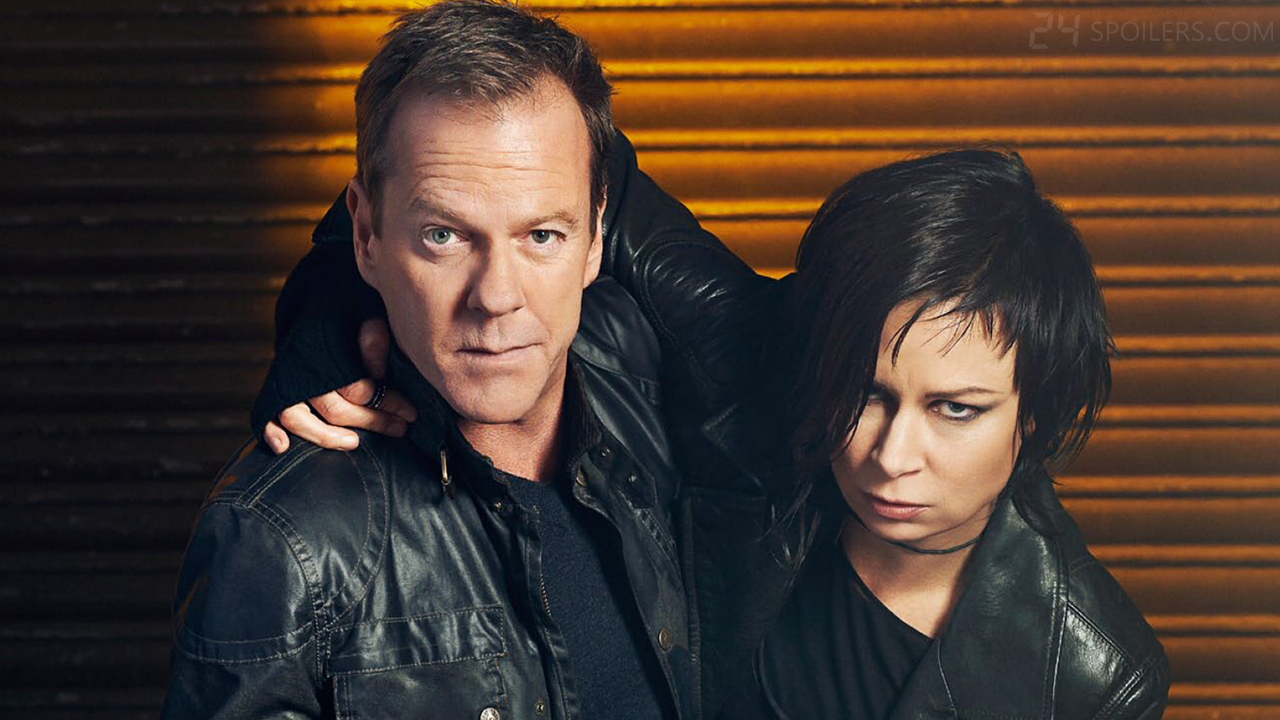
Jack and Chloe Absence does make the heart grow fonder, even if sometimes it takes the end of that absence to make you realize that.

I have to admit that I wasn’t all that excited to hear that Fox was bringing back 24 for a limited series. I was a fan of the first run right from the first season, and a pretty big fan. I take proud credit for introducing my friends to the show, and watched the first three seasons with a group of them, all of which I had already seen, over a college summer. Still, 24, like many shows, but in particular because of the contours of how seasons had to progress from beginning to end, got, over the course of its run, tired and repetitive. There’s something fun about knowing there’s a mole and guessing who it is, and waiting to see how CTU will be attacked every year, but it usually got a little less imaginative every time. I admit to this day I’ve never seen the end of the seventh season, and most of the eighth, though I watched the last episode. It wasn’t a conscious decision – I meant to come back some day – I just never quite motivated myself enough to do so.

I’ve never held 24’s slowly diminishing returns against it. Unlike other shows which I stopped watching at points, like Lost, I have nothing but fond memories of 24 and hold it in nothing but the highest esteem. It was an extremely entertaining show for a long time, and the repetitive issues were largely due to the show being repeated over and over eight times rather than the writers losing their way and forgetting what made the show good in the first place, and they didn’t retroactively bathe older seasons in a negative light.

That said, when it was over, it seemed about right. I wasn’t upset, and as I hadn’t watched most of the eighth sesaon, I doubt I would have watched the next season. It had a very good run, nothing to be ashamed of in the least, and that was that. And again, as I mentioned above, my first thought when I heard Fox was bringing the show back was, well, “Why?” But with a five year rest, I decided I’d dive back in and try it out.

When I started watching again, I changed my mind over the course of the first of two hour long episodes. There were nothing relevatory about the episodes, and nothing mind-blowing or earth-shattering. But what it did make me realize is that having four years away, that 24-less break, really does make all the difference.

The second reason I enjoyed the first two episodes of 24 more than I thought I would is that 24 is a more enjoyable show when you’re watching it then when you’re thinking about it later. I remembered liking it, but sometimes had trouble articulating why I liked it so much. It’s just fun. It’s TV’s empty calories. What I presume some people like about watching some reality shows, is what I like about 24. It’s easy to watch, which is sometimes nice, in the age where all my favorite hour long shows are thinkers which require some level of intense concentration. That’s not a bad thing, and there’s a reason those are my favorite shows but a change of pace is appreciated.

The same parts of 24 which can get tiring and are also fun in an almost campy way; the show itself is deadly serious but it’s hard for me to imagine the creators are not winking at the audience sometimes through their choices. There’s tropes and character types that we see time and again; the always-wrong boss, the treacherous aide, the unfairly framed suspect. Mostly though, it’s about watching Jack Bauer be awesome. About watching him injure people in cruel and unusual ways, yell short and concise commands, and just figure out one more way take out the bad guys. I am in solid opposition to the use of torture, but I’m all for Jack Bauer using it in an episode of 24 if it makes for a cool scene.

24 is such a great show for binging because (aside from the obviously gimmicky real time premise), when it’s all said and done the plot both means everything and doesn’t matter at all. In the minute, you follow whatever wacky zigs and zags go down. Once the show ends, though, it’s often hard to remember the larger plots. What stands out are huge moments; significant deaths and Jack Bauer kills mostly.   So, kudos 24. I’m not sure if the show will be able to sustain the momentum for an entire season; I still think the shorter season is a smart play (to use 24 vernacular). Seasons were always too long to begin with. Still, I finished the first two episodes with a much more positive feeling than I expected, especially after putting them off for a week due I thought it might be a slog, so my expectations have already been temporarily exceeded.

Spring 2014 Review: Black Box

30 Apr

Kerry Reilly and her Black Box

Spoiler alert: The titular black box refers to the human brain.

Sorry if I just blew your mind there (or your black box, so to speak), but I wanted to let you know what you’re up against. The show states this explicitly about three quarters of the way through, but if you can’t figure it out within about fifteen minutes, you’re in serious trouble.

Black Box fits nicely into the category of shows where the main character is an absolute genius at his or her job but has debilitating problems equal to their genius bringing down their personal lives. (I could, and perhaps should, make a comprehensive list of these shows one day, but importantly, House is the modern example which inspired a legion of followers). Kelly Reilly plays protagonist Catherine Black (Yes, the show Black Box  and her name is Black – the meaning is double, and I’m ashamed to say it took me reading her name maybe 10 times before I figured that one ount) is a brilliant and famous neurologist. She also has a deeply serious and secret case of bipolar disorder which has caused and continues to cause serious issues in her life. She’s able to keep her life functional when she takes her meds; unfortunately she also has penchant for not taking those very meds and throwing them out instead in her irresistible drive towards the fruits of a manic high (please excuse me if any of this sounds pejorative – any judgment is against the show, and not at all the condition).

The show is told through the plot device of a talk with her shrink, played by Vanessa Redgrave, who really, honestly, has got to be able to find better work than this with her resume. Catherine recounts the events of the pilot to the shrink, and Redgrave responds occasionally with questions and commentary. Redgrave knows about Catherine’s condition, as does her beloved brother, less beloved sister-in-law, and super beloved niece, who ends up to actually be her daughter, who she gave up to her brother because she didn’t believe she was fit to be a parent with her bipolar disorder.

No one associated with her job knows about her condition and it’s apparently integral that they never find out. She reveals her condition to her boyfriend during the pilot, terrified he’ll leave her when he finds out but he appears to be at least initially supportive.

There’s some fake-ambitious vaguely hallucinogenic manic sequences in her flashback, which seem like they’re aiming to be sophisticated but come of ass confusing, faux arty, and not particularly helpful, interesting, or revelatory.

There’s a case-of-the-week aspect. There are two cases actually in the first episode. Catherine spars with workplace rivals over the problems, and comes up with solutions, or the lack of solutions when helpful; one elderly patient has a rare condition when she talks with a non-existant small person – drugs can treat it, but if it makes her, already deteriorating mentally irreversibly, feel better, why treat it.

I’m not sure if this show thinks it’s asking deeper questions about mental conditions and the brain; I lean towards believing it doesn’t actually think that, while trying to vaguely acknowledge that those questions exist (which only makes me hunger for a show which deals with those questions in a much more interesting and compelling way.) This, is, a poor, poor, man’s third tier House, no more and no less.

I thought there was a chance Black Box would be truly terrible, and instead it was just really derivative and seriously sub-par. That may sound like a backhanded compliment, but calling a compliment is generous. Still, it’s just lousy and not truly putrid. I was a little bit confused at the end of the first episode about the events of the show, which isn’t always a bad thing, but in this case probably meant the plot was simply poorly told. There was an original idea for a character a show tackling mental health in a serious way, but the idea was a superficial one, put over all the tropes of typical procedurals.

Additionally, quick props to apparently having some of their science correct. I watched the pilot with someone who knew what they were talking about on the show, and identified what the case-of-the-week subjects had before the show identified them.

Will I watch it again? No. Honestly, the title is the best part of the show, and I surprisingly mean this because it’s a pretty good title more than I mean because it’s not a very good show, although it isn’t. Black Box really could have been the title of a better show.