Fall 2014 Review: Benched

29 Oct

Benched

Benched is a a new comedy on USA starring Happy Endings’s Eliza Coupe.  While half-hour comedies are a fairly new beast for USA (Benched is only the third ever, the first two (Sirens and Playing House) having come earlier this year), some of their hour long shows were more or less comedies (Psych and Monk) and most others were lighter in sensibility than dramas on other networks.

Benched additionally follows a popular USA trope; the redemption story. The protagonists of Royal Pains, Fairly Legal, and Satisfaction have their happy, successful, and together lives shaken up by personal and career changes, and need to start over. They’re forced to trod over ground they’d never even thought about months before, but they end up better off in the long run for the change of path.

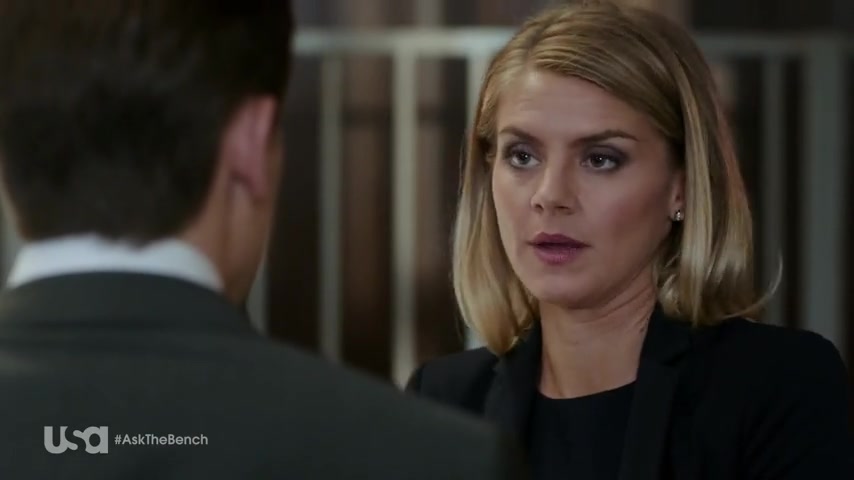
Coupe stars as career-oriented corporate lawyer Nina Whitley. Whitley’s personal life is in turmoil. Her boyfriend broke up with her because she worked too many hours at her firm, and she comes apart after he calls her to let her know he’s engaged. Her one saving grace is her expected promotion to partner, but when another lawyer gets chosen over her she has an Enlightened-styled meltdown, throwing things, yelling at colleagues, name-calling, and basically burning any bridge she has, not just in the firm, but in the world of corporate law.

Six months later, after recouping (pun half indended), Whitley is working at the only place that will take her; the public defender’s office, which is worlds away from the fancy lobbies and perks of her corporate office. Even while realizing it’s a step down, she’s wholly unprepared for the culture change. She plans on working for as short a time as it takes to rehabilitate her image and has a hard time fitting in among the lifers that are doing this work for other reasons. She’s intimidated when she’s thrown into court with five minutes notice, harassed by a sarcastic judge, and the coup de grace to her terrible first day is when she finds out she’ll be up against Trent, a smooth talking, handsome, and ambitious prosecutor who happens to be her ex.

The supporting cast includes her fiancé, her new boss, and some new colleagues, including a has-been not much older than her who has seemingly given up on recapturing his former legal glory, but whom it seems like might be reinspired by Whitley’s entrance into the office.

Coupe is a pro; I greatly enjoyed her work in Happy Endings, and while she plays a fairly similar character here – high-strung, career-oriented, and ruthlessly competent, she does it well, and is the best thing the show has going for it. The show is pleasant, well-meaning and slightly above average, but, at least in the first episode nothing much more. You know these characters, and how this show goes, and the first episode reads like any other USA show. Whitley is humbled, struggles mightly in her new environment, but in the nick of time, gets just one little win, that, while not incredibly meaningful in and of itself, gives her the belief that she can remake her life, that she can regain confidence and be good again at what she once took for granted.

Another quick comparison, as mentioned quickly above is Enlightened, another show about a high-strung female corporate climber, who comes apart and has to put her life back together again. Benched is more comedic and far more conventional than Enlightened, but it trods over the same difficulties in much broad strokes of trying to reorient your whole life after what you’ve been working for for years comes apart in an instant.

Will I watch it again? Probably not. It’s cute; there’s nothing not to like, but there isn’t enough to like either. There are so many shows on TV, now, and to catch up on, and there’s not enough to make Benched stand out amongst the pack.

Fall 2014 Review: The Flash

8 Oct

The Flash

It’s hard, when you’re watching every fall TV debut in a relatively compressed preiod of time, to not instantly compare The Flash and Gotham, as the two comics-based new superhero shows to debut this season (Constantine is also based on a comic, but is less similar).

Gotham tries to be more and do more. It doesn’t know what it is, tries on several hats, and none of them really fit. There’s a fine line between fusion of genres and simple lack of direction, and Gotham falls distinctly on the latter end. The Flasth, on the other hand, doesn’t try to do too much. It’s ambition is restrained. However, it knows exactly what it is and what it wants to be, and for The Flash, that self-awareness and ability to pull back and do it rather than try for too much and do it more is a huge asset.

The Flash doesn’t break any barriers (except when The Flash breaks the sound barrier – JOKE). There’s nothing particularly new or novel. It’s hardly an absolute must watch. Yet, what it does, within its limited realm, it does quite well. It’s earnest, and smart, and pretty fun. It’s very comic book; there are villains, there are wacky origin stories, there are costumes and secret identities. It’s also very comic book in other ways; there’s uncomplicated and obvious love interests, big talk of power and responsibility, and complex and sometimes unnecessary webs of secrets and lies.

Theis can sound cliche, uninventive, and unoriginal, and sure, that wouldn’t be inaccurate. If you like comic books and superhero movies, though, you’ll enjoy The Flash, because, like Marvel seems to be good at with its movies, the creators behind The Flash (and Arrow, I hear, though I haven’t dug deep into that show just yet) just know how to craft a solid superhero show. Barry Allen is a likeable nerd who gets to play the social outcast, without pushing it too far (he’s not a Toby Maguire-as-Peter Park level nerd – remember nerds are at least somewhat cool these days). His father was convicted of murdering his mother, even though Barry saw that that wasn’t the case, but he doesn’t know what actually happened. Barry was raised by Law & Order’s Jesse L. Martin, who serves a mentor and a detective, who, after disbelieving Barry’s conspiracy theories about his mother’s death, changes his mind after seeing Barry’s powers. There’s a couple of young, cool scientists who steer Barry to be the best superhero he can be, and a head scientist, played by Ed’s Tom Cavanagh, who seems like a probably villain but whose motives remain mysteries.

There’s plenty of nods to the rich world of The Flash comics, which I’ve had to research or ask friends about, and there’s clearly a love and a respect for the comic, which comes through even to a notvce fan, and even when the characters aren’t adapted exactly as they are in the books.

It’s an easy, low-on-thinking, fun watch. It’s paced well. The show is serial enough to keep you wanting to watch week to week, but seems likely to have many self-contained weekly adventures, which, while you pretty much know how they’re going to end (Flash gets the bad guy), that’s okay because it’s a light and pleasant journey getting there.

Will I watch it again? Yes, I will. If you like superheroes and comics then I’ve got a feeling you’ll probably like The Flash. If you’re not already predisposed to like these things, it’s not worth a second glance.

Fall 2014 Review: Gotham

8 Oct

GothamPIlot1

I rarely chastise ambition on TV, because usually I appreciate a show trying to do something different, even if it fails, more than a show trying to do more of the same and being meidocore. There’s a thin line, though, sometimes between uncharted ambition and simple directionlessness that can sometimes be hard to read. It’s difficult, when you’re watching every fall TV pilot, to not instantly compare The Flash to Gotham, the two comics-based new shows to debut this season. And while Gotham feels like the more ambitious show straight out of the gate, The Flash, without being great, knows exactly what it’s doing and what it’s going for, and settles quickly into a solidly enjoyable hour, while Gotham feels rudderless and unsteady.

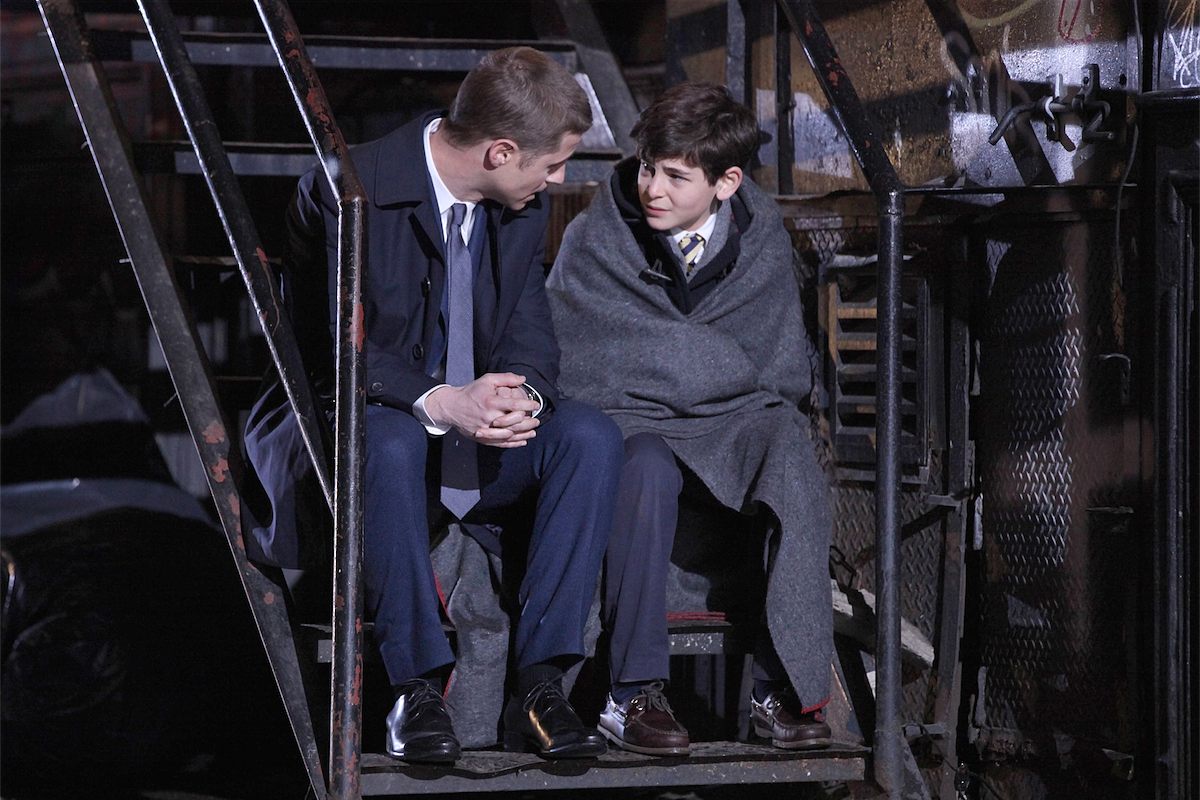
The premise is thus; Jim Gordon, the future commissioner, is just starting out as a detective, and as he gains experience and fights the good fight, several of Batman’s most famous villains are also on the rise in the dark and sinister underworld of Gotham. Bruce Wayne himself is a kid, his parents having very recently died as of the first episode. Gordon meets with Wayne and his caretaker Alfred, determined to solve his parents murder, and builds a bond of trust that we know will last a life time.

His partner is Harvey Bullock, he’s played by fantastic tv actor Donal Logue, and is probably the best supporting character in the show, as a cop whose working both sides, cozy with the city’s organized crime, but somewhat looking out for Gordon as well, though mostly trying to make sure he doesn’t stick his nose where it doesn’t belong. There’s Fish Mooney, an overwrought gangster played by Jada Pinkett Smith, who didn’t quite work for me. There’s also a young penguin and a young riddler, both of which are unnecessarily over the top as if to scream instead of merely winking that these are the villains from the Batman universe you know and love.

The dominant motif is film noir, which makes an abundance of sense in the Batman universe, but it feels off at various places and doesn’t have the chops, dialogue-wise or cinematography-wise to entirely pull it off. I do think there’s a show that works here; my version eliminates all the familiar characters except Gordon, who I think can be compelling enough on his own, and has him deal with organized crime and other seedy, but less familiar villlains, struggling to stay above the filth, and figuring out what comprimises he needs to make to survive.  Gotham is in a way hamstrung rather than helped by the fame and general awareness of its source material; most of the major characters have made strong impressions in our minds, and we have distinct expectatoins for them, which makes it more difficult for Gotham’s creators to make them their own. Sticking with less familiar characters could allow the creators to both focus on the noir and be a little more inventive and free.

That’s just one version though. It’s not inconceivable the creators could work out the kinks but I’m not convinced from the first episode that they have a plan, other than throw together a bunch of familiar elements and hope people get attached and want to see origin stories. The dialogue and writing feel stilted and the plot is relatively uninteresting, considering its head start of stuff we already know about Batman. Knowing its about the Batman universe fairly or unfairly increased expectations somewhat, and Gotham didn’t meet those.

Will I watch it again? No, I’m not planning to. It certainly wasn’t awful, but it wasn’t particularly inspring either, and though, this is a unfair to take against the show, I have a little bit of Batman fatigue (a much weaker case than my vampire fatigue).  I just didn’t see enough to make me feel like I need to come back with so many other shows demanding my attention.

Fall 2014 Review: Mulaney

6 Oct

Mulaney and friends

John Mulaney is undeniably a very talented young stand up comedian. Unfortunately, the scripted television show bearing his name is far less successful than his stand-up specials. While the vast majority of network television are mediocre or worse, and some are outright bad, only truly disappoint me because very few lead me to have any expectiation of quality, either because of an intriguing trailer or because there are people involved with the show that I respect. This case is one of the latter.

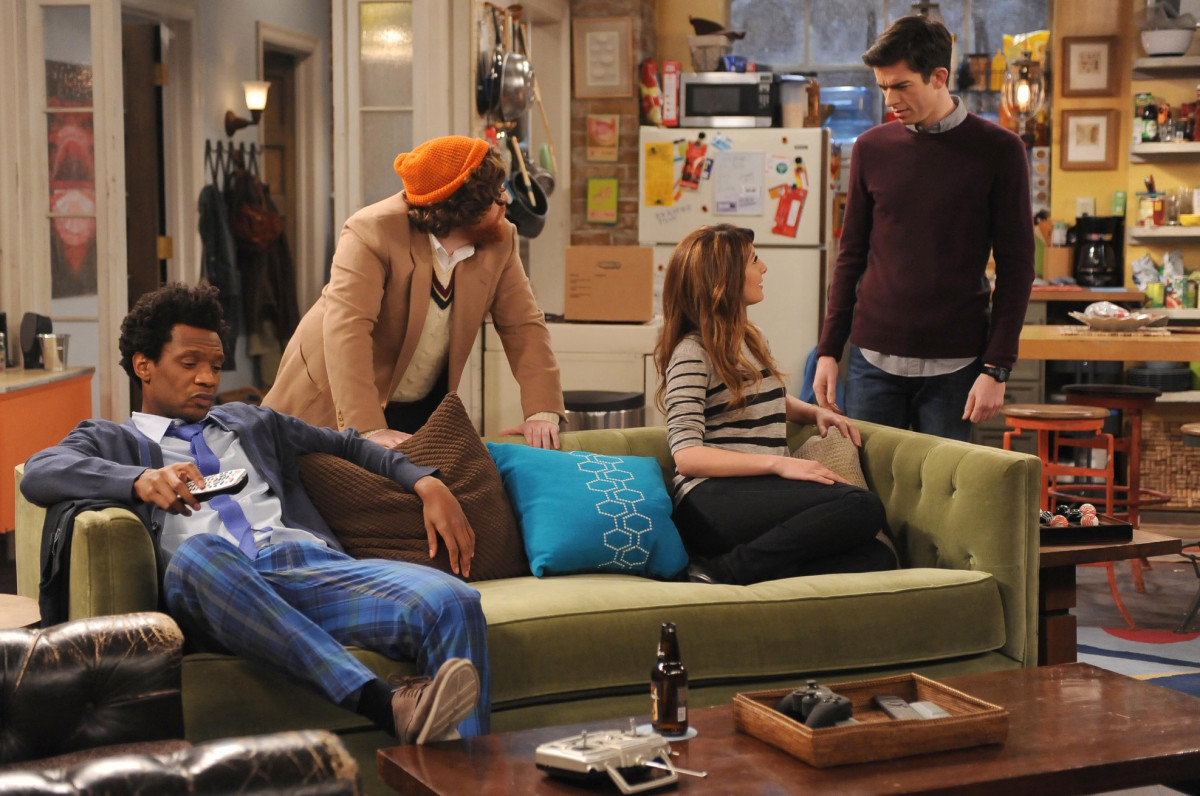
While I want to devote the bulk of this review to talking about what’s wrong with Mulaney, I should at least briefly discuss the set up. Mulaney plays a struggling stand up who lives with two roomates, has a strange neighbor across the hall, played by Elliott Gould, and just got a job with  a vain and self-centered comedy legend played by Martin Short.

Mulaney, based on both his comedy and his sitcom, is influenced heavily by Seinfeld, the comedian, and the show. His comedy is largely clean and observational, and the sitcom features bits of his own stand up, like early Seinfeld episodes do.

Here’s the problem. Mulaney takes exactly the wrong lessons from Seinfeld. Insead of learning from Seinfeld and being influenced by Seinfeld, he tries to replicate Seinfeld, which makes his sitcom seem about twenty years out of date.

Seinfeld is one of the best comedies of all time, and incredibly important to modern sitcoms in several different ways. However,  if Seinfeld started today I very much believe it would look very different than Seinfeld did when it aired 25 years ago. In fact, as the closest thing to evidence we can possibly have, Curb Your Enthusiasm, from Seinfeld co-creator Larry David did look very different when it appeared a decade ago – featuring a similar style of comedy to what made Seinfeld great but in a notably more modern form; shot in single-camera with no laugh track. Those are the external trappings of modernity and I’m going to bring up the laugh track in a moment. But more than that, Curb Your Enthsiasm felt of its time, modifying the deeper lessons of Seinfeld – no sappiness, clever plotlines, memorable phrases, obessions with the foibles of modern life, to a moment a decade later. Certainly Mulaney is set in the modern era, and the charactesr aren’t making references to the first Bush administration or not carrying cell phones. But the feel is trapped squarely in the ’90s, particularly the pacing, and even the jokes feel sometimes like material that would feel more at home 20 years souped up with phrasology and references that are more current.

The laugh track. I’ve generally eschewed complaining about it in each and every review of a show that features one, because you can only talk about how terrible it is so many times. But it needs to be talked about here for a couple of reasons. (I need to quickly point out that I made no distinction between a laugh track and a live studio audience laughing; to the TV audience, they’re the same thing, real laughs or not.) Mulaney, for one, is a young comic who, as previously mentioned, I expect more out of than say, a Tim Allen sitcom buried deep on ABC Friday nights. Second, Fox may be the most progressive current network in terms of comedy, featuring the three best network sitcoms currently airing New Girl, Brooklyn Nine-Nine, and The Mindy Project, all of them single-camera and mercifully laugh track-free.  Thus, Mulaney is the exception in terms of its laugh track on its network, rather than simply following the trend.

As for the multi-camera format, well, I prefer single-camera, but I can certainly understand the appeal of multi-camera and I’m open to a show that shows me that there’s good reason to use it. A laugh track, though, outside of some brilliant anti-humor bit, is never acceptable.

The laugh track simply slaughters any sense of timing. Seinfeld, revolutionary is so many ways, had a laugh track when it aired, because every show had a laugh track. Now we know better, and there’s no excuse. Shows are much more fast paced, but with a laugh track, there are wasted minutes over the course of a 20 minute sitcom that offer nothing but dead space and canned laughter.  What’s particularly astonishing is that the laughter comes at the strangest times; when there are jokes, but even when there aren’t. It made this viewing experience borderline unwatchable for me and constantly cringeworthy.

I wanted deep down to believe this was some sort of meta-sitcom, a commentary on the modern sitcom, but I don’t think it was.

The laugh track though, was far from the only issue. Mulaney’s acting was stilted, performing much better when he was reading a joke to the audience, than with a line to another character, but that worked well enough for Seinfeld, who got at least slightly better as he went along. The jokes, though, were largely  just sad. They weren’t entirely without merit; but what quality was in the jokes was absolutely destroyed by the format.

One more quite note: Just about everyone I know in my generation does not care for Martin Short. He’s so, well, much. There’s no trace of subtlety. He’s just so loud. He has old-fashioned sitcom written all over him, that makes it really difficult for him to slip into an ensemble without trying to dominate whoever he’s standing next to.

Will I watch it again? No. It was very bad. John Mulaney can do better, and I hope he knows this. If he thinks he’s created a good show, I have to severely question his judgment.

Fall 2014 Review: A to Z

3 Oct

A, Z, and A's friend

A to Z is almost too cute for its own good. Desperately earnest in the day of where most sitcoms starting 20 and 30-somethings are snappy and ironic, A to Z may claim otherwise, but the show it most closely imitates is CBS’s recently departed How I Met Your Mother, and while, based on my overall impressions of How I Met Your Mother (with exceptions, fairly negative), that might sound like a bad thing, I actually don’t mean it that way. A to Z actually handles this earnestness, which could easily be too much, in a positive, optimistic manner that even made me, a pessimist born and bred, hopeful for a moment.. Because of this and the charisma of its two leads which leads to those positive feels, A to Z, while not being a show which demands viewing, and while, perhaps most importantly for a comedy, not being particularly funny off the bat, actually makes a halfway decent case for repeat viewership.

Of course, because it hews eerily close to How I Met Your Mother, there’s a clever storytelling gimmick that surrounds the show. A to Z is omnisciently narrated by TV superstar Katey Segal (in a slightly less violent role than her current job on Sons of Anarchy) who tells us that she’ll give us the whole story of the relationship between the two title characters, Andrew, and Zelda, over the entire course of their eight-month relationship, or again, from A to Z (groan at the pun, please). The already-knowing-how-long-the-relationship-is gimmick also reminded me of 500 Days of Summer.

Segal’s narrator tells us a little bit about the characters as well, giving us cute backgrounds of the two main stars. Andrew is the Ted – he’s the romantic, working for a rather cynical online dating company because he actually believes in helping people meet, which feels like something Ted would approve of heartily. Zelda is a career-oriented, lawyer, well-organized and conservative personality-wise, not particularly interested in going out on a limb. When they meet, he’s convinced he shared a destiny-type moment with her at a concert years ago (again, think Ted), creeping her out initially. Even though it may not actually have been her, eventually she’s persuaded to gve him a second chance, due to his sheer force of enthusiasm, which carries her more cynical self, along. They each have wacky side character best buds, straight out of rom com 101, who are goofier and louder than either of the two leads.

A to Z feels like a ten-years later update of its spiritual predecessor, How I Met Your Mother.  Slightly more twee and hip; the near decade difference in debuts shows in the types of young people at the heart of the show. The other difference, at least in the pilot, is that How I Met Your Mother, in its first couple of seasons, for all I rag on it, could be hilariously funny – Barney and Marshall, particularly – and that’s why I watched it even when I already hated other aspects of the show. A to Z isn’t particularly funny, though it also didn’t have the patronizing let-me-tell-you-how-life-is edge that so rubbed me, but few others, the wrong way on How I Met Your Mother.

To sum up, it’s sweet, and it’s earnest and it’s cute. It’s not very funny. That’s okay if it offers enough elsewhere; Girls and Enlightened are half hours both well-worth watching despite between being very often not very funny, and sometimes (moreso on Enlightened) out and out depressing. There’s something of value on A to Z, but I’m not sure if it’s enough for me, while it might be for someone who likes this stype of stuff more.

Will I watch it again? No. I seriously considered it, because the two leads did make me want to root for it and them, but the show didn’t quite win me over enough to keep watching, because it wasn’t either funny, or clever or engaging enough for another episode.

Fall 2014 Review: Scorpion

26 Sep

Scorpion

My friend Victor a few years back coined the term “nerdface,” referring to several modern television shows and movies, but primarily to the far and away most successful and notable example of the phenmoenon, The Big Bang Theory. Nerdface is a superfacial showcasing of nerdom – showing nerds as stereotypical, extreme archetypes who are brilliant book-learners but totally non-functional socially. They love Star Trek, they can’t talk to women, and they generally simply can’t interact with regular non-nerd people in any way. Are there people who legitimately have trouble with social intereaction for any number of reasons? For sure. But these nerdface examples aren’t nuanced, complex, character portraits. They are instead reductive displays of character tropes everyone knows and instantly recognizes played for broad laughs. I could, and should, write an entry on how perplexing and frustrating it is that The Big Bang Theory is far and away the most popular comedy on TV, and hopefully someday I will, but this is certainly one of the reasons.

Scorpion brings nerdface to the police procedural genre. Scorpion is essentially some mash up of The Big Bang Theory and The A-Team (or the far less well-known Breakout Kings).  Scorbian features nerds who form a superteam solving especially difficult cases each week using a combination of the distinct super skills that each of them possesses (Yes, neither comparison is perfect – The A-Team is not affiliated with the government and Breakout Kings are former criminals, but work with me here). We see the four primary geniuses working together early in the episode, trying to start a profitabile company on their own, but their personal issues are holding them back in spite of their brilliance. There’s Walter, who’s a super genius and functions as the group’s leader and the closest they have to someone who can deal with the outside world. There’s Toby, a brilliant behaviorist who has an amazing ability to read people. There’s Sylvester, who is the nerdiest of the nerds and whose area of specialty is statistics. Rounding out the team is the one female member, Happy, an expert mechanical engineer. The four are recruited by federal agent Gallo in the premiere to solve a crisis, after which he recruits them full time, an outcome which Walter claims to have anticipated from the outset. Gallo continues to play the role of their government handler. The last member of the cast is Paige, an ordinary waitress whose child Walter recognizes as a prodigy. Walter recruits her to be their normie, helping these nerds interact socially with regular folk, while also helping her raise her genius son.

This is also a matter for a seperate post, but I generally ascribe responsibility for gender and racial diversity to networks rather than individual shows; TV networks should be responsible for fielding more diverse shows, but individual shows shouldn’t always be responsible for being more diverse, depending, of course, on the circumstances and context of the individual show. That said it’s disappointing and not particularly surprising that the four nerds are three male to one female, and all the characters but one are white. That’s certainly not a big enough factor that I would choose to watch or not watch a show becuase of, but just another example of what’s par for the course on television, and especially network television.

Every week there will be a new crisis and every week the team of super nerds will be there to solve it. Intrinsically I understand the appeal of the super team, but the nerdface in particular rubs me the wrong besides the show just having absolutely nothing else which would make it stick out from the pack of CBS procedurals.

Will I watch it again? No. I don’t hate procedurals as a rule; while I don’t watch any outside of the original Law & Order (my love of that show is a topic for a post in itself) with any regularity, in general, the genre has a fairly high floor and low ceiling. Of CBS’s newbies this season though, I’d take NCIS: New Orleans over Scorpion.

Fall 2014 Review: NCIS: New Orleans

24 Sep

NCIS: New Orleans

Most shows are fairly easy to peg both quality and content wise after watching the previews and reading even just a small amount of information about the cast, creators, and premise. Sometimes they’re a little different than you think, sometimes they’re a little better or worse than what you’d guess, but mostly within a certain range of initial expectations. The really noteworthy exceptions are those that differ greatly. There’s also a place, though, for shows that don’t differ even in the slightest – that are exactly, on the nose, what you’d imagine: the most predictable shows on TV. No show this season is more predictable than NCIS: New Orleans.

Of course, a large part of the reason NCIS: New Orleans is so predictable is that it’s the third edition of an extremely popular franchise whose formula is well-established. While I still find it hard to believe there are this many naval-related murders each year, the NCIS crew is a likeable team which takes on and solves a new one every week. The only difference in this edition is a little cajun flair.

Television veteran Scott Bakula heads this team of NCIS special agents. He’s a veteran investigator respected both by his underlings and the community at large and he leads in a calm and casual but authoratative and confident fashion. He’s similar to Mark Harmon’s Leroy Gibbs, who is, in the show’s backstory, reputed to be a long time friend of Bakula’s Dwayne Cassius “King” Pride. Bakula’s charges are Christopher, a native Alabaman, and Merri, a transfer from the midwest, whose unfamiliarity with Louisiana gives the show a chance for some exposition on the nature of working in New Orleans and what makes it such a special place. Rounding out the cast is another longtime veteran of the small screen, CCH Pounder as medical examiner Dr. Loretta Wade.

The first case of the series is naturally one with a personal connection to King (Pride? I’m not sure what he goes by most often yet – I’ll just use Bakula from now on). A member of the navy who Baukla had mentored personally, taking him in from the wrong side of the tracks and getting to see him turn his life around, ended up dead. While the initially investigation pointed in the direction of the victim turning away from his naval training and back to his unsavory gang roots, Bakula has trouble believing it and insists on digging deeper.

The three agents work the case, throwing in little tidbits about the city they live and work in here and there as they go – where Merri should live, and what the neighborhood she chooses will say about her is discussed along with native food and drink. Eventually, they figure out and nail the culprit. They also find a tenuous connection between the murderer and a possibly corrupct city councilman played by white-collar actor extraordinaire Steven Weber, who looks like he might be the big bad in a series that I didn’t think had big bads.

Bakula knows what he’s doing, and CBS continues to make smart calls in putting TV veterans atop their procedural spin-offs. Their goal isn’t to make breakthroughs or anything brand new or interesting, they merely want a level of competence and professional acting which cast members like Bakula will deliver day in and day out. There’s nothing special about NCIS: New Orleans. It’s not a top notch procedural, nor is it really a bad one; it just is. Really, if you have even the vaguest familiarity with the franchise, you really didn’t need to read this review to learn anything about the show. It’s a mediocre procedural that will surely satisfy those who like that sort of thing, and be of just about no interest to most others.

Will I watch it again? No. I love Scott Bakula, but not nearly enough to watch NCIS. That said, there are worse shows for my dad to be watching every week.

Fall 2014 Review: The Mysteries of Laura

19 Sep

The Mysteries of Laura

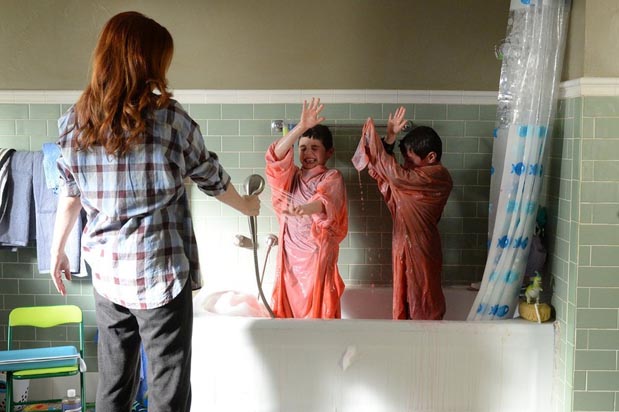
The Mysteries of Laura stars TV superstar Debra Messing as a crackerjack homicide detective who also has to take care of two unruly young children on her own. Her soon to be ex-husaband is a fellow cop, and the twist of the pliot is that he gets promoted to be her superior, leading to an awkward relationship at work with her ex, while she deals with the kids by herself at home. Of course, one would think the police department would want to avoid this situation, but we’ll put that aside for the moment.

What exactly are the tiular Mysteries of Laura? That’s a good question. Are the mysteries the individual murders cases she’ll be forced to solve each week? Is the mystery how she handles the stress of a high-pressure job catching deadly criminals, endangering herself in the process, while simultaneously raising two kids? Is the mystery whether The Mysteries of Laura is supposed to funny or serious? Is it who thought The Mysteries of Laura was a show that would have any sort of natural audience?

The Mysteries of Laura attempts to both be funny and dramatic over the course of an hour, and fails at both attempts. If I had to guess, the closest analogues to what The Mysteries of Laura is going for are the hour long comedic procedurals Monk and Psych, both on USA. The Mysteries of Laura would have probably have done better on that network, where,  that’s the type of programming they specialize in and they know how to take on that format successfully.

The Mysteries of Laura is just a mess all over. The first episode features the murder of a wealthy man, which Laura and her fellow detectives, but mostly Laura, must solve. The tone is goofy, and she rattles off jokes and shows off her skills in a jokey manner. She’s unprofessional by serious procedural standards, but that’s okay, because she’s silly and competent and everyone loves her except for the one uptight play-by-the-rules female detective who doesn’t. Again, think of her as the Monk or Shawn from Psych, the skeptic-who-is-always-right-in-the-end and overrules her boss every episode. Those shows though fit this format well because they’re often funny, and when not laugh-out-loud funny, enjoyable to watch – perfect for putting on while lying down before bed or just waking up when you don’t want to think too hard. Mysteries of Laura isn’t amusing or fun to watch.

The first episode, crazily enough, ends up with the revelation that her captain and mentor was the killer (played by Keith Mars himself, Enrico Colantoni). The tone changes oddly here at the episode’s end, implying that we’re supposed to feel some sort of serious, climactic, dramatic moment of pain and shock for Laura, but of course there’s none of this, not only because it belies the tone of the rest of the episode, but because it’s the first episode of the show and we barely know who any of the characters let alone care about them.

It’s just a strange show that aside from just generally not being very good, clearly doesn’t know what it wants to be. Waffling rarely works in TV. It’s possible to span multiple categories and genres (think Louie) but its a hell of a lot harder to do and a show of ambition as modest as The Mysteries of Laura should certainly not be shooting above its pay grade.

Will I watch it again? No. It succeeded at none of its aims. It wasn’t funny, it wasn’t particularly enjoyable, and it didn’t really work as a procedural, either, it wasn’t tense or exciting, or suspenseful.

Fall 2014 Review: Red Band Society

17 Sep

Red Band Society pilot

Red Band Society is the story of a bunch of teens who live in the pediatric ward of an Los Angeles hospital, struggling with all the same hopes, fears, emotions, and bodily changes of normal teenagers, while constantly having to deal with the spectre of sickness and death.  There’s Leo, the popular kid who runs the ward, and has cancer, Dash, his running buddy, and Emma, his anorexic sometimes love interest. The two new kids are stuck up mean girl cheerleader Kara and good guy orphan Jordi who shows up hoping to get his cancerous leg cut off by a top doctor. These people, we’re informed, have little in common and would not have said as much as “hello” to each out in the regular world, but in the pediatric ward, they’re stuck with who they’ve got, and they simply learn to make due. The adults who watch over them are nurse Jackson played by Octavia Spencer, and Dr. McAndrew.

The show isn’t good. Instead of transcending cliché, it walks right into it. In trying to be different – and I’ll grant there’s not a show I can think of about a pediatric ward, which I should credit it for, since new subject matter is rare enough in network dramas –  Red Band Society instead feels the same. Everything about the show felt paint-by-numbers, rather than original; the show still felt like it was going through the motions. The writing wasn’t particular sharp, and for a show featuring Oscar winner Octavia Spencer in top billing, she basically gets nothing to do in the first episode. The show felt Lifetime movie inspirational; it hit the notes that everyone knows will elicit emotion, of which sick kids are at the top of the list, without ever even attempting to being to earn it through story, build up, and plain old good writing. Obviously it’s very difficult to earn emotion in a first episode, but it’s certainly possible to work towards it.

As I spent the lash paragraph discussing, the show is mediocre, largely unremarkable, and will be easily forgotten. Here’s the one thing we need to talk about though. The narration. The show is narrated by a 12ish year old boy in the pediatric ward who is in a coma.  The boy tells us, the audience, all about the ward, and all of its residents within. He’s apparently omniscient while in the coma. He sees everyone in the hospital, and reports on their doings. What are the limits of his vision? It’s unclear. Can he see outside the hospital, throughout the entire hospital, or only within the ward? Is it assumed that everyone on the ward comes and talks to him in private as a sounding board? Is he a reliable narrator?

Not only this, but two of the characters meet with the narrator while they’re unconscious and he gives them messages. Apparently, there’s some magical nether world where people in comas can interact with those otherwise living people who are just temporarily below the surface of consciousness. The kid in the coma has the cheerleader give his dad a message about how the accident the put in him a coma wasn’t his dad’s fault fault and the kid commands her to bring him pizza, which he believes might break him out of the coma. We later find out that one of the other boys got an inspirational message from coma kid as well, making it seem unlikely that the kids are hallucinating and more likely that coma kid is actually transmitting messages. I’m going to take this bizarre coma kid narrator as the one memorable aspect of this show over anything else.

Will I watch it again? No. It wasn’t very good. They wanted us to feel feelings, but the feelings are cheap, manipulative and the show is poorly writter. There’s nothing to see here.

Fall Previews and Predictions: NBC

15 Sep

NBC

(In order to meld the spirit of futile sports predictions with the high stakes world of the who-will-be-cancelled-first fall television season, I’ve set up a very simple system of predictions for how long new shows will last.  Each day, I’ll (I’m aware I switched between we and I) lay out a network’s new shows scheduled to debut in the fall (reality shows not included – I’m already going to fail miserably on scripted shows, I don’t need to tackle a whole other animal) with my prediction of which of three categories it will fall into.

These categories are:

1.  Renewal – show gets renewed

2.  13+ – the show gets thirteen or more episodes, but not renewed

3.  12- – the show is cancelled before 13)

NBC ties ABC with a high of six new shows, and outside of the early debut of The Mysteries of Laura, pushes more of its shows slightly later in the fall than the other major networks. There are three comedies and three dramas. A comedy from Happy Endings creator David Caspe, a dramedy starring Debra Messing, a Keither Heigl political thriller, a Kate Walsh legal comedy, a lesser known DC comics property, and a romantic comedy. To the shows we go.

The Mysteries of Laura – 9/17

The Mysteries of Laura

TV vet Debra Messing plays a cop who must apprehend perps while at the same time dealing with two unruly children as a single mom. I’m not sure if the mysteries refer to each case, or to how Messing manages to be such an expert detective while taking care of her kids. It smells like a dramady, light-hearted humor about how Messing does it all while also dealing with serious whodunnits that will be solved on a weekly basis.

Predictoin: 12- I may be underestimating the power of Messing who seems to be on TV just about every year, but it looks bad (which of course is not enough in and of itself to get a show cancelled usually) and I’m just not sure how it fits. It almost feels like it’d have been better sold as a USA show.

Bad Judge – 10/2

Bad Judge


Prviate Practice’s Kate Walsh plays a judge who doesn’t have her life together; she’s drinking, having sex in her office, and doing all sorts of silly behaviors we don’t normally associate with members of her profession. Apparently, shockingly enough though, deep down, she has a heart of gold; when a young boy whose parents she put in jail calls about her, she goes out of her way to help, dishing out the kind of unorthodox advice that makes her actually a better mentor than most grown ups. It does feature the always enjoyable Ryan Hansen of Veronica Mars fame, who also appeared in the short-lived Bad Teacher; make of that what you will.

Prediction: 12- It looks bad. NBC has cancelled comedies for less.

A to Z – 10/2

A to Z

Katey Segal is clearly narrating this trailer. I needed to get that out first. Ginsberg from Mad Men is a guy’s guy, and the Mother from How I Met Your Mother is a girl’s girl, and they’re destined to meet and make romance, etc, etc. Watch out for falling cliches everywhere. I’m not sure I got what the A to Z hook was from the trailer, unless that’s a pun on their last names. This seems more like a straight forward rom com than the other romantic comedy this fall, Manhattan Love Story, as there’s more romance than humor in the trailer..

Prediction: Renewal – NBC if it wants to keep airing comedies has tokeep some of them right? Maybe we’ll end up in a land with only NBC dramas; considering every single attempt at comedy by the network seems to generate no viewiers, but presumably they’re not ready to give up yet.

Marry Me – 10/14

Marry Me

Wait a second. A show that might actually really be good! Of course, I was biased in a positive way before even watching the trailer. Marry Me is created by Happy Endings creator David Caspe, and stars Happy Endings’ Casey Wilson and Party Down’s Ken Marino, I very much like all of these people, and the trailer gives me no reason not to the thing the show might actually be good. Marino and Wilson play a couple who have been together for a long time and finally become engaged, and the hilarity that ensues thereafter. It’s not really an uproarious trailer, but being a constant cynic is tring and I’m desperate to give a show the benefit of the chance and might as well to one whose people I all love.

Prediction: Renewal – I’m not sure this is a good prediction, but I’m supporting people I like, and since this may be the only time this year, I’ll take a chance. After all, Happy Endings got three seasons with no one watching, and NBC renewed Community and Parks & Recreation a surprising amoutn of times for shows no one watches, so maybe NBC will be patient if it’s good.

Constantine – 10/24

Constantine

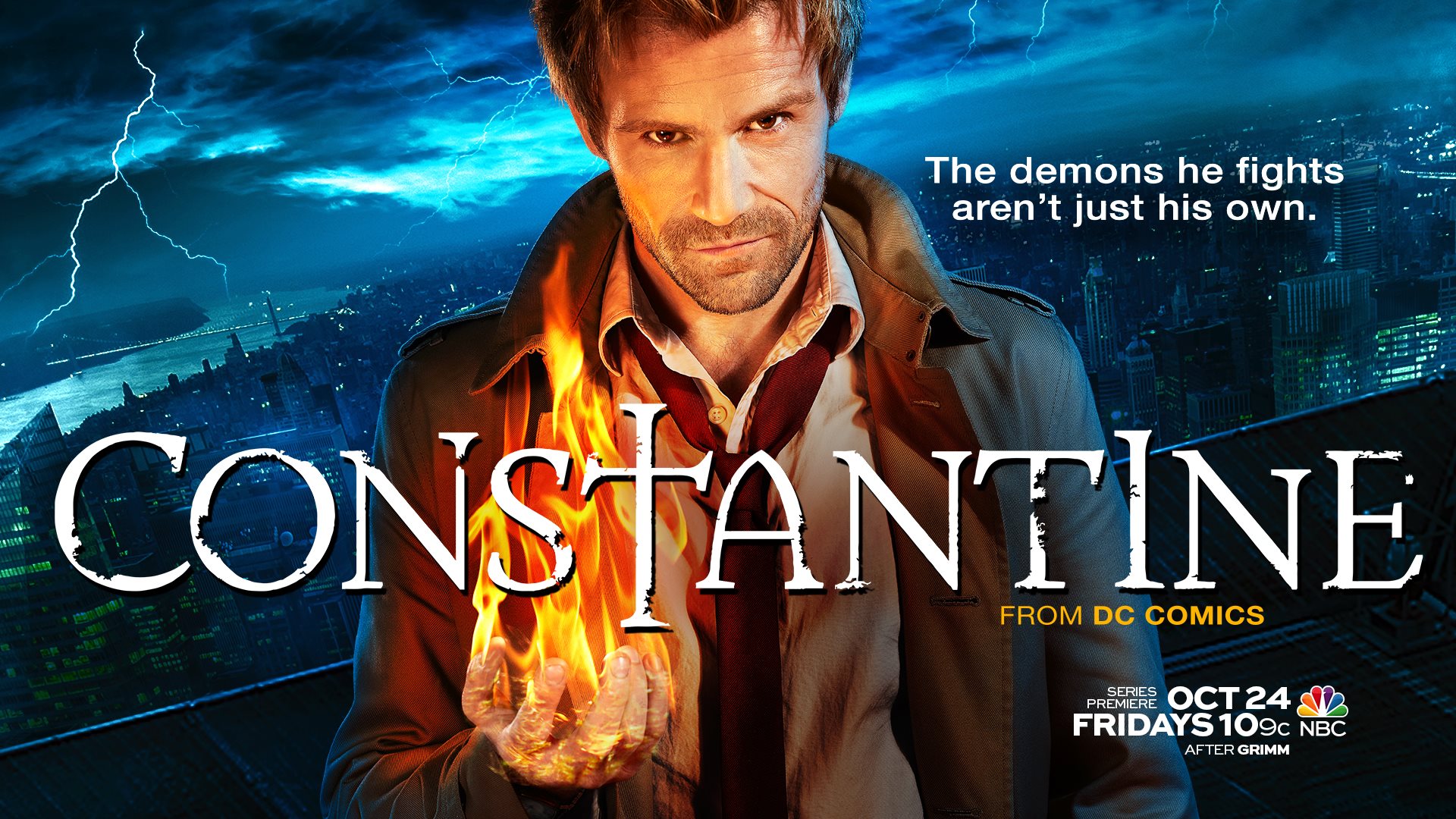
A highly successful long running Vertigo comic series, it’s already been adopted into a terrible Keanu Reeves movie, and I”d like to think that at the least this show has to be better than that film. Constantine is a mouthy British excorcist with his own share of figurative demons. I’ve read seperately that being on a network means that Constantine can’t, say, smoke, which is a fairly prominent feature of the comic book character, which just reminds me again of the stupid restrictions of network television, but I’ll try to hope the show can be decent because I like the character even though the alternative seems more likely.

Prediction: 12- I’m not sure this show makes sense for NBC, and I’m not sure they care a lot about the success of this show. I think Fox would make more sense as a home for Constantine, worked around maybe Sleepy Hollow or Gotham. It seems like a bad network fit regardless of the quality of the show.

State of Affairs – 11/17

State of Affairs

Katherine Heigl is a super duber CIA agent with, you’ll never guess, problems in her personal life that equal her professional successes. It’s hard not to imagine State of Affairs outside of its post-Homeland context; obviously the show is different by Heigl seems a Carrie analogue. Alfre Woodard plays the president who has a special relationship with Heigl; in additional to being the most brilliant CIA analyst out there, Heigl happened to be in a relationship with Woodard’s son, a humanitarian aid worker who died in shady circumstnaces. The most important thing I learned was that Heigl seems to be at least half a foot taller than Woodard.

Prediction: 13+ I think there’s too much invested in this to cut the cord quick unless it’s a total disaster; the trailer screams tentpole show, and as it seems to have connections to people behind The Blacklist, NBC’s biggest new scripted hit in ages, you know NBC’s going to want it to succeed. Still, there’s something about me that strikes me as not going to work. Maybe I’m wrong.