Spring 2015 Review: Unbreakable Kimmy Schmidt

25 Mar

Unbreakable Kimmy Schmidt

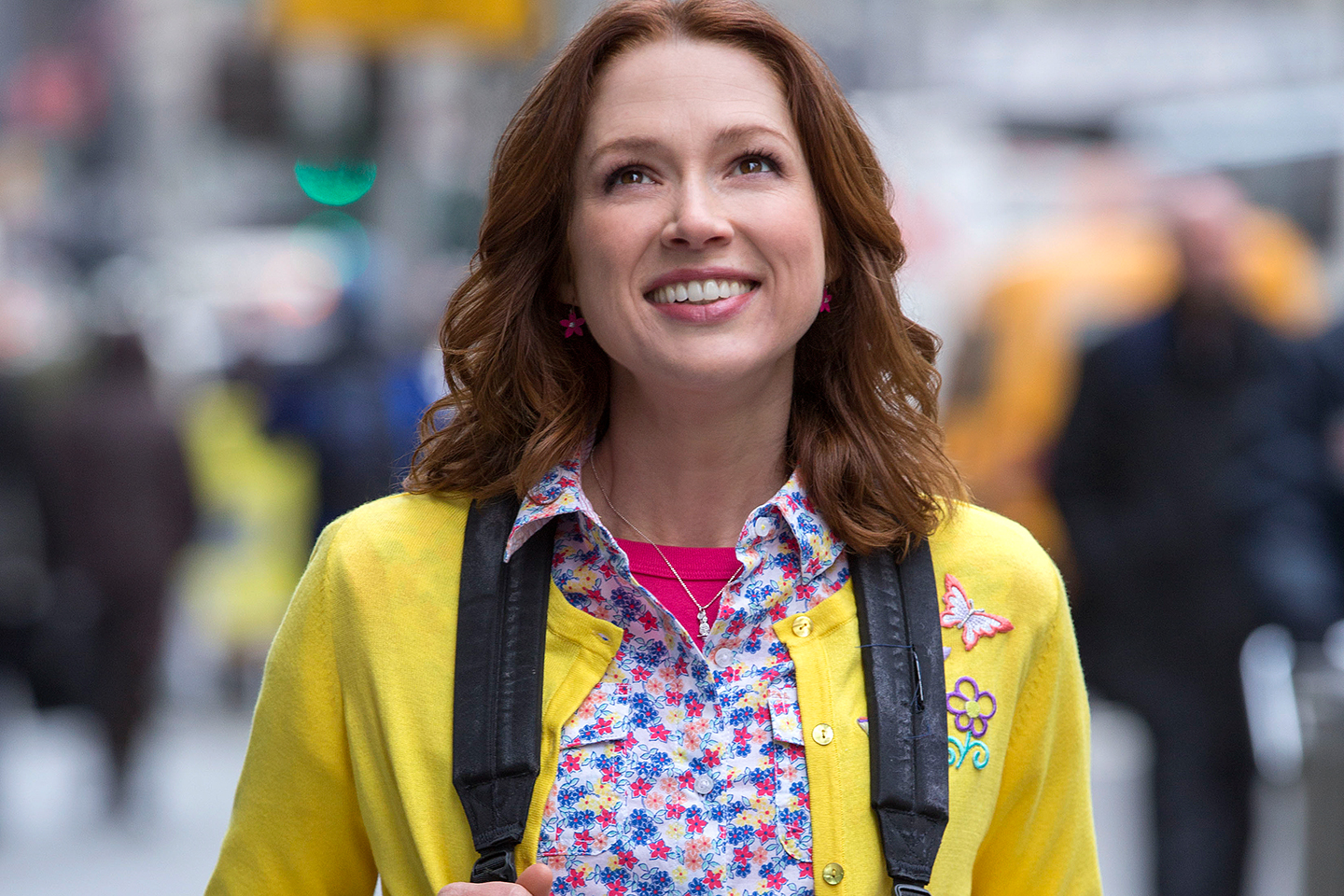
Unbreakable Kimmy Schmidt is a new sitcom from 30 Rock creators Tina Fey and Robert Carlock. 30 Rock is one of the best comedies of the 21st century, and while second efforts from well-respected creators don’t always turn out so well, in this case, if you like or love 30 Rock, you’ll like or love Unbreakable Kimmy Schmidt. That’s not to say the shows are exactly the same, but they are tonally similar enough that I would just about guarantee any fan of the former would like the latter.

Unbreakable Kimmy Schmidt shares 30 Rock’s rapid fire delivery method, its love of wordplay jokes, its over-the-top silliness, and for kicks, one of the four main characters in portrayed by Jane Krakowski, whose Jacqueline Voorhees is pretty much the same as her Jenna Maroney on 30 Rock – rich, entitled, vain, and egocentric.

The show begins with a high concept premise that could be misleading but is worth knowing. Kimmy Schmidt was kidnapped as a teen and spent 15 years underground in a bunker, held captive by a wannabe cult leader/preacher (the amazingly-named Reverend Richard Wayne Gary Wayne) who told her and three other women that the apocalypse had occurred and all life on earth was destroyed beyond the bunker. She and the other captives were eventually found and released, and while the others move back to their small midwestern town, Kimmy decides she wants to use her newfound freedom to take on big New York City. She’s a classic fish-out-of-water, both having never been to a big city, and also being unaware of 15 years of culture and technology, which results in many hilarious miscues.

She moves in with a wannabe theater actor named Titus Andremedon who warms up with to her after displaying initial hostility and gets a job as an assistant for wealthy housewife Voorhees. The three of them, along with Kimmy and Titus’s landlord Lillian, make up the main cast.

Unbreakable Kimmy Schmidt is not just good; it’s laugh-out-loud funny, a quality that even many of the sitcoms I watch and enjoy don’t feature on an episode-to-episode basis. Kimmy Schmidt does not shoot for perfect, squeaky-clean writing and plotting. Rather, Kimmy takes a Pete Rose approach – it goes up for 650 at-bats, swinging away over and over again, never passing up an opportunity to insert a joke, and yet its joke-joke-joke approach works because it connects an inordinate number of times. We forgive the inevitable misses because the hits are frequent enough and funny enough to make the trade clearly worthwhile. This scattershot approach leads to plenty of jokes which some people will find funnier than others, but more than enough for everyone to find some they like.

The show was written with Ellie Kemper in mind as Schmidt, and it shows. She’s a perfect choice for the part, and the part is a perfect showcase for her talents. Kimmy Schmidt showcases her sense of comic timing, her physical humor, her ability to be charmingly confused without looking dumb (something The Office unfortunately pushed too far to simply making her stupid), her ability to be bright-eyed and bushy-tailed, endlessly enthusiastic in the face of countless obstacles, yet not drive a constant cynic like myself off the wall with her good cheer.

Will I watch it again? Yes. Actually, I’ll be honest. It’s a Netflix show with ten half hour episodes. I already finished it, and you probably should too.

Spring 2015 TV Review: One Big Happy

23 Mar

One Big Happy

I recently talked about the remake of The Odd Couple, which was the latest attempt to make what I call a Sitcom (note the capital S), a comedy designed to consciously double down on and exemplify the fashion of old-style sitcoms which were popular for decades but have diminished in popularity over the last decade or so. These sitcoms share several characteristics, outsized protagonists, a laugh track, big jokes followed by significant pauses and an emphasis on broad comedy. One Big Happy is a newer invention; a show that tries to fuse a more modern ethos about the new ways young-ish people live, the relationships they have, and this diverse world we live in with this very old style of comedy.  One similar analogue that comes to mind offhand is 2 Broke Girls, which is not a coincidence since One Big Happy creator Liz Feldman worked as a writer and producer for that show.

Like with 2 Broke Girls, there’s a shiny facelift of the new plastered on the exterior, but the parts underneath are creaky and old, with the same broken humor (or really lack thereof) that has been pumping up mediocre or worse sitcoms for decades.

One Big Happy wears its premise on its sleeve, laying it out very clearly over the course of the first episode. A single commitment-phobic straight guy and his single lesbian best friend decide that if they are both single after a certain point, which they are, they’ll have a baby together, impregnating her with his sperm. After a couple of failed attempts, the baby takes, but at the same time, the guy out of nowhere falls head over heels for a  British woman who he marries to prevent her from being deported. Thus, this wacky trifecta has to make things work without killing each other and there’s no other choice, because there’s a baby involved.

There’s nothing subtle or clever about the humor in One Big Happy; it’s as broad as it gets. Broad comedy can be funny of course in the right hands but this certainly isn’t that. I took a note while watching that the lesbian character said at one point “I peed on it” to her bestie regarding a pregnancy test and it for some reason got a hysterical laugh; that’s pretty emblematic about everything in this show.

One Big Happy tries to sneak up on people who only know or hear its premise as original, but don’t be fooled. The admittedly novel premise cloaks a pretty bad comedy.

Will I watch it again? No. It was bad, and there’s no reason for anyone to watch it in the unlikely event it survives. Sorry, Elisha Cuthbert and guy who played Pete in Happy Endings. Long live Happy Endings.

Spring 2015 Review: iZombie

20 Mar

iZombiePilot1

Imagine there was a party game for TV junkies, where players would watch an episode of a show by a well-known TV writer and would have to identify the show was written by. After watching ten minutes of iZombie, any self-respecting television zealot would be able to pick it out as the work of Rob Thomas without a doubt. Aside from the high concept sci-fi premise (and, yes, it’s ludicrous to talk about a show called iZombie and toss that aside, but work with me), iZombie has an incredible amount in common with Veronica Mars that should have it appealing to Veronica Mars fans of all stripes.

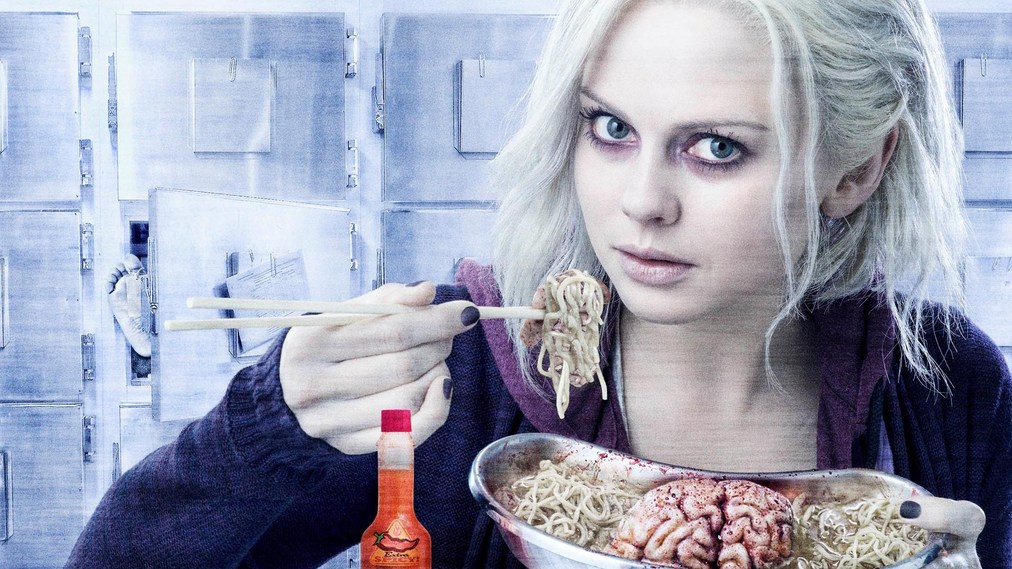
Let’s walk through the comparison, with some longer explanations for the iZombie analogues. In both, at the beginning, a young girl (Veronica is in high school, iZombie’s Liv is in her 20s) is doing great – she’s successful and popular. Veronica is a high school cheerleader with tons of popular cool friends, and Liv is a doctor kicking ass in her residency and engaged to a cool, attractive dude. Something happens. In Vernoica Mars, it’s the death of her best friend, followed by a messy, botched investigation by her sheriff dad that makes her a pariah and an outcast at school. For Liv, it’s well, becoming a zombie. Liv’s zombie form, to be clear, is no AMC’s The Walking Dead-style brainless cretin (it would be a pretty boring and/or nonsensical show that way). Instead, she still maintains the same personality as before, but medically she’s cold, nearly bloodless, and needs to eat brains to maintain her intelligence (she’s actually much closer to a convention vampire than zombie).

Both Veronica and Liv, after this life-changing event, struggle, face a period of despair, and then regain their footing somewhat, seeking a new way forward – realizing their lives will never quite be back to the way they were, but that maybe they can carve a different path.

Veronica and Liv both use their particular newfound skill sets to solve crimes. Veronica has been groomed partly intentionally and partly unintentionally by her now private eye father, while Liv gains visions from the people whose brains she eats. As those brains tend to be acquired from murder victims, she sees flashes of how they die and who killed them. Although solving these crimes isn’t initially part of the plan, it soon becomes a calling for each, a way to follow the new paths forward both are building.

Oh, and both Veronica and Liv narrate the action with a world-wary, self-aware, and pop culture-dotted voice over which takes you through their point of view.

So, yeah. Not talking right out of the gate about the fact that Liv is an undead zombie who needs to eat brains and has psychic visions is kind of burying the lead, while Veronica is merely a teenage girl with a really expensive camera and some mad private eye skills. But down in its guts, iZombie has a whole lot of what Veronica Mars had, which, since Veronica Mars is a great show and a personal favorite is definitely a good thing.

The similarities, particularly in the voice overs, were so uncanny that it made me think Rob Thomas was desperate to bring Veronica Mars back, but in a way more palatable with current trends, which, given the outsized success of AMC’s The Walking Dead, meant zombies.

Does Rose McIver have the chops to pull off the Kristin Bell role? Does the wacky premise have enough heft behind it to last a full season and then some? It’s too early to say. iZombie featured the sharp dialogue that is the hallmark of any Rob Thomas show, and the sweet spot tonal midpoint between drama and comedy, that Thomas and Joss Whedon have mastered.

Will I watch it again? Yes. This was one of those shows, that due to the Rob Thomas connection (he’s behind not only Veronica Mars but my beloved Party Down), I would have had to have hated not to watch another episode. That said, it’s Veronica Mars similarities only enhanced those chances.

Ranking the Shows That I Watch – 2014 Edition: 15-12

18 Mar

Two comedies, one drama, and one Netflix show that straddles both worlds. Here comes 15 through 12.

Intro here and 43-40 here and 39-36 here and 35-32 here and 31-28 here and 27-24 here and 23-20 here and 19-16 here and one-offs/shows ineligible for the list here.

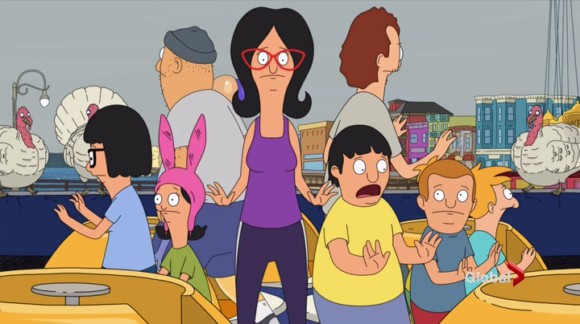
15. Bob’s Burgers – 2013: 14

Bob's Burgers

Parks and Recreation, which we’ll get to shortly, has often been hailed for being a comedy of nice; people generally like each other and want to help, rather than hurt one another, despite their differences, and it shows. Bob’s Burgers, an animated family show, rather than a workplace live-action comedy, embodies that same concept; the love between the family members runs deep, and no matter the fights and scuffles that occur over the course of an episode, at the end the Belcher family stands by one another. There’s an underlying warmth beneath Bob’s Burgers that never feels forced. Even Louise (the April of the show, though I like Louise much better than April, which is a completely separate issue that I’m not sure I know how to explain offhand) comes around to sticking with her family in the end. Bob’s Burgers is funny, which is important, because it’s a comedy, but even more than funny, Bob’s Burger’s is fun. No current show is more guaranteed to put me in a good mood, or turn my frown upside down, than Bob’s Burgers. I like to watch episodes right before I go to sleep in the hopes that they will transfer to good dreams.

14. Orange is the New Black – 2013: 19

Orange is the New Black

What was once a dirty little secret is now party line; as far as breakout Netflix shows go, Orange is the New Black is better than House of Cards. The second season served up more of what made the first so loveable, women of all stripes and colors and classes, struggling to make it in a prison system that continually beats them down (figuratively always and occasionally literally). The women manage to find ways to work together more than seems possible considering how often the system tries to pit them against one another. This season featured a big bad who was pretty much unredeemable – Vee, who started running heroin into Litchfield. Just about every character outside of Vee, however, is shown from all sides, complex and nuanced, and unlike the first season, even the prison employees get to be shown as not all bad. It’s impressive how many characters Orange is the New Black juggles, making minor characters feel worthy in small but important ways. Pathos is a specialty of Orange is the New Black, and no show vacillates between comedy and drama better, with hilarious moments followed by heart wrenching emotion.

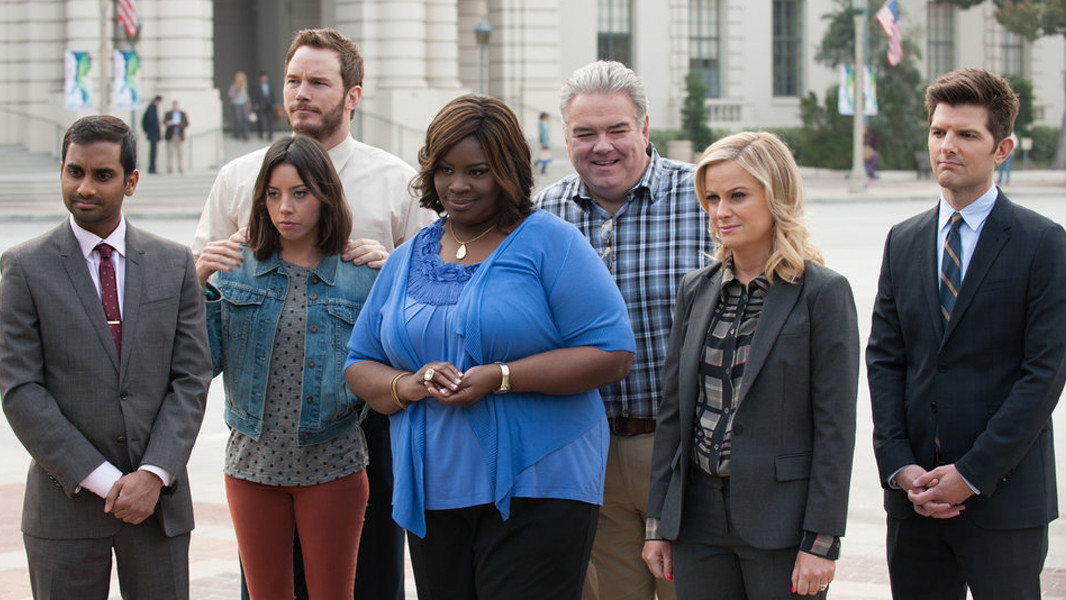
13. Parks and Recreation – 2013: 11

Parks and Recreation

The sixth season was not the best season of Parks and Recreation. It was probably the weakest outside of the first when the show didn’t really know what it was and who its characters were (and maybe parts of the second, where it was still figuring itself out). That said, the fact that even a weaker season of Parks and Recreation can finish this high speaks to the sheer base levels the writers and actors have reached on this show on a season-to-season, episode-to-episode basis. Parks and Recreation is a first-ballot TV Hall-of-Famer. There were certainly signs this season of a show ready for the end, with some plots that felt like retreads of earlier plots (Tom’s Bistro was a poor man’s Rent-a-Swag) and I was ridiculously frustrated with the way the season ended, with Leslie bailed out from making a difficult decision that had been the focus of much of the season. Still, the show is always funny and the characters are so deeply developed by now that the gears move pretty well even when they’re not at their best. The creators and writers know their characters and actors so well that even when I think the plots are a little off, the emotions and the humor aren’t. This isn’t Parks and Recreation’s finest hour, but there’s a reason why Parks & Rec will go down as one of the best sitcoms of all time.

12. Rectify – 2013: 3

Rectify

Rectify’s main contribution to television may be its ability to take slow, deliberate pacing, which is oft cited as a negative for many a show by myself and others, and ingeniously turn it into an asset. Rectify takes its own time and uses it to flesh out how protagonist Daniel Holden, recently released from death row after 20 years in a cell with little human contact, sees his family and the world anew. Daniel struggles to readjust, even as he still faces potential murder charges – the technicality on which he was set free only means the state will have to retry him from scratch. His family struggles equally, welcoming him home, as they want to be there for him, but aren’t sure how, and his return upends their lives. His sister played the most energetic role in freeing him, but is frustrated by her difficulties in getting him out of his shell. His youngest brother barely knew him at all. His stepbrother remains bitter towards him, resentful of how everyone treats a convicted murder as a returning prodigal son, but Rectify even makes sure to show him with humanity. Rectify tells a tale about a subject, and with a view, like no other show on TV, and while that in and of itself doesn’t make a show good, it remains a rare quality and impressive with a show that happens to be as good as Rectify.

Spring 2015 Review: Secrets and Lies

16 Mar

Secrets and Lies

It’s impossible not watch new TV shows and movies without viewing them through the prism of existing works we’re already familiar with. It’s impossible, for example, to watch an episode of Allegiance or The Assets and not think that either of those shows is a cheap rip-off of The Americans, regardless of whether they are cheap rip-offs or merely inferior similar programs which were conceived entirely independently coincidently. Likewise, whether or not it was conceived entirely independently, it’s hard to watch the pilot of Secrets and Lies and not immediately think of Gone Girl. Both focus on a media feeding frenzy that accompanies an attractive man accused of being a cold-blooded killer in a high profile murder case, and both hold out initially the information regarding whether the did he or didn’t he actually do it. Unfortunately, Secrets and Lies has these elements of Gone Girl but none of the quality which makes Gone Girl work.

Ryan Phillippe plays a hot father who, while out on a run, finds his neighbor’s young son dead somewhere on his path. Phillippe and his family live in Charlotte, a city in which, on his block at least, every neighbor knows the other, and gossip spreads fast. When no other suspect is quickly uncovered, Phillippe becomes the primary suspect, and the media, despite the lack of any evidence, pounce. In response, the nation and the locals turn against him. At the same time, he’s struggling with his marriage, with the implication that he participated in an affair which has his marriage on the rocks.

A persistent detective played by Juliette Lewis pesters and pesters him, suspecting him the whole time, but trying to subtly have him incriminate himself, rather than attack him straight out. Most of the first episode consists of her trying to trip him up, while he never quite gives in, and this happens about four different times, as he vacillates between trying to lawyer up to be smart, and trying to convince the world he has nothing to hide. Slowly, however, some incriminating evidence slowly builds even while he proclaims his innocence to suggest at least the possibility of his guilt.

The show promises both secrets and lies, but the first episode under delivers on both, not making the most of its first forty minutes to reel viewers in. The only lies, at least that we know about, are Philippe’s about his whereabouts, which he doesn’t remember (very drunk) and the only secret, revealed at the end of the episode, could not be more obvious to anyone who has ever watched a television show.

More than lacking substance, Secrets and Lies commits the more fatal sin of being boring. For a show whose goal appears to be edge-of-the-seat entertaining with a little bit of soapy intrigue, the first episode sure doesn’t make you want to know what happened or care at all about any of the characters.

Will I watch it again no? No. Secrets and Lies tries to be a sexy, mysterious potboiler, where you don’t know whose lying, and who isn’t, and what secret, or so the title implies, is right around the corner, but it is not one of these things except surprisingly boring and unsurprisingly unsurprising.

Spring 2015 Review: American Crime

13 Mar

American Crime

American Crime is a deadly serious drama which uses a tragic murder as a window through which it attempts to show a broad picture of America how it really is, unvarnished and unfiltered. Through a diverse cast of characters affected by and associated with this event, American Crime tries to cut through a broad spectrum of race and class, a tall task indeed. In doing so American Crime, takes part in a long tradition of cultural investigation of race and class issues through crime. The upside to this attempt is Traffic, the downside is Crash, and American Crime ends up somewhere between those two pillars.

American Crime begins right after a young man, a vet, was murdered and his wife raped and left for dead (she’s in critical condition). His father, Russ, is called in by the police, identifies the body, and then reaches out to his ex-wife, Barb. Barb, we learn, apparently raised their kids while Russ gambled the family’s money away and then left, although he forged a better relationship with his sons later in life. We see a lot of the parents grieving together and feeling with one another. When they feel like the policemen aren’t doing their job, they talk to a reporter to try to get the word out and keep the case in the news. Barb takes the opportunity to be casually racist when the killer is suspected to possibly be Hispanic.

Nearby, there’s a single Latino father, trying to raise his two children the right way in a neighborhood bereft with gangs, which has become that much more difficult after the death of his beloved wife. His son, who seems to be the apple of his eye, borrowed a car from their garage (the dad is a mechanic), and without permission loaned it out to a shady gang-related dude for what seemed like some easy cash. This comes back to bite the son when that dude is suspected of having murdered the aforementioned dead vet.

There’s also a third plot strand based around a couple of drug-addled lovers. I frankly have absolutely no idea how this is related to the rest of the show and I’m not sure if I’m missing something or it simply won’t be explained until a later episode.

Considering the on-the-nose potential of taking on race and class in this manner, the content itself is generally not as heavy handed as it could be, though it definitely could a defter touch at times.  The filming style as well is occasionally too much; there are strange and awkward cuts which feel unnecessarily arty; as if the director is really trying to let us know that this is serious stuff. And it is.

For the most part, American Crime isn’t a particularly fun show.  This is the fine line shows like American Crime walk. Like all deadly serious prestige dramas, it can feel like a slog if everything isn’t running on all cylinders. There’s certainly room for extremely serious television, but the less fun it is to watch, the more meritorious it best be in other ways to compensate. There could be some real merit here but I’m also not sure there was enough going on to compensate for how much I looked at my watch as the show was passing. As difficult as attempting to talk about race and class is, it’s certainly a worthy goal, and it’s possible American Crime may have the ability to add something productive to the conversation, but maybe at the expense of being an hour of television anyone wants to watch. The one source of drive for the show could be following the mystery, but it almost feels peripheral in the first episode to all the issues happening.

Will I watch it again? I don’t know. It certainly wasn’t bad, but it also didn’t leave me wanting to immediately watch another episode. Maybe if I don’t forget about it, I’ll come back when my TV week gets less crowded, and that lack of enthusiasm but minor interest is about accurate to how I feel about the show.

Ranking the Shows I Watch – 2014 edition: One-offs and Otherwise Ineligible Shows

11 Mar

Halftime, more or less. Time to comment on four TV shows and one-offs which for various reasons aren’t eligible for this list.

Intro here and 43-40 here and 39-36 here and 35-32 here and 31-28 here and 27-24 here and 23-20 here and 19-16 here.

Last Week Tonight

Last Week Tonight

John Oliver’s tenure as Jon Stewart’s fill-in during the summer of 2013 was nothing less than an unqualified success. John Oliver performed the impressive feat of keeping the format and sensibility the same while also imprinting the show with his own particular personality and brand of humor. After receiving universal praise for his run, the television world was his oyster. Would he hang on as the frontrunner to replace Stewart or Colbert should they leave? Before either announced they were stepping down, which seemed like it could have taken years at the time, HBO offered him a weekly show, and while he’d have been great at either the Stewart or Colbert slot, we should all be glad he took HBO up on their offer. He brought the finely honed sense of humor he had at The Daily Show but tweaked the format to do a deep dive into a big story every week, spending fifteen minutes on a topic which couldn’t be adequately covered in three, rather than simply going through a roundup of the biggest current news topics and Fox News buffoonery. He took the next logical step from The Daily show in really educating millennial viewers and impressively made a legitimate mark in the policy arena with his stories, having a noticeable impact on the net neutrality debate. The only thing more I can ask for from Last Week Tonight is for fewer weeks off a year.

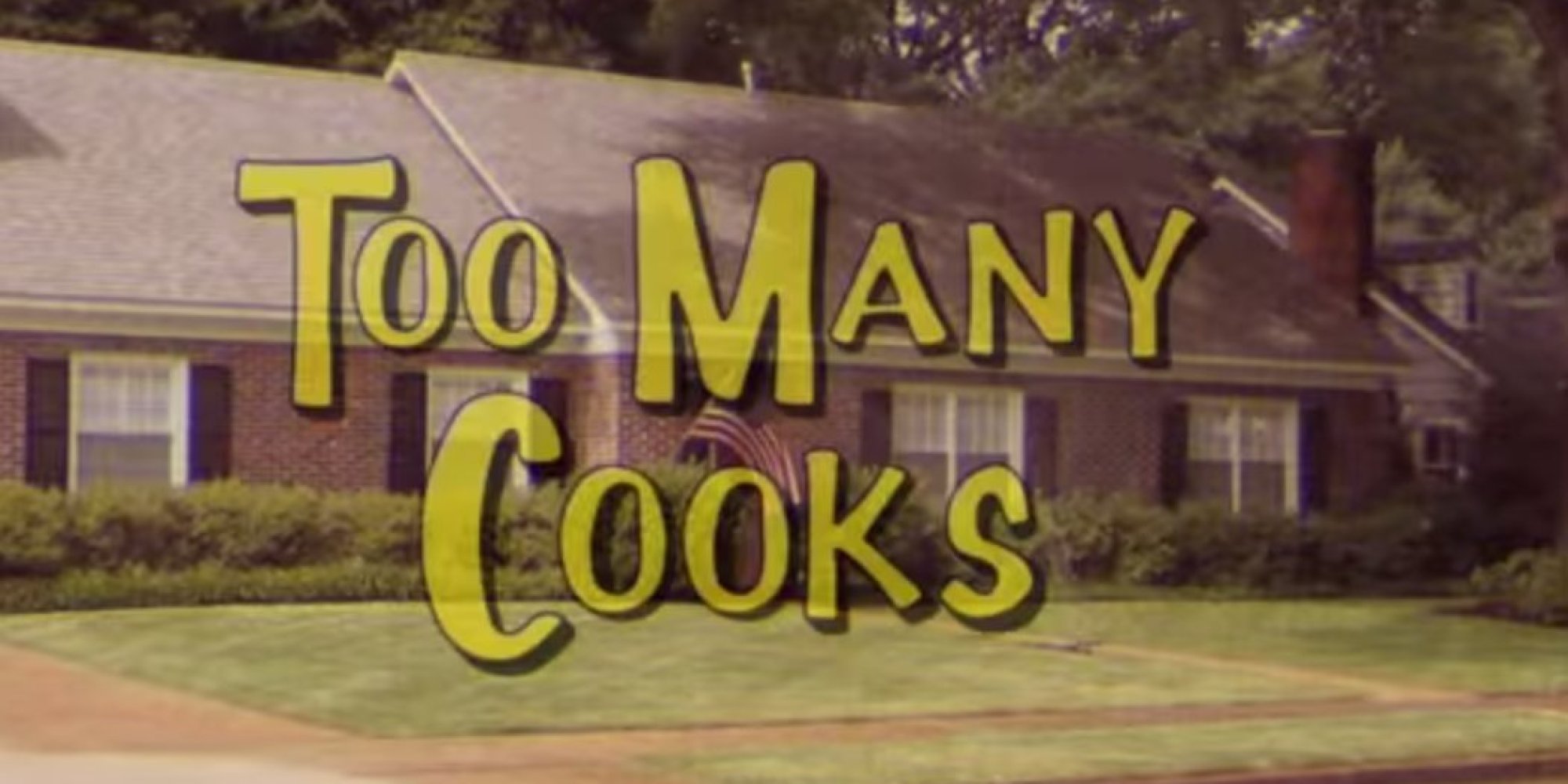
Too Many Cooks

Too Many Cooks

A twelve-minute viral video that took the Internet by storm, Too Many Cooks first debuted late, late, at night (or, conversely, early, early in the morning) on Adult Swim, with no promotion, only to prove that viral culture is at least somewhat meritorious by naturally finding its way into a swarm of blogs and Facebook posts and tweets by way of the five viewers who probably actually saw it as it originally ran. Too Many Cooks was altogether fantastic, working, as the best comedy does, on multiple levels. First, it’s a spot-on send up of ‘80s and early ‘90s TV theme sequences, which it handled perfectly, shifting through sitcoms first, but then police dramas, and later primetime soaps. Secondly, it ventures into a sillier vein, with more ridiculous characters and strange and unlikely situations. Next, it moves into more absurdist mode as a serial killer ventures through the different worlds and the sequences collide and run into one another. Everyone has a favorite name and favorite entrance, and while I wasn’t (and probably still am not) as in love with the creepy murderer part of the short, I am in love with about everything else, and particularly the sci-fi Star Trek/BattleStar Galactica pastiche. Enough words have been written about Too Many Cooks that I doubt I can add anything new, but I’d be remiss if I talked about 2014 in television without giving it a mention.

The Ending of The Colbert Report

The Colbert Report

Everyone who knows me knows that Stephen Colbert is my absolute favorite and that The Colbert Report was thus my absolute favorite. My love of the Report is an accepted part of my personality. Even before he received his own show, I loved Stephen Colbert, as my favorite correspondent on The Daily Show. When he got his own show, I loved everything about it almost from day one, and as it slowly figured out what worked best and really grew into itself, it was a four-time weekly treat. I consistently called it a contender for the funniest show on TV, even as it aired many, many more episodes than half hour scripted show, which appeared at most 22 times a year. I was obsessed with many a Colbert bit. Stephen Colbert’s Alpha Squad 7: Lady Nocturne: A Tek Jansen Adventure. Formidable Opponent, in which he argued against himself, his hatred of bears, and the On Notice and Dead to Me lists, three wonderful bits which all disappeared about halfway through the show’s run. Better Know a District. The Atone Phone. Cheating Death with Dr. Stephen T. Colbert, D.F.A, my favorite recurring segment, which became more prominent later in the show. There are so many moments, and bits, and video clips, and examples of Stephen breaking that send me into fits no matter how many times I watch them. While I’m still devastated by the show’s end, I wish Colbert nothing but the best, and hope that I’ll form some attachment to his Late Show run, though I have my doubts. I’ll always have those ten years though.

Black Mirror Christmas Special

Black Mirror

The British are big believers in the Christmas special, a once a year extra long event episode whose events are entirely separate from the most recent season of the show. These Christmas specials can exist even when the show hasn’t aired otherwise for a year, as in the case of Black Mirror, and the Black Mirror Christmas special was a knockout, possibly the best episode of the series yet. There were three interlocking plots that each hits Black Mirror’s sweet spot, dystopian future technology that’s both far enough out of reach to feel like mild science fiction but close enough for the potential ramifications to feel very real. The special was enthralling, chilling, and as silly and pretentious as this sounds, did actually make you think; my friends and I chatted about it eagerly for a while after. Thinking be damned, though, it was an excellent hour and a half or so of entertainment. If you are at all interested in starting the series but are on the fence, this would be a great episode to reel you in.

Spring 2015 Review: The Odd Couple

9 Mar

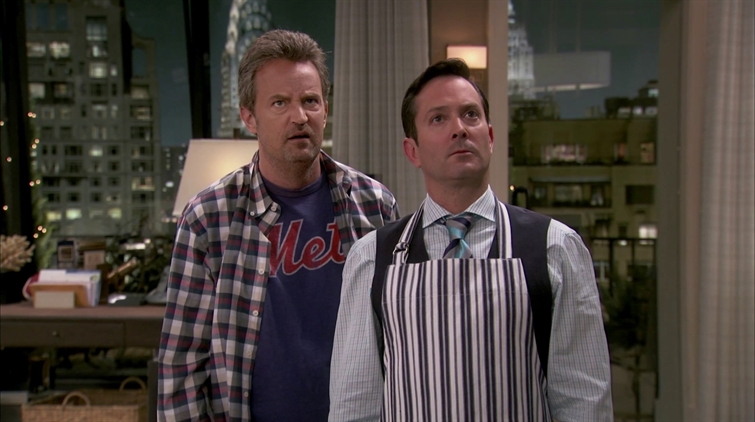
The Odd Couple

You know the story of The Odd Couple. There’s a slob, there’s an uptight neat freak, they’re friends, they live together, and though they can’t stand each other often, they somehow recognize that they could each use a bit of what the other has to offer. Both are recently divorced. Oscar is a mess and helps Felix loosen up, while Felix helps Oscar get his life together. Oh, and there’s that theme song. You’ve probably heard it before.

Last year, I described the very forgotten Sean Hayes sitcom Sean Saves the World as a Sitcom, with an emphasis on the capital S. What I meant is that it seemed to pride itself on ignoring any changes in the world of TV comedy that have occurred over the past decade and instead doubled down on being as old-fashioned and classic as possible, not just in content but in form and look. The Sitcom works  this way not just because it thinks this is the best and funniest way to tell its story, though it might well, but also because it’s a statement of belief in what a sitcom should be. As someone who has lauded the direction comedy has gone in the past ten years, I’m generally not a big fan of Sitcoms.

The Odd Couple is another Sitcom. To someone who has now moved on past the generational divide of sitcoms, to The Office and Parks and Recreation and 30 Rock and others, The Odd Couple is nearly unwatchable. The laughs and the laugh tracks are loud. There’s so much laugh track, and I won’t expound further on just how much I absolutely despise laugh tracks but my opinion remains as true as ever. The laugh track is obtrusive and sets the tone. A laugh track is an essential part of a Sitcom .

The two primary stars talk in minor insults to one another and there are what feels like 30 seconds between each line, each of which is an attempt at big joke. These long spaces give the audience a chance to process, realize that it was a joke (thanks, laugh track!) and laugh as much as they need to before the show can move forward. The characters are ridiculous exaggerations, and not in a good way, particularly Thomas Lennon’s Felix, who is so uptight and anal that it makes the show difficult to watch at times without any of the hilarious payoff of a good awkward British sitcom. That’s still giving enough credit to what an insane weirdo they make him.  It’s too much by several times; way beyond merely being uptight and sensitive. The Odd Couple is just too much of everything. There’s a handful of Oscar’s friends who show up and make jokes about their wives, and how much they can’t do cool man sports things because of them. Hey-O! You don’t get more TV regressive than that.

There’s no subtlety. There’s no banter, because you can’t have banter when you have to wait this long between any levels. It’s nothing but big broad obvious humor that isn’t funny at all.

Will I watch it again? No. Never. It was pretty painful to get through.

Spring 2015 Review: Battle Creek

6 Mar

Battle Creek

Battle Creek is a cop drama which is the joint product of two heavyweight television creators – David Shore, who was behind House, and Vince Gilligan who created Breaking Bad and co-created its spin-off Better Call Saul. And for all that talent, what Battle Creek amounts to is, well, nothing.

Here’s the set up. Dean Winters plays a big detective fish in a small pond, the king of the chronically underfunded Battle Creek police department. Battle Creek, a mid-sized town, seems to have a disproportionate amount of crime, and its cops are strapped by their lack of resources – in the a bust in the opening scene of the show, both their recording equipment and tasers don’t work. The FBI swoops in for the rescue in the form of the preternaturally perfect Josh Duhamel. The golden child, he’s good-looking, great at just about everything, and brings a winning attitude along with access to forensics and proper equipment that the department desperately needs. Everyone else at the department is overwhelmed and excited by Duhamel personally and the resources he brings but Winters is struck by jealousy and a nagging obsession that there has to be something wrong with Duhamel for him to be sent to Battle Creek. Who is this outsider, he wants to know, why is he so friendly and consistently unfazed, and why is he getting all the credit for what they could have been doing with proper resources.

Of course, they’re partnered up and banter back and forth, Duhamel relentless upbeat, Winters the constant cynic, with their contrasting approaches making them a formidable team.

Battle Creek is not a particularly serious police procedural. It’s light, and makes active attempts at humor. It’s really not far off from an USA procedural, and much closer to USA or Fox than to the rest of the CBS procedural family. Nothing is all that serious. It’s purposefully silly and humor is mined from just how strapped the Battle Creek department is versus how flush Duhamel and the FBI are.

There’s really not even a lot to say about it. There’s just nothing to it. It was watchable, but eminently forgettable. Everything is competent enough but no more. There’s simply no hook to keep a viewer interested in coming back week-to-week. Battle Creek doesn’t appear to have been crafted with the kind of care one would expect of Shore or Gilligan. There’s no ambition. It’s the same problem that often haunts USA shows, but it doesn’t have the sense of fun or style that propels the better USA shows, though it’s certainly going for it.

Will I watch it again? No. There’s really no need to. Battle Creek came in and out with a whimper.

Ranking the Shows That I Watch – 2014 Edition: 19-16

4 Mar

We’re halfway there. Four more. Young series all. Two debuts, a second year, and a third year, three comedies, and a drama. Let’s go.

Intro here and 43-40 here and 39-36 here and 35-32 here and 31-28 here and 27-24 here and 23-20 here.

19. Brooklyn Nine-Nine – 2013: 16

Brooklyn Nine-Nine

Co-created by Parks and Recreation creator Michael Schur and writer Dan Goor, Brooklyn Nine-Nine was more fully formed out of the box than Parks and Rec. While Paks and Rec modeled itself after the Office, Brooklyn Nine-Nine modeled itself after Parks and Rec. Parks and Rec took itself from a shaky at best first season to an excellent second season, and while Brooklyn Nine-Nine started higher, and has remained up to first season standards, it hasn’t quite made that jump. Brooklyn Nine-Nine is, no matter what else, a very solid, funny, and enjoyable show, and I look forward to watching it every week. Andre Braugher is a national treasure who should be kept in a museum when not filming the show for preservation purposes. I mean it as a sign of my high expectations for the show rather than an insult to say that Brooklyn Nine-Niane, while continuing to be good, hasn’t quite become transcendent the way recent similar network comedies The Office, 30 Rock, and Parks & Recreation did at points relatively early in their run. Brooklyn Nine-Nine always has some laughs, but it can be a little inconsistent, it hasn’t always found its own tone, and most of the characters are still working towards really being fully formed. Parks didn’t really hits its heights until the third season though, so I haven’t lost hope for this jump yet, and I’ll continue to laugh away in the meantime.

18. Silicon Valley – 2013: Not Eligible

Silicon ValleyA new entrant on this list, Silicon Valley is a spot on satire of the tech sector and is laugh-out-loud funny to boot. Only in actually watching Silicon Valley did I realize how shocking it was that there hasn’t been a well-regarded satirical take on such an easily parodied industry that has played such an important role in the American cultural landscape for nearly two decades. Silicon Valley takes advantage of this lapse and mines the industry for all its worth. It seems (from external sources including my brother who worked there) that there is lots of truth to Silicon Valley’s portrayal, even if gets some details wrong or exaggerates for comedic purposes. The show definitely has a bit of a woman problem; and while some of that is endemic to the premise of the show (it would be more dishonest realistically to have a group of programmers as split evenly between male and female), dragging the one female character into a romance with the protagonist that doesn’t really fit on screen is forced at best. The characters can on occasion be a little cartoonishly nerd-like, and though the touch is gentle and loving, the nerds-can’t-function-in-society button is hit one too many times. Still, Silicon Valley delivered an extremely promising and funny first season, which gives me great anticipation for the second. Lastly, a moment for the late Christopher Evan Welch who may well have been the break out performer if he wasn’t tragically felled by lung cancer; his venture capitalist Peter Gregory was a delightful weirdo.

17. Fargo – 2013: Not Eligible

Fargo

Fargo began from an unusual idea; creator Noah Hawley didn’t want to remake, or make a sequel or prequel to the much-lauded 1996 Coen brothers movie Fargo. Rather, he wanted to set a similar story in the world of Fargo, keeping the tone and atmosphere that make that film so successful. It was an unusual idea and a bold one (the closest I can think of offhand is Ron Moore’s BattleStar Galactica remake – but that was almost the reverse – the new show appropriated characters and concepts, but changed the tone completely). For the very most part, it worked, and was one of the best new shows of the year. The show deftly married dark humor and riveting drama, created similar analogues to the movie’s characters that were different enough to stand up to the rigor of a TV season where characters have to develop and grow. The four major characters were each entertaining and brought something different to the show, and many of the secondary characters were treats as well, as Fargo made good use of playing comedic actors in more dramatic roles. A couple of plotlines seemed out of nowhere, weaving in and out with no real purpose or resolution, and a couple of the characters felt oddly used, sometimes under, and sometimes over. Still, overall, Fargo brought the most important ingredient to its success consistently; its tone; dark, comedic, with an underlying small town warmth.

16. Veep – 2013: 27

Veep

Veep has been a steady climber in these rankings. I watched its first season, finding it amusing enough to keep up with, but not to make it a must watch immediately – it frequently got pushed below the hoard of other Sunday shows, and was eventually viewed later in the week. The second season was better. All of a sudden, I made more of an effort to watch sooner. The dialogue crackled a little more. The cast seemed to be more familiar with one another’s timing and comic beats – the chemistry between nearly every two-person pair was sparkling. The third season ramped it up another level. It’s easy to see why Veep, a modest comedy which doesn’t go for the loud humor of It’s Always Sunny in Philadelphia, the high-concepts of Community, or the emotional depths of Parks and Recreation, hides under the radar, but it’s snuck its way to being one of the best comedies on television. Veep simply put together a season of being consistently minute-by-minute funny.