The Shield: Thoughts and Opinions, Part 2

10 Jun

The Strike Team

Welcome to part 2 of my thoughts on The Shield. Part 1 can be found here. Plenty of spoilers follow.

Vic was constantly, constantly, making a big show about how high his arrest numbers were, and how the police needed him, and that’s why it was worth putting up with his off-color brand of policing. But that was always a smokescreen. This isn’t Hampsterdam, The Wire’s example of stepping way beyond the established rules in service of an idea that had tangible general benefits towards lowering violent crime which affects civilians. Vic makes a show about caring about cleaning up the streets, and keeping them safe, and for whatever it’s worth I do think that deep down he really and truly believes that. He’s a megalomaniac who believes in his reputation. But this wasn’t making unorthodox but innovative tradeoffs to get criminals off the streets. It was all about Vic doing what was best for Vic.

It was beyond welcome to see how by the last couple of seasons nothing Claudette could hear from anyone could sell her on Vic Mackey’s utilitarian proposition that the occasionally police higher up would try to push on her – that you put up with a  lot of his shit, but sometimes you needed a guy like Vic to get results. As everyone realized when Vic made his heralded confession in order to lock in the immunity, no one ever needs a guy like Vic. They’re taking on way more than bargained for.

There might be some occasional talk about police practices in The Shield, in terms of how to best combat crime, and the bureaucracy and inabilities of police departments to function and work with the community, like much of The Wire, and season 4 contained a hearty discussion about some practices, but mostly that’s not really what The Shield was about. That was an afterthought to the personalities, and the levers of power, ego, loyalty, and trust, that brought the strike team together, and eventually set them apart, These themes were also on display in the interactions between Danny, Julian, Dutch, Claudette, and Acevado. Trust was in short supply in The Shield in general, and the relationships that eventually functioned best – Claudette and Dutch in particular, but eventually Danny and Julian as well, worked because they were based on that bedrock, even if it took a while to get there. They had their spats in the open, and while they were ugly occasionally in the moment, they got over them because of that, The strike team buried their disagreements deeper, deeper and deeper, under the façade of family, and that was one of the factors that tore them apart in the end

Claudette and Dutch in fact are the anti strike team. They keep clean, and they make sure they’re both at it. When Dutch suspects Billings of setting up a pedophile, having a fellow cop plant evidence, even though Dutch is innocent himself, Claudette blows up at him and orders him to set it right. It’s a small thing in the big picture sure, but these are the little mistakes that can build on one’s record and start leading to the compromised position of the strike team. By keeping each other honest, even if it requires yelling and berating and arguing from time to time, Claudette and Dutch assure themselves clean consciences and records, but also the unlimited freedom of going forward without a history to be exposed. Dutch and Claudette’s working relationship is everything the strike team’s isn’t. Build on actual trust, it lasts in the end.

And last, that ending. This series of musings wouldn’t be complete without a few thoughts there, particularly as to Vic’s fate.

Everyone suspected Vic was dirty. Everyone knew he played fast and loose with the rules, and the department loosed him on the streets knowing this a few times a season. People suspected individual elements; the Terry Crawley shooting, the money train robbery, but when listed out one by one, the sheer volume shook to the core both the feds, and Claudette, Vic’s primary adversary by the end of the show.

Losing his kids was a blow, one of the only things that actually mattered to him. And of course, Vic would never have hurt his kids intentionally, but that’s beyond the point. Vic did things which hurt them all the time in practice. He was as self-delusional as any of the gang leaders he policed. This is the last time, he said, after any given transgression. One more day.

With Shane and Lem dead and Ronnie about to be locked up for a long, long time with the same people he put away, Vic makes it out relatively unscathed. Of course, there are still consequences; his kids up and move away, to never see him again. He gets the government immunity deal, and after pulling a fast one that embarrasses everyone who agreed to make the deal with him, he’s stuck with monotonous desk work for the length of his contract; one slip up, and immunity is off. While jail is what he deserves, desk work is the opposite of what Vic Mackey stands for; he’s a shark, he needs to be on the street, always moving, never still, never stuck filling out paperwork in an office.

And so Vic gets a kind of poetic justice that’s simply too good for him; it’s almost too perfect, but what would be more appropriate but less exactly fitting would be to see him rotting in a jail cell next to those he put away.

I’d love to believe that Vic is going to do something stupid, like start missing office work, or not turn in his reports, and I do think there’s plenty of chance he gets messed up in something, or can’t simply resist the pull of the street. Still, he’s a survivor. He’ll mess up one day, but it won’t be easy. He knows what he has to do to survive, and he’s willing to do it, no matter the consequences to himself or others.
Game of Thrones’ Horrible, No Good, Very Bad Decision

8 Jun

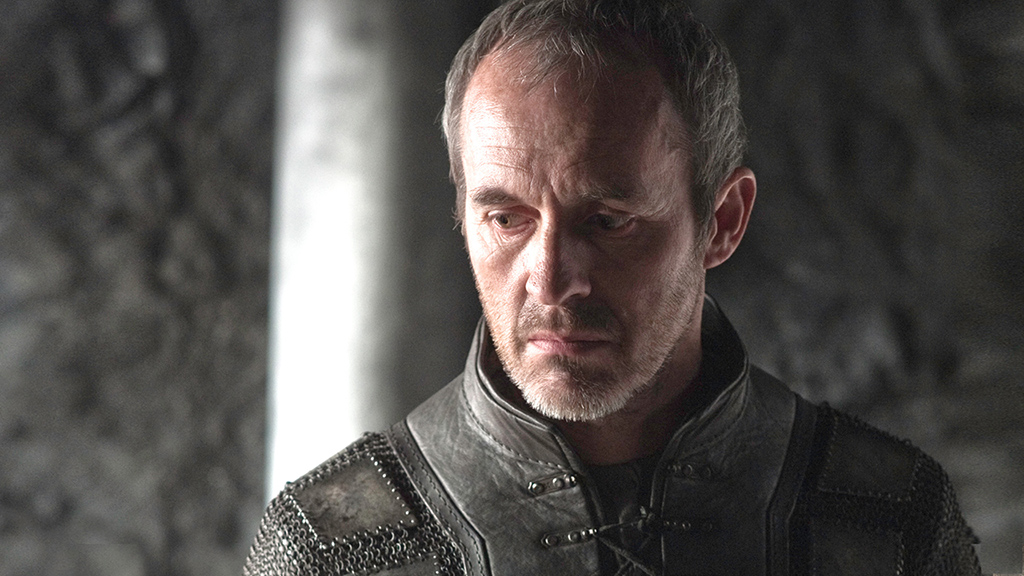
Stannis Baratheon

I’ve read the A Song of Ice and Fire books, and as a book reader, I often find myself comparing and contrasting choices made in the show with those in the book, sometimes agreeing with the decisions of the show runners, sometimes disagreeing, and sometimes understanding their decisions in the context of the show even when I preferred the book’s decisions in the context on the book. There are many shades of grey while comparing the two entities, and though there can be a negative in constantly thinking through every decision the show makes because the books are always in the back of your head, I still prefer having the knowledge, and enjoy considering the different paths of the show vs. the book.

As I mentioned, I’ve disagreed with show choices before. However, I’ve never hated and absolutely despised a choice the show made. Well, until Sunday night. In “The Dance of Dragons,” Stannis decides his only option to press forward to take Winterfell is to sacrifice his one and only child, his only daughter Shireen, to the Lord of Light, by burning her alive. This could still happen in the books, and I’d hate it there as well, though the circumstances would have to at least be somewhat different as the relevant characters are not all the in same place. This turn of events so angered me that I had to pause the show and take 20 minutes to calm down before moving forward because I would have been unable to concentrate on the remaining scenes.

Before I rant further, I’ll explain the case on paper supporting the logic behind Stannis’s sacrifice. Stannis believes it’s his duty to become king, both because it’s his right, as next in line to Robert, because he’s been chosen by the Lord of Light, and because he’s the only man who can protect the seven kingdoms from the coming white walker menace. He’s at a crossroads. He has to go forward and take Winterfell, and hunker down there through winter. He can’t stay where he is, and since Ramsay and his henchmen burned down half their camp and all their food, they either have to go back to Castle Black, where they’d have to remain for winter, or move. They’re at some pretty dire straits, and Stannis believe he’s out of options. He turns to the only option he believes he has left. The Lord of Light’s magic is real; it works. He gets unintentional authorization from Shireen who is desperate to help in any way. Thus, kill his daughter.

So that’s the case. But I’m entirely unconvinced. Stannis has done a lot of terrible things. A lot. He’s burned people alive. A lot. He’s killed his own brother. Still, killing his daughter is much much much worse and crazier than any of those. He’s followed the red god, but he’s wary. He’s not his wife, a total zealot who believes anything Melisandre tells her. He believes it in as much as it works, and he has gotten benefit out of her practices, but he expresses occasional skepticism and doesn’t seem completely under her sway.

I want to concentrate on in-story reasons that this was a terrible move, so let’s even move past the point, while mentioning it, that this makes Stannis a character who is completely impossible to root for in any way. Now, not everyone liked Stannis, though I probably did more than most. But I can’t anymore. He’s now as low as any character, only above the likes of total psychos Ramsay and Joffrey. I’m not sure he’s any better than Roose Bolton.

But moving past that, I just don’t buy it from the character and the environment of the show. Now, I admit, as always, it’s hard for me to separate a character from the book and the show, and sometimes I take qualities that are established in the book and bring them into the show. Still, though. First, as far as Stannis is willing to go, I still don’t believe he would sacrifice his daughter. Stannis is many things, he’s severe, he’s cold, he’s dutiful, and he’s unafraid of making hard choices. But his daughter is his only child. Not only does he very obviously love his child, she is his only heir. Were he to actually become king, she would be the only natural successor, or the seven kingdoms would again descend into chaos. I just don’t believe Stannis would sacrifice his only child, both out of love and because of the value of an heir (Even if a victorious Stannis was unable to change the rules to put a woman on the throne, her value would still be immense as a kingmaker via marriage).

Also, simply, who is going to follow a man who sacrifices his own daughter?

Let’s go with the premise that killing Shireen does have power. I’m not sure how powerful the sacrifice is, but let’s say it’s very powerful and enables the crew to take Winterfell. That’s still not an endgame. Not close. It’s an important win, a very important win, and the biggest yet for Stannis. But there’s a long, long way to go. The book makes the point, which I believe is somewhat made in the show, though less clearly or thoroughly that, if Stannis is going to win the Iron Throne, he needs the support of the people; not all of the people, but enough people to fight for him and prevent him from being overthrown. Sure, some will do it out of duty and some out of fear. In the book, Stannis frees some other villages and forts from the Ironborn, showing the North that he’s there to repel their invaders and thus earning their trust and support. Again, who is going to fight for a man who sacrifices his own daughter? Kinslaying is as as serious a sin as any in Westeros, and Stannis has already done that by killing his brother. Still, that was complicated. This isn’t. Northerners and most Westerosi are already suspicious of the red god. They have their own ways and religions which have been established for a very long time. The show of force may well be enough for them to fear the red god, but enough to rally behind this man and fight for the throne? I’m just not buying it.

I’m not going to stop watching Game of Thrones because of any one decision; there’s too much good stuff, too many compelling characters and plotlines that any one thing can’t damage it. Still, it’s going to take some time to not have this bother me in the back of my mind during each upcoming episode, especially during any scene Stannis is a part of.

The Shield: Thoughts and Opinions

5 Jun

The Shield

Over the course of approximately three months, I watched seven seasons of The Shield, and the thoughts bouncing around my brain are too numerous to mention, especially after still processing the crackerjack series finale, generally considered to be one of, if not the best ever. There’s a lot to like, and a little bit not to. In the first season I worried I wasn’t really going to be on board with The Shield at all. I absolutely did warm up to it, though I’m still not sure how high on my all-time list it would actually ascend. Because I just have so much to say and I want to get it out there, I’m going to bounce around, focusing mostly on Vic and the strike team. Please don’t read further if by chance you’ve started this and have not seen The Shield because there are spoilers aplenty.

Vic Mackey, one of the great antiheroes in television history, had the good fortune to come at the beginning of the antihero era, when his only primary competition was Tony Soprano. Having to follow his antics after the runs of Walter White, Don Draper, and other lesser antiheroes who played a huge role in prestige drama in the past decade put me in a distinctly different viewing mindset than those who followed along with The Shield as the show aired. I had less patience with Mackey than I might have, and I hated, hated him, from day one. Still, his charisma is impossible to deny, and I became invested in his increasingly complicated plans and plots, even while rooting for him to fail.

The problem for me with the first season, which gradually improved over the course of the show, was that in the first season everyone treated Mackey as if not only was he a model cop, but that he was one of the best. What drove me crazy was the fact that no one at the department could see that this guy was trouble, that he was a problem, that he didn’t and wouldn’t listen to anybody, even aside from the far worse deeds he had already committed that no one even knew about or suspected at the time.

Vic Mackey was poison to himself and everyone he touched. He was morally compromised beyond the point of no return in the pilot. In Breaking Bad, Walter White starts off a relative innocent; a mild-mannered science teacher with cancer and everything starts to ramp up very slowly. Not so with Vic. What may, even after all the crazy and illegal and detestable shit he pulled over the course of seven seasons, have been the single worst and most severe act happened right at the end of the first episode. This wasn’t a crime serving a convoluted and unethical but justice-minded attempt to keep the streets safe or round up bad guys. This wasn’t even taking advantage of others’ illegal activity, thieving from thieves, like the robbing of the Armenian money train. Nope, this was a murder of an innocent fellow police officer who had done nothing but look into Vic and his team. There was never any coming back from that.

And so that was the story of The Shield, when boiled down. The four members of the strike team, who dabbled in all sorts of illegal activity trying to keep out ahead of their misdeeds, believing they could as long as they stuck together, while pausing to occasionally do some police work.

It’s all about that strike team, and the dynamics between the core four. They’re a family, until they’re not. Family, we hear that term so often. Lem, Vic, Shane, and Ronnie.

Vic is the ultimate narcissist, messianic, with a god complex; he believes he’s well above the law. Nothing can stop him. He has a plan for everything, and he’s gotten away so many times, that the law is his own personal play thing.

Shane was the Vic’s closest friend; he had been with Vic the longest. He was the weakest member, he would have caved fastest, he was the most foolhardy member, and he was the biggest follower. At the start of the show he would have followed Vic anywhere in the world. Unlike Vic, he’s open to what they are; corrupt and willing to take advantage of their position for a buck whenever the opportunity strikes; he’s more craven about it, but more honest. When he thinks Vic is being unnecessarily pious he calls him out, but his lack of caution gets him into trouble with Antwon Mitchell. Maybe that’s what helped put him on the path towards his assassination of Lem, which was the single key moment in the strike team’s downfall. Shane was never quite able to shake Vic, and what he said in his murder-suicide note in the finale was poignant. Once he met Vic, his road to ruin began. He was a born follower and Vic a leader, and they were set from there. The murder-suicide at the end was probably the most heartbreaking moment in the finale, and was another sign of Shane’s weakness, and his inherent tragedy. No matter what he tried, he could never beat Vic at his own game; he would never be as far ahead.

Lem was the conscious of the strike team, which is a relative designation. Jon Kavanaugh couldn’t turn him because he was loyal above everything else, but he was right to target Lem. Lem had a heart, and though he was influenced willingly by Vic’s charisma, he remained softer, less coarse than the rest of the team, and is the member who would most likely have had his career run above board had he never met Vic and the crew. And it’s not a coincidence that Lem, who looks angelic by strike team standards, had no idea about Terry. He was innocent of this foundational event but when he bit the apple and found out, which might have turned him against Vic when it happened, it was already far too late, he had already done far too much to come back from.

Ronnie was cold and calculating and smart. Ronnie wasn’t as craven about hording money when he could as Shane, but he was always willing to pick up a cool buck, and was the biggest supporter of the Armenian money train robbery initially. The most risk-averse, Ronnie was the only member of the strike team who was smart with his money and didn’t show his hand to Kavanaugh. Of course, Ronnie’s personal mistake came in trusting Vic. Ronnie might well have turned on Shane or Lem, I think. Shane was weak, and Lem had a conscience, and both of those could have been considered flaws which Ronnie would capitalize on and then make the best deal for himself. But he never would have doubted Vic. Oh, he would have persuaded Vic to try another plan and he did, but when it came down to it, Vic was his leader. Ronnie wanted to run, and Vic wouldn’t let him. Ronnie says that Vic taught him everything he knew, and he’s not lying. He was in his debt up to the point where Vic stabbed him right in the back.

Vic seemed to engender that loyalty from many, but particularly from the strike team who over and over and over he said he considered family. This loyalty was the one so-called-admirable quality of Vic’s that remained by the end; he had done all these terrible things, but stayed true to his guys at all times, even when their mistakes had nothing to do with him. And then he turned on Ronnie.

Vic held out when many would have caved. There can be no doubt about it. When the time came, however, he showed his true colors. He sold his man out. I’m not saying this because I respect Vic’s loyalty, though I suppose if I’m forced to respect something about Vic, it would have been that. I’m saying this  because Vic cares about Vic’s loyalty, and though he’d never admit it, because he’d never admit a personal flaw, because he’s simply not capable of that level of self-reflection – always forward, never backward – and his betrayal of Ronnie shows that the emperor has no clothes. Claudette knew as much; that’s why she arrested Ronnie with Vic right there to watch up close and personal.

A second entry of thoughts will be coming soon.

Summer 2015 Review: The Whispers

3 Jun

The Whispers

I didn’t know much about what type of show The Whispers was coming in, but what little I thought I knew was wrong, as was what I thought after the first ten minutes of the show. I was pretty sure The Whispers prominently featured the supernatural. Before watching, based on the commercials, I thought it was horror-based show, where fear, rather than mystery, was the enduring proposition. In the first ten minutes, I thought The Whispers was an X-Files/Fringe-like procedurally based supernatural show, with a gradual serial element they would slowly build up, while the show initially started smaller and more contained. When it came down to it though, The Whispers is yet another massive serial supernatural show bound to ask far more questions than it ever provides satisfying answers.

The Whispers stars Lily Rabe as an FBI agent who specializes in children’s cases. She’s an agent with a past, like any network police Character. She, until the events of The Whispers, was on leave for three months, mourning the recent death of her husband. Rumors spread throughout the department about her not because of that, but because of her reputed affair with a higher up in her department which preceded her husband’s untimely death in a plane crash. She investigates a case we see at the start of the episode. A little girl’s imaginary friend, Drill, convinces her to weaken a spot on the floor of her tree house and then convince her mom step on it, causing her to fall through to the ground and nearly die. Rabe, talking to the girl, thinks something’s up, and that the girl is not merely nuts, but her new partner, who clearly doesn’t trust her, is not buying her theory. She finds another similar instance in the database, where a boy, convinced by an imaginary friend, tried to blow up his mother, killing himself, and permanently scarring her. When the mother, now convalescing in an asylum, named her son’s imaginary friend as Drill, even Rabe’s killjoy of a partner was forced to admit she was onto something.

Kristen Connolly portrays a mother of a young girl who seems to meet this mysterious Drill early in the episode, and he has her playing his game which we know will likely lead to hers or her mother’s untimely death. Drill talks the daughter into cracking into Connolly’s husband’s secret government compute r files. Connolly’s husband, who was unfaithful, leading to a rift in the marriage that they seem to be trying to repair, is a top government agent of some sort, off in Africa on a mission. There he finds the ruins of a plane which was supposed to have been lost in the Arctic. The plane is in something called petrified lightning, the occurrence of which, in such quantity and formation, suggests something distinctly alien.

Milo Ventimiglia plays a strange hirsute man who faints and wakes up in a military hospital, where he speaks Arabic while unconscious, issuing an ominous warning, and doesn’t seem to remember his own name.

Everything comes together when it turns out that Lily Rabe was cheating with Connolly’s husband, and Rabe’s husband, presumed dead, was Ventimiglia, the pilot of the plane whose ruins were found in the African desert. And the end of the episode, Rabe’s son, who was rendered deaf a couple of years back, is agreeing to make a deal with the mysterious unseen Drill.

So, yeah. Mysterious, supernatural, aliens. There are bigger forces at work, conspiracies that go all the way to the top. You know the drill (no pun intended if you still remember that Drill is the name of the imaginary friend). The thing about these network supernatural serial shows (and I really need to come up with a helpful nickname for this genre) is that they tend, obviously not equally, but as a generally rule, not to worry about other elements of the show beyond the mystery; they’re plot heavy, and they load up on plot to try to hook you because you want to learn more, to find the answers to the questions asked in the premiere. They’re not particularly focused on characters; none of the characters in The Whispers seem particularly interesting. They’re not focused on cinematography or dialogue; in general the scene-by-scene care and cinematography tends to be the most obvious separator between most network shows and most premium cable shows. The acting is competent; there’s no problem there in The Whispers, though some of these shows have major acting problems. So, yeah, you better want to know more about these aliens, but there’s just not really much else to recommend it.

Will I watch again? No. I made a resolution to show extreme reluctance before getting swept up in network serial supernatural shows that are almost guaranteed to disappoint, and The Whispers isn’t close to the most intriguing of the serial supernatural shows I’ve passed up a second episode of in the past couple of years.


Reviewing My 2014-15 Predictions: NBC

1 Jun

NBC

Well, there’s no point in making predictions if you’re not willing to revisit them later and see just how wrong you were. Now that the final decisions are in, let’s review how I did.

We’ll start with NBC. My fall predictions are here and my spring predictions are here, and in short, every show gets one of three predictions: that it will air 12 episodes or fewer, 13 episodes or more, or be renewed.

The Mysteries of Laura

Prediction: 12-

Reality: Renewed

Sometimes I’m wrong, and sometimes reality is wrong. That’s one of these times. I watched this show and I understand I’m not the arbiter of taste for network television but I still don’t really understand how this became popular. Admittedly, this isn’t quite as shocking as the fact that Undateable will have three seasons under its belt on NBC (which is legitimately incredibly shocking) but I still am surprised this happened.

Bad Judge

Prediction: 12-

Reality: 12-

This prediction game isn’t rocket science. Sometimes it’s hard and sometimes it’s easy. Bad Judge was one of the easier calls of the year.

A to Z

Prediction: Renewal

Reality: 12-

A to Z was an okay show that I still think could have succeeded on the right network in the right timeslot, but it’s getting harder and harder for comedies on networks, particularly on NBC, which will be down to a record low number this fall. There just wasn’t enough support or appeal to make this happen.

Marry Me

Prediction: Renewal

Reality: 13+

A series by the creator of Happy Endings starring one of the stars of Happy Endings and my beloved Ken Marino! I may have been too optimistic, about both the success and quality of the show. NBC gave it a shot, but no go. It’s a bad time to be a network sitcom.

Constantine

Prediction: 12-

Reality: 13+

Everything about this series, including when it was airing, led me to believe it was in for a short run. NBC surprisingly gave it a little more support than I anticipated, and it made it to 13 where the lack of ratings finally did it in.

State of Affairs

Prediction: 13+

Reality: 13+


Hey, I got something else right. I didn’t see an early cancellation with the amount of stock NBC put into this series, but I didn’t see it as a success either, and for once, I was right.

Spring:

Allegiance:

Prediction: 12-

Reality: 12-

Another easy one. Midseason shows mostly fail, which makes them generally easier to predict than fall shows, though the few breakouts that happen often come out of nowhere. This was so obviously a poor man’s The Americans rip-off that was destined to fail and did.

The Slap

Prediction: No renewal

Reality: No renewal

This was a limited series, so odds are it was never returning unless it was such a huge hit that it forced NBC’s hand to develop some sort of sequel. Still, The Slap, from just the name alone, was destined to fail, despite an impressive amount of star power in the cast.

One Big Happy

Prediction: 12-

Reality: 12-

This show looked terrible, was pretty bad, and as previously discussed, it’s hard out there being a sitcom these days. Not a difficult call, and now that Elisha Cuthbert’s back out of work, along with Marry Me’s Casey Wilson, we’re two actors closer to the Happy Endings reunion.

A.D.: The Bible Continues

Prediction: Renewal

Reality: 12-

People love the Bible, and people loved The Bible, so I suppose I overestimated that love; what counts as a hit for History Channel registers as something less on NBC. I underestimate religious fervor too often that I overestimated it this time in an attempt to compensate.

American Odyssey:

Prediction: Renewal

Reality: 13+

I have absolutely no justification for predicting this as a renewal, other than I was trying to balance out my spring forecast with another renewal or two, in spite of the fact that’s just not how spring works. While I don’t regret this pick too strongly, this is one I’d be most likely to change if I made these predictions again.

Summer 2015 Review: Aquarius

29 May

Aquarius

There isn’t a ton to say about Aquarius. It’s not particularly good, but it’s not really particularly bad either. It’s not even remarkably unmemorable, it’s just unmemorable enough. You’re probably not going to watch it, there’s no reason you should watch it, and you’ll probably forget about its existence within about five minutes of reading this if not sooner. I’ll get into the meat of the show for those would like to know what it’s about in a minute, but first I’ll quickly lay out the most (and by most I mean still not particularly) noteworthy facts about the show in a couple of sentences for those of you who wants to stop reading right there.

Aquarius takes place in the ‘60s, specifically in the late ‘60s when hippies and the summer of love and drugs and rock and roll music are a big deal, and it takes place in Southern California. David Duchovny stars as a cop. Famed multi-murderer Charlie Manson appears as the primary antagonist. The vast majority of spent on the Aquarius budget was clearly sent on music licensing, as “I Can See For Miles” by The Who, “Paint in Black” by The Rolling Stones, and “White Rabbit” by Jefferson Airplane all play in the first episode. And, lastly, NBC put the show online all at once, like Netflix, while airing it week to week, the first time it, or as far as I know any other broadcast network, has done that.

Okay, those are pretty much the only potentially interesting facts about Aquarius. Here’s the rest. A teen girl, always a bit of a troublemaker, goes missing, and her parents ask Duchovny to help look for her. Because the father is an enterprising local politician, he asks Duchovny to keep the investigation off the record, and the police department, who could benefit from influence with this pol, goes along with it. Duchovny partners with a young cop who is too cool for school, constantly rubbing other people in the department the wrong way with his sideburns and long hair. Duchovny though believes he’s just the man to go undercover with the hippie types who may know what happened to the girl. Duchovny isn’t above bending a few rules along the way and ignoring due process, and eventually him and his partner find out that the girl went off on her own accord with Manson and his crew, which operate something between a commune and a cult.

They also figure out that Manson holds a grudge against the girl’s father due to early events and is using her as leverage to get back at him. That’s more or less all you get in the first episode. It’s not really such a bad show, there’s nothing embarrassing or laughable outside of the well overplayed cop-who-is-willing-to-break-the-rules trope. It’s just a nothing show. You will not be offended if you watch it, but considering it prominently features Charles Manson as a character it’s surprisingly forgettable.

Will I watch it again? No.  Why?

Summer 2015 Review: Grace and Frankie

25 May

Grace and Frankie

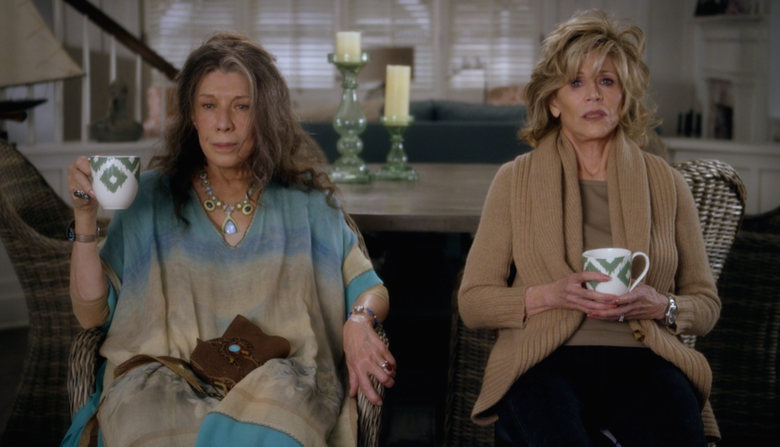
Grace & Frankie is a weird somewhat tonally dissonant half hour show from Netflix starring two legendary actresses in their 70s (and co-starring two legendary actors of the same age) from one of the creators of Friends.  The premise isn’t exactly unique (TV Land mined a very similar premise for Happily Divorced a couple of years back) but it is potentially fruitful and bold in its starring choices of women of retirement age. Unfortunately, it’s not quite compelling enough to be worth following.

Grace (Jane Fonda) is a somewhat uptight and prideful WASP type, who wants to grow old with dignity. She never had a passionate dynamite love affair with her husband, Robert (Martin Sheen), but she liked and respected him, and when she grew up that was more than enough; she liked their life and their children and wanted it to stay that way. Frankie (Lily Tomlin) is a hippie-ish wild child who did have that smoldering relationship with her husband Saul (Sam Waterston), the love of her life. Grace and Frankie have opposite personalities and naturally do not care for one another. Their husbands however are business partners and great friends. Grace and Frankie’s lives are turned upside down when it turns out that their husbands are also long-time lovers and are only now finally coming out to their wives because they want to get married. Grace is pissed, Frankie is heartbroken, and both are crushed. They both, after meeting and receiving sympathy from their respective children, exile themselves to the beach house the two couples share, which had been pitched to them as a financially prudent proposition, but of course was really a convenient love nest for the two husbands.

The series is billed as a comedy, but it’s not very funny. I don’t simply mean it’s supposed to be funny and fails, like Two and a Half Men, although it sometimes tries to be funny and fails. But it’s really much more poignant and melancholy than most traditional half hours; certainly from the get go. That makes a lot of sense when considering how depressing the situation is outside of the high premise. These two women have had their entire lives uprooted when they’re in their 70s and don’t have a lot of time to start over. Their husbands carried on their affair for years, and they desperately want their coming out to be a triumphant celebration of courageous love, but their decision to string along their wives for decades leaves Grace and Frankie holding the bag, alone, in their twilight years.

Grace and Frankie is, at the same time, loaded with very silly, obvious broad comedy which plays on the contrasting Odd Couple-relationship between Grace and Frankie, and which provides a strange contrast to the serious emotion at stake. The climactic scene of the pilot involves Frankie doing peyote to find some peace, while Grace accidentally has some as well, and they have a classic broad comedy drug scene, being outrageously silly while also somehow bonding.

Of the two modes of Grace and Frankie, the poignant emotional side works better; the actresses really are legendary for a reason, and it’s an unusual situation portrayed, especially in that older women are rarely portrayed as protagonists on television. As a comedy, it’s less successful. It’s really not funny and the jokes just don’t come through. I get the idea; dignified elderly ladies doing very stupid things maybe are supposed to be funny, but it isn’t.

Ultimately, Grace and Frankie is an interesting idea, but really not enough to make you come back to watch week after week (or binge, half hour after half hour, as Netflix goes).

Will I watch it again? No. It’s an interesting exercise, not without any merit, and it’s great to see people in their 70s, and women in particular, getting a chance to star. Still, there’s not enough there to be worth watching.

I Don’t Really Get David Letterman

22 May

David Letterman

In the wake of David Letterman’s last few shows, the winding down of the career on Late Night television that lasted an incredible 33 years, writer after writer, celebrity after celebrity, fan after fan, have come down on blogs, social media, television, and, well, everywhere really to praise and write tributes to Letterman, his influence, his brand of comedy, and his general brilliants. Well, in light of that outpouring, despite my minor terror at admitting it, I need to make it known: I never really understood the appeal of David Letterman.

I don’t necessarily relish being the contrarian and I’m much more unabashed about my other primary contrarian television stance, which is that Saturday Night Live is the most overrated cultural institution of the past 40 years. With that, I’m confident I’m right and everything else is wrong. With my feelings on David Letterman, I feel like I have to be missing something.

I have great respect for many of the people who love and idolize Letterman and who have penned all of these tributes to him in the past few weeks. I love anti-humor, caustic anti-sentimentality, self-deprecation, silly absurdism, and genre send-ups, all among the many types of humor that Letterman seems to be known for, and I still don’t really get anything out of what Late Show with David Letterman I’ve seen.

To be completely fair, I haven’t watched very many episodes over the course of Letterman’s run, but I’ve seen episodes here and there and I made a point to watch the final episode. Sure, there were some funny moments over the totality of the clips shown on the finale, but for a series of clips which seemed geared towards picking out the funniest, most memorable, and most definitive moments, the ratio wasn’t particularly high. The Top Ten lists in particular have never worked for me, and I’ve never been able to figure out if they’re anti-humor that I’m just not enjoying, or they’re supposed to be genuinely funny and they’re just not.

I have three major theories for why I don’t appreciate Letterman.

First, David Letterman is constantly talked about a s being groundbreaking; there was no one like him before, and he changed not just late-night but comedy forever in important, meaningful, and progressive ways.

I am one generation younger than the generation that truly revered David Letterman (obviously people of all ages did, but I anecdotally read the most about praise and influence from this group), and I didn’t really become cognizant of late night television until the mid to late 90s. Maybe what was once subverting tradition now feels like the tradition to me, and thus is less interesting and certainly less groundbreaking. David Letterman may well have been incredibly influential and made a huge impact on comedy, but by the time I really knew who Letterman was in any meaningful way, all the lessons he had taught had already been long absorbed into the mainstream and what was new and revolutionary was now just part of what I expected from any comic.

Second, the generation that revers Letterman most, Generation X, or more or less those who grew up in the ‘70s and ‘80s, knew Dave first from his Late Night with David Letterman show which aired in the ‘80s and into the early ‘90s on NBC. I’ve only seen very little from that show and know a fairly limited amount about it, but from what I have seen and read it seems more radical and more interesting than the Late Show with David Letterman which followed on CBS. The time slot and the ability to be more out there and less buttoned up and mainstream for a smaller, younger audience probably does matter; I distinctly noticed the change when Conan moved to the earlier time slot (Jimmy Fallon is an exception; his show was built for the earlier time slot even when it was on at 12:30). I watched some clips of a Harmon Killebrew theme night which sounded kind of amazing. If someone only had access to modern day Simpsons episodes, he or she would have a difficult time understanding my reverence for the show, and it’s possible that my experiences watching The Late Show simply doesn’t do justice to the ‘80s Late Night.

Third, adoration of Letterman goes hand-in-hand with adoration for late night television as a genre. I’ve said many times that I think the traditional monologue, bit, guest, guest, music, hour-long late night format is hopelessly outdated and boring and drawn out as hell, and since Letterman is best known as one of the key progenitors of that genre, it’s hard for me to gain an appreciation of him even if I would have had he put his comedic stylings to use in other formats. I don’t have the attention span to watch full episodes of late night, and now that we live in an era where the only traditional late night I watch are Jimmy Fallon or Jimmy Kimmel bits that spread to YouTube, I never have to (and honestly, I often start watching those bits, and am bored before the three or four minutes are up anyway). Maybe if Letterman had poured his clearly formidable talents into another form of comedy, I wouldn’t be writing this article.

To conclude, I recognize Letterman’s place in comedy, the way someone can recognize the importance of The Sex Pistols without ever necessarily wanting to listen to them. Like or not, he’s important, and that’s worth something, and people I respect like him, and that’s worth something as well. Still, I haven’t seen anything in the past month that has convinced me he’s particularly funny, and I’d love some more convincing evidence which would show me why I should care. Maybe one day.

End of Series Report: Mad Men

20 May

Mad Men

As a television viewer and fan writing a television blog, I’m more or less obliged to write at least a few words about Mad Men and the Mad Men finale.

I don’t have as strong feelings as I’d like to, but that’s not a bad thing. I liked the finale overall, and I think it remained true to everything Mad Men has been for the past seven seasons, with possibly one exception, which I’ll get to shortly.

Some people have claimed the series ended on a cynical note, others on a hopeful, redemptive note; I would argue it was neither. Everybody, more or less, grew as characters while remained true to themselves, which wasn’t always the best thing, but wasn’t the worst either. Objectively, it was a happy, positive ending for the majority of the central characters, but my first instinct, perhaps a cynical one, admittedly, was merely to see the ending as cyclic. For the most part, these characters were just on an up turn in their life’s stories, a high, followed by an inevitable low, to be followed again by an inevitable high. Some may remind up, and certainly higher than some better off than some of the lows we’ve seen them experience, but my experience through watching Mad Men has taught me that happiness, though it exists, is fleeting, a high to be chased after, but only rarely reached, and even more rarely held on to.

Don ran away. Don freaked out. Don got as far away as he could, to the other side of the country (California, which has stood in as the exact antithesis to New York before), in the absolute middle of nowhere, far away from everything he was buried in, all of his demons. California, where, with Anna Draper, he experienced his most pure human relationship, which he tried to recapture with Anna’s niece Stephanie. Then, just when it seemed that maybe he was too far gone and all hope was lost, he, like classic Don, struck gold, inspiration, and like so many times over the course of the series, he was born anew, grabbing victory from the jaws of defeat, and reinventing himself.  He took what he knew to have always been true, his gift for insight into the human soul, and packaged it for a different time. In these final couple of episodes, it seemed like Don had finally drifted too far, maybe to a place he couldn’t come back from, but then with that final smile, and the allusion to the famous Coke “Hilltop” ad, there’s an implication that Don is going to be just fine.

I don’t think Don is ever going to be a great husband or a great father. Those skills are probably just not in him and it’s hard to imagine someone who has that much trouble staying in place changing at this point. But as a peerless ad man his days are not yet numbered.

Joan is many things, but one of her defining traits is that she is a true professional. She takes her responsibilities extremely seriously and finds a way to get the jobs, difficult as they may be, done, In the chaotic culture of Sterling Cooper’s various incarnations, Joan never joins in, and does not care to put up with the hijinks and drinking that envelop most of the firm. Joan puts in her time and hard work and while she understands the unfair world she’s in, she understandably expects to be recognized for her efforts. Unfortunately, at the time, Joan is unable to find a man who respects her and is willing to treat her professional ambitions seriously. Men expect her to be the housewife. And while they may even respect her abilities, once they’re together, the men expect to be the breadwinner, and for Joan to want and to enjoy having nothing to do but sip piña coladas and look pretty. The only man who took her work life seriously was Bob Benson, who was gay and wanted to marry her for his own professional advanced. Joan ended the series entirely in control of her own life, running a new and seemingly successful business, but again, another man abandoned her due to her ambitions.

Pete’s ending is part hopeful and part sad, and I’ve changed my mind back and forth on which is more prominent. Pete came a long way over the course of the show; it’s easy to forget how he was the unquestioned villain over the first few seasons, and with good reason. He came far enough that I was actually rooting for him occasionally in the final seasons, as one of the few, along with Joan, who cared that things got done, and wouldn’t stand for the tomfoolery always going on around him. Pete looks like he’s learned some lessons, wanting to come back to his wife, taking a new job away from the temptations of New York City, talking his brother into not cheating. At the same, we know this pattern, and we know these people. How long until Pete cheats and return to his old ways? And, does Trudy even care if he does, as long as he’s discreet? Things change, things stay the same.

Pete for so long was the anti-Don; frustratingly watching as Don got away with everything he couldn’t. Don cheated for years without consequences; Pete tried it and quickly got caught. Don did half the work and skated on charm and charisma, Pete did twice as much and got hated and laughed at. And yet, Pete’s inability to get away with what Don did could have served him well in the end. When Don’s lies at home finally caught up with him, his marriage was done for good. The fact that Pete was caught and thrown out faster may have been what allowed to him and Trudy to reconcile by the end of the series. Don’s charisma and charm got him far, but allowed him to drift. Pete stayed on point, and though he was as professional at the end as he always was at the beginning, it was now behavior that was rewarded instead of punished in the new company and the new decade. Pete’s way paid off just as well as Don’s in the end if not more so.

Roger turned over somewhat of a new leaf, hitting it off romantically with someone his own age, which was a promising sign. That said, he’s still a cad, and his new paramour seems pretty mercurial herself, so I’m not particularly confident that this marriage will turn out any better than the last couple. Roger will make it through, with a wink, and a joke, and he’ll move on. For better or worse, he’s the same person he was on day one.

Betty was always smarter and more deft than the show, and because of that, often the viewers gave her credit for in the early seasons, and the last season actually gave her a chance to show that.

Putting up with Don and his incessant cheating and patronizing attitude was a huge burden, and because Don was the protagonist and Mad Men often seemed to come from his point of view, Betty, who certainly had her flaws, was even more easily seen in a negative light. After getting out from under Don’s shadow though, Betty was able to flower more as an individual and as a character. The inner fortitude Betty showed displayed after learning her diagnosis was one of the saddest, strongest, and most poignant notes in the entire series and it’s unfortunate that her untimely demise was her ultimate opportunity to show off her strengths.

Last of what I’m arbitrarily calling the Big Six major characters who really make it through the entire run (Don, Peggy, Roger, Joan, Pete, and Betty), there’s Peggy. Peggy and Stan’s romance felt out of place in a way that no other storyline in the finale did. It’s not simply the pairing of Peggy and Stan; they’ve been close for a long time, and while I’m still not sure romance was the right play between the two of them, it definitely felt plausible based on what we knew about their relationship. The way it unfolded though, felt almost like something out of a romantic comedy, as it dawned on Peggy, slowly, after Stan confessed his love that she felt the same way. It’s an unambiguously happy result, and I like Peggy and Stan, and sure, I’m happy for them. But it tonally felt off. The “I hate you, I love you” phone banter was more Nora Ephron than Mad Men.

What did make sense was Peggy considering, but ultimately decide to stay within the confines of McCann. The recruiter she spoke with a few episodes earlier told her McCann was the best possibly place for her to hone her talents and resume, and she knows her goals and that this is the best way to reach them.

The Mad Men characters have come a long way over the course of seven seasons in real life and a decade within the show. They’ve dug deeply, discovered truths about themselves, and faced and overcome difficult obstacles. They change and learn but ultimately remain the same. That sounds like a sad lesson, but I don’t mean it that way, People stray true to the core of who they are, and that is just as often a positive as a negative.

End of Season Report: Brooklyn Nine-Nine

18 May

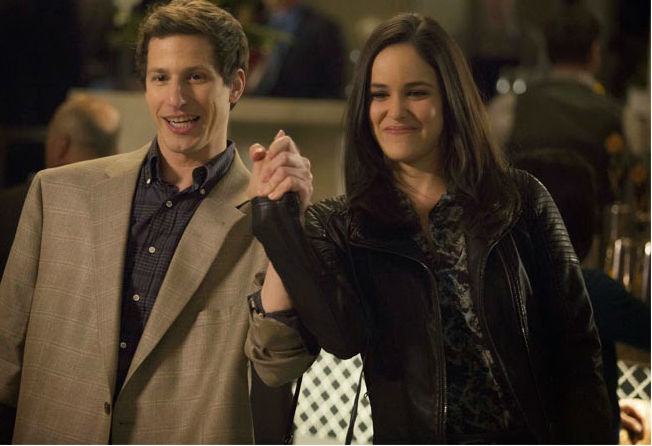
Brooklyn Nine-Nine

As the second season wraps up, I leave with very mixed feelings about Brooklyn Nine-Nine, which is undoubtedly unfair, because it is unquestionably a good show. My immediate reaction speaks less to its overall quality than to the expectations I had before the season began. The first season was good, and left me feeling that the show could be great. The pieces were there but they just needed time to come together. After the second season, however, I came away still thinking that Brooklyn Nine-Nine is a good show, but feeling that’s it more likely that the show will put together a string of good seasons without necessarily approaching greatness. There was no sophomore slump, rather merely a lack of a sophomore leap. Because I don’t want to convey a negative overall conclusion, but rather some constructive criticism, I’ll structure my thoughts in the form of a time-tested compliment sandwich, in which, I’ll note some good points first, follow it up with some problems, and finish up with some positives again.

First, and most importantly (and I haven’t written more than two lines about this show without saying this) Andre Braugher is a national treasure who should be vacuum sealed between takes so he can be preserved for future generations of television. He’s wonderful in general, and in this role, and I have nothing but acclaim for his Captain Holt.

There’s a great sense of unity in the squad room, and everyone, for the most part (Gina is not the biggest Amy fan) clearly likes each other. There’s a sense of camaraderie that feels real, and everyone, when push comes to shove, has each other’s back.

Now, for the criticism. The Jake and Amy romance feels both forced and predictable. One of my biggest more general criticisms of Brooklyn Nine-Nine is that many of the characters and plots feel like they were conceived on the page as part of the premise of the show, and haven’t been changed enough in reaction to the natural rapport, chemistry, and strengths of the actors. The Jake-Amy romance is exhibit A for this in my mind; something planned far ahead of time which doesn’t really work in practice.

Two episodes before the season finale, Amy made a point about how she was not going to date cops. It would have been shocking, following that, if Amy and Jake had not gotten together in some way by the finale. I don’t expect Brooklyn Nine-Nine to be utterly unpredictable, filled with twists and turns, like Game of Thrones, but If it’s incredibly predictable that a character will do the opposite of what she says (and not because the character is simply a liar) that’s not a great sign.

Several of the characters need to be turned down a notch, especially in certain situations and character pairings. Charles is a much better character when paired with anyone but Jake. Whenever he’s around Jake, he’s far too sycophantic, and jokes that were funny based on this nature of their relationship when used just occasionally are now overused and annoying. He’s obsessed with Jake, and while Jake obviously likes him as well, it always feels like a weirdly uneven relationship, and Charles comes off as way, way more of a weirdo than feels appropriate to the show. Whenever he’s not around Jake, Charles’ weirdness seems far more endearing and less over the top, and his season finale plotline with Rosa, shows just how far he’s come from the crazily creepy early first season when he was obsessed with her, to where he’s her friend, clearly knows her well, and helps her and her boyfriend celebrate her birthday.

Gina’s weirdness can often be delightful, but her constant obsession with Terry is too much and overused. Jake is very close to an excellent character, but he drives me crazy sometimes as well. I wish he could just occasionally turn off his stupid-joke-machine, because the jokes just aren’t always good enough to be worthwhile. A couple different, or even simply fewer of these jokes, would give the good ones, which there are plenty of, time to breathe.

Last, a few more compliments to toss out. Some of the characters are great as they are. Holt, as I mentioned before. Terry perfectly functions as the straight man and den mother of the office, and the universal affection shown towards him from both above and below feels warranted. Rosa is wonderful as is, and they’ve put her in a relationship that keeps her hard edge while expanding her character’s depth. The actors in general are very good and very funny; they’re just sometimes given material that doesn’t quite highlight what they do best, or give them enough range to show it.

Brooklyn Nine-Nine, I don’t want to give up on your chance for greatness just yet. Despite a season of treading water, you’re really not far away. Just tweak. Rewatch the seasons, learn from the characters and the actors, and change everything up slightly, and then learn from that again, because you’ll still make mistakes. Parks & Recreation had an excellent second season, but really hit its peaks with the superb third season (and the introductions of Chris and Ben, replacing Mark). Despite my reservations, I fervently hope Brooklyn Nine-Nine will become a top tier comedy and it certainly has the tools to get there.