Archive | Uncategorized RSS feed for this section

Fall 2016 Review: Bull

23 Sep

bull1

A few words Bull generally, and then a few words in particularl on the most noteworthy thing about this episode of Bull, which is a couple of strange decisions in terms of the episode structure.

First, Dr. Jason Bull is a super duper expert jury consultant (don’t call him that though, he hates that term!). Basically what it means is, the very rich hire him to do an insane amount of research about who to put on their jury and about the actual jurors that get selected, how those jurors think, and what the lawyers can do to sway the jury, premised on the fact that the jury is judging the case as much by how they feel as by the facts.

Dr. Jason Bull is a superhero at this, but to help him, he’s assembled a superteam. He’s got, from what I can tell in the first episode where the team is sorely underused, a lawyer who tests out arguments in front of a mock jury, a fashion consultant who makes sure the client conveys the right message through his look to the jury, another psychologist, an investigator, and a hacker who does lots of illegal things to help the team dig up dirt on everyone involved in the trial.

In the premiere, the team works for the son of a rich guy accused of a murder on a boat party and they convince the client that his lawyer’s strategy is wrong and to implement their approach instead. This includes a combination of the team both finding out a whole bunch of new helpful facts as well as steering their argument to the jury in a way that the most influential juror, who they’ve pinpointed through research, will come out on their side. Surprise, surprise, it works, the defendant gets off exactly as they predicted, and our heroes get ready to move on to their next case.

Now, here are the stranger parts of the episode.

The series starts with a whole bunch of regular people talking about their impressions of juries and the justice system, leaving with the idea that the system is more beneficial to rich people. This led me to believe that Dr. Bull would be taking on lots of pro bono clients to right the wrongs done to the 99 percent, but that’s not what happens at all; his first client is the son of a crazy rich guy, so I’m not sure what the goal of that opening was.

The biggest problem with the nature of this show is that it’s hard to make the jury consultant the star for the logical climax of a legal show; the key witness’s examination and the closing statements. That’s the case here; the way of having Bull stay involved is that he handpicks the associate to take the lead over the original main lawyer, because he feels she’ll be seen as more sympathetic to the jury, and he gives cues to her as the examination (in this case of the defendant) goes on. But it’s still tonally strange and feels anticlimactic; their strategy kind of just works and it’s a character who is not in the main cast who is the star of this key moment.

The defendant is acquitted, which is a win for our heroes, but then instead of just ending, the show had two strange additional endings which both feel out of place. First, Bull rushes out to talk to the most important influencer juror. This is fine, he wants to ask her what made the difference, maybe get some input for future cases, whatever. But then instead of that, this turns into some weird moment of learning more about what makes Bull tick. The juror says she can tell that Bull came up through pain and grew up in a difficult household. Whaaa? After an episode with exactly zero personal revelations about Bull’s past, out of nowhere there’s some seemingly obligatory reference to Bull having a difficult childhood because this backstory is somehow required for these genius characters.

Second, unless I turned around during the wrong second while I was watching, which I’m concerned I did because this was so incongruous, there was zero talk the entire case of who the real killer was. There was very briefly a reference to a necklace the victim possesses, and how it may not have been found on the victim. But the show ends with police cars and Bull pulling up to the house of the mother of the best friend of the defendant who we’ve seen for all of a minute or two, as some sort of satisfying conclusion that we’re supposed to realize both that she did it, why, and have it all feel like all tied up. Instead it just feels very strange.


Fall 2016 Previews and Predictions: CBS

20 Sep

CBS

(In order to meld the spirit of futile sports predictions with the high stakes world of the who-will-be-cancelled-first fall (edit: spring, now) television season, I’ve set up a very simple system of predictions for how long new shows will last.  Each day, I’ll (I’m aware I switched between we and I) lay out a network’s new shows scheduled to debut in the fall (spring, again)(reality shows not included – I’m already going to fail miserably on scripted shows, I don’t need to tackle a whole other animal) with my prediction of which of three categories it will fall into.

These categories are:

  1. Renewal – show gets renewed
  2. 13+ – the show gets thirteen or more episodes, but not renewed
  3. 12- – the show is cancelled before 13

Additional note: Since more and more series on network TV are following cable models with set orders for shorter seasons, and mid-season replacements tend to have shorter seasons in particular, I’ll note any planned limited runs in my prediction section for each show)

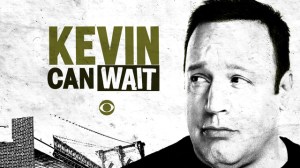
Kevin Can Wait – 9/19

Kevin Can Wait

Kevin Can Wait, but boy us viewers sure can’t. I end up saying “you know what this is” more than I want to in these descriptions, which feels lazy, but I’d like to think that when I say that, you, the TV viewer, can conjure up a better idea of some of these shows because they’re just so obvious than I can possibly describe in a couple of sentences. And is this ever one of these shows. Kevin James’ character, maybe he’s named Kevin, just retired and he’s full of hilarious punch lines that would be at home in any stand up comedian-led mid’90s sitcom or, for that matter, in King of Queens, which this basically just is. Fat funny white husband who doesn’t do any work around the house has a younger, more attractive wife, and a couple of kids who he has to relate with.

Prediction: Renewal Of course this shouldn’t get renewed. But it’s CBS and it’s Kevin James. I made this mistake already predicting the early demise of Last Man Standing on ABC, which believe it or not, is entering its sixth season.

Bull – 9/20

Bull

The folks at CBS have pulled off quite the coup here. They’ve created a lawyer show where the main character isn’t even a lawyer! No, Micheal Weatherly (getting his just desserts after serving as sidekick on NCIS faithfully for a decade) is a champion jury consultant who believes that trials and won and lost by the composition and messaging delivered to the jury, rather than the presentation of facts. His enemies are the lawyers who try to tell him he’s wrong, and that he doesn’t know what he’s talking about. Weatherly portrays a classic superman who charms everyone who comes into his presence while being amazing at his profession and delightuflly idiosyncratic. You can imagine a commercial for the show that’s just a montage of several characters saying “Bull” in different tones.

Prediction: Renewal – This is so fucking generic that there’s just as good a chance it fails. But that’s everything on CBS, right, and Weatherly has earned his shot with the network. Oh, and by the ad test, this and Kevin Can Wait are the far and away most advertised CBS shows in NYC.

MacGyver – 10/23

MacGyver

He’s baaaack. A super duper young spy (about a decade younger than Richard Dean Anderson was when he got the job) who succeeds while, you know, MacGyvering things; the trailer plays very clearly on the primary gimmick of resourcefully pulling together unlikely materials around him in any scenario to accomplish his task and being a quick wit while doing show. He’s got a couple of allies, but basically the trailer focuses on the action scenes.

Prediction: Renewal – for all the gimmicky and likely mediocrity, I’ve said before, there’s always a surprising shortage of legitimate action shows on television.

Man with a Plan – 10/24

Man With a Plan

CBS continues to just churn out the CBS-iest shows. Here’s how they do it, Man With a Plan-style. Take a 40something white male one-time TV star (Matt LeBlanc). Give him a nuclear family (two or three kids) and place him in a scenario that you would not expect from a 40-something white man in the 1980s, which in this case means that when his wife goes back to work to become the primary breadwinner, he’s got to take care of the kids, full-time. A man! As a primary caretaker! Think of all the zany misadventures! Audiences are never going to believe this one! Just the preview has me wanting to write more words about how offensive and terrible it is, but I’ll wait for an actual episode.

Prediction: 12- Please. Even by CBS standards. This trailer makes Kevin Can Wait look progressive.

The Great Indoors – 10/27

The Great Indoors


Pure Genius


Pop Chart Championship Belt: Part 3

31 Aug

Mariah Carey

The final installment, part 3 will hand out the championship belt from 1995 through the current day. Check out part 1 for the rules and part 2 is here.

1995-96:

Mariah Carey

After a brief respite, Mariah is back. Half of her damage is done with Boyz II Men, on the mega-super-hit “One Sweet Day,” but she also has the sublime “Fantasy,” which is enough to regain a title that was almost hers for six consecutive years. “One Sweet Day” held on well into ’96, and though Carey didn’t have a monster year she produced another number one, “Always Be My Baby” and her two biggest competing acts were just getting started.

Contenders: Boyz II Men, who are already on the way down, still had the aforementioned “One Sweet Day” and “Water Runs Dry.” TLC, who had announced themselves a year earlier with the release of debut album CrazySexCool hit new heights with #1s “Creep” and “Waterfalls” and a couple of other hits. In 1996, Toni Braxton and Celine Dion had huge years; Braxton with her only two #1s and Dion with “Because You Loved Me” and “It’s All Coming Back to Me Now” but I didn’t think either were so overwhelming as push the default Carey off her perch.


1997:

Puff Daddy

Carey was absolutely no slouch in 1997, hitting the apex with “Honey,” but this year someone grabbed the title from her and really ran with it. Puff Daddy destroyed with his debut album “No Way Out.” He had two solo chart toppers, featured on one of Notorious B.I.G.’s two, both of which he produced. That’s how you get to the top.

Contenders: Carey, as always. The Spice Girls had their big moment in the sun here, with “Wannabe,” “2 Become 1,” and “Say You’ll Be There,” their three biggest American hits all peaking. They were a genuine sensation, and could have pulled it off in another year. Hanson had their brief moment this year as well, and created a sensation, but smaller and narrower than The Spice Girls. Notorious B.I.G. topped the chart twice, but it is difficult (though maybe not impossible) to hold the belt while deceased.


1998:

Celine Dion

This is hardly obvious and we’re at the point where I’m starting to let my personal experience into the equation. “My Heart Will Go On” somehow only actually topped the charts for two weeks, but combined with the sheer pop cultural force that was Titanic it was beyond omnipresent that entire year. Dion boosted her case with a duet #1 with R. Kelly to end the year.

Contenders: The other biggest song of the year was “The Boy is Mine” by Brandy and Monica. Both had huge years, but I don’t think either had the heft to be the biggest pop star; some could disagree. Puff Daddy, Mariah Carey, and Janet Jackson all had notable years, and Usher, who we’ll hear from again, started his assault on the charts.


1999:

The Backstreet Boys

A new era beckons in full. The new superstars, some for one minute, some for the next decade, emerge. The Latin explosion, boy bands, Christina and Britney. It’s an entirely new landscape. And yet, this year, I’m going farther off-book than I ever have before, leaning heavily on personal remembrances. The Backstreet Boys, in what anyone who was 10 or older during this time period will find beyond stunning, never hit the top of the charts, and only hit #2 once with “Quit Playing Games with My Heart.” This year, their best remembered song “I Want It That Way” somehow only moved up to #6. Their third album though was the album of the year, Millenium, selling a million copies in the first week.

Contenders: There are many contenders. TLC came back in a huge way with Fanmail. Britney and Christina debuted, both as instant superstars, and either would be a worthy choice. Monica and Brandy, although they were already losing steam, were still huge before all the new artists took over halfway through the year. Destiny’s Child and Jennifer Lopez debuted, and Ricky Martin had a moment where he was the face of the Latin explosion.


2000:

*NSYNC

We were still, but not for much longer, in the land of the boy bands, although the focus had shifted from The Backstreet Boys, who had already spun out their biggest singles, to *NSYNC, who still had them in the bank. No Strings Attached was their Millenium and “Bye Bye Bye,” “It’s Gonna Be Me,” and “This I Promise You” were all big chart entries off the album.

Contenders: Destiny’s Child had a huge year with “Say My Name,” “Jumpin’ Jumpin’” and “Independent Woman Part I.” Christina Aguilera had another big year.


2001:

Destiny’s Child

I was neck and neck between giving this to Destiny’s Child and Jennifer Lopez, and I’m still not sure I made the right call. Destiny’s Child were at the peak of their powers. “Independent Woman Part I” started the year on top, “Bootylicious” would come later, and “Survivor” would hit #2. Lopez, on the other hand, had “I’m Real” and “Love Don’t Cost a Thing.”

Contenders: Lopez, and then Usher, who hit #1 twice. We’ll hear from him again.


2002:

Eminem

It’s crazy that I haven’t mentioned Eminem yet, and I haven’t found an artist yet during the years since I personally began experiencing pop music whose obvious if-you-were-there and album popularity matched up with the charts as little as Eminem. He only had one Billboard Hot 100 top 10 hit to this point despite churning out songs that everyone listening to Top 40 radio knew all the words to – “My Name Is,” “The Real Slim Shady,” “Stan.” In 2002, the walls came crumbling down. In the very same year Mr. Mathers released The Eminem Show and starred in 8 Mile, which would give him his first charter-topper and signature song, “Lose Yourself.” “Without Me,” his perhaps funniest song, and “Cleaning Out My Closet” completed the monster year.

Contenders: Lopez. Usher. This was also Nelly’s biggest year, and he sits in the number two position, dominating the summer with the 1-2 punch of the much-remembered “Hot in Herre” and the fairly rightfully largely forgotten “Dilemma.”


2003:

50 Cent

2003 is the story of three artists, all of which have a nearly equal claim to the throne, and who, between themselves, recorded the three most memorable songs of the year. 50 Cent debuted in force, rolling out his signature song “In Da Club”, which remains an anthem today. He hit #1 with the more melancholy “21 Questions,” and #3 with “P.I.M.P.” Beyoncé debuted as a solo artist and owned the summer with the still-beloved “Crazy In Love” – she also topped the charts with the excellent “Baby Boy,” introducing the world to Sean Paul. Outkast, who had been around for years at this point, released what would be hailed as the album of the year, Speakerboxx/The Love Below, and the third song of the year, Andre 3000’s “Hey Ya.” Big Boi’s “The Way You Move” also climbed the charts, though it wouldn’t actually reach the summit until 2004.

Contenders: Beyoncé, Outkast. If I came back at this again, I’d probably keep switching back and forth between the three.


2004:

Usher

After years of challenging for the title, Usher takes the belt with a vengeance. The easiest call since Puff Daddy’s 1997, Usher dominated the top of the charts like no one since The Beatles in 1964. The stats are mind-blowing. Usher spent more than half the year, 28 weeks, atop the charts with four different songs, and followed himself in the top slot twice. One of these songs was the millennial anthem, “Yeah,” which would be, without any real competition, the biggest song of the year. The others were “Burn,” “My Boo,” and “Confessions Part II.”

Contenders: There really weren’t any. Alicia Keys, Beyoncé, and Nelly had nice little years, but this was a Barry Bonds-2001-style season. Usher was a man apart.


2005:

Kanye West

Unlike 2004, this is one of those years I’m really torn on, and, despite remembering this year fairly well, I’m concerned I’m rewriting history with my choice. Mariah Carey unquestionably had the bigger chart year. She had the single biggest song of the year, “We Belong Together,” and largely forgotten additional follow-ups #1, “Don’t Forget About Us” and #2 “Shake It Off.” Hers was a massive comeback album after the flop of Glitter, and she shone bright. Kanye, on the other hand only really had one certified hit, but it was the second biggest song of the year, and the song of the summer, “Gold Digger.” Kanye produced a couple more minor hits, but he brought what he would always bring, a sense of aura that has always made him a bigger pop star than pop stars whose chart records are equal or better.

Contenders: Mariah Carey, as mentioned before. 50 Cent also had a strong year, but he suffered what would befall many an artist; although his numbers were strong, there was a biting feeling he was already on the way down from his early triumphs.


2006:

Justin Timberlake

Here’s where the calendar year problem gets tricky. Justin Timberlake didn’t appear on the scene with singles until halfway through. Still, however, his FutureSex/LoveSounds was the pop album of the year, and “SexyBack” the song. “My Love” also hit the heights.

Contenders: Another near-miss by Beyoncé, who has to think there’s some conspiracy keeping her from the belt, and maybe she’s right. “Irreplaceable” was the other definitive canonical single in a year full of one-offs to be never heard from again (D4L’s “Laffy Taffy,” James Blunt, Daniel Powter). She has a strong argument. With less strong but still decent cases are Fergie, who started her dynamite solo career with the “Hollaback Girl” rip off “London Bridge,” Sean Paul, with “Temperature” and Rihanna who had her first monster year with “S.O.S” and “Unfaithful.”


2007:

Rihanna

This was another year when I went back to my memory banks and picked based on reputation rather than sheer chart success picking Rihanna over the top contender Fergie. Rihanna still had plenty of chart success and what puts her over the top for me is that she had by far the biggest song of the year, “Umbrella.” (The other dominant song of the year was the bizarre novelty of “Crank That (Soulja Boy).” She then showed off her range, rocking out with “Shut Up and Drive,” going slow with “Hate That I Love You,” and dancing it up with “Don’t Stop the Music.”

Contenders: Fergie fans should rightfully be angry; she absolutely killed it, hitting #1 with the wonderful “Glamorous” and the less wonderful ballad “Big Girls Don’t Cry” and the top five with “Fergielicious” and “Clumsy.” I weighed the power of “Umbrella” versus the number of Fergie hits. Chris Brown had the monster “Kiss Kiss” and “With You.”


2008:

Lil Wayne

Now, here is an interesting year. In another case of forced strange calendar timing, 2008 pits the beginning of the year versus the end. One day, I’ll spend another 5000 words breaking this out by month, but until then there are these hard choices to make. There are three chief contenders. Lil Wayne was at his peak, releasing the monster critical and commercial success Tha Carter III. It sold a million copies and produced four hits, three top 10, and “Lollipop,” which is his sole solo #1. Rihanna continued her success with two chart-toppers, “Take a Bow” and “Disturbia.” Beyoncé’s “I Am…Sasha Fierce” began its two-year run of hits during the second half of the year, with “If I Were a Boy” and the monster “Single Ladies (Put a Ring On It),” whose video made it a sensation.

Contenders: Beyoncé, Riahnna. Katy Perry owned the summer with “I Kissed a Girl” but she was too new to be the queen. T.I. had back-to-back smash #1s, but not enough of a presence for anyone to rank him above his contemporary Lil Wayne.


2009:

The Black Eyed Peas

Another very difficult year, and another three act race. Beyoncé came into the year with “Single Ladies (Put a Ring on It)” and followed up with huge hits “Halo” and “Sweet Dreams.” This was Lady Gaga’s big year, and the fact that I didn’t pick her makes me slightly queasy, as I’ve been going back and forth, between her and The Black Eyed Peas, changing my mind every couple of minutes. She had five top five hits; “Just Dance,” “Love Game,” “Poker Face,” “Paparazzi,” and “Bad Romance;” smash after smash. The Black Eyes Peas didn’t have nearly as many hits. What they did have though, were the two biggest songs of the year; they were back-to-back #1s and their combined reigns lasted an insane 26 weeks. You could not go into a store or restaurant in 2009 without hearing “Boom Boom Pow,” “I Gotta Feeling,” or more likely both.

Contenders: Lady Gaga, Beyoncé


2010:

Katy Perry

Another close year, with two contenders, but I feel more confident about the final answer from my memory and experience. Rihanna actually had more hits and more #1s – three of her own, and featured on Eminem’s “Love the Way You Lie.” Rihanna came in as well as the bigger pop star, which should have given her an edge. Katy Perry just absolutely owned this year though. Coming into the year, no one knew whether she had another hit in her; 2008 was a long two years ago. But it didn’t take long from the video debut of “California Gurls” for everything to change, and three number ones later, she really was the biggest pop star; it already felt like every song she released from then on would it hit #1, and not a ton has changed since.

Contenders: Rihanna. This was Ke$ha’s big year, but while “Tik Tok” was still the better song, and she had a lot of hits, Perry overshadowed her as the more prominent Dr. Luke protégé. Eminem had an enormous comeback.


2011:

Adele

Katy Perry was just as big in 2011, though she was now on her second tier #1 singles. Rihanna was as busy as ever, cranking out a couple more #1s. 2011, though, introduced a new entrant, who, though barely heard of in America before the year, really did completely take over the country. Adele had only a #21 hit coming into the year, 2008’s “Chasing Pavements,” but she took the US by storm, and while, if I didn’t know better, it doesn’t seem like she’d be the biggest pop star in the country just from this year, having been there there’s no question that she was, with chart-toppers “Rolling in the Deep” and “Someone Like You.”

Contenders: Katy Perry, Rihanna


2012:

Taylor Swift

2012 was a stranger year; unlike the past two, no one had their timing exactly right and put out the kind of monster year that several acts had in 2010 and 2011. 2012 was filled with an unusual number of one-offs as biggest songs of the year – Gotye, Carly Rae Jepsen, and fun. No one really took the crown. Adele and Katy Perry were slowing down, both contenders but neither at their peaks. Rihanna was a force as usual. A new champion, who had been gaining and gaining in the prior years, earned the belt. The major problem with Taylor Swift’s case was that she was entirely absent from the year until October. That said, in such a year, where no one else dominated, that’s enough – and she killed from that point on, with her album Red, which sold a million in its first week, and her first #1 single, “We Are Never Ever Getting Back Together.”

Contenders: Adele, Katy Perry, Rihanna


2013:

Miley Cyrus

More 2012 than 2010 or 2011 again, 2013 was a random, strange year, with a lot of artists coming out of nowhere to dominate the pop chart. Macklemore and Ryan Lewis had the biggest year, but no one would realistically consider them contenders. Bauer had an instrumental viral video-propelled #1 with Harlem Shake (remember that?) and Robin Thicke, Daft Punk , and Lorde had the year’s biggest songs. Like Katy Perry a couple of years ago, Miley was a familiar face, but it wasn’t clear whether we would ever hear from her again after being absent from the scene for a couple of years. All of a sudden, she was everywhere; recording hit songs, controversial videos, frank interviews, and generating controversy like crazy. And she had two monster, year-defining hits, “We Can’t Stop” and “Wrecking Ball.”

Contenders: Taylor Swift, Katy Perry, and Bruno Mars


2014:

Taylor Swift

She arguably should have held the title three years in a row, and this year was another story of two halves, thanks to Swift’s penchant for not releasing albums until October. Again, once Swift’s new music emerged, she dominated, even moreso than her previous title year; “Shake It Off” hit #1 quickly, “Black Space” did later, and for longer, and her album outsold the next two biggest debuts combined.

Contenders: Beyoncé culturally owned the early part of the year; she was the closest to Swift, with the reverberations of her surprise album lasting well into mid-year, and hits like “Drunk in Love,” and “XO.” Iggy Azelea and Ariana Grande had huge years but as relative rookies didn’t have the clout of the instant appeal to qualify for the belt.

And there we are. Halfway through the year, Swift is the easy favorite to continue her reign, but we’ll wait before rendering final judgment.


The Pop Chart Championship Belt: Part 2

28 Aug

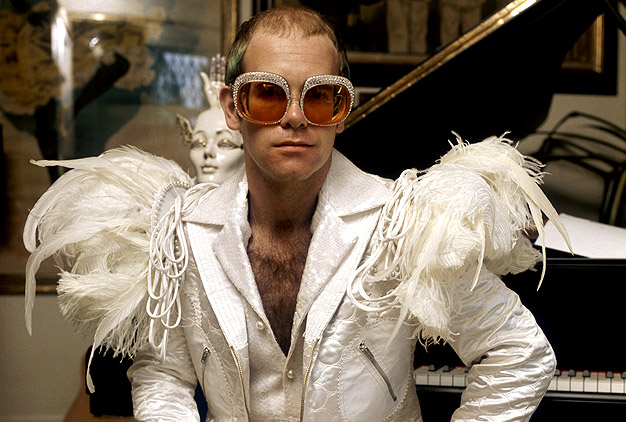
Elton John

Here’s part 1 which explains the rules and takes us from the mid 1950s to 1973. Part 2 today starts with 1974.

1974-76:

Elton John

We’re full on into the ‘70s now and the belt is Elton John’s for the taking. Elton John, more than any other artist, owned the pre-disco ‘70s. With four chart-toppers and seven top 10s between the 1974 and 1975, John was on fire with stone cold classics. John was already fading by 1976, but the lack of any strong contender and a couple more hits including duet “Don’t Go Breaking My Heart” kept him on top another year. His career lasted forever, and he would have his least likely biggest hit with a putrid remake of “Candle in the Wind” in the late ‘90s, but John would never again be on top of the world.

Contenders: Paul McCarntey and Wings did not go away, hitting the top of the charts in each of these three years. The Eagles were as close as can be from grabbing the belt, and John Denver could almost see the pinnacle. Stevie Wonder had a couple of #1s.


1977:

Stevie Wonder

As 1970s light, easy rock has started to fade away and disco is on its way in, an artist who has lurked around the edges finally gets the crown. Wonder put up two huge #1s in 1977 with “Sir Duke” and “I Wish,” and while he didn’t have a ton of other hits, no one else did either, and he’d been knocking on the door throughout the decade.

Contenders: Paul McCartney, and Elton John, both unsurprisingly.


1978-79:

The Bee Gees

1978 presents the most obvious choice since The Beatles. We’re now full on into the short but overwhelming disco era, the year Saturday Night Fever came out. The Gibb family was so in charge that little brother Andy is the first challenger in line this year. The Gibbs wrote, between the Bee Gees, Andy, Yvonne Ellman’s brilliant “If I Can’t Have You,” and Frankie Valli’s “Grease,” 7 chart-toppers. With 1979, I had a wrenching decision to make. Donna Summer out-charts the Bee Gees to become the biggest disco act that year, and for the last time, in 1979, the biggest disco act was the biggest pop act in American. Summer had three #1s, a couple other top 5s,and was coming off a monster 1978 of her own. Still, the Bee Gees, with a couple more #1s of their own, were still the biggest act in the genre, and I decided to give them the edge due to reputation.

Contenders: Andy Gibb, although it would be hard to ever put him ahead of his brothers, and then disco stalwarts Donna Summer and Chic.


1980:

Donna Summer

Disco’s over, and we have another difficult year, like 1970, where the pop landscape is completely shifting and there is no dominant force.

Genre-bending rock acts Blondie and Queen had their commercial peaks, Paul McCartney and John Lennon both topped the charts a decade after The Beatles’ destruction, and the #1s ranged from country with Kenny Rogers to the dying whimpers of disco with Diana Ross and Lipps Inc.’s “Funkytown.“ This is another year in which I would ideally leave an unclaimed belt. Due to none of these new entrants being particularly convincing, I went with Donna Summer, who was coming off two monster years, and managed to hold on to her momentum slightly longer than the collapsing Bee Gees with top five hits “On the Radio,” and “The Wanderer.”

Contenders: Any of the artists mentioned above – Queens, Blondie, Lennon, McCartney, but really anyone who recorded an album.


1981-2:

Hall & Oates

Hall & Oates hit the big time in the mid-70s, smartly sat out the disco era, and then came roaring back when disco faded as the ‘80s began, untarnished by disco stink, as if it had been part of their plan all along. In 1981, they hit the pinnacle twice with “Kiss on My List” and “Private Eyes,” hit #5 with the much loved “You Make My Dreams” and released “I Can’t Go for That (No Can Do)” which would be the first new #1 of 1982. This was a still a period that lacked a true superstar – the really big superstar era of the ‘80s was right around the corner. Hall & Oates weren’t quite as strong in 1982, but they held on by, as Homer Simpson once said, the two greatest words in the English language, “De” “fault.” Well, that and two more number ones – the aforementioned “I Can’t Go For That” and this author’s personal birthday #1, “Maneater.”

Contenders: Olivia Newton-John. A rare survivor of the disco era, Newton-John changed her sound to adjust for the times and had her biggest hits, first in 1980 with “Magic”, and then in 1981 with the monster hit “Physical.” She didn’t have a ton of hits in ’81, which hurts, but she had a track record and “Physical” was beyond unavoidable. Michael Jackson’s “Thriller,” while the biggest record of the year, didn’t come out until November, and we’ll hear more from Jackson momentarily.


1983:

Michael Jackson

What a delightful surprise. It’s time for our first easy year in a while. Thriller, as mentioned before, arrived in 1982, but not until November, and it was 1983 when the brunt of that album’s megasuccesss really took hold on the pop chart. Somehow, the album only produced two #1s, “Billie Jean,” and “Beat it,” but they were of the never-to-be-forgotten variety, unlike some of Jacksons’ later work. Six of the seven top 10s the album would produce crested this year; “The Girl is Mine” had topped out at #2 the year before.

Contenders: Really, no one, but poor Lionel Richie has his biggest year only to get buried by an all-time season. Richie never gets his moment in the sun in these rankings, despite five #1s and 13 consecutive top 10s to begin his career. The Police’s swan song was also a major event and produced all-time monster #1 “Every Breath You Take.”


1984:

Prince

There’s definitely an argument for continuing Michael Jackson’s reign; despite the fading of Thriller’s numerous hits by this point, the album was such a monster that Jackson’s sheer reputation may have kept the king the king. I chose to go another way, however, to credit Prince for the massive critical and commercial achievement of Purple Rain. While it didn’t match Thriller because nothing could, it sold millions upon millions of copies itself and propelled “When Doves Cry” and “Let’s Go Crazy” to the top of the charts and the title track and “I Would Die 4 U” into the top 10.

Contenders: 1984 is a massive year for contenders. Jackson, as mentioned above. Madonna has an excellent argument for this perch herself, hurt only by her relatively newness – “Like A Virgin,” “Material Girl,” “Borderline,” and “Lucky Star” all crested this year. Critical favorite Bruce Springsteen had his commercial breakthrough; while he never saw the summit, Born in the USA spawned a record-tying seven top 10 singles.


1985:

Phil Collins

I’m torn here. Would anyone actually have called Phil Collins the biggest pop star for a moment in 1985? His record is unparalleled – “Sussudio,” “One More Night,” and “Separate Lives” topped the charts and he had three additional top 10s. No Jacket Required was released in January, helped Collins simultaneously top the singles and album charts, and eventually went Diamond.

Contenders: Madonna had an excellent case; if she’d had her previous year or next year in 1985, she’d have the belt; timing is everything. Whitney Houston had her first #1 but was just starting to establish herself as a major force. Wham! had two #1s including the sax-centric “Careless Whisper;” we’ll hear from member George Michael again.


1986:

Madonna

After waiting on the precipice for two years, Madonna final gets her title, and it’s well deserved. “Live to Tell” and “Papa Don’t Preach” went to #1 while “Open Your Heart” began its ascent to what would be a #1 the next year, and the title track off of True Blue hit #3.

Contenders: Whitney Houston is now officially in the challenger’s seat Madonna last occupied, with two more number ones. Janet Jackson, Michael’s little sis, had her first monster year in the 1986 with four top 10s.


1987:

Whitney Houston

Houston breaks through with the release of her second album, “Whitney.” While some critics complained that the material was a step back from her debut, the public didn’t agree, sending its first four tracks to the top of the charts, the first time ever for a female artist, two of which peaked in 1987.

Contenders: Madonna, as she would for the remainder of the decade, continued churning out hits. Michael Jackson’s Bad arrived in the second half of the year, and led to two chart-toppers; Jackson was quite arguably still the biggest global superstar, but he suffered relative to the monster success of Thriller.


1988:

Michael Jackson

With all due respect to Whitney Houston, who keeps the hits coming, this is a two- man race, and I gave the tiebreaker to the man nicknamed the King of Pop. George Michael reached the height of his hall of fame career with Faith, which would produce four #1s in 1988 alone. Jackson, meanwhile, was cresting off Bad – while largely considered inferior to Thriller then and now, Bad produced a record five #1s, three of which peaked in 1988, and Smooth Criminal, which wasn’t one of them, but may be the best single off the album.


1989:

Madonna

All of a sudden, the era begins to shift. The King of Pop has some more #1s and ridiculously expensive music videos left in him, and a couple of the players who emerged are here to stay, but Michael is starting to fade. Madonna, Janet, and Whitney are still around, but some new contenders arrive. The very biggest years in 1989 are from a handful of acts who would become huge sensations, only to disappear from the scene in less than two years, namely Milli Vanilli, New Kids on Block, and Paula Abdul. I struggled to figure if either Milli Vanilli or New Kids were enough of a sensation to take the belt in a year where none of the established stars had monster years, and erred on the side of Madonna, who topped the charts with “Like a Prayer,” and hit #2 with “Cherish” and “Express Yourself.”

Contenders: New Kids on the Block, Milli Vanilli, Paula Abdul.


1990:

Janet Jackson

What a family, right. It’s finally Janet Jackson’s turn to shine. Her landmark album Rhythm Nation 1814 came out in 1989, but the world didn’t get the full brunt of its success until 1990. Two number ones, two number twos, and she was off and running.

Contenders: The same suspects from ’89. Milli Vanilli, New Kids on the Block, Paula Abdul, and Whitney Houston, Phil Collins, and George Michael.


1991-3:

Mariah Carey

And a new superstar enters the ring. Carey actually debuted in 1990, going straight to number one twice. In 1991, she hit the peak three times, with an additional number two. Carey’s shelf life is longer than most people on this list; she had a number one hit in every year of the ‘90s except one, and she came out swinging right out of the gate. She followed with a less but still strong 1992 and holds the crown due to no other credible challenger stepping up.

Contenders: The ‘80s fully turn into the ‘90s during Carey’s reign. Abdul’s still around for the first year of the decade. Whitney and Janet Jackson are as well, and Boyz II Men begin their climb to the top.


1994:

Boyz II Men

Boyz II Men were the last huge act on the Motown label and the individual members were nearly anonymous. (Anyone over 30, name a single Boyz II Man. Go) They only pushed two singles this year, but they were both chart-toppers, and one was the big one – “I’ll Make Love To You” which ran the table for 14 straight weeks. Additionally, they amazingly became the first act to chart back-to-back #1s since The Beatles. Not too shabby.

Contenders: Carey is still a serious player, and a contender on reputation alone, but she had her slowest year of the decade. Janet Jackson was running out the tail end of a string of hits from her janet. album. Madonna, who would pump out hits impressively for another fifteen years, had her last year as a true contender, with three top three hits.

Summer 2015 Review: Sex&Drugs&Rock&Roll

20 Jul

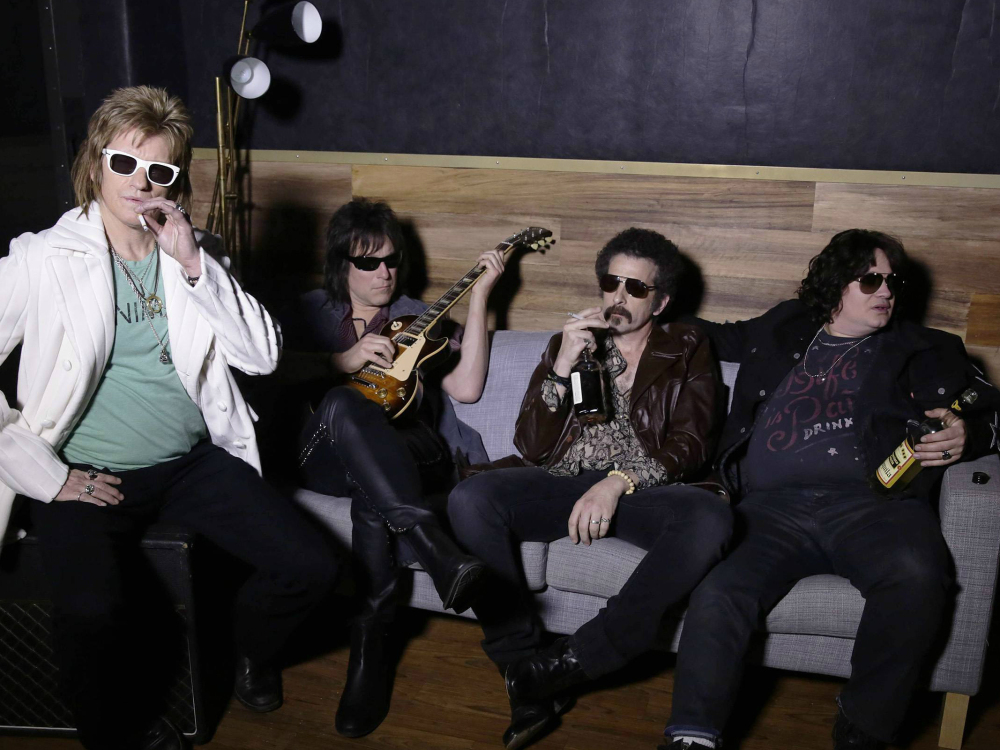
Sex&Drugs&Rock&Roll

Sex & Drugs & Rock n Roll charts the path of a legendary almost-but-never-quite-made-it band that faded just before Nirvana hit and made rock huge again (think maybe Mudhoney) as they are drawn back together in the present for the first time in many years. The Heathens were led by ultimate heathen Johnny Rock, played by Denis Leary, who drank and drugged his way through life, getting by on oozing charisma and competent songwriting chops while generally being an asshole to everyone, particularly his bandmates.

The show starts as a docudrama with Dave Grohl and Grug Dulli talking about The Heathens and just how equally important, influential, and unsuccessful they were. (I have to put in a note here that none of the language thrown around by Dulli and Grohl actually sounds anything like the little music we here the Heathens’ play; they sound more like the New York Dolls than a band that would immediately influence Nirvana.) In the present, Johnny visits his manager and finds out he’s out of options; there’s no market for his music and he’s too old to start over again, but too young to retire. He’s reduced to considering a position in a low grade but decent paying tribute band; selling out is everything Johnny has fought against, but money is money.

Later at a bar, he hits on a woman, Gigi, (Victorious’ Elizabeth Gillies) far younger and more attractive than himself he believes is making eyes at him, only to find out that she’s been doing so because she’s actually his daughter that he never knew existed. He lucks out when the next day it turns out that Gigi has some money and wants to make it as a singer in NYC, and despite her lack of interest in him as a paternal figure, she wants his help as a songwriter, if he can convince his old songwriting partner, the Heathens’ former guitarist, Flash, to join forces with him. Convincing Flash (John Corbett) is difficult as Johnny was a huge asshole and Flash is much more successful currently, making bank as Lady Gaga’s traveling guitarist. Gigi, sensing this might be an issue and knowing the way to all musicians’ hearts, texts Leary a provocative picture to show Corbett, and the old crew against all odds is up and running.

Gigi performs a classic Heathens song with the band; everyone can see she’s got actual talent, and we’re in business.

The biggest problem with Sex&Drug&Rock&Roll is a sense of a tonal dissonance. I’m not quite sure what the show wants to be, and it might be more successful if it pulled further in one of a number of directions rather than where it currently is. There are some good ideas here for a show; skewing the music industry, both modern, and classic, and the notion of the fading rocker, the Keith Richards type tried to keep up. Sex&Drugs&Rock&Roll at times seems like it is trying to be an edge, satirical, black comedy, that pulls no punches, with characters who are not necessarily likeable. On the other hand, Sex&Drugs&Rock&Roll wants to have a heart, and tell the story of a complicated relationship between father and daughter, that’s a little more serious and more sentimental. In this way, it almost has the vibe of a feel-good movie redemption story, like Music & Lyrics but about a father-daughter relationship instead of a rom-com.

The jokes aren’t funny, which is a problem for the black comedy aspect. One approach would be to tone down the jokes, keep a light, comic tone, but up the ante on the plot and depth of characters. A biting satire could work as well but the writing would need a lot of tightening; if a satire isn’t funny, it doesn’t work: see The Brink. There may be gray areas between these approaches, or others, but Sex&Drugs&Rock&Roll’s isn’t working currently, and that’s the chief problem. The jokes aren’t funny, the music sensibility seems weirdly out of date; the Lady Gaga jokes for example feel a couple of years well too late.

Will I watch it again? No. There’s an idea here and I like the cast. But it’s just not there without a bit of a stylistic overhaul.

Summer 2015 Review: The Jim Gaffigan Show

17 Jul

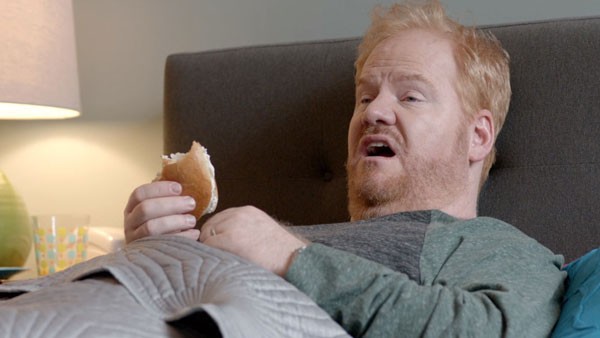
The Jim Gaffigan Show

The Jim Gaffigan Show attempts to pull the trick that relatively few shows have pulled off, and which Modern Family has pulled off most successfully – to relatively modernize the classic sitcom. Modern Family brings in the single camera and cuts the laugh track, but leaves in the close knit family, the wacky hijinks, and the heart. I don’t particularly care for the show on the whole, but episode to episode, and scene-to-scene, I’ve seen plenty of moments that have that formula working.

The Jim Gaffigan Show takes this strange and maybe worthy goal on, ultimately unsuccessfully. The ‘90s were dominated by family-oriented sitcoms, with the last two great editions being Everybody Loves Raymond and The King of James before the genre largely died out as a major force. The genre was both medium and message; there was a format – multi-camera with big canned laughs and a lot of big obvious punchlines – and a style – warm, family friendly, not too edgy. Most revivals of the style have brought back both elements, leaving them to appear extremely outdated. Modern Family hit the jackpot, bringing in both traditional sitcom watchers and younger viewers who also enjoyed The Office.

The Jim Gaffigan Show is another attempt to mix modern form with traditional style comedy in the wake of Modern Family. It has everything you could want – a hype-immature American male (think: Tim Taylor or Ray Barone or Phil Dunphy) who has juvenile tendencies, who knows his wife is far more competent and put together than he is, but occasionally wants to show that he can do parenting and life too, if he can get himself off the couch for five minutes. There’s a classic TV mix up in the pilot. Jim has three letters, two to deliver, and one to take home and he confuses them hanging the letters to the wrong recipients. The poor husband can’t even get one thing right. Luckily, through a serious of screwball happenings, his mistake turns out not to matter, until something else that came up earlier does, but at the end Jim and co. are a sweet, loving, happy family and that’s all that matters. There’s a schlubby-but-lovable-and-funny TV husband married to a much younger, more attractive women, who can’t help but love his foibles at the end of the day because he means well even as she does all the work.

Jim Gaffigan is a funny guy, and that, well kind of comes through in the show, which is about the nicest thing you can say about it. It comes through mostly when Jim is just talking, exposing his natural timing and humorous cadences. Everything else, though. It’s the same old, It’s not cringeworthy, but it’s surprisingly unsophisticated and thoroughly medicore.

Will I watch it again? No. I like Jim Gaffigan’s stand up, but he’s probably a traditionalist at heart, and this sitcom really shows it off. The sheen may be more modern, but the sitcom is gooey, boring, clichéd, and most importantly not funny.

Spring 2015 Review: The Odd Couple

9 Mar

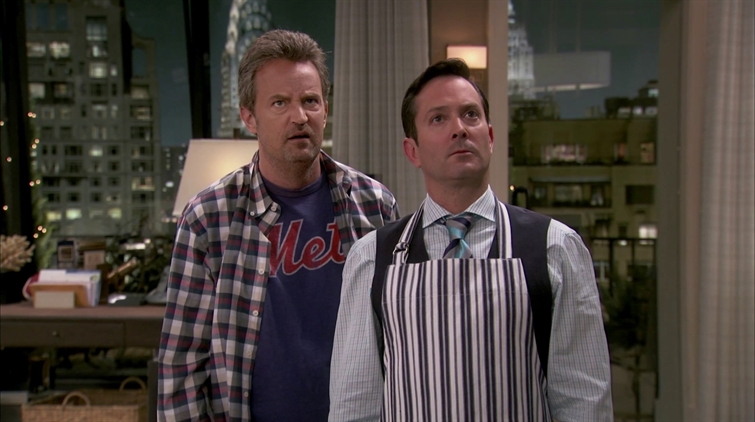
The Odd Couple

You know the story of The Odd Couple. There’s a slob, there’s an uptight neat freak, they’re friends, they live together, and though they can’t stand each other often, they somehow recognize that they could each use a bit of what the other has to offer. Both are recently divorced. Oscar is a mess and helps Felix loosen up, while Felix helps Oscar get his life together. Oh, and there’s that theme song. You’ve probably heard it before.

Last year, I described the very forgotten Sean Hayes sitcom Sean Saves the World as a Sitcom, with an emphasis on the capital S. What I meant is that it seemed to pride itself on ignoring any changes in the world of TV comedy that have occurred over the past decade and instead doubled down on being as old-fashioned and classic as possible, not just in content but in form and look. The Sitcom works  this way not just because it thinks this is the best and funniest way to tell its story, though it might well, but also because it’s a statement of belief in what a sitcom should be. As someone who has lauded the direction comedy has gone in the past ten years, I’m generally not a big fan of Sitcoms.

The Odd Couple is another Sitcom. To someone who has now moved on past the generational divide of sitcoms, to The Office and Parks and Recreation and 30 Rock and others, The Odd Couple is nearly unwatchable. The laughs and the laugh tracks are loud. There’s so much laugh track, and I won’t expound further on just how much I absolutely despise laugh tracks but my opinion remains as true as ever. The laugh track is obtrusive and sets the tone. A laugh track is an essential part of a Sitcom .

The two primary stars talk in minor insults to one another and there are what feels like 30 seconds between each line, each of which is an attempt at big joke. These long spaces give the audience a chance to process, realize that it was a joke (thanks, laugh track!) and laugh as much as they need to before the show can move forward. The characters are ridiculous exaggerations, and not in a good way, particularly Thomas Lennon’s Felix, who is so uptight and anal that it makes the show difficult to watch at times without any of the hilarious payoff of a good awkward British sitcom. That’s still giving enough credit to what an insane weirdo they make him.  It’s too much by several times; way beyond merely being uptight and sensitive. The Odd Couple is just too much of everything. There’s a handful of Oscar’s friends who show up and make jokes about their wives, and how much they can’t do cool man sports things because of them. Hey-O! You don’t get more TV regressive than that.

There’s no subtlety. There’s no banter, because you can’t have banter when you have to wait this long between any levels. It’s nothing but big broad obvious humor that isn’t funny at all.

Will I watch it again? No. Never. It was pretty painful to get through.

Fall 2013 Review: The Returned

13 Dec

A returned

The Returned is a French show, which first aired in the fall of 2012, but which recently made its stateside debut on the Sundance Channel, a channel which has already seen strong outings this year from Top Of the Lake and Rectify.

I love shows that are not easily characterized or categorized because that usually means that they are new and interesting and The Returned is both. It may be more clear what direction Returned is heading in after a few more episodes, and there are a few logical general options but I have absolutely no idea which and I’m glad.

Let’s take it from the beginning. Four years ago before the show’s present, a bus full of children embarking on a school trip topples over a cliff on a tricky piece of road, killing everyone on board. Or so it seems.

In the present, all is not well, and the people of the French town in which The Returned takes place are still grappling with the tragic events of four years prior. The parents are meeting in a regular group where they discuss a memorial being built in honor of the dead children. Tensions are still high, and some parents are dealing better than others. Clearly these adult relationships have been shaken up and some broken up by the events. Camille, one of the girls who died in the crash, seems to be the central figure in the show, and her parents have separated, while her twin sister, who feigned illness to get away from the trip is a fun-loving but possibly guilt-ridden 19-year old.

Camille, four years after she died, just picks up and walks into her house, the same age she was when she died, remembering nothing, and her mother is terrified, overjoyed, and above all confused, displaying the entire array of emotions one would expect to if faced with a similar situation. She calls Camille’s father, who naturally doesn’t believe her, until he sees Camille with her own eyes. He leans more toward the scared beyond belief side of the scale with his reaction.

Camille isn’t the only one who comes back; there’s also a young man seeking his girlfriend, who appears to have moved on without him, and there’s a young boy who returns to the apartment in which he believes he lives, leaving the current resident who doesn’t recognize the boy frustrated and confused.  People are returning from not just the bus crash but from earlier deaths as well. An old man is disturbed when his wife returns from the grave; he burns his house down and kills himself in reaction.

There’s a lot bound up here. There’s obviously supernatural and horror elements, as people coming back from the grave pretty much rules out reality or likely science fiction (yes, there’s a way to make this premise science fiction – but this isn’t that).

The story is intriguing on its own without any deeper themes, as it should be to keep the viewer involved. This is a slow, subtle supernatural show. There’s no huge opening event involved comparable to those in the bloated supernatural and sci-fi broadcast network shows like Lost, The Event, Revolution, or Terra Nova. It’s quiet and makes you figure out the questions, which are, to be fair, pretty obvious, rather than asking them extremely loudly. And those big questions are there just as they are in those other shows – namely – why are these people coming back, and since I’m not sure there’s a way to answer that satisfactorily, at least, what does this mean for the town?

There’s also, and this is what separates merely suspenseful shows which can certainly be enjoyable but depend heavily on satisfying answers and conclusions, with shows one tier greater, a deeper personal level to the drama beyond the plot, through strongly written characters, dialogue, and stories. The grappling of the parents with their tragedy reminds me of the all-too real situation faced by the people of Newton, Connecticut. Fissures break under that type of pressure and tragedy.

The big thematic question seemingly dealt with is in The Returned, at least through one episode, is how people respond to the return of something they had thought lost forever, and which they had made, if not peace with, at least some sort of resolution. They had survived by slowly but surely moving on. Early in the episode, during the parents’ support group, one parent makes that exact point; the tragedy is still poignant but things have gotten better – people simply can’t linger in that tragedy at those initial depths forever and live with themselves. Even in this episode everyone deals with the returned people in different ways; happiness, denial, confusion, fear, and any number of emotions in between and combining these.

This combination of mysterious, subtle suspenseful story with fascinating characterization and personal situations is a winning one, one episode in.

Will I watch the next episode? Yes. I’m curious. I’m not sold the show will be amazing yet, but very few shows can that confidently promise that in one episode. I am honestly curious where the show is going and what’s going on, and if a show can make me feel that way after its first episode it’s doing its job.

One Comment About the Olympics: The Disqualified Badminton Players Were Right

8 Aug

Time for another polemical entry that’s only peripherally about TV, in that the Olympics air on TV.  It’s a little late, but I want to talk about and defend the women’s badminton players who got disqualified from the Olympics for some trumped up version of “not trying hard enough”   For those who don’t know, well, that pretty much sums it up.  Because of the way the non-eliminator preliminary rounds of the Olympic badminton tournament are set up, certain competitors believed it would be to their advantage to lose games to gain better seeding going forward to the elimination segments.  The Badminton World Federation claimed that this violated the Olympic ideals and disqualified four teams.

You know what, this is total bullshit.  Let’s not fucking kid ourselves.  The Olympics, and all sports, are not about some amorphous playing-your-best standard.  They’re about winning.  Sure, those goals are intertwined 99% of the time, and I don’t mean this statement in a way that people playing their best without hope of actually winning shouldn’t be proud of themselves.  What I do mean is that, people who actually think they can win, should be focused on how to get there, rather than playing their best every second of the time, first and foremost, and they are, in all sports.  For example, teams consistently rest their best players after they’ve clinched playoff spots in team sports.  Their health is too important; winning is not the priority in those games.  Sure, you say, they’re not trying to lose, though, they rather don’t care one way or the other.  Well, occasionally in the NBA, an odd dance emerges, when, for playoff seeding, a team does activiely want to lose, such as when Dallas, who finished with the second best record (2005-06), but was second in its own division, was seeded fourth, and teams preferred the sixth spot to the fifth to avoid Dallas, even though the seed was nominally lower.  Now, of course in team sports, the way to actively lose is simply to keep your best players out of the game as much as possible, and watch as your worse players, who are still incentived to play their best in the race for playing time, lose on their own.  In individual sports with no subs, you can’t put on the scrubs and watch them lose without the ethical quandary of not trying hard enough.

Even in the Olympics, you see ethically approved not-trying-as-hard-as-you-can in swimming and track heats.  Runners and swimmers who know they’re virtually assured of moving to the final take it easy in their heats, especially towards the end.  The best teams use substitute swimmers, who won’t be participating in the finals.  You may argue here that the intention is not to lose, but rather not to care if they win, but I’d argue that’s a thin line at best.  After all, there’s no incentive for these players not to win, just not to care where they finish as long as they advance, and that’s precisely what happens.  I’d ask how do you know these players were trying to lose, in any sport, and you’d reply, “it was obvious,” which is really kind of a cop out.  Obviousness is never a good objective standard for anything.  Especially when there’s a superior alternative, which is to restructure the tournaments to incentive winning.  Major soccer tournaments made a move to play the final matches of their round robin stage at the same time to avoid situations in which the last match is between two teams who know that if they draw they both advance, and thus have no incentive to try to score.  Of course, people could have complained then that they should all be thrown out for non-competitiveness, but thankfully for the soccer players it’s far easier to bury non-trying in an 11 on 11 soccer match than in a 2 on 2 badminton match.

I admit certainly that losing for betting purposes rather than simply the long-term purpose of winning is extremely problematic for sports, and it can be very difficult to discern, but there’s the added major advantage of being able to sniff it out through changes in betting patterns.  No one is accusing the badminton players of this, but if anything, I’d add, the so-called obviousness of their not trying would belie any accusations anyway, because certainly, with the potential repercussions, any athlete would go to great lengths to avoid being accused of fixing matches for cash.

The fault here is not the badminton players at all.  In fact, the advice I’d give them is do the same thing next time, except try a little harder so they have plausible deniability, and can claim to have passed the arbitrary “trying hard enough” standard that somehow somebody in the Olympics thinks they have the ability to decide.  Were you trying 60%?  70%?  What if they were tired?  A little hurt?  Had a stomach or headache?  It is absolutely ridiculous to be asking anyone to defend how they feel.  Here’s a fucking idea – design your sport so it rewards trying as hard as you can all the time, if that’s what you want, and the players will do it.  Design your sport in a way in which losing occasionally increases their odds of medaling, and well, I say, resepect to these players for doing everything within their power to win – this was not cheating.  These athletes should certainly not be punished for thinking about the bigger prize; winning the gold medal was their primarily goal, rather than a amorphous impossible to judge standard of playing as hard as they can every match.  That’s all that one can reasonably ask from athletes.

Quick addendum:  Another not trying hard enough scandal has broken out at these Olympics, this time involving Algerian runner Taoufik Makhloufi who stopped running in his 800 meter race heat, allegedly to save strength for his bid in the 1500, in which he was more likely to medal.  Track’s governing body, the I.A.A.F., disqualified Makloufi from the Olympics, but he was reinstated after claiming injury.  A couple of track stars weighed in, on Makloufi’s side, with former medal winning sprinter Ato Boldon saying, “Anything that maximizes your chances to win a medal for your country, you should be able to do.  If I’m in the 100 and 200, and if I think I have no chance in the 100 and should keep a full tank of gas for the 200, I didn’t harm anybody by not qualifying. I didn’t keep somebody out of the next round.”  Sprinter Allison Peter added, wisely, “It’s his choice.  It shouldn’t be up to an official’s choice to judge. How do you know if I was trying or not?”

Top Songs and Albums of 2011

28 Jan

Yes, this is a TV blog.  But it’s a Saturday so readers get bonus music coverage with a quick look at my top songs and albums of 2011.

You can listen to my top 40 songs at 8tracks.

Top 40 songs of 2011

1.  The Weeknd – The Morning

2.  The Smith Westerns – Weekend

3.  Cults – Abducted                                                                               .

4.  The Drums – Money

5.  EMA – California

6. Tune-yards – Bizness

7. Girls – Honey Bunny

8. Martin Solveig feat. Dragonette – Hello

9.  Metronomy – The Look

10.  Lykke Li – Love Out of Lust

11.  Kanye West – All of the Lights

12. Drake – Headlines

13.  Avril Lavigne – What the Hell

14.  Katy B – Katy On A Mission

15.  Yuck – Shook Down

16. The Wombats – Tokyo (Vampires and Werewolves)

17.  WU LYF – Spitting Blood

18.  Fountains of Wayne – The Summer Place

19.  Telekinesis – I Cannot Love You

20.  Avicii – Levels

21.  Dawes – If I Wanted Someone

22.  John Maus – Head for the Country

23.  Wiz Khalifa – Black and Yellow

24.  Dum Dum Girls – Bedroom Eyes

25.  Childish Gambino – Fire Fly

26.  Foster the People – Pumped Up Kicks

27.  The Joy Formidable – I Don’t Want To See You Like This

28.  Dev – In the Dark

29.  Karen O with Trent Reznor and Atticus Ross – Immigrant Song

30.  Kelly Rowland feat. Lil Wayne – Motivation

31.  LMFAO feat. Lauren Bennett and Goonrock – Party Rock Anthem

32.  The Black Keys – Lonely Boy

33.  Selena Gomez and the Scene – Bang Bang Bang

34.  Rihanna – S&M

35.  The Antlers – I Don’t Want Love

36.  Cut Copy – Need You Now

37.  Nicki Minaj – Super Bass

38.  Elbow – Lippy Kids

39.  Chris Brown – She Ain’t You

40.  Gil Scott-Heron and Jamie xx – I’ll Take Care Of You

Top 30 Albums

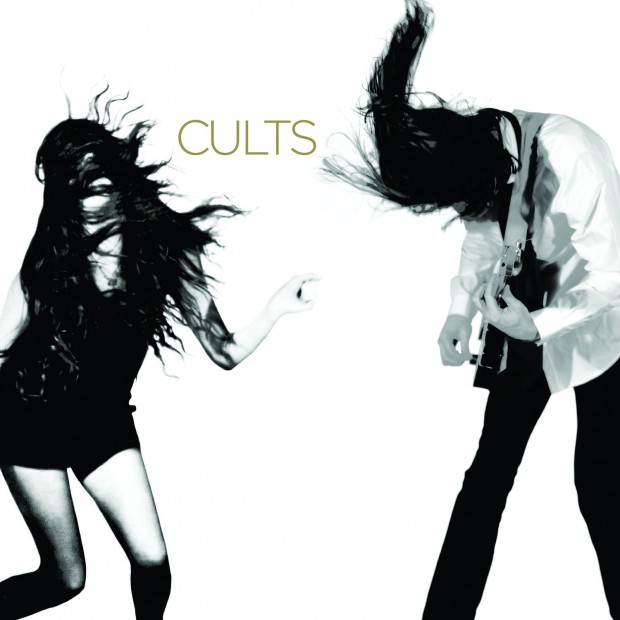
1. Cults – Cults

2. Lykke Li – Wounded Rhymes

3. Tune-yards – W H O K I L L

4. The Weeknd – House of Balloons/Thursday

5. Telekinesis – 12 Desperate Straight Lines

6. Katy B – On a Mission

7. Drake – Take Care

8. The Pains of Being Pure At Heart – Belong

9. Dum Dum Girls – Only in Dreams

10. Yuck – Yuck

11. Dale Earnhardt Jr. Jr. – It’s a Corporate World

12. Girls – Father, Son, Holy Ghost

13. M83 – Hurry Up, We’re Dreaming

14. Fountains of Wayne – Sky Full of Holes

15. The Smith Westerns – Dye It Blonde

16. EMA – Past Life Martyred Saints

17. Washed Out – Within and Without

18. Friendly Fires – Pala

19. Childish Gambino – Camp

20. The Joy Formidable – The Big Roar

21.  Cut Copy – Zonoscope

22. WU LYF – Go Tell Fire to the Mountain

23. Metronomy – The English Riviera

24. Frank Ocean – Nostalgia, Ultra

25. Beirut – The Rip Tide

26. PJ Harvey – Let England Shake

27.  Selena Gomez and the Scene – When the Sun Goes Down

28.  Real Estate – Days

29.  The War on Drugs – Slave Ambient

30.  Destroyer – Kaputt