Archive | Spring 2015 TV Season RSS feed for this section

Spring 2015 Review: The Slap

23 Feb

The Slap

The Slap isn’t really a good show, but it’s not really a bad show either. What it definitely is is one of the stranger high-concept network series I’ve seen in a while. The Slap definitely displays some serious ambition, and though that ambition is misplaced and mishandled, there’s something worth saying for at least the effort. 

Everything about The Slap is both strange and screams of wanting to be important and meaningful. The show begins with a third person omniscient narrator who, over the course of the episode, chimes in occasionally but not very often, making one wonder why the show possibly bothered having a narrator at all. The narrator starts to tell us about Hector’s day. It’s Hector’s 40th birthday, and he’s anticipating a big promotion in his job in city government. He’s extremely disappointed when he’s passed over, but does his best not to show it. Hector is stressed out about his job and his upcoming birthday party and chooses for some reason not to reveal his lack of promotion to his wife, who assumed the promotion was a mere formality.

All this stress highlights Hector’s lingering fantasy of having an affair with his wife’s teenage coworker, who also serves as their babysitter. Although it was hard for me to tell if this was real or fantasy, it seemed like they had kissed once but nothing more; it wasn’t too late to come back from, and Hector knows an affair with a teenager would be a terrible idea, but he can’t help dwelling on it.

The party causes additionally stress when his overbearing Greek parents and his wife fight; his parents bring way too much food and overstep their bounds (ethnic parents, right) and buy the whole family plane tickets to Greece without checking the dates with anyone else. Additionally, some other couples at the party get into some serious political bickering. Ur-capitalist suburban car dealer Harry and liberal creative-type Gary argue and argue, to the annoyance of their wives and just about everyone else. Different couples’ kids are playing in the yard, and Hector who wants to be anywhere but at this party, moves to talk and flirt with the babysitter in the corner and seems on the verge of making mistakes he wouldn’t be able to take back. Meanwhile, one of Gary’s kids is not behaving and is dangerously swinging a bat around.

And then, forty minutes in, right-wing Harry, in the spur of the moment, with no thought, frustrated by his indiscriminate bat-swinging delivers the titular slap to Gary’s child, prompting chaos and anarchy as different guests yell at and over one another, Harry defending the slap, Gary threatening to beat him up, sue him, or both, and everyone else taking sides. Hector is incidentally saved by the slap; as everyone disperses in the wake of Slap-gate, he finally tells his wife about his promotion gone wrong, they make up, and he realizes how lucky he is to have been interrupted before making a huge mistake.

Presumably, every episode will be from a different perspective of someone at the party, and will investigate how the slap changed his or her life. The Slap really is a strange show. There’s narration, as mentioned above, but just a little and serving no real purpose. Is there supposed to be a grand narrative, or merely a series of vaguely related vignettes? The very meaningful themes and subtexts of political bickering, child abuse, and parental rights would lend credence to the former, but choosing to start the series focusing on a character whose mini-arc is only peripherally slap-related seems to be point to the latter.

The Slap is hardly awful by any means but it is puzzling and none of the characters nor the writing are intriguing enough to actually watch further episodes; the most interesting aspect is the odd set up but while it does kind of make me want to know what’s going on it doesn’t really make me care enough to watch more. In another world, everything could have been a little more put together, a little sharper, and this could have been a legitimately interesting show. In this world, though, it’s just one shade off of interesting in about every way.

Will I watch it again? No. The Slap was actually a weird pleasure to watch the pilot of; too many mediocre pilots are just incredibly boring, while The Slap was just strange and all over the place. So it has that going for it. But that doesn’t make it good.
Spring 2015 Review: Fresh Off the Boat

18 Feb

Fresh Off the Boat

Fresh Off the Boat has something many sitcom debuts would kill for, especially the popular subgenre of nostalgia-coms narrated by the protagonist, always a kid during the events of the show, but as an adult later remembering the events of his childhood (and it’s almost always a his). In Fresh off the Boat, the emotional foundation that underpins the show works.

Most of these nostalgia-coms are extremely generic and trope-y. There’s a hard-ass, emotionally distant father (think, The Goldbergs), a fussy more-attentive mother who puts up with him, a somewhat down-to -earth protagonist and a couple of wacky siblings. The world of Fresh Off the Boat is certainly wacky, but the wackiness is primarily by way of the world; the family members are the relative normal ones, compared to everything that surrounds them. And that makes perfect sense within the premise of Fresh Off the Boat. This premise involves an Taiwanese-American family moving from Washington DC, where they have friends, family, and Taiwanese culture, to Orlando where they have none of these in order so the patriarch, Louis, can open his own restaurant.

Because sitcoms featuring Asian-American families are so rare and in particular because this sitcom is deliberately taking on the immigrant experience and generational assimilation into American culture, there is a potentially unfair weight on the show straight away. It’s on Fresh Off the Boat to authentically, sympathetically, and accurately portray this experience while hopefully having the freedom to develop real characters who are not mere archetypes. While I can’t speak to the immigrant struggle from a first person perspective, I can speak to the qualities of emotional connection and depth of character on television, and Fresh Off the Boat does an impressive job of developing these qualities in just 21 minutes.

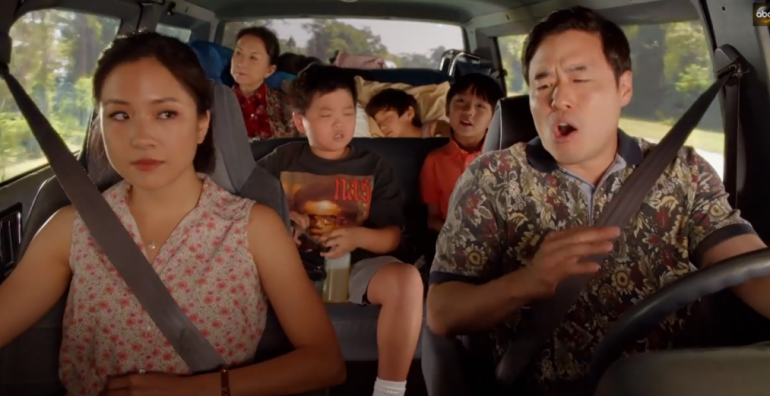
The family includes the father Louis, who is excited to be full-on American, opening his own Boulder Creek-style American western-motif restaurant. Jessica, his wife, is more wary of the move and was reluctant to leave her friends and family but is trying to make the best of it and encourages her children to do the same. Younger children Emory and Evan (I’m not sure which is which yet) have no trouble fitting in, while narrator Eddie is more like his mother, struggling to fit in in the mostly white suburbs. The members of the family clearly care for one another. Eddie’s childhood struggle feels real, and as obvious of a moment as it was, it was affecting when Eddie, who believes his parents have it in for him with their tough love, hears them stand up for him to his new principal. Childhood is a time of frequent doubt and it’s harder to fit in without believing your parents are on your side.

These are all good things. The missing ingredient, which is rather important for something intended to be a comedy (and, make no mistake, even in this increasingly genre-less world, this is clearly intended as a comedy designed to make you laugh), is the comedy. I get the jokes; they’re not subtle, and they’re generally on the broader end of humor designed to appeal to people like me. ABC is exactly where this show should be, as the tone and style fits in with their block of family comedies like Modern Family, the recently deceased Suburgatory, and The Middle. But the jokes are just off most of the time. For example, there’s a cutaway, where Jessica negatively compares strolling the aisles at the immaculate American mega-supermarket to the calming experience of shopping at a Taiwanese market, where we see her batting people away and yelling. It’s an obvious joke, her opinion contrasting with what we see on screen, which could work, but it just doesn’t quite connect. These humor issues are hard to diagnose and can be difficult to fix, but are fixable. They fall on fine points of timing, chemistry. Fresh Off the Boat isn’t there yet.

Will I watch it again? I don’t know. I have a pretty crowded plate at this point, and while it ha strong points, the lack of any laughs means I don’t feel any urge to necessarily tune in immediately. I’ll wait and see.

Spring 2015 Previews and Predictions: CBS

16 Feb

CBS

(In order to meld the spirit of futile sports predictions with the high stakes world of the who-will-be-cancelled-first fall (edit: spring, now) television season, I’ve set up a very simple system of predictions for how long new shows will last.  Each day, I’ll (I’m aware I switched between we and I) lay out a network’s new shows scheduled to debut in the fall (spring, again)(reality shows not included – I’m already going to fail miserably on scripted shows, I don’t need to tackle a whole other animal) with my prediction of which of three categories it will fall into.

These categories are:

  1. Renewal – show gets renewed
  2. 13+ – the show gets thirteen or more episodes, but not renewed
  3. 12- – the show is cancelled before 13

Additional note: Since more and more series on network TV are following cable models with set orders for shorter seasons, and mid-season replacements tend to have shorter seasons in particular, I’ll note any planned limited runs in my prediction section for each show)

Only three new shows for CBS, since they just don’t have as many spots to fill in their schedule. One comedy remake, one drama spin off, and one drama from two highly esteemed TV minds.

The Odd Couple – 2/19/15

The Odd Couple

I watched the preview, but as happens with a few new shows every year, I didn’t really need to. Of course, this is particularly obvious here, because The Odd Couple’s two primary characters have been in the pop culture conscience for half a century now; the current show is a remake of a tv show of a movie of a play. It features the pretty standard time-tested tropes of the obsessive-compulsive neat freak (Felix Unger, played here by Thomas Lennon) and the easy-going slob (Oscar Madison, played here by Matthew Perry). They’re opposites, so they constantly put each other in awkward situations, but they’re also friends at the end of the day! You know how it goes. Who was actively calling for an Odd Couple reboot, I haven’t the faintest idea.

Prediction: 13- Matthew Perry is developing an impressive reputation as a show-killer since Friends (Studio 60, Go On, Mr. Sunshine) and I sure wouldn’t want this show to end the streak.

Battle Creek – 3/1/15

Battle Creek

Battle Creek is a procedural that seems like maybe, just maybe, it could be better than your average CBS procedural. It’s co-created by heavyweights Vince Gilligan and David Shore, and while this is not going to be Breaking Bad, the fact that names like those are attached still carries some weight. Josh Duhamel stars as a perfect, handsome FBI agent who comes to assist the underfunded police in the town of Battle Creek, Michigan. Dean Winters plays the gruff top dog whose position is in danger when golden boy Duhamel comes to town. I wouldn’t necessarily bet on it being good, but it might not be awful, which already puts it above most CBS pilots.

Prediction: Renewal – it’s on the right network, and it’s got the pedigree. Every stroke CBS makes these days still seems to work out. I really want to dock it for the tagline “You Can’t Fight Crime without Going to Battle” but I just can’t.

CSI: Cyber – 3/4/15

CSI: Cyber

You know the brand. It’s been almost 15 years since the original’s debut and it’s long past time to bring on the fourth show in the CSI universe. “I’m a Cyber Cop” is a real line Academy Award winner Patricia Arquette utters in the trailer. Later she utters, “You work dark alleys. I work the dark net.” The Who plays. There is a self-acknowledged silliness to CSI; to its credit I don’t believe takes itself all too seriously. Still, I’m almost certainly never going to watch this show again after the debut until it starts showing in syndication at weird hours on weird networks.

Prediction: Renewal – Granted, NCIS is the new, currently more popular CSI, but still the shortest-tenured member of the CSI franchise, CSI: New York, lasted nine seasons. I’m not ready to bet against Cyber lasting two.

Spring 2015 Review: Better Call Saul

11 Feb

Better Call Saul

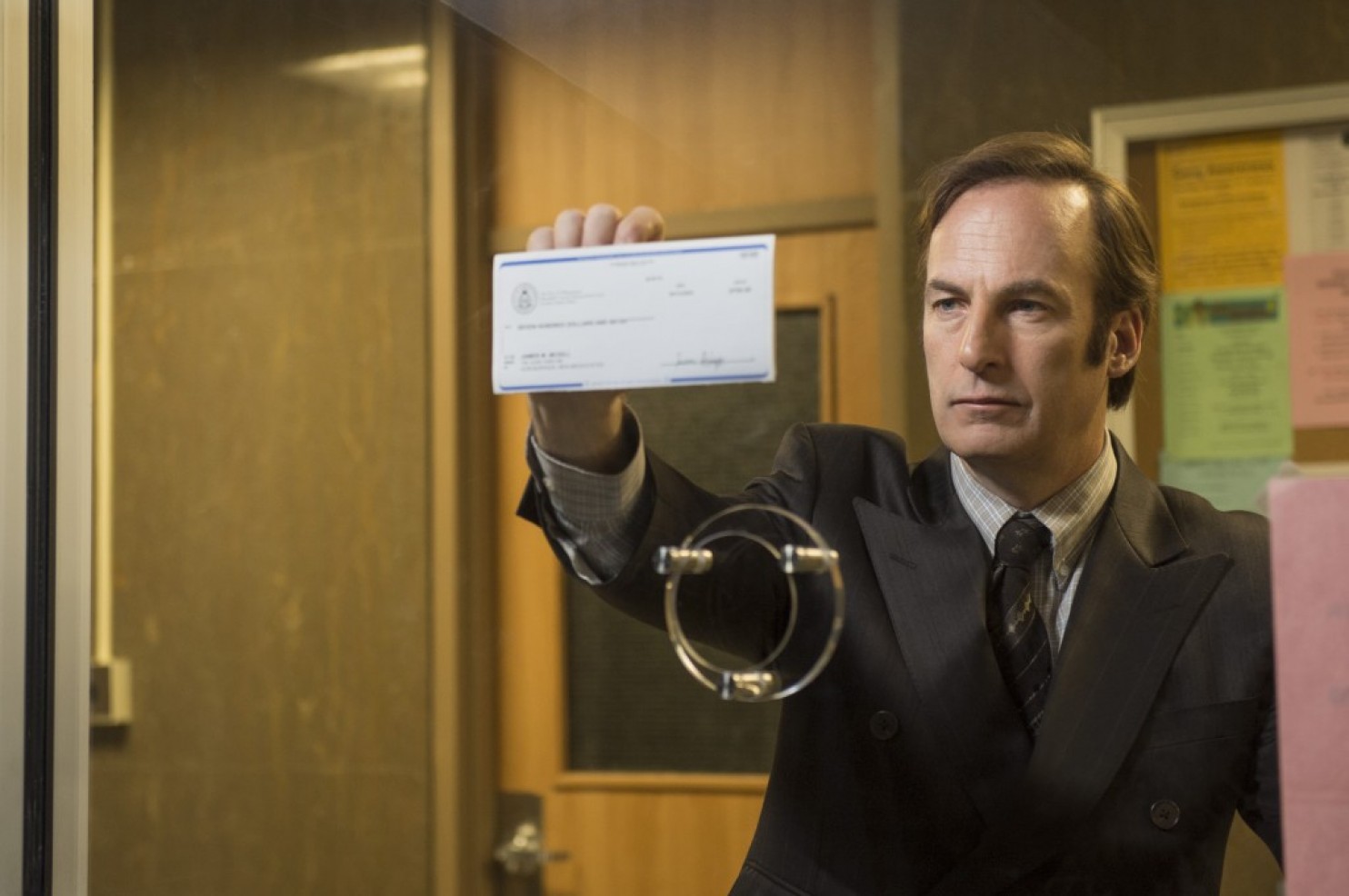
Following a show regarded as one of the best shows in television history is difficult to do. Expectations are inflated and every line, scene, and character will be compared to the original. Better Call Saul could have chosen to try to downplay its Breaking Bad connections and make it very clear that it is its own show by avoiding traces of anything Breaking Bad-like in its debut.

Instead, Better Call Saul proclaims its identity a different way. First, the creators know that every viewer is immediately connecting Better Call Saul to Breaking Bad and thus they choose to acknowledge the connections straight away rather than pretend to be unaware. Second, Better Call Saul leans into to its association, with Breaking Bad character Mike as a main cast member and with Breaking Bad antagonist Tuco appearing in the first two episodes. The opening scene picks up with Saul’s life after the events of Breaking Bad, reminding us of the end point in the journey we’re about to embark upon.

One scene in particular is emblematic of the way Better Call Saul declares its identity in relation to Breaking Bad. In the second episode of the two-day two-part premiere. Saul, now using his birth name Jimmy McGill, is in the desert. A serious of unfortunate events, some his fault, some not, has him and two idiot twins who he hired to run a con (ironically, with the intent of using it to generate legitimate business) at the mercy of a very scary, very stupid, and somewhat unhinged gangster. We know this gangster in fact; he’s Tuco, the first real scary drug trade character Jesse and Walt tangle with in Breaking Bad.

Here’s the crucial moment where Better Call Saul lays down its cards on the table. Here’s where we learn about the critical DNA ingredients that separate Better Call Saul from Breaking Bad. Walt has been in this scenario before, and now Saul’s in it. We see Saul in action, and he handles the problem in a totally different way than Walt would. He bargains, he cajoles, he goes on and on with his motor mouth, stammering, unwilling to stop talking, as if the criminals can’t take action until he runs out of words of his own volition. Walt, at least, as Heisenberg, would never bargain, would never admit his own failings. Walt would seek to intimidate, would seek to play his enemies in a game of chicken, calling their bluff and counting on the fact that he was simply too important to them in a realpolitik sense to ensure he made it out alive.  For Walt desperation was weakness; for Saul, it becomes a strength. He does his best lawyering in this scene, the highlight of the episode, bargaining Tuco down from killing the twins to breaking one leg for each.

Saul seemed like the smartest choice of any character to spin off out of the existing options on Breaking Bad and the pilot validates that initial opinion. Saul, has the advantage of not being fatally compromised character-wise by the events of Breaking Bad; there’s enough we don’t know about him to allow Gilligan and Gould plenty of room to paint.

Saul is everything Walt isn’t. Walt is unbridled ego, Saul is insecurity. Walt would never take a strategic loss. His ego wouldn’t allow it. One of Walt’s strengths, even early on, was a sheer competence; he was damn good, and he knew he was good, even when he didn’t get to show it. Walt was a teacher, a well-respected profession, living a respectable life with a wife and kid. His hunger, dormant initially, but always simmering underneath, was for what he could have had. Saul is a broken-down unsuccessful lawyer, a profession which is by nature scorned and ridiculed. He has nothing. The cruel joke is his far more successful mentally ill older brother, who to add insult to injury, sides against Saul, asking him to change the name of his law firm due to potential confusion with his brother’s former much larger firm.

One highlight of the premiere is Saul’s closing argument which comes very early in the episode, urging 12 bored Albuquerque jurors to remember what it was like to be 19, in the course of defending three idiots who sexually abused a corpse. Spending an hour a week listening to Saul, or Jimmy, or whatever name he chooses to go by, gesticulate is something I’ll sign up for gladly.         

Will I watch it again? Yes. I will. I don’t want to get ahead of myself but I think we have this year’s first for certain winner.

What Freaks and Geeks and Broad City Have in Common and Why it’s Great

6 Feb

Abbi

Freaks and Geeks is an all-time great show for many reasons. It’s an incredibly honest and nuanced portrayal of suburban high schoolers struggling through puberty and fitting in. There’s plenty of awkwardness and frustrating but an underlying current of incredibly strong bonds of friendship and family. Within all of this, there’s one small but notable plot point I’d like to praise and focus on, and compare it to a similar brilliant tack current great show Broad City just took.

Sam Weir, one of the titular geeks, is high school freshman with a seemingly unattainable crush on popular cheerleader Cindy. Cindy is generally cordial to Sam, but the affections run one way. He’s laughed at by his friends and fellow students for believing he has any shot at her.

There’s two obvious ways this situation could go that fit with relatively common patterns that occur throughout TV and movies. In the most classic pattern, he’d end up with Cindy anyway, in spite of all odd against, and though they have nothing obvious in common, they’d be a great opposites-attract match and end up together. Secondly, in the slightly more modern and depressing trope, Sam’s hopeless crush would never be realized. He’d either be consumed by it or he would eventually grow out of it, but there would never be any chance of it realistically happening.

While there’s no inherent problem with either of these approaches, and the choice should depend on the exactly nature of the characters and situation, what Freaks and Geeks ingeniously does is proceed with a third option. Sam does, against all odds, actually ends up going out with Cindy. Unfortunately it turns out that she’s terrible.

The result was immediately saddening, when Sam has his dream crushed, but in the longer term strikingly heartening; Sam is better than this. What you think you want isn’t always what you want; it’s easy to unfairly and unjustly idealize from afar.

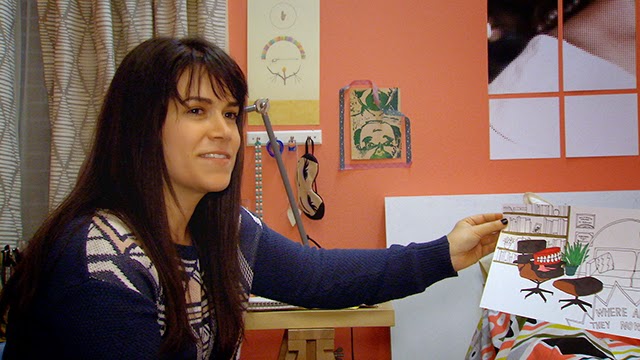
Broad City, which isn’t particularly like Freaks and Geeks in any other way aside from also being a great show, took a similar tack in last week’s episode. Jeremy, Abbi’s neighbor, has been Abbi’s crush object throughout Broad City’s run. They’ve chatted here and there, and occasionally hung out, but Abbi’s generally been too flustered to mount a normal conversation, or, more than that, to ask him out on a date. Finally, they have a moment; she’s bold enough to ask, when drugged out of her mind after getting her wisdom teeth removed, and he says yes, despite her incoherent babbling and they’re off and running.

After the first date goes well (ending with Abbi pegging Jeremy, which is great, but not incredibly germane to this point), things go down from there. While he does spend his time and effort helping children, which is great and all, he also reveals himself to be an oversensitive, pretentious, snobby, jerk. And all that tension between Abbi and Jeremy for the season and a half leading up to this is over just like that. The spell Jeremy cast over Abbi is broken. Jeremy was so beguiling to Abbi because he was in her mind just what she’d imagined she’d be, while now Abbi knows she can do a whole lot better.


Spring 2015 Review: The Man in the High Castle

30 Jan

The Man in the High Castle

 The problem with super high-concept pilots, and Amazon’s The Man in the High Castle is certainly one of those, is that they often get bogged down so heavily in exposition that whether you’re interested in going forward with the show is determined solely by how intrigued you are by the premise rather than by the quality of the characters or the writing. This is because there’s no time to develop either of those in the effort to build the general world and explain what’s going on in the future/past/alternate reality in an hour or less.

The Man in the High Castle clearly suffers from these issues. Based on the work of legendary sci-fi writer and movie-inspirer Philip K. Dick, The Man in the High Castle takes place in the early ‘60s in an alternate reality where the Axis powers won World War II. Japan and Germany have split the U.S. Japan controls the western half and Germany the eastern half, with a relatively small neutral buffer zone in the middle known as the Neutral States. The Nazis seem the crueler of the two powers; they of course don’t allow non-whites to live and they burn cripples and the old, but the Japanese are no softies either. Naturally, a resistance movement has emerged, but it appears small and not particularly well-organized. A key organizer in New York entrusts a crucial mission to a young man he’s never met before without any indicator of trustworthiness other than his word, which appears to be a testament to just how desperate the resistance is.

 An elderly Hitler is on his last legs, and everyone is speculating who will take over, with Himmler, Goebbels, and Goring the key contenders, and many expect the new chancellor, whoever it is, to take on Japan in an epic clash once and for all, ensuring complete racial purity for the Aryan race.

The young new recruit alluded to earlier in the resistance is taking some top secret cargo to the Neutral States, where he’ll meet someone he doesn’t know to deliver what he doesn’t know he has. A woman, who is given a treasonous film that poses a world in which the Allies won by her sister right before her sister is caught by the Japanese authorities and killed, takes a bus to that same location in the Neutral States, where she’ll be looking for someone she doesn’t know. Her boyfriend, who didn’t even know where she had gone, is arrested due to her sister’s crimes. For all that world building, that’s about all we know about our characters going forward. Calling the back stories for the characters thin would be generous. It’s almost shocking the writers couldn’t get more plot out of the hour-long first episode – two characters are meeting, and that’s about it.

It’s hard to recommend The Man in the High Castle based on what I’ve seen because there just isn’t a lot. It’s best viewed as a draft-and-follow; if you’re into the concept check it out, otherwise sit back and see if it manages to get more interesting or less over the first episodes, with the latter the more likely scenario, just based on the odds.

Of course, as I say this, I’m always the person who gets intrigued easily by these high concept premises and watches a few episodes only to see the show start to fall apart because the more fundamental aspects a show needs to succeed – characters and writing were lost beneath the high concept premise. I get fooled again and again – Revolution and Under the Dome are two recent examples, but I continue to come back for more.

Will I watch it again? Of course I will. I’m a sucker for exactly these types of high concepts. Will it deliver though, and will I be watching through more than three or four episodes, I’m less sure.

Spring 2015 Review: Backstrom

28 Jan

Backstrom

If Mad Men is the direct inspiration for a generation of stuffy, somewhat humorless period dramas, House is the direct inspiration for a generation of procedurals starring a male protagonist who is savantish in his line of work while being a jerk and all-around misanthrope who can’t get his personal life into order. Backstrom falls squarely into this cadre of House successors.

Rainn Wilson plays Backstrom. An assholish cop with no friends, he is, at the start of the show, being given another chance to work homicides for the Portland police department after being demoted earlier because, of course, he’s damn good at his job. He sees what no one else sees, particularly because he makes dark and disturbing assumptions about everyone that others who are more inclined to see the good in people are unwilling to make. His life is a mess. He does it all – drinking, smoking, gambling, hookers. While on the job, he works with a crack team of oddball rejects, who for one reason or another, be it competence, personality, or sordid history, don’t fit in with the rest of the department. And damned if, for all his many, many negative traits as a human being, he doesn’t solve those hard cases.

 Backstrom is created by Hart Hanson, the man behind Bones, and the show shares Bones’ tone, feeling light and jokey with plenty of humorous asides despite an array of dead bodies and dark plots. Backstron would fit right in on USA; Backstrom is a character, and I have no doubt he’d be welcome.

Backstrom is a show that’s supposed to be fun, only it isn’t, and that starts with the main character. The issue is that I’m so tired of this character, the limitedly brilliant jerk, and I hope that America is to.  By no means do I need all characters to be likeable.  But there are two problems in this case. First, beyond being unlikeable it feels like the show, rather than being agnostic to how we feel, actively wants us to root for him, because deep down he has some capacity for change that we need to be supporting. Second, he’s boring and not worthy of our attention. Tony Soprano is often despicable, but he’s always interesting. Backstrom isn’t. 

There’s really all there is to it. By no means is it unwatchable, but it feels derivative and stale, more out of 2008 than now. More is expected of TV in 2015 than Backstrom is ready to give.

Will I watch it again? No. I really do wish weird character actor Rainn Wilson could get a better second memorable television role, but this ain’t it. Hopefully the police department will fire Backstrom and hire a competent police officer who at least makes some pretense of being cordial to his fellow humans.

Spring 2015 Review: Hindsight

23 Jan

Hindsight

Hindsight’s premise is so achingly obvious and attractive that it’s kind of stunning it hasn’t been done before. The protagonist, Becca, in what I would guess is her early 40s, is about to get married for a second time. She’s having a momentary freak out. She likes her fiancé, who is a long-time family friend and a super nice guy, but she’s not sure that she really loves him in the way that she should to be marrying him. While she’s having a moment, she reflects upon her first marriage. She felt a burning hot passion for him, but it dissipated and they drifted apart over the years. She also sorely regrets the missing presence of her best friend of many years, Lolly, with whom she had a falling out a decade before her second wedding day. On top of this, she’s frustrated by her boss, who takes advantage of her and works her to death without giving her a promotion or raise.

As she returns from the rehearsal dinner, nervous, stressed, nostalgic, and reminiscing, she’s magically transported back two decades earlier, to 1995, on the night before her first wedding day. She reunites with her best friend and sets about on a plan to correct the errors she made in her life the first time around.

There’s plenty of media out there that touches on the same subject matter – regret, midlife crises, and the desire to take stock at a moment in time and change your life into what you wanted it to be, but none that I recall using time travel to this end. Most time travel is existential, life or death. In Back to the Future, Marty McFly is in danger of being erased from existence, while in Terminator 2, the fate of the entire human world is on the line.  In Hindsight, the stakes are lower; time travel is just a vehicle to help Becca change her life. The details of the time travel and whatever science fiction chaos theory-like repercussions about going back and forth in time and changing the future are not talked about and are not important. The tone is unlike just about any other time travel media out there – there’s no action or suspense, nor is it a silly comedy (e.g. Hot Tub Time Machine). Instead, Hindsight is a warm, personal dramedy, where time travel is only the gimmick to get it started.

On that level, Hindsight, at least from the pilot, works. It’s cute, it’s light, and it’s fun. The main character is likeable; I was rooting for her to get it right. The premise is universal – it’s not hard to relate to wanting to have redone certain decisions from the past, and there’s a sense of wish fulfillment from seeing someone get to do what we all want to but can’t.

Sure, Hindsight is not transcendent, but it doesn’t have to be. Not every hour long show has to be a prestige drama or a crime procedural. In fact, shows likes Hindsight might be a great reaction to the wanna-be-prestige shows that try too hard and end up stuffy and unenjoyable,  where watching them feels like a necessary weekly chore rather than an hour to be savored and eagerly anticipated. Hindsight doesn’t pretend to be anything but what it is, which is a surprisingly rare trait on television in a post-Sopranos/Mad Men world.

Of course, being on VH1, there’s some nod to the fact that VH1 used to be a music network, with a pretty fun and varied period soundtrack, containing plenty of monster hits and some little less well known tracks.

Will I watch it again? I’m going to try to make time and watch a second episode, because it deserves it. It’s hard to make solid mid-tier TV fare, and Hindsight may have done it.

Spring 2015 Previews and Predictions: NBC

21 Jan

NBC

(In order to meld the spirit of futile sports predictions with the high stakes world of the who-will-be-cancelled-first fall (edit: spring, now) television season, I’ve set up a very simple system of predictions for how long new shows will last.  Each day, I’ll (I’m aware I switched between we and I) lay out a network’s new shows scheduled to debut in the fall (spring, again)(reality shows not included – I’m already going to fail miserably on scripted shows, I don’t need to tackle a whole other animal) with my prediction of which of three categories it will fall into.

These categories are:

  1. Renewal – show gets renewed
  2. 13+ – the show gets thirteen or more episodes, but not renewed
  3. 12- – the show is cancelled before 13

Additional note: Since more and more series on network TV are following cable models with set orders for shorter seasons, and mid-season replacements tend to have shorter seasons in particular, I’ll note any planned limited runs in my prediction section for each show)

Allegiance – 2/5/2015

Allegiance

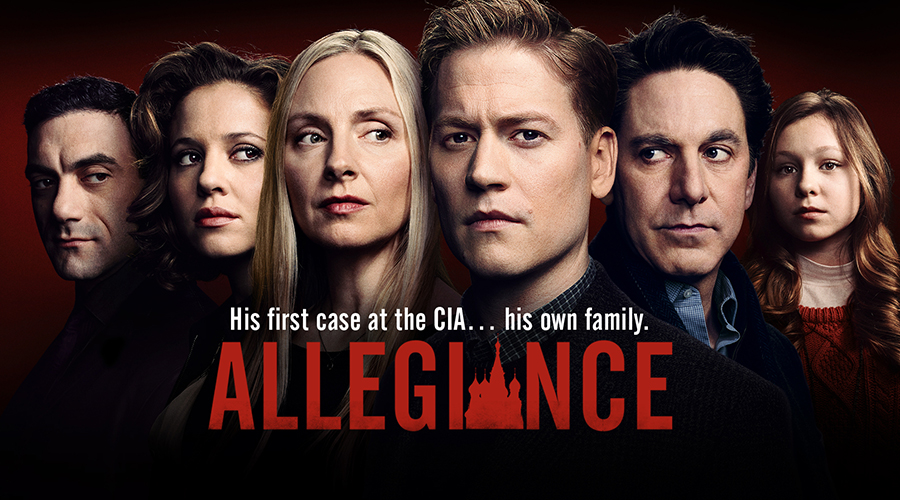
The first thing I wondered while watching this trailer was whether this show was made due to the success of The Americans, or whether it was made incidentally and someone watched The Americans later, only to realize that The Americans was vastly superior to their show. The protagonist is a super brilliant CIA agent who has some personal problems as a side effect of his brilliance, one of which is that it turns out, unbeknownst to him, that his parents are actually spies for Russia, the very nation who he’s working to dig up intel on day after day at his job. His parents’ superiors want them to turn their son into a Russian spy, while they’re afraid of what their son would do if he ever found out what they are. Uh oh! Family drama mixed with CIA espionage action. There’s no better quick way of describing Allegiance than that it looks like a shitty network version of The Americans that thinks it gets what makes The Americans works, but doesn’t quite. Could I be wrong about Allegiance? Maybe. Is it likely? No.

Prediction: 12- The Americans barely survives on cable television, and it’s great. If this was on CBS, I’d have a more favorable view, because almost any show can survive on CBS, but while this actually seems sensibly placed next to NBC hit The Blacklist, I’ll err on the default guess for all midseason shows, which is failure.

The Slap – 2/12/2015

The Slap

The titular event happens at a family and friends get together consisting primarily of a bunch of hip thirty-something parents. After one incredibly annoying child continues to instigate, an adult, who is not the child’s parent, slaps the child. The singular slap sparks a series of events that turns the previously friendly couples against one another, as everyone reacts differently. Some want to see the slapper punished severely for his actions, while others think his behavior was, if not justified, at least less egregious in the heat of the moment. High drama ensues. The Slap, which is a ridiculous title, and almost makes the show difficult to take seriously by itself, is based on an Australian series of the same name.

Prediction: It’s a limited eight-episode event, which wouldn’t obviously lead itself to a sequel, so it seems likely to be one and done.

One Big Happy – 3/17/2015

One Big Happy

One Big Family, produced by Ellen DeGeneres, is a comedy in the Modern Family mode of unorthodox-yet-functional families. This time, here’s the high concept. Relationship-phobic straight man and lesbian best friend decide to raise a baby together. All of a sudden, he, out of nowhere, meets the perfect woman and gets married on a whim in Vegas. Now, his best friend is pregnant with his child, while he’s now married to someone else. Hijinks ensue, and yet the three, despite constant tricky situations, seem to mostly make the unorthodox arrangement work. I doubt it will be particularly good, and it’s from a writer for 2 Broke Girls, which is definitely not a good sign.

Prediction: 12- Midseason comedies that get picked up are a rare breed indeed. Ellen’s name behind it certainly will help, but it’s just tough to break in in March when no one knows that you’re on.

A.D. – 4/5/15

A.D. A.D.

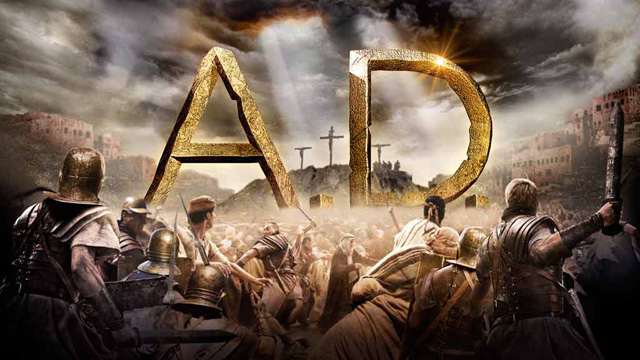
A.D. is subtitled “The Bible Continues.” That’s right. NBC is quite literally making a sequel to The Bible. To be fair, the bible in question is the History Channel miniseries produced by Roma Downey and Mark Burnett that produced mega-ratings for the network. A.D. starts with the crucifixion of Jesus, moves through his resurrection, and then on to early church leaders who fight for the survival and eventual triumph of Christianity against the pagan Romans. It’s a religious epic, and I have confidence it will be rapturously received by the Christian masses who watched every episode of the first Bible miniseries. At the same time, I sincerely question its value to just about anyone else. While religion offers plenty of interesting angles for storytelling, everything I know about the original Bible miniseries makes me imagine this will not offer any of those.

Prediction: Another mini-series, so there’s no renewal to be had, though since it has a huge built in audience, I’d imagine it will do well enough to earn another sequel if someone can put together an A.D. II.

Odyssey – 4/5/15

Odyssey

I cannot find a trailer for Odyssey. This may be a testament to my Google skills, or lack thereof, but searching the usual keywords on Google and on YouTube didn’t produce a trailer at the least. Here’s what I gather about the show. A troop of soldiers fighting Islamic extremists in northern Africa stumbles upon some super top secret info that an American company is actually funding the jihadists. Before they can return with this valuable information, all but one of the soldiers is killed by private contractors. There’s a massive conspiracy and it goes pretty far up. The story is, so says NBC.com, told Traffic-like, from many different perspectives, including that of a corporate litigator, a political activist, and a hacker. It sounds rather ambitious, like a cable show, maybe on Showtime, although it’s hard to get a great sense of its scale and production value without a trailer. Maybe less is more, because this sounds far and away like the most promising of the NBC midseason shows.

Prediction: Renewal – honestly, I wouldn’t place money on this, but these midseason shows are so impossible to pick anyway, much more so than fall shows, that I figured I’d have hope that the most interesting-seeming show might be good and succeed, which is probably too much to ask.

A.D.

Spring 2015 Review: Man Seeking Woman

19 Jan

Man Seeking Woman

Man Seeking Woman is legitimately different, which is no small feat. This is most notably due to its seriously surrealist touch which is welcome and lacking on live action television outside of Adult Swim. I’ll speak to that surrealist touch a little bit later on. Whether the show is enjoyable or not, however, depends on which side of a thin line Jay Baruchel and his character Josh, walk.

Baruchel has strengths as an actor, but chameleon isn’t one of them; he plays a version of the same character in nearly every role, and while there’s certainly significant differences in his characters, there are enough similarities to make it difficult not to somewhat conflate Man Seeking Women’s Josh with every Baruchel character. That’s not necessarily a problem of course, and many successful, talented actors face similar restraints (not everyone can be Gary Oldman) but it does mean enjoyment of the character rests as much on one’s opinion of Baruchel in general as on his character.

As for that character, well, Man Seeking Woman begins with Baruchel’s Josh saying his goodbyes to his ex-long term girlfriend after completing what was clearly a painful breakup. He’s devastated, crushed, and chooses to remain outside of the world, hiding away in his apartment, until he’s prodded by his best friend Mike (Eric Andre), doing like any good TV friend would, encouraging Josh to get back out there and dating.

Josh, glass half-full, is a charmingly awkward, warm-hearted everyman, who deals with unusual, befuddling situations with relative restraint, especially considering their utter absurdity. Glass half empty, he can come off as something of a whiny emo schmuck, a sad sack, who can’t or is clearly uninterested in moving on despite the clear message from his ex. Those are the extreme angles of his character, and most people will view him somewhere in the middle. On which side of that middle, however, one views him, may determine whether one enjoys the show.

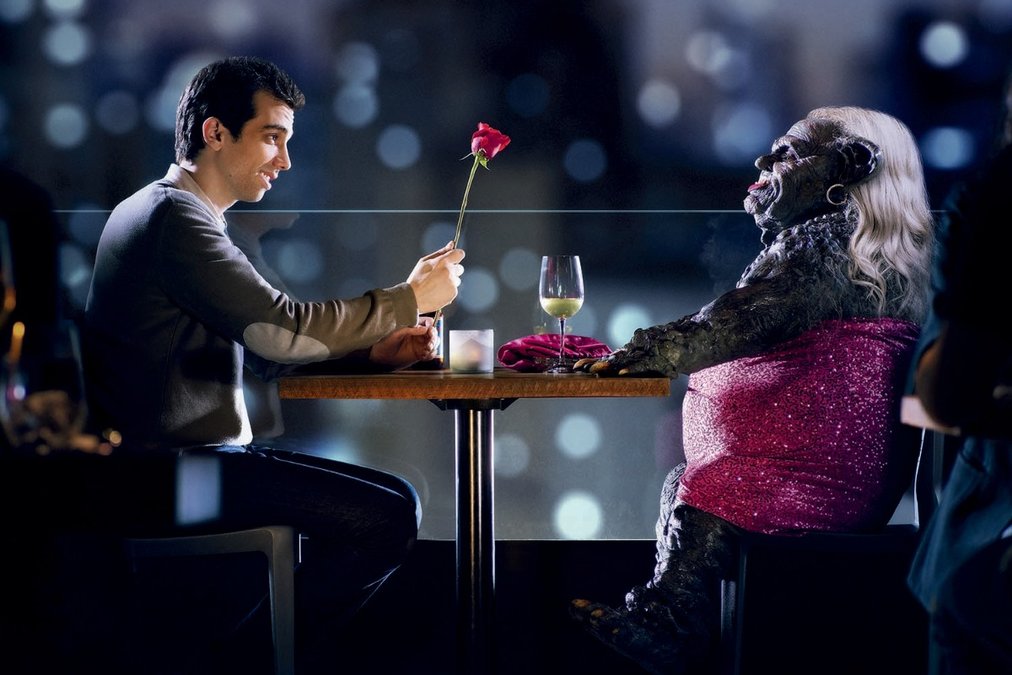
The other calling card of Man Seeking Woman is its sheer surrealism, a quality rarely seen in such a pivotal role in live action television. Early in the episode, Josh goes on a blind date set up by his has-it-totally-together sister. She insists she’s set him up with a smart, successful woman, willing to go out him, an unemployed loser. It turns the blind date is a hideous, literally dumpster diving troll, green and scaly. Within the Man Seeking Woman universe, everyone treats this as normal, except for Josh, who tries to be gentlemanly and conversational to prove that he’s not shallow, but eventually can’t take any more and gets into a physical altercation with the troll, ending the date. Everyone else in the restaurant, his sister included, views him as the villain.

Later in the episode, Josh goes to a party hosted by his ex-girlfriend and her new boyfriend, an elderly Adolph Hitler. The situation is similar as the date; everyone else at the party, his friend Mike included, acts as if this is normal. Hitler’s reformed, he’s cool, he’s chill; hating jews is so seven decades ago. Josh is the only alarmed guest, and he initially acts as if this as insane and bizarre as we know it to be, before somewhat deciding it’s better to fit in.

Lastly, on the way back home, Josh talks to a random girl on the train platform and follows her the wrong way onto the train for the chance to talk to her further. Although their conversation is fairly stunted and awkward, he gets her number before she leaves, to great fanfare. As he gets off the train and walks towards home, fans are cheering him on, asking for autographs, and the president calls him with congratulations.

Was it perhaps a tad overboard to be getting calls from the president for merely getting a girl’s number on the train? Probably, but although I wasn’t sure where I stood before that moment, I found I was in the at least slightly pro-Barcuhel camp when I rooted for his success on that subway, and was pleased when he pulled it off. Surrealism is hard to use properly and requires some level of acceptance by the characters that what obviously can’t make sense in the real world is, for whatever reason, real. The few surreal live shows on Adult Swim use surrealism for absurd, silly humor, while Man Seeking Woman uses surrealism in an attempt to get at humorous, but extremely human, non-surreal situations and emotions. Man Seeking Woman may not hit the ball out of the park, but it delivers a genuinely interesting idea.

Will I watch it again? I’m going to give it another try. I seem to like the main character well enough, and it’s definitely a little bit different than anything on TV, which is to its credit. Good ideas should be rewarded with some leeway, even if they end up not panning out.