Archive | Spring 2014 TV Season RSS feed for this section

End of Season Report: Justified, Season 5

9 Apr

JustifiedSeason5-1

I’m a huge fan of Justified. I ranked it #5 in my rankings of every show that I watched in 2013, which covered Justified’s wonderful fourth season. Unfortunately, while still a highly enjoyable show, Justified delivered a fifth season that was not up to the caliber of its past four seasons, and I can’t see it appearing nearly as highly ranked next year.

There’s plenty to say about the season but here are the central problems, which I’ll break down in further detail below. First, the antagonists were not as compelling as in previous seasons. Second, the season meandered and never seemed to have a strong sense of direction propelling it forwards. Third, the finale was somewhat anticlimactic and seemed more like a set up for next year’s final season big bad epic showdown between Raylan and Boyd than any sort of satisfying conclusion to this season.

There were good pieces, which I will touch upon, and as with most very high level television, it’s enjoyable episode to episode even when not as satisfying as its peak. That said, it suffers the curse fairly or not of being held to higher expectations, and it’s against those very high expectations, and not the expectations for an average series that Justified is judged.

Justified’s first season was a largely a compilation of one-off stories, slowly building the world which Justified inhabits, before ending with a multi-episode arc. Since then, each season has had a strong serial storyline which guided the season along. Seasons two and three had primary antagonists – Margo Martindale’s Mags Bennett in season two and Neal McDonough’s Robert Quarles in season three. Bennett’s superiority to Quarles as an antagonist was the largest part of what made season two superior to season three.  Season four broke that formula and worked around the search for a man who had been missing since the ‘70s but was living right under the nose of both the police and the criminal element in Kentucky, unrecognizable in the present to anyone still living. Season five revolved around the trials and tribulations of the Crowe family and in particular primary antagonist Daryl Crowe.

Daryl Crowe just wasn’t up to those previous antagonists’ standards for two primary reasons. First, he simply didn’t carry the weight and intimidation that the previous antagonists (or of course series long antagonist Boyd) did. While a certified genius compared to his Crowe brethren, he is still fairly incompetent; it was never believable he’d pose much of a threat to Raylan or Boyd or to anyone else. The show tried to take care of this somewhat by having him become an employee/minority partner of Boyd’s halfway through the season, but it was somewhat hard to believe that Boyd would even place a small amount of trust in Daryl. He wasn’t a particularly good criminal, he wasn’t a particularly scary criminal, and he just never really found a place in Kentucky or in Justified.

Second, forget Daryl’s plot role. He just wasn’t very compelling. His brother Dewey is a complete idiot, but he’s hilarious, and always lights up the screen whenever he appears. Daryl didn’t. Wynn Duffy, who I was glad to greet as a regular this past season, always spoke his piece quickly and dryly, and had a way of being as wittily direct as Boyd is loquacious. Daryl simply didn’t have the same on-screen charisma as any of these other baddies. When he was on the screen, you never felt like you didn’t want to turn away. There was nothing about him that stood out.

It’s likely related to this first issue that the season meandered and felt directionless at times. Seasons two through four ratcheted up as they went forward, building tension until reaching a satisfying climax and resolution. I could generally tell approximately where Justified was in the season by the tension of the events on screen.

It’s not to say that Justified is tied to these rules of how a season must go, but past seasons were stronger and this is one reason why. There may well be more interesting paths for a season to take, and other shows may thrive on a meandering climax-less journey, but Justified season five certainly did not.

Characters came in and out of nowhere, and for most of the first half of the season I just took it on faith because Justified had yet to not deliver, but by the finale, or really by the last few episodes, I did wonder what the plan was for the season as a whole, if it changed, and if it was developed somewhat as the season went along. It felt like the writers hit a couple of snafus and weren’t sure exactly where to go.

I love Boyd as a character but it’s beginning to feel like he gets away from slippery situations one time too often. He’s smart and he’s good, but he isn’t that smart and that good to evade both the law and rival criminal elements for this long, especially if he keeps taking on far more of a burden than he can handle, like he did this season with heroin, not to mention a cartel which was a lot harder to battle than his Dixie mafia rivals.

This is all leading to the third complaint. Ultimately by the time we got to the end of the season it felt like less of a satisfying season long conclusion than just a get-ready-for-the-final-season hurrah where the two primary characters through five seasons of the show, Raylan and Boyd, finally go head-to-head, with the implication that since it’s the final season, one of them will actually go down for good. Eva’s time in jail had some interesting character building moments, and I’m certainly not claiming it was worthless by any means, but the way it ended made it feel at least partly like it was simply a way to separate Eva and Boyd and ultimately get Eva to turn on Boyd and cooperate with Raylan.

The season ended with a chase for Daryl which was less than inspiring; no one thought Daryl would get away, and Wendy shooting Daryl was fairly predictable by the time it happened and relatively uninteresting. Boyd outwitting the cartel employees was equally anticlimactic. Although they were legitimately scary dudes, the tension was cut somewhat by the fact that Boyd had zero chance of not coming out of the situation on top. Overall, the ending of the season seemed largely like an afterthought to steer us towards season six.

The best Crowe this season other than the always delightful Dewey was actually young Kendal. Justified did pull one trick from up its sleeve – hiring a surprisingly good child actor (Jacob Lofland, who was also excellent in Mud). Some of the best moments of the season involved Raylan with Kendal, and though Raylan’s obvious connection to Kendal, being raised by some serious criminals, is hardly subtle, the scenes pack power.

Like a Faulkner novel, Justified is about the power of history, and the inability to free one’s self from it. Harlan county and its environs are composed of families who have been doing what they do, often criminal activity in Justified’s case, for generations. Boyd’s daddy was a criminal, and he became a criminal. Raylan’s daddy was a criminal, and Raylan became a lawman, but the reasons were as much because of his father’s criminal behavior as Boyd’s becoming a criminal was. Family is essential in Justified’s world as an inescapable force from which people can’t free themselves no matter how much they might want to – the Bennett’s, the Crowders, the Givens’ and others. Even third season antagonist Robert Quarles’ aggression stemmed in part from his lack of family; he was adopted by the Tonin’s but no matter what he did, could never be seen as their real son. These themes are powerful and generally handled very strongly on Justified. The Crowes, another criminal family bringing down Wendy and Kendal, couldn’t compete with those other families, but I earnestly felt for Kendal, ruthlessly manipulated by his uncle and unprotected by his mother who was unable to, until the season’s end, find the strength to separate herself from Daryl’s orbit.

Raylan’s deteriorating relationship with Art was also a highlight of the season. Art’s punching Raylan in the bar was the most satisfying cheap shot on an arrogant bastard since Mike clocked Walter White. It’s hard not to root for Raylan in the big picture but it’s also only right that his general approach to simply doing whatever he wants on the job without much concern for what’s best for the team actually starts only to rub his boss the wrong way and have consequences for Raylan. It’s good to see Art start to stand up to Raylan and stop letting him get with anything.

What it comes down to is that I hope Justified has a blast in its last season (and I don’t mean this as a pun on Boyd’s love of explosives). This is a show I want to look forward to going out at the absolute top of its game. Hopefully, this past fifth season is merely remembered as a little bit of a weak spot leading up to a powerful finale, rather than a sign that peak Justified was in the past.


Spring 2014 Review: Silicon Valley

7 Apr

The men of Silicon Valley

The humor in Silicon Valley is very different than that of the show it’s paired with after Game of Thrones on HBO, Veep, but the two share a different commonality which makes them an apt pairing: they’re both insider-y takes on very insular communities. Both shows welcome outsiders in to laugh and learn about their community’s peculiar quirks and allow insiders to nod their head at the all-too-familiar world they recognize on screen.

Where for Veep it’s the political arenas of Washington D.C., for Silicon Valley, it’s the tech world of well, Silicon Valley. I’m not anything close to an insider, but even just from having read occasionally about Silicon Valley and stories of the inanity that goes on there, I notice at least some of the shout outs to the absurd eccentricities of the area’s culture, such as the ridiculous company names, the claim that every product no matter how mundane and business-facing makes the world a better place, the reverence towards tech billionaires, and the ludicrously lavish parties.

Of course successfully parodying Silicon Valley is one thing and I’m sure to locals that’s more valuable in and of itself; I have no way to confirm this, but from what I’ve read Silicon Valley is pretty much spot on. But is it funny or enjoyable to outsiders? It is, and it’s warm, and honestly, it’s a story that it’s kind of shocking we haven’t seen yet, considering what a big part of American culture the tech startup world has become since the first dot com bubble of the late ’90s and the rise of Facebook. The only other quintessential bit of startup pop culture in the 21st century is The Social Network, a much more serious reality-based story. Silicon Valley is a lighter tale about the way up, rather than a look back at what went right and what went wrong from the top, but parallels can certainly be drawn between the two.

Silicon Valley stars five twenty-to-thirty somethings. a couple of whom work at a google-esque major tech company (Hooli) during the day and devote their nights towards working on their own startup enterprises at their house, owned by Erlich, an entrepreneur who had a semi-successful startup and sold out for a fair but not ridiculous amount of money. Erlich calls his house an incubator and owns ten percent of each tenant’s company rather than charge rent. Richard Hendrix, our protagonist, has been working a site called Pied Piper designed to help songwriters find out if their songs violate existing copyrights.

The stakes ramp up when a couple of very important people in the tech world – the CEO of Hooli, Gavin Belson, and venture capitalist billionaire Peter Gregory (whose right-on-point TED talk on the dangers of attending college the boys attended earlier) discover that within Hendrix’s worthless start up is a mega-valuable piece of technology, setting off a quick bidding war between the two for Hendrix’s company. Belson offers him $10 million for everything, but Gregory offers him $200,000 for 5% of the company, advice, and the chance to grow it himself. After having a panic attack, and with some persuasion from Gregory’s female employee Monica (I particularly note female because she is pretty much the only woman to appear so far in the show; perhaps that’s yet another accurate rendition of Silicon Valley culture – this show doesn’t even approach passing the Bechdel test).

Hendrix brings all his friends aboard and sets out to start a company.  The quest is then, as Richard expresses when he tries to give a short speech towards the end of the pilot, to build and grow a hugely successful enterprise, and feel good doing it, all while avoiding the dystopian hive mind of Silicon Valley that he and the others are sick of, and which can be as insidious as it is hilarious.

Silicon Alley is a spin on a classic losers/underdogs against the world theme, but there’s one big difference.  There’s not up against the big, hulking, charismatic jocks – instead, Silicon Valley is run by the nerds; the only difference between nerds and gurus are a couple of billion dollars.  The main characters may be classic nerds, but they’re not Big Bang Theory nerds; there’s a fine line between natural awkwardness and uncomfortable no-real-people-are-like-this behavior and certainly in the first episode Silicon Valley stays well to the former side of the line and I have no reason to think that it will deviate from this.

As the credits rolled, I was pretty excited to follow their journey with them. While it doesn’t have the hook of an edge-of-your-seat-gripping drama, it was exceedingly easy to watch, and if there was another episode available at the time I would have popped it on right away.

Will I watch it again? Yes. Networks have reputations that preceed them, and HBO is held to a pretty high standard. Thankfully, this looks like another strong effort. Next episode, please.

End of Season Report: Walking Dead, Season 4, Part 2

31 Mar

Carl

The second half of the fourth season of The Walking Dead (or as I like to call it, because AMC addresses it as such, AMC’s The Walking Dead) tried a new tack. After the characters’ home at the prison gets blown apart by the Governor’s invasion, because we know the main characters can’t be at any one place for too long, the remaining living characters are divided into five groups, each of which is unaware of the location of any of the other groups, or whether anyone else even made it out alive. The groups never all appear in the same episode and some entire episodes feature single groups and just a couple of characters. Full episodes featured only Rick, Michonne and Carl, only Daryl and Beth, and only Tyreese, Carol, Lizzie, and Mika (and Judith technically, though she’s not much of a character at this stage in her life).

Theoretically the idea was admirable and ambitious; there could have been something to be gained by laying out the characters as separate entities and lingering on their stories without letting different mindsets or moods interrupt singular narratives. In practice, however, the organizational device led to an epic slowdown of a show that’s had serious pacing problems over the years and which is better when it keeps moving at a hardy pace. The Walking Dead can’t pull off the epic slowness and deliberateness of True Detective or Rectify, for example. Instead, the episodes just feel needlessly stretched out.

I’m not a Walking Dead hater, but I do think The Walking Dead is the most uneven show on television. No current show has constantly produced powerful moments and at the same time undercut them with miserable pacing, poor characterization, and strange plot choices. This half-season would have really benefited from shrinking the length of many of these episodes, or, since every episode is forty minutes, more realistically from more cross-cutting in the episodes between the various groups of survivors. For example, the Beth and Daryl-centric episode in which Beth had her first alcoholic drink did have its share of warm character moments and bonding between two character who had previously not had a whole lot to do with one another, but it certainly didn’t need to be forty minutes. There was a whole lot of extra time spent that didn’t provide any additional punch.

On the whole, assuming we’re resigning ourselves to these general storylines and groupings, these eight episodes could probably have taken place in the space of four or five episodes without any noticeable loss.

There are serious continuing issues with The Walking Dead aside from its poor pacing, which are occasionally remedied but keep popping up. Characters can be remarkably slow on the uptake, making decisions that seem counter to everything we know about the universe in which they live, and the show can be painfully on the nose.

For example, even without hindsight, viewers could tell Lizzie was obviously unbalanced. Tyreese and Carol didn’t notice at all, and left her alone with baby Judith, which is hard to believe. In fact, The Walking Dead’s ability to be so on the nose with how off Lizzie makes it even stranger that Tyreese and Carol had no suspicions. This isn’t to say they could have expected her to kill her sister by any means, but not leaving her alone with a baby seems like sound and fairly clear advice.

The season finale contained entirely unnecessary flashbacks of Hershel convincing Rick to farm instead of fighting walkers to show Carl a better path. I love Hershel; he was one of my favorite characters and the moral center of the show. But, come on. We get it. We don’t need the reminder to know that Rick is now finding he has to behave savagely again to keep his son safe. The Walking Dead is consistently afraid to give its audience enough credit to figure out what’s going on. I’m not sure what they talk about on The Talking Dead; The Walking Dead provides more explanation than anyone could possibly need.

Too often it feels like The Walking Dead wants to make sure you know it’s about big ideas and not just zombies, and that takes away from both the power of the ideas and the plot itself; tell an interesting story in this lawless zombie-ridden universe, and the ideas will take care of themselves.

That said, there’s still something here worth watching even if The Walking Dead only really shows its best side in some of the episodes some of the time. Nothing that has happened has made me think that The Walking Dead doesn’t have the power in it to be as compelling as it is in its best moments more often, and no doors have been closed off through the direction of the show that would end any chance at improvement. The show just continues to meander back and forth from powerful moment to strange decision, from action packed zombie battle to walking on train tracks for forty minutes with nothing much happening.

Those powerful moments really do exist. Finding Lizzie with her dead sister was startlingly creepy, so shocking because even as relatively desensitized viewers have become to gruesome violence, this is still such a stunning act. Watching Rick rip the head gang leader’s  throat out in the finale was powerful; much more than anything gained through the flashback, that one single moment epitomized Rick’s new attitude and his willingness to get his hands (and mouth) dirty. When Carol lays the fact that she killed Karen on the table, and Tyreese forgives her, it was moving and actually made sense within the greater context of the episode; it would have taken something major to change Tyreese’s viewpoint around to that reaction, but the events in that episode qualified.

Also, no season long recap should go without at least quickly noting that the zombies are as always remarkably gross and well-rendered, and the people behind them seem to come up with more disgusting types of zombies every season which is impressive. The set piece zombie battles are still pretty damn cool.

So, another season ends, and I’m still in the same place I was after midseason, and after last season. The Walking Dead is a show with big, powerful moments that finds itself frequently somewhat lost between those moments. There’s still a lot of potential, and the world continues to be a promising and fruitful one, but it remains endlessly frustrating that the writers can’t put it all together for one really great season of television.

Spring 2014 Review: Crisis

28 Mar

Crisis time

Here’s the titular crisis. A bus containing a group of kids who go to a fancy-schmancy private school for the sons and daughters of the masters of the universe is stopped by armed men and the kids are taken hostage. On the bus is not only the President’s son, but also the kids of very important people in all walks of life, such as ambassadors, titans of industry, and more, including Gillian Anderson’s Meg Fitch, head of a huge global IT company.

The brilliant reasoning of the people behind this act is that they’ll use the leverage they have from kidnapping the children to force their powerful parents to do stuff. Each parent’s individual mission will be a step towards the kidnappers’ overall plan, which still remains a mystery.

The midway-through-the-episode-twist, which I’m going to give away right now, is that Dermot Mulroney’s character, who just seems liked a pathetic has-been parent chaperoning on the trip to spend a little time with his estranged daughter, turns out to be the mastermind behind the entire operation. The plan seems to be some sort of revenge for, well, something or someone, or lots of people who screwed him over a few years ago when he was in the CIA. The details are left unclear but we’re shown a flashback where a man he thought was his best friend threatens his daughter’s life if Mulroney doesn’t go quietly from whatever mysterious CIA position he held.

Oh, also, Gillian Anderson’s estranged sister Susie is the head FBI agent working the case, and it turns out that Susie is actually the mother of Gillian’s daughter, but gave the baby up to Gillian because she was a teenager. In every show like this, it’s important to have a couple of personal crises that also just happen to bubble up at the same time the primary action crisis arises, to give the show more character-based oomph and the potential for the personal and the professional to collide.

The remaining primary character is a secret service agent who escapes with one of the kids and manages to take down one of the attackers. This secret service agent was shot by a rogue secret service agent, and the villains just let him lay around on the ground without making sure he was down for the count which seems like some pretty poor planning for the plotters behind such a complex overall plot.

Crisis is a long-form thriller action series. If almost every long-form supernatural/sci-fi based series of the last decade owes its existence to the success of Lost (which it does), almost every long-form serial thriller action show of the last decade owes its existence to 24.

24 is thus the template for success for this type of show. 24 is more focused on action, while this, and a show like CBS’s Hostages which Crisis immediately made me think of, are more thrillers, which basically means less hand to hand combat, but the blueprint is basically the same. Plots in these shows tend to be mind-bogglingly complicated conspiracies that go all the way to the top. Think about it: they have 22 episodes in which they have to continually be creating constant tension, cliffhangers, and reveals. It’s difficult to construct a truly coherent narrative that meets those standards of excitement.

So the ideal is to have the plot make enough sense in the moment that you are willing to get on board and be taken in by the twists and turns, even if they don’t make sense if anyone thinks too much about them. Because there’s not going to be a whole lot of deep themes or character development, it’s got to be fun; you’ve got to simply enjoy watching these shows in the moment. (24 may try to have you believe that debating the value of torture, etc, was a theme, but it was really just an excuse to realize how disturbingly enjoyable it was to watch Jack Bauer beat people up). Again, 24 is the model – 24’s plots were pretty stupid when you thought about them, and the characters acted in constantly stupid ways, but at its best, it didn’t matter because it was fun to watch Jack Bauer beat shit up, and yell “There’s not enough time!” to anyone willing to listen and for any given forty minutes it seemed like whatever task he was on was really important.

Does Crisis meet this standard? Not really. It’s serviceable. There was nothing offensive, and if somebody threw it on in the background I wouldn’t cringe. But there’s nothing that gripped me, or that made me feel like I absolutely had to see what came next. It’s constructed by the network machine, a competent product, but no more. It’s very much a paint by numbers for this genre; there’s a plan to make it long term – in this case Mulroney has some sort of secret revenge book (think, well, Revenge), that he’ll seemingly be moving through over the season, and there’s plenty of potential personal conflicts. Rather than being bad, Crisis commits perhaps the worst sin for an action thriller; it’s utterly forgettable.

Will I watch it again? No. There’s just no point. Honestly, I’d be shocked if anyone I talk to remembers Crisis’ existence in two years, which speaks more to its forgetability than its terribleness.

End of Season Report: Girls, Season 3

26 Mar

The Girls

Thankfully, the controversy that overwhelmed Girls has mostly (albeit certainly not entirely) died down by the third season, meaning viewers can concentrate on its merits as a show rather than as a stand in for any larger piece of our culture. For the most part, people who like it watch it and people who don’t stopped bothering to criticize it at every turn and moved on to something else. There’s still more talk about Girls than all but a handful of shows on TV, but compared to the first season, it’s nothing.

Underneath that mostly lack of controversy lays yet another promising but somewhat uneven season. Girls has a shot at being a great show, but it generally continues to come up a little short and merely be a good show. That may sound like an insult, but I don’t mean it to be.  Good shows are still relatively rare and Girls does indeed have a unique voice all its own. It doesn’t feel like every other or really any other show on TV in particular, which is one of the highest compliments I can give a show.

That said, the little things Girls struggles with are particularly frustrating, because with those problems eliminated, Girls could be be a truly great show. This is still absolutely possible; Girls’ flaws are not at all fundamental to its premise. It’s certainly worth highlighting both sides, which parts of this season went right and which went wrong, and I’ll navigate that character by character.

Overall, Hannah has and continues to receive the best, deepest, funniest, most complex, and most interesting arcs on the show. This is not particularly surprising as Dunham is the show’s creator and primary creative force, but it continues to be true to an overwhelming extent, which says in equal parts both how generally strong her stories are and how much they outrank everyone else’s. Hannah had lots of great, funny, and awkward moments. While the writers seem intent on making sure you don’t like the characters too much with moments like Hannah’s painfully awkward conversation with her editor’s wife at his funeral, there were also plenty of moments when Hannah was, by Girls standards, relatable. Her quitting GQ, or rather causing herself to get fired, irked me, especially since she seemed to have made her peace with her current position in an earlier episode, only to then come around again to how she was feeling just a couple of episodes before that (if that’s confusing, fine – I was confused watching it). However, most of her season long plot worked, particularly her relationship with Adam which I’ll get to next. I really enjoyed “Flo,” the episode in which Hannah went home to deal with her grandmother’s illness. “Flo” felt less exaggerated and more real and down to earth than most of Girls, which typically marks its ground as being one degree away from greater relatability.

Next, Adam. Adam and Hannah’s relationship was a very important part of season three, and Adam was the second most developed character of the season, moving past any of the other Girls. I liked Adam much more this season than I had in the previous two, both in terms of sheer likability, and as a character. I think that’s because we got to know him a lot better and he was significantly deepened and filled out. In previous seasons, we had either seen his dark sides or his overbearing obsessiveness, for good and for not so good, and here we finally got to see him just be. In addition, his career success made Adam feel like less of a weirdo – he found some people he actually seems to genuinely get along with and something he’s passionate about, both attractive qualities. Earlier, it had always bothered the hell out of me that not only could he not seem to stand Hannah’s friends to the point where he couldn’t even tolerate them in small doses, but he didn’t have any of his own. Adam and Hannah’s relationship overall was a highlight of the season, and it produced plenty of moments that showcase Girls, and TV relationships generally at their best, by putting characters in situations of conflict without either side being obviously right or wrong. Both Adam and Hannah consistently had valid points in their arguments, even when one or the other was self-serving. When Hannah’s mother confronted Hannah endearingly but overbearingly about Adam, both she and Hannah were right. He’s an exceptionally caring person with serious issues who offers a great deal of both positives and negatives.

Now, everyone else.  Marnie’s plot changed completely when the actor who played the on again off again sad sack boyfriend Charlie with whom she had finally reunited in season two’s finale, Christopher Abbott, announced he wouldn’t be returning. I was glad upon hearing the news, because Abbott’s Charlie was one of my least favorite characters on the show. Unfortunately, his departure led to Marnie’s continual decline. She was inconsolable for the first half of the season, and was just starting to have a couple of things go her way by the time the season ended. Marnie’s faults were also in full display all season; full of herself, controlling, haughty, and judgmental. Although we peeked through that occasionally to see someone struggling and hurt who was used to life going her way and unsure what to do when it wasn’t, we just didn’t get enough of Marnie on the whole to go any deeper than that. More time with Marnie would have highlighted this struggle, and while some of her constant judging of everyone else in her life is pretty indefensible, other of her more negative qualities would have come out as symptoms of her current situation in life making them more palatable and understandable.

Of all the characters short on screen time this season (everybody but Adam and Hannah), I probably enjoyed Jessa’s plots the most, which surprised me, because Jessa’s been my least favorite character through the first two seasons of the show. What made them work in this season is that, given the lack of screen time for Jessa, Girls didn’t even seem to attempt a coherent arc for Jessa. Instead there were little vignettes that were entertaining and instructive individually. In terms of the big picture, I’m not sure I really buy it; Jessa’s a drug fiend, and then she kind of just isn’t because well, it’s not really clear. But in terms of single episode stories, Jessa’s are compelling, particularly her discovery of an old party buddy who had faked her death to get away from Jessa’s negative influence. While Jessa’s very different negative qualities are as evident as Marnie’s, at least Girls has done a much better job digging in to the root causes and the pain behind Jessa’s fuck-the-world facade.

Shoshanna is the least well serviced character this season. She has been for the entire series, but this season even more than ever before. She doesn’t get a whole lot to do, and she seems dafter than ever. Even school, the one area in which it seemed Shosh was ahead of the curve, betrayed her. Her role in this season, rather to be a character, so often seemed to be to point out what the viewer was thinking about a situation, particularly in the first episode and “Beach House”. I’m not sure we’re ever going to get more from Shoshanna, and unlike Marnie and Jessa, instead of having a story that wasn’t really fleshed out, there just wasn’t much of a storyline for Shoshanna at all this season.

Ray is my favorite character and the favorite character of just about all my friends. He’s the only person on the show who seems to be able to figure out what issues everybody on the show is dealing with, himself included (outside of Shoshanna’s occasional savant-ish moments). He doesn’t always have the most to do but I enjoy just about every moment he’s on screen, even when he’s being kind of an asshole.

Two standout episodes this year were the aforementioned “Flo” and “Beach House.” It was great to see the four girls interacting after they really hadn’t all season in “Beach House”, and though it showcased all of their worst qualities, there was a lot to like about the episode. It helped take stock of where everyone was at that moment; everybody progressing in some ways and unchanging in others. The dance scene at the end was well done and a well-deserved warm moment after the constant fighting that came before, showing that their friendships are stronger than one fight, no matter how vicious. “Beach House” also reintroduced Elijah, who was quickly brought back into the fold for the rest of the season. I greatly enjoy the humor his character brings especially when the other characters are tense and stressed out. He’s welcome back into the world of Girls anytime.

Here’s where Girls stands after three seasons. It’s a good show, which is absolutely worth discussing and talking about in significantly more positive than negative ways. It’s a flawed show as well, but one that has a potentially perfect season in it. Girls, even not at its best, is noteworthy enough to remain canonical television, and while its flaws prevent it from being great to this point, it’s not so far away.

Spring 2014 Review: Resurrection

24 Mar


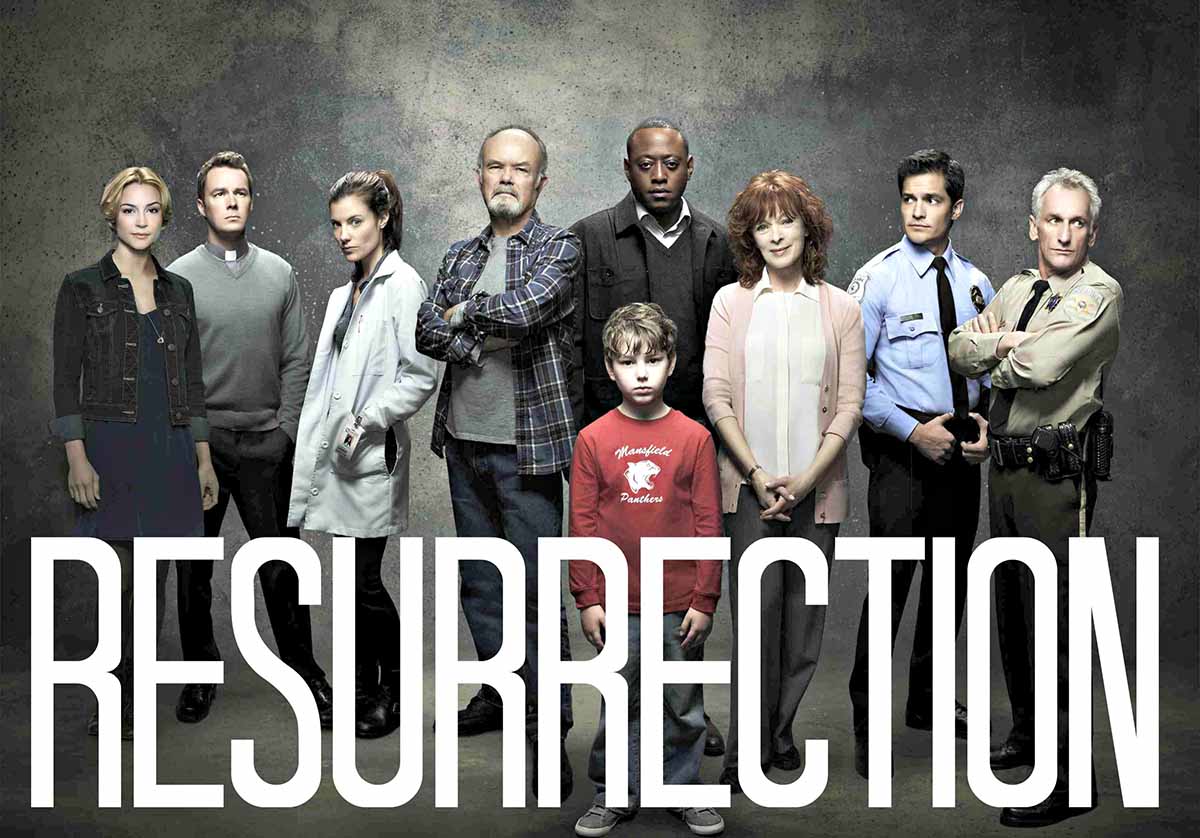
Resurrection


I just finished watched the first season of a French show called The Returned (actually the French words for “The Returned” (Les Revenants) but you get the idea) about a small town in which people start coming back from the dead at the same age at which they died and with no memory of what happened between their death and their resurrection. Resurrection, which Wikipedia assures me has no connection with The Returned, has an almost eerily similar premise (In fact, Resurrection’s pilot is named “The Returned,” named after a book titled “The Returned” which makes it even harder to believe the appearance of these two shows within a few months of each other is just coincidental).

Resurrection starts with the appearance of an eight-year old American boy appearing out of nowhere in China. It turns out he’s Jacob Langston, who drowned 30 years ago in his hometown of Arcadia, Missouri, a relatively small town out in the boonies. Everyone struggles to accept that he might by the real thing and not just an impostor, coached up with Jacob’s memories for some undisclosed reason, particularly his parents, for whom his death understandably remains a sore subject even so many years after the fact. His mother is quickly willing to believe while his father finds his unexpected return from a watery grave far more difficult to come to terms with. When the DNA test matches up, the residents of Arcadia and Customs Agent Marty Bellamy (Omar Epps) who was pegged with the responsibility for the boy when he came in from China, face the fact that they have no explanation for the reality of the situation. Besides Jacob’s parents, there is Jacob’s uncle, whose wife also perished with Jacob, and Jacob’s one-time younger cousin, Maggie, now a doctor. Additionally, Jacob claims that the details of his and his aunt’s death differ from what everyone believed at the time, and may have been more sinister and less accidental.

The episode ends with the return of another Arcadia resident, the father of Maggie’s best friend, indicating that this resurrection is not a one-time phenomenon. People are coming back, and no one knows why.

That’s pretty much all that happens. Kid comes back. Relatives struggle with the revelation that this could actually be the kid they had written off as dead thirty years ago. Confirmation that he’s for real their kid. Friend’s dead father shows up.

It wasn’t revelatory or great by any means, but it was actually better than I thought it would be, which is still a relatively rare phenomenon, especially in network television. Mentioning that this was because my expectations were so low is an overly harsh backhand additional to that compliment. Perhaps unfairly, I had conflated Resurrection in my head with Believe, and after a largely negative experience with Believe, I was relatively pleasantly surprised after watching Resurrection.

Exactly as I felt after the first episode of The Returned, I have no idea where this is going, but it feels more like a typical post-Lost serial mystery show rather than the unique unlike-anything-else feel that The Returned gave off. Particularly, Resurrection doesn’t have the underlying haunting feeling that pervades The Returned. Fortunately, it also doesn’t have the air of crusaders-on-a-mission that permeates Believe.

The mystery is medium level on the intrigue scale. Less happens than in most first episodes of serial mystery shows, making it harder to take a stab at what direction the show is going with. Much more epic shows, in comparison, like Terra Nova, Revolution, and The Event, all went through much more premise information in the initial episode. The set up isn’t quite interesting enough to hook me in, and nothing about the setting, style, or writing, was noteworthy enough to demand following up, but the sum total was pretty decent, and I could imagine the show painting a fairly interesting mystery.

Will I watch it again? Probably not. While its plot was very similar to The Returned, it lacked the style and mood which made the first episode of The Returned more compelling in comparison and there are only so many TV hours in the day. That said, I could imagine a world in which Resurrection is actually pretty good, and even having that possibility exist is an underrated state of affairs.

Spring 2014 Review: Believe

21 Mar

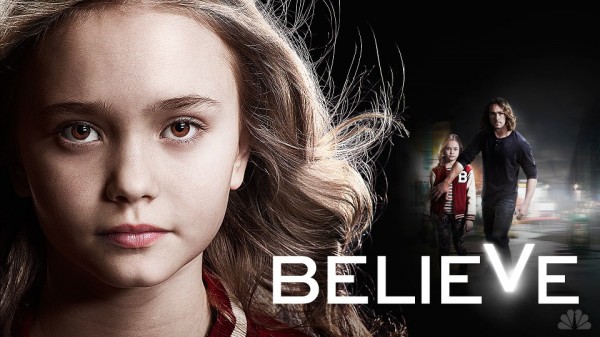
I Want to Believe

I’ll be honest. I try and hope I did my best to evaluate this show fairly after viewing it, but it rubbed me the wrong way right from the title and poster. Call me a cynic, a pessimist, a Rust Cohle, but I’m kind of sick of being asked to Believe. It’s not entirely that I don’t want to believe, though that’s probably part of it. Shows earn belief, they don’t ask for it. Believe checks off a bunch of boxes that happen to be personal pet peeves – it ties in big time with fate, it simplifies life to essentially good and evil, and it uses some magic to make us believe big things are happening. No lesser than Oscar winner Alfonso Cuaron directed and co-wrote the pilot, and I hate to disappoint Cuaron, whose work I admire, but this was not for me.

Let’s step back a bit. Believe stars a little girl (eight years old maybe? I’m terrible with ages), Bo, with powers. Why, how, and the extent of the powers are unclear, but they’re super powerful and she is only just beginning to learn how to harness them. She can definitely at the very least read people’s minds, see the future, and scream loud enough to make a flock of birds go all The Birds on someone.

The girl is naturally the target of interest for forces good and evil, among the select few who even know about her existence. On the side of good is Milton (Delroy Lindo) and Channing (Jamie Chung). We know nothing about them except that the two have been tracking and interacting with the Bo for a long time and seek to protect her and use her power for good, whatever that means, somehow or other when she’s older.

On the side of bad is Skouras (Kyle McLaughlin), who wants the girl for, well, I don’t know, evil.  It’s not really clear other than he’s just a bad guy. He has an assassin who is attempting to steal the girl throughout the pilot, killing anyone in her path.

The good guys break out convicted death row inmate William Tate (Jack McLaughlin, unrelated to Kyle, but doing the best young Nick Cage impression I’ve seen in years, and I can’t decide whether I mean that as a compliment) minutes from being put to death and recruit him to find and protect Bo. He’s not really interested in spending his time protecting a young girl, but it sure beats the death penalty, and they keep him on the job with the threat of turning him into the authorities. Apparently they have the power to somehow ensure he doesn’t get caught if they don’t want him to, because, well, just because. He’s still pretty grouchy about having to babysit a girl, even if she has powers, and Channing wonders why Milton went through the trouble of breaking him out of prison (which was surprisingly easy). It turns out that he’s her birth father, so he’ll go on presumably learning to love her while still being a bit of a whiner.

Believe was oddly reminiscent of Fox’s touch, another show about a kid with powers and fate gone overboard, and I don’t mean the comparison as a complimentary one.

Maybe there’s someone who finds this heartwarming, but it’s not me. I have nothing against the girl but it the show seems vaguely full of itself and simplistic. At one point, Milton tells Tate that they don’t use guns, because they’re the good guys. What? What does that even mean? You won’t find a stronger gun control advocate than me, but I don’t understand at all why good guys use other weapons by not guns. What are the rules? That line just ticked me off in a way that’s emblematic of what bothers me about this show and shows like it. I’m supposed to feel inspired but I just feel bored and confused.

Will I watch it again? No. I don’t want to believe. Well, that’s not really true. There are plenty of things I believe in. But Believe is not one of them.

Spring 2014 Review: Mind Games

17 Mar

Mind Games

Over the years, as more and more networks have started showing scripted programming, and this fragmentation has led networks to aim their programming certain niches, house styles have developed which have become strongly associated with said networks. For example, CBS and police procedurals; it’s not as if no other network has them, nor is it as if these preconceived notions can be changed, but since CSI’s emergence, CBS and police procedurals go hand in hand.  Sometimes it’s the subject matter that’s significant, sometimes it’s the character focus, sometimes the mood, sometimes the style. With the emergence of these house styles, it’s easy to watch a show and say it feels like an NBC show or an FX show or a TNT show and have that actually mean something.

Sometimes, then, it feels like a show is simply on the wrong network; they’re not a match. Either the show doesn’t really fit with the network’s other programming, or just as important, it would fit far more snugly somewhere else. I’ve been considering a post on shows like this, and though I don’t know whether or when that will happen, it’s been on my mind. Hannibal set me off on this recently; it’s on NBC, but clearly belongs on Showtime. Mind Games is another example of this phenomenon It airs on ABC, but it clearly belongs on USA.

Mind Games hews to nearly every basic tenet of USA programming, sharing some traits with many of the shows currently or recently airing on the network. The two main characters are two brothers with very opposite demeanors and personalities. (think Neal and Peter in White Color, Gus and Sean in Psych, Evan and Hank in Royal Pains). In this case, it’s brothers Clark (Steve Zaun) and Ross (Christian Slater). Ross is a hard, to the point, businessman, not particularly concerned with acting ethically to get what he wants, while Clark is a goofy bipolar academic who is loud, passionate, and with a firmer moral center.

One brother, Clark is savantish – he’s kind of a genius, but there’s something holding him back (Neal in White Collar, Michael in Burn Notice (the whole being burned), Suits). Clark is bipolar, which makes the business environment particularly difficult for him, He goes through highs and lows, and is on and off his meds, complaining that while he’s more even on his meds, he can’t think as clearly. Clark’s specialty is behavioral studies, and he wants to use this expertise to figure out how to change people’s minds but using visual and other behavior cues he learned from his research.

The two have to make a fresh start after experiencing some personal failure. Slater just got out of jail, and Clark was just fired from the school where he was teaching for sleeping with a student (Hank and Even again in Royal Pains, Michael in Burn Notice). They’re starting over with a joint venture, a firm that uses Clark’s specialty to change people’s minds. Ross handles the business, Clark handles the science, and they’re off and running.

There’s a clear procedural element with an ongoing plot (literally every USA show). Every episode is likely to feature a situation the gang will have to solve with their revolutionary mind-bending psychological techniques, while they’ll slowly move forward in the continuing story line. Aside from the general growth of the firm from being bankrupt upwards, he learn that Ross paid the student who slept with Clark to sleep with her, and that even though it started as work, she fell for Clark. Obviously, that reveal is a Chekov’s gun bound to go off a some time, many episodes away, were the show to last that long.

The two brothers have a motley crew of side characters surrounding them. Clark has an acolyte, Slater has his own business development acolyte, and they employ an actress named Megan. They also soon employ Slater’s ex-wife, Claire, because she’s expert in keeping Clark calm. Every week presumably, the gang will take on a new case, help some people, make some money, face some obstacles, but prevail over them by the end of the episode.

Interestingly, Mind Games is from Kyle Killen who struck out in his first two times as a broadcast network showrunner with two far more ambitious shows, Lone Star, and Awake. It’s almost as if he’s choosing to continue dumbing himself down until he finds a hit. Admittedly, dumbing down is harsh. Less ambition on television certainly isn’t a good thing, but it doesn’t have to be an outright bad thing. Still, like most USA shows, Mind Games occupies a world of decently high floors but also fairly low ceilings. By ensuring it meets a minimum set of criteria, Mind Games becomes an absolutely competent show but also a show unlikely to progress above competence. Because of this, as well as the procedural nature, there’s nothing compelling about it. It’s just a show that’s on TV, no more, no less.

Will I watch it again? No I don’t see anything that elevates this above any other USA-type show, and as I am two seasons behind on White Collar, I’m probably not going to start watching this version which doesn’t really seem better in any way.

Spring 2014 Review: The Red Road

12 Mar

The Red Road

First impression: The Red Road is a drab, depressing show.  There are not a lot of laughs to be found, I’m warning viewers outright.

Well, let’s get into a little more detail than that. From the pilot, The Red Road seems like something of a two hander. Kiwi Martin Henderson plays Harold Jensen, a cop in a small town in exurban New Jersey right by the New York border with a large Indian population. He’s got two teenage daughters and a wife. His wife, Jean (Julianne Nicholson of Masters of Sex) is a newly sober recovering alcoholic and struggling tremendously, flying off the handle at all sorts of stressors. His older daughter Rachel is hooking up with an Indian named Junior, and that in particular is driving Jean, who has some sort of tragic history herself with a high school love affair with a local Indian, up a wall.

Philip , our other protagonist, is a half-Indian who is clearly a member of the criminal element. He’s done some time and he’s apparently now working for his criminal father who lives in New York City and is involved in, well, it’s unclear the extent of his criminal activity, but certainly drugs at the very least. His significantly younger brother is Junior, the boy Rachel is keen on. We learn early on in the episode that some teenage kid from NYC who was dropped off in this town has gone missing and we’re led to believe that Philip had a hand in, or at the least knows about and is covering up, the circumstances behind the kid’s death.

How are these two men from opposite sides of the law connected? Well that slowly comes together over the course the episode. Jean’s bad experience with her own Indian sweetheart growing up somehow led to the death of her brother. Thus she holds what seems to me an incredibly unreasonable prejudice against all Indians, but maybe it’s more particular to this tribe or this family and I just missed that. Unraveling and apparently drunk again she steals her husband’s gun and takes her SUV to hunt down Junior and threaten him if not more. She never finds them, but runs over someone while driving drunk.

Philip calls Harold and sets up a meet. It turns out that Phillip was the man Jean had an affair that went bad with. He also happens to know that Jean was in the car, and he knows some Indians who witnessed the crash. He offers, surely not out of the kindness of his heart, to make sure the witnesses make the right statements. Harold is obviously uncomfortable with the arrangement, but is in a bit of a bind, and seems willing to get ethically dubious to keep his wife out of trouble and likely prison. Thus, the two embark together, I suppose upon the titular red road, which I assume is red because of blood, but it could be clay, or I don’t know, ketchup.

Okay, that was a longer summary that I originally intended. The show is certainly not a fun ride; it’s depressing, and everyone’s pretty hard to root for. Even Harold, the ostensible good guy who would be the obvious candidate to root for, comes off as unlikable when he threatens to kill Junior if he ever goes near his daughter again. Overreaction, much?

It’s a serious show, both in that it attempts to be serious, compelling television, and that is simply incredibly serious in tone, as in implying an utter lack of lightness.  It’s a little be oppressive to watch a full hour of at once. While I didn’t know where the show was going for the vast majority of the episode, the uneasy partnership between Philip and Harold did make me a little more intrigued. It felt like a potentially interesting avenue to travel on, albeit one that probably holds nothing but terrible things for everyone involved.

I’m honestly not sure if there’s something here after one episode. There are some good ideas, and I have a higher tolerance for depressing television than most.   I’m willing to extend my leash somewhat especially since the real crux of the premise, that these two are going to have to work together in spite of having nothing in common with each other, only came out in the last couple of minutes of the show and I still may need some more time to discover what I’m getting into. The fact that I’m curious is promising; I’m not dismissing it out of hand and I think I want to know more before making a decision.

Most shows are easy to discard after one episode with no regrets. Another subgroup are so compelling that I’d sign up for a full season right away. In the middle are those that require two, three, four episodes to really suss out if they’re worth watching. The Red Road falls in this class.

Will I watch it again? Maybe. That’s a cop out – I’ll say yes just because I feel I should say yes or no, but the fact that I’m deliberating here tells you about what I think of the show.

Spring 2014 Review: Star-Crossed

5 Mar

Stars, crossedA quick preamble: I genuinely enjoy watching and reviewing CW shows. They’re exactly why I got into the whole watch-and-review-every-first-episode business to begin with. They’re not directed at me, and they’re shows that, with exception (one day I’ll attempt Supernatural) I probably would never watch, but they’re actually generally skillfully built to attract their target demographic, and while they may not always be great or particularly good, they’re rarely terrible and there’s an art to their construction that I really appreciate.

On to Star-Crossed. One might guess from the title that the stars are two people in love from opposite sides of the tracks, but not that their love is quite literally star crossed, as in the boy and the girl are from different planets. The girl is Emery (played by Aimee Teegarden, Friday Night Lights’ Julie Taylor), and she’s coming back to high school after a long illness. The boy is Roman (Matt Lanter, of the new 90210), an alien of the Atrian race. The Atrians arrived on Earth a decade before the events of Star-Crossed, and they’ve been District 9-ized. They live in their own sector, separated from the humans, and have curfews and human policemen patrolling their area. Seven students have been chosen for an experimental program, attempting to integrate select Atrian teenagers with their human counterparts at the local high school. If they’re successful, it will pave the way for more Atrian-human integration. The racism analogy is palpable – suffice to say the Atrians are not popular with the humans. At best the humans ignore them, at worst they curse at them, fight with them, and yell ethnic slurs. Some Atrians are excited about the integration process, while others embark upon a more covert aggressive path to one day take down the humans and escape.

It’s both an alien show and a high school show. On Emery’s first day back at school,there’s all sorts of social norms she has to learn, like the fresh-to-American-high school Cady Heron in Mean Girl. Emery feels somewhat sympathetic towards the Atrians, and one in particular, but she’s afraid of helping them due to the social ramifications. (She actually tried to protect one when she was a kid and they first arrived – who ends up being Roman – young Emery is played by the adorable actress who played Maddie in the short-lived Ben & Kate.) It’s high school. There are cute boys. Emery’s originally attracted to Grayson (played by FNL’s Grey Damon, who I can’t really recall dealing with Julie ever on the show), and she’s invited to a party by the school’s Queen Bee, Taylor. There’s bullying and peer pressure. The Atrians are harassed relentlessly by a bunch of no-good irredeemable bullies, and those who don’t bully are encouraged not to intervene or risk becoming outcast themselves.

There’s definitely the seeds of a smart, if not particularly compelling to me personally, idea here. It’s District Nine meets Mean Girls. It’s competent, and the combination actually makes a lot of sense. That said, it’s hardly anything to get worked up about quality wise. There’s nothing particularly sharp about the writing or filming or characterization; the most original aspect of it is in its particular combination of tropes. I wouldn’t go so far as to say it’s phoned in the way shows like Intelligence really feel that way, but it definitely fits the basic patterns for almost every CW show and that, like fitting into the format of a USA series, places a bunch of natural limits on a show. There are good looking young people, a potential love triangle, and a level of relatability for teens. The main characters deal will souped up versions of the problems the primary demographic deal with every day.

And again, that’s fine for what it is, and maybe it works in connecting with its target audience generally but unless really fine-tuned and executed to perfection, which this isn’t, it leaves a show that’s fairly uninteresting for those of us who lie outside of that demographic.

Will I watch it again? No. It’s too easy to say something isn’t for me, and shows of any genre that are good enough at what they do are for me even if they might not fit my general inclinations. That said, this isn’t for me. It’s nothing to be ashamed of, but it’s certainly not a stand out, and will probably be forgotten about or more likely never heard of by most, which is probably the correct reaction.