Archive | Show of the Day RSS feed for this section

Show of the Day: Sesame Street – Snuffleupagus edition

25 Nov

There’s pages and books and so forth that could be written about Sesame Street, a kids show that’s run on PBS for over forty years and which several generations of children, including my own, have grown up with.  That’s way too much to handle in one entry.  Instead I’m going to focus on two moments both revolving around Snuffleupagus which I find particularly interesting.

Snuffleupagus (actually a last name – his first name is Aloysius) is a wooly mammoth-like creature with a trunk-like nose known as a “snuffle” (these are all technical terms).

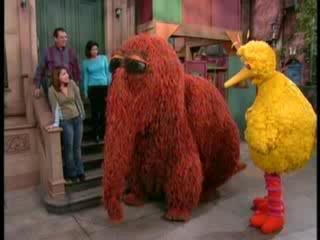
The first moment is in regard to the ongoing question, which lasted for the first 15 years of the show, over whether Snuffleupagus (“Snuffy”) was real of merely a figment of Big Bird’s imagination.  Big Bird was constantly trying to convince everyone on Sesame Street that Snuffy was real, but there were many who didn’t buy what Big Bird was selling.  By the mid-80s, two camps had emerged – Snuffy believers and Snuffy non-believers.  As part of his attempts to persaude the adults, Big Bird would set up many scenarios to prove Snuffy’s existence, but Snuffy would walk away just before the adults could see him.  Kids and occasional guest starts sometimes saw Snuffy, but Big Bird was at loose ends trying to show the adults.

Eventually in episode 2096, airing on November 18, 1985, Big Bird concocts yet another plan to show the adults that Snuffy is real.  By now, he’s won some support to his side.  Gordon, Linda and Maria are in the Snuffy camp, but Bob and Susan still think he’s  imaginary.  Big Bird’s latest plan is to shout a secret word while Snuffy is present, in this case “food”, at which point the adults will run quickly and see Snuffy.  Bird tries it quickly once, but Snuffy has already run off to tell his mom about Big Bird’s plan.  Determined not to be foiled again, Big Bird assigns Elmo to watch out and ensure that Snuffy does not leave when Big Bird next yells the secret word.  Elmo does his job, hanging on to Snuffy’s snuffle, even as the snuffle goes flying back and forth, and just in time the adults come in and meet Snuffy for the very first time.  The disbelievers are surprised and very apologetic to Big Bird who reveals it was hard on him to know that his friends didn’t believe him.  Eventually all the adults introduce themselves to Snuffy, including Phil Donahue (what could be more ‘80s?) who was on Sesame Street to pick up his toaster from the fix-it shop.

The primary motivation to introduce Snuffy as real to the world was in response to a series of prominent child sexual abuse scandals in the early and mid-80s.  Sesame Street’s writers were concerned that the message they were sending, by having many adults not believe Big Bird, was that you couldn’t tell your parents everything because of the risk that they wouldn’t believe you and that it was better to just say nothing at all.  By showing that Big Bird is right, they were hoping to convey the opposite message, that parents will listen to their kids and that kids should not be afraid to tell their parents anything.  Secondarily, the writers may have been tired of constantly making up new ways for Snuffy to just avoid being seen by the adults.
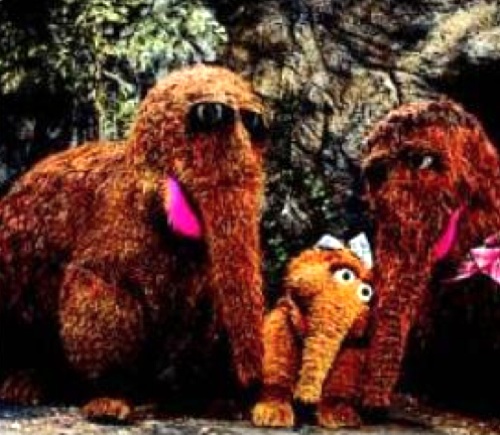
The second pivotal Mr. Snuffleupagus moment is Snuffy’s parents getting divorced, which is part of an episode which never actually aired (colloquially known as “Snuffy’s Parents Get a Divorce”) from 1992.  Sesame Street doesn’t do “very special” episodes very often, and whether you love the show or not, I think it takes its responsibility with young children very seriously, so when it does an important episode, it’s worth taking notice.  The most notable of these episodes is the death of Mr. Hoooper in 1983 but perhaps the second most is “Snuffy’s Parents Get a Divorce.”  After years of debate, Sesame Street writers decided they wanted to attempt to address the issue of divorce on the program, and quickly decided that it would have to be related to the puppets rather than to any of the adults on the show.  Snffleupagus was chosen and the initial script was passed around to psychologists as well as members of the show’s advisory board.  Edits were suggested to quell the worry that children would think that arguments between parents automatically led to divorce.  The episode was filmed with these edits, but test audiences did not take well to the episode.  Even with the edits, kids still felt that arguments between their parents would inevitably lead to divorce.  They also were confused about whether Aloysius and his sister Alice would ever see their father again, and he was a rarely used character.  Maybe even worst of all, many of the kids watching got the idea that after divorce their parents would no longer love them.

The entire episode was scrapped and replaced with a storyline about Oscar’s brother visiting Sesame Street.  It was a noble attempt, but the writers decided that divorce was outside of the realm of issues they could address to kids of the age Sesame Street is aiming for.

Show of the Day: Where in the World Is Carmen Sandiego?

18 Nov

When I was young, though not so much anymore, geography was my bag.  I styled myself an expert, winning my elementary school geography bee in 5th grade, and I was captivated by both the Where in the World is Carmen Sandiego series of games, which I dominated (well, the Where in the USA version – the Europe version was still kind of a nightmare) as well as by the game show, which aired on PBS, a network I watched my fair share of a kid without cable.

The show was hosted by Greg Lee, whose main claim to fame aside for this job was voicing the principal on Doug.  The contestants were kids from 10-14, old enough to be familiar with geography but young enough for some answers not to be obvious (though who am I kidding, myself, and I’m sure many others, had their peak of geographic knowledge around those years).  At the beginning of an episode, the other primary recurring character, The Chief, would announce which one of Carmen’s gang did the stealing and what landmark they stole.  Carmen generally was hands off herself – she had removed herself from day-to-day theft operations and was simply masterminding, perhaps in an attempt to make it more difficult to tie her to the crime (though the RICO statute probably made it more difficult).  Unfortunately her talents for crime were not matched by her talents of picking out quality associates, with incompetents like Patty Larceny, Vic the Slick and twin team Double Trouble working for her.  There were also more out-there minions, such as Robocrook, which is pretty much exactly what it sounds like, and Kneemoi, a shape-shifting alien and space outlaw.  The Chief is portrayed by Lynn Thigpen, who tragically died in 2003.  She had a number of film and TV roles, but I knew her best outside Carmen for her role in The Warriors as the radio announcer (“Stay tuned boppers”) in which you don’t actually see anything other than her lips.  She was a regular on early ‘2000s show The District.

The show consists of several segments.  First, general questions which moved into a “lightning round.”  The contestants would then watch an animated “phone tap” sketch in which Carmen would talk with the episode’s thief, (the segment  seems to possibly violate some serious fourth amendment rights (it is not revealed whether there are warrants for these wiretaps)).  When contestants correctly answered questions they received not points, but “ACME crime bucks.”  I’m still unclear on exactly what those crime bucks are redeemable for, and why a detective agency would have its own currency.  Next is “The Chase” while contestants answer questions while trying to ascertain where the thief is hiding out.  After this, one contestant is knocked out and the remaining two play the next round which is Carmen Sandiego’s version of Clue – they most locate the loot, the warrant and the crook (loot and crook I get – I have no idea why the warrant would be hidden).  The first contestant to get all three wins, and moves on to the final round.

The final round is the map round, in which the winner is asked to place markers with sirens on the top in specific countries within a continent (or in the first two seasons states within the US).  For example, if the continent is Asia, Lee would name Indonesia, and the contestant would keep trying until he correctly placed the marker on Indonesia on the map or pass.  Unfortunately for some contestants, not all continents are created equal.  Getting the US was a relative slam dunk compared to getting saddled with Africa.  Could you point out Burkina Faso on a map?

Apparently a German version was produced with the far catchier title of agd um die Welt – Schnappt Carmen Sandiego! or “Chase Around the World: Catch Carmen Sandiego” which sounds far more action oriented.

The most enduring legacy of the show may be a capella group Rockapella’s theme song, which was played at the end of every episode.

Before the theme, Lee would always command – DO IT ROCKAPELLA! (skip to 6:40 for the song, but start earlier if you want to enjoy a rare Africa map win)

Show of the Day: Sherlock

11 Nov

I do look forward to writing about some shows that I haven’t seen yet, but until then I’ll feel free to write some occasional glowing reviews for shows that I think everyone should give a chance.

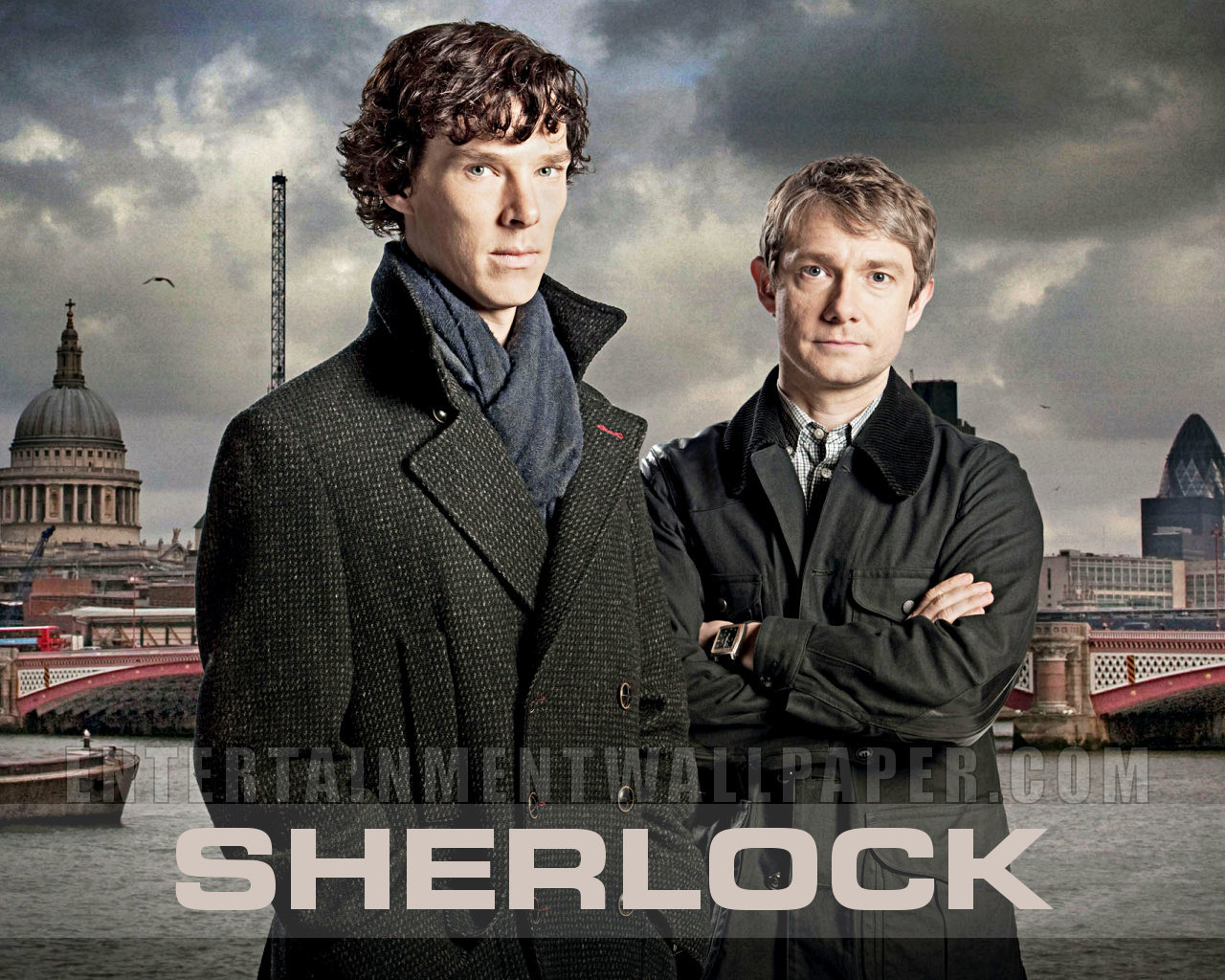
In this case, it’s the BBC’s Sherlock, a modern day adaptation of Sherlock Holmes, taking Holmes and Watson to the 21st century without losing the feel of the original stories, which is no mean feat (though taking place a century before animated program Sherlock Holmes in the 22nd Century).  British TV is a whole treasure trove of television with which I’m not entirely familiar.  I’ve dipped my toe in occasionally (Extras, Peep Show) but there’s so much more (I’ve just watched the first episode of Dr. Who, and I hear great things about Luther and Spaced) that I haven’t even given a try yet because these British shows find their way out of mind since it’s hard to read about them unless you specifically look for them.

I’ve only seen a handful of the Jeremy Britt Sherlock Holmes (The Adventures of Sherlock Holmes, technically) which was filmed from 1984 to 1994, but I’ve always liked them, and they were extremely straightforward attempts at capturing Arthur Conan Doyle’s stories.  Sherlock is a little bit more loose but I think bigger Holmes fans than I (and I’ve read a number of the stories) would still appreciate the adaptation.

Holmes is portrayed by an actor with the most British of names, Benedict Cumberbatch (his middle names are Timothy Carlton, which could be an extremely British person by itself).  Watson is portrayed by Martin Freeman who played Tim in the original The Office and Arthur Dent in the film version of A Hitchhiker’s Guide to the Galaxy (and will star as Bildo Baggins in the 2012 Peter Jackson adapation of The Hobbit, giving him key roles in adaptations of three of Britain’s most treasured literary works of the last century or so).  Instead of typical dramatic hour long episodes, the BBC produced three 90 minute episodes each structured around one mystery.  These mysteries are not taken directl from Holmes stories, rather they’re combinations of stories modernized for the present time.  Watson, for example, is a veteran of the Afghanistan war.  Holmes constantly uses modern technology such as texting or GPS or other computer related help, keeping up with Holmes’ devotion to the latest technology, albeit a bit different than the latest technology in the early 20th century.

I watched all three episodes with bigger Sherlock Holmes fans than I and both of my friends noticed allusions and references everywhere to various events in various stories.  The mysteries in each were compelling and delightful, but importantly, for a show like this, they were enjoyable aside from just wanting to know what happened and who did it, adding replay value.  Both actors and the excellent writing foster a compelling relationship between Watson and Holmes.  Compared to the ongoing Guy Ritchie Sherlock Holmes franchise with a dashing action hero Holmes, Sherlock, though it takes place a hundred years in the future, is more faithful to the spirit of the original Holmes stories.  It does exactly what the best indirect adaptations do; modernize or put an interesting spin on beloved source material while keeping the elements of what people loved about it in the first place.

It’s a relatively small time commitment for a show of very high quality, a worthy investment of time all around.  It was so successful that it will be back for three more hour and a half episodes early next year.

Show of the Day: Cowboy Bebop

4 Nov

As people who actually know anything anime go, I don’t really know very much at all.  As people who know nothing about anime go, I know a relatively fair amount.  I watched very little until I was in college, only a little bit of what was on Cartoon Network’s Toonami or Adult Swim, mostly Dragonball Z.  I started watching it when it turned out a good number of my college friends were high ups in our school’s anime club.  I never got into it the way the most devoted club members were, but every once in a while a show would come along that captivated me, and I would download it and watch the rest.

Anime, unsurpsingly to me, is like most television.  There’s a lot of it, some of it is bad, most of it is mediocre, and some of it is very good.  That said, some of it is easier to get into for people who aren’t into anime or even animation than others.  Some are more approachable series for novices to dip their toes in the japanimated water.

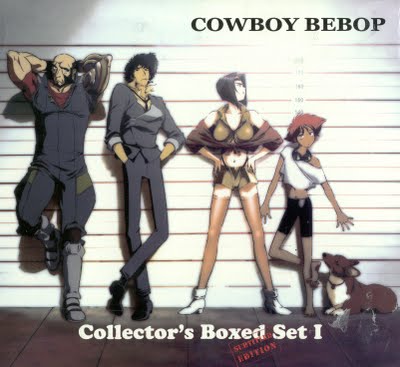
If there’s one series that from my limited anime experience, but my ability to appreciate learning to become an anime fan, would serve as a good opening note, it’s Cowboy Bebop.  Many animes have a limited number of episodes, which makes for relatively easy viewing, and Cowboy Bebop has a mere 26 (of course, some, like Dragonball Z with 291, are the exact opposite).  It’s a space western, in the spirit of shows like Firefly (which it preceded), which is basically what it sounds like – a show with a western feel in terms of wide open spaces and lawlessness but set, well, in space.  It’s only loosely serial as  most episodes stand on their own, with the exception of a few at the beginning and the end and a couple in between.  It aired in 1998-99 and features four main characters, two bounty hunters, Spike and Jet who travel around space on missions, and Faye, an attractive gambling addict and fugitive, and Ed, a young computer hacker girl, who join the ship later.

Cowboy Bebop is an action adventure show, and the plots are accessible and interesting, with a mix of comedy, action and drama.  Generally each episode features the gang trying to capture one bounty, complete with pratfalls and dangers along the way.  The major on-going plot involves Spike and his relationship with his ex-Crime Syndicate partner Vicious (yeah, that name should probably be a sign you’re not dealing with somebody great).  The animation style is relatively similar to American animation for an anime.  This is largely not coincidence, as the style is geared towards looking distinctly American, though a bit old-timey, with a 1940s and ‘50s film noir feel.  The theme sequence, displayed below, is also fantastic and has received praise on its own regard.

As someone who hasn’t watched an anime series almost since college, I shouldn’t really be advocating anything to do with anime, but one of the benefits of this blog is that I’ve pored over lots of TV I’ve watched over the years and put aside, remembering some shows I haven’t thought about in years but loved.  I’ve also tried out new TV I probably wouldn’t have given a chance before.  Basically, if you’ve never given anime a chance and you’re at least ever so slightly interested, Cowboy Bebop is a very good way to go.

Show of the Day: Secret Girlfriend

28 Oct

I’ve made mention before about how most Comedy Central shows fail within the first year.  Of course, part of this is because most of them are terrible; it would be giving short shrift to that fact to blame it all on Comedy Central having a quick trigger finger.  Their general terrible-ness has however, not prevented me from at least giving many of these shows a shot.

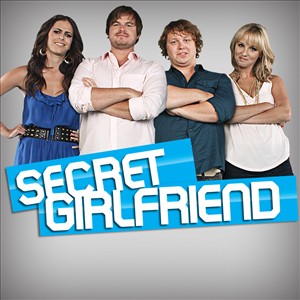
One of the more unique shows in this parade of one season cancellations was 2009-10s Secret Girlfriend.  Based on a pre-existing web series, the great gimmick of the show is that YOU are the main character.  What this means is that the camera is oriented as if you are walking around, looking at your surroundings, swinging up and down, left and right as different things get your attention.  You hang out with your two friends, Sam and Phil, who converse with you even though you can’t hear your responses.  They’re good friends, but boneheads and over the course of the series they explain to you their different hare-brained schemes and the web videos that they make.  You’re also a bit of a ladies’ man, and in the first episode you meet Jessica, the title “Secret Girlfriend” who has a boyfriend at the time, but with whom you eventually develop a relationship over the short course of the series.  The fourth and final main character (well fifth including YOU) is your crazy ex-girlfriend Mandy who breaks up with you in the first episode but still follows you around and is jealous of any girl who comes near you.

Sadly, the show is not very good.  I’m not sure whether that is simply because the camera format is too limiting or that it could be done well but wasn’t.  Each episode is composed of two 11-minute segments; the show might have been better suited to Adult Swim where short-format shows like Childrens Hospital and Eagleheart make their home.

The show is extremely crude and one of the main reasons for the camera style seems to be to allow the camera to focus on hot chicks.  Basically every female character in the show seems to be in love with you and you’re constantly have sex with them.  I’m not sure exactly sure what the comedic value there is.  The best moment in the series may be in the second episode when the characters go to a strip club, but find the food far more alluring than the strippers.  Crudeness can certainly be funny; Workaholics has done a fine job of showing that on a couple of occasions.  Too often, Secret Girlfriend doesn’t make it work however.  It doesn’t seem like there’s enough substance to justify expanding a shorter web series into a television show here.

In a world of rehashes, procedural police shows and tired old family sitcoms, it’s oddly refreshing to see a failed show that at least tried something new and interesting.  I’ll always have more respect for a show that takes a real shot and fails than one that doesn’t even try.

Show of the Day: Heat Vision and Jack

21 Oct

I would wager to say Heat Vision and Jack, which was made in 1999, is the most well-known pilot of the last twenty years that never actually aired.  I’m sure there’s some other contenders, and I don’t think it’s hands down, but I do think it’s true.  Even more than that, I’d wager than more movie stars have broken out of this unaired pilot than any other, probably ever.

What I didn’t mention yet is that it’s also one of the more surreal pilots, a comedy/science fiction fusion in which Jack Black portrays a former astronaut, Jack Austin, whose exposure to some sort of dangerous solar radiation gives him super intelligence which is triggered by exposure to the sun, ie. sunlight.  In the dark, his powers are lost.  He also has a catchphrase when his powers activated, which entails him screaming, “I KNOW EVERYTHING”  It’s absolutely as ridiculous as it sounds.

We’re not even close to the levels of absurdity yet though.  Next, Jack Black’s character’s roommate, Douglas, is hanging around the space station to meet up with Black after a mission, when he gets shot with some crazy solar ray of radiation.  This radiation causes him to merge with his motorcycle, becoming Heat Vision, the talking motorcycle.  The motorcycle is voiced by Owen Wilson and has trouble righting itself if it tips over.

Heat Vision and Jack are both wanted by NASA for scientific prodding and such and are on the run from NASA all across the country.  They solve supernatural crimes and mysteries as they move from town to town evading primary villain NASA employee Ron Silver.  That is actor Ron Silver playing himself as a tracker of these fugitives, and who also appears to be invulnerable, able to take bullets without permanent harm.  A police officer even recognizes him as the villain from Timecop.

The show was created by Dan Harmon, now responsible for NBC’s wonderful Community and Rob Schrab, who co-created The Sarah Silverman Program.  Ben Stiller directs the first episode and has a cameo.  Christine Taylor also guest stars in the episode as a local cop, and this is where she met future husband Ben Stiller.

The first episodes opens with a monologue by Ben Stiller, introducing the show, and making several references to The Phantom Menace, which came out about the same time.  The episode involves some sort of alien which takes over the body of character actor Vincent Schiavelli and starts causing mayhem.  Heat Vision and Jack must stop him while evading Silver.

It’s worth a watch for its absurdity if nothing else.  I have my doubts about how the concept could have lasted six seasons and a movie, but for one episode the concept is hilarious and strange.  The special effects are truly atrocious and the camp level is extremely high and while Ben Stiller, Owen Wilson and Jack Black were not nobodies at the time, they were also nowhere near the peak levels of fame they’d achieve just a couple of years later as the Frat Pack movement hits its heights in the early 2000s.  There’s something enjoyable about watching them with that hindsight.  Also, enjoy Ron Silver, who died two years ago of cancer and sadly will not be doing any more acting as himself or anyone else.

Show of the Day: The Adventures of T-Rex

14 Oct

Everybody my age, and probably just about everybody older and younger to a certain extent, watched cartoons growing up.  Which cartoons differ, but everyone excitedly woke up early before school (what was wrong with us?) just to get in a couple of cartoon episodes before the school bus came.  If you had cable, you probably watched cable.  If you didn’t, like me, you watched whatever was syndicated which ended up being a combination of Japanese cartoons, super obscure cartoons, and super obscure Japanese cartoons.

These cartoons tend to be ephemeral – cheaply made and quickly and easily forgotten.  They’re not made for their replay value; they’re made to entertain kids who won’t really think too hard about their quality.  The morning cartoons tended to be of even lower quality than the afternoon cartoons, where some of them may have retained a modicum of replay value like the strangely complicated plots of X-Men or the comic antics of Darkwing Duck.  Morning cartoons were more like Pink Panther or Mummies Alive!.  The most morning of the morning cartoons, the most at once disposable but because I grew up watching it for an entire year personally unforgettable was The Adventures of T-Rex.

The Adventures of T-Rex stands out ironically because for years I was convinced that it didn’t exist and I had just invented it.  I’m convinced everyone has one cultural moment from their childhood like this.  Some tv show, commercial, movie or song that they saw or heard when they were very young and before the internet (probably can’t happen as easily now) and can’t find anybody else who recognizes it.  The more people who give them quizzical stares and have no idea what they’re talking about, the more they think for a second each time, maybe it’s not real, maybe it’s some figment of my imagination that I created.  The Adventures of T-Rex was this for me.  What helped though, was that my brother remembered it as well, but I thought maybe we had just reinforced each other’s notions over the years.

Eventually, I found one other person in college who recognized it and it was a moment of sweet vindication.  This cartoon was real, something I believed it for so long was not a lie.  Wikipedia eventually got on board and published an article about the show.

The Adventures of T-Rex involved a world where everyone were anthropomorphic talking dinosaurs, and T-Rex was the collective of five dinosaur brothers who each wore different colors and had a different powers\ they used to fight crime.  During the day they played at a jazz club.  At night, they charged around Rip City in their Rexmobile seeking to find crime kingpin “Big Boss” Graves while spewing witticisms.  It lasted one year from 1992 to 1993, aired for 52 episodes and was a cooperative effort between Japan and America (it takes two countries to produce a show this good). The show is most memorable to me for it’s theme song, and I can’t even defend that as particularly memorable to anyone except me.  Still, the show will always have a special place in my heart, more so because it really existed.

Show of the Day: Pawn Stars

7 Oct

I readily admit that this blog focuses by and large on scripted shows and I’m more than happy with that; scripted shows are far and away what I like better and care more about.  That said, I wouldn’t be human if there weren’t a couple of reality chinks in my armor, and Pawn Stars is one of them.  I’m not the only one captivated either, as Pawn Stars was the second highest rated reality show on cable behind Jersey Shore this year and the highest rated show on the History Channel ever (though I suppose that’s not necessarily saying that much).

Here’s how it works.  A man or woman walks into the Gold & Silver Pawn Shop in Las Vegas with something to sell, often something unusual, sometimes a collection, sometimes a firearm or a historical object.  One of the employees will talk to the man or woman, and ask him or her a bunch of questions about the object, such as what it is, and where he or she got it from.  Most often the employee will be Rick, the owner of the shop, but sometimes it will be his father, his son, or his son’s slightly dim-witted friend, Chumlee.  If it’s a particularly unusual object, Rick will call on an expert that he knows in the particular area of the item (a handwriting expert for autographs, an antique firearms expert for guns and so forth) and Rick will talk to the camera about how cool the item is and how much he’d like to have it in the store.  After he gets some information from the expert, the employee will ask whether the object holder would like to sell or pawn it, and what he or she would like for it.  They will then bargain, and more often than not strike a deal, but not always.  This will happen four or five times in any episode.  Occasionally, a pawn shop employee will go off premises to check out an item, find out how much it costs to get an item restored, or to try out a new purchase, like a gun, but that’s the general gist of it.

What makes the show so compelling is the combination of the diversity and randomness of the items plus the money angle involved.  It seems simplistic to say putting prices on items just makes them more interesting, but it really does.  Like some other shows I watch, there’s a joy in seeing the familiar but distinct aspects of the show.  I’ve often discussed making a drink game out of them.  Drink whenever Rick calls in an expert.  Drink whenever the seller is angry and thinks his item was worth a lot more than the pawn shop did.  Drink whenever a deal is struck.  Drink whenever they get an item restored.

Most of the items brought to the pawn shop are jewelry, but they rarely feature on the show because that’s less interesting.  Some would cite this as being misleading, but I really couldn’t care less.  I probably wouldn’t want to watch the actual everyday business of a more normal pawn shop (there’s Hardcore Pawn to get a little closer to that if I really want).

What is even better is that as the show has become more popular, the shop has become more popular, and the show then gets more and more interesting items; the longer the show goes on, strangely enough, the better it gets.

Pawn Stars has become a big enough sensation that it’s spawned a plethora of imitators and similar shows.  These include an actual spin-off American Restorations, about the shop of one of the restorers they use, similar History Channel programs American Pickers, TruTV pawn copycat Hardcore Pawn (you can’t make a series with a porn pun) and Discovery Channel’s Auction Kings.  They’re all watchable, and some are better than others, but none of them, unsurprisingly, top the original.

Show of the Day: Century City

23 Sep

I referenced this show in an earlier post about Nestor Carbonell, but since I find the concept so intriguing I wanted to spend some more time on it.  Started in 2004, the show starred Carbonell, Hector Elizondo, Viola Davis, and Eric Schaeffer as law firm partners and Ioan Guffudd (who I can tell without even looking it up is Welsh) and Kristin Lehman as associates.

The premise is this.  In 2030, in Los Angeles, the law firm of Crane, Constable, McNeil and Montero deals with all manner of law cases which come up, all of which involve questions which wouldn’t exist in our present, largely due to technology that doesn’t exist yet.  Some of these issues hit upon what would clearly be hot button political issues, while some of them are more light-hearted.  I’ll break down the issues in the pilot below, but issues that come up later on include virtual rape (I honestly don’t know exactly what this is without having watched the episode yet), whether baseball players can use mechanical eyes to improve their vision, a woman fighting for possession of her dead husband’s computerized likeness, and the gay gene.

The lawyers fit different roles.  Davis is the no-nonsense skeptical of pro bono work lawyer, while Elizondo is the wise beyond his years tells-random-stories-and-calls-it-advice senior partner.  Carbonell is a former politician who doesn’t really understand the law but knows how to read people while Schaffer is the skeevy sexually harassing lawyer obsessed with his self image.

The idea of the show is genius for many reasons.  For one, let all the existing law shows crowd around the existing legal issues.  Sure, there’s a lot, but they’re still bound to repeat with so many shows and so many episodes. Century City is the only show that can tackle the tough issues that don’t even exist yet.  Second, the license for creativity is infinite.  Most law shows aren’t truly bound to a high level of accuracy, but they at least generally feel like they have to try and pretend. Century Citycan claim that laws have changed, the legal system has changed, and precedents have changed any way they find convenient for drama.  Third, you get both a science fiction and a legal procedural audience with one fell swoop.

I decided to rewatch the first episode, which is on Hulu, to assemble some thoughts.  This episode deals with two main legal cases.  The first is about cloning, a hot button issue in any time.  A client played by David Paymer comes to the firm asking them to represent him, as he’s trying to obtain from the government a cloned fetus that was taken from him at customs.  He had it cloned in Singapore, where cloning is legal, as everyone knows, but tried to take it to the US, where cloning is banned.  He had the clone created from his son because he needed a liver transplant to save his son, whose liver was failing.  This would be created, so the science goes, by either taking the fetus to term and having a new kid, and taking half the liver for his son, or by somehow making it so the fetus just creates a liver.  The firm argues the case against a US attorney played by BD Wong.  Though it looks bad for a time, when it’s discovered that the son itself is just a clone of Paymer, an extremely moving speech by the Crane lawyer saves the day and sways the jury, leading the government to settle to save face.

The second, lighter case, involves a contract made by an aging rock group.  Three of the members have used future surgery and medical techniques to keep them looking young, but the fourth, the lead singer, has decided to revert to looking his age, which is 70.  The three want the fourth to take the pills and look young, and claim it’s part of a contract they all signed, but the old-looking lead singer, who the firm represents, disagrees.  They go back and forth, fighting, and disagreeing, until towards the end of the episode, one of the younger looking members, really 72, dies of a stroke.  At the funeral, the two younger looking members left go up to perform their hit song, allegedly from the early ‘80s, and in a warm moment, the old looking lead singer is finally persuaded to join them by the lawyer, after which the plot isn’t exactly resolved any further.

There are several tips towards the future, aside from merely the topics of law.  First, summary judgment motions don’t require actually entering a court room.  They can be conducted via hologram in the hologram room that every respectable law firm in the future has.  The judge even makes a joke about appearing upside down in hologram-form.  Cherries now don’t have pits, Elizondo notes – perhaps the greatest invention of the 21st century!  He’s even old enough to remember when grapes still had seeds.  Kristin Lehman’s character we learn is part of a cloning project (the “genetic prototype project” to be technical”) in which specially designed humans were let into society to see if they could fit in properly; she has a short identity crisis moment in the episode.  An offhand reference is tossed out to a happy patch people can take to stay happy, though it could just mean drugs.

Unfortunately the show lasted a mere nine episodes.  If this had been a success, would this be the wave of the future?  Shows about typical television professions in the future?  I could easily imagine a doctors of the future or a cops of the future.  Sure, there have been future cop shows, but 90% of these involve time travel.  What about future cop shows they just deal with new types of crime and non-time travel techniques.  What about a primetime television soap or a coming of age high school drama set in the future?  One can only imagine sadly.

Show of the Day: Greed

16 Sep

In 1999 the phenomenal, hard-to-believe-just-how-good success of Who Wants to Be A Millionaire spawned a generation of game shows.  Never ones to be denied an easy chance to ride a trend, TV execs everywhere thought the game show was back in a big way and were determined to make sure they all had entrants in the field.  Each game show created during this period had its own feel.  The Weakest Link was all about the host, nefarious Englishwoman Anne Robinson while  21 evoked a retro feeling for when game show scandal was in.  Greed was the Machiavellian entrant into the game show conversation.  Like all of the major game shows of this wave, trivia was the show’s stock and trade, but it was the gimmick that made the show.  In Greed that gimmick was that it was a team game that slowly turned team members against one another as they chose between team success and the risk/reward of greater personal gain.  Trust and team versus individual became of issue in the reality game shows developing around the same time, particularly Survivor, where alliances and assurances became key, but I can’t think of another game show which so gleefully turned constestant on contestant.  The Weakest Link employed voting contestants out, but there wasn’t the one-on-one animus as in Greed, or the sense that it was a choice; you were required to vote for someone.

Hosted by game show veteran Chuck Woolery (original Wheel of Fortune, Love Connection, Scrabble), a game of Greed began with six contestants asked to answer a question where the answer was a number between 10 and 999 (this was Greed’s rough knockoff of Millionaire’s fastest finger, in which contestants quickly ordered four choices – I’m not sure how many people would recognize that term now, but it was one of several Millionaire terms to enter the lexicon back then).  Based on how close they got to the answer, the contestants would be ordered from one to five, with the sixth being magnanimously thrown back into the contestant pool for another shot in a later game.  The first person became the captain, who has all the power in the world of Greed, and two through five line up after him or her.

The game begins.  The first four questions are asked to each of the contests, starting with the fifth, and moving up, towards the captain, with each increasing in dollar value.  The questions are multiple choice.  It’s important to remember in Greed that the captain has all the power.  The captain can choose to accept any contestant’s answer or can reject the answer and replace it with his or her own.  In addition, the captain can choose to walk away with the money the team has won after any question, with that money being redistributed evenly amongst the team.

Here’s where the real Machiavellian aspects begin.  After the fourth question, if the captain chooses to continue forward, a device known as the “Terminator” chooses one contestant at random and offers them $10,000 win or lose to challenge a contestant of their choice.  The stakes?  Whoever wins gets the losing contestant’s share of the prize money, and if the losing contestant is the captain, the winner gets the captain’s seat as well; the loser is eliminated from the game.  Many shows would simply rely on the contestant’s own ambition and confidence as fuel for challenging another contestant.  That’s not enough for Greed, though.  Greed gives you 10K for this privilege.  You could lose all your money as a team, but if you take up the challenge, you’ll take home with 10 grand, no matter what.  That’s an incentive that’s hard to resist.

Later questions had multiple correct answers, necessitating each member of the team to give correct answers one by one, with the captain having the choice of accepting or rejecting any part of the answer.  If the team continued to move on, another “Terminator” or two would come along potentially reducing the team to just a couple of players.

Sometimes you’d see a lamb of a contestant actually refuse to take the money for the Terminator, only to be challenged in the next Termination round, making his or her weak decision look foolish.

On later, high value questions, with four or five answers required, when Woolery showed them that they had all but one answer correct, the producers would offer the players a bribe – a small percentage of the total money to each contestant.  Each contestant would make their own decision to keep going and bet on their answer being right or to walk away with the bribe. If there are fewer contestants than answers in a round, the captain can answer them all him or herself or can pass off that duty to any fellow contestant.

Greed began airing in November 1999, right on the heels of Millionaire’s success and sadly stopped in July, 2000, never to return.  It was by no means must-watch TV, but I always thought it was a cut above a lot of other game show clones.  Greed was also the first game show to give away $2 million in one shot, which you can watch below, on a rather easy question mind you.