Archive | Miscellany RSS feed for this section

A Salute to the Great Game Show Boom of the Early ’00s

6 Sep

Is that your final answer?

The summer of 1999 marked the seeming emergence of two unscripted genres on primetime network television. One was a call back to television’s past, and one had never really been seen on network primetime before.  The latter, reality TV, came about after the unbelievable success of the first season of CBS’s Survivor, and reality, though the form has mutated in all sorts of ways, has stuck around and come to play a huge role in primetime network television.  Survivor, while a fraction of the phenomenon it was that first year, still, er, survives, to this day.  The other genre was the return of the primetime game show.  The primetime game show hasn’t quite thrived the way reality has, but with the debut of NBC’s limited series, the unsurprisingly confusing Million Second Quiz, there’s no better time to reflect on what’s come to be known (to me) as the Great Game Show Boom of the Early ‘00s.

There were several shows that played their role in the boom, some first tier, some second tier, and some third, tier, but like CBS’s Survivor, was responsible for the initial popularity of the reality format, there was one show really doing the heavy lifting for game shows and enjoying the lion’s share of the success.

That show, of course, was ABC’s Who Wants to Be A Millionaire?  Millionaire, like so many of the game shows to come, was an adaptation of a foreign show, British in this case.  The game show, which first appeared in the UK in 1998, was already making waves across the pond. The US version, which debuted in August 1999 and was hosted by morning television icon Regin Philbin, was a sensation right off the bat.  Everybody and anybody was watching; it was being watched by a mindblowing 30 million viewers a night, ABC, smelling opportunity, expanded the show, eventually airing it five days a week.  The show was the most watched of the 1999-2000 season; its  three weekly additions filled the first three spots on the list, topping Friends and ER.

In an episode of Millionaire, for anyone who wasn’t alive or was too young during this time period,contestants were chosen but finishing first in a “fastest finger” in which a number of potential contestants attempted to order a series of four items correctly as quickly as possible. The winning contestant was seated in “the hot seat” and answered up to 15 progressively more difficult questions worth progressively larger amounts of money. After hearing each question, the contestant would either choose to answer, risking all the cash they’ve acquired up until that point, or to walk away and take the money.  The final question was worth, as the show’s title implied, a million dollars, Each player had three lifelines he or she could use if stumped; phone a friend, where they could dial a prearranged friend for help, 50/50 which would eliminate two of the four answer choices, and ask the audience, where the studio audience was polled. John Carpenter was the first man to win the million, and was so confident of the final question that he used his remaining phone a friend lifeline to dial his father and tell him he had won the million. Regis’s retort after a candidate either answered a question or decided to walk away became a catch phrase still well known to anyone who lived through the era – “Is that your final answer?”

Goodbye.

Sensing an chance to piggy back off a popular idea, other networks scrambled to gobble up the spillover interest from Millionaire’s popularity, quickly debuting game shows of their own.  NBC aired The Weakest Link -1A to Millionaire’s #1 position in the Great Game Show Boom. While Millionaire was adapted from a British show, it took on an American flavor with Regis, a quintessentially American host.  Weakest Link’s most notably feature was its distinctly British host Anne Robinson, and her patented line spoken to each losing contestant. The contemptible “You are the weakest link. Goodbye” was the show’s versions of Millionaire’s “final answer.” No one really understood the rules, but then that was the case with most of these follow up game shows, and a partial explanation of why the far easier to grasp Millionaire led the way.  Still, one watched The Weakest Link for the caustic Robinson and the way she castigated contestants who slipped up.

Greed is good.

Greed was Fox’s entrant into the game show sweepstakes.  It was probably my favorite of the non-Millionaire shows as it was a little edgier. Fox called upon  game show legend Chuck Woolery to host and he was as able and professional as ever.  Greed’s gimmick was that a group of five players worked together as a team but slowly had opportunities to turn on each other.  Woolery asked questions to the contestants, which like in most of these shows, were worth increasing amounts of cash. In Greed, the captain of the team had the right to overrule any other contestant’s answer.  Occasionally a “Terminator” round would occur in which a randomly chosen contestant could choose to challenge another contestant to a face off in which the winner would get the loser’s share of the team’s cash, while the loser would be off for good with nothing.  The rules were quite complicated and very few teams actually made it all that far.

Maury Povich briefly hosted a revival of infamous game show Twenty One on NBC. The revival receives all of three lines on Wikipedia in the entry for the original fifties version, which was best known for the scandal which changed the way game shows operate and inspired the movie Quiz Show.   Winning Lines, an adaptation of a British game show, was hosted by Dick Clark on CBS, and lasted an even shorter period of time; it’s best known now, if known at all, as Dick Clark’s final game show.  Fox aired five episodes of an Australian import called It’s Your Chance of a Lifetime and ABC briefly adapted popular witty computer game You Don’t Know Jack, hosted by Paul Ruebens, better known a Pee Wee Herman.

ABC’s short-shortsightedness led to incredible short term gains, but likely shortened Millionaire’s primetime life span, as viewers grew weary of a show that was fed to them every day of the week.  The show dropped in just a couple of years from the #1 show on TV to cancellation, and the last episode aired in 2002, and with its cancellation the Great Game Show Boom of the Early ‘00s officially came to a close.  Millionaire lives on to this day in syndication, doing well enough, but its not quite the same as succeeding in the much more game show-unfriendly realm of primetime.  Game shows have appeared in limited doses on primetime since, often during slow network summers, or as special short-term events, but never as prolifically or popularly as during that brief period in the early ‘00s.  Deal or No Deal is probably the closest game shows have come to that level of massive popularity since, and but Dead or No Dead, while, a big deal, wasn’t  as popular as Millionaire, nor did it spawn a legion of imitators.  (It was, however, a lot dumber).  It bodes well to remember that at any given time some television program can come out of nowhere and unexpectedly, for even a short period of time, take over the world.

Breaking Bad and Unpredictability

21 Aug

Bads Will Break

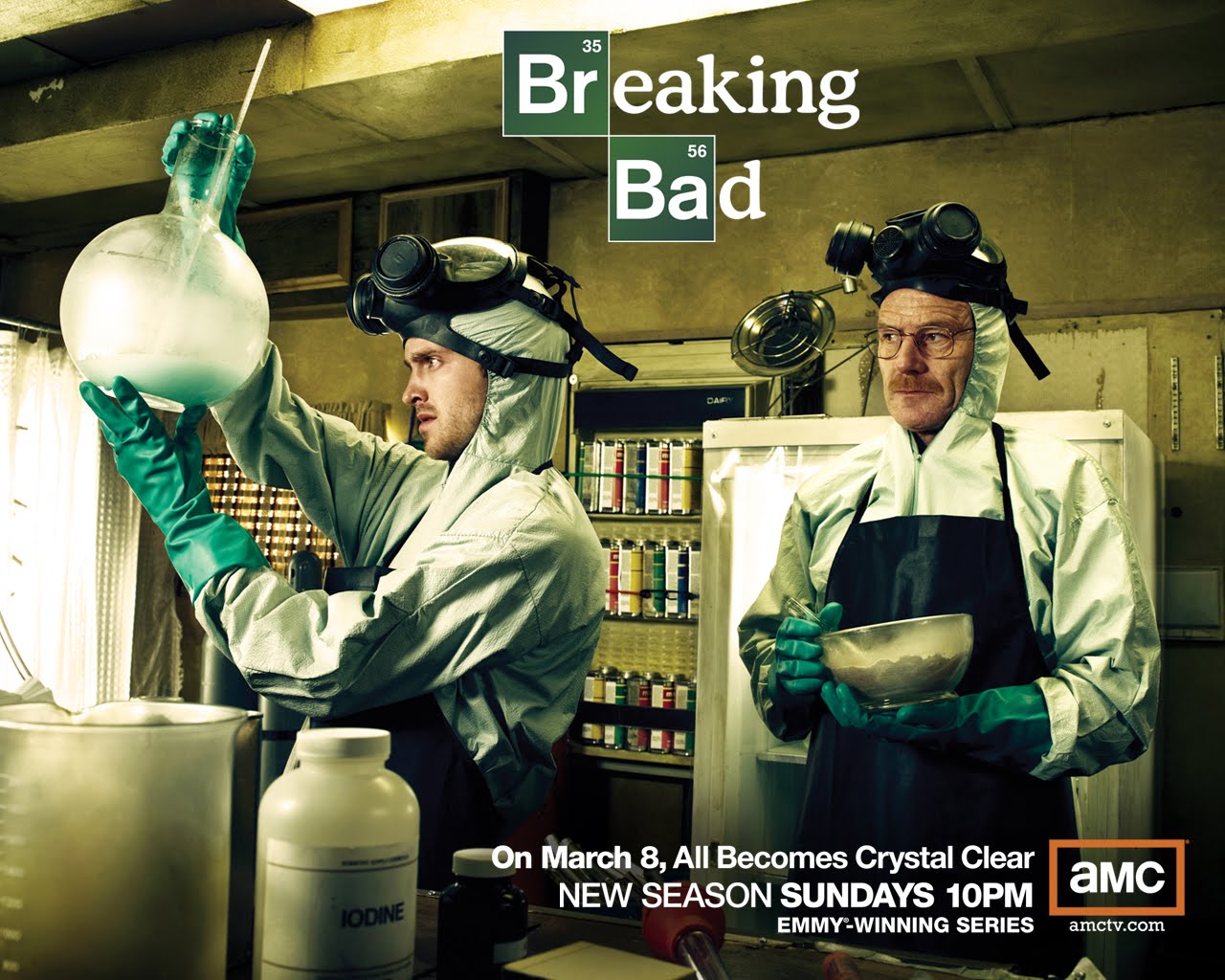
Breaking Bad is a great show for many reasons, but for me, one major lesson the show has taught me is how to properly handle unpredictability on television.

There are two optimal ways to keep a TV show unpredictable.  The first, easier way, is what I call anonymity unpredictably.  Anonymity unpredictability basically involves having a decent sized cast where in everyone is for all intents and purposes completely equal and in a similar position so that anything could happen to any of them at any time.  Examples of this executed correctly are in horror movies when a group of people are being chased by some supernatural enemy, or action or military movies involving squads or teams.  The actors have to be of a roughly equal level of fame; having one or two be more famous will entirely change expectations.  Siberia, currently, for now, airing on NBC, as a fake reality show, is an example of, so far, anyway, well-executed anonymity unpredictability – there’s an equal cast of actors and actresses who aren’t famous, and there’s no reason to have any preconceptions about how will or should survive or make it until the end.  This is hard to sustain over a scripted television series. Actual reality television thrives by way of anonymity unpredictability, though of course, that’s easier when the results are actually not predetermined, and it’s largely this reality show dynamic that anonymity unpredictability in scripted form at its best tries to mimic.

The more difficult second type is what Breaking Bad has mastered, as is what I’ll call predictable unpredictability.  The genius of Breaking Bad is in its realization that the best kind of unpredictability comes not from having no idea what could possibly happen, but from having so many plausible theories of what could happen as to make predicting virtually impossible.

Too many shows result in too predictable unpredictability, which is generally a choice between two outcomes.  24 was often guilty of this. Either he dies or doesn’t. Either the guy and the girl get together, or they don’t.  When push comes to shove, there’s one key binary choice the viewer is anticipating, and you know the result is either A or B.  The show tries to build suspense, build suspense, build suspense, until it’s up against the wall and one of only two things can happen, most often, a character dying or not, or two characters getting together or not.

If it’s not A or B, in one of these situations, it then often what I call unpredictable unpredictability – a twist that comes out of absolutely nowhere and leaves you unsatisfied because the result couldn’t have possibility been anticipated. Generally it’s not even just a slight difference from something you could have put together, but rather something you could never have possibly guessed at (Lost did this a lot).  Sometimes these shows try to trick you into making you think you could have seen it coming but didn’t, and sometimes there’s subtle foreshadowing but it still doesn’t make the twist feel on point.

Breaking Bad eschews both of these approaches.  Instead, it takes the path that a show like Lost would have liked to take, but wasn’t successful at.  It treads carefully, builds its characters, and lays out lots of different potential options, many of which can be used later on in the show as potential plot points, but wouldn’t feel like they were missing if they weren’t.

Breaking Bad made its own large structural mistake by locking itself into the plane crash in season 2, but in the subsequent seasons the events have unfolded in ways that consistently seem both unpredictable but plausible.  At many points in seasons three and four, it didn’t seem clear or obvious which way the show was heading, but rather than seeming like there were only one or two ways out of the corner the story was in, it seemed like there were a world of possibilities.  Even more impressively, in the little moments when there were seemingly binary choices (because it’s nearly impossible to avoid them completely), creator Vince Gilligan used the character motivations and elements of the world he had put together to resolve the situations without them feeling cheap or like cop outs. This is a very difficult line to walk, and Breaking Bad has achieved it better than anyone (Homeland’s first season did a great job, it’s second not as much).  Two great examples of this when Walt and Jesse are trapped in the trailer and Walt decides to have Saul’s assistant call Hank pretending to be the hospital, and the second four finale, when Walt finally kills Gus.  Both of these involves situations, where you probably know what’s going to happen in as much as Walt is not going to get caught that easily at that point in the show, and Walt is not going to die at the end of the fourth season when the show is coming back for a fifth.  Still, these situations work because first, Breaking Bad is surprisingly enough, that there’s always at least a small possibility that the unlikely would happen (I call this the original Law & Order principle – Jack McCoy loses a couple cases each season, just enough to keep the suspense alive for the 90% of cases he’ll win), and because even though the expected happened, they happened in interesting enough ways that both made sense and were non obvious. The plausibility is every bit as important as the surprise.  An implausible surprise is a cheap trick.

Going forward, there are plenty of elements in place for Breaking Bad to play upon, but which it doesn’t have to. Ted, for example.  That’s a card in the deck.  He could come back in some way and play a role, but if he didn’t, the show wouldn’t feel like it was missing something. The cartel could come back in some way and play a role, but if they didn’t that would be fine also.  It’s so much more complicated than this, of course, but just think about what happens to Walt.  It’s not he dies or he doesn’t.  He might die of cancer, he might get shot, he might die with his family knowing, he might die without them.  He might survive and go to jail, he might escape persecution, he might have to live the rest of his life on the run.. That’s just Walt’s very end game.  All of these possibilities are out there, and none of them would by nature feel cheap because Breaking Bad has done such a good job laying the ground work.  Breaking Bad’s spent its seasons wisely, carefully building plausible possibilities.

There are a couple of musts from Breaking Bad; plot points that need to be approached or they would feel unfulfilled (you know, like why the Others made such a big deal about Walt in Lost, which felt like it had to be answered at some point…).  The ricin cigarette, in particular, has been harped on too much to not come up again.

The one failure of unpredictably, if you want to call it that, in Breaking Bad, is the fact that since it’s Walt’s show, Walt probably can’t die until at least the final season.  That’s a limit that all single character led shows have, and it’s a cost that has to be borne to unpredictability if one ever wants to have those shows.

This is the genius of Breaking Bad and it is a lesson for every TV show going forward that gets in trouble trying to surprise and keep viewers guessing; viewers should be able to guess what’s going to happen.  But there should be so many potential guesses that no one knows which one is right.  If the viewers couldn’t have guessed it, you’re probably doing it wrong.

Reviewing My Fall 2012 Predictions

22 Jul

Who remembers this one?

Many months ago, last September, I predicted the success of every new broadcast network series.  Unfortunately for me, I feel that predictions are cop outs unless they’re reassessed later on.  Let’s take a look back, and see what went right, and mostly what went wrong, with some hindsight thoughts about why I picked the shows, or whether I regret the picks.  These picks were made before I saw the first episodes, so they were primarily based on some combination of network, trailers, descriptions, promotion, general buzz, and some good old fashioned gut feeling.

I originally predicted one of three outcomes for every new series – 13 or less episodes (13-), 14 or more, but not renewed (14+), or Renewal.  We’ll break it down by network.  Links to my original predictions will be attached to each network name.

ABC

ABC

666 Park Avenue

My pick: 13-

Reality: 13-

It’s nice to start with a correct pick!  This is probably why I chose to go through the networks in alphabetical order.  This was a guess; I would have said I was less than 50% confident in this outcome.

Last Resort

My pick: 14+

Reality: 13-

Last Resort had a good premise, a strong cast, a heralded creator in Shawn Ryan, and was one of the best, if not the best, fall network debut.  I hoped my guess was conservative, but it wasn’t.  I don’t think this was a terrible pick.

The Neighbors

My pick: 14+

Reality: Renewal

Honestly, I think I was generous and this should have been a 13- call.  In the biggest “Huh?” decision of this year, The Neighbors was renewed.  This is one of those times where I insist I was right and ABC was wrong.  Sometimes reality gets it wrong.

Nashville

My pick: Renewal

Reality: Renewal

I felt pretty good about this pick.  There are a couple of series every year the networks really push hard, and Nashville was one of them, plus it was actually pretty good, if not quite as good as it could have been.  I took the smart money and the smart money won.

Malibu

My pick: 13-

Reality: 14+

This one actually got a small additional episode pick up before being cancelled.  In a post-Last Man Standing world, you can’t doubt any ABC comedy no matter how lousy, but I’m not too annoyed with myself here.  Acceptable loss.

CBS

CBS

Made in Jersey

My pick: 13-

Reality: 13-

Probably the easiest single pick of the year.  It’s CBS, so you never know what will get some eyeballs, but that also means the standards for expected number of viewers was high.  No drama seems as obviously cancellable as Made in Jersey this year.

Partners

My pick: 14+

Reality: 13-

Was I delusional?  What planet was I living on that I didn’t immediately give this 13-?  To be fair, I hadn’t seen the awful pilot at that point, but come on.  I think I overrated the CBS effect, because I can’t think of another explanation.

Vegas

My pick: Renewal

Reality: 14+

This one was cancelled, but I’m still happy with my call.  Although it isn’t horseshoes or hand grenades, so coming close doesn’t really count, this show could have been renewed, and I feel perfectly fine with my prediction.

Elementary

My pick: Renewal

Reality: Renewal

If I had seen the pilot I would have been even more confident, and I’m not sure how obvious this was as a hit before the year started.  I think this was a smart pick, but not as crazily obvious as it seems now by any means.

CW

CW

Emily Owens, M.D.

My pick: Renewal

Reality: 13-

So I screwed up the CW bad, real bad, and two out of three picks I actually feel bad about.  I wouldn’t have picked renewal if this was on any other network but the CW, and thinking back I understand my logic that this fit their brand real well (the somewhat similar Hart of Dixie is going into a third season next fall) but I still should have erred away from renewal.

Arrow

My pick: 14+

Reality: Renewal

For what it’s worth, I didn’t think it was going to get quickly cancelled, but I blame myself for underrating the superhero appeal from a network that broadcast 10 seasons of Smallville.  If I judged this after the pilot, I’d like to think I would have changed my mind but I can’t be sure.

Beauty and the Beast

My pick: 14+

Reality: Renewal

The only pierce of my 0-for-3 CW record I’m not particularly ashamed of.  It wasn’t very good, and definitely seemed third in the pecking order to me after Emily Owens and Arrow and I figured the network wouldn’t renew three shows.  Not a crazy guess.

Fox

Fox

The Mindy Project

My pick: Renewal

Reality: Renewal

The comedy equivalent of Nashville.  Lots of buzz, general critical like, if not quite love, and push from the network.  A smart bet, and a correct one.

Ben and Kate

My pick: Renewal

Reality: 14+

I’m not angry about this pick, only the fact that Ben and Kate wasn’t given more of a chance.  It was probably better than Mindy, and though I’m glad at least one of them was picked up, this is the show I’m probably most bummed about not getting a second season this year.

The Mob Doctor

My pick: 13-

Reality: 13-

One of the easier guesses for 13-.  Not a ton of promotion, everything just reeked of not trying that hard and not caring very much about this wholly mediocre show.

NBC

NBC

Go On

My pick: 14+

Reality: 14+

Hey there, I nailed this one exactly.  I bet on Perry’s star and heavy promotion extending the series, but attention fading later on, and that’s exactly what happened.  It got okay but not great reviews, and it wasn’t enough even on NBC.

Animal Practice

My pick: 13-

Reality: 13-

Probably the easiest comedy call of the year.  Come on, did anyone actually think this was going to last?

Chicago Fire

My pick: Renewal

Reality: Renewal

My best arbitrarily guess of the year.  I had no idea what to make of this show and it was a little bit of an under-the-radar surprise for NBC.  If only Omar Epps could star in a show on CBS, all three initial House assistants could be starring in shows on Fox’s rivals (Jesse Spencer here, Jennifer Morrison on ABC’s Once Upon a Time).

Guys With Kids

My pick: 13-

Reality: 14+

Until I just looked this up, I didn’t realize this got a small additional episode order.  Why, I’m not sure, it’s produced by Jimmy Fallon and was advertised as such and that’s the only reason I could imagine this lousy show having a chance.

The New Normal

My pick: Renewal

Reality: 14+

I’m fine with getting this one wrong.  Ryan Murphy’s been hot of late with Glee and American Horror Story, and considering NBC renewed Smash, I thought the buzz and hot start might be enough to carry the show to another season even with a sharp decline in interest.  Oh well.

Revolution:

My pick: Renewal

Reality: Renewal

I screwed up Terra Nova last year, but NBC, like Fox for that show, put a lot of money, time and promotion into this show, and it actually got surprisingly good initial ratings even as the show got worse.  A pleasant surprise for NBC, that, like Smash, last year, I could easily see fading and being cancelled after its second season.

Five Alternative Premises for “The Bridge”

11 Jul

Who wouldn't want this as their title screen?

The Bridge, which debuted on FX last night, is about a Mexican detective and an American detective working together to solve the mystery behind a pair of bodies left on the border between El Paso and Juarez.  It’s not a bad premise, and my review of the pilot will be out in this space tomorrow.  However, upon hearing the show’s title, a couple of far superior premises sprang to mind.  Here’s five of them:

1.  The Brooklyn Bridge is New York’s most famous bridge.  Here’s the amazing story behind the people who built what was then the longest suspension bridge in the world upon its completion in 1883.  Starting with the untimely death of original architect John Augustus Roebling, the show follows his son, Washington Roebling, who had to do his work from afar after he came down with depression sickness, and Washington’s remarkable wife, Emily Warren Roebling who learned about bridge building on the fly as she acted as a crucial link between the sick Washington and engineers on the site.

2.  The Bridge is a period drama centered around the group of German expressionist artists known as Die Brücke (“The Bridge” in German), including  Fritz Bleyl, Erich Heckel,Ernst Ludwig Kirchner, Karl Schmidt-Rottluff and Emil Nolde who came together in Dresden in the early 1900s.  The group of artists dreamed of taking on the current establishment by reviving older artistic traditions, publishing in a statement, “We call all young people together, and as young people, who carry the future in us, we want to wrest freedom for our actions and our lives from the older, comfortably established forces.”  Follow the movement at their studio, where the charismatic and ultra-talented artists flouted social conventions at the same time they were flouting artistic ones.

3.  The Bridge is the in-depth story of some of the megasupporters of Chelsea football, centered on the characters’ time together in the Matthew Harding Stand of Chelsea’s home stadium, Stamford Bridge.  The show focuses on lives of a small cadre of otherwise relatively mild-mannered supporters as they eagerly look to make it through the week to spend their time cheering all out for their beloved Blues and bonding with one another after every Chelsea goal.   The Bridge tells the story of how their obsession with Chelsea both brings their lives completely together for the better while sometimes almost causing them to fall apart.

4.  New York’s Queensbridge is the largest public housing works in North America, with almost 7,000 people residing there.  The Bridge revolves around a few residents of these projects, detailing the constant everyday struggles and little victories, the families making it work everyday in the light of the drug trade, and the young people hoping to get out, some using music as their gateway.  Queensbridge’s most famous ex-resident Nas narrates.

5.  The Bridge begins with a handful of characters making their way in the go-go lifestyle of the late ’80s on Long Island, and is prominently soundtracked by Billy Joel tunes from the album of the same name.  In each episode, we see, in addition, stories about the same characters at different points in time set to contemporaneous Joel music.  The segmented time periods allow for complex storytelling, with each time featuring its own stories, which are cleverly interrelated over the course of a season with the stories from the other eras.  The Billy Joel soundtrack provides a musical connection that both links together the different time periods, while making clear the specific times in which each story is taking place.

Who had the most affairs? Tony Soprano vs. Don Draper

10 Jul

Tony's hungry

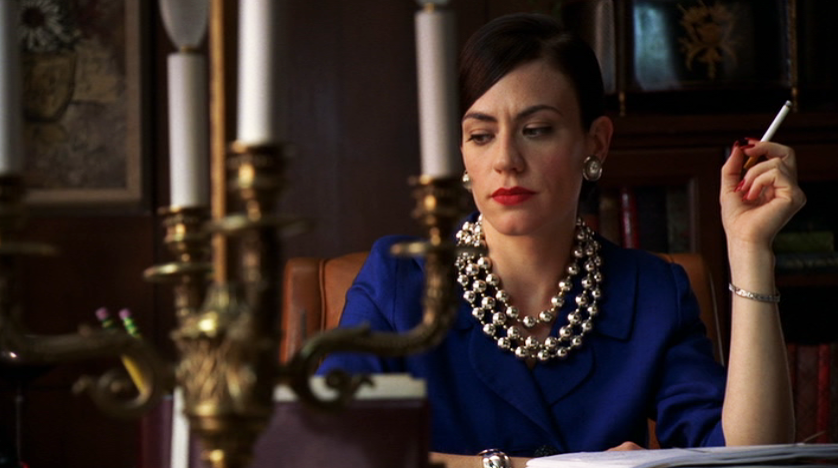
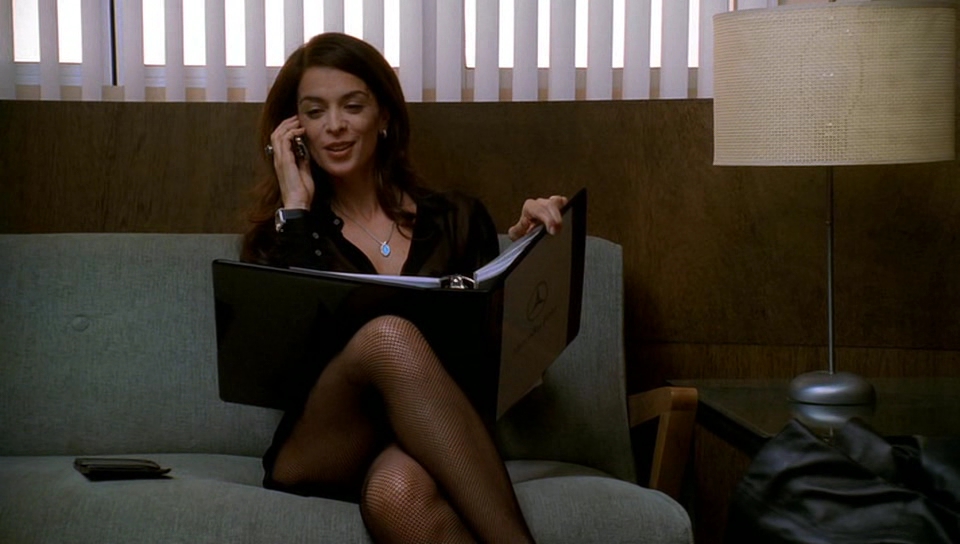
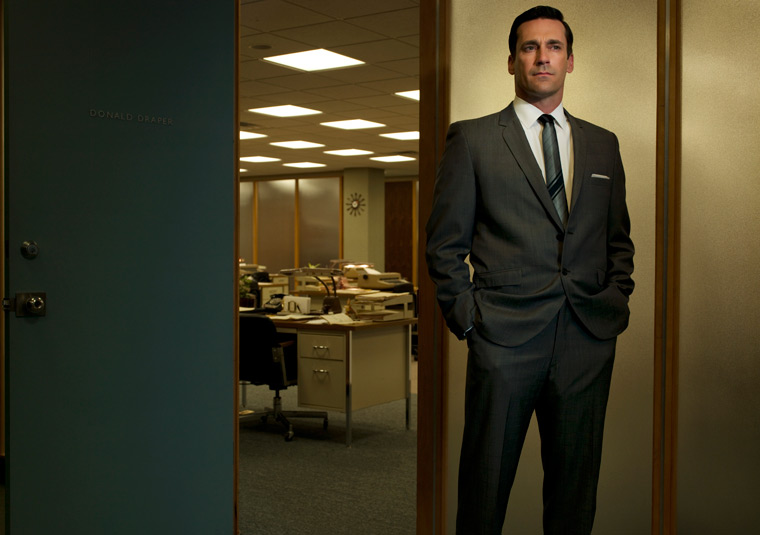
In the light of The Sopranos’ star James Gandolfini’s unfortunate recent passing, and the end of Mad Men’s sixth and penultimate season, there’s no better time to answer the most pressing question concerning those two shows.  Who cheated on his wife with more women, Tony Soprano or Don Draper?  To find out we’ll dive through the respective sordid pasts of these two legendary television philanderers, going back and forth one-fo-one chronologically between the shows.  Because the Sopranos started first, we’ll start with Tony.  Apologies if I’ve missed any; I did my best to scour through the episodes of both shows for every affair, no matter how brief, but these two characters didn’t make it easy.

Tony:

Irina Peltsin – One of the two longest extramarital relationships Tony is involved in over the course of the series, Irina is Tony’s comare from the pilot until the second to last episode of the second season when he attempts to break up with her, thinking she deserves to have a real life.  She doesn’t take it well, breaking down and trying to kill herself, which will be the start of somewhat of a tradition for Tony’s mistresses.  Tony sends Silvio over to her place to give her a nice $75,000 severance package and urge her to move on.

Don:

Midge Daniels – Like Tony, Don Draper is cheating on his wife from the get go.  In the first episode we meet the bohemian artist Midge who seems fittingly more reminiscent of the late ‘50s than the ‘60s.  Seemingly opposites, they  nevertheless have a fairly good run, as one of Don’s longer extramarital affairs, lasting until the eight episode of the first season, when Don unsuccessfully tries to get her to go to Paris with him. Things don’t go well after that for Midge who shows up in a later season as a drug addict.

Tony:

Connie Desapio – Desapio is a receptionist at Barone Construction, a Soprano family operation which Tony spends some time at, based on legal advice to appear like he’s actually doing the job he claims to have.  They have sex to pass the time in season two, episode 11, “House Arrest” until Tony goes back to Satriale’s eventually out of boredom.

Department Store Heiress

Don:

Rachel Menken – Rachel, who initially hires the firm to create interest for her department store, was a very different kind of woman from Midge.  She meets done in the series’ first episode as a client, and initiaully rebuffs Don’s advances, upon finding out that he’s married.  They finally begin the affair in the tenth episode of the first season.  She puts the kibosh on the affair in the 12th episode of the first season, when, after Don proposes running away to LA together, she realizes that he just wants to run away, but not necessarily with her.

Globe Motors Saleswoman

Tony:

Gloria Trillo – Trillo is a car salesman who Tony meets in Dr. Melfi’s office in season three’s “He is Risen.”  The most mentally unstable of Tony’s affairs, which is a dubious honor, she tries to provoke Tony into violent reactions.  Tony breaks up with her because of this, and Patsy Parisi threatens her, telling her to never come near Tony or his family again.  Later she hangs herself.

Don:

Bobbie Barrett – Barrett, introduced in season two’s “The Benefactor,” is married to and manages insult comic Jimmy Barrett, who Sterling Cooper recruits to appear in ads for Utz potato chips.  Barrett is the only woman Don sleeps with that we know is married, and she affirmatively seduces Don, who makes a brief attempt to turn her down.  The affair hits an awkward moment when Don and Bobbie are caught in a car accident together, but ends finally when Don finds out Bobbie has been gossiping about him behind his back.

Valentina

Tony:

Valentina La Paz – La Paz is the other long-time Tony Soprano comare.  She’s dating Ralph Cifaretto at the time that Tony and her get together after having lunch at Hesh’s house in season four episode “Mergers and Acquisitions.”  Tony breaks up with Valentina towards the end of season five when he arranges to move back in with Carmela, after she suffers a serious burn injury.  She, continuing a pattern, threatens to kill herself when he leaves.

Don:

Joy – In season two, episode 11, “The Jet Set”, Don takes a trip out to Los Angeles, where he meets a young woman, Joy, near the pool at his hotel. They attend a surreal dinner party and afterwards have sex.  Later, she and her friends and her dad move to the Bahamas, while Don returns to reality in New York.

Tony:

Svetlana Kirilenko – Tony and Kirilenko, earlier comare Irina’s cousin and Junior’s nurse, have sex just once, as far as we know, in season four episode “The Strong, Silent Type.”  She is far and away the most put together woman Tony cheats with on the show and she breaks off their relationship, though Irina later spills the beans to Carmela, helping to lead to Tony and Carmela’s separation.

Don:

Shelly – In the first episode of season three, “Out of Town,” Don meets a stewardess named Shelly on a flight to Baltimore.  She invites him and Sal to dinner at the hotel at which they’re all staying and after their meal, one thing leads to another.

Tony:

Sonya Aragon – An exotic dancer Chris used to hang out with, Tony meets up with her in Las Vegas after Chris’s death in season six episode “Kennedy and Heidi.”  They have sex, smoke weed, and take peyote.

Suzanne

Don:

Suzanne Farrell – Suzanne and Don first meet during a parent teacher conference in the second episode of season three while she’s Sally’s teacher.  They meet several times before the relationship becomes romantic.  She’s a bit of a hippy, and has a troubled brother who she cares for deeply.  She falls for him and wants to go out together in public, something Don almost grants while Betty is out of town.  The affair ends when Betty returns early and inquires about Don’s past which causes Don to call Suzanne to let her know it’s over.

Sylvia Rosen

Don:

Sylvia Rosen  – It seemed like Don had finally become faithful with Megan, but his faith waned at the start of the most recent sixth season when it turns out he’s been having an affair with neighbor Sylvia.  This affair was doubly nefarious because Don seemed to actually like Sylvia’s husband Arnold, and there aren’t very many people in Mad Men that Don likes.  The affair came to a temporary end when Don was simply too cruel and Sylvia decides it’s over, but is rekindled when Don helps get Sylvia’s son out of serving in Vietnam.

Don:

Betty Francis – Yes, I almost forgot this but Don cheats on his second wife with his first wife.

Don

Don takes a tight 8-6 victory, but with all the other people Don and Tony must have slept with before the shows started, who can possibly say what the actual score might be.

A couple of quick notes on women who were excluded:

This is a comparison of women Don cheated with, so in season four, when he was divorced, all his affairs were on the up and up.  Still for completion’s sake, here’s a quick rundown of all the women he slept with in season four.  His most ongoing relationship was with the age appropriate Faye Miller, a ratings analyst who he breaks up with at the end of the season when he instead chooses to be with Megan, who he proposes to soon after.  In between, he sleeps with a call girl Candace, in the first episode of the fourth season, a secretary named Allison whose heart he breaks in the second episode, a waitress named Doris in the sixth episode as well another unnamed woman, and Roger’s wife’s Jane’s friend Bethany in the eighth episode.

Tony was separated from Carmela for most of the fifth season of The Sopranos, so I chose not to count any sleeping around during the separation.  In the 11th episode of the fifth season, “The Test Dream,” he hires an escort while he’s staying at the Plaza, and they presumably sleep together. In the first episode of season four, Tony and his gang party with a bunch of Icelandic stewardesses but there’s no clear evidence indicating Tony necessarily slept with any of them.  Tony almost has an affair with real estate agent Juliana Skiff, but they never consummate it as Tony decides to remain faithful to Carmela, and Skiff and Chris take up together instead.

End of Season Report – Breaking Bad, Season 3

8 Jul

It's a cookbook!

The pivotal moment in the third season comes about halfway through when Walt makes his most serious attempt, at least until the current season, to quit the meth business.  Rewatching the season, he came even closer to leaving than I remembered. Looking back from the fourth and fifth seasons, his time in the super lab seems so inevitable, but it really wasn’t.  By the later seasons Walt has made peace with being the bad guy to some extent.  But in season three that’s still problematic for him.  He’s still out largely to make money for his family, even if that motive has comingled with his enjoyment of doing something that he’s good at and his ego-fueled refusal to know when to leave enough enough.  He takes concentrated stock of his life.  He didn’t imagine losing his family and isn’t happy about it.  Maybe he’s gone too far, he thinks, and maybe it’s time to put his family first. His marriage is looking to be in pretty awful shape with the revelation that Skyler fucked Ted, but Walt isn’t ready to give it up.

Jesse, who, unlike Walt, sees himself as the bad guy now, in the wake of Jane’s death, unsuccessfully tried to talk Walt into making more meth, and when that failed announced that he was planning to go forward with a solo venture.  That succeeded in making Walt furious. What right did Jesse have to make his product, Walt thought, but it wasn’t enough to make him reconsider.  Rather, getting Walt back to cooking took the deft convincing of chicken restaurant owner and drug kingpin Gustavo Fring.  In his persuasive oratory, Gus gives one of the most famous speeches of the series, and rightfully so, when he explains to Walt that “A man provides.” Gus is a studied master in the art of dealing with people, and in this speech he plays upon all of the personality aspects likely to convince Walt.  He speaks to Walt’s ego, and his desire to be the provider.  He gives Walt an out for being the villain.  All that matters is that he’s making money for his family, because that’s what a man does.  Who cares what other people think of him?  Who even cares what his family thinks of him now – he got in the business to leave something behind when he’s gone, and he needs to do it, whether they appreciate it or not.  After the speech, Walt is in, and he’s now all in.

Season three, like several Breaking Bad seasons, takes a while to get going.  The cousins are mysterious but are more responsible for a couple of the great vignettes that Breaking Bad is so good at putting together than for any actual plot.  They’re hardly characters themselves; their primary value is in how they affect the other characters, which doesn’t come until later in the season.

I’d like to put an end to the idea that Walt doesn’t care about Jesse, which I’ve heard so many times in the past couple of years in the wake of Walt becoming more hard-headed and full of himself.  I’m hardly calling Walt an altruistic saint, but what he does in the second to last episode of season three, he does at least partly because he cares for Jesse.  It’s easy to forget that Gus and Mike wanted to kill Jesse, and Walt basically tells them that he won’t work for them if they do.  He puts his ass on the line for Jesse.  Walt kills those two drug dealers because otherwise Jesse would have, and he shelters Jesse when Gus wants him dead.  Walt may ask a lot from Jesse to kill Gale, but it’s hardly unearned.

Famous bottle episode Fly, the tenth episode, marks the second major transition in the season.  The episode itself slows everything down for forty minutes.  It’s a look back before the final three episodes move forward at breakneck speeds.  The episode itself builds; the first few minutes are paced in such a way that you feel like Jesse, thinking who the hell cares about this stupid fly, but then, like Jesse, as Walt goes forward, you get involved.  Walt, and the show, use this moment to take stock and reflect on how far we’ve come in three seasons and what mistakes were made and how the original plan didn’t turn out exactly like it was supposed to.  By the time that Walt admits it’s not really about the fly anyway, as was pretty obvious from the beginning, it no longer really matters.

The last two episodes are riveting and in and of themselves worth the slow build of the season.  I challenge someone who hasn’t seen them before to find a chance to take a breath during either Half Measure or Full Measure.  It’s remarkable how quick the suspense is ratcheted up after the comedown of Fly.  The clock is ticking for Walt and Jesse after the events of Half Measure, where Walt kills two drug dealers to spare Jesse from doing it himself. The last episode is basically a race to figure out how in the world Jesse and Walt are going to make it through the next forty minutes of TV with their lives, considering Gus Fring is a much more serious enemy than any they’ve ever faced before.

Season three marks a transition between seasons two and four.  The show becomes less about little personal moments and more about broad strokes that are intricately plotted.  The scale is much bigger.  Walt and Jesse are no longer working out of a trailer, but instead are supplying meth to the entire southwest.  Some of the small, everyday moments from the earlier seasons are lost.  Walt is no longer a regular person with a small hobby, and his family is no longer a regular family.  After my rewatching, I have more understanding of people who choose the second season as their favorite than I did the first time I watched through. However, with the loss of the small comes the gain of the big.  Subtlety goes out the window but Breaking Bad also plays well on a much more epic scale.    Breaking Bad continually breaks out twists and turns that are never obvious but don’t feel forced either.  Character motivations are extremely well-handled; the decisions made by all the major characters which lead to the various predicaments make sense within the context of the show.  Gus and Mike come into play and both are hugely welcome additions to the show.  This is the big time now.  Walt and Jesse are no longer dealing with chump change and highly unstable drug dealers like Tuco.  Walt may make mistakes, but they’re because of his greater personal flaws, rather than because of his bumbling I-can’t-believe-I’m-dealing-with-violence-I’m-just-a-chemistry-teacher attitude.

I wouldn’t leave off a Breaking Bad review without a shout out to the sheer cinematic qualities of the show.  The technique is brilliant; there are beautiful set pieces.  Even scenes that seem irrelevant to the plot are beautifully filmed vignettes in their own right that tell their own micro story with style.  No show films better montages than Breaking Bad, and I’ll leave with the montage of Jesse’s friendly hooker friend Wendy, set incongruously to The Association’s “Windy.”


30 Rock and the Ravages of Sitcom Incest

10 May

Jack and LizDuring the course of its run, I sometimes felt 30 Rock, while a very good show, was overhyped, stealing all the love and awards from some other deserving comedies running during the same time.  However, when the hype quieted down, I found my impression of the show went up, especially as it put in an exemplary final season.

There’s lots to like about the show, but the aspect I’d like to focus on today is how they treated romantic relationships of the two main characters.  First, I’d like to congratulate the show on having the guts to have the two stars be an unrelated man and woman that viewers have absolutely no doubt will never get together.  That’s great.  In 99% of shows, we’d be expecting at some point in the show’s run, Jack and Liz would at least hook up, if not more.  In 30 Rock, not only do they not, but there’s not even a worry that they will.  They just don’t have that kind of relationship.  That in itself, even though it sounds simple, is bold and daring for a sitcom.  It seems like the sitcom handbook says that these shows thrive on sexual tension between leads, and 30 Rock, said, fuck that.

Even more than that, 30 Rock avoids the greater plague of sitcom incest that pervades almost every other non-family based sitcom on Earth.  What I mean is that, every show has a small pool of main characters, and on most shows, that means these characters have to hook up amongst themselves and form relationships, permanently and/or repeatedly.  This has happened for decades.  In Friends, the formative show based around, well, friends (as opposed to family or workplace), from way back in the 1990s, Ross and Rachel had their chemistry right from the start, and then Chandler and Monica had to get together.  Two of my favorite current comedies suffer from this syndrome.  In New Girl, within two seasons, four of the five main characters have gotten into serious relationships with one another, Nick and Jess, and Schmidt and Cece (poor Winston).  In Parks and Recreation, Ben and Leslie are now married, Chris and Ann are back a relationship, and Andy and April are married, while Tom dated Ann for an uninspired and weird stretch a season ago.  In the recently finished The Office, sure, Jim and Pam were the central couple of the show, but Dwight got with Angela, Erin with Andy and then Pete, Ryan and Kelly, and so it goes.  Throw at least six sitcom characters against the wall, and it’s almost certain some of them will get together with one another.

I don’t actually write this to say that this is necessarily a bad thing, and the urge to make this happen from a writer’s point of view is understandable.  These are the characters who viewers know the best, so that it has the greatest emotional impact when they get together with one another. These are the relationships the fans are often rooting for, and you can get mileage out of will they/won’t they, and general sexual tension building throughout the show.  In addition, when these actors work together for seasons, it’s a fairly likely possibility that a couple of them will generate a chemistry that maybe even the writers didn’t anticipate beforehand.

Still, 30 Rock, in contrast, said, fuck that, and I applaud that.  Jack and Liz had many romantic interests through the show, but never with cast members, and that didn’t at all stop Criss and Liz’s wedding and adaptions in the final season from being inspiring and gratifying emotional moments.  I was invested in all (at the least most) of the relationships Jack and Liz engaged in, and there were several great ones, without the concern that I knew they had to end because Liz and Jack had to end up with someone on the show or each other eventually.  Not only did Jack and Liz not get together with coworkers, nobody did.  Having all the relationships be with characters from outside their workplace also removed some limitations, and the writers were free to go in whatever direction they wanted with the relationships, such as making one a serial killer (bizarre choice I was never the biggest fan of, but still the point stands) or having one kidnapped by North Koreans.  If a relationship worked it could be extended, if not, cut off, without having cast-wide impact.  The different relationships offered some of the show’s best moments (Floyd and The Cleve, Peter Dinklage and “Shut it down,” Alec Baldwin as Mexican soap opera star, every Dennis Duffy moment) and they might never have existed if 30 Rock had decided to go the traditional route with in-cast sexual tension.

So, 30 Rock, kudos, for bucking the sitcom norm, another reason why I may appreciate 30 Rock now that it’s off the air more than I did when it was on.

Saying Goodbye to Happy Endings

6 May

The Happy Enders My views on Happy Endings have changed over time.  I was introduced to the show by a friend who recommended it early in the second season and made me watch an episode while he was there. It had some funny moments, though I was hardly enamored with it.  Still, based on what humor there was and his recommendation, I plunged in further, and it was still fairly funny, but I didn’t love it.  More than that, even though I watched it, I found myself focusing on what it wasn’t rather than what it was. I complained that it was kind of funny, but kind of hit or miss, and I wasn’t wrong.  I complained that it didn’t have the ambition of shows like  Community or Louie, or the strong but not overly sentimental character development and consistency of Parks and Recreation or New Girl, and I wasn’t wrong.  The characters weren’t deep, it wasn’t always laugh out loud funny (it wasn’t funny enough like Curb Your Enthusiasm or It’s Always Sunny in Philadelphia that I didn’t give a shit about character development), and it didn’t seem to have any real thematic depth.  I noted that it was the volume shooter, the JR Smith, of sitcoms, firing away jokes at a rapid pace, sometimes hitting at high percentages, and often missing several in a row, and viewed that as a negative.

Sometime between the end of last season and the beginning of this, the third season, though, I realized that it was time to stop focusing on what Happy Endings wasn’t, and start focusing on what it was.  What Happy Endings is, is an often funny, and always fun show.  I’ve pronounced before that Bob’s Burgers has become my preferred choice for a show to watch before bed that will simply make me smile and lead me to good dreams before I go to sleep.  It has humor, and just general air of positivity and happy things that sometimes one needs after a tough day watching the Mad Mens and Breaking Bads of the world.  Happy Endings might be the next show on that list.  Even when you’re not laughing, watching the show, you’re usually smiling.  The cast, whose chemistry makes jokes work that wouldn’t, and makes jokes that don’t work, not seem like outright duds, is just having a great time and it absolutely shines right through the screen.  The volume shooter aspect was no longer a negative; I felt confident I’d get a few good laughs, and instead of frowning at the misses, I’d just be smiling through the camaraderie.  There are very occasional character building moments or relationship changes, but there’s none of the heavy and sometimes burdensome oversentimentality of How I Met Your Mother that drives me crazy.  Instead of having to choose between being a show where the characters really develop like Parks and Recreation, or a show that’s just one thousand percent about the laughs like Sunny or Curb, Happy Endings took a slightly middle path and instead of beng a comprimise, it works for them.  Almost every episode begins with the six characters together in one place having a good time, cracking jokes at somebody’s expense, and most episodes end the same way.

If Modern Family is a newer take on the traditional family sitcom (Home Improvement, Everybody Loves Raymond, and so forth), Happy Endings is a modern update of Friends, with the classic six friends, three guys, three girls set up.  However, while I never really liked Friends (and don’t love Modern Family much), Happy Endings takes the fun of six characters you like with a sense of humor updated for the second decade of the 21st century. In addition, Happy Endings was a meta-traditional sitcom, and it did that, embracing the 21st century’s obessession with meta-humor, as well as anyone, ir not better.  Instead of being limited by its traditional sitcom – these are six characters who only spend time with each other – format, it’s liberated by that.  When it wants to play with any classic sitcom-y storyline, it just adds in the characters and plot it needs, and cleverly hangs the lampshade by having the characters comment on the sitcom conventions they’re falling into.  It’s the most knowing, winking, sitcom on the air, in this way. In the season (and what turns out to be, unless another network (hear me USA!) picks it up, series) finale, sisters Jane and Alex’s older sister, Brooke, gets married.  Of course, fans of the show have never seen or heard of their other sister, and while old shows would glaze over this point, Happy Endings takes the opportunity to have the characters point out how unusual it is that they’ve never mentioned her, as Adam Pally’s Max says, “We never see her, we never talk about her, she never shows up in any of your flashbacks.”  When others are confused, Dave notes that “Flashbacks” are what Jane and Alex call their photo albums, which he produces to show to the room.  Simple, knowing, well-executed, funny.  Good show.  This is a trope employed over and over again by the show, and it was done deflty and funnily, and with the proper amount of winking, which made these jokes some of the best in the show.

There’s at least a possibility that this isn’t the end, and that a cable network will pick up the show.  I think it would be a good fit for basic cable.  That said, if it doesn’t get picked up, so long Happy Endings.  I’m sorry to see you go.

Six Shows I Stopped Watching, Part 3

1 May

Part 3 of a brief list of six shows I actively decided to stop watching.   Part 1 and a full intro can be found here, while part 2 can be found here.

Glee

Rocky Horror Glee Show


24 is the only show on this list that I even have to think about why I stopped watching.  Heroes and Glee are the two shows that I think had the least amount of actual quality content before they went off the rails.  For half a season, I actually went around defending the show, even outright supporting it, saying that, yes it looks silly, and I am often ambivalent about the singing (it had its moments (4 minutes by Madonna, for example), but sometimes was just too much), but Glee was high school parody done right for a short time.  There were central plots holding the show together, in particular, Will’s wife’s fake baby, and cheerleader Quinn’s real one, that anchored the show.  The show kept a consistent roster of character personalities and plot strands besides merely how the Glee Club fares through the Christmas break, where characters maybe showed gradual change, but were who they were.  And then it all fell apart.  It was clear there was no more meticulous planning, or honestly planning at all.  Instead, everything, including characters’ personalities and storylines, was at the mercy of what the writers decided they wanted for a particular episode, whether it was a message they wanted to send, or a particular musical theme.  Quinn’s cheerleader character was perhaps the biggest casualty of this let’s-not-think-beyond-the-next-episode policy.  She was friendly and helpful one episode, she was a total bitch in another, she was emotional and depressed in a third. Sure, people are complicated and change, but there was absolutely no coherence.  Consistent plotting and characters was simply no longer something those running the show were interested in.  I complained and complained throughout the end of the first season and the start of the second but the official end came when Glee took on Rocky Horror in the fifth episode of the second season to celebrate Halloween.  I didn’t initially intend to just stop watching, but the episode just sat on my DV-r for weeks and then months passed before I realized the inevitable.  I didn’t really like Glee at that point, and I had never much cared for Rocky Horror, and realizing I didn’t care about the show later passed on towards active dislike the more detached I was.

True Blood

True Blood

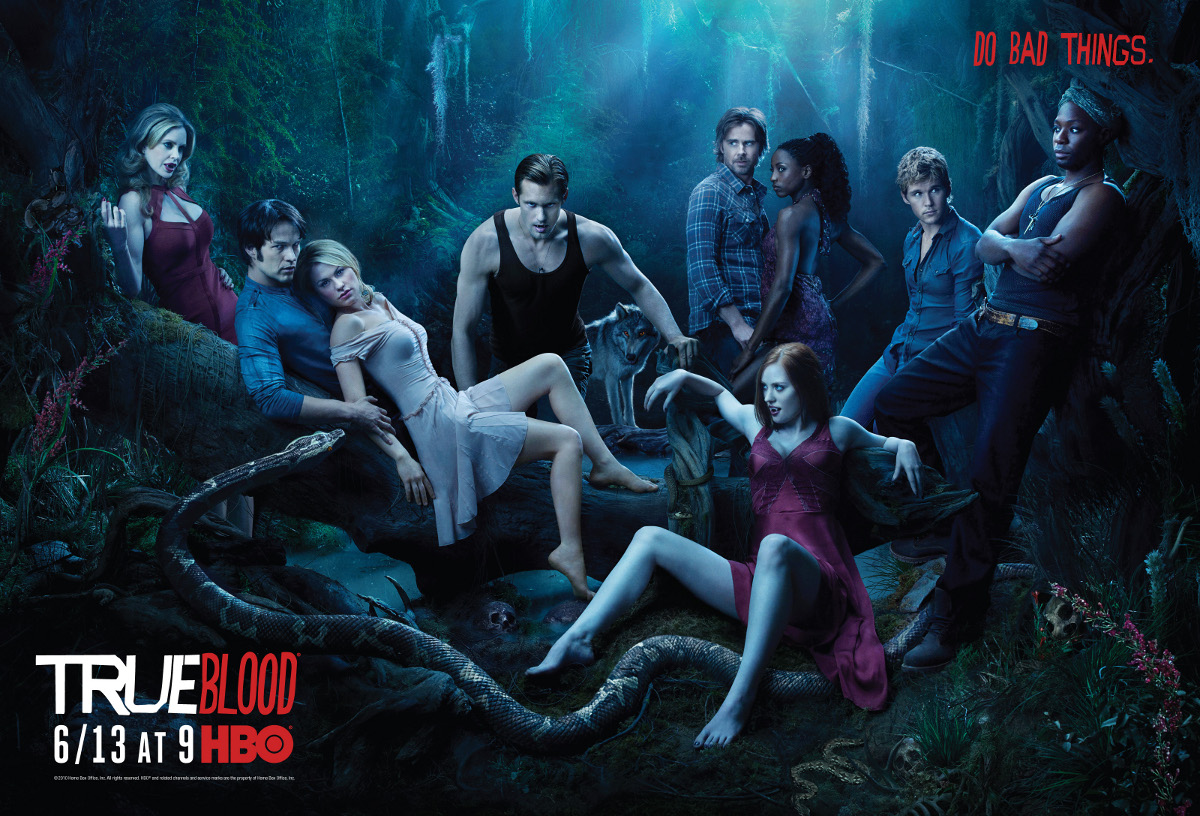
I searched my google chat logs to figure out when exactly I caught up on True Blood, which I did not start watching right from the pilot.  In fact, what’s ironic is that when I caught up, was just about when I thought the last good episodes were.  This was in September of 2009, when the second season was finishing up, and I watched both seasons at a furious pace, desperately trying to catch up in time to watch the Season 2 finale live.  I say just about because I think the beginning of Season 3 was pretty good as well.  The last few episodes of Season 3, however, were both anticlimactic and terrible, and I found my first official gchat complaint about the show just after the fourth season started, in June of 2011, when I tell my friend I haven’t watched the first episode yet because I didn’t think the last season was so good.  I’m not sure I ever turned on a show as quickly as True Blood.  I was very into when I was marathoning.  I thought the second half of the first season and the entire second season were riveting, addictive TV, and the third season built up in such a way that it seemed to have a solid chance of matching the first two.  But then the show just cratered, and I didn’t even finish season4.  I watched a couple episodes, and then just gradual faded out, noticing that I really didn’t want to watch anymore.  Most shows I’d give at least a full season to let them back on their path, or see if it was just a bad run of episodes that the writers realized as well and had time to correct, but I didn’t give that to True Blood, and history proved me right, as whenever I caught pieces of other episodes, they were terrible, and friends who were still watching told me as much.  The biggest culprits were that first, the universe just became too big too fast, and there were absolutely no natural limits.  Time travel, fairies, witches, it was impossible to keep up with, and more than that, I didn’t really want to.  It lost its fun trashiness quotient into just bad trashiness.  Second, the careful plotting of the early seasons disappeared; where there were smaller individual plots that coalesced into a couple of big plots in time for the end of the season, now every character had his or her own plot, and some of the characters had absolutely no business with one.  Jason’s werepanther plot was terrible (which was a shame because Jason was one of the best characters) as was the plot with Sam’s brother.  More of the plots were bad than good, and I found it harder and harder to pick out main characters that I really liked.  Recently, I’ve had friends describe for me the plots of the end of the last two seasons, and laughed and laughed at how ridiculous they sounded.  It’s possible in context they don’t seem as ridiculous but I enjoyed the short narrative recitation of the plot much more than I would have watching the show and that says a lot.

Six Shows I Stopped Watching, Part 2

26 Apr

Part 2 of a brief list of six shows I actively decided to stop watching.   Part 1 and a full intro can be found here.

24

Beep beep

The only show on this list that I truly harbor no ill will towards.  24 was just doing its thing, year to year, and yeah, that thing got kind of, well, extremely repetitive (there’s always a mole) but it didn’t materially deviate from the promise that it made it great in the first place.  It just kind of got a bit worse doing the same, and at least part of that worse is that the writers were just out of ideas; if the last season was first, it might have seemed better, because repetitiveness was a problem that was harder to avoid in 24 than even in most other long-running shows.  Eight seasons is a lot.  I watched the vast majority of the seventh season and then missed the last few episodes due to circumstance, and just noticed as I went through that summer meaning to click on remaining episodes which were safely stored on my dv-r that I never really had the desire to.  Every time i sat down to, I instead decided to watch something else.  I then didn’t see most of the eighth season, but like with Lost, I also watched the finale, this time with a much greater sense of closure and merely saying so long to Jack Bauer (and Chloe, let’s not forget Chloe) without the vitriol that powered by viewing of the Lost finale.  I only vaguely understood what was going on, but that was fine.

As I’ve said, I don’t really hold any real animus towards this show; unlike with Lost, the inferior later seasons didn’t retroactively bring down the quality of the earlier seasons for me.  I still harbor great love for the first few seasons and the first season in particular, and the joys it brought me to see every 24 trope for the first time, and then to root for the tropes as they happened the new few times after that (Jack:  It’s not the right play!, Kim is kidnapped again).  The one later plot point that did particularly rub me the wrong way was the resuscitation of Tony Almeida who for all intents and purposes had been dead for seasons and now was a super evil bad guy for some reason.  I get how they could be very 24-y but it just did not work for me; very few characters in the pantheon outside of Jack actually mean something, and Tony was one of them.  If they had to decided to make him come back and go all revenge-y soon after, it would have been one thing, but to have him lay dormant for years and then bring him back was too much.

How I Met Your Mother

How I Met Your Mother

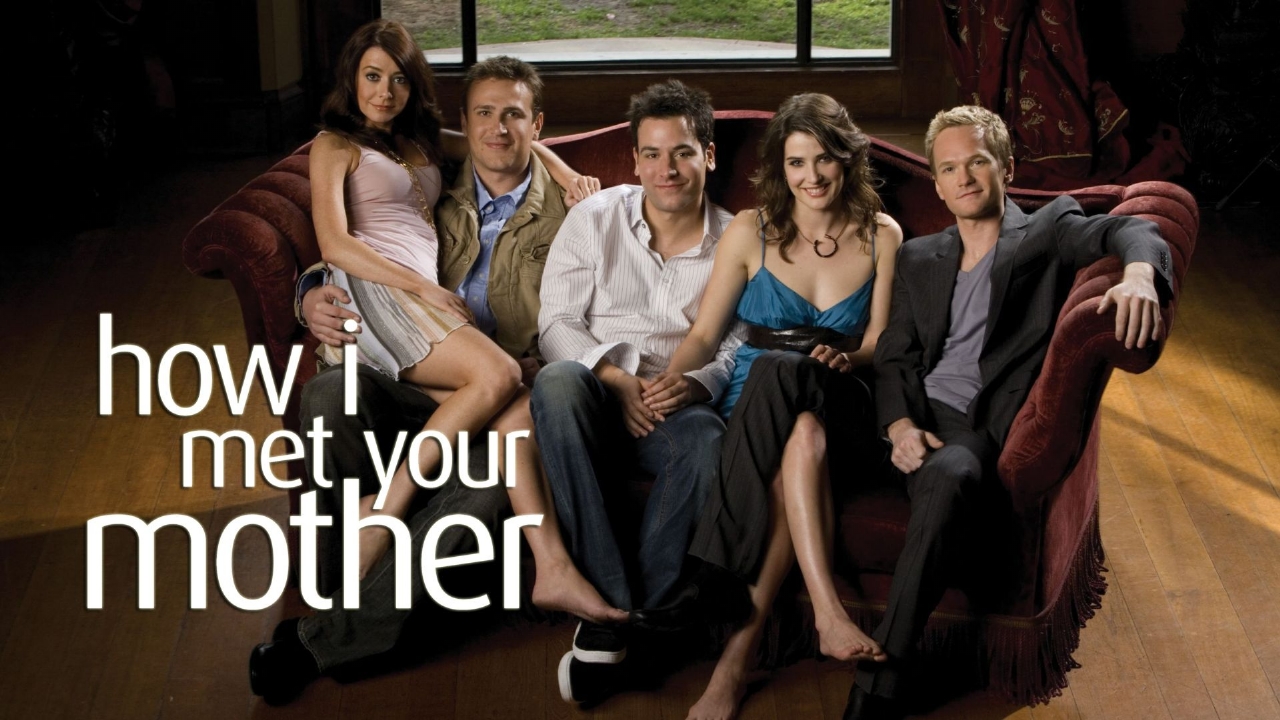
It’s almost a tribute to how much I like certain aspects of this show (namely, Neil Patrick Harris and Jason Segel) that I stuck with it for as long as I did considering how much this show seems like it was designed to bother me and me alone.  I know plenty of people who like the show, and plenty of people who don’t, but almost no one who is as irritated by the same aspects of the show that irritate me.  Just about everyone I know would agree the quality has slipped from the show’s second or third season peak, but how much is an open question.  What the show has going for it at its best is the cast, and, well, the jokes; it can actually be quite funny, and you’d think for a comedy that should be enough, and sometimes it is.  The show had an awful narrative device, and I just hated its tone, which I found moralizing and patronizing, trying to tell lessons that seemed uncalled for (see “Nothing Good Happens After 2 A.M.).  The show constantly told, rather than showed – it wasn’t enough to display some lessons through the events of an episode, but rather, narrator Bob Saget had to hammer the message home just in case you couldn’t follow along with the complicated narratives that How I Met Your Mother provides.  I stuck around for a fair time because it was funny, but when the later seasons became to seriously lack the funny, I was out.

I had threatened to leave for a long time before I did, coming back to the show, figuring it was only 20 minutes of my time, even if I didn’t really enjoy it.  This is, until I watched Season 7’s Symphony of Illumination, which had Robin narrating the show, presumably to her children, from the future, instead of Ted, and ended with the twist that she was just narrating the story to her fictional kids in her head, because she can’t have children (and I guess couldn’t have possibly adopted kids).  I just hated, hated, hated everything about it, and if I had been going back and forth about leaving the show for a season or two (in hindsight, I can’t believe I waited that long), that make it a quick and easy decision, and I haven’t seen an episode of the show since.  I always hated the idea of Barney and Robin getting together (not that it violates any key precept of the show, I just personally didn’t like it) from day 1, when it seemed inevitable (I still don’t understand how this isn’t weirder between Ted and Barney), so I didn’t particularly mind missing their engagement, though I suppose I’ll follow close enough to at least find out who plays the mother if they ever do get to that.