Archive | End of Season Report RSS feed for this section

End of Season Report: Homeland, Season 3 – Part 2

18 Dec

HomelandSeason3-2Phew. I just disposed of my central infuriating point from season three. Let’s now get down to some odds and ends.

Homeland’s showrunners  clearly think Carrie and Brody’s romance is the center of the show. If they didn’t, I’m not sure what Javadi’s monologue in the finale, which seemed directed to viewers at least as much as to Carrie was about, where he convinced her that it was, as it fairly obviously was to viewers as well, always about him that she did everything she did. I think this was a central misreading of what made the first season work that explains some of the missteps of the past two seasons. Carrie and Brody’s relationship is important undoubtedly, and their chemistry in the first season was one major asset. Getting chemistry confused for romance is a dangerous thing though; there was something there, but once Gansa and Gordon put their finger on what it was, love, the relationship lost what made it so intriguing. This sounds like more of the type of complaint you see in a comedy – the sexual tension is more interesting than the relationship itself, and it’s related but that’s not exactly it. The issue is that the fucked up chemistry worked for those two characters, where the idea of love never really did. The breakfast in bed scene at the end of the second season was one of the most excruciating in the series because it didn’t really make sense for either of the characters, and placing that love at the center of Carrie’s motivations was misguided at best.

More on Brody – I’ve said this before, but Gordon and Gansa killed Brody at least a year too late. Brody was a great character, but a character with a necessary expiration date. The longer they kept him around, the less it really worked, and the more they had to concoct hard-to-fathom explanations for why he’s still out there. He ran out of reasons to be interesting. Damian Lewis does his best with Brody throughout but the character was out of life and paralyzed the show, keeping the show in stasis when it needed to be moving beyond Brody. There’s a natural desire to keep around interesting characters for as long as possible, but usually in hindsight it’s better to kill them or remove them while they were at their most charismatic rather than after they lost the luster they had and felt used up.

The second season ended with a bang, and the third with a whimper, and as confused as I was with where Homeland was going to start the third season, I have even less idea for the fourth season. The showrunners have a clean slate more or less to work with, but I have less confidence than ever that they will do something interesting. If I was in their shoes, I would consider the ballsier moves of either moving on at the CIA without Carrie and Saul, or moving on with Carrie and Saul in their different respective roles, but I can’t imagine there’s any chance of that happening. The only part I feel confident in, and massive respect if I’m wrong, is that something will happen that forces the gang to get back together in Washington.

Senator Lockhart, I believe, is supposed to be the villain, and while I started out viewing him as the antagonist because Saul is the best, the longer the season went the more I thought that he’s totally right, and this CIA is totally dysfunctional. It’s not so much that I felt like his approach was better as much as I felt his critique of the competence of the old school CIA people doing it the way they wanted to wasn’t working. I think this conflict could have been much better served by portrayed it more deeply as a battle between two valid points of view rather than with Saul as our hero and Lockhart as our villain. Shows are usually better when there are merely two different plausible ways of seeing things, rather than a clear right and wrong.

Plausibility was a major issue for me throughout the season, largely on Carrie’s end (as mentioned exhaustively in my previous Homeland post) but really greater than that. The insanity and audaciousness of Saul’s plans boggled the mind and just seemed way too far-fetched, and though Homeland did do a lot of lampshade hanging throughout this season, I still wanted more reality, and frankly, at least one of their plans to fail, to appreciate just how risky they were. The plan was too big, the CIA carrying it out consistently seems too small. It has always bugged me that the CIA on Homeland feels like it employs six people at any one time. There was no greater example of the plausibility problem than the cheap trick fake out that basically turned the first few episodes of the season inside out. Beside the within show unlikeliness of the plan’s success, many scenes of Carrie by herself didn’t really make sense if she knew she was on part of a plan rather than actually trapped in a mental hospital.

I was actually intrigued by the direction of the first few episodes of the third season. Homeland seemed to be dealing with the notion of consequences, something I think very few television shows do, and something I thought provided an intriguing direction. The potential of a near-permanent falling out between Saul and Carrie, well, it was sad, but damn if it wasn’t interesting, and it was a powerful way of saying the show may be good and it may not be, but it’s moving forward and away from the status quo. The CIA made a whole lot of dumb 24-ish mistakes the first two seasons, and it’s time to pay the piper. Instead, with the twist, the show went disappointingly in the exact opposite direction.

I almost forgot to write anything about Brody’s family, largely because they basically disappeared from existence halfway through the season. I don’t think that was a bad thing, and the fact I entirely forgot about them probably says a lot, but I didn’t hate them by nature as much as most people I knew. I did think the way they were used was poor, but I also thought there was something there in exploring the relationships of a family broken so completely between getting their husband/father back and then discovering he’s not who he once was, going from loss to ecstasy to tragedy so quickly. The family’s done, and since I don’t trust Homeland’s writers, I think that’s the right decision, but I think this was an opportunity lost.

This has been a largely negative write up, and as happens after I type for a while, I feel even stronger than before about what a disappointing season of Homeland this was after the show had a real chance to get away from the problems of the second season. However,  to leave on a positive note, I’ll briefly talk about the one aspect of this season I liked most.

Javadi is the best new character the show has introduced in ages and was exactly the type of character the show could use more of, and I hope the show doesn’t fuck him up. He’s a cagey character who gives with one hand and takes with the other, a perverse parallel of Saul who made different choices and who is willing to do what it takes to get away, but not without an occasionally magnanimous side when it suits him. He’s in many ways a villain but he’s a pragmatic nontraditional villain who serves the heroes when it suits him.

End of Season Report: Homeland, Season 3 – Part 1

16 Dec

Carrie swears in

There’s plenty to talk about, and my various complaints about Homeland have changed over the course of the season. There’s really one that’s been slowly building and peaked in the last couple of episodes and has just been driving me so crazy that I’m going to devote a full post of this report to it, and then come back with a second post about everything else. Homeland has a major plausibility problem all around, but there’s one aspect of that issue that gets even deeper to Homeland’s core.

Carrie Matheson is a brilliant, brave, and daring operative. She’s undertaken dangerous missions on behalf of the CIA, made intelligence breakthroughs, and had correct instincts on a deep cover American traitor when no one else did.

She’s also an absolutely terrible, unreliable and untrustworthy employee, who was fired supposedly irrevocably at the end of the first season after it was discovered she had an unreported serious mental condition she’s only part of the time willing to seek treatment for. She should really never be working for the CIA again.

In the third season, Saul, and thus the entire CIA (for some reason, the CIA in Homeland seems to employ six people, but that’s something else entirely) have placed their most important mission in the hands of someone who is far too completely compromised to be an agent they can place any reasonable trust in, someone so in love with the agent she’s monitoring that she can’t possibly react like an agent needs to.

At the end of the first season of Homeland, Carrie was fired because it was determined she had hidden her only occasionally treated bipolar disorder. Bipolar disorder is a serious condition, and it’s easy to feel for Carrie, but it’s also easy to understand why the CIA wouldn’t want a loose cannon walking around with access to extremely classified information. I wondered what her firing would mean for the show because I believed it would feel cheap to have her rehired after a huge deal was made about her never working for the CIA again after her breach. There were no loopholes left in that scene, no two ways about it, she was out, for good.

Sadly, my concerns were well-founded. The writers didn’t have an ingenious plan to either find another line of work for Carrie or focus on new characters. Somehow, of course, the CIA found a way to her come back, first, through a cheap loophole as not a member, but as an outside consultant to help with Brody because of their bond. The bother to even hang the lampshade felt half-assed. Soon, however, Carrie was just back for good and the fact she was fired just a season was sort of forgotten about and relegated to the past.

After being rehired, Carrie went on to constantly disobey orders over the course of the second season. Her superiors would constantly tell her not to do something, she’d do it, they’d reprimand her, and then eventually they’d simply let her back out there for some reason, even in situations when there wasn’t even some stretch of an imperative that she was the only person who could do the job.

In the beginning of the third season, events were repeated with Carrie being apparently fired for sleeping with Brody after Saul rats her out to the Senate. I applauded this direction. I didn’t know what they’d do with Carrie, and sure, it was a personally mean thing to do for Saul, but Carrie really had this coming through her repeated patterns of behavior. Saul never lied or framed her; he made her take the hit, sure, but all of his accusations were entirely correct. This extremely satisfying discovery that actions have consequences was undone by the revelation that everything that transpired in the first couple of episodes was part of an extremely elaborate long con between Saul and Carrie, one that really made less sense the more you thought about it. I didn’t think Carrie deserved to be an asylum, certainly, but there was some middle ground between being locked in an asylum with the key thrown away or being part of a million to one insanely intricate plot.

Back in the fold, yet again, throughout season three, Carrie continued to disobey orders. This would be problematic in almost any field, but as an intelligence agent for the CIA, she’s putting lives and missions at risk. Just because she thinks her orders are wrong is not an excuse to disobey. Honestly, if it really felt like she was getting unjust orders all the time, then I’d still feel for her even if she was technically doing a bad job by disobeying them, but that was not the case at all. The orders Saul gave may not always have worked out, but they’re always well thought out and carefully considered, and made it extremely hard to feel sympathetic for her. She disobeyed an order halfway through the season that required her own organization to shoot her to prevent her from moving further, and she nearly ruined a vital CIA operation in the last couple of seconds only to be bailed out by an extremely, extremely unlikely outcome when Brody kills his target rather than giving up Javadi. Even if Carrie made the right call, it wasn’t her call to make, and Saul’s call was as equally well thought out and valid as hers.

And then, when this is all over when it all works out against absolutely any odds, instead of getting reprimanded for almost blowing up the mission several times out of making judgments based on her love of Brody rather than her best operational judgment, or obeying extremely reasonable orders from her superiors, instead of getting fired or demoted, she gets PROMOTED. Carrie gets a huge PROMOTION for doing an absolutely terrible job. What am I missing?

Carrie is akin to the coach who makes the wrong decision at the last minute which works out and gets rewarded for the result rather than the process, leading everyone to ignore both the fact that she made the wrong decision and the fact she made so many wrong decisions before the last minute that her team should have won easily. And maybe the argument is that, well, those coaches get rewarded, for being lucky, rather than for being good, but I don’t think that’s the argument we’re getting her. I could be wrong certainly, but I really think we’re supposed to getting the notion that she deserves this promotion, it just drives me up a wall. Again, Carrie is very smart, ambitious, daring and talented, and I can imagine there are lines of work in which her skill set would be rewarded handsomely but she’s clearly a hugely irresponsible wildcard in the intelligence field

I’m basically tiring of living in this backwards world which refuses to deal with characters and consequences and plausibility. Carrie pegged Brody as a traitor, and absolute points for that, but then she went out and slept with him, multiple times, and let him escape. She may have been right about his role in the Langley bombing, sure, but she violated so many protocols it’s mindboggling.

If this was 24, where Homeland showrunners Howard Gordon and Alex Gansa used to work, the correct response would be, who gives a shit? Jack Bauer did that, and yeah, Jack Bauer was pretty awesome, but he would never get away with any of it in the real world.

The difference is that Homeland still wants us to treat it as a serious show; a show about issues in the modern surveillance state facing difficulties balancing privacy vs. danger. Homeland set itself up as a show that was going to be real about the CIA and the intelligence community more broadly, and one that was going to hew if not to the letter of reality, at least much closer than most sensationalist spy shows and movies. But it’s impossible to take it seriously when they don’t take it seriously. I’ll have more related points and other notes in part two.

End of Season Report: Luther, Season 3

9 Dec

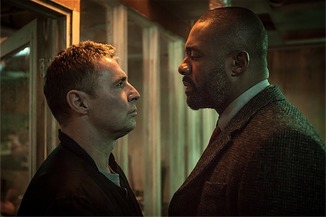
Luther and his nemesis

British cop drama Luther aired its third season this year, although it’s a very British season, made up of just four episodes. The first two seasons were solid but unspectacular fare that largely relied on television police tropes, particularly the cop-that-breaks-all-the-rules-but-is-always-right. Still, the seasons had their moments, starred the always wonderful Idris Elba, featured one really interesting character named Alice, and well, there weren’t that many episodes so the quality didn’t have to be as high to make the seasons worth watching (I’m aware that’s a very backhanded compliment). 

Normally I try to make some broader points in these end of season reports and hit on a number of key plotlines. Here, though, there was one element of the third season that basically ruined it for me and that’s pretty much what I’m going to focus on.

Here’s the problem with Luther season three, the most frustrating and worst season of the show to date. They took a good idea and executed it exactly the wrong way,which led to a season which was worse than if they good idea had simply been absent altogether.

Let me explain.

Here’s the good idea. Luther is an unethical police officer who violates both ethical and legal boundaries to solve cases and punish guilty offenders. This is something that would be extremely controversial in real life, is fairly controversial in the show, but it’s something viewers have occasionally been taught to root for in their television heroes. Heroes don’t play by the rules and they get things done anyway they have to; technicalities be damned. Thus, this season, the Luther writers smartly decided they were going to introduce someone who looks into Luther’s  misdoings and tries to find out if they’re true, and if so to take him down within the system.

That’s a good idea. Here’s how you do it right. The internal affairs-type people looking to get Luther are completely neutral and simply interested in finding the truth. They’re not interested in personal vendettas; they’re interested in people following procedures that exist for a reason. Internal affairs-type people always tend to come off as bad guys in TV shows for the same reason borderline unethical cops come off as they good guys; the cops are trying to get results, while the internal affairs people are worrying about bureaucratic bullshit while the real cops go after criminals. So, the key to have this plot thrust work is ensuring that the agents coming after Luther are trustworthy and passionate, so they’re on an even playing field with Luther, and it makes you think, well, maybe Luther, this character that I’ve been rooting for, maybe there are good reasons that he should go down and get investigated and possibly punished for his indiscretions.

Here’s what they did. The head internal affairs person investigating Luther, George Stark, is a drunk absolute nut job who cares much more about railroading Luther than he does about justice or law or really anything. It’s unclear why he cares so much since we’ve never seen him before and it’s unclear what kind of official permission he even has to be conducting his investigation. At least his helper and second in command has been at odds with Luther for some time and has a legitimate beef. Stark comes out of absolutely nowhere, despises Luther for reasons that are unclear, but is far from being above using the same exact underhanded tactics to get Luther that Luther might use against a criminal. Not only is it unbelievably hypocritical, but Stark has an insufferable superior attitude about the whole ordeal which makes him all the more despicable.

I’m open to rooting against Luther. I could be convinced. He rubs me the wrong way often and I’m tired of that cop-who-disobeys-the-rules being portrayed as the hero . Still, when this is the other option, I’ll root for the devil I know any day of the week. I know this show can do better. Luther is already a show with many limitations and a not particularly nuanced view of crime or policework, but it could craft a more convincing and compelling investigation into Luther’s misdeeds.

This investigation into Luther was all leading to the final episode. I was already kind of fed up with this plot by this point which was ruining most of the enjoyment I had from the other angels of the first three episodes. Stark’s investigation into Luther in the final episode became unbearable and almost made me stop watching then and there. Luther’s partner is killed, and the killer comes after Luther’s girlfriend. Somehow, however, Stark believes that Luther conspired with the criminal to come kill his girlfriend for some reason, well, I obviously can’t even fathom what reason. Come on. How are they taking this seriously? Say what you want about Luther, and there’s a lot to say, there’s a lot that he’s actually guilty of that he should be fired for and maybe more. But that he arranged a deal with the villain to kill his girlfriend? What? How does that even make sense for two seconds?

I’m aware plausibility only goes so far on TV often, but there has to be limits. Stark is also mindbogglingly incompetent and his utter confidence that Luther is behind every plot in the show ends up leading to his death and almost several others.

Also, everyone who watches Luther loves Alice. Alice is the best character. But her coming in out of absolutely nowhere to steal him away from his convey with grenades? Come on. A poisoning? Sure, I’d believe that. But this seems more than a bit much, as does Luther walking away with her at the end of the show, still barely a day, if that, after his partner died.

This is a much more minor note, but the dialogue between Luther and his new girlfriend Mary when they get together at the end of the second episode is just terrible.

Honestly, this is just a very disappointing season of television. I’ll have to consider whether I want to watch any more if a fourth season comes about.

End of Season Report: Broadchurch

4 Dec

The two primary detectives in Broadchurch

This is a simple conclusion, but I really enjoyed Broadchurch, and I’m both pleased and mildly surprised by that. While I liked it well enough after the first episode, I found myself polishing off most of the series a few weeks later in a two day binge and really got hooked in more than I thought I would.

Before I talk about what I liked about the show, I’m going to put my initial misgivings right up front and then afterwards I’ll get to how Broadchurch was able to overcome them.

First, I’m generally tired of these murder mystery shows. A lot of the blame goes to The Killing, which still leaves a bad taste in my mouth a few years later, but these murder mysteries are just generally hard to pull off.  They don’t lend themselves to multiple seasons or even long single seasons. Drawing out the murder mystery too long is problematic because it’s hard to make the payoff seem worthwhile – there’s more pressure on the payoff with every extra episode the mystery takes to unwind. In addition, with multiple seasons, it feels like the murder investigation has to be more complicated than it might well be in order to justify the length it’s taking to play out.

Second, I’m tired of characters who fit the type which David Tenant’s cop seemed to be initially. The mysterious anti-hero, House-esque go-it-alone cop, who doesn’t get along with people and has serious personal problems, but is the best damn cop there is so people put up with him (or her).

Third, I’m tired of every family member’s personal demons making them all seem like potential killers. In the first episode, it seemed like every member of the family had something to hide, and that they might all be suspects, and it just felt like a TV show getting greedy; absolutely everybody in the town has to be a suspect. The town is big enough; there can be plenty of suspects with room for a couple of people who obviously didn’t do it.

Here’s how Broadchurch addressed each of these concerns. First, and this is really at the core of what allows Broadchurch to do a long-form murder investigation show right – eight episodes is the perfect length. There were red herrings, but they were addressed quickly and efficiently and didn’t feel too burdensome to the overall plot. The investigation hummed along without feeling overwrought, and everything was wrapped up at the end without stirrings of some greater conspiracy or convoluted scheme. The case was solved, and the killer has a motive that didn’t involve half the town being in on it rendering the whole situation implausible.

Second, while I thought Tennant’s character was a classic antihero cop that breaks the rules, hates every one else, but is smarter than everyone else, he ended up ,well, mostly not being that. He had his moments of playing that character, mostly when he insisted on avoiding dealing with his medical condition and breaking out of the hospital, but mostly he was just an ordinarily good cop who pretty much did follow the rules. He sniped and was a bit rude, but it seemed less like purposeful House-like jerkiness as we got to know him and more like admittedly poor social skills.

Third, the family’s issues were resolved sensibly and quickly. There were issues in the husband’s case, but once his affair came out into the light, suspicion of him was quickly dropped, and the show didn’t let the melodrama about the affair drag on. It was relevant, and impacted the grieving family, but it wasn’t the topic of continuing intrigue or concern in the investigation.

As mentioned before, but I want to stress its importance, pacing and length was an essential part of what made Broadchurch work. Eight episode was the perfect length to add depth to the mystery without dragging it out. The ending was surprising but didn’t feel out of nowhere implausible, and what made it so powerful was less what actually happened, than its effect on Ellie, who was absolutely devastated. Her personal devastation was difficult to watch but contributed to the strength of the reveal. In hindsight, the foreshadowing was clear when she told Susan Wright that she would have known if her husband was up to something criminal, and it’s absolutely brutal for Ellie to deal with the fact that her husband is the killer, and just be totally and entirely unable to explain how she couldn’t have seen it coming.

I got hooked on Broadchurch around episode four, and part of why I got hooked was because I knew I was so close to the end. The small town felt small, and the energy of everyone knowing everyone infused the show. Bonds of trust built up over many years broke down quickly while old rumors and gossip rose to the fore. Alec Hardy, as the foreigner, was often the only person abse to step outside of himself and see what was going on in an objective light.

I expected to recommend the show only with serious reservations after the first couple of episodes, and I was scared that the further it went, the less I’d want in. Instead, knowing the ending, I feel more confident in recommending the show. More shows need to be this length. Take a weekend, watch it all, and enjoy (I realize you shouldn’t have read this unless you’ve already seen it. Still, recommend it to your friends then).

Mid-season Report: The Walking Dead, Season 4

2 Dec

Rick is Back

After writing it, I noticed that this review has become a bit of a compliment sandwich. First, as befits said sandwich, we’ll start off with some compliments which the first half of the fourth season of The Walking Dead richly deserves. It has been the best and perhaps most importantly, most consistent half-season in a show that has been riddled throughout its run with inconsistency, offering jaw dropping moments before and after slow, plodding episodes. Pacing problems which swamped the show, particularly the second system, were not nearly as present, and new showrunner Scott Gimple found a way to mix character building, overarching themes about survival and humanity and relative and absolute morality with action, plot movement, and, as always, super disgusting zombies. Compliments to the chef.

My biggest problem with this half season was my biggest problem with last season’s finale: the governor, and his continuing, at least up to the mid-season finale, survival. The writers decided to give the Governor two episodes starring no other main character towards the end of the season rather than cross-cutting the Governor’s plot with the crew in the prison. I ‘m not sure that was the right decision, but I can see the advantages once they had decided what their story was and were just deciding how to tell it, The real problem, though, was bringing the Governor back at all.

The Governor’s arc was finished at the end of season three. If the character had been written differently, and I”ll get back to that, I don’t think the character had to be done, but because of how he was written, there wasn’t much left to do with him. Rather than prove me wrong, the writers unintentionally endorsed my view by basically repeating the Governor’s third season plot in two and a half episodes.

This re-telling may have been a superior version of the Governor’s story, and it almost felt like the writers thought the Governor was a good enough character that deserved a better end and they wanted to honor him. If this season had been the only experience we had with the governor, there might have been a chance to forge a new character and the episodes would have been a lot more captivating. But it’s not and it wasn’t.

Aside from the repetition, it felt like the first Governor episode was a fake out to make us believe that the Governor had changed. It could have worked, had the events of the third season gone differently, but because of how they did go I never believed in the new, non-murderous governor for a second. The character was simply too far gone, too morally compromised, to, forget root for, but even believe in and take seriously at all.

The writers proved that theory correct when the Governor went back to his playbook in his second episode, murdering the leaders of his new group to take control himself, ostensibly in the name of survival, but really for personal gain and revenge.

And therein lies my problem with the execution of the govnernor (not his dying at the hands of Michonne; that was great, rather how his character was written). There’s a version of this character that’s really interesting in this world. A character who has seen so many dark things that he takes a cold and utilitarian view of group survival. He decides he needs leaders who are willing to cut bait to save the most number of people, and that his group’s survival may mean others’ deaths, but he needs to be in it for his group first and foremost. That’s a valid worldview in these end times, and while it may not be one that the viewers support, it’s one that’s coherent and can make sense in a world where death is always around the corner.

The problem is the Governor is a perversion of that worldview who is impossible to sympathize with. Sure, he believes those things, and acts in those ways, but he has personal motives and a huge ego which don’t allow the viewers to really spend time on the fascinating themes that character can present.

I love that in The Walking Dead any character can die at any time. But for the reasons I described above, if the Governor killed Rick, I’m not sure I’d be able to continue to watch the show. I certainly didn’t think it was going to happen, but, while I normally reward the unpredictable, if the Governor didn’t die in that very episode, there would have been a critical problem in a show that has had its share of problems.

I had to spend so much time on my least favorite part of a season that was overall quite enjoyable, but it’s on my mind in particular because it occurred in the most recent episodes. Let’s talk about the good though, the bottom half of this compliment sandwich.

It’s always a challenge on The Walking Dead to build up new characters, so that they mean something if and when they get killed off, as there’s always a churn of characters working their way through. The Walking Dead did enough to add some real depth to characters Tyrese, Sasha, and Bob with a limited amount of time to devote to each which really helped bring up the overall cast. This stands in stark contrast to the trouble the show had making major characters feel like, well, characters, in the early seasons.

The Walking Dead thrives when it positions different views for how to deal with the apocalypse against one another, with Rick as the heart, trying to figure out what’s right. Carol and Hershel did an excellent job really building into two potential worldviews, each of which has value and reason behind it, and while I understood how this show works, it was awfully sad to see Hershel go as he has become the moral soul of The Walking Dead.

The disease that ravaged the prison in the first segment of the season was much more interesting than the Governor conflict in the second segment. It was a human conflict that forced the prisoners to make difficult choices, and while sometimes the choices were smoothed over, it led to some really interesting consequences like Carol’s burning of the bodies. We tend to side with Rick, but even while we may not agree with Carol, it’s easy to understand where she’s coming from and also understand that she’s taking action for the survival of the prisoners. Unlike with the Governor, Carol’s motivation is legitimately to help her group overall

All told, I’m encouraged by the direction of this season, especially now that the Governor’s gone and the crew is on the move again, I’m excited to see where show runner Scott Gimle can take the show, which has struggled to find its way on a consistent basis over four seasons, despite its massive popularity.

End of Season Report: Boardwalk Empire, Season 4 – Part 2

29 Nov

Nuckie in Florida My thoughts on the recently ended fourth season of Boardwalk Empire ended up reaching an unseemly length, so I decided to slice them in two. The first part is here.

Gillian’s plotline was one of the triumphs of the season. It was, unlike many of the other plots,largely self-contained within this season, and dealt with her trying to put her life back together and ultimately gain custody of Tommy, Jimmy’s orphaned son. My one reservation about her story was that it felt a little ludicrous to have this ridiculously long con run on her successful by a private detective solely for a confession to killing someone no one seems to really even care that much about. Still, if I’m willing to buy that, it was compelling, Gillian has always been one of my favorite side characters and Gretchen Mol manages to play her in a way that it’s hard not feel sympathetic for her by the end of the season even after all the terrible things she’s done.  She’s so tragically broken from the way she was abused as a girl that her warped sense of relative morality has made her at times successful, twisted, and oblivious. Ron Livington’s character had a limited role, nursing Gillian back to health only to break her later but he ultimately appreciated by the end of the season, as we did, the strength of Gillian’s character and her abilities, in spite of the endless immoral and criminal acts we know she committed.

Nuckie trod largely on familiar territory which makes it difficult for his plotlines to feel new or exciting. This is largely because the character is stuck in a status quo where he can’t get too big for his britches outside of Atlantic City, but can’t lose all his power either, unless the show is willing to make a much more radical change that I’m giving it credit for. Still, if one could put aside for a minute the negative I’ve already mentioned of going somewhere we’ve already gone before, the season handled it well.

Particularly, we’ve seen this Nuckie and Eli dance before, in season two, when Eli was part of a cabal, along with the Commodore and Jimmy, who worked to overthrow and ultimately kill Nuckie. Nuckie forgave Eli, but not Jimmy, and Eli had been a fairly loyal soldier until this year, aside from the constant sibling squabbles between the two. As I mentioned, unsurprisingly, I’m not usually a fan of repeated storylines, and I’m not here, but again, if we accept that Eli betraying Nuckie is going to be a repeated plotline, it’s done as well as could be expected.

I’ve always though Eli (like Gillian) was one of the stronger side characters and that his relationship with Nuckie was a fairly realistic portrayal of a sibling relationship, amped up in a violent way because of their positions as gangsters. With Nuckie as the protagonist, Eli can seem grating when he’s constantly rankled by Nuckie’s constant looking out for him and his family. It’s difficult, though, for Eli to constantly be under his brother’s thumb, not only at work, but often even within his own family at home, even if he ultimately loves his brother deep down, which i still think he does. Eli has a more convincing reason for betrayal his time, and I actually liked that in the end, at least this season, Eli wasn’t killed, which would have been the obvious move even though his actions clearly deserved it by the rules seen in this show.

The extra layer here was that the betrayal could have been avoided if the sibling rivalry didn’t run so deep. Agent Knox blackmailed Eli regarding his son’s murder charges, and if Eli had gone to Nuckie right away, the situation might have been resolved without endangering anyone in the family. Eli was too proud and ashamed to go to Nuckie, and Nuckie had to play big brother and patronize Eli by hiding his son’s actions from him in the first place, generating the understandable resentment from Eli. These are basic sibling conflicts that follow siblings everywhere, but they’re played out writ large due to the numerous murders and federal crimes which they’ve both been a part of. The family connection comes into play again in the decision of Nuckie not to kill Eli, as all of the rationales on both Eli’s and Nuckie’s sides are wrapped up in their complicated family web along with Eli’s son Willie, whose seemingly unnecessary and somewhat irritating (Willie is not my favorite character) actions early in the season set up the ground for Eli and Nuckie’s struggle.

I loved Patricia Arquette’s character,Sally Wheet, and she played a huge part in keeping Nuckie interesting for another season. I do think Nuckie is a good character overall, and has layers of depth and moral complexity that have shown over the course of the show, but it’s getting tough to keep him interesting, as mentioned earlier, without ever having him win or lose completely. He wants out of the gangster game, and the stress and the violence, but then he doesn’t because of his need for money and power, and around again we go. Arquette was a genuinely believable and compelling romantic interest that made me invested in Nuckie’s love life in way I didn’t feel was particularly likely before the season. Florida didn’t add a ton besides plot conveniences outside of Arquette, but she alone made it worthwhile. Florida was built up in the early seasons, only to largely fall away towards the end of the season, leading me to believe we’ll be back in the Sunshine State sometimes in season five.

Nuckie’s ex-wife Margaret largely sat this season out, for which I was grateful, as she’s my least favorite character. Her two scenes with Arthur Rothstein I enjoyed though; perhaps there’s much more potential for her now that she’s fully out of Nuckie’s life and in the show in limited doses.

Real life gangsters Rothstein, Charlie Luciano, and Meyer Lansky each had minor roles in the season, each befitting the size of characters throughout this series, but each added color, character, and fine acting, in the smaller roles they inhabited. They were like basketball three-point specialists, making the most out of their limited time on screen, injecting little bits of character into smaller parts without needing the ball to have an impact. Mickey Doyle, another character whose actor gets listed in the main credit sequence even though he has a relatively minor role, is the type of character who can be grating with all but the slimmest parts, but in short bursts adds a much needed bit of levity to a show that can easily get overserious. Rothstein and Lansky are about the only other two who ever seem to show any sense of humor, and both faced more serious situations this season that prevented them from being at their most lighthearted.

Antagonist FBI Agent Knox wasn’t my favorite part of the season. He was largely fair in his handling of Eli, but his unnecessary beating of Eddie left me cold and somewhat unsympathetic. He’s clearly on the right side ethically and legally, relative to the show’s protagonists, but because they’re protagonists our natural sympathies lie with them, so the relatively more moral FBI agent needs to be legitimately clean to win us over. Knox, to his credit, isn’t corrupt, and he is certainly on the side of right, but I think he could have been even more convincing and relatively more likeable, which would have shone a brighter light on the fact that the characters at the center of the show are no-good criminals.

This report wouldn’t be complete without nothing that Nuckie’s servant Eddie got some serious work to do and excelled in his final episodes mid-season as he’s cornered by the FBI and then takes his own life. His last scene was brilliantly acted and wonderfully filmed.

Overall, this season was a positive step for the show. Side characters were fleshed out. Plots came together somewhat, but not entirely, and wrapped up some season long plots while leaving a lot hanging for next season. The antagonists were more complicated and enticing than Season 3’s Gyp Rosetti, who was a fun sociopathic villain but not a particularly interesting or complicated one. I’m looking forward to what the writers and creators come up with next.

End of Season Report: Boardwalk Empire, Season 4 – Part 1

27 Nov

Nuckie and Narcisse

Boardwalk Empire may never quite rise to the status of truly great show in the annals with the Mad Mens and Sopranos and Breaking Bads of the world, but this fourth season was  a a movie in the right direction, very good season of television, in the tier just below great. The fourth season was a distinct rebound from the so-so third season, back to the heights of the second, which was previously (and still may be – I’d have to think on it more) the best season of Boardwalk Empire.

The third season of Boardwalk was sharply focused but was stifled by a concentration on a villain who, while gleefully diabolical, was uninteresting and one-dimensional. Bobby Cannvale did all he could with his psychotic gangster Gyp Rosetti, and it made from some breathtaking and brilliantly violent individual scenes that jumped from the screen. In terms of narrative arc, however, his irrational antagonism left the entire arc around with the season was built often lacking.

Season four on the other hand, managed impressively the very difficult task of knowing when to pull plots apart and when to push plots together, keeping the season focused enough to mostly not feel disparate while finding time to focus more on non-Nuckie characters than ever before. Additionally, season four found antagonists that if not entirely as rich in character as they could be, were more layered than Rosetti, who may have started out simply as a wronged businessman, but by the end was a nut hell-bent solely on Nuckie’s destruction.

Season four also is by far the least seasonally-oriented season of Boardwalk. While the finale had some huge, series-changing moments, major questions and plotlines remain in the air in ways that felt far less settled than after each of the show’s previous three seasons. The two biggest arcs of the year, Nuckie’s and Chalky’s were left somewhat unfulfilled, and Eli, whose death would have been a classic seasonal wrap up, lives and moves on to Chicago for now. There’s nothing wrong with leaving plot strands open ended for next season, and in fact, it can have many benefits, but it does make it harder to evaluate the season in a vacuum.

I’m now going to roll through each of the major arcs and make some comments.

Chalky’s arc was very strong. There was one major issue I had, which was his relationship to Daughter. I never found Daughter’s character compelling or charistmatic, and that meant I never was quote on board with Chalky’s infatuation with her. It could be explained simply as a mid-life crisis with a younger woman, and that’s fine, but the show made it out to be more than that. That said, Chalky’s battle with Narcisse was largely compelling. Chalky faced a problem which Nuckie has in the past, having his leadership challenged, and struggled to maintain supremacy in a world that was changing faster than he was ready for it. On top of this, he doesn’t know who his allies are in his community or outside it, and must go it alone until he can figure out how his real friends are. Chalky made many mistakes along the way, but came out of his battle with Narcisse easier to root for in some ways, and harder in others, a more complicated character. His daughter getting caught in accidental cross-fire aimed at Narcisse was brutal luck which should have a debilitating effect on Chalky going forward.

My one other complaint is that I think there was an interesting potential dichotomy set up for Narcisse; his support and fight for his race, while at the same time participating in organized crime, and particularly drugs which harm the community. There could have been a way to really explore Narcisse as a character with an internal battle between these sides, but instead Narcisse was pretty much just an antagonist who was kind of a blowhard rather than having any working principles.

The Chicago plot lacked the gravitas of the other arcs. Boardwalk Empire is always filmed with care, and the cinematography and film-making is beautiful as always, even when the writing and characters can’t match it. Watching Al Capone’s rise, through the eyes largely, of Nelson van Alden ne George Mueller ne Nelson van Alden was absolutely entertaining at times but felt more like a way to stage a version of an interesting episode in history rather than necessarily fit in with the other segments of the show. It was fun to watch the sociopath Capone move up the ladder in his local organized crime family, but it didn’t really have the same emotional or character weight of some of the other arcs. I think Michael Shannon is a great actor and any depth I get from Van Alden I credit to him, because Van Alden has always been one of my least favorite characters on the show. I’ve always felt Van Alden was just a little bit too odd, and particularly that his transition from uber anal prohibition agent to unhinged salesman to gangland enforcer never quite worked. Still, if I allow myself to try to disregard the history from before this season, Van Alden, in this season alone strangely often plays the role of the viewer seeing the abilities and the weaknesses of Capone, the most well-known and infamous real character on the show.

Richard Harrow’s death makes sense in a lot of ways. He’s a fan favorite so his death would carry an emotional impact that many of the characters’ potential deaths couldn’t hope to match. Harrow was also kind of out of plot. While everyone wanted more Harrow, it seemed clear a couple of episodes into this season that the writers didn’t exactly know what to do with him.  He appeared in extended segments in early episodes and then featured in less and less screen time as this season went on. His plot slowed down to a crawl to make sure it didn’t outpace what the writers could actually figure out to do with him. In the last episodes, a period of stasis arrived. Richard got control of Jimmy’s kid and was with the girl he loved, and Nuckie had given him a job, but it’s still not clear what it was or why. There seemed to be two obvious options for what to do with Richard: either let him go off an be happy and largely off the show at least temporarily (with the caveat he could show back up at anytime if the writers could think of a reason) or kill him off tragically. As (BREAKING BAD SPOILER) Breaking Bad fans know, letting your wife know everything is all wrapped up for the best and you’ll be home is all but a death warrant.(SPOILER OVER). The final scene was a poignant but fairly inevitable death for an excellent character. Richard Harrow couldn’t just get away and live a happy life, certainly not after leaving so many bodies in his wake, even if it was often done with the best of intentions. This isn’t that type of show. There are tradeoffs in life, and some good can’t necessarily outdo a lot of bad. Still, the final scene of the season was beautiful and no character deserved to go out in that memorable way more than Harrow.

End of Season Report: Orphan Black, Season 1

2 Sep

Many Orphans, All White

I like deep and meaningful television shows.  I do.  My favorite shows on TV are wrapped twice over in complicated themes that resonate powerfully and lovingly drawn characters with strong emotional cores, shows like Game of Thrones, Mad Men, and Breaking Bad.  Orphan Black is not that.  That’s not to say it’s dumb by any means or unworthy of a modicum of thought; it’s not, and it is.  But you don’t watch Orphan Black and ponder on it in the same way that those shows (and those are the very best on TV, so it’s hardly insulting to be compared unfavorably to them anyway) stick in your head for hours after you finish an episode (Rectify is a new show that fits this profile).  Orphan Black, you watch because, well, it’s a damn fun ride.  You may not want to ruminate too long on the plot or the characters, but when you finish an episode you find yourself immediately throwing on the next one.

I’m required to start my qualitative take on this season, as any article about Orphan Black does and should, by piling accolades upon Tatiana Maslany, who plays main character Sarah Manning along with a bajillion different clones of all shapes and sizes (I think she plays six of them for at least a moment, but I could be missing someone, and yes, technically I suppose they’re all the same size, but I’m trying to make a point).  She does a phenomenal job of portraying not just different accents but plays different looks and expressions and demeanor so well that even though it’s obviously the same actress playing these roles, sometimes I forget and temporarily think they are just two actresses who look really similar.  More than in nearly any other show, or nearly any other main character, Maslany is the foundation of the show and makes the show go, there aren’t many shows where the star quite literally plays multiple characters.

Jordan Gavaris is the other standout cast member, as Sarah’s foster brother and best mate Felix.  He provides the most constant source of comic relief during the series, and his wit is on point, often deflating otherwise serious situations.  His chemistry with Tatiana is outstanding, both during her performances as primary clone Sarah as well as with her other characters (Alison, primarily).  Orphan Black succeeds because it’s fun; a dreary and over serious Orphan Black wouldn’t work, and Gavaris does the heavy lifting in preventing it from getting there.

This is particularly so when the other main cast members, all of whom are fairly peripheral characters, don’t really add a lot.  Dylan Bruce plays charisma-less hunk Paul, who was in a relationship with clone Beth and now takes up with Sarah, while formerly but no longer working for the evil clone corporation.  Kevin Hanchard is dead clone Beth’s police partner, and he’s, well, he’s fine, and he has more charisma than Bruce, but don’t take that as more than it is because it’s an incredibly low bar.  Michael Mando is slightly more amusing as the mentally unstable drug addled former beau of Sarah (what the fuck she was doing with this guy is never satisfactorily resolved – he shows not one redeeming quality in his sporadic appearances in Orphan Black where his only role is as antagonist gumming up the plot).  Maria Doyle Kennedy plays Mrs. S, Sarah and Felix’s foster mom, who has been caring for Sarah’s daughter Kira, and who is stern but caring, and one of the only secondary characters who gets a chance to show a little bit of pathos in the course of the season. And don’t worry if you don’t recognize these actors’ names; they’re largely Canadian; amazingly just about nobody in the cast is even remotely famous from anything else that an American might know.

So, the side characters by and large aren’t the best.  But that’s okay.  Orphan Black is a roller coaster ride, complete with twists and turns as Sarah and soon her clone buddies Alison and Cosima investigate and learn about a shady underground cloning project they were part of.  It gets seriously conspiratorial but never takes on the super-heavy all encompassing tone that BIG sci-fi shows (Lost, of course the most prominent example, but Heroes, Revolution, Under the Dome) tend to take on.  The plot is important, sure, and there are questions – where did they come from – but there’s no BIG deep premise question which could cause the show to implode upon itself.  The show is more action sci-fi than drama, and it keeps the suspense up and the high-brow stuffiness out.

I’ll admit that if you think too much about the plot it comes apart in lots of little ways, and it relies on a whole series of exceptionally unlikely circumstances happening.  These are points that would likely annoy me if I wasn’t having such a good time watching the show.  If the plot of Lost didn’t work (and it didn’t), I would be (and was) devastated because I spent so much time trying to piece everything together and it didn’t work out.  I didn’t think for a second after watching an Orphan Black episode about where everything fits into place.  Every little plot element might not exactly work together, and sure, it should, but I enjoyed it in the moment in a way I couldn’t enjoy Lost because Lost was buried so deep under its own expectations.

My biggest concern is that Orphan Black is not built for too many seasons. I’m not sure how much plot the writers thought out ahead of time, and while, as mentioned above, it doesn’t have to be sewn together tightly to work, it does have to make a minimum of sense and keep the excitement levels up.  Extending the plot line runs the risk of either artificially stretching it out or making it overly complicated.  I want more Orphan Black; I don’t want a show that’s like Revolution or Under the Dome.  I want a bunch of clones acting in ridiculous ways, and conspiring with one another to infiltrate some vaguely evil corporation.  I don’t want to greater lessons about mankind.

End of Season Report: Breaking Bad, Season 5 – Part 2

9 Aug

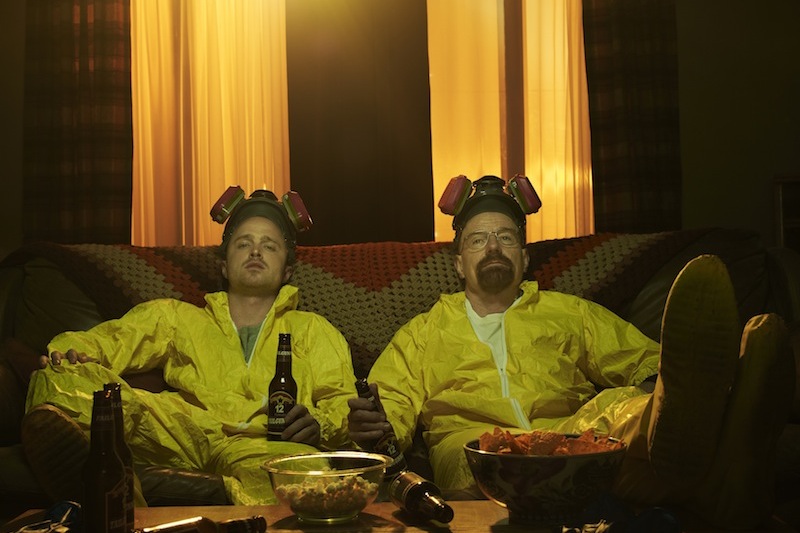
Jesse and Walt doing what they do

Part two of my notes on the first half of Season 5 of Breaking Bad.  Part one is here.  Moving forward.

After stating forcefully that he’s unwilling to sell his share of the methylamine even though the potential buyers have told them it’s all or nothing, Walt succeeds in doing nothing but pissing everybody off until he actually comes up with a solution that requires him to do the other thing he does best besides make math;.  His plan is dependent on him bringing his braggadocio to convince someone of something, in this case, convincing the drug dealers that he is the legendary Heisenberg.  What once was a lie, has now become the truth.  While Walter White is a helpless, cancer ridden science teacher, Heisenberg is a master chemist who killed drug dealer extraordinaire Gus Fring.  What started off as an idea, has become a reality.

Walt is incensed when Jesse won’t stay with him in his meth operation, and refuses to give him his share of the money, as he’s resentful of Jesse’s choice to abandon him.  Obviously, Walt is clearly in the wrong here, but it’s just another go around in the complicated father – son type of relationship Walt and Jesse have.  Walt, with Jesse, can be proud about himself in a way he can’t be with his own son, and Walt cares about what Jesse thinks; Jesse’s inability to rationalize the shooting of Drew Sharp is a shot directly across the bow of Walt’s ability to do so.  Even though it’s certainly in Jesse’s best interests to step away from more illegal activity, I think Walt really believes what he’s saying, that this is something Jesse does well, and that this will keep Jesse, who really didn’t have a lot going for him before Walt came around, from using.  The rush of being the best may not have the same appeal for everyone that it does for Walt, but for Walt, that’s what this is all about. In a perverse way, Jesse, like, Walt, was better at cooking meth than anything he had ever done before, and it’s unfortunate there’s no legal way for him to take advantage of that.

At the end of the second to last episode, Walt brings Mike’s go bag to him, and insists that Mike gives him the names of his guys in jail.  Mike, of course, won’t, and Walt, feeling helpness and out of control, clumsily shoots Mike.  It’s an obviously poor choice by Walt, reacting to his lack of control over the situation which Walt can’t deal with, and he realizes it afterwards, though that doesn’t do Mike much good.  Mike, without blaming the victim too much, could have gotten away with his life intact if he didn’t take it upon himself to ream out Walt for everything Walt did to screw up Gus’s operation.  We had a good thing going with Gus, Mike insisted, until you had to go and blow it up.  Of course Walt did not have a good thing going with Gus, at least towards the end when Gus wanted him dead, and it wasn’t actually Walt who screwed it up to begin with, which is hard to remember, but Jesse, when he decided to try to kill a couple of drug dealers who used kids.  Still, Mike just has to rub it in, and while that doesn’t make his death his own fault by any means, he should know Walt well enough by this point to know that he’s temping fate to say the least. Mike who’s so cool, calm, and collected for the vast majority of the series lets his emotions get the best of him here and it leads to his death.

I had forgotten just how much time passes in the final episode of the first half of the fifth season.  Walt enlists Todd’s uncle to kill all of Mike’s henchmen in prison at the same time.  Murder for hire is pretty vicious for certain, and it’s an incredibly brutal series of deaths, but any sympathy I feel for these henchman is nothing compared to what I feel for Drew Sharp, the boy killed by Todd in the desert.  After all, practically, Walt was right.  Without their hazard pay, several of these guys were going to talk, as we saw.  It was a cruel thing to do, but something Gus Fring or any other person in Walt’s boss of a drug operation situation would have agreed necessary to keep on.  Again, that doesn’t make it right or good, but it’s business rather than evil; these people didn’t deserve to die but they were hardly innocents.

Skyler shows Walt all the money that Walt’s acquired, which she’s placed in a storage locker, to point out that for all the money they have, they could never launder it all in a million years.  She’s right, but it’s unclear whether or not it matters to Walt.  Walt is only partly doing it for the money; he’s wants to do something he’s the best at and be the boss.  Still, maybe he sees a way back to his family here, an opening left by Skyler, and he decides, not unwisely, to take it.  Of course, if this was a different series that could be the end – Walt realizes he’s got more than he could ever need, decides to retire, and the family more or less goes back to normal.  In this show, though, at the same time they’re having dinner, as Walt’s retired, and Skyler seems for once to not despise Walt with ever fiber of her being, Hank comes upon a copy of Leaves of Grass in the bathroom, sees it inscribed to “W.W.,” similar to a copy of Leaves of Grass found at Gale’s apartment, and what the W.W. really stood for hits him.

I don’t particularly like the last scene for a couple of reasons.  First, I don’t think Walt would be so careless to leave a gift from Gale lying around in the bathroom.  Second, Hank’s a damn good cop – if he figures out Walt, I’d vastly prefer it to be from a positive act, rather than simply stumbling upon it.  Third, I hate the reminder after Hank sees the “W.W.” that reshows the scene where Hank is trying to figure out what W.W. means; we’re all obsessive Breaking Bad watchers, we either remember the earlier scene or can figure it out.

Every season, I talk about a couple of individual scenes that I adore outside of their context. This season it’s the first scene in Madrigal, where after watching a test of dressings (Franch clearly the best) a Madrigal executive locks himself into the bathroom and kills himself with a defibrillator.  Just beautiful; the clinical science lab, the sharp coloring, the bizarre suicide method. Additionally, I’ve also often said no show does montages better than Breaking Bad, and the final episode’s Crystal Blue Persuasion montage as Walt and Todd make meth is fantastic; it’s as if the show was waiting to use this song for five seasons just for this moment.

For every complaint I make, it’s worth stating that this is Breaking Bad we’re talking about.  Like Mad Men, it’s great, even when it’s not.  Even the weaker moments, are pretty brilliant, and even when I disagree with a choice, I know a ton of thinking and work went into every single decision.  No choice was made willy-nilly or just offhand, or just happened because no one thought about it.  I liked the fifth season more the second time I watched it. Although I’m not sure how the show’s going to end, nor how much impact the ending, for better or worse, will have on my opinion, Breaking Bad is currently one of my five favorite hour long shows of all time.

End of Season Report: Breaking Bad, Season 5 – Part 1

7 Aug

Hey! Bitch! Magnets!

Breaking Bad’s fourth season was a season long one-on-one battle between Walt and Gus, focusing on how Walt deals with utter desperation and ultimately prevails.  The first half of the fifth season is about what happens when Walt wins, and there’s no single enemy to pit himself against.

The season begins with a flash forward to Walt’s 52nd birthday, where he’s eating at a diner under a different name. He purchases a serious weapon from the weapons dealer (played by Jim Beaver) from whom he purchased his gun way back in the second episode of the fourth season.  I don’t often like flash forwards, because I think they usually give away more than they add, and I don’t particularly like this one, but I don’t hate it as much I do some others because it doesn’t either give away far too much or seem like a tease.  Too many flash forwards are gimmicks to make you think one thing is happening, only to show you that you were misled, and this at least doesn’t seem like it exists simply to generate cheap suspense.

Breaking Bad has done a good job of introducing and building a couple of new characters each season, and If season 4 was about expanding the character of Gus, season 5 expands the character of Mike.  Mike despises Walt, seeing all too clearly the traits that are likely to bring about Walt’s downfall; the ego, the arrogance, and the need to be noticed.  Jesse is blinded by his viewing of Walt as a father figure, but Mike isn’t.  Mike wants to kill Walt, threatening to do so in the first episode of the fifth season, and would certainly not want to work with Walt ever again, but the writers know a winning character when they see one, so they not unwisely figure out a way to keep Mike in the show.  The writers find two reasons for Walt to stick around. First, because it’s also in Mike’s interest to figure out a way to destroy Gus’s hard drive, and second, because, in a slight Deus a Mike-ina, he realizes he needs to money to keep Gus’s employees from talking as they’re slowly rounded up and arrested, as the money originally set aside for them is taken by the DEA.  Breaking Bad has excelled throughout its runs in finding ways for certain plot points to happen without making them feel forced, and although we knew nothing about the payoffs Mike was making before this season, the reasoning fits in with all the background information we know.

Mike’s level head continues to provide a contrast to Walt’s fiery ego throughout the season as Mike is reluctantly forced to work with Walt. Naturally, this leads to conflict between Mike and Walt; Walt, as greedy as ever, doesn’t anticipate the extent of the payments coming out of their operation to compensate Mike’s guys and isn’t happy about it.  Walt, the smartest guy in the room, just can’t get it through his thick head how this helps all of them, and as socially stupid as ever, can’t seem to understand the benefit of having a harmonious working relationship at the cost of even a single dollar that’s his.

This is the most caper-happy season, with capers like the magnet ploy of the first episode (obligatory shout out to possibly the best line in Breaking Bad’s history – “Yeah! Bitch! Magnets!”) along with the train robbery, the idea of cooking in the fumigated houses, and to some extent, Walt’s final episode plan to knock off every one of Mike’s guys in prison at the same time.  The train robbery is clearly the capery-ist of these, and while the episode is shot beautifully as always, it seemed a little out of place in Breaking Bad.  They accomplish some incredible feats, and the magnet play fits in line with those, but the train robbery seems one level too far.

Lydia is the new character of the season the way Gus was in the third season and Mike is in the fourth season, though she’s not nearly as interesting as either of those two characters yet, at least.  I wonder if the writers will invest Lydia with more development in the second half of the season, or not want to waste that limited time on her, and merely keep her presence to a minimum.  She seems to serve merely as someone to move the plot along, as she has the list of names of Mike’s guys, she helps Walt and company obtain methylamine, and she spots the barrel that leads the crew to find out the cops are onto them.

My biggest single problem with this season is that Skyler changes her behavior on a dime with no real precedent.  She’s now suicidal and terrified of Walt, and while some of this behavior is justified; I feel like it comes out of nowhere. This is the woman who was okay with lying to the IRS, threatening Ted, and had made her peace, even if unhappily, to launder Walt’s drug money.   It’s not as if it in inherently bothers me even that someone would react that way as much as it does not seem true to character from the Skyler we’ve seen in previous seasons. Utter resignation was never an emotion I got from Skyler, and I couldn’t understand what changed between the end of the fourth season and the beginning of the fifth season that caused her to shift that dramatically.

Train robbery episode Dead Freight presents one of the few instances in which I think Breaking Bad takes a cop out that feels a little bit cheap.  When the little kid sees Walt and Jesse during the train robbery, Todd shoots him before any other member of the crew can issue any instruction.  I think it would have been more difficult and more interesting if Jesse, Mike, and Walt had to figure it out or if one of them had decided to act, but we don’t really know Todd, so his decision has less impact emotionally than Walt, Mike, or Jesse shooting the boy.

With the DEA getting closer, Mike decides things are too hot to continue and Jesse agrees.  Both of them want out, especially when Mike finds someone who will buy the methylamine off them for 5 million each.  Walt, though, wants to continue.  Walt has nothing else in his life at this point.  His wife hates him, as Jesse sees when he stays over Walt’s house for the most awkward dinner of all time, and Skyler does her best to keep his children away from him. Making meth is something he does better than anyone else and he’s finally in the catbird seat after doing it for other scary people.  If he gives this up, he has nothing.  There’s no assurances he’ll ever get his family back at this point.

More notes on the first half of season five coming up on part 2!