Archive | End of Season Report RSS feed for this section

End of Season Report: Orphan Black – Season 2

30 Jun

Several of the Orphans Black

Orphan Black may never be a canonically great show, whatever that means, but it’s a very good show an perhaps more importantly, a very enjoyable show. Orphan Black succeeds so well at this because it smartly decides consciously or not, to be a five tool player, being pretty good at a number of different aspects, rather than throwing all of its proverbial TV eggs in one basket and trying to be great at just one thing. Let me explain.

Orphan Black is serious, but it’s also funny. There’s plenty of action, and there’s also science fiction. The plot is important, but so is the characterization and the relationships. Now, partly this may sound somewhat prosaic – any very good show should be pretty solid at several of these characteristics. First, that’s not really case, and second, Orphan Black spreads the wealth better than most.

Just the sense of humor alone is incredibly important. Orphan Black is funny, and more than funny it’s silly, which helps deflate what could be a sense of self-importance from the clone plot which doesn’t always make the most amount of sense. Many solid but not transcendent shows have no sense of humor whatsoever – Homeland, Boardwalk Empire, and The Walking Dead among them. While it’s not impossible to pull off, it’s difficult to be great with that level of drudgery. In fact, the very best shows, which probably could have skated by without any humor, like Mad Men, The Wire, The Sopranos, and Breaking Bad, instead, can be very funny at times.

A show like House of Cards has no sense of humor and rests on its plot, which doesn’t make any sense, hurting the show’s value. Orphan Black’s plot, like House of Cards’ connects the show episode to episode and drives it forward. Yet, because the show is funny, because it seems to buy in on its own sense of camp, the shows replay value is much higher.

The most responsibility for humor in Orphan Black sits on Alison’s shoulders. He plots are hilarious, from her play, to her rehab, to her relationship with poor Donnie, who goes from sinister schmuck to merely pathetic schmuck to empowered schmuck in a heartbeat.

Ophan Black does has a somewhat stupid plot that doesn’t necessarily and can’t really make sense if one thinks too much about it. It also has the very dangerous season to season expanding the scope problem that sci fi and supernatural shows tend to face. Basically, if Dyad is responsible for the clones, now there has to be someone above Dyad, or what else is the show going to be about for the next season. There need to keep being new, bigger, reveals, or it’ll feel like the show has already peaked. Scenes like those involving Krya’s dad typing into the darknet, whatever that is, well, I have no idea what he’s talking about, but luckily I really don’t care. None of this matters so much because the show is enjoyable on its face, regardless of actually untangling the details behind the creation of the clones.

This isn’t just due to humor. The relationships are powerful, between the clones, particularly. Like Buffy the Vampire Slayer, Orphan Black uses sci-fi/fantasy as ways to get at powerful human bonds.

Some of the side characters are stupid, and most of them are bland. It’s pretty much Tatiana Maslany’s show, with a nod to the consistently excellent Jordan Gavaris as Felix, by far the best and most important supporting player.

I don’t have much more to say about Maslany other than the consistent heaping of praise I try to hand out on any occasion I can, and she takes on even more characters this year. She’s wonderful and one of the main engines that makes the show go – if the opening credit sequence was honest, her name would appear five times. If the show does have have an X factor, it’s her, and that would be enough to make the show worth watching even if it were less enjoyable overall.

Orphan Black has it all; it’s got action, it’s got laughs, it’s got strong characters (albeit most of those characters are played by the same actress, but still). It will never be the best at any one of these; it will never have the taut plotting of Breaking Bad or the first season of Homeland, the character bonds of Six Feet Under, the action of 24. But by smartly throwing it all together, with more than a touch of Maslany’s magic, it gets the benefit of having a little bit of everything, and that makes it, while never the best show on TV, a consistently compelling view; you may not get it all in any given episode, but you’re bound to get something good.

End of Season Report: Hannibal, Season 2

26 May

Hannibal and friends

Holy fucking shit. I thought the ending of the first season was about as bleak as any season of any show on TV, let alone a network show. The second season may have topped, or bottomed, that. There are four characters credited in the show’s opening sequence. Three of them ended the second season lying on the ground, bleeding to death (It’s worth taking a second to note that the only other character to appear in Hannibal’s opening credits, Beverly, was killed by Hannibal halfway through the second season). While none of them were clearly dead, any or all could be; if this ended up being the series finale instead of merely a season finale, it would have all but locked up the title of darkest series finale of all time.

Through all this desolation, horror, and gore, Hannibal put together an extremely strong season, superior to its first season, and generally more purposeful, though with a couple of bumps along the way. Week to week, I couldn’t wait for Hannibal to see what happened next, and that anticipation is only reserved for my very favorite shows. When people ask me what shows they don’t watch that they should be, and I assume they’re watching standards like Mad Men, and Game of Thrones, Hannibal is one of my go to recommendations.

The season was largely broken up into two halves. The first involved Will’s incarceration in a mental asylum where he was assumed to be the Chesapeake Ripper, and ended with his exoneration and the framing of Frederick Chilton as the ripper. The second half involved the story of Margot and Mason Verger, and their various interactions with Will and Hannibal, as well as a plot by Jack Crawford and Will to lure Hannibal out and trap him.

Both halves worked very well individually but the show felt a little bit disjointed moving from the first to the second; it felt as if the halves were two individual seasons. This isn’t much of a problem, but the Margot and Mason introductions felt abrupt rather than smooth, and this just meant it probably took me a little bit longer to get on board with.

I’m glad I did though, by the second episode, because both Margot and Mason were played by extremely strong actors, expanding the cast of fantastic acting talent, which along with the gorgeous cinematography are the two most standout aspects of Hannibal. Hannibal continued to be as disturbing as ever if not more so, graphic violence-wise, than any show on TV, and this was highlighted in the season’s penultimate episode when Mason fed his own face to Will’s dogs and ate his own nose. The events are every bit as gruesome as that sentence sounds, and it’s remarkable that the other gore on the show rarely feels over the top. In fact, the beauty of the cinematography makes some of the most gruesome tableaus assembled by Hannibal  out of his victors look disturbingly mesmerizing, and in sharp contract to how base and simply disgusting Mason’s self-harming act looks.

Show runner Bryan Fuller does a great job picking and choosing how to deploy the tools of Hannibal’s literary and cinematic universe. There’s a lot of tough choices to make when working with an existing property, particularly one that everyone knows as well as Hannibal’s and he’s very smart in choosing when to add entirely new characters, when to use existing characters to be something other than how Thomas Harris or movie adaptations used them, and when to stick closer to the letter of the books.

Mads Mikelson plays Hannibal as a seductive sociopathic genius, semisatanic but just human enough to add empathy and add a layer of depth to a character that could merely be pure evil. He exposes his most (and maybe only) humanity when dealing with Will Graham, who he appears to actually treat as the potential compatriot, rare in Hannibal’s world of clinical ubermench-like serial killing. That small bit of humanity makes Hannibal that much more engaging a character; at some level this sadistic and brilliant mass murderer is just looking for a friend. Mikelson manages to fuse the appeal of a terrifying force beyond good and evil with a needy middle schooler who is unhappy when he doesn’t get what he wants (Will’s friendship and trust, namely)

Even more fascinating to me is Will’s back and forth mental state, not fully seduced by Hannibal, but not immune to his charms either. Will stands strong in the end, sticking to the plan. However, he’s not all in the good. He goes farther than he has to for the trap him and Jack had set, and frequently mimics Hannibal, particularly in respect to Mason Verger, when he could well possibly have pulled back and kept the plan in check. His decision to keep some of this from Jack shows that he knows it’s wrong, but the power of Hannibal, while not enough to win him over in the end, tugs at him.  This ambiguity filling the relationship between Will and is beautiful. It’s impossible to tell who is leading who, and who believes what. The knots Hannibal and Will talk themselves into are sometimes rhetorical nonsense but lyrically enchanting at the same time.

Then there’s that last episode again. We knew some of the events of the last episode from the very first episode of the season, which opened with the flash forward of Jack and Hannibal fighting. It’s probably going to take me some time, and maybe even until the first episode of the third season to decide what I felt about it overall. It’s brutal. I like the idea of Hannibal getting away, and I like the idea of it being with Dr. Du Maurier, a side character who has recurred just enough for us to keep her in mind and whose return was quite welcome. Abigail is back for just long enough to wonder exactly what Hannibal has done to her right before Hannibal kills her, seemingly an act of revenge for Will’s betrayal. I’m fairly confident Abigail is dead, and feel like at least one of Jack, Alana, and Will will be dead as well, and most likely not Will. The events almost seemed surreal (and the Baltimore police sure seemed to take their sweet time) and I momentarily thought the entire sequence might be a dream or a hallucination. For sheer shock value, it’s hard to beat, and the events certainly turn the entire series on its head again going forward. Hannibal is certainly not afraid to shake up the status quo and that’s commendable.

Regardless of whether I fully come around on the finale, or am just satisfied but confused and baffled at the same time, Hannibal’s second season is superior television. The show has been elevated into must-watch territory, and is likely, unless a barrage of great programming invades the second half of the year, to move up in next year’s yearly rankings.


End of Season Report: The Mindy Project, Season 2

9 May

Mindy and friends

Overall, the second season of The Mindy Project was a success. The Mindy Project continues to get better season to season, and it has a fresh and new sense of humor that’s influenced by shows like The Office (where series star Mindy Kaling of course previously worked) and 30 Rock while having a voice all its own.

The major problems that tThe Mindy Project has and has had since the beginning are pretty much universally agreed upon both in everything I’ve ever read about the show and with every viewer I’ve talked to in person. Mindy’s character is fleshed out, three dimensional, and great. Chris Messina’s Danny is also a well-built full-fledged character and fantastic. Ike Barinholtz’s Morgan is a not nearly as complex, but is a perfect humorous side character to lead funny but less character-building  B plots. Outside of that trio, though, every other character just doesn’t click, and while this may sound like I’m simply repeating the problems the show had after the first season, it’s no less true now.

Actually, that’s not entire true. It’s slightly less true now. While Adam Pally’s character Peter Prentice seemed like an out-of-nowhere poorly fitting character when he was shoehorned in because TV unions promised to get the very talented cast of Happy Endings new jobs as soon as possible, he’s slowly emerged over the course of the season as a character who could actually be welcome in this universe. His frat-boy edges have been softened enough to actually feel for him somewhat, and his repartee with Mindy has sharpened. With her moving into full romance mode with Danny, Pally has emerged as a solid replacement as Mindy’s sounding board. He’s still not all the way there, but while I thought the show should not keep him around long term when he first appeared, I now think there could be a place for him.

As for everyone else, not so much. Characters have come and gone, welcomed into the fold and the discarded, more so than any program I can remember. Stephen Tobolowsky was the first, credited in the pilot, but gone thereafter (fair enough; many shows have pilot only character, but it was the start of a trend). Anna Camp as Mindy’s best friend Gwen Grandy fit the workplace vibe and was dropped. Shaunaa, the jersey girl administrative assistant was dropped soon afterwards. Jeremy, the other doctor in their practice, has made it through both seasons so far but hasn’t really found a place for himself and I would forget he ever existed if the show dropped him tomorrow (Mark Brandanowitz from Parks & Recreation style). Likewise, Betsy, who is actually slated to leave the show, old Beverly, and Tamra. A couple of these characters would be fine for background humor, given one or two lines an episode, something The Office mastered, carefully parceling out the use of one dimensional characters like Creed and Kevin. As anything more though, these characters are stretched beyond usefulness.  Mark DuPlass’s dastardly midwife (along with his more reserved brother) is better as a recurring character than any of these secondary characters.

That’s part of a trend as well. The recurring boyfriends Mindy has have been consistently excellent, and her and Danny getting together have made me despair for their absence. The show has been unafraid to have guys appear in solid multiple episode arcs, and the show is richer for that, as the boyfriends are often among the better characters in the show. Four or five episodes can be a perfect amount of time to build a character so that we care about him or her and wring all the comedy out without feeling stretched.  It’s to The Mindy Project’s credit that they’ve hit home runs with some of the choices.

The core is strong; Mindy does a great job of playing with rom com tropes, and particularly making stereotypically sexy scenes seem as silly and ridiculous as they should; her attempt to have airplane sex with Danny was a classic example of Mindy humor. The humor is a brand all her own and the show is very funny frequently. Mindy is a strong female character, but she’s a very different strong female character than her closest antecedent Liz Lemon. TV needs more strong female characters who are not necessarily just like any other existing strong female character and Mindy is a welcome addition to that growing group. The Mindy Project can do pathos as well, and its easy for viewers to connect with Mindy even through all of her (and Danny’s) ridiculous positions.

The core makes me return to Mindy, and it’s the most important part of what makes a show a success. It’s a lot better to have a strong core and struggle around the edges than the reverse. That is The Mindy Project’s problem though. It needs to fix those edges.  Comedies should get time to get the details right, and I can’t think of a great comedy that had the entire product together by day one – while dramas frequently peak with their debut seasons, comedies almost never do. Still, it’s two seasons in, and Mindy appears only marginally closer to figuring that out. Because the core is strong, I’ll follow it as long as it goes, even if it never solves the problems around the periphery. If it does though, it has a chance to go from a very funny show, to a truly canonical comedy, and with the strong writing, that’s a leap that I would greatly enjoy seeing it make.

End of Season Report: Brooklyn Nine-Nine, Season 1

2 Apr

The team at the nine-nine


The bounds of genres are constantly blurring these days and not everything which broadly fits in the box labeled “comedy” has the same exact aims, which make these shows harder to compare against one another than ever before. If a comedy is laugh-out-loud funny, then it’s succeeded regardless of anything else. Some comedies, however, may be less funny, but have captivating characters or plots, and those are also worth watching regardless of anything else. It’s Always Sunny in Philadelphia is at its best hilarious; it doesn’t attempt character development or serial plots and that’s okay. Girls isn’t as funny but it focuses on character and fascinating themes and that’s good too. Shows like Parks and Recreation meet somewhere in the middle. Parks and Recreation has probably been my favorite comedy of the past few years, but that’s not to say that a funnier show that’s lighter on characterization or vice versa couldn’t ascend to the top spot if it’s simply that good at what it does well. In fact, my favorite two comedies this past year were Eagleheart which is hyper-absurd and hilarious but takes place in a world without any sort of consistent characterization, and Enlightened, whose status as a comedy mostly boils down to the fact that it’s a half hour; it’s more depressing than most of the serious drama series currently airing.

That’s not specifically relevant to Brooklyn Nine-Nine more than any other new comedy, but these thoughts were consuming my headspace as I considered Brooklyn Nine-Nine’s first season, its progression, and expectations for future seasons.

Brooklyn Nine-Nine is the best new comedy of the season. It’s funny right off the bat. Brooklyn Nine-Nine’s closest analogue is Parks and Recreation, which is no coincidence as it’s created by Parks and Recreation veterans Dan Goor and Michael Schur. The episodes have been relatively consistent from the start, certainly by new comedy standards, and some of the characters that I didn’t love early on I’ve warmed to over the course of the season (Rosa and Gina in particular).

Goor and Schur have managed to tap Andy Samberg’s manic energy and apply a solid dose of restraint which smartly keeps his character from being over the top. One of the lessons learned from the creators’ experience was to follow the Leslie Knope rather than the Michael Scott model – Samberg’s Jake Peralta may be an immature doofus but he’s relentlessly competent at his job.  This core competency allows his other silly qualities to serve as distractions and potential detriments, while the viewer is able to understand why those around him put up with him.

Certainly the characters aren’t fully formed but that’s okay. Everybody started out with a type – Jake is immature, Rosa stoic and scary, Amy a by-the-book go-getter, Charles, a klutz, Captain Holt, dry and indecipherable, Terry, strong but gentle, and Gina just a total weirdo. The show worked its way from there, feeling around, mixing and matching characters, which is what most good comedies do, allowing actors and characters to find their strengths. There’s still some work to be done on the character development front, but the progress is there – the characters feel much more like people than they did at the start of the season. Charles, for example, soon became the resident foodie; while this hobby was mined for laughs, the point was also made that Charles actually did have great taste, and it gave him a positive quality to stand on rather than simply always serving as a lackey to Jake. Likewise, Gina, while definitely still the cast weirdo (we haven’t mentioned Hitchcock and Scully, Brooklyn Nine-Nine’s two headed answer to Parks and Recreation’s Jerry, but they’re not really fully-fledged characters in this sense) got her chance to shine when she showed she knew how to pick the best computer expert for the district to hire.

Two major plot points over the course of the season are worth discussing. First, the writers chose to go in the direction of potential romance between Jake and Amy. That’s fine, but all things being even I’d have preferred they didn’t. As I’ve trumpeted many times before, one of my favorite aspects of 30 Rock was the fact that its primary two characters were iron-clad platonic friends, and there aren’t enough comedies that follow that model. It won’t seriously affect my enjoyment of the show, and who knows, I’ll probably be rooting for the two of them to get together eventually. Still, I’d like to at least once for the record put down my small objection to this choice.

The second is, and I think and hope they’ve gone away from this for good, Charles’ unrequited crush on Rosa. This is putting it mildly; if it was just an unrequited crush, it’d be fine at least for a while, but it felt dangerously creepy and it made me uncomfortable watching a show that otherwise is not in for particularly awkward comedy. Fortunately, Charles found a love interest halfway through the season, and although she’s no longer part of the show, I hope that the creators learned a lesson. I wonder if the writers were thinking this exactly when they placed a fake out in the season finale – Charles wakes up next to someone after a drunken night getting over his breakup, and while I was terrified it was Rosa, it was rather Gina, which should lead to funnier and less relatively uncomfortable circumstances.

Within a few episodes, my friends and I were quoting memorable lines from the show, and in my circle, quotation is an important currency for a comedy. While it’s not a one-to-one relationship, if a show gets quoted a lot, it’s probably high up in the collective comedy rankings. Sample recurring Brooklyn Nine-Nine quotes include everything about Charles’ pizza blog and Terry’s forgetting how to breathe.

I’m very happy with the show’s first season, but it is a first season, and f it continues to grow, Brooklyn Nine-Nine could be the new Parks & Recreation by the time that Parks & Recreation (I hate to admit it, but it can’t last forever) is off the air. Those are big shoes to fill, but a season’s worth of Brooklyn Nine-Nine has me hopeful that this show has that in it.

End of Season Report: Downton Abbey, Season 4

19 Mar

Downton's upstairs folk

Downton Abbey has somewhat struggled as it has aged, desperately trying to come up with a whole bunch of new compelling plotlines each season, and finding the well a little dryer each time. This report comes a little bit after the season ended here in the U.S., and it’s not because I needed time to compose my thoughts, but because it took me a while to get through the season, which has become a big of a slog. The characters feel like they’re repeating patterns and the show no longer feels as engaging as it did when it first aired. It’s hard to keep a show interesting over the years, but that doesn’t mean it’s not worth remarking on. There are a couple of plotlines that I’ll address one by one, and then follow that with a couple of overall season comments.

First, the most talked about plotline of the season, Anna’s rape and the ensuing consequences. I’m not the first to say it, but this arc was deeply flawed and it didn’t work for me at all, with the exception of Anna’s anguish, portrayed by Joanne Froggatt, who consistently does a very good job. The main problem is that instead of being about Anna, the plot ends up really being about Bates – how will he react, how will he view Anna. Bates is one of my absolute least favorite characters on the show. I’m not sure whether we’re supposed to think of Bates as a stoic loyal gentleman, but to me he comes off as an broody emo, anti-social, anti-fun character, and the only thing worse than the fact that Anna has to worry about whether Bates would kill the man who raped her if he found out is the fact that she was totally right to worry. Is that the kind of man anyone would want to spend the rest of their life with? One who doesn’t actually care what his wife’s opinion is on the matter, but just does it because it fits his own personal code of justice. Obviously it’s tragic to see the rapist go unpunished; I don’t think anyone thinks that is the ideal state of affairs. Still, it’s not Bates’ call to decide what the punishment will be, and act as judge, jury, and executioner. It would be one thing if he called upon extralegal means with Anna’s assent, but without it, he doesn’t have a leg to stand on (Mr. Bates’ cripple pun unintentional).

Can we also spend a second to talk about how in the world Bates didn’t throw out his train ticket to London after MONTHS? There’s just no good answer to this, other than Downton wanted the characters to figure it out, so I’m not even going to attempt to address it because it’s so obviously ridiculous.

The Alfred-Daisy-Ivy-James love quadrangle (one could say rectangle, but I won’t) has gotten stale, and I’m glad it’s finally broken up by the end of the season, particularly by Alfred, one of my favorite characters, moving up in the world to chef.  Some things just remain the same too long. We get it, Daisy likes Alfred, Ivy likes James, James and Alfred both like Ivy, but James is a bit of a cad. It’s fine that this exists – to expect otherwise is to not understand what kind of show Downton Abbey is – but to just go over it again and again is tiresome.

Why is Thomas still working at Downton? Can someone please explain this to me? Nobody likes him. He’s always obviously scheming and by now it’s not like anybody doesn’t know about it. They admittedly mostly toned him down but still remind us every once in a while that he’s mostly just kind of an asshole. His trying to constantly pump the new lady’s maid for information throughout the entire season was largely uninteresting.

Poor Edith just can’t catch a fucking break.  Edith is one of the few character I’ve actually grown to like more over the course of Downton, and it’s almost cruel at this point how misfortune just seems to follow her around. She actually finds someone who cares about her, and he knocks her up and then disappears off the face of the Earth in Germany. Oh, and Mary is still constantly mean to her. This is less a straight criticism of the show as much as just a commentary on how much I’m rooting for Edith, which would have shocked watching-first-season me.

The arc dealing with Rose and her black bandleader boyfriend, Jack, didn’t really work for me.  I do appreciate the effort to diversify the cast, but I think Downton would probably have been better off not even attempting a meaningful commentary on race as a show that’s by its nature poorly equipped to do so.  Downton simply wouldn’t have been diverse at that time period, so it would have been realistic to see nothing by white people everywhere these characters went.  The story wrapped up too neatly, and it felt like a story rooted in modern attitudes tweaked for the times rather than an honest portrayal of what would have happened if this situation occurred at this time in real life (though I’m not a historical expert, so I certainly can’t say for sure).

Mary is back to choosing between suitors. Not that I don’t think Mary can’t be charming or don’t like Michelle Dockery, but it sometimes seems a bit much how every single man of eligible age seems to melt directly at the sight of Lady Mary. Again, it’s not that I can’t believe it would happen, but it just seems to happen every single time.  One of the two prime potential suitors dislikes Mary, spends one night in which she shows her mettle by getting down and dirty with the pigs, and is henceforth in complete and utter love with her. The series was so invested in the Matthew – Mary coupling that it’s hard to get reinvested in one of these new suitors for Mary that we don’t know nearly as well as Matthew.

The Lady Crawley – Dowager Countess tet a tet continues to give us the best parts of the series. Penelope Wilton and Maggie Smith are both jewels and are delightful as the old liberal and old conservative, a classic combination.

As for everything else? It just feels like the series is running in place. It’s not bad, really. Bad is too harsh. Downton, as I’ve said before, is a soap, masquerading occasionally as a serious drama of some historical importance, but that’s really nothing more than a facade. A fascinating façade, and one that draws some of the interest in the show, But a façade still. A soap needs new blood. The show needs fresh storylines and new likable characters and I’m not sure Downton can deliver that anymore.

End of Season Report: True Detective

10 Mar

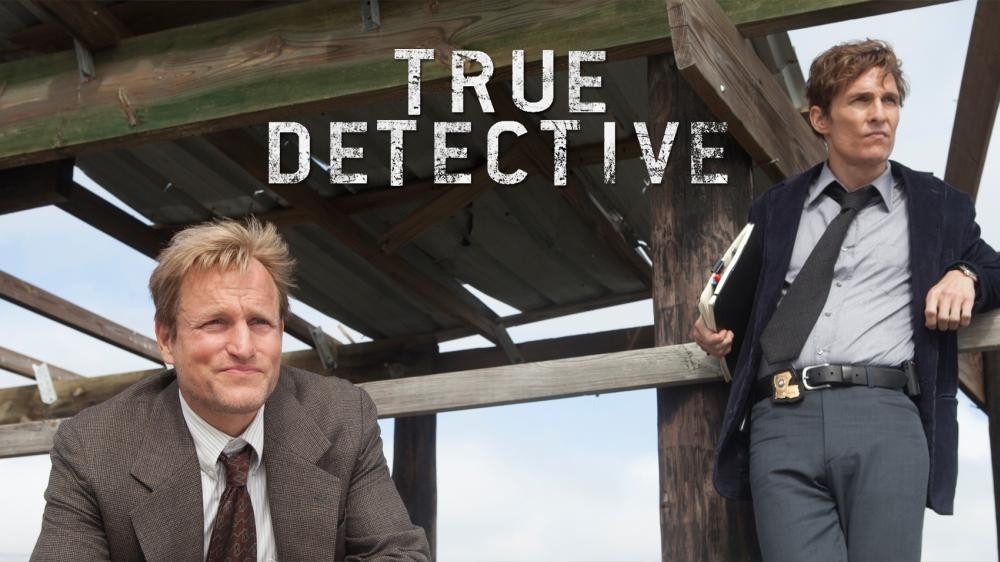
True Detective

While it took some people until the already legendary six-minute one shot that ended episode four to get on the True Detective bandwagon, I was more or less on board from day one. I loved what the show focused on right in that first couple of episodes. Some found these episodes slow before things really picked up, but I found them deliberately paced, but enthralling. It’s because the show came back around in its finale to focusing on what I liked about it its first couple of episodes, before I knew to look up the conspiracies and the yellow king and so forth that I liked the ending. Perhaps the best way to start talking about True Detective is to say that I’ve never seen a murder mystery show where the murder mystery mattered less than in True Detective, and I mean that in a purely positive way.

If you’ve read interviews with True Detective creator and writer Nic Pizzolatto, you know that he’s assured viewers throughout that the show isn’t out to fool anyone; he has a healthy distaste for M. Night Shyamalan-style twists and reveals that seem to overshadow the majority of the work and make the viewer feel jerked around. In attempting to keep the show grounded and real, he may have, however, inadvertently jerked viewers around, due to the expectations modern TV viewers have. Pizzolatto’s outlook, which I found refreshing, is the exception rather than the norm, and 21st century TV and movie viewers we’re trained to be obsessive and expect dramatic twists and changes of pace. If you didn’t know better, you might have expected True Detective, with its layers of references to Carcosa and the Yellow King, and religious iconography, to veer if not full out into Lost-like supernatural, then at least to a full-blown cult or deep within a conspiracy that goes all-the-way-to-the-top. None of these were the case, though I don’t think the references and imagery was put in to fool anyway; it was merely part of a rich tapestry of themes and symbols that can exist without having the weight of a much bigger, more epic plot behind it; something that I don’t think would seem so shocking if we didn’t have the weight of expectation that other epic shows have trained us with (take the disastrous ending of The Killing – it wasn’t the potentially somewhat straight forward ending the first season could have led to – it was a much more complicated conspiracy we had to watch a season more and be jerked around with to get to).

So if the show fooled you with its obsessions, and if you had different expectations, maybe you felt jerked around by the relatively anticlimactic nature of the conclusion. While I’m sorry that you had that impression, it’s somewhat understandable that you did, and if you did, well disappointment with the ending was equally understandable.

Fortunately, though, as I mentioned above, that’s not how I viewed the show. Don’t get me wrong; I loved all the obsessive angles of the show – pondering about the meaning behind Carcosa and the Yellow King, but that’s just an aspect of the greater mood. Dark, eerie, ominous, rural Louisiana in Marty Hart and Rust Cohle’s world was a dark, run down, and dangerous place where the bad often outran the good.  What the show was at its heart, though was the story of two partners, of two men.

Yes, this show, as director Cary Fukunaga pointed out, doesn’t pass the Bechdel test. Its depiction of women was not particularly complex, and sure that’s a shame. But True Detective only had eight episodes to work with that’s simply not what True Detective was about. Not everything can be about everything. True Detective is about the relationship between Woody Harrelson’s Mary Hart and Matthew McConaughey’s Rust Cohle. They may not be Owen Wilson and Vince Vaughn, but don’t be fooled: This is a bromance.

Break through the clutter ,and it’s the story about two men from opposite sides of the tracks. Rust is an intellectual, nihilism-inpsired cop, who believes that the human race is going to hell in a handbasket. There’s no hope for anyone, he surmises. Marty, on the other hand, is a relativist; he plays by his own rules, or tries to, his own rules which dictate that him sleeping around is the best thing for his family, because he needs to takes care of his dark impulses before coming home to hang out in a wholesome fashion with his daughters and wife. These points of view should be diametrically opposed, and they are, but the two men meet cute, find common ground and drift apart, only to come back together again after ten years without speaking.

There’s lots more reasons to love the show. The cinematography are direction are top notch and among, if not the best of TV. The one-shot from the end of season four is rightfully renowned, and the beautiful vistas of coastal Louisiana give the show a distinctive sense of place. I can count off memorable shots with ease; the terrifying, jock-strap wearing and gas-masked Reggie LeDoux from far away that ended the third episode, for example, or the baroque and angelically lit shot of Rust Cohle holding up a devil net in the school to end the fifth episode (the show has a lot of memorable episode ending shots).  There’s the fantastic choice of palate which contrasts the sharp present day with the blurrier past.

But again, that’s not the heart of the show, without which True Detective wouldn’t be what it was. The show ends the way it has to – or at least with the people it has to  – Marty, and Rust, together again – and that pairing is why we’re watching. Because in eight hours, we can’t know everything but we do get to know these characters and we grow to love them. They desperately both try to be good men, even Cohle, who claims otherwise. They don’t always succeed, and we certainly don’t have to feel bad for them; that’s the not the point. They’re not asking our sympathy. But they both try to do one good thing for they legacy, something that at least partially compensates for their failures if nothing else and that’s worth celebrating. Marty realizes why he lost his family; he stopped begging, and he’s right that he didn’t deserve them – but he tries – he tries in the only way he knows how. There’s a nobility to their pursuit, and something notable in that it takes the combined efforts of both Cohle and Hart to actually catch their killer. Maybe there’s something cheesy about an ending in which Cohle, relentlessly negative Cohle, actually sees a small sliver of light at the end of the tunnel, but to me that pleasant sentiment is well-earned – even someone as utterly heartless as myself occasionally enjoys a happy ending.

True Detective celebrates the ethereal, the philosophical higher plane, but it also celebrates the ground floor, the people and their earth-based, contentious relationships. The cult, the ritual, are what generation forum discussions, and with good reason: they’re a meaningful part of what True Detective is about. But if you just want that, you’re missing the point – this isn’t Lost. There’s no higher level questions that absolutely need to be solved to avoid a let down aside from who did some of the killings we’ve seen; this is eight episodes, not five seasons.

Rust Colhle and Marty Hart, two brilliantly developed, written, and acted characters developed over the course of eight episodes, I wouldn’t ask for anything more.

End of Season Report: The Returned

28 Feb

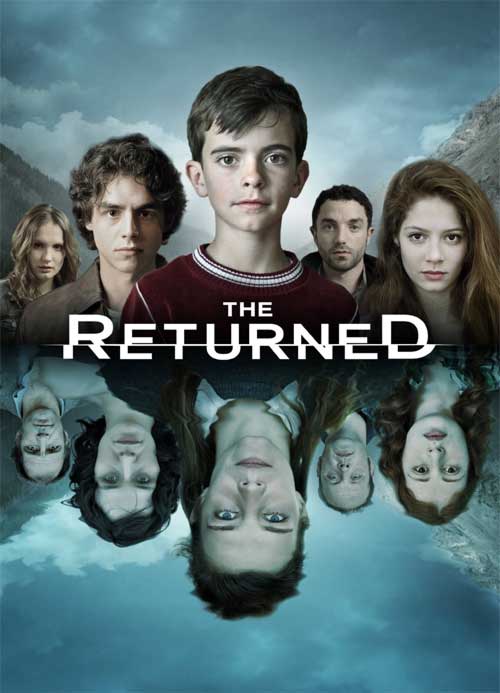
The Returned

I’m about to say something I don’t say particularly often about a season of television.  I don’t think I’ve ever seen anything remotely like the first season of The Returned. Different aspects of the show do resemble other pieces of culture, but all put together, I can’t put a finger on anything that similar. It took me several episodes before I could even attempt at all to pin down the show’s mood and genre – it was a horror show, then it wasn’t, then it was, then it wasn’t, until, well, very clearly at the end it was.

That being said, I’m not sure how much of a boon its level of uniqueness was, and how much of it was a show that couldn’t decide what it wanted to be, and maybe lost something because of it. I do like the show, and I do think there’s a lot worth watching for, and especially in the first few episodes, I started to really want to dig further and further into the world.

However, as the show went further on, I wasn’t sure whether I liked the direction it was going in – I liked some decisions, not as much others. The final episode that put me back as unsure of how much I like the show as I was after the first episode, as the events of that episode totally reset the calculus for what to expect going forward. The first season finale could be a completely mysterious stand alone ending, but as there seems to be a second season, I have absolutely no idea where exactly this show is going.

Let’s take a step back. The Returned is about a small French town in which dead locals start coming back to life. The primary “returned’ we see are Camille, a teenager who died in a bus crash, Simon, a depressed man who killed himself on his wedding day, Victor, a little boy, and Serge, a serial killer, who was buried alive by his brother after the brother found out what Serge did.

The four come back, and reengage with their former families with varied results. A lot has changed since each of them has gone, and there’s a lot of old wounds reopened. It’s equally difficult for both the returned and those who remained alive the entire time;. It’s certainly not the fault of the the returned that they’re coming back, and that they’re made to feel like they’re now screwing up everybody’s lives which have finally moved past their tragic deaths seems overly cruel. At the same time, the return is difficult to grapple with for the living. On top of simply making peace with the supernatural angle and lack of science behind the dead returning, the living are afraid to get too close, because they don’t know what’s going on or how long it will last. In the case of Simon, his ex-fiance only learns for the first time that he killed himself, changing the entire way she views his death, which she had thought of merely as an awful tragedy rather than him leaving her in the lurch. In Serge’s case, his brother Toni feels horrible for killing him, even knowing what he’d done, and views his return as some sort of payback/chance to make amends.

On top of this emotional reconnection and family drama, there’s plenty psychological trauma, which is tense and thriller-esque but not necessarily straight out horror. Camille tells parents whose children died as part of the same crash that their children are well and looking forward to seeing them in the afterlife, which leads two of the parents to hang themselves, hoping to reunite with their child. A recent addition to the town, Lucy Clarkson, who came out of nowhere and worked at the local bar (the delightfully named Lake Pub – two of the only English words spoken in the series), communications with men’s dead relatives while having sex with them (that that premise doesn’t come off as as goofy as it sounds is a tribute to the sedate and ominous mood of the show – humor is not an element even in the slightest in The Returned). Hundreds of dead animals have turned up, drowned, after running away from something unidentified, but scarier than the possibility of drowning.

And then, well, there’s the straight out horror. Victor, the little boy, has some sort of ability to make people see visions and inflict pain upon themselves – he’s a version of the horror trope of the creepy kid with powers. Most importantly, the final episode ends with the returned, led by Lucy Clarkson, possibly now a returned herself, after being attacked early in the series by the Returned Serge. The power’s gone out in the town, and the townsfolk, along with Camille and Victor, are gathered in the local shelter for those in need. The returned demand that the townspeople hand over  Camille and Victor. The townspeople, disappointingly comply, without a fight, led by police officer Thomas, my least favorite character in the show who I was constantly rooting against. After they’ve handed them over, the townspeople buckle down inside the shelter, while policemen guard on the outside. When they open the door after a tumultuous night, they find the policemen all gone and the town entirely flooded. Season over.

I repeat, I have absolutely no fucking idea what to make of this series. I am pretty sure I prefer the first two dynamics I mentioned to the out and out horror – the ending is creepy as all fuck, but less satisfying to me, though admittedly I’m not a horror junkie. I like the show best when it’s playing on the deeper emotional themes stirred by the returned. I did enjoy the first leap towards darkness – the parents’ hanging themselves gave me exactly the sort of chills which I was looking for here, which was a horrific image rooted in a somewhat understandable reaction. The supernatural mingles with the real, and there’s an affecting punch that really resonates. The horde of dead come to claim their brethren from the living? It’s terrifying but it doesn’t really work with those themes I enjoyed from the early episodes about the powers of time and loss..

I’ll be watching the second season, if only to know where this is going and what’s coming next. Less so directly next, in a cliffhanger fashion, and more in, just what direction is all of this headed in. The Returned was interesting, very original, and very ominous; I just wish it had held back one degree from going full horror, which I would think would have made for more nuanced and ambiguous place for the show to live.

End of Season Report: House of Cards, Season 2

24 Feb

What are the two?

I enjoyed season 1 of House of Cards but it had some serious problems which kept it ranked fairly low on the list of shows that I watch. In season 2, those problems are exacerbated rather than fixed. I’ll probably still watch season 3 and I can’t quite say I didn’t somewhat enjoy my marathoning through the 13 season 2 episodes. It was still on the side of more pleasant and less of a chore (which is always one of the signs before I drop a show). Still, it was a somewhat disappointing season fraught not just with problems that are somewhat inherent to the formula of House of Cards, but with problems that could have been fixed through better planning.

Since unfortunately this review is more about House of Cards’ problems, than its successes, I’ll break down those problems in the two categories I briefly mentioned above. First, the issues inherent to the formula established by House of Cards. Frank Underwood, and to some extent his wife Claire seem virtually omnipotent. Simply put, they always win and get what they want. Sure, it’s not actually that easy, and they face crisis after crisis, but they’re just smarter and more visionary than everybody else, and even more than that have an uncanny ability to manipulate everybody to do exactly what they want, wittingly or unwittingly. The president was putty in Frank’s hands, and even when he suddenly woke up and saw what Frank was doing, Frank won him right back over after a brief respite. You can’t beat Frank and Claire, and at some point that takes a toll on the tension of the show. Sure, there’s something to watching our protagonists come up with a plan and execute it successfully, but this is more than that – it requires so many things to go right that it strains credibility even within the universe of the show where I’m willing to give it some decent leeway.  This was more tolerable in the first season when Frank seemed to play the scrappy underdog (relatively) that many powerful people didn’t give enough credit to, and it was relatively easier to believe that their understimation of Frank put them in a position of weakness. Now, though, it seems hard to imagine people are constantly underestimating him as Vice President.

The lack of both serious crises and more than that credible antagonists make Frank’s victory’s seem more certain and less earned. More than that, considering how many obviously stupid mistakes he makes, one would think he’d be losing more often, or everyone around him is just not particularly competent or even close to his level. Maybe if all his plans didn’t contain so many obvious holes, his winning all the time would be convincing. Again, I’m not even saying he shouldn’t be winning more of the time than not; but the way it feels, is that there is almost never really any chance of him losing.

The breaking the fourth wall in which Frank constantly turns toward the camera could be witty, sharp, and funny – a meta-take on narration (or something) – and sometimes is, but it’s more often unnecessarily on the nose; telling us exactly what he’s doing even when it’s incredibly obvious to anyone paying the slightest bit of attention. It plays right into my much­-ballyhooed (by me) dangers of narration. We get it, Kevin Spacey, I mean Frank Underwood, we see almost every step of your plans, your explanations and wry remarks aren’t adding a whole lot.

Thirdly, the show suffers from a somewhat serious flaw which I think makes it ideal for binge watching and whatever the opposite of ideal is for ruminating about for any period of time. Quickly put, the show doesn’t make a whole lot of sense. The machinations, the Frank Underwood-actually-killing-someone, the idea that these mind-bogglingly complicated plans that involve eighteen different moving parts working as smoothly as no real life game of mousetrap has actually worked (seriously, if you got Mousetrap to work, kudos) actually work step by step, is a bit much to take. Again, this isn’t The Wire, or even Homeland, I don’t expect real life or even a close facsimile. But it’s not fantasy world Game of Thrones either. I’m perfectly willing to follow Underwood pretty far down the rabbit hole but the second season continues to want to extend the leash, to a point at which it just it’s too far within the universe of the show. Just be reasonable ridiculous, which I don’t think is too big an ask.

Those issues are not going away and were more or less prevalent in the first season. Here’s some issues that were more particular to this season.

Forget the internal logic of the show, for a minute. There were straight out significant parts of this season that made me think, why is this here, or more coarsely, to simply say out loud, “what the fuck?”. Chief among these are the hacker scenes with Gavin (Jimmi Simpson, Liam McPoyle from It’s Always Sunny in Philadelphia) and his guinea pig. What? Why? I get that he will at least hopefully come up in the third season, and the writers are trying to get a head start on setting up that plot but the point of these short fairly meaningless bursts with this character were confounding. Even more confounding, the scene with Xander Feng having sex with the bag over his head. Whaa? Why? In generally, there were just wasted threads that seemed to go nowhere and have unsatisfying conclusions. Lucas was a pretty lousy character who did an awful job of investigating and after his disappearance, any journalism angle largely goes by the wayside. By no means is the show obligated to keep up the journalism plotline, but the parts the made it in and the point at which it was cut out just seemed arbitrary and odd. The same goes for the killing of Zoe Barnes; it was a total shock, which absolutely had some value as a viewer, but beyond that it didn’t seem particularly well thought out. These are some examples, and I could break it down episode by episode, but in sum, there are a lot of these moments, and it feels like the writers just didn’t edit their work very well.

Season 2 could have used more compelling antagonists. It’s hard to get worked up against Gerald McRaney’s Raymond Tusk, and less so even about him than about the bureaucratic pissing match that him and Frank have over the course of the season; it basically feels like the same episode six or seven times in a row as Underwood and Tusk go back and forth. The plots are repetitive and not particularly compelling. If someone who is actually kind of a nerd about politics finds this boring and pointless, I can only imagine what someone with no interest in politics thinks. This all is not even counting what a mind-boggling pushover the president is, compared to Frank.

All this being said, House of Cards probably isn’t going to rank particularly high when I get down to ranking my 2014 shows next year, but I’ll most likely still come back to watch the third season when it comes around because I still think the show has something to offer. So here’s some general advice based on everything I’ve said above. Tighten the damn screws.  You have a while to put together this next season. Stop wasting time; make sure the scenes that are shown, are shown for a reason. Thread the season together smarter and more compellingly; don’t have a back and forth between two characters that sort of just vacillates over points that nobody really cares about. It can be done. I’ll wait for Orange is the New Black in the meantime.

End of Series Report: Treme

8 Jan

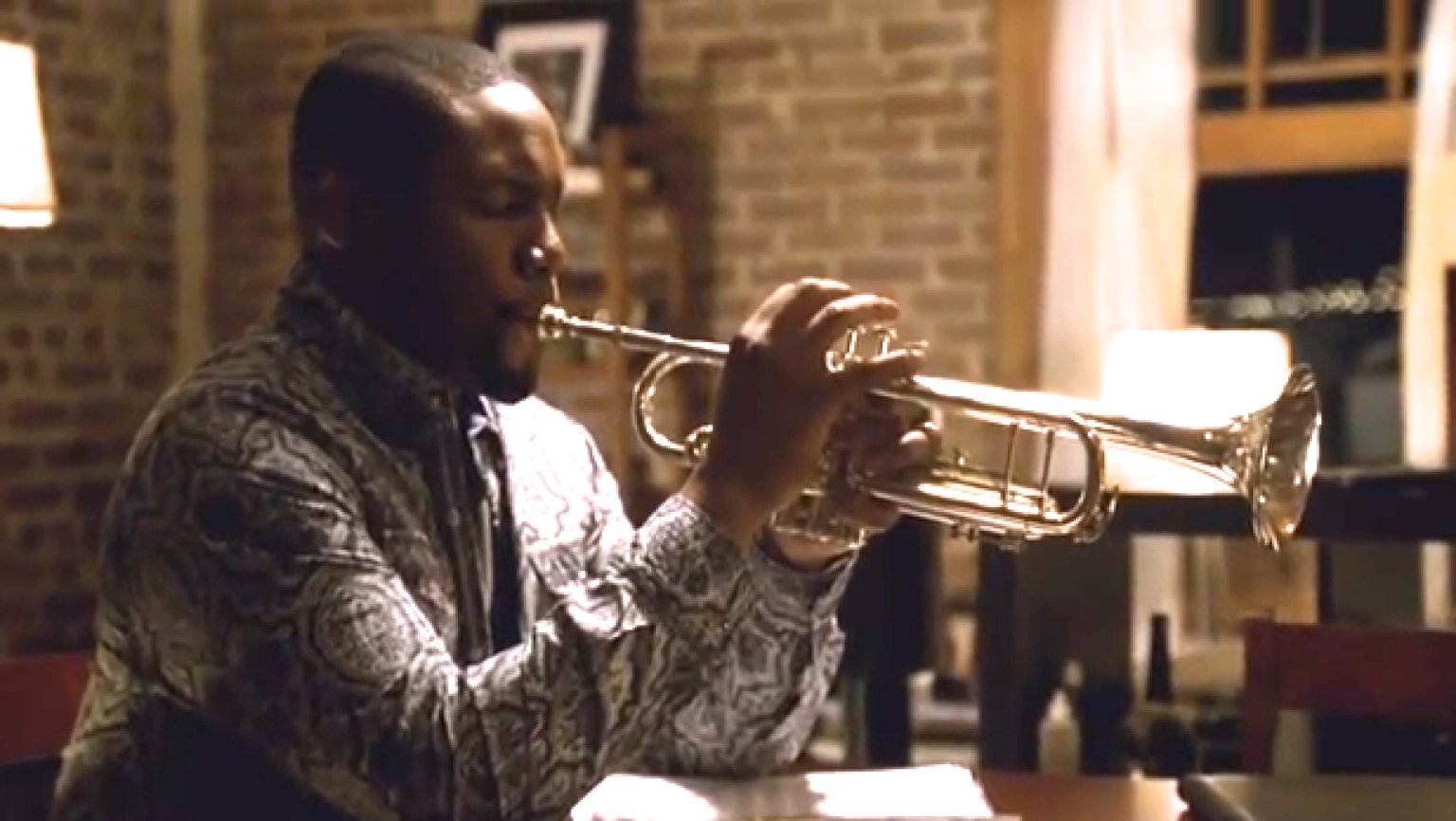
The sounds of Treme

You are about to read a nearly unabashed review for Treme, but before I get to the praise I’ll dismiss with the one caveat I believe it’s important to note.

David Simon’s first masterpiece, The Wire, was rich with occasionally heavy-handed political commentary, particularly in the fifth season, mostly along the lines of power corrupts, bureaucracy is broken, the system no longer works. Treme lays this on fairly thick as well; not quite fifth season thick, but at least as much as the rest of The Wire. It’s not a problem for me, but I can imagine some eye-rolling from those who found that aspect of The Wire irritating after a while. Now, moving on.

Nobody, and I mean Nobody, writes real, honest characters, better than David Simon, and proof is located throughout Treme.  All of our best recent television shows explore humanity in a deep and interesting way, but none of them since maybe Six Feet Under explores just regular everyday people in such an honest and authentic fashion.

Mad Men, Breaking Bad, and Game of Thrones are all true to themselves but none of them show real people; they’re exaggerated by their circumstances and place and time; truth through something other everyday life.

Treme deals with characters who are real people facing real problems; on the job, with their relationships, with occasional death and disease (and one pretty big hurricane) struggling to make a difference and just to make it at all. It’s not as grand as all that though. It’s not made out to be more than it is, but you get to know and love the characters that you invest yourself in their lives.

Simon is always putting his characters in difficult situations; when there’s an enemy it’s often some version of the system, which could have been seen as a cheap out but instead just feels true to the reality of the lives that New Orleans residents but even all city dwellers deal with on a daily basis.  Conflict in Treme is authentic rather than forced. Sure, things feel easy compared to The Wire, but not every show needs to have an equally bleak outlook. Like The Wire, Treme celebrates its characters, but unlike the Wire it seems like a couple of them end up in a better place than they started.

A few of the lesser characters don’t really get the screen time to be developed  and stand in more for their roles in other people’s and generla New Orleans stories (Chris Coy’s journalist may be the best example) but even they feel like people, and not stock characters, even with the lack of storyline that they get. A vast majority of the main characters have real in depth character arcs and personalities that resonate strongly whether you like them or hate them, or anywhere in between. There aren’t obvious favorite characters, and when characters get together or break up, the conflicts are complex and not simply one person’s fault or the other (usually). Characters grow, but it doesn’t feel forced. Antoine Baptiste’s ride from occasionally working trombonist to bona fide school band teacher and mentor is tirumpant and feels absolutely earned and true to the character, while Davis more or less ends up right where he started, and that isn’t seen as failure either.

Treme is a love letter to New Orleans in the best possible way. It feels authentic; it’s hard for me to say that with any authority, as a New Yorker who has been to New Orleans once in my life over a decade ago, but everything I’ve read seems to support it. Aside from the authenticity (which I do think matters somewhat in the way Simon is attempting to portray the show but is impossible for me to judge) the show makes me, who has only been to New Orleans once in his life with his family over a decade ago, absolutely fall in love with New Orleans. I don’t particularly care about jazz; it’s one of the music forms I’ve never been able to get into, and many of the forms of pop music featured in Treme aren’t strictly to my taste. Treme is filled with this; music is a huge theme in the show; and if you had described this to me ahead of time, I’d think I’d have no to little interest in the show or at least be bored by the music scenes. But I wasn’t. Instead of my lack of interest in that music turning me off of the show, the show’s sheer love and appreciation of the music won me over. It’s like contagious laughter; the appreciation and love for the music and the rest of New Orleans culture is contagious.

When it comes down to it, the only thing that ties every character in Treme together is their pull and their tie to New Orleans. These aren’t people who are living lives that could just be replicated in any other city. From the musicians, to the culinary world, to the super local Indian culture (that I’ve read about on the internet, watched four seasons of this show and still don’t really get), they spoke to the love-hate relationship of New Orleans residents to their city. They are constantly frustrated about the disappointments of their city, but for most of them (though not all) there’s no other place they’d rather live.

I’m a huge proponent of on-site filming. I admit it’s not always practical or necessary – it wouldn’t make sense or matter for Parks & Recreation to be filmed in Indiana – but it really does make a difference for shows like Treme. Of course, without David Simon and Eric Overmyer’s writing and characters, the setting doesn’t make a whit of difference. But as I’m sure they’d agree, the setting (while not a character – anyone who says the setting is a character should be shot on sight) really places the viewer there into these people’s lives in a way that sets just wouldn’t.

 I’ve made the claim before that people who love Friday Night Lights should love Treme, as they’re both shows that deal with real people helping real people, the good that lies deep inside most people no matter what screwed up things they do, and the strength of the bonds of families, friends, and other relationships to withstand difficulties. I’m unquestionably a big Friday Night Lights fan but sometimes plots felt forced, as if there had to be, say, a steroids arc, because it’s football. Treme does hit on all the obvious big New Orleans post-Katrina subjects, but it never feels forced. The world, one of my favorite parts of The Wire as well, feels so large, as characters fly around in the background; minor characters who would be ignored in other shows get lines that don’t matter for the plot but just make Treme’s world feel bigger. Treme doesn’t feel contained; it feels like the real world, which is one of the highest compliments I can give.

It’s too late, unfortunately for Treme. It’s never coming back, and we’ll never learn more about Antoine and Janette and Ladonna and Annie. Still, I’m thankful I got three and a half seasons of a show absolutely nobody watched.  Please, tell someone you love to watch this show and have the pleasure of enjoying it for the first time..


End of Season Report: Masters of Sex, Season 1

23 Dec

Masters and JohnsonMasters of Sex offered an ultimately strong first season that was overly ambitious and marred with inconsistencies and overreach but was on the whole better for the leaps. The first season got stronger, if somewhat in fits and starts, as it went forward and I hold out great hope for the series as a whole as it continues. Masters of Sex is new and interesting, which already puts it in relatively slim company by modern television standards. It’s a doctor show, but it’s not really a doctor show; the focus is on the sex research and relationships rather than any doctoring the way Doctor shows are (you know, House, ER, Grey’s Anatomy, etc.). It’s also a show that takes place in the past, which has been a recent trend all over cable (Boardwalk Empire, The Americans, Mob City, etc.), but it doesn’t feel like it fits in the bucket with those retro-shows. Masters of Sex is certainly influenced by the generation of auteur anti-hero shows that dominated the last decade – Mad Men, particularly, but it’s not an antihero show itself. William Masters is the closest the show has to an antihero, but he’s not that; he is flawed but not nearly comprised morally enough to be lumped in  with the antihero characters of recent years, and that’s a good thing..

Relationships,sex, and the intersection or lack thereof between the two are naturally at the forefront of a show about revolutionary sex researchers, and occasional attempts at opening up other themes feel half-assed and not nearly as successful. Still, there’s more than enough juicy themes there to fill up hours and hours of television. Relationships explored were not just the sexual variety. and an exploration into gender roles was natural in a show featuring a female sex researcher in the 1950s, America’s answer to the Victorian era.

Masters of Sex, although a character-driven hour-long show, faces some issues comedies usually face in their early episodes. The writers, over the course of Masters of Sex’s first half, had to learn what worked, figure out who the characters were, what the actors’ strengths were, and what the emotional resonance was between different characters as the show went on. The show clearly fell more in place as the season went on, and that continues to give me hope that the show will continue to grow.

For example, Masters of Sex hit the point somewhere around halfway through the season when a solid portion of the conflict between characters became if not relatable than at least understandable through the context of what we know about the characters and their backgrounds and personalities, which is a mark of a good show. Masters seemed like an impudent jerk early in the season who didn’t practice what he preached, but learning about his background and his relationship with his father in particular deepended our understand of particular patterns of behavior without seeming too hackneyed. Later in the season, Masters was just as obstinate but the reasons why were easier to tease out from what we’ve been given.

There are only five actors listed in the credits, a relatively low number for a showcase premium cable show, but several recurring characters play out some of the season’s best arcs. Beau Bridges and Alison Janney, as closeted provost Barton Scully and his wife Margaret are both season long highlights, offering a challenging alternate portrait from the primary relationships of Masters and Johnson, and both enriched the show greatly, and hopefully will be back even with potentially other sitcom commitments. Pioneering female doctor Lillian DePaul (portrayed by Julianne Nicholson, who also plays a female professional in a world dominated by men in Boardwalk Empire) was also an excellent recurring addition, offering one of several alternative attempted routes towards female empowerment in a male dominated world..

Viewing everything through the prism of a time decades earlier when attitudes about sex were more repressed and gender roles that we consider crazily outmoded were the norm is an interesting and sometimes strange way to look at sexual mores and relationships. We viewers are watching old revolutionaries, a partly oxymoronic exercise that requires thinking through different relative layers; even people so on the cutting edge that they were chased out of the mainstream with pitchforks would be considered backwards-thinking in our own time. Shows set in the past always make me ponder how to consider relative versus absolute positions; how much should we consider their positions relative to the norms of their own time, and how much relative to the norms in ours.

There was definitely some scrambling from the early episodes to the later ones, and some gaps in characterization that seemed a little bit abrupt but the show was better off for by the end. Ethan, in particular, hits Virginia early in the season because she’s not in him the way he’s into her, a vile action which marks his chivalrous veneer as nothing but a fraud. This action paints him as a bad guy (sophisticated term, I know), but then by the end of the season he seems to come around as the most forward looking male character on the show. It feels a little bit jarring and incongruous, but I think for the best in the end. The decision to focus on making their characters better and more complex over the course of the season even if this ended up not quite feeling right with the first episodes will leave a superior palette to work with moving forwards.

As mentioned above, sometimes the show’s vast ambition has it jolting in directions and the show doesn’t really know what it’s doing or where to go from there. This is particularly noteworthy on the area of race. Perhaps seeing how Mad Men, another show set in the same general time period, choose largely to avoid the subject and struggled when it did, Masters of Sex seems to want to jump in and say something on the subject a couple of times in the first season, but doesn’t really know what to say or how to say it.

It’s okay, though. It’s a first season, and there is time to get better. Overall, the show hits the right notes when trying to explore love and sex and everything in the middle. There aren’t any easy answers and there aren’t any right answers. What one person wants isn’t necessarily what another wants, and it’s not because one is right and one is wrong. People take harsh actions but with reasons. These seem like basic parameters to most serious discussions, but they’re still shockingly hard to find on television.

When I reviewed the first Masters of Sex episode a couple of months back, I noted, with my enthusiasm from the pilot, and my disillusionment with Homeland, that I thought there was a distinct possibility Maters of Sex could be the better show by season’s end. And although it’s due to at least as much as how much I didn’t like this season of Homeland, that measured prediction entirely came true. Masters of Sex is now the banner show on Showtime, and I look forward to meeting back up with Masters, Johnson, and crew next fall.