Archive | December, 2013

Fall 2013 Review: The Originals

6 Dec

The Originals

I started watching every new TV show three seasons ago, but there remain a handful of network shows still on the air that started earlier which I have never seen, shamefully. The Vampire Diaries, of which The Originals is a spin off is one of them. I know nothing about The Vampire Diaries except that two brothers fight over the same girl and I think maybe they’re both vampires but I’m not even sure of that much and one of them is Boone from Lost. Moving on.

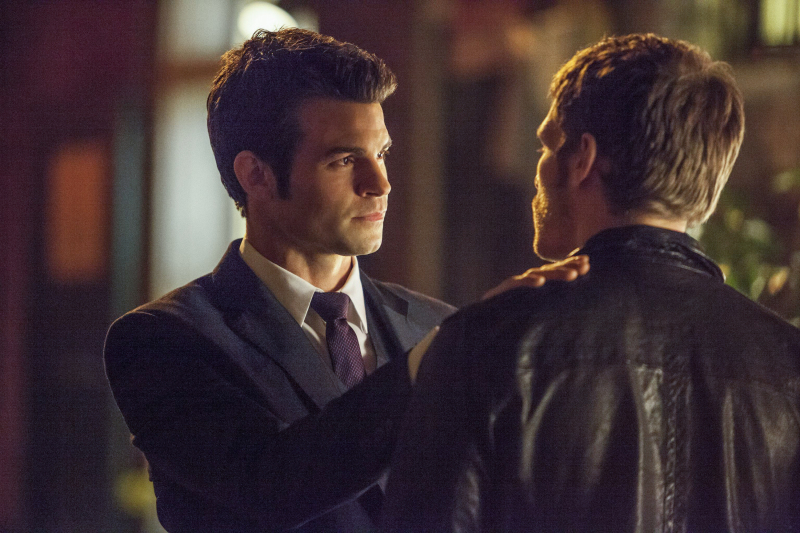
The titular Originals are the original vampires, created by a witch in the middle ages to save her children from werewolves. Yes, witches and werewolves also exist in this show and are both older than vampires, for what that’s worth. The Originals include at the least Elijah, his sister Rebekah, and his half-brother, Klaus, who is half-werewolf and half-vampire. They’re all extremely powerful and possibly immortal.

Elijah and Rebekah are apparently level-headed as far as ancient vampires go, but Klaus is a notorious psycho. Still, Elijah, unlike Rebekah, feels a familial responsibility towards Klaus, and when Klaus gets into trouble in New Orleans, Elijah feels like he has to go track him down and at least try to help.

Elijah arrives in a city of New Orleans at supernatural war. A vampire named Marcel, a former protégé of Klaus, rules the city with an iron fist, oppressing witches left and right. The witches are desperate so they capture a werewolf named Hayley who is pregnant with Klaus’s baby after an ill-advised one-night stand. The witches use her to try to get the uber-powerful Originals on their side to take out Marcel. The gambit works well enough as Elijah believes the baby might make Klaus more responsible and less sadistic, and while Klaus doesn’t necessarily feel that way he at least doesn’t like the idea of his protégé Marcel being higher on the pecking order than he is.

The big ending, and within first episode SPOILER is that Klaus stabs Eljiah at the end of the episode, either killing or injuring him seemingly severely, saying thanks, but no thanks, you’ve convinced me to take down Marcel, but it’s for me to do and not you. It would have been super ballsy if they actually killed off who seemed to be the main character from the pilot, but some IMDB work (spoiler, I’m not planning on continuing to watch, so I didn’t feel bad about checking) assured me Eljiah remains on the show, so I guess the whole immortal thing was no lie.

Vampires are seemingly everywhere in culture today so it’s honestly impossible to watch a show about vampires without comparisons to other prominent vampire shows on TV flashing through my mind, which, since I haven’t seen The Vampire Diaries, are True Blood and Buffy the Vampire Slayer. True Blood in particular is similarly set in Louisiana, which makes a classic home for vampires because it has a much older feel than most of America and because if its omnipresent tinge of vice.

The Originals is lacking in either of the qualities that made either of those vampire shows successful. It has neither True Blood’s sleazy sense of trashy fun (before that show went insane around the fourth season) or Buffy’s ability to mesh the supernatural action adventures with the realities of being a teenager. Hayley, the pregnant werewolf, is the best attempt at Buffy-ness, matching supernatural talk with a sense of humor and modern slang, while every other character is super serious, perhaps understandably so since people are dying around them, but it deadens the show a bit.

I’m not sure if The Vampire Diaries fans, coming into this pilot with more information, would have a different outlook, but I was unimpressed. I have to add this as a caveat for many shows, but it’s important to say; The Originals wasn’t awful. The Originals was watchable enough and although I didn’t really care about the major battle brewing between the vampires and the wtiches ( I mean Marcel was obviously the villain and was easily hateable within his two minutes of screen time, so there’s that), I didn’t cringe or take tons of breaks to get through the show as I have with the worst shows every year.

The plot, battles between vampires, werewolves, and witches, and whatnot is started to get tired. This is not necessarily The Vampire Diaries’ fault, but you have more leeway with an original idea than you do when you’re the fourth or fifth show with a similar idea in a decade. It’s possible to transcend a tired premise, as Broadchurch did with a premise I thought The Killing had poisoned for at least a few more years, but it’s more difficult and The Vampire Diaries doesn’t do it.

I think, and I could be wrong, that Klaus, who seems like an obvious villain, is being flipped to be the protagonist in this show and that’s supposed to be intriguing because of the juxtaposition; this obvious psycho is ostensibly being the good guy, helping the witches, protecting his unborn child, and defeating his protégé. If I’m going to spend this much time with this psychotic character I’d hope that he’d be, if not easy to root for, at least charismatic, drawing me, but he isn’t, and he doesn’t. The show just falls flat overall. The plot seems kind of generic and boring and for better or worse True Blood has soured me on immediate interest in vampire mythology. Hayley, in her little screen time, was the character I enjoyed the most for the Buffy-esque qualities of humor and modernity and a greater dose of that would help this show that frequently feels like it’s taking itself too seriously.

Will I watch it again? No. The show was tolerable but not good.

End of Season Report: Broadchurch

4 Dec

The two primary detectives in Broadchurch

This is a simple conclusion, but I really enjoyed Broadchurch, and I’m both pleased and mildly surprised by that. While I liked it well enough after the first episode, I found myself polishing off most of the series a few weeks later in a two day binge and really got hooked in more than I thought I would.

Before I talk about what I liked about the show, I’m going to put my initial misgivings right up front and then afterwards I’ll get to how Broadchurch was able to overcome them.

First, I’m generally tired of these murder mystery shows. A lot of the blame goes to The Killing, which still leaves a bad taste in my mouth a few years later, but these murder mysteries are just generally hard to pull off.  They don’t lend themselves to multiple seasons or even long single seasons. Drawing out the murder mystery too long is problematic because it’s hard to make the payoff seem worthwhile – there’s more pressure on the payoff with every extra episode the mystery takes to unwind. In addition, with multiple seasons, it feels like the murder investigation has to be more complicated than it might well be in order to justify the length it’s taking to play out.

Second, I’m tired of characters who fit the type which David Tenant’s cop seemed to be initially. The mysterious anti-hero, House-esque go-it-alone cop, who doesn’t get along with people and has serious personal problems, but is the best damn cop there is so people put up with him (or her).

Third, I’m tired of every family member’s personal demons making them all seem like potential killers. In the first episode, it seemed like every member of the family had something to hide, and that they might all be suspects, and it just felt like a TV show getting greedy; absolutely everybody in the town has to be a suspect. The town is big enough; there can be plenty of suspects with room for a couple of people who obviously didn’t do it.

Here’s how Broadchurch addressed each of these concerns. First, and this is really at the core of what allows Broadchurch to do a long-form murder investigation show right – eight episodes is the perfect length. There were red herrings, but they were addressed quickly and efficiently and didn’t feel too burdensome to the overall plot. The investigation hummed along without feeling overwrought, and everything was wrapped up at the end without stirrings of some greater conspiracy or convoluted scheme. The case was solved, and the killer has a motive that didn’t involve half the town being in on it rendering the whole situation implausible.

Second, while I thought Tennant’s character was a classic antihero cop that breaks the rules, hates every one else, but is smarter than everyone else, he ended up ,well, mostly not being that. He had his moments of playing that character, mostly when he insisted on avoiding dealing with his medical condition and breaking out of the hospital, but mostly he was just an ordinarily good cop who pretty much did follow the rules. He sniped and was a bit rude, but it seemed less like purposeful House-like jerkiness as we got to know him and more like admittedly poor social skills.

Third, the family’s issues were resolved sensibly and quickly. There were issues in the husband’s case, but once his affair came out into the light, suspicion of him was quickly dropped, and the show didn’t let the melodrama about the affair drag on. It was relevant, and impacted the grieving family, but it wasn’t the topic of continuing intrigue or concern in the investigation.

As mentioned before, but I want to stress its importance, pacing and length was an essential part of what made Broadchurch work. Eight episode was the perfect length to add depth to the mystery without dragging it out. The ending was surprising but didn’t feel out of nowhere implausible, and what made it so powerful was less what actually happened, than its effect on Ellie, who was absolutely devastated. Her personal devastation was difficult to watch but contributed to the strength of the reveal. In hindsight, the foreshadowing was clear when she told Susan Wright that she would have known if her husband was up to something criminal, and it’s absolutely brutal for Ellie to deal with the fact that her husband is the killer, and just be totally and entirely unable to explain how she couldn’t have seen it coming.

I got hooked on Broadchurch around episode four, and part of why I got hooked was because I knew I was so close to the end. The small town felt small, and the energy of everyone knowing everyone infused the show. Bonds of trust built up over many years broke down quickly while old rumors and gossip rose to the fore. Alec Hardy, as the foreigner, was often the only person abse to step outside of himself and see what was going on in an objective light.

I expected to recommend the show only with serious reservations after the first couple of episodes, and I was scared that the further it went, the less I’d want in. Instead, knowing the ending, I feel more confident in recommending the show. More shows need to be this length. Take a weekend, watch it all, and enjoy (I realize you shouldn’t have read this unless you’ve already seen it. Still, recommend it to your friends then).

Mid-season Report: The Walking Dead, Season 4

2 Dec

Rick is Back

After writing it, I noticed that this review has become a bit of a compliment sandwich. First, as befits said sandwich, we’ll start off with some compliments which the first half of the fourth season of The Walking Dead richly deserves. It has been the best and perhaps most importantly, most consistent half-season in a show that has been riddled throughout its run with inconsistency, offering jaw dropping moments before and after slow, plodding episodes. Pacing problems which swamped the show, particularly the second system, were not nearly as present, and new showrunner Scott Gimple found a way to mix character building, overarching themes about survival and humanity and relative and absolute morality with action, plot movement, and, as always, super disgusting zombies. Compliments to the chef.

My biggest problem with this half season was my biggest problem with last season’s finale: the governor, and his continuing, at least up to the mid-season finale, survival. The writers decided to give the Governor two episodes starring no other main character towards the end of the season rather than cross-cutting the Governor’s plot with the crew in the prison. I ‘m not sure that was the right decision, but I can see the advantages once they had decided what their story was and were just deciding how to tell it, The real problem, though, was bringing the Governor back at all.

The Governor’s arc was finished at the end of season three. If the character had been written differently, and I”ll get back to that, I don’t think the character had to be done, but because of how he was written, there wasn’t much left to do with him. Rather than prove me wrong, the writers unintentionally endorsed my view by basically repeating the Governor’s third season plot in two and a half episodes.

This re-telling may have been a superior version of the Governor’s story, and it almost felt like the writers thought the Governor was a good enough character that deserved a better end and they wanted to honor him. If this season had been the only experience we had with the governor, there might have been a chance to forge a new character and the episodes would have been a lot more captivating. But it’s not and it wasn’t.

Aside from the repetition, it felt like the first Governor episode was a fake out to make us believe that the Governor had changed. It could have worked, had the events of the third season gone differently, but because of how they did go I never believed in the new, non-murderous governor for a second. The character was simply too far gone, too morally compromised, to, forget root for, but even believe in and take seriously at all.

The writers proved that theory correct when the Governor went back to his playbook in his second episode, murdering the leaders of his new group to take control himself, ostensibly in the name of survival, but really for personal gain and revenge.

And therein lies my problem with the execution of the govnernor (not his dying at the hands of Michonne; that was great, rather how his character was written). There’s a version of this character that’s really interesting in this world. A character who has seen so many dark things that he takes a cold and utilitarian view of group survival. He decides he needs leaders who are willing to cut bait to save the most number of people, and that his group’s survival may mean others’ deaths, but he needs to be in it for his group first and foremost. That’s a valid worldview in these end times, and while it may not be one that the viewers support, it’s one that’s coherent and can make sense in a world where death is always around the corner.

The problem is the Governor is a perversion of that worldview who is impossible to sympathize with. Sure, he believes those things, and acts in those ways, but he has personal motives and a huge ego which don’t allow the viewers to really spend time on the fascinating themes that character can present.

I love that in The Walking Dead any character can die at any time. But for the reasons I described above, if the Governor killed Rick, I’m not sure I’d be able to continue to watch the show. I certainly didn’t think it was going to happen, but, while I normally reward the unpredictable, if the Governor didn’t die in that very episode, there would have been a critical problem in a show that has had its share of problems.

I had to spend so much time on my least favorite part of a season that was overall quite enjoyable, but it’s on my mind in particular because it occurred in the most recent episodes. Let’s talk about the good though, the bottom half of this compliment sandwich.

It’s always a challenge on The Walking Dead to build up new characters, so that they mean something if and when they get killed off, as there’s always a churn of characters working their way through. The Walking Dead did enough to add some real depth to characters Tyrese, Sasha, and Bob with a limited amount of time to devote to each which really helped bring up the overall cast. This stands in stark contrast to the trouble the show had making major characters feel like, well, characters, in the early seasons.

The Walking Dead thrives when it positions different views for how to deal with the apocalypse against one another, with Rick as the heart, trying to figure out what’s right. Carol and Hershel did an excellent job really building into two potential worldviews, each of which has value and reason behind it, and while I understood how this show works, it was awfully sad to see Hershel go as he has become the moral soul of The Walking Dead.

The disease that ravaged the prison in the first segment of the season was much more interesting than the Governor conflict in the second segment. It was a human conflict that forced the prisoners to make difficult choices, and while sometimes the choices were smoothed over, it led to some really interesting consequences like Carol’s burning of the bodies. We tend to side with Rick, but even while we may not agree with Carol, it’s easy to understand where she’s coming from and also understand that she’s taking action for the survival of the prisoners. Unlike with the Governor, Carol’s motivation is legitimately to help her group overall

All told, I’m encouraged by the direction of this season, especially now that the Governor’s gone and the crew is on the move again, I’m excited to see where show runner Scott Gimle can take the show, which has struggled to find its way on a consistent basis over four seasons, despite its massive popularity.