Archive | April, 2013

Spring 2013 Review: How To Live With Your Parents (For the Rest of Your Life)

5 Apr

Instructional program on living with one's parents for the foreseeable future

How To Live With Your Parents (For the Rest of Your Life) (yes, that title is a ridiculously too long mouthful, like this comment) is clearly trying its best to be a Modern Family clone.  This actually makes perfect sense, as Modern Family is one of the most successful comedies on TV, and probably the single most if one combines critical and commercial appeal. I’m only surprised I haven’t seen more Modern Family take offs, to be honest.  How To Live With Your Parents (the relatively short name I’ll use from now on) oozes wanna be Modern Family, and it is not at all a coincidence that ABC has been airing it immediately before that show.

The basic backbones of Modern Family (besides the specific actors and writers and all that) are a quirky family with a sense of comedy that tries to strike a middle ground between more traditional family sitcoms (think Everybody Loves Raymond as the most recent of this model) and new-fangled comedy that young people like (e.g.The Office).  It’s all based around a family which is wacky and somewhat non-traditional but extremely functional, and the message is often more or less that the characters’ families drive them completely crazy but they love them dearly and, at the end of the day, they couldn’t imagine being with anyone else.  Structurally, it’s fairly light and cute, but attempts to be moving and heartwarming, with occasional narration (on Modern Family, mostly at the end of the episodes, but there’s talking to the camera which can be similar to narration).  Again, mixing the young and old, the family is not a classic American nuclear family, a la, say, Everybody Loves Raymond, or the trillions of family sitcoms before, but shares the sense of love and togetherness from those programs, with the wackiness but not absurdity or sense of despair from classic dysfunctional family sitcoms like Married with Children and Roseanne.

Basically, How To Live With Your Parents checks off every one of these boxes.  The main character and narrator is Polly, played by sitcom veteran Sarah Chalke (Scrubs, but also Roseanne, How I Met Your Mother, and Mad Love).  Polly divorced her husband recently and, not having any money or a job, moved back home with her mother and stepfather.  She brought along her young daughter Natalie.  Her mom (Elizabeth Perkins from Weeds) is a Character, a mother with absolutely no filter or sense of appropriateness who is way more comfortable talking about sex than her daughter is (a more and more common TV trope, a reverse of the traditional mother who is incredibly uncomfortable talking about sex (again, see Doris Roberts, Everybody Loves Raymond), often combined with a daughter who is relatively repressed and/or anal).  Her stepdad (Brad Garrett) is also a Character, albeit less so than her mother, and constantly bemoans the loss of one of his testicles from testicular cancer.  Added to this pool is her ex-husband who is a well-meaning dreamer/idiot, very much in the Andy from Parks and Recreation mode, who loves Polly’s family and tries to stay in her life however possible, no matter how much of a bad idea it might be.

She now works at a local coffee establishment and I can’t tell yet whether her co-workers there are characters or not.  Polly helpfully gives us the what’s what within this debut episode by using cutesy white text on screen to point out certain facets of her life she’s explaining, along with frequent flashbacks showing off the crazy in her family.

In the first episode she goes on her first date in ages, and, although terrified, asks her parents to babysit her kid for the night (she’s a classic super nervous mother, with a strict routine and specific rules, while her parents threaten to go all willy nilly Parental Control on her daughter).  Basically, both her date and her parents babysitting end up being semi-disasters, but lessons are learned, things work out in an incredibly heartwarming fashion, and it turns out she’s really grateful to have this zany but loving family even though they’re super insane and drive her completely bonkers.

Will I watch it again?  No.  Did I mention it’s actually not funny at all?  I should probably do that.  It wasn’t offensive; it was more modern than just about any CBS comedy but it was hardly breaking new ground either.  That said, it wasn’t actually funny at all.  The laugh lines and jokes just did not work.  I mean, I could see what the humor was supposed to be, and which lines where supposed to make me laugh but yeah, did not take.  I don’t watch Modern Family, so even if it worked, it’s not incredibly likely I would watch it, but it wasn’t a very difficult decision.  It’s much more heartwarming than it is funny.

Who Are Those Guys: Justified, Season 3

3 Apr

The Man with the Hat

It’s time to try out a new feature here at The Drug of the Nation.  Episodes of TV shows are filled with tons of “that guys” – character actors, tv veterans, up and coming actors, main characters from other shows looking to branch out.  At “Who Are Those Guys” we’ll go through a season of a show and point out notable actors and actresses who appeared in that show over the course of the season, what role they played in the show, and where you may have seen them before.  There’s obviously going to have to be some discretion in the choices, as there’s more than enough noteworthy actors and actresses in any season of a show to write about, so please let me know if I miss a personal favorite in the comments.  Because there are so many, we’ll focus only on actors appearing for the first time in the season, and we’re not including main cast members.

Our first instance of “Who are Those Guys” will take on the recently finished season 4 of Justified.

Episode 1 – “Hole in the Wall”

Pattan Oswalt – On Justified, he’s Constable Bob Sweeney, a semi-competent, paranoid, old acquaintance of Raylan’s who didn’t get to be a cop, but is instead trying to make a name for himself as a constable, though no one takes him seriously.  Oswalt is best known as a stand up comedian but has started acting more recently, starred as an obsessive New York Giants fan in Big Fan and playing a well-regarded supporting role in Diablo Cody’s Young Adult.

Joseph Mazzello – True believer preacher and snake handler Billy St. Cry in Justified, Mazzello was one of the leads in World War II miniseries The Pacific (character was Eugene Sledge) and played Facebook co-founder Dustin Moskovitz in The Social Network.

Lindsey Pulsipher – Pulsipher played Cassie St. Cyr, preacher Billy’s more world weary sister.  She appeared in History Channel’s mini-series Hatfields & McCoys, but had her biggest role previously as Crystal Norris in True Blood.  Norris portrays a redneck werepanther who Jason Stackhouse falls in love with which causes Jason to get entangled in her wacky clan.

Tom Walker from Homeland

Chris Chalk – Chalk is Jody Adair, a criminal Raylan agrees to find and bring in in exchange for some of the bond money.  Chalk has been quite the hot TV actor of late, appearing in the last couple of years as Gary Cooper in The Newsroom and brainwashed marine Tom Walker in Homeland.

Ron Eldard -Former army buddy of Boyd Crowder in Iraq, Colton Rhodes.  Eldard previously was a main cast member in a couple of failed shows, Blind Justice, and Men Behaving Badly, but may best be known for his recurring role as a paramedic early in the run of ER.

Episode 2- “Where’s Waldo?”

Beth Grant – Grant played Waldo Truth’s widow, known simply as Mother Truth, who had another man pretending to be her ex-husband.  Grant had recurring roles on Coach and Jericho but can most notably be currently seen on The Mindy Project as cranky clerical assistant Beverly.

Episode 3 – “Truth and Consequences”

Julia Campbell – Campbell plays Eve Munro, the psychic ex-wife of the mysterious Drew Thompson.  A long-time TV veteran, she might be best known for playing John Lithgow’s serial killer Arthur Mitchell’s wife during the fourth season of Dexter.

Michael Graziadei – As Mason Goines, he’s a Detroit mob henchman who kidnaps Eve Munro.  He played Constance’s lover, Travis Wanderly in the first season of American Horror Story.

Episode 5 – “Kin”

Gerald McRaney – he plays crotchety old long-time criminal Josiah Carn, who gets harassed by Raylan.  McRaney is a TV legend who starred in Major Dad and Simon & Simon and more recently appeared in recurring roles in Deadwood, Jericho, Mike & Molly, and House of Cards.

Bonita Friedericy – She portrayed hill person Mary, cousin to Raylan’s mom.  The six viewers of Chuck will know her better as Brigadier General Diane Beckman, a high ranking official in the NSA.

Romy Rosemont – Boyd’s lawyer, Sonya Gable, she goes on to orchestrate a plot to kidnap Josiah Carn.  She got her biggest TV role in the past couple of years playing Carole Hudson, Finn’s mother on Glee.  She’s also married to Stephen Root.

Mike O’Malley – Nicky Augustine, high ranking member of the Detroit mob, who is out to find Drew Thompson.  Mike O’Malley has done in a lot in his career, early on hosting Nick game shows Get the Picture and Guts, and starring in the shockingly long running Yes, Dear, and appearing frequently as Kurt’s dad Burt in Glee.

Episode 6 – “Foot Chase”

Lew Temple – Temple is one of the two goons who kidnap McRaney’s Josiah Carn.  Walking Dead fans know him as former prison inmate Axel, who hits on Carol a few times.

Episode 7 – “Money Trap”

Sam Anderson – He plays unscrupulous and condescending businessman Lee Paxton who tries to get Boyd to do his bidding.  This is extremely unlike his best known character, soft-spoken dentist Bernard, from Lost.  He also played recurring cardiologist Jack Kayson on ER and villainous lawyer Holland Manners on Angel.

Michael Gladis – Murderer and fugitive Jody Adair’s buddy and aspiring filmmaker Kenneth.  Gladis portrayed the chief in the first season of Eagleheart but is much better known for playing pretentious copywriter Paul Kinsey in Mad Men.

Shelley Hennig – Hennig plays the fantastically named Jackie Nevada, a sorority sister of Jody Adair’s wife, and a potential target for Adair who Raylan must protect. A former Miss Teen USA, Hennig starred as responsible witch Diana in the one season of The Secret Circle on the CW.

Ned Bellamy – Gerald Johns, another one of the nefarious businessmen trying to get Boyd to do favors for him.  He’s had small roles in a number of shows, but myself and the three other Treme watchers will recognize him as Vincent Abreu, the father of the man killed during Katrina whose case Toni Bernette is investigating.

Episode 8 – “Outlaws”

Matthew John Armstrong – A hitman who dresses like a cop to easily take out his targets, Raylan defeats him in a match of quick draw.  This one’s a stretch, but people who made it to the end of the first season of Heroes may vaguely remember the character Ted Sprague, played by Armstrong, a person with the ability to create radiation, who poses dangers to society and accidentally radiation poisons his wife.

Episode 9 – “Get Drew”

Daniel Buran – He plays Nicky Cush, the former owner of whorehouse Audrey’s, who is now a paranoid conspiracy nut.  Buran played villainous werewolf pack leader Marcus Bozeman who gets into fights with both Alcide and Sam on True Blood.

Episode 10 – “Decoy”

Janitor from The Breakfast Club

John Kapelos – Kapelos is Nicky Augustine’s second in command, Picker, who issues him advice.  He’s been on TV for years, but I know him best as Jerry’s possibly drug-addled accountant in episode The Sniffling Accountant on Seinfeld, as well as janitor Carl Reed in The Breakfast Club.

Epsidoe 13 – “Ghosts”

Troy Ruptash – He plays Dominic, one of the goons sent to hold Winona hostage, in the last episode of the season.  His best known role to me is a tiny one, as the real Don Draper whose identity Dick Whitman stole, in flashbacks in first season Mad Men episode Nixon vs. Kennedy.

End of Season Report: Season 3 of The Walking Dead

1 Apr

The Big Four

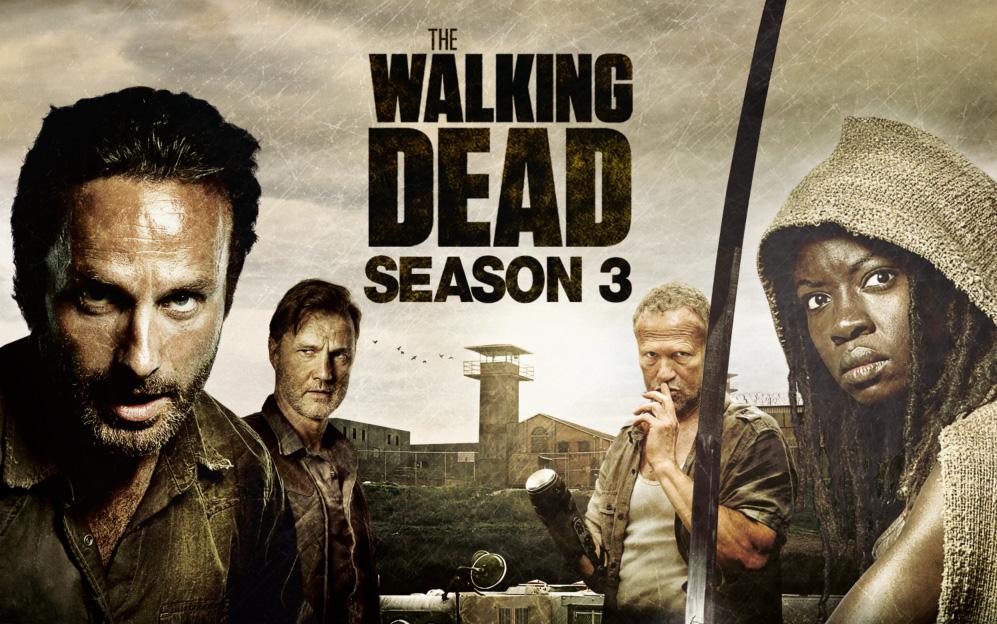
The end of Walking Dead season 3 was okay overall; the finale was frustrating in some ways but not terrible.   I’m going to spend most of this entry talking about two problematic points, so I want to get it out of the way early that I thought the season was pretty solid overall, and much better than the second season.

In fact, I’ll talk first about the aspects I liked in the finale.  Andrea dying; hooray.  We had gotten everything we were going to get out of this character and her internal struggles, and I liked how the show took a situation in which often in TV the character would make it out alive after a close call, and had her not make it instead.  It was a solid death scene all around.  Second, I like the situation Carl put his father in, shooting a man about to hand over his weapon. Our first instinct is to side with Rick, and I think with good reason, but it’s understandable why Carl doesn’t feel that way, and I like when situations like these put Rick, our protagonist, back on difficult footing.  Rick, not surprisingly, has generally been the strongest character in the show, and it’s constant challenges like these, that keep his character moving and evolving.

Now, the finale’s one major misstep: the extremely anticlimactic temporary ending to the Governor.  There’s no huge battle, nor is he finished; he lost for now, but they’re keeping him alive so he can do harm later.  This was a bad call, following bad calls tv shows have made time and again.  As often happens, TV writers believe they’ve stumbled onto a genius villain who is charismatic and whom the audience loves to hate.  While maybe at one time they planned to kill him or her, they decide this villain is too good to lose, and then have to keep finding unlikely and implausible ways in the story for the villain to not be killed or jailed by the protagonists. My two best examples for this are Sylar in Heroes and Ben in Lost (many would disagree with me there, but they’re wrong, why any character listened to Ben in the last two or three seasons is ridiculous), and there are many others.  Characters like this are not built to last; once you try to extend them, you ruin the great moment they added.  These villains are not complex enough to keep around for season after season.  Just kill ’em off and be done with it rather than ruin the characters and screw with the show.

I also want to talk a little bit about my disappointment in the promise of the Governor as a villain.  First, though, a diversionary explanation before we get back to Walking Dead.  For purposes of this entry, I’m gong to divide all villains in all forms of media into two major types.  There’s the more or less irredeemably evil villain; think Emperor Palpatine from Star Wars, or even more extreme, Sauron from Lord of the Rings, who is essentially the embodiment of evil and corporeal only as a giant eye.  The second type is a villain who has some level of plausible and understandable motivation.  Rarely is this enough to actually root for the villain, but there’s some definable reason why he or her is antagonizing our protagonists that make some level of sense beyond just that he or she is a bad guy or girl.  One of the best examples of this type is Stringer Bell and Avon Barksdale in The Wire; they’re drug dealers, but we understand to an extent that it’s just business in the world they’re in.

There’s absolutely nothing intrinsically wrong with the pure evil type of villain, and many of our most memorable villains lie in that category.  The Emperor was one. A more recent example is The Joker in Dark Knight.  He’s at heart just a crazy person; there’s no real rationale for his actions, but within the movie, that’s not called for, and he’s fantastic at being crazy.

That said, it’s harder to create the second type of villain.  It’s easy to say someone’s just evil as a reason, and often attempts at creating the second type descend into crazy/evil instead because the reason simple isn’t close to being plausible.    It’s not often easy to find real plausible reasons for someone the audience is largely supposed to be rooting against to be doing whatever bad thing he’s doing.

Getting to how this is related to The Walking Dead, the Governor was a villain who had potential to be in the second category, but eventually moved clearly to the first, and that’s kind of a shame.  There’s another potential telling of the battle between Rick’s gang and the Governor where the Governor is harsh, and maybe even a bit eccentric, but due to a history which has led him to believe that this is the only way he can keep his people alive.  Watching the show, I believed we were headed in that direction, possibly with a big explanatory episode, showing the Governor’s past in flashbacks, or having him issue a long monologue to Andrea or Milton or Rick explaining why he acts the way he does, at least to some extent.  There’s pretty much no way to make him the good guy, but there’s definitely room, in a world where undead savages threaten to overrun everyone without united action, and thirst and starvation and shelte, are serious concerns as well, to come up with reasons why strict top-down control and stern punishment would be one route towards survival.

Walking Dead doesn’t go this route, though.  In fact, it slowly moves in the opposite direction.  The Governor is most understandable very early on, but this breaks quickly when his men fire on some armed service personnel for no apparent reason.  I was waiting for some sort of explanation, either why these men posed a thread, or even just saying that in this cold hard landscape, the town needed the resources more.  But it was just a shitty thing to do, and that was that I suppose.  Moving forward from there, the governor got more and more deranged and unreasonable, making you wonder eventually how he was such a competent leader to begin with.  Soon, it was torture, and he basically ended his run for now with the totally batshit insane killing of all his own people, which, if he hadn’t already been well set into my first category above (which he had), those couple of minutes would have done it in and of itself in any circumstance.

Again, there’s nothing intrinsically wrong with evil/crazy villains, as long as we’re not supposed to have any pathos for them.  Still, when you have a chance to contract a plausible, rational villain and it fits perfectly into the story, you almost always should take it, and The Walking Dead missed a big opportunity here.